Technology Integration:
How Effective Are Teachers At Implementing Technology Into Classroom Instruction? Matthew Woods
Master’s of Educational Leadership Vancouver Island University
Abstract
Technology integration of teachers in School District 69, Qualicum Beach, was investigated using a mixed methods exploratory approach. A survey (N=58) collecting both qualitative and quantitative data was distributed to teachers from seven elementary schools and one high school. Of the data collected, 83% of respondents identified themselves as elementary focused teachers.
After current literature was reviewed, a Likert style survey was created to identify teacher effectiveness at integrating technology in the classroom. Four variables were used to measure overall teacher effectiveness. Data was collected by assessing the level of teacher technical knowledge, by identifying the types of technologies that teachers are using in their classroom, by measuring how often teachers were integrating technologies into the classroom, and by analyzing the effects of teacher attitudes toward integrating technology. A few open-ended qualitative questions followed asking respondents to identify any barriers to technology implementation.
Despite a high level of teacher technical expertise, the results of this study suggest that teachers are not effectively integrating technology in the classroom. Reasons for low technology use were explored and discussed as well as ways to enhance technology integration in the
Table of Contents
Abstract ii
Table of Contents iii
List of Figures v
List of Tables vi
Chapter One: Problem to be Investigated 1
Purpose of the Study 1
Justification of the Study 4
Research Question and Hypothesis 8
Definition of Terms 9
Brief Overview of Study 10
Chapter Two: Literature Review 12
Why Integrate Technology? 12
Implementing Technology 14
Obstacles to Integration 18
Moving Forward with Integration 20
Chapter Three: Procedures and Methods 24
Description of Research Design 24
Description of the Sample 25
Description of the Instrument Used and Scoring Procedures 26
Explanation of Procedures Followed 29
Validity and Limitations 29
Data Analysis Techniques 31
Chapter Four: Findings and Results 35
Summary and Conclusions 49
Discussion 52
Limitations 54
Implications of the Study
Recommendations for Future Research
55 57
References 59
Appendix A Technology Integration Survey 64
Appendix B Email to Principals 71
Appendix C Recruitment Script 72
Appendix D Letter to Participant 73
List of Figures
Figure 4.1: Effectiveness of Technology Integration 42
List of Tables
Table 4.1: Years Teaching Experience of Respondents 36 Table 4.2: Personal Technology Skills of Respondents 38 Table 4.3: Most Frequently Used Technology in the Classroom 40 Table 4.4: Most Frequent vs Least Frequent Types of Technology Integration 41 Table 4.5: Teacher Attitudes toward Technology Integration 44
Chapter One: Problem to be Investigated Purpose of the Study
The purpose of this study was to determine the types of technology currently being used in classrooms in School District 69, Qualicum Beach, British Columbia (SD69) and to measure how effectively teachers integrated technology with their class instruction. Four variables were used to measure how teachers were using technology in classrooms. The variables measured were a teacher’s personal technology skills, the types of technology used in the classroom, students’ use of technology, and a teacher’s attitude toward technology integration. Of these four variables, two were used to analyze teacher effectiveness at integrating technology in the
classroom. Teacher effectiveness was based on their personal technical skills and how they used technology with their students. For example, a teacher could be considered using technology effectively by using technology on a daily basis. The types of technology used in the classroom were not a good indicator of effectiveness because many teachers reported not having access to various technologies. In addition, the attitudes of teachers regarding technology were measured to see if the attitudes of teachers affected the frequency of technology used in the classroom. Studies done in the United States have shown that many students have yet to experience the full benefit of effective technology integration (Lowther, Inan, Strahl, & Ross, 2008). This
researcher was interested in finding out what technologies are being used by teachers. Lowther et al. (2008) reported that data from 10,000 schools and from over 90,000 teachers revealed that teacher classroom activities continue to include mainly direct instruction and independent student seat work.
As a technology specialist teacher who has taught technology classes for over 15 years and who is an active member of both the district and school based technology committees, this researcher was interested in finding out how teachers were using technology in the classroom.
By surveying teachers in SD69, this researcher compared the level of technology use and
integration by teachers to a standard of effectiveness as presented in the literature (Fullan, 2013; Lui & Szabo, 2009). The findings of this study will seek to gain some understanding of how technology is being utilized in classrooms, provide a baseline for further research, and guide future SD69 technology initiatives.
Schools have been struggling with implementing technology since the beginning of the 20th century. Many in the field of computers and education feel that integration of computer technologies in the classroom has not been very successful (Maddux & Johnson, 2007). The huge investment of technology and technology infrastructure, over the last couple of decades, has not resulted in any significant, measurable educational gains (Cuban, 2001). As a
technology teacher and an active member of SD69 technology committee, it has been impressive the amount of technology that teachers have attempted to use in their classroom despite how often they indicate a lack of comfort and competence when implementing new technologies. It has only been recently that this researcher has wondered about the level of technology
integration teachers have reached and their current attitude toward technology. This study’s goal was to examine the types of technology being used and to determine the frequency and manner in which the technology was implemented in order to find out how effectively teachers in SD69 have integrated technology.
This snapshot will help to formulate a direction for SD69 administration and to guide the technology committee in developing future technology initiatives that may include teacher professional development. It will also provide feedback on the level of technical expertise in the district. In addition, the results of this study can be used to support a Bring Your Own Device initiative that is currently being implemented at this researcher’s workplace. This study will also
add to the collection of knowledge that seeks to understand why technology integration has not had a greater impact on teaching practice or student achievement.
A key goal for 21st century learning is for teachers to integrate technology into their lessons as well as enable students to use new technologies to achieve student outcomes. But what is effective? Only 23 percent of teachers feel they could integrate technology successfully and only eight percent of teachers fully integrate technology into the classroom (Moeller & Reitzes, 2011). Just as alarming, some studies have shown that even the most technologically savvy teacher has struggled to effectively integrate technology into the classroom (Fullan, 2013). The U.S. Department of Education (2002) describes effective integration of technology as being
achieved when students are able to select technology tools to help them obtain
information in a timely manner, analyze and synthesize the information, and present it professionally. The technology should become an integral part of how the classroom functions – as accessible as all other classroom tools (pp. 75).
In order to attain this definition of effective technology integration, we first need to measure what technology is being provided and how it is used in the classroom.
Digital literacy is an ambiguous term often heard when discussing technology (Cuban, 2001). The BC Education ministry defines digital literacy as “the interest, attitude and ability of individuals to appropriately use digital technology and communication tools to access, manage, integrate, analyze and evaluate information, construct new knowledge, create and communicate with others in order to participate effectively in society” (BC Education Plan, 2013). Jones and Hefner (2012) describe digital literacy as the practice of “communicating, relating, thinking and ‘being’ associated with digital media” (p. 13). The British Columbia Ministry of Education has stated that its goal is to increase the digital literacy of students. To ensure that students’ digital
literacy increases, it will be equally important that digital literacy of educators be improved as well. Especially since the level of digital literacy that students will be required to attain upon graduation will be the responsibility of educators and educational leaders. We are living in a digital age and it is essential that digital literacy be an important component when considering the ability of educators to effectively integrate technology.
Justification of the Study
Advancements in computer technology and how people use that technology has changed extensively over the last three decades. In 1982 there were approximately 100,000 computers in schools in the United States. By 1998 that number had changed to nine million (Willis, 2003). Additionally, by 2005 close to 100% of public schools in the U.S. had access to the internet (Keengwe, Schnellert, & Mills, 2012). Currently, British Columbia leads Canada with 85% of its population using the internet on a regular basis (BC Education Plan, 2013). Statistics Canada (2009) reports that the ratio of students to computers in Canadian high schools is 1.4 students to one computer; however, only 40% of Canadian students surveyed reported frequent use of computers at school. From the personal computer to the personal device and from stand-alone software to web-based cloud computing, technology has changed how the world operates on a daily basis (Hicks, 2011). Technology and technology integration continues to be a very current issue in public education. There is a perception that technology is unnecessary, does not support student learning and is distracting, however, most research supports the claim that technology can be beneficial to student learning.
Benefits of Integration. The benefits of technology are well documented. Hicks (2011) argues that integrating technology into the classroom is an attention keeper for students. Consistent use of technology is necessary in today’s classroom because so much of today’s
society is infused with technology. Most every job requires some type of technical understanding (Fullan, 2013; Hicks, 2011). Several studies support the claim that students benefit from using technology (Keengwe et al., 2012; Lui & Szabo, 2009; Seifried, Lenhard, Baier, & Spinath, 2012). Keengwe et al. (2012) found that integrating laptops on a 1:1 basis “increased student engagement and learning, motivation, and ability to work individually” (p. 144). Another study found that there was a greater improvement in reading comprehension with grade six students using a computer program based on Latent Semantic Analysis (LSA) as compared to students who did not use the LSA program. The authors of this study were not interested in defining who was better at teaching comprehension, the educator or the computer. Rather, they emphasized how good teaching could improve student performance by integrating appropriate technology (Seifried et al., 2012).
Despite the research to support technology in the classroom, this researcher was not interested in arguing the merits of educational technology. In fact, the US Department of Education (2003) reported that most empirical evidence it reviewed amounted to very little meaningful knowledge regarding the effectiveness of educational technology at increasing academic outcomes for K-12 students. It described the peer reviewed literature as disjointed and contradictory. However, the argument is moot until educational leaders figure out which
technologies best fit with teacher pedagogy and until teachers understand how best to implement the technology in the classroom (Mitchell, 2011). Despite the efforts of school districts to place computers into schools and classrooms, teachers have not been able to use computers in ways that enhance their teaching methods or support an increase in student learning (Liu & Szabo, 2009). Alarmingly, less than 35% of teachers across the U.S. have integrated technology into their classrooms at all (Anthony, 2012). This could potentially be a serious issue, especially if
the Ministry of Education in British Columbia is expecting teachers and students to make
technology a priority in order to prepare students for the 21st century (BC Education Plan, 2013). Before one can ensure that technology is being used in an efficient and effective way, one will need to understand how teachers are using technology so that it may guide educational leaders in creating the best opportunities for teachers and students.
Obstacles to integration. There are many obstacles that have prevented technology integration from being fully implemented into teacher pedagogy (Lowther et al., 2008). Teachers often feel incompetent in front of students for fear that their technical knowledge and skills are not as good as their students’ (Hicks, 2011). Teachers lack knowledge and skills and are given limited professional development (Kurt, 2012). Some teachers do not see the need for technology in the classroom. They have not had the opportunity to see the true benefits of a classroom richly integrated with technology (Hicks, 2011). Despite these barriers, teachers still insist that technology is important and that being technically literate is an essential skill that teachers need to possess in order to integrate technology in the classroom (Clarke & Zagarell, 2012).
Teachers’ attitudes toward technology can be a barrier to effective integration. Bell-O’Leary (2014) found no correlation between subject areas taught, years of experience, age, grade level and the attitudes of teachers toward technology integration. Despite Bell-O’Leary’s finding, teachers are anxious about integrating technology in the classroom because of concerns about personal commitments such as time, energy and financial issues (Lui & Szabo, 2009). The more comfortable teachers are with technology the more likely they are willing to integrate it with curriculum. Unless teachers feel competent with technology, they struggle to find enough
time and energy to learn how to integrate technology effectively with curriculum (Lui & Huang, 2005).
If technology is to be successfully integrated into classrooms, then teachers need to be at the center of any integration plan and the overall culture of the education system must change to allow for more collaboration (Clarke & Zagarell, 2012). Clarke and Zagarell (2012) argue that teachers are responsible for being the technological bridge between the student and technology implementation. They further argue that teachers must gain the skills necessary to implement technology within the educational curriculum. Lowther et al. (2008) concluded that “in school contexts where technology usage was formerly minimal, clear strides were evidenced within only three years in changing school culture by integrating technology with student-centered teaching methods” (p. 206).
Current integration. Johnson (1997) identified three phases of computer
implementation into schools: familiarization, acquisition and integration. With the recent influx of personal devices, this researcher believes the educational system will be moving more quickly toward the integration phase. Johnson (1997) described this phase as being the most challenging as educational leaders will need to figure out best practices when combining technology with traditional pedagogy. Ertmer (2005) reported that “the computer-related activities in which teachers most often engaged their students included expressing themselves in writing, improving their computer skills, doing research using the Internet, using computers as a free-time or reward activity, and doing practice drills” (pg. 26). Successful integration of technology has to be more than ensuring the mere presence of computers in each classroom. It needs to be integrated into teacher pedagogy in a thoughtful and purposeful manner.
Conclusion. Integrating technology in the classroom is an important endeavour that all teachers should consider carefully. Anderson and Becker (2001) state:
The widespread consensus among those in government and research who have been studying computer use in education is that effective use of educational technology
depends most strongly on the human element—on having teachers and support personnel who have not only technical skills in using computers but practical pedagogical
knowledge about designing computer activities that create intellectually powerful learning environments for students. (pp. 3)
Technology integration is more than just placing a computer in every classroom (Hixon & Buckenmeyer, 2009). Successful technology integration will only occur in the classroom by increasing teachers’ knowledge of technology and by developing their technical abilities. If teachers are not prepared to use technology in the classroom, then how can we be sure that high school graduates are prepared with the necessary technology skills to enter today’s work force. Fullan (2013) argues that education is the only employment sector that has not utilized the full benefits that technology offers. For technology to be integrated successfully, district and school cultures will need to change from current models of Professional Development, that reinforce technology at a basic level, to a model that allows creativity, experimentation, interaction and provides more personalized professional development (Anthony, 2012; Clarke & Zagarell, 2012). Keegwe et al. (2011) state, “technology integration in public education is a critical element if schools wish to be successful engaging students in the digital age” (p. 139). Research Question and Hypothesis
Few teachers embrace technology at a level where they are capable of new and better ways to teach educational concepts (Maddux & Johnson, 2007). Given the importance that the
Ministry of Education gives to technology and 21st century learning, the money spent on
providing technologies in schools, the debate on technology’s role in schools and the number of technology initiatives implemented over the last several years, this researcher decided to
investigate: How effective are teachers at implementing technology into their daily instruction? This researcher believes that four key variables will help gauge the effectiveness of teachers integrating technology into their classroom. The four variables include teacher technical expertise, teacher attitude toward technology, types of technology used in the classroom and student use of technology. The hypothesis of this research was that teachers in District 69 were not effectively integrating technology into their classrooms. This researcher believes that the data collected on teacher technical expertise and student use of technology will be strong indicators of effective integration. The results on teacher attitudes toward technology will seek to identify whether teacher attitudes in district 69 are a barrier to integration. Finally the information collected regarding the types of technology used in the classroom will be helpful in determining what teachers are currently using while teaching.
Definition of Terms
Technology and Information and Communication Technology (ICT) are terms readily used to describe any new technological innovations in schools. This study describes technology as the tools used in a classroom to assist teachers with the facilitation of their lessons or to assist students in completing lesson outcomes. These tools could include overhead projectors,
calculators, computer projectors, laptops, cameras, video cameras, personal devices, web cams, and interactive white boards. ICT relates specifically to computers and software programs, including web-based, that teachers use to enhance student learning or to increase the efficiency of teacher workload.
For the purposes of this study, effective integration was defined by analyzing the four variables. Results gathered from the survey regarding teachers’ technology skills and level of technology integration with students were used to define teacher overall effectiveness. The two variables used to provide evidence of teacher effectiveness were the level of technological skill and the frequency of technology use by students in the classroom. The purpose of measuring technical skills of individual teachers was to determine the current level of technological skill and expertise each teacher possessed. Frequency of technology use was a strong indicator of effectiveness. The information gathered regarding the specific technology tools used in the classroom and the attitudes of teachers towards technology was used to analyze possible barriers to integration. The purpose was to find out if teacher attitudes toward technology would affect their ability to integrate successfully. Teacher attitudes are defined as whether their responses reflected a positive or negative view of technology integration.
Brief Overview of Study
This study used a mixed methods exploratory design to measure teacher ICT skills, to identify the types of technology that teachers were using in the classroom, to examine the level of student technology integration and to determine teacher attitudes toward technology.
A survey was administered to 172 elementary and secondary teachers in SD69 and consisted of three main parts. Surveys were presented at staff meetings with the permission of principals and the superintendent. Part one asked teachers to identify some general information about themselves as well as to assess their personal technology skill level as being either
Advanced, Proficient, Basic or Learner. Part two asked teachers to identify what technological tools they use in the classroom and how often they use them. This section also analyzed how frequently teachers integrated technology with their students. Part three asked teachers to assess
their current attitudes toward technology and to summarize their technology experience by answering four key questions. These were closed-ended Likert style questions, with space left at the end that allowed for personal open-ended responses. Thus, both quantitative and qualitative method approaches were used.
The survey results were tabulated and analyzed using descriptive statistics. The
qualitative results were coded for emergent themes. The target population was teachers in SD69 from all grade levels.
Chapter Two: Literature Review Why integrate technology?
Technology continues to move at a fast pace. The Organization for Economic
Cooperation and Development (OECD) reports that by 2010 at least one computer can be found in 94% of homes that had high school aged children (OECD, 2011). BC continues to lead Canada with 85% of its population regularly using the internet (BC Education Plan, 2013). In creating learners for the 21st Century, technology should be integrated into curriculum in a manner that best prepares people to become life-long learners and that best enables them to solve complex challenges that will arise from living in a knowledge based society.
Several studies suggest that teachers are at various levels of technology integration (Clarke & Zagarell, 2012; Ertmer, 2005; Hicks, 2011; Johnson, 1997; Lowther et al., 2008; Lui & Szabo, 2009;). Lui and Szabo (2009) define technology integration in the classroom as “using the Internet or computers to accomplish instructional objectives in the classroom” (p. 7).
Determining the level of technology integration that SD69 teachers reported was essential to understanding how effective they are at using technology in their classroom. Ertmer (2005) has described low level users as teachers who integrate the computer as a tool to word process and search the Internet. On the other hand, higher level users are teachers who use “spreadsheets, presentation software, or digital imaging to enhance their lessons” (Ertmer, 2005, p. 26). In other words, teachers who use technology more frequently and in a wider array of ways are more likely to effectively integrate technology in their classrooms then teachers who use technology less frequently.
Teachers have been slow to implement and integrate technology into their classroom pedagogy. Mitchell (2011) concluded that the education system has struggled to figure out the best and most effective method of integrating new technologies into the classroom. Few teachers
embrace technology to a level where they are capable of new and better ways to teach
educational concepts (Maddux & Johnson, 2007). The education system is failing to effectively integrate ICT and other technological innovations into the classroom (Keengwe et al., 2012).
Studies have shown that technology is beneficial to student learning through increased student engagement (Keengwe et al., 2012) and reading comprehension ((Seifried et al., 2012). A study completed by Keengwe et al. (2012) found that integrating laptops on a 1:1 basis
“increased student engagement and learning, motivation, and ability to work individually; increased the use of technology in the classroom and in the home by students; and improved traditional, at-risk, and high achieving students’ learning experiences” (p. 144). The yearlong study surveyed 105 grade 10 to 12 high school students in a rural Midwestern U.S. town. Although, the results of the study may have been fairly subjective due to the design of the tests and that many respondents were already high computer users, it provided a good argument for having each student use their own laptop. Overall, the study does contribute to our knowledge and understanding of technology integration, specifically with laptops, in that it provides some conclusions that could be retested for validity. The study is a good starting point for further investigation. One of the questions raised, which this current research attempts to understand, is that there needs to be a study done on how teachers are using technology in the classroom. Therefore this laptop study supports this researcher’s belief that technology is a good tool that should be understood and used in the classroom.
In addition, Kebritchi, Hirumi, and Bai (2010) discovered that students who played computer games during an 18 week instructional period achieved a higher mark on a district-wide exam than students who did not play computer games. The computer games were designed to reinforce math concepts by integrating the game with classroom instruction. Students who did
not play the computer games only received classroom instruction. This suggests that students with direct access to technology gain the most benefit when actively involved with tasks that use technology as a tool while maintaining a focus on content knowledge. Through teacher
collaboration, increased planning time, strong technical support and access to functional
infrastructure, students who enjoyed direct access to technology benefited most when challenged (Serow & Callingham, 2011).
It is essential that educational leaders change their mindset on how technology is
implemented in the classroom. A mindset that pits teachers against technology and believes that educational improvements will occur by simply investing more money into the latest gadget is wrong. A more productive mindset is one where teachers work with technology to find the best educational use that will benefit student life-long learning. Fullan (2013) states that “technology has dramatically affected virtually every sector in society that you can think of except education” (p. 72). This needs to change.
Implementing Technology
If our goal as educators is to develop young global citizens who are technically literate then, as teachers, we need to make better use of technology in education (BC Education Plan, 2013). Successful integration of ICT and other technologies in the classroom has not been achieved (Anthony, 2012; Maddux & Johnson, 2007). This is a serious issue, especially if the Ministry of Education in British Columbia is expecting teachers and students to make technology a priority in order to prepare students for the 21st century (BC Education Plan, 2013).
Anthony (2012) studied how the interactions between a school district and teachers affected the implementation of technology in the classroom.
Technology implementation can be conceptualized as a network of district systems associated with technology planning and classroom systems related to technology integration. Furthermore, the ways these district-classroom systems interact can have profound influences on the nature and frequency of teachers’ technology use. (p.351)
The study concluded that teachers’ technology integration improved when implementation of technology from the district to the classroom level was well supported, fully functioning and well planned. It highlighted the importance of identifying how teachers use technology in order to best integrate it into the classroom.
Several studies have shown that teachers have struggled to make technology an integral part of their daily instruction (Ertmer, 2005; Hora & Holden, 2013; Serow & Callingham, 2011). For example, Serow and Callingham (2011) found that teachers struggled to implement
successful interactive whiteboard (IWB) technology in their mathematics lessons. The study discovered that teachers who implemented IWB were using it simply as a new modern chalkboard and that some of those teachers never moved past the initial implementation throughout the study. Essentially the effectiveness of implementing the technology was primarily dependent on the skills of the teacher and whether that teacher had received any specific continuous training. This study raised the main question of this action research: With available technology, how are teachers using technology in the classroom and how effective is their use?
Hora and Holden (2013) examined how university faculty members decided upon the types of technology they would use for instruction and how they would implement it in their lessons. Although results determined that teachers were slow to integrate technology, they concluded that an instructor’s decision to use certain technologies was largely based on the
instructor’s beliefs regarding technology as well as the beliefs of each faculty. For example, the math faculty, as a group, felt that the chalkboard was the best tool for their discipline while the biology faculty felt that clickers and web based programs were the best tools for their discipline. They also concluded that technology should only be introduced within each faculty and that no one technology can be used as an institution-wide solution. The pedagogy is what is important not the technology.
Teachers need to have the right attitude when integrating technology in the classroom (Kadel, 2005). Becker and Riel (2000) concluded that teachers who were collaborative with colleagues and more engaged in their professional learning were more likely to integrate technology in the classroom than teachers who worked in isolation and who were more rigid with their instruction. In other words, teachers who come from a more constructivist learning theory were more likely to use computers more often and more effectively than teachers who come from a more traditionalist learning theory (Kadel, 2005).
Teachers who want to be effective at integrating technology need to demonstrate a willingness to continually learn new technologies to enhance student learning. Vanatta and Fordham (2004) described three factors that teachers, who were most effective at integrating technology,
displayed during technology implementation. These factors were the extra hours teachers worked beyond contractual obligations, the amount of time teachers had received technical training, and a teachers’ willingness to try new things. In essence, the attitudes that teachers’ display when implementing technology has a significant impact on whether technology will be effectively used in the classroom (Bell-O’Leary, 2014; Lui & Szabo, 2009). This suggests that the more positive a teachers’ attitude is toward technology the more likely they will be effective at integrating it with their teaching.
These findings suggest that any technology initiative that a school district adopts should be well analyzed. One of the areas of future research that Hora and Holden (2013) suggest is a comprehensive analysis of a particular faculty (or context) to find out what technology is being used in the classroom. Thus, the current study seeks to find which tools teachers in SD69 use most often and use the information to further investigate how well they are using a particular technology and which areas to focus professional development.
Determining whether technology and ICT are being integrated into instruction is very complex to measure. Bielefeldt (2012) analyzed two years of classroom observations that focused on how teachers were integrating technology into their classrooms after receiving educational technology grant money. Despite common technological standards and pedagogical values, the study found various degrees of integration and also noted that wealthy districts with lots of technology and rich professional development were not able to provide more ICT opportunities for students than less wealthier districts. This contradiction probably has more to do with the manner in which Professional Development was implemented. Teachers lack knowledge and skills and are given limited professional development (Kurt, 2012). Many studies argue that well focused and planned professional development is necessary for effective technology integration (Anthony, 2012; Hora & Holden, 2013; Serow & Callingham, 2011).
Understanding how teachers are using technology is essential to understanding their effectiveness. Some studies have shown that the use of technology can lead to increased student engagement (Bielefeldt, 2012; Ertmer, 2005; Keengwe et al., 2012; Seifried et al., 2012). For example, Ertmer (2005) reported that “the computer-related activities in which teachers most often engaged their students included expressing themselves in writing, improving their
computer skills, doing research using the Internet, using computers as a free-time or reward activity, and doing practice drills” (p. 26).
Bielefeldt (2012) found that “technology use by students and teachers was dependent upon individual and whole class groupings, student-centered teacher roles and student activities” (p. 215). Students were more engaged with technology when they were able to use it
individually while they were less engaged with technology when the teacher was the sole user. In essence there was an “inverse relationship” between the amount of time teachers and students use technology. The study also found that technology integration was negatively impacted by poor technology infrastructure and inadequate technology support for teachers. Student use of technology was found to be more beneficial at enhancing student engagement than when teachers were the sole users of technology. When students were engaged with technology activities personally rather than as a whole group, they showed more engagement in their
learning. The study did find that teachers who had technology, such as IWB’s, used it. They also found that teachers with more experience using technology were better able to provide
opportunities for students to use the technology during class time than teachers who had less than a year of experience working with the technology.
Obstacles to Integration
There are many obstacles that have prevented ICT integration from being fully
implemented into teacher pedagogy. A study done by Lowther et al. (2008) identified five key obstacles to ICT integration.
The availability and access to computers.
The availability of curriculum materials that support technology integration.
The technological skills and content knowledge that each teacher possesses.
The amount of technical, administrative and peer support that is provided.
Teachers often feel incompetent in front of students for fear that their ICT knowledge and skills are not as good as their students’ (Hicks, 2011). Some teachers do not see the need for
technology in the classroom. They have not had the opportunity to see the true benefits of a classroom richly integrated with technology (Hicks, 2011). Despite these barriers, teachers still insist that technology is important and that being technically literate is an essential skill that teachers need to possess in order to integrate technology in the classroom (Clarke & Zagarell, 2012).
There is a conflict between the current education system and how technology integration is implemented. In a four year study that looked at the teachers’ attitudes toward technology integration, Liu and Szabo (2009) found that current views of teachers were shaped from their past experiences with technology. There was a strong correlation between how technology was being used in the classroom and the technical experience of the teacher. Inexperienced teachers tended to teach technology using a direct instruction method of teaching. Often students were assigned tutorials or drills using technology. Whereas more experienced teachers integrated technology by teaching using an inquiry-based approach. Students were given assignments that required them to solve problems using technology and create multimedia presentations.
The results of the study confirmed that teachers’ attitudes toward technology integration were dependent upon the level of technology experience. The study identified three types of technology groups: inexperienced, experienced and renewing. At each level, teachers’ attitudes were different. The inexperienced teacher would need the most support as it was found that this group was the most easily frustrated and were quick to abandon new technology initiatives.
However, as teachers gained more positive experiences with technology, frustration became less of a concern as teachers were better able to understand the time commitment necessary to learn new technical skills. Lui and Szabo (2009) found that “there were distinct, stable differences between subgroups” and concluded that “integrating technology into the curriculum seems long and requires tremendous amount of time and energy to learn and practice”.
Many researchers suggest that school districts need to provide more resources, technical support, more professional development, create opportunities for risk taking, and use mentor teachers in order to increase technology implementation (Anthony, 2012; Kurt, 2012; Liu & Szabo, 2009). Clearly educational leaders need to find a better way to support and develop teacher pedagogical practice regarding technology integration. Given the research regarding teacher barriers to technology integration, this action research will seek to identify possible barriers that may exist in SD69.
Moving Forward with Integration
New methods need to be developed and tested that focus on the development of training that is more personal and individual. One type of professional development that is ineffective is the type that involves teachers learning a technical skill that they would not use. This one-size-fits-all approach exposes teachers to technology training sessions but the training might not be useful in their classroom. Often these sessions are held at locations other than the classroom or school that a teacher is located. Teachers are expected to attend the training sessions regardless of their readiness or interest level (Hixon & Buckenmeyer, 2009).
To integrate technology more efficiently teachers need to develop their ICT abilities beyond the minimum level. Teachers need to be introduced to various types of technology within their classroom in order to determine the best technology tool for each required task. They need
immediate support, either from technology experts or from their peers, when developing skills that promote integration (Ertmer, 2005). Technology training must test teachers’ beliefs
regarding ICT and create a closer positive relationship between teaching and learning ICT in the classroom (Hixon & Buckenmeyer, 2009).
Ravitz, Becker, and Wong (2000) argued that teachers need to take more of a constructivist approach to integrating technology into their classrooms. Ravitz et al. (2000) described the constructivist style of ICT integration as someone who believes their learning “arises only through prolonged engagement of the learner in relating new ideas and explanations to the learner's own prior beliefs” (p. 3). As opposed to only learning basic ICT skills, teachers adopting a constructivist style would choose technology that works best with their instructional style. This approach suggests that teachers should become self-directed learners in gaining the technological skills suited best for them and their classroom.
One possible model that could promote teacher engaged professional development would be to develop Professional Learning Communities (PLC) within a school district particularly at individual schools. A similar model was examined by Glazer, Hannafin, Polly, and Rich (2009) where they found that teachers can learn and develop their technological skills within the context of their classroom and school using what they termed the Collaborative Apprenticeship
Approach. The study examined teacher interaction within a school environment. Specifically, two teacher leaders were chosen to collaboratively guide nine peer teachers through a process to create technology integrated lessons. The teacher leaders lead the peer teachers in a three phase process with each phase lasting eight weeks. About 45 minutes a day was set aside for teachers to meet and collaboratively design, develop, and share learning materials in order to implement a more technology integrated classroom. Despite a key finding that teachers were reluctant to
incorporate a variety of technology tools, Glazer et al. (2009) have contributed to advancing our knowledge of how teachers can implement technology through collaboration. They have
identified common attitudes and beliefs that teachers display regarding integrating technology in the classroom. Glazer et al. (2009) acknowledge in their findings that teachers express interest in new technologies but indicate a lack of comfort and competence when they are asked to use the technologies.
In order to overcome the key barriers mentioned earlier, the technology leader will need to determine teacher competence and commitment level toward technology integration (Lowther et al., 2008). As teachers develop their technology skills, it will be important that a leader be able to adopt a behaviour that motivates and challenges individual staff members. A technology leader should be motivated to learn about new technologies and passionate to share new ideas. Keeping teachers motivated about technology will require a leader to set individualized
technological goals that will keep each teacher engaged.
Technology leaders should consider both a Path-Goal style of leadership and a
transformational style of leadership (Northouse, 2010) when implementing technological change. The Path-Goal style of leadership would be an appropriate model “wherein the technology leader must assist teachers in the organizational goal of technology integration” (Courville, 2011, p. 10). This style of leadership would be beneficial as it allows the technology leader to assist teachers at each level of their development as identified in this action research study; learner, basic, proficient and advanced. A transformational style of leadership would allow a
technological leader to set a goal based on the needs and values of district educators. By creating a common goal and vision, staff can work together to integrate technology in a meaningful way.
Creating a transformational culture within a school environment would help to create a sense of purpose and staff would be committed for the long term. In this way, technology would not be the pedagogy but rather be used to help drive pedagogical change (Hora & Holden, 2013). The research in this literature review has shown that technology can increase student engagement and enhance student learning. The greatest benefit for students develops when they are able to use technology personally. Teachers need to determine the technology skills
necessary for their own pedagogy and they need to learn ‘best practice’ when implementing technology into their lessons. Developing teacher technology skills is best achieved when teachers take the time to learn new skills either independently or collaboratively. In order for technology to be successfully integrated and effectively taught both school districts and school teachers will need to overcome any possible barriers. School districts will need to work toward providing reliable infrastructure and ensuring accessibility to technology. Educators will need to commit to finding the best technological tools that will enhance pedagogy and be willing to collaborate with other educators to ensure ‘best practice’. It is the responsibility of all educators to ensure that students graduate with a strong understanding of digital literacy and that they can use a variety of technologies competently. This study will provide baseline data for the district technology committee to gain a perspective regarding technology use in the classroom. This study will help to identify digital literacy of teachers and may assist the district in recognizing areas of future professional development.
Chapter 3: Procedures and Methods Description of Research Design
Research suggests that few teachers are effectively integrating technology into their pedagogy despite billions of dollars being spent to place technology into classrooms (Barron, Kemker, Harmes, & Kalaydjian, 2003; Fullan, 2013; Hogarty, Lang, & Kromrey, 2003; Hora & Holden, 2013). It was this research that led to the design of this current study. Participants included educators from SD69 that represented both elementary and secondary levels of
teaching. All schools were encouraged to participate in a study based on technology integration in the classroom. This mixed methods study investigated the types of technology currently used in the classroom and attempted to identify how teachers are integrating technology into their daily instruction. The main goal of the survey was to explore the level of technology integration that has been implemented in classrooms and to determine how often teachers were using technology. In addition, teacher attitudes toward technology were measured
Based on research, the author of this study hypothesized that teachers in SD69 were not effectively integrating technology into their classrooms. Educators in SD69 were asked to
complete a three part survey (Appendix A). The survey was designed to collect quantitative data using both five point and six point Likert scales. A total of 67 technology statements were organized over four sections. Four open-ended questions were included at the end of the survey for teachers to provide written comments. The number of questions were chosen in order to better triangulate the results. This study will provide baseline information to the SD69 technology committee regarding teacher technology integration as well as add to the current research literature on technology use in schools.
Description of the Sample
The research was conducted in School District 69 (Qualicum) on Vancouver Island. SD69 has recently reconfigured it schools. It has eliminated all its middle schools. It is currently comprised of seven elementary schools and two high schools. It is a geographically large district ranging from Bowser to Nanoose Bay. A variety of technology tools and
technology based seminars have been introduced to the district over the last few years. Some of the technology tools that are available include IWBs, LCD projectors, iPads and laptops. As well, many opportunities have been made available for teachers to participate in a variety of technology based professional development opportunities that has focused on how to use technology in the classroom.
The sample was drawn from a total population of 285 teachers currently employed in SD69. From this initial population, 172 teachers were given the opportunity to complete the survey. Surveys were provided to teachers at seven elementary schools and one high school. Thus, the group represents a cross-section of grade levels and education disciplines. At the time of this study, the total number of students was approximately 4000. Participants in SD69 were chosen because it is where this researcher lives and teaches. As a technology specialist teacher for over 15 years and as a current member of the district technology committee, this researcher has a vested interest in the results of this study. In order to increase validity, this researcher provided an opportunity for teachers from all grade levels to participate in the survey. Emails were sent to all school principals in the district. Seven elementary and one high school agreed to participate in the study. 172 surveys were distributed to the elementary schools and the one high school. Technology teachers or teacher leaders in each school were given time within their staff meeting to present my survey (Appendix B & C). Participants were provided surveys and were
asked to return completed surveys into an envelope at the front office. 58 surveys were returned that represented a good cross-section of the population.
Description of the Instrument Used and Scoring Procedures
The instrument used in this study was a participant-completed survey that was designed by the researcher (Appendix A). The instrument designed was created using a format similar to one that was found on the internet (Question Pro, 2014). The survey instrument was
experimental in design in that this was the first time it was used and the researcher would probably make adjustments if reusing. It was intended to grab a cross-section of educators in SD69 who have taught kindergarten to grade 12. In addition, much of the content used to
develop the questions on the survey were designed by comparing the questions and results of two large scale studies done in the U.S. on teacher integration of technology (Barron et al., 2003; Hogarty et al., 2003).
Research based on previous technology surveys helped guide the formation of the questions in the instrument (Barron et al., 2003; Hogarty et al., 2003; Question Pro, 2014). This researcher designed a three part instrument using both a five point and a six point Likert-Scale. There was an opportunity for participants to answer four qualitative questions at the end of the survey. Space was provided at the end of each section for participants to add further comments.
The survey was divided into three main parts consisting of five sections in total. Part I was divided into two sections. Section A was designed to provide general demographic information that enabled the researcher to make generalizations and comparisons regarding respondents’ years of teaching experience and current educational level taught. This researcher was interested in finding out the relationship between years teaching experience and level of digital literacy; which demographic was integrating technology more often. Section B provided
participants an opportunity to identify their personal technology skills. Research suggests that the effectiveness of technology integration by teachers is dependent upon the technology skills that they possess (Lui & Szabo, 2009). Participants were asked to respond to 16 questions and rate their technical skills as Learner, Basic, Proficient or Advanced. For the purposes of this study Advanced is defined as having the ability to train staff; Proficient is defined as having the ability to perform the task without any assistance; Basic is defined as having previously done the skill but would need some help; and Learner is defined as not sure how to do the required task. These definitions were provided on the survey instrument.
Part II was designed to collect information on the types of technology being used in the classroom as well as identify a level of current integration that was taking place. Part II was divided into two sections. Part II Section A identified the technology tools that participants used in their classroom. In this section participants were asked to identify, from a list of 19
technology tools, which types of technology tools they were using in the classroom. Results from this section were used to identify which technology tools were being utilized the most. Part II Section B investigated how the technology tools were integrated during classroom instruction. In this section participants were asked to rate 17 statements that describe how they are using the technology in the classroom. A six point Likert scale was created to measure the frequency of technology used and integrated in the classroom. It ranged from regular daily use of technology to never using technology. The results from this section were used to define the overall
frequency of teacher integration of technology and were used to measure overall effectiveness. How teachers use technology in the classroom is a good indicator of effectiveness. Lui and Szabo (2009) pointed out that integration of technology is greater in classrooms that use technology daily as opposed to those that use technology less frequently.
Part III explored teacher attitudes toward technology. This part of the survey utilized a five point rating system ranging from strongly agree to strongly disagree. Participants were asked to rate 15 statements that identified their attitude toward technology. Most of these questions were taken from two large scale studies in the U.S. (Barron et al., 2003; Hogarty et al., 2003) while a few were created by this researcher.
This section also included four open-ended questions and space was provided for other comments so that participants had an opportunity to provide written feedback. The purpose of this section was to gain some insight into views shared by respondents regarding overall technology. Attitudes toward technology have a significant impact on whether technology implementation will be successful (Bell-O’Leary, 2014; Lui & Szabo, 2009). Research shows that the more positive an attitude that a teacher displays toward integrating technology the greater chance the technology will be integrated effectively (Becker & Riel, 2000; Kadel, 2005; Vanatta & Fordham, 2004). In addition, research suggests that there are many obstacles to technology integration. Access to technology, funding, professional development, technology support and teacher expertise are all possible factors that can prevent successful technology integration (Lowther et al., 2008). This researcher was interested in finding out if there was a common theme within district 69.
The questions asked of participants were designed to address the four variables that were identified as being relevant to this study. They included teacher technology skills, technology tools used, technology integration and teacher attitudes toward technology. This researcher chose questions that highlight how teachers are using technology in the classroom. Both qualitative and categorical data were collected and analyzed to find common trends. This
information was used to compare groups within the school district and provide triangulation to increase validity.
Explanation of Procedures Followed
Once permission was granted to conduct the research by the Vancouver Island University Research Ethics Board (REB), the Superintendent of SD69 was contacted and a meeting was arranged to discuss the study and get permission to distribute surveys. Principals of chosen district schools were contacted via emails (Appendix B). Meetings with principals were
arranged to discuss the research study, to organize a date to present the survey and to ask if some staff meeting time would be given to recruit possible participants. Technology teachers at chosen schools were given paper copies of the surveys as well as a Recruitment Script (Appendix C) to be read to the teaching staff. Teachers had an opportunity to take a survey and were instructed to return it to the school office where it would be placed into an envelope. Principals were asked to provide a spot in the office to collect surveys. Surveys were placed in an envelope provided and were picked up one week after staff meeting. Upon conclusion of the research portion of this study, data was stored on a portable storage device with password protection. All collected data was then kept in a locked filing cabinet before being destroyed in May 2016.
The letter of consent (Appendix D), which was attached to the survey, outlined how consent was to be given: by filling out and returning the survey, it was implied that the participant was giving their consent. No separate consent form was used.
Validity and Limitations
To add external validity to the survey, questions were designed based on previous large scale studies. The first study, done by Barron et al. (2003), was used to determine which teachers were using technology as a tool within their classroom. This was a large scale study
that involved over 1000 schools and 2019 teachers. A second study, completed by Hogarty et al. (2003), identified four main domains: integration, teacher confidence and comfort, teacher technical support, and teacher attitudes toward computers. The two domains that were used in this current study were integration and teacher attitudes toward computers.
To increase internal validity, the instrument was reviewed by another technology specialist that was not part of the study, for clarity of language and for interpreting the meaning behind the questions. The instrument was also peer-tested by five other researchers to identify errors and ensure questions were understandable. Information gathered from the reviewers was used to revise the instrument. Several districts have used similar instruments throughout Florida to track current progress or gather baseline data (Barron et al., 2003).
In addition, overall validity was increased because a cross-section of participants were surveyed throughout the district. Several steps were taken to ensure the anonymity of the participants. Firstly, no direct contact was made between participants when handing out the survey. Secondly, in order to mitigate the chance of matching a signature on a consent form with the handwriting on a survey, implied consent was given by the actual filling out and returning of the survey; no names were ever given and no signature was required.
Some limitations should be noted. First, the sample population was only taken from one school district; therefore, the results cannot be generalized across the province or beyond.
Second, the level of technology available in each school varies considerably. Also, some schools have specialist technology teachers with available time to provide training and just-in-time support. Surveys of other teachers in other districts with different levels of access to technology and technology training may produce different results. A third limitation is that the district recently completed a school reconfiguration process that has left three of the elementary schools
without traditional labs. Therefore, some technologies were not operating properly when this survey was distributed. This may have affected participant answers.
A forth limitation is the survey itself, as the results are based on self-reported data. Finally, there is a risk that teachers with an interest in technology would be more likely to voluntarily choose to complete the survey than teachers whose interest in technology is less. Data Analysis Techniques
The data in the current study was gathered to investigate the level of technology
integration that teachers believe they are implementing within their teaching. For Part I Section A demographic information was collected and organized to determine participant groups based on gender, years teaching experience and current teaching grade level. The data for Part I Section B was tallied and analyzed using descriptive statistics. The results from 16 statements identifying the technology skills of teachers were organized into four categories. Statements included skills such as “take digital pictures” or “Create slide presentations using powerpoint or prezi” .Categories were assigned a number from one to four. The following numbers were assigned: Advanced (4), Proficient (3), Basic (2) and Learner (1). The percentage of teachers in each category was calculated. In addition, overall range in scores were assigned for each category to measure technology skills of individual teachers: Advanced (48-64), Proficient (32-47), Basic (16-31) and Learner (0-15). This range was calculated by multiplying the assigned number by the number of statements. In addition, the responses for each skill were analyzed to assess teacher strengths and weaknesses regarding their technology skills. All data was inputted into an Excel spreadsheet.
For Part II Section A, technology inventory, the overall use of technology tools was analyzed. Survey participants were given 19 technology tools to compare their use. Descriptive
statistics were used to analyze the results. The data from the survey was scored and participants were categorized into 6 categories ranging from never using technology to regularly using technology. Participants were asked to identify types of technology tools that they use and describe how often they use the tools. Some of the tools listed were computer, LCD projector, iPad and laptops. All survey data was inputted into an Excel spreadsheet. Categories were coded numerically from zero to five. For Part Two of the survey the following numbers were assigned: Regular use (5), Frequent use (4), Occasional use (3), Seldom (2), Rarely (1), and Never (0). This researcher was interested in finding out which technology tools were the most and the least used by teachers. The researcher assumed that participants who chose the “Never use it” column did not have access to the technology. The percentage of teachers in each category was
calculated.
For Part II Section B, Technology Integration, survey participants were given 17 statements regarding how students use technology in their classroom. Some technology integration statements were “have students use the computer lab”, “have students use video cameras for their project” and have students type papers in Word”. Categories were coded numerically from zero to five. The following numbers were assigned: Regular use (5), Frequent use (4), Occasional use (3), Seldom (2), Rarely (1), and Never (0). The level of integration of teachers was analyzed by tallying the responses of each statement and finding the sum of all 17 statements. Minimum and maximum scores were created by multiplying each category by 17. For example, the category “Regular Use” was given the number 5 and “Frequent Use” was given the number 4. By multiplying each category by 17 we get maximum scores of 85, 68, 51, 34, 17 and 0. The 6 categories were collapsed into four categories. Never stayed the same with a range of 0 to 17. Rarely and Seldom were combined with a range in score from 17 to 34. Occasionally
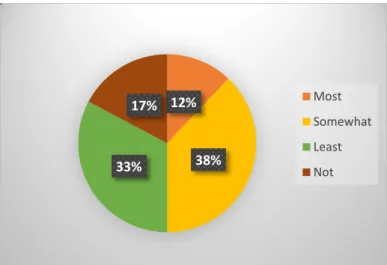
stayed the same with a range of 34 to 51. Frequently and Regularly were combined with a range score from 52 to 85. Using these maximums, the following scale was created to measure teacher effectiveness at integrating technology with students. Most effective, those having students use technology daily or at least weekly scored 52 or above. Somewhat effective, those having students use technology occasionally or once a month, scored 34 to 51. Least effective, those having students use technology 1 to 4 times a year scored 18 to 33. Not effective, those that had students never use technology scored 0 to 17.
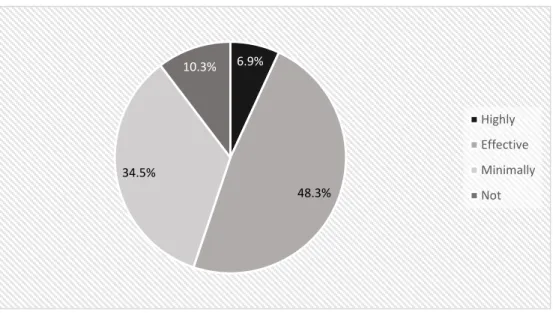
Once all the results were tabulated, an overall effectiveness score was calculated for each respondent. A scale to identify overall effectiveness was created using minimum and maximum numbers from the descriptive statistics data gathered from Part I Section B and Part II section B of the survey. Highly effective teachers scored more than 100. This number was created by adding the minimum total of Part I (B) Advanced (48) to the minimum total of Part II (B) most effective score of 52. Effective teachers scored between 68 and 99. This number was created by adding the minimum total score of Part I (B) Proficient (34) to the minimum total score of Part II (B) Somewhat effective score of 34. Least effective teachers scored between 34 and 67. This number was created by adding minimum total score of Part I (B) Basic (16) to the minimum total score of Part II (B) Least Effective score of 18. Teachers that were not effective scored below 33. This number was created by adding the maximum total score of Part I (B) Learner (16) to the maximum total of Part II (B) not effective score of 17. For each survey section percentages were calculated and organized into frequency graphs and tables.
For Part III both open and closed ended questions were used. Participants were given 15 Likert style statements and needed to evaluate how closely they agreed with each statement. For each statement, the respondent was given a choice of five categories. They were: Strongly
Agree, Agree, Somewhat Agree, Disagree, and Strongly Disagree. Each statement was tallied and a percentage was calculated based on the 58 respondents. The open-ended questions consisted of four questions with some room for other comments. Written information was organized onto a chart and emergent themes were identified.
Chapter 4: Findings and Results
The purpose of the current study was to measure how often technology was being used by teachers in SD69 and to examine teacher effectiveness at integrating technology with instruction. The findings of this action research study looked to answer the following question: How
effective are teachers in SD69 at integrating technology into their classroom? Four key variables of effectiveness were measured and analyzed. They include:
What is the current skill level of teachers regarding technology?
What kind of technology tools are teachers using in their classrooms?
How often are teachers using technology and how familiar are they with technology.
What is their current attitude toward technology?
172 surveys were distributed to teachers from seven elementary schools and one high school in SD69. The total number of surveys returned was 58 which represents a return rate of 34%. Of the surveys returned, 83% identified themselves as teaching elementary (K – 7) while the remaining respondents identified themselves as teaching secondary (8 – 12). The high percentage of elementary respondents reflects the fact that more elementary schools were surveyed. 71% of respondents were female and 26% of respondents were male which is closely representative of the teaching profession as a whole. An OECD study of teachers across Canada found that 68% were women (Coughlan, 2014). The BC ministry of Education (2015) reports that there were 254 Full Time Enrolling (FTE) teachers in SD69 for 2013 to 2014 school year. Of the 254 FTE teachers, 65% were female and 35% were male. Table 4.1 illustrates the level of teaching experience in SD69 and compares respondents with data collected from the Ministry of Education.
Table 4.1
Years Teaching Experience of Respondents (N=58)
Years # respondents % respondents % Ministry
0 to 10 10 17.2 28.7
11to 20 19 32.8 41.7
21 to 29 21 36.2 32.7
31 + 7 12.1 n/a
Note: Ministry stats for Years 31+ are included with Years 21 to 29. Ministry information was taken from Ministry of Education District Reports (BC Ministry of Education, 2015).
To begin to analyze the effectiveness of technology integration in SD69, the first data collected focused on the type of technology skills that each teacher felt they possessed (See Survey Part I Section B, Appendix A). Overall, the personal technology skills of the participants were very high. High for this part of the study means that more than 60% of respondents
reported being at an advanced or proficient level. 26% of respondents reported having advanced technological skills, meaning that they felt they knew enough to train other staff. 52% of
respondents reported that they were at a proficient level with technology which acknowledges that they could perform most skills without assistance. Only 22% of respondents reported having basic personal technological skills. Basic skills were measured based upon the teacher having done the skill before but still needed some assistance. No one in the survey was found as being a complete new learner which means that overall teachers knew how to do most tasks.
When combining Advanced and Proficient results, a high number of respondents felt they were advanced or proficient at performing six of the 16 skills that were surveyed. These skills included taking digital pictures (93.2 %), finding lessons on the web (91.4%), taking digital video (72.4%), creating slide presentations (70.7%), accessing and utilizing online software (65.5%), and downloading and editing pictures (65.5%).
Respondents did report having low skills in some technology areas. Low skills for this study means that more than 60 % of respondents felt they were at a Basic or Learner level when combining the totals of the two categories. The skills where teachers felt they needed some assistance (Basic) or were unsure how to do (Learner) were analyzing data and create graphs in MS Excel (82.8%), downloading, recording and editing sound files (71.1%), creating a
functioning web page (67.2%), and downloading and editing digital video (65.5%). Table 4.2 displays a complete analysis of all skills and lists them in order of most advanced or proficient to least.