UNIVERSITY OF OKLAHOMA GRADUATE COLLEGE
CONSOLIDATIONS IN HIGHER EDUCATION: HOW COLLABORATIVE STRUCTURES AND PROCESSES IMPACT THE OUTCOMES OF
ORGANIZATIONAL CHANGE
A DISSERTATION
SUBMITTED TO THE GRADUATE FACULTY in partial fulfillment of the requirements for the
Degree of
DOCTOR OF PHILOSOPHY
By
PAUL ROBERT VALENTINE Norman, Oklahoma
CONSOLIDATIONS IN HIGHER EDUCATION: HOW COLLABORATIVE STRUCTURES AND PROCESSES IMPACT THE OUTCOMES OF
ORGANIZATIONAL CHANGE
A DISSERTATION APPROVED FOR THE DEPARTMENT OF POLITICAL SCIENCE
BY
______________________________ Dr. Alisa Hicklin Fryar, Chair
______________________________ Dr. Deven Carlson ______________________________ Dr. Scott Robinson ______________________________ Dr. Samuel Workman ______________________________ Dr. Derek Houston
© Copyright by PAUL ROBERT VALENTINE 2018 All Rights Reserved.
For my children.
Acknowledgements
I have been blessed beyond measure during my time in graduate school to have been surrounded by more supportive friends and family members than I could ever adequately put down to paper. Without this support community I would have never managed to make it to graduate school, let alone complete this research, so it is here that I will attempt to memorialize the efforts of everyone who has placed me on their
shoulders for many years, however inadequate the gesture may be.
To my longest supporters, my father and mother, Kim and Erin Valentine, and my grandmother Ada Aitken, thank you for lifting me up all these years, supporting me spiritually, mentally, and financially whenever I was in need, and raising me to have the dedication and the drive to continue pursuing my education. I have often reflected on how privileged I am to have been given such a firm foundation straight from the beginning, and I owe anything I make of myself to that. Here’s looking at you, kids.
To my wife, Alana, thank you for following me on this journey, even though it meant leaving your job, your home, and your community to follow some crazy boy to Oklahoma City where he was planning on making very little money and spending most of his time writing on a laptop or reading books with big boring titles. I would have never had the drive or motivation to start this process or see it to the end without you by my side. You invested in me and our future together, and here’s to enjoying all the returns.
To my children, Wren and Ada, you’ll never know how much, even in your youth, you assisted me in this process (even though you often tried your best to keep me on my toes – future scholars, I don’t recommend welcoming your first child into the
world a few weeks before taking comprehensive exams!) Whenever this work has been at its most difficult, you have given me endless motivation to continue onward, and reminded me of the all-important need for occasional dance party breaks.
To my friends, too many to list, and to all the great mates out there, thank you for the fun times, the nights off, and the shoulders to lean on over the years.
And, finally, to the network of academics here at OU who have helped me to develop as a teacher and a scholar, thank you for all of your support and encouragement along the way. In particular, I am in a great deal of gratitude to Alisa Hicklin Fryar, who was the first person in Norman to contact me after I had applied and has been helping me ever since. I couldn’t have asked for a better mentor and friend through this process, or anyone who could have better helped me navigate through this often confounding and overwhelming process.
To Sam Workman, thank you for trusting me early on in my time in Norman and giving me the opportunity to work with you; having that vote of confidence near the beginning of my doctoral work gave a much-needed boost of confidence to a graduate student often beset by imposter syndrome. And to Glen Krutz, thank you for helping me to greatly expand my range as a scholar and a participant in higher education over the past three years, and for trusting me to engage in such a wide number of important pursuits at OU. I am a better academic today because of it.
These past five years have, at times, been extremely challenging, but they have also been some of the most rewarding times of my life, and for that I am indebted to all of you. Thank you.
Table of Contents
Acknowledgements ... iv List of Tables ... ix List of Figures ... x Abstract ... xi Chapter 1: Introduction ... 1Consolidations and Bureaucratic Reform ... 3
Motivations for Higher Education Consolidations ... 7
Organizational Change and Performance ... 12
Implications of this Research ... 15
Chapter Summaries ... 18
Chapter 2: Assessing the Short-Term Impact of Consolidations in Higher Education .. 21
Consolidations in the Literature ... 22
Similarities to K-12 Consolidation ... 28
How Similar are K-12 Consolidations and Higher Education Consolidations? . 29 Size Matters ... 34
Similarities and Differences Between K-12 and Higher Education Consolidation ... 37
Data and Methodology ... 39
Propensity Score Matching ... 40
Results ………...48 Consolidating Institutions See Increased State Funding, Decreased Federal
Consolidated Institutions More Likely to Increase Spending than Reduce Costs
... 52
Consolidated Institutions Show Potential Growth in Academic Programs ... 54
Chapter Summary and Discussion ... 57
Chapter 3: Higher Education Accountability and Organizational Restructuring: Assessing Student Outcomes in Higher Education Consolidations ... 61
Performance and Accountability in Higher Education ... 62
Accountability, Benchmarks, and the Bottom Line ... 63
Reputational Accountability ... 66
First-Year Student Retention ... 68
Predicting Student Retention ... 69
Accountability, Student Retention, and Consolidation ... 73
Data and Methodology ... 75
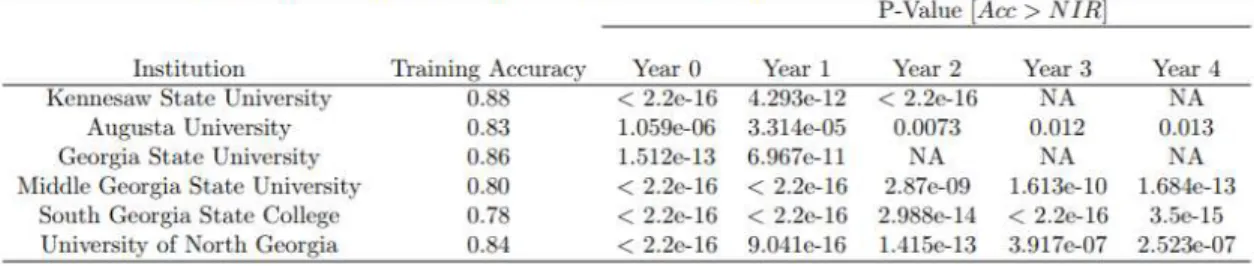
Data ……….76 Methodology ... 78 Results ………...86 Model Accuracy ... 86 Prediction Results ... 89 Discussion ... 93
Chapter 4: Collaboration and Profound Organizational Change: How Collaborative Processes and Structures Impact Change ... 100
Profound Organizational Change ... 102
Change and Organizational Performance ... 105
Organizational Change, Consolidations, and Outcomes ... 109
Collaboration Structures and Processes ... 112
Collaborative Structures and the Institutional Analysis and Development Framework ... 113
Collaboration and Organizational Performance ... 118
Collaboration and Organizational Change ... 122
Consolidations in the University System of Georgia ... 124
The USG Consolidation Process ... 125
The Four Consolidation Sites in This Study... 126
Findings and Discussion ... 128
Persistent Factors ... 129
Particular Factors ... 133
Conclusion ... 143
Chapter 5: Conclusion ... 146
Summary of Findings ... 146
Implications for Theory: A Framework for Examining Organizational Change Within Collaborative Structures ... 149
Organizational Change ... 150
Collaborative Structures and Processes ... 151
Implications for Practitioners ... 155
Limitations and Future Directions ... 160
List of Tables
Table 2.1: Differences in Differences Estimators for Revenue Variables ...49
Table 2.2: Differences in Differences Estimators for Expense Variables ...52
Table 2.3: Differences in Differences Estimators for Academic Variables ...54
Table 3.1: USG Consolidations Contained in This Study ...76
Table 3.2: Variables Used in Gradient Boosted Models ...79
List of Figures
Figure 2.1: Covariate Balance for Propensity Score Matching ...46
Figure 2.2: Effects Plots for Revenue Variable Models ...50
Figure 2.3: Effects Plots for Expense Variable Models ...53
Figure 2.4: Effects Plots for Student/Academic Variable Models ...55
Figure 3.1: Hypothetical Decision Tree Modelling Student Retention ...80
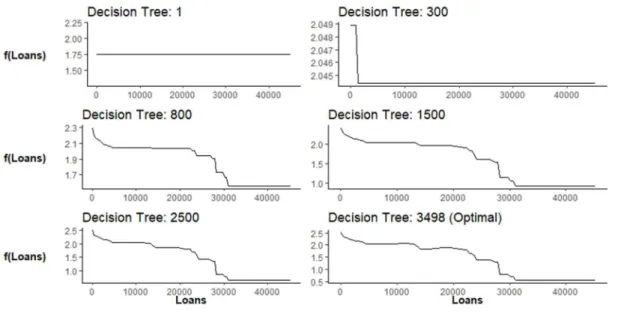
Figure 3.2: Iterative Decision Tree Development for Kennesaw State University Model ...84
Figure 3.3: Marginal Impact of Model Variables on Prediction Algorithm ...87
Figure 3.4: Percentage Difference Between Predicted First-Year Student Retention and Observed Retention in USG Consolidations...90
Abstract
Over the past several decades, institutions of higher education have found themselves in a difficult environment. States have reduced funding, total enrollment has either fallen or flattened across several years, and technological advancements have placed institutions in direct competition with a larger number of colleges and
universities. In response to this changing environment, policymakers and administrators have increasingly looked at consolidation to reorient systems of higher education in a way that makes them more suited to participate in this environment.
These consolidations have wide-ranging impacts on administrators, faculty, staff, students, and communities by determining the missions, goals, procedures, and outcomes of colleges and universities. Additionally, these efforts are highly relevant to longstanding discussions in public administration on bureaucratic reform, bureaucratic structures, performance measurement, the role of efficiency, and accountability. Despite this, there has been little development in the literature on the outcomes of
consolidations in the U.S.
This dissertation contributes to our understanding of these consolidations within two main components. The first component is an exploration of the outcomes of
consolidations which occurred in the U.S. over the past two decades. Chapter 2 uses a propensity score matching method to compare consolidated institutions with a control group of highly similar, non-consolidated institutions. This analysis produced evidence that while consolidations may increase their revenue in the short term, those gains are offset by increased expenses and the failure to reduce costs in expected areas. Chapter 3 utilizes student-level data from the University System of Georgia which has, since
2012, consolidated several colleges and universities. Using this data, a gradient boosted decision tree regression model develops a prediction algorithm from retention patterns pre-consolidation to predict post-consolidation retention based on the characteristics of enrolled students. These predictions are then compared to observed first-year retention. This comparison provides some evidence that consolidating institutions experience an opportunity cost where students expected to retain instead depart from the institution, especially for the cohorts which enrolled immediately after consolidation
implementation.
In the second component, qualitative interviews from consolidating institutions are used to explore how the process of organizational change is impacted by the
collaboration between the consolidating institution. Based on the Institutional Analysis and Development (IAD) framework’s development of the external environment, particular the rules-in-use which define participants’ behaviors, Chapter 4 proposes a framework for understanding how the collaboration between institutions impacts organizational change. This process is based on two sets of factors. The first, persistent factors, are factors which relate to the process of change and collaboration and will therefore be present any time an organization is undergoing change or collaboration. These factors generally determine the time and resource costs to employees, with higher costs being related to more negative outcomes for employees and organizations. The second set, particular factors, are based on the IAD framework’s external environment, where rules-in-place change the behavior of participants, and thus either promote or constrain certain decisions within the organizational change based on the specific external environment of the participating institutions.
Chapter 1: Introduction
In 2012, the University System of Georgia (USG) announced its intention to consolidate eight institutions into four. The endeavor was arguably the most significant structural reform of a higher education system through consolidation undertaken in the U.S. when you consider the size and variety of the institutions involved, even before the system would announce four additional consolidations in the following years which would ultimately reduce the system from 35 institutions to 26. The announcement was met with shock among administrators, faculty, and students at the involved institutions. At times, decisions during the implementation of the consolidations would become so contentious that students at one of the institutions staged a protest on campus.
The effort to consolidate was not new to the state of Georgia; the Technical College System of Georgia had previously consolidated fifteen institutions down to seven and reported annual savings of millions of dollars through reduced administrative overhead and workforce reductions. Internationally, consolidations are a common mode of reform within higher education systems, whether the effort moves top-down
initiating from the system governing bodies or bottom-up with institutions seeking out opportunities to consolidate for growth. Outside of higher education in the U.S., public organizations have long used consolidation to pursue bureaucratic reform, including when counties merge service delivery organizations, healthcare systems consolidate hospitals, and, notably, when states consolidate their K-12 school districts.
Consolidations are also popular within nonprofit organizations who use them both to pursue growth and to cede operations to other organizations which could potentially
better serve their clientele. Despite the wide popularity of consolidation as a reform, even among higher education internationally, the history of consolidation between U.S. colleges and universities through most of the 20th century was a story of failed attempts. Due to a variety of reasons – the costs associated with consolidation implementation, state and local politics, uncertainty in the likelihood that consolidation goals would be achieved – many consolidations were proposed but status quo inertia proved to be difficult to overcome for most.
However, over the past several decades an increasingly more competitive and difficult environment for higher education institutions has led to a renewed drive for consolidation. Most states reduced their funding to higher education in the face of the recent recession, and even those states which have begun to increase spending as the economy has improved have mostly just returned to the level they were at pre-recession, meaning most state funds have been at best stagnant for many years. At the same time, the number of students enrolling in higher education has fallen recently while the number of institutions in many states has either remained the same or grown. Technological growth has assisted a rise in non-traditional higher education options including for-profit institutions, fully online degree programs, and increased access to international institutions. The result is that institutions with fewer resources are
competing against a larger pool of organizations to recruit a smaller number of students. This environment has moved the needle on consolidation as a means of reform and led to an increased number of institutions pulling the trigger on implementation. Since 2001, consolidations involving public higher education institutions have occurred in 20 states, and a number of additional states have had stakeholders in higher education
at least float the idea publicly. These consolidations run the gamut of institutional arrangements. Some pair multiple two-year degree granting institutions to form a new four-year degree granting option, some involve a larger state school absorbing a smaller specialized program, some are between regional colleges of equal size and enrollment, and others involve more than two institutions being consolidated. The relatively sudden growth in consolidation in the U.S. provides a uniquely rich environment for academic study, but also places the practice of consolidation out in front of the scholarly work on their processes and outcomes.
This dissertation examines the recent wave of campus consolidations from a variety of different perspectives. Higher education in the U.S. serves a variety of lofty functions from producing new knowledge, to stimulating economic growth for students and their local communities, to promoting social justice within the culture, and to the establishment and development of human capital. The results of reform efforts such as consolidation, therefore, are not just important to understand because they are common, but also because of their large-scale impacts on many communities. In addition, the discussions held within the consolidation space tie into long standing areas of interest for public administration, especially for the consideration of bureaucratic reform.
Consolidations and Bureaucratic Reform
The central debates within the formation, structuring, and maintenance of bureaucratic systems have often been focused around questions of competing goals and norms. Whether management should be centralized or decentralized, how extensively principals should seek to control agents, to what extent public organizations should seek to be efficient with public funds versus how much they should maximize performance,
how differently should public managers behave compared to their private counterparts; these questions are routinely debated both within the literature and amongst
policymakers and managers.
The push and pull between these questions have also long been at the heart of large bureaucratic reform movements. Whether reformers are in the camps of New Public Management (NPM), Public Choice, electronic governance, democratic responsiveness, globalization, or some other large reform movement (or combination thereof), their efforts generally involve moving the response to one of the above questions in a certain direction. The implementation of these changes, then, often involve the reformation of bureaucratic organizations or systems in major ways to achieve these goals in a structural manner. These changes can impact a public organization along several dimensions, including its mission, membership, direct accountability structures, and constituents.
This dissertation adds to the discussion about these organizational changes by considering how the environment within which organizational change occurs affects the processes and outcomes targeted by these reforms. Specifically, it examines how the growing trend of organizations operating within collaborative systems impacts
organizational change by studying how collaborative arrangements of power, entry, and norms of behavior between collaborating institutions impacts the day-to-day actions of employees and use of resources as well as how they shape decisions made within the organizational change. To do this, this dissertation looks at consolidations within higher education by first establishing a baseline of expectations for institutional and student outcomes, then exploring what factors relating to collaboration between the two
consolidating institutions were important in shaping the implementation of organizational change.
Consolidations have been one large component of bureaucratic reform for decades. Most commonly, consolidations are considered in areas of public service provision, where advocates argue that economies of scale can be reached in procurement, management, and administration in ways that achieve economic efficiency in service delivery. For example, there is a wide body of literature on the consolidation of municipal services (Pachon and Lovrich 1977, Bunch and Strauss 1992, Maher 2015). These consolidations might be between many smaller, rural counties looking to combine delivery to eliminate duplication or within a larger, urban county looking to create new economies of scale through interlocal service provision. Another service which has consistently used consolidation as a mode of reform are hospitals, where often local systems are formed or the ownership of local medical services are transferred from public to private, or vice versa, through a consolidation process (Cuellar and Gertler 2003).
For all of these consolidations, reforms go through several processes. First, it must be determined that consolidation, rather than some other form of
interorganizational cooperation, is the best mode of reform. The motivations for
entering into a consolidation are discussed more thoroughly below, but in a broad sense consolidations are attractive as a reform option because the potential range of new outcomes is much larger than when using other forms of collaboration (Jennings and Ewalt 1998). Second, an implementation process for the consolidation must be decided upon, including a timeline, leadership, and an outlook for the post-consolidation
organization. How change in an organization is managed has been broadly studied in the public administration literature (see Kuipers et al 2014), though less has been focused specifically on change through consolidation and much of this literature fails to link change management practices to post-change outcomes of the organization. Finally, once the consolidation has been implemented some evaluation of its performance can be attempted. The discussion of success or failure in consolidation reforms often comes down to the same fundamental questions mentioned above, weighing potential gains in economic efficiency against the quality of the services provided by the new look organization (Lyons and Lowery 1989).
Higher education has become a salient area for looking at organizational change, particularly through consolidation, over the past several decades. While consolidation has long been present within higher education in the U.S., and to a much larger extent, internationally, recent changes to the education environment have increased the attention policymakers are giving to consolidation. In the U.S., the funding of public higher education institutions has fallen in many states in recent years, coinciding with periods where enrollment has fallen or remained steady. At the same time, the number of total institutions has continued to grow, creating more pressure for institutions with fewer resources to attract a potentially shrinking pool of students. Additionally, while these shifts have occurred domestically the adoption of new technologies and the increased ability for travel in many countries has deepened the international market, placing many institutions in direct competition with international counterparts over students who would not have considered leaving the U.S. in the past, as well as
trends have made consolidation appear a more attractive option for many system and institutional level stakeholders, and discussions of consolidations encompassing public higher education systems are currently being held within eight states, on top of
consolidations of public colleges and universities within twenty states over the past two decades. This relatively recent and rapid rise in reform through consolidation in U.S. higher education has created a situation where there is growing action and interest on reforms that have very large implications on a number of stakeholders and constituents, but for which the field of literature is still nascent.
Motivations for Higher Education Consolidations
When public organizations consolidate, the reason most often cited is an increase in efficiency by reducing duplicated programs. Higher education
consolidations are no different; state and institution level administrators often talk about how the consolidation of multiple institutions can capture economies of scale that reduces spending to reach a similar number of students (Tight 2013). However, some institutions also consolidate as part of an effort to diversify the total number of services offered (Lang 2003). By combining resources and expertise, multiple institutions can offer new and unique programs they otherwise would not be able to manage alone. This is seen by administrators as a way to position an institution more competitively as they market to future students and investors (Harman and Harman 2008).
Increasingly, financial efficiency is entering into discussions of accountability had by both state administrators and educators (Alexander 2000). Higher education institutions are pressured not just to produce positive results, but to serve as good stewards of the public resources available to them. The pressure to operate efficiently as
well as effectively has come from external stakeholders both public and private (Lahey and Griffith 2002). Many states have reformed higher education funding to link budgets to specific programmatic outcomes such as student retention, graduation rates, job placement rates, or student scores on licensure exams (McLendon, Hearn, and Deaton 2006). This increased focus on both the resource inputs and performance outputs of higher education make efficiency a more noticeable priority.
Chambers (1987) identified three types of mergers that take place in higher education. The first two of these types, bankruptcy-bailout and mutual retrenchment of institutions with similar programming, deal directly with improving an institution’s financial situation. Financial incentives can range from an attempt to improve the performance of failing institutions to the elimination of waste by achieving economies of scale. Though literature on mergers and consolidation in higher education have been relatively sparse compared to their impact, especially in the U.S., many scholars
involved in their study have long felt that financial concerns are the primary motivation for higher education consolidation (Millett 1976; Skodvin 1999). Those directly
involved in the process also tend to see financial concerns placed front and center in the consolidation process (Azziz 2013). Primarily, the idea that consolidations can improve financial status is driven by the idea that consolidations eliminate waste within a system and free up resources to be used in more productive way.
Higher education is not unique within bureaucratic systems in embracing the idea that consolidation can increase organizations’ efficiency. The closest example is likely the consolidation of K-12 school districts, long seen as a way to more efficiently allocate state resources, especially in rural areas (see Dodson and Garrett 2002 as an
example). Certainly, though, the restructuring of public systems and organizations through consolidation is not limited to education. City-county consolidation, where local city governance is merged into the county governance structure, is a popular reform effort generally promoted by the idea that linking together smaller local governments will result in a more efficient bureaucracy (Durning 1995). City-county consolidation reforms have been at the center of an ongoing debate between public administration scholars, who tend to be generally positive on the idea that
consolidations help increase efficiency, and public choice theorists who are more
concerned that consolidation creates monopolies of service provision which can become inefficient without competition (Campbell and Durning 2000). Interestingly, in spite of a long back and forth between the two sides, empirical evidence on the benefits of local consolidation is lacking, though some studies offer evidence that slight gains in
efficiency are possible (Selden and Campbell 2000; Leland and Thurmaier 2000). On a smaller scale, many local governments use consolidation of public services as an attempt to save money. This was an especially popular strategy following the economic recession in 2008-2009 (Abernathy 2012). In the 1990’s the consolidation of hospitals, both public and private, was seen as a key reform to reduce costs and increase
productivity, leading to a large increase in the restructuring of health care systems (Aiken, Clarke, and Sloane 2001).
In the aim for greater efficiency, these reforms all have at their core one main concept; by eliminating duplicated processes and pooling resources, organizations can achieve economies of scale which lower their total costs. When aiming for economies of scale, it is important to note that in education, like with any field, there is an upper
limit to the gains that can be made by increasing scale (Lang 2003). However, previous studies on higher education have found that upper limit to be quite high (Schumacher 1983). This number has been pegged at somewhere around an enrollment of 20,000 (Patterson 1999; Toutkoushin 1999) after which increased enrollment does not result in greater efficiency. The idea that consolidating two large institutions would not help with efficiency is somewhat intuitive, and is borne out by the lack of consolidations between universities of this size. Instead, large universities may be more likely to work together through consortia or other collaborative means to achieve similar goals. Economies of scales are also limited by certain features of the institution. For example, increased enrollment of high quality students (measured by SAT scores) creates more efficiency than general increases in enrollment, and institutions with Ph.D. programs incur greater costs as enrollment grows (Koshal and Koshal 1999). The limits in gains on efficiency from an organization’s situation does not preclude further consolidation, though, because institutions may also consolidate in order to improve their offerings.
The final type of merger identified by Chambers (1987), the mutual growth of institutions with complementary offerings, speaks to second major motivation for consolidation: increased reputation, prestige, and marketability. While many
institutional administrators and stakeholders may view the growth and development of the institution as the primary goal for undergoing consolidation, the pursuit of growth is often made possible by success in pursuing the financial goals; a more financially efficient organization is better able to invest in programmatic growth. By combining resources and eliminating duplicated programs, two or more organizations can free up resources to put towards the creation of new programs they would otherwise have been
unable to start. This, in turn, helps them to increase their notoriety, attracting more students and, potentially, more streams of revenue.
One factor in pursuing consolidations has been the wide popularity among reformers to adopt approaches that stress the use of competition between organizations in order to promote growth and better outcomes (Drowley, Lewis, and Brooks 2013). From an economic perspective, consolidation reduces the total number of institutions operating in the market and, thus, reduces competition. However, reformers in higher education view consolidation as a means of creating institutions which are capable of expanding their reach and better competing against other institutions in their ecosystem. For example, two colleges which recruit primarily regionally within a state may view consolidation as a means of expanding their recruitment to other parts of the state or to neighboring states. In a similar fashion to smaller firms merging to improve their ability to compete with larger firms, consolidation is therefore used to alter the dynamics of competition the institution participates in. This has especially been the case as some organizations increase their pursuit of international students. In the global market, where students are less familiar with their options, things like university rankings become more important in signaling quality. Consolidations have been seen as one means of increasing in the collegiate rankings and becoming more competitive, especially globally (Valimaa, Aittola and Ursin 2014).
Increased efficiency has often been pursued as the primary goal in a top-down driven approach to bureaucratic reorganization. In higher education consolidations, large amounts of reorganization occurred from top-down efforts at restructuring national higher education systems in China (Cai 2007), England (Harman and Meek
2002), and Norway (Kyvik and Stensaker 2013). As a result, these top-down, efficiency driven mergers tend to involve underperforming institutions. However, Harman and Harman (2008) have found increased evidence for bottom-up, institution-initiated consolidations. These consolidations tend to focus more on the pursuit of institutional growth and, as a result, involve stronger, more prestigious institutions. Often, these consolidations occur with an implicit motive to move up in collegiate ranking systems.
Again, educational organizations are not alone in their use of consolidation to improve their marketability. Many small nonprofit organizations have used
consolidation as a means of becoming more viable in a field where it’s increasingly competitive to find revenue, leadership and volunteers (Singer and Yankey 1991). Smaller nonprofits simply have a harder time attracting the same level of attention as larger ones. Like the top-down education consolidation, nonprofit mergers are often driven by “problem” organizations that face termination (Norris-Tirrell 2006). These organizations can attempt to acquire another organization or they can consolidate to form a larger nonprofit with an expanded range of services and direction.
Organizational Change and Performance
Regarding either motivation for consolidation, the literature has yet to provide strong empirical support that these goals will be met. While some evidence has been found in support of consolidations, other scholars have shown ways that consolidations can either fail outright or fall short of estimated gains. Kyvik and Stensaker (2013) classify three ways in which a higher education consolidation can fail: structural, cultural, and interest groups concerns. Structural explanations of failure have to do with things such as geographic distance between campuses, the number of institutions, and
the size of institutions; cultural explanations have to do with organizational cultures and how well they combine; and interest group explanations involve the interaction between local stakeholders, administrators, and national power brokers. These three categories highlight the variety of factors that become crucial to a consolidation.
Generally, one big reason for the failure of consolidations is how disruptive the process is to day-to-day activities in involved organizations. Mergers and acquisitions are a trying time for many employees involved; individuals generally value stability, and a merger may cause anxiety by disrupting stability. This drastic organizational change can lead to anxiety for members in all involved organizations, even if the reorganization is the acquisition of one organization by another (Pritchett 1985). The process of the merger can disrupt daily activity in the organization and lead to shock, apathy, insecurity, and frustration in members (Kleppesto 1998). When you also
consider that many organizations may be motivated to consolidate by a need to improve poor financial situation, it is not surprising that consolidations have a mixed record of success. One proposed explanation for the poor track record of consolidations is that decision makers often focus on the financial circumstances of the process and do not give adequate attention to the members involved (Fischer, Greitemeyer, Omay, and Frey 2007).
The disruptive effect of consolidations has been documented in a wide range of literature regarding public services (Andrews and Boyne 2012). Issues that create disruption include: goal displacement as leaders become distracted by managing the consolidation rather than the mission of the organization; leadership turnover as managers, unsure of their future in the organization, either choose early retirement or
seek out a position in another organization; a lack of effective direction as strategic planning is put on hold until the new organization is full materialized, reductions in morale; and, in the case of local government consolidation, wasted resources as local bodies that are soon to be disbanded and merged into larger bodies seek to lock in long-term benefits for their constituents. The byproduct of all these issues is wasted resources and lowered productivity, which goes against the stated motivation for consolidation.
One consideration is whether the decrease in output caused by this disruption outweighs the future gains achieved in a consolidation. Little is currently known about whether new structures in reorganization realize benefits large enough to justify the costs (Pollitt 2009). Theories of structural change would suggest that even when gains are made from reorganization, it can take a considerable amount of time before these gains are reflected as a net positive (Hannan and Freeman 1984). It’s also possible that the deleterious impacts of reorganization can be compounded if structural changes are made before organizations have recovered from previous or concurrent changes (Pollitt 2007). Andrews and Boyne (2012) found that the negative impacts of reorganization can actually begin before the implementation of restructuring starts as members become aware that the process is imminent. This can widen the divide that future efficiency gains will need to fill to become a net positive.
Consolidations can also perform poorly when implementation is not handled well. Mulvey (1993) conducted 20 case studies ranging from 1964 to 1985 and found that the universities he examined developed very few strategies and generally handled implementation of the consolidation poorly. Lockey (2007) found that administrative costs ended up driving out most of the gained efficiency from consolidations.
Administrators who were hired to manage the consolidation were ultimately retained in permanent capacities, and while one of the main reasons for consolidating is to
eliminate duplicated programs, very few universities are willing to fire the faculty and staff necessary to truly eliminate duplication. This meant that institutions either never saw gains or actually performed worse post-consolidation by adding unnecessary duplication.
A final important issue in a consolidation is the power dynamic between members of the organizations. For example, in one study members were assigned into high, moderate, and low status groups; members of the low status group had the most negative opinions on the merger process and the new organization (Fischer et al 2007). In the case of an acquisition, members of the organization being acquired can suffer an especially large loss of status and, therefore, have severely negative reactions to the process (Pritchett 1985). In contrast, mergers where both organizations see each other as equals tend to form a stronger new organization because strict equality for both sides is enforced in the merger process (Zaheer, Schomaker, and Genc 2003).
Implications of this Research
Consolidations are a relatively recent trend in higher education in the U.S., but the issues therein relate to longstanding discussions in public administration about bureaucratic reform, performance measurement, structure, accountability in public organizations, and the role of efficiency. This dissertation will give consideration to some of the large questions in this space. How do you measure performance against competing types of accountability pressure? What weight should be placed on economic efficiency within public organizations, especially when they are tasked with missions
that touch on lofty goals such as economic mobility, the construction of social capital, social justice, and the development of a democratic society? In what ways and to what extent is organizational change impacted by the structure of change and the decisions made by policymakers and stakeholders?
Higher education has several advantages when it comes to the consideration of these discussions. For one, there is a large amount of variety between institutions of higher education, allowing considerations to be made across differences in geography, resources, demographics, missions, political environments, and organizational
structures. Tracing a phenomenon across this wide landscape of institutions can provide confidence that the results are not driven by extraneous circumstances. However, despite the variety across institutions, colleges and universities are largely all giving consideration to three major performance measurements – economic efficiency, their reputation, and student outcomes. In addition, federal reporting regulations and
standards mean that higher education institutions maintain a set of data that is consistent across each institution and allows for the consideration of outcomes to be standardized to a certain extent.
This dissertation also aims to make a broader theoretical contribution to our understanding of how the well-studied phenomena of organizational change and collaboration can interact to shape the outcomes of public institutions and systems. I argue in this research that change within a collaborative environment is inherently shaped by collaborative processes in two ways. One, collaboration takes up both time and resources from an organization as employees must work on building mutual understanding and trust among collaborative partners, develop goals, assign
responsibilities, establish membership rules, and create new work processes. Two, within collaboration, partners will develop dynamics of power and control over various issues, providing different organizations varying levels of influence over their partners. Within organizational change, collaborative power asymmetry can give one institution greater influence over steering the change process.
Consolidation provides an idealized environment in which to consider these two proposals. Because collaborative partners in a consolidation are making decisions and implementing the joining of their organizations, control of the collaboration provides direct influence over the organizational change. However, it is also easy to see ways that this dynamic could be present in issues outside of consolidation. Consider any public system where multiple institutions have policy overlap or provide services to the same geographic location; if one organization within this system undergoes a significant change, consideration must be given to the other institutions within the system,
considerations which will ultimately be shaped by the collaborative space.
This research also has much utility for practitioners in higher education and policymakers within higher education systems and state legislatures. Within this dissertation, consolidations occurring between 2002 and 2015 from twenty states are incorporated in the analyses, representing a diverse field of institutions including HBCUs, public/private consolidations, regional institutions, and specialty focused institutions. In addition to these consolidations, future consolidations have either been passed, proposed, or discussed in Georgia, Louisiana, Pennsylvania, Alabama, New Mexico, Vermont, Idaho, and Michigan. It is clear that consolidation as a means of higher education reform is going to remain a relevant discussion for years to come.
Despite the increase in attention that higher education consolidations have been receiving in the United States, the literature on the process of consolidation and the expectations for outcomes remains sparse. This dissertation addresses both issues. First, it establishes a set of expectations for consolidations at the institutional level, looking at a wide variety of outcomes which are relevant to policymakers and institutional
stakeholders. Second, it takes a deeper look at student outcomes, specifically student retention, and gives consideration to the potential opportunity costs for students and the institution while engaging in consolidation. Finally, this dissertation provides unique insight to the process of consolidation through qualitative work done within multiple public institutions within the state of Georgia which has undergone a number of major consolidations since 2011.
Chapter Summaries
Chapter II examines the outcomes from consolidations within their first five years from an institutional perspective, looking at a number of variables concerning revenues, expenses, and student/academic outcomes. It begins by looking at the existing literature on higher education consolidations, particularly internationally where there are a larger number of studies, as well as the literature on K-12 school district
consolidations within the U.S., which have historically been more prevalent. It then uses a propensity score matching model to create a dataset using data available from the Department of Education’s Integrated Postsecondary Education Database (IPEDs) which pairs institutions formed through consolidation with a control group of
institutions which are most similar across a range of identifying variables such as total enrollment, total budget, the number and types of degrees conferred, and geographic
location, among others. A linear mixed-effects regression model is then used to examine the difference between consolidated institutions and non-consolidated institutions over the first five years after the consolidated institutions have been formed.
Expanding on this baseline of expectations, Chapter III uses student data provided by the University System of Georgia to assess the impact of consolidation on student outcomes among six different consolidations in Georgia. Specifically, this chapter looks at first-year student retention, which is one performance measurement that cuts across multiple accountability pressures that are applied to higher education
institutions, which are discussed within the chapter. To do this, students at the pre-consolidation institutions are grouped together by pre-consolidation to allow for an
examination of retention in the pre-consolidation system. These students form a dataset which is utilized as training data for a gradient boosted decision tree regression model which is then used to predict retention post-consolidation based on a variety of variables including high school performance, collegiate performance, financial information, and demographic data. This methodology allows for a comparison of first-year retention in the pre-consolidation system to that of the post-consolidation system and is particularly robust in picking up on interaction effects between the predicting variables and small, esoteric differences between students. These advantages allow the methodology to both look at pre- and post-consolidation retention as well as look for an “opportunity cost” of students who were not retained but who would likely have been retained had
consolidation not occurred.
After establishing these baseline expectations, Chapter IV is concerned with what factors of the consolidation implementation determine these outcomes or explain
variation across consolidations. To do this, Chapter IV considers how the literature on organizational change potentially intersects with the literature on collaboration to understand how members of the organization operate on a day-to-day basis during implementation and what factors may affect decision making. Two proposals are formed; first, that organizations which undergo change while also participating in some level of collaboration will have more limited resources, and employees will experience more stress and negative job performance because organizational members must split time between both efforts. Second, that collaborative structures, especially the
distribution of power between the collaborating institutions, will determine which collaborators have a greater influence over the organizational change.
Finally, Chapter V concludes with a discussion of the major findings and the relevant implications for both theory and practice. This dissertation seeks to contribute to these areas in two major ways. First, in the development of theory, it examines the often overlooked impact that the implementation of organizational change has on the final outcomes, especially in regards to how multiple changing organizations are structured with regard to one another. Second, for practitioners, this research provides information on the expected outcomes of higher education across a wide variety of variables, as well as gives consideration what factors within the collaborative
environment should be considered to potentially mitigate harmful findings and boost the positive. The impacts found within this study are short-term in nature, but have long-term implications for the eventually success or failure of consolidations, especially in regard to their financial goals, as different early costs push the break-even point of consolidation to a higher dollar amount.
Chapter 2: Assessing the Short-Term Impact of Consolidations in
Higher Education
When seeking to restructure bureaucratic systems in order to create more efficient organizations, consolidations have been a politically popular reform. Advocates argue that consolidations help limit the waste of resources, unlock
economies of scale, and create more collaborative governments that can better serve the needs of constituents. Others argue that these sort of large reforms are costly and
disruptive in the short-term and ultimately fail to achieve their goals because
organizations cannot serve the same size of clientele for less money without it being detrimental to the quality of their service provision.
Within higher education, as institutions face an increasingly difficult environment from decreasing budgets, increased competition for students, and legislative constraints, many have turned to mergers and acquisitions as a means to strengthen their position. Some consolidations combine many smaller institutions together to form one larger, more competitive institution; others involve a larger institution acquiring a smaller one in order to diversify its academic offerings. In either case, despite the impact these mergers can have on students, faculty, employees, and communities, higher education consolidations occupy a relatively small space in scholarly research, particularly in the United States. Where scholarly work does exist, most of it is focused in two areas: the pre-consolidation period (where research has established the reasoning that most reformers give for pursuing consolidation efforts)
managers make decisions and how they select leadership styles). Lacking in both of those outlooks is an in-depth examination of the outcomes of consolidation.
This chapter seeks to first establish some baseline of what to expect from consolidations in higher education and add to the literature of education reform by focusing on outcomes rather than administrative decision making or the motivation to consolidate. Subsequent chapters will give deeper consideration to the process of consolidation implementation and how the implementation effort contributes to some of the outcomes found here.
Consolidations in the Literature
Consolidations, mergers, acquisitions, amalgamations, and other creative arrangements of institutions have been occurring in the United States for most of its history; the earliest recorded consolidations of higher education institutions I could find took place in Ohio and Maryland in the 1830s. However, through most of the 20th century these reforms tended to be relatively sparse1. Consolidations, however, have seen an increase in popularity over the past several decades, dovetailing with the rise of New Public Management style reforms that stress efficiency and customer-oriented models, as discussed in Chapter I. Despite this increase in popularity, the outcomes of consolidations are not often the topic of study, with scholars instead focusing on the decision-making processes of managers and the process through which policymakers made the decision to consolidate. The studies which have been done generally take a case study approach which narrowly explores a single consolidation implementation.
Internationally, where consolidations have been more frequent than in the U.S. until recently, the literature is much more developed. The education systems in many of these countries are more tightly controlled by the central government, given reformers there an advantage over their U.S. counterparts when it comes to overcoming political forces maintaining the status quo. In China, Belgium, Finland, Great Britain, Australia, and Germany, among other countries, the central governments have mandated
consolidations as a part of larger system reform efforts (Skodvin 1999, Mok 2005). In Finland, for example, the country established a new system of polytechnic colleges through consolidation, and institutions were given little autonomy throughout the implementation process. In the U.S., Canada, Sweden (as well as within some of the countries listed above which have hybrid governance model which gives both central and local governments control over education), the consolidation efforts generally starts at the state or provincial government level. In some of these countries public institutions have also voluntarily pursued consolidation opportunities which were later approved by their governing bodies.
Despite differences in the origin of consolidations, the motivations across the board generally fall into one of the two categories discussed in Chapter I: the pursuit of financial efficiency or the increase of institutional prestige and marketability. In some cases, these goals were pursued by the state as part of larger national goals. The Chinese government, for example, saw the increased globalization of the education market as a means to strengthen Chinese influence globally, and consolidated institutions in order to grow programs that would be more competitive among international students (Mok 2005).
Additionally, policymakers may view consolidation as the only way to purse both financial efficiency and programmatic growth simultaneously (Lang 2002). Educational systems are extremely dependent on history and path dependency, and as advancements in technology or cultural and demographic shifts occur systems may find that they have many institutions showing stagnant growth or experiencing a poor fit with their neighboring communities. Without the ability to reach new prospective students, programmatic growth is a potentially high-risk, low-reward scenario. However, closing an institution, even one with a poor financial outlook, produces extreme financial and cultural costs (Martin and Samels 2016). Given these realities, policymakers at the system level may view consolidation as a means of improving their ability to attract new students and creating an atmosphere where programmatic growth are possible.
At the institutional level, motivations also primarily fell into these two
categories, with a discernable pattern showing based on the size of the institution (Lang 2002). Smaller institutions tend to be more focused on finances and may wish to take advantage of government funding rules which favor larger institutions, access resources of a larger institution, or have their accumulated debt absorbed into a larger institution in order to reduce its impact. Larger institutions, on the other hand, are less likely to see significant reforms like consolidation as necessary to pursue financial goals, and
therefore tend to consider consolidations primarily as a driver of institutional
development. One common means for larger colleges or universities to grow through consolidations is to merge with a small institution that specializes in one program; the larger school obtains a pre-existing progress through a process which ideally costs less
than the spending it takes to develop a program from the ground up. International experience shows that government and system administrators tend to favor the financial motivations for consolidation (Ursin, Aittola, Henderson, and Valimaa 2010), so when institutions are not involved in the decision to consolidate it is perhaps likely that the structure of the consolidation will be more favorable to the desires of smaller
institutions.
As stated above, how likely institutions are to achieve these goals is understudied in the literature. (The literature is more robust on the question of what makes a “successful consolidation” in the sense of what implementation techniques lead to the consolidation being finalized.) For the few studies which have been completed in the U.S., the results are mixed regarding financial returns. Fielden and Markhama (1997) found that most expected financial savings are intended to come from the elimination of teaching staff, upper administrators, various support staffs, and clerical staff. However, the necessity of most of these positions is tied directly to enrollment, so unless enrollment across the consolidating institutions drops it is unrealistic to make reductions in staff. In cases where duplicated roles become expendable, it is still not a given that the institution will be able to eliminate it, as many positions within higher education are legally protected from being fired except under specific circumstances (Skodvin 1999). In addition, institutions tended to underestimate the amount of
additional training for staff that would be required for the consolidation implementation, tasks which often proved costly (Rowley 1997).
There is a more positive outlook on the academic development side. Skodvin (1999) identifies an ideal situation for academic growth, finding that institutions which
vary in the size of their enrollments, are close together, and have diverse course offerings from each other tend to consolidate into positive environments for academic growth because the amount of conflict is minimized. Specifically, consolidated institutions generally provided a wider breadth of academic offerings than had existed between the pre-consolidated institutions (Rowley 1997, Skodvin 1999, Wan and Peterson 2006). However, these gains in academic programming can be hindered
through poor consolidation implementation. This is especially true in the initial phase of considering consolidations – pairing institutions which are not complementary or giving institutional administrators confusing goals hamper future academic growth (Martin 1996). Again, policymakers in central or provincial governments tend to favor financial considerations for consolidation, which may lead to pairing institutions which are not ideal fits for programmatic growth; to make financial gains, it is more common to pair institutions with very similar academic offerings so that duplication within the higher education system can be eliminated.
Whether the introduction of new academic programs in turn leads to increased marketability is unclear, and scholarly work on this topic has consisted mostly of a few case studies. Aula and Tienari (2011) examined the consolidation of a university in Finland which openly touted the desire to be become a “word-class” institution as a driver to consolidate, but found that administrators were simply using an imaginary future state as a motivational tool and as a means to justify undergoing the
consolidation. Once staff in the consolidating institutions began to perceive the “world-class” line as just empty rhetoric from administrators, it created substantial amounts of conflict. Another case study of the same university also found that the institution had
difficulty adopting new branding in its attempt to improve its prestige, especially when the new branding was met with resistance from unsatisfied members of the university (Aspara, Aula, Tienari, Tikkanen 2010). A case study of a consolidated university in Sweden, on the other hand, found that the institution successfully created a new identity with large amounts of buy-in from staff, which successfully allowed them to rebrand the institution under its new direction, a move administrators credited for new growth in student applications (Geschwind, Melin, and Wedlin 2016). Success or failure in translating new programs into greater perceived prestige, then, may be reliant on the process of consolidation.
For any consolidation to successful pursue financial or institutional growth, it is also imperative that a full integration of the consolidating institutions occur. A
successful melding of organizational culture, norms, practices, and the development of trust between all members has a number of benefits for the new institution, including maintaining the morale of employees, avoiding cultural conflicts, and allowing the pursuit of new to occur without being derailed by power struggles (Skodvin 1999, Hay and Fourie 2002, Harman 2002). For this successful integration to occur, two things are needed: strong managerial performance and time. Managers must be able to access a variety of managerial styles and be prepared to apply them to the various conflicts that arise during the process, being mindful of the preexisting culture at all institutions (Locke 2008). Imperative to this effort is understanding the various subcultures that develop within different sections of the institution and anticipating the concerns and desires of these groups. Managers must also pay careful attention to how loyalties develop between members of the new institution. One way to mitigate the issue of
internal divisions is to unify the new institution under one layer of upper administration; for example, having one provost position instead of keeping a provost on the campus of each pre-consolidation institution (Harman 2002).
Even with expert management and leadership, however, conflict is bound to occur within a consolidation process. Higher education institutions lend themselves to the development of esoteric subcultures among departments and diverging loyalties as hierarchies are divided across campuses. Because it is unlikely that all of these
subcultures will mesh well in the new institution, most scholars who have studied these consolidations have found that it will likely be somewhere around 10 years
post-consolidation before integration can be finalized (Cannon 1983, Chambers 1987, Harman 2002). Research has indicated that this 10 year mark is when the majority of staff view themselves as members of a single institution, rather than members of two institutions still figuring out how to work together. It also allows time for new systems and norms to be established, and for the new institution to develop a reputation among external stakeholders (arguably most importantly, future students). However, while a long-term view of the consolidation effort is required, the short-term outlook is also important as costs accrued early make long-term gains harder to achieve, and conflict can harm academic delivery in the short-term in a way that is antithetical to the missions of higher education institutions.
Similarities to K-12 Consolidation
While the U.S. has less of a history in higher education consolidations than many other countries, there is a still a rich history of merge-based reforms in the education space: the consolidation of K-12 school districts. Both K-12 and advanced
educators have similar missions, serve similar demographics, and have similar connections to culture and community. Taking a look at these K-12 consolidations, which have been much more frequent than in higher education to date, may provide some insight into what to expect from higher education consolidations.
How Similar are K-12 Consolidations and Higher Education Consolidations? Perhaps more so than in higher education, consolidations of K-12 are driven by their history and development. As soon as the early 1800’s, when the introduction of state-funded public transportation in the U.S., invention of the automobile, and the paving of roads all contributed to a much more mobile populace, reformers began to push for the consolidation of school districts (Bard, Gardner, and Weiland 2006). They thought that larger schools would provide students with a better education, and these advances allowed them to transport students from small, rural communities to places where they could participate in a larger institution. As industrial centers grew in urban areas, education reformers also began to borrow ideas from industry and apply them to schools. It was believed that schools would be better if they were not just larger but also as similar to each other as possible (Kay 1982). As a result, the push for consolidating districts and having fewer but larger schools gained even more momentum as reformers sought to eliminate the diversity of methods across smaller districts. Over the next century, the number of school districts in the U.S. was reduced by nearly 90 percent (Duncombe, Yinger, and Zhang 2014).
Despite this massive reduction in districts, there are still many small school districts in the U.S. and still reformers pushing for their consolidation. The modern debate around consolidation in K-12 districts looks very similar to the financial and
mission driven motivations that drive higher education reform. The basic foundation of the case for consolidation rests on the idea of achieving economies of scale (Duncombe and Yinger 2007). The idea is to allow schools to spread fixed costs (such as the
maintenance of buildings, utilities, etc) over a larger group of students to operate more efficiently. Some of these cost savings can then be repurposed to help schools provide a better educational experience to students, have more flexibility in their operations, and allow teachers to take advantage of more professional development.
Proponents also argue that consolidating into large districts allows schools to expand their curriculum in a way that gives students more opportunities and choices, particularly at the secondary school level (Benton 1992). For instance, a larger school might be able to have band and choir offerings for which a smaller school would not have enough students to support. Monk and Haller (1993) found some evidence to support the assertion that larger schools tended to have more course offerings than smaller schools, although there are a lot of variables unique to each school which could explain varieties in offerings. A study of Arkansas school district consolidations looking at the variety of courses that students enrolled in post-consolidation found evidence that students participated in a wider range of courses after consolidation occurred, including advanced placement and vocational courses (Nitta, Holley, and Wrobel 2010).
Proponents of consolidation also say that growing the number of students allows schools to develop structural advantages over their smaller counterparts (Berry 2004). By increasing the student body, school districts, especially those in rural areas, are more likely to be able to group students by grade-level, unlike schools with student bodies small enough that it makes little economic sense to try and have staff working with
grade levels individually. Additionally, by reducing the number of schools districts could both reduce the total number of administrators and streamline the efforts for larger governing bodies to manage districts. This led to a shift in power away from small, local school boards and towards the state government, where legislators pushed for more uniform professionalization standards for teachers and administrators
(Spradlin, Carson, Hess, and Plucker 2010). In cases where consolidations have successfully improved financial outcomes, these structural advantages may be a significant driver in cost management (Durflinger and Haeffele 2011).
Investigation on how likely school districts are to improve their finances or better serve students through consolidation has produced mixed results. Some studies have found that students in consolidations have seen modest gains (Cox and Cox 2010) to more substantial gains (Gilliland 2008) in performance. A causal link between consolidation and student performance is often difficult to make because of the
frequency of confounding external events, such as the passage of federal legislation like No Child Left Behind, which occur while longitudinal studies are being conducted (ibid). Other findings have been more negative, noting either no change
post-consolidation or an actual decrease in student test scores, as well as drops in student attendance and graduation (Bard, Gardner, and Wieland 2006). Many of the studies showing a downward trend on student performance post-consolidation are related to the size of the new district, a topic discussed more thoroughly below.
The change in financial performance post-consolidation is equally determine. There is some evidence that consolidation may lead to cost savings for districts if the process does not create a need for the construction of additional facilities (Jacques,
Brorson and Richter 2000). Other studies have found cost savings are possible if certain circumstances are granted. For example, the financial result of consolidation may depend on the size of the districts being consolidated – consolidating small districts generally had positive financial outcomes which began to decrease among
consolidations of larger districts (Durflinger and Haeffele 2011). Another study found that the geographic location of districts determined post-consolidation cost savings; smaller districts in nonrural areas could be consolidated and achieve larger economies of scale than rural districts (Boser 2013). Gronberg et al (2015) found that the market concentration of school districts post-consolidation was a determinant in financial efficiency for the new district. They reported that school districts achieved significant economies of scale by consolidating, but by increasing in size they reduced competition which ultimately led to less efficient districts. This inefficiency negated some or all of the gains made through economies of scale in districts with higher post-consolidation market concentration. Duncombe, Yinger, and Zhang (2014) examined property values in consolidated districts as a measure of how popular the districts were for parents. They found an initial drop in property values that evened out after four years and then rose to higher rates than had been present pre-consolidation. Given the close tie between local school funding and property taxes (Figlio 1997), if consolidated districts increase property values this could lead to long-term savings not accounted for in current studies.
Other scholars have been more pessimistic about the opportunity for financial growth through consolidation. Howley, Johnson, and Petrie (2011) argue that most financial gains measured in consolidation occurred because the most obvious districts to consolidate were selected first. Now that most districts that needed to be consolidated