THE INFLUENCE OF SOCIAL MEDIA ON PROCESSES, STRUCTURE
AND STRATEGIES WITHIN ORGANISATIONS
SHIRUMISHA KWAYU
A thesis submitted in partial fulfilment of the requirements of Nottingham
Trent University for the degree of Doctor of Philosophy
Copyright Statement
This work is the intellectual property of Shirumisha Kwayu. You may copy up to 5% of this work for private study, or personal, non-commercial research. Any re-use of the information contained within this document should be fully referenced, quoting the author, title, university, degree level and pagination. Queries or requests for any other use, or if a more substantial copy is required, should be directed to the owner(s) of the Intellectual Property Rights.
Acknowledgements
Foremost, I would like to thank my Lord and Saviour Jesus Christ for giving me the strength and grace to complete this thesis.
I would like to express my sincere gratitude to my supervisors, Dr Banita Lal and Dr Mumin Abubakre for their continuous support throughout my PhD process. Their patience, motivation, enthusiasm and immense knowledge has been invaluable. I am indebted to my previous supervisor Prof Alistair Mutch for providing early conceptual focus to this thesis.
My sincere thanks also goes to Prof Yogesh Dwivedi for his continuous support during my PhD process. Also, I would like to acknowledge the support I received from IS community members to name a few: Prof Sue Newell, Prof David Wastell, Prof Savvas Papagiannidis, Prof M.N. Ravishankar, Prof Nripendra Rana and Prof David Wainwright. I also want to thank Dr Nestor Valero-Silva for his continuous support during my PhD journey. I would also like to thank the Graduate School, with special thanks to Imogen Edwards and Dawn James. Likewise, I am also grateful for the support I received from my fellow research students.
Last but not least, I would like to thank my family for their prayers, support and encouragement. I would like to acknowledge my father - Mr Clement Kwayu, my mum - Mrs Frediel Kwayu, my grandmother - Bibi Masaro, my niece - Christina Ashivanga, my brother - Amani, my sisters: Isaria, Alilya and Dr Aikande. Indeed, I’d like to give a special
thanks to Aikande for her academic support throughout my PhD process. Finally, I extend my gratitude to all those who have helped me in one way or another and are not mentioned here. I appreciate your precious support.
Thesis Contributions
Academic Journal
Kwayu, S., Lal, B. and Abubakre, M., 2018. Enhancing Organisational
competitiveness via social media - a strategy as practice
perspective.
Information Systems Frontiers
,
20
(3), p.439-456
.
Book Chapter
Kwayu, S., Lal, B. and Abubakre, M., 2018. The Impact of Social Media
on Internal Communications in the Tanzanian Telecom Industry.
In
Emerging Markets from a Multidisciplinary Perspective
(p.
119-131). Springer, Cham.
Conference Paper
Kwayu, S., Lal, B. and Abubakre, M., 2019, June. Influence of Social
Media Practices on the Fusion of Strategies Within Organisations.
In
International Working Conference on Transfer and Diffusion of
IT
(p. 513-528). Springer, Cham.
Kwayu, S., Lal, B. and Abubakre, M., 2018, June. The Influence of
Social Media on Engendering Strategic Organisational Practices
–The
Case of Two Tanzanian Telecommunications Companies.
In
International Working Conference on Transfer and Diffusion of
IT
(p. 47-59). Springer, Cham.
Kwayu, S., Lal, B. and Abubakre, M., 2016, September.
Strategy
Reformation? Materialization of Social Media in Telecom Industry
.
In
Conference on e-Business, e-Services and e-Society
(p. 31-41).
Springer, Cham.
Doctoral Consortium
Kwayu, S., Lal, B. and Abubakre, M., 2016, April. Sociomateriality for
social media: Agential or critical realism?
UK Academy of Information
System (UKAIS)
, St Catherine College, Oxford University
Kwayu, S., Lal, B. and Abubakre, M., 2015, December. The impact of
social media on the balance of strategies within organisations.
UKAIS
& British Academy of Management E-business and E-government SIG
.
Newcastle Business School, and Northumbria University
Abstract
In the last two decades, business organisations have seen the emergence and rise of social media platforms that are fundamentally different from traditional Information Technologies. During this time, the use of social media by organisations has advanced from experimentation to become a mainstream activity within the organisation. Despite the influence and advancement in the use of social media in business organisations, the existing literature suggests that organisations are struggling with organising and managing social media as well as understanding what broader changes in the organisational structure and processes are necessary for implementing social media in the organisation. This suggests that organisations are struggling to integrate social media within organisational processes and structure as well as in developing a social media strategy within the organisation.
This research aims to explore the influence of social media on processes, structure and strategy within the organisation. Respectively, the intention is to explore social media practices within the organisation using the ‘strategy as practice’ perspective to understand how social media practices affect processes, structure and strategies within the organisation.
Guided by the interpretivist philosophy, twenty-two semi-structured interviews were conducted in this study with staff and managers from two case study telecommunication organisations in Tanzania: Kili and Mwiko (pseudonyms). The data collected was analysed using the reflexive thematic method.
The thesis findings highlight several contributions to knowledge. First, it highlights that context, competition and behaviours influence how social media is embedded in processes, structure and strategy within an organisation. Second, this research highlights that the influence of social media on organisational processes is mainly through knowledge sharing. Third, this research demonstrates that planned social media practices are influenced by structure whereas emergent social media practices influence structure. In addition, this research contributes to knowledge on IS strategy by identifying seven elements of social media strategy development that are: adoption, recognition, structure, strategizing, resources, management and processes. Furthermore, this research contributes to knowledge about practice by offering insights on how organisations can manage and maximise the influence of social media on processes and strategy through providing IT training and skills to their employees and how informal organisational practices can enhance knowledge management. Finally, the research shows how flexible structures can enhance social media practices, especially planned social media practices. Limitations and directions for future research are also presented.
Table of Contents
Thesis Contributions ... III
Abstract ... V 1 Chapter I: Introduction ... 1 1.1 Research Background ... 1 1.2 Research Problem ... 1 1.3 Research Focus ... 2 1.4 Research Objectives ... 3 1.5 Research Questions ... 3 1.6 Research Methodology ... 4 1.7 Research Context ... 4
1.8 Significance of the Research ... 5
1.9 Research Contribution ... 6
1.9.1 Contribution to theory ... 6
1.9.2 Contribution to practice ... 7
1.10 Overview of Chapters ... 8
2 Chapter II: Literature Review ... 12
2.1 Introduction ... 12
2.2 The Influence of Technology within Organisations ... 13
2.3 Processes, Structure and Strategy within Organisations ... 21
2.3.1 Organisational processes ... 21
2.3.2 Organisational structure ... 26
2.3.3 Information systems strategy ... 29
2.4 The Concept of Social Media ... 39
2.4.1 The impact of social media in organisations ... 43
2.5 Gaps in the Literature ... 53
2.6 Conclusion ... 55
3 Chapter III: Methodology ... 57
3.1 Introduction ... 57
3.2 Philosophical Approaches to Empirical Research ... 57
3.2.1 Interpretivist philosophy ... 59
3.3 Qualitative Research Methods ... 60
3.3.1 Case study ... 61
3.3.3 Ethnography ... 65
3.3.4 Grounded theory ... 65
3.3.5 Documentary analysis and semi-structured interviews ... 66
3.4 Research Design ... 67
3.5 Site Selection ... 68
3.5.1 Case organisations ... 69
3.5.2 Social media applications ... 70
3.6 Case Access ... 71
3.7 Data Collection ... 74
3.8 Data Analysis ... 78
3.9 Research Credibility ... 87
3.10 Ethical Issues ... 88
4 Chapter IV: Findings ... 91
4.1 Introduction ... 91
4.2 Context ... 91
4.2.1 Tanzania context ... 92
4.2.2 Telecommunications Industry ... 92
4.3 Social Media Platforms ... 98
4.3.1 Presence and perception of social media in telecoms ... 98
4.3.2 Selection and management of social media platforms ... 103
4.3.3 Impact of social media platforms in telecoms ... 116
4.3.4 Summary of social media accounts in telecom organisations ... 124
4.4 ‘Free social media’ service ... 125
4.4.1 Implementation ‘free social media’ ... 127
4.4.2 Rationality of ‘free social media’ ... 128
4.4.3 Impact of ‘free social media’ ... 132
4.4.4 Summary of ‘free social media’ ... 136
4.5 WhatsApp Communication ... 137
4.5.1 Use of WhatsApp communications ... 137
4.5.2 Implication of WhatsApp communications ... 152
4.5.3 Affordances and constrictions of WhatsApp ... 158
4.5.4 Summary of WhatsApp communication ... 167
4.6 Conclusion of the findings ... 168
5.2 The Influence of Context on Social Media Practice ... 169
5.3 The Entanglement of Social Media with Organisational Practices ... 173
5.3.1 The influence of competition on the development of social media practice ... 173
5.3.2 Impact of social media on marketing practice ... 175
5.3.3 The interplay between behaviours and social media practice ... 177
5.3.4 Social media enhancing knowledge sharing ... 179
5.4 Development and Management of Social Media Practice in the Organisations .. 181
5.4.1 The adoption and emergence of social media practice in organisations ... 181
5.4.2 Formal and informal recognition of social media practices ... 183
5.4.3 Centralisation and decentralisation of social media practice ... 186
5.4.4 Capability for development of social media practice... 188
5.5 The Impact of Social Media on Organisational Structure and Processes ... 191
5.5.1 Reciprocal relation between organisational structure and social media practice 191 5.5.2 Influence of social media on processes... 194
5.6 Conclusion ... 197
6 Chapter VI: Conclusion ... 199
6.1 Introduction ... 199
6.2 Thesis contribution ... 203
6.2.1 Implication for theory ... 203
6.2.2 Implications for practice ... 212
6.3 Limitations and Future Research ... 214
6.4 Concluding Remarks ... 216
References ... 218
Appendices ... 240
Appendix 1: Research Permit ... 240
Appendix 2: Interview Schedule ... 241
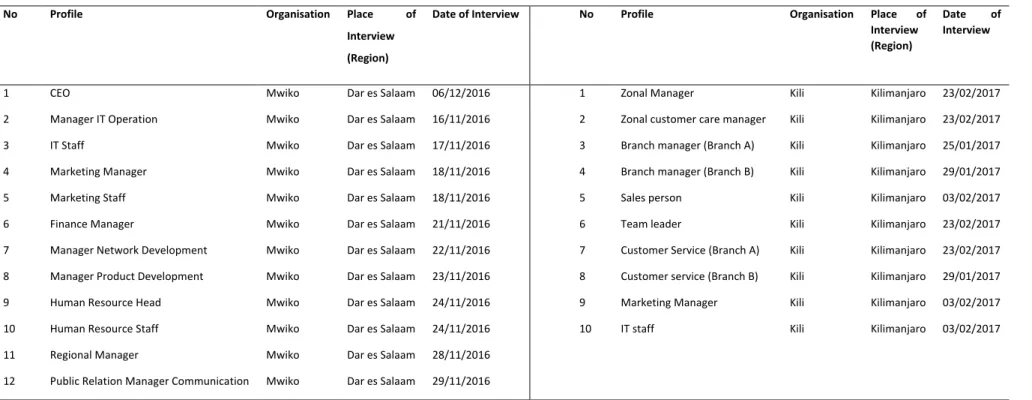
Appendix 3: Interviews Conducted in Telecom organisations ... 245
Appendix 4 Ethical Clearance ... 247
Appendix 5 SMMUCo Letters ... 248
Appendix 6 Participant Consent Form ... 250
List of Figures
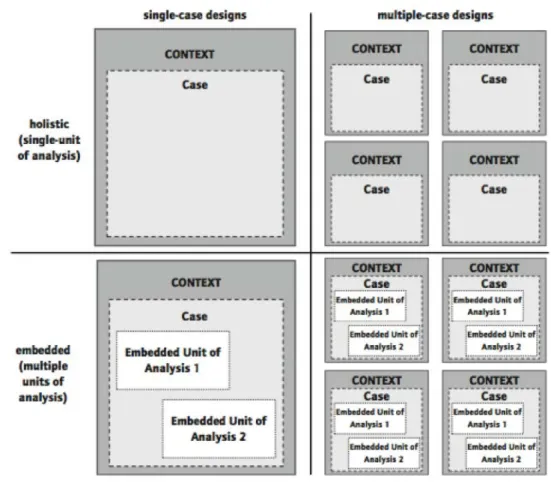
Figure 1 Basic Types of Case Study Design ... 62
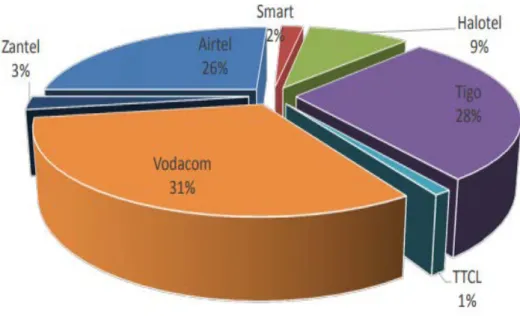
Figure 2 Telecom Subscription Market Share in Tanzania ... 69
Figure 3 Analysis of Social Media in the Tanzanian Telecom Case Organisations ... 85
Figure 4 Telecom Subscription Market Share in Tanzania ... 93
Figure 5 Trend of Internet Penetration in Tanzania ... 93
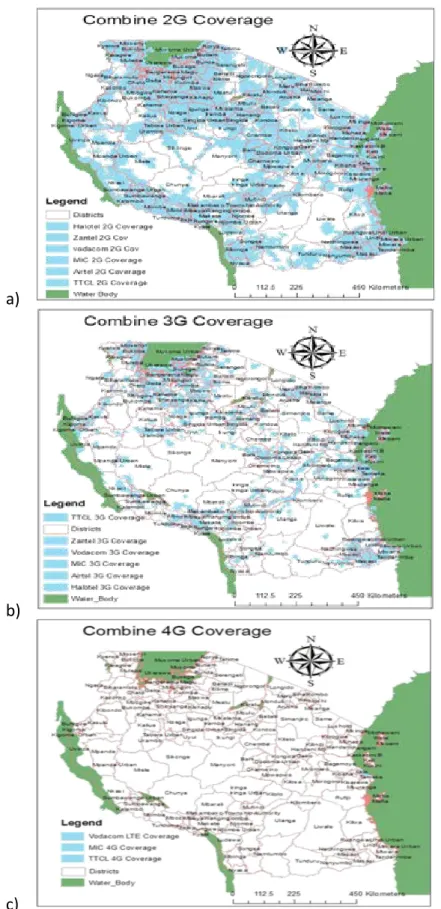
Figure 6 Network Coverage in Tanzania ... 95
Figure 7 Social Media Use in Tanzania ... 97
Figure 8 Imbrication Process ... 195
List of Tables
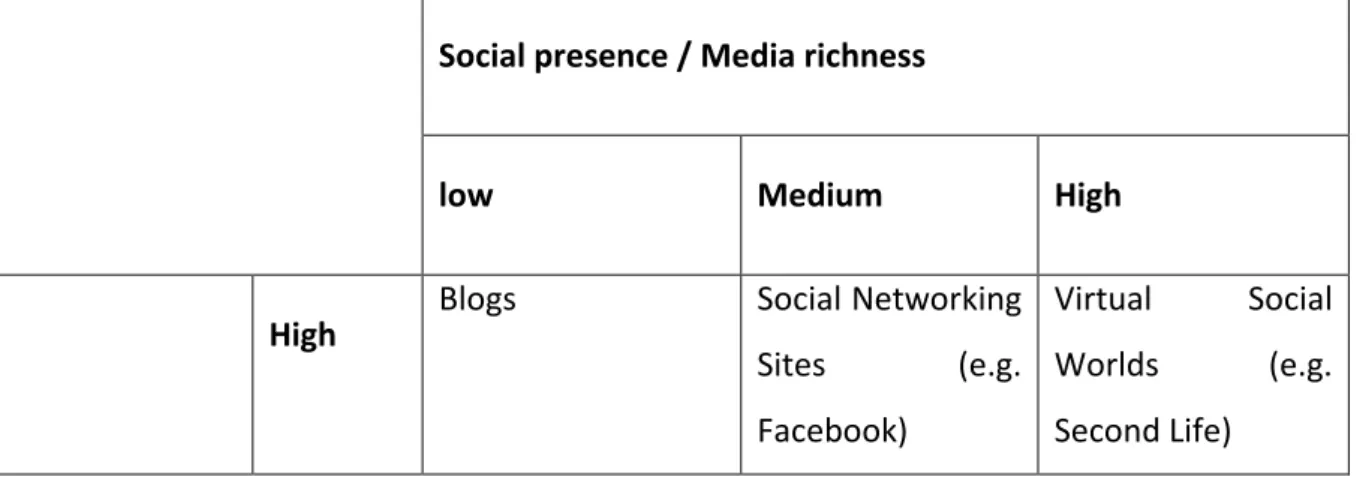
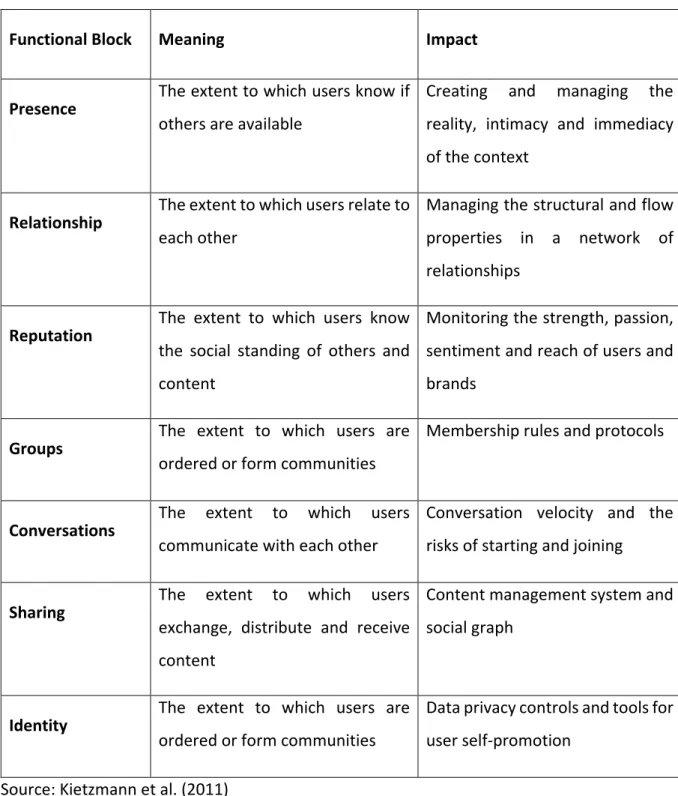
Table 1 IT impact on business process ... 23 Table 2 Types of process ... 24 Table 3 Classification of social media by social presence/media richness and self-representation/self-disclosure ... 40 Table 4 The functional block table of social media ... 42 Table 5 Differences between social media and traditional information technologies .. 44 Table 6 Distinctions between qualitative and quantitative data ... 60 Table 7 Interviewee profile ... 76 Table 8: Popular social media platforms used by telecom organisations in Tanzania 100 Table 9 Service packages ... 126
1
Chapter I: Introduction
1.1 Research Background
Over the past decade, organisations have encountered social media platforms such as Facebook, Twitter, Instagram, YouTube, WhatsApp and Snapchat. Today, most of these platforms have more than a billion users (Piskorski, 2014). Treem and Leonardi (2012) describe social media as a new class of Information Technology (IT) that offers affordances such as visibility, persistence, editability and association which previous sets of IT could not achieve, consequently making social media platforms attractive to organisations in advancing their mission. Social media enhances the Information Systems (IS) within organisations (Kwayu et al., 2018a) and consequently increases competitiveness (Aswani et al., 2017). Thus, social media practice, which is the use of social media by organisations, has advanced to mainstream practice (Pillet and Carillo, 2016). In the US, for example, 83% of organisations have adopted social media in their practice (Braojos-Gomez et al., 2015). Social media practice within organisations has become integral to core functions such as marketing, knowledge management and socialisation, consequently improving processes such as customer relationship management and staff relationships (Aral et al., 2013). Academic research has lagged in keeping up with the fast pace of social media practice advancement within organisations: Leonardi and Vaast (2017) have observed that the use of social media within organisations has outpaced empirical studies. For instance, Aral et al. (2013) suggest a deficiency of empirical knowledge on the practice of social media and its impact on processes, structure and strategy. In light of this, it can be argued that there is a need to study social media practice within organisations to understand its impact on processes, structure and the strategy of organisations.
1.2 Research Problem
Although the practice of social media in organisations is thriving (Joos, 2008), organisations are still facing challenges in their social media practices. These challenges include the formulation of social media strategies (Kietzmann et al., 2011); difficulties in the implementation and strategic use of social media (Bharati et al., 2014), organising
changes in organisational structure and processes are required for implementing social media (Aral et al., 2013). In light of these challenges, it can be suggested that there is a need to understand how social media is embedded within organisations and its influence on processes, structure and strategy within organisations, as well as understanding how social media strategy is developed within organisations. These challenges provide the impetus for further empirical research to examine social media practices in organisations.
1.3 Research Focus
In light of the above, the focus of this study is to explore social media practices within organisations and to understand how they influence organisational processes, structure and strategy. Thus, the study concentrates on the analysis of different organisational aspects that influence - and are influenced by - social media practice. Hence, there is a need to appreciate and understand the influence of social media on a variety of processes, structure and strategies within organisations. In view of this, this study adopts a strategy as practice (SaP) perspective as a theoretical lens. A strategy as practice perspective, which considers strategy as a socially situated activity, focuses on activities as the main unit of analysis (Jarzabkowski, 2005). Considering that the focus of this study is to understand the influence of social media on processes, structure and strategy, which are all concerned with the arrangement and flow of activities, the adoption of a strategy as practice perspective as a theoretical lens becomes appropriate to the analysis.
This research focuses on social media; nevertheless, social media is a broad term. It constitutes a wide array of applications such as Facebook, Twitter, YouTube, Wikipedia and blogs. Each of these applications falls into a different classification such as Social Network Sites (SNS), blogs, virtual social world, collaborative projects and virtual game worlds (Kaplan and Haenlein, 2010). This study did not focus on a particular application or any classification. The study conceptualizes social media as a technology: mobile and Internet-based applications which are built on the ideological and technological foundations of web 2.0 that allow the creation and exchange of user-generated content (Kaplan and Haenlein, 2010). This conceptualisation - social media as technology - facilitates a methodological space for exploring social media practice within
media. Hence, it helps to capture the reality centred on social media in organisations, especially when considering the dynamic and complex nature of social media. For instance, it enables an analysis of the co-existence of different social media applications in organisations.
As mentioned above, the focus of this research is on processes, structure and strategy. These three areas of focus within organisations are all concerned with the arrangement and flow of activities. ‘Processes’ are a systematic series of actions directed by organisational members towards a goal (Harris et al., 2013). ‘Structure’ is defined as a pattern of activities where, ideally, every series of actions is functionally related to the purpose of the organisation (Harper, 2015). Similarly, Jarzabkowski (2005) explains ‘strategy’ as a goal-directed activity. Fredrickson (1986) suggests that structure and strategy have a reciprocal relationship. However, despite the reciprocal relationship between strategy and structure, Child (1974) suggests that both environment and technology influence structure and strategy. The influence of environment and technology on activity (process, structure and strategy) informs the scope of this research to focus on: processes, structure, strategy, environment (context) and technology (social media).
1.4 Research Objectives
The main objective of this research is to explore the influence of social media on processes, structure and strategy within organisations. To achieve the main objective this research intends to explore social media practices within organisations through a strategy as practice perspective to understand how social media practices affect processes, structure and strategies within organisations.
1.5 Research Questions
In light of the objective above, this research addresses the following questions:
1. How is social media embedded within an organisation’s processes, structure and strategy?
2. What are the influences of social media practices on an organisation’s processes,
structure and strategy?
1.6 Research Methodology
The objective of this research has influenced the selection of the case study method as guided by the interpretivist philosophy. Two case study telecommunication organisations in Tanzania were selected – ‘Kili’ and ‘Mwiko’ are pseudonyms for the
organisations. Twenty-two semi-structured interviews were conducted from the two case study organisations. Interviewees were staff and managers of different departments from the case organisations. The data was analysed using the reflexive thematic method. Comprehensive explanations for the methodology adopted in this research are discussed in Chapter Three of this thesis.
1.7 Research Context
According to Jacobsson and Linderoth (2010), context influences the adoption and use of information technology. The context of this study is Tanzania, which is an emerging economy and a developing nation. Mercer (2005) suggests that there is still a digital divide between developed and developing nations when it comes to the use of the Internet by different groups of people: i.e. there is a divide between people who have access to the Internet and those who do not. Likewise, Kwayu et al. (2018a) highlight the lack of empirical studies on social media that have been conducted in the context of developing countries. In light of this, Tanzania has a context which can be investigated in order to understand social media practice in organisations that are located in developing countries wherein infrastructural challenges such as inconsistent electricity supply or poor network coverage exist. Such challenges have a direct impact on the performance of social media practice and potentially influence how social media is utilised by an organisation within this context.
The telecommunication (telecom) industry provides an ideal context for examining social media practice because telecom companies belong to high-tech industries, which adopt new technology more quickly as they face fast shrinking product cycles (Belasen and Rufer, 2013). In order to gain insight, this research required access to organisations that use social media and are advanced in this practice. Thus, through their experience, the practitioners in the telecom industry can share their experiences/reality, hence produce knowledge from which insights can be drawn. In turn, this can help us to understand the use of social media in organisations and contribute to the empirical
analysis and knowledge contribution on social media practice within organisations, specifically within a developing country context.
1.8 Significance of the Research
The significance of this research arises from the following points which stem from existing gaps in academic research as well as the significance of social media in organisational practices.
First, research within the context of Tanzania -a developing nation in Africa - contributes to the IS field. Datta et al. (2005) highlight how IS research has neglected focus on Sub-Saharan Africa which is a major region in the second largest continent, hosting more than 33 countries. Tanzania is one of the countries in Sub-Saharan Africa. Research originating from this part of the world is rare and the existing research overlooks some of the fundamental conditions and processes that characterise the environmental context, particularly ignoring the characteristics that illustrate developing nations e.g. poverty and a lack of constant power supply. Furthermore, the consideration of the Tanzanian context in this research helps to advance IS theories by enriching them with context. Theories have been criticised, for example by Avgerou (2017), for being elusive when considering context, and this consequently limits their capacity to explain IS phenomena in developing contexts. Therefore, this research provides a different context to most IS research by considering the context of Tanzania and all the factors involved. This research will put into context the socio-economic and technical challenges in the developing/global south. The findings and analysis in this research will contribute towards bridging the ‘digital divide’ between developed and developing countries.
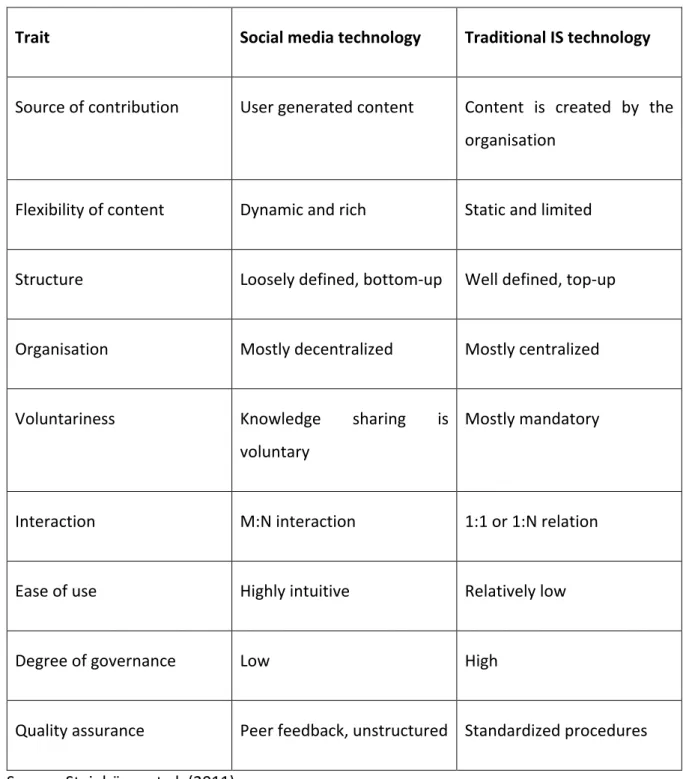
Another significance resulting from this research is that by considering social media which is fundamentally different from traditional IS (Steinhüser et al., 2011), it extends the scope of IS by explaining the impact of social media beyond the limited focus of traditional IS (Kwayu et al., 2018a). Social media extends the sphere of IS as it facilitates communication practices that differ from traditional IS technologies such as email and teleconferencing. Thus, researching the impact of social media within organisations helps us to understand ways in which technology is mutually constituted with the organisational context in which it is embedded (Dwivedi et al., 2015; Treem and Leonardi, 2012). Therefore, this research is significant in that it highlights how social
Studying and examining processes, structure and strategy contribute to our understanding of the systematic adoption of social media in organisations and how it impacts upon different operations within them. Furthermore, understanding the influence of social media on processes, structure and strategy will help organisations that are struggling with organising and managing social media within their organisation. Practically, the research will help organisations to institute broader changes in organisational structure and processes that are necessary for optimising social media implementation. Theoretically, the study will enhance our knowledge of the emergence of social media strategy within organisations and the implications for processes and structure, an area in which Aral et al. (2013) have highlighted a deficiency in the literature.
Finally, this research will help us to understand social media practice; in particular, how social media is effectively appropriated and embedded within organisations. The main purpose is to understand the constitutive role of social media practices in the on-going use and change of technologies in organisations (Orlikowski, 2000). Thus, understanding the use of technology differentiates technology as artefacts and technology in practice, consequently explaining why technological advancement/adoption measures such as investments in technology are insufficient to explain organisational change and effectiveness. Therefore, studying social media practice helps us to understand its value contribution in the organisation. Furthermore, the exploration of social media practice enhances our understanding of the effects of social media in particular areas, for instance the co-existence of social media applications in the organisation as well as how social media blends with the traditional IS within the organisation.
1.9 Research Contribution
This thesis makes the following contributions to theory and practice:
1.9.1 Contribution to theory
Primarily, the results of this research demonstrate how context, competition and behaviours influence how social media is embedded in processes, structure and strategy within organisations. The results highlight that social media practices are appropriated and enacted from the context in which the activities are situated. This contribution advances the findings of Mohajerani et al. (2015) that social media practices were
appropriated from another context by showing that social media practices are enacted from the context in which social media is practiced. In addition, competitive pressure influenced organisations to adopt and embed social media into their processes, structure and strategy. Competition made organisations exhibit similar structures due to mimetic practices. This phenomenon is best explained by the concept of Isomorphism from ecology which explains why organisms from the same environment come to exhibit similar features. Likewise, behaviours associated with social media enacted structures within organisations. Therefore, with regards to the first question which asks, ‘how is social media embedded within an organisation’s processes, structure and strategy?’, this research suggests context, competition and behaviours influence how social media is embedded in processes, structure and strategy within organisations.
Second, this research contributes to IS research by demonstrating that the influence of social media on processes, structure and strategy is mainly seen through information and knowledge sharing. The information and knowledge that is shared through social media platforms such as WhatsApp affect processes in day-to-day activities within organisations. In addition, the research contributes to IS literature by demonstrating that organisational structure influences planned social media practice while emergent social media practices influence structure within the organisation. This is because planned social media practices are enabled and constrained within organisational structure, whereas emergent practices can circumnavigate organisational structure. Furthermore, this research contributes to the strategy literature by identifying seven elements of development of social media strategy. The seven elements are: adoption, recognition, structure, strategizing, resources, management and processes. The contribution on strategy development is different from other social media strategy development approaches such as that of Piskorski (2014) which is based on generic business strategy or Culnan et al. (2010) which is focused on building relations with customers. Further discussion on the contribution is provided in the Conclusion chapter.
1.9.2 Contribution to practice
This thesis provides insight on how organisations can manage and maximise the impact of social media on organisational processes through providing IT skills and training to
management at the helm of emergent social media practices. Furthermore, this research offers practical insight into how to manage emergent social media practices in an organisation. Furthermore, the research shows the importance of flexible structures in accommodating social media practices especially the planned social media practices. Such findings could be of benefit to organisations using social media because they will increase efficiency and effectiveness in organizational strategies and processes. 1.10 Overview of Chapters
This thesis is structured and divided into six chapters, they are: Introduction, Literature Review, Methodology, Findings, Discussion and Conclusion. The first chapter, the Introduction chapter, contains the background of this study, research problem, the focus of the research, the objectives, questions, brief outline of the adopted methodology for this research, the context of the research, significance and an outline of the contributions of this research.
The second chapter, the Literature Review, contains a review of literature and theory. It starts by reviewing theories that explain the influence of technology on organisations, then proceeds to review the literature on processes, structure and strategy. Following this is a review of the concept of social media and literature of social media impact in organisations. It then presents and discusses the gaps in the literature to identify the research questions.
Chapter Three is the Methodology chapter. It discusses the philosophical approaches to empirical research and selects a suitable approach for this research. It also discusses the research methods, particularly the case study strategy. The chapter explains the research design, the selection of case studies, access and data collection, data analysis and ethical issues.
The findings form Chapter Four of this thesis. The chapter presents data that was collected in the two case study organisations. It starts by providing the context of Tanzania and an overview of the telecom industry there. It then continues to explain the use of social media accounts by the two telecom case study organisations. In addition, the findings chapter discusses how social media is a promotional tool of the telecom organisations - named ‘free social media’ – which is free Internet access to social media on selected platforms (i.e. Facebook, WhatsApp, Instagram and Twitter). Furthermore,
it presents the use of WhatsApp for internal communication in the case study organisations.
Chapter Five discusses the findings in light of the literature review and theory. The chapter considers different factors/aspects of the mutual influence; that is, how different factors are influenced by and influence the practice of social media in the case study organisations as presented in the findings chapter. The areas of focus in this chapter includes: context, the entanglement of social media with organisational practices, development and management of social media practice in the organisations and the impact of social media on organisational structure and processes.
The last chapter is the Conclusion. The conclusion discusses the contribution made by this research; in particular, the implications for theory and practice. It also discusses the limitations and recommendations for future research.
Matrix Summary of the Chapters Chapter 1: Introduction
• Background of research
• Research problem, research focus
• Research objective, question and methodology • Research context, significance and contributions
Chapter 2: Literature review
• Literature review on influence of technology in organisation • Processes, structure and strategy
• Strategy as practice theory • Social media in organisation • Gaps in literature
Chapter 3: Methodology
• Philosophical perspective on research • Research design, methods and analysis • Ethical issues
Chapter 4: Findings Thematic Dimensions
• Context of Tanzania and the telecommunication industry • Social media accounts
• ‘free social media’ service • WhatsApp communication
Chapter 5: Discussion
• Context, competition, behaviours • Adoption, recognition, management • Structure, processes, capacity • Knowledge management
Chapter 6: Conclusion • Thesis contribution
• Implication for research, theory and practice • Limitation and future research
2
Chapter II: Literature Review
2.1 Introduction
For the last two decades, business organisations have experienced the emergence, rise and use of social media platforms which have fundamental differences when compared to previous sets of information technology (IT) (Steinhüser et al., 2011). In 1997, the American Online (AOL) executive Ted Leonsis suggested the need to provide customers with ‘social media, a place where they can be entertained, communicate and participate in a social environment’ (Bercovici, 2010). In the same year, SixDegrees.com, which is
considered the first social media application, was launched. In the early 2000’s an
increasing number of social media applications started to emerge. From 2003 to 2006 popular social media applications that we have today were launched, including LinkedIn, Myspace, YouTube, Facebook and Twitter (Boyd and Ellison, 2010). Today, most of these applications have more than a billion users (Piskorski, 2014) making them very attractive platforms for organisations to advance their missions (Mangold and Faulds, 2009; Weinberg and Pehlivan, 2011). Despite the attraction of social media platforms to business organisations, Aral et al. (2013) suggest that business executives are struggling to understand what broader changes in processes, structure and strategy are required for the implementation of social media in organisations. Therefore, considering the rise in use of social media and its challenge to business organisations, this literature review is going to explore the extant literature on the role of technology in organisations to investigate the potential impact of social media on processes, structure and strategy in organisations.
Following the above explanation, the aims of the literature review are five-fold. First, to review scholarly analyses of the role of technology in organisations and theories arising from those analyses that can help in the study of the impact of social media on an organisation’s processes, structure and strategy. Second, to analyse the literature on
processes, structure and strategy in organisations. This will provide insight on the focal aspects of this research which are processes, structure and strategy. Third, to review the literature of strategy as practice perspective, which is the adopted lens for this study. This will help to understand the undertaken assumption and principles that will assist in
strategy. Fourth, to review the conceptualisation of social media and the impact of social media in organisations. This will help to provide understanding of social media and its impact on organisation, which forms a basis for the gaps in literature. Finally, to identify gaps within the literature and develop research questions.
2.2 The Influence of Technology within Organisations
With the advent of information systems (IS) and the consequent integration of technology by organisations, scholars (such as Perrow, 1967; Pfeffer and Leblebici, 1977; Trist, 1963) became concerned with the increasing influence of technology within organisations (Orlikowski, 2000). Specifically, they wanted to know how technology impacts the organisation. During the past fifty years, as technology adoption in organisations has continued to rise, different theories have been developed to assist in the understanding of the role and influence of technology within an organisation (Orlikowski, 2000). Understanding and considering the differences and the development of such theories is essential for the selection of an appropriate theory to adopt in this research which looks at the impact of social media in organisations. The theory that will be adopted has implications on what is included and excluded in the analysis (Leonardi, 2012). Hence, the following is a review of the IS theories which will guide the selection of the theoretical lens that will be adopted in this research.
Earlier scholars such as Perrow (1967) and Pfeffer and Leblebici (1977) assumed the role of technology to be deterministic, i.e. the technological determinism view, - taking technology as an external artefact that affects the organisation. This means that technology affects the business processes and structures of the organisation (Dafoe, 2015). In other words, technology determines the reality of the organisation (ibid). The technological determinism view assumes that particular forms of technology are associated with particular organisational arrangements (Woodward, 1958). For example, Steinhüseret al. (2011) associate traditional IS with centralised organisations
and social media with decentralised organisations. For instance, information in Enterprise Resource Planning (ERP) is structured for certain people with certain positions in the organisation to access, often people at the top of management. On the other hand, with social media, information is unstructured, and it is visible to many and can be created by anyone in an organisation. In addition, Mutch (2008) explains
forms of results and only those results. Thus, a deterministic view will hold that an organisation can interact with customers because social media allows interaction between users. Therefore, the technology facilitates (determines) interaction. This view captures the determining role of technology but fails to explain the role of humans in using technology to affect organisations (Orlikowski, 1992). For example, it fails to explain the role of human beings in determining the nature of the interaction, which significantly has an impact on an organisation (ibid). Nevertheless, adopting the technological determinism view is useful to explain the technical functionality of social media (Dafoe, 2015). It is, however, still limited in showing how human beings affect those functionalities in an organisation (Mutch, 2008). Moreover, with the advancement of technology, the deterministic view becomes limited. This is because technology has penetrated and allowed the facilitation of various spaces for interaction within organisations. Hence, making it difficult to measure the deterministic role of technology in comparison to other players in the same spaces (Leonardi and Jackson, 2004). This suggests that other agencies such as social agents i.e. human beings cannot be ignored when explaining change in organisations (ibid).
The limitations of the deterministic view, in considering the role of humans using technology, gave rise to the ‘strategic choice’ model, which views technology as an instrument designed and appropriated by human beings (Child, 1972). This model highlights the critical role played by organisational politics and different stakeholders in shaping organisations where external factors (technology) are not regarded as determining but as contextual referents for decision-makers when designing an organisation and establishing its purpose (McLoughlin, 1999). With strategic choice, people in organisations play a vital role in deciding how to use technology. For example, within the context of social media, the strategic choice model suggests that people within an organisation consider how to use social media for interaction with customers. This means that people within organisations decide the role that technology plays within their organisation. Though this view can explain how social media is used, it is limited in the sense that it fails to explain the role of technology in defining the structures and processes of organisations (Orlikowski, 1992). Braojos-Gomez, et al. (2015) suggest that technology is crucial for organisational competence, for example an organisation with more technological infrastructure is likely to have staff with familiarity and experience
in technology compared with organisations with less or no technology. Taking this into consideration, the strategic choice model undermines this influence of technology to inform structures and processes of organisations. For example, staff will have no choice when there is insufficient technology in an organisation. Therefore, the strategic choice of people is limited or constrained by the available technology. This is because technology embodies structure which can limit the decisions of the user (Orlikowski, 1992). Thus, technology becomes integral to the processes and it is difficult to separate its role in the processes, structure and strategy of the organisation. For example, social media is designed to facilitate interaction between multiple users and due to this, it enables interaction between customers: an aspect that was not available with previous technology. In this way, social media limits the ability of organisations to control information between customers (Gallaugher and Ransbotham, 2010). This makes the strategic choice model prone to similar criticism as technological determinism in ignoring an equally important factor of analysis of the role of technology within an organisation, which is the material agency (Child, 1997; Orlikowski, 1992).
The sociotechnical perspective, as highlighted by Trist (1978), emerged as a means of countering the flaws of the deterministic and strategic choice models. The primary concern of the sociotechnical perspective was to optimise the interaction of technology and humans in order to increase organisational performance. The sociotechnical view established that work is not just a matter of technical arrangement but includes significant social and individual meaning (Mutch, 2008). Hence, the merit of this perspective is that it addresses the intertwining of humans and technology and, by doing so, it helps to explain organisational stability and change. The sociotechnical perspective explains that organisational change is based on the assumption that organisational outcomes such as job productivity or satisfaction could be manipulated by simultaneously optimizing social and technical agents (Davis and Taylor, 1972). For example, employees might be reluctant to use advanced technology in fear of job insecurity, thus, to increase productivity the organisation will also need to satisfy the social interest of increasing job security. Thus, from a social media perspective, a sociotechnical system will look at both the role played by human beings in deciding how to interact with social media, how social media is helping people to interact and what is the combined effect of the human choice and technological artefacts of social media in
creating the reality of an organisation. This means that putting into consideration both human choice and technological structure has the effect of shaping the form of the organisation (McLeod and Doolin, 2012). Thus, in line with the sociotechnical approach, this suggests that the technical capabilities of social media, to allow multiple interactions and people’s choice of how to use those functionalities, has the effect of defining the
interaction processes and structures within an organisation. However, the main flaw of this theory is that at times it favours either humans or technology (Cecez-Kecmanovic, et al., 2014). For instance, Mutch (2008) suggests the sociotechnical model is marked by elements of technological determinism. Hence, sociotechnical analysis considers technology as a variable which underplays the human agency, especially in relation to the power and politics in organisations (ibid). Favouring one over the other is a problem because it sets up the same problem as with earlier theories – like the deterministic and strategic choice model – thus, potentially failing to address the complex interaction
among agents (i.e. people and technology), structures and processes.
Another view perceives technology as a ‘trigger of structural change’ meaning that
technology is an intervention in the interaction between the human and the organisational structure, with the likely outcome of organisational structure being influenced (Barley, 1986). In other words, this means that technology is built by human
beings, so it contains a particular form of structure (technology structure), which will have an impact on the organisation’s structure once the technology is in use (ibid). This perspective, thus, assumes that technology is a social instrument, fixed across time and context (Barley, 1986; Orlikowski, 1992). The trigger of structural change approach suggests that a technology, such as social media, mediates between human action and organisational structure, and it is a mediation process that affects organisational structure (Barley, 1990). For example, social media enables interaction between users but in a hierarchical organisation the interaction between a subordinate and a manager is likely to be intercepted by a secretary. However, through social media, the subordinate may bypass the secretary and interact with the manager directly. In a way, social media in this example is shaping the structure and processes of interaction within this organisation. Therefore, in this way, the technology (social media) becomes a social object rather than a material object and the structure is a process rather than an entity (Barley, 1986). Orlikowski (1992) criticises this perspective by arguing that the
assumption may hold in certain circumstances but not in information technologies, as the appropriation of technologies depends on the users, the context of use and with time. For example, although social media may exclude the secretary who acts as a mediator between the subordinate and the manager, still the subordinate might find it useful to use the mediation of the secretary due to social factors such as morality. Despite this criticism from Orlikowski (1992), when considering technology as a trigger of structural change, there are some instances where social media practices have influenced the structure of organisations. For example, Huang et al. (2013) demonstrate how social media has enabled more interactions, reach and richness in communication, not only among peers in the same teams, but also between managers and employees. Similarly, Standing and Kiniti (2011) highlight how social media has increased the flow of communication between employees in different hierarchies in an organisation. Other perspectives in the IS literature about the relationship between technology and organisations include the Actor-Network Theory (ANT) (Latour, 1996), the practice perspective theory (Orlikowski, 2000) and more recently, the sociomaterial perspective (Doolin and McLeod, 2012; Orlikowski, 2007). ANT is like the sociotechnical system in the sense that it removes the tendency to emphasise humans over technologies or technologies over humans (Kautz and Jensen, 2013). ANT combines human and non-human actors to describe instead actants; these are people, environment, technology, knowledge and social structure (Latour, 1996). Empirical analysis done using ANT is appropriate for describing a social phenomenon. The focus of ANT is the relationship between actors and how they perform a temporary stabilisation of a social arrangement. For instance, in studying social media in organisations, ANT is suitable in describing a social phenomenon because of its focus is on how actants assemble and maintain networks of relations to achieve an outcome (Latour, 2005). The main shortcoming of ANT is its inability to explain the structure through which the interaction occurs. This is because ANT is more concerned with accounts that trace the connectivity of actors rather than the social structure in which the events occur. For instance, Latour (2005) argues that there is no society, no social realm and no social ties. This argument undermines social structures which exist and their influence on how they shape the use of technology in organisations. In addition, though Mutch (2008) suggests that ANT has provided a useful language for thinking about the process of embedding technology in
organisations, he criticises ANT’s language on material artefacts as having an agency that
can seem outlandish. For example, ANT suggests inanimate objects or material artefacts play an important role in the construction and maintenance of networks of action. In equating human and non-human things as actors, it underplays the role of humans in interpreting information, taking an interest and having intentionality.
With regards to the practice perspective, which is considered to be a family of theories rather than as a single theory (Tavakoli et al., 2017), Orlikowski (2000) advances it from the structuration theory. Structuration recognises a social process that involves the reciprocal interaction of human actors and structural features of the technology (Orlikowski, 1992). In this theory, the role of technology is to facilitate mutual interactions between humans and technology itself - making it both a structural object as well as a social construct. Orlikowski (2000) argues that the practice perspective describes emergence rather than embeddedness of technological structure; and for enactment rather than the appropriation of technology use in an organisation. Thus, the practice perspective perceives practice as a key means of understanding human behaviour. Practice includes aspects of intelligibility and allows people to respond to matters in different ways (Cecez-Kecmanovic, et al., 2014). In other words, practice perspective acknowledges that human action involves and can be affected by technology and structure; however, human action needs to be separated, as it can only be associated with determination and emotions. So, when people engage with technology, new structures of technology use emerge and are enacted in practice. For example, when people engage with the interactive features of social media, a practice emerges, and the emerged practice enacts the structure and the process of the organisation. Thus, the idea that organisational structure and policies can be made concrete by material form is rejected by the practice perspective (Mutch, 2019). Therefore, with this theory, the structure of an organisation emerges and is enacted in practice, and practice is the recursive pattern of interaction between people and technology in an organisation. Hence, the practice theory is a suitable view that can be applied to investigate the impact of social media on processes, structure and strategy in organisations.
Furthermore, Orlikowski (2007) conceptualised practice as material since doing any activity depends on the material arrangement in which the activity is taking place. She
argued that, ‘materiality is integral to organising, positing that the social and the
material are constitutively entangled in everyday life’. This means that the effect of
technology also depends on the environment in which the activity is situated. In addition, Orlikowski (2007) explained that the entanglement of material and human is not a one-way interaction or a mutual (two-way) reciprocation, but their relationship is inextricably related - such that there is no material without social and there is no social without material. Thus, the practice perspective acknowledges that although the feature of the technology may be the same to all people, their affordances of that technology are not the same due to the non-neutral nature of technology symbolising different values to different people, who in turn have their specific interpretations of the technology (Leidner and Kayworth, 2006). Thus, applying this argument to social media, the practice perspective suggests that different people (organisations) will find different uses for social media applications even when the same technology is available to all. The conceptualisation of practice as material signifies a shift in the conventional framing of organisational practice as ‘social practice’, as such, this framing reinforces the idea that
the material is not intrinsic to organising. Thus, Orlikowski (2007) suggested viewing organisational practice as sociomaterial which signifies the constitutive entanglement of the social and the material in the everyday life of organisations. Cecez-Kecmanovic et al. (2014) argue that it is important to understand the sociomaterial as a more abstract material-semiotic approach, which does not necessarily imply any particular theory or methodology. In addition to this, they argue that sociomaterial thinking is influenced by other theories such as those discussed above (i.e. ANT, the sociotechnical and structuration).
The sociomaterial perspective is the most recent IS view, which views technical and social organisational practices as inherently inseparable (Orlikowski, 2007); as explained
above, that material and human are inextricably related, that there is no social without the material and vice-versa. Leonardi (2013) explains the sociomaterial as a perspective that focuses on how actions are performed in practice. The sociomaterial perspective stems from the practice perspective but differs from it in that the relationship between technology and the social sphere is ontological (Orlikowski and Scott, 2015). This means that the social and material do not exist as separate entities. The ontological difference is due to the footing on agential realism, which makes the social and material inherently
inseparable (Barad, 1999). Thus, conducting analysis using the sociomaterial, one needs to perform an ‘agential cut’ on the practices, which are enacted in the intra-action
between the social and the material. An agential cut is what is being included or excluded from an observable act (Barad, 1998). An agential cut is performed because you cannot separate something that is inherently inseparable. Agential cuts can be conducted at any point and will have different results depending on where the cuts happen. Important to note is that agential cuts are inherently ontologically indeterminate (Barad, 2003) - meaning that rather than having distinct boundaries, properties and distinction, they are contingently performed in practice rather than being available naturally (Scott and Orlikowski, 2014). To agential realists, there is no bad or good cut. Thus, by breaking the dichotomy established in earlier theories, agential realism focuses on practices that are not undertaken by people in roles but on social practices enacted with the technology that instantaneously constitute and organise phenomena. This means that the reality of organisations is a result of the social practices and material arrangements within the organisation. Mutch (2013) argues that sociomateriality is taking a wrong turn by using agential realism, thus, proposing critical realism as an alternative philosophical background for sociomaterial studies. In addition, Mutch (2019) continues to criticise the sociomaterial perspective (based on agential realism) claiming that it gives us no analytical purchase on those aspects of social life that privilege certain aspects of materiality and shape organisational life.
The review above shows how different perspectives can shape our understanding of the role and influence of technology in an organisation. The review is important as it shows the spectrum and development of how IS researchers have theorised ways of investigating and understanding how technology affects organisations in terms of processes, structure and strategy. Significantly, it shows how adopting a theory can have a methodological impact when analysing the influence of technology in the organisation (Leonardi, 2013). Throughout the review the most significant issue was the extent to which the interaction of humans (social) and technology (material) influence process and structural change in the organisation. Following the review, the practice perspective is deemed as the most appropriate theory for this study due to the following reasons. First, the practice perspective is taken to be one of the appropriate theories for this study since it deals with areas that are crucial to understanding the impact of social
media in organisational strategy (Huang et al., 2014). These areas include social processes, mutual interaction (between humans (e.g. employees) and technology), as well as technology and structure. The practice perspective recognises the integral role of technology and the mutual processes that go on in an organisation. Practice, as argued in the practice perspective theory, is key to understanding behaviour. The use of social media in an organisation is a mutual construct that is determined/influenced by many factors and, in turn, it affects processes as portrayed in the discussion in the section 2.4.1 below. Taking the practice perspective approach is a suitable perspective to adopt in order to understand the impact of social media on an organisation’s
processes, structure and strategy without being biased by a techno-centred or a human-centred perspective (Cecez-Kecmanovic et al., 2014). In light of this, and considering the ongoing objective of IS research to understand the impact of technology on organisational processes, structure and strategy, the next section is going to review literature on processes, structure and strategy in relation to information technology. 2.3 Processes, Structure and Strategy within Organisations
2.3.1 Organisational processes
Business processes have long been of interest to Information Systems (IS) researchers. Davenport and Short (1990) define business processes as the design of workflow and processes within and between organisations. Furthermore, they explain business processes as a set of logically-related tasks performed to achieve a defined business outcome. Similarly, Harris et al. (2013) explain processes as a systematic series of actions directed by organisational members towards a goal. Also, Venkatraman et al. (1993) explain business processes as all work that supports and shapes the ability of a business to execute a strategy. These definitions correspond with Pall’s (1987, p. 25) definition of process which is: ‘logical organisations of people, material, energy, equipment and procedures in work activities designed to produce specified end results’. All these definitions include a set of activities and an expected outcome from that set of activities. The decomposition of organisational activities into business processes enables the analysis of specific inputs and their role in organisations. Thus, viewing organisational activities as processes enables the examination of the role of IT in different parts of organisation.
According to Seddon et al. (2010) IS systems integrate key business processes within and between organisations by offering improved integration of data, optimization of processes and enabling management with access to information. Mutch (2010) suggests that Information Technology (IT) capabilities such as innovation and agility, which are supported by computers, software and telecommunications have a more fundamental role than automating and standardizing organisational activities in that they can alter the way business is done. For instance, Huang et al. (2014) provide a case of DaM, a leading ticketing company in China, which was innovative in facilitating the use of social media interaction between performing artists and fans to provide an anchor for determining ticket sales. Enabling interaction between performing artists and fans influenced changes in processes related to ticketing practices; for example, it eliminated the use of tier-one ticketing agents. Recognising the ability of IT to reshape the way business is done accentuates the importance of understanding organisational activities. Davenport and Short (1990) suggest that organisational activity should be viewed as processes rather than a collection of individual or functional tasks. Viewing organisational activities as processes enables management to design the activities that increase effectiveness in both the manufacturing and services environment.
Additionally, Scheer and Nüttgens (2000) suggest that a business process is a relevant procedure for adding value to an organisation. They argue that the main point of IS in business process is to add value to the business process by increasing effectiveness and optimization of the process (ibid). For instance, social media (TripAdvisor) helped Village Inn to increase their revenue by nine-fold after it was embedded in its business processes (Scott and Orlikowski, 2012). However, the ability to create value varies from one organisation to another for several reasons. For instance, in the case of social media, Braojos-Gomez et al. (2015) suggest factors such as social competitor pressure, IT infrastructure capability and organisational infrastructure capability are key influences on developing competence. Nonetheless, the impact of IS on business processes can vary for the following reasons. First, Leonard and Higson (2014) suggest that the impact of IS on business process may either have a direct effect, tangential or no impact at all on business processes. For example, Marion et al. (2014), when exploring the impact of social media on the product development process, found that twitter had no impact on team collaboration and concept generation. Second, Leonard and Higson (2014) argue
that strategies are dynamic and emergent; thus, an effect of IS on the process may not result in long-term benefit. Last of all, flexible business processes are hard to standardize or automate (Leonard and Higson, 2014).
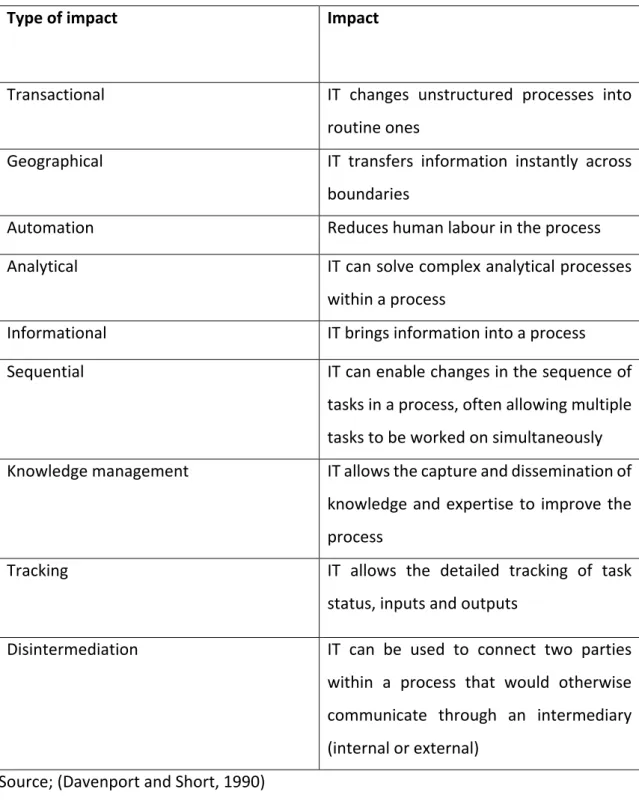
The impact of IS on business can be varied. For example, the use of IT to automate a process may speed up the process whilst reducing costs through cutting labour, hence providing value to the organisation. Davenport and Short (1990) summarise several ways in which IS impacts upon business processes -see Table 1 below.
Table 1 IT impact on business process
Type of impact Impact
Transactional IT changes unstructured processes into
routine ones
Geographical IT transfers information instantly across boundaries
Automation Reduces human labour in the process
Analytical IT can solve complex analytical processes
within a process
Informational IT brings information into a process
Sequential IT can enable changes in the sequence of
tasks in a process, often allowing multiple tasks to be worked on simultaneously Knowledge management IT allows the capture and dissemination of
knowledge and expertise to improve the process
Tracking IT allows the detailed tracking of task
status, inputs and outputs
Disintermediation IT can be used to connect two parties within a process that would otherwise communicate through an intermediary (internal or external)
The Table 1 above is significant in highlighting the types of impact that technology can have on business processes. However, it is more important to understand how social media impacts the process. For instance, in the table above Davenport and Short (1990) suggest that technology can have a transactional impact by changing an unstructured process into a routine. Steinhüser et al. (2011) suggest that social media differs from traditional IT by having a loosely defined structure which can potentially complicate a process. On the other hand, social media can impact business processes in the same way as suggested by Davenport and Short (1990): for example, in the case of the DaM ticketing company – as discussed above - social media had a disintermediation effect by removing the need for tier-one agents in the ticketing process (Huang et al., 2014). The impact is significant and thus, there is a further need to explore and understand how social media impacts business processes.
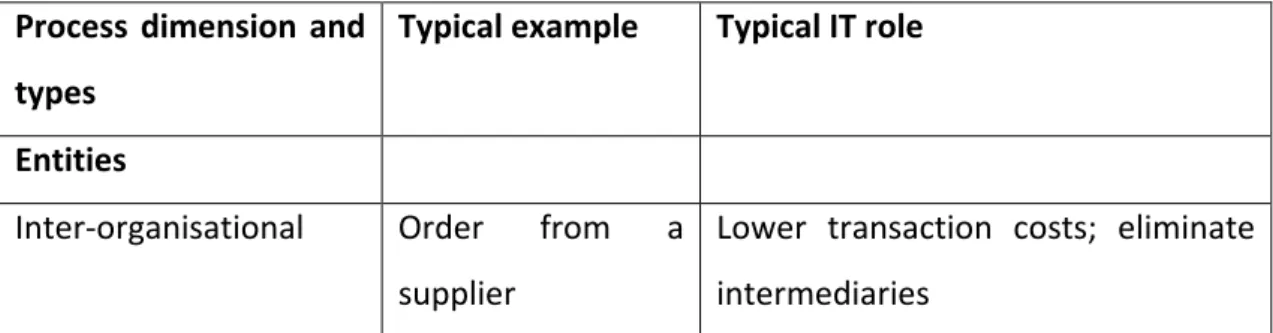
According to Markus et al. (2000), examining business processes helps to understand the impact of IS in organisations and the emergent changes. Due to the importance of process in understanding the IS impact in organisations, as highlighted above, it is significant to understand the characteristics of a business process. Davenport and Short (1990) identify two characteristics of business processes, these are: first, they have customers, who are either external or internal to the organisation. This is because a business process must have an outcome as we have learned from the definitions above. The second characteristic of the business process is that they cut across organisational boundaries. Business processes can go through different business units within organisations; hence, business processes are independent of the organisational structure. Extenuating from these characteristics of business processes, one can identify different types of process. Davenport and Short (1990) classify the types of process in Table 2 below.
Table 2 Types of process Process dimension and types
Typical example Typical IT role Entities
Inter-organisational Order from a supplier
Lower transaction costs; eliminate intermediaries
Inter-functional Develop a new product
Work across geography; greater simultaneity
Inter-personal Approve a bank loan
Role and task integration
Objects
Physical Manufacture a
product
Increased outcome flexibility; process control
Informational Create a proposal Routinizing complex decisions Activities
Operational Fill a customer
order
Reduce time and costs; increase output quality
Managerial Develop a budget Improve analysis; increase participation
(Davenport and Short, 1990)
Although IT plays a fundamental role in enhancing business processes, still there are several management challenges facing IT-enabled processes within an organisation. First, management roles may become complicated because processes cut across various parts of organisational subunits (Ter Hofstede and Weske, 2003). This means that the management that oversees the IT implementation may have to intervene in the jurisdiction of other management (e.g. other functional managers) within the organisation hence potentially leading to management conflicts/issues. Second, IT-enabled processes can conflict with the structure of organisations therefore raising the issue of reconciling processes with the traditional functions of organisations (Davenport and Short, 1990). Third, IT may require new skills in the organisation (Wagner et al., 2014). Employees in both the business and IT units have to learn how to use the IT in order to increase IT utilisation within the business processes. This highlights the significance of the hybrid debate - hybrids are people with strong technical skills and adequate business knowledge and vice versa (Earls and Skyrme, 1992). Furthermore, IT-enabled processes require continuous improvement (Davenport and Short, 1990) as a way of perfecting the process. Also, the fact that business strategy is dynamic and emergent means that continuous improvement of IT-enabled processes is an issue to be considered by management. This echoes Tempini’s (2014) suggestion that for
organisations to obtain value from social media they need continuous design and redesign of architecture and data structure; thus, changing processes within the organisation.
2.3.2 Organisational structure
Organisational structure has several definitions. According to Harper (2015), structure is a clearly-defined pattern of activity in which, ideally, every series of actions is functionally related to the purpose of the organisation. Bower (1970) defines structure as a context in which decisions are made and observed. In addition, Bower suggests that organisational structure lays out a framework for current operations and channels of strategic decision-making. Thompson (1967) defines structure as an organisation’s internal pattern of relationships, authority and communication. Likewise, Child (1974) refers to organisational structure as the formal allocation of work roles and administrative mechanisms to control and integrate work activities including those which cross formal organisational boundaries. Last of all, Whittington (2010) defines structure as long-term general principles of system ordering.
According to Child (1974), organisational structure has three main dimensions that are: centralization, formalization and complexity. Fry and Slocum (1984) explain centralisation as the extent to which the right to make decisions and evaluate activities is centralised. Formalization is explained by Hall (1977) as the extent to which an organisation deploys rules and procedures to guide decisions and activities. Also, Hall explains complexity as a situation whereby an organisation is composed of many inter-related parts. For example, an organisation that concurrently has several levels, a broad span of control and multiple geographic locations is considered to be a complex organisation. Fredrickson (1986) suggests that organisations which differ in their structure are likely to differ in their strategic formulation process. Furthermore, Fredrickson identifies six characteristics where strategy formulation may differ due to differences in organisational structure. These are: (a) process initiation (b) the role of goals (c) the means/ends relationship (d) the explanation of strategic action (e) the comprehensiveness of decision making and (f) comprehensiveness in integrating decisions. For instance, an organisation that is centralised will have a different strategic