i
Knowledge Management and its effectiveness for organisational
transformation through knowledge sharing and transfer
by
Alfred Hove Mazorodze
Submitted in accordance with the requirements for the degree of
Master of Science
in the subject of
Computing
at the
UNIVERSITY OF SOUTH AFRICA
Supervisor:
Professor Sheryl B. Buckley
ii STUDENT NUMBER: 441-560-57
DECLARATION
I declare that “Knowledge Management and its effectiveness for organisational transformation through knowledge sharing and transfer” is my own work and all the sources that I have used or quoted have been indicated and acknowledged by means of complete references.
I further declare that I have not previously submitted this work, or part of it, for examination at Unisa for another qualification or at any other higher education institution.
………
29 December 2017
Signature
Date
iii
ACKNOWLEDGEMENTS
For advice and ideas rendered to this project, thanks are due to my study supervisor, Professor Sheryl Buckley. She provided generous advice, inspiring guidance and encouragement throughout the 2016/2017 academic year. Most encouraging was her timely feedback and support on critical areas which required expertise. I further extend my gratitude to my co-supervisor, Dr Steven Muragey, who also played a great part in making this research a success. I would also like to thank Mr. Hennie Gerber, a statistician, for calibrating my research instruments in a quantitative manner.
I also thank the following institutions for granting me permission to gather data for my research:
The University of Namibia’s Faculty of Education, Engineering & IT,
International University of Management,
Consulting Services Africa,
Conselect Consulting Engineers and the
Ongwediva Consulting Engineers.
Thanks are also due to all the participants from the institutions mentioned above who participated in this study. I also would like to thank Dr Liberty Muchativugwa, the language specialist who edited my work. Many thanks are also accorded to individuals who assisted but are not mentioned above: your help went a long way in making this research possible.
iv
ABSTRACT
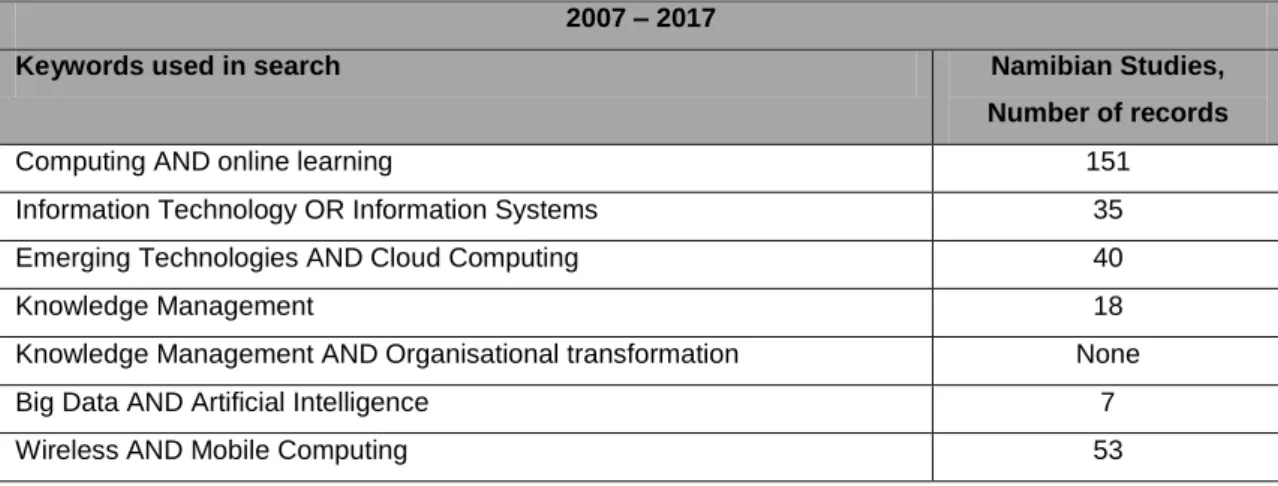
Knowledge Management aims to improve organisational performance and it marks the beginning of organisational transformation. The two types of knowledge managed are respectively categorised “tacit” and “explicit.” This research investigated the effectiveness of Knowledge Management for organisational transformation in Namibia. It was necessitated by the lack of knowledge sharing among employees and also lack of appropriate tools for effective Knowledge Management. Moreover, some organisations engage in Knowledge Management practices without a full understanding of the processes involved. This was determined by a through literature review which indicated that there were very few studies conducted on Knowledge Management in Namibia as shown on Table 1.1 on page 6. The study therefore provided a nuanced understanding of Knowledge Management. The study additionally established that the use of appropriate tools and technologies to better manage the knowledge ultimately improves organisational performance.
The research objectives sought to explore the initiatives deployed to enable knowledge sharing, identify barriers to effective Knowledge Management, analyse the role of social media for knowledge sharing and also measure the effectiveness of the knowledge transfer activities. A mixed method research methodology was used to conduct this investigation. Participants were selected through purposive sampling. Out of 130 questionnaires distributed, 112 were fully completed and returned. This represented an 86.1% response rate. The results of the study revealed that organisational transformation is dependent on effective Knowledge Management. In addition to that, the study found that there is a correlation of 0.6 between Information Technology and Knowledge Management. The study further revealed that initiatives to enable knowledge sharing start with executive support and the employees should be motivated to share knowledge. More so, it was also found that lack of funds for Knowledge Management projects is the greatest barrier in organisations. Effective Knowledge Management is facilitated by social media. Finally, it was found that the most effective knowledge transfer activity is a collaborative virtual workspace followed by Communities of Practice.
Keywords:
Knowledge, Knowledge Management, Knowledge Management Systems, Information and Communication Technology, knowledge sharing, Communities of Practice, Organisational performance, Organisational transformation.v
TABLE OF CONTENTS
Title
Page
Declaration………ii
Acknowledgements………. iii
Abstract………. iv
Table of contents………. v
List of tables………. xiii
List of figures………...xiv
List of abbreviations and acronyms…….……….xvi
Definition of key terms………..………..xvii
CHAPTER ONE: INTRODUCTION AND BACKGROUND………. 1
1.1 Introduction ………..….………1
1.2 Statement of the problem……… 2
1.3 Research objectives………. ………3
1.4 Research questions………..4
1.5 Scope of research……….5
1.6 Significance and purpose of study…... 6
1.7 Limitations of the study………7
1.8 Outline of the dissertation………... 7
1.9 Summary of chapter one………. 8
CHAPTER TWO: LITERATURE REVIEW………. 9
2. Literature review………..9
2.1 Introduction……….. 9
2.2 Foundations ……… 11
2.2.1 Data………11
2.2.2 Information………12
2.2.3 Knowledge……… 12
2.2.4 Wisdom………. 12
2.3 Defining Knowledge Management…………..……….14
2.3.1 Knowledge Management in tertiary institutions………….….17
2.3.2 Knowledge Management in engineering………. 19
vi
2.5 Benefits of Knowledge Management……….. 23
2.6 Challenges of ICTs for Knowledge Management………..25
2.7 Knowledge Management processes………... 27
2.7.1 Knowledge creation……….…. 28
2.7.2 Knowledge capture………28
2.7.3 Knowledge refinement………..28
2.7.4 Knowledge storage………... 29
2.7.5 Knowledge transfer……….………..29
2.7.6 Knowledge dissemination……… 29
2.8 Knowledge Management Systems (KMS)………. 31
2.8.1 Knowledge discovery systems……… 31
2.8.2 Knowledge capture systems………31
2.8.3 Knowledge sharing systems……… 32
2.8.4 Knowledge application systems………..32
2.9 Knowledge Management success factors………..……….. 33
2.9.1 Organisational culture……….. 33
2.9.2 Organisational structure………34
2.9.3 Information Technology infrastructure………... 34
2.9.4 Leadership………. 35
2.9.5 Physical environment………35
2.10 Tools and technologies to support Knowledge Management…..… 36
2.10.1 Information Technology tools……… 36
2.10.2 Non-Information Technology tools………..………. 37
2.11 Barriers to effective Knowledge Management……… 39
2.11.1 Lack of executive support……….. 40
2.11.2 Resistance to change………. 40
2.11.3 Prohibitive organisational structures……… 40
2.11.4 Lack of clear return on investment………41
2.11.5 Lack of budget………. 41
2.11.6 Lack of technological infrastructure………..41
2.11.7 Lack of knowledge sharing culture………42
2.11.8 Lack of appropriate methodologies……….. 42
vii
2.12 Knowledge Management and organisational effectiveness………. 45
2.13 Knowledge sharing in organisations....……… 46
2.14 Motivational factors for knowledge sharing in organisations……… 47
2.15 The significance of social media for Knowledge Management…… 48
2.16 Relationship between Information Technology and KM………50
2.17 Measuring the effectiveness of Knowledge Management …………51
2.18 Knowledge transfer activities……… 53
2.18.1 Communities of Practice……… 53
2.18.2 Succession planning……….. 53
2.18.3 Coaching………... 54
2.18.4 Storytelling………54
2.18.5 Knowledge repositories………. 54
2.18.6 Mentoring………. 55
2.18.7 Job rotation……….. 55
2.18.8 Keenness to share knowledge………..55
2.18.9 Adaptability to organisational culture………55
2.18 Strategies for implementing Knowledge Management………..56
2.19 Organisational transformation…..………. 59
2.20 Change Management strategies……….. 61
2.21 Summary of chapter two ….……….. 63
CHAPTER THREE: RESEARCH DESIGN AND METHODOLOGY………. 64
3. Research design and methodology………. 64
3.1 Introduction……… 64
3.1.1 Research paradigm……….. 65
3.1.2 Research design………..……. 66
3.1.3 Quantitative approach……….…. 68
3.1.4 Qualitative approach………. 69
3.2 Research sites and participants….……… 70
3.2.1 Research sites………... 70
3.2.2 Research participants……….. 71
3.2.2.1 Population ……….. 71
viii
3.3 Data collection instruments………. 73
3.3.1 Questionnaires……….. 73
3.3.2 Interviews………74
3.4 Quantitative data collection………. 75
3.5 Qualitative data collection………...75
3.6 Quantitative data analysis……….. 76
3.7 Qualitative data analysis………. 77
3.8 Validity of instruments………...78
3.8.1 Content validity of questionnaire ………... 78
3.8.2 Content validity of interviews………...78
3.9 Reliability of instruments………... 79
3.9.1 Reliability of questionnaire………...87
3.9.2 Reliability of interviews………...88
3.10 Ethical issues……….. 81
3.11 Summary of chapter three……….………... 82
CHAPTER FOUR: DATA ANALYSIS AND PRESENTATION……….. 83
4. Data analysis and presentation……..……….. 83
4.1 Introduction……… 83
4.2 Biographical information of research participants………... 84
4.2.1 Gender of participants……….. 84
4.2.2 Ages of participants……….. 85
4.2.3 Qualifications of the participants………. 86
4.2.4 Working experience of the participants………. 87
4.2.5 Types of institutions of the participants………. 88
4.3 Analysis of Knowledge Management fundamentals……….. 90
4.3.1 KM activities……….. 92
4.3.2 Experience in KM activities………..93
4.3.3 Knowledge transfer activities……….. 94
4.3.4 Individual rating of knowledge transfer activities………..97
4.4 Analysis of Knowledge Management constructs……….. 98
4.5 Analysis of challenges for ICTs in KM……….. 102
4.5.1 Analysis of computer literacy levels………102
ix
4.5.3 Availability and accessibility of ICT infrastructure for KM………104
4.5.4 Analysis of the training needs on ICT tools for KM ……….106
4.5.5 Analysis of other challenges of ICT tools for KM………..107
4.6 Analysis of initiatives to enable knowledge sharing………... 108
4.7 Analysis of motivational factors for experts to share knowledge……….. 110
4.7.1 Rewards………..111
4.7.2 Recognition……….111
4.7.3 Promotion………111
4.7.4 Bonuses……….. 111
4.7.5 Pay for performance………..112
4.8 Analysis of barriers to effective KM………113
4.8.1 Lack of executive support……….115
4.8.2 Lack of budget………115
4.8.3 Resistance to change………115
4.8.4 Prohibitive organisational structure……….115
4.8.5 Lack of time, motivation and rewards……….116
4.8.6 Inefficient communication and lack of training………..116
4.8.7 Lack of knowledge sharing culture………. 116
4.8.8 Lack of technological infrastructure……… 116
4.8.9. Lack of trust……….. 117
4.8.10 Differences in levels of education……….117
4.8.11 Lack of clear return on investment………117
4.8.12. Lack of appropriate methodologies………. 117
4.9 Analysis of tools and technologies to support KM……….. 119
4.9.1 Knowledge bases……….. 120
4.9.2 Blogs………121
4.9.3 Social networks………..122
4.9.4 Document libraries……… 123
4.9.5 Collaborative virtual workspaces……… ………124
4.9.6 Brainstorming………. 125
4.9.7 Storytelling………..126
4.9.8 Communities of Practice……….. 127
4.9.9 Collaborative physical workspaces……….128
x
4.10 Analysing the role of social media for KM……….. 130
4.10.1 Social media platforms………...130
4.10.2 Analysis of the organisational roles of social media…………..132
4.11 Relationship between Information Technology and KM………...138
4.11.1 Data analysis using Pearson’s product moment correlation… 140
4.12 Analysis of the effectiveness of knowledge transfer activities………….141
4.12.1 Communities of Practice……… 142
4.12.2 Succession Planning……….. 143
4.12.3 Coaching……….. 144
4.12.4 Storytelling………145
4.12.5 Knowledge repositories………..146
4.12.6 Mentoring………. 147
4.12.7 Job rotation……….. 148
4.12.8 Keenness to share knowledge………..149
4.12.9 Adaptability to organisational culture………150
4.13 Summary of chapter four ….……….………151
CHAPTER FIVE: DISCUSSION………152
5. Discussion……….…...152
5.1 Introduction……….152
5.2 Meaning of KM in knowledge intensive organisations………. 153
5.3 Mechanisms to enable and facilitate knowledge sharing and transfer… 154
5.3.1 Initiatives to enable knowledge sharing………. 154
5.3.2 Motivational factors for experts to share knowledge.………….. 155
5.4 Barriers to effective Knowledge Management………. 155
5.4.1 Lack of executive support……….156
5.4.2 Lack of budget………156
5.4.3 Resistance to change………156
5.4.4 Prohibitive organisational structure……….157
5.4.5 Lack of time, motivation and rewards……… 157
5.4.6 Inefficient communication and lack of training………..157
5.4.7 Lack of knowledge sharing culture………. 158
5.4.8 Lack of technological infrastructure……… 158
xi
5.4.10 Differences in levels of education……….159
5.4.11 Lack of clear return on investment………159
5.4.12. Lack of appropriate methodologies………. 159
5.5 Tools and technologies to support KM………..…………160
5.5.1 Knowledge bases……….. 160
5.5.2 Blogs………160
5.5.3 Social networks………..160
5.5.4 Document libraries……… 161
5.5.5 Collaborative virtual workspaces……… 161
5.5.6 Brainstorming………. 161
5.5.7 Storytelling………..162
5.5.8 Communities of Practice……….. 162
5.5.9 Collaborative physical workspaces……….162
5.5.10 Learning reviews…….……… 163
5.6 The effectiveness of knowledge transfer activities……… 164
5.6.1 Communities of Practice……… 164
5.6.2 Succession Planning………... 164
5.6.3 Coaching……….. 165
5.6.4 Storytelling……… 165
5.6.5 Knowledge repositories………. 165
5.6.6 Mentoring………. 166
5.6.7 Job rotation……….. 166
5.6.8 Keenness to share knowledge……… 166
5.6.9 Adaptability to organisational culture……… 167
5.7 The role of social media for Knowledge Management………167
5.8 Summary of chapter five…..………168
CHAPTER SIX: CONCLUSION AND RECOMMENDATIONS……….. 169
6. Conclusion……..………. 169
6.1 Introduction……….169
6.2 Summary of findings……….169
6.2.1 Knowledge Management fundamentals……… 169
6.2.2 Meaning of Knowledge Management in knowledge
intensive organisations……….. 170
xii
6.2.3 Initiatives to enable knowledge sharing………. 170
6.2.5 Motivational factors for experts to share knowledge………171
6.2.6 Barriers to effective Knowledge Management………..171
6.2.7 Tools and technologies to support KM……….. 172
6.2.8 The role of social media for Knowledge Management………… 172
6.2.10 Effectiveness of knowledge transfer activities……… 173
6. 3 Recommendations……….. 173
6.4 Limitations of the study……… 174
6.5 Suggestions for future research………...…. 174
6.6 Personal reflections………..175
6.7 Summary of chapter six….………..175
BIBLIOGRAPHY……….………....176
APPENDICES………. 197
Appendix 1: Participant information sheet……….. 197
Appendix 2: Questionnaire……….199
Appendix 3: Interview guide……….. 212
Appendix 4: Ethical clearance certificate……….215
Appendix 5: Approval letter from the University of Namibia………. 217
Appendix 6: Approval letter from International University of Management… 218
Appendix 7: Approval letter from Consulting Services Africa……….. 219
Appendix 8: Approval letter from Conselect Consulting Engineers………… 220
Appendix 9: Approval letter from Ongwediva Consulting Engineers……….. 221
Appendix 10: Consent form………222
xiii
LIST OF TABLES
Title
Page
Table 1.1:
Completed and current IT research in Namibia...6
Table 2.1:
Characteristics of tacit and explicit knowledge………21
Table 2.2:
KM processes by author……….30
Table 3.1:
Reliability tests………. 80
Table 4.1:
Gender of the participants………. 84
Table 4.2:
Ages of participants……….85
Table 4.3:
Qualifications of the participants……….. 86
Table 4.4:
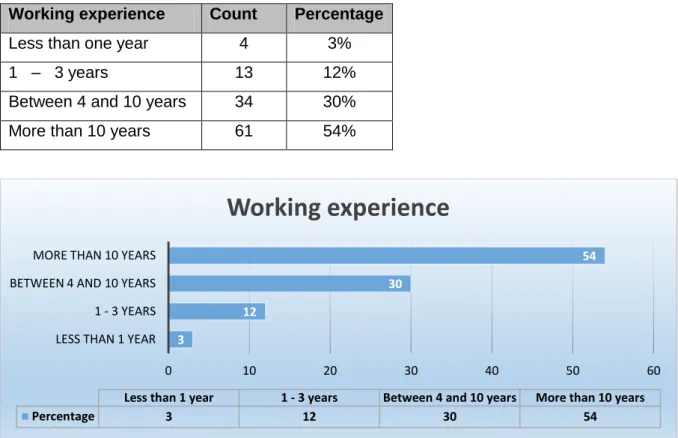
Working experience of the participants………87
Table 4.5:
Description of the research participants……….. 89
Table 4.6:
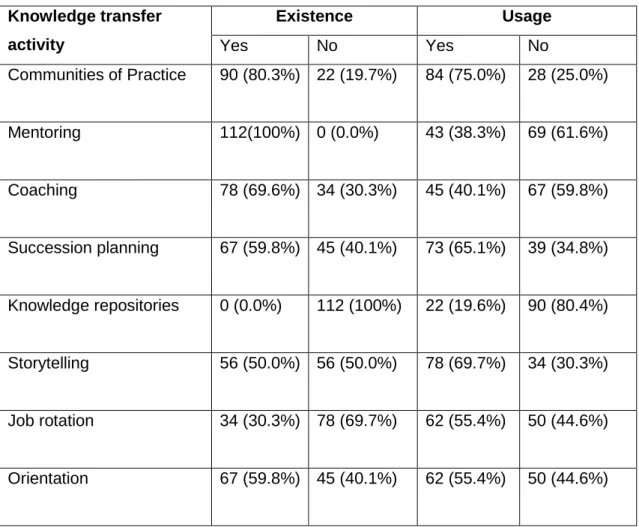
Existence and usage of knowledge transfer activities……….. 94
Table 4.7:
Constructs of KM………. 99
Table 4.8:
Competence in digital technologies………..103
Table 4.9:
Availability and accessibility of ICT infrastructure……….. 104
Table 4.10:
Training needs of the participants……….106
Table 4.11:
Initiatives to enable knowledge sharing………108
Table 4.12:
Motivational factors………. 110
Table 4.13: Analysis of KM barriers……….. 113
Table 4.14:
Tools and technologies to support KM……….119
Table 4.15:
Best social media tools for KM………. 130
Table 4.16:
Social media for KM……… 132
Table 4.17:
Relationship between IT and KM………. 138
Table 4.18:
Relationship between KM and IT………. 139
Table 4.19:
Percentages of positive responses………. 140
xiv
LIST OF FIGURES
Title
Page
Figure 2.1:
Data Information Knowledge Wisdom framework………..11
Figure 2.2:
The SECI Model……….. 22
Figure 2.3:
The Knowledge Management Cycle……… 28
Figure 2.4: SECI – Social Media (SM) Model………. 49
Figure 2.5:
Main tenets of KM………58
Figure 2.6:
Individual, Team, Organisation………. 60
Figure 3.1:
Oshana region of Namibia………. 70
Figure 4.1:
Gender of the participants………. 84
Figure 4.2:
Ages of participants……….85
Figure 4.3:
Qualifications of the participants……….. 86
Figure 4.4:
Working experience of the participants………... 87
Figure 4.5:
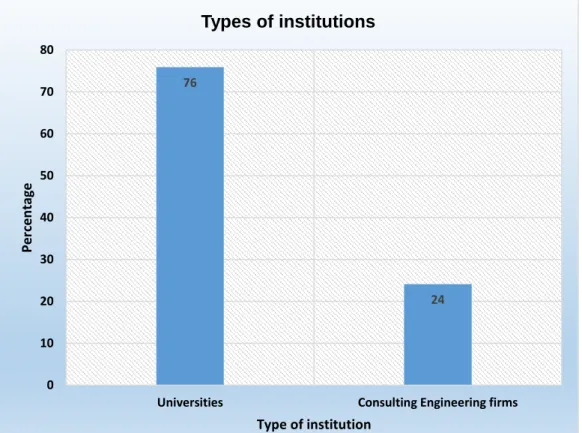
Types of institutions investigated………..88
Figure 4.6:
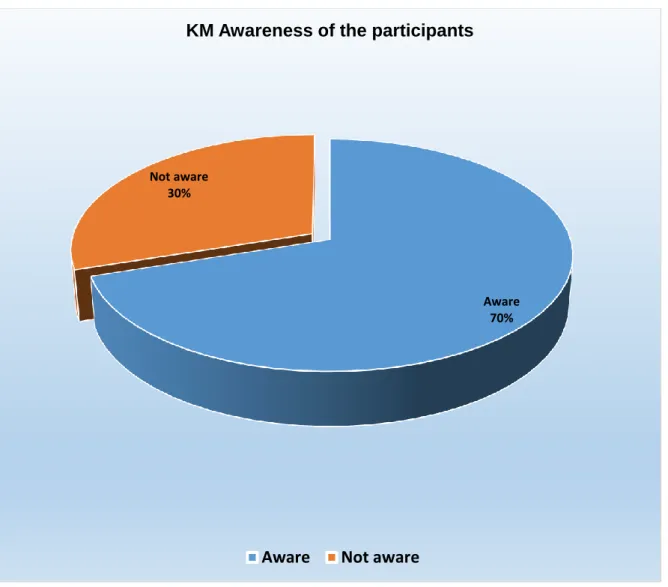
KM Awareness……….91
Figure 4.7:
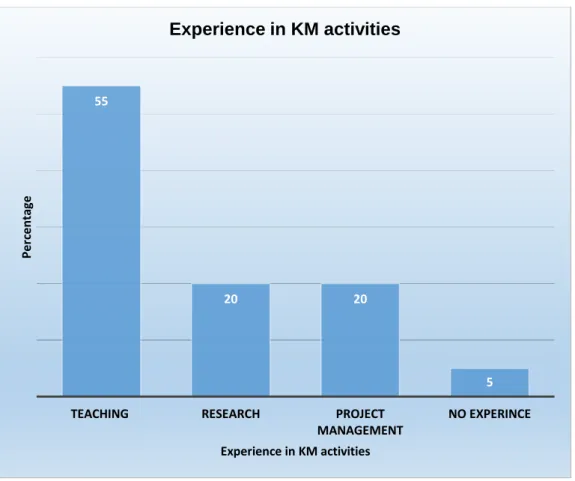
Experience of participants in KM activities………..93
Figure 4.8:
Existence of knowledge transfer activities……….. 95
Figure 4.9:
Usage of knowledge transfer activities……… 96
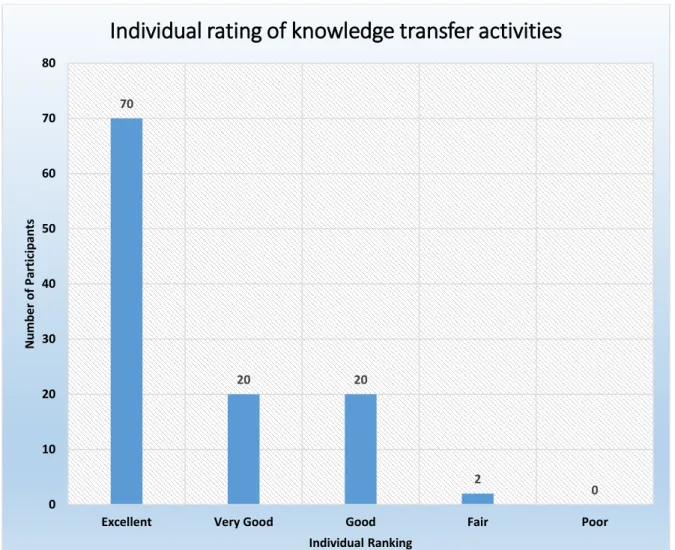
Figure 4.10: Individual rating of knowledge transfer activities……… 97
Figure 4.11: Computer literacy levels of participants……….. 102
Figure 4.12: Availability and accessibility of ICT infrastructure……….. 105
Figure 4.13: Motivational factors for knowledge sharing………. 110
Figure 4.14: Barriers to effective KM……….. 114
Figure 4.15: Knowledge bases for knowledge sharing……… 120
Figure 4.16: Blogs for knowledge sharing………. 121
Figure 4.17: Social networks for knowledge sharing………122
Figure 4.18: Document libraries for knowledge sharing……….. 123
Figure 4.19: Collaborative virtual workspace for knowledge sharing……… 124
Figure 4.20: Brainstorming for knowledge sharing……….. 125
Figure 4.21:
Storytelling for knowledge sharing………126
Figure 4.22: Communities of Practice for knowledge sharing……… 127
Figure 4.23: Collaborative physical workspaces for knowledge sharing….. 128
Figure 4.24:
Learning reviews for knowledge sharing………. 129
xv
Figure 4.26:
Acquiring tacit knowledge……….. 134
Figure 4.27:
Recognition of employees for their knowledge base…………. 135
Figure 4.28:
Upgrading knowledge with new developments……….. 136
Figure 4.29: Promotion of knowledge sharing culture on social media…….137
Figure 4.30: Communities of Practice as a knowledge transfer activity……142
Figure 4.31: Succession plans as a knowledge transfer activity………143
Figure 4.32: Coaching as a knowledge transfer activity………. 144
Figure 4.33: Storytelling as a knowledge transfer activity………145
Figure 4.34: Knowledge repositories as knowledge transfer activities……. 146
Figure 4.35:
Mentoring as knowledge transfer activity……… 147
Figure 4.36: Job rotation as knowledge transfer activity……….148
Figure 4.37: Keenness to share knowledge……….. 149
xvi
LIST OF ABBREVIATIONS AND ACRONYMS
CoP - Communities of Practice
DIKW - Data Information Knowledge Wisdom DSS - Decision Support Systems
HOD - Head of Department
ICT - Information and Communication Technology IT - Information Technology
IUM - International University of Management KM - Knowledge Management
KMC - Knowledge Management Cycle
KMO - Knowledge Management Officer
KMS - Knowledge Management Systems
KPI - Key Performance Indicator
SECI - Socialisation, Externalisation, Combination, Internalisation SPSS - Statistical Package for Social Sciences
SWOT - Strengths, Weaknesses, Opportunities and Threats TPS - Transaction Processing Systems
UNAM - University of Namibia UNISA - University of South Africa
xvii
DEFINITION OF KEY TERMS
Defining key terms in a study helps to unlock the doors that lead to useful and often technically refined and specific information.
Communities of Practice (CoP)
CoP are formal or informal groups of people who share a common concern or set of problems and they interact, share and expand their expertise and knowledge on that given subject (Wenger, 2014; Heeyoung & Iisang, 2014; McDonald & Cater-Steel, 2016).
Knowledge
The nature and tenets of knowledge have been described by Nonaka, Hirata & Toyama (2008), as justified true beliefs. According to Koenig (2012), knowledge refers to the understanding and awareness of phenomena acquired through study, investigation, observation and experience over a period of time.
Knowledge Management
According to Stuhlmann (2012), KM is a conscious and consistent strategy implemented to gather, store and retrieve knowledge and then help distribute such knowledge to those who need it in a timely manner.
Organisational performance
Performance is the end result of an activity, thus organisational performance involves the actual accumulated outputs of an organisation’s activities measured against the projected outputs (Burtonshaw-Gunn & Salameh, 2009). Organisational performance cannot be separated from management support because executives must learn, grow and develop with the organisation.
Organisational transformation
Organisational transformation is a planned change where organisations restructure themselves objectively to survive in a competitive environment (Sharma, 2012). Transformation involves re-engineering, re-designing and re-defining business systems which occur in response to changes in context, technology, organisational structure and culture.
1
CHAPTER ONE - INTRODUCTION AND BACKGROUND
1.1 Introduction
Knowledge Management (KM) in organisations has the principal task of improving organisational performance (Schiuma, 2012). KM has developed from a premature concept to an organisational need, especially in this 21st century which is highly dependent on technology.
According to the Vision 2030 of Namibia (2004), one of the national objectives was to transform Namibia into a knowledge-based, highly-competitive and industrialised nation characterised by sustainable economic growth. This objective could only be achieved if professional skills are transferred from experts to non-experts through KM. Most institutions in Namibia such as government departments, universities and colleges, hospitals and other small and medium enterprises do not exhibit evidence full comprehension of KM. Some of these organisations engage in KM practices without a full understanding that they are actually participating in KM, thereby lacking in organisational efficacy and the effective appropriation of KM into organisational efficiency.
Effective and efficient KM is important in addressing and transforming the manner an organisation operates. This study therefore aimed at providing a better understanding of what KM involves for the ultimate goal of improving organisational efficiency using the appropriate tools, technologies and strategies. Knowledge is shared in efficient organisations by means of various social media platforms, face-to-face meetings and focus group discussions (Wang & Noe, 2010). Technology partially supports KM implementation. KM is a keystone of competitive advantage in today’s organisations and, after understanding the value of knowledge itself, it improves the way an organisation is managed. In this respect, KM takes advantage of existing expertise and experiences, enabling organisations to leverage their competencies and stimulating growth (Khedhaouria & Jamal, 2015).
The research explored new methods, tools, technologies and processes that promote the management of knowledge, specifically knowledge sharing and transfer. Moreover, the research identified the initiatives that could be put in place to enable knowledge sharing which could eventually transform an organisation. In addition, the research established and described the barriers to effective KM and underscored the subsequent solutions to overcome these barriers. The study also measured the effectiveness of knowledge transfer activities in organisations, all aimed at improving organisational efficiency which is the major goal of KM.
2
1.2 Statement of the problem
The rapid advances in Information and Communication Technologies (ICTs) have provided new ways of addressing problems in KM. ICT is considered by many researchers like Song (2007) and Soto-Acosta & Cegarra-Navarro (2016) as a powerful tool for KM success but ICT alone cannot be the ultimate solution. At this moment, ICT is used commendably for data and information processing in organisations, but it has not been appropriated for KM. There are significant challenges encountered and currently ICTs are not fully utilised for KM. Knowledge Management has great potential for organisational transformation in terms of knowledge sharing among employees, but the question remains to what extent this is applied to organisations in Namibia and beyond.
The major source of knowledge in any organisation is its employees who have a wealth of experience in their respective fields. But again, it is the extent to which this resource is tapped into in order to extend the KM capacities of the organisations that matters. Conceding that there are problems associated with knowledge sharing among employees and hence KM is not successfully implemented in most organisations in the developing economies, particularly in Namibia, what progressive steps could be taken in order to overcome such a hurdle? Experts in specialised fields need to be motivated to share what they know with those less endowed. In addition to that, there are numerous KM tools and technologies available today but the problem lies in the selection of appropriate tools that are best suitable for a given organisation. Therefore, there is gap in identifying a globally acceptable methodology for KM implementation that the present study sought to bridge.
It has been empirically proved that many challenges of KM are now non-technical (Paraponaris & Sigal, 2015). Some of the barriers to effective KM involve recognition of KM as a function in an organisation and lack of executive support as analysed by Ujwary-Gil (2011: 94 – 95). Considering all the success factors, tools and technologies, there is still need to explore the extent to which KM improves organisational effectiveness, specifically the provision of metrics to measure such effectiveness in an organisation. Strategies that recognise KM as a separate function are not yet in place in most knowledge-intensive organisations in Namibia and beyond.
3
1.3 Research objectives
The broad aim of the study clearly states the goals of one’s research. As observed by Leedy & Ormrod (2010:3), research requires that one articulates the goal of their study. To Creswell (2009:111), a purpose statement “…sets the objectives and the major idea of a study.” This research investigated the effectiveness of KM for organisational transformation. The context of this research were knowledge-intensive organisations (universities and consulting engineering firms) in Namibia. Following on the prescriptions of antecedent research, the objectives in a study are concrete statements describing what a specific study tries to achieve. The study objectives sought to:
Explore initiatives available that facilitate knowledge sharing and transfer in knowledge-intensive organisations.
Identify and describe barriers to effective Knowledge Management and the subsequent solutions to overcome these barriers.
Match the KM tools and technologies with the organisational culture and structures in place, taking into consideration the procedures and policies for KM implementation.
Determine the connection between Information Technology and Knowledge Management.
Measure the effectiveness of knowledge transfer activities in organisations so as to promote a knowledge sharing culture among employees.
This study was premised on the understanding that KM is enabled by a combination of technical and social factors such as information technology, organisational culture, structures, people and leadership. The objectives cited above, captured in the active verbs, essentially dovetailed in the formulation of the study’s research questions by providing a deep insight into the study domain. Organisational culture and structure are considered as some of the pivotal success factors of KM but there was need to establish how the culture of knowledge sharing could be promoted in the selected organisations.
4
1.4 Research questions
This study on Knowledge Management and its effectiveness for organisational transformation through knowledge sharing and transfer specifically attempted to answer the following major research question since there is consensus among scholars like Girard & Girard (2015); Rouse (2013); and Cesaroni & Consoli (2015) that KM is enabled by a combination of technical and social factors such as information technology, organisational culture, structures, people and leadership:
Main research question
How can Knowledge Management through knowledge sharing and knowledge transfer, contribute to more effective organisational transformation in Namibian knowledge-intensive organisations?
Sub-questions
a) What does Knowledge Management mean in knowledge-intensive organisations? b) What mechanisms can be introduced to enable and facilitate knowledge sharing in
knowledge-intensive organisations?
c) What are the barriers that impact on Knowledge Management (knowledge sharing and knowledge transfer)?
d) How can people be motivated to improve knowledge sharing and transfer?
e) How can Knowledge Management tools and technologies (particularly social media tools and technologies) support knowledge sharing and transfer?
These research questions guided the researcher to solve the problem defined. These questions were strategically aligned to the study objectives. In addition, the questions were formulated after a thorough literature review on KM practices and processes. All the questions defined were answered through comprehensive quantitative and qualitative data analysis.
5
1.5 Scope of research
The research sites in this study were two (2) universities in Namibia and three (3) consulting engineering firms identified. The research established and unpacked the different views of purposefully selected university lecturers and engineers in relation to their conceptualisations of KM. These universities in Namibia are regarded as centres for knowledge creation and graduates from such institutions often find work in consulting engineering firms. The universities studied were state-owned and privately-owned in Namibia. To be specific, the institutions identified and listed below were investigated and visited on a regular basis within the limitations of available resources:
a) University of Namibia’s faculties of Education, Engineering & IT, b) The International University of Management,
c) Consulting Services Africa,
d) Conselect Consulting Engineers and the e) Ongwediva Consulting Engineers.
These institutions were in close proximity to the researcher’s duty station. This research did not cover all organisations or sectors because of limited time and financial resources. The scope of study was therefore limited to universities and consulting engineering firms in Namibia only. The ultimate goal of this project was to generate and initiate increased organisational performance with defined metrics. Such an increased organisational performance involves knowledge sharing and innovation as observed by Meihami & Meihami (2014).
6
1.6 Significance and purpose of the study
It is important for any researcher, at whatever level, to demonstrate the importance of the study to different stakeholders and how they are likely to benefit from such study. This research anticipates contributing to scholarly knowledge, enhancing policy developments and also improving knowledge sharing practices. To Creswell (2009: 107) significance of the study serves to explain the importance of the problem to different groups that may benefit from using the study. By incorporating this section, the researcher created a basis for the importance of his study. Creswell (2009), further adds that a viable research problem should, among other concerns, be timely and relate to a practical problem.
With the emergence of KM that is not guided by internationally acceptable standards, the institutions studied benefited from the study results. Results produced provided a better understanding of KM as it applies to their organisations, specifically tertiary institutions and engineering firms. The development of a methodology for implementing KM provided guidance for universities and engineering practitioners in Namibia and beyond. The study was undertaken to encourage and promote a knowledge sharing culture in Namibia.
All universities in Namibia do not teach KM course, as evident in their curriculum specifications, thus there was real need to research and promote the discipline. Most critically, this observation is an indictment in terms of the curriculum specifications of Namibian universities and therefore becomes an exhortation to prescribe KM in the curriculum. This study was the first of its kind to research KM in Namibia and this gap is evident in the literature review segment and the searches undertaken and shown in Table 1.1 below. The table shows the completed and current research in Namibia for the past 10 years according to the searches done on the National Research Foundation of Namibia database and the University of Namibia’s institutional repository.
Table 1.1 Completed and current IT research in Namibia as at 15 April 2017
2007 – 2017
Keywords used in search Namibian Studies, Number of records
Computing AND online learning 151
Information Technology OR Information Systems 35 Emerging Technologies AND Cloud Computing 40
Knowledge Management 18
Knowledge Management AND Organisational transformation None
Big Data AND Artificial Intelligence 7
7
1.7 Limitations of the study
Every practical research is faced with limitations and challenges. This research looked at the effectiveness of KM and its practicality for organisational transformation, specifically knowledge sharing and transfer. This clearly meant that there were people, organisations and the environment involved in the execution and completion of the research task. This study was limited to knowledge-intensive organisations (universities and consulting firms) in Namibia only. Moreover, the research was carried out in an environment which was very busy. The universities’ lecturers and other staff were busy with their work schedules of lecturing and administrative work, thus the time to respond to the researcher’s questions and involvement was limited and quite constrained. The findings of this study can be generalised to knowledge-intensive organisations in Namibia and other African countries.
1.8 Overview of the dissertation
This dissertation is organised and structured into six (6) chapters:
Chapter two: Literature review
Chapter two of the study focused on the conceptual frameworks. The chapter explained how the study was informed by the chosen conceptual framework and also focused on reviewing literature that is related to the field of KM in organisations. This literature was identified and found in recent journal articles, research papers, presentations and online sources. The literature review comprehensively covered important concepts connected to the research.
Chapter three: Research design and methodology
The third chapter is made up of the research methodology which was followed to complete the research. In this chapter, the researcher further explained and justified the paradigm under which this study falls. The chapter also specified the qualitative and quantitative aspects of the research process. Moreover, the chapter listed and explained the data gathering tools, techniques and instruments used with full justification for their relevance.
Chapter four: Data presentation and analysis
Chapter four consists of data collection, presentation and analysis. The chapter further interpreted the data where the researcher extrapolated patterns, themes and made meaning and sense out of the data gathered.
8
Chapter five: Discussion
The fifth chapter provided an argument of the findings, with specific reference to the research questions defined. The detailed discussions show how each of the objectives have been met. The chapter also explained the limitations and gaps in the research where the ultimate conclusions were that KM is enabled by a combination of technical and social factors such as information technology, organisational culture, structures, people and leadership.
Chapter six: Conclusion and recommendations
Chapter six consists of conclusions of the study and also made recommendations to the concerned stakeholders. These recommendations were based on the actual findings from a management perspective.
1.9 Summary
The background to the study of KM was highlighted in this chapter. The problem statement was given, clearly explaining the critical areas of KM that need attention. This problem statement was also accompanied by the purpose, objectives and questions of the study that act as the framework and pillars of this research. Furthermore, the significance, justification and scope of the study were highlighted. Key terms associated with this research were also defined. The chapter further provided an insight into the other chapters that constitute the dissertation. The next chapter explains how the study was informed by the chosen conceptual framework and also focuses on reviewing literature that is related to the field of KM in organisations. The literature was drawn from local and international journal articles, research papers, books, conference papers, presentations and online sources. This literature review comprehensively covered all the important concepts connected to the research problem defined.
9
CHAPTER TWO - LITERATURE REVIEW
2. Literature review
This literature review was carried out taking into consideration the study objectives which sought to find the meaning of KM in an knowledge-intensive organisations. Other objectives sought to identify the challenges of ICTs for KM and also the initiatives that facilitate knowledge sharing in organisations. In addition, other objectives explore the barriers affecting KM implementation and also analysing the tools and technologies which support KM all aimed at improving the organisational effectiveness which eventually leads to organisational transformation. Information Technology (IT) is currently used well for data and information processing in organisations but not for KM. There is a significant gap in knowledge sharing among employees and this review further measures the extent to which this applies in the Namibian/African context. The study also looked at the extent to which the knowledge resource is tapped into in order to extend the capacities of the institutions under investigation. The reasons for conducting a literature review are explained below.
According to Babbie & Mouton (2010), literature review assists the researcher to find how other researchers have examined a similar problem. Multiple sources of information were consulted to reach a deeper understanding of KM. The sources included textbooks, the Internet, local and international journal publications as well as conference papers. Literature review refines the direction of investigation allowing the researcher to actually review what others have done (Leedy & Ormrod, 2010). Reviewing literature also helps to find the different methodologies used by previous scholars, and as such the researcher established relevant methodological directions evident in those applied by different scholars. Babbie & Mouton (2010) further extend that reviewing prior literature is an important feature of any academic research because it creates a firm background for advancing knowledge, specifically in inserting the current study within the matrix of preceding scholarship.
2.1 Introduction
Knowledge Management, specifically in this cyber age, has been in existence for over two decades now. The KM concept was initiated in the 1990s by several theorists who identified the flux in information and knowledge as having changed the way businesses and social institutions work. Knowledge is considered to be an organisation’s largest asset which must be managed effectively (O’Dell & Hubert, 2011). KM therefore promises and provides models and tools that help organisations to create an environment which supports knowledge sharing. ICT is currently considered one of the enablers for the effective implementation of KM. Managing knowledge has consequently become an important prospectus aimed at creating value in multi-faceted organisations.
10 Stuhlmann (2012: 1) describe knowledge as the result of learning. Stuhlmann (2012)further adds that knowledge is a “justified true belief” based on the internalisation of data, information and experience. It is believed that organisational knowledge is entrenched in processes, procedures, individual employees, systems and cultures (Downes & Marchant, 2016). Most theoretical and practical findings in KM are hidden from the public domain because it is normally said that “knowledge is power”, so experts hoard knowledge in order to gain market share. However, other experts share best practices, frameworks and lessons learnt through publication and dissemination of research papers. Research by Rasula et al (2012) has shown that successful KM improves organisational effectiveness, and logically what is left now is measuring the extent to which organisational effectiveness becomes a reality after implementation of KM. Such a quantification of organisational effectiveness is sorely missing in current researches as evident from the empirical evidence from underdeveloped countries by Islam et al (2012).
The rise of ICTs has opened new avenues in KM that could meet the challenges linked to knowledge sharing. Knowledge can exist in different media and also in multimodal forms. The major sources of knowledge in any organisation are employees who have a wealth of experience and high technical skills. Knowledge in this respect can be fixed in organisational routines, procedures and structures. It is certain that organisations must conscientiously manage their knowledge, as instruments of differentiation, to boost productivity, leverage competitive advantage and spur innovation. Koenig (2012), Young (2013), Girard & Girard (2015), have all revealed that the role of knowledge in management is value-generation. Having established this point, there is need for empirical evidence regarding which KM tools work efficiently in selected organisations where the purposes are driven to boost productivity, afford competitive advantage and enhance innovation.
Before going deeper into the KM concepts, processes and practices, there is need to describe and discuss the foundations to KM which act as the building blocks to this study. These building blocks address the first objective of this study which sought to synthesize the literature and emerge with an acceptable meaning of KM within knowledge-intensive organisations. This is very important because there are multiple definitions of KM but they all have a common core. For KM to succeed in organisations, individuals need a deep understanding of what constitutes knowledge (Frost, 2014).
11
2.2 The foundations
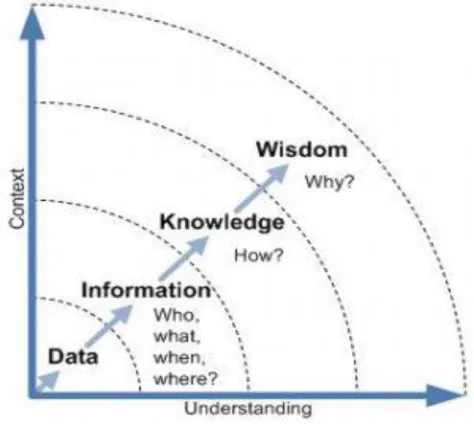
This study focused on Knowledge Management which has its foundations in data, information and knowledge. The hierarchy, commonly known as the ‘Knowledge Hierarchy,’ below assists us in accessing background information. The hierarchy known by the abbreviation DIKW (Data, Information, Knowledge, Wisdom) has direct relevance to information systems and KM and could be applied to other disciplines such as computer science (Awad & Ghaziri, 2011). Figure 2.1 below shows the DIKW hierarchy.
Figure 2.1: The DIKW Framework (Howard, 2016: 1)
2.2.1 Data
Badia (2014) defines data as symbols that represent properties of objects, events and their respective environment. He further extends that data is not useful until it is in relevant and usable form. Choo (2013) adds that data on its own has no meaning because it is without context and interpretation. Pearlson & Saunders (2013), describe data as discrete and objective facts which are not organised and processed, and do not have any specific meaning. Howard (2016) therefore advises that the key KM activities include capturing accurate data which can then be transformed into information. It is only when data is standardised, analysed and interpreted according to relationships that it leads to significant and usable information.
12
2.2.2 Information
According to Pearlson & Saunders (2013), information is contained in descriptions which answer the questions such as who, what, when and how many. In general, information systems generate, store, retrieve and process data. Information is inferred from data and it answers the ‘know-what’ questions. Information is formatted data which is in many respects a representation of reality (Kent, 2012). Laudon & Laudon (2014)extend this perception and submit that information is data that has been shaped into a form that is meaningful and useful to humans. Together, Badia, Kent and Laudon & Laudon agree that information is data that has been processed and has meanings directed to the intended user. The processes that are associated with the conversion of data into information involve sorting, classification, aggregation, calculation and selection performed by either humans or by information systems or both.
2.2.3 Knowledge
The definition of knowledge is more complex than that of data and information. Knowledge is the know-how that makes possible the transformation of information into instructions (Badia, 2014). Knowledge can be obtained either by transmission from one person who has it, by instruction, or by extraction from experience. The European Framework for Knowledge Management (2015), defines knowledge as the combination of data and information, where expert opinion and experience is added to result in a valued asset which can then be used to improve decision-making. Turban et al. (2009), stress that knowledge is data and/or information that has been processed and organised to convey understanding, experience and expertise as they apply to a current problem. We can therefore conclude that knowledge consists of an aggregation of information, values, rules and experiences from different sources and this observation is also made by Awad & Ghaziri (2011), who describes the process that converts information into knowledge as synthesis of various sources of information over time.
2.2.4 Wisdom
Wisdom is the ability to increase effectiveness and may also provide an insight into questions that do not have a definitive answer (Choo, 2013). Wisdom adds value, which requires the mental function that we call judgment and it answers the ‘know-why’ questions. According to Awad & Ghaziri (2011), wisdom is the highest level of abstraction based on ethical judgment of an individual’s belief. Howard (2016) defines wisdom as the ultimate discernment and application of contextual awareness to provide a common sense of judgment. In most books and journal articles for information systems and KM published locally and internationally, the “wisdom” level of the DIKW is hardly discussed in detail as authors use wisdom to discuss knowledge, information and data.
13 According to Rowley (2007), the wisdom hierarchy maps different types of information systems as:
Data Transaction Processing Systems (TPS) Information Management Information Systems (MIS) Knowledge Decision Support Systems (DSS)
Wisdom Expert Systems (ES)
Transaction Processing System (TPS) is considered by Turban & Volonino (2011) as the backbone of an organisation’s information systems as it collects, stores and processes information for all routine business transactions. Management Information System (MIS) is a planned system of collecting, storing and disseminating information needed to carry out the managerial functions (Laudon & Laudon, 2014). Decision Support System (DSS), on the other hand, is an interactive software-based system intended to help managers in decision-making by accessing large volumes of information produced from various information systems. An expert system is defined by Kopetz (2011) as an interactive computer-based decision tool that uses facts and heuristics to solve difficult decision-making problems based on knowledge acquired from experts.
The “Knowledge Hierarchy” shows and explains that there is more data than information, and more knowledge than wisdom. It becomes quite clear that wisdom is only achieved after much processing of data, information and knowledge. The process starts with data, thus accurate data is very important for an organisation to function and attain its long term goals. Girard (2015)extends that information is defined in terms of data, knowledge in terms of information and wisdom in terms of knowledge. Managing knowledge using the DIKW framework may certainly add value to the organisations studied in Namibia and beyond.
According to Girard & Girard (2015), knowledge resides in the heads of people and it influences organisational success. Understanding that knowledge is a strategic organisational resource, and management is an organisational process involving planning, organising and control, the DIKW framework takes us to a higher level debate regarding the actual meaning of KM as it applies to different organisations.
14
2.3 Definition of Knowledge Management
Several definitions of KM exist in literature, but in general, KM offers a way to capture and store an organisation’s knowledge while teams are responsible for the generation of a new architecture of knowledge. All these activities are carried out with the aim of improving organisational effectiveness. KM has evolved from academic theorisations and theories into becoming an essential element of organisational survival and competitiveness (Omotayo, 2015).As a matter of fact, KM has evolved from a concept into a typical organisational need. Some classic and most cited definitions have been reflected upon in this review, but the following submissions facilitate a deeper conceptualisation of the research area into KM as a field.
The pioneers to KM, (Nonaka, Toyama & Hirata, 2008) define KM as:
a process of capturing, developing, sharing and effectively using organisational knowledge.
According to O’Dell & Hubert (2011: 35) KM is
a systematic effort to enable information and knowledge to grow, flow and create value.
Taking cue from the systematic flow of information above, Liu (2016) suggests that KM is: a multi-disciplined approach to achieving organisational objectives by making the best use of knowledge.
Liu (2016) further stresses that KM focuses on processes such as acquiring, creating and sharing knowledge as well as the cultural and technical foundations that support them. Together, O’Dell & Hubert (2011) and Liu (2016) emphasise the need for systematicity and therefore Dalkir (2011: 27) describes KM as:
the deliberate and systematic coordination of an organisation’s people, technology, processes and organisational structures in order to add value through reuse and innovation.
Girard & Girard (2015) define KM as
the process of creating, sharing, using and managing the knowledge and information of an organisation.
15 Frost (2014) suggests that KM is
the systematic management of an organisation’s knowledge assets for the purpose of creating value and meeting tactical & strategic requirements.
From the definitions above, the most common words used are: organising, creating, sharing and managing. Thus, systematicity and coordination run through the definitions submitted. These two are common features in the definitions and conceptualisation of KM. Such a mapping is extended in other scholars such that Bercerra-Fernandez & Sabherwal (2010) concur with Dalkir’s view and offer that KM entails:
carrying out activities involved in discovering, capturing, sharing and applying knowledge in terms of resources and people skills, so as to improve the impact of knowledge on the unit’s goal realisation.
Lastres (2011: 3) extends this definition of KM as:
the leveraging of the organisation’s collective know-how by developing systems and processes to facilitate the identification, capture, dissemination and use of the organisation’s knowledge.
In this framing, the imperative lies in meeting the organisation’s business objectives, an imperative that appears to have been subsumed in the definitions preceding this submission. Oliva (2014) follows the KM definition identified in Lastres (2011) by noting KM as:
a practice accepted by most organisations looking for efficiency and effectiveness of their administrative processes.
Efficiency of administrative processes is privileged in this definition to the extent that this becomes the prime component of KM. From these definitions by various authors, we can extrapolate that KM centres on organising and availing knowledge to its users as and when required for purposes of making processes systematic and efficient. Koenig (2012) further adds that KM focuses on handling vital knowledge that may reside exclusively in the minds of the organisation’s specialists. Generating value from such intellectual assets involves codifying what employees and partners know, and sharing that information among employees in various departments in an effort to devise best practices.
16 KM is therefore a broad field that spans the fields of “business, economics, management, anthropology, sociology, education and information systems” (Argote & Fahrenkopf, 2016). There is consensus in the literature that KM is a collection of practices associated with the use of knowledge as an important factor to create value for the organisations. Studies conducted so far show that there is still lack of a globally acceptable systematic approach towards KM. It is also evident that KM is implemented differently in disparate organisations, not only in Namibia but elsewhere too. In Information Technology, KM is the process through which businesses create value from their knowledge-based assets and Levinson (2007) confirms this perspective.
Arguably, other definitions of KM are more descriptive in nature and less precise than the ideal in the specific contexts of organisational value-creation and value-addition. The array of definitions offered here highlights the multidisciplinary nature of KM and it is worth noting that many of the definitions are not as specific as some researchers may claim. For this study, the researcher subscribes to the definition of KM by Stuhlmann (2012), which states that:
KM is a conscious and consistent strategy implemented to gather, store and retrieve knowledge and then help distribute the knowledge to those who need it in a timely manner.
It is one definition that apparently encompasses the scope and significant protocols of KM, allowing for both depth and breadth in the conceptualisation of the practice and process. This study established and interrogated the different views of purposefully selected university lecturers and engineers in relation to their conceptualisations of KM. These universities in Namibia are regarded as centres for knowledge creation and graduates from such institutions often find work in engineering consulting firms where KM plays a pivotal role. Knowledge can be created and tested and distinguished from data and information.
Organisations use knowledge for creating strategies for sustainable competitive advantage. Knowledge can also be used for determining an organisation’s work processes which is very critical for quality services. Siegel & Shim (2012) add that KM connects people to people and people to information to create a competitive advantage. The following sections therefore discuss KM as it applies to tertiary institutions and engineering firms in general as was described in the scope of this study in chapter 1 that the participants were selected from universities and consulting engineering firms.
17
2.3.1 Knowledge Management in tertiary institutions
Universities are dynamically changing and they are involved in the knowledge business. According to Ebersberger & Altman (2013),universities face challenges of high expectations from stakeholders, global competition and technological advances. These researchers argue that universities should reflect their visions and strategies for them to be successful and remain competitive in the global environment. Universities’ policies, IT governance, culture, leadership and strategic management are important pillars for these institutions to realise their KM goals.
Suciu et al (2013), consider universities as knowledge creation centres which should promote knowledge transfer by making use of appropriate tools and technologies. Effective KM at a tertiary institution ensures the best use of resources available including knowledge itself, which is resident in people, artefacts and organisational entities. The processes that ensure effective KM include creation, capturing, organising and storing knowledge at both individual and organisational level.
This study tries to understand the meaning of KM as it is applied to universities in supporting and ensuring effectiveness of the institutions. Suciu et al (2013) argue that the source of sustainable advantage for universities exists in people’s knowledge and skills. Universities produce, transmit and disseminate knowledge. KM in higher education promotes and establishes an innovative and learning culture which results in the development of new concepts as observed by Spridon (2013). These ideas and concepts are developed through research using appropriate technologies.
Hoeborn & Bredtmann (2009) describe mentoring as a fundamental function for KM in higher education. These researchers highlight that the actual task of tertiary institutions is to teach students and do research. They further add that students need to acquire relevant information about the professional sphere and job descriptions. This information can be acquired through mentoring which, according to research, enhances students’ chances of success. The Graduate Mentoring Guidebook (2016), extends that mentoring provides professional socialisation and personal support to facilitate success in graduate school. In combination therefore, universities are research sites that nurture a research culture which stimulate this process through robust mentoring. There has been increased pressure arising from globalisation and the need to carve new innovations, essentially meaning that competitiveness has become the order of the day in many research universities.
18 Universities are complex institutions with different backgrounds, cultures and resources (Taylor & Cranfield, 2008).There are several issues that promote or alternatively hinder KM implementation at tertiary institutions. Universities are facing a more interconnected world where knowledge and innovation are essential elements. Institutions simultaneously face external pressure due to globalisation and the massive production of expert knowledge. In higher education, globalisation encourages universities to think about the most innovative ways they teach, conduct research and manage the institutions (Cranfield & Taylor, 2008). A typical consideration driving KM efforts in higher education includes managing intellectual capital in the workforce.
Persuading employees that it is best to share their knowledge is a real organisational challenge, especially in higher education institutions. Employees believe that they are more powerful than others if they know more. Rick (2009) observed that while employees may not deliberately hoard their knowledge, convincing them to participate in and contribute to a KM system can be a challenge. Depending on the institutional knowledge of individuals, such hoarding can hamper the effectiveness of an organisation. The challenge is to exchange the information that resides in those individuals and make it easily available and accessible to any staff member.
Knowledge sharing practices in universities have taken the form of co-authored articles and research publications. This is quite the trend between supervisor and the Master’s or Doctoral students where the joint publications are generated from current research topics and new additional information emerges from such contemporary studies.
KM in higher education contributes to knowledge growth (Nawas & Gomes, 2014).Moreover, KM minimises turnaround time for most interdisciplinary research activities. It has also been found that KM develops human capital and also enhances responsiveness for research scholars. Cranfield & Taylor (2008) advises that institutions of higher learning should concentrate on strategic Knowledge Management and in such a call, universities and university graduates such as engineers cannot escape from the demands of KM.