http://waikato.researchgateway.ac.nz/
Research Commons at the University of Waikato
Copyright Statement:
The digital copy of this thesis is protected by the Copyright Act 1994 (New Zealand). The thesis may be consulted by you, provided you comply with the provisions of the Act and the following conditions of use:
Any use you make of these documents or images must be for research or private study purposes only, and you may not make them available to any other person. Authors control the copyright of their thesis. You will recognise the author’s right to
be identified as the author of the thesis, and due acknowledgement will be made to the author where appropriate.
You will obtain the author’s permission before publishing any material from the thesis.
TURNOVER INTENTIONS: THE MEDIATION EFFECTS OF
JOB SATISFACTION, AFFECTIVE COMMITMENT,
AND CONTINUANCE COMMITMENT
A thesis
submitted in partial fulfilment
of the requirements for the degree
of
Master of Applied Psychology
at
The University of Waikato
by
DEREK RILEY
______________________
The University of Waikato
2006
ABSTRACT
Retention and productivity levels of a workforce are one of the essential ingredients for organisations to prosper in today’s competitive business environment. Turnover intentions of the workforce are an important consideration for managers of organisations, employees, families, and communities alike.
This study investigated a comprehensive model of turnover intentions that included two proximal variables, (job satisfaction, and organisational commitment), the distal variables of organisational justice, work strain, work overload, and work-to-family conflict and work-to-family-to-work conflict with the turnover intentions. A
questionnaire was completed by 114 participants of the Allied Health workforce at the Waikato District Health Board, from allied health occupational groups,
psychologists, physiotherapists, social workers, dieticians, and speech language therapists. Job satisfaction, affective commitment, distributive, interactional, and procedural justice, strain and family-to-work conflict were correlated with turnover intentions. Results of the mediated regression analyses found that job satisfaction and affective commitment are significant mediators between distributive,
interactional, and procedural justice, work strain, and family work conflict with turnover intentions.
The major implications from this research are that managers of organisation need to foster job satisfaction and affective commitment within their organisation to reduce turnover intentions. In the final chapter, the conclusions are discussed in terms of its practical implications to organisations, employees and the need for future research.
ACKNOWLEDGEMENTS
Each of the people below has contributed to my academic journey in their unique way and without their valuable contribution, this thesis would not have been possible.
I would like to thank Mike O’Driscoll as my supervisor for all his patience and guidance during the writing of my thesis.
In my academic journey, I have met some inspirational lecturers in particular Tom Kalliath, who I admired for his faith and always had time to listen and support me through my first year of graduate study, I thank you.
I am also indebted to the Waikato District Health Board and the allied health employees who volunteered to take part in this study. Also to the professional advisors who distributed the questionnaires to the participants without you this research would not have been possible.
To the psychology department staff in particular, Rob Bakker, who has
always been able and willing to help me with any computer problems. Your valuable guidance in computer technology has enabled me to realise my goals and finish my thesis. Thank you Rob for your expertise, and guidance.
My special thanks to Maria do Carmo for your love, understanding, patience, and belief in my academic ability. Also to Sarah and Julie thank you for your
continued love, support, and encouragement during my academic journey. I dedicate this thesis to you both.
TABLE OF CONTENTS
Abstract ii
Acknowledgements iii
Contents iv
List of Tables vi
List of Figures vii
Chapter One
Introduction
Background 1
Employee Turnover 1
Consequences of Employee Turnover 2
Purpose of This Research 5
Minimizing Voluntary Turnover 6
Theoretical Model with Turnover Intentions 8 Proximal Variables
Job Satisfaction 9
Organisational Commitment 10
Distal Variables
Correlates of Job Satisfaction 14
Correlates of Affective Commitment 19 Correlates of Continuance Commitment 23
Mediated relationships Job Satisfaction 28 Affective Commitment 30 Continuance Commitment 31 Summary of Hypothesis 33
Chapter Two
Method
Organisational Context 38 Participants 40 Instrument 41 Measures 42 Procedure 45Chapter Three
Results
Descriptive Statistics 47
Job satisfaction
Correlations and Regression 49
Affective Commitment
Correlations and Regression 52
Continuance Commitment
Correlations and Regression 52
Turnover Intention
Correlation and Regression 54
Mediated Regression Job Satisfaction 57 Affective Commitment 63
Chapter Four
Discussion
Proximal Variables Job Satisfaction 70 Affective Commitment 71 Continuance Commitment 72 Mediated Relationships Practical Implications Job Satisfaction 82 Affective Commitment 83 Distal Variables 85 Future Research 87Strengths of the Research 88
Limitations of the Research 89
Conclusions 92
References
93Appendix A 113
Appendix B 115
LIST OF TABLES
Table
1. Number of Respondents for Each Allied Health Occupational Group 40
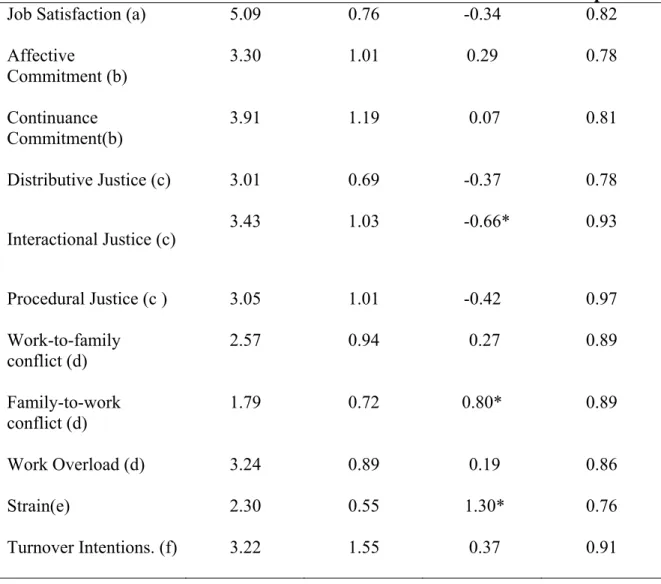
2. Descriptive Statistics 48
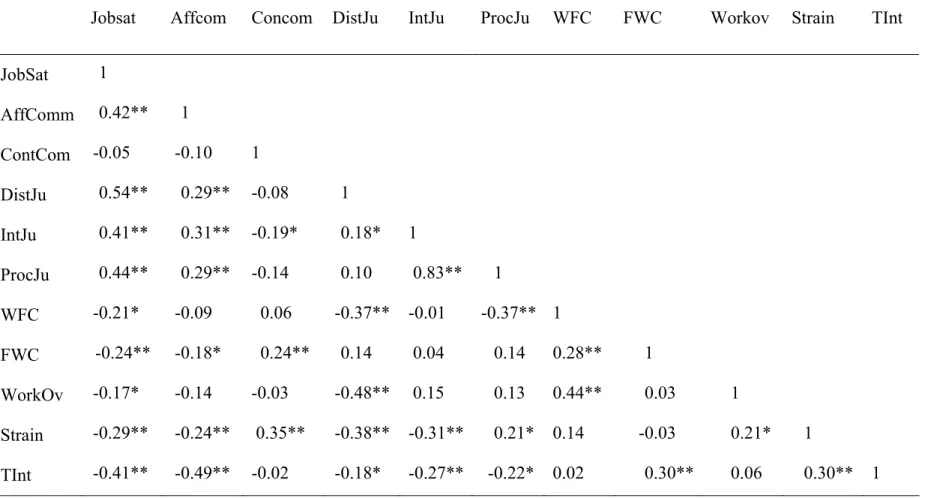
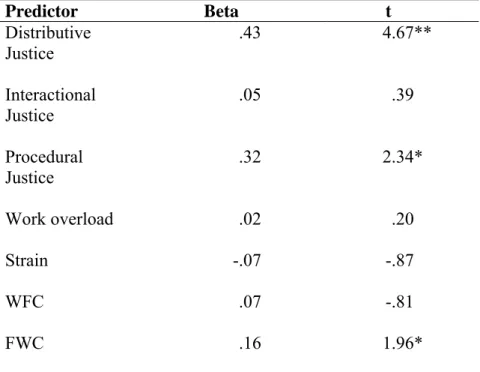
3. Correlations between Major Variables 50 4. Regression Equation: All Predictors with Job Satisfaction. 51 5. Regression Equation: All Predictors with Affective Commitment 53 6. Regression Equation: All Predictors with Continuance Commitment 54 7. Regression Equation: Proximal Variables with Turnover Intentions. 55 8. Mediating Regression Equation Testing Hypothesis H 5a. 57 9. Mediating Regression Equation Testing Hypothesis H5b. 58 10. Mediating Regression Equation Testing Hypothesis H 5c. 59 11. Mediating Regression Equation Testing Hypothesis H 5d. 60 12. Mediating Regression Equation Testing Hypothesis H 5g. 61 13. Mediating Regression Equation Testing Hypothesis H 5e. 62 14. Mediating Regression Equation Testing Hypothesis H 5f. 62 15. Mediating Regression Equation Testing Hypothesis H 6a. 63 16. Mediating Regression Equation Testing Hypothesis H 6b. 64 17. Mediating Regression Equation Testing Hypothesis H 6c. 65 18. Mediating Regression Equation Testing Hypothesis H 6d. 66 19. Mediating Regression Equation Testing Hypothesis H 6g. 67 20. Mediating Regression Equation Testing Hypothesis H 6e. 68 21. Mediating Regression Equation Testing Hypothesis H 6f. 68
LIST OF FIGURES
Figure
1. Turnover Intentions Model 8
CHAPTER 1:
INTRODUCTION
A characteristic of organisations in the 21st century is the continuous and rapid pace of change. Volatile free market economic environments, rapidly changing technologies, global competition, workforce diversity, and new organisational
structures are some of the challenges an organisation faces. Organisations may differ in the priority they attach to the human resource component, in their efforts toward achieving high productivity and competitive advantage, yet they all recognise the value of a qualified, motivated, stable, and responsive team of employees (Huselid, 1995).
Retention and productivity levels of the existing workforce are an essential concern in human resource management. Employee turnover is one of the most studied topics in organisational psychology (Mitra, Jenkins, & Gupta, 1992) and is of interest to other professionals, including personnel researchers, and managers of organisations (Mobley, Griffeth, Hand, and Meglino, 1979).
Employee Turnover
Employees may exit an organisation either voluntarily or involuntarily. For the purpose of this research, ‘turnover intention’ is defined as an employees decision to leave an organisation voluntarily (Dougherty, Bluedorn & Keon, 1985; Mobley,
1977). Employees leave for a number of reasons, some to escape negative work environments, some are more in alignment with their career goals, and some to pursue opportunities that are more financially attractive. Involuntary turnover is usually employer initiated, where the organisation wishes to terminate the relationship due to incompatibilities in matching its requirements. Involuntary turnover can also include death, mandatory retirements, and ill health (Mobley, 1977).
In literature, turnover intention has been identified as the immediate precursor for turnover behaviour (Mobley, Horner & Hollingsworth, 1978; Tett & Meyer, 1993). It has been recognised that the identification of variables associated with turnover intentions is considered an effective strategy in reducing actual turnover levels (Maertz & Campion, 1998).
Consequences of Employee Turnover
An employee’s exit from an organisation is a direct cost, in the form of having to select, recruit, and train a new employee (Dalton, Todor, & Krackhardt 1982; Staw, 1980). The exiting of employees also has indirect cost implications that include reduced morale, pressure on the remaining staff, costs of learning, and the loss of social capital (Des & Shaw, 2001). One of the main consequences for organisations that have a high turnover is the financial cost. The total costs of employee turnover are hard to measure, in particular the effects on the organisation’s culture, employee morale, and social capital or loss of organisational memory (Des & Shaw 2001). The focus has been mainly on the tangible costs associated with
and the cost of being short-staffed (Cascio, 1987). The cost of losing a high
performer who has a high degree of knowledge, skills and abilities, or an employee, who is employed in an area where there is a labour market shortage, can be
substantial to the organisations performance, productivity, and service delivery. Dalton and Rador (1986) have estimated the cost of turnover to an organisation has been on average one to one and a half times the employee’s salary. Indeed, Clark-Rayner and Harcourt (2001) estimate the costs of external recruitment of personnel at a New Zealand bank to be NZ$4,500 for non-management employees and NZ$12,500 for management employees.
In addition, turnover can have a negative impact on other employees by disrupting group socialization processes and increasing internal conflict, which can lead to triggering additional turnover (North, Rasmussen, Hughes, and Finlayson 2005). Turnover of employees may in itself trigger additional turnover by causing a decline in confidence and by highlighting that alternative jobs are available. In addition, the interpersonal bond that is developed between employees is central to the communication patterns that are characteristic and unique to any organisation. Indeed Price (1977) argues that social dynamics and effective communication systems are central to the effective performance levels of work teams. Turnover can have a negative effect on the functioning of an organisation through loss of team integration, cohesion, and morale. It may also lead to increased in-group conflicts and breakdown of interaction with customers.
It is widely believed that a significant amount of turnover adversely influences organisational effectiveness and disrupts performance and productivity (Horn and Kinichi, 2001). In terms of effectiveness, the cognitive withdrawal of the employee
prior to separation, and in terms of productivity by reducing the organisations skill level as high turnover disrupts the process of production, leading to inefficiencies (Alexander, Bloom, and Nuchols, 1994). High turnover requires organisations to spend considerable time in inducting the new employees to the social, performance norms and culture of an organisation. This requires a greater degree of control to ensure the organisation’s products and services are delivered to the customer (Katz and Kahn, 1978, Staw 1980; Price 1977). According to Shaw, Gupta, and Delery (2005) a negative relationship between workforce performance and turnover has been well established in literature. Indeed, they found significant inverse relationship between quit rates and productivity and Alexander et al. (1994) found that voluntary turnover related negatively to cost effectiveness in a sample of hospitals. Overall, the empirical research indicates that voluntary turnover reduces an organisation’s human capital component and therefore associates negatively with organisational
performance. In sum, an overwhelming amount of research indicates that turnover is expensive (Mobley and Hall, 1973).
Turnover can be positive and negative to individual employees, organisations and communities. On a personal level, the employee may decide to leave a stressful form of employment and move into a different job that may be more in line with their career objectives. On the other hand, the employee could lose also by disrupting the family’s social support system and walking into a job that does not live up to
expectations as promised by the organisation. Turnover is associated with an individual’s ability to move into new organisations, which is vital for the future development of organisations. However, if turnover is excessive, organisational productivity may be decreased (Mobley 1982).
It also needs to be recognised that not all turnover is detrimental to an organisation. If employees who are poor performers are encouraged to leave, employees that are more productive can be employed in their place; therefore, the importance of effective recruitment and selection procedures as highlighted by Barrick and Zimmerman, (2005) are essential. This would then increase the human capital of the organisation (Tziner, & Birati 1996). Turnover may lead to movement of employees into new positions and promotion. According to Dalton and Todor (1979), moderate levels of turnover are acceptable and encouraged as the new employee may contribute fresh ideas, their knowledge, skills and abilities, creative approaches to problem solving, and different working styles that can enhance the social capital of the organisation.
Purpose of this Research
Building a knowledge base on what causes an employee to choose to leave an organisation gives organisations the opportunity to curtail voluntary turnover and /or to manage the turnover process more effectively. Aspects of the work environment and employee retention strategies can then be created.
The primary aim of this thesis was to undertake research at the Waikato District Health Board (WDHB), within the allied health work force, to identify the variables that influence turnover intentions. In particular, this research explored the concept of turnover intentions and extended previous theoretical research by
investigating the mediating effects of job satisfaction, affective and continuance commitment.
Despite vast empirical research in the literature to date, the importance of understanding the factors contributing to an employee’s decision to leave an organisation has not been given due importance. According to Dalton, Krackhardt and Porter (1981), further empirical research is required to gain greater understanding of the process of turnover. Morrell, Loan-Clarke and Wilkinson (2001 p. 5) argue, “there is yet no universally accepted account or framework for why people choose to leave”. Indeed the amount of literature from a New Zealand allied workforce
perspective is sparse. Therefore, this research into the most influential variables is of considerable benefit to the empirical body of knowledge and of practical value to large employing organisations, specifically the WDHB.
Minimizing Voluntary Turnover
As mentioned, the coming of the 21st century brings with it challenges for businesses that want to enjoy a competitive edge over their rivals. This would need to include having a work force that is stable and reliable. An increasing amount of research suggests implementation of high performance work practices to reduce voluntary turnover. These high performance work systems are an approach to an organisation’s drive to improve its production, service delivery, and quality to its customers (Huselid, 1995). They may include employee recruitment and selection procedures, remuneration incentives, performance appraisal systems such as 360-degree feedback, and training, education and development that improve the
knowledge, skills, and abilities of the employee. These are aimed at increasing the employee’s motivation and effectively enhancing the retention of high performers within the organisation (Barrick & Zimmerman, 2005; Huselid, 1995). Huselid
(1995) has found direct evidence that these human resource management practices have a direct impact by lowering employee turnover, raising productivity, and improving financial performance.
Worldwide, HR health managers are facing a crisis in how to retain their most productive workers during times of high staff turnover. Studies have shown that the health industry has one of the highest industry turnover rates (Numerof, Abrams, & Schank, 2002). The turnover of staff means a direct cost to the organisation and, further, the global demand for qualified health workers is on the increase, with most countries facing similar trends of an ageing workforce. In a New Zealand context, the implications for the health workforce are apparent, as outlined by the Ministry of Health (n.d.) which noted that the labour workforce pool to recruit from is getting older and smaller in number.
A theoretical model for turnover intentions
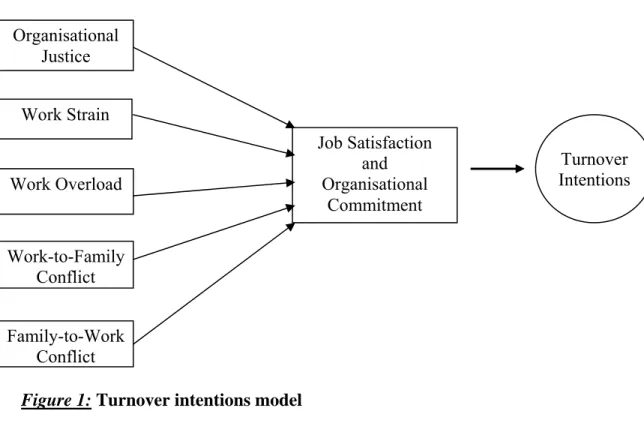
Some variables are regarded as proximal that have a direct relationship with turnover intentions whereas the distal variables have more an indirect relationship. Figure 1 (see page 8) represents the theoretical model for turnover intentions utilized in the present research. Starting from the right side of the model the criterion variable turnover intentions. The proximal variables are:
(1) organisational commitment, including affective and continuance commitment, and
The rest are distal variables, which are grouped into five variables:
(1) organisational justice including distributive, interactional and procedural justice
(2) work strain (3) work overload
(4) work-to-family conflict, and (5) family-to-work conflict
Turnover Intentions
Figure 1: Turnover intentions model
Distal Variables Job Satisfaction and Organisational Commitment Organisational Justice Work Strain Work Overload Work-to-Family Conflict Family-to-Work Conflict Proximal Criterion Variables Variable Background
The selection of variables is based upon a literature review of the topic. A meeting was held with the Manager of the Human Resource Department and the Manager for Business Re-engineering of the WDHB to define the scope of the
research and the appropriateness of specific variables that would be applicable to WDHB. The theoretical reasoning for the selection of each of the variables is outlined below.
Proximal variables
At the centre of some turnover models have been the proximal variables of job satisfaction and organisational commitment (Steel, 2002) and were mainly developed from the vast amount of research on job satisfaction and turnover (Porters & Steers, 1973). The models were extended to include the effects of organisational
commitment (Porters, Steers, Mowday, & Bouliam 1974) and other forms of commitment (Allen, & Meyer 1990; Blau 1989; Chang 1999; Gaertner & Nollen 1989; Lee, Ashford, Walsh, & Mowday 1992). In this research both job satisfaction and organisational commitment (affective and continuance) are considered as proximal antecedents as they are strong direct predictors of turnover intentions.
Job Satisfaction is a subjective emotional evaluation made consciously or
unconsciously by the employee and is defined as “a pleasurable or positive emotional state resulting from the appraisal of one’s job or job experiences” (Locke, 1976, p. 1304). Job satisfaction is multidimensional in nature with specific facets; satisfaction with work, pay, promotion, co-workers, plus a global item for measuring overall job satisfaction (Rice, Gentile & McFarlin, 1991).
Work is such a large part of an employee’s life and is represented by a belief that employees who are more satisfied with their work experiences and environment
will stay longer (Spector, 2000), will attend work regularly, and perform at an optimum level (Porters & Steers, 1973). Job satisfaction is included in this research because of its predictor strength of turnover intentions. Many researchers have shown that high levels of job satisfaction are negatively related to turnover intentions (Koslowsky, 1991), and turnover (Hom and Griffeth 1991;). More importantly, three meta-analyses have concluded that there is a distinct link (Carsten and Spector, 1987; Hom and Griffeth, 1991; Steel and Ovalle, 1984).
Thus, employees who are satisfied with their job are less likely to want to leave their organisation. The present study tested the hypothesis that:
H 1a: Job satisfaction will be negatively associated with turnover intentions.
Organisational commitment has become one of the most popular work
attitudes studied by practitioners and researchers (Meyer, Allen& Smith, 1993; Mowday, Porter, & Steers, 1982). One of the main reasons for its popularity is that organisations have continued to find and sustain competitive advantage through teams of committed employees. Mowday, Porter and Steers, (1982) and Meyer, Paunonen, Gellatley, & Goffin, and Jackson, (1989) have found that committed employees are more likely to remain with the organisation and strive towards the organisation’s mission, goals and objectives. Organisational commitment is defined as the degree to which the employee feels devoted to their organisation (Spector, 2000). Further research into this variable has concluded that commitment is a diverse construct. There is general acceptance that organisational commitment has three main facets: affective, continuance, and normative, each with its own underlying ‘psychological states’ (Meyer & Allen, 1995). Affective commitment refers to the
emotional bond and the identification the employee has with the organisation. For the employees the positives include enhanced feelings of devotion, belongingness, and stability (Meyer, & Allen 1993). Continuance (economic/calculative)
commitment refers to what the employee will have to give up if they have to leave the organisation or in other terms, the material benefits to be gained from remaining. Employees whose primary link to the organisation is based on continuance
commitment remain with the organisation because they feel they need to do so for material benefits (Meyer, & Allen, 1993). Therefore, if the employees believe that fewer viable alternatives are available their continuance commitment will be stronger to their current employer. Lastly, normative commitment or moral commitment (Jaros, Jermier, Koehler, & Sincich, 1993) reflects a feeling of obligation to continue employment. Employees with a high level of normative commitment feel that they ought to remain with the organisation (Bentein, Vandenberghe & Stinglhamber, 2005). Jaros et al (1993) argue that the commitment is determined by being obligated to work in the organisation, a sense of moral obligation following their parents, who may have been long-term employees of the organisation therefore, a sense of duty to belong.
The association between affective commitment and turnover has been well established in previous research (Iverson & Buttigieg, 1999; Mathieu & Zajac 1990; Mowday, Porters & Steers, 1982). The meta-analysis of Griffeth, Hom & Gaertner (2000) draws the inference that affective commitment is one of the best predictors of voluntary turnover. Research of Jaros, Jermier, Koehler, and Sincich, (1993) and Chen, Hui, and Sgo, (1999) has found a negative relationship between continuance commitment and turnover intentions. Normative commitment was omitted from this
research because the research of Meyer et al. (1993), and Sommers (1995) had found some overlapping of the constructs, normative commitment, and affective
commitment. Furthermore, affective commitment has had consistent empirical evidence to its suitability.
An employee who has a high organisational commitment is willing to bring to bear extra effort on behalf of the organisation. Thus, employees with a strong
emotional attachment (affective commitment) tend to work harder and therefore are more productive and have a strong emotional desire to remain with the organisation (Meyer et al. 1993). In contrast, the employee with strong economical/calculative ties to the organisation (continuance commitment) will stay because of the ‘side bets’ they have invested in the organisation. The side bets can be monetary value, a pension plan, specific skills acquired whilst working there or status (Becker, 1960) and would be lost if he/she decides to leave.
It is expected that both affective and continuance commitment will be negatively associated to turnover intentions (Meyer, Stanley, Herscovitch, & Topolynytsky, 2002). The present study tests the hypotheses that:
H 1b: Affective commitment will be negatively associated with turnover intentions.
H 1c: Continuance commitment will be negatively associated with turnover intentions.
Distal Variables
The basic turnover model Mobley (1977) was mainly developed in the period from 1977 to 1981 and forms the basis for all succeeding models. The later models drew mainly from Mobley’s (1977) process model, which dominated the early research on turnover. Further research by Mobley, Griffeth, Hand and Meglino, (1979); Mobley, Horner, and Hollingworth, (1978); Muchinsky and Morrow (1980) Price (1977) Price and Meuller, (1981); and Steers and Mowday (1981) has continued to shape the thinking of the turnover literature today.
Mobley (1982) attributed turnover to four classes of determinants.
The first class of determinants of turnover include the external antecedents such as the economy, employment-unemployment levels, labour-force composition and mix, and inflation. The second class are organisational determinants such as type of industry, supervisory style, remuneration, job content, reward system, and work environment. Individual aspects make up the last two determinants. The first of these involve individual non-work related factors such as demographics and personal factors e.g. age, tenure, sex, education, personality, ability, and vocational interests. The second class of individual aspects are work related antecedents including job autonomy, or unchallenging/uninteresting work, job satisfaction, career aspirations, and expectations, organisational commitment, stress, and intentions to stay. (Mobley, 1982). The distal variables chosen for the present research were organisational justice, (procedural, interactional, and distributive justices) work strain, work
overload, work-to-family conflict and family-to-work conflict. These distal variables are examined based on their correlation with:
•
Job Satisfaction• Affective Commitment
• Continuance Commitment
Distal variables - Correlates of Job Satisfaction
Organisational Justice: Issues of justice and fairness are key concerns to
employees within an organisation. Employees often ascertain whether their contributions to the organisation match the rewards, they receive. They also judge the fairness of the decision-making process, see if the processes are consistently fair, and do not discriminate against any employee (Bias, Shapiro, & Moag, 1987). The main types of organisational justice are distributive, procedural, and interactional justice. Distributive justice refers to the dissemination of resources and the criteria by which they are distributed to the employees. It includes essential elements of equity, equality and need (Muchinsky, 2000). In contrast, procedural justice refers to the fairness of the processes and procedures used to determine results (Aryee & Chay, 2001). Employees trade their knowledge, skills, and abilities and motivation for rewards. The rewards can be tangible, such as income and intangible, such as being treated with respect, dignity, and fairness. This reciprocal exchange is grounded in social exchange theory (Blau, 1964) and the mutual transaction of benefits to each party shapes the social interactions. It is reasonable to assume that employees are more likely to respond favourably to fair treatment than unfair treatment. Indeed psychological theory states that the importance of fairness is a basic need for the well
being and satisfaction of employees (Blau, 1964). Therefore, employees who perceive that they are being treated without prejudice are more likely to have a high degree of satisfaction and continue their employment with the organisation.
Recently, interactional justice has come to the forefront and refers to the perceived fairness of interpersonal treatment by the employee’s manager. Interactional justice perceptions are concerned with ensuring the employees are treated with dignity, sensitivity, and respect and whether manager’s decisions are accurarely
communicated and explained to the employees (Colquit, Conlon, Wesson, Porter & Ng 2001).
In summary, employees who perceive they are not being treated fairly due to unfair interpersonal treatment or unfair procedures develop low job satisfaction and may seek alternative employment with another organisation in pursuit of equity (Adams, 1963; Folger, & Konovsky, 1989). Thus, employees who perceive strong levels of fairness (social exchange theory) will experience higher levels of job satisfaction (see Colquitt et al. 2001). This research tests the hypotheses that:
H 2a: Perceptions of distributive justice will have a positive association with job satisfaction
H 2b: Perceptions of interactional justice will have a positive association with job satisfaction
H 2c: Perceptions of procedural justice will have a positive association with job satisfaction
Work strain: has been the focus of many researchers because of its
dysfunctional impact on employees and for the organisation as a whole. A stressor is defined as the particular relationship between the employees and their environment when they perceive it to be beyond their cognitive capabilities and endangering their personal well-being. Between the stressors of the environment and outcomes is the variable of strain. According to Koeske, Kirk, and Koeske (1993), strain is the consequence of stressors. Strain is ‘an internal state of the individual who perceives threats to physical/or mental well-being’ (Krantz, Grunberg & Baum, 1985, p. 354). The indicators of stress manifest themselves around employees’ experiences of strain, and are commonly linked to feelings of anxiety and depression and cognitive failure (O Driscoll & Brough, 2003) High levels of anxiety mean that the employees are mentally preoccupied and their cognitive mental processing framework and attention to the environment is diminished. This pre-occupation interferes with the employee’s ability to process information adequately and to be able to plan effective strategies in their daily activities. Employees who are under work strain respond to their world differently both cognitively and affectively (O’Driscoll & Cooper, 1994).
One approach into health and well-being in the workplace was the stress or strain relationship that looks at the influence of job demands. A second approach is looking at enhancing employees’ health and well-being through positive experiences in the form of variety and autonomy, leading to greater job satisfaction and
performance (O’Driscoll & Brough, 2003).
Occupational strain needs to be dealt with not only for the benefit of the individual, but also for the organisation as a whole. Increasing strain produces
anxiety that ultimately affects personal health, morale, productivity, organisational efficiency leading to absenteeism, job dissatisfaction, decreased organisational commitment, and voluntary turnover. Therefore, it is hypothesised that:
H 2d: Work strain will be negatively associated with job satisfaction
Work overload: is defined as a stressor when the employee feels that they
have too many responsibilities or tasks in a defined period (Cardenas, Major & Bernas, 2004). Overload results from an interaction between the employee and his/her environment. One employee may feel that the workload is reasonable where another may perceive it as over burdening. Work overload is therefore very
subjective in nature.
Overload may be of two different types: quantitative or qualitative. When employees perceive that they have too much work to do, too many different things to do, or insufficient time to complete assigned work, a condition of quantitative
overload exists. Alternatively, qualitative overload occurs when employees feel they
lack the ability to complete their jobs or that performance standards are too high, or they just have too much to do regardless of how much time they have. Therefore, an overburdening workload will require an increase in time and energy to fulfil the job requirements (Beehr, & Glazer, 2005). Research shows that work overload
contributes to employee strain, tension, job dissatisfaction, decreasing organisational commitment and turnover (Spector, & Rex 1998). High workloads have been shown to lead to negative outcomes, for example, absenteeism, and low job satisfaction (Fox, Dwyer, & Ganster, 1993). According to Spector and Rex (1998), a high workload may result in feelings of anxiety and frustration. The rationale for this
hypothesis is that perceptions of a high workload by the employee are likely to result in some form of uncertainty about the completion of work tasks, resulting in low job satisfaction (Spector & Rex, 1998).
H 2e: Work overload will be negatively associated with job satisfaction
Work-to-Family (WFC) and Family-to-Work Conflict (FWC): In recent years,
there has been an increase in competitive pressures on organisations to increase productivity and an increase in time demands on the workforce, leaving less time available for the employees to be with their families. Moreover, the workforce composition has changed in recent years, with an increase in women in the workplace and there has been an increase in men being involved in family life (Bellavia, & Frone, 2005). Dual income couples and an increase in single parenting are now becoming the norm of today’s society (Cárdenas, Major& Bernas, 2004). Work-family conflict has been defined as “a form of inter-role conflict in which role pressures from the work and family domains are mutually incompatible in some respect” (Greenhaus & Buetell, 1985, p. 77). The conflict occurs when the employee extends their efforts to satisfy their work demands at the expense of their family demands or vice versa (Wang et al., 2004). Conflict could arise from work
interfering with the family life, such as working overtime to meet demands of the job or from family demands when there is illness with a family member. A significant amount of research has concluded that WFC and FWC are related but distinct
constructs (Casper, Martin, Buffardi, & Erdwins. 2002). WFC is primarily caused by excessive work demands and predicts negative family outcomes, whereas FWC is
primarily determined by family demands and predicts negative work outcomes (Greenhaus & Beutell, 1985).
Research has provided evidence that job satisfaction has been prominent as having a negative relationship in work-family conflict (Netmeyer, Boyes, &
McMurrian, 1996). As the employees, experience more conflict between their roles in both spheres, their level of job satisfaction declines. According to Cardenas et al., (2004) employees have limited time and energy to devote to the numerous domains in their lives. The fulfilment in one domain requires some relinquishment in another domain. It is this relinquishment, due to the limited time and energy, which can cause conflict (O’Driscoll, 1996).
In sum employees, registering low levels of conflict that originate from the work or home will be more likely to hold high levels of job satisfaction. The present study tests the hypothesis that:
H 2f: Work-to-family conflict will be negatively associated with job satisfaction
H 2g: Family-to-work conflict will be negatively associated with job satisfaction
Distal Variables - Correlates of Affective Commitment
Organisational justice: The research of Adams (1965) and Meyer et al.,
(1989) has shown that employees who have the perception that they are treated negatively by the organisation are more likely to have a lower level of affective commitment towards the organisation.
As mentioned previously, distributive justice is often discussed in terms of the principle of equity among employees and the principle of equal distribution of
resources (Spector, 2000). It then forms a basis for interaction and commitment, which fosters a greater degree of emotional attachment to the organisation. Essentially distributive justice suggests a level of internal equity or equality in the distribution of assets and the distribution of compensation and resources. The
rationale is that if the employees have perceptions of high distributive justice that is if an employee perceives that their contributions match the outputs they receive from the organisation then they will experience an emotional attachment. This results in the employee tending to be more secure and having a sense of fellowship in the organisation (Meyer, & Allen, 1991). In sum, positive perceptions of distributive justice in the outcomes received from the organisation will create high affective commitment to the organisation.
H 3a: Perceptions of distributive justice will have a positive association with affective commitment.
Interactionaljusticerefers to the social aspects of distributive justice and the importance of social aspects when policies and procedures are being implemented (Colquitt et al. 2001). The rationale is that if the employees have perceptions of being treated with politeness, honesty, and respect by their managers, in their interpersonal communication they are more likely to have feelings of affective commitment to the organisation.
H 3b: Perceptions of interactional justice will have a positive association with affective commitment.
Similarly, if the employees have perceptions of fairness of the process by which outcomes are determined and the moral and ethical values of the employee are taken into consideration (procedural justice), they are more likely to have positive reactions to the organisation, that is, increased affective commitment. Research of Colquit, Greenberg, and Zapata-Phelan (2005) found that the processes by which outcomes are determined are more important than the outcome itself. The important aspect is that the employees are given a “voice”, and are included in the planning, and decision-making processes. Therefore, it is posited that:
H 3c: Perceptions of procedural justice will have a positive association with affective commitment.
Work strain: According to O’Driscoll & Brough (2003), the consequences of
strain are poor workplace attitudes such as reduced organisational commitment and low workplace performance. When individual employees feel the presence of strain, they may become anxious and have difficulty in concentrating on their daily
tasks/work (O’Driscoll & Brough, 2003). The feeling of being anxious and the sense of not being in control may lead to feelings of frustration and psychological
withdrawal from the organisation (Beehr & Gupta, 1978). Thus, psychological strain can influence the ability of the employee to maintain commitment to the organisation. In sum, employees who are experiencing high levels of strain are more likely to have lower levels of commitment (affective). Therefore, it is posited that:
H 3d: Work strain will be negatively associated with affective Commitment.
Work overload: Many empirical studieshave identified the relationship
between workload and emotional exhaustion (Buunk, 1990; Cordes & Dougherty, 1993; Jansen, Schaufeli & Houkes, 1999). Therefore, affective commitment depends on the way in which individual employees perceive their value to the organisation and are their ability to remain steadfast to their employer (Meyer & Allen, 1991). When the employees are overworked and have feelings of emotional exhaustion they feel they cannot work effectively in fulfilling their responsibilities and commitment to their employer. When this is the situation, a high work overload, either quantitatively (having too much to do) or qualitatively (too difficult) may result in feelings of being less committed (affective) to the organisation. Therefore, it is posited that:
H 3e: Work overload will be negatively associated with affective commitment.
Work-to-family and family-to-work conflict: In the work to family literature,
affective commitment has received less attention than job satisfaction as a potential outcome of inter-role conflict (Good, Sisler, & Gentry, 1988; Good, Page, & Young, 1996). According to Schaffer, Harrison, Gilley, & Luk (2001), commitment
(affective and continuance) relates to the concept of social exchange theory, where the organisation and the employee expect something in return for the benefits that accrue in the social interaction. This provides a situation where conflict can
negatively affect commitment. Studies by Bhagat, McQuaid, Lindholm, & Sergovis (1985) and Wiley (1987) concluded that high FWC might lead to lowering
conflict theory’, that is, employees have only a set amount of time and energy to focus on a particular domain either work or family. Therefore, if an employee is experiencing high levels of FWC their roles and responsibilities in family life are interfering with the work domain. Because the employee is more committed to the welfare of the family, this will take priority, reducing or minimising the resources of time and energy being able to be spend in the work domain. Thus, employees who experience high family conflict should experience less affective attachment to the organisation.
Penley & Gould (1988) state that employees who are more committed to an organisation tend to more dedicated, “feels part of the family” and wants to stay on with an organisation. If an employee is spending more time at work because of the commitment to the job they may experience higher levels of WFC. In sum,
employees registering high levels of conflict that originate from the family will be more likely to hold low levels of affective commitment to organisation.
H 3f: Work-to-family conflict will be positively associated with affective commitment.
H 3g: Family-to-work conflict will be negatively associated to ffective commitment.
Distal Variables - Correlates of Continuance Commitment
Continuance commitment is based on occupational need and the need for resources (e.g. remuneration, specificity of skills, work security, work friends) as
underlying reasons for continuing employment (Iverson & Buttigieg, 1998).
Employees will exhibit self-interest behaviour and become ‘side bet’ employees as a result of incentives the organisation offers to the employee (Meyer et al. 1990). Therefore, the commitment of these employees will be based on the money, social and psychological returns he or she receives (Greenberg et al., 2005).
Distributive justice is concerned with the allocation and the distribution of the
resources. The employee makes judgements on what they receive for their time and effort in comparison to other employees. The continuance commitment (cc)
employee is interested in the return on investment, a calculative commitment based on the rewards, inducements (side bets) offered by the organisation (Morrow, 1993). Therefore, the continuance committed employees actions and decisions are based on the premise of a calculative exchange relationship. Therefore, if the employee believes that the distribution of the outcomes, such as pay and promotional opportunities are impartial then the employee will be steadfast to the organisation based on the continuance of the specific personal outcomes (Greenberg et al., 2005). Therefore, it is posited that:
H 4a: Perceptions of distributive justice will have a positive association with continuance commitment.
Interactional justice refers to the interpersonal treatment received by the
employees supervisors and managers. Colquit et al. (2001) argue that the
continuance-committed employee will be committed to the organisation based on the quality of the social interactions in the workplace. Furthermore, Greenberg (1993) in
his taxonomy justice classes included in the elements of interactional justice, the manner in which information is given to employees. Therefore, the cc employees may be committed to the organisation because of the relationships developed with their peers, friends, union, and work team or with the organisation’s customers which consequently may benefit the continuance committed employee in their personal career goals (Becker, 1992). Therefore, it is posited that:
H 4b: Perceptions of interactional justice will have a positive association with continuance commitment.
Procedural justice: As previously mentioned, procedural justice refers to the
perceived unbiased nature of the policies and procedures used to achieve
organisational decisions (Meyer et al 1989). When the employee is involved, given an opputturnity to participate in developing the policies and procedures, this can create a continuance commitment mentality. When the cc employee develops an active interest in the application of the business procedures such as remuneration plans, job, career, promotional plans etc, and then the continuance commitment employee may have feelings of commitment to the organisation based on the
continuance of the accumulated personal benefits that may eventuate. This reassures the continuance committed employee that the policies and procedures may continue so that the money, social and organisational inducements may continue in their self-interest (Iverson & Buttgieg, 1998). Therefore, it is posited that:
H 4c: Perceptions of procedural justice will have a positive association with continuance commitment.
Work strain is expected to be positively associated with continuance
commitment based on the idea that the individual cc employee often weighs the benefits of continuing with the organisation, comparing the remuneration, and self-satisfaction against the cost of personal consequences of individual well-being and physical health (Barling et al., 2005). The conflict that may arise can have a negative impact on an employee’s feelings of satisfaction, such as job dissatisfaction,
depression, burnout, or anxiety. However, an employer who is experiencing high levels of strain may also be committed to the organisation because of the side bets offered by the organisation or if they are aware that other employment opportunities are limited. If the employee has perceptions that fewer alternatives are available, the stronger their commitment will be to their employer. Therefore, it is posited that:
H 4d: Work strain will be positively associated with continuance commitment
Work overload: As previously mentioned work overload consequences can be
either qualitative or quantitative. This happens when either the employee does not have the knowledge skills and abilities to undertake the allocated job or when there is too much work in a defined timeframe for the employee to fulfil the daily job related tasks. It therefore becomes an incompatibility between time allocation to complete the job, job demand and the time based demand (Barling, et al, 2005). Therefore, the employee will want to stay with the organisation because of the inducements offered by the organisation such as retirement fund, and status within the organisation. An employee that is experiencing high work overload may also have high continuance to the organisation. Therefore, it is posited that:
H 4e: Work overload will be positively associated with continuance commitment.
Work-to-family and family-to-work conflict. Work-to-family conflict occurs when the
domain of work interferes with the family demands and vice versa for FWC
(Greenhaus & Beutell, 1985). The rationale for this hypothesis is that if the employee is experiencing high conflict from either the work or family domain it will be
dependant on the employees calculative commitment levels. The higher the levels of conflict and the higher the number of inducements offered by the organisation will result in cc employee producing extra effort to ensure their continued employment. The fewer alternatives that are available to the continuance-committed employee the more dedicated they tend to be (Iverson & Buttgieg, 1998). Therefore, it is posited that:
H 4f: Work-to-family conflict is positively associated with continuance
commitment.
H 4g: Family –to-work conflict is positively associated with continuance commitment
Mediated Relationships
Job satisfaction
Organisational justice: As previously mentioned organisation justice
incorporates three aspects of fairness: fairness in how the employees are treated (interactional justice), fairness of procedures (procedural justice), and fairness in outcomes (distributive justice). According to Cohen, Charash & Spector (2001), perceptions of unfair treatment lead to negative work place attitudes and behaviour such as, lower morale, and higher turnover. Colquitt et al. (2001) argues that perceptions of fair treatment incorporate aspects of higher job satisfaction, and organisational commitment, low intentions to turnover and increased organisation citizenship behaviours.
As discussed earlier, perceptions of distributive justice (H2a), interactional
justice (H2b) and procedural justice (H2c) are expected to be associated with job
satisfaction (see on page 14 and 15). In addition, job satisfaction (H 1a) is expected
to be associated with turnover intentions. Hence, strong perceptions of fairness in all the justice classes are likely to lead to higher job satisfaction, which in turn will be linked with turnover intentions. Therefore, it is expected that:
H 5a: Job satisfaction will mediate the relationship between perceptions of distributive justice and turnover intentions.
H 5b: Job satisfaction will mediate the relationship between perceptions of interactional justice and turnover intentions.
H 5c: Job satisfaction will mediate the relationship between perceptions of procedural justice and turnover intentions.
Work strain: In studies, stressful work and strain is seen as an antecedent of
voluntary turnover in organisations (Mcfadden & Demetriou, 1993; Arnold &
Mackenzie Davey 1999). As discussed earlier on pages 15 and 16, it is expected that work strain (H2d) will be negatively associated with job satisfaction. Consequently it
is expected that employees registering high levels of strain will have lower levels of job satisfaction and more likely to have turnover intentions.
H 5d: Job satisfaction will mediate the relationship between work strain and turnover intentions
Work overload: According to Mueller, Boyer, Price, & Iverson (1994), work
overload has a significant effect on voluntary turnover. Likewise, Arnold and
Mackenzie Davey (1999) found work overload predicted voluntary turnover among a sample of hospital workers. As discussed earlier (see on pages 16 and 17), it is expected that work overload (H 2e) will be negatively associated with job satisfaction
hence greater turnover intentions.
H 5e: Job satisfaction will mediate the relationship between work overload and turnover intentions.
Work-to-family and family-to-work conflict: Studies have consistently
supported the direct relationship between work-family conflict (Andersen, Coffey & Bryerly, 2002; Grandey, & Cropanzano, 1999; Greenhaus, Parasuraman, & Collins,
2001), and for family-to-work conflict (Schafer, et al, 2001) with turnover intentions. As discussed on pages 17, 18, and 19 it is expected that work-to-family conflict (H 2f) and family-to-work conflict (H 2g) are negatively associated with job satisfaction. Therefore, it is posited that:
H 5f: Job satisfaction will mediate the relationship with work-to-family conflict and turnover intentions.
H 5g: Job satisfaction will mediate the relationship with family-to-work and turnover intentions.
Affective Commitment
As discussed the distal variables, distributive, interactional, and procedural justice (on pages 19, and 20); work strain (on page 21), work overload (on page 21), work-to-family and family-to-work conflict (on pages 22, and 23), are expected to be associated with affective commitment. Therefore, it is posited that:
H 6a. Affective commitment will mediate the relationship between perceptions of distributive justice and turnover intentions . H 6b. Affective commitment will mediate the relationship between
perceptions of interactional justice and turnover intentions H 6c. Affective commitment will mediate the relationship between
perceptions of procedural justice and turnover intentions
H 6d. Affective commitment will mediate the relationship between work strain and turnover intentions.
H. 6e. Affective commitment will mediate the relationship between work overload and turnover intentions.
H 6f. Affective commitment will mediate the relationship between work- to-family conflict and turnover intentions
H 6g. Affective commitment will mediate the relationship between family- to-work conflict with turnover intentions.
Continuance Commitment
As discussed the distal variables distributive, interactional, and procedural justice (on pages 24 and 25), work strain (on pages 25 and 26), work overload (on pages 26), work-to-family and family-to-work conflict (on pages 26 and 27), are expected to be associated with continuance commitment. Therefore, it is posited that:
H 7a. Continuance commitment will mediate the relationship between perceptions of distributive justice and turnover intentions H 7b. Continuance commitment will mediate the relationship between
perceptions of interactional justice
H 7c. Continuance commitment will mediate the relationship between perceptions of procedural justice and turnover intentions
H 7d. Continuance commitment will mediate the relationship between work strain and turnover intentions
H 7e. Continuance commitment will mediate the relationship between work overload and turnover intentions.
H 7f. Continuance commitment will mediate the relationship between work- to-family conflict and turnover intentions.
H 7g. Continuance commitment will mediate the relationship between family-to-work conflict and turnover intentions.
Summary of Hypotheses
(Refer to Figure 1.)
Correlates of Turnover Intentions
H 1a: Job satisfaction will be negatively associated with turnover intention.
H 1b: Affective commitment will be negatively associated with turnover intentions. H 1c: Continuance commitmentwill be negatively associated with turnover
intentions.
Correlates of Job Satisfaction
H 2a: Perceptions of distributive justice will have a positive association with job satisfaction.
H 2b: Perceptions of interactional justice will have a positively association with job satisfaction.
H 2c: Perceptions of procedural justice will have a positive association with job satisfaction.
H 2d: Work strain will be negatively associated with job satisfaction. H 2e: Work overload will be negatively associated with job satisfaction.
H 2f: Work-to-family conflict will be negatively associated with job satisfaction. H 2g: Family-to-work conflict will be negatively associated with job satisfaction.
Correlates of Affective Commitment
H 3a: Perceptions of distributive justice will have a positive association with affective commitment.
H 3b: Perceptions of interactional justice will have a positive association with affective commitment.
H 3c: Perceptions of procedural justice will have a positive association with affective commitment.
H 3d: Work strain will be negatively associated with affective commitment. H 3e: Work overload will be negatively associated with affective commitment H 3f: Work-to-family conflict will be positively associated with affective
commitment.
H 3g: Family-to-work conflict will be negatively associated with affective commitment.
Correlates of Continuance Commitment
H 4a: Perceptions of distributive justice will have a positive association with continuance commitment to organisation.
H 4b: Perceptions of interactional justice will have a positive association with continuance commitment.
H 4c: Perceptions of procedural justice will have a positive association with continuance commitment.
H 4d: Work strain will be positively associated with continuance commitment. H 4e: Work overload will be positively associated with continuance
commitment.
H 4f: Work-to-family conflict will be positively associated with continuance commitment.
H 4g: Family-to-work conflict will be positively associated with continuance commitment.
Mediated Relationships
Job Satisfaction
H 5a: Job satisfaction will mediate the relationship between perceptions of distributive justice and turnover intentions.
H 5b: Job satisfaction will mediate the relationship between perceptions of interactional justice and turnover intentions.
H 5c: Job satisfaction will mediate the relationship between perceptions of procedural justice and turnover intentions.
H 5d: Job satisfaction will mediate the relationship between work strain and turnover intentions.
H 5e: Job satisfaction will mediate the relationship between work overload and turnover intentions.
H 5f: Job satisfaction will mediate the relationship between work-to-family conflict and turnover intentions.
H 5g: Job satisfaction will mediate the relationship between family-to-work conflict and turnover intentions.
Affective Commitment
H 6a: Affective commitment will mediate the relationship between perceptions of distributive justice and turnover intentions.
H 6b: Affective commitment will mediate the relationship between perceptions of interactional justice and turnover intentions.
H 6c: Affective commitment will mediate the relationship between perceptions of procedural justice and turnover intentions.
H 6d: Affective commitment will mediate the relationship between work strain and turnover intentions.
H 6e: Affective commitment will mediate the relationship between work overload and turnover intentions.
H 6f: Affective commitment will mediate the relationship between work-to-family conflict and turnover intentions.
H 6g: Affective commitment will mediate the relationship between family-to-work conflict and turnover intentions.
Continuance Commitment
H 7a: Continuance commitment will mediate the relationship between perceptions of distributive justice and turnover intentions.
H 7b: Continuance commitment will mediate the relationship between perceptions of interactional justice and turnover intentions.
H 7c: Continuance commitment will mediate the relationship between perceptions of procedural justice and turnover intentions.
H 7d: Continuance commitment will mediate the relationship between work strain and turnover intentions.
H 7e: Continuance commitment will mediate the relationship between work overload and turnover intentions.
H 7f: Continuance commitment will mediate the relationship between work-to-family conflict and turnover intentions.
H 7g: Continuance commitment will mediate the relationship between family-to-work conflict and turnover intentions.
CHAPTER TWO
METHOD
Organisational Context
The Waikato District health Board employs approximately 4,800 staff and serves a population of 317,751. It is the fifth largest District Health Board in New Zealand and its direct area of responsibility stretches from Thames/ Coromandel in the north to Taumarunui in the south (See figure 2). The main hospital is based (Waikato Hospital) in Hamilton, and there are district hospitals at Thames, Tokoroa, Te Kuiti, Taumarunui, Te Awamutu and Morrinsville (WDHB, n.d.).
The organisational structure of the WDHB is a matrix structure that runs through client-based services; the services provided are Mental Health & Addictions service, Hospital services, and Community Health services. The term Allied Health was coined some years ago and referred to health professionals who were not doctors, nurses, managers, or clerical staff. Therefore, the term allied health staff was used to refer to “professionals allied to medicine” (Shaw, 2006). The core groups of people that make up Allied Health staff include occupational therapists, physiotherapists, psychologists, speech and language therapists, social workers, and dieticians.
Figure 2. The geographical boundaries of the WDHB.
These groups of people are then assigned to each of the three services depending on the client need within each service. A professional advisor is appointed to each of these groups. For example, the professional advisor for occupational therapy provides advice horizontally across the organisation to service managers and team leaders on how they may improve their service to optimise use of the allied health staff (Shaw 2006).
Background
A questionnaire was conducted across six occupational allied health groups of the WDHB measuring turnover intentions as the criterion variable, three proximal variables, (job satisfaction, affective and continuance commitment) and seven distal variables, (distributive, interactional, and procedural justice, work overload,
strain, work-to-family, and family-to-work conflict). The objective was to identify the key distal variables that are significantly related to turnover intentions and to explore the mediating affects of the proximal variables.
Participants
All the employees associated to WDHB allied health occupational groups (see Table 1) were invited to participate in this study. Overall, 251 employee questionnaires were distributed (Appendix C) and 114 completed questionnaires were returned,
representing a response rate of 45.4%. Table 1 presents the number and percentage of
Table 1 Number of respondents for each allied health occupational group Allied Health Occupational Group Questionnaires distributed Number of Respondents Response Rate/ Occupational Group Percentage Dieticians 18 13 72.2% 11.4% Occupational Therapists 62 40 64.5% 35.1% Physiotherapists 63 31 49.2% 27.2% Psychologists 38 20 52.6% 17.5% Social Workers 64 9 14% 7.9% Speech Language Therapists 6 1 16.6% 0.9% Total 251 114 45.4% 100%
respondents at each occupational group, along with the percentage each group is of its population. The respondent’s average age was 39 years ranging from 22 to 64 years. The average tenure in the organisation was 64 months and males comprised 13.2% (15) of the sample and 86.4% (95) females.
Instrument
The data were collected via a questionnaire made up of multiple questions. The questionnaire contained quantitative measures of turnover intentions, job satisfaction, organizational commitment, (affective and continuance commitment) organizational justice (distributive, interactional. and procedural justice), psychological strain, work overload, work-to-family and family-to-work conflict and demographic particulars. Within the background section of the questionnaire, respondents were asked to provide information on their occupation title, gender, age, job tenure, organizational tenure, and number of dependants.
A sample of the cover letter and questionnaire is presented in Appendix 2 and Appendix 3. The questionnaire was initially piloted on a small sample of people in order to highlight any ambiguities and errors in the design of the questionnaire’s,
instructions, and questions. The questionnaire was also submitted to the human resource manager at WDHB for his consideration and approval. As a result, a few minor design features were altered. The Research and Ethics Committee of the Psychology
Quantitative Measures
All scale scores were computed by taking the mean across item responses.
Criterion variable
Turnover intentions were measured using O’Driscoll & Beehr’s (1994) Turnover
Intentions Scale. The participants were asked how they feel about their present job, compared with an alternative that they may be interested in or able to obtain. This measure contains three items: “thoughts about quitting my job cross my mind”measured on a six-point response scale from strongly disagree to all the time. “I plan to look for a
new job within the next 12 months” measured on a six point response scale strongly
disagree to strongly agree; and “how likely is it that, over the next year, you will
actively look for a new job outside of this firm” measured on a six point response scale
very unlikely to very likely. The Cronbach’s alpha for turnover intentions in the present
sample was 0.91.
Proximal variables
The Facet Satisfaction scale was developed by O’Driscoll & Randall (1999) and
was used to measure job satisfaction. The scale has 16 items and asks respondents, how satisfied they are with various aspects of their job using a seven-point scale, 1 = very
dissatisfied to 7 = very satisfied. The Cronbach’s alpha for the facet satisfaction scale in
Organisational commitment. The scale used to measure organisational
commitment was developed by Allen & Meyer, (1996). The authors divide the scale into two subdivisions, affective and continuance commitment. Affective commitment has eight items, for example, “I enjoy discussing my organization with people outside it”. Continuance commitment has eight items, for example, “right now, staying with the organisation is a matter of necessity as much as desire”. The items are measured on a
Likert type anchored scale from = strongly disagree (1), to = strongly agree (7). The
Cronbach’s alpha for organizational commitment in this sample was affective commitment 0.78 and continuance commitment 0.81.
Distal variables
Organisational justice was operationalised using Niehoff & Moorman (1993)
Organizational Justice Scale. The justice scale consists of three sub-scales: distributive justice, interactional justice and procedural justice. Distributive justice was measured using five items assessing the fairness of different work outcomes, including pay levels, work schedule and job responsibilities. ”. Interactional justice has nine items and
measured the degree to which the employees felt their needs were considered, and adequate explanations were made for job decisions, e.g. “when decisions are made about my job, the manager is sensitive to my personal needs”. Procedural justice was
designed to measure formal procedures and had six items that measured the degree to which job decisions insured the gathering of accurate and unbiased information, an item example being “job decisions are made by my manager in an unbiased manner. The respondents were asked to rate the statements on Likert-type scale from 1 = to a very