
Characteristics of Users and Reported Effects of the Wim Hof Method : A Mixed Methods Study
66
0
0
Full text
(2) Table of Contents Introduction ________________________________________________________________________________________ 4 The Wim Hof Method _______________________________________________________________________________ 4 Yoga, Meditation and Breathing_______________________________________________________________________ 6 Cold Water _______________________________________________________________________________________ 7 The Present Study __________________________________________________________________________________ 8 Method ___________________________________________________________________________________________ 10 Design __________________________________________________________________________________________ 10 Study 1 – Online Survey ____________________________________________________________________________ Instruments. ___________________________________________________________________________________ Procedure. ____________________________________________________________________________________ Data analysis. __________________________________________________________________________________. 11 11 11 11. Study 2 – Semi-structured interviews __________________________________________________________________ Participants. ___________________________________________________________________________________ Instruments. ___________________________________________________________________________________ Procedure. ____________________________________________________________________________________ Data analysis. __________________________________________________________________________________. 12 12 13 13 14. Results ____________________________________________________________________________________________ 14 1. Online Survey - What Characterizes Users? __________________________________________________________ 15 Ways of learning about the WHM and motivations to try it. _____________________________________________ 15 2. Online Survey - Changes Reported as a Result of Practicing the WHM ____________________________________ 18 3. Semi-structured Interviews – Processes and Other Factors Underlying Change _____________________________ Processes in the physical domain. __________________________________________________________________ Processes in the social domain. ____________________________________________________________________ Processes in the spiritual domain. __________________________________________________________________ Multi-domain processes. _________________________________________________________________________ Internal factors that promote/prevent change. ________________________________________________________ External factors that promote/prevent change. ________________________________________________________ Interactions with other treatments and practices. ______________________________________________________. 22 22 30 32 34 34 36 40. 4. Semi-structured Interviews - Improving the WHM _____________________________________________________ 43 5. Semi-structured Interviews - Additional Observations __________________________________________________ Positive experiences. ____________________________________________________________________________ Uncomfortable experiences. ______________________________________________________________________ Form of the WHM. _____________________________________________________________________________ Future Studies _________________________________________________________________________________. 45 45 46 48 48. Discussion _________________________________________________________________________________________ 49 Characteristics ___________________________________________________________________________________ 49 Changes ________________________________________________________________________________________ 51 Limitations ______________________________________________________________________________________ 54 Strengths ________________________________________________________________________________________ 54. 2.
(3) Theoretical Framework ____________________________________________________________________________ 55 Conclusions _______________________________________________________________________________________ 57 References _________________________________________________________________________________________ 58 Appendices ________________________________________________________________________________________ 61 Appendix 1 - Informed Consent ______________________________________________________________________ 61 Appendix 2 – Online Survey _________________________________________________________________________ 62 Appendix 3 – Interview Schedule _____________________________________________________________________ 64. 3.
(4) Introduction Wim Hof is a Dutch individual, renowned for several world records in withstanding extreme circumstances. Based on his experience with yoga and cold-exposure, Hof developed a method to gain increased control of the physiology: the Wim Hof Method (WHM). The method includes deep breathing exercises, yoga postures, meditation and controlled cold exposure. Of particular significance is the emphasis on the principles of gaining increased control over the physiology, and hormesis (i.e. the controlled induction of a stressor that forces beneficial adaptation). These are suggested to help stabilize mood, induce a relaxation response, counter the effects of stress, and support immune system function. The method is gaining in popularity, with many anecdotal reports of its supposed benefits circulating online, despite a relative lack of scientific documentation of its effects. Due to this relative lack of understanding of the method, including both the possible risks and the reported benefits (spanning across physical, psychological, social and spiritual domains) the present study aims to investigate the characteristics of WHM-users; ways in which practitioners of the WHM experience change; what underlies these changes; and if and how the method can be adapted to better suit user needs. Below, the WHM and associated literature is discussed. Considering that the WHM consists of a combination of elements from yoga, meditation and breathing exercises, as well as cold-exposure, literature surrounding these respective elements is also discussed below.. The Wim Hof Method What follows is a description of the practice of the method. The practice is generally performed in the morning, as it is advised to perform the breathing exercise on an empty stomach. The practitioner is encouraged to begin by performing a set of yoga postures. This is then followed by performing a breathing exercise. The basic breathing exercise involves sitting or laying down in a comfortable position, and breathing deeply. The in-breath is performed by expanding the abdomen, followed by the chest, and to imagine the breath going into the head. The out-breath is performed simply by relaxing the body and releasing the breath. The rhythm of the breathing is circular, meaning it is a continuous flow. After 30-40 cycles, the breath is fully exhaled and the practitioner ceases to breathe, with the 4.
(5) breath held out. During this breath-retention phase, the practitioner focuses on relaxing and being aware of the body. When the body starts to display the reflexive need to breathe in, the practitioner takes one deep breath and holds it while squeezing the body, pushing blood into the head, for 10-20 seconds. This process is repeated 3-4 times. Then, the practitioner takes a cold bath or shower, during which he or she will focus on relaxing and being aware of the body, being aware of the breath. The practitioner may visualize a source of heat inside the body, or an “inner fire.” Practitioners are encouraged to gradually increase the duration and intensity of the cold-exposure over time. There are no strict recommendations regarding the order in which the various components are performed. While yoga postures may be incorporated, the core of the method is comprised of the breathing technique and cold exposure. Research conducted on a group trained by Wim Hof have shown that his techniques allow individuals to consciously influence the ANS and immune system by inducing a controlled stress response (Groothuis et al., 2010; Kox et al., 2014). His techniques were shown to attenuate the pro-inflammatory response in endotoxemia (upon injection with E.coli bacteria). Trained individuals performed Wim Hof's breathing exercise, resulting in lower rates of self-reported nausea, headaches, shivering and muscle and back pain when exposed to endotoxemia and elevated the expression of the anti-inflammatory response via IL-10, an anti-inflammatory cytokine (a type of protein involved in cell-signalling). Notably, however, the serum levels of cortisol in both the control group and experimental group were the same, and levels normalized more rapidly in the trained individuals. It was also shown that, despite the attenuation of the pro-inflammatory immune response, levels of leukocytes (infection-fighting immune cells) were higher in the trained individuals. A 2018 study conducted by Muzik et al., which made use of fMRI to observe the effect of practicing his method on Wim Hof showed that the performance of forceful respiration followed by cold exposure and focused attention on one's own bodily state appears to activate primary control centers for descending pain/cold stimuli modulation, which possibly reflects a stress-induced analgesic response that produces feelings of focus and well-being. It also activates regions of the brain which are associated with self-reflection and which facilitate internal focus as well as sustained attention in the presence of averse (e.g. cold) external stimuli. The study showed that the practice also resulted in increased sympathetic innervation and glucose consumption in intercostal muscle, which generates heat that dissipates to lung tissue and warms circulating blood in the pulmonary capillaries which is what may allow the practitioner to prevent a drop in core body temperature. Muzik et al. (2018) speculate that, alongside the release of endogenous opioids, the release of endocannabinoids may be responsible for some of the observed effects of practicing the techniques. 5.
(6) This includes the analgesic and antinociceptive effects, and feelings of well-being, but they are also involved in the regulation of emotions and cognition; vaso- and broncho-dilation; and reduction of oedema (swelling) and inflammation. The authors also note that the role of focused attention in the WHM may shift focus away from the Default Mode Network to the bodily sensation of respiration, potentially producing a relaxation-response that furthers the positive affective stimuli associated with the aforementioned endocannabinoid release.. Yoga, Meditation and Breathing The practice of techniques related to yoga, meditation and breathing exercises have been shown to induce positive health outcomes across different measures of physical as well as psychological health. These are discussed below. One of the key aspects of the narrative regarding the implications of the WHM is the increased level of control over otherwise involuntary physiological responses. Some of the earliest research conducted that examined this ability was the research conducted by Elmer and Alyce Green in the 1970's (Green & Green, 1977). Renowned yogi Swami Rama was able to demonstrate voluntary control over blood-flow in the hands; voluntarily induce atrial flutter to effectively stop the heart from pumping blood for 17 seconds; and induce different brain wave patterns, thus indicating that functions that were previously thought to be beyond voluntary control could be influenced. The practice of meditation has also been shown to allow the practitioner to influence functions of the Autonomic Nervous System (ANS). Benson et al. (1974) showed that the practice of Transcendental Meditation (TM) allowed medicated hypertensive patients to significantly reduce systolic and diastolic blood pressure, and the authors conclude that it is the regular practice of the technique that elicits the relaxation response that enables this. Studies on inward-attention meditation have shown that the practice can help practitioners gain control over their parasympathetic nervous system response. Wu and Lo (2008) for example, found that the practice of inward-attention meditation allowed practitioners to push the sympathovagal balance measure (a measure for the ratio between sympathetic and vagus (parasympathetic) nerve activities) to parasympathetic predominance, thus allowing them to induce regular oscillations in heart rate, associated with a state of relaxation. Central to the practice of yoga and meditation is control of the breath, and the practice of controlled breathing has also been shown to lead to positive health outcomes. The breathing practice 6.
(7) included in the WHM contains elements of yogic breathing techniques, or pranayama. Different kinds of pranayama were found to be effective in significantly reducing symptoms in asthma-patients (Saxena & Saxena, 2009). Patel et al. (1985) found that an intervention combining breathing techniques, meditation, relaxation and stress management education was able to effectively reduce coronary risk factors. These practices have also been shown to positively affect mood- and anxietyrelated disorders. An intervention based on Sudarshan Kriya Yoga found that a breathing-based yoga intervention was able to significantly reduce depressive and anxiety symptoms in patients with Major Depressive Disorder who responded inadequately to treatment with medication (Sharma et al., 2016). The principle of hormesis may also be relevant in the discussion of breathing exercises. Both hypoxic stress and oxidative stress are examples of hormetic stress (Shevchuk, 2008). This could offer a potential explanation for some of the reported benefits of Wim Hof's breathing exercise, which involves both hyperventilation (possibly inducing oxidative stress) and breath-retention (possibly inducing hypoxia). These examples in the literature demonstrate that practices that come under the umbrella of yoga, meditation and breathing exercises can potentially induce an extensive range of positive effects on the practitioner, primarily as a means to exert conscious influence over bodily functions.. Cold Water The research suggests that the practice of cold-exposure could have positive effects, both physically and psychologically. Exposure to cold water is one of the main components of the WHM, and the primary example of the way that the aforementioned principle of hormesis factors into the method. Cold-water exposure can induce beneficial physical adaptation. Research done on winter swimmers shows that cold-water exposure can cause “body hardening,” the exposure to natural stimuli resulting in increased tolerance to stress (Siems et al., 1993). Cold-exposure and cold-adaptation were shown to have some interaction with the human immune system, although Janskẏ et al. (1996) suggest that improved tolerance to cold may be a result of improved immune function, rather than the other way around. Furthermore, cold exposure may increase levels of Brown Adipose Tissue (BAT), which is a type of adipose tissue that can burn energy for thermogenesis. This may have positive effects on conditions like obesity, diabetes, cardiovascular disease and other conditions (Seale & Lazar, 2000; Cypess et al., 2009). According to Vaswani, Richard and Teiwani (1988) cold water exposure also increases the production of beta-endorphins, which could entail an anaesthetic effect, thus potentially 7.
(8) making it beneficial for those suffering from pain. Cold water also stimulates the release of norepinephrine (Vaswani, Richard and Tejwani, 1988) as well as dopamine (Šrámek et al., 2000). In a literature review titled “The Importance of Norepinephrine in Depression,” Moret & Briley (2011) describe evidence supporting the role of norepinephrine in depression, and that reduced transmission is linked to symptoms of decreased alertness, low energy, problems of inattention, concentration, and cognitive ability. Furthermore, norepinephrine is linked to the executive function, which in turn is fundamental to regulation of emotions and other aspects of social relationships. It has been hypothesized that cold-exposure could be beneficial in treating mood- and anxietyrelated symptoms as well. Shevchuk (2008) proposed that exposure to cold water could be an effective treatment for depression, due to the effects of cold-water exposure on the sympathetic nervous system, particularly through the release of norepinephrine. He argues that depression may be partially caused by the increasing lack of stimulation on the human thermoregulatory system, controlled by the hypothalamus, as a result of the evolution of human societies. He sugests that cold-water exposure could potentially have similar benefits as electroconvulsive therapy (ECT), without the negative sideeffects associated with ECT. Whether cold water has such beneficial effects on mood remains to be seen. In summary, research on cold-exposure does suggest some physiological benefits on stress tolerance, pain and heat production, and an association with immunity. There is as of yet no firm evidence regarding the supposed psychological benefits of cold water on mood and anxiety.. The Present Study The population of WHM-practitioners is one that is currently not well-studied, but is worth studying from a health promotion perspective. The previously discussed evidence and speculation regarding the broad range of health-effects of yoga, meditation and breathing exercises; cold exposure; and the WHM proper suggest that it could be a very versatile tool. There is also a wide range of anecdotal reports by WHM-practitioners of the health-effects that they attribute to the practice, which have been found online as well as in the author's personal interactions. There are currently no published studies that examine the characteristics of this growing population of users of the WHM. Such a study could provide insights with regard to its potential implementation as a health intervention. First of all, information regarding the type of individual that is inclined to begin practicing the WHM, coupled with his or her motivations, could provide insights into 8.
(9) which target group is likely to take up the WHM. Additionally, information regarding the method is available in different formats. This includes books; live training; online courses; videos; and podcasts. Studying the different means by which the information is spread and is instructed could supplement the understanding of the target group, and how they might be influenced to take up the practice. With the growing population of practitioners, data regarding the duration and frequency of their practice can be gathered to gain an understanding of the variability that occurs in this regard, and to what extent meaningful conclusions can be drawn regarding the effects of the practice. There is a significant online presence of WHM-practitioners. The most active WHM-Facebook group, “Wim Hof Method” consists of over 100,000 users as of the end of August, 2018. Several other active groups also exist with members from all over the world. The Wim Hof Method YouTube channel has over 93,000 subscribers, and the channel features several testimonials of practitioners who report positive impacts on health. The real-life effects of practicing the WHM are still shrouded in speculation and relative mystery, but anecdotes include accounts of improvements in physiological as well as psychological symptoms and conditions, including diabetes; asthma; Lyme disease; fibromyalgia; rheumatoid arthritis; multiple sclerosis; depression and anxiety. Due to the inclusion of components of spiritual practices, and the possible ramifications of the practice on social functioning, the spiritual and social domains are also included. With the inclusion of elements like cold-exposure that have the potential to induce significant distress or discomfort, it is important to gain an understanding of the potential risks and contraindications associated with the method. From a health promotion perspective, it is important to understand what users experience as the processes inherent to the method that underlie these changes, as well as other factors that promote or prevent change, particularly with reference to the symptoms of the various conditions in which users report improvements. Possible interactions with other treatments or practices should also be noted. There is also a lack of a user evaluation of the method, which could help to determine ways in which the method can be improved from a user-standpoint. In light of the largely anecdotal nature of the reported effects of the practice, and the lack of a systematic overview of what changes could be expected in real-life and what underlies them, the present study aims to provide such an theoretical framework. Such a theoretical framework is key to determining theoretically the applications of the WHM as a health-intervention and guiding further investigation. The present study thus aims to answer the following research questions, with associated subquestions: 9.
(10) I. What characterizes the population of WHM-users?: In terms of demographics? In terms of motivations for trying the WHM? In terms of ways of learning about the WHM? In terms of duration and frequency of practice? II. Do users of the WHM report changes? Which positive and negative changes on the following domains do practitioners report? In the physical domain In the psychological domain In the social domain In the spiritual domain III. According to users of the WHM, what are the factors that underlie these changes? In terms of processes inherent to the WHM? In terms of factors that promote or prevent change? In terms of interactions with other treatments/practices? IV. According to users of the WHM, how can the method be improved?. Method Design For the design of the study, a mixed-methods approach was selected, consisting of a quantitative study using an online survey, and a qualitative study for which interviews were conducted. The methods for these two studies are described separately below. A proposal for the study was submitted to the University of Twente's ethical board (application number 18122) and subsequently approved. An informed consent form was presented to survey respondents for participation in both studies simultaneously. The informed consent form can be found in appendix 1.. 10.
(11) Study 1 – Online Survey Participants. For this part of the study, a digital questionnaire was circulated online on 11 Facebook groups that center around the WHM. Groups that were included (with number of members as of August 27th, 2018) were “Wim Hof Method” (100,383 members); “Wim Hof Method and Beyond” (3,183 members); “Wim Hof Method – UK” (2,447 members); “Wim Hof Method – France” (2,363 members); “Wim Hof Method - Video Courses” (2,052 members); “Wim Hof Method Australia Official” (918 members); “Wim Hof Method Scientific Love Tank” (511 members); “Wim Hof Method – Ireland” (195 members); “Wim Hof Method Accountability Group” (183 members); “Wim Hof Method – Canada” (163 members) and a Wim Hof Method women's group (unknown number of members). Selection of these groups was mostly arbitrary, with the questionnaire initially being posted only on the largest group (“Wim Hof Method”). Other groups were later included based on a need to gather more data, often being shared on the respective groups by other members. A total of 241 responses were collected. Instruments. For this part of the study, a digital questionnaire was created. This questionnaire was used to gather information regarding demographics; assess how the respondents found out about the WHM; their motivations for trying the method; frequency and intensity of practice; whether or not they experienced changes, and what kind of changes they experienced; whether or not they were/are suffering from specific symptoms or conditions and whether or not they experienced changes in these specific symptoms or conditions. The questionnaire contained both multiple-choice and open-ended questions. These questions can be found in appendix 2. Finally, respondents were also asked whether they would be willing to participate in the second part of the study, which is comprised of interviews. Procedure. Over the course of three weeks, a link to the online survey was intermittently posted to 11 different Facebook-groups that center around the WHM until sufficient data was collected. Data analysis. Results of the online survey were analyzed using descriptive statistics. This consisted of 11.
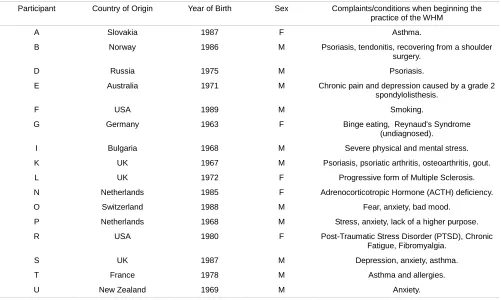
(12) calculating the respective frequencies and percentages of the responses using statistical software (SPSS), and observing which responses were most frequently selected. Study 2 – Semi-structured interviews Participants. Survey results regarding characteristics of the user-group were cross-tabulated with willingness to participate in follow-up interviews in order to determine selection-criteria. The first selectioncriterion that was decided on was, obviously, willingness to participate in the interviews. In total, 115 survey-respondents were willing to participate in the interviews. Second, based on the demographic information gathered from the questionnaires, the age-range for interview participants was narrowed down to the range of 30-60 years of age, as this age-range was deemed to be most representative, with 76% of respondents indicating that they were born between 1961 and 1990. Third, in order to identify how the method might bring about changes in individuals suffering from specific (psychological and/or physical) complaints and conditions and explore the method's potential as a health intervention, selection was further narrowed down to respondents who indicated in the questionnaire that they were/are suffering from specific complaints/conditions when they began practicing the WHM. The selection included participants who reported experiencing both positive and negative changes that they attributed to their practice of the WHM. Based on the limited responses from respondents who were invited to participate, gender and the nature of the specific complaints/conditions were not factored into the selection. Out of the 49 respondents that fit these criteria.16 confirmed their participation. The sample consisted of 5 female and 11 male participants, ranging between 29 and 55 years of age. Table 1 contains relevant information regarding the participants.. 12.
(13) Table 1 Participant details Participant. Country of Origin. Year of Birth. Sex. Complaints/conditions when beginning the practice of the WHM. A. Slovakia. 1987. F. Asthma.. B. Norway. 1986. M. Psoriasis, tendonitis, recovering from a shoulder surgery.. D. Russia. 1975. M. Psoriasis.. E. Australia. 1971. M. Chronic pain and depression caused by a grade 2 spondylolisthesis.. F. USA. 1989. M. Smoking.. G. Germany. 1963. F. Binge eating, Reynaud's Syndrome (undiagnosed).. I. Bulgaria. 1968. M. Severe physical and mental stress.. K. UK. 1967. M. Psoriasis, psoriatic arthritis, osteoarthritis, gout.. L. UK. 1972. F. Progressive form of Multiple Sclerosis.. N. Netherlands. 1985. F. Adrenocorticotropic Hormone (ACTH) deficiency.. O. Switzerland. 1988. M. Fear, anxiety, bad mood.. P. Netherlands. 1968. M. Stress, anxiety, lack of a higher purpose.. R. USA. 1980. F. Post-Traumatic Stress Disorder (PTSD), Chronic Fatigue, Fibromyalgia.. S. UK. 1987. M. Depression, anxiety, asthma.. T. France. 1978. M. Asthma and allergies.. U. New Zealand. 1969. M. Anxiety.. Instruments. Elliott's (2008) Client Change Interview schedule was used as a basis for developing the interview schedule . The Client Change Interview schedule is aimed at evaluating specific treatments or interventions from a client/patient point of view, thus allowing for evaluation of the WHM from the user perspective and targeting the processes underlying specific changes. The interview schedule consisted of general questions about well-being, medication intake, motivations, intensity of practice, and experiences with the WHM; changes reported; attributions; resources (personal and environmental); limitations (personal and environmental); helpful aspects of the method; problematic aspects of the method; and suggestions for improving the method and/or research. The full interview schedule can be found in appendix 3.. Procedure. The interviews were conducted by the researcher using software that enables digital calls. 13.
(14) Participants were told that they would be asked questions about their experience with the WHM based on their response to the online survey. Interviews lasted about an hour on average, conducted with or without video, and were recorded so that data could be transcribed and coded for analysis.. Data analysis. For the analysis of the data, the interview transcripts were read by the researcher and inductively coded. Color codes were assigned to each participant. The transcripts were studied to find citations relevant to the research questions, as well as to find additional data that was deemed relevant by the researcher to report. All relevant citations were inductively assigned a preliminary label, and were organized into broad first level category headings based on these labels. The first group contained data regarding processes underlying changes in the various domains. The categories belonging to this group were physical domain; psychological domain; social domain; spiritual domain; and multi-domain, respectively. The second group contained the categories of internal factors that promote/prevent change and external factors that promote/prevent change. Remaining categories were interactions with other treatments/practices; differences in form of the practice of the WHM; improving the WHM; and additional observations . The coding scheme was further refined to eliminate overlap. Citations in the aforementioned first level categories were divided into second-level categories. Thus, After discussing the resulting tables with the supervisors, second-level categories were further subdivided into subthemes, and one relevant quote was selected for each subtheme to be included in the table displayed in the results section.. Results The results of the study are characterized by a great deal of variety of data. The headings of the sections of this results section indicate whether the results displayed are gathered from the online survey or the semi-structured interviews, respectively.. 14.
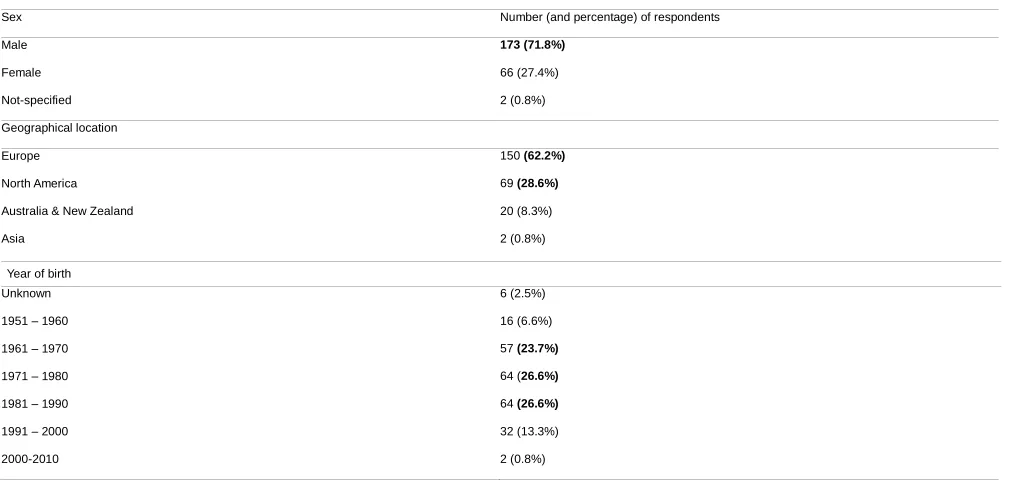
(15) 1. Online Survey - What Characterizes Users? Demographics. Table 2 contains relevant demographic details regarding the respondents. The user-group consisted primarily of men, at about 71%. About 62% of respondents were from Europe, and about 28% were from North America. Around 76% of respondents were born between 1961 and 1990. Table 2 Demographics of WHM-users (N=241) Sex. Number (and percentage) of respondents. Male. 173 (71.8%). Female. 66 (27.4%). Not-specified. 2 (0.8%). Geographical location Europe. 150 (62.2%). North America. 69 (28.6%). Australia & New Zealand. 20 (8.3%). Asia. 2 (0.8%). Year of birth Unknown. 6 (2.5%). 1951 – 1960. 16 (6.6%). 1961 – 1970. 57 (23.7%). 1971 – 1980. 64 (26.6%). 1981 – 1990. 64 (26.6%). 1991 – 2000. 32 (13.3%). 2000-2010. 2 (0.8%). Ways of learning about the WHM and motivations to try it. Table 3 contains data regarding the ways of learning about the method and motivations for trying it. By far the most frequently reported single way by which respondents indicated having learned about the WHM was by word of mouth. Friends and family, sports-club members and even health professionals were mentioned as sources. YouTube is also an important one. Those who selected “others” named mostly online sources, primarily podcasts. This means that, when taken together, the sample found out about the method primarily through online means. Television was also mentioned a number of times. In terms of motivations, more than one answer was possible. The most commonly cited reason for trying the WHM was health consciousness, followed by curiosity. Relief of physical and mental 15.
(16) problems, when taken together, were selected about equally frequently. Increased resistance to cold and improvements in (sports) performance were mentioned under “others.”. Table 3 Way of first learning about the WHM and motivations for trying it(N=241) Medium. Frequency (percentage). Word of mouth. 69 (28.6%). YouTube. 49 (20.3%). Facebook and other social media. 40 (16.6%). Books. 9 (3.7%). Others, namely ____. 72 (29.9%). Motivation Health consciousness. 131 (54.4%). Curiosity. 118 (49.0%). Relief of physical problems. 62 (25.7%). Relief of mental problems. 60 (24.9%). Others, namely ____. 51 (21.2%). Duration and frequency of practice. As indicated in table 4, nearly all of the respondents continue to practice the WHM, with only four respondents (1.7%) indicating that they no longer practice the WHM.. Table 4 Respondents who still practice the WHM (N=241) Still Practicing. Frequency (percentage). Yes. 237 (98.3%). No. 4 (1.7%). Table 5 shows the duration of practice of those who indicated that they are still practicing the WHM (table 4). As can be seen in the table, there is a reasonably large proportion of respondents who are relatively new to the method, with about 20% of them being practitioners of 2-3 months. However, there is a decline in practitioners from the 2-3 month range onward, until the “A year or more” category. This could be indicative of practitioners dropping out over time, with only the more dedicated practitioners persisting into the range of a year or more of practice. The total sample actually consist mostly of those who have been practicing a year or more, around 37%. Many of them have even been practicing for several years, at around 13%. Two 16.
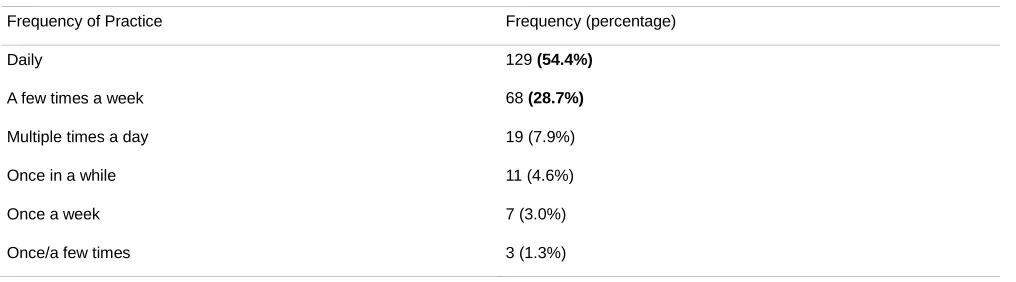
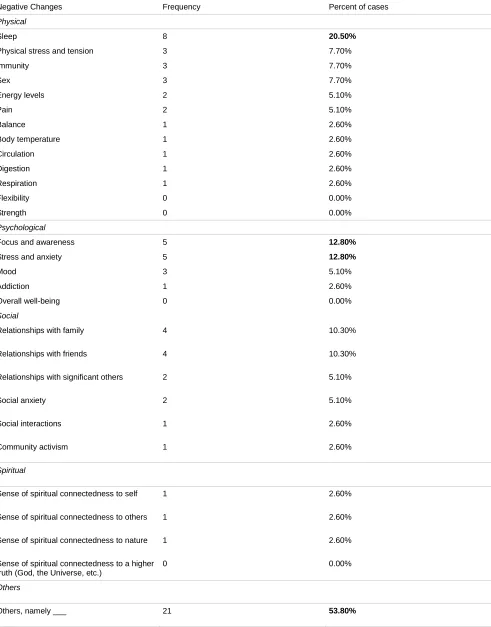
(17) respondents indicate having been practicing the method for as long as six years. One respondent even indicates having been practicing cold exposure for at least 15 years, although this respondent indicates not having begun a daily practice until about eight months prior to responding to the survey. The respondents that indicated no longer practicing the method make up a very small proportion of the total sample, consisting of only five respondents. The duration of practice of these respondents did not exceed the 6-7 month range.. Table 5 Duration of practicing the WHM (N=237) Duration of Practice. Frequency (percentage). 0 – 1 month. 23 (9.7%). 2 – 3 months. 49 (20.7%). 4 – 5 months. 31 (13.1%). 6 – 7 months. 20 (8.4%). 8 – 9 months. 15 (6.3%). 10 – 11 months. 10 (4.2%). A year or more. 57 (24.1%). Several years. 32 (13.5%). The respondents who indicated that they still practice the WHM were also asked how often they practice. The results are shown in table 6. As can be seen in the table, the majority of these respondents practice daily. A small proportion of them even practice multiple times a day. Only a small proportion of the respondents practice less than a few times a week.. Table 6 Frequency of practicing the WHM (N=237) Frequency of Practice. Frequency (percentage). Daily. 129 (54.4%). A few times a week. 68 (28.7%). Multiple times a day. 19 (7.9%). Once in a while. 11 (4.6%). Once a week. 7 (3.0%). Once/a few times. 3 (1.3%). 17.
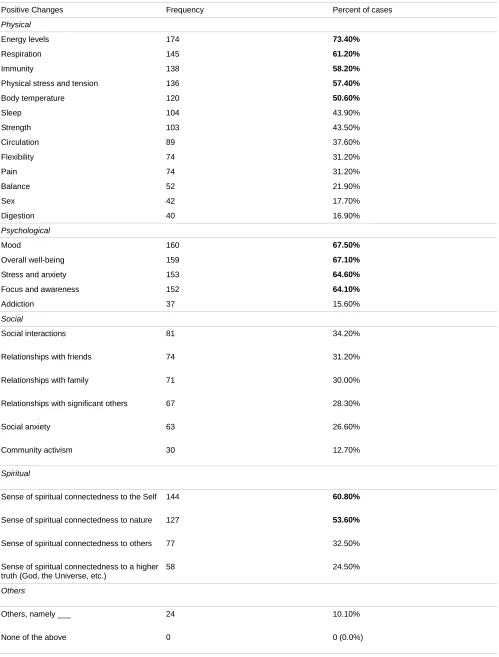
(18) 2. Online Survey - Changes Reported as a Result of Practicing the WHM Of the 241 respondents, about 98% indicate that they experienced changes that they attribute to their practice of the WHM. Positive changes. Table 7 shows the positive changes reported by respondents who indicated having experienced changes as a result of practicing the WHM. Changes that were reported by at least 50% of the respondents are considered significant, because they are represented in a statistical majority of the sample. Physical changes were most frequently reported. Frequently reported physical changes, with a range of 73 % - 50% of respondents, were changes in energy levels; respiration; immunity; physical stress and tension; and body temperature. Frequently reported psychological changes, with a range of 67% - 64% of respondents, were changes in mood; overall well-being; stress and anxiety; and focus and awareness. Frequently reported spiritual changes were changes in a sense of spiritual connectedness to the Self, at around 60%; and a sense of spiritual connectedness to nature, at around 53%. Changes in the social domain were not frequently reported. Other positive changes that were mentioned under “others, namely ___” include reductions in allergic and inflammatory reactions, improvements in specific symptoms, deepening of yoga practice, anger management, self-confidence, and a (reportedly desirable) reduction in sexual appetite. Around 50% of all participants reported at least one positive change in each of the four domains, and the average number of positive changes reported was 11.. 18.
(19) Table 7 Positive changes attributed to practicing the WHM (multiple answers possible). (N=241) Positive Changes. Frequency. Percent of cases. Energy levels. 174. 73.40%. Respiration. 145. 61.20%. Immunity. 138. 58.20%. Physical stress and tension. 136. 57.40%. Body temperature. 120. 50.60%. Sleep. 104. 43.90%. Strength. 103. 43.50%. Circulation. 89. 37.60%. Flexibility. 74. 31.20%. Pain. 74. 31.20%. Balance. 52. 21.90%. Sex. 42. 17.70%. Digestion. 40. 16.90%. Mood. 160. 67.50%. Overall well-being. 159. 67.10%. Stress and anxiety. 153. 64.60%. Focus and awareness. 152. 64.10%. Addiction. 37. 15.60%. Social interactions. 81. 34.20%. Relationships with friends. 74. 31.20%. Relationships with family. 71. 30.00%. Relationships with significant others. 67. 28.30%. Social anxiety. 63. 26.60%. Community activism. 30. 12.70%. Sense of spiritual connectedness to the Self. 144. 60.80%. Sense of spiritual connectedness to nature. 127. 53.60%. Sense of spiritual connectedness to others. 77. 32.50%. Sense of spiritual connectedness to a higher 58 truth (God, the Universe, etc.). 24.50%. Physical. Psychological. Social. Spiritual. Others Others, namely ___. 24. 10.10%. None of the above. 0. 0 (0.0%). 19.
(20) Negative changes. In total, around 15% of the sample reported at least one negative change that they attributed to practicing the method. Table 8 shows the negative changes that were reported by these respondents. The most frequently reported negative change attributed to the WHM was changes in sleep. Two of the respondents elaborated by saying that it is a result of being too energized to sleep. There were three respondents who indicated experiencing tinnitus (ringing in the ears) that they attributed to the practice of the WHM. There were also four negative experiences that respondents reported being a result of pushing the practice of the too hard, such as a neck injury resulting from incorrect practice of the headstand pose, or pain as a result of forceful breathing. Two respondents even indicated experiencing a sense of addiction to the practice. There were also two respondents who reported experiencing rashes or spots on their skin as a result of the practice. One of them attributed it directly to the breathing technique, possibly indicative of some kind of immune response. One respondent also mentioned fainting and heart-rate issues.. 20.
(21) Table 8 Negative changes attributed to practicing the WHM (multiple answers possible). (N=37) Negative Changes. Frequency. Percent of cases. Sleep. 8. 20.50%. Physical stress and tension. 3. 7.70%. Immunity. 3. 7.70%. Sex. 3. 7.70%. Energy levels. 2. 5.10%. Pain. 2. 5.10%. Balance. 1. 2.60%. Body temperature. 1. 2.60%. Circulation. 1. 2.60%. Digestion. 1. 2.60%. Respiration. 1. 2.60%. Flexibility. 0. 0.00%. Strength. 0. 0.00%. Focus and awareness. 5. 12.80%. Stress and anxiety. 5. 12.80%. Mood. 3. 5.10%. Addiction. 1. 2.60%. Overall well-being. 0. 0.00%. Relationships with family. 4. 10.30%. Relationships with friends. 4. 10.30%. Relationships with significant others. 2. 5.10%. Social anxiety. 2. 5.10%. Social interactions. 1. 2.60%. Community activism. 1. 2.60%. Sense of spiritual connectedness to self. 1. 2.60%. Sense of spiritual connectedness to others. 1. 2.60%. Sense of spiritual connectedness to nature. 1. 2.60%. Sense of spiritual connectedness to a higher truth (God, the Universe, etc.). 0. 0.00%. 21. 53.80%. Physical. Psychological. Social. Spiritual. Others Others, namely ___. 21.
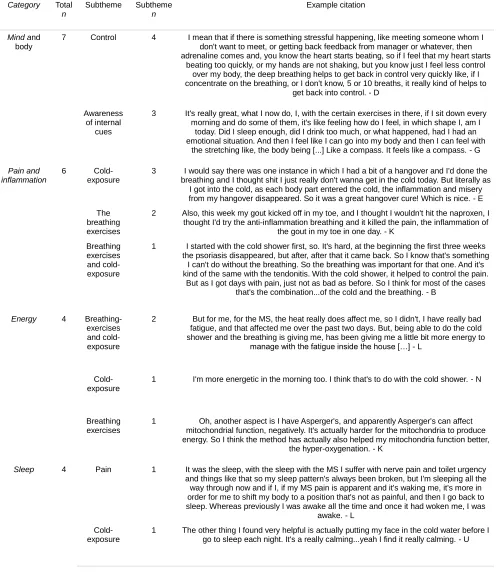
(22) Complaints and conditions. Around 41% of the sample indicated that they were suffering from specific complaints or conditions when they began practicing the WHM. A variety of different complaints and conditions were named. By far the most prevalent was stress, anxiety and depression. Arthritis, psoriasis and other autoimmune disorders were also frequent, as well as pain-related conditions like migraines. The list included a variety of other complaints and conditions as well, such as asthma, fatigue, Raynaud's and others. Out of those who indicated that they were suffering from specific complaints or conditions when they began their practice of the method, around 84% reported that there were improvements. Around 15% of them indicated that these stayed the same, while there were no reports of worsening.. 3. Semi-structured Interviews – Processes and Other Factors Underlying Change The following section of the results answers the third research question: “According to users, what are the factors that underlie the changes reported by practitioners of the WHM?” Factors are subdivided in terms of the processes inherent to the WHM within the respective domains; internal and external factors that prevent/promote change; and interactions with other treatments/practices. These results are based on the interview data of the 16 participants that were interviewed. Tables 9 – 16 contain a summarized overview of these results. The tables provide an example citation for each subtheme. The n denotes the number of participants that provided at least one relevant citation in the respective category and subtheme. Occasionally, participants may be represented in more than one subtheme, leading to an n that exceeds the total n of the category.. Processes in the physical domain. Participants described various ways in which practicing the method helped them in the physical domain. A total of 11 different first-level categories of processes could be identified within this domain. An overview can be found in table 9. Several participants (n=7) described how the practice can facilitate the deepening of the relationship between mind and body/ Attributions fell under two subthemes. Several (n=4) attributed this to an increased sense of control over the physiology. The word “control” was frequently used in 22.
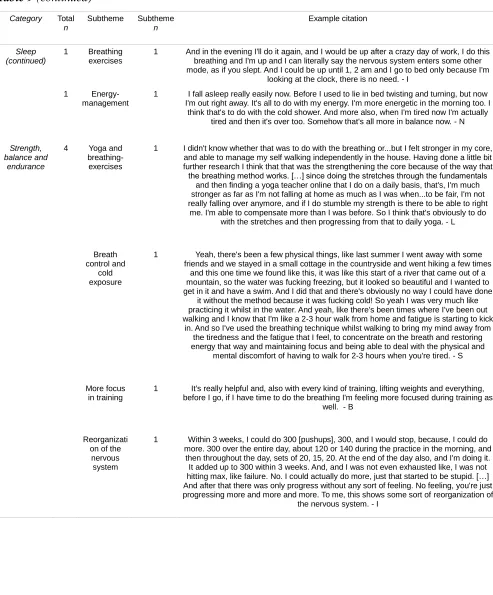
(23) this context (n=3), and participants described how during stressful situations, control over physiological functions could be regained, particularly heart-rate, through controlling the breath. Consciously relaxing the body, resulting in a more relaxed mind was cited (n=1), as well as visualization of heat inside the body, or of things like veins opening and closing (n=1). Several participants (n=3) attributed this deepening of the relationship between mind and body to a greater awareness of internal cues and using the practice to gain feedback as to their internal state. This was described this in terms of the body being like a compass; the cold being like a mirror that shows the practitioner how he's feeling; and whether the breathing feels deep or not as an indicator of stress. Other processes that were described were the ways in which the method helps with pain and inflammation (n=6). Attributions came under three subthemes. Firstly, the relief offered by the coldexposure (n=3). In some cases, this relief was observed instantaneously (n=2). Secondly, it was attributed to anti-inflammatory effects of the breathing exercises, and very rapid effects were also observed (n=2). One way was the ability to relieve pain by focusing on it. Thirdly, it was attributed to a combination of the cold and breathing exercises by one participant who observed the separate and combined effects of these components on his psoriasis. Next were the reported improvements in energy (n=4). Attributions came under three subthemes. Firstly, it was attributed to a combination of the breathing exercises and cold-exposure (n=2). One reported lower levels of MS-related, heat-induced fatigue, being able to do more around the house, and the other describing that the experience of the breath-work is like “the nervous system enters some other mode,” reducing his need for sleep, and the prospect of having a cold shower in the morning has a motivating effect. One participant theorized that hyper-oxygenation through the breathing exercises might help to counteract the effects of his Asperger's on the ability of the mitochondria to produce energy. One participant said it was probably the cold-exposure that caused her to have more energy in the morning, and explained that her energy levels are more “in balance.” Improved sleep was described by several participants (n=4). Attributions came under four subthemes. Firstly, it was attributed to a reduction in MS-related pain by one participant, who added that she sleeps all the way through now, only needing to shift her body when she is woken up by pain. Secondly, one participant described how the breathing exercises enables him to sleep fewer hours, and said that it's “as if you've slept.” Thirdly, one participant described how putting his face in cold water helps him to calm down before bed. Fourthly, one participant attributed it to more balanced energymanagement, being more energetic in the morning and more easily able to go to sleep at night, adding “when I'm tired I'm actually tired and then it's over too.” 23.
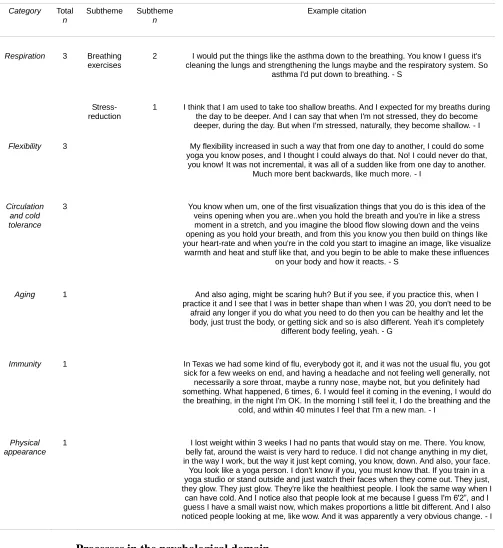
(24) Improvements. in strength, balance and endurance were elucidated upon (n=4). Four subthemes. were identified. An improved ability to walk independently was attributed to the breathing method strengthening the core, and doing yoga-exercises through the WHM and online yoga classes (n=1). This was described as a result of progressing to daily yoga from the stretches incorporated into the WHM. Secondly, it was attributed to the cold-exposure and controlling the breath (n=1) to be able to endure discomfort. Thirdly, it was described how the breathing can induce a sense of feeling more focused before training (n=1). Fourthly, the belief was stated that the method, particularly the combination of breathing exercises and pushups, causes a reorganization of the nervous system (n=1). This was described in terms of experiencing “only progress without any sort of feeling,” referring to the participant's sense of the progress being constant and particularly quick. Improvements in respiration were described (n=3). Attributions came under two subthemes. Firstly, the breathing exercises (n=2), which in one case was put down to a “cleaning and strengthening of the lungs.” Second, deeper breathing was attributed to a reduction in stress (n=1),and it was noted that the presence of stress is reflected in more shallow breathing. Improved flexibility was attributed to the practice of the yogic exercises (n=3). Rapid improvements in flexibility were observed (n=1). This was described as “[...] not incremental, it was all of a sudden like from one day to another. Much more bent backwards, like much more!” Improvements in circulation and cold-tolerance, were attributed to the cold-exposure (n=3), and it was described (n=1) how practicing visualization during cold-exposure helped to gain conscious control over the circulatory and thermoregulatory systems, particularly through visualizing heat and the opening of veins. Improvements in health and immunity as protective against the effects of aging was described (n=1) in terms of increased trust in the body, with the participant observing a “completely different body feeling.” With reference to immunity, it was described (n=1) how the breathing exercise seemingly immediately countered the symptoms of illness. It was applied repeatedly until the symptoms of a flu had passed. In one instance, symptoms would occasionally recur before they were completely eliminated. With reference to physical appearance, this was explained (n=1) in terms of weight-loss and a “glow” in the skin which was compared to the kind displayed by yoga-practitioners.. 24.
(25) Table 9 Processes inherent to the WHM underlying change in the physical domain according to participants Category. Total n. Subtheme. Subtheme n. Example citation. Mind and body. 7. Control. 4. I mean that if there is something stressful happening, like meeting someone whom I don't want to meet, or getting back feedback from manager or whatever, then adrenaline comes and, you know the heart starts beating, so if I feel that my heart starts beating too quickly, or my hands are not shaking, but you know just I feel less control over my body, the deep breathing helps to get back in control very quickly like, if I concentrate on the breathing, or I don't know, 5 or 10 breaths, it really kind of helps to get back into control. - D. Awareness of internal cues. 3. It's really great, what I now do, I, with the certain exercises in there, if I sit down every morning and do some of them, it's like feeling how do I feel, in which shape I, am I today. Did I sleep enough, did I drink too much, or what happened, had I had an emotional situation. And then I feel like I can go into my body and then I can feel with the stretching like, the body being [...] Like a compass. It feels like a compass. - G. Coldexposure. 3. I would say there was one instance in which I had a bit of a hangover and I'd done the breathing and I thought shit I just really don't wanna get in the cold today. But literally as I got into the cold, as each body part entered the cold, the inflammation and misery from my hangover disappeared. So it was a great hangover cure! Which is nice. - E. The breathing exercises. 2. Also, this week my gout kicked off in my toe, and I thought I wouldn't hit the naproxen, I thought I'd try the anti-inflammation breathing and it killed the pain, the inflammation of the gout in my toe in one day. - K. Breathing exercises and coldexposure. 1. I started with the cold shower first, so. It's hard, at the beginning the first three weeks the psoriasis disappeared, but after, after that it came back. So I know that's something I can't do without the breathing. So the breathing was important for that one. And it's kind of the same with the tendonitis. With the cold shower, it helped to control the pain. But as I got days with pain, just not as bad as before. So I think for most of the cases that's the combination...of the cold and the breathing. - B. Breathingexercises and coldexposure. 2. But for me, for the MS, the heat really does affect me, so I didn't, I have really bad fatigue, and that affected me over the past two days. But, being able to do the cold shower and the breathing is giving me, has been giving me a little bit more energy to manage with the fatigue inside the house […] - L. Coldexposure. 1. I'm more energetic in the morning too. I think that's to do with the cold shower. - N. Breathing exercises. 1. Oh, another aspect is I have Asperger's, and apparently Asperger's can affect mitochondrial function, negatively. It's actually harder for the mitochondria to produce energy. So I think the method has actually also helped my mitochondria function better, the hyper-oxygenation. - K. Pain. 1. It was the sleep, with the sleep with the MS I suffer with nerve pain and toilet urgency and things like that so my sleep pattern's always been broken, but I'm sleeping all the way through now and if I, if my MS pain is apparent and it's waking me, it's more in order for me to shift my body to a position that's not as painful, and then I go back to sleep. Whereas previously I was awake all the time and once it had woken me, I was awake. - L. Coldexposure. 1. The other thing I found very helpful is actually putting my face in the cold water before I go to sleep each night. It's a really calming...yeah I find it really calming. - U. Pain and inflammation. Energy. Sleep. 25. 6. 4. 4.
(26) Table 9 (continued) Category. Total n. Subtheme. Subtheme n. Example citation. Sleep (continued). 1. Breathing exercises. 1. And in the evening I'll do it again, and I would be up after a crazy day of work, I do this breathing and I'm up and I can literally say the nervous system enters some other mode, as if you slept. And I could be up until 1, 2 am and I go to bed only because I'm looking at the clock, there is no need. - I. 1. Energymanagement. 1. I fall asleep really easily now. Before I used to lie in bed twisting and turning, but now I'm out right away. It's all to do with my energy. I'm more energetic in the morning too. I think that's to do with the cold shower. And more also, when I'm tired now I'm actually tired and then it's over too. Somehow that's all more in balance now. - N. 4. Yoga and breathingexercises. 1. I didn't know whether that was to do with the breathing or...but I felt stronger in my core, and able to manage my self walking independently in the house. Having done a little bit further research I think that that was the strengthening the core because of the way that the breathing method works. […] since doing the stretches through the fundamentals and then finding a yoga teacher online that I do on a daily basis, that's, I'm much stronger as far as I'm not falling at home as much as I was when...to be fair, I'm not really falling over anymore, and if I do stumble my strength is there to be able to right me. I'm able to compensate more than I was before. So I think that's obviously to do with the stretches and then progressing from that to daily yoga. - L. Breath control and cold exposure. 1. Yeah, there's been a few physical things, like last summer I went away with some friends and we stayed in a small cottage in the countryside and went hiking a few times and this one time we found like this, it was like this start of a river that came out of a mountain, so the water was fucking freezing, but it looked so beautiful and I wanted to get in it and have a swim. And I did that and there's obviously no way I could have done it without the method because it was fucking cold! So yeah I was very much like practicing it whilst in the water. And yeah, like there's been times where I've been out walking and I know that I'm like a 2-3 hour walk from home and fatigue is starting to kick in. And so I've used the breathing technique whilst walking to bring my mind away from the tiredness and the fatigue that I feel, to concentrate on the breath and restoring energy that way and maintaining focus and being able to deal with the physical and mental discomfort of having to walk for 2-3 hours when you're tired. - S. More focus in training. 1. It's really helpful and, also with every kind of training, lifting weights and everything, before I go, if I have time to do the breathing I'm feeling more focused during training as well. - B. Reorganizati on of the nervous system. 1. Within 3 weeks, I could do 300 [pushups], 300, and I would stop, because, I could do more. 300 over the entire day, about 120 or 140 during the practice in the morning, and then throughout the day, sets of 20, 15, 20. At the end of the day also, and I'm doing it. It added up to 300 within 3 weeks. And, and I was not even exhausted like, I was not hitting max, like failure. No. I could actually do more, just that started to be stupid. […] And after that there was only progress without any sort of feeling. No feeling, you're just progressing more and more and more. To me, this shows some sort of reorganization of the nervous system. - I. Strength, balance and endurance. 26.
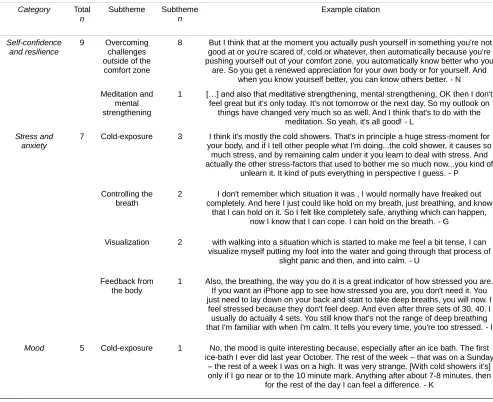
(27) Table 9 (continued) Category. Total n. Subtheme. Subtheme n. Example citation. Respiration. 3. Breathing exercises. 2. I would put the things like the asthma down to the breathing. You know I guess it's cleaning the lungs and strengthening the lungs maybe and the respiratory system. So asthma I'd put down to breathing. - S. Stressreduction. 1. I think that I am used to take too shallow breaths. And I expected for my breaths during the day to be deeper. And I can say that when I'm not stressed, they do become deeper, during the day. But when I'm stressed, naturally, they become shallow. - I. Flexibility. 3. My flexibility increased in such a way that from one day to another, I could do some yoga you know poses, and I thought I could always do that. No! I could never do that, you know! It was not incremental, it was all of a sudden like from one day to another. Much more bent backwards, like much more. - I. Circulation and cold tolerance. 3. You know when um, one of the first visualization things that you do is this idea of the veins opening when you are..when you hold the breath and you're in like a stress moment in a stretch, and you imagine the blood flow slowing down and the veins opening as you hold your breath, and from this you know you then build on things like your heart-rate and when you're in the cold you start to imagine an image, like visualize warmth and heat and stuff like that, and you begin to be able to make these influences on your body and how it reacts. - S. Aging. 1. And also aging, might be scaring huh? But if you see, if you practice this, when I practice it and I see that I was in better shape than when I was 20, you don't need to be afraid any longer if you do what you need to do then you can be healthy and let the body, just trust the body, or getting sick and so is also different. Yeah it's completely different body feeling, yeah. - G. Immunity. 1. In Texas we had some kind of flu, everybody got it, and it was not the usual flu, you got sick for a few weeks on end, and having a headache and not feeling well generally, not necessarily a sore throat, maybe a runny nose, maybe not, but you definitely had something. What happened, 6 times, 6. I would feel it coming in the evening, I would do the breathing, in the night I'm OK. In the morning I still feel it, I do the breathing and the cold, and within 40 minutes I feel that I'm a new man. - I. Physical appearance. 1. I lost weight within 3 weeks I had no pants that would stay on me. There. You know, belly fat, around the waist is very hard to reduce. I did not change anything in my diet, in the way I work, but the way it just kept coming, you know, down. And also, your face. You look like a yoga person. I don't know if you, you must know that. If you train in a yoga studio or stand outside and just watch their faces when they come out. They just, they glow. They just glow. They're like the healthiest people. I look the same way when I can have cold. And I notice also that people look at me because I guess I'm 6'2”, and I guess I have a small waist now, which makes proportions a little bit different. And I also noticed people looking at me, like wow. And it was apparently a very obvious change. - I. Processes in the psychological domain. Participants also described various ways in which practicing the method helped them in the psychological domain, an overview of which is given in table 10. Several participants (n=9) described improvements in self-confidence and resilience. Two subthemes emerged. Firstly, the effects of overcoming challenges outside of the comfort zone (n=8). This was often described in terms of overcoming challenges, a discovery of the capabilities of the mind 27.
(28) and limitations as mentally imposed, and an appreciation or even admiration of one's own capacities. Most often (n=5), this was viewed in light of learning to cope with a situation that is considered uncomfortable. The meditative component and mental strengthening of the WHM (n=1) was also cited. Several participants (n=8) describe how the method improved stress and anxiety. Attributions fell into four subthemes. These were learning to stay relaxed during the stress of cold-exposure (n=3); using the breath to come back into control (n=2); using visualization to gain more control over the stress-response (n=2), as well as to the immediate stress-relief that the breathing practice can induce (n=1). It was also attributed to the ability of the breathing exercise to provide feedback as to one's stress-levels, in that stress is reflected in a reduced ability to breathe deeply (n=1). Improvements in mood were also discussed (n=5). Five subthemes emerged. Firstly, an elevated mood-state induced by the cold-exposure that was described as lasting for several days, particularly when taking ice baths, or when having cold showers near 10 minutes long (n=1). It was also said to be due to a combination of the cold-exposure and breathing practice (n=1), and this participant explained that he and his wife no longer suffer from depressed mood during winter because the weather is no longer a limitation. Thirdly, practicing the method in the morning was said to bring about improved mood for the rest of the day (n=1). Improvements in mood were furthermore linked to becoming more aware of small occurrences that bring joy (n=1). This was described in terms of “silly things that don't mean anything but that I'm noticing.” One participant suggested that a link between depression and inflammation might reflect anti-inflammatory effects of the practice (n=1). Improvements in focus and awareness were also described (n=4). Three subthemes were identified. The first was the effects of cold-exposure (n=2). Improved focus and awareness were said to occur “suddenly” and “immediately.” Another process was a reportedly improved ability to choose where attention is focused (n=1), “to make better decisions” in this regard. The increased awareness was also described as factoring in to a greater sense of connectedness (n=1). This connectedness was also associated with more appreciation for nature and an awareness of one's own feelings, and “picking up” on more things, as opposed to being “on autopilot.” Improvements in health behavior were attributed to the desire to progress in the practice of the WHM, leading giving up smoking (n=1). However, this participant indicates not being a particularly heavy smoker in the first place. Reports of improvements in cognition were observed (n=1). Cognitive issues had arisen as a result of progressive MS. The participant reported that speech became less slurred, and although symptoms have not subsided, she said that her memory appeared to be better than over a year ago. 28.
(29) Table 10 Processes inherent to the WHM underlying change in the psychological domain according to participants Category. Total n. Subtheme. Subtheme n. Example citation. Self-confidence and resilience. 9. Overcoming challenges outside of the comfort zone. 8. But I think that at the moment you actually push yourself in something you're not good at or you're scared of, cold or whatever, then automatically because you're pushing yourself out of your comfort zone, you automatically know better who you are. So you get a renewed appreciation for your own body or for yourself. And when you know yourself better, you can know others better. - N. Meditation and mental strengthening. 1. […] and also that meditative strengthening, mental strengthening, OK then I don't feel great but it's only today. It's not tomorrow or the next day. So my outlook on things have changed very much so as well. And I think that's to do with the meditation. So yeah, it's all good! - L. Cold-exposure. 3. I think it's mostly the cold showers. That's in principle a huge stress-moment for your body, and if I tell other people what I'm doing...the cold shower, it causes so much stress, and by remaining calm under it you learn to deal with stress. And actually the other stress-factors that used to bother me so much now...you kind of unlearn it. It kind of puts everything in perspective I guess. - P. Controlling the breath. 2. I don't remember which situation it was , I would normally have freaked out completely. And here I just could like hold on my breath, just breathing, and know that I can hold on it. So I felt like completely safe, anything which can happen, now I know that I can cope. I can hold on the breath. - G. Visualization. 2. with walking into a situation which is started to make me feel a bit tense, I can visualize myself putting my foot into the water and going through that process of slight panic and then, and into calm. - U. Feedback from the body. 1. Also, the breathing, the way you do it is a great indicator of how stressed you are. If you want an iPhone app to see how stressed you are, you don't need it. You just need to lay down on your back and start to take deep breaths, you will now. I feel stressed because they don't feel deep. And even after three sets of 30, 40. I usually do actually 4 sets. You still know that's not the range of deep breathing that I'm familiar with when I'm calm. It tells you every time, you're too stressed. - I. Cold-exposure. 1. No, the mood is quite interesting because, especially after an ice bath. The first ice-bath I ever did last year October. The rest of the week – that was on a Sunday – the rest of a week I was on a high. It was very strange. [With cold showers it's] only if I go near or to the 10 minute mark. Anything after about 7-8 minutes, then for the rest of the day I can feel a difference. - K. Stress and anxiety. Mood. 29. 7. 5.
(30) Table 10 (continued) Category. Total n. Mood (continued). Focus and awareness. 4. Subtheme. Subtheme n. Example citation. Breathing and cold-exposure. 1. It's not like there's a lot of changes you can see on the outside, but it's mostly my psychological condition that's much more stable than it was before. And well, the combination of the cold and the breathing exercises, I would say that's the cause of it. – P. Morning practice. 1. When I practice this Wim Hof Method in the morning, I practice it, then I begin my day already with such a open mind or joyful thing, that I think then my life changes also and I change from the inside, and all the relationships change also so. Yeah. My life is completely changed. Completely changed, yes. For much better yeah. - G. Awareness of smalloccurrences. 1. I don't know whether it's just really a strange thing that good things seem to happen, quite a lot. Just, maybe it's that I'm noticing the good things are happening, rather than you know when something bad happens you have a tendency to really focus on that through the day. - L. Mood and inflammation. 1. You know as much as anyone there's a lot of research at the moment into how, perhaps depression is more linked to inflammation than was thought before or whatever. And it's thought the method has, you know anti-inflammatory benefits. So perhaps that's got a lot to do with that. - S. Cold exposure. 2. And, I focused better on things, like for example, I woke up and I've started to feel like, what I have to do today, and then I took the cold shower, or I would go into the water before work, outside. And, I suddenly had clear mind, and I was focused like, OK I'm going to do this, and this. And I sort of figure out what are the most important things to do, when I finished with the cold water. And it helped me begin to find a focus, what I want to do, and I felt less overwhelmed, with so many things. I started to take things one at a time. - A. Attentional control. 1. ...it allows me to make better decisions on where I focus my attention. Is about as good as I can put it into words.- F. Connectedness. 1. It's...well you feel more connected to everything. You feel more connected to yourself, you feel...you appreciate like the nature and everything more. And you...I don't know how to say but...you feel more...you just feel more connected to your own feelings. Instead of just going in that mode of every day do the same, same...I don't know, like autopilot. You, you pick up on more things and feelings, you notice more. You become more aware. So yeah. - B. Health behavior. 1. ...so I've never been like a heavy smoker, cigarette smoker. But it came to the point where it was like, OK. You gotta choose, you're either gonna have to take deep breaths in, or smoke your cigarettes. - F. Cognition. 1. My speech started to change so I wasn't as slurred as I was before. I was having cognitive issues, I was a head teacher before but then I was off on long-term sick and I've recently put in an application for retirement so, an ill-health retirement which has been granted. But the cognitive issues that were affecting me, massively, seemed to have along with the method seemed to have, not subsided cause I'm still finding it difficult with word-finding and things like that, but my memory seems to be better than it was over a year ago. - L. Processes in the social domain. Table 11 contains an overview of the ways in which participants describe how the method helped them in the social domain. 30.
(31) Participants said that the WHM can provide a sense of community (n=6). There were two subthemes. Firstly, participants (n=4) described how real-world interactions in the context of the WHM improved their sense of community, primarily through attending WHM-events. Examples were through taking friends and family along during practice (n=1); and finding a community of people who “really want to connect with each other” through becoming a WHM-instructor, coupled with a sense that interactions that take place within the context of the WHM tend to be “honest and direct” (n=1). Another source of community was the online WHM-community (n=3). The Facebook groups were even described as an “oasis,” (n=1) that offers hope in light of “where the world is going” (n=1), referring to the positive nature of the interactions that take place there. Several participants (n=6) described how the method helps them in connecting. Two subthemes emerged. Firstly, (n=4) an increased tolerance of discomfort and more control over the stress-response, which was said allows for more ease in connecting to others, in particular through a lessening of social anxiety. One participant adds that another factor is more in general, that includes being “more accepting of others as they are, rather than wanting them to be a certain way.” An improved ability to connect to others was also attributed to improved mood and energy levels (n=2).. Table 11 Processes inherent to the WHM underlying change in the social domain according to participants Category. Total n. Subtheme. Subtheme n. Example citation. Community. 6. Real-world. 4. And the connecting with others, especially within the group of instructors, the international group, that's just so much fun, and people really want to connect with each other. We are social animals after all, so to find your own group of people, who are so great, so open, so supportive, you know. That's super cool. And I still notice that I really enjoy connecting with that group, to have a chat or to do something fun. - N. Online. 3. And also the group, the Facebook group, how many days this Facebook group made my life brighter, because I was following and reading. And also when you post something in this group, you always get so so so so kind answers, it's just incredible. And was very good to have a group like this, not that I would be in groups with hate or things, but this is such a special atmosphere around this Wim Hof Method, Wim Hof and, but this is really like you can trust again in human beings, that this is all possible. - G. Tolerance of discomfort. 4. And that experience and that being able to feel like you have an influence or control over these physical systems in the body, I think when I was anxious, when I was in a social situation that caused anxiety, I had more awareness of and influence over things like my breathing, my heart-rate, and I felt like I could slow these down and have a control over them. And when you can intervene in the physical manifestation of anxiety, that obviously has a knock-on effect of the mental side of things. And from doing like the focus and meditation exercises involved in the method, was able to calm myself. - S. Improved mood and energy. 2. Because you feel good, you bring the energy, you look good. They're happy to see you I. Connecting. 31. 6.
Figure

+7
Related documents
Based on these considerations, in Oct 2013 we adopted a biweekly low dose docetaxel regimen (40 mg/m 2 every 2 weeks) as an institutional standard chemotherapy regi- men for
HCC is developing in 85% in cirrhosis hepatis Chronic liver damage Hepatocita regeneration Cirrhosis Genetic changes
Such a collegiate cul- ture, like honors cultures everywhere, is best achieved by open and trusting relationships of the students with each other and the instructor, discussions
In the early fall of 2011 the 255 American University faculty who had been certified at least once since the program’s first year were surveyed on how teaching green affected their
iron-fortified and non-iron-fortified formulas on the incidence and frequency of gastrointestinal signs and symptoms in young infants.. MATERIALS
Anti-inflammatory effects of the preparation were studied according to the below methods: S.Salamon– burn induced inflammation of the skin, caused by hot water (80 0 C) in white
that reduced effects of Cadmium on the growth rate and total chlorophyll content with increased NaCl concentration occurred due to CdCl 2 formation and..
Because of the importance and sensitivity of CA1 area of hippocampus and the pathophysiological mechanisms of cerebral ischemia, this study provided the novel thera- peutic window
