Measuring Systems Engineering and
Project Success
An evaluation of Systems Engineering practices and Project Success in a Dutch Civil
Engineering Contracting Firm
Master’s Thesis
Measuring Systems Engineering and Project success
Datum 01-06-2018 Type of document Master’s Thesis
Title Measuring Systems Engineering and Project Success
Subtitle An Evaluation of Systems Engineering Practices and Project Success in a Dutch Civil Engineering Contracting Firm
Author E. Berghuis BSc s1212141
Faculty University of Twente Engineering Technology
Study Program Civil Engineering and Management Construction Management Engineering
Supervisors University of Twente Dr. ir. R.S. (Robin) de Graaf Dr. drs. J.T. (Hans) Voordijk
Supervisors Reef Infra MBA. D.T.J. (Djim) Witjes H.T. (Harry) Steenbergen
Master’s thesis
Measuring Systems Engineering and Project success
University of Twente E. Berghuis Page | 2
Preface
This thesis report is the final product of the research project regarding Systems Engineering practices and Project Success. The research project was performed at Reef Infra. I developed a measurement tool in collaboration with Reef Infra and the University of Twente. By finishing this thesis report, I also completed the study in Construction Management Engineering at the University of Twente in Enschede. The experience and knowledge I have collected during my study will provide a solid foundation. I am really looking forward for pursuing a career in the construction industry.
I would like to thank a number of people who supported me during the research project. Firstly, I would like to thank Djim Witjes for providing the opportunity for a research project at Reef Infra. Djim helped me in staying on track and in applying the proper focus in both the research strategy and in writing the thesis report. Next, I would like to thank Harry Steenbergen and Bert Lankheet for providing the means to collect and analyze data. They provide contact information for collecting project documentation. Moreover, their knowledge and experiences inspired me to dig deeper and helped in understanding Systems Engineering as a process coordination method. Besides them, I would also like to thank both my supervisors at the University of Twente, dr.ir. R.S. de Graaf and dr.drs. J.T. Voordijk. They provided me with critical feedback and assistance in writing a proper thesis report.
Lastly, I would like to thank my girlfriend Marleen Schlömer and my family for their inexhaustible support. They helped me to stay motivated. I am positive about my final thesis and I hope you will enjoy reading my thesis.
Erwin Berghuis
Master’s Thesis
Measuring Systems Engineering and Project success
Abstract
In the last decades, developing and sustaining large complex engineering systems have become more challenging (de Graaf, Voordijk, & van den Heuvel, 2016). To facilitate contracting firms in the Dutch construction industry in their ability to deliver these more complex projects, innovative procurement methods based on integrated contracts, using Uniform Administrative Conditions for Integrated Contracts (UAV-ic) such as Design-Build or Design-Build-Maintain, are used by large clients in the Dutch construction Industry (de Graaf, Vormer, & Boes, 2017; Makkinga, de Graaf, & Voordijk, 2018). The transfer of responsibility from clients to contracting firms for the project design creates the demand for contracting firms to control and review the quality of their own work. Design decisions and commitments have a great impact on project life-cycle cost and defective design is a major cause of contract claims and change orders during construction (Andi & Minato, 2003). de Graaf et al. (2016) and de Graaf, Vormer, et al. (2017) argue for a transition to the SE way of working in the Dutch construction industry.
Reef Infra, a mid-sized Dutch contracting firm, finds it challenging to increase standardization, independency, and overall performance regarding their SE process and finds it also challenging to collect performance information to SE related tasks. SE is a relative new way of working, which leads to a lot of insecurity (within the organization), struggle and discussion between Reef Infra and their clients and between Reef Infra and their subcontractors. Reef Infra is looking for opportunities to measure their SE performance to find or identify opportunities for improvement. Measuring their SE performance enables them to target underperforming SE tasks. Alongside their wish to improve their SE application, Reef Infra also finds it challenging to collect performance information, specifically regarding SE tasks and how to relate this to common project success categories in terms of budget, schedule and quality. When they are able to quantify this relation, Reef Infra can prove that their control over the SE process contributes to common project success categories and that they can use that information for BVP tenders.
To identify solutions for these challenges a research project is conducted. The project is performed to answer the following research question:
How can a Civil Engineering Contracting Firm measure their Systems Engineering performance and how do these metrics relate to project success indicators budget, schedule and quality?
In this research project, a measurement tool is developed and applied to measure SE performance and project success in terms of budget, schedule and quality. The goal of the research is to assist Reef Infra in their improvement of their SE process by measuring their SE application in projects under UAC-ic. In addition, how SE contributes to achieving project success indicators budget, schedule and quality, which are commonly used as BVP objectives, is also explored. The goal within the research is to advice Reef Infra how they can measure their SE application to improve their SE process and to relate the extent of SE application to project success indicators budget, schedule and quality. A case study research design is applied to develop and apply the measurement tool. Multiple cases were selected according to the one-phase screening approach of Yin (2014). There were two main sources of evidence to fill the measurement tool. First, an extensive document analysis was performed to provide initial results. Afterwards, unstructured interviews were conducted to fill gaps in the results and validate findings. A case study protocol was developed to ensure that within-case results are mutually comparable in the cross-case analysis.
Master’s thesis
Measuring Systems Engineering and Project success
University of Twente E. Berghuis Page | 4
characteristics or events seem to affect the project success. To eliminate bias of such characteristics on the relation between the extent of SE application and project success, more assessments of projects using the measurement tool have to be conducted.
The results do however confirm that the extent of SE application is different in each project. Although, all projects score an average SE score within a range of approximately 10% because the maximum score was 66% and the lowest score was 56%. The results suggest that SE elements are in some projects not applied while in other projects the same SE elements were applied quite substantially. This means Reef Infra does not apply a comprehensive and standardized SE method in their civil engineering projects. There are multiple reasons for the extent of SE application. First, unclear and out of date SE procedures affect the extent of SE application. Second, the level of SE skill and knowledge affected the extent of SE application. Third, Reef Infra is highly dependent on the client for the extent of SE application. Establishing clear SE procedures, enhancing SE skill and knowledge and reducing client dependency could enable the contractor to properly assess the extent of SE necessary to realize project success. A contingency approach to SE in construction projects can prevent over- and underinvestment. Relating SE performance to project success, enables proper recognition of how much SE activity is enough. This aspect must be further explored to establish clear methods for recognition. The approach to SE must be corresponding with the characteristics of the project, otherwise SE does not provide value in the project. Although, the measurement tool developed in the research emphasizes the extent of SE process applied at the project level it does provide the contracting firm with the necessary information to target underperforming SE tasks. Overall, to ensure that the contractor is capable of approach SE as a flexible process and not to overemphasize on SE tools, it is important the contractor must establish clear SE procedures, enhance SE skill and knowledge and reduce client dependency.
Master’s Thesis
Measuring Systems Engineering and Project success
Table of Contents
1
INTRODUCTION ... 12
1.1
B
ACKGROUND... 12
1.2
P
ROBLEM OWNER:
R
EEFI
NFRA... 13
1.3
P
ROBLEM STATEMENT... 14
1.4
R
ESEARCH GOAL... 14
1.5
R
ESEARCH QUESTIONS... 15
1.6
S
COPE OF THE RESEARCH... 15
1.7
I
MPORTANCE OF THIS RESEARCH PROJECT... 16
1.8
R
EADING GUIDE... 17
2
THEORETICAL FRAMEWORK ... 18
2.1
I
NTRODUCTION... 18
2.2
D
IMENSIONA:
S
YSTEMSE
NGINEERING... 18
2.3
D
IMENSIONB:
P
ROJECTS
UCCESS INDICATORS... 28
2.4
I
NTEGRATED THEORETICAL FRAMEWORK... 32
3
RESEARCH METHODOLOGY ... 34
3.1
R
ESEARCH DESIGN... 34
3.2
C
ASE STUDY RESEARCH... 34
3.3
V
ALIDITY AND RELIABILITY... 38
3.4
I
NTRODUCING MEASUREMENT TOOL... 38
4
RESULTS ... 41
4.1
I
NTRODUCTION... 41
4.2
O
VERVIEW RESULTS... 41
4.3
R
ESULTS... 43
5
DISCUSSION ... 48
5.1
I
NTRODUCTION... 48
5.2
D
ATA ANALYSIS... 48
6
CONCLUSIONS AND RECOMMENDATIONS ... 57
6.1
C
ONCLUSIONS... 57
6.2
R
ECOMMENDATIONSR
EEFI
NFRA... 58
6.3
L
IMITATIONS AND RECOMMENDATIONS FOR FUTURE RESEARCH... 61
7
BIBLIOGRAPHY ... 62
APPENDICES ... 66
1
APPENDIX – QUICK SCAN PROJECTS ... 67
1.1
P
ROCEDURE... 67
1.2
P
ROJECTS... 67
2
APPENDIX - CASE STUDY PROTOCOL ... 76
1
INTRODUCTION ... 77
2
OVERVIEW OF THE CASE STUDY ... 77
2.1
R
ESEARCH DESIGN... 77
Master’s thesis
Measuring Systems Engineering and Project success
University of Twente E. Berghuis Page | 6
2.4
A
UDIENCE... 80
3
DATA COLLECTION PROCEDURES ... 80
3.1
S
ELECTING DATA SOURCES... 80
3.2
U
NIT OF ANALYSIS... 81
3.3
M
ETHOD... 82
4
DATA COLLECTION QUESTIONS ... 84
4.1
Q
UESTIONS ASKED TO THE RESEARCHER... 84
5
CASE STUDY REPORT GUIDE ... 85
5.1
I
NTRODUCTION... 85
5.2
M
ETHOD... 85
5.3
Q
UESTIONS FOR DATA COLLECTION... 85
5.4
S
UMMARYQ
UICKS
CANP
ROJECTS... 85
5.5
I
NDIVIDUAL CASE REPORT... 85
3
APPENDIX – CASE STUDY REPORT... 87
1
INTRODUCTION ... 88
2
METHOD ... 88
2.1
D
OCUMENT ANALYSIS... 88
2.2
I
NTERVIEWS... 88
2.3
SE
P
OSTERS
ESSION... 89
2.4
D
ATA ANALYSIS AND PATTERN MATCHING... 90
3
QUESTIONS FOR DATA COLLECTION ... 92
3.1
Q
UESTIONS FOR WITHIN-
CASE ANALYSIS... 92
3.2
Q
UESTIONS FOR CROSS-
CASE ANALYSIS... 92
4
SUMMARY QUICK SCAN PROJECTS ... 93
5
INDIVIDUAL CASE REPORT – CASE MDS-WA ... 94
5.1
C
HARACTERISTICS OF THE CASE... 94
5.2
SE
METRICS&
P
ROJECT SUCCESS METRICS... 95
6
INDIVIDUAL CASE REPORT – CASE A348 -BE ... 103
6.1
C
HARACTERISTICS OF THE CASE... 103
6.2
SE
METRICS&
P
ROJECT SUCCESS METRICS... 104
7
INDIVIDUAL CASE REPORT – CASE FPH-WE ... 111
7.1
C
HARACTERISTICS OF THE CASE... 111
7.2
SE
METRICS&
P
ROJECT SUCESS METRICS... 112
8
INDIVIDUAL CASE REPORT – CASE N34-WE ... 121
8.1
C
HARACTERISTICS OF THE CASE... 121
Master’s Thesis
Measuring Systems Engineering and Project success
List of Abbreviations
Abbreviation Meaning
SE Systems Engineering
System A construction project concerned with improving the infrastructure in the Netherlands
RA Requirement analysis
FA Functional analysis
WBS Work Breakdown Structure
SBS System Breakdown Structure
RBS Requirement Breakdown Structure
FBS Functional Breakdown Structure
RL Requirement Loop
DL Design Loop
DVerifi Verification Design phase DValidi Validation Design phase RVerifi Verification Realization phase RValidi Validation Realization phase V&V Verification and Validation
SMART Specific, Measurable, Achievable, Realistic and Time-bound
Construction Project A civil engineering project concerned with infrastructure, hydraulic engineering or concrete engineering
BVP Best Value Procurement: a value based procurement method. SME Small and Medium sized Enterprise
Contractor Main contracting firm responsible for project execution
Master’s thesis
Measuring Systems Engineering and Project success
University of Twente E. Berghuis Page | 8
List of Figures
F
IGURE1:
R
ESEARCH MODEL. ... 18
F
IGURE2:
SE
CONTRACTORS PROCESSF
RAMEWORK BASED ONINCOSE
(2006
A),
P
ROR
AIL ET AL.
(2013),
DEG
RAAF(2014),
DEG
RAAF ET AL.
(2016),
DEG
RAAF,
V
ORMER,
ET AL.
(2017)
ANDISO
(2015). ... 23
F
IGURE3:
I
NTEGRATED THEORETICAL FRAMEWORK FOR EXTENT OFSE
APPLICATION AND BUDGET AND SCHEDULE PERFORMANCE. ... 32
F
IGURE4:
I
NTEGRATED THEORETICAL FRAMEWORK FOR EXTENT OFSE
APPLICATION AND THE NUMBER OFR
FA’
S. ... 33
F
IGURE5:
A
NALYTICAL FRAMEWORK BASED ON MULTI-
CASE STUDY DESIGN BYY
IN(2014). .. 34
F
IGURE6:
R
ESEARCH OUTPUT GRAPHS. ... 37
F
IGURE7:
T
HE OVERALL SCORE MATRIX OUTPUT OF THE MEASUREMENT TOOL. ... 40
F
IGURE8:
B
UDGET PERFORMANCE SET OUT AGAINSTSE
PERFORMANCE. ... 54
F
IGURE9:
S
CHEDULE PERFORMANCE SET OUT AGAINSTSE
PERFORMANCE. ... 55
F
IGURE10:
T
HE TOTAL NUMBER OFR
FA'
S SET OUT AGAINSTSE
PERFORMANCE. ... 56
F
IGURE11:
S
UGGESTEDV
ALIDATION PROCESS. ... 59
F
IGURE12:
A
NALYTICAL FRAMEWORK BASED ON MULTI-
CASE STUDY DESIGN BYY
IN(2014). . 77
F
IGURE13:
SE
PROCESS FRAMEWORK WITH THEORETICAL BEST PRACTICES. ... 91
F
IGURE14:
O
VERALLSE-
SCOREM
EPPERLERDIEPSLUIS. ... 95
F
IGURE15:
O
VERVIEWSE-
SCOREA348. ... 104
F
IGURE16:
O
VERVIEWSE-
SCOREF
IETSROUTEP
LUSH
AREN. ... 112
Master’s Thesis
Measuring Systems Engineering and Project success
List of tables
T
ABLE1:
O
VERVIEW OF THE GENERAL RESEARCH QUESTIONS AND SUB QUESTIONS. ... 15
T
ABLE2:
O
VERVIEW OF DIMENSIONA
OF THE RESEARCH MODEL. ... 23
T
ABLE3:
C
ONNECTINGSE
VALUES WITH SPECIFICSE
ELEMENTS. ... 28
T
ABLE4:
O
VERVIEW OF DIMENSIONB
OF THE RESEARCH MODEL. ... 30
T
ABLE5:
S
ELECTION CRITERIA FOR SELECTING CASES. ... 35
T
ABLE6:
D
ATA SOURCES FOR DOCUMENT ANALYSIS. ... 36
T
ABLE7:
D
ATA SOURCES FOR UNSTRUCTURED INTERVIEW. ... 36
T
ABLE8:
E
XAMPLE CALCULATIONSE
TASKS FULFILLMENT... 39
T
ABLE9:
E
XAMPLE CALCULATIONS
CHEDULE PERFORMANCE. ... 40
T
ABLE10:
O
VERVIEW RESULTS OF THE CASE STUDIES. ... 41
T
ABLE11:
O
VERVIEW OF THE PROJECT SUCCESS INDICATOR RESULTS. ... 46
T
ABLE12:
P
OSSIBLER
ELATICST
EMPLATE COMPONENTS AND HOW THEY ARE USED. ... 49
T
ABLE13:
O
VERVIEWA
PPENDICES. ... 66
T
ABLE14:
S
EVEN SELECTION CRITERIA TO DETERMINE IF PROJECTS ARE APPROPRIATE AS CASE STUDY. ... 80
T
ABLE15:
D
ATA SOURCES FOR UNSTRUCTURED INTERVIEW. ... 83
T
ABLE16:
D
ATA SOURCES FOR DOCUMENT ANALYSIS. ... 83
T
ABLE17:
O
VERVIEW OF THE QUESTIONS ASKED IN INDIVIDUAL CASES. ... 84
T
ABLE18:
O
VERVIEW LIST OF NECESSARY DOCUMENTATION TO ANALYZE THE APPLICATION OFSE. ... 88
T
ABLE19:
O
VERVIEW OF THE INTERVIEWEES FOR EACH CASE. ... 89
T
ABLE20:
P
OSTER SESSION PARTICIPANTS AND THEIR ROLE IN THE PROJECTS. ... 89
T
ABLE21:
Q
UICK SCAN RESULTS,
OVERVIEW OF THE CASE STUDIES. ... 93
T
ABLE22:
O
VERVIEW SCORES INDIVIDUALSE
TASKS FOR CASEMDS-WA... 95
T
ABLE23:
O
VERVIEW OF THEP
ROJECT SUCCESS METRICS. ... 101
T
ABLE24:
O
VERVIEW SCORES INDIVIDUALSE
TASKS FOR CASEMDS-WA... 105
T
ABLE25:
O
VERVIEW OF THEP
ROJECT SUCCESS METRICS. ... 110
T
ABLE26:
O
VERVIEW SCORES INDIVIDUALSE
TASKS FOR CASEMDS-WA... 113
T
ABLE27:
O
VERVIEW OF THEP
ROJECTS
UCCESS METRICS. ... 118
T
ABLE28:
O
VERVIEW SCORES INDIVIDUALSE
TASKS FOR CASEMDS-WA... 122
Master’s thesis
Measuring Systems Engineering and Project success
Master’s Thesis
Measuring Systems Engineering and Project success
University of Twente E. Berghuis Page | 12
1
Introduction
In the introduction of this thesis report, the background (paragraph §1.1), problem owner (paragraph §1.2), the problem statement (paragraph §1.3), research goals (paragraph §1.4) and research questions (paragraph §1.5), the scope of the research (paragraph §1.6), the relevance (paragraph §1.7) and the reading guide (paragraph §1.8) are introduced and explained.
1.1 Background
In the last decades, developing and sustaining large complex engineering systems have become more challenging (Chan, Scott, & Chan, 2004; de Graaf et al., 2016). Many construction projects are characterized by a high degree of uncertainty and fragmentation in terms of jointed organizations and sub-contracting (Adriaanse, 2014; Locatelli, Mancini, & Romano, 2014; Makkinga et al., 2018). Complex projects are defined by several characteristics, according to Locatelli et al. (2014, p1397). Construction projects in general all meet these characteristics.
1. Several key distinct disciplines, methods or approaches involved in performing the project:
Many different disciplines are involved ranging from architects, structural engineers, process managers, etc. (de Graaf et al., 2016; Makkinga et al., 2018). 2. Strong legal, social, or environmental implications from performing the project:
Many construction projects are performed within the living environment of people (El-Rayes & Kandil, 2005).
3. Usage of most of partner’s resources:
Large part of the project is subcontracted to specialized subcontractors (Gadde & Dubois, 2010; Makkinga et al., 2018).
4. Strategic importance of the project to the organization or organizations involved:
Many construction projects are performed to maintain transportation or accommodation, which make these project of strategic importance (Rijkswaterstaat, 2017).
5. Stakeholders with conflicting needs regarding the characteristics of the project:
The client who pays for the project is in many projects not the end-user of the project. This often results in conflicting demands (Beasley & O'Neil, 2016). 6. High number of variety of interfaces between the project and other organizational entities:
Most of the failure costs occur because of failure to manage interfaces in construction projects (ProRail, 2015; ProRail et al., 2013).
Master’s Thesis
Measuring Systems Engineering and Project success
The value of SE seems widely accepted in the Dutch construction industry (de Graaf et al., 2016; de Graaf, Vormer, et al., 2017; Makkinga et al., 2018; ProRail, 2015; ProRail et al., 2013). SE is therefore broadly applied in Dutch construction projects using UAV-ic. Many contracting firms, such as Reef Infra, apply SE in their design and realization process (ProRail et al., 2013). The value of SE is, according to de Graaf (2014), greater satisfaction of interest, less rework, increased transparency, less resistance, less redesign and less failure costs. Overall, SE increases the likelihood of a project being delivered to budget and on schedule (Honour, 2013). SE is all about investing in pre-work, not rework (Beasley & O'Neil, 2016). However, contracting firms find it difficult to determine to what extent SE must be applied considering the project characteristics (Brekelmans, 2016; Reef Infra, 2018). Although, well established SE guidelines exist in the Dutch construction industry the SE approach on the project level seems different for public clients on different institutional levels (Rijkswaterstaat, provincial, municipality, etc.). Determining the appropriate system engineering management approach while considering project characteristics and type reduces the ultimate failure point in projects (Sauser, 2006). Understand what extent of SE is appropriate to realize the project successfully is still unexplored. The approach to SE depends on the practitioners own experience and knowledge of SE (Elliott, O'Neil, Roberts, Schmid, & Shannon, 2012). Reef Infra is highly dependent on the clients’ approach to SE for their own SE process. Beasley and O'Neil (2016) also confirms this problem and finds that within the broader SE community this is becoming more an interest of discussion. Practitioners focus too much on the SE process. SE becomes merely a set of rigid tools which have to be applied in the every project. There is no clear sense of how SE improves project success.
That the value of SE is widely accepted but a clear understanding of how SE improves project success is missing, seems adverse. It seems more logic to first understand how SE relates to project success before the value of SE becomes clear in more detail and additional values can be derived. The most basic perception of project success is the Iron-triangle, according to Locatelli et al. (2014). A project is successful when it is delivered to budget, on schedule and conformance to clients’ specifications. To increase the application of SE in the Dutch construction industry “sweet spots” must be derived (Beasley & O'Neil, 2016). Sweet spots tell practitioners something about the appropriate extent of SE application to enable the delivery of a successful project. To do so, the relation between SE and project success must be quantified.
Moreover, other developments in the Dutch construction industry are also accommodated by quantifying the SE application of a contracting firm and relate this to project success. Many contractors apply SE in their construction projects. Performance of SE thus becomes interesting in tender procedures under Best Value Procurement (BVP). Major clients in the Dutch construction industry embrace BVP to select the appropriate contracting firm (Rijkswaterstaat, 2016). One of the key ingredients of BVP is performance information. Based on performance information a contracting firm can prove they are able to realize the project objectives as they have done this in a similar project. The Iron-triangle’s success indicators budget, schedule and quality are project success indicators commonly used in BVP (Booij, 2013; Horstman & Witteveen, 2013; Rijkswaterstaat, 2016). From a practical viewpoint, quantifying the extent of SE application and relate this to the project success indicators is necessary to be successful in BVP. This makes SE performance information increasingly interesting for contracting firms in the Dutch construction industry.
1.2 Problem owner: Reef Infra
Master’s Thesis
Measuring Systems Engineering and Project success
University of Twente E. Berghuis Page | 14
of users in small, big and integrated construction projects. Their aim is to seek interaction with the client to try to convert complex infrastructural challenges into fitting solutions as best as possible. Their vision is to be a warm and trustworthy organization where employees work with pleasure and clients see Reef Infra as a great partner, and all while being a locally involved contractor. Reef Infra stands for sustainable collaboration with benefits for all involved parties. They seek for market change and differentiate themselves from the competition with innovative solutions which have a social impact. In 2006 Reef Infra became a part of Strukton Civiel, which has a main office in Utrecht. Strukton Civiel develops, realizes and maintains large civil engineering projects from the conceptual phase until the exploitation phase. Strukton Civiel delivers (whatever the requirements are) complete and tailor made solutions for every phase of the construction chain. Strukton Civiel is a full service civil engineering contracting firm with eager to innovate, collaborate and a drive for team spirit.
1.3 Problem statement
Reef Infra finds it challenging to increase standardization, independency, and overall performance regarding their SE process and finds it also challenging to collect performance information to SE related tasks. Reef Infra is highly dependent on clients for the extent of SE application as clients determine for large parts how Reef Infra must apply SE in their projects. Reef Infra is also highly dependent on subcontractors because large parts of the work is subcontracted making subcontractors responsible for great deal of the input in Reef Infra’s SE process. SE is a relative new way of working for clients and subcontractors. This leads to a lot of insecurity (within the organization of clients and subcontractors), struggle and discussion between Reef Infra and their clients and between Reef Infra and their subcontractors. Reef Infra is looking for opportunities to measure their SE performance to find or identify opportunities for improvement. Measuring their SE performance enables them to target underperforming SE tasks. Alongside their wish to improve their SE application, Reef Infra also wants to become more successful in BVP. To become more successful Reef Infra has to collect performance information. Reef Infra finds it challenging to collect SE performance information and how to relate these measurements to common project success indicators budget, schedule and quality which are commonly used in BVP tenders. When they are able to quantify this relation, Reef Infra can prove that their control over the SE process contributes to common project success indicators. This could provide interesting performance information which Reef Infra can use in BVP.
1.4 Research goal
In this research project, a measurement tool is developed and applied to measure SE performance and project success in terms of budget, schedule and quality. The models developed by de Graaf et al. (2016); de Graaf, Vormer, et al. (2017); Honour (2013) provide the foundation for this measurement tool. Honour (2013) developed a method to determine the SE effort necessary for program success in terms of cost, planning and technical quality. de Graaf et al. (2016) and de Graaf, Vormer, et al. (2017) developed a method to measure SE performance in a Dutch Water board and civil engineering consulting firm. The measurement tool developed in this research project fills the gap in literature by adding the perspective of a Dutch contracting firm, enabling an industry wide evaluation of SE. Also, the results of this research can be compared to the results of Honour (2013) to analyze how well the Dutch construction industry performs SE compared to other industries.
Goal of the research
Master’s Thesis
Measuring Systems Engineering and Project success
application is necessary to achieve project success in terms of budget, schedule and quality performance.
Goal within the research
The goal within the research is to advice Reef Infra how they can measure their SE application to improve their SE process and to collect SE performance information regarding project success indicators budget, schedule and quality.
1.5 Research questions
This paragraph summarizes the research question and sub questions which all together are going to provide the necessary knowledge to meet the goal of the research. The general research question is subdivided into several sub questions. These sub questions provide structure in this study and safeguard the validity of this research.
Table 1: Overview of the general research questions and sub questions.
Research question How can a Civil Engineering Contracting Firm measure their Systems Engineering performance and how do these metrics relate to project success indicators budget, schedule and quality?
Sub questions 1. How can the performance of Systems Engineering be measured? 2. How can project success indicators budget, schedule and quality
be measured?
3. Which link is there between Systems Engineering metrics and project success indicators budget, schedule and quality? 4. To what extent can this link be clarified and understood?
1.6 Scope of the research
The scope of the research is important to ensure that the correct focus is maintain throughout the research to in the end answer the research questions. The scope of the research is divided into the research scope and the case study selection criteria.
1.6.1 Research scope
1. Only civil engineering construction projects are part of the research.
2. Only the relation between SE application and Project Success in terms of Budget, Schedule and conformance to clients’ specification is under investigation in the research. Other project management techniques or project success indicators are left out of the research. 3. Only the extent of SE application is measured from the contractor’s perspective.
4. Budget and schedule performance are explicitly measured in terms of actual budget/schedule compared to planned budget/schedule. This enables cross-case analysis of the results. However, such “performance factors” do not actually represent the profitability of the project from a contractor’s perspective.
5. Only the SE application of a contracting firm is being analyzed in the research. That some parts of the SE application are outsources is left out of the scope.
1.6.2 Case study selection
1. The main contractor in the project must be Reef Infra or Reef Infra in combination with Strukton Civiel.
Master’s Thesis
Measuring Systems Engineering and Project success
University of Twente E. Berghuis Page | 16
4. The project is recently delivered or almost delivered, whereas at least the delivery dossier is present.
5. The main contractor applied SE.
6. There is enough documentation available to analyze the application of SE. At least a Verification and Validation plan and report are available.
1.7 Importance of this research project
In this section the importance of this research project is explained. This research project will not only contribute to the performance of Reef Infra but it also add to the existing body of knowledge by filling the gap in the literature by complementing to previous research of de Graaf et al. (2016) and de Graaf, Vormer, et al. (2017). The research importance is subdivided into two categories: scientific relevance and practical relevance.
1.7.1 Scientific relevance
Studies addressing the application of SE in the civil engineering industry are mostly based upon case studies of large and complex projects (Beasley, 2017b; Elliott et al., 2012; Locatelli et al., 2014; ProRail et al., 2013). The use of SE in smaller and less complex construction projects is unaddressed in the scientific literature. de Graaf et al. (2016) and de Graaf, Vormer, et al. (2017) performed an evaluation of the application of SE at a medium size consulting engineering firm and a Dutch water board, which could be classified as a medium sized client. Yet, an evaluation of the SE application at a medium size contracting firm has not been done before. The only evidence of evaluation of the SE application at medium sized projects is the research conducted by Wiesner, Nilsson, and Thoben (2017) and O’Connell, Wirthlin, Malas, and Soni (2013) (conducted a search query in relevant scientific journals: “Systems Engineering and “Small and Medium sized Enterprises (SME)”). They studied the application of SE in medium to small sized projects, but they did not address the Dutch civil engineering industry. Wiesner et al. (2017) studied just the application of the Requirements Engineering (a part of the SE methodology) in projects of industrial SMEs and O’Connell et al. (2013) studied the application of SE in US Air Force Small Business Innovation Research (SMBIR) projects. They found failure to implement good SE principles due to limited resources and competences at these SME leading to performance short falls. So, therefore this research complements the research of Wiesner et al. (2017) and O’Connell et al. (2013) by studying the complete application of SE in small or medium sized projects in another industry.
This research also complements the research done by de Graaf et al. (2016) and de Graaf, Vormer, et al. (2017). de Graaf et al. (2016) preformed an analysis of the SE process at a Civil Engineering Consulting firm. They concluded that the SE process should be improved by establishing procedures and responsibilities, knowledge and skills of employees and supporting the client in applying SE. de Graaf, Vromen, and Boes (2017) performed an analysis of the SE process at a Dutch Water board. Their main conclusions were that the SE process should be improved by ensuring management support for SE, improve SE skills and knowledge and establishing clear SE standards and procedures. This research fills the gab in their research as the SE process of a main contractor is analyzed and enables the opportunity for a cross industry analysis of the application of SE in the Dutch civil engineering industry.
Furthermore, there is a lot attention in scientific literature addressing the application of BVP in the civil engineering industry (Rijkswaterstaat, 2016; Rijt & Santema, 2012; Snippert, Witteveen, Boes, & Voordijk, 2015; Yu & Wang, 2012). Elyamany, Abdelrahman, and Zayed (2012), Yu, Wang, and Wang (2013) and Booij (2013) done research on the contractors’ perspective in offer development in BVP tenders and Jongerius (2014) initiated research on quantifiable performance information in BVP tenders. This research adds to previous research on performance information in BVP tenders by investigating how SE metrics provided by the SE framework can be link to project success metrics which are commonly used in BVP tenders.
Master’s Thesis
Measuring Systems Engineering and Project success
1.7.2 Practical relevance
This study explores the application of SE in medium size construction projects at a medium size contracting firm in the Dutch civil engineering industry. A measurement tool initiated by de Graaf et al. (2016) and de Graaf, Vormer, et al. (2017) is further developed, modified and applied to produce SE performance information and relate this information to project success in terms of budget and schedule performance and quality.
The practical relevance of this study is twofold. First of all, in the first part of this research improvements of the SE process at the contracting firm are generated and implementation of these improvements are suggested. To come up with these improvements the application of SE is measured. Second of all, in the second part of this study the SE metrics are analyzed and linked to project success in such a way that the contracting firm can apply the metrics in BVP tender procedures to provide evidence for meeting these commonly used BVP objectives. Moreover, suggestions are made to develop a method to determine the extent of SE while also considering project characteristics.
1.8 Reading guide
Master’s Thesis
Measuring Systems Engineering and Project success
University of Twente E. Berghuis Page | 18
2
Theoretical framework
2.1 Introduction
In this research project a measurement tool is developed which quantifies the extent of SE application and Project Success indicators. By quantifying the extent of SE application and link this to project success in terms of budget, schedule and conformance to client’s specifications, Reef Infra enables opportunities to target underperformance SE tasks while simultaneously providing evidence to showcase how their SE performance improves the project success in terms of these indicators. Therefore, the pillars of this research project are:
1. Systems Engineering in the Dutch construction industry context: a. SE principles;
b. Barriers for implementing SE; c. SE elements;
d. SE values.
2. Project success indicators: a. Budget performance; b. Schedule performance; c. Conformance to specification.
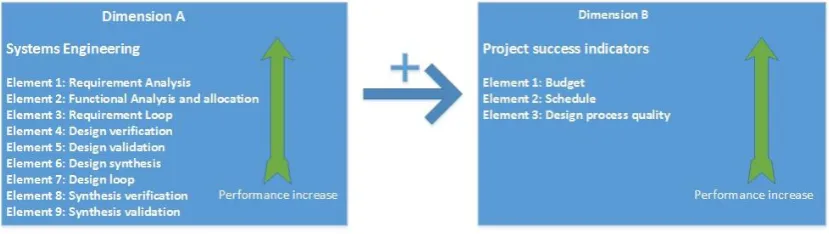
[image:20.595.136.551.404.521.2]The research model displays the presumed relationship between SE performance and project success indicators (Figure 1).
Figure 1: Research model.
First the two dimensions of the framework are explained in more detail (paragraph §2.2 and paragraph §2.3). Finally, the integrated theoretical framework is clarified (paragraph §2.4).
2.2 Dimension A: Systems Engineering
In this paragraph, the SE process is broken down into measurable elements. This is done based on the framework of de Graaf et al. (2016) and de Graaf, Vormer, et al. (2017). First the SE way of working is described. Next, the measurable elements of SE are presented. Lastly, the value of SE is described to initiate the connection between the two dimensions of the research model.
2.2.1 SE way of working
Master’s Thesis
Measuring Systems Engineering and Project success
SE (INCOSE, 2006b). Construction projets become more complex, according to (de Graaf, Vormer, et al., 2017). Contractors have to solve ill-defined, ill-structured and complex problems (de Graaf, Vormer, et al., 2017). This development is happening while (INCOSE, 2006b) confirmed that during the design process decisions are made determining 80% of the life-cycle costs of a project. For contractors it is increasingly important that they are capable of developing effective design solutions. Considering the changing nature of construction projects, de Graaf et al. (2016) argue for the transition to the SE way of working in the Dutch Construction industry. The SE way of woking provides additional effort to the conceptual phase by concept exploration and design (INCOSE, 2006b). This creates numoerous benefits over the traditional way of working. These benefits are presented in paragraph §2.2.3.
First, the SE way of working is further elaborated by describing the principles and the barriers for implementing SE successfully. Combined industry effort has resulted in guidelines which are based upon these principles (ProRail et al., 2013). In this guideline, some SE best practices and barriers to proper implementation are mentioned. The principles and barriers help in establihsing the framework for SE application. The elements which are part of the framework are based on these principles. Moreover, by understanding the barriers for implementation a more indepth understanding of the SE application is established.
2.2.1.1 Principles of SE
When SE is applied in projects some principles must be considered to successfully apply SE. These principles provide guideline and structure to the SE application. The following principles should be considered (ProRail et al., 2013):
Know the client’s demands and wishes;
Systems Thinking;
Transparency;
Efficiency;
Balance design freedom and contractual agreements;
Verification and validation;
The principles provide foundation for the framework, which structure the measurement tool developed in this research project. Therefore how these principles provide guideline for the SE way of working is explained more in-depth.
Principle 1: Know the client’s demands and wishes
When applying SE the problems and opportunities related to the client’s needs regarding the project are analyzed. This analysis is done to specify client’s needs into demands, which is structured in the Customer Requirements Specifications (CRS). Whilst the system constantly develops, it is important that changes in client’s needs or demands are taken into account regarding the fine-tuning of the system. SE makes it possible to develop the best possible solution for a problem within the given space available for solutions regulated by client’s needs and demands (ProRail, 2015; ProRail et al., 2013). The client is the one who specifies the problem, the available space for solutions and if a solution is appropriate to solve the problem at hand. The CRS is input for the continuing development process of the system.
Principle 2: Systems Thinking
Master’s Thesis
Measuring Systems Engineering and Project success
University of Twente E. Berghuis Page | 20
subparts. Hence, the focus is on the sub-system level in projects. This focus makes it unable to cope with the increasing complexity of projects, strong variety of interfaces, the interdependence of specialist techniques and the way of working of organizations (Locatelli et al., 2014). Systems thinking requires a multidisciplinary iterative approach to problem solving (Locatelli et al., 2014). Kapsali (2011) concluded in her research that systems thinking positively relates to the governance of innovativeness, complexity and uncertainty due to increasing the flexibility in managerial activities. She argues that projects benefit from a more iterative approach (i.e. Systems Thinking) instead of conventional project management approaches targeted to make the process of a project predictable enough to be managed (Kapsali, 2011). The systems thinking approach is further broken down into three subprinciples.
SE is an iterative process
Construction projects are often complex systems consisting of many objects. An iterative process is required to successfully realize such complex systems. Part of the SE process is to iterate between requirements, functions and design solutions (ProRail et al., 2013). The design solution of one object requires additional analysis of the complete system because this design solution impacts the design of connected objects. These additional analysis are eventually providing detailed specifications of the system as a whole and the objects as part of the system. The iterative process enable designers to created detailed specifications of design solutions.
Interdisciplinary
Construction projects are often divided according to the involved disciplines (civil, mechanical installations, electrical installations, etc.). However, by dividing the system the connection between parts of the system is often overlooked. In complex projects allot of different disciplines are involved over a number of system parts. An interdisciplinary approach to the design of the system and its realization prevents problems occurring on interfaces (where different disciplines overlap) between system parts (ProRail et al., 2013).
Life-cycle approach
Every construction project has a life-cycle from concept to development, realization, in use, maintenance and eventually demolition. Smart solutions for cheaper maintenance can be incorporated in the design when the life-cycle approach is applied during the design phase. When the focus is just on one phase of the life cycle, the system will only be optimized for that phase (ProRail et al., 2013).
Principle 3: Transparency
The SE way of working is transparent because decisions and the reasons underlying the decision are recorded demonstrable. The system must meet the client’s requirements. Decisions made in the design phase enable the system to meet these requirements. To explicitly verify that the system meet these requirements, decisions regarding its’ design must be recorded (ProRail et al., 2013). This is according to the Decision management process of (ISO, 2015).
Principle 4: Efficiency and effectivity
SE increases efficiency by structuring the design process. SE increases effectivity of the design process because iterative tools ensure “fit-for-purpose” (ProRail et al., 2013).
Principle 5: Balance design freedom and contractual agreements
Master’s Thesis
Measuring Systems Engineering and Project success
Principle 6: Verification and Validation
The objective of verification and validation is to provide evidence of the system meeting its’ requirements. By means of feedback process, it is ensured that the realized system meet the by the client’s prescribed system (ProRail et al., 2013).
2.2.1.2 Barriers to implementing Systems Engineering
Elliott et al. (2012) defined multiple barriers to the application of SE in civil engineering projects regarding the discipline rail:
– nature of the industry; – nature of SE itself; – differences in traditions.
First of all, traditionally SE is applied on new systems (Elliott et al., 2012). In projects concerned with improvement of infrastructure the objective is in general to renovate or maintain current infrastructure to these days’ standards. There are significantly less projects were new roads are developed (Rijkswaterstaat, 2017). Hence, other infrastructure projects are comparable to rail projects which are known for making changes to existing systems (Elliott et al., 2012). Moreover, in the SE application there is little attention given to short-term interruptions of current systems while these systems are being upgraded to current day standards. This is a major challenge in rail projects as Elliott et al. (2012) explains. This is also the case for infrastructure projects because most of the projects are also concerned with renovation or maintenance of infrastructure which is still being used at the time of renovation or maintenance. Often information about the current nature of the infrastructure is not always fully accessible/complete or correct. Therefore, the state of the current system is unclear making it increasingly challenging to complete the two tasks which come first in the SE process (de Graaf, 2014). SE proclaims pre-work not re-work. If the two main analysis of SE cannot be completed because information is missing, subsequent SE tasks are affected as well because of the iterative nature of SE.
Furthermore, a lot of the SE activities overlap with existing disciplines in a project. Elliott et al. (2012) argue that topics addressed in the SE methodology overlap with specific tasks which used to be assigned to project managers, engineers and architects. SE responsibilities are scattered among these well established and demarcated roles of the project team. This results in possible conflicts between the systems engineer and these well-established roles when similarities in responsibilities and expertise clash (Elliott et al., 2012). Moreover, were SE overlaps with well-established roles the perceived added value of doing it according to the SE way of working is often a point of discussion (Beasley & O'Neil, 2016). The Systems Engineering has to provide specific evidence of why the SE way is the better choice compared to the well-established work procedures. SE has in some way be “sold” to these well-established roles (Beasley & O'Neil, 2016).
Master’s Thesis
Measuring Systems Engineering and Project success
University of Twente E. Berghuis Page | 22
no clear internal procedures and responsibilities established and captured regarding the application of SE.
To add to this, SE is perceived to be adding overhead instead of value in projects. This reputation commenced due to its application in military and aerospace projects (Beasley & O'Neil, 2016). This perception is caused by multiple reasons. In the first place, complex SE specific jargon, such as Solution Synthesis, cause unfamiliarity which poses barriers and aversion to SE (Elliott et al., 2012). The construction industry has strong institutional culture and is often reluctant to change (Rivera, Le, Kashiwagi, & Kashiwagi, 2016). This makes it challenging to see past unfamiliar jargon. In the second place, over emphasis on SE process makes the SE process the replacement for Systems Thinking, one of the main principles of SE, and thus practitioners of SE become overly inclined to apply every SE activity prescribed in their SE process. Practitioners then find it difficult to in recognize which activities to perform and with what degree of rigor, all in all to realize value delivery in the project (Beasley & O'Neil, 2016). In the third and final place, there is too much emphasis on acquiring SE tools without acquiring the corresponding skills to apply the tools appropriately and effectively in the projects.
Honour (2004, p.2, in Elliott et al., 2012, p.206) explains: “In many ways we understand less about systems engineering than any other engineering discipline”. Change in the industry take time to master and integrate into an organization. SE is a new way of approaching a project which also brings a new vocabulary. Elliott et al. (2012) and Beasley and O'Neil (2016) argue that one of the barriers for implementing SE is the language of SE. There are allot of tools with unfamiliar names and terms and even some known terms are used differently than their naming would suggest. This is also one of the major findings of de Graaf et al. (2016). They argue that the learning curve is steep, hence allot of effort is necessary to fully master the application of SE. Knowledge in these organizations is often spread ad-hoc, which strengthens the barrier of learning to implement SE properly.
Now that the principles of SE and barriers for implementation of SE are described, the foundation is laid to begin breaking down the SE way of working into measurable elements.
2.2.2 SE measurable in construction industry context
Master’s Thesis
[image:25.595.137.552.113.409.2]Measuring Systems Engineering and Project success
Figure 2: SE contractors process Framework based on INCOSE (2006a), ProRail et al. (2013), de Graaf (2014), de Graaf et al. (2016), de Graaf, Vormer, et al. (2017) and ISO (2015).
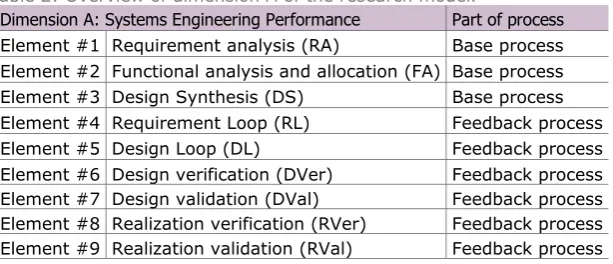
In the table below, we summarized the 9 measurable basic elements as part of the dimension A: Systems Engineering Performance of the research model.
Table 2: Overview of dimension A of the research model.
Dimension A: Systems Engineering Performance Part of process Element #1 Requirement analysis (RA) Base process Element #2 Functional analysis and allocation (FA) Base process Element #3 Design Synthesis (DS) Base process Element #4 Requirement Loop (RL) Feedback process Element #5 Design Loop (DL) Feedback process Element #6 Design verification (DVer) Feedback process Element #7 Design validation (DVal) Feedback process Element #8 Realization verification (RVer) Feedback process Element #9 Realization validation (RVal) Feedback process
Element 1: Requirement analysis
[image:25.595.139.446.493.625.2]Master’s Thesis
Measuring Systems Engineering and Project success
University of Twente E. Berghuis Page | 24
Element 2: Functional analysis and allocation
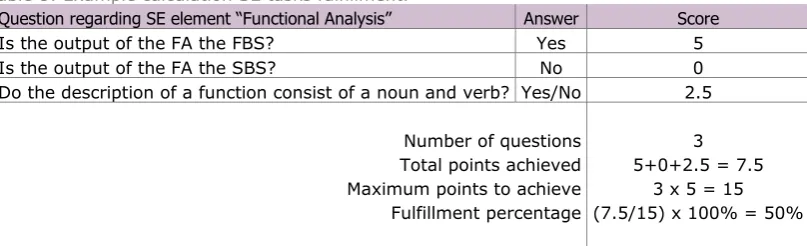
The second core element of the SE process is the functional analysis and allocation (FA). This analysis is done to define the functionality of the system and these functions must be combined in the Functional Breakdown Structure (FBS). The functionality of the systems describes what the system should do based on the measurable requirements and not how it should perform its functions. These functions are then coupled to objects which when combined form the system breakdown structure (SBS). Object specifications at least contain the measurable requirements, functions and interfaces related to the object. These objects are then combined with activities and from all together the Work Breakdown Structure (WBS). Point of attention in this analysis is if functions could be traced back to the measurable requirements.
Element 3: Design synthesis
The third core element of the SE process is the design synthesis analysis. This analysis is done to transform objects of the function analysis to design solutions. Each object, and therefore the design solutions, should meet its function and requirements determined in previous basic elements of the SE process. The design choices should be based upon traceable solution choices including the considerations of these choices. Points of attention in this analysis is how design choices are made and how changes in these choices are documented.
Element 4: Requirement loop
The functional analysis could set a different light on the requirement analysis which makes it necessary to execute the requirement analysis once again. This possibly could result in new insights into the requirements and thus the functions of the system and its coupling with objects. The fourth basic element of the SE process is therefore an iterative requirements loop between the first two basic elements of the SE process. Point of attention is that adjustments based on the requirement loop are recorded demonstrable.
Element 5: Design loop
The synthesis analysis should be performed multiple times as the design is always being optimized. The design solutions are being aligned with the requirements, functions and objects based upon needs from client and stakeholders. During this alignment it could become clear that functions must be added or altered therefore revising the function analysis. When the functional analysis is revised then the requirement loop must be performed a well. This means the SE process is followed multiple times. Point of attention in this analysis is if changes to functions and objects are properly documented and if adjustments are recorded demonstrable.
Element 6: Design verification
The sixth basic element of the SE process is the requirements/functions/objects verification. This verification and validation is done to provide demonstrably that the design solutions meet all the requirements, moreover meeting the needs and expectations of the client and stakeholders. As the SE process is an iterative engineering process with multiple loops any deviations will lead to adjustments in requirements, functions, and objects and eventually design solutions. This iterative engineering process is documented in a verification and validation plan. Necessary adjustments of design solutions, requirements, functions or objects should be formulated in a verification report. Point of attention in this verification is if these results and necessary adjustments are in some way documented and if requirements, functions or objects are traceable updated/changed.
Element 7: Design validation
Master’s Thesis
Measuring Systems Engineering and Project success
Element 8: Realization verification
The eight basic element of the SE process is realization verification. This verification is done to check if the realized objects meet the requirements and are according to the design plans. The additional benefit is that contractors properly document all the available information about the project in as-built documentation. Output of this task is a verification matrix with at least the following items:
Verification moment;
Verification method;
Person responsible;
Verification result;
Define output documentation.
The contractor should pay explicit attention to possible adjustment to objects when requirements cannot be met. Adjustments must always be properly documented. Point of attention in this verification is if these results and necessary adjustments are in some way documented.
Element 9: Realization validation
The ninth basic element of the SE process is the realization validation. This validation is done to check if the realized objects not only meet requirements/functions and objects but more importantly the expectations of the client and other stakeholders. The validation must be performed based on a validation plan. The following items must be explicitly mentioned in the validation plan:
Objects being validated;
Validation method;
Person responsible;
Validation result;
Define output documentation.
Point of attention in this validation is if these results and necessary adjustments are in some way documented.
Additional elements
Alongside these nine basic elements, de Graaf et al. (2016); de Graaf, Vormer, et al. (2017) defined additionally three supporting elements; Process input (Element 10), Process output (Element 11) and System analysis & control (Element 12). A contracting firm performs out of the three supporting elements only the Element 11. In many occasions the client or the administrator of the project performs Elements 10 and 12. In many projects, the client executes Element 10 when they provide an already extensive list of requirements. Also, the contracting firm only provides the tools for systems analysis and control (Element 12). After the realized objects are verified and validated, the objects are delivered to the client. The client then hands the project to the administrator of the project. The actual execution of systems analysis and control lies by the administrator of the project.
2.2.3 Value of SE in construction industry context
Master’s Thesis
Measuring Systems Engineering and Project success
University of Twente E. Berghuis Page | 26
risk early prevents problems of integration and test for occurring, thereby reducing cost and shortening schedule”. When applied properly, SE is believed to enable the delivery of a complex system with the demanded functionality on time and to budget (Beasley, 2017a; Elliott et al., 2012; Honour, 2009; Nederland, 2010). (Beasley, 2017b, p.6) summarizes some main benefits of SE:
– Understanding all stakeholder views - ultimately giving full lifecycle consideration and an alignment of all interests;
– Structured architecture, designing sub-systems and elements in the context of the whole - optimising the whole not the parts;
– Clear focus on requirements – both for verification and validation of the solution, and for decision rationale;
– Recognizing key issues, uncertainties and risks early in lifecycle, so there can be pre-work not re-work to prevent cost and schedule over-runs;
– Focus on purpose rather than purely the solution object.
The overall perception of the value of SE can be broken down into several categories, according to the de Graaf (2014). These categories are summarized below and linked to the main benefits of SE according to (Beasley, 2017a):
1. Increased satifisfaction of interests: achieved by understanding all stakeholder views; 2. Less resistance: achieved by focus on purpose rather than purely the solution object; 3. Increased transparancy of work procedures: achieved by structured designing of
sub-systems and elements;
4. Less redesign of design solutions: achieved by clear focus on requirements; 5. Less rework: achieved by recognizing key issues, uncertainties and risks early; 6. Less failure cost: achieved by recognizing key issues, uncertainties and risks early.
2.2.3.1 Increased satisfaction of interests
In many construction projects, the realized objects solely meet the requirements and wishes of the client. Other stakeholders’ requirements and wishes are often left out of the scope of the development process. This could potentially provide realized objects which perfectly fulfill the by the client proposed functions, but not in the eyes of the end-user (which is many times not the client). For example, additional requirements had to be incorporated after unexpected operations and maintenance stakeholders came to check for operational acceptance. This contributes to varied expectations for the performance of the system and the functions it has to fulfill (Beasley & O'Neil, 2016). When SE is applied, requirement management ensures that all stakeholders’ requirements are collected and analyzed. The realized objects therefore meet as much stakeholders’ requirements and wishes as possible.
2.2.3.2 Less resistance
In many construction projects, permits have to be issued to provide the legal basis for realizing the project. Stakeholders can issue opinions or protests in obtaining these permits. If this is the case, official procedures have to be followed. These procedures often hamper project progress and therefore create additional costs for the project. When SE is applied, all the stakeholders are actively informed and involved in the development process. This creates foundation for decisions and reduces opposition in stakeholders.
2.2.3.3 Increased transparency of work procedures
Master’s Thesis
Measuring Systems Engineering and Project success
the external design party. Just the input, in terms of requirements, and the output, in terms of design drawings, are visible for the contracting firm. This makes the design process difficult to manage (de Graaf, 2014). SE improves the manageability of the design process in multiple ways. Design solutions are discussed and recorded in multidisciplinary teams. All requirements are analyzed, structured and the connection between requirements is established. Lastly, the explicit connection between requirements and design solutions makes verification and validation of the design transparent and imitable (de Graaf, 2014).
2.2.3.4 Less redesign
In construction projects the design is often complex and therefore difficult to do the first time right. Redesign is often necessary to increase appropriateness of the design and to solve design errors. de Graaf (2014) explains that in construction projects, too many redesigns are necessary to provide an appropriate design. Redesigns cost time and money. Redesigns are caused by a strong focus on design drawings and an incomplete overview of the requirements which the design has to meet (de Graaf, 2014). Design drawing are supposed to be representation of decisions made up until the point in the process during which the design drawing are finished. When these are based on incomplete requirement overviews, the chance of redesigns are high. This could potentially lead to adjustments in the contract between client and contractor. Such contract adjustments are almost always harmful for the entire project (de Graaf, 2014). When SE is applied, it is supposed that less redesigns are necessary. Requirement management ensures that all requirements are collected, processed, adjusted and kept up-to-date during all stages of the design and realization phase. SE proclaims that first requirements have to be analyzed thoroughly before designs are made. de Graaf (2014) explain that less redesigns are necessary to create an appropriate design.
2.2.3.5 Decrease rework
de Graaf (2014) defines rework as work performed during realization which is not appraised beforehand. He defines multiple sources causing rework. First source of rework are additional wishes by the client during realization which are not incorporated in the design. SE stresses upon thoroughly deliberating the design. SE reduces rework by ensuring that all requirements and wishes are collected before the realization phase starts. The objective is to limit the amount of alterations in specifications by doing it “the-first-time-right”. Second source of rework are design omissions. When after finalizing the design, omissions in the design are uncovered which often result in discussion about who is responsible for the omission. The architect holds responsible for the design and can therefore be responsible for the omission, but a contractor holds some responsibility to signal omissions early. Altogether, SE reduces by means of feedback processes these types of rework by making the design process as transparent as possible and to increase integration between disciplines to prevent design omissions early.
2.2.3.6 Less failure costs
Master’s Thesis
Measuring Systems Engineering and Project success
University of Twente E. Berghuis Page | 28
multidisciplinary teams provides the opportunity to share knowledge and learn from each other’s expertise. Moreover, these teams can explicitly analyze interfaces and the connected challenges. The decomposition of the system into objects and sub-objects enables the multidisciplinary project team to effectively manage interfaces between the system and its environment as well as between sub-objects of the system. The coherence between requirements, the system, objects and interfaces enables the possibility to effectively connect sub-objects to the appropriate party or people in the multidisciplinary project team. This creates greater flexiblity and adjustment.
2.2.4 Summary Dimension A:
When SE is applied in construction projects some principles must be considered to successfully overcome the barriers for implementing SE and realize the values of SE. The SE way of working is broken down into several measurable elements which altogether for a framework. This framework provides the foundation for effectively measuring the SE performance.
The connection between the values and SE elements is presented in the table below.
Table 3: Connecting SE values with specific SE elements.
# SE value SE element achieving the SE value
1 Increased satisfaction of interest RA, FA, Verification and Validation
2 Less resistance RA, FA, Verification and Validation
3 Increased transparency Verification and Validation
4 Less redesign RA, FA, Requirement loop, Design loop, Design Verification and Design Validation
5 Decrease rework RA, FA, Feedback processes 6 Less failure costs RA, FA, Feedback processes
2.3 Dimension B: Project Success indicators
In this paragraph, the Project Success dimension of the research framework is broken down into measurable elements. First the definition of project success is explained. Next, the most common project success indicators are presented. Afterward, project performance is related to these project success indicators. Lastly, the measurable elements of project success are presented.
2.3.1 Project success