1
Extracting Multiple Interacting Root Systems using X-ray
Micro Computed Tomography
Stefan Mairhofer, Craig J. Sturrock, Malcolm J. Bennett, Sacha J. Mooney and Tony P. Pridmore School of Computer Science (S.M., T.P.P.), University of Nottingham, Nottingham NG8 1BB, United Kingdom, School of Biosciences (C.S., M.J.B., S.J.M.), and Centre for Plant Integrative Biology (S.M.,
C.S., M.J.B., S.J.M., T.P.) University of Nottingham, Nottingham LE12 5RD, United Kingdom;
Corresponding Author: Stefan Mairhofer, School of Computer Science, University of Nottingham, Jubilee Campus, Wollaton Road, Nottingham NG8 1BB. Tel: +44 115 8468403, Email: [email protected]
Running Title: Extracting Multiple Interacting Root Systems using X-ray CT
2 Summary
Root system interaction and competition for resources is an active research area that contributes to our understanding of roots’ perception and reaction to environmental conditions. Recent research has shown this complex suite of processes can now be observed in a natural environment (i.e. soil) through the use of X-ray micro Computed Tomography (µCT), which allows non-destructive analysis of plant root systems. Due to their similar X-ray attenuation coefficients and densities, the roots of different plants appear as similar greyscale intensity values in µCT image data. Unless they are manually and carefully traced, it has previously not been possible to automatically label and separate different root systems grown in the same soil environment. We present a technique, based on a visual tracking approach, which exploits knowledge of the shape of root cross-sections to automatically recover 3D descriptions of multiple, interacting root architectures growing in soil from X-ray µCT data. The method was evaluated on both simulated root data and real images of two interacting winter wheat Cordiale (Triticumaestivum L.) plants grown in a single soil column, demonstrating that it is possible to automatically segment different root systems from within the same soil sample. This work supports the automatic exploration of supportive and competitive foraging behaviour of plant root systems in natural soil environments.
Keywords: X-ray computed tomography, root system interaction, multiple target tracking
Significance Statement
3 Introduction
Plants use their root systems to explore the heterogeneous and complex soil environment for water and nutrient sources which, in the field, are shared with other, neighbouring plants. Each plant must compete for its survival, especially under stressful conditions, where these resources are limited. Root system interaction and belowground competition in plant communities are subjects of wide interest (Mahall and Callaway 1992, Casper and Jackson 1997, Rubio et al. 2001, Maina et al. 2002). Root competition is considered a negative aspect of root interaction, in which plants can limit each other’s growth. However root interaction can also have positive effects, e.g. by simultaneously decreasing the availability of one resource while increasing the availability of another or by influencing the composition of the bacterial flora in the rhizosphere, which may affect the nutrient availability of neighbouring plants (Schenk 2006). These are of particular concern for intercrop cultivation, which is of significant increasing interest at present (Brooker et al. 2014), where the aim is to find the optimal combination of plants for a certain field environment. Planting strategy can have a large effect on crop yield (Mead and Willey 1980, Willey 1985, Anil et al. 1998). It is commonly believed that root systems have the ability to sense neighbouring plants, though the process is complicated and not yet fully understood due to an inability to visualise in situ root behaviour. Some studies have shown that roots of the same genotype within a species have a tendency to grow towards each other, while the roots of another genotype within the same species avoid sharing the same area (Fang et al. 2013). This mechanism however, appears to be ignored if plants are grown in resource-limited environments (Caffaro et al. 2013). To fully comprehend to what degree root interaction affects root development, it is essential to observe and study the behaviour in their natural, heterogeneous soil environment (a previous limitation due to the opacity of soil). Non-soil environments typically allow more rapid and widespread diffusion of chemical compounds, producing signalling patterns different to those that would be observed in natural soil cultivations (Chen et al. 2012).
4 studies investigated the ‘tragedy of the commons’ in which plants that compete belowground produce increased root biomass by sacrificing yield.
Non-invasive observation and time-series analysis of multiple plant root systems would provide further insights into co-existence and competition within plant communities, by allowing a more comprehensive understanding of the conditions and stages that plants start reacting to their neighbours. Faget et al. (2013) have demonstrated the combined use of magnetic resonance imaging (MRI) and positron emission tomography (PET) to image root systems of two maize plants. By inducing radioactive 11CO2 to the shoot of one of the plants, its transportation through the root
systems becomes measureable using PET. This method could potentially be used in distinguishing interacting plants. X-ray micro Computed Tomography (µCT) has been well described as a popular alternative to MRI for non-destructive analysis of plant roots grown in soil (e.g. Mooney et al. 2012). X-ray µCT allows the observation of roots in soil by measuring the attenuation of ionising radiation passed through a sample of interest. The degree of X-ray attenuation depends on the density of the material; the number of photons transmitted through the object is inversely proportional to its density. Though image segmentation (sometimes known as phase separation) is challenging, differences in density allow roots to be distinguished from their surrounding complex soil environment. As all the root material in the sample is likely to cause comparable X-ray attenuation, its greyscale values in the resulting image data are typically very similar. Therefore if multiple plants are grown within the same soil column, it will not be possible to distinguish and assign their roots to the correct originating plant using conventional image analysis approaches (e.g. simply applying threshold tools) which might explain why this approach has not been previously progressed. While a slight difference in density might be observable among certain plant species it is unlikely to assist image segmentation and there will be no/little difference if plants of the same variety are examined.
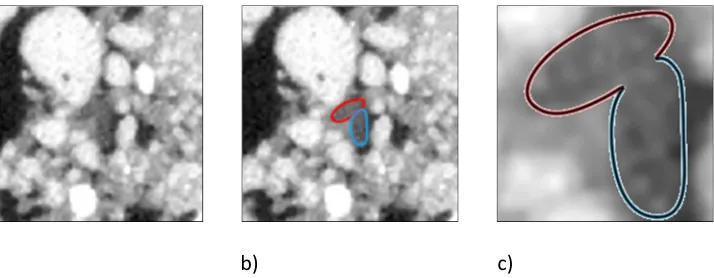
5 group of trackers to each individual plant root system, when multiple plants co-exist. Complications arise, however, when root objects from different plants collide/touch, which happens when roots come into contact with each other. The restricted set of greyscale values arising from root material means that the boundary between these objects has low contrast at best and potentially non-existent, causing root sections to visually merge into a single object, as shown in Figure 1. The problem of interacting targets ‘coalescing’ is a widespread feature of multiple target tracking and an active research topic in computer vision (Milan et al. 2013). All visual trackers rely heavily on an appearance model of some form; similar targets will always be tracked with a similar, and often an identical, model. When targets interact, each tracker will tend to lock on the target that best fits the model. This can result in trackers swapping targets or trackers following the same target while losing track of others. In the case of root material recovery, this leads to root cross-sections being associated with incorrect root systems.
In this work we present a mechanism based on the root recovery method presented in (Mairhofer et al. 2012), but with the significant added ability to extract multiple interacting root systems. The aim is to develop an X-ray µCT image analysis tool that can aid understanding of how plants interact and communicate through their root systems supporting new research efforts into the bio-physical behaviour of roots important for example for optimising mixed/inter cropping systems . In what follows, we give a detailed description of the proposed extraction mechanism, which is applied to both simulated and real plant X-ray µCT data.
Results
Extended root extraction mechanism for multiple plants
6 are key to the proposed extraction mechanism: i) Detection of root object collisions; ii) Root shape registration and iii) Refinement of the level set boundary evolution.
Given the approach in Mairhofer et al. (2012), the extraction of multiple root systems requires tracking of cross-sections belonging to multiple root systems. This in turn requires multiple instantiations of the level set technique to be active together. The level set method was initially developed to evolve the interface of a single front that is defined by the transition from negative values inside to positive values outside the object boundary (Osher and Sethian1988, Sethian 1999). This has been extended by simulating the flow of two-phase fluids (Sussman et al. 1994, Sussman et al. 1999) and the complex interaction of more than two fluids (Merriman et al. 1994, Sethian1994, Losasso et al. 2006). In the work reported here we adapt the solution defined in (Sethian1994), where multiple level set functions are evolved simultaneously. This and similar approaches have been established as a popular technique in computer vision, used for example in the segmentation of greyscale and colour images into multiple distinguishable regions (Vese and Chan 2002). The method enjoys the advantages of simplicity and efficiency, but lacks the high precision required in many physics-based applications (Losasso et al. 2006). The key idea is that the interface of a level set function can only be moved to a new position if none of the other level set functions have that particular location already included in their interface. If the location is already occupied, the sign of the updated value is switched from a negative value (inside) to a positive value (outside). Ignoring this rule for one level set function, however, allows one interface to enter another’s boundary which, as a consequence, will be pushed back. The approach has an additional advantage in that it provides an easy way of identifying collisions between objects, by determining the number of level set functions that share negative values for a certain location in the image data.
7 able to recall the outline of an object’s shape at any subsequent stage of tracking, using ICP to align it to the current position of the level set interface.
Upon occurrence of a collision between root objects from different plants, the detection routine triggers the proposed extraction mechanism for interacting root objects, which will run as long as the targets remain in contact. The mechanism starts by considering the most recently stored description of the shape of the interface, recorded before the collision. The same shape information is used throughout the entire interaction phase i.e. no further shape information is recorded until the level sets are once again clearly separated. It is assumed that the shape of a root cross-section is approximately constant during the period of contact. We accept this assumption may not always hold, however we hypothesise it is reasonable to believe it will be true in the majority of cases, since the number of cross-sections at which a root bends (and so its cross-section changes shape) is low in comparison to the number of slices through which the root follows a smooth path. When a bend occurs, we hypothesise here it is also more likely that the root will bend away from neighbouring roots and so the tracked root object will lose contact with any neighbouring roots, and hence leave the critical collision zone of the corresponding image. In order to violate our hypothesis, two neighbouring roots would have to turn away at the same time with the same angle and direction. In that case the collision phase is still ongoing, while the roots’ shape would drastically change and therefore become invalid. Such a scenario has not been observed in any of the test data sets used in this work.
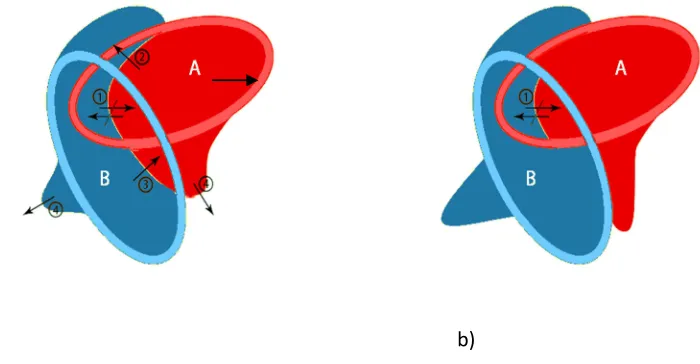
8 - A and B evolve normally (4)
- A pushes interface of B (2) - A is pushed by interface of B (3) - Neither A or B can be pushed (1)
The combined effect is that each level set attempts to maintain its previous shape, reducing the likelihood that either level set (and so root system) will extend into and be confused with another. Shape information and the ICP mechanism effectively adds a further constraint to the root recovery algorithm during the interactions of root objects, in addition to the previous assumption of smoothly varying density distributions. If there is no collision between root objects, then the shape constraint is not active, and therefore results are obtained as with the original RooTrak. The presented mechanism is also applicable to upward oriented roots, following the approach presented in Mairhofer et al. (2013). Roots that are inclined by even a slight angle are usually easier to deal with than horizontally grown roots, as there is likely to be some variation in position or appearance, and because they are processed by the tracker in a step-wise fashion. Horizontal roots are not impossible to cope with, but there are more possibilities for the tracker to be misguided. Even if a root grows horizontally, it will span a few images, and therefore give the tracker the opportunity to recover it by alternating the direction in which target objects are sought (Mairhofer et al. 2013).
Simulated data
9 Plant root systems
After running the proposed method on an artificially generated dataset, it was then applied to real data acquired from actual plant samples. Five columns were prepared, each containing two winter wheat Cordiale (Triticumaestivum L.) seeds. The seeds were planted 10 to 15 mm apart after having been left on wet filter paper in a Petri dish shielded from light for two days to germinate. The columns, 30 mm in diameter, were filled with a Newport series loamy sand soil. The soil was air-dried and sieved to <2mm. The columns were placed in an environmentally controlled growth room with 16/8 hours light cycle at a temperature of 23/18 degree Celsius, and left there for ten days before the plants were examined. The samples were scanned using a Nanotom (Phoenix X-ray / GE Measurement & Control Systems) X-ray µCT scanner. The scan was performed at 120keV and 110µA, taking 1440 projections with an exposure time of 750ms, using a signal averaging of 3 and 1 skipping per projection. The samples were placed 134mm away from the X-ray gun, resulting in a volume with resolution of 22.33µm voxel size. The X-rays were filtered through a 0.1mm copper plate. The total scan time for each sample was 77 minutes. Note that using a single plant species means that all the root material present in the image data will generate intensity values drawn from the same distribution. A tracker is initialised by manually setting seed points at the beginning of a root system. The user specifies which tracker each seed point belongs to, which allows the selection of multiple seed points for a single tracker. This is useful if the top of the image data is missing and the tracking has to be started from individual nodal roots.
RooTrak Results
10 interacting wheat plants were identified, while at the same time kept separate and assigned to the correct originating plant, due to the mechanism proposed here. The time needed to recover the root systems from the CT images depends on the size of the data and the number of root objects being tracked. The root systems in this experiment were extracted within four to five hours, on a Windows 7 64-bit desktop PC, Intel Core i7-3820 3.60GHz, 32.0 GB RAM. A GPU implementation is under construction which is expected to reduce processing times significantly. The diameters of the roots extracted from the data varied from 15 to 30 pixels. These values are only an indication of the root objects being recovered in the context of this experiment, and do not represent the minimum target size that the algorithm is applicable to. From a computational point of view, an object of 1 pixel radius would be sufficient to serve as a target, but not very realistic in an operational context, where there is variation in the appearance and location of the object.
Discussion
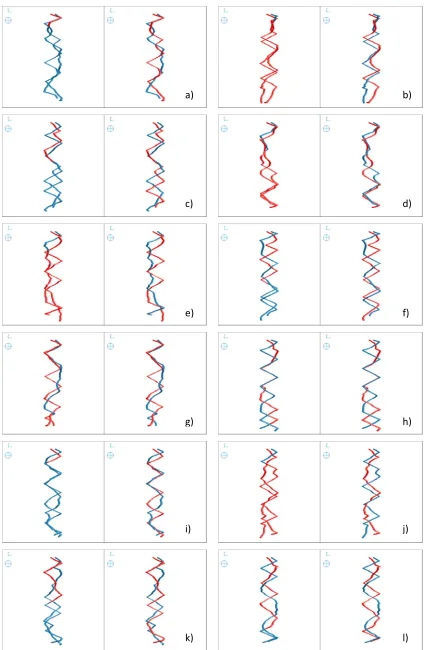
The root descriptions extracted from the simulated data show the value added by the proposed mechanism. They also demonstrate that when multiple roots are present, and without any additional constraints, the assignment of an object (root segment) to its originating target (plant) can be difficult and unreliable using the original version of RooTrak. Although the underlying aim of separating target (root material) from background (soil) was successfully achieved in both cases, it can be observed how easily targets were passed between trackers, making it impossible to tell whether a given root segment really belongs to the plant its tracker was initialised to. While root interaction does not always lead to a swap or loss of tracking, it remains something that needs to be considered when extracting multiple roots, particularly if plants are densely planted. The random paths assigned to the artificial roots generated interactions from various directions. Root objects interacted by coming together from opposite directions as well as by following the same direction, with one catching up with the other. With the proposed mechanism active, the method performed much better in keeping track of the correct target and as such increases confidence in its ability to distinguish objects with similar appearance.
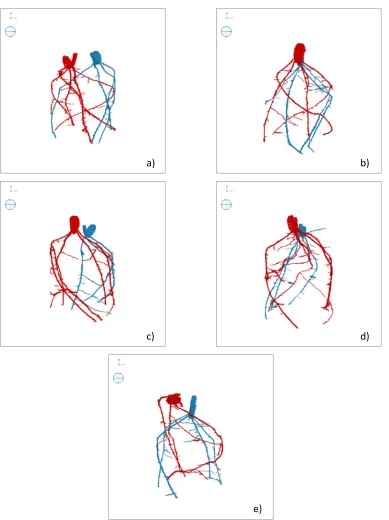
11 the trackers of two different root systems pick up a single, U-shaped, root at different ends, following the target until they eventually meet in the middle of the root. Additional information on branching angle might help in identifying whether a root is more likely to belong to one root system or the other, and could therefore be used to re-label incorrectly assigned root branches to their originating plant.
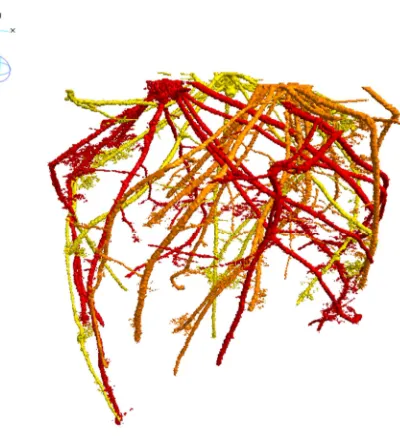
Importantly, the method proposed here is not limited to recovering and separating two plants, but can work on a number of root systems that interact with each other. Figure 7, for instance, shows the recovered root systems of a sample in which three wheat plants share the same soil environment. This method could also be extended to mixtures of plant species which is especially important at present given a renewed interest in the potential soil structuring and compaction alleviating capabilities of competing plant species. Chen and Weil (2011) showed that maize grown under compacted conditions benefited from a pre-cover crop such as forage radish (Raphanus sativus) and rapeseed (Brassica napus) as their root systems can effectively ‘bio-drill’ the soil to
enhance porosity for future plants. Potentially mixes of species could also reduce nutrient losses,
improve drainage, and minimise soil erosion. In addition, Postma and Lynch (2012) have shown
there can be great complementarity for combinations of plant species, such as enhanced N uptake
and biomass production for maize/bean/squash polycultures. Multicropping may also offer potential advantages in terms of pest and disease control and soil health (Lithourgidis et al. 2011). Recently there have been numerous global examples of where combinations of plants grown together, typically including radish, oats, rye, mustard and sunflower, have improved subsequent soil quality
and plant growth. However these are largely unpublished studies, possibly because a suitable
method to explore the interactions in situ has not existed until now. The method proposed here may provide the solution in this regard. A further advantage of using X-ray µCT that is not considered here is that CT imaging also provides information concerning the soil structure and porosity.
12 interactions occurred at the boundary surface, and so are likely to have arisen from limited space rather than signalling between plants. Limiting the space, however, increases the chance of interaction, which was significant for this work. Growing multiple plants in the same soil environment requires larger columns in order to prevent the influence of external factors, which in turn requires an X-ray CT scanner that allows the scan of bigger samples. While such systems exist it is worth noting that for X-ray CT a larger sample size usually leads to coarser resolution which would negatively impact the detection of roots or at the least a very significant increase in scan time, generally not considered preferable in phenotyping efforts, using smaller regions of interest that can be combined to create an image dataset of a larger volume. From this and previous work we found a resolution of 25µm and below suitable for the detection of wheat root systems. Results, however, can vary depending on image data quality. The analysis of lower resolution image data from larger columns is subject to future research efforts.
Conclusion
Based on the RooTrak method of recovering root system architecture descriptions from X-ray µCT images of roots grown in soil, a technique has been presented that allows the roots of multiple plants to also be separated. The proposed mechanism was tested in an experiment on simulated roots as well as real images showing two interacting wheat plants grown in the same soil environment. The results clearly show that it is now possible to extract multiple interacting root systems, a significant advance over the previous extraction process in which no shape constraint was applied upon collision. While no guarantee can be given that root objects are associated to the correct plant, the additional operation adds a higher degree of certainty. Only by explicit reasoning about the structure of particular species' root system architectures would it be possible to increase confidence in assigning root objects to the right plant. This however, is a very challenging task, as root system architectures vary considerably with species and environment. Nonetheless, we believe that the extracted data allows obtaining a good indication of the overall interaction between multiple root systems and now provides meaningful information for the study of interacting and competing plant root systems in natural soil environments.
Experimental procedures
13 Wheat Cordiale (Triticumaestivum L.) were germinated in Petri dishes and after 2 days planted 10-15mm apart in plastic columns filled with loamy sand soil sieved to < 2 mm. All plants grew in environmental controlled growth rooms with 16/8 light cycle at a temperature of 23/18 degree Celsius and were scanned 10 days after.
Imaging
All µCT data was acquired at The University of Nottingham using a Nanotom (Phoenix X-ray / GE Measurement & Control Systems) X-ray scanner. Scanning resolution was 22.33 µm, voltage 120 keV and current 110 µA. 1440 projections were taken with an exposure time of 750ms, using a signal averaging of 3 and 1 skipping per projection. The samples were placed 134mm away from the X-ray gun. The X-rays were filtered through a 0.1mm copper plate. The total scan time for each sample was 77 minutes.
Acknowledgments
This work was supported by Biotechnology and Biological Sciences Research Council and Engineering and Physical Sciences Research Council Centre for Integrative Systems Biology program funding to the Centre for Plant Integrative Biology; FUTUREROOTS 294729/FP7-IDEAS-ERC European Research Council Advanced Grant funding to M.J.B, T.P.P, S.J.M, C.J.S, S.M; BBSRC Professorial Fellowship funding to M.J.B.; Belgian Science Policy Office (grant IAP7/29) funding to M.J.B.; Royal Society Wolfson Research Merit Award to M.J.B.; EU FP7-KBBE-2011-5 project EURoot: Enhancing resource Uptake from roots under Stress in Cereal Crops to T.P.P. and M.J.B. We would like to thank Larry York for his comments on an earlier version of this paper.
References
L. Anil, J. Park, R. H. Phipps and F. A. Miller. Temperate intercropping of cereals for forage: a review of the potential for growth and utilization with particular reference to the UK. Grass and Forage Science, 53(4):301-317, 1998. ISSN1365-2494.
14 Rob W Brooker, Alison E. Bennett, Wen-Feng Cong, Tim J. Daniell, Timothy S. George, Paul D. Hallett, Cathy Hawes et al. Improving intercropping: A synthesis of research in agronomy, plant physiology and ecology. New Phytologist, 206(1):107-117, 2014.
María M.Caffaro, Jorge M.Vivanco, Javier Botto and Gerardo Rubio. Root architecture of Arabidopsis is affected by competition with neighbouring plants. Plant Growth Regulation, 70(2):141-147, 2013. ISSN 0167-6903.
Bin J. W. Chen, Heinjo J. During and Niels P. R. Anten. Detect thy neighbor: Identity recognition at the root level in plants. Plant Science, 195:157-167, 2012. ISSN 0168-9452.
Guihua Chen and Ray R. Weil Root growth and yield of maize as affected by soil compaction and cover crops. Soil and Tillage Research. 117:17-27, 2011.
Brenda B. Casper and Robert B. Jackson. Plant competition underground. Annual Review of Ecology and Systematics, 28:545-570, 1997. ISSN 0066-4162.
Marc Faget, Kerstin A. Nagel, Achim Walter, Juan M. Herrera, Siegfried Jahnke, Ulrich Schurr and Vicky M. Temperton. Root–root interactions: extending our perspective to be more inclusive of the range of theories in ecology and agriculture using in-vivo analyses. Annals of Botany,112(2):253-266, 2013.
Suqin Fang, Randy T. Clark, Ying Zheng, Anjali S. Iyer-Pascuzzi, Joshua S. Weitz, Leon V. Kochian, Herbert Edelsbrunner, Hong Liao, and Philip N. Benfey. Genotypic recognition and spatial responses by rice roots. Proceedings of the National Academy of Sciences, 110(7):2670-2675, 2013.
Mordechai Gersani, Joel S. Brown, Erin E. O'Brien, Godfrey M. Maina and Zvika Abramsky. Tragedy of the commons as a result of root competition. Journal of Ecology, 89(4):660-669, 2001.
Frank Losasso, Tamar Shinar, Andrew Selle and Ronald Fedkiw. Multiple interacting liquids. ACM Transactions on Graphics, 25(3):812819, 2006. ISSN 0730-0301.
A. S. Lithourgidis, C. A. Dordas, C. A. Damalas, D. N. Vlachostergios. Annual intercrops: an alternative pathway for sustainable agriculture. Australian Journal of Crop Science, 5(4): 396-410, 2011.
Jianhua Lin. Divergence measures based on the shannon entropy. Information Theory, IEEE Transactions on, 37(1):145-151, 1991. ISSN 0018-9448.
15 Godfrey G. Maina, Joel S. Brown and Mordechai Gersani. Intra-plant versus inter-plant root competition in beans: avoidance, resource matching or tragedy of the commons. Plant Ecology, 160(2):235-247, 2002. ISSN 1385-0237.
Stefan Mairhofer, Susan Zappala, Saoirse R. Tracy, Craig Sturrock, Malcolm J. Bennett, Sacha J. Mooney and Tony P. Pridmore. Rootrak: Automated recovery of three-dimensional plant root architecture in soil from x-ray microcomputed tomography images using visual tracking. Plant Physiology, 158(2):561-569, 2012.
Stefan Mairhofer, Susan Zappala, Saoirse R. Tracy, Craig Sturrock, Malcolm J. Bennett, Sacha J. Mooney and Tony P. Pridmore. Recovering complete plant root system architectures from soil via x-ray µ-computed tomography. Plant Methods, 9(1):1-8, 2013. ISSN 1746-4811.
Stefan Mairhofer, Craig Sturrock, Darren M. Wells, Malcolm J. Bennett, Sacha J. Mooney, and Tony P. Pridmore. On the evaluation of methods for the recovery of plant root systems from X-ray computed tomography images. Functional Plant Biology, 2014. ISSN 1445-4408.
R. Mead and R. W. Willey. The concept of a 'land equivalent ratio' and advantages in yields from intercropping. Experimental Agriculture, 16: 217-228, 1980. ISSN 1469-4441.
Barry Merriman, James K. Bence, and Stanley J. Osher. Motion of multiple junctions: A level set approach. Journal of Computational Physics, 112(2):334-363, 1994. ISSN 0021-9991.
Anton Milan, Kaspar Schindler, and Stefan Roth. Detection-and trajectory-level exclusion in multiple object tracking. In Computer Vision and Pattern Recognition (CVPR), IEEE Conference on, 3682-3689, 2013.
Sacha J. Mooney, Tony P. Pridmore, Jonathan Helliwell and Malcolm J. Bennett. Developing x-ray computed tomography to non-invasively image 3-d root systems architecture in soil. Plant and Soil, 352:1-22, 2012. ISSN 0032-079X.
Erin E. O'Brien, Mordechai Gersani and Joel S. Brown. Root proliferation and seed yield in response to spatial heterogeneity of below-ground competition. New Phytologist, 168(2):401-412, 2005. Stanley Osher and James A. Sethian. Fronts propagating with curvature-dependent speed: Algorithms based on hamilton-jacobi formulations. Journal of Computational Physics, 79(1):12-49, 1988. ISSN 0021-9991.
16 Gerardo Rubio, Tom Walk, Zhenyang Ge, Xiaolong Yan, Hong Liao and Jonathan P. Lynch. Root gravitropism and below-ground competition among neighbouring plants: A modelling approach. Annals of Botany, 88(5):929-940, 2001.
James A. Sethian. Level set techniques for tracking interfaces: Fast algorithms, multiple regions, grid generation and shape/character recognition. In Proceedings of the International Conference on Curvature Flows and Related Topics, Trento, Italy, pages 215-231, 1994.
James A. Sethian. Level Set Methods and Fast Marching Methods: Evolving Interfaces in Computational Geometry, Fluid Mechanics, Computer Vision, and Materials Science ... on Applied and Computational Mathematics. Cambridge University Press, 2nd edition, 1999. ISBN 0521645573. Jochen H. Schenk. Root competition: beyond resource depletion. Journal of Ecology, 94(4):725-739, 2006.
Mark Sussman, Peter Smereka and Stanley Osher. A level set approach for computing solutions to incompressible two-phase flow. Journal of Computational Physics, 114(1):146-159, 1994. ISSN 0021-9991.
Mark Sussman, Ann S. Almgren, John B. Bell, Phillip Colella, Louis H. Howell and Michael L. Welcome. An adaptive level set approach for incompressible two-phase flows. Journal of Computational Physics, 148(1):81-124, 1999. ISSN 0021-9991.
Luminita A. Vese and Tony F. Chan. A multiphase level set framework for image segmentation using the mumford and shah model. International Journal of Computer Vision, 50(3):271-293, 2002. ISSN 0920-5691.
17 a) b) c)
[image:17.595.80.437.96.235.2]18 a) b)
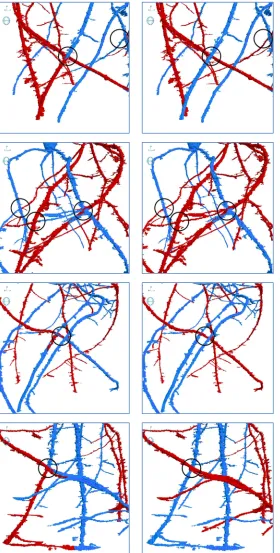
19 Figure 3: Root descriptions extracted from interacting root simulations by left) the original RooTrak
a) b)
c) d)
e) f)
g) h)
i) j)
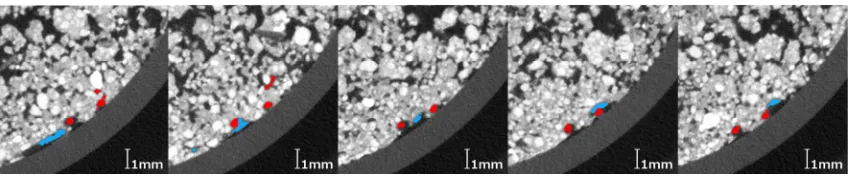
21 Figure 4: Root system descriptions recovered from real images of two interacting wheat plants from five prepared and scanned samples. The growing conditions for all five samples were the same. Multiple samples were used because of the complexity of plant roots a wide range of interactions is possible.
b) a)
c) d)
22
[image:22.595.75.355.71.624.2]