Journal: Safety Science
Developing and testing an internal audit tool of the psychosocial work environment in the oil and gas industry
Linn Iren Vestly Bergh
Affiliations:
Statoil ASA, Norway
Centre for Organizational Health & Development, School of Medicine, University of Nottingham,
UK
Contact information:
Statoil ASA, N-4035 Stavanger, Norway
Mobile: 0047 41506583
E-mail: [email protected]
Siri Hinna
Affiliations:
Statoil ASA, UK
Contact information:
StatoilASA, N-4035 Stavanger, Norway
E-mail: [email protected]
Professor Stavroula Leka (corresponding author)
Affiliations:
Centre for Organizational Health & Development, School of Medicine, University of Nottingham,
UK
Contact information:
University of Nottingham, Level B, Yang Fujia Building, Jubilee Campus,
Wollaton Road, Nottingham NG8 1BB, UK
Fax: +44 (0)115 8466625
E-mail:[email protected]
Professor Gerard I.J.M. Zwetsloot
Affiliations:
TNO Work and Employment, Safe & Healthy Business, the Netherlands
Centre for Organizational Health & Development, School of Medicine, University of Nottingham,
UK
Contact information:
Polarisavenue 151
NL 2130 AS Hoofddorp
Netherlands
Tel.: +31 88 86 65 218
E-mail: [email protected]
Developing and testing an internal audit tool of the psychosocial work environment in the oil and gas industry
Abstract
The objective of this paper is to present and discuss a pilot study for conducting internal psychosocial risk auditing in the oil and gas industry, focusing on offshore units. Psychosocial risk auditing is a proactive method for monitoring the status of psychosocial factors influencing the risk of stress and ill-health in the oil and gas industry. It is a systematic and independent assessment of the status of psychosocial factors and barriers, it reveals non-compliance with requirements and best practice within different relevant levels of the organization, and is suitable as a basis for the development of risk reduction measures. The method comprises performance standards that are linked to the company’s internal organizational requirements related to the psychosocial work environment. A range of different methods and data are used to assess and grade compliance with these standards. The aim of the auditing is to provide transfer of experience between units and the development of best practice while supporting organizational learning in offshore (and onshore) environments.
Key words: Psychosocial Factors; Auditing; Stress; Oil and Gas industry
Introduction
Health and safety in the workplace is a clear objective of both European Framework Directives and national legislation in Europe. In order to improve health and safety in the workplace, governments and organizations have since the 1990’s increasingly developed and applied Occupational Health and Safety Management (OHSM) systems (Hasle & Zwetsloot, 2011). Even though these management systems address both health and safety in the workplace, it is still argued by several researchers that they focus mostly on safety rather than on workers’ health (Hasle & Zwetsloot, 2011). However, in recent years OHSM systems have been increasingly developed towards a more comprehensive approach where all OHS risks are addressed equally. This shift has also been demonstrated in EU and national regulations, international frameworks and best practice principles and standards on health and safety (WHO, 2010; HSE, 2007; Leka et al., 2011). For many companies today, in line with good practice, having an OHSM system in place is a requirement in the same manner as the ISO 9000 series for quality management standards (EU-OSHA, 2002, 2010; Hasle & Zwetsloot, 2011; Zwetsloot, 1994).
by an external certification body (external audits) and auditing by internal staff trained in this process (internal audits) (Reding et al., 2007). According to the Institute of Internal Auditors (IIA), it is considered more appropriate for internal auditors to audit outside their usual management line so as to bring a degree of independence to their judgments (Reding et al., 2007).
Auditing is commonly used in order to ensure that an organization’s health and safety management system is being effectively implemented in order to prevent accidents and ill health occurring in the workplace (Evans & Parker, 2008). Evans and Parker (2008) describe auditing as one of the most powerful safety monitoring techniques and an effective way to avoid complacency and highlight slowly deteriorating conditions. This is true especially when the auditing focuses not just on compliance with requirements but also on effectiveness of work processes. However, researchers have also argued that audits do not necessarily cover contemporary complex work environment issues, such as psychosocial hazards (Hohnen & Hasle, 2011). This has led to a growing awareness that standards, tools and methods need to be further developed to include these issues and integrate them into business practices (Hasle & Zwetsloot, 2011; Hohnen & Hasle, 2011; Leka et al., 2011).
Psychosocial risk management
Reports and scientific literature show that psychosocial risks are a growing challenge related to occupational safety and health (Leka & Jain, 2010; EU-OSHA, 2007; EU-OSHA, 2012). Work-related stress has been reported to be the second most prevalent work-Work-related health problem affecting 22% of workers in the European Union (EU) (EU-OSHA, 2009). Furthermore, work-related stress is believed to be a major cost to companies and countries in a wider sense, as it affects productivity, notably through absenteeism and presenteeism.
The psychosocial work environment relates to the organization, design and management of work and its social and organizational context that have the potential to cause psychological and physical harm and affect organisational performance (Leka & Jain, 2010; Bergh et al. 2013). In the WHO report “Health Impact of Psychosocial Hazards at Work: An Overview” (2010) psychosocial hazards have been categorized in ten broad categories, including work demands, job control, role in the organisation and interpersonal relationships.
In recent years there have been a number of initiatives and guidance that focus on the management of the psychosocial work environment. These guidelines and best practice frameworks are based on the principles outlined in international guidelines on OSHM systems. One example is the European Excellence Framework for Psychosocial Risk Management (PRIMA-EF), a collaborative project funded by the European Commission’s 6th Framework Programme for Research which developed a framework for psychosocial risk management in the workplace. The framework places particular focus on work-related stress and workplace harassment and it includes a number of practical tools such as factsheets, guidelines and inventories of best practice in psychosocial risk management (Leka & Cox, 2008).
principles of health protection and health promotion and is meant to be used by companies, countries and international stakeholders.
Another example is the BSI standard for psychosocial risk management (PAS1010) that was published in 2011 (BSI, 2011). The standard provides support to companies in this area of workplace health by setting a standard and benchmark for good practice related to psychosocial risk management, including assessment, follow-up and evaluation. By making guidance and best practice principles available, PAS1010 enables organizations to develop and implement strategies and to identify objectives that also take into account legal requirements.
Finally, Canada has also established a Canadian National Standard for Psychological Health and Safety in the Workplace (2013). This standard, which is the first auditable standard in this area, aims at helping small, medium and large size businesses, across all sectors, to promote good mental health and prevent psychological harm of employees. It is achieved by providing guidelines and tools in order to promote a healthy workplace.
Over the last 10 years, a major Norwegian oil and gas company has put effort into adapting and implementing international frameworks and standards for psychosocial risk management. The company uses the Psychosocial Risk Management Approach (PRIMA) (Cox et al., 2000b; Leka & Cox, 2008; Bergh et al., 2014) and adheres to good practice according to PAS1010 (BSI, 2011; Leka et al., 2011). The company’s psychosocial risk management framework is based on the principle of prevention in line with the control cycle, and aims at risk reduction. It is a systematic process by which hazards are identified, risks analyzed and managed, and workers protected.
The company has a comprehensive toolbox aiding the business in controlling psychosocial risk, addressing interventions at primary, secondary and tertiary level. In 2011, the company initiated a pilot project with the goal of developing an internal auditing method that can measure the status of psychosocial barriers of considerable importance to the risk of stress and ill-health offshore and onshore.
The purpose of incorporating the psychosocial work environment into the monitoring system was to assure compliance with the management system and to provide a basis for improvement. As such, it was decided to use tools and methods that are applicable and can be considered as good audit practice. It is important to note that this company already had an extensive audit practice incorporated into the management system. One category within auditing practice is called verification tools. A verification tool in this company is described as the confirmation, through the provision of objective evidence, that the requirements for a specific intended use or application have been fulfilled. Examples of verification activities are: verification to ensure compliance with governing documentation; and verification of products and processes to ensure compliance with relevant standards and specifications. It was decided that the internal auditing tool for the psychosocial work environment would be a verification tool.
Method
Sample
The pilot group used in this study worked at an oil and gas installation on the Norwegian Continental Shelf. When drilling and well work are under way on the field, about 240 workers are at the installation on rotation 3x2 weeks. The scope of the audit covered 446 employees, personnel that are on a permanent shift rotation. Personnel on temporary shift were excluded.
The employees working on installations are transported to and from their workplace with a helicopter. The activities on a platform are continuous 24/7, night and day. Employees spend 2 weeks on the installation and 4 weeks off. The nature of work offshore, e.g. shift rotation, sets specific requirements to the organization, management and design of work. Employees usually work a 12-hour shift over a two-week period. In practice this entails two weeks when they spend most of their time with their colleagues.
The sample included line managers and employees. The offshore installation has several sub-groups with specific roles and responsibilities:
The Operations and Maintenance team has responsibility for the daily operations (control room) and the day-to-day maintenance of the offshore installation.
The Planned Maintenance team is responsible for all long-term, often campaign, maintenance.
The Logistics team is responsible for all lifting, storage and securing safe transport from supply vessels into the platform, in addition to the daily operations of helicopter landings and take-off.
One team is responsible for food, cleaning and accommodation.
One team is responsible for insulation, scaffolds and surface treatment work.
The Maintenance and Modifications team is responsible for contractual parts of maintenance and modifications that are needed at the installation.
The Inspection team is responsible for the inspection and testing of systems offshore.
The majority of employees are craftsmen/operators, electricians, mechanics, institutional cleaners, crane operators, logistics operators etc. More than half of the employees had been on offshore rotation for more than 10 years.
Audit Tool for Psychosocial Risk
The purpose of the tool for auditing the psychosocial work environment is to audit the organization’s compliance with established requirements and performance standards and promote organizational learning.
The pilot work: Step by step description of the auditing process
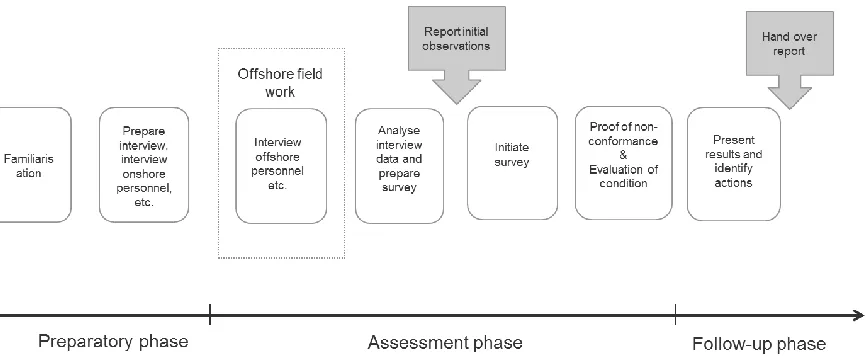
[image:7.612.79.512.168.349.2]The preparatory phase starts 4 weeks before the installation visit and comprises the following activities: establishment of the auditing team, definition and clarification of the scope of work, preparation of interviews, and information gathering.
Figure 1. The auditing of psychosocial risk process (offshore version)
Establishment of the auditing team: The auditing team consists of two people with knowledge and experience within auditing and the psychosocial work environment. The audit team does not have any affiliation to the audit unit’s management line.
Definition and clarification of the scope of work: Identification of which groups should be part of the scope. Work practices, governing documents, operating models specific to the offshore setting are reviewed. The auditing team meets and reviews all the data collected in the preparatory phase in order to get familiar with the installation, the organization and their performance based on available data.
Preparation of interviews and information gathering: The team then plans and prepares for interviews by finalizing interview guides, making appointments, and booking travel and accommodation.
It is essential that the assessment phase is conducted in a time-efficient manner in order to minimize the time required for completion of the assessments without minimizing quality.
communication and leadership, etc., Leka & Jain, 2010). Examples of questions asked in the interview are: Tell me about your working day; Tell me about the way management communicates with employees; How is unacceptable behavior addressed in your unit?; Please describe your workload; How are your role and responsibilities described and communicated?; How are deviations from roles and responsibilities addressed?; Who do you receive support from?; How do you address lack of support?
Analyzing interview data and sending out the survey: In this phase the information collected in the preparatory phase, and the results from the interviews are analysed. Furthermore, a survey is designed and distributed to all employees in scope. The survey provides quantifiable data on the antecedents and consequences of work stress. It contains both tailored measures of work design (on the basis of the preparatory phase and analysis of the interview data) and standard measures of well-being.
Analyzing the survey data and evaluating criticality and conditions: The findings from the survey form the basis of the evaluation of the compliance or non-conformance to the performance standards. Based on demographic variables sub-groups are identified.
Presenting results and identifying actions: Results are then presented to the audited unit. A plan of action for addressing the identified risks is then developed.
Establishing performance standards (PS)
To prioritize the psychosocial work environment and promote good practice across the company, it was decided to develop and establish performance standards applicable to the psychosocial work environment, linked to internal requirements.
The performance standards (PS) were chosen based on research on the relationship between the psychosocial work environment, stress and health (Leka & Jain, 2010). Several international frameworks were considered in order to find appropriate PS. Instruments evaluated: the HSE Management Standards for work-related stress in the UK; The ILO SOLVE tool; The ILO Stress Checkpoints; and BSI PAS1010. The HSE Management Standards provided a description of achievable conditions that formed the basis for the PS that were established. An overview of the PS is shown in Table 1.
Table 1. Performance standards for the psychosocial work environment
Standard – Psychosocial work environment
PS.01. Job demands
Employees are provided with achievable and adequate demands, matching the agreed hours of work
Abilities and skills are matched to employees’ job demands
Communication of work expectations is comprehensible and complete
Concerns about the working environment are addressed
PS.02. Role and responsibility
The different requirements placed upon employees, are as far as possible, compatible
Employees are provided with information that support the understanding of their role and responsibilities
The requirements that are placed upon the employees are, as far as possible, clear
Systems are in place to enable employees to raise concerns about any uncertainties or conflicts they have in their role and responsibilities
PS.03.Job control
Where possible, employees are in control over their pace of work
Employees are encouraged to utilize their skills and initiative in order to perform their tasks
Employees are encouraged to develop their skills
Employees are consulted with regards to their work tasks
Work practices enable employees to prioritize tasks
PS.04.Social support
Policies and procedures are in place to support employees adequately
Managers are enabled and encouraged to support their staff
Employees are enabled and encouraged to support their colleagues
Employees are aware of what support is available and how and when to access it
Employees receive regular and constructive feedback
Managers talk to their staff, listen to them and make it clear that they have been heard
Commitments made to staff are clear and kept
PS.05. Interpersonal relationships
Positive behaviors at work are promoted to avoid conflict and ensure fairness
Employees share information relevant to their work
Policies and procedures to prevent or resolve unacceptable behavior are known and complied to
Managers are encouraged to deal with unacceptable behavior
PS.06. Changes
Employees are provided with timely information to enable them understand the reasons for proposed changes
Adequate employee consultation (with regards to their own working environment) on changes is ensured and opportunities for employees to influence proposals are provided
Employees are aware of the probable impact of any changes to their jobs. If necessary, employees are given training to support any changes in their jobs
Employees have access to relevant support during changes
PS.07. Travel
Employees have predictable travel pattern
Employees are able to rest after travel across time-zones
Work does not affect the employees’ home situation in a negative manner
Establishing the psychosocial work environment verification criteria
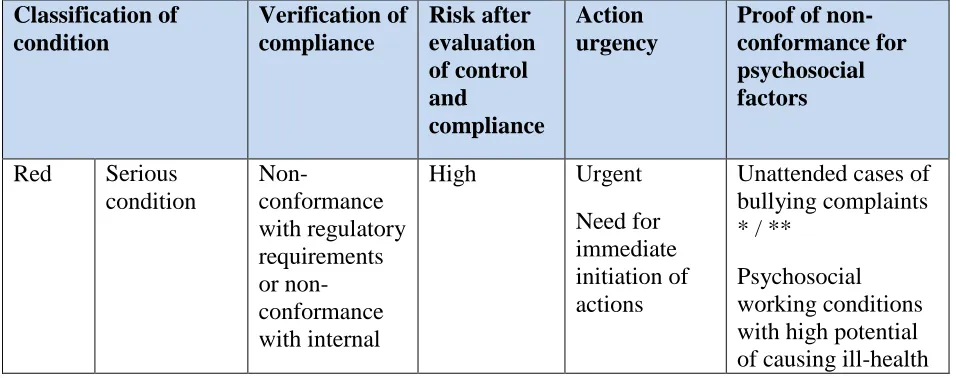
[image:10.612.71.549.524.713.2]In order to classify and report findings, the next step was to establish psychosocial work environment criteria; conditions and criticality. The findings from the audit of the psychosocial work environment are the result of the evaluation of a monitoring object which indicates either compliance or non-conformance with specified criteria. The criticality of a finding is related to the potential effect of the monitored object (ISO 9000). The findings are classified into different categories: red, yellow, green and white. Table 2 lists the adopted psychosocial work environment verification criteria.
Table 2: Audit criteria, condition and criticality used to classify and report findings
Classification of condition Verification of compliance Risk after evaluation of control and compliance Action urgency
Proof of non-conformance for psychosocial factors
Red Serious condition Non-conformance with regulatory requirements or non-conformance with internal
High Urgent
Need for immediate initiation of actions
Unattended cases of bullying complaints * / **
governing documents Higher level management to be informed (Likelihood ratio >1) *** AND
More than 50 % of the workforce report Psychosocial
working conditions as poor or
inadequate **** Yellow Minor
condition or room for improvement Non-conformance with regulatory requirements or non-conformance with internal governing documents
Medium Medium
Actions to be taken as soon as possible
Unattended conflicts*/**
Psychosocial working conditions with high potential of causing ill-health (Likelihood ratio >1) ***
OR
More than 50 % of the workforce report Psychosocial
working conditions as poor or
inadequate **** Green Accordance No
non-conformance has been identified or only minor aspects that are recommended to be improved
Low Low
Actions not required to be registered in internal audit management system
Between 50 and 25% of the workforce report psychosocial working conditions as poor or
inadequate ****
White Accordance In accordance with relevant rules and regulations
Low None Working conditions
meet the
requirements and standards ****
Observations/annotations: A condition that is not directly related to the performance standards, but is still important to highlight in order to attend to the health and safety of employees.
high level of health complaints** /****
GWB above 18 is cause of concern * index in questionnaire
** from interviews/information provided in the process
*** risk analysis of questionnaire data in SPSS
**** questionnaire – frequencies of exposure
Use of tools to check compliance with performance standards
In order to check compliance with the established performance standards it was decided to use both qualitative (semi-structured interviews) and quantitative assessment tools (tailor made working environment questionnaire; the General Well-being Questionnaire (GWBQ); and a health symptoms profile). The use of these tools is described by Cox, Griffiths and Randall (2003).
1. Semi-structured interviews are used in order to obtain data related to the psychosocial work environment in the audited unit.
If interviewees report critical conditions, this is reported immediately to their line management. An example may be reported bullying cases: bullying is considered a serious breach of internal and external requirements. Furthermore, it is considered a serious threat to health. As such, any unattended cases of bullying are considered a critical condition (ref. Table 2 red condition).
2. The questionnaire is used to obtain proof of compliance or non-conformance with the performance standards. It includes the following:
a. Demographics: Demographics are used to identify groups at risk and in order to collect valuable information about exposure to psychosocial risks.
b. Psychosocial work environment items: This section of the survey is tailor made on the basis of the data collected through the interview stage described earlier. For the audited unit, a questionnaire measure of exposure to potential psychosocial hazards (possible sources of stress) is developed. This questionnaire measures employees’ own experience/perception of the psychosocial working environment. The questionnaire items are designed to cover all potential psychosocial hazards identified during familiarization and interviews as concisely as possible. Employees evaluate the adequacy of each aspect of their work by ticking a box on a 5-point likert scale.
o Feeling worn out is measured through the General Well-being Questionnaire (GWBQ) (Cox & Gotts, 1987) which is a validated questionnaire that is used in the company in order to assess important symptoms of work-related stress. The use of this instrument is particularly useful to assist with separation of cause and effect relationships in stress pathways. Cut-off scores have been established for the GWBQ and these validated scores are used as a point of reference for the purpose of deciding criticality and condition (Cox & Gotts, 1987; Cox, Thirlaway, Gotts & Cox, 1983). An average score is produced for the whole group of employees. Average scores of 18 and upwards indicate that a group is more worn out than the average. Average scores higher than 20-21 indicate a relatively high level of worn out symptoms. Cut-off scores for professional and factory workers have also been produced (Professionals: 15.87 and Factory workers: 14.16).
The GWBQ scores are used in determining which psychosocial hazards are more likely to cause ill-health. This is calculated by performing a Likelihood Ratio/Odds Ratio analysis between GWBQ scores and working environment items. Furthermore, the frequency of reporting a poor working environment is part of determining the criticality of condition. The same validated assessment process/procedure is described in detail by Cox et al. (2002).
o The level of consensus or agreement on the presence of a stressor, e.g. the proportion of staff reporting an aspect of their work to be inadequate, is used to achieve this. A starting point would be to consider those stress-related hazards that are agreed by the majority of employees (>50%) as being problematic. Similarly, the aspects of work reported as satisfactory or good by >75% of employees are presented as positive features to maintain or strengthen.
o Work stress may also lead to tension in the muscles – thus increasing ‘wear and tear’ on the working muscles. It may also be linked to impairments in the body's ability to repair its muscles and joints after exertion (Leka & Jain, 2010). As such, items on (occurrence and frequency of) musculoskeletal pain (headache, neck pain, shoulder pain, back pain) are included in the survey as a measure of possible consequences of work stress.
The process of evaluating the results and reaching conclusion with regards to the PS is shown in Figure 1.
The final aspect that needed consideration was how to report the findings in the internal IT tool audit management system. This tool is used for the planning, administration and follow-up of all internal monitoring and external supervision in the company. As such, this system needed adaptations in order to be used for the planning and follow-up of the verification of psychosocial risks. This represents minor changes into the existing system, where the performance standards for the psychosocial work environment need to be implemented. P
Results
Interviews
In the particular pilot, a total of 21 employees were interviewed. The interviews did not reveal findings that needed immediate actions from line management. Examples of aspects that were highlighted by interviewees were: lack of unified communication from the management team; workload issues e.g. support when experiencing excessive work pressure; work practices and organization e.g. unrealistic time estimates and prioritization of work; and good relationships between colleages.
As described in the method section, the data from the interviews was used as input to the design of the survey and contributed to the analysis of the survey.
Survey
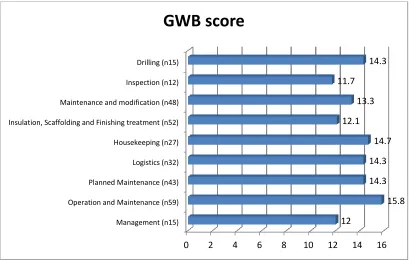
The survey was distributed to 446 employees and 303 returned a complete survey. Figure 2 shows the breakdown of the survey respondents from each sub-group at the platform. Results also showed that 20% of employees reported an intention to leave. Compared to other units in the company, this is within the expected result.
Figure 2. Survey respondents: Sub-groups at the platform, number of employees (n) and GWB score
0 2 4 6 8 10 12 14 16
Management (n15) Operation and Maintenance (n59) Planned Maintenance (n43) Logistics (n32) Housekeeping (n27) Insulation, Scaffolding and Finishing treatment (n52) Maintenance and modification (n48) Inspection (n12) Drilling (n15)
12
15.8 14.3 14.3 14.7 12.1
13.3 11.7
14.3
[image:14.612.72.482.375.635.2]Work-related health
The GWB score for the total sample was 13.8. The score for the sub-groups varied from 11.7 to 15.8. None of the sub-groups scored higher than 18 and compared to the norms, this does not pose a cause of concern (see Figure 2).
[image:15.612.75.357.224.394.2]Figure 3 shows that the reported musculoskeletal pain from the survey group is below 50%. This is considered to be within acceptable level compared to other units in the company. The sub-groups were also checked and no risk groups were identified.
Figure 3: Musculoskeletal pain reported in the past year
Psychosocial work environment analysis
[image:15.612.73.541.605.722.2]The percentage of workers reporting poor working conditions was identified. The level of consensus or agreement on the presence of a stressor (e.g. the proportion of staff reporting an aspect of their work to be inadequate) did not exceed 50% on any of the items. The analysis of the combined data from the GWB scale and the identification of potential sources of work stress (psychosocial work environment items) aimed to identify likely risks. Likelihood ratio analysis was used to establish these associations (Wang, Eddy & Fitzhugh, 1995). 19 items with higher Likelihood ratio (>1) were identified. Likelihood ratios and the percentage of workers reporting poor psychosocial working conditions are listed in Table 3.
Table 3. Odds ratios of psychosocial work environment factors and GWB and percentage of workers reporting poor psychosocial work conditions.
Psychosocial work environment items Likelihood ratio
% of workers reporting poor psychosocial working conditions 1 The balance between planned maintenance and urgent
task
7 11
3 The possibility to work in pairs when performing your job
11 12
4 The balance between administration and field work 13 14 5 The quality of the training provided to new employees 14 11 6 The correspondence between time estimates and the
actual time spent on completing tasks
14 21
7 The resolution of conflict situations on-site 15 11 8 Co-ordination of your leaders in the communication of
established practice
15 22
9 Clear communication of prioritization of job tasks 18 12
10 The practical value of HSE meetings 18 13
11 The possibility to ask for assistance or relief when workload is too high
18 16
12 The practical value of addressing issues with management on-site
21 11
13 Your competence level related to the use of computers at work
21 12
14 The possibility to have work tasks adjusted to your individual health situation
21 13
15 The clarity of the leading advisor’s role and responsibilities
22 13
16 Your possibility to work at one task at a time 23 23 17 The utilization of your competence on the platform 28 12 18 The availability of information related to your work
tasks
44 10
19 Your possibility to ask other colleagues for help - 2 20 The possibility to raise concerns with your colleagues - 2
21 The social environment at the platform - 5
22 The possibility to receive support from your line manager
- 6
23 Your possibility to learn from other’s experience - 4 24 Your possibility to share experience with others - 4
Findings and classifications
The results from the pilot group were classified according to the evaluation criteria ad as a result, four were evaluated as yellow (medium risk) and two were evaluated as white (low risk).
The following is an example to demonstrate how the audit team used input from interviews and the survey to conclude on non-conformance to the performance standards. The process of evaluating the results and reaching a conclusion with regards to the PS is shown in Figure 2.
and abilities being matched to the job requirements; and comprehensive communication of work expectations.
In the interviews employees described a work situation with varied intensity with regards to workload and work pace. The interviewees described how job demand issues were related to the unit’s plans for executing and organizing work tasks. It included the management and organization of work on a day to day basis at the platform as well as the coordination between offshore and onshore staff. Examples that were provided from the interviewees were the effect of having an imbalance between planned maintenance and urgent tasks. Furthermore, employees reported that the demands for using computers in order to solve tasks in their daily work had increased over the last years. The employees that described this as a problem reported that periods with high workload and pace also affected their sleep pattern and ability to concentrate at work.
The observations/results from the interview were further strengthened through the findings in the survey. The items are identified as psychosocial working conditions related to job demands with high potential of causing ill-health, e.g. Likelihood ratio >1. The survey showed that employees experience an imbalance between administrative tasks and work performed in the field and time estimates do not always correspond to actual time spent on tasks. Furthermore, results showed that it is difficult to adjust work tasks to individuals’ health situation. Nine items related to job demand issues showed a higher likelihood ratio (see Table 3), items 1, 2, 4, 6, 11, 13 and 16.
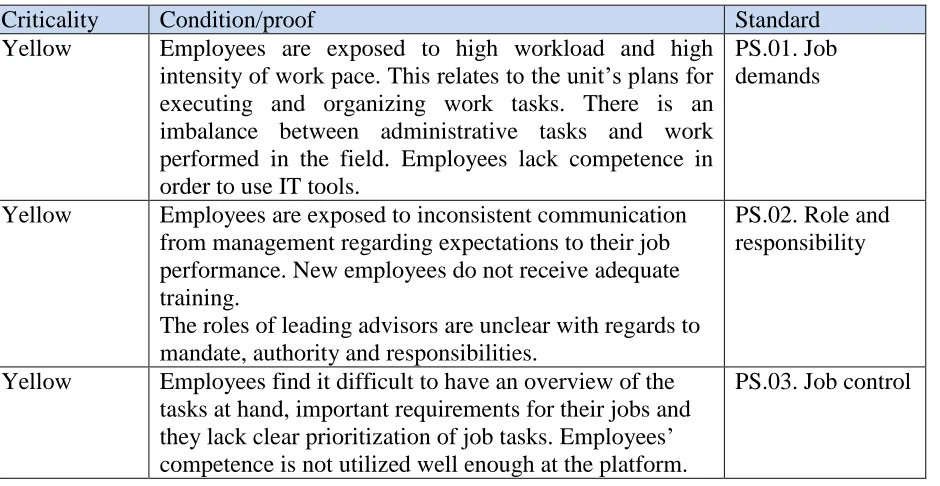
[image:17.612.77.547.453.696.2]The same process was used for evaluating all performance standards. Table 4 summarizes conformance and non-conformance to the performance standards.
Table 4. Pilot results: Criticality, standard and evaluation of condition/proof
Criticality Condition/proof Standard
Yellow Employees are exposed to high workload and high intensity of work pace. This relates to the unit’s plans for executing and organizing work tasks. There is an imbalance between administrative tasks and work performed in the field. Employees lack competence in order to use IT tools.
PS.01. Job demands
Yellow Employees are exposed to inconsistent communication from management regarding expectations to their job performance. New employees do not receive adequate training.
The roles of leading advisors are unclear with regards to mandate, authority and responsibilities.
PS.02. Role and responsibility
Yellow Employees find it difficult to have an overview of the tasks at hand, important requirements for their jobs and they lack clear prioritization of job tasks. Employees’ competence is not utilized well enough at the platform.
Yellow The practical value of addressing work related problems with local management on-site is poor.
Conflict situations are not always followed-up and handled on-site.
PS.05. Interpersonal relationships
White The social environment is very good. All employees receive good support from each other; also across disciplines. The employees share information across the shifts in predefined meetings and protocols.
PS.04. Social support
White Employees have been invited to share experience and evaluate change initiatives.
PS.06. Change
Non-applicable
No issues (positive or negative) regarding work-life balance were identified in the assessments.
PS.07. Travel
Discussion
The described internal auditing tool aims to secure high attention on the management of psychosocial risk in the company as part of the company’s monitoring plan. Developing auditing tools that address psychosocial issues in addition to other aspects of the work environment may further contribute to a more holistic occupational health and safety management perspective (Hasle & Zwetsloot, 2011; Hohnen & Hasle, 2011; HSE, 2007; Leka et al., 2011; WHO, 2010).
Evaluation of the auditing of psychosocial work environment as an audit tool
The auditing tool for psychosocial risk is a tool that confirms compliance to requirements in the management system. The auditing checks whether psychosocial barriers are in place and functioning. The quality of the auditing method can be evaluated according to a standard and generic list of requirements for measuring instruments in science (Hale, 2009).
Validity (does it measure what we want it to measure?)
It is important that the auditing tool for psychosocial work environment tool is able to assess whether the unit being audited is organized in a way that prevents employees from being exposed to psychosocial hazards with risks to health and safety.
By following this logic, the auditor can go beyond checking whether the organization has systems in place to manage the psychosocial work environment but verify whether the systems work as intended. This is important because experience over the years has shown that having a system for occupational health and safety risk does not necessarily provide better health and safety to workers (Blewett & O’Keeffe, 2011; Hasle & Zwetsloot, 2011; Robson et al., 2007).
Reliability (does it give the same measurement when used by different people or on different occasions?) and sensitivity (does it respond to changes in what it is measuring?)
The design and management of work, and the nature of working conditions, differs between jobs, workplaces and organizations. Different groups have different problems that manifest themselves in different ways. The auditing tool for the psychosocial work environment allows for these differences by applying tools which are designed in a way that capture specific contextual situation. As such, some of the tools used as part of the audit tool for the psychosocial work environment are flexible and tailored to meet the needs of the group of staff involved, e.g. tailored items in survey based on interviews. However, other tools are standardized and pre-defined. All units being audited will be subjected to interviews and data collection through surveys. Furthermore, the performance standards, condition and criteria are pre-defined and there are a set of pre-qualifications for auditors with auditing training and experience, knowledge of psychosocial work environment, and practical skills in how to assess the psychosocial work environment by using various tools and methods. This ensures that the measurements are applied in a similar way by different people or on different occasions. In order to ensure independence to the assessment and evaluations, the audit team does not have any affiliation to the audit unit’s management line.
Representativeness (does it cover all aspects which are relevant?)
When developing the auditing tool for psychosocial work environment tool it was extremely important to work within a number of well-defined guiding principles based on research. Firstly, the performance standards are based on well-established knowledge on how various psychosocial hazards effect health. Exposure to psychosocial hazards can result in the experience of work-related stress with negative impacts that can be psychological, cognitive, social, and physiological and can potentially affect both health and safety in any business context (Griffin & Clarke, 2011; WHO, 2010). An extensive number of articles have been published on stress and its relationship with psychological and physiological outcomes. In the oil and gasindustry psychosocial risks can cause ill-health for individuals or groups due to long time exposure to poor working conditions (Cox et al., 2000a; Maslach et al., 2001; Mearns, 2001; Schaufeli & Enzmann, 1998; WHO, 2010).
Furthermore, the auditing tools used are founded on acknowledged approaches for identifying, assessing and obtaining proofs, including the use of standardized tools developed specifically for psychosocial risk assessments (Cox, Griffiths & Randall, 2003; Leka, Cox & Zwetsloot, 2008).
Openness to bias (can it be manipulated?)
and combination of several research methodologies in the study of the same phenomenon (Bogdan & Biklen, 2006). The idea is that one can be more confident with a result if different methods lead to the same result.
In the article by Blewett and O’Keeffe (2011), it is argued that audit methodology needs to take into account the multiplicity of views available within an organization in order to triangulate the audit data and reach an adequate picture of the situation. In line with the authors’ recommendations, the auditing tool for the psychosocial work environment seeks out to assess the views of employees at relevant levels in the organization. For example, the auditor talks independently to management and employees. However, in order to avoid being manipulated by the views of a selected few interview respondents, the auditing tool uses a range of different methods and data to assess and grade the status of the performance standards, including document reviews, analyses of existing HSE data, interviews, field observations and questionnaire. This makes the tool results robust against manipulation.
Cost-effectiveness (does it cost more to collect the data than would be lost without the information from the auditing to assist decisions?)
One argument against methods like the auditing tool for the psychosocial work environment is that it is time consuming and demands resources. Performing the assessments including interviews and designing working environment questions takes more time than utilizing simple checklists.
However, there are several reasons why it may be beneficial for the business to use multi-method auditing tools like the current one to support decisions. Psychosocial issues are complex and not straight forward and management may risk missing critical information/details when making decisions related to the management of the psychosocial work environment. Work-related stress is expensive for companies (EU-OSHA, 2014). Tackling stress and psychosocial risks by conducting audits can be viewed as too costly, but the reality is that it costs more to ignore them. Stress affects performance and may lead to absence from work and if prolonged it may result in serious health problems. The European Agency for Safety and Health at Work has recently published a report summarizing studies focused on calculating costs of work-related stress and psychosocial risks. Organizations are affected by costs related to absenteeism, presenteeism, reduced productivity or high staff turnover. In addition, health care costs and poorer business outcomes ultimately affect national economies and society (Hassard et al., 2014).
This audit tool is highly relevant for the prevention of ill-health and can provide essential information to assist management decisions with regards to improvements. Of course, the efforts and resources allocated to the follow-up of audit findings are targeted at the most critical issues.
Limitations, further research and application of the auditing tool
There are several authors that have addressed drawbacks or limitations of auditing, e.g. in Michael Power’s ‘The audit society’ (1997) it is argued that if everything is measured and audited, only things that are easily measured and audited are regarded as important. Many intangible aspects of life and work are difficult to audit, and may be further neglected if auditing becomes the normal practice (Hohnen & Hasle, 2011; Power, 1997). With regards to the psychosocial work environment, organizations can perform audits in order to check compliance with risk management principles. However, just because an organization can document that they follow a recognized OHSM standard, like OHSAS18001 (to be replaced by ISO 45001), it does not mean that the assessments and follow-up of psychosocial risk have a “real” impact on reducing ill-health among employees. The pilot has gone one step further than other auditing tools and used the evaluation of employee well-being and its relationship to the working environment as a basis for considering how well the management and systems in place function. This was done by establishing performance standards and incorporating pre-existing tools and principles into the audit process, which allowed for the consideration of working environment conditions and their criticality.
One could argue that this auditing tool mainly focuses on the negative deviation from the performance standards. However, the auditing tool also identified positive findings in the audit process. This is demonstrated through the identification of conditions that are in accordance (“white criticality”) with the psychosocial performance standards.
It is important to highlight that the pilot only represents one audit process of a single installation. The auditing tool is as such adapted to the internal auditing system of this particular company. Even though the audits cannot be used directly by other companies within the industry, it is important to highlight that the overall approach should be of valuable knowledge to other organizations and the industry as a whole.
Further studies should focus on extended testing of the tools applied in this pilot. The survey should clearly reflect the established psychosocial performance standards. The effects on the organization should be evaluated in order to determine if an auditing tool represents a meaningful addition to the auditing process in general and to the management of psychosocial risk.
The management team at the installation found the results from the assessment meaningful and has since used the results as part of their improvement agenda. Due to the need for improved efficiency and cost-cuts in the industry the company will not apply the piloted auditing tool on a periodic cycle and as a stand alone process. However, the company will conduct risk based auditing processes related to health and the working environment where psychosocial issues are integrated in the auditing scope. As such, experiences, learning points and single tools from the pilot will be important input to future audits.
Conclusion
References
Allegrini, M., D'Onza, G., Paape, L., Melville, R., Sarens, G., 2006. The European literature review on internal auditing. Managerial Auditing Journal. Volume 21, Issue 8, pp. 845 – 853.
Bergh, L.I.V., Hinna, S., Leka, S., Jain, A., 2014. Developing a performance indicator for psychosocial risk in the oil and gas industry. Safety Science. DOI: 10.1016/j.ssci.2013.08.005.
Bergh, L.I.V., Ringstad, A.J., Leka, S., Zwetsloot, G.I.J.M., 2013 (In press). Psychosocial risks and hydrocarbon leaks: an exploration of their relationship in the Norwegian oil and gas industry. Journal of Cleaner Production. Available online 12 October 2013.
Blewett, V., O’Keeffe, V., 2011. Weighing the pig never made it heavier: auditing OHS, social auditing as verification of process in Australia. Safety Science 49, 1014–1021.
Bogdan, R. C., Biklen, S. K., 2006. Qualitative research in education: An introduction to theory and methods. Allyn & Bacon. ISBN 978-0-205-51225-6.
British Standards Institution (BSI), 2011. Guidance on the Management of Psychosocial Risks in the Workplace: PAS1010. British Standards Institution, London.
Cox, T., Griffiths, A., 1995. The nature and measurement of work stress: theory and practice. In J. Wilson and N.Corlett (eds) The Evaluation of Human Work: A Practical Ergonomics Methodology. London: Tylor & Francis.
Cox, T., Randall, R., Griffiths, A., 2002. Interventions to Control Stress at Work in a Hospital Staff. Sudbury: HSE Books.
Cox, T., Gotts, G., 1987. General Wellbeing Questionnaire (GWBQ) Manual. Nottingham, UK, University of Nottingham.
Cox, T., Griffiths, A., Randall, R., 2003. A Risk Management Approach to the Prevention of Work Stress. Handbook of Work & Health Psychology. 2nd Ed. J.Schabracq, J.A.M. Winnubst & C..L.Cooper (Eds.) Wiley & Sons.
Cox, T., Griffiths, A., Rial-Gonzalez, E., 2000a. Research on Work Related Stress. Office for Official Publications of the European Communities, Luxembourg
Cox, T., Griffiths, A.J., Barlow, C.A., Randall, R.J., Thomson, L.E., Rial-Gonzalez, E., 2000. Organisational Interventions for Work Stress. HSE Books, Sudbury.
EU-OSHA, 2002. The use of Occupational Health and Safety Management Systems in the Member States of the European Union. EU OSHA, Bilbao.
EU-OSHA, 2010. Mainstreaming OSH into business management, EU OSHA, Bilbao
EU-OSHA, 2014. Calculating the cost of work-related stress and psychosocial risks. European Risk Observatory Literature Review. More information on the European Union is available on the Internet (http://europa.eu). ISBN: 978-92-9240-420-8
Evans, A., Parker, J., 2008. Beyond Safety Management Systems, AeroSafety World, May p12-17 http://www.flightsafety.org/asw/may08/asw_may08_p12-p12-17.pdf
Griffin, M.A., Clarke, S., 2011. Stress and well-being at work. In: Zedeck, S. (Ed.), APA Handbook of Industrial and Organizational Psychology: Maintaining, Expanding and Contracting the Organization, vol. 3. APA, Washington, DC, pp. 359e397.
Hassard, J., Teoh, K., Cox, T., Dewe, P., Cosmar, M., Grundler, R., Flemming, D., Cosemans, B., Van den Broek, K., 2014. Calculating the costs of work-related stress and psychosocial risks – A literature review European Agency for Safety and Health at Work. Luxembourg: Publications Office of the European Union ISBN: 978-92-9240-420-8
Hale, A., 2009. Why safety performance indicators? Safety Science, Volume 47, Issue 4, pp. 479-480.
Hasle P., Zwetsloot, G.I.J.M., 2011. Occupational Health and Safety Management Systems: issues and challenges, Editorial for the special issue on Occupational Health and Safety Management Systems, Safety Science, 49, 7 pp. 961-963.
Hass, S., Abdolmohammadi, M. J., Burnaby, P., 2006. The Americas literature review on internal auditing. Managerial Auditing Journal. Volume 21, Issue 8. pp. 835 – 844.
Health and Safety Executive (HSE). Management Standards. http://www.hse.gov.uk/stress/standards/ (Visited 13.02.15)
Hohnen, P., Hasle, P., 2011. Making work environment auditable – a ‘critical case’ study of certified occupational health and safety management systems in Denmark. Safety Science, Vol.49, Issue 7, pp.1022-1029.
International Labour Organization (ILO). Stress prevention at work checkpoints.
http://ilo.org/safework/info/instr/WCMS_177108/lang--en/index.htm (Visited 13.02.15)
ISO 9000 – Quality Management
Leka, S., Cox, T., 2008. Guidance on the European Framework for Psychosocial Risk Management. Protecting Workers’ Health Series No. 9. Geneva: World Health Organization.
Leka, S., Cox, T., Zwetsloot, G., 2008. The European framework for psychosocial risk management (PRIMA-EF). In: Leka, S., Cox, T. (Eds.), The European Framework for Psychosocial Risk Management: PRIMA-EF. IWHO publications, Nottingham, pp. 1–16.
Leka, S. Jain, A., 2010. Health Impact of Psychosocial Hazards at Work: An Overview. World Health Organization, Geneva.
Leka, S., Jain, A., Widerszal-Bazyl, M., Zolnierczyk-Zreda, D., Zwetsloot, G., 2011. Developing a standard for psychosocial risk management: PAS 1010. Safety Science. Volume 49, 7 pp. 1047-1057.
Maslach, C., Schaufali, W.B., Leiter, M.P., 2001. Job burnout. Ann. Rev. Psychol. 52, 397- 422.
Mearns, K., 2001. Human and organizational factors in the offshore safety. Work Stress 15 (2), 144-160.
Mental Health Commission of Canada, 2013. Psychological health and safety in the workplace- Prevention, promotion, and guidance to staged implementation. CAN/CSA-Z1003-13/BNQ 9700-803/2013. National Standard of Canada.
OHSAS 18001 - Occupational Health and Safety Assessment Standard
Power, M., 1997. The audit society: Rituals of verifications. Oxford University Press, Oxford.
Reding, K.F., Sobel, P.J., Anderson, U.L., Head, J., Ramamoorti, S., Salamasick, M., 2007. Internal auditing: Assurence & Consulting Services. The IIA Research Foundation. ISBN 978-0-89413-610-8
Robson, L., Clarke, J., Cullen, K., Bielecky, A., Severin, C., Bigelow, P. et al., 2007. The Effectiveness of Occupational Health and Safety Management Systems: A Systematic Review. Safety Science, 45, 329-353.
Rick, J., Briner, R.B., Daniels, K., Perryman, S., Guppy, A., 2001. A Critical Review of Psychosocial Hazard Measures. Health and Safety Executive Books, Sudbury.
Schaufeli,W.B., Enzmann, D., 1998. The Burnout Companion to Study and Practice: a Critical Analysis. Taylor & Francis, London.
Sobel, P. J., 2011. Auditor’s Risk Management Guide: Integrating Auditing and ERM. CCH a Wolters Kluwer business.
Wang, M., Eddy, J.M., Fitzhugh, E.C. 1995. Application of odds ratio and logistic models in epidemiology and health research. Health Values, 19, 59-62.
World Health Organization, 2010. Healthy Workplace Framework and Model: Background and Supporting Literature and Practices. World Health Organization, Geneva.