Basic values of M-mode echocardiographic parameters
of the left ventricle in outbreed Wistar rats
P. Scheer
1,3, V. Sverakova
1, J. Doubek
1, K. Janeckova
1, I. Uhrikova
1,
P. Svoboda
21University of Veterinary and Pharmaceutical Sciences Brno, Czech Republic 2Trauma Hospital, Brno, Czech Republic
3International Clinical Research Center, St. Anne’s University Hospital, Brno, Czech Republic
ABSTRACT: This paper describes the partial results of an echocardiographic study in sixty outbreed Wistar rats. Animals of parity sex ratio were chosen for the experiment. The animals were grown up during the observation period (the minimum weight was 220 g; the maximum weight was 909 g) and were then sequentially anaesthetised (2–2.5% of isoflurane, 3 l/min O2). The second, fourth and fifth examinations were performed under anaesthesia maintained by intramuscular injections with diazepam (2 mg/kg), xylazine (5 mg/kg) and ketamine (35 mg/kg). Transthoracal examination was done using the SonoSite Titan echo system (SonoSite Ltd.) with a microconvex transducer C11 (8–5 MHz). M-mode (according to the leading-edge method of American Society of Echocardiog-raphy) echocardiography data were acquired at the papillary muscle: systolic and diastolic interventricular septum (IVSs, d) and left vetricular posterior wall (LVPWs, d) thickness, systolic and diastolic left ventricular dimension (LVDs, d), aorta (Ao) and left atrium (LA) dimensions. According to standard formulas, the following parameters were obtained: ejection fraction (EF), cardiac output (CO), stroke volume (SV), left ventricle end systolic volume (LVESV), left ventricle end diastolic volume (LVEDV), interventricular septum fractional thickening (IVSFT), left ventricular dimension fraction shortening (LVDFS), and left ventricle posterior wall fraction thickening (LVPWFS). In our study we performed 300 examinations both in male and female Wistar rats of various body weights and calculated regression equations to predict expected normal echocardiographic parameters for rats with arbitrary weights. The rats were examined by an echo scan. The first and third examinations were performed during mono-anaesthesia induced by inhalation of isoflurane. Correlations, with one exception (LVDs), were very close, which means that the results of the calculations based on regression equations are very reliable.
Keywords: rat; echocardiography; M-mode; Wistar; isoflurane; diazepam; xylazine; ketamine List of abbreviations
ACS = aortic cusp separation, Ao = aortic root diameter, BSA = body surface area, CFD = colour flow Doppler, CO = cardiac output, CPD = colour power doppler, CW = continuous wave doppler, EF = ejection fraction, EPSS = E point to septal separation, IVSFT = inter ventricular septum fractional thickening, IVSs, d = systolic and diastolic interven-tricular septum, LA = left atrium dimensions, LVDFS = left veninterven-tricular dimension fraction shortening, LVDs, d = sys-tolic and diasLVDs, d = sys-tolic left ventricular dimension, LVEDV = left ventricle end diasLVDs, d = sys-tolic volume, LVESV = left ventricle end systolic volume, LVET = left ventricle ejection time, LVPWFS = left ventricle posterior wall fraction thickening, LVPWs, d = left vetricular posterior wall thickness, PW = pulse wave doppler, QRS = complex QRS, RPLA = right parasternal long axis view, RPSA = right parasternal short axis view, SV = stroke volume
Supported by the Czech Science Foundation (Grant No. 305/08/P297) and by the FNUSA-ICRC Project of the European Regional Development Fund (No. CZ.1.05/1.1.00/02.0123).
The recent technological advancements in the ultrasound technique allow thorough echocar-diographic examination even in small laboratory
for the most common anaesthetic combinations are still missing. Up until now obtained standards are derived from examinations of just one weight cat-egory, single gender groups, and are focused only on a small spectrum of parameters, important for the aim of the published work (Hagar et al., 1995; Longobardi et al., 2000; Prunier et al., 2002; Watson et al., 2004; Popovic et al., 2007; Koskenvuo et al., 2010).
The goal of this study is to highlight the suit-ability of echocardiographic examination for rou-tine experimental practice in rats performed on a common commercial device. The main aim is to describe basic echocardiographic parameters of the left ventricle over the widest possible weight spectrum of individuals using two types of common anaesthetic protocols in Wistar rats.
MATERIAL AND METHODS
All the animal studies reported in this article were approved by the Institutional animal care and use committee and were in compliance with valid Czech law and international conventions.
Sixty outbreed Wistar rats (An Lab Prague) of parity sex ratio were chosen for the experiment. The rats were bought in a range of body weights from 150 to180 g and acclimation lasted from two to three weeks. The first and the third examination were performed under mono-anaesthesia inhalation with isoflurane. The second, the fourth and the fifth examination were performed under general anaes-thesia maintained by intramuscular injections with the anaesthetic agents, diazepam, xylazine and keta-mine. The minimal interval between examinations was one week, while the maximum was six weeks.
Inhalation anaesthesia
Anaesthesia was maintained by mask inhala-tion of isoflurane vaporized by Dräger Vapor 19.3 (Drägerwerk A.G.) in an open inhalation system. The flow rate of the driving gas – medicinal oxygen – (Convenia Air, Linde a.s.) was 3 l/min. The ini-tial concentration of isoflurane (Isofluran Nicolas Pikamal, Torres Pharma Chiesi) was 1% in the in-duction phase and was increased according to the effect, usually by up to 2–2.5%. An echo scan was made after reaching the tolerance stadium of an-aesthesia and shaving of the chest.
Injection anaesthesia
Anaesthesia was induced (time 0 min) by intra-muscular injection with 2 mg/kg b.w. diazepam (Apaurin, Krka, 5 mg/ml) into the caudal part of the tight muscles. At the same time 5 mg/kg b.w. xylazine (Xylapan, Vétoquinol Biowet Sp. Z o.o., 20 mg/ml) and 35 mg/kg b.w. ketamine (Narketan, Vétoquinol Biowet Sp. Z o.o., 100 mg/ml) were mixed in the same syringe, and applied into the caudal part of the tight muscles of the other pelvic limb. The complete echo scan started in the twen-tieth minute of the protocol.
Basic echocardiographic examination
volume (LVESV), left ventricle end diastolic volume (LVEDV), interventricular septum fractional thick-ening (IVSFT), left ventricular dimension fraction shortening (LVDFS), left ventricle posterior wall fraction thickening (LVPWFS) (Boon, 2006). Each rat was examined in dorsal recumbency. Initially, examination was performed from the right par-asternal short axis view (RPSA) optimized for the left ventricle and aorta. When all structures were displayed correctly the picture was zoomed in and the M-mode record was acquired. Afterwards, the left ventricle was displayed in RPSA or in right par-asternal long axis views (RPLA) and the M-mode record was then made. Complete echo-scans were always performed within 10 minutes.
Statistical analysis
The basic statistical parameters describing the data selection were evaluated in the data set. The conformity of mean values and variances between the data set of inhalation and injection anaesthe-sia was checked using the F-test and Student’s t-test. Dependency and regression were evaluated for parameters of the left ventricle, left atrium and aortic dimensions, related to the body weight. The statistical programs SPSS PASW statistic 17 (SPSS inc.) and MS Office 2003 Excel (Microsoft corp.) were used for the statistical analysis.
RESULTS
The total number of examinations was 300; 120 were performed under inhalation anaesthesia and 180 were carried out using injection anaesthesia. Only complete data sets were included in statisti-cal analyses. Complete data sets were obtained in
61 cases (statistical success rate of 51%) in the inha-lation anaesthesia group, and in 119 cases (statisti-cal success rate of 66%) in the injection anaesthesia group. Thus, the total success rate was 60% (180 from 300).
Body weight
The average body weight of rats was 0.538 ± 0.170 kg, ranging from 0.220–0.905 kg in the in-jection anaesthesia data set, while in the inhalation anaesthesia group the body weight averaged 0.469 ± 0.166 kg, ranging between 0.232–0.780 kg. There was a significant difference (P < 0.01) among mean values as measured using the Student t-test (Table 1).
Heart rate
The mean heart rate of rats was 312 ± 56 bpm, ranging from 194–462 bpm in the injection anaes-thesia data set, whereas in the inhalation anaesthe-sia data set the mean was 367 ± 43 bpm, ranging from 250–462 bpm and the minimum frequency was 250 bpm. There was a significant difference in variations as determined by the F-test and also in mean values as determined using the t-test (Table 1; F-test P < 0.05; t-test P < 0.01).
Interventricular septum
[image:3.595.62.530.643.737.2]Diastolic dimension (IVSd). The average IVSd thickness was 0.16 ± 0.04 cm, ranging from 0.07– 0.29 cm in the injection anaesthesia data set and 0.15 ± 0.04 cm, ranging from 0.07–0.23 cm in the inhalation anaesthesia data set. There was no sig-nificant difference in both variations as measured
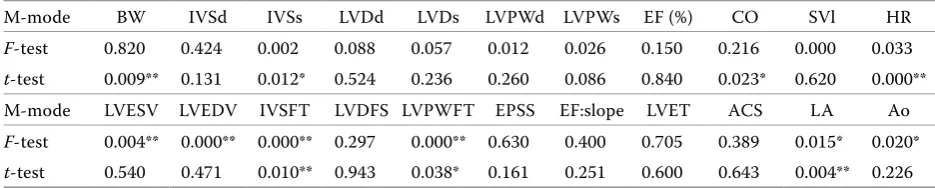
Table 1. Comparison of F-test and Student’s t-test P-values for testing the variance and probability compliance of mean values in inhalation and injection anaesthesia data sets
M-mode BW IVSd IVSs LVDd LVDs LVPWd LVPWs EF (%) CO SVl HR
F-test 0.820 0.424 0.002 0.088 0.057 0.012 0.026 0.150 0.216 0.000 0.033
t-test 0.009** 0.131 0.012* 0.524 0.236 0.260 0.086 0.840 0.023* 0.620 0.000**
M-mode LVESV LVEDV IVSFT LVDFS LVPWFT EPSS EF:slope LVET ACS LA Ao
F-test 0.004** 0.000** 0.000** 0.297 0.000** 0.630 0.400 0.705 0.389 0.015* 0.020*
t-test 0.540 0.471 0.010** 0.943 0.038* 0.161 0.251 0.600 0.643 0.004** 0.226
by the F-test and mean values measured using the t-test (Table 1).
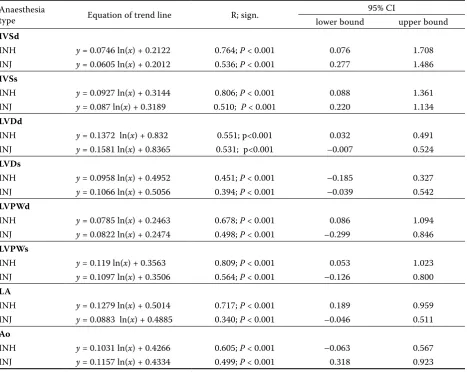
Data regression analysis between IVSd and body weight is optimally described using a logarithmic regression curve, in both the inhalation and injec-tion anaesthesia groups (Table 2; Figures 1, 2).
Systolic dimension (IVSs). The mean IVSs thick-ness was 0.26 ± 0.06 cm, ranging from 0.13–0.49 in the injection anaesthesia data set, whereas in the
inhalation anaesthesia data the mean size was 0.24 ± 0.04 cm, ranging between 0.13–0.31 cm. There was a significant difference in variations as determined by the F-test and also in mean values measured using the t-test (Table 1; F-test P < 0.01; t-test P < 0.05).
Data regression analysis between IVSs and body weight is optimally described using a logarithmic regression curve, in both the inhalation and injec-tion anaesthesia groups (Table 1; Figures 1, 2).
y = 0.0746 ln(x) + 0.2122 P < 0.001 y = 0.0927 ln(x) + 0.3144
P < 0.001
0.00 0.05 0.10 0.15 0.20 0.25 0.30 0.35
0.2 0.3 0.4 0.5 0.6 0.7 0.8
BW (kg)
IV
S
(cm
)
IVS d IVS s
[image:4.595.67.528.82.317.2]Logarhitmic (IVSd) Logarhitmic (IVSs)
Figure 1. The trend of the dependence IVS on body weight in the rat (inhalation anesthesia)
Figure 2. The trend of the dependence IVS on body weight in the rat (injection anesthesia)
y = 0.0605 ln(x) + 0.2012 P < 0.001 y = 0.087 ln(x) + 0.3198
P < 0.001
0.00 0.05 0.10 0.15 0.20 0.25 0.30 0.35 0.40 0.45 0.50
0.2 0.3 0.4 0.5 0.6 0.7 0.8 0.9
BW (kg)
IV
S
(c
m
)
IVS d IVS s
[image:4.595.68.534.476.739.2]Diastolic left ventricular diameter (LVDd)
The mean value of the diastolic left ventricular diam-eter was 0.73 ± 0.11 cm, ranging from 0.46–1.14 cm in the injection anaesthesia data set, and 0.72 ± 0.09 cm, ranging from 0.35–0.86 cm in the inhalation anaes-thesia data. There was no significant difference in both variations as determined by the F-test and in mean values determined using the t-test (Table 1).
Data regression analysis between LVDd and body weight is optimally described using a logarithmic regression curve, in both inhalation and injection anaesthesia data sets (Table 2; Figures 3, 4).
Systolic left ventricular diameter (LVDs)
The mean value of the systolic left ventricular diam-eter was 0.43 ± 0.10 cm, ranging from 0.20–0.72 cm
in the injection anaesthesia data set, and 0.42 ± 0.08, ranging from 0.21–0.61 cm in the inhalation anaes-thesia data set. There was no significant difference in both variations measured using the F-test and in mean values measured by the t-test (Table 1).
Data regression analysis between LVDs and body weight is optimally described using a logarithmic regression curve, in both inhalation and injection anaesthesia groups (Table 2; Figures 3, 4)
Diastolic left ventricular posterior wall dimension (LVPWd)
[image:5.595.65.533.102.474.2]The average thickness of LVPWd was 0.19 ± 0.06 cm, ranging from 0.06–0.44 cm in the injection anaesthesia data set, and 0.18 ± 0.05 cm, ranging from 0.08–0.28 cm, in the inhalation anaesthesia data set. There was no significant difference in both Table 2. Relation between echocardiographic parameters and body weight in the rat
Anaesthesia
type Equation of trend line R; sign.
95% CI
lower bound upper bound IVSd
INH y = 0.0746 ln(x) + 0.2122 0.764; P < 0.001 0.076 1.708
INJ y = 0.0605 ln(x) + 0.2012 0.536; P < 0.001 0.277 1.486
IVSs
INH y = 0.0927 ln(x) + 0.3144 0.806; P < 0.001 0.088 1.361
INJ y = 0.087 ln(x) + 0.3189 0.510; P < 0.001 0.220 1.134
LVDd
INH y = 0.1372 ln(x) + 0.832 0.551; p<0.001 0.032 0.491
INJ y = 0.1581 ln(x) + 0.8365 0.531; p<0.001 –0.007 0.524
LVDs
INH y = 0.0958 ln(x) + 0.4952 0.451; P < 0.001 –0.185 0.327
INJ y = 0.1066 ln(x) + 0.5056 0.394; P < 0.001 –0.039 0.542
LVPWd
INH y = 0.0785 ln(x) + 0.2463 0.678; P < 0.001 0.086 1.094
INJ y = 0.0822 ln(x) + 0.2474 0.498; P < 0.001 –0.299 0.846
LVPWs
INH y = 0.119 ln(x) + 0.3563 0.809; P < 0.001 0.053 1.023
INJ y = 0.1097 ln(x) + 0.3506 0.564; P < 0.001 –0.126 0.800
LA
INH y = 0.1279 ln(x) + 0.5014 0.717; P < 0.001 0.189 0.959
INJ y = 0.0883 ln(x) + 0.4885 0.340; P < 0.001 –0.046 0.511
Ao
INH y = 0.1031 ln(x) + 0.4266 0.605; P < 0.001 –0.063 0.567
INJ y = 0.1157 ln(x) + 0.4334 0.499; P < 0.001 0.318 0.923
variations determined by the F-test and in mean values determined by the t-test (Table 1).
Data regression analysis between LVPWd and body weight is optimally described using a logarith-mic regression curve, in both inhalation and injec-tion anaesthesia data sets (Table 2; Figures 5 and 6).
Systolic left ventricular posterior wall dimension (LVPWs)
The average thickness of LVPWs was 0.28 ± 0.07 cm, ranging from 0.10–0.53 cm in the injection anaes-thesia data set, and 0.26 ± 0.06 cm, ranging from
y = 0.1372 ln(x) + 0.832
P < 0.001
y = 0.0958 ln(x) + 0.4952
P < 0.001
0.1 0.2 0.3 0.4 0.5 0.6 0.7 0.8 0.9
0.2 0.3 0.4 0.5 0.6 0.7 0.8
BW (kg)
LV
D
(c
m
)
LVD d LVD s
Logarhitmic (LVDd) Logarhitmic (LVDs)
y = 0.1581 ln(x) + 0.8365 P < 0.001
y = 0.1066 ln(x) + 0.5056 P < 0.001
0.0 0.2 0.4 0.6 0.8 1.0 1.2
0.2 0.3 0.4 0.5 0.6 0.7 0.8 0.9
BW (kg)
LV
D
(c
m
)
LVD d LVD s
[image:6.595.74.534.103.361.2]Logarhitmic (LVDd) Logarhitmic (LVDs)
[image:6.595.69.535.495.734.2]0.14–0.38 cm in the inhalation anaesthesia data set. There was no significant difference in both varia-tions determined using the F-test and mean values determined by the t-test (Table 1).
Data regression analysis between LVPWs and body weight is optimally described using a logarith-mic regression curve, in both inhalation and injec-tion anaesthesia groups (Table 2; Figures 5 and 6).
Left atrium diameter (LA)
The mean value of the left atrium diameter was 0.42 ± 0.09 cm, ranging from 0.22–0.59 cm in the injection anaesthesia data set, and 0.43 ± 0.05 cm, ranging from 0.32–0.56 cm in the inhalation anaes-thesia data set. There was a significant difference in variations measured by the F-test and also in mean
y = 0.0785 ln(x) + 0.2463
P < 0.001
y = 0.119 ln(x) + 0.3563
P < 0.001
0.00 0.05 0.10 0.15 0.20 0.25 0.30 0.35 0.40
0.2 0.3 0.4 0.5 0.6 0.7 0.8
BW (kg)
LVP
W
(cm
)
LVPW d
LVPW s
Logarithmic (LVPWd)
[image:7.595.67.533.87.327.2]Logarhitmic LVPWs
[image:7.595.64.530.493.731.2]Figure 6. The trend of the dependence LVPW on body weight in the rat (injection anesthesia) Figure 5. The trend of the dependence LVPW on body weight in the rat (inhalation anesthesia)
y = 0.0822 ln(x) + 0.2474 P < 0.001 y = 0.1097 ln(x) + 0.3506
P < 0.001
0 0.1 0.2 0.3 0.4 0.5 0.6
0.2 0.3 0.4 0.5 0.6 0.7 0.8 0.9
BW (kg)
LVP
W
(cm
)
LVPW d LVPW s
values measured by the t-test (Table 1; F-test P < 0.05; t-test P < 0.01). The data regression analy-sis between LA and body weight is optimally de-scribed using a logarithmic regression curve, in both inhalation and injection anaesthesia data sets (Table 2; Figures 7, 8).
Aortal valve diameter (Ao)
The mean value of the aortal valve diameter was 0.36 ± 0.08 cm, ranging from 0.20–0.59 cm in the injection anaesthesia data set, and 0.34 ± 0.07 cm, ranging from 0.22–0.47 cm in the inhalation
[image:8.595.67.533.83.339.2]anaes-Figure 8. The trend of the dependence LA and Ao on body weight in the rat (injection anesthesia) Figure 7. The trend of the dependence LA and Ao on body weight in the rat (inhalation anesthesia)
y = 0.1279 ln(x) + 0.5014
P < 0.001
y = 0.1031 ln(x) + 0.4266
P < 0.001
0.20 0.25 0.30 0.35 0.40 0.45 0.50 0.55
0.2 0.3 0.4 0.5 0.6 0.7 0.8
BW (kg)
LA,
Ao
(cm
)
LA Ao
Logarhitmic (LA)
Logarhitmic (Ao)
y = 0.0883 ln(x) + 0.4885 P < 0.001
y = 0.1157 ln(x) + 0.4334 P < 0.001
0 0.1 0.2 0.3 0.4 0.5 0.6 0.7
0.2 0.3 0.4 0.5 0.6 0.7 0.8 0.9 1
BW (kg)
LA
, A
o
(c
m
)
LA Ao
[image:8.595.71.534.485.737.2]thesia data set. The difference in variations deter-mined using the F-test was significant (P = 0.05), but there was no significant difference between mean values measured using the t-test (Table 1).
Data regression analysis between Ao and body weight is optimally described using a logarithmic regression curve, in both inhalation and injection anaesthesia groups (Table 2; Figure 7, 8).
Other obtained and calculated parameters
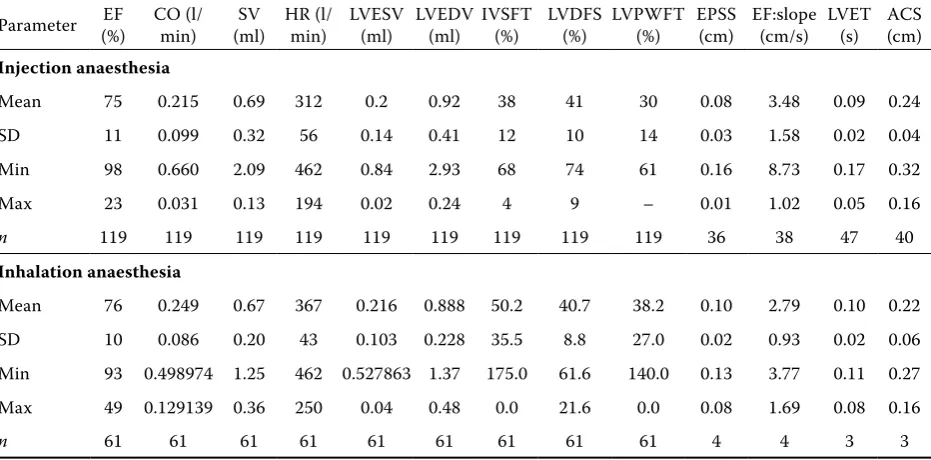
The other obtained and calculated parameters from the injection and inhalation anaesthesia data set was summarised in Table 3.
DISCUSSION
Both experimental and clinical practice has an ab-solute requirement for standards, even if these are relatively rough. Clinical practice requires data gained from the widest possible weight spectrum, ideally in both male and female individuals, using a common commercial device. The lack of these data prompted us to embark on this echocardiographic study in rats. In our study we performed 300 examinations in both male and female Wistar rats of various body weights and calculated regression equations to predict ex-pected normal echocardiographic parameters for rats
with arbitrary weights. The correlations were very close, which means that the results of the calcula-tions, based on regression equations are very reliable. In clinical practice inhalation anaesthesia is pre-ferred, while in experimental practice injection an-aesthesia is more commonly employed (Longobardi et al., 2000; Handa et al., 2002; Prunier et al., 2002; Watson et al. 2004; Hacker et al., 2005; Kawahara et al., 2005; Hartmann et al., 2007; Piegari et al., 2007; Popovic et al., 2007; Sung et al., 2009). Thus, we decided to use both of these methods in our study. The obtained results were evaluated separately.
The use of injection anaesthesia with diazepam, xylazine and ketamine is well validated in our ex-perimental practice, in both rats and rabbits, and in a large spectrum of cases (pulmonary embolism, septic shock, myocardial infarction; Dembovska et al., 2008; Klabusay et al., 2009). The combina-tion of diazepam, xylazine, and ketamine reported here is both reasonably priced and readily available worldwide. We chose not to employ pentobarbital, which is still used in non-European countries, due to limited availability. Isoflurane, the most common inhalation anaesthetic and the one most preferred in rodent clinical practice, was chosen to induce anaesthesia through inhalation.
Echocardiographic parameters were deliberately correlated to the most easily obtained parameter – bodyweight. There are, of course, other possibilities: e.g., BSA, the length of the tibia, age, or the circum-Table 3. Summaryof the other obtained and calculated parameters from the injection and inhalation anaesthesia data set
Parameter (%)EF CO (l/min) (ml)SV HR (l/min) LVESV (ml) LVEDV (ml) IVSFT (%) LVDFS (%) LVPWFT (%) EPSS (cm) EF:slope(cm/s) LVET (s) (cm)ACS
Injection anaesthesia
Mean 75 0.215 0.69 312 0.2 0.92 38 41 30 0.08 3.48 0.09 0.24
SD 11 0.099 0.32 56 0.14 0.41 12 10 14 0.03 1.58 0.02 0.04
Min 98 0.660 2.09 462 0.84 2.93 68 74 61 0.16 8.73 0.17 0.32
Max 23 0.031 0.13 194 0.02 0.24 4 9 – 0.01 1.02 0.05 0.16
n 119 119 119 119 119 119 119 119 119 36 38 47 40 Inhalation anaesthesia
Mean 76 0.249 0.67 367 0.216 0.888 50.2 40.7 38.2 0.10 2.79 0.10 0.22
SD 10 0.086 0.20 43 0.103 0.228 35.5 8.8 27.0 0.02 0.93 0.02 0.06
Min 93 0.498974 1.25 462 0.527863 1.37 175.0 61.6 140.0 0.13 3.77 0.11 0.27
Max 49 0.129139 0.36 250 0.04 0.48 0.0 21.6 0.0 0.08 1.69 0.08 0.16
[image:9.595.65.531.116.346.2]ference of the chest. Nevertheless, body weight is the most easily standardized parameter and can be used in all breeds of rats without the need for correction.
The significant difference among the body weights was expected and was caused by spontaneous in-creases in the weight of young animals during the time course, which was necessary for repeat exami-nations. While the first and the third examination were performed under inhalation anaesthesia, the second, fourth and fifth examinations were per-formed under injection anaesthesia, and were car-ried out on average later. The interval between the examinations was from one (1st and 2nd) examination to five weeks (next examinations).
The significant difference among the heartbeat rates was also expected because the anaesthetic combination with xylazine (alpha-agonist) usu-ally leads to bradycardia (Kawahara et al., 2005). Therefore, the results calculated from the heart rate also had to differ (there was a significant difference in cardiac output, but not in stroke volume).
We cannot explain why a significant difference was found only in IVSs and LA values in injec-tion vs. inhalainjec-tion anaesthesia. Nevertheless, the dimensions of IVSs, IVSd, LVPWs, LVPWd, LA and Ao were lower under inhalation anaesthesia than in injection anesthesia, whereas the systolic and diastolic diameters of the left ventricle were almost the same, corresponding to the low body weight in the data set from inhalation anaesthesia.
Hyperpnoe either with tachypnoe or with bradyp-noe is often observed in response to inhalation an-aesthesia. The reasons could lie in the position of the head and the neck during anaesthesia maintained by mask inhalation, which can keep the breathing down. The echoscan was performed as quickly as possible meaning that the percentage of complete measure-ments was lower for inhalation anaesthesia (55%), compared to the data set obtained under injection an-aesthesia (61%). Deep spontaneous breathing has an influence on the venous return and the heart position.
Sometimes when echocardiography is performed in rats, mainly in young ones, the diameter of aorta descendens, which can appear behind the left atrium in the short axis view, could be mistakenly added to the dimension of left atrium (measured in M-mode).
In general, injection anaesthesia is more conveni-ent for a precise echo scan. There is no danger of the tongue falling backwards or of the face mask slipping down. However, the length of induction (15–20 min) is a disadvantage of the injection anaes-thesia method, which is, moreover, time consuming
in experimental practice. Injection anaesthesia is also not convenient for repeat examinations over a short period of time such as hours or days.
The induction of inhalation anaesthesia is rela-tively quick and almost all rats were completely anaesthetized within two minutes of induction. Another notable advantage of this method is its safety and also the fact that it can be employed numerous times in one day – for example, if the evaluation of haemodynamics or another dynamic parameter (EF, CO, SV) is the aim of the study.
Comparison with what has been reported in the lit-erature is not possible in this instance, because stud-ies using the same anaesthetic protocol, in the same range of body weights have not yet been carried out. (Longobardi et al., 2000; Handa et al., 2002; Prunier et al., 2002; Watson et al.. 2004; Hacker et al., 2005; Kawahara et al., 2005; Piegari et al., 2007; Popovic et al., 2007; Sung et al., 2009).
The main limitation of the proposed study is that it was performed in a single breed of rats. The reli-ability of regression equations in other breeds is not predictable. Also, a commonly available device was used without previous precise verification of the distance, time and heart rate measurement error. Finally, only one systolic-diastolic cycle was meas-ured, which is close to routine clinical practice, but not ideal, and this could increase the measurement error.
CONCLUSION
This study attempts to simulate the basic clinical or experimental echocardiography M-mode pro-tocol in rats. Rat echocardiography itself could be used for heart disease screening in clinical rat patients and in rats before inclusion in an experi-mental study (we scan after pathological ausculta-tion). Precise echocardiographic measurements in a study employing experimental rats could result in a precise description of models with zero-pain and good clinical relevance. We have established reliable regression equations for the calculation of basic echocardiographic parameters to assess ex-pected normal values in rats with arbitrary weights.
REFERENCES
Dembovska K, Svoboda P, Scheer P, Kantorova I, Tom-enendalova J, Rehakova K, Doubek J (2008): Model of septic shock induced by live E-coli (O18) in a labora-tory rat. Veterinarni Medicina 53, 153–163.
Hacker TA, McKiernan SH, Douglas PS, Wanagat J, Ai-ken JM (2005): Age related changes in cardiac struc-ture and function in Fischer 344 × Brown Norway hybrid rats. American Journal of Physiology Heart and Circulation Physiology 290, 304–311.
Hagar JM, Mattews R, Kloner RA (1995): Quantitative two-dimensional echocardiographic assessment of regional wall motion during transient ischemia and reperfusion in the rat. Journal of the American Society of Echocardiography 8, 162–174.
Handa N, Magata Y, Tadamura E, Mukai T, Nishine T, Miwa S, Sakakibara Y, Nomoto T, Konishi J, Nishimura K, Komeda M (2002): Quantitative fluorine 18 deoxy-glucose uptake by myocardial positron emission tomog-raphy in rats. Journal of Nuclear Cardiology 9, 616–621. Hartmann J, Knebel F, Eddicks S, Beling M, Grohmann
A, Panda A, Jacobi ChA, Muller JM, Wernecke K-D., Baumann G, Borges AC (2007): Nonivasive monitor-ing of myocardial function after surgical and cytostatic therapy in peritoneal metastasis rat model: Assesment with tissue Doppler and non-doppler 2D strain echo-cardiography. Cardiovascular Ultrasound 5, 23–34. Kawahara Y, Tanonaka K, Daicho T, Nawa M, Oikawa
R, Nasa Y, Takeo S (2005): Preferable anesthetic con-dition for echocardiographic determination of murine cardiac function. Journal of Pharmacological Sciences 99, 95–104.
Klabusay M, Scheer P, Doubek M, Rehakova K, Coupek P, Horky D (2009): Retention of nanoparticles/labeled bone marrow mononuclear cells in the isolated ex vivo per-fused heart after myocardial infarction in animal model. Experimental Biology and Medicine 234, 222–231. Koskenvuo JW, Mirsky R, Zhang Y, Angeli FS, Jahn S,
Alstalo T-P, Schiller NB, Boyle AJ, Chatterjee K, De
Marco T, Yeghiazarians Y (2010): A comparison of echocardiography to invasive measurement in the evaluation of pulmonary arterial hypertension in rat model. International Journal of Cardiovascular Imag-ing 26, 509–518.
Longobardi S, Cittadini A, Strömer H, Katz SE, Gross-man JD, Clark RG, Morgan JP, Douglas PS (2000): Echocardiographic assessment of cardiac morphology and function in mutant dwarft rats. Growth Hormone and IGF Research 10, 242–247.
Piegari E, Di Salvo G, Castaldi B, Vitelli MR, Rodolico G, Golino P, Calabro R, Rossi F, Berrino L (2007): Myo-cardial strain analysis in a doxorubicin-induced car-diomyopathy model. Ultrasound in Medicine and Biology 34, 370–378.
Popovic ZB, Benejam C, Bian J, Mal N, Drinko J, Lee K, Forudi F, Reeg R, Greenberg NL, Thomas JD, Penn MS (2007): Speckle-tracking echocardiography correctly identifies segmental left ventricular dysfunction in-duced by scarring in rat model of myocardial infarc-tion. American Journal of Physiology Heart and Circulation Physiology 292, H2809–H2816.
Prunier F, Gaertner R, Louedec L, Michel J-B, Mercadier J-J, Escoubet B (2002): Doppler echocardiographic estimation of left ventricular end-diastolic pressure after MI in rats. American Journal of Physiology Heart and Circulation Physiology 283, 346–352.
Sung-A Ch, Yong-Jin K, Hye-Won L, Dae-Hee K, Hyung-Kwan K, Hyuk-Jae Ch, Dae-Won S, Byung-Hee O, Young-Bae P (2009): Effect of rotuvastatin on cardiac remodeling, function and progression to heart failure in hypertensive heart with established left ventricular hyperthrophy. Hypertension 54, 591–597.
Watson LE, Sheth M, Denyer RF, Dostal DE (2004): Base-line echocardiographic values for adult male rats. Journal of American Society of Echocardiography 17, 161–167.
Received: 2011–02–03 Accepted after corrections: 2012–01–19
Corresponding Author:
Scheer Peter, MVDr. Ph.D., University of Veterinary and Pharmaceutical Sciences Brno, Faculty of Veterinary Medicine, Deptartment of Physiology, Palackeho 1–3, 612 42 Brno, Czech Republic