
1
Block sequence-specific glycopolypeptides with selective lectin
binding properties
Cristina Lavilla*,a Gokhan Yilmaz,b Veselina Uzunova,c Richard Napier,c C. Remzi Becer,b
Andreas Heise*,a,d
a Department of Chemical Engineering and Chemistry, Eindhoven University of Technology,
Den Dolech 2, 5612AZ Eindhoven, The Netherlands
b Polymer Chemistry Laboratory, School of Engineering and Materials Science, Queen Mary
University of London, London, E1 4NS, United Kingdom
c Life Sciences, University of Warwick, CV4 7AL, Coventry, United Kingdom
d Department of Pharmaceutical and Medicinal Chemistry, Royal College of Surgeons in
Ireland, 123 St. Stephens Green, Dublin 2, Ireland
Abstract
Glycopolypeptides with defined block sequences were prepared by sequential addition of two different N-carboxyanhydrides (NCAs), followed by selective deprotection and functionalization of pre-defined positions within the polypeptide backbone. The sequential arrangement of the galactose units and the block sequence length have been systematically varied. All the glycopolypeptides have been obtained with a similar overall composition and comparable molecular weights. Circular dichroism measurements revealed some dependence of the secondary structure on the primary composition of the glycopolypeptides at physiological pH. While statistical, diblock and tetrablock glycopolypeptides adopted random coil conformation, the octablock glycopolypeptide was mostly α-helical. The ability to selectively bind to lectins was
2 It was found that the extent of binding was dependent on the position of the galactose units and thus the primary glycopolypeptide structure. The octablock glycopolypeptide favored interaction with lectin RCA120 while the tetrablock glycopolypeptide demonstrated the strongest binding
activity to Galectin-3. The results suggest that different lectins are very sensitive to glyco coding, and that precise control of carbohydrate units in synthetic polymeric glycopeptides will remain important.
INTRODUCTION
Carbohydrates (glycans) play an important role in almost every biological recognition process, i.e. cell communication, cell-cell recognition, and fertilization as well as in significant diseases such as cancer, inflammation and microbial infection.1,2 In many cases the recognition events
are based on specific carbohydrate-protein (lectin) interactions that occur on the surface of the cells.3 The pharmacological exploitation of glycoscience has already begun and glycosylated
drugs (e.g. vaccines) have seen enormous growth rates.4,5 However, development of applicable
glycomaterials is highly complicated due to the structural complexity of biological glycans, for example, glycans can have different branching patterns and different linkages between
the sugars.6 They can also be linked to proteins in many different ways. Lectins bind
specifically, but weakly, to carbohydrates. This binding can be enhanced by combining several carbohydrates in the same molecule or aggregate allowing for multiple binding events to occur at the same time (avidity, or the cluster glycoside effect).7 Polymer chemists have thus proposed
a strategy whereby the structural complexity of glycomaterials is reduced while keeping biological activity high by the design of glycan conjugated polymers (glycopolymers).8 Synthetic
glycopolymers are convenient multivalent ligands, exhibiting various carbohydrate moieties along a polymer backbone.9 Many synthetic glycopolymers have been produced by free or
3 polymerization of norbonenes.10-14 In these cases, all polymer backbones are carbon chains,
with no other function than connecting the carbohydrate moieties and acting as spacer units. The question remains, whether these simplistic systems are “too simple” and their broader
biological activity compromised? Researchers are now beginning to respond to this question by designing the next generation of glycopolymers with the goal to understand the effect of glycan positioning along the polymer chain on the biological activity.
We and others have specifically focused on glycosylated synthetic polypeptides derived from the ring-opening polymerization of N-carboxyanhydrides (NCA). Unlike acrylate derived polymer backbones, polypeptides are biodegradable and more closely mimic the peptidic backbone of natural glycoproteins.15 For example synthetic glycopolypeptides have the ability to fold into
secondary, tertiary and higher order structures due to multiple non-covalent interactions between amino acid units. 16 , 17 Special attention has also been paid to synthetic
glycopolypeptides that can respond to external stimuli by conformational changes, such as to pH, temperature, or oxidation as well as their self-assembly into nanostructures.18-24 Some initial
studies have reported on the influence of different degrees of glycosylation on the conformation and biological properties of synthetic glycopolypeptides,16,25 while there is no systematic study
on the effect with regard to the position of the glyco units in the polypeptide.
4
EXPERIMENTAL SECTION
Materials
All chemicals were purchased from Sigma-Aldrich and used as received unless noted. Chloroform-d (99.8% atom-d), trifluoroacetic acid-d (99.5% atom-d), dimethyl sulfoxide-d (99.9% atom-d) and deuterium oxide (99.9% atom-d) were purchased from Cambridge Isotope Laboratories. Galectin-3 protein (>90%) was obtained from R&D Systems Company.
General methods
Nuclear magnetic resonance (NMR) spectra were recorded on a Mercury 400 spectrometer (400 MHz for 1H NMR). Samples were dissolved in DMSO-d, in D
2O, or in a mixture of
CDCl3/TFA-d (9:1). All chemical shifts are reported in parts per million (ppm) with
tetramethylsilane (TMS) as an internal reference.
Size exclusion chromatography (SEC) was performed on a system equipped with a Waters 1515 Isocratic HPLC pump, a Waters 2414 refractive index detector (35 °C), a Waters 2707 auto sampler, and a PSS PFG guard column followed by two PFG-linear-XL (7 μm, 8 × 300
mm) columns in series at 40 °C. Hexafluoroisopropanol (HFIP) with potassium trifluoroacetate (3 g·L-1) was used as eluent at a flow rate of 0.8 mL·min-1. The molecular weights were
calculated against poly(methyl methacrylate) standards (Polymer Laboratories, Mp = 580 Da up
to Mp = 7.1 × 10⁶ Da).
5 spectral range of 4000 to 650 cm-1 with a resolution of 2 cm-1. 50 scans were signal-averaged
and the resulting spectra were analyzed using Varian Resolutions Pro software.
Circular dichroism (CD) measurements were performed on a Jasco J-815 spectropolarimeter (sensitivity: standard; response: 4 s; band width: 1 nm; data pitch: 0.5 nm; scanning speed: 50 nm/min; accumulation: 2). Samples were prepared by dissolving the polypeptides in MilliQ water or buffer. Typical CD measurements were performed at amide concentrations of 50 μM and
using an optical pathway of 1 cm. Mean residue ellipticities were calculated from the CD spectra following a literature procedure 26 using the equation [θ]= (θ·MRW)/(10·l·c), where: θ,
experimental ellipticity in mdeg; MRW, mean residue weight (g·mol-1); l, cuvette path length
(cm); c, glycopolypeptide concentration (g·mL-1).
UV/vis measurements were performed with a Jasco V-650 spectrophotometer with a Peltier-type temperature controller. The lectin-binding assays were performed by analyzing the change in absorbance at 450 nm, at 25 °C. First, the quartz cuvette was filled with 500 μL RCA120 (2
mg/mL in pH 7.2 buffer), and the absorbance was set to zero. The lectin binding experiments were carried out by adding 50 μL glycopolypeptide (1 mg/mL in pH 7.2 buffer) into the RCA
solution, following the absorbance at 450 nm over time, corrected against 50 μL of glycopolypeptide solution (1 mg/mL in pH 7.2 buffer) diluted into 500 μL pH 7.2 buffer. As control experiments, absorbance at 450 nm was followed over time when 50 μL
glycopolypeptide (1 mg/mL in pH 7.2 buffer) were added into 500 μL Concanavalin A (ConA) solution (2 mg/mL in pH 7.2 buffer), also corrected as above.
Surface Plasmon Resonance (SPR) was used for interaction analysis using lectins RCA120 and
Galectin-3 on a BIAcore 2000 system (GE Healthcare). RCA120 and Galectin-3 (0.05 mg/mL)
6 (5 min at 25 °C at a flow rate of 5 µL/min). After coupling, all activated channels were blocked by ethanolamine (1 M pH 8.5 for 10 min at 5 µL/min), followed by equilibration with filtered HEPES buffer (10 mM HEPES pH 7.4, 150 mM NaCl, 0.01% P20 surfactant). Glycopolypeptide solutions were prepared at varying concentrations (10 µM-0.62 µM) in the same HEPES buffer for binding and kinetic experiments. Sensorgrams were recorded with 300 seconds injection of polymer solution (association) followed by 180 seconds of buffer alone (dissociation). Regeneration of sensor chip surfaces was performed using 100 mM NaOH solution. Kinetic data was evaluated using a 1:1 Langmuir Binding model using BIAevalulation 3.1 software.
Glycopolypeptide synthesis
Polypeptides containing both benzyl-L-glutamate and tert-butyl-L-glutamate units in different block sequences were synthesized following a literature procedure.27 Selective deprotection of
the side chain tert-butyl-ester groups to afford COOH groups, while maintaining intact benzyl-L-glutamate (BG) groups, was carried out by treatment with CH2Cl2:TFA (1:1, v:v). After stirring at
room temperature for 3 hours, the volatiles were removed under reduced pressure in the rotary evaporator. Successive co-evaporation with small additional volumes of CH2Cl2 was carried out
to facilitate TFA removal, and the selectively deprotected polypeptides were further dried in a vacuum oven at room temperature. Afterwards, the side chain COOH groups of the selectively deprotected polypeptides were made to react further with galactosamine hydrochloride to afford glycopolypeptides: In a round-bottom flask, 500 mg of polypeptide containing BG and COOH groups, 610 mg of galactosamine hydrochloride (2.8 mmol), and 15 mL of MilliQ water were added. The suspension was stirred at room temperature under N2. After 15 min, a solution of
7 temperature, the pH was raised up to 7 by addition of NaOH 0.5 M, and the reaction mixture was further stirred for 3 hours. The mixture was dialyzed against MilliQ water using Spectra/Por dialysis membrane (MWCO 1 kDa) for 72 h at room temperature. The resulting glycopolypeptide containing BG and galactosyl-L-glutamate units (GalG) was lyophilized. Yield glycosylation: [(BG)5-(GalG)5]4, 667 mg, 91%; [(BG)10-(GalG)10]2, 659 mg, 90%; (BG)20-b-(GalG)20, 677 mg,
93%; (BG)20-st-(GalG)20, 670 mg, 91%.
Deprotection of side chain groups of the glycopolypeptides
500 mg of glycopolypeptide containing BG and GalG units was dissolved in 20 mL anhydrous DMF, and the solution was introduced into a PARR reactor. The reactor was purged with N2 for
15 minutes. Subsequently, 50 mg Pd/C (10 wt%) were added, and reactor was purged again with N2 for 15 minutes. Afterwards, the reactor was charged with H2, and the hydrogenolysis
reaction was carried out at 5 bar, at 25 °C under stirring. The pressure was monitored, and samples were taken for 1H NMR analysis to determine the conversion of the reaction. After
40-48 hours, the pressure was decreased to atmospheric value, and the reactor was purged with N2. The reaction mixture was filtered to remove the Pd/C catalyst, and it was washed with small
volumes of DMF. Afterwards, the glycopolypeptide solution was dialyzed against MilliQ water using Spectra/Por dialysis membrane (MWCO 1 kDa) for 72 h at room temperature, and lyophilized. Final conversion efficiency of hydrogenolysis (1H NMR) and yields: [(GA)
5-(GalG)5]4,
71%, 430 mg; [(GA)10-(GalG)10]2, 74%, 420 mg; (GA)20-b-(GalG)20, 79%, 412 mg; (GA)20-st
-(GalG)20, 73%, 417 mg.
RESULTS AND DISCUSSION
8 Glycopolypeptides with different block sequences were synthesized by functionalization of pre-selected positions of the polypeptide main chains. First, a set of copolypeptides having the same overall monomer composition and overall number of units (40), but different primary structures, were prepared by sequential addition of tert-butyl L-glutamate and benzyl L-glutamate NCA monomers (ratio 1:1).27 The structures comprised alternating octablock,
tetrablock and diblock copolymers as well as a statistical copolymer (Scheme 1). Since the tert -butyl ester and benzyl ester groups have different stability, selective and quantitative deprotection of the tert-butyl ester groups could be achieved while leaving the benzyl ester groups intact.27 The polymers thus comprised of about 50% glutamic acid with COOH groups
and the rest with protected benzyl ester protected glutamate.27 The COOH groups were then
reacted with excess galactosamine hydrochloride, using 4-(4,6-dimethoxy-1,3,5-triazin-2-yl)-4-methyl morpholinium chloride (DMT-MM) as coupling agent (Scheme 1).28,291H NMR confirmed
9
[(BG)5-(GalG)5]4 [(BG)10-(GalG)10]2 (BG)20-b-(GalG)20 (BG)20-st-(GalG)20
n N H O H N O N H H x x O O O O n N H O H N O N H H x x O O O 2) DMT-MM OH OH OH HO O NH OH OH OH HO O
NH2 HCl
H2 Pd/C n N H O H N O N H H x x HO O O OH OH OH HO O NH
1) CH2Cl2, TFA
Scheme 1. Synthesis of glycopolypeptides and set of glycopolypeptides with identical overall composition and systematically varied defined primary structure.
The presence of galactose units was confirmed by FTIR, which showed an increase of the intensity of the C-O stretching band around 1000-1100 cm-1 as well as a broad O-H stretching
band between 3200 and 3500 cm-1. Qualitative secondary structure analysis by FTIR on solid
10 deprotection by using sodium methoxide in methanol solution has been reported as a fast method to remove the benzyl ester groups. However, this strong deprotection method has a high chance of leading to racemization of the polypeptide backbone. On the other hand, acidic deprotection using e.g. HBr in CH3COOH is a widely-used technique without any racemization
reaction. In our case, however, the use of these reagents could lead to undesired reactions in the sensitive sugar units. Therefore, hydrogenolysis under high pressure was chosen for deprotection. Dong et al. previously employed this method to successfully deprotect the benzyl ester units in triblock copolymers containing both glutamate and lactoside units.31 DMF was
selected as the solvent, since it could solubilize the multiblock glycopolypeptides and did not interfere with the hydrogenolysis reaction. Reaction conversion was followed by 1H-NMR, and
the reactions were stopped when no further changes in conversion were monitored within a reasonable period. Afterwards, the glycopolypeptides were dialyzed against water to remove the remaining DMF, and the samples lyophilized. 1H NMR revealed that deprotections were in the
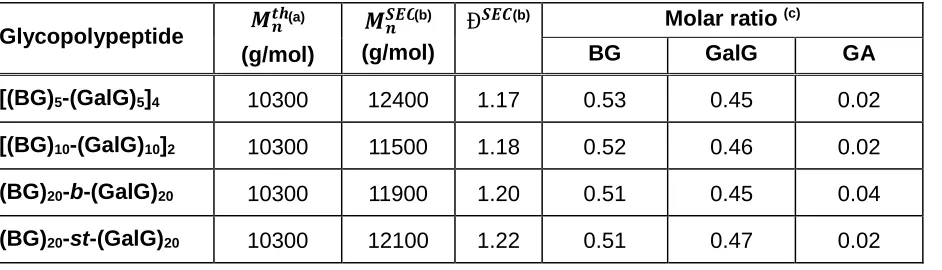
[image:10.612.77.548.585.720.2]range 70-80% in all cases (Figures S11-14). Furthermore, molecular weights of the glycopolypeptides decreased after the hydrogenolysis reaction, as expected (Table 1). Although full deprotection could not be achieved by this milder method, which could also be due to the decreasing solubility of the glycopolypeptide samples in DMF with increasing reaction times, the overall chemical composition of the four different block-sequenced glycopolypeptides with mostly COOH and galactose groups was comparable as summarized in Table 1.
Table 1. Molecular weights and composition of the glycopolypeptides.
Glycopolypeptide
(a)
(g/mol)
(b)
(g/mol)
(b) Molar ratio (c)
BG GalG GA
[(BG)5-(GalG)5]4 10300 12400 1.17 0.53 0.45 0.02
[(BG)10-(GalG)10]2 10300 11500 1.18 0.52 0.46 0.02
(BG)20-b-(GalG)20 10300 11900 1.20 0.51 0.45 0.04
11
Glycopolypeptide
(a)
(g/mol)
(b)
(g/mol)
(b) Molar ratio (c)
BG GalG GA
[(GA)5-(GalG)5]4 8500 9300 1.23 0.16 0.45 0.39
[(GA)10-(GalG)10]2 8500 8800 1.25 0.15 0.46 0.39
(GA)20-b-(GalG)20 8500 9400 1.24 0.12 0.45 0.43
(GA)20-st-(GalG)20 8500 9000 1.25 0.14 0.47 0.39
(a) Theoretical molecular weight calculated assuming quantitative monomer conversion during polymerization, complete removal of tert-butyl ester groups, and complete functionalization of COOH with galactosamine hydrochloride (BG-GalG glycopolypeptides), and assuming complete removal of BG groups (GA-GalG glycopolypeptides). (b) Determined by SEC in HFIP against PMMA standards. (c) Molar ratio determined by 1H NMR of benzyl-L-glutamate (BG), galactosyl-L-glutamate (GalG), and L-glutamic acid (GA) in the glycopolypeptide backbone, by signals f-j and l-s (SI file).
Secondary structure of glycopolypeptides with different block sequences
12
200 210 220 230 240 250
-60000 -40000 -20000 0 20000 40000 60000 Mean residu
e ellipticity (
deg
cm
2dmol -1) Wavelength (nm) pH 3.0 pH 7.4 pH 12.0 a)
200 210 220 230 240 250
-60000 -40000 -20000 0 20000 40000 60000 b) Mean residu
e ellipticity (
deg
cm
2dmol -1)
Wavelength (nm)
pH 3.0 pH 7.4 pH 12.0
200 210 220 230 240 250
-60000 -40000 -20000 0 20000 40000 60000 c) Mean residu
e ellipticity (
deg
cm
2dmol -1)
Wavelength (nm)
pH 3.0 pH 7.4 pH 12.0
200 210 220 230 240 250
-60000 -40000 -20000 0 20000 40000 60000 d) Mean residu
e ellipticity (
deg
cm
2dmol -1)
Wavelength (nm)
pH 3.0 pH 7.4 pH 12.0
Figure 1. CD spectra in water at different pH, at 25 °C. (a) [(GA)5-(GalG)5]4; (b) [(GA)10
-(GalG)10]2; (c) (GA)20-b-(GalG)20; (d) (GA)20-st-(GalG)20.
At pH 12 the CD spectra are characteristic of a random-coil conformation for all four glycopolypeptides, with a maximum ellipticity at λ= 218 nm (Figure 1). At this pH, the glutamate
carboxyl groups are ionized (pKa ~4.3).18,32 At pH 3, the glycopolypeptide chains adopt an
α-helical conformation, as indicated by the two ellipticity minima at λ= 208 and 222 nm. At physiological pH, the diblock glycopolypeptide (GA)20-b-(GalG)20, the tetrablock
glycopolypeptide [(GA)10-(GalG)10]2 and the statistic glycopolypeptide (GA)20-st-(GalG)20 adopt a
random-coil conformation, while the octablock glycopolypeptide [(GA)5-(GalG)5]4 adopts a
[image:12.612.96.506.80.404.2]13
2 4 6 8 10 12 14
-30000 -20000 -10000 0 10000
Mean
residu
e ellipticity a
t 222
nm
(deg
cm
2 dmol -1 )
[(GA)5-(GalG)5]4 [(GA)10-(GalG)10]2 (GA)20-b-(GalG)20 (GA)20-st-(GalG)20
[image:13.612.149.463.96.313.2]pH
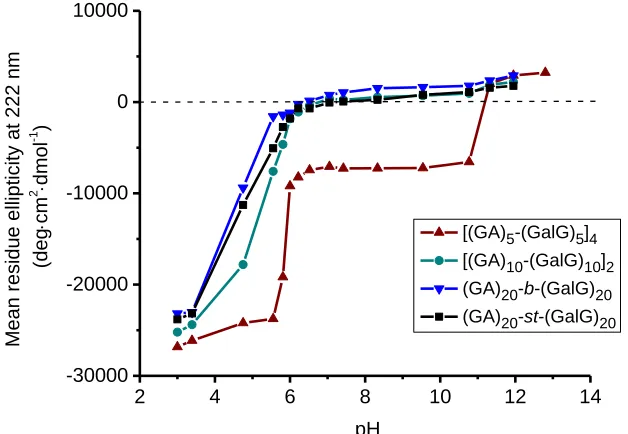
Figure 2. Mean residue ellipticity at 222 nm vs pH of block sequence defined glycopolypeptides.
Table 2. Helicity of glycopolypeptides in aqueous solution at different pH.
Glycopolypeptide Helicity
a (%)
pH 3.0 pH 4.7 pH 6.0 pH 7.4 pH 9.5 pH 12.0
[(GA)5-(GalG)5]4 76.5 69.8 31.3 26.3 26.2 0
[(GA)10-(GalG)10]2 72.3 53.3 12.4 0 0 0
(GA)20-b-(GalG)20 67.1 31.8 10.7 0 0 0
(GA)20-st-(GalG)20 68.7 36.6 12.3 0 0 0
a Helix content calculated as (-[θ
222]+3000 )/39000 from CD spectra.
The mean residue ellipticity at λ= 222 nm, [θ]222 can be used to estimate the helicity of the
glycopolypeptide chains. The helical contents of the four glycopolypeptides at different pH (Figure 2) are summarized in Table 2. The helical contents at pH 3 are within the range 67-77%, the helicity being slightly higher for the octablock [(GA)5-(GalG)5]4 and the tetrablock [(GA)10
-(GalG)10]2 than for the diblock (GA)20-b-(GalG)20 and the statistical (GA)20-st-(GalG)20
[image:13.612.68.495.391.529.2]14 statistic and the tetrablock glycopolypeptides, which invariantly adopt a random-coil conformation for pH values above 6. Conversely, the octablock glycopolypeptide shows only a small variation of [θ]222 until pH 6, and at this pH the [θ]222 rises suddenly, to reach a constant
value of -7000 deg·cm2·dmol-1 (corresponding to a helicity of ~25%) up to pH 11. This unusual
behavior leading to a partially helical conformation at physiological pH, even at mildly basic pH, reveals that the α-helix conformation is strongly promoted in this glycopolypeptide where a few
units of galactosyl-L-glutamate are alternated with blocks of a few glutamic acid units. Surprisingly, the statistical glycopolypeptide behaves similarly to the diblock glycopolypeptide, which could suggest different reactivity ratios of the original NCA monomers leading to a tapered (block-like) chain structure rather than a random arrangement.27,33,34 Recently, Mildner
and Menzel described the use of hydrophobic spacers to enhance the helicity of pH-responsive glycopolypeptides.35 From the different hydrophobic spacers studied, the use of an aromatic
hydrophobic spacer resulted in enhanced helicity and a partial helical conformation at neutral pH, although their study did not include the behavior of the polypeptides under basic pH. In our case, however, we observe a strong enhancement of the helicity of the glycopolypeptides not by changing their chemical composition, but by the position of the sugar units in the peptidic backbone. As in natural peptides, the sequence of the units within the primary structure appears to determine the secondary structure of the biomacromolecules.
Lectin binding of glycopolypeptides with different block sequences
Carbohydrates play a major role in biological recognition events, often mediated by specific carbohydrate-lectin interactions,36,37 making the binding of glycopolypeptides to lectins a very
15 turbidimetric assays, in order to assess the ability of these block sequenced glycopolypeptides to interact with biological systems. Typically, these tests are conducted by mixing the glycopolypeptide with a lectin that is selective for the sugar conjugated to the polymer. Successful galactose-lectin binding is denoted by the appearance of a precipitate due to aggregation of the lectins. Since single sugar units bind only weakly to the lectin receptors, only multivalent binding leads to clustering and precipitation.38,39
0 10 20 30 40 50 60
0.0 0.1 0.2 0.3
[(GA)5-(GalG)5]4 [(GA)10-(GalG)10]2
(GA)20-b-(GalG)20 (GA)20-st-(GalG)20
Absorba
nce
[image:15.612.160.438.254.489.2]Time (min)
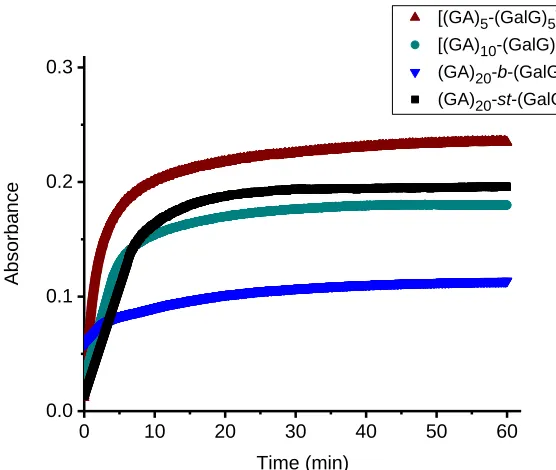
Figure 3. Absorbance vs time after adding 50 μL glycopolypeptide (1 mg/mL) into 500 μL
RCA120 (2 mg/mL).
The lectin chosen was RCA120 (Ricinus communis agglutinin), a galactose-specific lectin which
is present in the seeds of Ricinus communis, the castor bean plant. RCA120 is a 120 kDa
tetramer which has two identical and independent sugar binding sites.40 The lectin binding
experiments were carried out by adding 50 μL glycopolypeptide (1 mg/mL) into 500 μL RCA120
(2 mg/mL), both dissolved in pH 7.2 phosphate buffer. Although RCA120 showed affinity for the
16 galactose units in the glycopolypeptide chain (Figure 3). The octablock glycopolypeptide [(GA)5
-(GalG)5]4 lead to stronger formation of clusters, the diblock glycopolypeptide (GA)20-b-(GalG)20
lead to the weakest interaction, whereas the tetrablock [(GA)10-(GalG)10]2 and the statistical
(GA)20-st-(GalG)20 glycopolypeptides presented intermediate behaviors. These results suggest
that the particular disposition of the galactose units in the octablock polypeptide favors their interaction with lectins. When the same experiments were carried out with Concanavalin A lectin (ConA), which is selective for glucose and mannose, but unable to bind galactose residues,41 no
change in absorbance was measured (Table S2). These experiments confirm that the glycopolypeptides are available for biorecognition to selective lectins, and that this recognition is dependent on the block sequence composition of the glycopolypeptides.
For further insights to the binding activities of glycopeptides, surface plasmon resonance (SPR) was employed.42 In addition to RCA
120, Galectin-3, a human galactose-specific lectin, was
included. Galectin-3 contains carbohydrate recognition domains linked to non-lectin domains of about 130 amino acids.43 Galectin-3 was selected because it plays a crucial role in human
physiological responses to different types of pathology, such as cancer, inflammation, and autoimmunity.44 In particular, it has attracted significant attention for the development of
diagnostic marker systems for different cancers. Therefore, the synthesized glycopeptides are of interest for the development of multivalent biological systems for effective therapeutic applications.45 It has to be noted, though, that galectin-3 has a much deeper recognition domain
17
Figure 4. SPR sensorgrams showing concentration-dependent interactions between
glycopeptides and RCA120: A) (GA)20-st-(GalG)20; B) (GA)20-b-(GalG)20; C) [(GA)10-(GalG)10]2; D)
[(GA)5-(GalG)5]4; E) Comparison of the binding of all glycopolypeptides to RCA120 at the same
[image:17.612.108.505.69.577.2]18
Figure 5. SPR sensorgrams showing concentration-dependent interactions between
glycopolypeptides and Galectin-3: A) (GA)20-st-(GalG)20; B) (GA)20-b-(GalG)20; C) [(GA)10
-(GalG)10]2; D) [(GA)5-(GalG)5]4; E) Comparison of the binding of all glycopolypeptides to
[image:18.612.91.516.70.625.2]19 As depicted, (Figure 4 and Figure 5) the glycopolypeptides bound to both galactose-binding lectins, and the strength of the interactions varied with the display of galactose units along the backbone. The results obtained from the SPR measurements are in a good agreement with RCA120 turbidimetric assays. For instance, the octablock glycopolypeptide [(GA)5-(GalG)5]4
showed the highest turbidity and SPR binding ability with RCA120 whereas the diblock (GA)20-b
-(GalG)20 represented the weakest recognition (Figure 4E). However, when the binding
properties of RCA120 are compared to those of Galectin-3, a different set of interaction behaviors
is seen (Figure 5E). For example, the tetrablock glycopolypeptide [(GA)10-(GalG)10]2 showed the
strongest binding with Galectin-3, the statistical glycopeptide (GA)20-st-(GalG)20 showed the
weakest binding, whilst the diblock (GA)20-b-(GalG)20 and the octablock [(GA)5-(GalG)5]4
[image:19.612.70.551.444.557.2]glycopolypeptides demonstrated intermediate interaction profiles. In order to understand these differences better we evaluated the kinetic binding parameters of all glycopolypeptides using SPR (Table 3).
Table 3. Kinetic binding data of glycopeptides and lectins as calculated by SPR. A 1:1
Langmuir binding model was used in BiaEvaluation software.
RCA120 Galectin-3
Ligand ka
(1/Ms) kd (1/s) Ka (1/M) Rmax (RU) ka (1/Ms) kd (1/s) Ka (1/M) Rmax (RU)
(GA)20-st-(GalG)20 174 2.12x10⁻⁵ 8.20x10⁶ 260 236 5.66x10⁻⁴ 4.17x10⁵ 310
(GA)20-b-(GalG)20 87 1.63x10⁻⁵ 5.34x10⁶ 135 364 6.54x10⁻⁴ 5.56x10⁵ 420
[(GA)10-(GalG)10]2 112 1.87x10⁻⁵ 5.99x10⁶ 175 406 5.96x10⁻⁴ 6.81x10⁵ 515
[(GA)5-(GalG)5]4 208 2.36x10⁻⁵ 8.81x10⁶ 300 302 5.11x10⁻⁴ 5.91x10⁵ 360
There is little difference in association rate constants (ka) or dissociation rate constants (kd) for
the various galactopolypeptides against each lectin, and hence for the affinities (Ka) in each case. However, the lectin RCA120 was seen to have more than a 10-fold higher affinity
20 The SPR binding isotherms do not represent classical 1:1 Langmuir kinetics, but this was anticipated given that we are presenting polyvalent ligands. It is most likely that our SPR data show the result of multivalent interactions, sometimes referred to as high avidity reactions. In many sensorgrams (Figures 4 and 5) an initial rapid binding event is seen, but the rate then appears to slow. In multivalent interactions the first binding events will proceed at a single-site ka, but then these ligands may interact with more sites locally, creating a polyvalent binding
complex. Given that binding of a galactopeptide at a second, third or higher order site will not add any mass to the SPR chip surface, and that they will be favored due to the local high concentration of galactose units at the chip surface, the association rate curve slows. Dissociation is also complex, and the very slow dissociation rates seen with all the polymers is also consistent with multivalent interactions. For each single dissociation event, the adjacent galactose units remain bound, hence promoting rebinding rather than dissociation of the complex. Similar multivalent complexes with galactose polymers have been observed before.47
No doubt, these multivalent kinetics mask some of the differences between binding specificities, but even so the data illustrate that the sequence and composition of sugar moieties have significant influences on the details of recognition.
4. CONCLUSIONS
21 was mostly α-helical. All galactopeptides were biologically active and bound to lectins, However,
the extent of binding was shown to be dependent on the position of the galactose units and thus the primary glycopolypeptide structure. Combined with the higher tendency to adopt a α-helical
conformation, the octablock glycopolypeptide favored interaction with lectin RCA120. With
Galectin-3 the tetrablock glycopolypeptide [(GA)10-(GalG)10]2 demonstrated the strongest
binding activity, although in all cases calculated affinity values differed little. This lack of kinetic differentiation is probably due to multivalent binding interactions which invariably lead to long dissociation times. Such long dissociation times may be beneficial in diagnostic and therapeutic applications and we believe that precise control over glyco-polymer/peptide architecture will provide a much desired selectivity towards specific lectins. Most importantly, the results suggest that different lectins are very sensitive to glyco coding, and that precise control of carbohydrate units in synthetic polymeric glycopeptides will remain important if we are to realize the value of these reagents for therapy and diagnosis in medicine.
ASSOCIATED CONTENT
Supporting Information. The Supporting Information is available free of charge on the ACS
Publications website.
Additional tables, NMR, ATR-FTIR, CD spectra and SEC traces.
AUTHOR INFORMATION
Corresponding Authors
22
ACKNOWLEDGEMENT
This project has received funding from the European Union’s Seventh Framework Program for
research, technological development and demonstration (Marie Curie Intra-European Fellowship for Career Development FP7-PEOPLE-2013-IEF-625116 awarded to CL). RN and VU are grateful for BBSRC award BB/L009366.
REFERENCES
(1) Rudd, P.M.; Elliott, T.; Cresswell, P.; Wilson, I.A.; Dwek, R.A. Glycosylation and the immune system. Science2001, 291, 2370-2376.
(2) Varki, A. Biological roles of oligosaccharides: all of the theories are correct. Glycobiology
1993, 3, 97-130.
(3) Ambrosi, M., Cameron, N.R.; Davis, B.G. Lectins: tools for the molecular understanding of the glycocode. Org. Biomol. Chem. 2005, 3, 1593-1608.
(4) Koeller, K.M.; Wong, C.-H.Emerging themes in medicinal glycoscience. Nature Biotechnology 2000, 18, 835 – 841.
(5) Hudak, J.E.; Bertozzi, C.R. Glycotherapy: New Advances Inspire a Reemergence of Glycans. Medicine, Chemistry and Biology2014, 21, 16-37.
(6) Laine, R. A. Information capacity of the carbohydrate code. Pure and Applied Chemistry
1997, 69,1867-1874.
(7) Lundquist, J.L.; Toone, E.J. The cluster glycoside effect. Chem. Rev.2002, 102, 555-578.
23 (9) Fasting, C.; Schalley, C. A.; Weber, M.; Seitz, O.; Hecht, S.; Koksch, B.; Dernedde, J.; Graf, C.; Knapp, E.-W.; Haag, R. Multivalency as a Chemical Organization and Action Principle. Angew. Chem. Int. Ed. 2012, 51, 10472-10498.
(10) Ladmiral, V.; Melia, E.; Haddleton, D.M. Synthetic glycopolymers: an overview. Eur. Polym. J. 2004, 40, 431-449.
(11) Ting, S.R.S.; Chen, G.; Stenzel, M.H. Synthesis of glycopolymers and their multivalent recognitions with lectins. Polym. Chem. 2010, 1, 1392-1412.
(12) Zhang, Q.; Collins, J.; Anastasaki, A.; Wallis, R.; Mitchell, D.A.; Becer, C.R.; Haddleton, D.M. Sequence-controlled multiblock glycopolymers to inhibit DC-SIGN-gp120 binding. Angew. Chem., Int. Ed. 2013, 52, 4435-4439.
(13) Guo, Q.; Zhang, T.; An, J.; Wu, Z.; Zhao, Y.; Dai, X.; Zhang, X.; Li, C. Block versus random amphiphilic glycopolymer nanoparticles as glucose-responsive vehicles. Biomacromolecules
2015, 16, 3345-3356.
(14) Cakir, N.; Hizal, G.; Remzi Becer, C. Supramolecular glycopolymers with thermoresponsive self-assembly and lectin binding. Polym. Chem. 2015, 6, 6623-6631.
(15) Bonduelle, C.; Lecommandoux, S. Synthetic glycopolypeptides as biomimetic analogues of natural glycoproteins. Biomacromolecules2013, 14, 2973-2983.
(16) Krannig, K.-S.; Schlaad, H. Emerging bioinspired polymers: glycopolypeptides. Soft Matter
2014, 10, 4228-4235.
(17) Kramer, J.R.; Deming, T.J. Recent advances in glycopolypeptide synthesis. Polym. Chem.
2014, 4, 671-682.
24 ( 19 ) Krannig, K.-S.: Sun, J.; Schlaad, H. Stimuli-responsivity of secondary structures of glycopolypeptides derived from poly(L-glutamate-co-allylglycine). Biomacromolecules 2014, 15,
978-984.
( 20 ) Kapetanakis, A.; Heise, A. Thermoresponsive glycopolypeptides with temperature controlled selective lectin binding properties. Eur. Polym. J.2015, 69, 483-489.
(21) Kramer, J.R.; Deming, T.J. Glycopolypeptides with a redox-triggered helix-to-coil transition. J. Am. Chem. Soc. 2012, 134, 4112-4115.
(22) Kramer, J.R.; Deming, T.J. Glycopolypeptides via living polymerization of glycosylated-L-lysine-N-carboxyanhydrides. J. Am. Chem. Soc. 2010, 132, 15068-15071.
(23) Dhaware, V.; Shaikh, A.Y.; Kar, M.; Hotha, S.; Gupta, S.S. Synthesis and self-assembly of amphiphilic homoglycopolypeptide. Langmuir2013, 29, 5659-5667.
(24) Kramer, J.R.; Rodriguez, A.R.; Choe, U.-J.; Kamei, D.T.; Deming, T.J. Glycopolypeptide conformations in bioactive block copolymer assemblies influence their nanoscale morphology. Soft Matter2013, 9, 3389-3395.
(25) Byrne, M.; Mildner, R.; Menzel, H.; Heise, A. Glycosylated star polypeptides from NCA polymerization: selective binding as a function of degree of branching and glycosylation. Macromol. Biosci. 2015, 15, 74-81.
(26) Morrow, J.A.; Segall, M.L.; Lund-Katz, S.; Phillips, M.C.; Knapp, M.; Rupp, B.; Weisgraber, K.H. Differences in stability among the human apolipoprotein E isoforms determined by the amino-terminal domain. Biochemistry2000, 39, 11657-11666.
(27) Lavilla, C.; Byrne, M.; Heise, A. Block-sequence specific polypeptides from α-amino acid
N-carboxyanhydrides: synthesis and influence on polypeptide properties. Macromolecules2016,
25 (28) Kunishima, M.; Kawachi, C.; Monta, J.; Terao, K.; Iwasaki, F.; Tani, S. 4-(4,6-dimethoxy-1,3,5-triazin-2-yl)-4-methyl-morpholinium chloride: an efficient condensing agent leading to the formation of amides and esters. Tetrahedron 1999, 55, 13159-13170.
(29) Mildner, R.; Menzel, H. Facile synthesis of pH-responsive glycopolypeptides with adjustable
sugar density. J. Polym. Sci.: A: Polym. Chem.2013, 51, 3925-3931.
(30) Conejos-Sánchez, I.; Duro-Castano, A.; Birke, A.; Barz, M.; Vincent, M.J. A controlled and versatile NCA polymerization method for the synthesis of polypeptides. Polym. Chem. 2013, 4, 3182-3186.
(31) Dong, C.-M.; Faucher, K.M.; Chaikof, E.L. Synthesis and properties of biomimetic poly(L-glutamate)-b-poly(acryloxyethyllactoside)-b-poly(L-glutamate) triblock copolymers. J. Polym. Sci. Part A. Polym. Chem.2004, 42, 5754-5765.
(32) Kukula, H.; Schlaad, H.; Antonietti, M.; Förster, S. The formation of polymer vesicles or “peptosomes” by polybutadiene-block-poly(L-glutamate)s in dilute aqueous solution. J. Am.
Chem. Soc.2002, 124, 1658-1663.
(33) Zelzer, M.; Heise, A. Terpolymerization kinetics of amino acid N-carboxyanhydrides. J. Polym. Sci., Part A: Polym. Chem. 2014, 52, 1228-1236.
( 34 ) Zelzer, M.; Heise, A. Determination of copolymerization characteristics in the N-carboxyanhydride polimerisation of two amino acids. Polym. Chem. 2013, 4, 3896-3904.
(35) Mildner, R.; Menzel, H. Hydrophobic spacers enhance the helicity and lectin binding of synthetic, pH-responsive glycopolypeptides. Biomacromolecules2014, 15, 4528-4533.
(36) Dwek, R.A. Glycobiology: Toward understaning the function of sugars. Chem. Rev. 1996, 96, 683-720.
26 (38) Huang, J.; Habraken, G.; Audouin, F.; Heise, A. Hydrolytically stable bioactive synthetic glycopeptide homo- and copolymers by combination of NCA polymerization and click reaction. Macromolecules2010, 43, 6050-6057.
(39) Gou, Y.; Geng, J.; Richards, S.-J., Burns, J., Remzi Becer, C.; Haddleton, D.M. A detailed study on understanding glycopolymer library and ConA interactions. J. Polym. Sci. A., Polym. Chem. 2013, 51, 2588-2597.
(40) Dam, T.K.; Brewer, C.F. Thermodynamic studies of lectin-carbohydrate interactions by isothermal titration calorimetry. Chem. Rev. 2002, 102, 387-429.
(41) Goldstein, I.J.; Hollerman, C.E.; Smith, E.E. Protein-carbohydrate interaction. II. Inhibition studies on the interaction of Concanavalin A with polysaccharides. Biochemistry 1965, 4, 876-883.
( 42 ) Patching, S. G. Surface plasmon resonance spectroscopy for characterisation of membrane protein–ligand interactions and its potential for drug discovery. Biochimica et
Biophysica Acta (BBA) - Biomembranes2014, 1838, 43-55.
(43) Liu, F.T.; Patterson, R.J.; Wang, J.L. Intracellular functions of galectins, Biochimica et Biophysica Acta (BBA) - General Subjects 2002, 1572, 263-273.
(44) Liu, F.T.; Rabinovich, G.A. Galectins as modulators of tumour progression. Nat Rev Cancer
2005, 5, 29-41.
( 45 ) Bonduelle, C; Oliveira, H.; Gauche, C.; Huang, J.; Heise, A.; Lecommandoux, S. Multivalent effect of glycopolypeptide based nanoparticles for galectin binding. Chem. Commun.
2016, 52, 11251-11254.
(46) Giguère, D.; Patnam, R.; Bellefleur, M.-A.; St-Pierre, C.; Sato, S.; Roy, R. Chem. Commun.,
2006, 2379-2381.
27 Carbohydrates and Forms Heterogeneous Cross-linked Complexes. J. Biol. Chemistry 2004,
279, 10841-10847.
![Figure 1. CD spectra in water at different pH, at 25 °C. (a) [(GA)5-(GalG)5]4; (b) [(GA)10-(GalG)10]2; (c) (GA)20-b-(GalG)20; (d) (GA)20-st-(GalG)20](https://thumb-us.123doks.com/thumbv2/123dok_us/9438483.451174/12.612.96.506.80.404/figure-spectra-water-different-galg-galg-galg-galg.webp)
![Figure 4. SPR sensorgrams showing concentration-dependent interactions between glycopeptides and RCA120: A) (GA)20-st-(GalG)20; B) (GA)20-b-(GalG)20; C) [(GA)10-(GalG)10]2; D) [(GA)5-(GalG)5]4; E) Comparison of the binding of all glycopolypeptides to RCA12](https://thumb-us.123doks.com/thumbv2/123dok_us/9438483.451174/17.612.108.505.69.577/sensorgrams-concentration-dependent-interactions-glycopeptides-comparison-binding-glycopolypeptides.webp)
![Figure 5. SPR sensorgrams showing concentration-dependent interactions between glycopolypeptides and Galectin-3: A) (GA)20-st-(GalG)20; B) (GA)20-b-(GalG)20; C) [(GA)10-(GalG)10]2; D) [(GA)5-(GalG)5]4; E) Comparison of the binding of all glycopolypeptides](https://thumb-us.123doks.com/thumbv2/123dok_us/9438483.451174/18.612.91.516.70.625/sensorgrams-concentration-dependent-interactions-glycopolypeptides-galectin-comparison-glycopolypeptides.webp)

