Contextualizing Speed and Cross-border Acquisition Performance: Labor Market Flexibility and Efficiency Effects
While cross-border acquisitions have become common, our knowledge and understanding of
this phenomenon remains fragmented (Shimizu, Hitt, Vaidyanath, & Pisano, 2004; Weber &
Fried, 2011). As the value and the volume of international transactions continue to grow
(Cartwright, 2005; Lakshman, 2011), most cross-border acquisitions are not successful
(Shimizu et al., 2004). In general, acquisition success rates remain low with failure rates
ranging from 40 to as high as 90 percent (Bagchi & Rao, 1992; Christensen at al., 2011;
Homburg & Bucerius, 2006). Additionally, despite decades of research (Haspeslagh &
Jemison, 1991; Birkinshaw, Bresman, & Hakanson, 2000; Bauer & Matzler, 2014), a
meta-analysis has found the most common acquisition research variables have no consistent and
significant effects in explaining acquisition performance (King, Dalton, Daily & Covin,
2004). As a result, the mechanisms influencing value destruction or creation remain unclear
(Ellis, Reus, & Lamont, 2009), and represent a puzzle for both academics and practitioners
(Meglio & Risberg, 2010; Weber, Tarba, & Bachar, 2011). For cross-border acquisitions, Wu
and colleagues (2016) suggest theory does not fully predict the impact of host country
institutions on internationalization performance, because the institutional environments of
host and parent firms interact.
An interaction between combining firms and their different institutional environments
points to the importance of integration on acquisition performance (e.g., Angwin, 2004;
Angwin & Maedows, 2015; Appelbaum, Gandell, Yortis, Proper, & Jobin, 2000; Homburg &
Bucerius, 2006; Schlaepfer, et al., 2008; Weber & Tarba, 2013), including integration speed
(Bauer, King, & Matzler, 2016; Meglio, King, & Risberg, 2015, 2017). This reflects the
recognition that “all value creation takes place in post-merger integration” (Haspeslagh &
Jemison, 1991, p. 132). In this paper, we follow Larsson and Finkelstein’s (1999, p. 6)
two firms involved in a merger or acquisition”. In addition to determining integration depth,
or the amount of coordination (Steigenberger, 2016), managers confront integration planning
and its execution (Jemison & Sitkin, 1986). While integration levels are often largely dictated
by strategic fit (Capron, Dussauge & Mitchell, 1998), managers have discretion on speed of
integration (Homburg & Bucerius, 2005, 2006; Bauer & Matzler, 2014). Integrating too slow
risks not realizing benefits (Cording et al., 2008). At the same time, integrating too fast risks
socio-cultural turmoil, including: resistance, in-group and out-group biases, and loss of key
employees (Meglio, King & Risberg, 2015; Puranam, Singh & Chaudhuri, 2009; Paruchuri,
Nerkar & Hambrick, 2006; Weber, Tarba & Reichel, 2009).
Research examining integration speed in acquisitions tends to focus on the firm level
and examines the relationship of speed of integration and acquisition performance (e.g.
Angwin, 2004; Homburg & Bucerius, 2006; Bauer, King & Matzler, 2016; Uzelac, Bauer,
Matzler & Waschak, 2016) or internal reorganization (Cording, Christman & King, 2008).
While research has examined cultural differences in cross-border acquisitions, there is less
research on institutional differences (Alimov, 2015; Chacar et al., 2010; Choi et al., 2016) and
little to no research has examined the impact of institutional differences on integration speed.
An exception involves recent research on integration approaches from emerging economies.
For example, Liu and Woywode (2013 ) find Chinese acquirers of companies in German
speaking countries apply a light integration approach which confirmed earlier results that
Asian acquirers tend to integrate acquisitions slowly (Cogman & Tan, 2010). Consequently,
research continues to call for examining the impact of different institutional contexts in
cross-border acquisitions (Buckley et al., 2016; Meyer et al., 2009; Xing, Liu, Tarba & Cooper,
2016; Zheng, Wei, Zhang & Yang, 2016).
A country’s institutional environment reflects “the set of all relevant institutions that
have been established over time” (Kostova & Roth, 2002, p. 180), or the “rules of the game”
as industry effects (Makino, Isobe, & Chan, 2004), making the examination of institutional
contexts an important line of inquiry in cross-border acquisition research (Ferreira, Santos, de
Almeida & Reis, 2014; Stucchi, 2012). For example, institutional differences across countries
influence entry mode decisions (Meschi et al., 2016; Slangen & Tulder, 2009; Meyer et al.,
2009), and innovation performance (Wu et al., 2016). Beyond traditional differences in
country institutions, research in economics suggests that labor factor market conditions
(Botero et al., 2004; Siegel & Larson, 2009), including labor protections preventing dismissal
of workers, influences a country’s employment (Breen, 2005; Neumark & Wascher, 2005).
Factor conditions reflect “formal and informal rules governing the labor market” (Siegel &
Larson, 2009, p. 1527). This makes labor market factor conditions relevant to cross-border
acquisitions, as a consistent motive behind acquisitions is to improve efficiency from reducing
personnel. For example, country contexts that provide greater employee protection may
decrease the fear and uncertainty of employees following an acquisition (Homburg &
Bucerius, 2006), and different labor market factor conditions can drive higher transactions
costs (e.g., Hoskisson et al., 2012).
In our study, we make multiple contributions to theory by developing and testing the
impact of the labor market factor conditions on integration processes. First, our study answers
calls to examine the business environment surrounding acquisitions (Teerikangas & Joseph,
2012; King & Schriber, 2016) and across different institutional settings (Paustian-Underdahl
et al., 2017). With the notable exception of Capron and Guillén (2009), the impact of labor
market conditions on integration decisions and acquisition performance remains largely
unexamined in developed economies, and we find labor market differences matter for
acquisition outcomes. Second, we address one of the most important managerial choices in
acquisitions, that of integration speed (Bauer & Matzler, 2014). We develop how the
institutional characteristics moderate central relationships in acquisition research and can
effects of labor market flexibility and efficiency, we find that they do not have direct effects
on acquisition performance. Instead, labor market factor conditions moderate the relationship
of human and functional integration speed on acquisition performance. This underscores the
need for managers and researchers to consider how elements of an institutional environment
change established experience or anticipated relationships. Third, our study contributes to new
institutional economics research on acquisitions. While this research field has pointed to
discrepancies in the institutional setting in acquisitions involving developing and developed
countries (e.g. Lebedev et al., 2015), our research begins to outline how institutions offer a
fruitful starting point for understanding acquisition performance also in acquisitions involving
developed countries.
THEORY AND HYPOTHESES DEVELOPMENT
New institutional economics (NIE) examines the role of institutions in developed economies
on economic growth (Faundez, 2016). As defined by Douglas North, an architect of NIE,
institutions are the “rules of the game” in society that constrain human interaction (North,
1990). For cross-border acquisitions, the “rules” in one society often differ from another, and
manager decisions are constrained by the institutional environment (Meyer & Peng, 2016).
However, acquisition research has focused more on issues internal to combining firms, in
spite of observations that integration decisions are not always “the buying companies´ free
choice” (Bauer, 2016, p. 343). For example, managers have limited choice on the
environmental or tax regulations applying to an acquisition. Additionally, firms also contend
with variance in labor laws. Specifically, firms conducting cross-border acquisitions can
struggle to realize cost efficiencies in countries with strong employment protection laws
(Belenzon & Tsolmon, 2016). For example, some integration efforts generally accepted in one
culture may contradict basic cultural assumptions in another (e.g. Cooke & Huang, 2011).
This is also consistent with calls to consider additional aspects of national institutional
The impact of different labor market characteristics on the pace of integration needs
examination, as the labor market influences the ability of an acquirer to implement changes in
personnel (Schneper & Guillén, 2004). The importance of the institutional context derives
from the fact that it sets the frame for integration processes and outcomes (Alimov, 2015), and
employee participation differs between legal environments to impact what can be achieved
during integration (Aguilera & Dencker, 2004). Legal regulations set boundaries, even though
multinational firms develop capabilities in dealing with institutions that are transferable
(Carney et al., 2016). Limited transferability from institutions and capabilities displaying path
dependency (e.g., Faundez, 2016) likely has an impact on choices for the speed of integration
in cross-border acquisitions.
Theory identifies speed of integration as central to acquisition outcomes. However,
research provides conflicting results regarding the relationship between integration speed and
acquisition performance. On the one hand, slower integration can foster trust building and on
the other hand faster integration can minimize instability and enable realizing improvements
faster (Angwin, 2004; Buono & Bowditch, 2003; Birkinshaw, Bresman, & Hakanson, 2000).
We anticipate beginning to reconcile these divergent expectations is aided by separately
examining human and functional integration speed. These separate constructs relate to
different decisions that often involve trade-offs where progress on one dimension can come at
the expense of the other (Haspeslagh & Jemison, 1991). Further, adjusting speed of human
and task integration separately has been found to positively influence acquisition performance
(Bauer, King, & Matzler, 2016; Birkinshaw et al., 2000; Schweizer, 2005; Gates & Very,
2003). The combined implication from acquisition research is that managing integration and
its speed is an important, but an insufficient condition for improving acquisition performance.
Further improvement in performance and our understanding of its antecedents likely also
needs to consider differences in the institutional context. Each of these concepts and their
Human Integration Speed
Employees balance commitment to an organization with an organization’s observed
commitment to people (Ahammad, Glaister, Weber & Tarba, 2012), and human integration
provides evidence of an acquiring firm’s commitment to employees. Human integration
involves processes aimed at reducing uncertainty and establishing mutual understanding and
trust between employees of combining organizations, as well as a shared identity in a new
organization (Birkinshaw et al., 2000). During an acquisition, employees face unclear job
prospects, increased workload, changes in work processes, reporting relationships and status,
and role ambiguity driving a need to communicate with employees (Ullrich & van Dick,
2007). These concerns relate to research consistently showing human integration is important
to acquisition performance, as human integration enhances willingness to share knowledge,
interact, and cooperate with employees from the other firm (Larsson & Finkelstein, 1999).
Research has also begun to consider the speed of human and functional integration in
improving acquisition performance. Early human integration, involving efforts to learn about
the other firm’s culture, can lead to more benevolent attitudes that are associated with synergy
realization (Schweiger & Goulet, 2005). Additionally, efforts to integrate cultures can
mitigate negative influences from cultural differences (Teerikangas & Very, 2006). Quicker
human integration also minimizes instability in the organization (Angwin, 2004) and helps
managers maintain integration momentum (Graebner, 2004; Gates & Very, 2003). Therefore,
we propose:
Hypothesis 1a: Higher human integration speed is associated with higher acquisition performance.
Still, there are arguments for high human integration speed resulting in negative
acquisition performance. Fast human integration can counteract intentions of creating a
mutual learning environment for the employees of both entities (Buono & Bowditch, 2003).
time to set a foundation for success (Bijlsma-Frankeema, 2004; Liu, & Woywode, 2013;
Schweiger & Goulet, 2005). As a result, fast human integration may also be detrimental for
increased acquisition performance. For example, slow integration requires less effort of
employees (Homburg & Bucerius, 2006), and it can mitigate communication problems that
are common during cross-border acquisitions (Lee et al., 2014). Consequently, we offer a
competing hypothesis that:
Hypothesis 1b: Higher human integration speed is associated with lower acquisition performance.
Functional Integration Speed
While integration of functional areas can be a source for coordination problems, conflicts and
organizational resistance (Cooke, 2006; Shrivastava, 1986), its aim is minimizing
coordination problems and creating operational synergies. There are strong arguments for
rapid functional integration based on realizing the benefits of an acquisition sooner (Sirower,
1997). Faster integration is associated with quicker returns on investment, greater effects of
early actions, and the faster combination of resources (Angwin, 2004; Homburg & Bucerius,
2006; Morag & Barakonyi, 2009). For example, even a one-month delay in realizing cost
savings can significantly reduce the net present value of an acquisition (Chanmugan, et al.,
2005). Therefore, we propose:
Hypothesis 2a: Higher functional integration speed is associated with higher acquisition performance.
Meanwhile, there are also strong arguments in favor of more deliberate functional
integration. For example, coordination inevitably involves direct costs to achieve
interoperability, modify organizational interfaces, and train employees on updated processes
and responsibilities. While such costs likely occur regardless of integration speed, integrating
faster is consistent with employee learning and adjustment can lead to organizational
breakdowns and higher employee turnover (Hambrick & Cannella, 1993). Further, the
(Birkinshaw, Bresman, & Hakanson, 2000). As a result, fast functional integration increases
the risk of insufficient preparation that contributes to misunderstanding. For example,
functional integration disrupts established processes and routines (Paruchuri, Nerkar &
Hambrick, 2006; Vester, 2002) and this can lead to employee resistance and lower
performance (Cooke & Huang, 2011; Larsson & Finkelstein, 1999). Faster integration also
limits understanding tacit target processes (Schweizer & Patzelt, 2012; Weber, Shenkar &
Raveh, 1996). For example, faster integration leaves less time to understand what processes
can be modified without driving knowledge transfer losses (Puranam, Singh & Chaudhuri,
2009). Therefore, we propose:
Hypothesis 2b: Higher functional integration speed is associated with lower acquisition performance.
Labor Market Factor Conditions
The institutional environment likely modifies integration decisions in cross-border
acquisitions (Ang, Benischke, & Doh, 2015; Capron & Guillén, 2009; Collings, Scullion &
Morley, 2007; Mellahi & Collings, 2009; Zhu, Xia, & Makino, 2015). To account for
contextual differences, research has investigated effects of institutional distance between the
host and the target country (Hitt et al., 2004) to find that institutional distance influences the
likelihood of acquisition completion (Dikova, Sahib, & van Witteloostuijn, 2010) and
subsequent success (Zhu, Xia, & Makino, 2015). While research recognizes the legal
framework of employee protections influences personnel decisions or limits the actions of
managers can make following an acquisition (Khan, Soundararajan, Wood, & Ahammad,
2017; Siegel & Larsson, 2009), research has not examined the impact of different labor
market factor conditions.
In considering labor market factor conditions, we focus on the flexibility and
efficiency of labor markets that are critical to allocating workers effectively and providing
lower unemployment relies on flexibility, or the ability of labor markets to shift workers from
one economic activity to another rapidly and at low cost (Mortensen & Pissarides, 1994). In
turn, efficient labor markets provide clear incentives for employees, and promote meritocracy
and diversity in the workplace (Greig, 2008). The combined effect of labor market flexibility
and efficiency can make a country more attractive to businesses or trigger acquisition activity
(Alimov, 2015), particularly cross-border acquisitions that facilitate the redistribution of
workers and entering new markets. Next, we separately develop contingent impacts of labor
flexibility and efficiency on the relationship between acquisition integration and performance.
Labor market flexibility. Integrating firms following an acquisition generally involves
the elimination of redundant resources, including jobs and employees (DiPrete, 1993). In
some acquisitions, the main purpose is to reduce the overall workforce to lower costs, making
employee termination an integral part of the value creation (Siegel & Simons, 2010). Still, the
institutional environment of a target firm influences implementation of acquisition integration
and capable acquirers consider this in advance. For example, Teva Pharmaceutical Industries
delayed an acquisition of a Hungarian firm for five years over the acceptance of lay-offs
(Brueller et al., 2016). Greater labor market flexibility reduces efforts and costs for acquirers
to change workforce, facilitates introducing non-permanent labor contracts and a greater
freedom in firm operations (Anner & Caraway, 2010). For countries with tightly regulated
labor markets, employee turnover is more difficult and this can lower acquisition performance
(Debroux, 1996) due to higher costs than markets with labor market flexibility that allow
more rapid employment changes (Anner & Caraway, 2010).
For human integration, we anticipate high labor market flexibility will positively
moderate its impact on acquisition performance as cross-border acquisitions in more flexible
labor market environments allow capturing more value potential (Alimov, 2015). In flexible
labor markets, employees are adept at making adaptions that can facilitate performing
flexibility being related to higher performance (Brozovic, 2016). This relates to workers in
flexible contexts being more open to performing different tasks (Sarala, Junni, Cooper &
Tarba, 2016). Still, workers often make specific investments in firms to learn work processes
that have limited value in other firms (Piketty, 2014), and this can contribute to worker
commitment to an organization despite changes. Therefore, we propose:
Hypothesis 3a: Labor market flexibility positively moderates the path from human integration on acquisition performance.
For functional integration, flexibility can hurt coordination from increased variance in
employee behavior that reduces interoperability (Sarala, Junni, Cooper & Tarba, 2016). For
example, organizational knowledge is embedded in routines that are disrupted by acquisitions
(Paruchuri et al., 2006). Labor market flexibility may also drive undesired employee turnover
from employees leaving an organization, and high employee turnover following an
acquisition negatively impacts acquisition outcomes (Eckardt, Skaggs & Youndt, 2014;
Walsh, 1988). To compound problems from employee turnover, managers often overestimate
workforce reductions possible after an acquisition (Krishnan, Hitt & Park, 2007), contributing
to the inadvertent destruction of sought capabilities (Lord & Ranft, 2000). Therefore, we
propose:
Hypothesis 3b: Labor market flexibility negatively moderates the path from functional
integration speed on acquisition performance.
Labor market efficiency. An efficient labor market is characterized by property rights,
free markets, and competition (Piketty, 2014), and this provides performance incentives and
upward mobility. This results in higher productivity, because the best talent is attracted and
retained. For example, performance-related pay has been found to improve labor market
flexibility (Laezar, 1999). Consequently, labor market efficiency influences human resource
management (Mellahi & Collings, 2009). The transfer of employee skills across industries
provides insight into possible cross-border acquisitions motives (Lebedev et al., 2015). For
example, acquisitions can provide a method of gaining needed employees and skills (Mayer &
Kenney, 2004).
For markets with higher labor market efficiency, or developed employee incentive and
advancement systems (Greig, 2008), we anticipate access and transferability of employees
and needed skills will be higher. This suggests that labor market efficiency will have
beneficial effects on both human and functional integration speed. This relates to employees
in efficient labor markets being more open to change due to perceptions of greater overall
opportunity. When markets lack labor market efficiency (e.g. in transparency of
competences), there will be less opportunity. For example, Cooke (2006) concludes foreign
direct investment into mainland China is difficult due to low transparency. Therefore, we
propose:
Hypothesis 4a: Labor market efficiency negatively moderates the relation of human integration speed and acquisition performance.
Hypothesis 4b: Labor market efficiency positively moderates the relation of functional integration speed and acquisition performance.
METHODOLOGY Sample
For testing our proposed hypotheses, we used a multi-method design combining two data
sources. First, a survey investigated organizational variables. Primary data provided greater
detail for investigating acquisition integration than is available from secondary data (Zaheer et
al., 2013). Second, we used secondary data to assess the labor market factor conditions. This
enabled complementing key-informant information most knowledgeable about strategic and
organizational issues (Ellis et al., 2009) with archival information on national labor market
differences. It also has advantages in avoiding common method bias and allowing us to lag
The survey was conducted in early 2016. Our survey instrument was developed in
early 2016 and tested by a two-step pretest conducted with practitioners and academics with
acquisition experience in February (Churchill, 1995). For the structure and the design, we
followed the advices of Dillman et al. (Dillman, 2000; Dillman, Smyth, & Christian, 2009).
Based on the results of the pretest, we made minor modifications. To improve clarity, we
added some examples to specific items and reformulated two questions to improve
readability. In late February, we sent out the questionnaires together with a personalized cover
letter, an executive summary of the last year’s study, and a separate sheet, where respondents
could add their contact details in case they were interested in the results of the study at hand.
Key executives from the acquiring firms were selected as respondents because they tend to be
most knowledgeable about the requested issues (Datta, 1991; Homburg & Bucerius, 2006).
We would have preferred to interview executives from acquiring and target firms, but
managerial turnover precluded including target executives. After sending out the
questionnaires via mail, we started with follow-up phone calls two weeks later. In sum, we
gathered 203 completed questionnaires from CEO´s, CFO´s or other top managers, where 107
were returned from the German-speaking countries, 96 from Scandinavian countries and two
others. Our response rate (about 12%) is due to the length of our survey instrument and the
requested issues sufficient and in line with other acquisition research (Homburg & Bucerius,
2005).
For sample construction, we implemented temporal, regional, industry, and firm size
restrictions. We focused on transactions that took place between January 2009 and December
2013 with buyers from the German speaking countries from central Europe (Germany,
Austria, Switzerland, and South Tyrol), as well as from the Scandinavian countries. The
selection of time period also helps to guarantee that the integration process was already
finished or in a final stage (Homburg & Bucerius, 2005) and to minimize the risks of a
geographical restrictions were driven by four reasons. First, mid-sized firms with a
longstanding entrepreneurial tradition and international trading history, play an important role
for both regions (for Scandinavia e.g. Holmund, Kock & Vanyushyn, 2007; for
German-speaking countries e.g. De Massis, Audretsch, Uhlaner & Kammerlander, 2017). Second, the
countries in these regions can be described as industrial nations where the industries we
investigate play a dominant role. Third, the macroeconomic development, an important
antecedent for investing abroad (Giovanni, 2005), is comparable across the investigated
countries. Finally, Europe, while providing a rather similar institutional setting under the
European Union, displays variance in labor market regulations between nations (Botero et al.,
2004).
We also focused on more traditional and labor-intense industries (e.g. machinery
engineering) with long industry life-cycles for three reasons. First, in labor-intense industries
at least some integration is necessary to eliminate redundant resources and to transfer and
share resources (Birkinshaw et al., 2000). Second, structural changes require rather stable
conditions (Bauer, Dao, Matzler & Tarba, 2017) and the investigated industries can be
described as mature. Third, acquisition motives differ among industries (Teusler, 2008) and
restricting industry avoids dilution of examined effects. For example, we deleted private
equity as well as financial service or insurance firms. To make a specific acquisition
observable, we also limited the acquirer size to 500 million Euros annual sales prior the
acquisition. The relevant acquirers from the German-speaking countries and their
corresponding acquisitions were identified with the ZEPHYR database from Bureau von Dijk.
For the Scandinavian countries, we used a comprehensive database from a consulting firm
located in Stockholm. In total, we identified 1737 acquirers that met our sample requirements.
Measures
For measurement development, we used already tested scales that were modified to fit the
empirically tested and have proven to be reliable, and 2) it makes our results comparable to
other studies.
Acquisition Performance The measurement of performance is a widely-discussed topic in acquisition research (Cording, Christmann, & Weigelt, 2010; Meglio & Risberg, 2011). Stock
market and accounting based measures have inherent problems (King, Dalton, Daily, &
Covin, 2004), and they are also difficult to compare across different countries (Weetman &
Gray, 1991). Therefore, we used managerial perceptions of performance, and empirical
evidence indicates that managerial ratings highly correlate with objective performance
measures (Datta, 1991). Acquisition success was assessed with the measurement model
developed by Becker (2005), which consists of an objective (Alpha: .811) and a subjective
(Alpha: .832) dimension that are each assessed with four items. For measuring performance,
both dimensions were aggregated (Alpha: .786). As an indicator for the reliability of our
scale, we compared the success and failure rates of our study with those regularly reported.
We found no major differences as only 9.4 % of all acquirers display an outstanding
performance and this is comparable to Christensen and colleagues (2011). Thus, we conclude
that our measure of performance is not biased.
Speed of Integration Speed of integration is usually assessed as duration of integration lasting from deal closing until the desired degree of integration is reached (Cording et al.,
2008; Homburg & Bucerius, 2005; 2006). However, the degree of integration can have an
enormous impact on the length of integration, and differences make the comparison across
firms of traditional measures of integration speed problematic. For example, an integration
time of 12 months could be either slow or fast, depending on the degree of change. If the
target is granted autonomy, then 12 months would be rather slow when compared to a firm
fully integrating a target in 12 months. To make the firm acquisition integration comparable,
we applied a relative measure (Carbonell, Rodriguez-Escudero & Pujari, 2009) for speed of
new in acquisition research, but they are common in new product development literature (e.g.,
Goktan & Miles, 2011; Akgün & Lynn, 2002; Kessler & Bierly, 2002). We set the duration of
integration in relation to the degree of change with the following formula:
Relative speed = Degree of change / Scale points of duration of integration * Duration of
Integration
The scales were operationalized with 7 point Likert scales, ranging from 1 = “no changes at
all” to 7 = “major changes” for the degree of change and from 1 = “longer than 24 months” to
7 = “less than seven months” for the duration of integration. The relative speed scale ranges
from 0.143 indicating only minor changes over a period exceeding 24 months after deal
closing to 7, indicating major changes in less than seven months.
Human integration speed was assessed with three items for the degree of change based
on the measure developed by Cording and colleagues (Cording, Christman, & King, 2008).
The scale is reliable with Cronbach´s Alpha exceeding the recommended threshold of 0.7
(Alpha: .782). The duration of human integration was assessed with a single item. For
measuring functional integration, we applied the measure developed by Zaheer and colleagues
(2013) with four items. As the duration of integration could significantly vary for different
functions, we assessed the duration of integration with the same items as the degree of
functional changes. Based on the degree of change and the duration of integration, we
compounded the relative measure of speed (Alpha: .722) as suggested by Bauer, King &
Matzler (2016).
Labor Market Flexibility and Efficiency For assessing labor market flexibility and
efficiency, we used data from the World Economic Forum´s (WEF) Global Competitiveness
Index and compounded the differences of buyer and the target country scores. Consequently,
a higher score indicates relatively more flexible or efficient labor markets in the target country
compared to the buyer country while a negative value indicates less flexibility or efficiency in
Labor market flexibility is assessed by five indicators, namely the cooperation in
labor-employer relationships, the flexibility of wage determination, hiring and firing practices,
redundancy costs and weeks of salary, and the effect of taxation on incentives to work. The
assessment of the efficiency of the labor market consists of five indicators, pay and
productivity, reliance on professional management, the countries capacity to retain talents, the
countries capacity to attract talents, and the ratio of woman and men in labor force. Both,
labor market flexibility and efficiency data were aggregated.
Control Variables We included control variables commonly used in acquisition research. First, relative size strongly affects the acquirers´ ability to reorganize a target firm, as smaller
targets are easier to absorb compared to larger ones (Cording et al., 2008) and larger targets
receive greater managerial attention (Calipha, Tarba, & Brock, 2010). Second, annual sales
indicate acquisition routines in larger firms that can impact the ability to reorganize the target
(Barkema & Schijven, 2008). Third, the number or prior acquisitions is an indicator for
acquisition experience, and we asked respondents for the amount of previous acquisitions in
the five years prior to focal acquisition identified in the questionnaire. Different types of
acquisitions affect the degree of integration and the corresponding managerial measures, as
conglomerate acquisitions require less structural managerial integration efforts, leading to our
fourth control, transaction type. Fifth, even though the terms merger and acquisitions are
often used interchangeably, they are distinct legal concepts and we control for it using a
dummy variable, merger acquisition. There is empirical evidence that firm growth strongly
impacts organizational behavior (Bauer & Matzler, 2014; Bauer, Dao, Matzler, & Tarba,
2017). As a result, our sixth and seventh controls measure industry growth and firm average
growth rates. Growth rates were single item measures and aggregated to a mean growth rate
before and after an acquisition. The external environment impacts organizations (Kostova,
1999; Lord & Ranft, 2000; Scott & Davis, 2007), and acquisitions expose firms to different
attention (King & Schriber, 2016; Keil, Laamanen & McGrath, 2013), so our eighth control
measures differences in competition intensity for an acquirer and target country. While prior
controls were survey measures, competition intensity was assessed with secondary data from
the WEF global competitiveness index. A detailed description of the scales and the
psychometric properties can be found in the Appendix.
ANALYSIS AND RESULTS Assessing Sample Bias
To assess potential non-or late response bias, we conducted additional analyses. First, we
compared early and late respondents of our sample and found no significant differences.
Second, we compared our data at hand with a random sample from the basic population
regarding annual sales and relative size (Zaheer, Castaner, & Sounder, 2013). Again, we find
no statistically significant differences between our gathered primary data and the secondary
data. Both results indicate that non-or late response bias is not a serious concern for our data
(Armstrong & Overton, 1977).
Additionally, primary data from surveys risks the potential for common method bias
for our data (Podsakoff et al., 2012; Podsakoff et al., 2003). Even though some scholars
assume common method variance to be an “urban legend” (Spector, 2006), we implemented
several measures in our research process to mitigate method variance and conducted some
post-hoc tests to identify a potential common method bias problem. First, we guaranteed
respondents’ anonymity and confidentiality (Podsakoff et al., 2003). Second, we separated the
variables in our questionnaire to avoid proximity effects that could affect our data (Podsakoff,
2012). Third, our latent variables were not similar in content. Fourth, all constructs were
measured with multiple items (Harrison, et al., 1996). Fifth, labor market efficiency and
We also conducted Harman´s single factor test to get an initial indication of common
method bias post-hoc (Podsakoff & Organ, 1986). The results of an exploratory factor
analysis display 8 discrete factors with an Eigenvalue greater than 1, and a single factor only
explained 18.67 percent of variance. This result indicates no serious concerns (Podsakoff &
Organ, 1986; Podsakoff, MacKenzie, Lee, & Podsakoff, 2003). Further, we applied factor
analysis to investigate discriminant validity between our constructs (Zaheer et al., 2013). This
is important as human and functional integration speed could belong to a greater concept of
integration speed, as previous research usually assesses speed of integration with a single item
(e.g. Cording et al., 2008). The results of our analysis show two discrete concepts. Together, a
priori measures and post-hoc analysis suggest that common method bias is not a serious
concern for our data.
Descriptive data
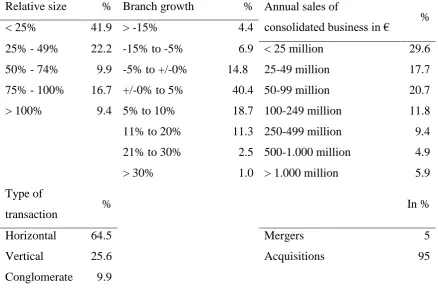
Table 1 shows the descriptive statistics of our data. The majority of deals involve a target less
than half the size of an acquirer (relative size). Additionally, most deals are horizontal, or they
involve firms in related industries. Acquired targets were also generally growing in sales, but
combined firms were still relatively small with the majority having less than 100 million Euro
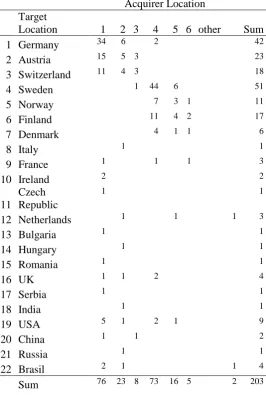
in annual sales. In Table 2, we display the location of the acquiring and target firms, and
many of the deals involve cross-border acquisitions with domestic acquisitions more common
in Germany and Sweden. Additionally, few of the acquisitions include developing counties,
but the distribution of acquiring and target countries are comparable to official statistics.
Consequently, sampling bias does not appear to be a serious limitation for our study
--- Insert Table 1 about here ---
--- Insert Table 2 about here ---
Evaluation of the Hypotheses
For assessing our hypothesis, we used OLS regressions, as it accommodates interval scales.
(1986) to standardize variables before calculating the interaction terms (Irwin & McCelland,
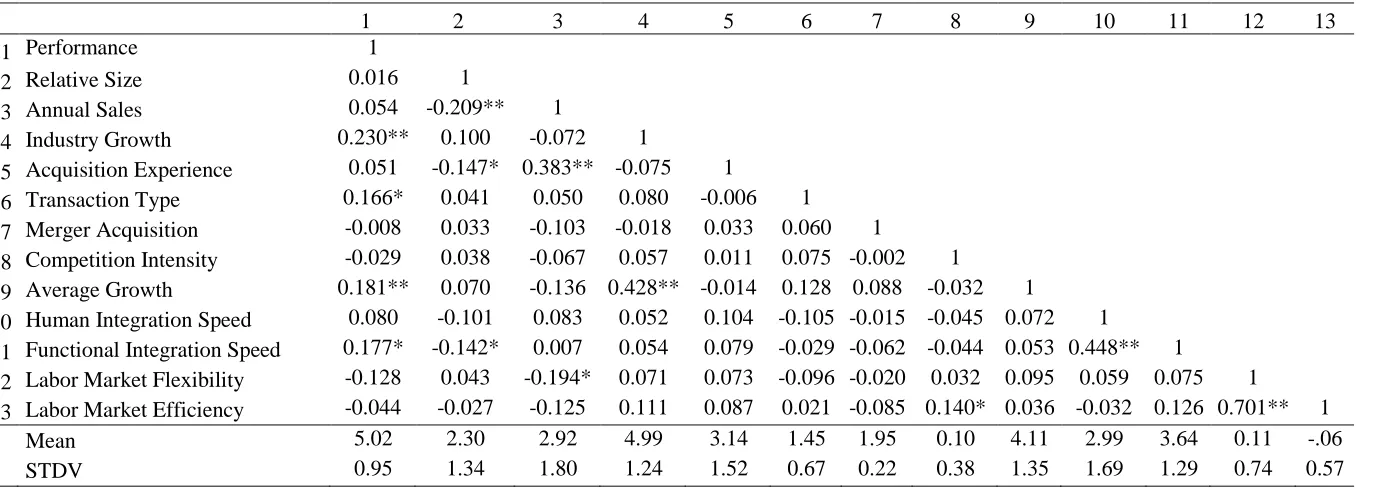
2001). We first analyzed the correlations of our indicators and constructs for potential
multicollinearity problems, see Table 3. All correlations are below the suggested threshold of
0.8 (Gujarati, 1995). However, there is a high correlation between labor market flexibility and
efficiency (r = 0.701). We also analyzed the variance inflation factor (VIF) for each
regression model. The VIF´s range between 1.057 and 4.033 and thus, are below the
recommended threshold of 10 (Tabachnick & Fidell, 2012). Again, the results suggest no
multicollinearity problems. Our sample also shows a positive correlation between transaction
type and performance, and this is consistent with conglomerate acquisitions performing better
in our sample. Additionally, performance is better for the acquisition of growing targets.
Interestingly, a correlation between the acquirer size in terms of annual sales and the
acquisition experience (.383; p<.01) exists, and this is consistent with firm size being an
indicator of acquisition activity. Consistent with Hypothesis 2a, functional integration is also
correlated with acquisition performance.
--- Insert Table 3 about here ---
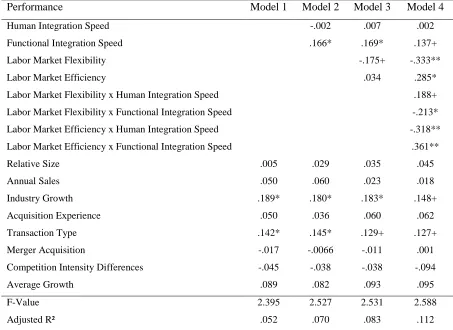
Table 4 reports the results of the regression analysis. We report standardized
regression coefficients, F-Values as well as the adjusted R² values, and our explanation of
observed variance is consistent with other acquisition research (e.g., Sirower, 1997, p.158). In
model 1, we investigate the effects of the control variables, and the adjusted R² indicates that
the control variables explain only 5.2% of the variance of our dependent variable. In model 2,
we implemented the direct effects of human and functional integration speed. We find no
significant effect from human integration speed on performance, and neither Hypothesis 1a
nor 1b is supported. For functional integration speed, we find a significant and positive effect
indicating that fast functional integration increases acquisition performance, supporting
Hypothesis H2a. As a result, we cannot support the alternative hypothesis (H2b) that indicated
variables. Only labor market flexibility has a negative direct performance effect (ß=-.175;
p<.1).
--- Insert Table 4 about here ---
In model 4, we implement the four interaction terms. Both direct effects, as suggested
in H1 and H2, remain equal compared to models 2 and 3 with regards to significance and
direction. While human integration speed is still insignificant, functional integration speed
remains positive and significant (ß=.137; p<.1). The interaction effects are significant and
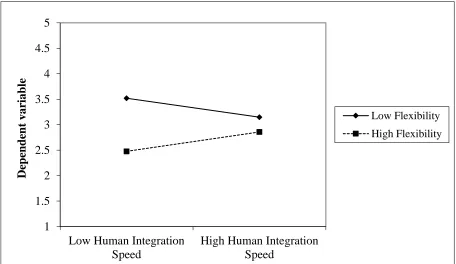
show diverging directions as indicated by H3 and H4. Specifically, H3a indicated a positive
moderating effect of labor market flexibility on the human integration speed performance
relationship. We find support for the theoretical relationship, as well as for the more complex
performance relationships of human integration speed. Slow human integration is beneficial
in cases of a rigid labor market and fast integration is beneficial for high labor market
flexibility (ß=.188; p<.1). This supports Hypothesis H3a and the effects are displayed in
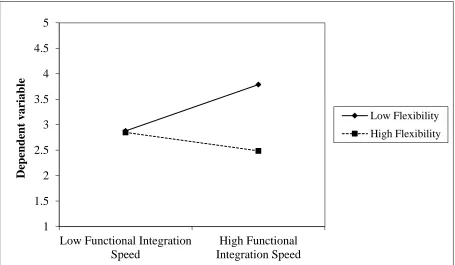
Figure 1. Further, we find a negative moderating effect of labor market flexibility on the
relationship of functional integration speed on acquisition performance (ß=-.213; p<.05),
supporting Hypothesis H3b. The performance effects between high and low labor market
flexibility do not differ in cases of slow functional integration speed. However, Figure 2
shows that highly flexible labor markets negatively and less flexible labor markets positively
impact the functional integration speed performance relationship. These results suggest that
labor market factor conditions influence the impact of human and task integration on
acquisition performance.
--- Insert Figure 1 about here ---
--- Insert Figure 2 about here ---
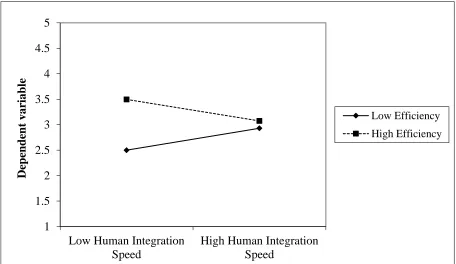
For Hypotheses H4a and H4b, we find significant moderating relationships.
Hypothesis H4a indicated a negative moderating effect of labor market efficiency on the
indicate a negative interaction (ß=-.318; p<.01). Figure 3 shows that slow human integration
speed is more beneficial in efficient labor markets, and fast human integration speed has a
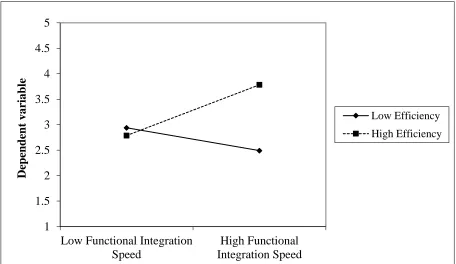
positive impact in less efficient labor markets. For Hypotheses H4b, we find the opposite
effect for functional integration speed (ß=.361; p<.01). As Figure 4 confirms, the beneficial
effects of fast functional integration speed require efficient labor markets, and there is no
benefit of when labor markets are inefficient.
--- Insert Figure 3 about here ---
--- Insert Figure 4 about here ---
Supplemental analysis and Robustness Tests
We performed supplemental analysis to test the robustness of our results. First, acquisition
motives might impact integration approaches (Lebedev et al., 2015). For example, there is
evidence that integration may destroy value in high-technology acquisitions (Puranam et al.,
2009; Paruchuri et al., 2006), but provide benefits in other industries (e.g. Cording et al.,
2008). While our focus on traditional industries should limit motives, as evidenced by a high
proportion of horizontal acquisitions, we tested whether our effects are robust across
acquisition motives (e.g. market-share, new product development, product-portfolio),
operational aims (e.g. staff retention, headcount-reduction, customer retention), and financial
aims (e.g. annual sales, operating income, cost savings). Each construct was assessed with a
single item on a 7 point Likert scale ranging from 1= “not important” to 7= “very important”,
as controls to our regression model. The results show that strategic (ß = 0.150; p = 0.029) and
financial (ß = 0.267; p = 0.000) motives impact acquisition performance, while operational
aims do not. However, our proposed interaction-effects do not change with regards to either
direction or significance (H3a: ß = 0.182; p = 0.058; H3b: ß = 0.236; p = 0.008; H4a: ß =
-0.236; p = 0.020; H4b: ß = 0.362; p = 0.003). Additionally, we tested whether integration
approaches are affected by acquisition motives. We find that strategic motives correlate with
functional integration speed. A relationship between functional integration and operational
motives in acquisitions has face validity, as functional integration would be required to
achieve operational motives.
Second, geographical and cultural distance might impact the chosen integration
approach (Dow & Larimo, 2011), as well as our research model. Consequently, we examined
acquiring and target countries into the German-speaking, Scandinavian, other European, and
countries outside Europe. Based on a parametric test, we find no significant differences
between the subgroups and integration speed. We also transformed our country variables in
two dummy variables to determine whether the acquirer and the target share a common
cultural background in terms of sharing an official language or whether they belong to the
same geographical region (Rossi & Volpin, 2004). Again, we find no statistical differences
regarding integration speed for either direction or significance.
As we have used a broad variety of control variables to avoid concerns regarding
omitted variables bias, model-overfitting might be a serious concern (Zaheer et al., 2013). As
a consequence, we calculated extended (with acquisition aims, language, and geographic
dummy) and reduced models (without controls). Both, the extended, as well as the reduced
models, provide consistent results, suggesting our findings are not artifacts of model
specification.
DISCUSSION
Against a background where existing acquisition research largely applies an internal focus on
combining firms (Teerikangas & Joseph, 2012), we agree with Wu and colleagues (2016) that
research needs to consider institutional contexts. Our research answers to calls to examine the
institutional environment (Ferreira, et al., 2014; Hutzschenreuter, Kleindienst, & Lange,
2015) and contingent effects of labor market factor conditions (Buckley et al., 2016; Siegel &
Larson, 2009). As a result, we complement earlier research on the constraining nature of the
of new institutional economics (North, 1990) that institutions in developed economies impact
economic growth. We contribute to this line of research by confirming institutional setting of
host and parent firm countries interact in realizing opportunities from acquisitions.
Specifically, our results show different direct effects for human and functional integration
speed with an insignificant direct effect for human integration speed and a positive direct
effect of functional integration speed on acquisition performance without considering
institutional context. This can be partially explained by our focus on manufacturing industries
where operational integration plays a major role.
We also find the impact of human and task integration speed is moderated by labor
market factor conditions. Our results supporting the impact of human integration speed is
positively moderated by labor market flexibility and negatively moderated by labor market
efficiency. Consistent with expectations human integration speed becomes positive when
paired with property rights, free markets, and competition typical of high labor market
flexibility., However, the interaction of human integration speed and labor market efficiency
is opposite of what was expected, and it lowers acquisition performance. Understanding the
relationship between human integration speed and labor market efficiency represents an
opportunity for future research. For functional integration speed, a slower pace of integration
benefits performance when a host country has high labor market flexibility. However, this
may be offset under conditions of labor market efficiency that amplifies the positive effect of
functional integration speed on acquisition performance. Further, faster human integration
under conditions of labor market flexibility may facilitate functional integration and improved
acquisition performance. In discussing implications of our findings, we separately highlight
research and managerial implications.
Extant acquisition theory suffers from lack of attention to the environment surrounding
acquisitions (Teerikangas & Joseph, 2012; King & Schriber, 2016). The majority of research
on integration speed focuses on characteristics internal to combining firms (e.g., Angwin,
2004; Bauer, King & Matzler, 2016; Cording et al., 2008; Homburg & Bucerius, 2006),
unlikely to sufficiently explain acquisition performance especially when combining firms
from different environments. While prior research largely assumes that cultural distance is
symmetrical between countries (Weber, Tarba & Reichel, 2009), we find integration decisions
and their outcomes will vary between two countries depending on where a target and acquirer
are located. Further, most research on cross-border acquisitions has examined cultural
differences versus more fine-grained institutional differences. In a review, Lebedev and
colleagues (2015) conclude that the quality of institutions is important for cross-border
acquisition performance. We complement and extend this research by examining whether
institutional differences involving labor market efficiency and flexibility also impact
cross-border acquisition decisions and performance.
Second, extant acquisition research acknowledges integration speed as one of the most
important levers of acquiring managers, however often either disregards interaction with
institutional contexts (e.g. Homburg & Bucerius, 2006), and offers conflicting findings on
speed. Our focus on the institutional environment can reconcile conflicting findings regarding
the benefits (e.g., Chanmugan, et al., 2005; Cording et al., 2008; Morag & Barakonyi, 2009)
and drawbacks (Meglio et al., 2015; Puranam et al., 2009; Weber et al., 2009) of integration
speed. We find that the interaction of integration decisions and institutional conditions
significantly impact acquisition performance. Specifically, labor market efficiency and
flexibility largely impacts acquisition performance through a moderating impact on human
and task integration speed. This confirms the importance of labor market flexibility and
efficiency as an important part of a nation’s institutional environment (Whang, Hong,
organizational effort and reorganization costs, but they also reinforce the importance of
human and functional integration speed. Further, faster human integration can mitigate limits
of tighter labor markets. However, contrary to theory, the interaction between human
integration speed and labor market efficiency had a negative opposite effect and underscores
the need for continued research. Importantly, we find that it is not only the absolute value of
differences, but the direction of the differences that matter (Hutzschenreuter, Kleindienst, &
Lange, 2016).
Third, our study also adds to new institutional economics (North, 1990) by showing
how it offers a fruitful starting point for understanding acquisition performance. Prior research
has begun to elaborate the effects of institutions on acquisitions involving developing
countries (Hoskisson et al., 2013; Lebedev et al., 2015). While institutional differences may
be the starkest in acquisitions involving developing and developed countries, we demonstrate
they matter also in between developed countries. Thus, we extend and develop this research
by further strengthening the relation between acquisitions and opportunities and threats from
institutional context differences. Specifically, we show how institutions interact with
acquisition choices to shape acquisition outcomes also in developed countries.
Managerial implications
Our results also have important implications for managers. First, integration speed can be a
decisive success-factor in acquisitions. Nonetheless, the positive effect of functional
integration speed should not automatically lead to the conclusion that managers should speed
up the integration of organizational functions. Managers should set integration speed with
consideration of an acquisition’s context. In cases of a highly flexible labor market, key
employees could easily leave the organization when changes are too disruptive. Thus, human
resource management should focus on retaining these employees (Zhang, Ahammad, Tarba,
Cooper, Glaister & Wang, 2015). Still, it is likely more important that a market displays labor
speed. This underscores that acquisition integration is a multidimensional construct and that
managers need to consider the interplay between human and functional integration speed.
Limitations and Research Opportunities
Our study has several limitations worth noting, including our application of retrospective
primary data to measure acquisition performance. This relates to concerns about the
decreasing capacity of recollection and overly positive assessments by managers (Ellis, Reus
& Lamont, 2009; Golden, 1992). However, we attempt to mitigate this concern by focusing
on more recent acquisitions. Research also supports that managerial assessment of firm
performance is consistent with objective measures of performance (Richard et al., 2009).
Further, managerial assessment is often the only available option and has the advantage of
managers being able to consider multiple dimensions of performance (Papadakis & Thanos,
2010). Still, examining the impact of labor market flexibility and efficiency on acquisition
integration with objective performance measures to triangulate our results represents an
opportunity for future research. A related limitation derives from a smaller sample size,
though the significance of our observed effects could become even stronger in a larger
sample. Regardless, our sample has the advantage of considering respondents from multiple
countries, and our response rate is consistent with other primary data research on acquisitions
(Bauer & Matzler, 2014; Homburg & Bucerius, 2006).
Additional changes in research design also represent opportunities. For example,
future research should repeat this study to build cumulative knowledge in the field of
integration and institutions (Bettis, Ethiraj, Gambardella, Helfat & Mitchell, 2016; Lewin,
Chiu, Fey, Levine, McDermott, Murmann, & Tsang, 2016). Additionally, the majority of
cross-border acquisition research focuses on developed country acquirers (Lebedev et al.,
2015), and, while we do not find differences for acquisitions involving developing economies,
there continues to be a need to examine acquisition activity by emerging market firms (Liu &
institutions (e.g. protection of firm founders) or corporate governance (Young et al., 2008), as
there is an increased trend of acquisitions by firms in emerging markets (Liu & Deng, 2014;
Xing, Liu, Tarba & Cooper, 2016; Xing, Liu, Tarba, & Cooper, 2017). Further, while we
complement our primary data with secondary data on labor market characteristics, research in
this area could benefit a longitudinal design would be preferable (Ellis, Reus, & Lamont,
2009; Zollo & Meier, 2008). Our measure of acquisition experience also focuses on general
experience, and it would be useful to investigate prior acquisition experience in a target firm’s
country (e.g., Andersson & Svensson, 1994), as well as a target firm’s experience (e.g.,
Cuypers, Cuypers, & Martin, 2016). Still, alternate research designs represent an opportunity
for future research.
Overall, our findings reinforce Hutzschenreuter and colleagues (2016) suggestion that
future research also consider additional aspects of institutional environment beyond labor
market efficiency and flexibility (e.g.,Liou, Chao & Ellstrand, 2017; Sternard & Sauermann,
2016). Research is also needed on the microfoundations of cross-border acquisitions,
particularly considerations of the impacts on people and how they react (e.g., Liu et al., 2017).
Still, most research on acquisition integration takes an internal focus, and we find an
interaction between internal and external conditions better explains cross-border acquisition
References
Aguilera, R. V., & Dencker, J. C. (2004): The role of human resource management in cross-border mergers and acquisitions. The International Journal of Human Resource Management, 15(8): 1355-1370.
Ahammad, M., Glaister, K., Weber, Y., & Tarba, S. (2012): Top management retention in cross-border acquisitions: The roles of financial incentives, acquirer’s commitment and autonomy. European Journal
International Management, Vol. 6: 458-480.
Ahammad, M. F., Tarba, S. Y., Liu, Y., & Glaister, K. W. (2014): Knowledge transfer and cross-border
acquisition performance: The impact of cultural distance and employee retention. International Business Review, 25(1): 66–75.
Akgün, A., & Lynn, G. (2002): New product development team improvisation and speed-to-market: an extended model. European Journal of Innovation Management, 5(3): 117-29.
Alimov, A. (2015): Labor market regulations and cross-border mergers and acquisitions. Journal of
International Business Studies, 46(8): 984–1009.
Andersson, T., & Svensson, R. (1994). Entry modes for direct investment determined by the composition of firm-specific skills, Scandinavian Journal of Economics, 96: 551-560.
Ang, S. H., Benischke, M. H. & Doh, J. P. (2015). The interactions of institutions on foreign market entry mode,
Strategic Management Journal, 36, pp. 1536–1553.
Angwin, D. (2004): Speed in M&A integration: The first 100 days. European Management Journal, Vol. 22(4): 418-430.
Angwin, D., & Meadows, M. (2015): New integration strategies for post-acquisition management. Long Range
Planning, Vol. 48(4): 235-251.
Anner, M., & Caraway, T. (2010): International institutions and workers’ rights: Between labor standards and market flexibility. Studies in Comparative International Development, 45(2): 151–169.
Appelbaum, S. H., Gandell, J., Yortis, H., Proper, S., & Jobin, F. (2000): Anatomy of a merger: behavior of organizational factors and processes throughout the pre-during-post-stages (part1). Management Decision, Vol. 38(9): 649-661.
Armstrong, S. J., & Overton, T. S. (1977): Estimating Nonresponse Bias in Mail Surveys. Journal of Marketing
Research, Vol. 14: 396-402.
Bagchi, P., & Rao, R. P. (1992): Decision making in mergers: An application of the analytic hierarchy process.
Managerial Decision Economics, Vol. 13: 91-99.
Barkema, H. G., & Schijven, M. (2008): How do firms learn to make acquisitions? A review of past research and an agenda for the future. Journal of Management, Vol. 30(4): 594-634.
Baron, R., & Kenny, D. (1986): The moderator-mediator variable distinction in social psychological research: Conceptual, strategic, and statistical distinctions. Journal of Personality and Social Psychology, Vol. 51(6): 1173-1182.
Bauer, F., & Matzler, K. (2014): Antecedents of M&A success: The role of strategic complementarity, cultural fit, and degree and speed of integration. Strategic Management Journal, Vol. 35(2): 1-23.
Bauer, F., King, D., & Matzler, K. (2016): Speed of acquisition integration: Separating the role of human and task integration. Scandinavian Journal of Management, Vol. 32: 150-165.
Bauer F. (2016): A literature review and a suggestive future research agenda on speed of integration in M&A –
Tacking stock of what we know, in: Risberg, A., King, D.R., & Meglio, O. (Eds.): The Routledge Companion to
Mergers and Acquisitions, Routledge, London, New York
Becker, D. (2005): Ressourcen-Fit bei M&A-Transaktionen – Konzeptionalisierung, Operationalisierung und
Erfolgswirkung auf Basis des Resourcebased View. Wiesbaden: Gabler Verlag.
Belenzon, S., Tsolmon, U., (2016). Market frictions and the competitive advantage of internal labor markets.
Strategic Management Journal 37: 1280–1303.
Bettis, R. A., Ethiraj, S., Gambardella, A., Helfat, C., & Mitchell, W. (2016): Creating repeatable cumulative knowledge in strategic management – A call for a broad and deep conversation among authors, referees, and editors. Strategic Management Journal, 37(2): 257-261.
Bijlsma-Frankema, K. (2004): Dilemmas of managerial control in post-acquisition processes. Journal of
Managerial Psychology, 19: 252–268.
Birkinshaw, J., Bresman, H., & Hakanson, L. (2000): Managing the post acquisition integration process: How human integration and task integration processes interact to foster value creation. Journal of Management
Studies, Vol. 37(3): 365-425.
Botero, J. C., Djankov, S., Porta, R.L., Lopez-de-Silanes, F., & Shleifer, A. (2004). The Regulation of Labor.
Quarterly Journal of Economics 119 (4): 1339–1382.
Breen, R. (2005). Explaining cross-national variation in youth unemployment: Market and institutional factors.
European Sociological Review, 21(2): 125-134.
Brozovic, D. (forthcoming): Strategic flexibility: A review of the literature. International Journal of
Management Reviews: 1-29.
Brueller, N., Carmeli, A., & Markman, G. (forthcoming): Linking merger and acquisition strategies to post merger integration: A configurational perspective of human resource management. Journal of Management. Buckley, P.J., Munjal, S., Enderwick, P., & Forsans, N. (2016): Do foreign resources assist or impede internationalisiation? Evidence from internationalization of Indian multinational enterprises. International
Business Review, 25: 130-140.
Buono, A., & Bowditch, J. L. (2003): The human side of mergers and acquisitions - managing collisions
between people, cultures and organizations. Washington D.C.
Calipha, R., Tarba, S. Y., & Brock, D. M. (2010): Mergers and acquisitions: A review of phases, motives, and success factors. Advances in Mergers and Acquisitions, 9: 1–24.
Capron, L., Dussauge, P., & Mitchell, W. (1998): Resource redeployment following horizontal acquisitions in Europe and North America, 1988-1992. Strategic Management Journal, 19(7): 631-661.
Capron, L., & Guillén, M. (2009): National corporate governance institutions and post acquisition reorganization. Strategic Management Journal, Vol. 30: 803-833.
Carbonell, P., Rodriguez-Escudero, A., & Pujari, D. (2009): Customer involvement in new service development: An examination of antecedents and outcomes. The Journal of Product Innovation Management, 26: 536–550. Cartwright, S. (2005): Mergers and acquisitions: An update and appraisal. International Review of Industrial and
Organizational Psychology, Vol. 20: 1-38.
Carney, M., Dieleman, M. and Taussig, M. (2016). How are institutional capabilities transferred across borders?
Journal of World Business, 51: 882–894.
Chacar, A. S., Newburry, W., Vissa, B., & Chacar, A. (2010): Bringing institutions into performance persistence research: Exploring the impact of product, financial, and labor market institutions. Journal of International
Business Studies, 41(7): 1119–1140.
Chanmugam, R., Shill, W., Mann, D., Ficery, K., & Pursche, B. (2005): The intelligent clean room: Ensuring value capture in mergers and acquisitions. Journal of Business Strategy, 26(3): 43-49.
Choi, J. J., Lee, S. M. & Shoham, A. (2016). The effects of institutional distance on FDI inflow: General environmental institutions (GEI) versus minority investor protection institutions (MIP), International Business
Christensen, C. M., Alton, R., Rising, C., & Waldeck, A. (2011): The new M&A playbook. Harvard Business
Review, March: 48-57.
Churchill, G. A. (1995): Marketing research: Methodological foundations (6th ed.). New York.
Collings, D., Scullion, H., & Morley, M. (2007): Changing patterns of global staffing in the multinational enterprise: Challenges to the conventional expatriate assignment and emerging alternatives. Journal of World
Business, Vol. 42: 198-213.
Collison, P., Brennan, L. & Rios-Morales, R. (2017). Attracting Chinese Foreign Direct Investment to Small, Developed Economies: The Case of Ireland, Thunderbird International Business Review, 59: 401–419. Cogman, D., Tan, J. (2010), A lighter touch for post-merger integration, McKinsey Quarterly, 34: 8-12. Cooke, F. L. (2006): Acquisitions of Chinese State‐Owned Enterprises by Multinational Corporations: Driving Forces, Barriers and Implications for HRM. British Journal of Management, 17(S1): 105-S121.
Cooke, F. L., & Huang, K. (2011): Postacquisition evolution of the appraisal and reward systems: A study of Chinese IT firms acquired by US firms. Human Resource Management, Vol. 50(6): 839-858.
Cording, M., Christman, P., & King, D. (2008): Reducing causal ambiguity in acquisition integration:
Intermediate goals as mediators of integration decisions and acquisition performance. Academy of Management
Journal, Vol. 51(4): 744-767.
Cording, M., Christmann, P., & Weigelt, C. (2010). Measuring theoretically complex constructs: The case of acquisition performance. Strategic Organization, Vol. 8 (1): 11-41.
Cuypers, I. R., Cuypers, Y., & Martin, X. (2017). When the target may know better: Effects of experience and information asymmetries on value from mergers and acquisitions. Strategic Management Journal, 38(3): 609-625.
Datta, D. (1991): Organizational fit and acquisition performance: Effects on post acquisition integration.
Strategic Management Journal, Vol. 12(4): 281-297.
Debroux, P. (1993): Japanese mergers and acquisitions: Overcoming obstacles to improved systemic efficiency.
Atlantic Economic Journal, Vol. 24(3): 224-256.
De Massis, A., Audretsch, D., Uhlaner, L., & Kammerlander, N. (2017): Innovation with limited resources: Management lessons from the German Mittelstand. Journal of Product Innovation Management, online first Dikova, D., Sahib, P., & Wittleoostuijn, A. (2010): Cross-broader acquisition abandonment and completion: The effect of institutional differences and organizational learning in the international business service industry, 1981-2001. Journal of International Business Studies, 41: 223-245.
Dillman, D. (2000): Mail and Internet Surveys: The Tailored Design Method (2nd. ed.). New York: Wiley. Dillman, D., Smyth, J., & Christian, L. (2009): Internet, mail, and mixed mode surveys: the tailored design
method. Hoboken: Wiley & Sons.
DiPrete, T.A. (1993): Industrial restructuring and the mobility response of American workers in the 1980s.
American Sociological Review, 58(1): 74-96.
Dow, D., & Larimo, J. (2011): Disentangling the roles of international experience and distance in establishment mode choice. Management International Review, 51: 321-355.
Eckardt, R., Skaggs, B., Youndt, M. (2014): Turnover and knowledge loss: An examination of the differential impact of production manager and worker turnover in service and manufacturing firms. Journal of Management
Studies, Vol. 51: 1025-1057.
Ellis, K., Reus, T., & Lamont, B. (2009): The effects of procedural and informational justice in the integration of related acquisitions. Strategic Management Journal, Vol. 30 (2): 137-161.