A Longitudinal Follow-up Study
of the Doodle Den After-school
A Longitudinal Follow-up Study
of the Doodle Den After-school Programme
The authors of this report are:
Andy Biggart, Seaneen Sloan and Liam O’Hare of the Centre for Effective Education, Queen’s University Belfast Additional contributors
The following members of the Research Team also made significant contributions to the research upon which this report is based: Kelly Gaw, Pamela Jardine, Karen Kerr and Joanne O’Keeffe.
How to cite this report
Any citation of this report should use the following reference:
Biggart, A., Sloan S. and O’Hare, L. (2014) A Longitudinal Follow-up Study of the Doodle Den After-school Programme. Dublin: Childhood Development Initiative (CDI).
Copyright © Childhood Development Initiative, 2014 Tallaght West Childhood Development Initiative Ltd. St. Mark’s Family and Youth Centre
Cookstown Lane Fettercairn Tallaght Dublin 24
Tel: +353 (0)1 494 0030 Fax: +353 (0)1 462 7329 E-mail: [email protected] Web: www.twcdi.ie
Published by Childhood Development Initiative, Dublin ISBN: 978-0-9928763-3-3
Contents
Introduction 1
Background 2
The Doodle Den After-School Programme 2
The randomised controlled trial of Doodle Den 2
The long-term effectiveness of literacy interventions 3
Aims of the Doodle Den follow-up study 3
Methods 4
Design 4
Sample 4
Outcomes and measures 4
Procedure 5
Analysis 5
Ethics 6
Results 7
Response rate 7
Sample characteristics 8
Balance of groups at follow-up 8
Main analysis 10
Exploratory analysis 12
Discussion 13
References 16
Introduction
More than a quarter of children in Ireland are living in, or are at risk of, poverty. Children who grow up in poverty are more likely to leave school early and without having attained the fundamental literacy skills. Literacy is widely acknowledged as the foundation for academic attainment across the curriculum. Children who fall behind in literacy at an early stage are likely to remain behind (Brooks, 2007; Francis et al, 1996; Juel, 1988), with consequences for later academic achievement and access to employment.
Background
The Doodle Den After-school Programme
Doodle Den is a newly developed, manualised, after-school literacy programme designed for the Childhood Development Initiative (CDI) as part of a wider strategy to improve the health, safety and learning of children, and increasing their sense of belonging to the community. Doodle Den aims to promote young children’s literacy using a balanced literacy framework, with a focus on writing, text comprehension, phonics, sight vocabulary, independent reading and fluency (O’Rourke et al, 2008). It operates throughout the normal school year, over a 36-week period, and is aimed at 5 and 6 year-olds (Senior Infants class) identified as ‘struggling beginning’ readers. It involves the children attending 3 after-school sessions per week, each lasting 1½ hours. Sessions are structured to begin with a snack and sign-in routine, followed by various aspects of literacy teaching and activities, concluding with a ‘fun’ element (e.g. art, physical education, drama or music) based on a literacy theme. In addition, there are 3 family and 6 parental sessions, in which parents are encouraged to participate in a range of activities, to include sitting in on child sessions and shared reading activities designed to promote wider family literacy. The programme is delivered by 2 different service providers operating across 7 different settings, and involves children from a total of 8 schools within the Tallaght West area of Dublin, with a target group of 15 children in each after-school setting.
The randomised controlled trial of Doodle Den
As part of the implementation process, a rigorous evaluation of the effects of the programme was completed by the Centre for Effective Education at Queen’s University Belfast, which included a randomised controlled trial (RCT) looking at the effects of the programme on child outcomes over 3 successive year cohorts, combined with a process evaluation that investigated implementation.
The RCT was designed as an individually randomised trial within multiple schools utilising a 3-year rolling cohort design. In other words, it followed 3 different cohorts of children over 3 successive school years. The evaluation began in September of the 2008/09 school year and the final cohort was post-tested in June 2011. Children completed a pre-test before the start of the programme in September and the post-test assessment at the end of the programme in the following June. In total, 464 children completed both pre- and post-test measures and were included in analysis (intervention group, n=237; control group, n=227).
The results (Biggart et al, 2013) show that after controlling for pre-test scores, children who took part in the Doodle Den Programme scored significantly more positively than control group children on measures of ability (effect sizes ranging from d=+0.17 to 0.30), as well as teachers’ assessment of the children’s literacy ability (d=+0.28). There was evidence to suggest that the programme also had a positive impact on improving concentration and reducing problem behaviours in school (d=-0.18), increasing family library activity (d=+0.39) and the child’s reading at home (d=+0.25). All the other measures, such as school attendance, were moving in a positive direction, although failed to reach the required level of statistical significance.
Exploratory analyses suggest that the programme appears to benefit boys as much as girls and that there are only minor differences in terms of year cohort, family affluence/poverty and ethnicity. The boys in particular who attended Doodle Den appeared to derive some additional benefits in relation to their concentration and behaviour in school lessons, as evidenced through the teachers’ reports.
The long-term effectiveness of literacy interventions
Few rigorous evaluations of literacy interventions with a comparable control group have included a follow-up to determine whether benefits are sustained over the longer term. Existing follow-up studies of literacy interventions have had mixed results. For example, randomised controlled trials of Reading Recovery, an early intervention programme for struggling beginning readers, have shown positive effects on reading outcomes measured directly after the intervention (Pinnell, 1998; Pinnell et al, 1994; Schwartz, 2005), but not at 2 years post-intervention (Baenen et al, 1997, Sylva and Hurry 2007). Other evaluations, which have not used an RCT methodology, have noted enduring benefits of Reading Recovery (e.g. Schmitt and Gregory, 2007;) while others have noted enduring benefits of a range of programmes over many years (Borman et al, 2007; Ross et al, 1995; Slavin et al, 1993; Schmitt and Gregory, 2007). Little is known about the durability of gains resulting from after-school literacy programmes.
Aim of the Doodle Den follow-up study
The aim of the Doodle Den follow-up study was to determine whether the positive effects of Doodle Den on child literacy and behaviour noted in the original randomised controlled trial would be sustained at 2 and 3-years after the end of the programme.
Methods
Design
[image:9.595.42.552.259.340.2]The original evaluation was designed as an individually randomised controlled trial, utilising a 3-year rolling cohort design. The follow-up study presented in this report was designed to assess child literacy outcomes at 2 and 3 years following the end of the programme. Due to the nature of the rolling cohort design of the original evaluation, the 2-year and 3-year follow-up data collection occurred at different time points for the 3 cohorts (see Table 1). The 2-year follow-up consisted of Cohorts 2 and 3 (tested in Autumn 2012 and Autumn 2013, respectively). The 3-year follow-up consisted of Cohorts 1 and 2 (again, tested in Autumn 2012 and Autumn 2013, respectively).
Table 1: Cohorts and year of testing
Sample
The sample consisted of children who took part in the original evaluation of Doodle Den and had consent to take part in the follow-up at each time point. The maximum possible sample for the
2-year follow-up was 417 (207 intervention and 210 control) and 409 (205 intervention and 204 control) at the 3-year follow-up.
Outcomes and measures
Follow-up measures
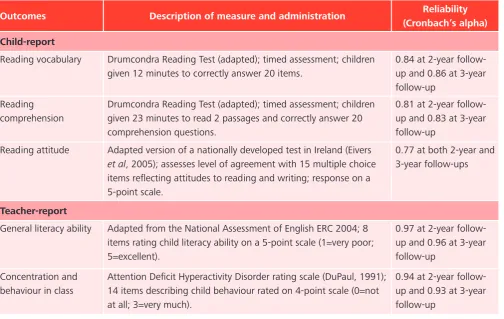
Outcomes collected directly from the children were reading vocabulary and reading comprehension. Teacher-rated outcomes were general child literacy ability and ADHD-related behaviours in class (see Table 2).
Pre-test measures
Pre-test measures (collected during the original study period, 2008-2011) included in analyses were child overall literacy ability, as measured by the Drumcondra Primary Reading Test (Sheil, 2008), rated child literacy ability and teacher-rated child concentration and behaviour in class (measured using the same tools as described in Table 2).
Other variables
Dichotomous variables were created for child gender (boy=1, girl=0) and intervention category (Doodle Den=1, Control=0). The number of Doodle Den sessions attended by children was included as an indicator of dosage (mean=70.19±15.58 for the 2-year follow up sample, and mean=61.67±22.60 for the 3-year follow-up sample).
Cohort 2012 2013
Cohort 1 3-year follow-up
Cohort 2 2-year follow-up 3-year follow-up
Table 2: Description of outcome variable, measurement and reliability
Procedure
Children from intervention and control groups within the same school class were tested together during a regular school day. The child testing was conducted in a group setting and was overseen by members of the research team and/or trained fieldworkers. All fieldworkers were Garda-vetted and given training in the assessment procedures prior to undertaking testing. Teachers’ child assessments were undertaken by the child’s regular class teacher and involved completing a questionnaire for each child in their class who had parental consent to take part in the follow-up study. Fieldworkers were blinded as to group allocation and given that the children had moved from Junior Infant to Senior Infant school and were being taught by different teachers, it was highly unlikely that the teachers were aware of group allocation.
Analysis
Data were entered into the Statistical Package for the Social Sciences (SPSS) for preparation and preliminary exploration, prior to analysis using Stata v 13. Data preparation involved checking the proportion of missing data and ensuring that minimum and maximum values were within the appropriate range. Descriptive statistics were generated for each variable
Outcomes Description of measure and administration Reliability (Cronbach’s alpha)
Child-report
Reading vocabulary Drumcondra Reading Test (adapted); timed assessment; children given 12 minutes to correctly answer 20 items.
0.84 at 2-year follow-up and 0.86 at 3-year follow-up
Reading comprehension
Drumcondra Reading Test (adapted); timed assessment; children given 23 minutes to read 2 passages and correctly answer 20 comprehension questions.
0.81 at 2-year follow-up and 0.83 at 3-year follow-up
Reading attitude Adapted version of a nationally developed test in Ireland (Eivers
et al, 2005); assesses level of agreement with 15 multiple choice
items reflecting attitudes to reading and writing; response on a 5-point scale.
0.77 at both 2-year and 3-year follow-ups
Teacher-report
General literacy ability Adapted from the National Assessment of English ERC 2004; 8 items rating child literacy ability on a 5-point scale (1=very poor; 5=excellent).
0.97 at 2-year follow-up and 0.96 at 3-year follow-up
Concentration and behaviour in class
Attention Deficit Hyperactivity Disorder rating scale (DuPaul, 1991); 14 items describing child behaviour rated on 4-point scale (0=not at all; 3=very much).
0.94 at 2-year follow-up and 0.93 at 3-year follow-up
Ethics
Ethical approval for the follow-up study was granted by the School of Education Ethics Committee at Queen’s University Belfast. Initially it was planned to target all children who had been involved in any of the previous cohorts of the original Doodle Den evaluation; however, as explicit consent had not been sought for a follow-up study, fresh consent was required from parents. Consent was obtained at three levels: (1) the schools consented to take part in the follow-up, facilitate recruitment by sending information and consent forms home to parents, and allow testing of the children during school hours; (2) parents consented for their child to take part by returning a signed consent form, and (3) children were asked for their verbal assent to take part on the day of testing. Consent was gained at each time point.
As children had moved schools since the original evaluation, potential data protection concerns were raised by CDI about providing the new schools with consent letters for only those children who had been involved in the original study. It was therefore agreed that parental consent would have to be sought from the parents of all the children in the same year group in which the children in the original study were likely to be located. Once parental consents were received from all the children in a year group, those who had been in the original study were identified and tested in the schools. This, however, prohibited further follow-up from those in the original study who failed to return a consent form.
Results
Response rate
At the 2-year follow-up, 170 children received parental consent and were tested, out of a possible 417 (36% response rate). At the 3-year follow-up, 114 children received parental consent and were tested, out of a possible 409 (28% response rate). Teacher questionnaires were requested for all children who had consent to participate and a total of 112 questionnaires were returned at the 2-year follow-up and 69 questionnaires at the 3-year follow-up.
[image:12.595.47.554.318.798.2]There were some differences between children tested and not tested (see Table 3). Boys were less likely to be tested at the 2-year follow-up and children from an ethnic minority background were less likely to be tested at both time points. At both time points, children tested had significantly higher rates of attendance at school during the intervention year, compared to those not tested. In addition, those tested at follow-up had significantly greater scores for overall literacy at pre- and post-test, as well as higher teacher ratings of literacy ability at post-test, compared to those not tested.
Table 3: Comparison between those tested and not tested at the 2-year and 3-year follow-up
Tested n (%)
Not tested
n (%) p
Tested n (%)
Not tested
n (%) p
Group
Control 74 (52) 235 (44) 0.048 53 (46) 256 (51) 0.41
Intervention 95 (48) 213 (56) 61 (54) 248 (49)
Gender
Boys 76 (45) 42 (56) 0.02 56 (49) 267 (53) 0.41
Girls 94 (55) 54 (44) 58 (51) 233 (47)
Ethnic minority
Yes 24 (15) 110 (28) 0.001 17 (15) 117 (26) 0.01
No 137 (85) 288 (72) 97 (85) 328 (74)
Tested mean (sd)
Not tested
mean (sd) p
Tested mean (sd)
Not tested
mean (sd) p
Child age (in months) at pre-test 66.86 (4.38) 67.89 (4.36) 0.01 67.91 (4.19) 67.49 (4.44) 0.38
Note: Figures in bold are statistically significant p<0.05.
Sample characteristics
At the 2-year follow-up, children were in Senior Infants 3rd Class. The age of the children at 2-year follow-up ranged from 8 to 10 years (mean=8.79 ±0.37 years). At the 3-year follow-up, children were in Senior Infants 4th Class. The age of children at 3-year follow-up ranged from 9 to 11 years (mean=9.80 ±0.43 years).
Balance of groups at follow-up
There were no significant differences between the control and intervention groups, at both the
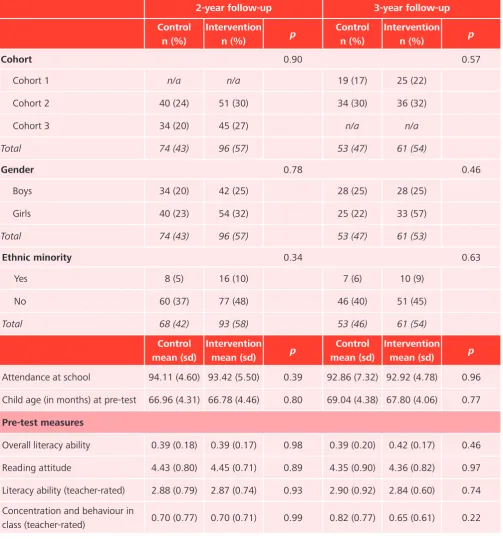
2-year and 3-year follow-ups in terms of cohort, child gender and ethnicity. Furthermore, there were no differences in rates of attendance at school during the intervention year, child age or any of the pre-test measures (see Table 4).
Tested n (%)
Not tested
n (%) p
Tested n (%)
Not tested
n (%) p
Post-test measures
Overall literacy ability 0.75 (0.22) 0.67 (0.24) 0.001 0.73 (0.23) 0.68 (0.24) 0.06
Reading attitude 4.36 (0.72) 4.34 (0.70) 0.84 4.39 (0.61) 4.34 (0.73) 0.60 Literacy ability (teacher-rated) 3.43 (0.97) 3.10 (0.05) <0.001 3.43 (0.98) 3.14 (1.03) 0.01
Concentration and behaviour in
class (teacher-rated) 0.63 (0.72) 0.73 (0.76) 0.15 0.60 (0.68) 0.72 (0.76) 0.13
2-year follow-up 3-year follow-up
Table 4: Comparison of the control and intervention groups at 2-year and 3-year follow-ups
Control n (%)
Intervention
n (%) p
Control n (%)
Intervention
n (%) p
Cohort 0.90 0.57
Cohort 1 n/a n/a 19 (17) 25 (22)
Cohort 2 40 (24) 51 (30) 34 (30) 36 (32)
Cohort 3 34 (20) 45 (27) n/a n/a
Total 74 (43) 96 (57) 53 (47) 61 (54)
Gender 0.78 0.46
Boys 34 (20) 42 (25) 28 (25) 28 (25)
Girls 40 (23) 54 (32) 25 (22) 33 (57)
Total 74 (43) 96 (57) 53 (47) 61 (53)
Ethnic minority 0.34 0.63
Yes 8 (5) 16 (10) 7 (6) 10 (9)
No 60 (37) 77 (48) 46 (40) 51 (45)
Total 68 (42) 93 (58) 53 (46) 61 (54)
Control mean (sd)
Intervention
mean (sd) p
Control mean (sd)
Intervention
mean (sd) p
Attendance at school 94.11 (4.60) 93.42 (5.50) 0.39 92.86 (7.32) 92.92 (4.78) 0.96
Child age (in months) at pre-test 66.96 (4.31) 66.78 (4.46) 0.80 69.04 (4.38) 67.80 (4.06) 0.77
Pre-test measures
Overall literacy ability 0.39 (0.18) 0.39 (0.17) 0.98 0.39 (0.20) 0.42 (0.17) 0.46
Reading attitude 4.43 (0.80) 4.45 (0.71) 0.89 4.35 (0.90) 4.36 (0.82) 0.97
Literacy ability (teacher-rated) 2.88 (0.79) 2.87 (0.74) 0.93 2.90 (0.92) 2.84 (0.60) 0.74
Concentration and behaviour in
class (teacher-rated) 0.70 (0.77) 0.70 (0.71) 0.99 0.82 (0.77) 0.65 (0.61) 0.22
2-year follow-up 3-year follow-up
Main analysis
Table 5 shows a summary of the results of regression analyses for child- and teacher-reported outcomes from the original post-test conducted at the end of the Doodle Den Programme. Based on the regression model, the results of the predicted means and standard deviations are reported, alongside the effect sizes, their confidence intervals and statistical significance
(p). The full regression models for all of the analyses are reported in the Appendix.
[image:15.595.46.554.281.518.2]This highlights that children who participated in Doodle Den scored significantly higher than the control group children in their overall measured literacy ability (g=+0.17), as well as the separate teacher rating of the children’s literacy ability (g=+0.28). The overall measure of the children’s literacy contained a number of sub-scales (word recognition, sentence structure and word choice), all of which were statistically significant. The results highlighted a further significant effect for the children who attended Doodle Den, with a reduction in teacher-reported concentration and behaviour problems in regular class (g=-0.18).
Table 5: Adjusted post-test means, effect size (Hedge’s g) and significance at immediate post-test
Note: Figures in bold are statistically significant p<0.05.
* For all measures, a positive score equals a more positive outcome with the exception of ‘Concentration and behaviour in class’, where a negative score indicates an improvement in reported problem behaviours.
Tables 6 and 7 present the post-test outcomes at 2-year and 3-year follow-up, respectively. The observed effects of Doodle Den at 2-year follow-up-in relation to overall literacy and the two related sub-scales (vocabulary and comprehension) were found to be positive, but these were no longer statistically significant (g=0.13-0.14). The prior positive significant effects on teacher-reported literacy ability and concentration and behaviour in class, highlighted at immediate post-test, were not observed at the 2-year follow-up, but again these findings were not statistically significant and as proxy measures these are considered less reliable than the direct measures of children’s ability through standardised tests. This means, while positive effects were found on the child measures we cannot conclude with great confidence that these were enduring effects of the programme. However, it would also be incorrect to conclude that the lack of statistical significance means there were no enduring effects of the programme since the level of attrition has resulted in much lower sample sizes than expected and as a result a reduction in the minimum detectable effect size.
Outcomes
Control Intervention Effect size (g)
[95% CI] p
Overall literacy ability 0.67 (0.25) 0.71 (0.23) 0.17
[0.00, 0.35] 0.049 Word recognition 0.75 (0.24) 0.79 (0.23) 0.17
[0.00, 0.36] 0.043 Sentence structure 0.54 (0.34) 0.61 (0.32) 0.30
[0.13, 0.48] 0.020
Word choice 0.57 (0.31) 0.65 (0.31) 0.26
[0.08, 0.43] 0.012 General literacy ability
(teacher-rated) 3.03 (1.04) 3.32 (1.02)
0.28
[0.12, 0.45] <0.0005 Concentration and behaviour in
class (teacher-rated)* 0.63 (0.81) 0.77 (0.68)
-0.18
[-0.35, -0.02] 0.001
Adjusted post-test mean (SD)
Table 6: Adjusted post-test means, effect size (Hedge’s g) and significance at 2-year follow-up
* For all measures, a positive score equals a more positive outcome with the exception of ‘Concentration and behaviour in class’, where a negative score indicates an improvement in reported problem behaviours.
At the 3-year follow-up, the previous positive effect sizes noted above on the child’s overall literacy have completely disappeared on the child measures. Positive, but non-significant effect sizes were now found in relation to teacher-reported literacy ability and concentration and behaviour in class. With further attrition among the sample in general, and in particularly the low rate of return of teacher questionnaires, we can be even less confident in these results from Year 3, especially due to the wide variations and fluctuations in effect sizes across measures compared to the Year 2 results.
Table 7: Adjusted post-test means, effect size (Hedge’s g) and significance at 2-year follow-up
Outcomes
[image:16.595.43.552.472.678.2]Control Intervention Effect size (g)
[95% CI] p
Overall literacy ability 0.64 (0.18) 0.66 (0.17) 0.13
[-0.25, 0.52] 0.50
Reading vocabulary 0.66 (0.18) 0.69 (0.17) 0.14
[-0.28, 0.57] 0.51
Reading comprehension 0.61 (0.18) 0.63 (0.17) 0.14
[-0.28, 0.56] 0.50 General literacy ability
(teacher-rated) 3.64 (0.88) 3.56 (0.81)
-0.09
[-0.64, 0.46] 0.74 Concentration and behaviour in
class (teacher-rated)* 0.35 (0.79) 0.35 (0.75)
-0.003
[-0.24, 0.23] 0.98
Adjusted post-test mean (SD)
Outcomes
Control Intervention Effect size (g)
[95% CI] p
Overall literacy ability 0.77 (0.18) 0.73 (0.17) -0.18
[-0.59, 0.23] 0.40
Reading vocabulary 0.81 (0.18) 0.77 (0.17) -0.25
[-0.70, 0.19] 0.27
Reading comprehension 0.72 (0.18) 0.70 (0.17) -0.11
[-0.55, 0.33] 0.64
General literacy ability 0.52
Adjusted post-test mean (SD)
Figure 1: Effect size differences between control and intervention group at each time point
Note: All effect sizes, including concentration and behaviour in regular school class are reported in a positive direction.
Exploratory analysis
Exploratory analysis sought to determine whether the outcomes were different according to child gender and number of Doodle Den sessions attended. Analyses also explored whether differing abilities at pre-test were associated with outcomes at the 2-year and 3-year follow-ups.
Gender
While there was a significant difference between boys and girls for one outcome measure (concentration and behaviour in class – reflecting better behaviour and concentration among girls), there was no evidence to suggest that this interacted with the intervention group (see Appendix, Tables A3 and A4).
Number of sessions attended
Weekly attendance registers were kept by programme facilitators to record the number of Doodle Den sessions attended. The average number of sessions attended was 63 (ranging from 0-88). Whilst the number of Doodle Den sessions attended was a predictor of a number of positive outcomes at immediate post-test, the number of Doodle Den sessions attended did not predict any of the outcome measures at the 2-year and 3-year follow-ups (see Appendix, Tables A5 and A6).
Pre-test literacy ability
While the original pre-test scores remained a significant predictor of outcomes at Year 2 and Year 3, there were no significant interactions between intervention group and pre-test literacy ability for any of the outcomes (see Appendix,
Tables A7 and A8).
Discussion
This piece of research has explored the long-term effectiveness of the Doodle Den Programme and provided a longitudinal assessment of differences between intervention and control groups. The original design of the Doodle Den trial was based on a large sample and evaluated through a rigorous research design involving a randomised trial. This demonstrated the positive benefits of attending the Doodle Den Programme, with improvements in the children’s overall reading ability and concentration and behaviour in class at the end of the programme. While the effect sizes were small to moderate, these findings were based on standardised assessments rather than on specific measures closely aligned to programme content (which tend to produce larger effects). While many after-school programmes have not been shown to be effective in raising academic achievement, the Doodle Den evaluation contributed to a number of prior tentative findings from previous reviews of successful after-school programme characteristics. These included the young age of the children; their family background; a high-level programme attendance; well-qualified staff with a strong focus on staff development and a well-structured programme aligned to the normal school day (Beckett et al, 2009; Fashola, 2002; Lauer et al, 2006; Scott-Little et al, 2002). The current study aimed to assess whether these initial improvements were sustained at 2- and 3-year follow-ups.
The rigour of the original design, however, is somewhat diminished in the longitudinal study by two key factors – the high level of attrition and the overall reduction in sample size. With the level of attrition experienced in the follow-up study, there is a need to be cautious about drawing strong conclusions from the findings. While the samples at follow-up were well matched in characteristics between the control and intervention group, there were differences between those who were tested and those lost to the follow-up. Attrition is always a problem with longitudinal designs, although it was a particular challenge in the current study due to the data protection requirements that had to be followed that prevented directly targeting children in the original trial. Children had also moved from Junior to Senior Infant school, meaning a change in teaching personnel with whom to liaise, and consent had to be sought from whole year groups in each of the school years prior to testing those students with consent and identified as belonging to the original trial.
The sizes of the finally achieved samples obtained were under-powered to detect statistically significant effects of the magnitude found in the original study. In other words, statistically, where differences were found, we cannot rule out that any of the observed effects are simply down to chance or some form of attrition bias. The strength of evidence declines between the immediate post-test and the Year 2 and Year 3 follow-up. The child assessments are also considered more reliable than the teacher assessments since the latter are proxy measures and were collected separately from the child testing. As a result, they may also not correspond exactly with the children who were tested in the follow-up.
A further difficulty associated with the small sample size of the current study is an inability to get a clear indication of what literacy skills decline quickest and which are most perseverant. The existing evidenced-based literature suggests that meta-cognitive programmes offer some of the greatest gains per unit cost across a wide range of domains, including vocabulary and comprehension (Higgins et al, 2004; EEF, 2014, see http://educationendowmentfoundation.org.uk/toolkit/meta-cognitive-and-self-regulation-strategies/). Therefore, it is recommended that any booster programme consider potential opportunities for the development of thinking skills alongside that of reading and vocabulary development. In addition, there is now a substantial literature supporting the use of cooperative learning in the development of both peer-to-peer relationships and achievement, particularly among pupils in the middle elementary grades (Slavin et al, 2009). One such approach is paired reading, which involves different ability pairs (same age or cross-age) working together in the role of tutor and tutee; this has been shown to be particularly effective through use of cross-age tutors (Tymms, et al, 2011). Lastly, in terms of implementation of after-school programmes, the evidence suggests that they should follow SAFE practice guidelines (Durlak et al, 2010) in that they should be sequenced (building skills gradually), active (through group work and assignment-based work), focused (on particular skill development demonstrated by a well-trained providers/ teachers) and explicit (in that the learning objectives of the booster programme are highlighted in a clear programme logic model).
If a booster programme is planned, a range of other factors seem pertinent. Firstly, the context of programme delivery needs consideration – in other words, whether it is delivered within the normal school day or delivered as another after-school programme or as a summer scheme. A second issue is whether to develop a bespoke booster programme based on the current evidence base of effective approaches or to source an ‘off the peg’ programme with evidence of effectiveness. The Doodle Den Programme was based on a newly developed balanced literacy framework as recommended for general literacy teaching, yet other more narrowly focused approaches also have evidence of effectiveness. Furthermore, it cannot be assumed that all children who previously attended Doodle Den require a booster to maintain effects and therefore one approach would be to screen and identify those most in need. There is some existing evidence to suggest that those in greatest need may make the greatest gains through after-school programmes (Scott-Little et al, 2002). Screening can also assist in matching those most suitable to an intended intervention or alternatively approaches can be utilised which capitalise on different capabilities through, for example, the use of different ability matched pairs in peer-tutoring interventions. The duration of any booster intervention is another factor to consider. Doodle Den ran three times a week across a whole school year. However, the evidence suggests that longer programmes do not necessarily have the greatest impact and programmes of shorter duration have also been shown to be effective (Brooks, 2007). It may therefore be desirable to deliver short, intensive boosters at several different time points following the original intervention in order to try and maintain, or enhance, short-term programme effects.
As already highlighted, there are a number of limitations to the current research. Attrition was higher than predicted, with only 36% and 28% of children in the original trial tested post-intervention at 2 years and 3 years, respectively. Stringent data protection procedures precluded the research team from directly targeting and recruiting the original trial participants for the follow-up study and this had a detrimental impact on follow-up. While there were no significant differences between either samples at follow-up, the level of attrition has reduced the power of the study to detect significant effects and also reduces confidence that the follow-up samples are comparable to the initial sample. There is an indication that those tested in the follow-up samples were among the higher performing children in the original study compared to those lost to follow-up. It is therefore unclear whether those with the greatest needs see a declining (or indeed a maintaining) effect from the intervention.
In conclusion, the findings presented from the current longitudinal study should not undermine the demonstrable effectiveness of the Doodle Den Programme, which was evaluated on a large sample and showed positive effects on standardised literacy tests at the end of the programme. CDI also has to be commended on its strong commitment to adopting an evidence-based approach. There is a general lack of evidence from randomised trials in relation to whether early intervention literacy strategies lead to sustained long-term gains, particularly in the case of after-school programmes, without further intervention and this study contributes to addressing this gap. While rigorous evaluations of reading programmes that use a matched control group are rare, especially in the Ireland and the UK, follow-up studies of this kind are even rarer. Overall, while indicative positive effects were apparent on the child measures at the Year 2 follow-up, with the level of sample size attrition we cannot conclude with great confidence that these represent the true enduring effects
of the programme. We have less confidence in the Year 3 results, with further attrition and wide fluctuations in effect sizes. Taking a wider view of the evidence in this study, and the limited literature, it can be concluded overall that the impact of the intervention appears to fade with time and has had a limited long-term effect. This suggests a need to boost or ‘recharge’ gains in literacy at regular intervals throughout the child’s early stages of education through additional support.
References
Baenen, N., Bernholc, A., Dulaney, C. and Banks, K. (1997) ‘Reading Recovery: Long-term progress after three cohorts’, Journal of Education for Students Placed at Risk, Vol. 2, pp. 161-81.
Beckett, M., Borman, G., Capizzano, J., Parsley, D., Ross, S., Schirm, A. and Taylor, J. (2009) Structuring out-of-school time to improve academic achievement: A practice guide (NCEE #2009-012). Washington, DC: National Center for Education Evaluation and Regional Assistance, Institute of Education Sciences, US Department of Education. Available at: http://ies. ed.gov/ncee/wwc/publications/practiceguides
Biggart, A., Kerr, K., O’Hare, L. and Connolly, P. (2013) ‘A randomised control trial evaluation of a literacy after-school programme for struggling beginning readers’, International Journal of Educational Research, Vol. 62, pp. 129-40.
Borman, G.D., Slavin, R.E., Cheung, A., Chamberlin, A., Madden, N.A. and Chambers, B. (2007) ‘Final reading outcomes of the national randomized field trial of Success for All’, American Educational Research Journal, Vol. 2, No. 3, pp. 701-31.
Brooks, G. (2007) What works with children with literacy difficulties? The effectiveness of interventions. Slough: National Foundation for Educational Research.
DuPaul, G.J. (1991) ‘Parent and Teacher Ratings of ADHD Symptoms: Psychometric properties in a community-based sample’, Journal of Clinical Child & Adolescent Psychology, Vol. 20, No. 3, pp. 245-53.
Durlak, J.A., Weissberg, R.P. and Pachan, M. (2010) A’ meta-analysis of after-school programs that seek to promote personal and social skills in children and adolescents’, American Journal of Community Psychology, Vol. 45, pp. 294-309.
EEF. See Education Endowment Foundation website: http://educationendowmentfoundation.org.uk/toolkit/meta-cognitive-and-self-regulation-strategies/
Eivers, E., Shiel, G., Perkins, R. and Cosgrove, J. (2005) The 2004 National Assessment of English Reading. Dublin: Educational Research Centre.
Fashola, O.S. (2002) Building Effective Afterschool Programs. Thousand Oaks, CA: Corwin Press Inc.
Francis, D.J., Shaywitz, S.E., Stuebing, K.K., Shaywitz, B.A. and Fletcher, J.M. (1996) ‘Developmental lag versus deficit models of reading disability: A longitudinal, individual growth curves analysis’, Journal of Educational Psychology, Vol. 88, pp. 3-17.
Higgins, S., Baumfield, V., Lin, M., Moseley, D., Butterworth, M., Downey, G., Gregson, M., Oberski, I., Rockett, M. and Thacker, D. (2004) ‘Thinking skills approaches to effective teaching and learning: what is the evidence for impact on learners’. In: Research Evidence in Education Library. London: EPPI-Centre, Social Science Research Unit, Institute of Education, University of London.
Hurry, J. and Sylva, K. (2007) ‘Long-term outcomes of early reading intervention’, Journal of Research in Reading, Vol. 30, No. 3, pp. 227-48.
Juel, C. (1988) ‘Learning to read and write: A longitudinal study of 54 children from first through fourth grades’, Journal of Educational Psychology, Vol. 80, No. 4, pp. 437-47.
Lauer, P., Akiba, M., Wilkerson, S., Apthorp, H., Snow, D. and Martin-Glenn, M. (2006) ‘Out-of-school time programmes: A meta-analysis of effects for at-risk students’, Review of Educational Research, Vol. 76, No. 2, pp. 275-313.
O’Rourke, M., Kennedy, E. and Axford, N. (2008) Doodle Den Programme Manual. Dublin: Childhood Development Initiative. Pinnell, G.S. (1998) Success of at-risk children in a program that combines writing and reading, Technical Report No. 417. Urban-Champaign: Centre for the Study of Reading, University of Illinois.
Pinnell, G.S., Lyons, C.A., DeFord, D.E., Bryk, A.S. and Seltzer, M. (1994) ‘Comparing instructional models for the literacy education of high-risk first graders’, Reading Research Quarterly, Vol. 29, No. 1, pp. 8-39.
Ross, S.M., Smith, L.J. and Casey, J. (1995) Final Report: 1994-95 Success for All program in Fort Wayne, Indiana. Memphis: Center for Research in Educational Policy, University of Memphis.
Sheil, G. (2008) Drumcondra Reading Tests. Personal communication.
Schmitt, M.C. and Gregory, A.E. (2007) ‘The impact of an early literacy intervention: Where are the children now?’, Literacy Teaching and Learning, Vol. 10, No. 1, pp. 1-20.
Schwartz, R.M. (2005) ‘Literacy learning of at-risk first-grade students in the Reading Recovery early intervention’, Journal of Educational Psychology, Vol. 97, No. 2, pp. 257-67.
Slavin, R.E., Madden, N.A., Dolan, L.J. and Wasik, B.A. (1993) Success for all in the Baltimore City Public Schools: Year 6 Report. Baltimore, MD: Center for Research on Effective Schooling for Disadvantaged Students, Johns Hopkins University. Slavin, R.E., Lake, C., Davis, S. and Madden, N. (2009) Effective Programs for Struggling Readers: A Best Evidence Synthesis. Baltimore, MD: Center for Research and Reform in Education (CRRE), Johns Hopkins University.
Shanahan, T. and Barr, R. (1995) ‘A Synthesis of Research on Reading Recovery’, Reading Research Quarterly, Vol. 30, pp. 958-96.
Tymms, P., Merrell, C., Thurston, A., Andor, J., Topping, K. and Miller, D. (2011) ‘Improving attainment across a whole district: School reform through peer tutoring in a randomized controlled trial’, School Effectiveness and School Improvement, Vol. 22, No. 3, pp. 265-89.
Appendix: Regression models for analyses
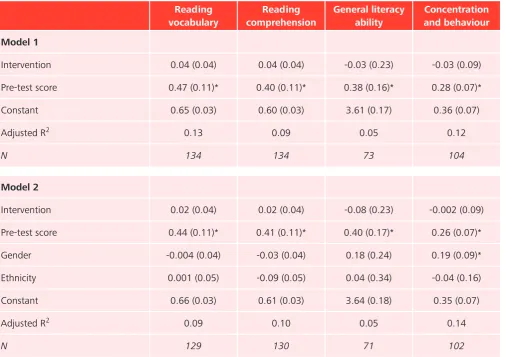
Table A1: Regression coefficients (standard errors in parentheses) estimating the effects of Doodle Den at the 2-year follow-up
* p<0.05
Reading vocabulary
Reading comprehension
General literacy ability
Concentration and behaviour
Model 1
Intervention 0.04 (0.04) 0.04 (0.04) -0.03 (0.23) -0.03 (0.09)
Pre-test score 0.47 (0.11)* 0.40 (0.11)* 0.38 (0.16)* 0.28 (0.07)*
Constant 0.65 (0.03) 0.60 (0.03) 3.61 (0.17) 0.36 (0.07)
Adjusted R2 0.13 0.09 0.05 0.12
N 134 134 73 104
Model 2
Intervention 0.02 (0.04) 0.02 (0.04) -0.08 (0.23) -0.002 (0.09)
Pre-test score 0.44 (0.11)* 0.41 (0.11)* 0.40 (0.17)* 0.26 (0.07)*
Gender -0.004 (0.04) -0.03 (0.04) 0.18 (0.24) 0.19 (0.09)*
Ethnicity 0.001 (0.05) -0.09 (0.05) 0.04 (0.34) -0.04 (0.16)
Constant 0.66 (0.03) 0.61 (0.03) 3.64 (0.18) 0.35 (0.07)
Adjusted R2 0.09 0.10 0.05 0.14
Table A2: Regression coefficients (standard errors in parentheses) estimating the effects of Doodle Den at the 2-year follow-up
* p<0.05
Table A3: Regression coefficients (standard errors in parentheses) estimating the effects of Gender on outcomes at the 2-year follow-up
Reading vocabulary
Reading comprehension
General literacy ability
Concentration and behaviour
Model 1
Intervention -0.04 (0.04) -0.02 (0.04) 0.36 (0.25) -0.12 (0.11)
Pre-test score 0.26 (0.11)* 0.34 (0.11)* 0.55 (0.15)* 0.37 (0.08)*
Constant 0.79 (0.03) 0.73 (0.03) 3.22 (0.19) 0.49 (0.08)
Adjusted R2 0.05 0.08 0.24 0.27
N 94 94 43 61
Model 2
Intervention -0.04 (0.04) -0.02 (0.04) 0.44 (0.27) -0.13 (0.11)
Pre-test score 0.27 (0.11)* 0.32 (0.11)* 0.57 (0.15)* 0.37 (0.08)*
Gender -0.04 (0.04) -0.05 (0.04) 0.19 (0.27) 0.07 (0.12)*
Ethnicity 0.04 (0.06) -0.09 (0.06) -0.14 (0.32) 0.18 (0.15)
Constant 0.81 (0.03) 0.72 (0.03) 3.17 (0.19) 0.51 (0.08)
Adjusted R2 0.04 0.09 0.22 0.27
N 94 94 43 61
Reading vocabulary
Reading comprehension
General literacy ability
Concentration and behaviour
Intervention 0.03 (0.05) -0.02 (0.05) 0.03 (0.31) 0.04 (0.13)
Pre-test score 0.48 (0.11)* 0.43 (0.11)* 0.35 (0.17)* 0.26 (0.08)*
[image:24.595.44.559.542.733.2]Table A4: Regression coefficients (standard errors in parentheses) estimating the effects of Gender on outcomes at the 3-year follow-up
[image:25.595.47.553.359.508.2]* p<0.05
Table A5: Regression coefficients (standard errors in parentheses) estimating the effects of number of Doodle Den sessions attended on outcomes at the 2-year follow-up
* p<0.05
Table A6: Regression coefficients (standard errors in parentheses) estimating the effects of number of Doodle Den sessions attended on outcomes at the 3-year follow-up
* p<0.05
Reading vocabulary Reading comprehension General literacy ability Concentration and behaviour
Intervention -0.07(0.05) -0.94(0.05) 0.26(0.39) -0.14(0.15)
Pre-test score 0.25(0.11)* 0.33(0.10)* 0.54(0.15)* 0.37(0.08)*
Gender -0.08(0.06) -0.06(0.06) 0.03(0.40) 0.00(0.17)
Group* Gender 0.06(0.08) 0.05(0.08) 0.33(0.54) 0.07(0.23)
Constant 0.76(0.06) 0.64(0.06) 1.68(0.60) 0.20(0.13)
Adjusted R2 0.05 0.07 0.22 0.25
N 94 94 43 61
Reading vocabulary Reading comprehension General literacy ability Concentration and behaviour
No. of sessions attended -0.002 (0.002) -0.002 (0.002) 0.03 (0.02) -0.004 (0.01)
Pre-test score 0.43 (0.14) 0.45 (0.15) 0.59 (0.24) 0.31 (0.08)
Constant 0.70 (0.02) 0.65 (0.15) 3.26 (0.30) 0.39 (0.08)
Adjusted R2 0.10 0.09 0.13 0.17
N 77 77 40 57
Reading vocabulary Reading comprehension General literacy ability Concentration and behaviour
No. of sessions attended 0.003 (0.002) 0.002 (0.002) 0.002 (0.01) -0.01 (0.003)
Pre-test score 0.25 (0.15) 0.30 (0.17) 0.79 (0.20) 0.24 (0.15)
Constant 0.76 (0.14) 0.70 (0.03) 3.18 (0.51) 0.34 (0.08)
Adjusted R2 0.04 0.04 0.39 0.07
N 50 50 24 33
[image:25.595.43.553.583.729.2]Table A7: Regression coefficients (standard errors in parentheses) estimating the effects of pre-test literacy ability on outcomes at the 2-year follow-up
* p<0.05
Table A8: Regression coefficients (standard errors in parentheses) estimating the effects of pre-test literacy ability on outcomes at the 3-year follow-up
* p<0.05
Reading vocabulary
Reading comprehension
General literacy ability
Concentration and behaviour
Intervention 0.04 (0.04) 0.04 (0.04) -0.06 (0.17) -0.09 (0.09)
Pre-test score 0.56 (0.16)* 0.40 (0.16)* 2.97 (0.71)* 0.03 (0.37)
Group* Literacy ability at pre-test -0.18 (0.21) 0.01 (0.22) 0.75 (1.07) -0.56 (0.56)
Constant 0.44 (0.07) 0.46 (0.07) 2.31 (0.31) 0.32 (0.16)
Adjusted R2 0.12 0.08 0.28 -0.003
N 134 134 94 94
Reading vocabulary
Reading comprehension
General literacy ability
Concentration and behaviour
Intervention -0.04 (0.04) -0.02 (0.04) 0.17 (0.23) -0.26 (0.15)
Pre-test score 0.27 (0.15) 0.38 (0.15)* 2.92 (0.81)* 0.40 (0.51)
Group* Literacy ability at pre-test -0.04 (0.22) -0.10 (0.22) -1.38 (1.17) -0.46 (0.74)
Constant 0.71 (0.06) 0.58 (0.06) 2.16 (0.36) 0.36 (0.23)
Adjusted R2 0.04 0.07 0.20 0.02
N 94 94 58 58
[image:26.595.45.553.349.515.2]The Childhood Development Initiative St. Mark’s Youth and Family Centre Cookstown Lane
Fettercairn Tallaght, Dublin 24 Tel: (01) 494 0030
Fax: (01) 462 7329
E-mail: [email protected]