August 2001
safe passages
to adulthood
Dynamic Contextual
Analysis of Young
People's Sexual Health
five-year programme of research into young people’s sexual and reproductive health in poorer
country settings. The Safe Passages to Adulthood programme aims to conduct and support
research to enable young people to improve their sexual and reproductive health. In order to
achieve this goal the programme is working to increase the research capacity of developing
country partners and generate new knowledge that will lead to the development of clear,
systematic guidelines for action at programme and policy levels. An underlying assumption of the
Safe Passages programme is that variations within and across different settings are identified, so
that culturally relevant and sensitive programmes can be devised.
The five main objectives of the Safe Passages to Adulthoodprogramme are:
• to fill key knowledge gaps relating to the nature, magnitude and consequences of reproductive
and sexual health problems among young people;
• to identify situation-specific key determinants of young people’s sexual behaviour;
• to identify culturally-appropriate means by which barriers to good sexual and reproductive
health can be overcome;
• to identify new opportunities to introduce and evaluate innovative programme interventions;
• to develop concepts and methods appropriate to the investigation of young people’s sexual
and reproductive health.
The Safe Passages programme does not define young people through the use of specific age
boundaries. Rather, it adopts a life course perspective in which the domain of interest is young
people in the period prior to the transition to first sex and up to the point of entry into marriage
or stable partnership (although it is recognised that in some countries, age at marriage is very
young).This spans the key transitional events of ‘adolescence’, and captures a period of high sexual
health risk and distinctive service needs.
Sexual and reproductive health includes physical and physiological processes and functions in
addition to psychological and emotional aspects. It encompasses young people’s capacity to
decide if and when to have children, the ability to remain free from disease and unplanned
pregnancies, freedom to express one’s own sexual identity and feelings in the absence of
repression, coercion and sexual violence, and the presence of mutuality and fulfilment in
relationships.
Young people themselves are not the only focus of the Safe Passages programme. Other
This booklet was prepared for the Safe Passages to Adulthood Programme by Helen Chalmers, Nicole Stone and Roger Ingham with contributions from Peter Aggleton, John Cleland, Rachel Partridge and Sarah Castle.
Acknowledgements
The authors would like to thank the organisations and individuals who contributed their time, information, experiences and advice during work that led to the preparation of this manual.
Carlos Cáceres & Ana Maria Rosasco- Redess Jovenes, Peru
Cecilia Gayet- Centre of Demographic Studies and Urban Planning, El Colegio de Mexico, Mexico
Fatima Juarez & Sarah Castle- London School of Hygiene and Tropical Medicine, UK
Nyovani Madise- University of Southampton, UK
Mamadou Kani Konate- CERPOD, Bamako, Mali
Jacobo Schifter & Kathia Castellon - ILPES, San José, Costa Rica
Gary Dowsett- Australian Research Centre in Sex, Health and Society, La Trobe University, Australia
Gulnara Kaliakbarova- National Healthy Lifestyles Centres, Almaty, Kazakhstan
Zura Keshileva- Venerealology Research Institute, Almaty, Kazakhstan
Doreen Massey - Health Consultant, UK
Richard Parker & Cristina Pimenta- ABIA, Rio de Janeiro, Brazil
Agnes Runganga - Human Behaviour Research Centre, Harare, Zimbabwe
Ian Warwick & Kim Rivers- Thomas Coram Research Unit, Institute of Education, UK
Dynamic Contextual
Analysis of Young
People's Sexual Health
Section Two - Why DCAs? 5
2.1 What is a DCA? 5
2.2 Using a DCA 6
Section Three - Planning a DCA 9
3.1 Laying the groundwork 9
Section Four - Conducting a DCA 14
4.1 Using existing information 15
4.2 Existing information of relevance to young people 17 4.3 Operational realities: the importance of interviews and observation 24 4.4 Innovative, effective and ineffective interventions 31
Section Five - Drawing conclusions and making recommendations 34
5.1 Analysing the material 34
5.2 Preparing the report 37
5.3 Drawing conclusions 38
Section Six - Using the results of a DCA 43
6.1 Dissemination for optimum impact 43
6.2 Follow-up action 47
6.3 Monitoring change 48
Introduction
Young people’s sexual and reproductive health has increasingly become a priority area since the 1994 Cairo International Conference on Population and Development (ICPD) declared that
“...countries, with the support of the international community, should protect and promote the
rights of adolescents to reproductive health education, information and care and greatly reduce
the number of adolescent pregnancies.”1
In poorer countries, it has been estimated that 60 percent of all teenage conceptions are unintended. Furthermore, about two million teenage women are thought to undergo unsafe abortions every year, with unsafe abortive practices being linked to maternal morbidity and mortality.2
The World Health Organisation and UNAIDS estimate that globally one in twenty young people have contracted a sexually transmitted infection (STI) before they reach the age of 21 and an estimated half of all HIV infections occur in the 15-24 age group, with young women out-numbering young men by a ratio of two to one.3 In 1999, the ICPD +5 recommended that at least 90 percent of young women and men should have access to preventative methods such as condoms, voluntary testing, counselling, and follow-up, in order to reduce vulnerability to HIV/AIDS infection.4
In many instances, early sexual initiation and unprotected sexual activity lead to negative social and economic consequences in addition to adverse health outcomes. For example, early parenthood can interrupt schooling which, in turn, can lead to fewer job possibilities and lower income. Negative psychological reactions may occur; for example, lowered self-esteem, discrimination, prejudice, and other similarly harmful outcomes. Young people who choose to express their sexuality in socially proscribed ways may also face strong negative reactions from others.
Both internationally and within many countries, there is increasing recognition of the importance of young people’s sexual and reproductive health. Because of this, there is a need for sound information regarding young people’s sexual development, behaviours, relationships and attitudes so as to inform the design of culturally appropriate and acceptable health and education services.
To date, much research of relevance to young people’s sexual and reproductive health has been relatively narrow in focus. Typical approaches have included studies of the epidemiology of STIs and HIV, KABP (knowledge, attitudes, beliefs, practices) surveys, and secondary analyses of DHS (Demographic and Health Surveys) data sets.
Such work has been successful in identifying many of the demographic, socio-economic and other background factors associated with young people’s sexual behaviour and its consequences and, indeed, has led to a deeper understanding of areas that demand greater attention. However, it has often failed to reveal the context in which behaviour takes place, including the many factors that impact upon, and contribute to, sexual risk-taking. Further, relatively little recognition is conventionally paid to the social, cultural and economic forces that result in different sexual experiences, expectations and behaviours.
A number of other approaches have been developed to enable a relatively quick understanding of one or more aspects of sexual and reproductive health (originally, in the field of women’s reproductive health and family planning). Many of these are grouped under the generic heading of rapid appraisal procedures, and include rapid rural appraisal, participatory rural appraisal, rapid epidemiological assessments, rapid assessment procedures, focussed ethnographic studies and situation analyses. Further, various approaches to the general field of policy analysis have been developed, with an emphasis on both health policy reform and improving ways of involving local communities in planning health care delivery.
Introduction
Each of these and other related approaches has contributed to an extension of the more traditional research paradigms, and many of them incorporate qualitative approaches as integral components. Their aim is to develop a more complete understanding of an area within a relatively short time frame so that appropriate policy responses can be devised and introduced. The emphasis of much of this work has, however, been on the mainstream aspects of health structures, organisation and service provision that may be of little relevance to the specific needs of young people.
Whilst each of these approaches has its uses for specific purposes, a new and dedicated form of systematic exploration is needed concerning the contexts in which young people’s early sexual activity takes place. Dynamic Contextual Analysis (DCA) has been developed to meet this need.
1.1
Why a new approach?
The primary aim of a DCA is to consolidate, within available resources, what is known within a particular country regarding young people’s sexual and reproductive health in order to obtain a more comprehensive understanding of the complex array of factors that affect young people’s sexual lives. By bringing together insights drawn from different levels and sectors of society, including the views of government officials, non-governmental organisations, community and youth representatives, teachers, health care providers, parents and young people themselves, barriers and opportunities can be identified and priorities for further actions can be agreed upon.
Barriers to improved sexual health outcomes among young people operate at the level of individuals (lack of knowledge, inappropriate attitudes to risk, poor self-esteem, economic dependence), communities (negative attitudes of parents and other gatekeepers) and institutions (legislative structures, opposition of religious organisations, financial constraints and programmatic limitations). The nature and importance of these obstacles varies from context to context and, while barriers will always be encountered, opportunities for making a positive impact also exist. To date, however, relatively few attempts have been made to assess the opportunities and constraints associated with each of these levels in order to assist in programme development.
The key components of a DCA include:
• its emphasis on young people’s perspectives, interpretations and accounts; • its concern to situate these accounts within the local and/or national context; • its sensitivity to the multi-levelled nature of young people’s lives and experiences;
• its commitment to capturing the dynamism and change associated with young people’s sexual socialisation in a rapidly globalising and evolving world.
This booklet has been developed to guide programme and project leaders through the process of carrying out a DCA focusing on young people’s sexual and reproductive health. It includes sections on planning, conducting the fieldwork, analysing and disseminating the findings and finally using the findings to influence best practice. A variety of methodologies and procedures are proposed that can be freely adapted to suit individual research contexts and the resources available.
It is recognised that the likely readership of this booklet will vary considerably in experience and training. An attempt has therefore been made to strike a balance between providing too much and too little information. Readers who find insufficient detail are encouraged to explore further resources available within their own countries whilst more general sources of information, available via the internet, are listed at the end of the manual.
1
United Nations (1994) Report of the International Conference on Population and Development, Cairo 5-13 September 1994. United Nations publications, sales no. E95.XIII.18
2
Noble, J. et al.The World's Youth 1996. Washington, D.C., Population Reference Bureau, Inc. (1996).
3
UNAIDS and WHO. Report on the Global HIV/AIDS Epidemic: December 1998. Available online at www.unaids.org/publications/
Why DCA’s
Dynamic contextual analyses combine a traditional focus on individual sexuality with a recognition that wider contextual factors affect young people’s sexual and reproductive lives. In other words, whilst acknowledging that young people have varying desires, attitudes, knowledge, skills and abilities, it is recognised that, in all societies, forces exist that determine whether, how, when, with whom and where young people engage in sexual activity.
In all societies, sexual activities are subject to moral constraint. For instance, sexual relations outside marriage are rarely encouraged; indeed they are frequently condemned. The proscription of sexual activities has many and varied implications particularly for young people. Legal, social and cultural sanctions may exist, with important consequences for the levels of service provision available for young people, the extent of education regarding relationships and sexual matters (both within the home and in school) and media coverage of sexual issues.
There is a compelling need to study individuals within their wider social context so that progress can be made, not only in understanding sexual activity, but also in identifying the barriers and constraints that inhibit potential improvements in physical and psychological outcomes and identifying opportunities for change. People live in social and cultural contexts and are influenced by a range of discourses regarding sexuality and gender relations.They engage in sexual relations for different reasons with varying levels of volition and coercion.
2.1
What is a DCA?
An in-depth situation assessment of all these factors would, of course, require the involvement of a number of full-time researchers drawn from a variety of relevant disciplines, including psychology, sociology, anthropology, public health, political science, policy analysis, and others. The DCA approach has been developed on the assumption that the necessary resources for such a fully comprehensive study are unlikely to be available, while recognising that important progress can still be made in more resource constrained contexts.
DCAs also attempt to move beyond reliance on a single research methodology. Important though they are, there are considerable dangers in developing programmes solely on the basis of findings from large-scale surveys or on detailed ethnographic studies in, perhaps, one small community.The complexity of young people’s sexual activity demands recognition in the research approaches adopted.
A successful DCA aims to provide insights at a number of levels, demonstrating how different factors influence patterns of sexual activity. In this way, DCA outputs add to the accumulating global understanding of the many and varied factors that affect sexual conduct amongst young people. DCAs will also identify tangible outcomes in the form of recommendations. Sometimes these may suggest urgent research priorities or they may focus on, for example, the need for improved monitoring of statistical information, the benefits to be gained from better staff training, or the need to extend identified innovative and successful programmes.
2.2
Using a DCA
Findings from a DCA are likely to be of great interest to all those involved in young people’s sexual and reproductive health, from the highest levels of government through to those working in the field.
2.2.1 Government responses
Why DCA’s
2.2.2 Civil society responses
As the value of taking action to promote young people’s sexual and reproductive health has been recognised in many countries, so the number of players involved in the field has increased. The results of a DCA analysis can be used to identify how voluntary or international and local NGO (Non Govermental Organisation) activities can work to complement national government policies and services, or to fill the gaps in existing sexual health care provision.
Findings of a DCA can also be used to assist international and local NGOs strengthen their work with young people.This may occur through the dissemination of new information on issues such as social and gender norms, knowledge, relationships, perceived barriers and risk-taking. Such information can help NGOs define their priorities and design and strengthen socially and culturally appropriate activities to improve young people’s sexual health.
2.2.3 The responses of health and other professionals
Information from a DCA is also helpful to individual professionals and volunteers working with young people at grass-roots level in schools, in the community and in the health sector. Greater understanding about young people and the wider social context in which they are growing up will help ensure that professionals and volunteers provide the best and most appropriate education, support, services, and care.
The category ‘young people’ represents a highly complex and variable group with diverse needs. A comprehensive DCA will explore the nature of this complexity and in doing so will highlight those young people who are marginalised by current service provision. A DCA will seek to recognise and report opportunities for strategic action and to inform the design of new programmes likely to make a difference to young people’s sexual health and well being.
2.2.4 The broader context
Individual behaviour does not take place in isolation but is promoted, sanctioned, penalised or evaluated by others whose actions affect young people’s lives. Beliefs and practices influencing young people’s sexual decision-making are formed and reinforced by peers, religious leaders, village elders and parents. These socially powerful individuals often control the gaining and transmission of sexual health knowledge by young people and impart norms relating to gender roles in their societies. If the sexual health of young people is to be improved, the role of such individuals needs to be understood. Findings from a DCA can help to raise awareness among key individuals and gatekeepers of the need for sensitive action to improve young people’s sexual and reproductive health.
Local and national media play an increasing role in shaping and influencing young people’s sexuality and sexual health knowledge. They provide an important source of sexual health information that may not always be accurate. For instance, young people may develop their self image in relation to what they read in magazine articles or newspapers, or what they see on television or at the cinema. Using the media to disseminate the findings of a DCA can help to ensure that journalists and others have access to accurate information regarding young people’s sexual health. It will also improve the likelihood of findings being available to young people themselves as well as to the wider public.
Finally, one of the key aims of the DCA process is to identify priority areas for future research. In many developing countries, sound information is lacking about young people’s sexual and reproductive health.Whatever the gaps, a DCA is a useful tool for development agencies, donors and researchers alike in setting and clarifying future research objectives
To many young people, economic advantage, consumer products and the chance of a
Planning a DCA
A critical feature of a DCA is its ability to access knowledge of the variations inherent in different cultural settings. Nowhere is this more important than in the arena of sexual and reproductive health. A DCA does not assume that every developing country is the same; rather it acknowledges that even within countries there may be significant differences between one particular area and another.There is therefore a need to explore the differences and values in a given locality to ensure that the data gathered are situationally specific and sensitive.
Those best equipped to carry out a DCA will be people who already have knowledge of a particular culture but who remain open to the diversity and possible uniqueness of the data that might be gathered about it. In this section, some of the steps that need to be gone through in setting up a DCA will be described.
Six DCAs have already been carried out as part of the SPA (Safe Passages to Adulthood) programme - in Brazil, Kazakhstan, Mali, Mexico, Peru and Zimbabwe - and the experiences of the research teams involved in those studies will be used where appropriate to illustrate some of the points that follow.
3.1 Laying the groundwork
3.1.1 Is it appropriate to carry out a DCA?
In reaching a decision whether or not to conduct a DCA, a number of factors need to be taken into account. Firstly, is a DCA the best form of assessment for the circumstances or might a different kind of appraisal be appropriate? Secondly, is the timing right and is it sensitive to other work taking place? Thirdly, is there a suitable research team available with sufficient resources to carry out a good quality study?
3.1.2 Research team
If the decision to proceed is taken, it will be crucial to bring together a suitable research team. A research team numbering between three and six with pre-existing experience in different areas is probably best. The skills, characteristics and values of individual workers will need to be identified alongside the agreed and specific aims of the DCA, so that the team is clear that it has the necessary expertise or can acquire it reasonably easily. For example, it is likely to be helpful to have both female and male researchers available to gather data. In some situations, researchers with particular language skills may be essential, and so on.
Sometimes individuals with established access to, or contact with, local, national or international organisations will significantly enhance the strengths of a research team, notably in terms of raising funds, gaining access to key individuals or groups, or in mobilising support.The value of personal contacts, including those with influential people such as youth policy makers and practitioners, has been identified as useful by those researchers who have already worked on a DCA.
The sensitive nature of much of the data to be gathered and the individuals who will provide them make it important that the people carrying out a DCA are carefully chosen.They need an approach to the work that is non-threatening to, and supportive of, informants and that reassures them about confidentiality. Additionally, they need to be accepting of the diversity of views, practices and concerns that may come to light so that the analysis produces a realistic and unbiased mapping of the context in which it takes place.
It is likely, therefore, that researchers who already have experience of working with young people and who are already involved in matters concerning sexual and reproductive health will be the most suitable to form the team for a DCA. Ideally, the team will also include people with experience of statistical research and others who have worked with a variety of research methods. Some of these people may have experience linked primarily to biomedical concerns, some may come from a more social science or health education background. Careful thought needs to be given to developing a team that will work effectively to gain access to the breadth and depth of data required. Having one or more young people involved in aspects of the work would also be extremely helpful in ensuring that important issues and concerns are taken into account.
3.1.3 Aims of the DCA
Planning a DCA
Thus, a DCA will provide a sound and well-researched knowledge base about particular regions within a developing country against which interventions can be planned, implemented and evaluated. It will gather detailed information about the nature and consequences of sexual and reproductive health problems among young people, and will identify key determinants of young people’s sexual behaviour. Alongside these concerns, a DCA will identify how barriers to good sexual and reproductive health can be overcome, and will point to new opportunities for intervention to improve young people’s sexual and reproductive health.
Beyond this, however, and more substantively, a DCA will highlight concepts and methods appropriate to the further investigation of young people’s sexual and reproductive health in the country.
3.1.4 Gaining support
Before beginning a DCA, it is important to identify appropriate sources of support. Each DCA will be different, but the time required is likely to be not less than three months and more usually about six. For the majority of research teams, it will be necessary to secure agreement from their employer/department/organisation for dedicated work time.
When planning a DCA, it is important to identify those individuals, groups and organisations (in addition to the researchers’ employers) that can offer support to the project.The team will need to negotiate this support locally, nationally and internationally. Support takes many forms. In particular, the research team will need permission to contact certain groups and organisations and in many situations will need individuals, including young people themselves, to consent to give information.
The best means of gaining access to individuals, groups and organisations will be through negotiation with key people and gatekeepers. In some circumstances, an advisory group may be helpful in facilitating access and has the advantage of including key individuals throughout the process. Sometimes, previous good relationships between researchers and officials from government and non-government organisations can make gaining access easier, but always the benefits of carrying out the DCA should be made clear so that the value of the research can be its own advocate for co-operation and support. Results from previously completed DCAs can sometimes be helpful in persuading officials of the value of the work to the sexual and reproductive health of the country’s young people. Access to the information contained within this booklet may also be helpful in convincing key people of the credibility of the research.
businesses to support the research. It may be, for instance, that the number of employable young people is seriously threatened by high levels of HIV/AIDS. In these circumstances, local businesses may see the value of contributing financially to work that aims to improve the sexual and reproductive health of young people.
Additional training and preparation in the use of suitable and culturally sensitive research methods can assist a team in carrying out a DCA. Early DCAs benefited from a training workshop for the researchers run by the SPA Programme. Equivalent activities are best planned and carried out locally or regionally.
3.1.5 Time planning
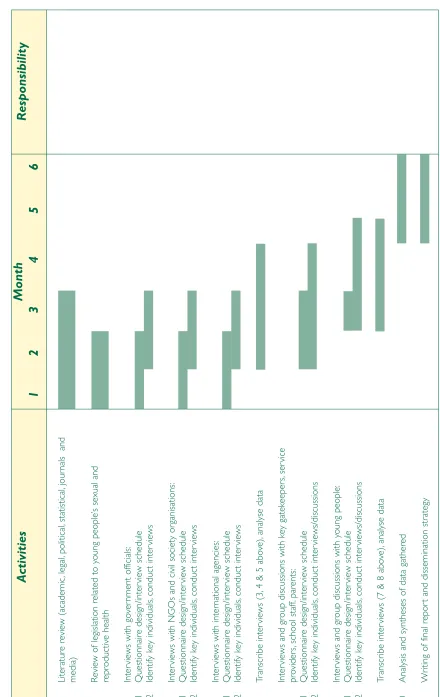
Concurrent with efforts to secure permission, access, funding and training, a time line for the DCA needs to be drawn up. A time line is not only useful for researchers themselves, but also for those from whom support is being sought. A time line indicates the stages of the research and their likely duration together with the responsibilities of each team member.
Planning a DCA
Figur
e 1:
DC
A
activity plan and time line
Activities
Responsibility
1
Liter
ature review (academic
,legal,
political,
statistical,
jour
nals and
media)
2
Review of legislation related to y
oung people’
s sexual and
reproductiv
e health
3
Inter
views with go
ve rnment off icials: 3.1 Questionnaire design/inter view schedule 3.2 Identify k ey individuals, conduct inter views 4 Inter
views with NGOs and civil society or
ganisations: 4.1 Questionnaire design/inter view schedule 4.2 Identify k ey individuals, conduct inter views 5 Inter
views with inter
national agencies: 5.1 Questionnaire design/inter view schedule 5.2 Identify k ey individuals, conduct inter views 6 T ranscr ibe inter views (3,
4 & 5 abo
ve ), anal yse data 7 Inter
views and group discussions with k
ey gatek eeper s, ser vice pro vider s, school staff, parents: 7.1 Questionnaire design/inter view schedule 7.2 Identify k ey individuals, conduct inter views/discussions 8 Inter
views and group discussions with y
oung people: 8.1 Questionnaire design/inter view schedule 8.2 Identify k ey individuals, conduct inter views/discussions 9 T ranscr ibe inter
views (7 & 8 abo
ve ), anal yse data 10 Anal
ysis and syntheses of data gathered
11
Wr
iting of f
inal repor
t and dissemination str
ategy
Note:
Shaded cells represent allocated time
[image:17.595.85.525.55.752.2]This section offers guidance on collecting information to paint an overall picture of the country or region; its demographic structure, its cultural heritage and ideologies, its patterns of ill-health and disease, and its educational and health provision.
Throughout the research process, there will be a sustained need to gather information that might have a bearing on young people’s sexual and reproductive health. The research team will therefore need to remain open to any documents, policies, or papers about, for example, health and educational strategies, as they bear on sexual and reproductive health. Usually, such information will come from both formal and informal sources. An important part of the DCA involves the research team going beyond the face value of any such documents to explore the reality in practice of current policies or strategies.
Additional information should be collected from interviews with key informants, either individually or in groups. The particular challenges associated with gathering reliable data from young people themselves need also to be addressed. In many countries, knowledge about sexual health outcomes such as HIV/STIs, unsafe abortion, sexual coercion and violence is very limited. A successful DCA will add significantly to this knowledge base.
Conducting a DCA
4.1 Using existing information
A review of existing information is the logical first step in a DCA. While many different kinds of data are likely to exist already, the initial task will be to identify and obtain copies or sight of relevant documents.To do this, access will be needed to government officials, universities, libraries and to personnel working in NGOs in order to obtain relevant academic, political, legal and statistical material.
Gaining access to a full range of relevant sources may sometimes prove difficult and time consuming. In addition, in some countries there may be only limited data on the socio-economic, demographic and reproductive health characteristics of young people.
Accessing relevant documents will be helped by good relationships with the various gatekeepers and will be influenced by their prevailing view about young people in general, and the value of innovative work on young people’s sexual and reproductive health in particular. Some of the difficulties that might be encountered include:
• key people not available at all, or not at the right time; • sexual and reproductive health seen as unimportant;
• access to existing data restricted possibly due to suspicion about the research itself.
These are issues that all DCA research teams will need to consider and plan for at an early stage.
Descriptive data about the country under study will be readily available in printed and written sources such as censuses and surveys.These will provide information about, for example, overall population numbers, density and geographical spread, together with current and projected rates of youth mortality, morbidity, fertility and marriage. Data may also be available on more specific sexual and reproductive health indicators such as contraceptive use and abortion rates. Most countries will have already carried out a demographic and health survey (DHS) containing relevant information, although the lower age limit in some of these surveys may restrict their direct applicability.
It is important to remain sensitive to the limitations of such quantitative data. While providing important background information, recorded numbers alone usually say very little about the sensitive issues associated with sexual and reproductive health. Furthermore, comparability may be difficult to
Actual numbers of abortions occurring in the country are difficult to determine due to
the incidence of illegal and private abortions (privateers can perform mini-abortions for
establish when definitions (of sexual behaviours, for example) are unclear. In some circumstances, sensitive data such as those on patterns of contraceptive use may be gathered from allsexually active young people, whereas other official figures may only refer to marriedyoung people.
Throughout the DCA process, researchers will need to ensure that the definitions used in official documents, in relevant literature and in face-to-face contacts are consistent.Terms such as ‘young people’, ‘adolescents’, ‘sex work’ and ‘prostitution’ may vary according to the data source and the values or prejudices of the writer or informant.Those providing services for young people need to be especially sensitive to the different meanings of various concepts, and to the meanings adopted by young people themselves.To ignore such differences may hinder the establishment of good working relationships, as well as limiting the value of the data collected.
Additional background data may provide information about the political and economic climate within which young people are growing up, and its potential impact on their sexual and reproductive health behaviours. Some of this information will be readily accessible, such as known political groupings and well-documented political and social tensions in the country. Of particular significance will be any recent or current political and economic developments relevant to social, educational or health activities and policies. Some of these may signal positive changes for young people. For example, in several countries, major transformations in the size and scope of the media have enhanced opportunities for young people to be more aware of sexual health issues.
Whilst much of the secondary data gathered at an early stage in the DCA may have considerable face validity and may be regarded as ‘official’ evidence, researchers will need to be vigilant in evaluating the information to decide whether it is out-dated, inaccurate or incomplete. Any concerns identified or ambiguities and contradictions noted can then followed up as the project progresses, perhaps through interviews with key individuals.
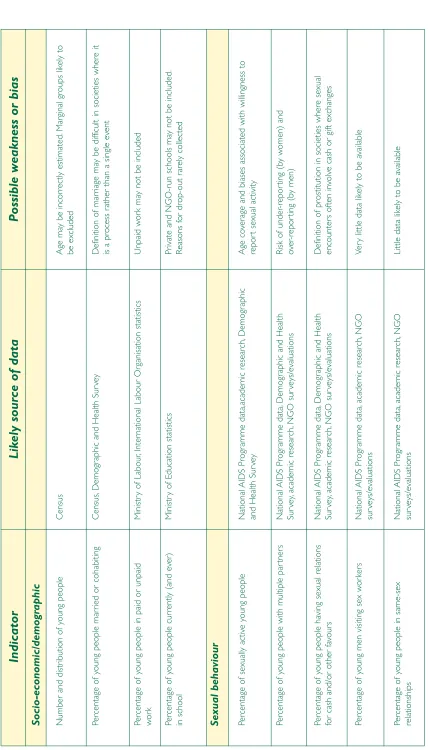
Table 1 lists some of the data sources common in many developing countries. The table also identifies some potential weaknesses in the available data.
The real incidence of abortion-related death is unknown because many cases never
arrive at hospital. Peru DCA
Information regarding the sexual activity of young people in Kazakhstan remains
sparse and where it does exist consists mainly of data pertaining to first penetrative
Conducting a DCA
4.2
Existing information of relevance to young people
The next step in the DCA is to collect existing information and literature that will contribute to a more in-depth understanding of:
• the social and cultural dimensions of young people’s sexual and reproductive health;
• official policies, laws, regulations and programmes that influence young people’s sexual and reproductive health;
• the policies and strategies of international and local NGOs, women’s groups, religious groups and community youth groups of relevance to young people’s sexual and reproductive health.
4.2.1 Social and cultural dimensions
Suitable sources of data here include up-to-date sociological, anthropological and ethnographic accounts that add value to the largely quantitative data described above. The importance of gathering data of this kind during a DCA cannot be overstated if efforts are to be made to move beyond a purely descriptive level.
Important sources of information are likely to be located in the archives of academic institutions and in national libraries. Individual researchers may also be able to supply useful data from their own published or unpublished work. Very often contact with one individual will lead to knowledge of other informants. The research team will need to remain vigilant in asking about possible new contacts, and in following them up, so that data gathered are as comprehensive as possible.
As before, it will be important to ensure that local definitions of ‘sex’,‘sexuality’ and ‘young people’ are adequately explored and understood. For example, there is confusion in many published studies between sexuality and sexual behaviour. The general issue, as noted above, is for the research team to be as certain as possible of the operational definitions in any source material that is used.
Particular attention needs to be paid to the social and cultural dimensions of sexual and reproductive behaviour among young people from different ethnic groups or different social classes. There may be important gender variations in sexual and reproductive behaviour as well as differences according to where young people live, and their degree of contact with people of influence who are active in condoning, sanctioning or encouraging particular sexual behaviours.
Many of the meanings that male and female adolescents attach to different words or
concepts relating to sexuality do not match the concepts that health professionals and
Indicator
Socio-economic/demo
gr
aphic
Number and distr
ib
ution of y
oung people
Census
Age ma
y be incor
rectl
y estimated.
Mar
ginal groups lik
el
y to
be excluded
P
ercentage of y
oung people mar
ried or cohabiting
Census,
Demogr
aphic and Health Sur
ve
y
Def
inition of mar
riage ma
y be diff
icult in societies where it
is a process r
ather than a single ev
ent
P
ercentage of y
oung people in paid or unpaid
wo
rk
Ministr
y of Labour
,Inter
national Labour Or
ganisation statistics
Unpaid w
o
rk
ma
y not be included
P
ercentage of y
oung people cur
rentl
y (and ev
er)
in school
Ministr
y of Education statistics
Pr
ivate and NGO-r
un schools ma
y not be included.
Reasons f
o
r drop-out r
arel
y collected
Se
xual behaviour
P
ercentage of sexuall
y activ e y oung people National AIDS Progr
amme data,academic research,
Demogr
aphic
and Health Sur
ve
y
Age co
ve
rage and biases associated with willingness to
repor
t sexual activity
P
ercentage of y
oung people with m
ultiple par tner s National AIDS Progr amme data, Demogr
aphic and Health
Sur ve y, academic research, NGO sur veys/evaluations
Risk of under
-repor ting (b y w omen) and o ver -repor ting (b y men) P
ercentage of y
oung people ha
ving sexual relations
for cash and/or other fa
vour s National AIDS Progr amme data, Demogr
aphic and Health
Sur ve y, academic research, NGO sur veys/evaluations Def
inition of prostitution in societies where sexual
encounter
s often in
volv
e cash or gift exchanges
P
ercentage of y
oung men visiting sex w
o rk er s National AIDS Progr amme data, academic research, NGO sur veys/evaluations V e ry
little data lik
el
y to be a
vailab
le
P
ercentage of y
oung people in same-sex
relationships National AIDS Progr amme data, academic research, NGO sur veys/evaluations
Little data lik
el
y to be a
vailab
le
Lik
ely source of data
Possible weakness or bias
[image:22.595.85.513.43.793.2]T
able 1:
Data sources and potential pr
oblems
WHO (1997)
Coming of
Age – From F
acts to
Action f
or
Adolescent Se
xual and Reproductive Health.
Geneva,
W
o
rl
d Health Or
Conducting a DCA
Indicator
Health and f
amily planning
P
ercentage of y
oung people using an
y f o rm of con-tr aception Ministr
y of Health,
Famil
y Planning
Association,
IPPF and P
opulation
Council data.
Data ma
y onl
y exist f
or mar
ried w
omen.
Data ma
y not be
age specif
ic
.
P
ercentage of y
oung people using condoms
Ministr
y of Health,
Famil
y Planning
Associations,
IPPF and
P
opulation Council data.
Demogr
aphic and Health Sur
veys.
Condom social mar
keting projects
Data ma
y onl
y exist f
or men.
Limited inf
or
mation on cor
rect use
,or on condom quality
Yo ung people’ s f e rtility r ates Demogr
aphic and Health Sur
veys.
Ministr
y of Health data.
Age mis-repor
ting.
Under
-repor
ting of pre or extr
a-mar
ital
fe
rtility
P
ercentage of y
oung people who ha
ve exper ienced a sexuall y tr ansmitted disease Ministr
y of Health and National
AIDS Progr
amme data,
Demogr
aphic and Health Sur
ve
y
Under
-repor
ting b
y symptom-free individuals.
Under
-repor
ting b
y people treating themselv
es or being
treated b y tr aditional pr actitioner s P
ercentage of y
oung w
omen who ha
ve
exper
ienced abor
tion
Ministr
y of Health data,
academic research.
Diff
icult to obtain data where abor
tion is illegal.
Percentage of y
oung w
omen who ha
ve exper ienced genital m utilation Some Demogr
aphic and Health Sur
veys,
NGO sur
veys
Sensitiv
e topic that ma
y not be seen as a
‘prob
lem’
Prevalence of v
esico-vaginal f
istulae in y
oung
w
omen
Ministr
y of Health data,
NGO sur
veys
Under
-repor
ting due to social stigma
Number
s of y
oung people using intr
av
enous dr
ugs
Ministr
y of Justice data,
police records.
P
eople not in contact with the police will not be included.
Lik
ely source of data
Sensitivity to what may sometimes be subtle social and/or cultural variations within a country is crucial in order to avoid unwarranted generalisations.
Topics likely to be explored during this stage of the fieldwork include:
• sexuality- with particular reference to meanings ascribed to intercourse and motivations for sexual activity; the factors guiding sexual decision-making and perceptions of risk; rape, pain and violence; ‘rights’ to intercourse (for men) and the ‘right’ to say ‘no’ (for women); cultural perceptions of sexual pleasure and autonomy.
• sexual behaviour - with particular reference to sexual norms and expectations for young men and women; the groups or individuals who uphold, set or sanction standards of sexual behaviour associated with health risk (such as multiple partners or early intercourse).
• same sex relationships - with particular reference to social and cultural responses to same sex relationships; the organisation and support of those in homosexual and lesbian relationships. • the changing biological and social context of sexual behaviour- with particular reference to attitudes
to pre-marital sexual activity; changes in the extent and acceptability of pre-marital sexual activity over time; young people’s sources of information about sexuality and sexual behaviour. • the role of community gatekeepers - with particular reference to traditional routes of sex education (initiation ceremonies/schools), and the degree to which they persist; societal gatekeepers who encourage or support high risk practices (such as multiple sexual partners, sexual initiation with sex workers); traditional attitudes to contraception and abortion, and the perception and/or adaptation of these by the lay population.
• the media- with particular reference to the analysis of newspaper and magazine articles related to young people’s sexuality and sexual behaviour, or to perceptions of young people more generally. For example, an analysis of newspaper and magazine articles offering sexual health information and/or advice; a review of magazine ‘problem pages’ which focus on young people and their sexual and/or reproductive health issues; a critical account of similar presentations in television or radio broadcasts; the impact of increasing globalisation of media.
Among the Ndebele it is still commonly understood that a man marries for a child. In
this kind of context, girls and young women may engage in premarital sex in trying to
Conducting a DCA
4.2.2 Policies, laws, regulations and programmes influencing young people’s sexual and reproductive
health
Much of the work during this stage of the DCA aims to identify national policies, laws, regulations and programmes impacting on young people’s sexual and reproductive health. Examples may include legislation pertaining to children’s rights, the legal age of marriage, contraceptive use and abortion.
An important source of data will be officials from government ministries who should be questioned about the existence, implementation and efficacy of the various policies, laws, regulations and programmes. Sometimes important contradictions and inadequacies may be discovered between official policies and local actions. For example, non-attendance at school may be over-looked in some rural communities where the economic contribution of young people to agricultural work is seen as essential. Here, as in other cases, it may be important to ascertain why the variation exists (the reasons may be political, economic or logistical), and what the sexual health consequences (both positive and negative) for young people are likely to be.
Efforts should also be made to find out the extent to which laws are enforced and, if so, what the penalties for non-compliance are. It may also be relevant to ask about the budgets that enable laws and policies to be implemented.
Tracing the development of policies over time and finding out what future changes are planned is important. In particular, efforts should be made to identify key factors influencing policy development and changes in the law with regard to young people’s sexual and reproductive health. Sometimes, detailed information will be available about policy development in workshop and meeting reports focussing on young people’s sexual and reproductive health.
The lack of institutionalisation has its pros and cons. On one hand, it is a problem that
policies are not continuous through time due to changes in government. They are linked
to individuals in key positions, and shifts of personnel bring changes in policies and in
the government-NGO relationship. Mexico DCA
In rural areas girls not infrequently left school to work on the fields. Zimbabwe DCA
Concerns over sexual abuse, particularly when it occurs within the family, has begun
recently to be reflected in Peruvian law and in programmes designed to tackle the issue.
It may also be useful to explore the impact of religious doctrines on social health policy and laws. In Zimbabwe, for example, conflict has been identified between the traditional rights of parents and the UN Convention on the Rights of the Child to which the government was a signatory.
Important sources of data to learn about laws, policies and regulations are likely to be the Ministry of Health and the Ministry of Education. For example, information obtained from a Ministry of Health might include:
• policies related to young people’s sexual and reproductive health; • relevant service provision and the availability of treatments for STIs; • legal age for first intercourse and marriage;
• laws regarding homosexuality, prostitution and abortion;
• policies and laws related to female genital mutilation (where appropriate);
• staff training for work associated with young people and sexual and reproductive health issues.
Information obtained from a Ministry of Education might include: • the context within which sex education in schools takes place
• the status and content of sex education and the ages at which it is provided; • national directives affecting the curriculum;
• consultation about sex education with young people, parents and teachers; • specialist teacher training for sex education;
• barriers to sex education;
• the monitoring of programmes of sex education and evaluation of outcomes;
• policies with respect to school age pregnancy, school attendance and teacher/pupil relationships.
Other government departments from which it will be important to gather data include ministries of youth, ministries of labour, ministries of culture and sport, ministries of women and/or ministries of justice.
Conducting a DCA
4.2.3 NGO, religious and community influence
Beyond the official laws and regulations affecting young people’s sexual and reproductive health, there are other less formal sources of influence. Accessing information about the policies and strategies adopted by NGOs and community groups with respect to young people’s sexual and reproductive health is likely to necessitate rather different data gathering techniques from those cited above. While there may be some documented data, much information is likely to come through personal contact with key individuals. Visits to NGOs and other community groups should be carried out in order to elicit their priorities related to young people’s sexual and reproductive health. Drawing on the ‘official’ information collected, the analysis should explore the relationships between government and non-government organisations and how far their policies and activities complement and support each other and, alternatively, where they are at odds.
The aim should be to establish whether these organisations fill gaps in sexual health provision and, if so, what these gaps are. Some of this work will be to discover the particular characteristics of the different populations targeted by the various organisations and to ascertain whether certain groups are more or less likely to gain access to government or non-government services. For example, interviews with NGO representatives may highlight that school based courses on sexual and reproductive health do not consider the ethnic and cultural specificities of the young people for whom they are designed. Such a perspective will of course require checking against other available evidence. At the same time researchers will need to determine if there are some groups of young people who are so marginalised that they are excluded from all sources of help.
By talking with international NGOs, it will be possible to assess how their in-country activities reflect their overall policy on sexual health or on the welfare of young people. Many large NGOs have sites on the World Wide Web which can be accessed easily over the internet and which offer a statement of their overall vision or goals.Their policies on, for example, child labour, female genital mutilation or children in war may however be modified at the local level to fit in with
All too frequently, policies are developed in central government offices, by consultants
following guidelines derived from resolutions from international meetings, without
adequate appreciation of young people’s sexual and cultural realities and diversities.
Zimbabwe DCA
Despite the political will existing at the highest levels to improve women’s position, in
reality there is still a long way to go. Improvements in reproductive health cannot occur
cultural norms and realities. Differences between policies conceived in the head offices of these organisations and the way in which they are implemented at a local level will constitute an important part of any DCA findings.
Local NGOs (ie NGOs run and managed in-country) can play a significant role in determining young people’s access to services and in seeking to bring about behaviour change and better sexual health outcomes. While local NGOs may have a lower profile and smaller budget than their international counterparts, they may have objectives that are more socially and culturally appropriate, and therefore have a significant impact on sexual and reproductive health. Where appropriate, interviews with local NGO co-ordinators should aim to elicit how they view their role in relation to international NGOs and to government initiatives, as well as to gather details of their activities and service provision.
It is especially important to assess the quality of NGOs’ evaluations of the impact of their activities, as the rigour with which they are conducted may vary together with the overall commitment to the need for evaluation. It is crucial, therefore, to determine whether systematic research and evaluation activities form an integral part of NGO programmes and to identify possible biases in their evaluation methodologies or intervention priorities.
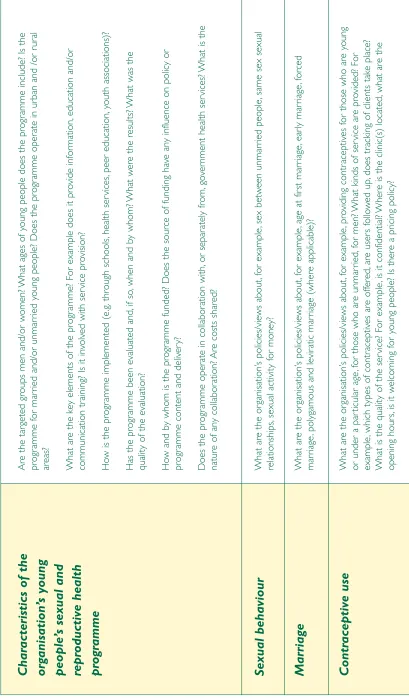
Table 2 indicates the kind of information that will be sought during this stage of the DCA and during interviews with key informants.
4.3
Operational realities: the importance of interviews and
observation
Some time will need to be given to assessing the operational realities of the programme and project data gathered thus far. In addition, efforts will need to be made to develop an understanding of events from the perspective of young people themselves.To do this, members of the DCA team will need to visit relevant organisations in places where young people meet and/or come into contact with service providers.
A general problem is the lack of a culture of evaluation making it difficult to correct the
In most locations, there will be opportunities both for interviews and for informal observations. For example, when visiting a health clinic the researcher will have the opportunity to note the accessibility and appropriateness of the location and will gain some sense of the prevailing atmosphere within it. Specifically, it will be important to record how welcoming to young people the clinic seems and whether the staff are non-judgemental and non-threatening in their dealings with young people. The researcher will also be able to ascertain some information about the characteristics of the young people attending the clinic.
It is expected that a significant number of individuals will be interviewed at various stages throughout the course of the DCA. One aim of carrying out interviews will be to investigate how health and education policies and programmes operate in practice. It will be important to explore this with different groups. For example:
• officials from government ministries;
• key personnel from NGOs and from community groups, including staff putting programmes into practice;
• local health and education staff.
It will also be crucial to hear from young people about their knowledge, activities and concerns with regard to sexual and reproductive health and their views about intervention policies and programmes and their actual or likely effectiveness. Important disparities between different perspectives may thereby be highlighted.
In Bore, the matronne responsible for all family planning provision and STI
identifications and treatment had not been retrained since “the time of Moussa “ (ie
before the presidential rule of Moussa Traore before the coup d’Etat in 1992). ... her
knowledge of contraceptive side-effects was extremely limited and ... her knowledge of
STIs was extremely sketchy - for example, she asked if syphillis was an STI or not.
Mali DCA
By and large, the areas where the health services were provided tended to be small,
not very comfortable, poorly lit and ventilated, inadequately furnished, and the walls
were plastered with posters and information about programmes dealing with the
problems of other target groups, or that of other programmes with which they shared
the space.Peru DCA
Char
acteristics of the
org anisation’ s young people’ s se xual and re pr oductiv e health pr o g ramme
Are the tar
geted groups men and/or w
omen?
What ages of y
oung people does the progr
amme include? Is the
progr
amme f
or mar
ri
ed and/or unmar
ried y
oung people? Does the progr
amme oper
ate in urban and /or r
u
ra
l
areas? What are the k
ey elements of the progr
amme? For example does it pro
vide inf or mation, education and/or comm unication tr
aining? Is it in
volv
ed with ser
vice pro
vision?
Ho
w is the progr
amme implemented (e
.g. through schools, health ser vices, peer education, youth associations)?
Has the progr
amme been evaluated and,
if so
,when and b
y whom?
What w
ere the results?
What was the
quality of the evaluation? Ho
w and b
y whom is the progr
amme funded? Does the source of funding ha
ve
an
y influence on policy or
progr
amme content and deliv
er
y?
Does the progr
amme oper
ate in collabor
ation with, or separ atel y from, go ve
rnment health ser
vices?
What is the
nature of an
y collabor
ation?
Are costs shared?
What are the or
ganisation’
s policies/views about,
for example
,sex betw
een unmar
ried people
,same sex sexual
relationships,
sexual activity f
or money?
Se
xual behaviour
What are the or
ganisation’
s policies/views about,
for example
,age at f
ir st mar riage ,ear ly mar riage ,f orced mar riage ,pol
ygamous and levir
atic mar
riage (where applicab
le)?
Marriage
What are the or
ganisation’
s policies/views about,
for example
,pro
viding contr
aceptiv
es f
or those who are y
oung
or under a par
ticular age
,f
or those who are unmar
ried,
fo
r men?
What kinds of ser
vice are pro
vided? For
example
,which types of contr
aceptiv
es are off
ered, are user s f ollo w ed up ,does tr
acking of clients tak
e place?
What is the quality of the ser
vice? For example
,is it conf
idential?
Where is the clinic(s) located,
what are the
opening hour
s,
is it w
elcoming f
or y
oung people? Is there a pr
[image:30.595.89.498.76.774.2]icing policy? Contr aceptiv e use T able 2:
Policies and pr
o
g
rammes;
e
Conducing a DCA
Abor
tion
What are the or
ganisation’
s policies/views about abor
tion,
abor
tion after r
ape
,abor
tion when the mother’
s
health is at ser
ious r
isk? Is abor
tion included in their reproductiv
e health ser
vices?
What are the or
ganisation’
s policies/views about child labour and in par
ticular hour
s of w
o
rk
,p
ay
and
exploitation? Does their progr
amme address y
oung people’ s w o rking conditions, pa y,
rights to join unions/
syndicates,
conditions of urban/r
ur
al migr
ation?
Emplo
yment
What are the or
ganisation’
s policies/views about school attendance
,f
emale education,
sex education in schools?
Does their progr
amme include activities concer
ning f emale schooling, education f or mar ginal groups, the content
of national or NGO school sex education cur
ricula?
Education
What pro
vision is there f
or out of school activities,
par
ticular
ly
those to reach children not attending school?
Ho
w are hard to reach groups included?
Out of school
What are the or
ganisation’
s policies/views about sexual violence and does their progr
amme include activities to
suppor
t y
oung w
omen at r
isk of or subjected to violence and/or w
[image:31.595.167.415.71.775.2]o rk with y oung men? Se xual violence T able 2:
Policies and pr
o
g
rammes;
e
Interviews may be conducted on a one-to-one basis or may take the form of a group discussion or focus group.The optimum number will depend upon, on the one hand, the resources available and, on the other, the level of variation that needs to be accommodated; for example, in settings with ethnic, religious, cultural and regional diversity.
Generally, it will be best to interview officials from various organisations on their own whereas young people might be more at ease in a group situation. Often such meetings will take place while the researcher is visiting a particular organisation (for example, a school, youth centre or health facility). Keeping accurate notes, and sometimes recording speech verbatim, will be helpful to ensure that data are complete and meaningful. There will be times when direct quotes from individual interviews (maybe unattributed) and/or focus groups will be appropriate in the final report.
Depending on the scope and nature of the DCA, interviews and focus group discussions may need to be conducted in both urban and rural settings. In health centres, group discussions and interviews could be carried out with staff working at different levels as well as with the young people accessing the service. In schools, focus groups and interviews could take place with teachers, members of the governing body and/or parent-teacher association and young people. Particular attention should be paid to discrepancies between the responses of those in authority and of the young people themselves.There may also be opportunities to observe what is taking place at the visit location and such observations can be used to cross-check both documented and interview findings.
Given the limited time and resources likely to be available for a DCA, it is important to make the most of this opportunity for gathering qualitative data. It is one of the main chances for young people’s voices to be heard and therefore included in the final report. Emphasis should be placed on assessing young people’s own perceptions of the barriers to better sexual health, and on the ways in which they think these could be overcome. It is important to be aware, however, that the leaders of young people’s groups may have points of view that do not necessarily reflect the perspectives of all the young people they claim to represent. A group’s chosen or elected leader may be, for example, better educated or wealthier than those who elected him or her.
Even the peer educators themselves admitted to not being totally convinced as to the
existence of the illness. In our discussions, they said one of their collective wishes was
“ to see someone who had AIDS” just to be able to prove to themselves that it existed.
Conducting a DCA
A particular challenge for researchers working on a DCA will be to find ways of talking to marginalised young people who may not be readily accessible through the usual channels of contact. Their views and concerns will be essential if the DCA is to reflect the diversity of opinions likely to exist among a country’s or a region’s young people.
Difficulties may arise in selecting individuals for interview or discussion. Given time constraints, it is acceptable for participants to be selected purposively by the researcher. Within the various organisations that provide documented information for a DCA, it may be relatively easy to identify those individuals most suitable to be key informants. Such people will often be gatekeepers to the information, or may sometimes be the person mainly responsible for the policy or programme.There will be a need to guard against the selection of only those individuals put forward by those in authority. For example, a head teacher might select those pupils who are seen as a good advertisement for the school or those who it is thought will give ‘correct’ answers to the interviewer’s questions.
As indicated above, this part of the DCA provides the best opportunity for the researcher to be able to identify any gaps between the ways in which programmes are said to be implemented and what actually happens in practice. In addition, it offers the chance to explore in some depth the reasons that might lie behind such discrepancies. Researchers at this stage of the analysis will need to be particularly sensitive to the diversity of data available to them so that they remain open to discovering the unexpected.
The use of interview and observational methods together should help to minimise reporting errors due to recall bias, to participants feeling unable to talk freely about subjects that may be embarrassing or taboo, or to discrepancies between what reportedly takes place and what actually happens. Observation is also likely to be important in accessing data unattainable in other ways. Such data may prove to be the only way to gather information about shortcomings in the
Even if the country has a tradition of decades of work on sexual and reproductive
health through NGOs, most of the interviewed organisations referred to the operational
obstacles of their programmes.Mexico DCA
Young people who move from the rural areas in search of work, being faced with the
lack of employment opportunities in the urban centres, may join the underground
economy exposing themselves to the risk of abuse, HIV, STIs, and unwanted pregnancy.
implementation of programmes and policies of which the people involved (both organiser and recipient) may be unaware.
Observation, whilst very valuable, is time consuming and labour intensive. Its inclusion in any DCA will therefore need to be carefully thought about so that it is used to good effect.The team should decide on those areas where it is thought to be essential for high quality work. It may be that social interaction during, for example, a family planning provider’s consultation is worthy of observation to help access data about the relationship between the provider and the client. A researcher may sit in on a consultation to observe eye contact, sitting positions, physical proximity and tone and nature of the conversation. Such data however are not only time consuming to collect but also require careful analysis if interpretation is to be meaningful.
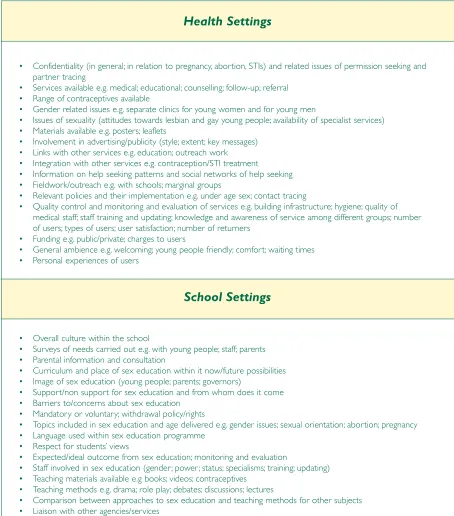
In many DCAs, observation may be carried out using a checklist to note specific elements of interest. Such observations require the researcher to create a list of issues that are then verified with or without the help of the informants from the setting under study. When visiting a health centre, for example, it may be important to note the location and type of buildings and various aspects of the physical environment such as cleanliness, atmosphere, lighting, sources of water and the presence/absence of posters. In schools during sex education classes, observations may be made of who was teaching, the age and sex of the pupils, the topics discussed, the teaching methods, materials used, the nature of the language (formal/informal/slang), and the general atmosphere amongst the students (e.g. attentive, giggly, disruptive).
The use of observational methods is not without difficulty. Observation may cause people to change their behaviours, and there are important ethical dilemmas associated with covert or unannounced observation. Each DCA team will need to decide on the appropriate course of action within the context in which it is working.
In most schools, sexual health education is limited to a lesson on the biology of human
reproduction assigned by the national curriculum. Like most teaching in Malian schools,
this is done by dictation with very little teacher-student interaction. In addition, most
teachers are male and probably unable or unwilling to address specific sexual health
questions among young girls. Mali DCA
Most important, they (health personnel) need to separate personal experiences and
ideologies from professional obligations in delivering services to young people.