JONES, Christopher R., OLFE-KRAEUTLEIN, Barbara and KAKLAMANOU, Daphne <http://orcid.org/0000-0002-7532-5841>
Available from Sheffield Hallam University Research Archive (SHURA) at: http://shura.shu.ac.uk/16735/
This document is the author deposited version. You are advised to consult the publisher's version if you wish to cite from it.
Published version
JONES, Christopher R., OLFE-KRAEUTLEIN, Barbara and KAKLAMANOU, Daphne (2017). Lay perceptions of Carbon Dioxide Utilisation technologies in the United Kingdom and Germany: An exploratory qualitative interview study. Energy Research & Social Science, 34, 283-293.
Copyright and re-use policy
See http://shura.shu.ac.uk/information.html
Sheffield Hallam University Research Archive
1
Abstract
Carbon Dioxide Utilisation (CDU) technologies convert Carbon Dioxide (CO2) into
carbon-based products. CDU technologies are viewed as a means of helping to address climate
change while creating commodities that can be sold to generate financial revenue. While
technical research and development into CDU options is accelerating, at present there has
been little research into public acceptance of the technology. The current study presents the
findings of a series of 28 exploratory interviews conducted with lay people in the United
Kingdom and Germany. The results show that awareness of CDU is currently very low in
both countries but that there is tentative support for the concept. This support is, however,
caveated by considerations of the techno-economic feasibility of the technology and the
societal consequences that might result from investment. While the thematic content of
discussions was similar in both countries, where appropriate any notable differences are
outlined and discussed. In addition to providing fresh insight into the emerging nature of
public perceptions and acceptance of CDU, it is reasoned that the findings of this research
could help to benefit the design of communication materials intended to engage lay-publics in
debate about the nature and purpose of CDU technologies.
Keywords
Carbon Dioxide Utilisation (CDU); Carbon Capture and Utilisation (CCU); Public
2
1. Introduction
Carbon Dioxide Utilisation (CDU) technologies—also often referred to as Carbon Capture
and Utilisation (CCU) or Carbon Capture and Reuse (CCR) technologies—convert Carbon
Dioxide (CO2) via physical or chemical processes into saleable carbon-based products (e.g.
polymers, methanol). By making use of waste CO2 released by large point-source emitters
(e.g. fossil-fuel power generation, steel manufacture, etc.) or directly from the air; CDU
technologies are viewed as a means of helping to address climate change—consistent with
emerging national and international policy and legislation (e.g. that precipitating from the ‘Paris Agreement’ at COP21, see United Nations Framework Convention on Climate
Change, 2015)—while broadening the raw material base and creating commodity products
(e.g. chemicals, plastics, cement, fuels, urea) that can be sold to generate economic revenue
(Styring, Quadrelli & Armstrong, 2015).
The concept of CDU is not new and there are already mature markets for CO2-based
products like urea and sodium carbonate; however, there is growing interest in a variety of
new CDU options, including CO2-derived fuels (e.g. methanol, formic acid) and other
chemicals (e.g. acyclic carbonate, polyurethanes), which still remain at various stages of
research, demonstration and feasibility testing (Fraga & Ng, 2015; Wilson et al., 2015).
Crucially, while technical advancement of these options is accelerating, there is currently
little research into the public (and broader social) acceptability of the technologies and related
product options (see Jones, Olfe-Kraütlein, Naims & Armstrong, 2017).
The present study used exploratory semi-structured interviews in order to learn more
about the nature of emerging lay-public opinions of the technology in the United Kingdom
techno-3
economic and societal risks and benefits of the technology (see Jones et al., 2015). The UK
and Germany present a particularly interesting context for such investigation in Europe, due
to their prominent and advanced technical CDU research and development programmes
(Mennicken, Janz & Roth, 2016; SCOT, 2017; SETIS, 2016).
The remainder of this introduction first outlines the importance of studying the public
acceptance of technological innovation (Section 1.1), before summarizing what is currently
known about public perceptions of CDU (Section 1.2). It ends by outlining the specific aims
and objectives for the current study (Section 1.3).
1.1Public acceptance of technological innovation
The key role that lay-publics (e.g. in their roles as voting citizens and product
consumers) have in shaping the success of technological innovation at national, local and
household levels (e.g. prospects for investment, the ability to find sites, etc.) (Devine-Wright,
2011; Wüstenhagen, Wolsink & Bürer, 2007; Upham, Oltra & Boso, 2015), has led to calls
for earlier and more participatory engagement of such publics in discussions regarding
technological and policy innovation (Chopyak, 2002; Kurath & Gisler, 2009; Jones & Jones,
2016; Wilsdon & Willis, 2004).
This is of particular importance within Westernised democracies, where policy and
institutional change typically requires the support of individuals and communities (Peterson,
Stevens & Wilson, 2015). Indeed, there are a number of instances where failures within
public engagement and deliberation have led—at least in part—to delays or curtailments to
the introduction of new technologies at both national (e.g. GM agriculture, e.g. Horlick-Jones
et al., 2007) and local levels (e.g. renewable energy technologies, e.g. Devine-Wright, 2011).
4
proponents of a given innovation (Beierle & Cayford, 2002; Creighton, 2005). Timely and
meaningful engagement can for instance: (a) generate public trust in decision-makers and
promote acceptance (or tolerance) of decisions; and (b) yield key insight into the emerging
subjective perceptions of the technology (e.g. the perceived risks and benefits), which can
make a substantive contribution to decisions being made about the technology (see Stirling,
2008). For example, expert and lay judgments about the type and severity of risk posed by
hazards (including new technologies) can deviate markedly from one another (Sjöberg,
2015). By engaging with affected publics it can be possible to identify areas of divergence,
which can be useful in designing tailored education and communication strategies (Lee,
2016).
As an example, social scientific research into the lay-public perceptions of Carbon
Capture and Storage (CCS) is now fairly mature. CCS technologies capture CO2 emissions
from large point-source emitters (e.g. power plants), allowing for the transportation of the
CO2 to deep-geological storage sites (e.g. depleted oil and gas fields) (Boot-Handford et al.,
2014; Gibbins & Chalmers, 2008). The social scientific studies that have been conducted to
date have yielded key insight into attitudes towards the technology among diverse publics
(e.g. affected populations, nationally representative samples) and other stakeholders in a
number of countries (Johnsson, Reiner, Itaoka, & Herzog, 2010; Shackley et al., 2007;
Upham & Roberts, 2011). In addition to identifying some of the perceived risks and benefits
of CCS (see L’Orange Seigo et al., 2014), this research has provided a basis for the creation
of public-engagement programmes and communication materials designed to prompt more
informed discussion about the processes and principles of the technology (Ashworth et al.,
5
In short, while the ‘public face’ of technological innovation is often an afterthought
(see Apt & Fischhoff, 2006); elucidating and integrating the opinion of lay-publics (alongside
those of other social-stakeholders) into technological design, development and deployment
should be considered a priority.
1.2 Public perception of Carbon Dioxide Utilisation (CDU)
Due to the conceptual and semantic overlaps between CCS and CDU—and the fact
that CDU can be affiliated with CCS operations (Markewitz et al., 2012; Styring et al., 2015) —it could be tempting to draw inferences about the probable lay-public response to CDU
from the extant literature on CCS. There are, however, limitations to this, not least due to the
inherent differences in the nature and intended purpose of these technologies.
The raison d’être of CCS is to combat climate change and thus public perceptions of
CCS are strongly determined by beliefs in anthropogenic climate change and the perceived
utility of CCS in combating this threat (L’Orange Seigo et al., 2014; Wallquist et al., 2012).
While CDU can also result in net reductions in CO2 emissions, the prospect of also creating
products and generating economic revenue provides a secondary purpose for investment in
the technology. Furthermore, as CDU does not necessitate the geological storage of CO2—a
commonly registered grievance with CCS—it is reasonable to hypothesise that attitudes
towards CDU might differ from those held about CCS (Bruhn, Naims & Olfe-Kräutlein,
2016).
While still at an early stage, initial attempts at conducting systematic assessments of
lay-public perceptions of CDU technologies and product options are beginning to emerge
(e.g. Jones, Kaklamanou, Stuttard, Radford & Burley, 2015; Perdan, Jones & Azapagic,
6
a focus group study with adults and high school children in the UK. In addition to confirming
the low level of existing public awareness about CDU, the research highlighted some of the
emerging themes in lay-public discourse about the technology. These themes centred on: (1)
issues relating to the general concept (“should we do this?”); (2) technical issues (“can we do
this?”) and (3) societal consequences (“what will happen if we do this?”). More specifically,
concept discussions focused principally on the value of CDU in addressing climate change. While some participants valued CDU as a means of ‘buying time’ in the fight against climate
change, others questioned the efficacy of CDU as a long-term solution to the problem (e.g.
due to the eventual re-release of the captured CO2). Technical discussions tended to centre on
concerns about the high capital-costs required to bring CDU technologies and products to
market, as well as questions about the cost-effectiveness and thermodynamic efficiency of
CO2 conversion processes. In terms of social consequences, participants spoke about a range
of issues, including perceived inconsistencies between investment in CDU and societal drives
towards sustainability. For example, some viewed CDU as something that might encourage
societal complacency in reducing carbon emissions, while others believed that CDU could be
seen as a motivating exemplar of efforts being made to address this issue.
van Heek et al. (2017a) also recently published research into the antecedents of
consumer perceptions for a CDU-derived mattress. In addition to confirming that participants
tended to have relatively positive perceptions of CDU (particularly relative to storage of
CO2), the findings also confirmed a number of things about the factors that might govern the
acceptance of consumer products derived from captured CO2. For example, the proportion of
CO2 used within the product (CO2 proportion) was not a particularly strong predictor of
7
mattress upon disposal (disposal conditions); and (b) the extent of any fossil-resource savings
resulting from the use of CO2 as a carbon feedstock in the manufacturing process (savings of
fossil resources), were predictive. Furthermore, where personal health risks (perceived health
complaints) were introduced and considered by participants, it was these considerations that
became the most decisive factor in shaping acceptance.
While most research in this area has, to date, been qualitative—appropriately
recognising the challenges of assessing lay-public perceptions of unfamiliar subject matter
(e.g. assessing pseudo-opinions, see Section 2.1)—recently larger, quantitative surveys have
also begun to emerge. For instance, Perdan et al. (2017) conducted a survey on 1213 UK
adults to establish the extent of awareness and acceptance of CDU (in this case referred to as
CCU). This study illustrated the very low-level of public awareness about the technology
(only 9% were confident they knew what the technology was); simultaneously highlighting
both the challenge and opportunity for proponents of the technology in securing public
acceptance.
1.3The current study
While there is growing interest in understanding lay-public perceptions of CDU (and
affiliated product options), there still exists a paucity of published research in this field (see
Jones et al., 2017). The current study sought to address this gap by providing an exploratory
investigation of opinions about CDU within a convenience sample of interviewees from the
UK and Germany.
Twenty-eight in-depth, qualitative interviews were conducted with lay-people in
Sheffield, United Kingdom (n=18) and Potsdam/Berlin, Germany (n =10) between July 2014
8
these countries, using the concept, technical and societal consequence themes identified to
previous research as a framework for the analysis (see Jones et al., 2015).
Due to the fact that CDU facilities can be affiliated with CCS operations (e.g. Styring
et al., 2015) we were also able to investigate how extant public opinion about CCS in each country shaped interviewee’s opinions about CDU. We were particularly keen to see if the
greater scepticism about CCS technologies in Germany relative to the UK—due to high
social and political rejection of CCS technology in Germany (Herrenbrück, 2015; Johnsson,
Reiner, Itaoka, & Herzog, 2010; Pietzner et al., 2011; Shackley et al., 2007)—would result in
the German interviewees also being more sceptical towards CDU.
2. Methods
2.1 Qualitative interview approach
Individual qualitative interviewing was selected as the preferred method of data
collection for this research. Qualitative interviewing offers a means of providing an in-depth,
discursive forum for exploratory research and has been used successfully to discover more
about the nature of expert and lay opinion of a number of emerging technologies, including
CCS (Wallquist, Visschers & Siegrist, 2009); Geoengineering (Pidgeon et al., 2012);
Hydrogen Energy Technology (Ricci, Bellaby, & Flynn, 2008) and Hydraulic Fracturing
(Ladd, 2013). Bearing in mind the unfamiliar nature of CDU technologies, qualitative
interviewing was favoured over other methods (e.g. a questionnaire-based survey) as a means
of reducing the prospect of registering pseudo-opinions.
Pseudo-opinions are weak and non-directive evaluative judgements that people
provide in responses to questions about things they know very little (if anything) about (de
9
prospect of recording pseudo-opinions by offering the opportunity to: (a) provide participants
with more information about topic(s) under consideration; and (b) to clarify participants’
understanding before eliciting opinion. The one-on-one context can also help to lessen the
drawbacks associated with the more group-based discussion methods (e.g. group think, see
Esser, 1998), which have also been a favoured means of investigating lay-public opinion of
unfamiliar technologies like CCS (Bradbury et al., 2009; Hope & Jones, 2014; Upham &
Roberts, 2011) and CDU (Jones et al., 2015).
2.2 Participants
Eighteen people from Sheffield (UK) and 10 people from Potsdam/Berlin (Germany)
were recruited (see Table 1) to a study advertised as concerning “…new technology options
being developed to make use of the carbon dioxide produced by industrial processes, like
electricity generation”.i No prior knowledge of the technologies and/or power generation
were required to participate. In the UK only, a small participation incentive (i.e. £20
shopping-voucher) was offered.
UK-based participants (8 female and 10 male) were recruited via an advertisement on
a local online forum, an email advertisement to a University list of volunteers and via
personal contacts. This recruitment strategy resulted in a slight overrepresentation of
university research staff and students; however, a range of people from different backgrounds
(e.g. lawyer, events manager) were also recruited. The sample had a mean age of 33.7 years
(SD = 8.2; Range: 21-53). Five participants claimed to have heard of CDU but self-claimed
pre-interview knowledge of CDU was very low (Mean = 1.11, SD = 0.32).ii
German-based participants (5 female and 5 male) were recruited via personal
10
(e.g. architect, secretary). The sample had a mean age of 44.8 years (SD =17.8; Range:
18-76). Four participants claimed to have heard of CDU but self-reported pre-interview
knowledge of CDU was very low (Mean = 1.30, SD = 0.48).
Table 1.
Gender, age and occupation of the UK and German interviewees
Sheffield, United Kingdom
UK1 (M, 48, retired lawyer); UK2 (F, 53, community carer); UK3 (M, 38, computer
programmer); UK4 (M, 35, events manager); UK5 (F, 36, learning support provider); UK6
(F, 33, university researcher); UK7 (M, 21, university student); UK8 (F, 27, university
student); UK9 (M, 28, university researcher); UK10 (F, 40, biomedical scientist); UK11 (M,
29, research governance coordinator); UK12 (M, 29, doctor); UK13 (M, 36, university
lecturer); UK14 (F, 27, communications advisor); UK15 (M, 30, project manager); UK16
(M, 34, biotechnologist); UK17 (F, 29, research developer); UK18 (F, 23, library assistant).
Potsdam/Berlin, Germany
GER1 (F, 27, student); GER2 (M, 39, teacher); GER3 (F, 71, retired secretary); GER4 (M,
76, retired civil servant); GER5 (F, 53, accountant); GER6 (F, 38, communications
advisor); GER7 (F, 42, occupational therapist); GER8 (M, 18, student); GER9 (M, 42,
journalist); GER10 (M, 42, architect).
Note. Gender (M = male; F = female); Age (years); Occupation (as listed by the interviewee)
While caution should be exercised due to small and discrepant nature of the sample
11
equivalent in terms of the mean age, t(11.13) = 1.89, p = .088, and pre-interview knowledge
of CDU, t(13.59) = 1.11, p = .289. Fisher’s exact tests (two-tailed) confirmed that the gender
distribution (p = 1.00) and self-claimed awareness levels (p = 0.67) were also equivalent.
2.3 Materials
All materials were first created in English and then translated into German. Technical
details were developed in collaboration with the UK Centre for Carbon Dioxide Utilisation
(CDUUK) (www.sheffield.ac.uk/cduuk) and from previously published research (see Jones et
al., 2015). For the exact wording of the information, see Appendix A.
2.3.1 Interview Information Sheet and CDU presentation
The information sheet outlined the reasons for the research, provided a brief
background to CDU and introduced the data-management, analysis and ethical protocols.
Participants also received a PowerPoint presentation comprising three key sections:
(A) General Introduction. This section outlined the names and roles of the research
team, restated the project aims and provided a basic introduction to CDU (see Appendix A).
When contextualizing CDU, discussion centred upon the need to address anthropogenic CO2
emissions from large emitters like fossil-fuel power generation. Firstly, CCS was introduced
as a possible means of sequestering CO2, with the financial-cost, energy-cost and waste
implications of this option outlined as potential drawbacks. Next, CDU was introduced as an
option that could make use of some of the CO2 from processes like CCS for enhanced oil
recovery (EOR) or to make carbon-based products. In the context of product manufacture it
was suggested that CDU could help to ease the reliance on new fossil fuels in the
manufacture of these products and limit atmospheric releases of CO2. Participants were then
12
were told that electricity would be required to power the capture and conversion processes
and that this electricity would have to come from renewables or other low carbon sources
(e.g. nuclear power) to ensure that CDU processes yielded net reductions in CO2 emissions.
The diagram was available for participants to refer to during the Question Set 1 (see Table 2).
(B) Specific Examples. This section showcased some case-study examples of CDU.iii
Four CDU projects were briefly described: (1) German-based chemical-companies BASF and
Covestro (formerly Bayer Material Science) and the US-based company Novomer capturing
CO2 and using chemical catalysis to convert it into plastics (e.g. polypropylene and
polyurethane) for use in foams, adhesives and packaging; (2) the US-based Dakota Gasification Company’s ‘Great Plains Synfuels Plant’ which captures and transports CO2
from coal gasification for sequestering and use in EOR in Saskatchewan, Canada; (3) German
car-manufacture Audi’s ‘e-gas’ project, which is creating synthetic gas from CO2 for use as
transport fuel and as a potential replacement for natural gas in main gas lines; and (4) UK-based company Air Fuel Synthesis’s project to synthesise kerosene from CO2 sequestered via
direct air capture processes.
(C) Expert ratings. This section comprised a table depicting elite assessments of
CCS and six CDU options (e.g. plastics manufacture) rated against eight evaluative criteria
(e.g. technology readiness level, profit potential). The expert ratings represented the modal
estimations of a group of over 10 engineers and natural scientists with academic expertise in
CDU processes and products, recruited via the CO2Chem network (www.co2chem.co.uk).
For each evaluative criterion, higher ratings (max. 10) related to more favourable evaluations
of the CDU/CCS option. This table was used to enable participants to consider and discuss
13
Radford, Armstrong & Styring, 2014). For the table of expert ratings and the definitions of
[image:14.595.77.523.187.482.2]the evaluative criteria, see Supplementary Material (Table S1).
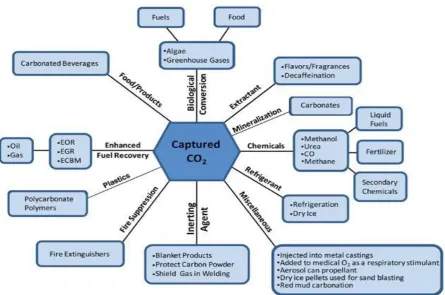
Fig. 1. Schematic diagram of use options for captured CO2.
The diagram illustrates how CO2 can be utilised as a resource, including options that are
already used today (e.g. utilisation of CO2 as a refrigerant), and products and processes of
different readiness levels (e.g. polycarbonates). Source: U.S. National Energy Technology
Laboratory (NETL). The figure is reproduced with the permission of the owner.
2.3.2 Pre-interview Questionnaire
This questionnaire was distributed before the interview and recorded the interviewees’
14
(“Have you heard of…?” Yes, No, Don’t Know [DK]) and knowledge of (“How much to do you think you know about…?” Not a lot; A little, A fair amount; A lot) CDU.iv
2.4 Procedure
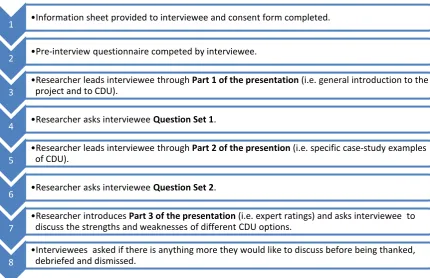
A representation of the interview procedure can be found in Figure 2. Interviews took
place in a quiet, one-to-one setting, they were semi-structured and lasted between 30-60
minutes. UK interviews took place in October 2014 and German interviews took place
between July and December 2015. All questions can be found in Table 2. Where relevant the
interviewer asked the participant to clarify unclear statements and provide fuller explanations
[image:15.595.82.513.348.626.2]for their responses (see Wallquist et al., 2009).
Fig. 2. Overview of the interview procedure.
Note: Interviewees also completed a short post-interview survey (at Step 8) but the results of
this survey are not analysed further within the current study.
1 •Information sheet provided to interviewee and consent form completed.
2 •Pre-interview questionnaire competed by interviewee.
3
•Researcher leads interviewee through Part 1 of the presentation (i.e. general introduction to the project and to CDU).
4 •Researcher asks interviewee Question Set 1.
5
•Researcher leads interviewee through Part 2 of the presention (i.e. specific case-study examples of CDU).
6 •Researcher asks interviewee Question Set 2.
7
•Researcher introduces Part 3 of the presentation (i.e. expert ratings) and asks interviewee to discuss the strengths and weaknesses of different CDU options.
8
15
Table 2.
Question schedule for interviews (semi-structured)
Question Set 1
1 Before today’s session, how much did you know about CDU?
2 Has the information you have just received changed what you know about CDU?
3 Has the information you have received had an impact on how you feel about CDU and if
so, in what way?
4 Do you think it is a reasonable technology for climate change mitigation?
5 Do you think it is a reasonable to technology for any other purposes?
6 What do you think are the general benefits of CDU technology?1
7 What do you think are the general risks of CDU technology?1
8 Is there a particular aspect of the process that you think is particularly risky?
Question Set 2:
1 What would you think if a CDU pilot project was planned to be sited near to where you
live?2
2 Generally speaking what role, if any, do you think CDU has within the UK/Germany?
3 To what extent do you think that CDU should or shouldn’t be considered as a means of
mitigating CO2 emissions from industry?
4 To what extent do you feel that CDU should or shouldn’t be considered as a solution for
climate change?
5 Do you think CDU has more environmental benefits, more economic benefits or both?
Note: 1 Participants were probed for perceived effects on the climate, on future generations
16
good or a bad thing.
2.5 Data analysis approach
Template Analysis was used to explore the data (see Brooks, McCluskey, Turley, &
King, 2015). Coding centred on the perceived advantages and disadvantages of CDU in terms
of: (a) the general concept (“should we do this?”); (b) its techno-economic feasibility (“can we do this?”); and (c) its consequences for society (“what will happen if we do this?”) (see
Jones et al., 2015). ‘Other’ themes (e.g. comments about the interview procedure) were also
recorded and coded. Preliminary data coding was conducted on the first UK interview (UK1)
using these themes as a template. Modifications were made to the coding-template based
upon this analysis. The revised coding-template was then applied to UK2 and UK3 and any
further updates made. The revised coding-template was checked by all the authors before
being applied to the remaining UK interviews. Where relevant, codes were added/revised and
retrospectively applied to pre-coded transcripts. The final UK coding-template was then
translated into German and applied to the 10 German transcripts. The coding-template is
available within the Supplementary Material (Table S2).
UK interview transcripts were first coded by CJ (lead author), with the coding of a
sub-sample of 3 transcripts independently checked by DK (co-author). German transcripts
were first coded by BOK (co-author), with a sub-sample of 2 transcripts independently
checked by a second, native German speaker. Any disagreements between coders were
discussed, resolved and amendments applied to the coding of all transcripts.
3. Results
17
samples. As such, the results section comprises a joint presentation of the themes arising from
these two groups; where appropriate notable differences between the cohorts are highlighted. 3.1 Comments on the CDU concept (“should we do this?”)
While there was some scepticism, interviewees were broadly supportive of the CDU
concept. This positivity was, though, often conditional on the grounds that CDU should not
be a sole focus for investment in tackling climate change. More specific conceptual
discussions of CDU centred on 3 sub-themes: (1) the utility of CDU as a means of addressing
climate change; (2) the consistency between CDU and the broader sustainability agenda; and
(3) the comparative favourability of CDU vs. other technologies, particularly CCS.
3.1.1 The utility of CDU in addressing climate change
Some participants questioned whether CDU would provide a viable answer to the
issue of climate change. Concerns mainly mapped to the belief that CDU would present an ‘end-of-pipe’ solution to carbon emissions and would not tackle their root causes.
“…[CDU] sounds as though it is a logical option compared to the storage [of CO2],
however, yes, it kind of raises questions as to whether it is focusing on the right end, is there
a way that we can reduce the CO2 that we produce in the first place?” UK14
Some interviewees also reasoned that CDU would only delay an inevitable release of
CO2 into the atmosphere and so would not hold longer-term benefits for tackling climate
change. That said, interviewees recognised that not all CDU products were equivalent in this
regard, with options offering more permanent CO2 storage seen as more preferable.
Assumptions about the scale of the contribution that CDU could make to addressing
climate change were also found to shape opinions. Where these benefits were considered
18
considered to be the solution to climate change, a number of interviewees noted that it could
help to slow the problem or ‘buy time’ while more efficacious solutions were developed.
3.1.2 The consistency of CDU with the broader sustainability agenda
Some CDU products—notably plastics—were seen to conflict with societal drives
towards greater sustainability. In the UK, some interviewees also believed that CDU would
presuppose an unwelcome, continued use of fossil fuels as well as also being a risky technical
fix for what are complex environmental issues.
Sceptical interviewees also indicated that they were unclear as to the rationale behind
CDU, questioning whether the environmental motives were sincere or whether the rationale
was primarily economic. This scepticism apparently stemmed from a lack of trust in the
companies promoting the technology and led to calls among some German participants to
monitor and regulate industrial practices and products in order to confirm any claims
regarding environmental sustainability.
Alongside these more sceptical comments, however, participants also registered key
strengths to CDU in terms of encouraging sustainability. Comments related to the belief that CDU would create a new ‘recycled’ carbon resource that could: (a) reduce raw resource
consumption by industry; (b) maximise the potential yield from existing, ‘activated’ fossil
fuels and replace their use in the manufacture of products; (c) advance innovation in science
and industry; and (d)help to move society towards a more circular economy.
“I love the idea of a circular economy; the waste of one process is being used as a
starting product for another. [CDU] is brilliant and totally fits into it, and really closes the
carbon loop that we have in our society.” UK16
19
German interviewees saw CDU to be a preferable option to CCS and responded
negatively to the affiliation of CDU with CCS; rejecting this framing on the grounds that it
did not allow for the consideration of CDU in the absence of CCS. In the UK, participants
typically viewed CCS with CDU as being the more favourable option. This preference
generally stemmed from the perceived risks and drawbacks with the underground storage of
CO2, withlong-term storage was seen as wasteful, dirty or dangerous (e.g. from leakage or
explosion). This contrasted with the view of utilisation as being akin to recycling.
“[CDU] seems a lot better than [CCS], like I said before, it’s the difference between
landfill, CCS being landfill, and CDU being more akin to recycling […] My reaction to CCS
is generally that I don’t like mess that you can’t clean up properly.” UK3
Some participants were concerned that a (re-)focusing of financial investment towards
CDU could harm investment in other technologies (notably renewable energy technologies)
that are perceptively more consistent with the sustainability agenda. Where this occurred,
opinions of CDU were typically less favourable. 3.2 Techno-economic Comments (“can we do this?”)
Pragmatic considerations of technical and economic feasibility often caveated interviewees’ positivity to the general CDU concept. While such pragmatism was often
driven by a self-claimed lack of knowledge about the technology, it was also tied to the
recognition that many CDU options were commercially unproven. Discussions broadly
mapped to 2 sub-themes: (1) the technical feasibility and the CO2-capture potential of CDU;
and (ii) the commercialisation and market potential for CDU technologies and products.
3.2.1 The technical feasibility of CDU and CO2-capture potential
20
utilised via CDU processes. Where participants believed that CDU could stand to capture
large amounts of CO2—and thus register a significant impact on carbon emissions—opinions
were typically favourable. Some suggested that they would need more information regarding
the capture potential and ‘real world’ benefit of the technology before they would be willing
to support CDU.
For some participants, the early technology readiness and/or low market-penetration
of some CDU options led them to question the immediacy of any discernible benefits that
could be derived from CDU. Interviewees argued that it would be a long time before CDU
operations were on a scale that could make a meaningful contribution to global issues, such
as climate change. Moreover, it was believed that there would need to be significant
international investment—particularly from developing nations—if CDU were to make a
meaningful contribution to such issues.
“[I]t is getting people like China and India to get on board […] because they are so
big that they can make a significant impact if they do it. But if they don't then the UK is just a
fraction of the rest of the world, insignificant really in world terms” UK15
In both countries, some participants questioned whether the high energy-costs
associated with the CDU conversion processes might undermine the worth of the technology
and could lead to net increases in CO2 emissions. This scepticism was, however, sometimes
countered by the belief that financial investment in current CDU technologies could help to
increase the viability of future technology options.
3.2.2 The commercialisation and market potential for CDU
There was general uncertainty over the costs involved in commercialising CDU and
21
would have to make economic sense for investors, leading to speculation over how CDU
facilities might be funded (e.g. would there be implications for consumers). That said, many
participants did believe that making use of CO2 could yield profit for investors (e.g. either
directly or through reduced emissions taxes) and that CDU would be attractive to industry if
it could generate a cheap carbon feedstock for products.
Participants in both countries alluded to a number of economic benefits for investors
in CDU, reasoning that: (a) CDU and its products had the potential to integrate easily with
extant industrial infrastructures and (diverse) markets; and (b) there would be future domestic
and international retail markets for those investing in CDU technology research and
development.
“…if you are a front runner in developing technology then you can export and
become an expert in this at both exporting either the technology or setting up companies
elsewhere feeding in, will be good for the UK economy in the long term.” UK16
In the UK there was also a sense among a couple of interviewees that investment in
CDU could be used to enhance business credibility for investors and/or encourage welcome
investment in the renewables sector.
3.3 Societal Consequences (“what will happen if we do this?”)
Four key themes were identified: (1) the consequences of CDU for societal change; (2)
the impact on consumers; (3) the public and environmental health and safety risks; and (4)
the impacts on business and industry.
3.3.1 The consequences for societal change
Interviewees had differing views on whether investment in CDU would have positive
22
Specifically, some participants sensed that people might use the environmental credentials of
CDU as an excuse for not living more sustainably, while others suggested that CDU could
provide a catalyst for fostering change in both the public and business sectors.
Relatedly, some interviewees noted that countries like the UK and Germany would be
setting a good example for other nations by investing in CDU, which could potentially
catalyse positive change within these other countries.
“I think it could benefit the British economy actually because then it’s something that
ultimately we take out to, sort of, developing countries that are currently going on their
industrial revolution and help making them more viable and cleaner and not damaging their
own environment as well.” UK9
3.3.2 Impacts on consumers
There was a sense that the costs associated with CDU could be quite high and would
need to be ‘picked up’ by someone. It was argued that this could be end-consumers through
inflations in the price of products, although some argued that this premium might not be an
issue if it were relatively small, optional and/or if the environmental benefits of the products
were clear.
“I could imagine that, if not mandatory, people will be convinced quickly to do their
bit out of an ecological awareness. For me personally, the ecological motivation to buy
something would be bigger than the economical one.” GER2
Concern over the potential for inflation in the price of consumer products was not
universal and the prospect that CDU might produce a low-cost source of carbon, which could
reduce—or at least mitigate increases in—the cost of consumer products (e.g. transport fuel)
23
3.3.3 Public and environmental health and safety risks
Interviewees’ comments regarding health and safety issues tended to focus on the
transportation and storage of captured but unused CO2. Concerns principally mapped to the
potential for leakage, explosion and related negative effects on local populations, flora and
fauna. The utilisation of CO2 was not seen as overly risky; although, there were occasional
mentions of possible hazards from the chemicals used in the conversion processes and/or the
chance of explosion or harmful emissions from these processes. Some participants also
questioned if their might be unknown risks associated with CDU-derived products.
“I think that one should know what is inside things. I do not really like the thought of
having a waste material in things that for example touch the skin, like creams or plastics in
garments. I think the same about other materials, but with CO2 even more.” GER3
In Germany, trust in regulatory systems to protect consumer-welfare was found to
increase the perceived safety of CDU-derived products. And some German interviewees were
enthused by the symbolic (‘badge of honour’) prospect of using CO2-derived products.
3.3.4 Impacts on business and industry
In both countries many comments mapped to beliefs about the use-value of CDU in
creating products (e.g. fuels, plastics) and supporting businesses and industry. Moreover,
within the UK, CDU was valued a non-disruptive technology option; i.e. something that
could reduce industrial emissions while allowing society to operate and function as normal. “This could kind of go on in the background. Every CO2-producing power station
could adopt this technology tomorrow and nobody would notice in terms of our day-to-day
lives.” UK7
24
manufacture of carbon-based products and as something that could help to lessen the need for
crude-oil imports, thereby fostering greater energy independence. The substitution potential
of CDU-derived carbon (vs. traditionally-sourced carbon) was seen as particularly attractive
within Germany, where some interviewees referenced the country’s extant industry as
providing a good basis for investment – provided there was a business case.
A few UK interviewees also commented on the potential employment opportunities
that could be derived from the CDU industry, although there was some uncertainty over the
number and longevity of such opportunities.
3.4 Other themes
Several prominent additional themes were raised through discussion, relating to: (1)
public communication and engagement considerations; (2) facility siting and deployment
considerations; and (3) comments on the interview procedure.
3.4.1 Public communication and engagement considerations
Participants from both countries noted the value for CDU proponents in engaging in
early discussions about the technology. In part, these comments appeared to stem from the interviewees’ personal concern that the success of the technology could be undermined by
failures in public engagement. One UK participant spoke of the potential for the media to
amplify perceptions of technological risk, using this to highlight the value of CDU
proponents taking control over how the technology is framed and promoted.
“…the media like to make a big hoo-hah over it [new technology] and it scares
people. Then people don’t ever get facts and figures and real information. All they get is
media scare…” UK6
25
conclusions about the public acceptability of CDU from opinion polls or surveys. Drawing on
their own lack of knowledge, they cautioned that the current low-level of public awareness
about CDU might mean that surveys would record a surface-level endorsement of the
technology, which might not translate into support for CDU when people learned more about
the technology, its purpose and implications.
3.4.2 Project siting and deployment considerations
While the prospect of local facility development was typically not deemed of personal
relevance, interviewees did note that there could be issues within communities where future
CDU facilities were planned. This again raised the importance of public-engagement and
careful site selection. Interviewees hypothesised that local resistance might form to proposals
on the grounds of unwelcome noise and visual impacts, negative effects on house prices,
construction disruption, and concern regarding the storage of captured CO2.
Some concern was expressed where participants did entertain the prospect of
development within their own community; however, this concern appeared to be tied to the
prospect of local development per se as opposed to anything specific about the facility being
involved in CDU.
“I generally do not want to have industrial plants built in my surroundings” GER4.
3.4.3 Comments on interview procedure
Interviewees typically reasoned that the information provided within the interview
had improved their understanding of CDU and/or had had a positive influence on their
attitudes. While most interviewees spoke freely within the interview, a number also registered a desire to have more ‘facts and figures’ (e.g. about the risks and economic costs) in order to
26
“… I’d have to see the figures and the numbers, and things like that, before I could
say, ‘Yes, it’s a really good idea’, or ‘No, this is a terrible’…” UK1.
4. General Discussion
Overall, interviewees tended to show a ‘caveated acceptance’ of CDU, which
apparently stemmed largely from a self-claimed lack of knowledge about the technology and
questions over the magnitude of the environmental benefit that could be derived from CDU.
The fixation on the environmental benefits of CDU is logical bearing in mind the ‘framing’
used within this study, which was chosen to reflect the pro-environmental argumentation
commonly used when discussing the technology (Palanivelu, 2017; Styring et al., 2015).
In addition to shaping conceptual-level discussions of CDU, the environmental
framing also affected interviewees’ consideration of the techno-economic feasibility and
societal consequences of the technology. For instance, interviewees’ comments regarding the
early technology readiness level and CO2 capture potential of CDU, can be taken as reflecting
general concerns about the likelihood, scale and immediacy of any environmental benefits
that might be derived from the technology. Similarly, comments relating to the realisation
that investment in CDU would only occur if there was a good business case (e.g. from the
retail of expertise, technologies and products and/or enhanced business reputation, see
Karakosta, Doukas, & Psarras, 2010; Miles & Covin, 2000), could be seen to reflect concerns
that the desirable environmental benefits from CDU might be stymied by the commercial
unattractiveness of the technology. For an outline of some of the key questions and
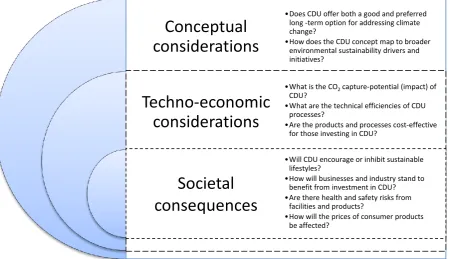
considerations apparently shaping interviewees’ opinions of CDU, see Figure 3.
Interestingly, where there was scepticism about the environmental benefits of CDU,
27
countries, trust in the sincerity of proponents of the technology was questioned; however,
whereas German interviewees tended to call for the regulation of the CDU industry in order
to validate the environmental credentials of processes and products (e.g. through labelling of
consumer goods)v, UK interviewees tended to call for CDU proponents to engage in a more
honest re-framing of communications regarding the technology so as to recognise the
financial motivations for investment. This latter finding strikes parallels with research into
lay-public attitudes to CCS, indicating how publics have more trust in stakeholders when they
use arguments that more consistent with their perceived organisational motives (de Vries,
[image:28.595.81.532.353.612.2]Terwel, Ellemers, & Daamen, 2015; Terwel, Harinck, Ellemers, & Daamen, 2011).
Fig. 3.Questions apparently driving perceptions of CDU
Conceptual consideration of the environmental advantage to be gained from investment in
CDU tended to be focal (consistent with the framing utilised in this study) and was also found
to largely underpin considerations of techno-economic viability and societal consequences.
Conceptual
considerations
Techno-economic
considerations
Societal
consequences
•Does CDU offer both a good and preferred long -term option for addressing climate change?
•How does the CDU concept map to broader environmental sustainability drivers and initiatives?
•What is the CO2 capture-potential (impact) of CDU?
•What are the technical efficiencies of CDU processes?
•Are the products and processes cost-effective for those investing in CDU?
•Will CDU encourage or inhibit sustainable lifestyles?
•How will businesses and industry stand to benefit from investment in CDU? •Are there health and safety risks from
facilities and products?
28
4.1 Implications, limitations and future directions
The findings of this study present new insight into emerging lay-public perceptions of
CDU technology. While exploratory in nature, we feel that the findings of this study could—
in combination with the specific, growing literature on lay-perceptions of CDU from other
sources (see Jones et al., 2017) and the established literature on the acceptance of new
technologies (see Gupta, Fischer, & Frewer, 2012; Huijts, Molin, & Steg, 2012)—help to
contribute to the development of communication materials designed to help prompt wider
public debate about CDU. This move would be consistent with drives towards greater
participation of publics in science and technology policy and decision making (see Chopyak,
2002; Kurath & Gisler, 2009) and consistent with similar efforts made in analogous
technology sectors (e.g. CCS, Ashworth et al., 2010; Ashworth et al., 2012).
There are, however, some important limitations to this study that should be considered
if seeking to utilise our findings for such purposes. Beyond the obvious limitations relating to
the relatively small and opportunistic nature of our sample—which should be addressed in
future research efforts (e.g. through more purposive sampling of interviewees)—there are
other, more specific limitations relating to the nature and extent of the information provided
to interviewees in this study.
In terms of the nature of the information provided, our chosen framing of CDU as a ‘green’ technology option was found to markedly shape interviewees’ discussions of the
technology (see Figure 3). In addition to steering discussion of the technology towards
considerations of environmental impact, couching CDU in such terms arguably also framed
the technology in a positive light. While there was certainly evidence that our interviewees
29
interview format allowed us to probe both interviewees’ negative and positive viewpoints; it
is possible that our chosen framing was partly responsible for relatively positive opinions
formed towards CDU within this study.
We feel that this limitation provides a real opportunity for future, systematic research
into the nature of lay-public attitudes towards the technology. Numerous studies indicate how
even subtle alterations to the framing of a technology (e.g. the emphasis placed upon the
different attributes of a technology) can exert impacts on perceptions of the technology,
particularly in comparative contexts and/or where technologies are unfamiliar (e.g. de Vries,
Terwel & Ellemers, 2016; Druckman & Bolsen, 2011; Jones, Eiser, & Gamble, 2012). A
logical first step in this research would be to investigate how interviewees might respond to
discussions of CDU in a context where a more balanced picture of the technology is provided
(e.g. where details about the environmental credentials of the technology are accompanied by
details relating to the potential health and safety risks of the processes and products).
Relatedly, there are questions as to what effect attempts to further dissociate CDU from CCS would have upon people’s opinions. Within countries less amenable to CCS, like
Germany or the Netherlands (see Terwel, ter Mors & Daamen, 2012; van Os, Herber &
Scholtens, 2014), one might hypothesise that perceptions of CDU would improve with
greater dissociation from CCS. The same might not be said, however, for countries where
CCS is considered less objectionable and/or seen to augment such processes (e.g. the UK).
In addition to investigating how alterations to the thematic framing of CDU affects
opinions, there is the connected question about how the extent of the information provided to
participants might affect their opinions of the technology. Given the time restrictions placed
30
as a limitation of this research. Indeed, while most interviewees agreed that their knowledge
of CDU had increased through participation, they still recognised that there was much they
did not know. As such, whether or not the opinions registered in our study would also arise if
interviewees were provided with more comprehensive details about the technology remains
an open question.
That being said, it has also been argued elsewhere (see Upham & Roberts, 2011;
Upham et al., 2015) that if people in real-world settings form and express opinions about new
technology based upon exposure to very limited information (e.g. short news articles), then
the opinions derived from short focus-groups or questionnaires should not be too dissimilar to
this. If so, then one could view the perceptions registered within our study to be akin in some
regards to those that might be formed outside the interview context.
Beyond developing a deeper appreciation of the public attitudes towards CDU,
another priority for future research should be to elucidate more about any perceptual
divergences in perceptions and acceptance of CDU within different groups. While an obvious
starting point for such investigations would be to explore and overlap or divergence in expert
and lay perceptions of CDU—bearing in mind the relations that this can share with
communicative and deployment issues—the research could move beyond this to investigate
the role that factors, such as education and gender cultures (Barke & Jenkins-Smith, 1993;
Lee, 2016). Furthermore, it was clear from the current research that the diffuse support for
CDU was tied, at least to some extent, to the perceived lack of personal relevance of the
technology. It remains an open question as to whether or not this diffuse support will be
retained in scenarios where participants are more directly identified as the target of risk (e.g.
31
5. Conclusion
The aim of this study was to provide fresh insight into emerging lay-public
perceptions of CDU in two European countries (i.e. the UK and Germany). We sought to illuminate participants’ opinions regarding the general concept, its techno-economic
feasibility and the societal consequences that might result from investment in the technology.
The interviews revealed that while awareness of CDU was low, there was generally
tentative support for the concept. The caveats that interviewees placed upon their support
were manifold but appeared to primarily stem from a self-claimed lack of knowledge about
the technology, as well as scepticism over the claimed environmental benefits of the
technology. The focus on the environmental benefits of the technology appeared to relate to the framing of CDU as a ‘green’ technology option within the interviews.
Although the opinions of our UK and German interviewees were broadly similar,
there were occasional differences. Systematic research is now required to confirm if the
themes emergent in our research are registered in larger, more diverse samples and to
establish more about the extent, nature and implications of any cross-national differences.
Finally, while we argue that the findings of this research hold potential for developing
materials designed to foster wider public debate about CDU, this aim should not be conflated
with the more simplistic objective of using information as a means of generating public
support for the technology (see Sturgis & Allum, 2004). A growing literature argues against ‘knowledge deficit’ thinking as being the root cause of objections towards technologies (and
other sources of social conflict) and also sometimes calls into question the promotion of
32
Acknowledgments
The authors would like to thank Rebecca L. Radford for her assistance in preparing and
conducting the UK interviews and Henriette Naims for advice and suggestions with the
German interviews. This research is funded by the CO2Chem network (www.co2chem.co.uk)
under EPSRC grants EP/H035702/1 and EP/K007947/1.
References
Apt, J., & Fischhoff, B. (2006). Power and People. The Electricity Journal, 19(9), 17–25. http://doi.org/10.1016/j.tej.2006.09.008
Arning, K., Van Heek, J., & Ziefle, M. (2017). “Risk perception and acceptance of CDU consumer products in Germany.” Paper presented at the 13th International Conference on Greenhouse Gas Control Technologies (GHGT-13), Lausanne, Switzerland, November 14-18, 2016.
Ashworth, P., Boughen, N., Mayhew, M., & Millar, F. (2010). From research to action: Now we have to move on CCS communication. International Journal of Greenhouse Gas Control, 4(2), 426–433. http://doi.org/10.1016/j.ijggc.2009.10.012
Ashworth, P., Bradbury, J., Wade, S., Ynke Feenstra, C. F. J., Greenberg, S., Hund, G., & Mikunda, T. (2012). What’s in store: Lessons from implementing CCS. International Journal of Greenhouse Gas Control, 9, 402–409.
http://doi.org/10.1016/j.ijggc.2012.04.012
Barke, R. & Jenkins-Smith, H. (1993). Politics and scientific expertise: scientists, risk perception, and nuclear waste policy, Risk Analysis, 13(4), 425-439. http://doi.org/ 10.1111/j.1539-6924.1993.tb00743.x
Beierle, T. C., & Cayford, J. (2002). Democracy in practice: Public participation in environmental decisions. Washington D.C.: Resources for the Future Press. Boot-Handford, M. E., Abanades, J. C., Anthony, E. J., Blunt, M. J., Brandani, S., Mac
Dowell, N., … Fennell, P. S. (2014). Carbon capture and storage update. Energy & Environmental Science, 7(1), 130–189. http://doi.org/10.1039/C3EE42350F
Bradbury, J., Ray, I., Peterson, T., Wade, S., Wong-Parodi, G., & Feldpausch, A. (2009). The Role of Social Factors in Shaping Public Perceptions of CCS: Results of Multi-State Focus Group Interviews in the U.S. Energy Procedia, 1(1), 4665–4672.
http://doi.org/10.1016/j.egypro.2009.02.289
33
Bruhn, T., Naims, H., & Olfe-Kräutlein, B. (2016). Separating the debate on CO2 utilisation from carbon capture and storage. Environmental Science & Policy, 60, 38–43.
http://doi.org/10.1016/j.envsci.2016.03.001
Brunsting, S., Upham, P., Dütschke, E., De Best Waldhober, M., Oltra, C., Desbarats, J., … Reiner, D. (2011). Communicating CCS: Applying communications theory to public perceptions of carbon capture and storage. International Journal of Greenhouse Gas Control, 5(6), 1651–1662. http://doi.org/10.1016/j.ijggc.2011.09.012
Chopyak, J. (2002). Public participation in science and technology decision making: trends for the future. Technology in Society, 24(1-2), 155–166. http://doi.org/doi:
10.1016/s0160-791x(01)00051-3
Creighton, J. L. (2005). The public participation handbook: making better decisions through citizen involvement. John Wiley & Sons.
de Best-Waldhober, M., Daamen, D., & Faaij, A. (2009). Informed and uninformed public opinions on CO2 capture and storage technologies in the Netherlands. International
Journal of Greenhouse Gas Control, 3(3), 322–332. http://doi.org/10.1016/j.ijggc.2008.09.001
de Vries, G., Terwel, B. W., & Ellemers, N. (2016). Perceptions of manipulation and
judgments of illegitimacy: Pitfalls in the use of emphasis framing when communicating about CO2 capture and storage. Environmental Communication, 10(2), 206-226.
de Vries, G., Terwel, B. W., Ellemers, N., & Daamen, D. D. L. (2015). Sustainability or profitability? How communicated motives for environmental policy affect public perceptions of corporate greenwashing. Corporate Social Responsibility and Environmental Management, 22(3), 142–154. http://doi.org/10.1002/csr.1327 Devine-Wright, P. (2011). Public engagement with large-scale renewable energy
technologies: Breaking the cycle of NIMBYism. Wiley Interdisciplinary Reviews: Climate Change, 2(1), 19–26. http://doi.org/10.1002/wcc.89
Druckman, J. N., & Bolsen, T. (2011). Framing, motivated reasoning, and opinions about emergent technologies. Journal of Communication, 61(4), 659–688.
http://doi.org/10.1111/j.1460-2466.2011.01562.x
Esser, J. (1998). Alive and Well after 25 Years: A Review of Groupthink Research. Organizational Behavior and Human Decision Processes, 73, 116–41.
http://doi.org/10.1006/obhd.1998.2758
Fraga, E., & Ng, M. (2015). FDCDU15 - Carbon Dioxide Utilisation: A framework for the analysis of the security of supply of utilising Carbon Dioxide as a chemical feedstock. Faraday Discuss., 183, 309–326. http://doi.org/10.1039/C5FD00038F
Frewer, L. J., Bergmann, K., Brennan, M., Lion, R., Meertens, R., Rowe, G., … Vereijken, C. (2011). Consumer response to novel agri-food technologies: Implications for predicting consumer acceptance of emerging food technologies. Trends in Food Science and Technology, 22(8), 442–456. http://doi.org/10.1016/j.tifs.2011.05.005
34
4317–4322. http://doi.org/10.1016/j.enpol.2008.09.058
Gupta, N., Fischer, A. R. H., & Frewer, L. J. (2012). Socio-psychological determinants of public acceptance of technologies: A review. Public Understanding of Science (Bristol, England), 21(7), 782–95. http://doi.org/10.1177/0963662510392485
Herrenbrück, R. (2015). CCS in Deutschland. RWTH Aarchen University. Retrieved from http://nbn-resolving.de/urn:nbn:de:0168-ssoar-456239
Hope, A. L. B., & Jones, C. R. (2014). The impact of religious faith on attitudes to environmental issues and Carbon Capture and Storage (CCS) technologies: A mixed methods study. Technology in Society, 38, 48–59.
http://doi.org/10.1016/j.techsoc.2014.02.003
Horlick-Jones, T., Walls, J., Rowe, G., Pidgeon, N., Poortinga, W., Murdock, G., &
O’Riordan, T. (2007). The GM debate: risk, politics and public engagement. Routledge. Routledge.
Huijts, N. M. A., Molin, E. J. E., & Steg, L. (2012). Psychological factors influencing sustainable energy technology acceptance: A review-based comprehensive framework. Renewable and Sustainable Energy Reviews, 16(1), 525–531.
http://doi.org/10.1016/j.rser.2011.08.018
Johnsson, F., Reiner, D., Itaoka, K., & Herzog, H. (2010). Stakeholder attitudes on Carbon Capture and Storage—An international comparison. International Journal of
Greenhouse Gas Control, 4(2), 410–418. http://doi.org/10.1016/j.ijggc.2009.09.006 Jones, C. R., Eiser, J. R., & Gamble, T. R. (2012). Assessing the impact of framing on the
comparative favourability of nuclear power as an electricity generating option in the UK. Energy Policy, 41, 451–465. http://doi.org/10.1016/j.enpol.2011.11.006
Jones, C. R., & Jones, A. R. (2016). Two Blind Mice: It Is Time for Greater Collaboration between Engineers and Social Scientists around the RDD & D of Industrial
Technologies. C, 2(2), 16. http://doi.org/10.3390/c2020016
Jones, C. R., Kaklamanou, D., Stuttard, W. M., Radford, R. L., & Burley, J. (2015). Investigating public perceptions of carbon dioxide utilisation (CDU) technology: a mixed methods study. Faraday Discuss.http://doi.org/10.1039/C5FD00063G
Jones, C. R., Olfe-Kräutlein, B., Naims, H., & Armstrong, K. (2017). The social acceptance of carbon dioxide utilisation: A review and research agenda. Frontiers in Energy Research, 5, 11. https://doi.org/10.3389/fenrg.2017.00011
Jones, C. R., Radford, R. L., Armstrong, K., & Styring, P. (2014). What a waste! Assessing public perceptions of Carbon Dioxide Utilisation technology. Journal of CO2
Utilization, 7, 51–54. http://doi.org/10.1016/j.jcou.2014.05.001
Karakosta, C., Doukas, H., & Psarras, J. (2010). Technology transfer through climate change: Setting a sustainable energy pattern. Renewable and Sustainable Energy Reviews, 14(6), 1546–1557. http://doi.org/10.1016/j.rser.2010.02.001