International Doctorate School in Information and Communication Technologies
DIT - University of Trento
Improving the Effectiveness
of Information Extraction
from Biomedical Text
Md. Faisal Mahbub Chowdhury
Advisor:
Alberto Lavelli Senior Researcher
HLT research unit, FBK-irst, Italy
Prof. Eric Gaussier
Université Joseph Fourier - Laboratoire d’informatique de Grenoble (LIG)
Prof. Massimo Poesio
University of Essex - School of Computing and Electronic Engineering University of Trento - Centro interdipartimentale Mente/Cervello (CIMEC)
Prof. Pierre Zweigenbaum
Université de Paris-Sud - LIMSI-CNRS, ILES Group
Information extraction (IE) is the task which aims at automatically
ex-tracting specific target information from texts by means of various
nat-ural language processing (NLP) and Machine Learning (ML) techniques.
The huge amount of available biomedical and clinical texts is an
impor-tant source of undiscovered knowledge and an interesting domain where IE
techniques can be applied. Although there has been a considerable amount
of work for IE on other genres of text (such as newspaper articles), results
of the state-of-the-art approaches for some of the IE tasks show there is
still the need of improvement. Moreover, when these IE approaches are
directly applied on biomedical/clinical data, the performance drops
consid-erably. Customization of the IE approaches with biomedical/clinical genre
specific features and pre/post-processing techniques does improve the
re-sults (with respect to applying the approaches directly) but the situation is
still not completely satisfactory. There are many ways to accomplish this
goal (e.g. exploitation of scope of negations, discourse structure, semantic
roles, etc) which are yet to be fully harnessed for the improvement of IE
systems. Additional challenges come from the usage of machine learning
(ML) techniques themselves. Imbalance in data distribution is quite
com-mon in many NLP (including IE) tasks. Previous studies have empirically
shown that unbalanced datasets lead to poor performance for the minority
class.
In this PhD research, we aim to address the open issues outlined above.
We focus on three core IE tasks which are crucial for text mining: named
entity recognition (NER), coreference resolution (CoRef), and relation
tity mentions which achieves state-of-the-art performance and is later
ex-ploited as a component in our RE system. Our NER system achieves
re-sults on par with the state of the art also for other bio-entity types such
as genes/proteins, species and drugs. Since the creation of manually
an-notated training data is a costly process, we also investigate the practical
usability of automatically annotated corpora for NER and propose how to
automatically improve the quality of such corpora.
CoRef, which is naturally the next step after NER, is often deemed as
one of the stumbling blocs for other IE tasks such as RE. We propose a
greedy and constrained CoRef approach that achieves high results in
clin-ical texts for each individual entity mention type and for each of the four
different evaluation metrics usually computed for assessing systems’
per-formance.
As for RE, one of the fundamental characteristics of our approach is
that we propose to exploit other NLP areas such as scope of negations,
elementary discourse units and semantic roles. We propose a novel
hy-brid kernel that not only takes advantage of different types of information
(syntactic, semantic, contextual, etc) but also of the different ways they
can be represented (i.e. flat structure, tree, graph). Our approach yields
significantly better results than the previous state-of-the-art approaches for
drug-drug interaction and protein-protein interaction extraction tasks.
In each of the above tasks, we concentrate to develop pro-active IE
ap-proaches to automatically get rid of unnecessary training/test instances
even before training ML models and using those models on test data. This
enables better performance because of the reduction of less skewed data
dis-tribution as well as faster runtime.
We tested our NER and RE approaches on other genres of text such
as newspaper articles and automatically transcribed broadcast news. The
Keywords
Information extraction, biomedical text mining, named entity recognition, coreference resolution, relation extraction.
Time flies so fast. Exactly 3.5 years ago when I started my PhD, I had no idea what a mysterious journey was waiting for me. Within the first few months I became completely confused. I wanted to do something cool but I did not know what exactly my PhD topic would be. My advisor, Alberto Lavelli, took a monk like stance and encouraged me to do whatever I find interesting. I used to report him during the weekly meetings what I had been reading, and he patiently used to listen my complains – “biomedical domain is difficult”, “people have already investigated whatever problem I can think of”, etc etc. He used to tell me that it is completely normal having such anxiety, confusion and difficulty at the beginning, I have to stick through. I did. And here I am, at the end of this journey full of emotions – boundless joy whenever a paper got accepted, sheer anger towards the (usually 3rd) reviewer(s) whenever a paper got rejected, hair pulling in late night whenever my idea produced something completely different than what I expected, jealous feeling towards Yashar (my office mate and one year senior PhD student) for his outstanding record on publishing regularly in *ACL conferences, and, among many other things, extreme desire to break my laptop whenever it shut down by becoming hot and I had not saved something that I had been working for half an hour!
I am so excited not just because I am finishing but also because of what I have learnt during this PhD research. There are a number of people to whom I am indebted for their help and support during this period to achieve whatever I was able to do.
First and foremost, I am grateful to my advisor, Alberto Lavelli. I cannot thank him enough for being such a wonderful supervisor. He never forced me for anything and was so nice to me. If I said anything during discussion that does not make any sense, he would say something like
if I wanted to discuss or show something, and he would listen patiently to my non-stop crazy ideas. His approach of letting me to do whatever I like allowed me to learn new things, face different types of problems and become a much better researcher than what I used to be. I also thank him for his helps and advices in non-academic issues.
I am also thankful to Bernardo Magnini for his advices, support and encouragement. He made sure that I do not face funding problems to attend conferences, and also introduced me to some well known researchers. I would like to thank Pierre Zweigenbaum, mentor of my PhD intern-ship. His expertise and breath of knowledge in biomedical domain and linguistics helped me to gather many insightful knowledge. He took a lot of trouble to complete the bureaucratic processes for the internship and to find a place for me and my wife to stay. I cannot thank him enough for that.
I would like to thank the members of my PhD examination commit-tee – Eric Gaussier, Massimo Poesio and Pierre Zweigenbaum – for their insightful feedback.
Some other people whom I would like to thank include Lorenza Romano, Claudio Giuliano, Matteo Negri, Asma Ben Abacha, Sara Tonelli, Alessan-dro Moschitti, Yashar Mehdad, Kateryna Tymoshenko, Marco Guerini, Dasha Bogdanova, and Stefan Rigo. I would also like to thank all the remaining members of the HLT unit of FBK-irst for being so helpful and supportive in these years, and the members of the ILES group of the LIMSI-CNRS for being so kind to me during my internship.
I would like to thank my wife, Safwana. Her love and caring have an inestimable influence in preserving the happy outlook of my life through the good and rough times during these years.
Most importantly, I want to thank my parents, my sisters, my
and for always being there for me. I am blessed to have such a wonderful family.
Thanks also to all of my friends (near and far, old and new) for being so helpful and supportive, especially to Rahat.
Also, thanks to Facebook, VoipWise, Rynga, Skype, Gmail and Yahoo! for their wonderful technologies which allowed me always to be in touch with my family and friends, and to Trento for being such a friendly place to live.
Lastly, I express my gratitude to the almighty for standing with me in the toughest times, and for giving me patience and strength.
Thank you all very much.
— Faisal
Trento, April 2013
Acknowledgements 6
1 Introduction 1
1.1 Background . . . 1
1.2 Tasks Investigated . . . 4
1.3 Primary Research Goals . . . 6
1.4 Thesis Contributions . . . 9
1.4.1 Named Entity Recognition . . . 9
1.4.2 Coreference Resolution . . . 10
1.4.3 Relation Extraction . . . 11
1.5 Outline of the Thesis . . . 12
2 Biomedical Named Entity Recognition 15 2.1 Related Work on Biomedical NER . . . 16
2.2 Proposed Approach . . . 20
2.2.1 Description of the Proposed Approach . . . 21
2.2.2 Features . . . 24
2.3 Experiments . . . 29
2.3.1 Data . . . 29
2.3.2 Dictionary . . . 30
2.3.3 Experimental Setting . . . 30
2.3.4 Results and discussions . . . 31
2.5 BNER using Silver Standard Corpus . . . 38
2.6 Assessing the Practical Usability of SSC . . . 39
2.6.1 Related work with respect to SSC annotation . . . 41
2.6.2 Other approaches similar to SSC annotation . . . . 42
2.6.3 Experimental Settings . . . 45
2.6.4 Results and analyses . . . 46
2.6.5 Summary of the SSC experimental study . . . 53
3 Coreference Resolution 57 3.1 Background . . . 59
3.2 Related Work . . . 61
3.2.1 Supervised Coreference Resolution . . . 61
3.2.2 Characteristics of Clinical Texts . . . 61
3.2.3 Coreference Resolution on Clinical Text . . . 63
3.3 Our Proposed Approach . . . 63
3.3.1 Traditional Approach for Instance Creation . . . . 64
3.3.2 The Criteria for being Co-referent: A Proposal . . . 65
3.3.3 Our approach for Training Instance Creation . . . . 67
3.3.4 Our approach for Test Instance Creation . . . 67
3.3.5 ML Technique Chosen for Classification and Data Preprocessing . . . 69
3.3.6 Traditional Approach Clustering Mentions into Chains 69 3.3.7 Our Proposed Approach for Clustering Mentions into Chains . . . 70
3.3.8 Cataphora Resolution . . . 71
3.4 Data . . . 72
3.5 Feature Selection and Extraction . . . 73
3.6 Experimental Results . . . 77
excluding UPMC data . . . 81
3.6.2 Results on the i2b2/VA 2011 Full Official Test Corpus 82 3.7 Comparison of Results with Other Studies . . . 83
3.8 Errors and Inconsistencies in the i2b2/VA 2011 Challenge Data . . . 85
3.9 Limitations and Possible Future Extension of This Study . 86 3.10 Key Ideas in the Proposed Approach and Their Potential Usage on Biomedical Text . . . 87
4 Relation Extraction 89 4.1 Basic Terminology . . . 90
4.2 Current state of RE research . . . 90
4.2.1 Predominantly intra-sentential . . . 91
4.2.2 A classification problem . . . 91
4.2.3 RE Methodologies . . . 92
4.2.4 Imbalance in data distribution . . . 93
4.2.5 Domain adaptation . . . 95
4.2.6 Supervision and external resources . . . 95
4.2.7 Protein-protein interaction extraction . . . 97
4.2.8 Drug-drug interaction extraction . . . 99
4.3 Proposed Approach . . . 100
4.3.1 Proposed Kernel Combinations . . . 102
4.3.2 Proposed KHF kernel . . . 103
4.3.3 Other component kernels . . . 110
4.4 Less Informative Sentence and Instance Filtering . . . 111
4.4.1 Exploiting the scope of negations for sentence filtering111 4.4.2 Discarding instances using semantic roles and con-textual evidence . . . 116
units . . . 118
4.5 Data . . . 121
4.5.1 Data for PPI extraction . . . 122
4.5.2 Data for DDI extraction . . . 123
4.6 Data Pre-processing and Experimental Settings . . . 124
4.7 Experiments for PPI Extraction . . . 125
4.7.1 Results using individual kernels . . . 126
4.7.2 Results using proposed kernel combinations . . . . 127
4.7.3 Results using sentence and instance filtering . . . . 128
4.7.4 Why is there so much discrepancy in performance? 135 4.7.5 Comparisons with the state-of-the-art results . . . . 137
4.8 Experimental Results for DDI extraction . . . 138
4.8.1 Results using individual kernels and kernel combina-tions . . . 138
4.8.2 Results using sentence and instance filtering . . . . 139
4.8.3 Comparisons with the state-of-the-art results . . . . 142
4.9 Additional Experiments . . . 143
4.10 Limitations and Future Work . . . 143
5 Conclusion 145 5.1 Summary . . . 145
5.2 Possible Future Extensions . . . 146
5.2.1 Named entity recognition . . . 146
5.2.2 Coreference resolution . . . 147
5.2.3 Relation extraction . . . 147
Appendix A 149
Appendix B 153
Appendix D 159
Appendix E 161
Appendix F 165
Bibliography 167
1.1 An example of information extraction from the following given text: ‘The most common symptom of coronary artery disease is angina or “angina pectoris”, also known simply as
chest pain’. . . . 5
2.1 Generalization and normalization steps of our BNER system. 22 2.2 General features for tokeni . . . 25
2.3 Orthographic features for tokeni . . . 26
2.4 Contextual features for tokeni . . . 27
2.5 Syntactic dependency features for tokeni. For example, in
the sentence “Clinton defeated Dole”, “Clinton” is thensubj
of the target token “defeated”. . . 27 2.6 Global perspective features for tokeni extracted from
auto-matically built dictionary from training data. . . 29 2.7 Various characteristics of AZDC. . . 29 2.8 10-fold cross validation results using exact matching criteria
on AZDC. . . 33 2.9 Official evaluation results of our system on the CALBC SSC
I test data. . . 39 2.10 The results of experiments when trained with different
ver-sions of the SSC and tested on the GSC test data. . . 49
CSSC = condensed SSC (i.e. sentences containing at least one annotation). SSC size = 316,869 sentences. CSSC size
= 77,117. . . 49 2.12 The results of experiments by training on the GSC training
data merged with the PSSC and the CSSC. . . 52
3.1 Two thresholds to cluster mention pairs into chains. . . 71 3.2 Semantic and Grammatical features for a candidate antecedent
(mx) and the mention to be resolved (my). Features with
(*) mark indicate new feature types proposed by us. . . . 74 3.3 Lexical features for a candidate antecedent (mx) and the
mention to be resolved (my). Features with (*) mark
indi-cate new feature types. . . 75 3.4 Contextual features for a candidate antecedent (mx) and
the mention to be resolved (my). Features with (*) mark
indicate new feature types. . . 76 3.5 Features describing a mention m (of a candidate mention
pair) which can be either a candidate antecedent or the mention to be resolved. Features with (*) mark indicate
new feature types. . . 78 3.6 Results on the i2b2/VA 2011 official test corpus excluding
UPMC data. Boldface shows the best obtained results on
this dataset. . . 79 3.7 Results with feature type ablation on the i2b2/VA 2011
of-ficial test corpus (excluding UPMC data). Boldface shows
the best obtained results on this dataset. . . 80 3.8 Results on the i2b2/VA 2011 full official test corpus. . . . 83 4.1 Basic statistics of the 5 benchmark PPI corpora. . . 123
using individual kernels. Pos. and Neg. refer to the total number of positive and negative instances for each of the
corpora. . . 127
4.3 Comparison of the results on the 5 benchmark PPI corpora using proposed KCOM P and KHybrid kernels. Pos. and Neg.
refer to the total number of positive and negative instances
for each of the corpora. . . 128
4.4 Comparison of results on the 5 PPI corpora after using pro-posed techniques for filtering less informative sentences by
exploiting scopes of negations. . . 130
4.5 Total number of sentences in each of the PPI corpora that satisfy our proposed criteria to be eligible as training and
test instances for sentence filtering using negation scopes. 131
4.6 Comparison of results on the 5 PPI corpora after using pro-posed techniques for filtering less informative instances by
using dynamic and static knowledge. . . 132
4.7 Comparison of results on the 5 PPI corpora after filtering test sentences by exploiting proposed elementary sentence
units. . . 132
4.8 Percentage of the decrease in the number of instances for
the proposed techniques. . . 133
Pos. and Neg. refer to the number of positive and negative relations respectively. The results of Bui et al. (2010) on LLL, HPRD50, and IEPA are not reported since thy did not use all the positive and negative examples during cross validation. As for Miwa et al. (2009b), we consider only those results of their experiments where they used a single training corpus, as it is the standard evaluation approach adopted by all the other studies on PPI extraction for com-paring results. All the results of the previous approaches reported in this table are directly quoted from their respec-tive original papers. We use exactly the same folds that are
used by Tikk et al. (2010). . . 134 4.10 Statistics of different characteristics of the 5 benchmark PPI
corpora. All sentences (in each corpus) are considered
dur-ing analyses. . . 135 4.11 Comparison of results on the official test set of the 2011 DDI
Extraction challenge using the proposed KCOM P and KHybrid
kernels as well as their individual components. . . 139 4.12 Comparison of results on the official test set of the 2011 DDI
Extraction challenge after using each of the proposed tech-niques for filtering less informative sentences and instances. The LIS classifier and its baseline are described in Section 4.4.1. The proposed approaches for LII filtering and its base-lines are described in Section 4.4.2. Section 4.4.3 includes
details regarding how proposed ESUs are exploited. . . . 141 4.13 Percentage of the decrease in the number of instances for the
proposed techniques on the 2011 DDI Extraction challenge
data. . . 142
lenge corpus eligible as training and test instances for
sen-tence filtering using negation scopes. . . 142 4.15 Comparison of the results of our proposed approach with the
previous state-of-the-art approaches, obtained on the official
test set of the 2011 DDI Extraction challenge. . . 143
2.1 Variation in true positives (TPs) and false positives (FPs) due to usage of the global perspective feature
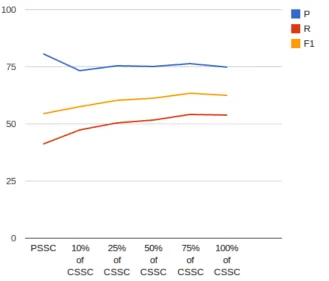
“AlwaysTagge-dOther”. . . 36 2.2 Graphical representation of the experimental results with
varying size of the CSSC. . . 50
3.1 An example of co-referring mentions. . . 58
4.1 Dependency graph for the sentence “A pVHL mutant con-taining a P154L substitution does not promote degrada-tion of HIF-Alpha” generated by the Stanford parser. The edges withbluedots form the smallest common subgraph for the candidate entity mention pairpVHL and HIF-Alpha, while the edges withred dots form the reduced graph for the
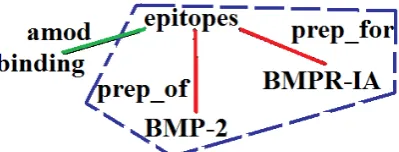
pair. . . 104 4.2 Part of the DT for the sentence “The binding epitopes of
BMP-2 for BMPR-IA was characterized using BMP-2
mu-tant proteins”. The dotted area indicates the minimal subtree.106 4.3 Part of the DT for the sentence “Interaction was identified
between BMP-2 and BMPR-IA”. The dotted area indicates
the minimal subtree. . . 107
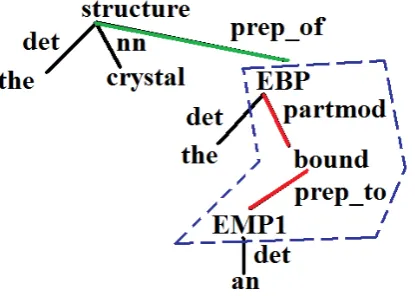
tacts with a peptide ligand in the crystal structure of the EBP bound to an EMP1”. The dotted area indicates the
minimal subtree. . . 107 4.5 Comparison of the runtime on the 5 benchmark PPI corpora
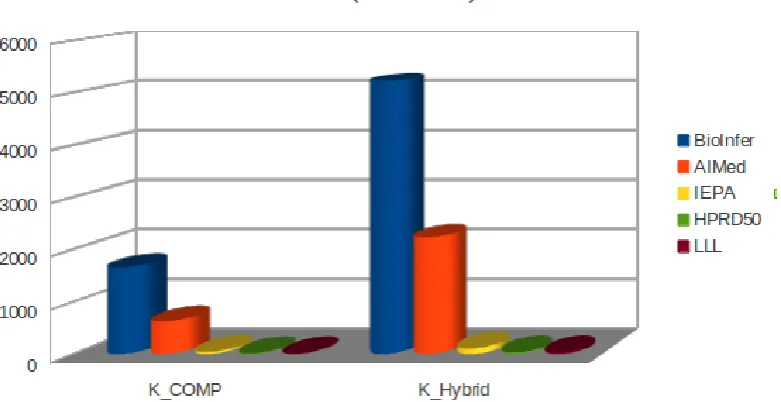
using proposed KCOM P and KHybrid kernels. . . 129
Introduction
“What information consumes is rather obvious: it consumes the attention of its recipients. Hence, a wealth of information creates a poverty of attention and a need to allocate that atten-tion efficiently among the overabundance of informaatten-tion sources that might consume it.”
– Herbert A. Simon
Turing Award (1975), Nobel Prize (1978)
1.1
Background
The massive volume of biomedical text, partly due to the exponential growth of biomedical literature in recent years, has made the development of Biomedical Text Mining (BioTM) solutions indispensable. As Zweigen-baum et al. (2007) argued, it has become extremely difficult for biologists to keep up with the relevant publications in their own discipline, let alone publications in other, related disciplines. The rapidly growing amount of clinical texts (e.g. Electronic Health Records or EHR, the parallel growth of narrative data of telemedicine in electronic form, etc) also requires the usage of text mining techniques for improving the quality of care and re-ducing medical errors.
Clinical texts and biomedical literature are sources of authentic medical knowledge which is crucial for eHealth1 applications. These applications have a huge commercial prospect. According to the US National Center for Health Statistics2, 51% of USA adults had used internet for health information in 2009. This potential commercial prospect has led to the launch of several public and commercial health related websites3. Online eHealth applications that directly interact with patients can help early identification of disease symptoms, adverse drug affects and even first aid. Biological researches such as the human genome project and the (up-coming decade-long) project to examine the workings of the human brain and build a comprehensive map of its activity4 are also very much depen-dent on the effective use of the knowledge dumped inside the sheer volume of biomedical literature. Medline5 contains more than 22 millions abstracts from medicine, biology, biochemistry, etc, as of now. Approximately 90% of these abstracts are in English. According to the literature statistics6, only in the year 2008, there were 751,387 biomedical research publications in English. Other languages also have a considerable number of yearly publications (e.g. French: 10,200; German: 7,586; Italian: 1,678, etc) al-though far less than English. Pharmaceutical companies invest in various researches of literature-based discovery since it has been often proved to be a potential source of promising hypotheses.
All the above are some of the key reasons that contributed in the surge of
1E-health (or eHealth) is the process of providing health care via electronic means, in particular over the Internet. It can include teaching, monitoring ( e.g. physiologic data), and interaction with health care providers, as well as interaction with other patients afflicted with the same conditions. (Reference: Robert Pretlow, URL: http://www.ehealthnurse.com/ehealthi.html [accessed on December 10, 2010])
2http://www.cdc.gov/nchs/data/hestat/healthinfo2009/healthinfo2009.htm 3E.g. www.healthcentral.com, www.healthline.com, etc
4Information source: http://www.nytimes.com/2013/02/18/science/project-seeks-to-build-map-of-human-brain.html
an increasing interest of the natural language processing (NLP) community for BioTM. Due to this growing interest, a considerable effort has been de-voted to the development of various linguistic resources (e.g. ontologies and corpora), which are pre-requisites for performing various BioTM tasks.7
Information extraction (IE) is a text mining task whose goal is to automatically extract specific target information from machine-readable human language texts by means of various NLP techniques. The aim is to identify the information contained inside the text data in a structured form that is more amenable to database or data mining algorithms (Grishman, 2003; Bunescu, 2007).
While there exist keyword-based search systems such as Entrez8 for biomedical domain, IE-based solutions are much more desirable. The structured output of IE approaches can be used by end user applications having different purposes such as computerized clinical decision support, bio-surveillance, personalized medicine, comparative effectiveness studies, automatic terminology management, question answering, summarization, statistical analysis and many more, and even for semantic web or for un-covering hidden, indirect links to propose potential scientific hypotheses9.
Though a few well-defined IE tasks, such as gene/protein mention recog-nition, have achieved a sufficient level of maturity, solutions for most of the biomedical IE tasks are far from being robust and practically usable. Biomedical texts are substantially different from other texts such as news-paper articles. Ranging from the terminology and sentence construction to the valency and semantics of verbs, these texts show an inherently complex structure. Authors of these texts often do not follow proposed
standard-7For example, see the lists in http://www2.informatik.hu-berlin.de/˜hakenber/links/benchmarks.html or http://www.ims.uni-stuttgart.de/˜jasmin/corpora.html
8http://www.ncbi.nlm.nih.gov/sites/gquery
ized names or formats, which complicates things further. As there is the possibility of introducing serious health-related risks due to the provision of any wrong information, it is very critical to provide information to the end user/system with the maximum possible accuracy.
In recent years, shared tasks/challenges such as TREC Genomics track10,
KDD cup11, LLL05 challenge task12, BioCreAtIvE13, BioNLP shared tasks14,15,16,17, CMC medical NLP challenge18, i2b2 shared tasks19 and CALBC
chal-lenges20have been pushing the limits of the biomedical/clinical IE research. These challenges are based on different visions and approaches. For exam-ple, the BioCreAtIvE challenge emphasizes the development of text mining techniques to help database curation, whereas the i2b2 challenge focuses on identifying concepts, co-references among concepts and relations in clinical notes. In any case, all of these shared tasks emphasize the improvement of the state of the art of some fundamental IE tasks. This is important since more advanced BioTM tasks (e.g. automatic discovery of protein path-ways) are difficult to be accomplished unless the fundamental IE tasks reach a sufficient maturity.
1.2
Tasks Investigated
In the context of this thesis, we investigate three core IE tasks. The first is Named Entity Recognition (NER), i.e. the task of locating the
10http://ir.ohsu.edu/genomics/ 11http://www.sigkdd.org/kddcup/ 12http://www.cs.york.ac.uk/aig/lll/lll05/ 13http://www.biocreative.org/
14http://www.nactem.ac.uk/tsujii/GENIA/ERtask/report.html 15http://www.nactem.ac.uk/tsujii/GENIA/SharedTask/ 16https://sites.google.com/site/bionlpst/
17http://2013.bionlp-st.org/
18http://www.computationalmedicine.org/challenge/index.php
boundaries of the entity mentions in a text and tagging them with their corresponding semantic type (e.g. person, location, protein, disease, . . . ). For example, consider the following sentence:
The most common symptom of coronary artery disease is angina or “angina pec-toris”, also known simply as chest pain.
A named entity recognizer that is trained for recognizing disease and symptom mentions should identify the four named entities (present in the given text) shown in the upper part of Table 1.1.
Entity mention name (Entity type):
“coronary artery disease” (disease), “angina pectoris” (symptom), “angina” (symptom), “chest pain” (symptom)
Coreference type {list of coreferreing mentions}:
Coreferring symptom mentions {angina, angina pectoris, chest pain}
Relation type (arg1, arg2):
symptomOf (angina, coronary artery disease)
symptomOf (angina pectoris, coronary artery disease)
symptomOf (chest pain, coronary artery disease)
Table 1.1: An example of information extraction from the following given text: ‘The most common symptom of coronary artery disease is angina or “angina pectoris”, also known simply as chest pain’.
Assuming that the relevant named entities have been correctly iden-tified, a further step is to find if different textual expressions/mentions denote the same real world entity. This task is known as co-reference resolution, which is the second IE problem that we address in this PhD research. In the example shown in Table 1.1, angina, angina pectoris and chest pain – all refer to the same real world entity.
pairs of entity mentions in a given text. Intuitively, in a real scenario, RE is the next step after NER and co-reference resolution. As an example, if a RE system is trained for extracting symptoms of medical conditions from text, and if the sentence of Table 1.1 is provided as input to that RE system, it is expected to find the relations shown in the lower part of Table 1.1.
In the following chapters of this thesis, we will more elaborately describe the above tasks as well as summarize the state of the art in the different fields.
1.3
Primary Research Goals
One of our primary research goals is to develop robust IE approaches. For RE, none of the existing RE approaches tested on multiple biomedical benchmarks is shown to be consistently better than the other approaches. A somewhat similar problem also exists for NER and coreference resolution. With regard to biomedical NER (BNER), most of the research is focused on gene/protein mention identification. As a result, it is usually difficult to assess whether these BNER systems would work as well for identifying other bio-entity mentions. In case of coreference resolution, the problem is that there are multiple evaluation metrics and there is hardly any approach which fares well for all of these metrics.
goals is to exploit some of such linguistic phenomena, such as the scope of negation cues, the discourse units of sentences and the semantic roles of entity mentions. In addition, we also envisaged to propose and use new linguistic features and linguistically motivated rules.
Last but not least, we want to develop pro-active IE approaches. No matter how good a ML algorithm is and the features it uses are, the final performance of the ML-based system would depend on several other issues as well. One of such issues is the imbalance in the number of instances per class (for binary cases, positive and negative instances) which is quite com-mon in many NLP (including IE) tasks. Previous studies have empirically shown that unbalanced datasets lead to poor performance for the minority class (Weiss and Provost, 2001). Apart from some exceptions, the number of negative instances is usually higher than that of the positive instances. As Gliozzo et al. (2005) argued, in most cases the error rate of a classifier trained on a skewed dataset is typically very low for the majority class and this results in biased estimation (Kotsiantis and Pintelas, 2003) and suboptimal classification performance (Chawla et al., 2004).
Some ML techniques have built-in mechanisms to deal with the skewness in somewhat limited scope21. But this does not guarantee to completely overcome the impact of skewness. Some ML algorithms (e.g. kNN) do instance pruning during training while maintaining the generalization ac-curacy. However, the main drawback of such techniques is the increased time complexity, which is generally quadratic in the data set size, without any guarantee of performance improvement (Gliozzo et al., 2005).
We believe that, for IE classification tasks (and also in other NLP tasks), the traditional approach of using ML-based classifiers for training on an-notated data (we will refer to these classifiers as objective classifiers) and
then using them to predict class labels on test data is not fully adequate. Such approaches should be complemented with additional layers, where separate rule-based or ML-based classifiers (we will refer to them as expert classifiers) are deployed.
The task of (some of) the expert classifiers should be to determine which of the training instances will be kept (and which others will be discarded) for the training of the objective classifier(s). If the expert classifiers are highly accurate in filtering out less informative instances and reducing the imbalance in data distribution, then this will guarantee not only faster training and test time, but also enable to train more accurate and focused objective classifiers.
Similarly, expert classifiers should also focus on identifying as many true negative instances (of the test data) as possible with no or very few mistakes, before using the objective classifiers. The identification of such instances would limit the focus of the objective classifiers on the remaining “relatively hard” test instances. It is practically impossible for a ML-based (objective) classifier to identify correct class labels for every test instance of an NLP task. Despite of being trained with diverse and rich set of fea-tures, objective classifiers often make silly mistakes for some apparently obvious instances which can be easily dealt with expert knowledge. Hence, the highly accurate filtering of true negatives using expert classifiers might reduce the number of false positives to be identified by the objective clas-sifiers.
reduction of skewed distribution can lead to better results.
1.4
Thesis Contributions
1.4.1 Named Entity Recognition
While most of the biomedical named entity recognition (BNER) work is focused on protein/gene mention tagging, other entities (e.g. disease) have not received enough attention (Jimeno et al., 2008). BNER for pro-tein/gene has already achieved a sufficient level of maturity (Torii et al., 2009). However, the lack of availability of adequately annotated corpora has hindered the progress of BNER research for other semantic types (Ji-meno et al., 2008; Leaman et al., 2009). Even if annotated corpora are available in some cases, they are often small in size. To overcome the shortage of annotated corpora for training ML systems, recently there has been an initiative under the European project CALBC22 to create a huge, so called, silver standard corpus (SSC) using harmonized annotations done by multiple BNER annotation systems (Rebholz-Schuhmann et al., 2010b; Rebholz-Schuhmann et al., 2010a). Such annotation systems are expected to take advantage of existing dictionaries, lexicons, etc, to pro-vide reliable annotations in a huge unannotated dataset.
In the context of BNER, our research contribution is twofold.
A state-of-the-art BNER approach for disease and other bio-entity types
Firstly, we propose a ML-based approach which is able to identify different types of bio-entity mentions (such as diseases, chemicals, species and pro-teins/genes) with high performance. Specifically, it obtains state-of-the-art
results for the recognition of disease entity mentions.
Assessment of the practical usability of a machine annotated huge corpus
Secondly, we also investigate how and to what extent can a silver standard corpus be exploited for BNER. Since the creation of manually annotated training data is a costly process, we propose how to automatically improve the quality of SSC corpora that can enable the training of more accurate ML classifiers. In this process, we propose a very simple approach, the usage of condensed corpus (defined in Chapter 2) instead of full training corpus, to reduce imbalance in instance distribution.
1.4.2 Coreference Resolution
One of the open issues regarding coreference resolution is the usage of different evaluation metrics and the disparity in the scores obtained by the systems. So, our main research objective is to investigate whether it is possible to minimize the differences among the scores obtained for different metrics, at the same time maintaining their unweighted average as high as possible.
A greedy and constrained supervised coreference resolution ap-proach
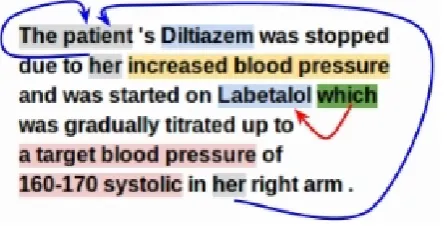
test instances, and also some aggressive greedy strategies during the chain clustering.
1.4.3 Relation Extraction
A significant portion of biomedical RE research has been conducted on protein-protein interaction (PPI) extraction, due to the importance of the task. None of the previous biomedical approaches that have been tested on the 5 widely used PPI benchmark corpora consistently outperform other approaches. Besides, their performances are not high in most of these corpora.
In the context of RE, our research contribution is manifold.
A novel hybrid kernel-based RE method tested on multiple RE tasks and corpora
We propose a novel hybrid kernel-based RE approach that outperforms the previous approaches in 4 out of the 5 benchmark PPI corpora. In addition, our result is very close to the state of the art on the other corpus.
Our proposed approach also outperforms previous best results on two benchmark drug-drug interaction (DDI) corpora, i.e. on a separate biomed-ical RE task. Moreover, the results of our proposed approach on a bench-mark news domain corpus, which consist of completely different genres of texts, are on a par with the state of the art, too.
Exploitation of negation scopes, discourse units and semantic roles
also propose how to exploit knowledge accumulated using a data driven technique with already known common knowledge to reduce imbalance in data distribution. Our proposed data driven technique for knowledge collection is based on indirect exploitation of semantic role labelling. In addition, we propose an approach to exploit elementary discourse units to filter negative test instances. We show that the reduction of skewed distribution by exploiting the information provided by the above mentioned linguistic information could lead to better results.
A linguistically informed approach
We propose new structures (namely, mildly extended dependency tree and reduced graph) to separate important part of a sentence (with respect to a pair of candidate entity mentions) to extract target relation. A number of linguistically motivated rules were also proposed for extracting a variety of features as well as for preprocessing the input data.
1.5
Outline of the Thesis
Below is a summary of the remaining chapters in this thesis, with reference to the relevant publications:
• Chapter 2 – Biomedical Named Entity Recognition: This chapter starts with a discussion of the related work on biomedical NER. This is followed by our proposed approach and the correspond-ing empirical results (Chowdhury and Lavelli, 2010a). We also present our findings regarding how machine annotated corpora can be maxi-mally exploited (Chowdhury and Lavelli, 2011a; Rebholz-Schuhmann et al., 2011).
Then, we present our proposed approach for coreference resolution on clinical text and make a comparison of our results with those of previous work (Chowdhury and Zweigenbaum, 2013; Zweigenbaum et al., 2013). Finally, we discuss the limitations and possible future extension of our approach.
• Chapter 4 – Relation Extraction: We start with a brief overview of the current state of RE research. Then, we propose our novel RE approach (Chowdhury et al., 2011; Chowdhury and Lavelli, 2011b; Chowdhury et al., 2011c; Chowdhury and Lavelli, 2012b; Chowdhury and Lavelli, 2012a) and its further extensions (Chowdhury and Lavelli, 2012c; Chowdhury and Lavelli, 2013a; Chowdhury and Lavelli, 2013b), accompanied with discussion on experimental results. This is followed by suggestions for future expansions.
Biomedical Named Entity
Recognition
“The beginning of wisdom is to call things by their right names.”
– A Chinese proverb
Named Entity Recognition is the task of locating entity mentions in texts and recognizing their appropriate semantic types. It is usually the first step towards making full use of the information contained inside texts. Our interest for biomedical named entity recognition (BNER) was primar-ily driven by the need of developing a high performance NER system that
we could later use as a preliminary step for relation extraction, which is the main focus of this PhD research. In the context of BNER, we had two research goals.
Firstly, we worked on an approach that could be applicable to differ-ent types of biomedical differ-entities obtaining state-of-the-art results. In this regard, we focused our attention particularly on recognizing disease men-tions, a type of biomedical entities which did not attract much attention when this PhD started. The resulting BNER system has been later used as a preliminary step for relation extraction (more details in Chapter 4).
Secondly, we wanted to investigate a recently emerging topic, called sil-ver standard annotation, in the context of BNER. The goal of such anno-tation is to automatically annotate large corpora using different automatic systems (instead of human experts), and then to learn models/classifiers from such corpora. This is a rather unconventional approach which requires assessing whether such corpora can really enable to train high performing systems.
In the subsequent sections, we will describe our approach for each of the above stated goals. Each section begins with a brief literature review of the related work, followed by a detailed discussion of the contributions of this thesis.
2.1
Related Work on Biomedical NER
verbs, these texts show an inherently complex structure. New bio-entity names are created continuously. Besides, authors of biomedical texts of-ten do not follow proposed standardized names or formats and prefer to use abbreviations or other forms depending on personal inclination (Bo-denreider, 2004; Dai et al., 2010). Because of their limited length, such abbreviations/acronyms are sometimes identical to other words or sym-bols which increases the ambiguity. For instance, it was reported that 80% of the abbreviations listed in the UMLS have ambiguous representation in MEDLINE (Liu et al., 2002). Sometimes the same name is shared by different types of bio-entity types. For example, “C1R” is a cell line, but there exists a gene (SwissProt P00736) that has the same name. Usage of digits and other non-alphabetic characters inside bio-entity names is also common. Compound names further complicate the situation. Locating the beginning and ending of such names within a sentence is not so straight-forward since verbs and adjectives are often embedded in such names. Due to these complexities, BNER attracted a huge amount of research inter-ests. A number of shared tasks/challenges such as BioNLP/NLPBA 2004, BioCreative, CALBC, etc provided benchmarks to compare and showcase the advancement in this field.
State-of-the-art BNER approaches use various ML algorithms. These include hidden Markov model (HMM), support vector machine (SVM), maximum entropy Markov model, conditional random fields (CRFs), . . . . Among these algorithms, CRFs appear to be the most popular choice.
One common characteristic in many of these systems is the combination of results from multiple classifiers (e.g. see Torii et al. (2009)). Apart from that, there is a substantial agreement among the feature sets used by these systems, most of which are actually various orthographic features.
around 88%, which is quite high. These systems often use either gene/protein specific features (e.g. Greek alphabet matching) or post-processing rules (e.g. extension of the identified mention boundaries to the left when a sin-gle letter with a hyphen precedes them (Torii et al., 2009)) which might not be equally effective for other bio-entity type identification (more in Section 2.3.4). More efforts should be devoted to take advantage of contextual clues and features.
One of the important bio-entity types which did not receive as much attention (when this PhD started) as gene/protein is disease, which is a particular topic of interest in this thesis. In the last few years, some disease annotated corpora have been released. However, they have been annotated primarily to serve the purpose of relation extraction and, for different rea-sons, most of them are not suitable for the development of ML based disease mention recognition systems (Leaman et al., 2009). For example, the BioText (Rosario and Hearst, 2004) corpus has no specific annotation guideline and contains several inconsistencies, while the PennBioIE (Kulick et al., 2004) is very specific to a particular sub-domain of diseases. Among other disease annotated corpora, the EBI disease corpus (Jimeno et al., 2008) is not annotated with disease mention boundaries which makes it un-suitable for BNER evaluation for diseases. Recently, an annotated corpus, named Arizona Disease Corpus (AZDC) (Leaman et al., 2009), has been released which has adequate and suitable annotation of disease mentions by following specific annotation guidelines.
are not the same as the ones practiced for NER on biomedical literature. Bundschus et al. (2008) relied on a conditional random field (CRF) based approach that uses typical features for gene/protein mention recog-nition for the purpose of disease, gene and treatment recogrecog-nition; i.e. there was no feature tailoring for disease recognition. The work has been evalu-ated on two corpora annotevalu-ated with those entity mentions that participate in disease-gene and disease-treatment relations. The entity mentions which do not participate in any of these two types of relations are not annotated in those corpora. Hence, their reported F-score for entity mention recog-nition was not computed for all mentions, regardless of whether a mention is participating in a relation or not. Furthermore, the authors do not in-dicate which F-score has been specifically achieved for disease recognition. Hence, the reported results are not suitable for comparison.
To the best of our knowledge, the only systematic experimental re-sults reported for disease mention recognition in biomedical literature us-ing ML based approaches are published by Leaman and Gonzalez (2008) and Leaman et al. (2009).1 They have used a CRF based BNER system named BANNER which basically uses a set of orthographic, morphological and shallow syntactic features (Leaman and Gonzalez, 2008). The system achieves an F-score of 86.43 on the BioCreative II GM corpus2, which is one of the best results for gene mention recognition task on that corpus.
BANNER achieves an F-score of 54.84 for disease mention recognition on the BioText corpus (Leaman and Gonzalez, 2008). However, as said above, the BioText corpus contains annotation inconsistencies3. So, the corpus is not ideal for comparing systems’ performance. The AZDC corpus
1However, there is some work on disease recognition in biomedical literature using other techniques such as morpho-syntactic heuristic based approach (e.g. MetaMap (Aronson, 2001)), dictionary look-up method and statistical approach (N´ev´eol et al., 2009; Jimeno et al., 2008; Leaman et al., 2009).
2As mentioned in http://banner.sourceforge.net/
is much more suitable as it is specifically annotated for benchmarking of disease mention recognition systems. An improved version of BANNER achieves an F-score of 77.9 on the AZDC corpus, which is the state of the art on ML based disease mention recognition in biomedical literature (Leaman et al., 2009).
2.2
Proposed Approach
Previous studies argued that the correct identification of diseases is the most promising candidate for the improvement of various disease-centric knowledge extraction tasks (e.g. drug discovery (Agarwal and Searls, 2008), disease-gene relation extraction (Bundschus et al., 2008)). The identification of disease names can also be useful in other tasks, such as drug-drug interaction extraction, where diseases are not necessarily the entities of interest.4
So, our initial effort was concentrated on developing a machine learn-ing based BNER approach that used a feature set specifically tailored for disease mention recognition. We call our system BioEnEx (Biomedical Named Entity Extractor). We used conditional random field (CRF) (Laf-ferty et al., 2001) as the learning algorithm.5 The main characteristics of our approach are as follows:
• More emphasis on contextual and syntactic features (specifically, we investigated the exploitation of syntactic dependencies which were largely overlooked by previous approaches)
• Extensive segmentation, normalization and simplification of the to-kens
• Usage of a single classifier based approach
4We will explain this issue in more details in Section 4.3.2.
– Most of the state-of-the-art BNER systems multiple classifiers to tag tokens and then later tries to merge the outputs. It is a com-plex and computational resource intensive approach. Moreover, there are certain difficulties in case of disagreements and overlaps. Furthermore, it is not clear how the classifiers complement each other, which may result in unreliable error analyses.
• Beyond genes/proteins
– Our system obtains high results for diseases, genes/proteins, drugs and species.
• Exploitation of linguistic structures during post-processing
• Exploitation of condensed corpus rather than the full training cor-pus to reduce the imbalance of positive and negative training in-stances.
– Acondensed corpus is the collection of those training sentences which have at least one (target) entity mention annotation. Usu-ally in the full training corpus, there exist sentences which do not contain any (target) entity mention annotation. The condensed corpus excludes those sentences and, consequently, reduces skew-ness in the distribution of positive and negative instances.6
2.2.1 Description of the Proposed Approach
There are basically three stages in our approach: (i) pre-processing, (ii) feature extraction and model training, and (iii) post-processing.
Pre-processing
Data pre-processing is an important step which can affect the features to be used by the ML algorithm (and, hence, also the performance) of the NER tagger. After tokenization, POS-tagging and parsing of the sentences7, our system conducts the generalization and normalization techniques shown in Table 2.1.8
All of these techniques have a common goal – minimize (as much as possible) the uninformative dissimilarity among tokens and make them uniform. We selected these techniques from a variety of pre-processing techniques mentioned in the previous BNER literature after doing an in-depth experimental study.9 At the same time, we kept a separate copy of the original tokens so that no information is lost. Tokens (both original and normalized) are labelled with the corresponding target entity annotations according to the IOB2 format.
1. Each number (both integer and real) inside a token is replaced with ‘9’. 2. Each token is further split if it contains either punctuation characters
or both digits and alphabetic characters. 3. All letters are changed to lower case.
4. All Greek letters (e.g. alpha) are replaced withG and Roman numbers (e.g. iv) with R. 5. Each token is normalized using SPECIALIST lexicon tool10 to avoid spelling variations.
Table 2.1: Generalization and normalization steps of our BNER system.
7We use the Charniak-Johnson reranking parser (Charniak and Johnson, 2005), along with a self-trained biomedical parsing model (McClosky, 2010), for tokenization, POS-tagging and parsing of the sentences. Later, we used the Stanford parser (Klein and Manning, 2003) for the dependency analysis.
8In our original paper (Chowdhury and Lavelli, 2010b), we used GeniaTagger for tokenization and PoS tagging. Hence, there is a negligible difference between the results of BioEnEx reported in this thesis and in Chowdhury and Lavelli (2010b).
Feature extraction and model training
It is implicit that no matter how good the ML algorithm is, if the feature set to be used is not diverse and informative, the NER system will not perform well. The exiting studies already proposed a rich variety of features. We selected the best possible set of features among them after doing ablation experiments. These selected features can be categorized into the following groups:
• general features (Table 2.2)
• orthographic features (Table 2.3)
• contextual features (Table 2.4)
• syntactic dependency features (Table 2.5)
• dictionary lookup features (see Section 2.2.2)
We describe them in more detail in Section 2.2.2. Note that we selected a tailored set of features for the disease mentions, and some additional features for the other types of bio-entity mentions. In other words, we use a generalized feature set for all entities except diseases.
Post-processing
The objective of the post-processing is twofold – firstly, to reduce the num-ber of wrong annotations identified by the NER tagger, and secondly, to include annotations which seem highly probable but are missed by the NER tagger. We propose the following post-processing techniques:
the mention if such character is the missing bracket. Otherwise, all the characters from the index where the mismatched bracket exists inside the identified mention are discarded from the corresponding mention.
• One sense per sentence: If any instance of a character sequence is identified as a mention of the target entity type, then all the other instances of the same character sequence inside the same sentence are also annotated as such target entity type.
• Short/long form annotation: Using the algorithm of Schwartz and Hearst (2003), “long form (short form)” instances are detected inside sentences. If the short form is annotated as a mention of the target entity type, then the long form is also annotated and vice versa.11
• Ungrammatical conjunction structure correction: If an annotated men-tion contains comma (,) but there is no “and” in the following charac-ter sequence (from the characcharac-ter index of that comma) of that men-tion, then the annotation is splitted into two parts (at the index of the comma). Annotation of the original mention is removed and the splitted parts are annotated as two separate mentions.
• Short and long form separation: If both short and long forms are annotated in the same mention, then the original mention is discarded and the corresponding short and long forms are annotated separately.
2.2.2 Features
As we mentioned earlier, our main objective is to develop a system that will have high accuracy for disease mention recognition. There are com-pelling reasons to believe that various issues regarding the well studied
Feature name Description Used for Used for all diseases? the other entities?
PoS Part-of-speech tag yes yes
NormWord Normalized token (see Section 2.2.1) yes yes
Lemma Lemmatized form yes yes
charNgram 3 and 4 character n-grams yes yes
Suffix 2-4 character suffixes yes yes
Prefix 2-4 character prefixes yes yes
Table 2.2: General features for tokeni
gene/protein mention recognition would not apply to the other semantic types. For example, Jimeno et al. (2008) argue that the use of disease terms in biomedical literature is well standardized, while it is quite the opposite for the gene terms (Smith et al., 2008).
After a thorough study and extensive experiments on various features and their possible combinations, we have selected a feature set specific to the disease mention identification which comprises features shown in Tables 2.2, 2.3, 2.4 and 2.5, and dictionary lookup features. Additional features used for other bio-entities are selected based on the analysis reported by other studies.
Previous studies have shown that dictionary lookup features12, i.e. name matching against a dictionary of terms, often increase recall (Torii et al., 2009; Leaman et al., 2009). However, an unprocessed dictionary usually does not boost overall performance (Zweigenbaum et al., 2007). So, to reduce uninformative lexical differences or spelling variations, we generalize and normalize the dictionary entries using exactly the same steps followed
Feature name Description Used for Used for all diseases? the other entities?
InitCap Is initial letter capital yes yes
AllCap Are all letters capital yes yes
MixCase Does contain mixed case letters yes yes SingLow Is a single lower case letter yes yes SingUp Is a single upper case letter yes yes
Num Is a number yes yes
PuncCharType Tokeni itself, if it is a punctuation yes yes
character (e.g. - / [ ] : ; % , . etc)
PrevCharAN Is previous character alphanumeric yes yes Shape of tokeni For example, “Animal” would be no yes
mapped to “Aaaaaa”. See Collins (2002) for details.
Brief shape of tokeni For example, “Animal” would be no yes
mapped to “Aa”.
Nucleoside Is tokeni a Nucleoside name no yes
Nucleotide Is tokeni a Nucleotide name no yes
AminoAcidLong Is tokeni a long Amino acid name no yes
AminoAcidShort Is tokeni a short Amino acid name no yes
NucleicAcid Is tokeni a Nucleic acid name no yes
ROMAN Is tokeni a Roman number no yes
GREEK Does tokeni match a Greek letter no yes
HasGREEK Does tokeni contain a Greek letter no yes
Feature name Description Used for Used for all diseases? the other entities?
Bi-gramk,k+1 Bi-grams of normalized tokens yes yes
for i−2≤k < i+ 2
Tri-gramk,k+1,k+2 Tri-grams of normalized tokens yes yes
for i−2≤k < i+ 2
CtxPOSk POS of the following yes yes
for i+ 1 ≤k≤i+ 2 two tokens
CtxLemmak Lemma of the following yes yes
for i+ 1 ≤k≤i+ 2 two tokens
CtxWordk Previous two and following yes yes
for i−2≤k < i+ 2 two tokens
Offset conjunctions New features from all possible yes yes conjunctions among features of the
tokens from tokeni−1 to tokeni+1.
See documentation of Mallet (McCallum, 2002) for details.
Table 2.4: Contextual features for tokeni
Feature name Description Used for Used for all diseases? the other entities?
*obj* Target token(s) to which tokeni yes yes
is an object
*subj* Target token(s) to which tokeni yes yes
is a subject
nn Target token(s) to which tokeni yes yes
is a noun compound modifier
Table 2.5: Syntactic dependency features for tokeni. For example, in the sentence
for the pre-processing of sentences (see Section 2.2.1).
To reduce the chances of false and unlikely matches, any entry inside the dictionary having less than 3 characters or more than 10 tokens is discarded.
It might be possible that for some of the bio-entity types the existing gazetteers/dictionaries do not conform to the particular annotation guide-line followed for the training data annotation. In such cases, it might be beneficial to automatically build dictionaries from the training data. For this purpose, we propose to automatically construct the following dictio-naries from training data:
• Dictionary of non-entity tokens (DictAlwaysOtherTok) : List of normalized unique tokens which are never annotated as part of any target entity mention (i.e. always labelled as “O”) inside the training data.
• Dictionary of entities (DictAlwaysEntTok) : List of normalized unique tokens which are always labelled as part of a target entity mention (i.e. labelled as “B-” or “I-”) inside the training data.
Feature name Description
AlwaysTaggedOther whether the (normalized) token is found in DictAlwaysOtherTok
AlwaysTaggedAsPartOfTargetEnt whether the (normalized) token is found inDictAlwaysEntTok
Table 2.6: Global perspective features for tokeni extracted from automatically built
dictionary from training data.
2.3
Experiments
2.3.1 Data
For our experiments we used the Arizona Disease Corpus (AZDC)13 (Lea-man et al., 2009). The corpus has detailed annotations of diseases including UMLS codes, UMLS concept names, possible alternative codes, and start and end points of disease mentions inside the corresponding sentences. These detailed annotations make this corpus a valuable resource for eval-uating and benchmarking text mining solutions for disease recognition. Table 2.7 shows various characteristics of the corpus.
Item name Total count
Abstracts 793
Sentences 2,783
Total disease mentions 3,455 Disease mentions without overlaps 3,093 Disease mentions with overlaps 362
Table 2.7: Various characteristics of AZDC.
In case of overlapping annotations (e.g. the disease annotation
dometrial and ovarian cancers” overlaps with another annotation “ovarian cancers”), we have considered only the larger annotations in our experi-ments. After resolving overlaps according to the aforementioned criterion, there remain 3,224 disease mentions. We have observed minor differences in some statistics of the AZDC reported by Leaman et al. (2009) with the statistics of the downloadable version14 (Table 2.7). However, these differences can be considered negligible.
2.3.2 Dictionary
For the purpose of disease mention recognition, like Leaman et al. (2009) we have created a dictionary with the instances of the following nine of the twelve UMLS semantic types from the semantic group “DISORDER”15 of the UMLS Metathesaurus (Bodenreider, 2004): (i) disease or syndrome, (ii) neoplastic process, (iii) congenital abnormality, (iv) acquired abnor-mality, (v) experimental model of disease, (vi) injury or poisoning, (vii)
mental or behavioral dysfunction, (viii) pathological function and (ix) sign or symptom. We have not considered the other three semantic types
(find-ings, anatomical abnormality and cell or molecular dysfunction) since these three types have not been used during the annotation of Arizona Disease Corpus (AZDC) used in our experiments.
2.3.3 Experimental Setting
We follow an experimental setting similar to the one in Leaman et al. (2009) so that we can compare our results with those of the BANNER
14Note that“Disease mentions (total)” in the paper of Leaman et al. (2009) actually refers to thetotal
disease mentions after overlap resolving (Robert Leaman, personal communication). One other remark is that Leaman et al. (2009) mention 794 abstracts, 2,784 sentences and 3,228 (overlap resolved) disease mentions in the AZDC. But in the downloaded version of AZDC, there is 1 abstract missing (i.e. total 793 abstracts instead of 794). As a result, there is 1 less sentence and 4 less (overlap resolved) disease mentions than the originally reported numbers.
system. We performed 10-fold cross validation on AZDC in such a way that all sentences of the same abstract are included in the same fold. The results on all folds are averaged to obtain the final outcome16, as Leaman et al. (2009) did. All the results are computed based on the exact matching criterion, i.e. partial matches are not rewarded.
2.3.4 Results and discussions
Table 2.8 shows the results of the experiments with different features. As we can see, our approach achieves significantly higher results than that of BANNER, the previous state-of-the-art system for disease recognition. Initially, with only the general and orthographic features the performance is not high. However, once the contextual features are used, there is a substantial improvement in the result. Note that BANNER does not use contextual features (see Leaman and Gonzalez (2008)). In fact, the use of contextual features was also quite limited in other BNER systems that achieved high performance for gene/protein identification (Smith et al., 2008), until recently.
Dictionary lookup features provide a very good contribution in the out-come. This supports the argument of Jimeno et al. (2008) that the use of disease terms in biomedical literature is well standardized. Post-processing and syntactic dependency features also increase performance.
We have computed statistical significance tests for the last four exper-imental results shown in Table 2.8. For each of such four experiments, the immediate previous experiment is considered as the baseline. The tests have been performed using the approximate randomization procedure (Noreen, 1989). We have set the number of iterations to 1,000 and the con-fidence level to 0.01. According to the tests, the contributions of contextual
features and dictionary lookup features are statistically significant. To our dismay, post-processing rules and syntactic dependency features did not significantly improve the results.17
We did some random analysis, particularly, to understand why the pro-posed post-processing techniques were not effective. Our findings sug-gest that the AZDC corpus is missing a number of annotations for disease names. For instance, consider the term “VHL” which refers to a disease named “Von Hippel-Lindau”. There are at least 8 occurrences where our post-processing module was able to correctly identify that the term refers to a disease name in the corresponding sentences. However, since annota-tors did not annotate them as diseases, the terms identified by our system were considered as false positives. Hence, we assume our post-processing techniques would perform much better had all the missing annotations been annotated. Below we show an example sentence from the AZDC corpus, where the annotators did not annotate “VHL” as a disease:
The age incidence curves for renal cell carcinoma and cerebellar haemangioblastoma in VHL disease were compatible with a single mutation model, whereas the age incidence curves for sporadic renal cell carcinoma and cerebellar haemangioblastoma suggested a two stage mutation process.
Regarding the usage of syntactic dependencies as features, our hypoth-esis was that there are some cue verbs (e.g. “suffer”, “cause” and so on) which could provide indicate whether a certain noun is part of a disease name or not. Our initial assumption was that the three types of syntac-tic dependencies (reported in Table 2.5) could attach the potential disease names to such cue verbs. But, after doing some random analysis, we came to realize that these three dependency types are not enough. For example, in the following sentence:
System Note P R F-score
BANNER (Leaman et al., 2009) 80.9 75.1 77.9
Our system Using general and orthographic features 74.00 71.14 72.54 Our system After adding contextual features 81.51 75.99 78.65 Our system After adding syntactic dependency features 81.62 75.91 78.66 Our system After adding dictionary lookup features 83.34 78.52 80.87 Our system After adding post processing 83.38 78.55 80.89
Table 2.8: 10-fold cross validation results using exact matching criteria on AZDC.
Complement C7 deficiency (C7D) is associated frequently with recurrent bacterial infections, especially meningitis caused by Neisseria meningitidis.
“Neisseria meningitidis” is a disease name whose head word is “meningi-tidis”. The word “meningitidis” is syntactically dependent on the cue word “caused” with dependency type “agent”. Further investigation is required to select the most relevant dependency types that can be used to unearth links between potential disease names and cue words, which can be used as features.
Errors due to conjunction structure and abbreviated names
way to reduce this specific error type is to generate a list of possible ab-breviated disease names from the long forms of disease names available in databases such as UMLS Metathesaurus.
Why features for diseases and other entities (such as genes/proteins) are not the same
Many of the existing BNER systems, which are mainly tuned for gene/protein identification, use features such as token shapes (also known as word classes and brief word classes), Greek alphabet matching, Roman number match-ing and so forth. As mentioned earlier, we have done extensive experiments with various feature combinations for the selection of disease specific fea-tures. We have observed that many of the features used for gene/protein identification are not equally effective for disease identification. Instead, they hurt performance.
This observation is reasonable because gene/protein names are much more complex than entities such as diseases. For example, they often contain punctuation characters (such as parentheses or hyphen), Greek alphabets and digits which are unlikely to appear in disease names. Ideally, the ML algorithm itself should be able to utilize information from only the useful features and ignore the others in the feature set. But practically, including non-informative features often mislead the model learning. In fact, several surveys have argued that the choice of features matter at least as much as the choice of the algorithm if not more (Nadeau and Sekine, 2007; Zweigenbaum et al., 2007).
p53-mediated). Moreover, as mentioned before, gene/protein mentions commonly have very complex structures (e.g. PKR(1-551)K64E/K296R or RXRalphaF318A). So, it is a common practice to tokenize gene/pro