B
EATAN
OWAK1, M
AGDALENAS
OKALSKA−J
URKIEWICZ1, M
ARTAM
ADEJ1, E
WAZ
ACZYŃSKA2,
A
NNAC
ZARNY2, J
ACEKS
ZECHIŃSKI1iNOS Expression in Peripheral Blood Leukocytes
of Patients With Early Arthritis and Established
Rheumatoid Arthritis
Aktywność iNOS w leukocytach krwi obwodowej u chorych
na reumatoidalne zapalenie stawów i wczesne zapalenie stawów
1Department of Rheumatology and Internal Diseases Silesian Piasts University of Medicine in Wrocław, Poland 2Institute of Immunology and Experimental Therapy, Polish Academy of Sciences, Wroclaw, Poland
Adv Clin Exp Med 2008, 17, 4, 415–421 ISSN 1230−025X
ORIGINAL PAPERS
© Copyright by Silesian Piasts University of Medicine in Wrocław
Abstract
Background.Nitric oxide (NO) is a small, very reactive molecule involved in many physiological processes; including immune response. The present authors previously reported increased levels of NO metabolites in the serum of patients with rheumatoid arthritis (RA) and osteoarthritis.
Objectives.The aim was to evaluate the activity of iNOS in peripheral blood leukocytes (PBLs) in patients with early arthritis (EA) and established RA and to compare it with parameters of disease activity used in clinical practice.
Material and Methods.Thirty−five patients who met the ACR criteria for RA, 31 patients with EA, and 30 healthy controls were enrolled in the study. The activity of iNOS was measured by an immunocytochemical method in PBLs separated by density gradient.
Results.The mean age of RA patients was 55.7 years. High disease activity (defined as DAS28 > 5.1) was detect− ed in 18 patients and mean DAS28 was 5.0. Mean disease duration was 13.0 years. The mean age of EA patients was 44.1 years. High disease activity was detected in 18 patients and mean DAS28 was 5.2. Mean disease dura− tion was 6.5 months. There was a statistically significant (p < 0.05) difference between RA and EA patients and healthy subjects in iNOS expression (25.4 ± 15.2%, 18.7 ± 12.3%, and 13.8 ± 15.1%, respectively). In EA the mean iNOS expression was higher in patients with cigarette abuse than in nonsmokers (22.9% vs. 14.4%), whereas no such a difference was observed in established RA. In established RA, iNOS expression correlated with CRP level, the number of tender and swollen joints, and DAS28. In EA, no correlation between iNOS expression and the ana− lyzed parameters of disease activity was found.
Conclusion.As the difference between iNOS expression in PBLs in patients with RA and with EA cannot be attrib− uted to differences in disease activity (DAS28 score, ESR, and CRP level are similar in both groups), further obser− vation is needed to determine whether higher iNOS expression in some patients with early arthritis can predict future RA development. The higher iNOS expression in smokers with EA needs further study aimed at determin− ing if smoking induces iNOS activity and thereby promotes RA development (Adv Clin Exp. Med 2008, 17, 4, 415–421).
Key words: inducible nitric oxide synthase (iNOS), rheumatoid arthritis (RA), early arthritis (EA).
Streszczenie
Wprowadzenie.Tlenek azotu (NO) jest małą, bardzo aktywną chemicznie cząsteczką, która jest zaangażowana w wiele procesów fizjologicznych, m.in. odgrywa istotną rolę w regulacji procesów immunologicznych. Autorzy uprzednio opisywali podwyższone stężenie metabolitów NO w surowicy chorych na reumatoidalne zapalenie sta− wów i chorobę zwyrodnieniową stawów.
Cel pracy.Ocena aktywności iNOS w leukocytach krwi obwodowej pobranej od chorych na r.z.s. i w.z.s.
Rheumatoid arthritis (RA) is a severe progres− sive autoimmune condition that can lead to disabi− lity, impaired quality of life and, in some cases, re− duced life expectancy. The etiopathogenesis of the disease is still unknown; therefore the efforts of many researchers are focused on an attempt to explain the mechanisms responsible for disease in− itiation and the maintenance of inflammation.
Nitric oxide (NO) is a small, very reactive mo− lecule involved in many physiological processes, such as the regulation of smooth muscle tension, neurotransmission, and host defense. It plays im− portant biological roles in the cardiovascular, re− spiratory, nervous, genitourinary, gastrointestinal, host−defense, hemopoietic, and musculoskeletal systems. In vivoit is synthesized from L−arginine by nitric oxide synthase (NOS). Three isoforms of NOS have been identified. Two of them (endothe− lial and neuronal, eNOS and nNOS) are constituti− vely expressed (cNOS) and are dependent on cal− cium−calmodulin complex concentration. The third is induced by some immunological condi− tions (iNOS) and is calcium−calmodulin complex independent. The expression of iNOS has been de− tected in various cells, including chondrocytes, sy− novial fibroblasts, osteoclasts, and macrophages.
In vitro NO synthesis can be induced by proin− flammatory cytokines such as IL−1 and TNFαand it is inhibited by glucocorticoids.
In animal models of collagen−induced arthri− tis, increased concentration of NO and increased activity of iNOS were observed in fibroblasts, sy− novial macrophages, and mononuclear leukocytes [1]. Spontaneous production of NO in vitroby sy− novial fibroblasts from RA and OA patients was described [2]. The present authors previously re− ported increased levels of NO metabolites (nitrite and nitrate) in the serum of patients with rheuma− toid arthritis and osteoarthritis [3].
The aim of the present study was to evaluate the activity of iNOS in peripheral blood leukocy− tes of patients with early arthritis (EA) and establi− shed rheumatoid arthritis (RA) and to compare it with parameters of disease activity used in clinical practice.
Material and Methods
Thirty−five patients (28 females, 80%) who met the American College of Rheumatology (ACR) criteria for RA, 31 patients (20 females, 64.5%) with EA defined as arthritis of at least one joint lasting no longer than 12 months, and 30 he− althy subjects (20 females, 66.7%) as a control group were enrolled in the study. Subjects with in− fections or a medical history revealing neoplasm were excluded from the study. All the patients with RA were treated with disease−modifying anti−rheu− matic drugs (DMARDs), excluding TNF blockers. Some of them received glucocorticoids in a stable dose. The patients with EA were treated with sul− fasalazine (SSZ) or received no DMARDs. The use of non−steroidal anti−inflammatory drugs was allowed in the RA and EA patients.
The activity of iNOS was measured by an im− munocytochemical method in peripheral blood leucocytes separated by density gradient. The re− sult was the percentage of stained cells per one hundred leukocytes. DAS 28 (Disease Activity Score 28), ESR (erythrocyte sedimentation rate), CRP (C−reactive protein), PLT (platelets), and the level of hemoglobin were also assessed.
The study was approved by the Silesian Piasts University of Medicine in Wrocław Bioethics Committee and all the subjects gave their written informed consent.
Wyniki. Średnia wieku chorych na r.z.s. wynosiła 57,7 lat, a chorych na w.z.s. 44,1 lat. Wysoką aktywność cho− roby definiowaną jako DAS28 > 5,1 stwierdzono u 18 chorych na r.z.s. (średnia wartość DAS28 w tej grupie wy− nosiła 5,0) i u 18 chorych na w.z.s. (średnia wartość DAS28 w tej grupie wynosiła 5,2). Średni czas trwania cho− roby wynosił w grupie chorych na r.z.s. 13,0 lat, a w grupie chorych na w.z.s. 6,5 miesiąca. Ekspresja iNOS w grupie chorych na r.z.s., w.z.s. i w grupie kontrolnej wynosiła odpowiednio 25,4% ± 15,2%, 18,7% ± 12,3% i 13,8% ± 15,1%, Wykazano istotną statystycznie różnicę między poszczególnymi grupami (p < 0,05). Wśród chorych na w.z.s. aktywność iNOS była istotnie wyższa u chorych palących papierosy (22,9% vs. 14,4%). Nie ob− serwowano analogicznej zależności w grupie chorych na r.z.s. W grupie chorych na r.z.s. stwierdzono istotną sta− tystycznie korelację między ekspresją iNOS a stężeniem CRP, liczbą bolesnych i obrzękniętych stawów oraz DAS28. W grupie chorych na w.z.s. nie stwierdzono korelacji między ekspresją iNOS a wskaźnikami aktywno− ści choroby.
Wnioski. Różnica aktywności iNOS w grupach chorych na r.z.s. i w.z.s. nie wynika z różnic w aktywności choro− by, gdyż DAS28, OB i CRP są zbliżone w badanych grupach. Potrzebne są dalsze badania, które pozwolą na wy− jaśnienie mechanizmów odpowiedzialnych za obserwowaną różnicę. Zwiększona aktywność iNOS u palaczy z w.z.s. wymaga także dalszych badań (Adv Clin Exp. Med 2008, 17, 4, 415–421).
Results
The mean age of the RA patients was 55.7 (range: 27–74) years. Of the 35 RA patients, 25 (71%) had positive rheumatoid factor and erosions in the hands were found in 20 (57%). High disease activity (defined as DAS28>5.1) was detected in 18 patients and the mean DAS28 was 5.0 (range: 2.4–8.2). The mean disease duration was 13.0 (range: 139) years. The mean age of the EA patients was 44.1 (range: 18–77) years. Of the 31 EA patients, 10 (33%) had positive rheumatoid factor and no erosion in the hands was found. High disease activity was detect− ed in 18 patients and the mean DAS28 was 5.2 (range: 1.4–8.1). The mean disease duration was 6.5 (range: 1–12) months. The mean age of the control group was 31.5 (range: 18–51) years. The patients’ demographic and disease characteristics are shown in Tables 1 and 2. There was no statistically signif− icant difference between BMI and disease activity between the RA and EA groups.
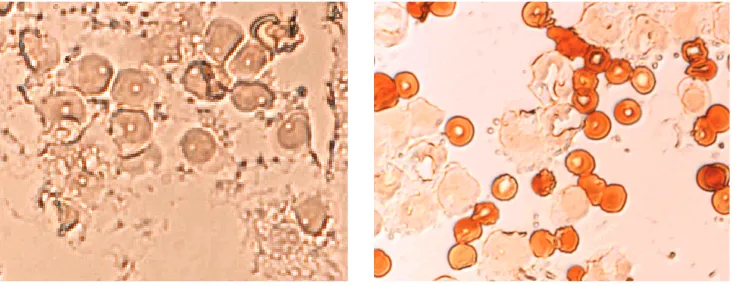
There was a statistically significant (p< 0.05) difference between RA and EA patients and heal− thy subjects in iNOS expression (25.4 ± 15.2%, 18.7 ± 12.3%, and 13.8 ± 15.1%, respectively) (Fi− gure 1). No difference in iNOS expression betwe− en genders was found. Age and BMI seemed to ha− ve no impact on iNOS expression either. In EA, the difference in iNOS expression between sub− jects receiving SSZ and those receiving no DMARDs was statistically insignificant (15.9 ± 16.3% vs. 20.1 ± 10.2%, p= 0.3). In established
RA, no significant impact of received DMARDs on iNOS expression was found, although in pa− tients receiving MTX (methotrexat) and CyA (cyc− losporine A), iNOS expression tended to be higher than in subjects receiving MTX with or without SSZ (32.5 ± 2.5% vs. 24.2 ± 16.5%, p= 0.06). In EA, mean iNOS expression was higher in patients with cigarette abuse than in nonsmokers (22.9% vs. 14.4%, p< 0.05), whereas no such a difference in established RA was observed.
In the RA and EA patients there was no diffe− rence in iNOS expression between RF−positive and RF−negative subjects. In the RA group, pa− tients with erosive arthritis revealed significantly (p < 0.05) lower iNOS expression in peripheral blood leukocytes than those with non−erosive arth− ritis (23.3 ± 18.2% vs. 29.0 ± 7.3%, respectively). In established RA, iNOS expression correlated negatively with CRP level, the number of tender and swollen joints, and DAS28. In EA, no correla− tion between iNOS expression and the analyzed parameters of disease activity was found (Table 3). In subjects with active RA (defined as DAS28 > 5.1), iNOS expression in peripheral blood leukocytes was significantly (p< 0.05) lower than in subjects with DAS28 ≤5.1 (18.7 ± 8.4% vs. 30.5 ± 17.3%, respectively). In the EA group the difference in iNOS expression between the subgroups with hi− gher (DAS28 > 5.1) and lower (DAS28 ≤ 5.1) di− sease activity was not significant (17.8 ± 13.1% vs. 20.0 ± 11.6%); however, a similar tendency to that observed in RA was revealed.
Table 1.Demographic characteristics of the patients
Tabela 1.Charakterystyka demograficzna badanej populacji
RA group (n = 35) EA group (n = 31) (Chorzy na r.z.s.) (Chorzy na w.z.s.) Females (%)
(Kobiety) 28 (80%) 20 (64.5%)
Mean age – range
(Średnia wieku – zakres) 55.7 (27–74) 44.1(18–77)
Mean BMI (SD)
(Średnie BMI – SD) 26.8 (6.2) 26.6 (4.9)
Mean disease duration (range)
(Średni czas trwania choroby – zakres) 13.0 (1–39) years 6.5 (1–12) months Structure of employment
(Struktura zatrudnienia)
Employed – % 10 (28.6%) 14 (45.2%)
(Czynni zawodowo – %)
Unemployed because of health problems – %) 10 (28.6%) 1 (3.2%)
(Niepracujący z powodów zdrowotnych – %)
Smoking – % 6 (17.1%) 16 (51.6%)
(Palenie papierosów – %)
RA – rheumatoid arthritis, EA – early arthritis, BMI – body mass index.
Discussion
This study demonstrated that iNOS expression in peripheral blood leukocytes was higher in pa− tients with arthritis than in healthy subjects. Other authors also detected higher iNOS activity and ele− vated NO (nitric oxide) concentrations in synovial fluid and peripheral blood samples obtained from patients with RA than in healthy subjects [3–7]. NO production seems to be stimulated by various proinflammatory cytokines, for example IL−1 (in− terleukin−1), IL−17, and TNFα (tumor necrosis factor alpha) [8, 9] and it plays an important role in T−cell activation and development [10]. The ro− le of NO in the pathogenesis of inflammatory arth− ritis is also supported by that fact that iNOS acti− vity is suppressed by disease−modifying anti−rheu− matic drugs and that this suppression is associated with diminished disease activity [11–14]. In the present study the authors did not detect any diffe−
rence in the influence of DMARDs on iNOS expression.
A significant difference was also detected in the present study in iNOS expression in PBLs be− tween RA and EA patients. Such a comparison was not described previously. Increased activation of iNOS in EA supports its role in the induction of the arthritis. Early activation of iNOS has been ob− served in animal models [15]. As the difference between iNOS expression in the PBLs of patients with RA and with EA cannot be attributed to the differences in disease activity (DAS28 score, ESR, and CRP level were similar in both groups), fur− ther observation is needed to determine whether higher iNOS expression in some patients with ear− ly arthritis can predict future RA development. Gonzalez−Gay et al. reported significant differen− ces in the iNOS promoter polymorphism genotype frequency among northwest Spanish RA patients and they suggested that this may play an important role in susceptibility to RA [16]. The connection
Table 2. Characteristics of the disease in the study groups
Tabela 2. Charakterystyka choroby w badanych grupach
RA group (n = 35) EA group (n = 31) (Chorzy na r.z.s.) (Chorzy na w.z.s.)
RF (%) 25 (71%) 10 (33%)
Erosions on plain radiograms of hands or feet – % 20 (57%) 0
(Nadżerki na zdjęciach RTG rąk lub stóp – %)
Number of tender joints – SD 8.1 (5.4) 10.5 (10.6)
(Liczba bolesnych stawów – SD)
Number of swollen joints – SD) 5.9 (4.8) 5.8 (5.1)
(Liczba obrzękniętych stawów – SD)
CRP (SD) [mg/dl] 2.4 (2.8) 3.0 (4.4)
ESR (SD) [mm/h]
OB (SD) [mm/godz.] 43.9 (24.7) 44.8 (29.9)
DAS28 (SD) 5.0 (1.37) 5.2 (1.56)
High disease activity (DAS28 > 5.1) – %
(Wysoka aktywność choroby (DAS28 > 5,1) – %) 18 (51.4%) 18 (58.1%)
Hb (SD) [g/dl] 12.8 (1.2) 13.3 (1.7)
RBC [1012/l] (SD) 4.1 (0.4) 4.2 (0.4)
WBC [109/l] (SD) 9.4 (3.5) 8.0 (2.7)
PLT [109/l] (SD) 267 (87) 255 (67)
Received DMARDs 26 – MTX +/– SSZ 10 – SSZ
(Stosowane l.m.p.ch.) 3 – MTX + CyA 21 – no DMARDs
6 – other (inne) (bez l.m.p.ch.) RF – rheumatoid factor, CRP – concentration of C−reactive protein, ESR – erythrocyte sedimentation rate, DAS 28 – Disease Activity Score 28, Hb – hemoglobin concentration, RBC – red blood cell count, WBC – white blood cell count, PLT – platelets, DMARDs – disease−modifying anti−rheumatic drugs, MTX – methotrexat, SSZ – sulfasalazine,
CyA – cyclosporine A
between iNOS expression and predisposition to certain a RA phenotype was also suggested by Heale et al. [17].
In the studied population, no difference in iNOS expression between genders was found. Age and BMI seemed to have no impact on iNOS expression either. In EA subjects, iNOS expression was higher in patients with cigarette abuse than in nonsmokers, whereas no such difference was ob− served in established RA. Wei et al. reported that cigarette smoking reduced iNOS activity in the lungs [18], but the influence of smoking on iNOS in peripheral blood was not examined. On the other hand, according to Krishnan et al., past smo− king history was associated with increased risk for RA development [19]. Michou et al. found an as− sociation between cumulative dose of cigarette
smoking and anti−CCP positivity [20]. The higher iNOS expression in smokers with EA detected in the present study needs further research aimed at answering the question whether smoking induces iNOS activity in PBLs and in this way promotes RA development. No association between iNOS expression and RF−positivity in RA and EA pa− tients was found in this study.
In patients with RA, iNOS expression was hi− gher in subjects with non−erosive arthritis than in subjects with erosive arthritis. In the RA group, negative correlation between iNOS expression and parameters of inflammation such as CRP level, number of tender and swollen joints, and DAS28 was also detected. What is more, iNOS expression in PBLs was significantly lower in subjects with active RA than in those with high disease activity. In the EA group the difference in iNOS expression between the subgroups with higher and lower di− sease activity was not significant, although a simi− lar tendency to that observed in RA was revealed. The negative correlations between iNOS expres− sion and parameters describing disease activity may be a consequence of the fact that NO seems to have divergent roles, being anti−inflammatory in chronic and proinflammatory in acute joint inflam− mation [21]. As RA is a chronic condition, the ne− gative correlation between iNOS expression and disease activity supports the thesis of an anti−in− flammatory property of NO in the chronic inflam− matory processes. The different roles of NO may be a consequence of its heterogeneous influence on apoptosis. Some authors suggest that NO indu− ces apoptosis in RA [22], but others report that NO prevents apoptosis by direct inhibition of cataspa− se−3 activation [23].
Although the sample size was limited in this study, its findings seem to add some new informa− tion to the knowledge about the role played by iNOS in arthritis. The differences that were detec− ted between iNOS expression in healthy subjects
Table 3.Correlation between iNOS expression and para− meters of disease activity
Tabela 3.Korelacje między ekspresją iNOS a wskaźnika− mi aktywności choroby
RA group EA group (n = 35) (n = 31) (Chorzy (Chorzy na r.z.s.) na w.z.s.) Number of tender joints –0.295 –0.464* (Liczba bolesnych stawów)
Number of swollen joints –0.222 –0.464* (Liczba obrzękniętych stawów)
CRP –0.073 –0.392*
ESR
OB 0.035 –0.340
DAS 28 0.018 –0.469*
Hb 0.053 0.137
PLT –0.207 –0.009
Fig. 1.iNOS expression in peripheral blood leukocyte: A – control group, B – RA subject
Ryc. 1.Ekspresja iNOS w leukocytach krwi obwodowej: A – grupa kontrolna, B – chory na r.z.s. * The correlation is statistically significant with p < 0.05.
and in patients with RA were similar to those alre− ady reported, but the differences between EA and established RA were not described previously. As the difference between iNOS expression in PBLs of patients with RA and with EA cannot be attribu− ted to differences in disease activity (DAS28 sco− re, ESR, and CRP level were similar in both gro− ups), further observation is needed to determine whether higher iNOS expression in some patients with early arthritis can predict future RA develop− ment. The sample size is too small to study the in−
teraction between iNOS activity and environmen− tal factors such as tobacco smoking and their influ− ence on RA development. Further studies with a larger sample size of unselected patients with EA and RA is required before definite conclusions can be drawn.
In conclusion, these findings suggest an asso− ciation between iNOS expression and different forms of arthritis. They also suggest an association between iNOS and cigarette smoking in EA.
References
[1] Cannon GW, Openshaw SJ, Hibbs JB, Hoidal JR, Huecksteadt TP, Griffiths MM:Nitric oxide production during adjuvant−induced and collagen−induced arthritis. Arthritis Rheum 1996, 39, 1677–1684.
[2] McInnes IB, Leund BP, Field M, Wei XQ, Huang FP, Sturrock RD, Kinninmonth A, Weidner J, Mumford R, Liew FY:Production of nitric oxide in the synovial membrane of rheumatoid and osteoarthritis patients. J Exp Med 1996, 184, 1519–1524.
[3] Nowak B, Międzybrodzki R, Korman L, Szechiński J:The role of nitric oxide in the inflammation process in patients with rheumatoid arthritis. [Abstract]. Joint Bone Spine 2006, 73, 222–228.
[4] Ersoy Y, Ozerol E, Kaysal O, Temel I, MacWalter RS, Meral U, Altay ZE:Serum nitrate levels in patients with rheumatoid arthritis, ankylosing spondylitis, and osteoarthritis. Ann Rheum Dis 2002, 61, 76–78.
[5] Pham TNQ, Rahman P, Tobin YM, Khraishi MM, Hamilton SF, Alderdice C, Richardson VJ:Elevated serum nitric oxide levels in patients with inflammatory arthritis associated with co−expression of inducible nitric oxide syn− thase and protein kinase C−ηin peripheral blood monocyte−derives macrophages. J Rheumatol 2003, 30, 2529–2534.
[6] Ueki Y, Miyake S, Tominaga Y, Eguchi K:Increased nitric oxide levels in patients with rheumatoid arthritis. J Rheumatol 1996, 23, 196–205.
[7] Borderie D, Hilliquin P, Hernvann A, Kahan A, Menkes CJ, Ekindjian OG:Nitric oxide synthase is expres− sed in the lymphomononuclear cells of synovial fluid in patients with rheumatoid arthritis. J Rheumatol 1999, 26, 2083–2088.
[8] Miljjkovic D, Trajkovic V:Inducible nitric oxide synthase activation by interleukin−17. Cytokine Growth Factor Rev 2004, 15, 21–32.
[9] Liew FY:Regulation of nitric oxide synthesis in infectious and autoimmune disease. Immunology 1994, 43, 95–98.
[10] Niedbala W, Cei B, Liu H, Pitman N, Chang L, Liew FY:Nitric oxide induces CD4+CD25+ Foxp3– regulato− ry T cells from CD4+CD25– T cells via p53, IL−2, and OX40. Proc Natl Acad Sci 2007, 104, 15478–15483.
[11] Elkayam O, Yaron I, Shirazi I, Judovitch R, Caspu D, Yaron M:Active leflunomide metabolite inhibits inter− leukin 1β, tumour necrosis factor α, nitric oxide, and metalloproteinase−3 production in activated human synovial tissue cultures. Ann Rheum Dis 2003, 62, 440–443.
[12] Haskó G, Szabó C, Németh ZH, Deitch EA:Sulphasalazine inhibits macrophage activation: inhibitory effects on inducible nitric oxide synthase expression, interleukin−12 production and major histocompatibility complex II expression. Immunology 2001, 103, 473–478.
[13] Tekin NS, Ilter N, Sancak B, Ozden MG, Gurer MA:Nitric Oxide Levels in Patients with Psoriasis Treated with Methotrexate. Mediators Inflamm 2006, 2006, 16043.
[14] Vulolteenaho K, Moilanen T, Hamalainen M, Moilanen E:Effects of TNFalpha−antagonists on nitric oxide production in human cartilage. Osteoarthritis Cartilage 2002, 10, 327–332.
[15] Yonekura Y, Koshiishi I, Yamada K, Mori A, Uchida S, Nakamura T, Utsumi H:Association between the expression of inducible nitric oxide synthase by chondrocytes and its nitric oxide−generating activity in adjuvant arthritis in rats. Nitric Oxide 2003, 8, 164–169.
[16] Gonzalez−Gay MA, Llorca J, Sanchez E, Lopez−Nevot MA, Amoli MM, Garcia−Porrua C, Oliver WE, Martin J:Inducible but not endothelial nitric oxide synthase polymorphism is associated with susceptability to rheumatoid arthritis in northwest Spain. Rheumatology 2004, 43, 1182–1185.
[17] Heale CE, Fahraeus−Nan Ree GE, Rahman P, Richardson VJ:Progressive and concordant expression of PCK−eta and iNOS phenotypes in onocytes from patients with rheumatoid arthritis: association with disease severity. J Hi− stochem Cytochem 2007, 55, 495–503.
[18] Wei XM, Kim SH, Kumar RK, Heywood GJ, Hun JE, McNeil HP, Thomas PS:Effects of cigarette smoke on degranulation and NO production by mast cells and epithelial cells. Respir Res 2005, 6, 108.
[19] Krishnan E, Sokka T, Hannonen P:Smoking–gender interaction and risk for rheumatoid arthritis. Arthritis Res Ther 2003, 5, R158–R162.
[21] Day SM, Lockhart JC, Ferrell WR, McLean JS:Divergent roles of nitrergic and prostanoid pathways in chro− nic joint inflammation. Ann Rheum Dis 2004, 63, 1564–1570.
[22] van’t Hof RJ, Hocking L, Wroght PK, Ralston SH:Nitric oxide is a mediator of apoptosis in the rheumatoid joint. Rheumatology 2000, 39, 1004–1008.
[23] Migita K, Yamasaki S, Kita M, Ida H, Shibatomi K, Kawakami A, Aoyagi T, Eguchi K:Nitric oxide protects cultured rheumatoid synovial cells from Fas−induced apoptosis by inhibiting caspase−3. Immunology 2001, 103, 362–367.
Address for correspondence:
Beata Nowak
Silesian Piasts University of Medicine
Department of Rheumatology and Internal Diseases Borowska 213
50−556 Wrocław Poland
Tel.: (+48) 607924471 or (+48) 71 734 33 10 E−mail: [email protected]
Conflict of interests: None declared