Introduction
A medical skin condition linked to an abnormal sebaceous gland function is known as acne, also referred to as pimples, zits or spots.1 The term acne is derived from “acme”, meaning “prime of life” in Greek.2 To distinguish it from less common variants of acne, it is also called acne vulgaris – vulgaris is the medical term for “common”.3 This common type of acne can be characterised by non-inflammatory open or closed comedones (e.g. white- and blackheads) and by inflammatory papules, pustules, nodules and cysts.2,4 Areas of skin with the greatest concentration of sebaceous follicles e.g. the face, upper part of the chest and back, are typically affected.4 Although acne vulgaris is a benign and self-limiting condition, it can cause disfiguring scars and hyperpigmentation5 that persist for a lifetime and may have a negative psychological impact. It is therefore one of the most common disorders treated by dermatologists.2
Epidemiology
Acne is a pleomorphic disorder, most common in teenagers although it can persist into adulthood.6 It is estimated that 85% of young people between the ages of 12 and 24 years have acne,2,7 with 15–20% presenting with moderate to severe disease.6 With regards to the adult population, 8% of adults aged 25 to 34 years, and 3% of adults aged 35 to 44 years, are affected.7 Acne is more common in males than females during the adolescent years, but the incidence is higher in women during adulthood.8
Pathogenesis of acne
Acne vulgaris is a disease of the pilosebaceous unit, the “seat” of acne.2 The sebaceous gland, together with the hair, hair follicle
and arrector pili muscles is an epidermal invagination known as the pilosebaceous unit.9 (Figure 1) Except for the palms and soles, sebaceous glands are found all over human skin, and in greater concentration on the face and scalp.1,10 These glands deposit sebum on the hairs, and bring it to the surface along the hair shaft.2 Sebum provides lubrication and hydration and is composed of triglycerides and free fatty acids, wax esters, squalene (a colourless unsaturated aliphatic hydrocarbon, found in human sebum) and cholesterol and cholesterol esters.9 Acne arises from the interaction of four major pathogenic factors, depicted in Figure 2. These pathogenic factors influence each other and should not be viewed individually.11 The multifactorial pathogenesis of acne appears to be the same in both ethnic and Caucasian patients.12
Acne
Deirdre Engler, BPharm, BScHons (Pharmacology), MScMed (Clinical Pharmacy)
Lecturer, Department of Pharmacy, Faculty of Health Sciences, Sefako Makgatho Health Sciences University
Alice Maria Farinha , BPharm, MBA, Independent
Correspondence to: Deirdré Engler, email: [email protected]
Keywords: acne vulgaris, sebaceous gland, androgen, Propionibacterium acnes, follicular inflammation
Abstract
Acne vulgaris is a skin condition of abnormal sebaceous gland function. It mainly affects adolescents but can persist, begin or become more severe in adulthood. Multiple factors influence the development of acne and one or more of the four key factors involved are targeted with treatment. New evidence has emerged showing that acne-prone patients possess a tendency to follicular inflammation before comedone formation. Various topical and systemic agents are available and selection of treatment should be individualised and based on the severity of the condition. The goal of therapy is to reduce the extent of the condition, scarring and psychological distress. The multifactorial pathogenesis of acne appears to be the same in both ethnic and Caucasian patients although Caucasians are more likely to have moderate to severe acne, whereas the ethnic population are prone to worse scarring.
© Medpharm S Afr Pharm J 2016;83(10):27-34
The production of sebum in the sebocytes is partly9 under the regulation of androgens and is generally increased (seborrhoea) in patients with acne. Despite normal androgen serum levels, seborrhoea can be present due to increased sensitivity (or over responsiveness) of sebocytes towards androgens. There is a close association between androgens, sebum production and acne at certain ages11:
• Acne neonatorum: a temporarily increased androgen production in the first months of life leads to excess sebum production and occasional acne of the newborn.
• Acne in teenagers: at first the adrenal glands, from the age of 8–10 years, start producing androgens followed by the gonads. The adrenal glands and the gonads are the main sources of androgens. Androgen is converted to testosterone and dihydrotestosterone by type-1 5α-reductase found within the follicular infundibulum. Acne prone skin has higher levels of androgen receptors and increased 5α-reductase activity9
Seborrhoea and acne are also observed as a result of elevated endogenous androgen levels as well as exogenously administered androgens – refer to Table I.
Endogenous retinoids (vitamin A and its derivatives)14 also play a role through inhibition of sebocytes differentiation and sebaceous gland shrinkage.9 Nuclear transcription factors, peroxisome proliferator-activated proteins (PPARs), chemically react (dimerise)
with retinoid receptors to regulate sebum production and keratinocyte differentiation. Sterol response binding protein-1, induced by insulin-like growth factor, furthermore stimulates sebaceous gland lipogenesis. Acne pathogenesis and the subsequent inflammation can be influenced by the composition of sebum lipids.14
Neuroendocrinologic effects on sebum production have been observed and may explain psychogenic or stress-induced effects in the pathogenesis of acne.9,11 Melanocyte-stimulating hormone and adrenocorticotropic hormone (melanocortins) and corticotrophin-releasing hormone (in response to physiologic stress) bind to their respective receptors within sebaceous glands to stimulate the production of sebum.9
Disturbed follicular keratinisation leading to hyperkeratosis is another prerequisite for the development of acne. Follicles affected by acne have an increased keratinocyte proliferation rate. Factors, for example changes in lipid composition of sebum such as reduced levels of linoleic acid,9 bacterial metabolites e.g. lipases, proteases etc., and inflammatory mediators are implicated.11 Propionibacteria promotes hyperkeratinisation by inducing integrin (cell adhesion protein) and filaggrin (higher concentrations found in sebaceous duct of acne prone skin). A polysaccharide lining that surrounds microbes and improves adherence to the follicle is produced by P. acnes and referred to as biofilm. Biofilm promotes hyperkeratinisation and increases P. acnes resistance to antibiotics. Furthermore, androgens can also be produced locally within the sebaceous glands, promoting keratinocyte and sebaceous gland proliferation.9 Obstruction of the pilosebaceous canal precedes the development of acne.2
The conventional perspective towards the pathogenesis of
Figure 2. Basic pathogenic factors in acne2, 9, 10
Androgen…
…stimulates sebaceous glands to produce excess sebum. Patients with acne secrete more sebum than individuals without acne.
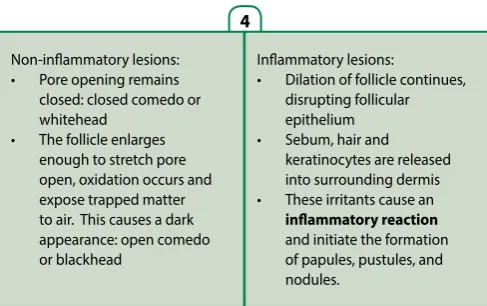
Non-inflammatory lesions: • Pore opening remains
closed: closed comedo or whitehead
• The follicle enlarges enough to stretch pore open, oxidation occurs and expose trapped matter to air. This causes a dark appearance: open comedo or blackhead
Increased proliferation of Propionibacterium acnes, the bacteria that normally lives in the sebaceous follicle. Sebum-mediated inflammation is linked to P acnes proliferation.
…influences excess production of keratinocytes, causing obstruction
of sebum flow through the pilosebaceous canal. Obstruction is the primary pathological event in acne.
Inflammatory lesions:
• Dilation of follicle continues, disrupting follicular epithelium • Sebum, hair and
keratinocytes are released into surrounding dermis • These irritants cause an
inflammatory reaction
and initiate the formation of papules, pustules, and nodules.
1
3
4
2
Table I. Causes of increased androgen levels11
Adrenal cortex:
• Adrenogenital syndrome • Adenomas
• Carcinomas
Ovaries:
• Polycystic ovaries • Ovarian tumours
ACTH excess:
• Cushing syndrome
XYY genotype
Exogenous androgen source:
• Testosterone injections • Anabolic steroids
• Progestins with androgenic rest activity
• (e.g. methyltestosterone; gestodene; norgestrel; etc.)
acne inflammation has been viewed as a result of pathogenic factors 1–3 as depicted in Figure 2. However, new evidence has emerged showing that acne-prone patients possess a tendency to follicular inflammation, perhaps sub-clinically even before comedo formation – refer to Table II.5,11 The endogenous bacteria Staphylococcus epidermidis and P. acnes colonise (reason unknown) on the skin of acne-prone areas, the latter bacteria being the dominant organism in hair follicles and bound by the toll-like receptor TLR-22, 11 – a component of the innate immune system (or non-specific defence mechanisms).5 Under normal circumstances, skin flora are non-pathogenic.11 Propionibacteria, a Gram-positive rod,9 prefers microaerophilic or anaerobic conditions11 and
proliferates in the ideal environment of the comedo. P. acnes mediates acne pathogenesis through innate immune activation as binding to TLR-2 induces the production of inflammatory mediator interleukin (IL)-8, which chemotactically attracts neutrophils11 – this trigger reaction is applicable in both very early (microcomedogenic) and in late (inflammatory) acne lesions.5 Lipases produced by P. acnes hydrolyses sebum triglycerides with subsequent free fatty acid production.2,9 High concentrations of free fatty acids are irritating and pro-inflammatory.11 Lipid peroxidation products can increase inflammatory cytokines e.g. IL-1α and activate PPARs, particularly PPARα. Oxidised squalenes upregulate 5-lipoxygenase and promote conversion of arachidonic acid to LT-B4 with subsequent recruitment of inflammatory cells.9 When the follicular structure is disrupted, P. acnes dies and releases toxins into the dermis – this increases inflammation2 via a foreign body reaction, thus interactions with the adaptive, antigen-specific immune system occur. Helper T lymphocytes reacting specifically to Propionibacteria have been found in acne lesions11 and these leukocytes presumably initiate comedones by production of cytokines such as IL-1, thus paving the way for acne development.11 Uncomplicated inflammatory acne is thus a sterile process and not a skin infection,10 and it is clear that immunological and inflammatory factors influence the course of acne development in various ways.11
Other trigger factors
11,19Although interaction of the pathogenic factors is well known to cause acne, certain trigger factors can worsen acne or cause it to appear, for example:
• Premenstrual aggravation, possibly due to premenstrual narrowing of the sebaceous follicle, irregularity in sebum secretion and oestrogen-induced increased hydration of the follicular epithelium. Premenstrual flares of acne appear to be more common in women over the age of 33.
• Comedogenic ingredients (e.g. isopropyl myristate, lanolin, stearyl alcohol, oleic acid etc.) or too oily/greasy foundations of skin care products.
• An iodine-rich diet of algae and supplemental vitamin B complex products can trigger a worsening or development of acne.
• Various medicines can aggravate or cause acne to appear – refer to Table III.
P. acnes mediates acne pathogenesis through innate immune activation: activator protein, free fatty acid, interleukin, nuclear factor, toll-like receptor, tumour necrosis factor.9
Acne venenata (acne cosmetic or contact acne) is a variant of acne induced by exogenous factors
Table II. Summary of evidence for early inflammatory events during
acne lesion development5
Increased expression and bioactivity of pro-inflammatory mediators
• Upregulation of inflammatory mediators in uninvolved skin and early lesions (microcomedogenic)
◦ E-selectin*#
◦ Vascular adhesion molecule-1#
◦ Integrin#
◦ Interleukin-1##
• Interleukin-1α in open comedones (blackheads) • Upregulation of defensin-2** immunoreactivity
• Elevation of CD3+ and CD4+ T cells and macrophages in uninvolved skin Peptidases
• Expression of pro-inflammatory peptidases on sebocytes and keratinocytes
• Inhibition of peptidase activity leads to an anti-inflammatory profile
Neuropeptides
• Upregulation of neuropeptides in uninvolved skin
◦ Corticotrophin-releasing hormone
◦ Melanocortin-1 receptor
◦ Substance P
Toll-like receptors
• Activation by Propionibacterium acnes triggers inflammatory cytokine responses
◦ P. acnes is present in sebaceous follicles undergoing comedogenesis and may play a role in comedo formation
• Activation by endogenous ligands
Changes in lipid biosynthesis
• Confirmed association between sebaceous lipid synthesis and inflammation
• Peroxidated lipids trigger inflammatory responses
Clinical trials
• The anti-inflammatory dapsone is effective in treatment of non-inflammatory lesions
◦ Dapsone has multiple anti-inflammatory properties • Retinoids are effective in treating non-inflammatory lesions
◦ Retinoids down regulate toll-like receptor-2 and interleukin-10 expression
* E-selectin is an endothelium-specific inducible adhesion molecule which binds several inflammatory cell types, including neutrophils, monocytes, natural killer cells and a subset of memory T cells.15
#The regulated expression of cell adhesion molecules (CAM) on endothelial cells is
central to the pathogenesis of various inflammatory processes.16
**A cysteine-rich cationic low molecular weight antimicrobial peptide found in healthy human hair follicles as well as in acne lesions.17
##IL-1 receptor type I is highly homologous to the cytoplasmic domains of all Toll-like
Clinical presentation and classification of acne
Areas of the body with the largest, hormonally-responsive sebaceous glands e.g. face, neck, chest, and upper arms and back are typically affected by acne vulgaris. Acne is a continuous process and causes eruption of new lesions over time with closed and open comedones, papules, and pustules present at one time. In addition to the typical lesions of acne vulgaris, scarring, keloids, and post-inflammatory hyperpigmentation can occur.10,19 The active acne lesions in ethnic patients can clinically appear similar to those seen in Caucasian patients.12 Caucasians are more likely to have moderate to severe acne, whereas the ethnic population are prone to worse scarring.8
There is no single uniform, standardised, and reproducible grading system for severity of acne. Acne is classified either by type and/ or severity, while skin lesions can be described as inflammatory or non-inflammatory.7
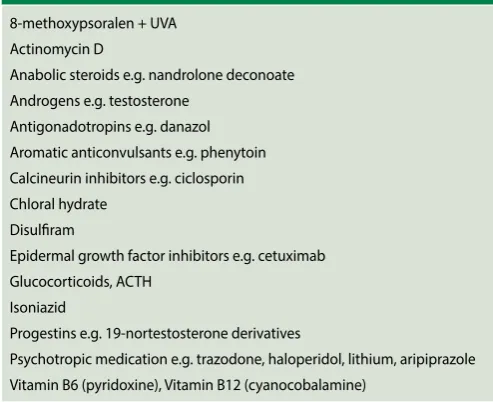
Table III. List of medicines inducing acne and acneiform eruptions11,20
8-methoxypsoralen + UVA Actinomycin D
Anabolic steroids e.g. nandrolone deconoate Androgens e.g. testosterone
Antigonadotropins e.g. danazol Aromatic anticonvulsants e.g. phenytoin Calcineurin inhibitors e.g. ciclosporin Chloral hydrate
Disulfiram
Epidermal growth factor inhibitors e.g. cetuximab Glucocorticoids, ACTH
Isoniazid
Progestins e.g. 19-nortestosterone derivatives
Psychotropic medication e.g. trazodone, haloperidol, lithium, aripiprazole Vitamin B6 (pyridoxine), Vitamin B12 (cyanocobalamine)
Table IV. Risk factors for developing acne7
Strong
Age 12 to 24 years
• According to research, 85% of young people present with acne between these ages.
Genetic predisposition
• Prevalence and severity of acne among identical twins is high. One study concluded an 81% of variance in acne attributable to genetics, and 19% to environmental factors.
Greasy skin/Increased sebum production
• Size and number of sebaceous follicles are increased in patients with acne. During puberty, sebaceous glands are stimulated by androgens to enlarge and produce more sebum.
Medication
• Acneiform eruptions can be caused or exacerbated by certain medicine – refer to Table III.
Weak
Endocrine disorders
• Patients suffering from polycystic ovary syndrome, hyperandrogenism are more likely to have severe acne.
Dietary factors
• Several studies could not find a correlation between chocolate consumption and effect on acne.
Female gender/Oestrogens
• Although it is known that oestrogen decreases sebum production, the role thereof in acne is unclear. Suppression of sebum production requires higher doses of oestrogen than does suppression of ovulation.
Obesity/Insulin resistance
• Insulin and insulin growth factor (IGF) can stimulate keratinocytes and sebaceous glands. IGF-1 levels are elevated in women with post-adolescent acne. Obesity has been found to be associated with an increased prevalence of acne in people between the ages of 20–40 years. No association was found between obesity and acne in patients younger than 20 years.
Hyperandrogenism
• Most patients presenting with acne have normal androgen levels, although at the onset of puberty there is a rise in circulating androgens, associated with increased production of sebum and the development of comedonal acne.
Halogenated aromatic hydrocarbons exposure
• Chloracne can be caused by occupational and environmental exposure to halogenated aromatic hydrocarbons (e.g. benzene, naphthalene). Acneiform eruptions are dermatoses that
Differential diagnosis
7/Complications
10Except for acneiform eruptions and chloracne briefly mentioned in Tables III and IV respectively, cognisance should be taken of other differential diagnoses, including (but not limited to): • Acne keloidalis nuchae
◦ Most often seen in black patients; lesions are typically localised to the posterior neck, beginning as papules and pustules and may progress to confluent keloids.
• Folliculitis (non-Gram-negative)
◦ A common condition manifesting as follicular based erythematous papules and pustules.
◦ Often affects the trunk and extremities. • Gram-negative folliculitis
• Occurs in patients who have been on long-term antibiotic treatment for acne, subsequently developing pustules and nodules on the anterior nares, which then spread. Can also occur after hot tub immersion, as well as in HIV patients. • Rosacea
◦ Most often affects women aged 30–50 years and environmental factors often act as triggers. Presents with
background erythema and telangiectasias (widened venules also referred to as spider veins), and inflammatory papules and pustules. No comedones are seen.23
• Acne conglobate
◦ A severe form of nodular acne that causes epithelium-lined sinus tracts. It is the most severe form of acne.
• Hyperpigmentation
◦ Inflammation causes increased production of melanin in darker pigmented skin.
Non-pharmacological treatment
6,19,23,24The following non-pharmacological measures and patient advice form an important part of the treatment plan:
• Treatment should involve patient education and the importance of adherence to the treatment plan reiterated.
• Triggers e.g. occlusive cosmetics and clothing, high humidity etc. should be avoided.
• Use a gentle synthetic detergent cleanser with a pH of 5.5–7, close to that of normal skin – this minimises skin peeling, dryness and irritation of skin.
• A gentle massage with the fingertips is sufficient – avoid abrasive skin treatments as it may aggravate both comedones and inflammatory lesions, and can promote the development of new acne lesions.
• Oil-based products are comedogenic, thus the use of water-based lotions, cosmetics and hair products is recommended. • Do not pick or squeeze acne lesions, as the skin will take longer
to clear and may exacerbate scarring.
• The possible association between acne and diet remains uncertain. In treatment-resistant adolescent acne a lower glycaemic diet and moderate dairy intake might be considered. • Smoking and nicotine increases sebum retention with possible
formation of comedones.
Pharmacological treatment
Multiple factors influence the development of acne and one or more of the four key factors involved are targeted with treatment – refer to Table VI and Figure 4.7,25 Various topical and systemic agents are available and selection of treatment is generally based on the severity of the condition. The goal of therapy is to reduce the extent of the condition, scarring and psychological distress.23 Improvement may be slow as treatment is preventative, not curative.10
Figure 3. Stages of acne22
Table V. Simplified classification7
Mild Comedones are the main lesions. Papules and pustules may be present but are small and few in number, usually < 10.
Moderate 10–40 papules and pustules and moderate numbers of comedones present. Mild truncal involvement at times.
Moderately severe
Numerous papules and pustules (40–100), usually with many comedones and occasional larger, deeper nodular inflamed lesions (up to 5). Widespread affected areas involving face, chest and back.
Very severe
Nodulocystic acne and acne conglobate with severe lesions. Many large, painful nodular/pustular lesions along with numerous smaller papules, pustules and comedones.
Table VI. Key factors in the development of acne and pharmacological treatment options6,25
Follicular hyperproliferation and
abnormal desquamation (skin peeling) Increased sebum production P. acnes proliferation Inflammation
Salicylic
acid-Hormonal therapies (anti-androgens)+ Azelaic acid++
Topical retinoids++ Oral retinoids++
Hormonal therapies (anti-androgens)++
Oral isotretinoin+++
Topical and oral antibiotics++ Azelaic acid++
Benzoyl peroxide+++
Oral tetracyclines+ Topical retinoids+ Azelaic acid+ Oral isotretinoin++
Before appropropriate treatment can be recommended a comprehensive assessment by the healthcare professional is required. The following should be considered25: • Severity of acne and clinical type e.g.
comedonal, papulopustular, nodular or mixed
• Skin type e.g. dry or oily skin
• Presence of acne scarring (might require a more aggressive approach)
• Presence of post-inflammatory hyperpigmentation
• History of menstrual cycle and possible signs of hyperandrogenism
• Use of acne-promoting cosmetic products and medication
• Patient’s psychological state
Topical treatment is useful in mild and moderate acne, both as mono- or combination therapy, and also as maintenance therapy – refer to TableVII.24
Systemic treatment is reserved for the management of moderate to severe inflammatory acne, acne that is resistant to topical treatment and acne that covers a large part of the body surface. Oral isotretinoin is indicated for the management of mild, moderate and severe nodulocystic acne and is the only medicine effective against all four of the pathogenic factors for acne vulgaris.27 Patients should, however, have realistic expectations,
Table VII: Topical treatment for acne vulgaris6,9,23,24,26
Medicine Dose / Directions Comments Adverse effects
Precipitated sulphur e.g. extemporaneous calamine lotion with 2% sulphur
Apply to clean skin 1–2 times per day.
A mild parasiticide and antiseptic with weak antibacterial and antifungal activity. Has desquamative action
Benzoyl peroxide e.g. Benzac AC 5®, Clearasil®, Panoxyl®
Apply to clean skin 1–2 times per day.
Causes bacterial oxidation and is bactericidal – does not induce bacterial resistance.
Desquamative action. Significantly reduces amount of skin bacteria. May reduce both non-inflamed and inflamed lesions. Most cost-effective treatment when used in combination with a topical antibiotic.
Redness and scaling during first few weeks of use. Allergic contact dermatitis. Can result in post-inflammatory hyperpigmentation in dark-skinned individuals.
Azelaic acid e.g. Skinoren® Apply to clean skin 1–2
times per day. Start with daily application and increase to twice per day. Maximum 2 g Azelaic acid per day.
Antimicrobial and follicular hyperkeratosis effect. Initial local skin irritation (redness, scaling, burning, itching). Hypersensitivity and photosensitivity possible. Skin lightening effect – use with caution in people with darker skin.
Clindamycin e.g. Dalacin-T® Apply a thin film twice
daily.
Useful in inflammatory acne. Frequent development of bacterial resistance.
Contains an alcohol base and may irritate the eyes, mucous membranes and abraded skin. Erythromycin e.g. Ilotycin TS®,
Stiemycin®, Zineryt®
Apply a thin film twice daily.
Zineryt® – discard five weeks after reconstitution.
Retinoids for topical use • Tretinoin e.g. Retin A®,
Ilotycin A®, Retacnyl®
• Isotretinoin e.g. Isotrex®
• Adapalene e.g. Differin®
• Tazarotene e.g. Zorac®
Apply before bedtime to clean dry skin.
Effective in treating acne vulgaris with predominate comedones, papules and pustules.
Normalises keratinisation and inhibits comedone formation, thus prophylactic.
Requires use of protective clothing and sunscreen. Caution: do not use during pregnancy and lactation.
Transient burning sensation. Susceptibility to sunlight. Exacerbation of acne may occur during first few weeks of treatment.
Salicylic acid e.g. Emzaclear® Apply to affected area 1–3
times per day.
Less potent than topical retinoid.
Comedolytic agent. Do not use continuously for more than three months.
Figure 4. Pharmacological management of acne vulgaris23
Obstruction of pilosebaceous duct by cohesive keratinocytes, sebum, and hyperkerotosis
Drugs that normalise pattern of follicular keratinis ation
Adapalene Isotretinoin Tazarotene Tretinoin
Drugs with antibacterial effects
Antibiotics (topical and oral) Benzoyl peroxide Isotretinoin (indirect effect)
Drugs with anti-inflammatory effects
Antibiotics (by preventing neutrophil chemotaxis) Corticosteroids (intralesional and oral) NSAIDs
Drugs that inhibit sebaceous gland function
Antiandrogens (e.g. spironolactone) Corticosteroids (oral, in very
low doses)
Oestrogens (oral contraceptives) Isotretinoin
Rupture of follicular wall Compacted cells,
keratin, and sebum
Hair Proliferation of
Propionibacterium acnes
Inflammation
as the full effect of treatment may take several months with a possible flare up after initiation of therapy.7 Cystic acne is treated with intralesional triamcinolone.23
Acne therapy and pregnancy
While strict measures should be in place for women of childbearing age, both isotretinoin and topical tazarotene are classified as category X and should be avoided in pregnant women and women planning a pregnancy. Treatment of acne should preferably be in consultation with the patient’s gynaecologist and careful consideration should be given to the acne severity and patient’s risks tolerance. Reasonable options include oral or topical erythromycin, topical clindamycin, and topical azelaic acid. These medicines have a class B classification. Benzoyl peroxide
falls under category C.19
Alternative treatment options
Issues such as antibiotic resistance and serious adverse effects e.g. teratogenicity of isotretinoin has prompted investigation into alternative medications and devices for the treatment of acne. Radiofrequency, laser, and light treatments have demonstrated modest improvement for inflammatory acne and should be used as adjuncts rather than monotherapy.9
Conclusion
Non-inflammatory acne is characterised by comedones while inflammatory acne is evident by papules, pustules, nodules and cysts. New data on acne pathophysiology has emerged
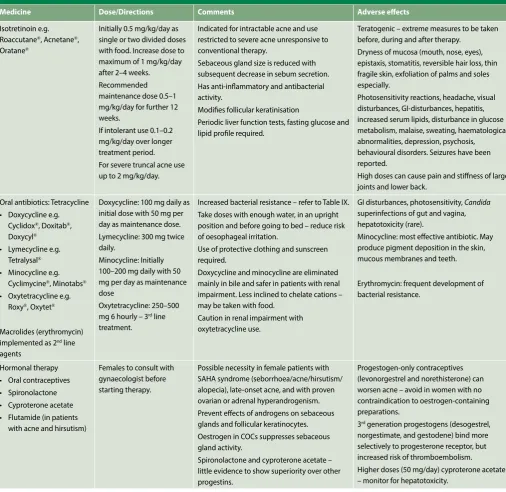
Table VIII. Systemic treatment for acne vulgaris6,9,23,26
Medicine Dose/Directions Comments Adverse effects
Isotretinoin e.g. Roaccutane®, Acnetane®,
Oratane®
Initially 0.5 mg/kg/day as single or two divided doses with food. Increase dose to maximum of 1 mg/kg/day after 2–4 weeks. Recommended maintenance dose 0.5–1 mg/kg/day for further 12 weeks.
If intolerant use 0.1–0.2 mg/kg/day over longer treatment period. For severe truncal acne use up to 2 mg/kg/day.
Indicated for intractable acne and use restricted to severe acne unresponsive to conventional therapy.
Sebaceous gland size is reduced with subsequent decrease in sebum secretion. Has anti-inflammatory and antibacterial activity.
Modifies follicular keratinisation
Periodic liver function tests, fasting glucose and lipid profile required.
Teratogenic – extreme measures to be taken before, during and after therapy.
Dryness of mucosa (mouth, nose, eyes), epistaxis, stomatitis, reversible hair loss, thin fragile skin, exfoliation of palms and soles especially.
Photosensitivity reactions, headache, visual disturbances, GI-disturbances, hepatitis, increased serum lipids, disturbance in glucose metabolism, malaise, sweating, haematological abnormalities, depression, psychosis, behavioural disorders. Seizures have been reported.
High doses can cause pain and stiffness of large joints and lower back.
Oral antibiotics: Tetracycline • Doxycycline e.g.
Cyclidox®, Doxitab®,
Doxycyl®
• Lymecycline e.g. Tetralysal®
• Minocycline e.g. Cyclimycine®, Minotabs®
• Oxytetracycline e.g. Roxy®, Oxytet®
Macrolides (erythromycin) implemented as 2nd line
agents
Doxycycline: 100 mg daily as initial dose with 50 mg per day as maintenance dose. Lymecycline: 300 mg twice daily.
Minocycline: Initially 100–200 mg daily with 50 mg per day as maintenance dose
Oxytetracycline: 250–500 mg 6 hourly – 3rd line
treatment.
Increased bacterial resistance – refer to Table IX. Take doses with enough water, in an upright position and before going to bed – reduce risk of oesophageal irritation.
Use of protective clothing and sunscreen required.
Doxycycline and minocycline are eliminated mainly in bile and safer in patients with renal impairment. Less inclined to chelate cations – may be taken with food.
Caution in renal impairment with oxytetracycline use.
GI disturbances, photosensitivity, Candida
superinfections of gut and vagina, hepatotoxicity (rare).
Minocycline: most effective antibiotic. May produce pigment deposition in the skin, mucous membranes and teeth.
Erythromycin: frequent development of bacterial resistance.
Hormonal therapy • Oral contraceptives • Spironolactone • Cyproterone acetate • Flutamide (in patients
with acne and hirsutism)
Females to consult with gynaecologist before starting therapy.
Possible necessity in female patients with SAHA syndrome (seborrhoea/acne/hirsutism/ alopecia), late-onset acne, and with proven ovarian or adrenal hyperandrogenism. Prevent effects of androgens on sebaceous glands and follicular keratinocytes. Oestrogen in COCs suppresses sebaceous gland activity.
Spironolactone and cyproterone acetate – little evidence to show superiority over other progestins.
Progestogen-only contraceptives (levonorgestrel and norethisterone) can worsen acne – avoid in women with no contraindication to oestrogen-containing preparations.
3rd generation progestogens (desogestrel,
norgestimate, and gestodene) bind more selectively to progesterone receptor, but increased risk of thromboembolism.
and it is important to take cognisance thereof. The treatment of acne is multimodal although the mainstay of therapy is to prevent comedone formation. Mild to moderate acne is treated with topical preparations, whereas oral therapy is reserved for moderate to severe conditions. Both the psychological as well as the physical effects of acne should be considered. To successfully manage the disease, both clinical presentation and individual patient needs should be taken into consideration when deciding on a treatment plan.
References
1. Nordqvist C. Pimples (Zits, Spots): Causes, symptoms and treatments. 2016. http://www. medicalnewstoday.com/articles/71702.php (Accessed 7 October 2016).
2. Tahir M. Pathogenesis of acne vulgaris: simplified. Journal of Pakistan Association of Der-matologists. 2010; 20: 93–97.
3. Oakley A, Ngan V, Morrison C. Acne vulgaris. 2014. http://www.dermnetnz.org/topics/ acne-vulgaris/ (Accessed 12 October 2016).
4. Rao J. Acne Vulgaris. 2016. http://emedicine.medscape.com/article/1069804-overview (Accessed 12 October 2016).
5. Tanghetti EM. The role of inflammation in the pathology of acne. 2013. https://www.ncbi. nlm.nih.gov/pmc/articles/PMC3780801/pdf/jcad_6_9_27.pdf (Accessed 16 October 2016). 6. Williams HC, Dellavalle RP, Garner S. Acne vulgaris. Lancet. 2012; 379 361–372. 7. Naftanel M. Acne vulgaris. BMJ Best Practice. 2016.
http://bestpractice.bmj.com/best-prac-tice/monograph-pdf/101.pdf (Accessed 7 October 2016).
8. Truter I. Evidence-based Pharmacy Practice: Acne vulgaris. S Afr Phar J. 2009;12–19. 9. Das S, Reynolds RV. Recent advances in acne pathogenesis. Implications for therapy. Am J
Clin Dermatol. 2014;15(6):479–488.
10. Woodard I. Adolescent acne: a stepwise approach to management. Topics in Advanced Practice Nursing eJournal. 2002; 2(2).
11. Degirz K, Placzek M, Borelli C, Plewig G. Pathophysiology of acne. 2007. https://www. researchgate.net/publication/6431415_Pathophysiology_of_acne (Accessed 7 October 2016).
12. Davis EC, Callender VD. A review of acne in ethnic skin. Pathogenesis, clinical manifesta-tions, and management strategies. The Journal of Clinical and Aesthetic Dermatology. 2010;3(4).
13. By HairFollicle.png: User:Helix84derivative work: Tsaitgaist (talk) - HairFollicle.png, Public Domain, https://commons.wikimedia.org/w/index.php?curid=6910143 (Accessed 14 Oc-tober 2016).
14. Everts HN. Endogenous retinoids in the hair follicle and sebaceous gland. 2012. https:// www.ncbi.nlm.nih.gov/pmc/articles/PMC3237781/pdf/nihms323935.pdf (Accessed 16 October 2016).
15. Noble KE, Panayiotidis P, Collins PW, et al. Monocytes induce E-selectin gene expression in endothelia cells. 1996;26(12):2944–2951 https://www.ncbi.nlm.nih.gov/pubmed/8977290 (Accessed 17 October 2016).
16. Gille J, Paxton LLL, Lawlwy TJ, et al. Retinoic acid inhibits the regulated expression of vascular cell adhesion molecule-1 by cultured dermal microvascular endothelial cells. J Clin Invest. 1997;99(3):492–500. http://dm5migu4zj3pb.cloudfront.net/manu-scripts/119000/119184/JCI97119184.pdf (Accessed 17 October 2016).
17. Chronnell CM, Ghali LR, Ali RS, et al. Human beta defensin-1 and -2 expression in hu-man pilosebaceous units: Upregulation in acne vulgaris lesions. J Invest Dermatol. 2001;117(5):1120–1125.
18. Dinarello CA. Immunological and inflammatory functions of the interleukin-1 family. 2009. https://www.ncbi.nlm.nih.gov/pubmed/19302047 (Accessed 17 October 2016). 19. Thiboutot D, Zaenglein A. Pathogenesis, clinical manifestation, and diagnosis of acne
vulgaris. 2016. https://www.uptodate.com/index.html#!/contents/pathogenesis-clinical-manifestations-and-diagnosis-of-acne-vulgaris (Accessed 13 October 2016).
20. Scheinfeld N. Drug-induced acne and acneiform eruptions: A review. 2009. http://www. the-dermatologist.com/content/drug-induced-acne-and-acneiform-eruptions-a-review (Accessed 17 October 2016).
21. Kuflik JH. Acneiform eruptions. 2016. http://emedicine.medscape.com/article/1072536-overview (Accessed 17 October 2016).
22. Anonymous. Stages of acne. nd. http://www.dermatology.ca/skin-hair-nails/skin/acne/ stages-of-acne/ (Accessed 16 October 206).
23. McKoy K. Acne vulgaris. 2015. http://www.merckmanuals.com/professional/dermatolog-ic-disorders/acne-and-related-disorders/acne-vulgaris (Accessed 13 October 2016). 24. Rathi SK. Acne vulgaris treatment: The current scenario. Indian J Dermatol. 2011;56(1):7–13
https://www.ncbi.nlm.nih.gov/pmc/articles/PMC3088940/ (Accessed 7 October 2016). 25. Graber E. Treatment of acne vulgaris. 2016.
https://www.uptodate.com/index.html#!/con-tents/treatment-of-acne-vulgaris (Accessed 13 October 2016).
26. Rossiter D, editor. South African medicine formulary. 12th ed, Cape Town: Health and
Medi-cal Publishing Group. 2016.
27. Kumar A, Baboota S, Agarwal SP, et al. Treatment of acne with special emphasis on herbal remedies. Expert Rev Dermatol. 2008; 3(1):111–122.
28. Thiboutot D, Gollnick H. New insights into the management of acne: An update from the Global Alliance to improve outcomes in acne group. 2009. https://www.ncbi.nlm.nih.gov/ pubmed/19376456 (Accessed 13 October 2016).
Table IX. Strategies to limit antibiotic resistance28
1. Use a topical retinoid in combination with an antimicrobial (oral or topical)
• Complementary modes of action • Quicker response
• Greater clearing
• Enhanced efficacy against comedones and inflammatory lesion 2. Use antibiotics for shorter periods and discontinue use when no further
improvement
• Oral antibiotics should ideally be used for three months 3. Benzoyl peroxide should be co-prescribed with an oral antibiotic
• Resistant P. acnes reduced
• Use concomitantly or as pulse anti-resistance agent
• Use of benzoyl peroxide for 5–7 days between antibiotic courses may be useful
4. Don’t use topical or oral antibiotics as monotherapy
5. Chemically different oral and topical antibiotics should not be used concurrently
• Increased risks of bacterial resistance • No synergistic actions
6. Don’t change to different antibiotic for subsequent courses (in case of relapse)
7. Use topical retinoids for maintenance therapy and add benzoyl peroxide for antimicrobial effect