The Open Journal of Occupational Therapy
The Open Journal of Occupational Therapy
Volume 3
Issue 4 Fall 2015 Article 7
October 2015
Fieldwork Educators' Perspectives: Professional Behavior
Fieldwork Educators' Perspectives: Professional Behavior
Attributes of Level II Fieldwork Students
Attributes of Level II Fieldwork Students
Marcie K. Campbell
Belmont University - USA, [email protected]
Katelyn Corpus
Belmont University - USA, [email protected]
Tracy M. Wussow
Belmont University - USA, [email protected]
Teresa Plummer
Belmont University - USA, [email protected]
Debra Gibbs
Belmont University - USA, [email protected]
Shelley Hix
Belmont University - USA, [email protected]
Follow this and additional works at: https://scholarworks.wmich.edu/ojot
Part of the Educational Assessment, Evaluation, and Research Commons, and the Occupational Therapy Commons
Recommended Citation Recommended Citation
Campbell, M. K., Corpus, K., Wussow, T. M., Plummer, T., Gibbs, D., & Hix, S. (2015). Fieldwork Educators' Perspectives: Professional Behavior Attributes of Level II Fieldwork Students. The Open Journal of Occupational Therapy, 3(4). https://doi.org/10.15453/2168-6408.1146
This document has been accepted for inclusion in The Open Journal of Occupational Therapy by the editors. Free, open access is provided by ScholarWorks at WMU. For more information, please contact
Fieldwork Educators' Perspectives: Professional Behavior Attributes of Level II Fieldwork Educators' Perspectives: Professional Behavior Attributes of Level II Fieldwork Students
Fieldwork Students
Abstract Abstract
A review of the literature revealed a lack of consistent expectations for professional behaviors required of level II fieldwork students. This study sought to obtain a consensus of perspectives of level II fieldwork educators by asking, “What are the essential professional behavior attributes for level II fieldwork
students?” Delphi methodology was used to collect data in two rounds of surveys. In the first, 49 fieldwork educators listed professional behavior attributes they believed to be important for fieldwork students. The data was synthesized into themes for distribution in the second survey, which were identified as essential, non-essential, or site-specific by 53 participants. The 218 different professional behavior attributes provided by Survey 1 respondents were categorized into 22 attribute themes. In Survey 2, 20 of the 22 attribute themes reached a consensus level of at least 75% and five reached 100% agreement. These results show a current perspective of what fieldwork educators value in level II fieldwork students and may be informative to occupational therapy faculty, students, and fieldwork educators.
Keywords Keywords
Professional Behaviors, Fieldwork Educators, Level II Fieldwork
Cover Page Footnote Cover Page Footnote
Special thanks to Dr. Emmy Dagnan for her contribution to our research.
Credentials Display
Marcie K. Campbell OTDS; Katelyn Corpus OTDS; Tracy M. Wussow OTDS; Teresa Plummer PhD, OTR/L, ATP, CEAS, CAPS; Debra Gibbs EdD, MHS, OTR/L, FAOTA; Shelley Hix OTD, OTR/L, CAPS
Copyright transfer agreements are not obtained by The Open Journal of Occupational Therapy (OJOT). Reprint permission for this Topics in Education should be obtained from the
corresponding author(s). Click here to view our open access statement regarding user rights and distribution of this Topics in Education.
DOI: 10.15453/2168-6408.1146
Fieldwork educators have high professional
expectations of their students (Chipchase et al.,
2012; Garrett & Schkade, 1995; Jensen & Daniel,
2010; Steward, 2001; Vogel, Grice, Hill, & Moody,
2004). However, the literature on this topic
revealed inconsistent definitions of professional
behaviors (Breines, 1988; Steward, 2001) yet
affirmed that professional behaviors are critical for
fieldwork requirements (Holmes & Scaffa, 2009)
and success (Gutman, McCreedy, & Heisler, 1998;
James & Musselman, 2006). Over the past two
decades, there has been a dearth of literature
examining level II fieldwork educators’
perspectives on the essential professional behaviors
for occupational therapy students. Herzberg (1994)
conducted a study to understand fieldwork
educators’ perspectives on significant learning style
characteristics for fieldwork students. However, the
topic has not been investigated since. Furthermore,
a widely accepted list of the essential professional
behavior attributes that level II fieldwork educators
require fieldwork students to demonstrate does not
exist. The purpose of this study was to acquire the
necessary data to further understand current
fieldwork educator perspectives of student
professional behavior attributes. The findings from
this study will contribute to the body of knowledge
concerning professional behaviors expected of
occupational therapy fieldwork students. The
researchers surveyed 296 fieldwork educators and
asked, “What are the essential professional behavior
attributes for level II fieldwork students?” The
researchers defined attributes as: a quality or feature
regarded as a characteristic or inherent part of
someone or something. Attributes can include
behaviors or attitudes but not occupational therapy
specific knowledge-based skills, such as measuring
range of motion.
Literature Review
Professional behaviors have been
inconsistently defined for years. In an early study,
Breines (1988) identified a need for a more
integrated definition of professional behaviors.
Recent literature also indicates that the lack of
consistency continues. Steward (2001) indicated
that fieldwork educators regularly placed high value
on professional and/or personal attributes, yet the
specific attributes were inconsistently defined.
Robinson, Tanchuk, and Sullivan (2012) found that
students consider professional behaviors to include
personal image; verbal, nonverbal, and written
communication skills; client-centered behavior; and
the ability to recognize differences by setting.
Faculty participants emphasized that students need
more self-awareness of their own behaviors and that
professionalism is specific to context and setting.
More research should be conducted on a larger scale
to further explore the perspectives on
professionalism in occupational therapy (Robinson
et al., 2012).
Educators’ hold high expectations of
student professional behaviors, despite the absent
consensus of the specific attributes and skills
considered most desirable (Steward, 2001).
According to Steward (2001), commonalities in
professional expectations included communication
skills, initiative, recognizing knowledge gaps and
asking for help (awareness of limitations), common
sense, and interest in learning. Some educators
interpersonal skills. Jensen and Daniel (2010) noted
that fieldwork educators were more hesitant to
accept level II fieldwork students due to concerns
about the unprofessional behaviors of students.
Chipchase et al. (2012) surveyed clinical educators
and identified 57 characteristics divided into six
themes: (a) knowledge and understanding, (b)
willingness, (c) professionalism, (d) communication
and interaction, (e) personal attributes, and (f) skills.
In the literature, fieldwork educators emphasized
communication skills, yet the level of expectations
varies for the other professional behaviors. Jensen
and Daniel concluded that more research is needed
to clarify American occupational therapy fieldwork
educators’ perspectives with regard to supervising
fieldwork students.
In separate studies, Gutman et al. (1998) as
well as James and Musselman (2006) determined
that errors in student professional behaviors could
influence the fieldwork experience. Both studies
emphasized the need for students to self-reflect on
behaviors and the education process as suggested in
Fidler’s (1996) description of standards for
professional education. Fidler emphasizes positive
self-regard, evolving self-awareness, interpersonal
competence, and a commitment to learning as the
standards of professional education. Gutman et al.
discovered that the behavioral characteristics most
associated with students who failed fieldwork were
rigidity of thinking, discomfort with the ambiguity
that accompanies clinical reasoning, lack of
psychological insight, difficulty interpreting
feedback, externalization of responsibility,
difficulty learning from mistakes, dependence on
external measures for self-esteem, and discomfort
with the physical handling of patients.
Understanding how students are assessed
during fieldwork is useful to understand the
professional behaviors that are evaluated for student
development. The Fieldwork Performance
Evaluation (FPE) for the occupational therapy
student is an American Occupational Therapy
Association (AOTA) form presented to fieldwork
educators to measure entry-level competence of
supervised occupational therapy students.
Educators evaluate students on the following
professional behaviors when using the FPE:
collaborates with supervisor, takes responsibility for
professional competence, responds constructively to
feedback, demonstrates consistent work behaviors,
demonstrates time management, demonstrates
positive interpersonal skills, and demonstrates
respect for diversity (AOTA, 2002).
Method
In this study, the researchers implemented
the Delphi methodology to collect systematically
and anonymously the opinions from experts about
the essential professional behaviors for level II
occupational therapy fieldwork students. Delphi
methodology is a multi-stage research process that
typically uses two to three surveys to gather and
distill the judgments of individuals with a specific
expertise (Atwal & Caldwell, 2003; Kielhofner,
2006). It enables participants to share their point of
view anonymously without fear of retaliation.
Opinions are collected in the initial survey and
synthesized to create the second survey. Each
additional survey uses data gathered from the
previous survey (Atwal & Caldwell, 2003). The
sample size in the second survey was large enough
to allow for at least 75% consensus, a standard
consistent with Delphi methodology as noted by
Kielhofner (2006).
Participants
The participants for this study consisted of a
largely female population between 30 to 49 years of
age. In Survey 1, 85% of the participants were
female and in Survey 2, 90% of the participants
were female. Respondents between 30 to 49 years
of age accounted for 72% of Survey 1’s sample size
and 66% of Survey 2’s sample size. The
participants represent a large percentage of
experienced occupational therapists. Years of
practice ranged from less than 5 to more than 31,
with the highest representation from those with 21
to 25 years of experience (23% in Survey 1 and
24% in Survey 2). Using the divisions from the
U.S. Census regional map, the geographical and
regional representation of the respondents primarily
comes from the South and Midwest regions (U.S.
Census Bureau, 2014). Respondents living in the
South region of the United States accounted for
69% of Survey 1 and 67% of Survey 2.
Respondents from the Midwest region of the United
States made up 22% of Survey 1 and Survey 2.
Nine percent of the participants in Survey 1 and
11% of the participants in Survey 2 represented the
West region of the United States. There were no
respondents from the Northeast region. The
participants that completed Survey 2 were
representative of the practice settings depicted in
Figure 1. The largest percentages of participants for
both surveys currently practice in outpatient and
acute care settings. The participants practicing in
outpatient settings comprised 62% from Survey 1
and 45% from Survey 2. The participants
practicing in acute care settings comprised 28%
from Survey 1 and 20% from Survey 2.
Figure 1. Current practice settings of the participants from Survey 2. The percentages depict the amount of participants that were from that setting.
Procedures
The researchers obtained Institutional
Review Board approval from and conducted the
research study at a school of occupational therapy in
the Southeast region of the United States. The
subjects for this research study were licensed
occupational therapists who have supervised at least
one level II fieldwork student. As cited in
Kielhofner (2006), Hassan et al. supported that the
sampling in Delphi studies should be either
criterion-based or purposive. In order to select
expert participants, sampling for this study was
purposive. Researchers derived the sample from the
school of occupational therapy’s academic
fieldwork coordinator’s national database of Master
of Science in Occupational Therapy (MSOT) and
Occupational Therapy Doctorate (OTD) fieldwork
educators from the past 3 years. Participation School Based
16%
Outpatient 45% Acute Care
Hospital 20% Inpatient Rehabilitation
9%
Community Based
5%
criterion was based on subjects that were active
licensed or equivalent occupational therapists
practicing full-time or part-time and with
experience supervising level II fieldwork students.
To minimize the chance of researcher and
participant bias, the researchers were unable to
identify the participants and all responses were
anonymous (Kielhofner, 2006). Data was collected
electronically using Survey Monkey, a third-party
hosted survey and data collection tool. The
participants of the study were at least 20 years of
age. Survey 1 data was collected from January 28,
2014, through February 20, 2014. Data for Survey
2 was collected from February 28, 2014, through
March 18, 2014. All of the participants signed a
consent form prior to data collection.
The first survey in this study consisted of
demographic questions as well as three open-ended
questions that gathered statements from the
participants to determine essential professional
behavior attributes for level II fieldwork students.
The demographics collected included level of
education, years of experience, number of students
supervised, and practice settings. Responses from
Survey 1 were analyzed, distilled, and organized
into common concepts and ideas. The data was
then coded into themes of professional behavior
attributes and listed alphabetically in the second
survey.
Using the results of the first survey, the
second survey was designed to determine if a
consensus could be reached on essential
professional behavior attributes and was sent to the
296 fieldwork educators who were invited to
participate in the first survey.
Strategies for Validating Findings
Two strategies were used to validate the
findings from Survey 2: triangulation and member
checking. Triangulation and member checking are
important validation strategies because they ensure
the trustworthiness of the data. When researchers
use multiple sources and methods to validate
findings with existing evidence and to identify
themes and perspectives, triangulation occurs
(Creswell, 2013). A review of the literature
provided the researchers with a history of themes
and perspectives. The past literature was then
triangulated with the findings from this study. The
researchers compared the themes that emerged in
the Delphi study with the attributes found in the
existing literature. Member checking occurs when
participants review the survey findings and
interpretations from the researchers to check for
credibility (Creswell, 2013). The second survey
was the synthesis of the results from the first
survey. In this study, member checking occurred
when the researchers sent Survey 1 results to
participants during Survey 2 data collection.
Creswell (2013) considers the agreement of
multiple coders a necessary component of
reliability. In this case, reliability was achieved
through a team of multiple researchers coding the
research results in this study and reviewed by
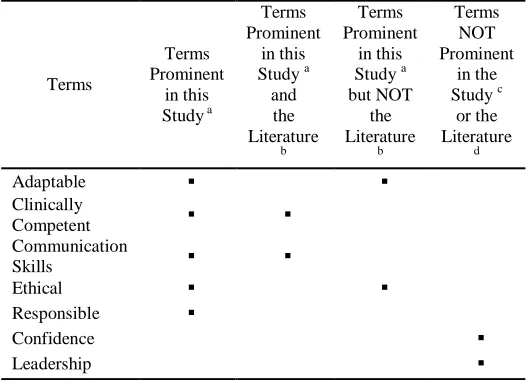
faculty advisors. Furthermore, several of the
responses from this study were consistent with
professional behaviors found in the literature (see
Table 3).
Analysis
In Survey 1, the researchers analyzed
responses using an open coding and axial coding
process. Open coding is defined as “coding the data
for its major categories of information” (Creswell,
2013, p. 86). Axial coding arises from open coding
and occurs as the researchers classify and focus on
an open coding theme or core phenomenon. The
researchers then re-analyzed the survey results to
create themes around each core phenomenon.
Researchers create in vivo codes when the names of
the codes are the exact words of the participants
(Creswell, 2013). In vivo represents a process to
familiarize the researchers with the data and
progress through the analysis until a final report of
the data has been created. In this study, the
researchers used in vivo codes for naming and
defining the themes. The researchers synthesized
and categorized the attributes listed by Survey 1
participants into 22 themes for Survey 2.
Survey 2 enabled the researchers to verify
the synthesized results from Survey 1 and then ask
the participants to identify which of the 22 attribute
themes were most essential, non-essential, or
site-specific relative to professional behaviors that level
II fieldwork students should exhibit. The
researchers analyzed the results from Survey 2 to
identify the professional behavior themes that
fieldwork educators selected to be the most
essential attributes for level II fieldwork students to
demonstrate. The researchers conducted cross
tabulations to analyze Survey 2 results by
demographics, such as the populations with which
participants work.
Results
From the sample of 296 fieldwork
educators, 49 completed Survey 1 and 53 completed
Survey 2. The 49 participants in Survey 1 each
listed up to 15 professional behavior attributes,
totaling 218 different terms that were synthesized
into 22 themes for Survey 2. Final attribute themes
are shown in Table 1. The participants’ verbatim
words from Survey 1 are in parentheses and were
used as clarifications or partial definitions for the
themes.
Table 1
Professional Behavior Attribute Themes
Themes Definitions
Adaptable (Pliability, flexibility.)
Adherence to Policies (Dress code/professional appearance, cell phone policies, hygienic, neat.)
Clinically Competent (Clinical reasoning, critical thinking, observation skills, hands-on skills, safety awareness, ability to generalize information, problem-solving skills.)
Communication Skills (Written, verbal, documentation, appropriate language level with clients.) Confident (Competence, never feeling inferior.)
Constructive Criticism (Not easily offended, open to feedback, self-reflective, open-minded.) Creative (Improvising, thinking outside the box, resourcefulness, intuitive.) Culturally Competent (Sensitivity, respectful of others, accepting of other backgrounds, races.) Empathetic (Altruism, compassion, sympathy, caring.)
Enthusiastic (Excited about work, energetic, interested, passion.)
Ethical (Honesty, confidentiality, unbiased, knowledge of state laws.) Independent (Regarding learning, thinking, working.)
Initiator (Committed, self-determination, motivated, goal-oriented, eager to learn, hard worker.)
Interpersonal Skills (Maintain appropriate boundaries, relate well, eye contact, involved, appropriate in confrontations or conflicts, tactful, common sense, attentive, mature.)
Organized (Prepared.)
Patient (Calm.)
Personable (Versatile, good sense of humor, playful, congenial, easy going, pleasant, outgoing, friendly, social, people person.)
Positive Attitudea
Responsible (Dependable, reliable, accountable.) Team Player (Collaborator, cooperative.)
Time Efficient (Time management, timely, documentation, promptness, punctuality.)
Note. Definitions of themes used terms from the participants in Survey 1; however, not all terms used by the participants in Survey 1 were used as definitions. a This theme did not have a definition.
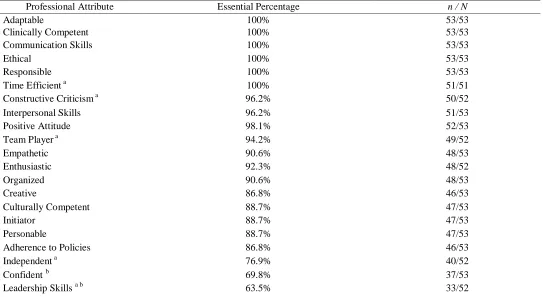
Fifty-three participants reached consensus of
75% on 16 of the 22 attribute themes as shown in
Table 2. Of those 22 professional behavior themes
listed in Survey 2, the following five attributes were
marked as “essential” by 100% of the survey
respondents: adaptable, clinically competent,
communication skills, ethical, responsible, and time
efficient.
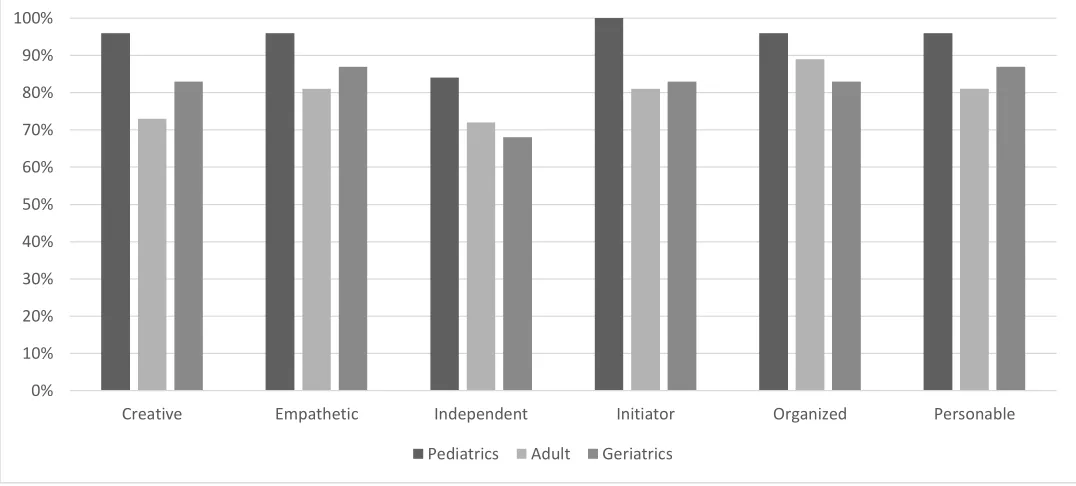
Figure 2 illustrates that therapists practicing
in pediatric, geriatric, and adult populations rank
these particular attributes differently. The
participants currently working with the pediatric
population chose creative, empathetic, independent,
initiator, organized, and personable as essential
attributes more frequently than those that work with
adult and geriatric populations.
Table 2
Survey 2 Results: Ranking of Essential Professional Behavior Attributes
Professional Attribute Essential Percentage n / N
Adaptable 100% 53/53
Clinically Competent 100% 53/53
Communication Skills 100% 53/53
Ethical 100% 53/53
Responsible 100% 53/53
Time Efficient a 100% 51/51
Constructive Criticism a 96.2% 50/52
Interpersonal Skills 96.2% 51/53
Positive Attitude 98.1% 52/53
Team Player a 94.2% 49/52
Empathetic 90.6% 48/53
Enthusiastic 92.3% 48/52
Organized 90.6% 48/53
Creative 86.8% 46/53
Culturally Competent 88.7% 47/53
Initiator 88.7% 47/53
Personable 88.7% 47/53
Adherence to Policies 86.8% 46/53
Independent a 76.9% 40/52
Confident b 69.8% 37/53
Leadership Skills a b 63.5% 33/52
Note. N = Total participants that answered the question; n = Total participants who selected that attribute as essential. a For this professional attribute, fewer than 53 participants responded. b Professional behavior that did not meet the 75% consensus required by Delphi methodology.
Figure 2. Specific professional behaviors considered essential for the pediatric population in comparison to adult and geriatric populations.
Discussion
The purpose of this Delphi study was to
obtain fieldwork educator perspectives on essential
professional behaviors for fieldwork students and to
contribute to the literature on this topic. As
represented by the results shown in Table 2, this
research study answered the question: “What are the
essential professional behavior attributes for level II
fieldwork students?” Comparing the results from
this Delphi study to the literature shows that the
professional behaviors emphasized by fieldwork
educators vary by study, but there are some
important similarities. Demonstrating clinical
competence and good communication skills are two
professional behaviors that were prominent in the
literature and this study. This finding suggests a
potential requirement for fieldwork students to
demonstrate clinical competence and
communication skills during level II fieldwork.
In Herzberg’s 1994 study, fieldwork
educators identified the following behaviors as
important for fieldwork students: teamwork, active
experimentation, doing, adaptability, and flexibility.
Twenty years later, both adaptability and teamwork
are considered essential professional behaviors each
with over 94% consensus. In 2006, James and
Musselman reported that the common professional
behavior problems associated with fieldwork failure
include difficulty receiving constructive criticism,
poor organizational skills, inability to globally
conceptualize fieldwork, and unpreparedness.
Currently, being open to constructive criticism was
considered essential by 96% of the participants and
90.6% agreed that fieldwork students should be
organized.
0% 10% 20% 30% 40% 50% 60% 70% 80% 90% 100%
Creative Empathetic Independent Initiator Organized Personable
Attributes by Population
Professional behavior attributes that
fieldwork educators evaluate in students when using
the FPE tool were reflected in this study.
Furthermore, the following professional behaviors
as identified in the FPE tool were also emphasized
in the literature: responsibility, constructive
feedback, time management, and interpersonal
skills (see Appendix) (Breines, 1988; Garrett &
Schkade, 1995; Gutman et al., 1998; Holmes &
Scaffa, 2009; James & Musselman, 2006; Jensen &
Daniel, 2010; Koenig, Johnson, Morano, & Ducette,
2003; Randolph, 2003; Steward, 2001; Vogel et al.,
2004). This consistency across studies indicates
that responsibility, constructive feedback, time
management, and interpersonal skills are attributes
that can strongly influence the fieldwork
experience.
Confidence, leadership, empathy, and
creativity were all terms lacking in the review of
literature but were all mentioned in this study of
current fieldwork educators. Empathy and
creativity were selected as essential by at least 85%
of the participants. In contrast, confidence and
leadership were not mentioned in the literature and
were not considered essential by the Delphi
methodology threshold of at least 75% of the
participants. One respondent made the following
comment:
Personable traits, leadership, independent
may not be attributes that a level II student
needs to have at the beginning. Too much
of any of those will hide the inadequacies
and feelings that if they're nice, friendly, and
confident acting, nothing will be asked of
them. It covers that they may not ask
questions and learn the true intricacies of
MD, nursing, and patient interaction. They
may not acknowledge inadequacies and stay
in a comfort zone that does not stretch their
beliefs or skills [sic].
This qualitative comment and the fact that it
achieved less than 75% consensus for the attributes
of confidence and leadership may be the result of
expectations that confidence and leadership develop
over time during fieldwork and throughout one’s
clinical practice. The lack of consensus reached by
the participants for these professional behavior
attributes could suggest the need for further
exploration by level II fieldwork educators who
view these themes as “essential.”
Professional behaviors are recognized as an
important element in the development of
occupational therapy students preparing for
fieldwork and clinical practice. Holmes and Scaffa
(2009) specify that the latest Accreditation Counsel
for Occupational Therapy Education (ACOTE)
Table 3
This Study in Relation to the Literature
Terms
Terms Prominent
in this Study a
Terms Prominent
in this Study a and the Literature b Terms Prominent in this Study a but NOT the Literature b Terms NOT Prominent in the Study c
or the Literature
d
Adaptable
Clinically
Competent
Communication
Skills
Ethical
Responsible
Confidence
Leadership
Note. a Prominent in study = Ranked 100% essential by all 53 respondents. b
Prominent = Five or more authors mentioned the term. c NOT Prominent = Did not reach 75% consensus. d NOT Prominent = Not mentioned by any authors. d NOT Prominent = Not mentioned by any authors.
standards (from 2007) for MSOT and OTD
programs reflect professional behavior education.
The findings from the Delphi study reflect the
previously mentioned inconsistencies found in the
literature, particularly the varying definitions yet
high expectations of professional behaviors.
However, the current study reflects the literature’s
consistent emphasis on professional behaviors that
90% or more of the participants selected as
essential.
Future Research
The results of this study identified 22
professional behaviors that current practicing
fieldwork educators consider to be essential for
fieldwork level II students. To further expand the
evidence of this study, future research could include
a population with a larger geographical
representation and compare the prevalence of the
dominant professional behavior attributes. Cohorts
from other universities could be surveyed to
compare to the cohort investigated in this study.
These results also suggest additional inquiries
regarding the development of professional
behaviors of occupational therapy students
including: What professional behaviors are
expected in academic education and is this
consistent with clinical education and fieldwork
educators? Are there specific professional behavior
attributes that occupational therapy program
instructors consider to be essential for occupational
therapy students? Which professional behaviors do
the students’ consider to be essential to both
academic education and clinical experience? Future
research on perspectives from the West and
Northeast regions of the United States could use this
study to determine if there are regional correlations
of fieldwork educators’ perspectives.
Limitations
The researchers used a purposive sample
from one occupational therapy program’s level II
database of fieldwork locations. This is a limited
representation given that there are over 150
accredited occupational therapy programs in the
United States (AOTA, 2014). This sample has a
limited geographic representation of only 22 states,
with 33% of the participants from Tennessee. This
study does not represent the Northeast region of the
United States and only a limited amount from the
West region. A lack of consistency with the sample
from Survey 1 to Survey 2 existed with 70% of the
Survey 2 participants having also completed Survey
1.
Conclusion
The goal of the study was to contribute to
the body of knowledge on professional development
of occupational therapy students. Fieldwork
educators chose 19 professional behavior attribute
themes as essential for occupational therapy
fieldwork students with at least 75% consensus.
These results represent a sample of current
fieldwork educators’ perspectives on professional
behaviors. Faculty and students may find these
results useful in the professional development
component of occupational therapy education.
Fieldwork educators could reference these results
when promoting student success in level II
References
Adam, K., Peters, S., & Chipchase, L. (2013). Knowledge, skills and professional behaviours
required by occupational therapist and physiotherapist beginning practitioners in
work-related practice: A systematic review. Australian Occupational Therapy Journal, 60(2),
76-84. http://dx.doi.org/10.1111/1440-1630.12006
American Occupational Therapy Association. (2002). Fieldwork performance evaluation for
occupational therapy students [Form]. Bethesda, MD: Author.
American Occupational Therapy Association. (2014). Find a School. Retrieved from
http://www.aota.org/Education-Careers/Find-School.aspx
Atwal, A., & Caldwell, K. (2003). Profiting from consensus methods in occupational therapy:
Using a Delphi study to achieve consensus on multi-professional discharge planning.
British Journal of Occupational Therapy, 66(2), 65-70.
Breines, E. B. (1988). Redefining professionalism for occupational therapy. American Journal of
Occupational Therapy, 42(1), 55-57. http://dx.doi.org/10.5014/ajot.42.1.55
Chipchase, L. S., Buttrum, P. J., Dunwoodie, R., Hill, A. E., Mandrusiak, A., & Moran, M.
(2012). Characteristics of student preparedness for clinical learning: Clincal educator
perspectives using the Delphi approach. BMC Medical Education, 12(112).
http://dx.doi.org/10.1186/1472-6920-12-112
Commission on Education. (2002). Fieldwork Performance Evaluation for the Occupational
Therapy Student. American Occupational Therapy Association. Retrieved from
http://ot.lr.edu/sites/ot.lr.edu/files/AOTA%20FW%20Performance%20Evaluation.pdf
Creswell, J. W. (2013). Qualitative inquiry and research design. Thousand Oaks, CA: SAGE
Publications, Inc.
Fidler, G. S. (1996). Developing a repertoire of professional behaviors. American Journal of
Occupational Therapy, 50(7),583-587. http://dx.doi.org/10.5014/ajot.50.7.583
Garrett, S. A., & Schkade, J. K. (1995). Occupational adaptation model of professional
development as applied to Level II fieldwork. American Journal of Occupational
Therapy, 49(2), 119-126. http://dx.doi.org/10.5014/ajot.49.2.119
Gutman, S. A., McCreedy, P., & Heisler, P. (1998). Student Level II fieldwork failure: Strategies
for intervention. American Journal of Occupational Therapy, 52(2), 143-149.
http://dx.doi.org/10.5014/ajot.52.2.143
Herzberg, G. L. (1994). The successful fieldwork student: Supervisor perceptions. American
Journal of Occupational Therapy, 48(9),817-823. http://dx.doi.org/10.5014/ajot.48.9.817
Holmes, W., & Scaffa, M. (2009). An exploratory study of competencies for emerging practice
in occupational therapy. Journal of Allied Health, 38(2), 81-90.
James, K. L., & Musselman, L. (2006). Commonalities in Level II fieldwork failure.
Occupational Therapy in Health Care, 19(4), 67-81.
http://dx.doi.org/10.1080/J003v19n04_05
Jensen, L. R., & Daniel, C. (2010). A descriptive study on level II fieldwork supervision in
hospital settings. Occupational Therapy in Health Care, 24(4), 335-347.
http://dx.doi.org/10.3109/07380577.2010.502211
Kielhofner, G. (2006). Research in occupational therapy: Methods of inquiry for enhancing
practice. Philadelphia: F. A. Davis.
Koenig, K., Johnson, C., Morano, C. K., & Ducette, J. P. (2003). Development and validation of
a professional behavior assessment. Journal of Allied Health, 32(2), 86-91.
Randolph, D. S. (2003). Evaluating the professional behaviors of entry-level occupational
therapy students. Journal of Allied Health, 32(2), 116-121.
Robinson, A. J., Tanchuk, C. J., & Sullivan, T. M. (2012). Professionalism and occupational
therapy: An exploration of faculty and students' perspectives. Canadian Journal of
Occupational Therapy, 79(5), 275-284. http://dx.doi.org/10.2182/cjot.2012.79.5.3
Steward, B. (2001). Using nominal group technique to explore competence in occupational
therapy and physiotherapy students during the first-year placements. British Journal of
Occupational Therapy, 64(6), 298-304.
U.S. Census Bureau. (2014). Census Regions and Divisions of the United States. Retrieved from
http://www2.census.gov/geo/pdfs/maps-data/maps/reference/us_regdiv.pdf
Vogel, K. A., Grice, K. O., Hill, S., & Moody, J. (2004). Supervisor and student expectations of
level II fieldwork. Occupational Therapy in Health Care, 18(1-2), 5-19.
Appendix
Professional Behavior Attribute Terms in the Literature
Authors (Year) Professional Behaviors
Adam, Peters, & Chipchase (2013)
Knowledge of work injury prevention, management, treatment, rehabilitation, communication, professional presence, behaviors of self-reflection, and evaluation.
Breines (1988) Aggressiveness, competitive, and collaborative attitudes were considered male characteristics and professional. Submissiveness, the need for acceptance, flexibility (derogatorily called inconsistency) in practice dictated by family demands and need for personal fulfillment are female and considered semi-professional.
Chipchase et al. (2012)
Commission on Education (2002)
Knowledge and understanding, willingness, professionalism, communication and interaction, personal attributes, skills.
FPE: Collaborates with supervisor, takes responsibility for professional competence, responds constructively to feedback, demonstrates consistent work behaviors, demonstrates time management, demonstrates positive interpersonal skills, demonstrates respect for diversity.
Fidler (1996) Positive self-regard, increasing self-awareness, interpersonal competence, and commitment to learning.
Garrett & Schkade (1995)
OAMPD focuses on student transition, adaptive responses and the following performance elements: communication, evaluation and assessment of patients to determine details from observations made during evaluations, treatment planning and implementation in which choices stressed function of client rather than activity, initiative and responsibility taken learning activities of daily routines, documentation.
Gutman, McCreedy, & Heisler (1998)
Rigidity of thinking, discomfort with the ambiguity that accompanies clinical reasoning, lack of psychological insight, difficulty interpreting feedback,
externalization of responsibility, difficulty learning from mistakes, discomfort with the physical handling of patients, and dependence on eternal measures for self- esteem.
Holmes & Scaffa (2009)
Interpersonal skills (active listening, cultural competence, seek mentors, negotiate effectively), self-starter/self-directed, adaptable, persistent, flexible, tolerant of ambiguity.
James & Musselman (2006)
Ability to handle stress, clinical reasoning skills, emotional intelligence, interpersonal skills, professional behavior, problem solving skills, getting "big picture," responding to constructive feedback, organizational skills, judgment.
Jensen & Daniel (2010)
Treat fieldwork as a job, self-assess/reflection, communication skills, accept feedback, reflect on feedback and make behavior change, professionalism.
Koenig, Johnson, Time management, organization, engagement in the fieldwork experience,
Morano, & Ducette (2003)
directed learning, reasoning and problem solving, written communication and interpersonal skills, professional and personal boundaries, and use of professional terminology.
Randolph (2003) PDE: Punctuality, commitment to learning, communication skills, professional demeanor and adherence to code of ethics, respect, personal insight, problem-solving skills.
Robinson, Tanchuk, & Sullivan (2012)
Responsibility, accountability, reliability, respect, strong work ethic, ethics, team work, being knowledgeable, image, communication, client centered practice, professional awareness, context-specific.
Steward (2001) Communication skills including listening and questioning, initiative, awareness of own limitations, relationship skills/interpersonal, common sense, respect for clients, willingness to read and learn.
Vogel, Grice, Hill, & Moody (2004)
Judgment, initiative, responsibility, independent learning, performance, attitude.