VOLUME 38, ARTICLE 21, PAGES 513
,
548
PUBLISHED 13 FEBRUARY 2018
http://www.demographic-research.org/Volumes/Vol38/21/ DOI: 10.4054/DemRes.2018.38.21
Research Material
Design and implementation of a high-quality
probability sample of immigrants and ethnic
minorities: Lessons learnt
Peter Lynn
Alita Nandi
Violetta Parutis
Lucinda Platt
© 2018 Peter Lynn, Alita Nandi, Violetta Parutis & Lucinda Platt.
This open-access work is published under the terms of the Creative Commons Attribution 3.0 Germany (CC BY 3.0 DE), which permits use, reproduction, and distribution in any medium, provided the original author(s) and source are given credit.
1 Introduction 514
2 Background: Approaches to sampling migrants 516
3 Designing a representative sample of immigrants and ethnic minorities in the United Kingdom for longitudinal research
519
3.1 Context 519
3.2 Boosting the immigrant and ethnic minority sample of UKHLS 520
3.3 Sampling strategy 521
3.3.1 Full population coverage 522
3.3.2 Coverage of the boost samples 523
3.3.3 Sampling strata and sampling fractions 523
3.3.4 Overall statistical efficiency 526
4 Implementing the immigrant and ethnic minority survey 528
4.1 Screening and interviewing 528
4.2 Fieldwork procedures 529
5 Results 531
5.1 Household response 531
5.2 Individual response 532
6 Sample description 533
6.1 Target and achieved samples 533
6.2 Quality of coverage of the Understanding Society sample in wave 6
(2014/15) 536
7 Conclusions 538
References 541
Design and implementation of a high-quality probability sample
of immigrants and ethnic minorities: Lessons learnt
Peter Lynn1
Alita Nandi1
Violetta Parutis1
Lucinda Platt2
Abstract
BACKGROUND
Surveys of immigrants face challenges of coverage, representativeness, and response rates. Longitudinal studies of immigrants and ethnic minorities, which have potential to address pressing issues in demographic research, are rare or partial. In the absence of register data, the highest quality approach is argued to be probability sampling using household screening.
OBJECTIVE
To describe the design and implementation of a nationally representative probability sample of immigrants and ethnic minorities in the United Kingdom.
METHODS
We boosted a nationally representative sample by using small-area census data to identify areas that covered the majority of immigrant and target ethnic minority populations and oversampled addresses from those areas using varying sampling fractions. Households were screened for eligibility based on whether they included a target immigrant/ethnic minority member. If so, all adult members were interviewed.
RESULTS
We anticipated the main challenges would be: fewer eligible households than predicted in sampled areas due to geographical mobility; refusal of those screened to provide information on household eligibility; nonparticipation of eligible households. All these issues were found to some degree. We describe how we addressed them and with what success.
1 University of Essex, Colchester, UK.
CONCLUSIONS
A careful design and robust fieldwork practices can enable a two-stage probability sampling to achieve good coverage and a much more representative sample of immigrants and ethnic minorities than with more ad hoc methods. The potential research payoffs are substantial.
CONTRIBUTION
We demonstrate the potential for careful two-stage sampling on the back of an existing study for creating a high-quality multi-purpose survey of immigrants.
1. Introduction
Migration research is one of the most rapidly developing fields of demographic study in Europe. On the one hand, there is increasing attention paid to the outcomes of the children and grandchildren of immigrants, with development of theoretical perspectives to understand differentiated integration processes. On the other, patterns of migration to Europe have been evolving. Models of the traditional labour migrant have required modification in the light of, for example, the high levels of mobility following the European Union expansion; conflict-driven population movements and increases in refugees; the changing composition of migrants consequent on the shift from primary labour migration to family reunification and increasingly high-skilled ‘managed’ migration; and the evolution of countries such as Spain and Ireland from countries of emigration to countries of immigration.
evaluate the extent of exclusion and discrimination faced by immigrants and minorities across Europe (European Union Fundamental Rights Agency 2009).
In some countries, comprehensive registration means that registers provide convenient sampling frames from which to sample, allowing for national coverage (such as the Netherlands sample of the SCIP study; Gresser and Schacht 2015) and/or for oversampling of particular groups, such as the recent immigrant and refugee studies carried out on the German Socio-Economic Panel (Brücker, Rother, and Schupp 2016). But in the absence of such registers (which is the case for most countries), researchers need to resort to other methods. These include both more systematic and more ad hoc methods, and typically require some trade-off between cost and coverage/representativeness. With pressure on research funding and in the face of declining response rates across the board – which are typically heightened for immigrant studies (Font and Mendez 2013; Platt, Luthra, and Frere-Smith 2015), researchers often have to work with a high degree of pragmatism in their approach to sampling, even if this limits the claims they can make for the ensuing data (Beauchemin and González-Ferrer 2011; Platt, Luthra, and Frere-Smith 2015). Nevertheless, it has been argued that the best possible approach to an immigrant population survey involves probability sampling using screening of households across areas in which immigrant populations are found in different densities (excluding, by necessity, the very lowest density areas) (Erens 2013; Font and Mendez 2013; Smith 1997). Such studies are costly especially where populations are dispersed or highly targeted, and may still lead to some unknowns about the extent to which the achieved sample is representative and includes the target groups, if non-cooperation with screening is substantial. But despite the costs and potential caveats, investing in the resources required for a high-quality study involving probability sampling and a two-stage screening approach is important for studies which are created as a resource for the wider academic community and which therefore need to command maximum scientific credibility and maximise the usability of data for a range of users. Arguably, the initial quality of the sample is particularly relevant if the sample is going to be followed up over time in a longitudinal study, with the same respondents being revisited over time.
higher than might be achieved by studies focusing only on those living in metropolitan areas (e.g., TIES, SCIP), which will not reflect the experience of those living outside such areas, or network based studies, which rely on group homogeneity (Tyldum and Johnston 2014).
We briefly discuss the development of the main questionnaire and the screening questionnaire before describing implementation in the field. We outline the three main challenges the study faced: (1) potential mismatch between the information on which the sample design was based (derived from the 2011 Census) and the actual distributions of immigrant and ethnic minority groups at the time of fieldwork in 2015; (2) reluctance of those screened to identify eligible households (and noncontact); (3) nonresponse of eligible households (or of individual respondents within responding households).
We discuss how we attempted to address these challenges both from the outset and throughout fieldwork before outlining response rates, our achieved sample, and its characteristics. While noting the limitations of this study, we reflect on the advantages of this data for addressing key research agendas going forward.
2. Background: Approaches to sampling migrants
The need to address pressing issues in migration research in Europe has led to the development of a wide range of surveys, with different approaches to meeting the challenges of obtaining robust representative samples of target groups of immigrants and ethnic minorities. Standard surveys typically contain insufficient numbers for analysis and may underrepresent key and less accessible groups, given that population sizes of immigrant populations as a whole and specific groups in particular are small and that immigrants tend to be more mobile than the population overall. In addition, response rates, which are declining across surveys as a whole, tend to be lower for minority groups, compounding problems of sample size and (potentially) representativeness (Font and Mendez 2013). Moreover, general purpose surveys often have limited coverage of questions relating specifically to research areas of interest to immigration scholars.
Those few countries that have population registers with relevant information can deploy them as sampling frames. For example in Germany the recent immigrant and refugee supplements to the German Socio-Economic Panel (SOEP) sampled from register data (Brücker, Rother, and Schupp 2016), while register data was used for identifying not only country of origin but also time of arrival for the Dutch and German samples for a study of recent immigrants in the Socio-Cultural Integration among New Immigrants Project (SCIP) (Gresser and Schacht 2015; Diehl et al. 2016). The linking of register information allows Statistics Netherlands to draw samples for social surveys based on the whole Dutch population and for specific subpopulations (Schmeets 2015). The French Longitudinal Survey of the Integration of First-time Arrivals (ELIPA) used information on receipt of a first residence permit to sample immigrants (Font and Mendez 2013). Sampling from the municipal-level population register (‘Padron’) is used for the National Immigrant Survey (ENI) in Spain (Duque, Ballano, and Pérez 2013). In the United Kingdom registers could be used to sample refugees (Burton and Lynn 2005), but other immigrant groups cannot be identified on registers.
However, even where such registers exist, they may not be ideal. First, in some countries they may not cover the second generation if they record country of origin rather than ethnicity or parental origins. Second, registers need to be maintained in order to provide up-to-date information about the location and circumstances of this mobile population. As a result, they usually work better as a sampling frame for more settled or stable populations.
Other studies have used a variety of approaches to retain some key features of probability sampling, albeit under certain conditions or for more specific populations. Some focus on the cities where the target populations, whether second generation or recent migrants, are most likely to live (e.g., TIES, the United Kingdom and Ireland samples of SCIP); others sample youth populations through schools (e.g., CILS4EU 2016); and others use chain-referral approaches (Tyldum and Johnston 2014; Platt, Luthra, and Frere-Smith 2015). Network (or multiplicity) sampling obtains information not only about the selected households but also relatives, neighbours, and others who may be connected to the household (Font and Mendez 2013). This technique, however, relies on the group of interest being well-networked, which may not necessarily be the case. One method that has been especially popular in Italy is centre sampling (Blangiardo 2008).
variant of snowballing, has also been used with some success (Drinkwater and Garapich 2011). Proportional quota sampling uses available datasets to identify the characteristics of the target population and then uses snowballing to sample the required numbers of the target population. Another nonrandom method is sampling from facilities such as community centres, churches, or workplaces. Although this method provides easier and cheaper access to the target population compared to other methods, it can introduce a considerable bias (Sudman and Kalton 1986; Magnani et al. 2005).
Where target populations are more dispersed, focused enumeration is sometimes employed – and can be used to supplement other methods employed in denser areas (e.g., Smith 1997). Focused enumeration relies on asking members of selected households to identify members of the target groups at adjacent addresses (Erens 2013). In spite of bringing down the costs of screening, this method has, however, been found to not boost overall numbers of the migrant population because migrants are not ‘visible’ enough in their local communities (Smith et al. 2011). Another way to increase cost-effectiveness in low-density areas is via an adaptive cluster design. If a target group resident is found at a sampled address, then additional addresses in the same street (e.g., neighbouring addresses) are also screened (e.g., Thompson 1990; Kalton and Anderson 1986; Sudman and Kalton 1986; Font and Mendez 2013).
While these numerous approaches to sample migrants may be more or less effective in particular circumstances and are often deployed pragmatically where there is no obvious way to sample the desired populations or where to do so would be prohibitively expensive, it has been argued that where registers are either unavailable or inappropriate for the targeted populations, sampling from those areas which cover most minorities, with screening of the resulting households to identify eligible respondents, is the best possible approach for achieving a probability sample with high coverage and representativeness (Erens 2013; Nazroo et al. 2005; Berthoud et al. 2009). Such two-stage sampling with the selection of a random sample of addresses within the selected areas and subsequent screening is costly, even with careful design. But its potential payoffs are great in terms of the reliability of the sample, and its usability for multiple different research aims.
To be most effective, such two-stage sampling also needs to maximise response. However, there is ample evidence from immigrant studies to suggest that there are substantial challenges in engaging respondents and obtaining good response rates. Issues of trust, the relevance of the survey to participants, inclusivity via translation, and rigorous fieldwork processes are all likely to influence responses and sample size.
3. Designing a representative sample of immigrants and ethnic
minorities in the United Kingdom for longitudinal research
3.1 Context
The United Kingdom offers a valuable case for analysing contemporary immigration and developing new insights into migration and integration processes for a number of reasons. First, as a former colonial power it maintained close relationships with and received immigrants from former colonies in the post-war peak migration periods. Thus, many labour migrants to the United Kingdom, especially in the early phase of post-war migration and high labour demand, were familiar with British institutions and had English as their first or one of their languages. At the same time, the diversity of the former colonies meant that migrants were arriving – and being sought from – widely differing country contexts and settled in areas with different levels of industrialisation and subject to different subsequent patterns of deindustrialisation and economic success. Primary migration for the main minority groups also peaked at different points, with Caribbean migration earlier and Bangladeshi and Black African migration later. These features of UK immigration offer the potential to distinguish between the experiences of different country of origin groups and investigate the role of different contexts of reception (Portes, Fernandez-Kelly, and Haller 2005).
Second, as the main migration period started in the 1950s, there are now substantial numbers of children (and grandchildren) from these different groups and phases of migration who have reached adulthood and allow examination of the experience of the second generation as well as of ongoing integration processes. The United Kingdom demonstrates both relatively socio-economically successful and relatively unsuccessful second-generation minorities, allowing for investigation of the circumstances under which outcomes differ.
Third, the United Kingdom has demonstrated a sharply shifting immigration regime. Initially all those from former colonies with British (overseas) passports were given residence rights with the British Nationality Act of 1948. But subsequent immigration controls restricted access, and most recently the United Kingdom demonstrates a ‘managed migration’ system that focuses on skilled migrants and requires high levels of economic resources for those seeking family reunification. This means that there have been phases of migration dominated by first labour migration, then family reunification, and then skilled migration (Luthra and Platt 2016). Most recently, students have formed a substantial proportion of migration flows into the United Kingdom even if most of these will be temporary (Luthra and Platt 2016).
especially when considered in conjunction with immigration controls. For example, with much lower costs of immigration, the types of migrants self-selecting to move to the United Kingdom from the EU show diverse motivations (Luthra, Platt, and Salamonska 2016).
While there are commonalities with other European countries, the United Kingdom is in many ways at the extreme of the European cases in terms of, on the one hand, the stringency of its approach to managed migration and its limited reception of refugees, and on the other, the scale of recent East European migration. This makes it a valuable test bed for investigation of new migration formations and emerging theoretical accounts of processes.
Hence, while the immigrant and ethnic minority study described here is specific to the United Kingdom it is also likely to shed light on wider European processes and features of migration. This renders a study design that can incorporate both settled ethnic minority groups and more recent immigrants, that can capture the diversity of different groups and how their circumstances differ across different contexts, and which can follow processes of integration, adaptation, and reaction over time particularly valuable for providing an empirical bases for new developments in demographic migration research. Hence, when considering the targets for a boost sample to a large, high-quality nationally representative longitudinal sample of the United Kingdom, the design needed to cover established ethnic minority groups from key sending countries and arrival cohorts, from both the first (immigrant) and second generation, as well as more recent immigrants. The design needed also to cover as wide a variety of contexts as possible within the constraints of being restricted to relatively high-density areas.
3.2 Boosting the immigrant and ethnic minority sample of UKHLS
was taken to introduce a new sample in order to provide coverage of recent immigrants and substantially boost coverage of other immigrant and ethnic minority groups. This new sample is known as the Immigrant and Ethnic Minority Boost (IEMB) and is the subject of this paper. It was designed to be combined with the existing samples of persons of immigrant and ethnic minority background within UKHLS, and we refer to this combined sample as the Immigrant and Ethnic Minority Sample (UKHLS-IEMS). In Section 6 we describe the key features of this combined sample, following its boosting by the IEMB.
Target population groups for the IEMB were: (a) persons born outside of the United Kingdom, and (b) persons who consider themselves or their parents or grandparents to be of Indian, Pakistani, Bangladeshi, Black Caribbean, or Black African origin, which are the five largest established minority ethnic groups in the United Kingdom. We use the shorthand terms ‘immigrants’ and ‘target ethnic minority groups’ to refer to these two groups. The groups, of course, overlap, with some people belonging to both (e.g., first-generation Indians) and others belonging to only one or the other (e.g., UK-born of Pakistani ethnicity or Pakistani parents, first-generation Poles). To define immigrants, it was sufficient that they were born in a country other than the United Kingdom, regardless of the age at which they first came to the United Kingdom. To define target ethnic minorities, our starting point was the official Office for National Statistics ethnic group categories. However, in the screening questionnaire, we explicitly asked about ‘mixed Indian,’ who were allocated to the target Indian sample, and ‘mixed Caribbean/West Indian,’ who were allocated to the Black Caribbean sample. In addition, we screened in those with minority group origins other than those of the five groups who were living in the sampled areas (for screening question see Appendix 1, and McFall, Nandi, and Platt 2017)
3.3 Sampling strategy
3.3.1 Full population coverage
In the United Kingdom, as in many countries, immigrant and ethnic minority subpopulations are heavily geographically skewed. There are some areas where they constitute a large proportion of the total population and others where they are hardly represented at all. This presents a major challenge as the cost per recruited sample member of face-to-face screening can vary between areas by an order of magnitude. Screening the same proportion of addresses in all (types of) areas would be prohibitively expensive. For example, if 5% of households belong to the subpopulation of interest and if the screening exercise could be expected to achieve a 60% response rate, then to obtain a sample of 3,000 households it would be necessary to attempt screen interviews with 100,000 households. In a design that encompasses a range of subpopulations of interest (e.g., specific ethnic groups) the undertaking becomes substantially more complicated. And if all areas were to be screened the screening sample would have to be even larger. To avoid such a prohibitively large screening exercise, the main options are to either sample the low-density areas at a (much) lower rate than the high-density areas or to rely on an existing survey to supply the sample in the low-density areas. The existence of a survey with full population coverage on which to piggyback in this way greatly increases the feasibility of obtaining a full-coverage sample. However, the size of the available sample of the subpopulation of interest may be modest and this will affect the statistical efficiency of the sample (see Section 3.3.4 below). To obtain a large enough overall sample of each subpopulation of interest, the sample taken from an existing survey must be ‘boosted’ with samples selected from areas where the subpopulations are a relatively sizeable proportion of the total. In this way, the overall analysis sample will have two parts, the minority component of a general population sample, which will provide full coverage but modest sample sizes, and the boost samples, which can be designed to provide good sample sizes but will have more restricted coverage.
3.3.2 Coverage of the boost samples
Boost samples to augment a modest-sized full-coverage sample must be restricted to the densest part of the overall population. A key design decision is how to divide the population into ‘dense’ and ‘less dense.’ If a relatively extreme definition of ‘dense’ is adopted, fieldwork will be more cost-effective, so a larger sample size can be achieved for any given budget, but the overall sample will suffer from statistical inefficiency (see Section 3.3.4). A broader definition of ‘dense’ will result in a smaller, but more statistically efficient, sample. An appropriate compromise would be one which aims to maximise the precision of survey estimates – a factor which is determined by the combination of sample size and statistical efficiency. It is inevitable – and appropriate – that the adopted definition should depend on the cost implications of alternatives.
For the IEMB, the ‘less dense’ population stratum, from which no boost sample would be selected, was defined as areas in which less than 10% of persons were ‘ethnic minorities’ (using the definition outlined above) and less than 12% were born outside the United Kingdom (‘immigrants’). The geographical areas to which this definition was applied were Government Statistical System Lower Super Output Areas (LSOAs) in England and Wales and Scottish Data Zones (SDZs) in Scotland. LSOAs and SDZs are contiguous areas containing an average of around 1,500 residents and are used for the collection and publication of a wide range of government statistics. Publicly-available data3 from the 2011 United Kingdom Population Census at LSOA and SDZ level on ethnic group and country of birth was used to define the sampling strata. According to 2011 Census data, the ‘dense’ stratum from which the boost sample would be selected provided coverage of between 84% (Indians) and 91% (Pakistanis) of the target ethnic groups, and 74% of persons born outside the United Kingdom, while 65.1% of all persons (and 66.4% of all UK households) resided in the ‘less dense’ stratum (see the final column in the second panel of Table 1). This gives an indication of the cost efficiency of the design, as fieldwork could be restricted to just one-third of the territory, while still covering a high proportion of each of the subpopulations of interest.
3.3.3 Sampling strata and sampling fractions
Within the ‘dense’ stratum, a boost sample can be designed in a way which is more or less heavily (or not at all) skewed towards the denser areas. The more it is skewed, the lower the unit cost of data collection and hence, the larger the sample size that can be
achieved within a given budget. However, a more skewed sample implies a loss of statistical efficiency, i.e., larger standard errors for any given sample size. Thus, the challenge is to identify a design which minimises standard errors for a given budget. This involves a trade-off between the effects of sample size and those of statistical efficiency. The effect of sample design on standard errors will vary between survey estimates (Kaminska and Lynn 2017), but a practical approximation to the effect can be obtained by assuming that the variance of an estimate will be unrelated to selection probabilities in any given design. This can in some sense be thought of as an average or typical design effect, and is the approach used to inform sample design by many major surveys, for example the European Social Survey (Lynn et al. 2007).
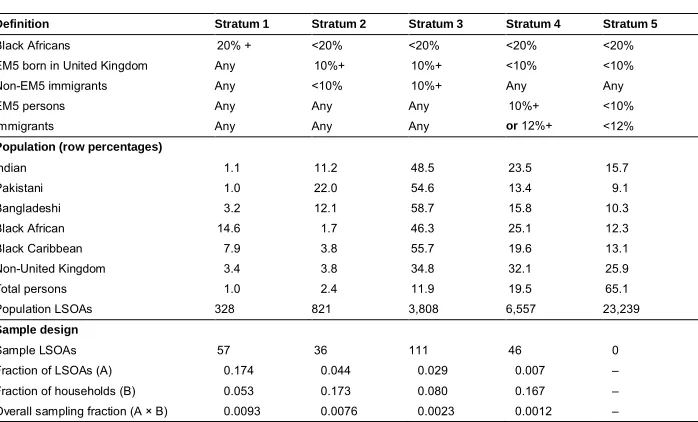
Table 1: Sampling strata: Definition, population distribution, sampling fractions
Definition Stratum 1 Stratum 2 Stratum 3 Stratum 4 Stratum 5
Black Africans 20% + <20% <20% <20% <20%
EM5 born in United Kingdom Any 10%+ 10%+ <10% <10%
Non-EM5 immigrants Any <10% 10%+ Any Any
EM5 persons Any Any Any 10%+ <10%
Immigrants Any Any Any or 12%+ <12%
Population (row percentages)
Indian 1.1 11.2 48.5 23.5 15.7
Pakistani 1.0 22.0 54.6 13.4 9.1
Bangladeshi 3.2 12.1 58.7 15.8 10.3
Black African 14.6 1.7 46.3 25.1 12.3
Black Caribbean 7.9 3.8 55.7 19.6 13.1
Non-United Kingdom 3.4 3.8 34.8 32.1 25.9
Total persons 1.0 2.4 11.9 19.5 65.1
Population LSOAs 328 821 3,808 6,557 23,239
Sample design
Sample LSOAs 57 36 111 46 0
Fraction of LSOAs (A) 0.174 0.044 0.029 0.007 –
Fraction of households (B) 0.053 0.173 0.080 0.167 –
Overall sampling fraction (A × B) 0.0093 0.0076 0.0023 0.0012 –
The uneven distribution over the strata of the population in the target groups is apparent in the middle panel of Table 1. For example, it can be seen that stratum 1, while containing only 1% of the total population, contains 14.6% of Black Africans. The extent to which different ethnic groups co-reside in the same areas can also be seen, as stratum 1 also contains 7.9% of Black Caribbeans. This tendency for co-residence is a factor which makes it hard to develop an area-based sample design that will deliver equal numbers in each of several population subgroups: it is hard to find areas that would boost the numbers of one ethnic minority group without simultaneously boosting other ethnic minority groups. It would in any case be undesirable to concentrate the sample of one group in such unusual areas that contain few members of other groups.
achieve the same number of interviews at lower cost (fewer addresses screened) but this would have involved a much larger range of sampling fractions and hence an unacceptable loss of precision.
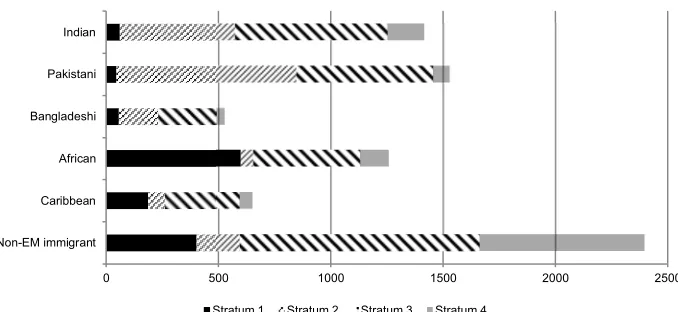
Figure 1 shows the number of persons expected to be enumerated in responding households in each of the six target groups, broken down by sampling stratum. The different contributions of the strata are clear. Stratum 1 was expected to be the main source of persons of Black African origin. Stratum 2 mainly contributes persons of Indian and Pakistani origin. Stratum 3 contributes substantially to all groups, but is the largest source of persons of Black Caribbean origin, while stratum 4 mainly provides foreign-born persons who are not members of any of the target ethnic minorities.
Figure 1: Contribution of sampling strata to target sample sizes (estimated number of enumerated persons)
3.3.4 Overall statistical efficiency
The precision of survey estimates will generally be lower the greater the variation in selection probabilities, and hence in design weights. The reduction in precision caused by variation in design weights is referred to as the ‘design effect.’
To approximate the distribution of design weights we must remember that the IEMB is designed to be analysed in combination with the existing UKHLS sample, which has full population coverage (apart from recent immigrant households) and which itself consists of a general population sample (GPS) and an ethnic minority boost
0 500 1000 1500 2000 2500
Non-EM immigrant Caribbean African Bangladeshi Pakistani Indian
(EMB) that were selected at the start of the survey in 2009–2010, plus the preexisting British Household Panel Survey (BHPS) sample. Therefore, each eligible person has up to four routes through which they could have been included in the survey. They could have been selected into the BHPS, GPS, EMB, or IEMB. The selection probability of an eligible person, ( ), is therefore the sum of the probabilities of being included in each of these four samples (some, but not all, of which could be zero):
( ) = ( ) + ( ) + ( ) + ( ).
( ) is approximately 0.00167 for all eligible persons (as 47,520 postal addresses were selected with equal probabilities out of approximately 28,520,000 addresses in GB). ( ) depends on whether personi lived in England, Wales, or Scotland at the time original BHPS sample was selected in 1991, in Wales or Scotland when boost samples were selected in 1999, or in Northern Ireland when the Northern Ireland sample was selected in 2001. ( ) depends on the sampling strata of residence in 2015 and corresponds to the sampling fractions in the final row of Table 1.
( ) is more complicated, and depends on the combination of ethnic group and postal sector of residence in 2009–2010. The selection probability for the sample into which a person was selected is known from the sample design. The probability for samples selected subsequently can be estimated using the survey data. But to establish selection probabilities for earlier samples, additional questions were included in the household grid at the first wave of data collection for each new sample. For example, each member of IEMB was asked where they resided in 2009, in order to establish ( ).
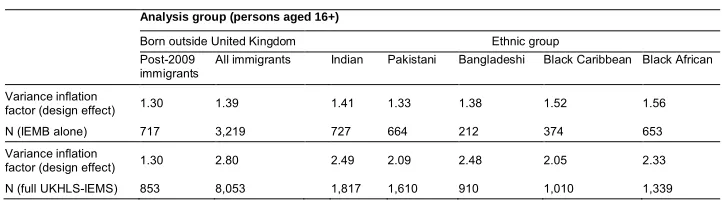
Section 6, but these design effects should be borne in mind when considering the numbers available for analysis.
Table 2: Design effects for key analysis subgroups
Analysis group (persons aged 16+)
Born outside United Kingdom Ethnic group
Post-2009 immigrants
All immigrants Indian Pakistani Bangladeshi Black Caribbean Black African
Variance inflation
factor (design effect) 1.30 1.39 1.41 1.33 1.38 1.52 1.56
N (IEMB alone) 717 3,219 727 664 212 374 653
Variance inflation
factor (design effect) 1.30 2.80 2.49 2.09 2.48 2.05 2.33
N (full UKHLS-IEMS) 853 8,053 1,817 1,610 910 1,010 1,339
4. Implementing the immigrant and ethnic minority survey
4.1 Screening and interviewing
The two-stage contact process where households were first screened for eligibility and subsequently, if eligible, interviewed required a short screening instrument as well as the main substantive questionnaire. An important decision was the choice of data collection mode for each of these stages. Options could have included face-to-face interviewing, telephone interviewing, paper completion, and online self-completion. These modes differ greatly in field costs, likely response rates, and data quality (de Leeuw 2005). The success of the screening stage was fundamental to the statistical quality of the longitudinal study for years to come. Given that, it was decided that this stage must be implemented face-to-face, as this was the mode likely to maximise cooperation rates. As an interviewer visit was necessary to carry out the screening, it was efficient to also conduct the initial interviews face-to-face. However, once the sample was identified and recruited, there was no reason not to consider other modes for future waves of data collection.
bilingual interviewer or an agency translator could be sent to the address to conduct screening and interviewing.
The main questionnaire needed to meet two main aims. First, it had to allow sufficient comparability with the existing UKHLS sample to facilitate incorporation into the main sample and analysis across the whole survey population. Second, to facilitate relevant migration research it also had to include migration- and minority-specific measures to take debates forward. The latter is also likely to provide greater engagement with the sample as it relates more closely to their salient experiences. At the same time, funding and considerations of respondent burden required that it be kept relatively short. Like the main stage questionnaire, as well as an individual (30 minute) interview it also comprised a household grid, and a household questionnaire, asked just of one household member. A proxy interview allowed information to be collected about absent households members. A summary of the individual questionnaire modules is given in Appendix 2. While it included key areas of relevance to immigrants and to migration research, the majority of the questionnaire was relatively generic. This potentially raised challenges for engagement and retention of participants, and indicated that particular effort would need to be put into the fieldwork to ensure sufficient response and engagement.
4.2 Fieldwork procedures
Obtaining cooperation with probability-based face-to-face surveys is challenging. The trend in recent years – in almost all developed countries – has been for survey response rates to decline and for increasing resources being needed to maintain response rates (de Leeuw and de Heer 2002; Brick and Williams 2013). Furthermore, immigrants and ethnic minorities tend to be amongst the population subgroups least likely to participate in surveys (Font and Mendez 2013). In that context it was clear from the outset that successfully making contact with a large proportion of the sampled households and obtaining their cooperation with both the screen and the main interview would require a thorough and careful approach to the design and implementation of all aspects of field procedures.
accompanied by a professional translator to be allocated accordingly. For languages other than these nine, other household members, neighbours, and friends were used to assist in translation where necessary.
Second, to help ensure the screening interviewer was expected, the sampled households were sent a card in advance explaining the study and letting them know that an interviewer would be visiting. The card also informed the sample members about the possibility of being interviewed in other languages, if requested.
Third, steps were taken at the screening and interviewing stages to obtain the maximum response. Initially, the screening was carried out by the same interviewer who would conduct the interviews. This was to enable an immediate interview to be carried out following identification of eligibility, if the respondent was willing, rather than necessitating a second visit to carry out the interview. This also ensured that, given the focus on using the most qualified interviewers, it was skilled interviewers who were conducting the screening and attempting to establish eligibility. The disadvantage of this approach was that it had the potential to slow down the fieldwork and occupy much of the time of the skilled interviewers knocking on the doors of ineligible households. The large number of screening visits required to identify each eligible household is bound to have some impact on interviewer morale. As a result, six months into the fieldwork a split team of screeners and interviewers was first tested and then deployed across the study, with the interviewers recontacting eligible households after they had been screened in. The testing of this approach showed that noncontact rates were no higher, and it enabled interviewers to spend more time making repeat visits and maximising responses.
Fourth, a number of materials were produced and made available to the interviewers in order to help engage the new sample members. These included an information leaflet explaining the purpose of the study and a laminated page listing newspaper headlines drawing on recent findings from UKHLS to demonstrate impact. The information leaflet was often left behind in households that were screened in but where the interviews did not take place immediately. This gave household members an opportunity to familiarise themselves with the study and their involvement in it and gave the interviewer an excuse to revisit more reluctant households in order to answer any queries they might have as a result of reading the leaflet.
It is widely accepted that some form of monetary recognition is important both for participation and for subsequent panel maintenance (Laurie and Lynn 2009; Singer 2002). As for the main survey, after each achieved interview, the interviewer gave the respondent a £10 gift card.
to piloting include shortening the questionnaire, updating the wording of the screening questions to include reference to children, and communicating expected screening rates to interviewers in their individual areas.
Detailed fieldwork progress reports, updated daily, revealed that by about halfway through the fieldwork response rates achieved were lower than expected. A number of steps were then taken with the aim of increasing response. These included briefing additional supervisors to support less experienced interviewers, conducting telephone conferences with interviewers in order to elicit and address any difficulties in the field, and introducing a weekly milestone calendar to remind interviewers and regional managers of deadlines for coverage targets. In addition, fieldwork on the first two-quarters of the sample was extended by two weeks to increase the number of interviews achieved through reissues, and a bonus fee was introduced to reissue interviewers for achieving productive interviews. Additional actions aimed at increasing household and within-household response included better monitoring of call record patterns to ensure that an optimum distribution of call attempts was made before accepting a ‘noncontact’ outcome to the screen or main interviews. Partial households (where some individuals have responded but others have not) were specifically targeted. Tailored personalised letters were sent to nonresponders in partial households emphasising the importance of all household members taking part. And towards the end of fieldwork unproductive individuals in otherwise productive households were also offered interviews by telephone.
5. Results
5.1 Household response
On the basis of the sample design described above, a total of 19,459 addresses were issued to be screened for the IEMB. Of those, 18.25% (3,552) were never screened. Reasons for failure to screen comprised noncontact in just over half of the cases (1,854 households, or 9.5% of the total issued sample), refusal in 28% (982) of nonscreened, and other reasons, including some with language difficulties for the remaining 20% of nonscreened (716 households). This means that of all those issued for screening 5% refused at the point of screening, though some of the noncontacts could well have been refusals if contact had been possible.
1,783 of these (28.8% of eligible households) all adults provided an interview. While the household response rate of 52% is relatively good for a general purpose survey among a population with typically much lower response rates, the estimate of the response rate at 52% does not take account of the fact that a share of those who could not be contacted for screening would also have been eligible. Among unproductive households there were 1,792 (32%) refusals and 705 (12.6%) noncontacts.
Overall, this illustrates the ratio of issued households needed to ensure participating households, even with a carefully targeted design: nearly 7 to 1.
5.2 Individual response
A total of 8,517 individuals (including children) were living in the 2,922 responding households; and on average, there were 2.15 adults (aged 16 or older) per household, leading to 6,260 adults eligible for a full adult interview. Of these, 4,458 (71%) gave a full interview and 198 (3.2%) proxy interviews (total 4,656).
This gives an individual response rate of 71% (74% including proxies). Table 3 shows that these response rates are somewhat lower than for the other samples comprising the UKHLS at its first wave – even slightly lower than the wave one ethnic minority boost. At the same time, the IEMB was taking place six years later in a context of steadily declining response rates; and with a reasonable level of household response, particularly for an immigrant and ethnic minority population, the response rates demonstrate the payoff from the effort put into achieving a quality, high-responding sample.
Table 3: Comparing wave 1 individual response rates across different Understanding Society samples
Wave 6 Wave 1
IEMB GPS GB GPS NI EMB
Only full interviews 71.2% 82.0% 77.3% 72.4%
Proxy interviews 3.2% 5.3% 3.5% 6.9%
6. Sample description
So how did the achieved sample map on the expectations in terms of composition and sample sizes, and how does it compare with the characteristics of the different populations as known from the 2011 Census?
6.1 Target and achieved samples
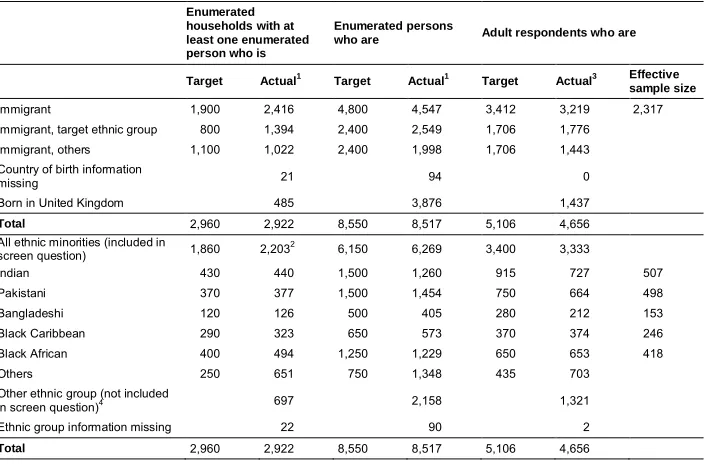
Table 4 illustrates how far the expectations of the sample design and assumptions, based on the best existing information on household distributions and characteristics and likely response rates, were met in the achieved sample. Overall the achieved number of households was slightly lower than that targeted. But the number of enumerated individuals was substantially lower, since household sizes, at least among responding households, were lower than predicted. This also had knock-on effects on the number of adult respondents, alongside the slightly lower response rates. We can also see that despite constructing the strata to avoid excessive overlap between ethnic minorities and immigrants in the sample, there were still more ethnic minority immigrants and fewer other immigrant households sampled than targeted. This may relate to the relative stability of the populations in the sampled areas since the 2011 Census. Indeed the total number of immigrant households exceeded the target, even though nearly two-thirds were from the target ethnic minority groups. This again has knock-on effects on the numbers of adult respondents who were not from the ethnic minority groups; though the smaller household sizes meant there were not as many ethnic minority adult respondents as the household enumeration might have implied.
Table 4: Target and achieved sample numbers in the IEMB
Enumerated households with at least one enumerated person who is
Enumerated persons
who are Adult respondents who are
Target Actual1 Target Actual1 Target Actual3 Effective sample size
Immigrant 1,900 2,416 4,800 4,547 3,412 3,219 2,317
Immigrant, target ethnic group 800 1,394 2,400 2,549 1,706 1,776
Immigrant, others 1,100 1,022 2,400 1,998 1,706 1,443
Country of birth information
missing 21 94 0
Born in United Kingdom 485 3,876 1,437
Total 2,960 2,922 8,550 8,517 5,106 4,656
All ethnic minorities (included in
screen question) 1,860 2,2032 6,150 6,269 3,400 3,333
Indian 430 440 1,500 1,260 915 727 507
Pakistani 370 377 1,500 1,454 750 664 498
Bangladeshi 120 126 500 405 280 212 153
Black Caribbean 290 323 650 573 370 374 246
Black African 400 494 1,250 1,229 650 653 418
Others 250 651 750 1,348 435 703
Other ethnic group (not included
in screen question)4 697 2,158 1,321
Ethnic group information missing 22 90 2
Total 2,960 2,922 8,550 8,517 5,106 4,656
Notes:1Based on the country-of-birth question asked in the household grid and the ethnic-group question asked in the household grid.
2As there may be households with enumerated individuals of more than one of the screened-in ethnic minority groups, the total number of households with at least one screened-in ethnic minority enumerated person is 2,203 while the total number of households with at least one Indian, Pakistani, Bangladeshi, Black Caribbean, Black African, or any of the other non-targeted screened-in ethnic groups adds up to 2,411.
3Includes proxy, based on the self-reported country-of-birth question and the self-reported ethnic-group question. If these were
missing, the country-of-birth question and the ethnic-group question asked in the household grid was used to impute these. 4These are primarily white-majority household members.
Table 5: Number of adult respondents in wave 6 by countries of birth across the different samples
UKHLS without IEMB IEMB Total: UKHLS-IEMS Country of birth
Africa 962 693 1,655
Caribbean Islands 271 150 421
South Asia1 1,817 1,050 2,867
South East and East Asia2 310 158 468
Eastern Europe (excluding non-EEA)3 279 434 713
Western Europe (excluding non-EEA)4 598 359 957
English-speaking countries5 201 69 270
Middle East 160 142 302
Central and South America 67 66 133
Other 162 97 259
All immigrants 4,834 3,219 8,053
Arrived in or before 2009 4,659 2,482 7,141
Arrived after 2009 136 717 853
Arrival date missing 39 20 59
Notes: 1Born in Afghanistan, Bangladesh, Bhutan, Maldives, Nepal, Pakistan, India, or Sri Lanka.
2Born in Brunei, Cambodia, China, East Timor, Hong Kong, Indonesia, Japan, Laos, Macao, Malaysia, Mongolia, Myanmar,
Philippines, Singapore, Taiwan , Thailand, Vietnam, North Korea, or South Korea.
3Poland, Bulgaria, the Czech Republic, Estonia, Hungary, Latvia, Lithuania, Romania, or Slovakia. 4
Ireland, France, Germany, Italy, Spain, Cyprus, Austria, Belgium, Denmark, Finland, Greece, Iceland, Malta, Norway, Portugal, Sweden, or the Netherlands.
5Australia, Canada, New Zealand, or the United States.
Table 6: Number of adult respondents in wave 6 by ethnic group across the different samples
UKHLS without IEMB IEMB Total: UKHLS-IEMS
Indian 1,090 727 1,817
Born in United Kingdom 375 237 612
Not born in United Kingdom 714 490 1,204
Pakistani 946 664 1,610
Born in United Kingdom 403 243 646
Not born in United Kingdom 543 421 964
Bangladeshi 698 212 910
Born in United Kingdom 277 65 342
Not born in United Kingdom 421 147 568
Black Caribbean 636 374 1,010
Born in United Kingdom 361 204 565
Not born in United Kingdom 274 170 444
Black African 686 653 1,339
Born in United Kingdom 125 105 230
Not born in United Kingdom 560 548 1,108
Others (included in screen question) 1,284 703 1,987
Born in United Kingdom 532 195 727
Not born in United Kingdom 751 508 1,259
All ethnic minorities 5,340 3,333 8,673
Born in United Kingdom 2,073 1,049 3,122
6.2 Quality of coverage of the Understanding Society sample in wave 6 (2014/15)
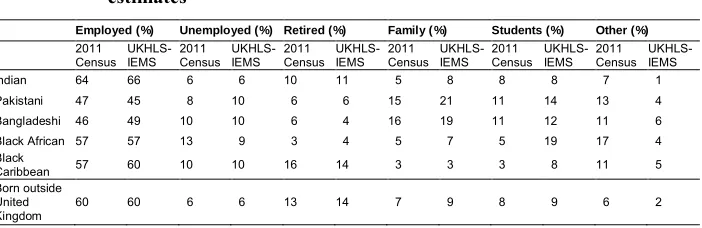
Even if the sample sizes are large and we know them to cover a diverse range of areas, there remains the question of the extent to which the IEMB helped to deliver a high-quality sample in terms of distributions of immigrants and ethnic minority groups across key demographics to ensure its utility for researchers to exploit for diverse research purposes. In final deposited data, sample weights aim to match the UKHLS-IEMS to population distributions, to ensure the study is representative. Here, by contrast we focus on the raw distributions from the five target ethnic minority groups and immigrants in the UKHLS-IEMS at wave 6 to identify the extent to which it demonstrates good quality of coverage across key dimensions by comparison with the 2011 Census. We include the weighted distributions, which are in practice very similar to the unweighted ones shown, in the Appendix (Tables A1‒A3). Even if the UKHLS-IEMS were completely representative, we would not expect the distributions to be identical because they are conducted at different dates: the UKHLS-IEMS includes those who arrived after 2011, and excludes those who left or died after this date, while those who were present in 2011 have aged since.
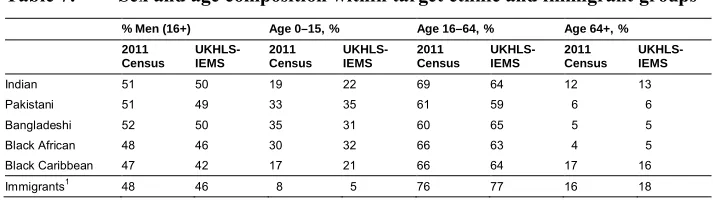
We find that the sex composition of the different ethnic groups in the UKHLS-IEMS is similar to the 2011 population (See Table 7), though the UKHLS-UKHLS-IEMS includes a slightly smaller proportion of men, particularly Black Caribbean men than in the census. When looking at the age distribution, the UKHLS-IEMS is also highly comparable to the 2011 Census, though the UKHLS-IEMS shows a slightly higher proportion of Indian and Black Caribbean children and lower proportion of Bangladeshi children.
Table 7: Sex and age composition within target ethnic and immigrant groups
% Men (16+) Age 0–15, % Age 16–64, % Age 64+, %
2011 Census UKHLS-IEMS 2011 Census UKHLS-IEMS 2011 Census UKHLS-IEMS 2011 Census UKHLS-IEMS
Indian 51 50 19 22 69 64 12 13
Pakistani 51 49 33 35 61 59 6 6
Bangladeshi 52 50 35 31 60 65 5 5
Black African 48 46 30 32 66 63 4 5
Black Caribbean 47 42 17 21 66 64 17 16
Immigrants1 48 46 8 5 76 77 16 18
Notes:1As country-of-birth information was not collected about children aged 0–10, except in the IEMB, for the rest of the UKLH-IEMS we estimate it by using parental time of arrival.
The changing profile of educational attainment is of interest across migration and ethnicity scholars from a wide range of disciplines. Having reliable information on qualifications is a potential generic strength of the study. Table 8 shows those from the target groups with degree level qualifications in the UKHLS-IEMS compared to the 2011 Census. It shows broadly comparable rates of adult respondents with degree or higher educational qualification across the two sources. Interestingly, if anything, the UKHLS-IEMS respondents seem slightly less well-qualified than the census population.
Table 8: Degree qualifications by ethnic group and immigrant status (16+-year-olds)
Degree or higher1
2011 Census, England & Wales (%) UKHLS-IEMS (%)
Indian 42 40
Pakistani 25 25
Bangladeshi 20 22
Black African 40 35
Black Caribbean 26 21
Immigrants 35 34
1 This corresponds to ‘level 4 or higher’ in the census tables and ‘degree’ in the UKHLS data.
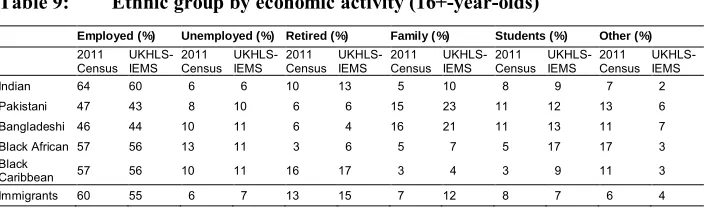
Finally, Table 9 compares patterns of economic activity. The UKHLS-IEMS is, again, broadly comparable with the 2011 Census, though with higher proportions of home-makers among the UKHLS-IEMS sample.
Table 9: Ethnic group by economic activity (16+-year-olds)
Employed (%) Unemployed (%) Retired (%) Family ( %) Students (%) Other (%)
2011 Census UKHLS-IEMS 2011 Census UKHLS-IEMS 2011 Census UKHLS-IEMS 2011 Census UKHLS-IEMS 2011 Census UKHLS-IEMS 2011 Census UKHLS-IEMS
Indian 64 60 6 6 10 13 5 10 8 9 7 2
Pakistani 47 43 8 10 6 6 15 23 11 12 13 6
Bangladeshi 46 44 10 11 6 4 16 21 11 13 11 7
Black African 57 56 13 11 3 6 5 7 5 17 17 3
Black
Caribbean 57 56 10 11 16 17 3 4 3 9 11 3
Immigrants 60 55 6 7 13 15 7 12 8 7 6 4
between the UKHLS-IEMS and the census, importantly, the UKHLS-IEMS is not a sample that is dominated by a specific age, economic status, educational level or pattern of migration. Instead the sample represents the full diversity of the population broadly as it is expected to appear in the population, enabling engagement with key questions of social, cultural and structural integration, through the multi-topic coverage of the overall survey and its tracking of respondents over time, as well as its inclusion of both immigrant and UK-born minorities.
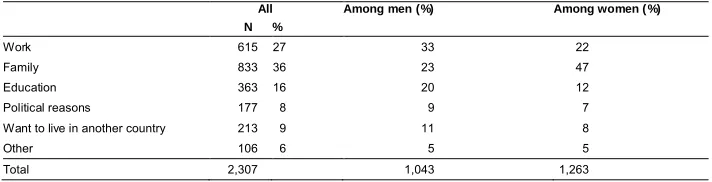
Moreover, while the IEMB was not able to focus to a significant degree on minority related topics, it will pick up questions relating to minority experience (e.g., harassment, identity) as it enters the next waves of the study. In addition, some explicit immigration-content was fielded to the IEMB, which will enable specific migration questions to be addressed with the large, high-quality sample offered, and which will be rolled out to all immigrants in the UKHLS over time. One brief illustrative example of this potential is a new question on reasons for migration that was asked of all adult immigrants in the IEMB. Table 10 presents a simple breakdown of responses. These show, as expected, that women are more likely to migrate for family reasons rather than work reasons. However, a substantial percentage of men, 23%, also migrate for family reasons. Conversely, more men have migrated for education, but a substantial proportion of women have also done so. And nearly one in ten immigrants coming to the United Kingdom state they do so because they want to live in another country.
Table 10: Reasons for migration among immigrants, by sex (IEMB sample only)
All Among men (%) Among women ( %)
N %
Work 615 27 33 22
Family 833 36 23 47
Education 363 16 20 12
Political reasons 177 8 9 7
Want to live in another country 213 9 11 8
Other 106 6 5 5
Total 2,307 1,043 1,263
7. Conclusions
coverage of immigrants and minorities (albeit in smaller numbers) who live in low-density areas and therefore are costly to ‘boost.’ Two-stage sampling enables not just the practical attainment of a probability sample, in the absence of registers. It also allows for the targeting of second-generation minorities and specific groups, which may be impossible even with register data. It therefore has unique potential to deliver a resource for researchers to exploit to tackle some of the pressing questions facing migration research in demography and across disciplines.
There are a number of challenges, however, to achieving such a high-quality immigrant and ethnic minority survey. The first is cost, and the trade-off between cost and coverage. The second is attaining response in a context of declining response rates in general and particularly low response across minority and immigrant populations. The third is being able to predict with accuracy the composition of areas for sampling, and the likely household size of targeted households.
We discussed approaches to addressing these challenges, as well as remaining limitations. At the design stage, we described how different strata that cover different proportions of the populations of interest can be identified on the basis of existing population (census) data. Different designs which estimate the trade-off between sampling efficiency and economic efficiency can be developed so that a design which achieves the best sample size and efficiency within the given funding envelope can be achieved. This can also take into account the estimated coverage of different groups of interest.
Even with a focus on areas with denser coverage of the target populations, there is, however, extensive screening, which is not only costly, but can also have implications for the effectiveness of interviews. Robust and appropriate fieldwork processes are therefore needed, which also allow for adaptation in line with real-time monitoring of progress. We highlighted how a move took place from combined screening and interviewing, which had appeared to suggest the best way to achieve high household response, to separate screening and interviewing, which speeded up fieldwork without apparent decline in response. Ensuring interviewers follow contact protocols is also important, and allowing some flexibility over timing of reissues allowed us to ‘mop-up’ more hard-to-reach cases. Even with such strong fieldwork procedures and close monitoring, achieving response remains challenging, particularly for a multi-topic study without obvious immediate interest for participants. Nevertheless, we demonstrated that it was possible to attain 50% household response, a level that is substantially higher than for minority populations in most general or specific surveys. Within households, over 70% of eligible adults responded, providing large numbers of immigrant-origin respondents from different national origins and across generations.
immigrants who were not from one of the target ethnic minority groups than we had expected, and household size was substantially smaller on average than predicted, resulting in a smaller number of adult respondents than anticipated. Among noncontacts at the screening stage we were by definition ignorant of their eligibility. We therefore cannot accurately estimate nonresponse among eligible households. By contrast with nonrespondent individuals in participating households we do know something about their characteristics and context, which can give us insight into demographic context of immigrants and minorities.
References
Beauchemin, C. and González-Ferrer, A. (2011). Sampling international migrants with origin-based snowballing method: New evidence on biases and limitations.
Demographic Research 25(3): 103–134.doi:10.4054/DemRes.2011.25.3. Berthoud, R., Fumagalli, L., Lynn, P., and Platt, L. (2009). Design of the
‘Understanding Society’ ethnic minority boost sample. Colchester: University of Essex (Understanding Society Working Paper Series: 2009-02).
Blangiardo, G. (2008). The centre sampling technique in surveys on foreign migrants: The balance of a multi-year experience. Geneva: United Nations Statistical Commission (Eurostat Working Paper 12 Joint UNECE/Eurostat Work Session on Migration Statistics).
Brick, J.M. and Williams, D. (2013). Explaining rising nonresponse rates in cross-sectional surveys. The Annals of the American Academy of Political and Social Science 645: 36–59.doi:10.1177/0002716212456834.
Brücker, H., Rother, N., and Schupp, J. (2016). Die IAB-BAMF-SOEP-Befragung von Geflüchteten: Überblick und erste Ergebnisse. Berlin: Deutsches Institut für Wirtschaftsforschung DIW (Politikberatung kompakt, 116).
Buck, N. and McFall, S. (2012). Understanding society: Design overview.Longitudinal and Life Course Studies 3(1): 5–17.
Burton, J. and Lynn, P. (2005). Issues for the development of a longitudinal survey of refugees. Colchester: University of Essex (Report to the Home Office).
CILS4EU (2016). Children of immigrants longitudinal survey in four European countries. Mannheim: Mannheim University (Technical Report, Wave 1 – 2010/2011, v1.2.0).
Crul, M. and Schneider, J. (2010). Comparative integration context theory: Participation and belonging in new diverse European cities.Ethnic and Racial Studies 33(7): 1249–1268.doi:10.1080/01419871003624068.
de Leeuw, E.D. (2005). To mix or not to mix data collection modes in surveys.Journal of Official Statistics 21(2): 233–255.
Diehl, C., Lubbers, M., Muehlau, P., and Platt, L. (2016). Starting out: New migrants’ socio-cultural integration trajectories in four European destinations. Ethnicities
16(2): 157–179.doi:10.1177/1468796815616158.
Drinkwater, S. and Garapich, M. (2011). The TEMPO survey of recent Polish migrants in England and Wales. Swansea: Wales Institute of Social and Economic Research, Data and Methods (WISERED/WDR/004).
Duque, I., Ballano, C., and Pérez, C. (2013). The 2007 Spanish National Immigrant Survey (ENI): Sampling from the Padrón. In: Font, J. and Mendez, M. (eds.).
Surveying ethnic minorities and immigrant populations: Methodological challenges and research strategies. Amsterdam: IMISCOE/Amsterdam University Press: 69–83.
Elliott, M.N., Finch, B.K., Klein, D., Ma, S., Phuong Do, D., Beckett, M.K., Orr, N., and Lurie, N. (2008). Sample designs for measuring the health of small racial/ethnic subgroups.Statistics in Medicine 27(20): 4016–4029.doi:10.1002/ sim.3244.
Erens, B. (2013). Designing high quality surveys of ethnic minorities in the UK. In: Font, J. and Mendez, M. (eds.). Surveying ethnic minorities and immigrant populations: Methodological challenges and research strategies. Amsterdam: IMISCOE/Amsterdam University Press: 45–68.
European Union Fundamental Rights Agency (2009). European Union minorities and discrimination survey: Main results report. http://fra.europa.eu/en/publication/ 2012/european-union-minorities-and-discrimination-survey-main-results-report. Font, J. and Mendez, M. (2013). Surveying ethnic minorities and immigrant
populations: Methodological challenges and research strategies. Amsterdam: IMISCOE/Amsterdam University Press.
Gresser, A. and Schacht, D. (2015). SCIP survey: Methodological report. Konstanz: University of Konstanz.www.scip-info.org.
Hobcraft, J. and Sacker, A. (2012). Guest editorial: The origins of Understanding Society.Longitudinal and Life Course Studies 3(1): 1–4.
Hughes, A.O., Fenton, S., and Hine, C.E. (1995). Strategies for sampling black and ethnic populations. Journal of Public Health Medicine 17(3): 187–192.
doi:10.1093/oxfordjournals.pubmed.a043091.
Kahan, D. and Al-Tamimi, A. (2009). Strategies for recruiting Middle Eastern-American young adults for physical activity research: A case of snowballs and salaam.Journal of Immigrant and Minority Health 11(5): 380–390.doi:10.1007/ s10903-008-9117-7.
Kalton, G. and Anderson, D.W. (1986). Sampling rare populations. Journal of the Royal Statistical Society A 149(1): 65–82.doi:10.2307/2981886.
Kaminska, O. and Lynn, P. (2017). Survey-based cross-country comparisons where countries vary in sample design: Issues and solutions. Journal of Official Statistics 33(3): 781–799.doi:10.1515/jos-2017-0007.
Laurie, H. and Lynn, P. (2009). The use of respondent incentives in longitudinal surveys. In: Lynn, P. (ed.). Methodology of longitudinal surveys. Chichester: Wiley: 205–233.doi:10.1002/9780470743874.ch12.
Luthra, R. and Platt, L. (2016). Elite or middling? International students and migrant diversification.Ethnicities 16(2): 316–344.doi:10.1177/1468796815616155. Luthra, R., Platt, L., and Salamonska, J. (2016). Types of migration: The motivations,
composition, and early integration patterns of ‘new migrants’ in Europe.
International Migration Review.doi:10.1111/imre.12293.
Lynn, P., Gabler, S., Häder, S., and Laaksonen, S. (2007). Methods for achieving equivalence of samples in cross-national surveys. Journal of Official Statistics
23(1): 107–124.
Magnani, R., Sabin, K., Saidel, T., and Heckathorn, D. (2005). Review of sampling hard-to-reach and hidden populations for HIV surveillance. AIDS 19(2): S67– S72.doi:10.1097/01.aids.0000172879.20628.e1.
McFall, S., Nandi, A., and Platt, L. (2017). Understanding Society user guide to ethnicity and immigration research. Colchester: ISER, University of Essex. Nazroo, J., Berthoud, R., Erens, B., Karlsen, S., and Purdon, S. (2005). A longitudinal
study of ethnic minorities: Focus and design (Report to the Economic and Social Research Council).
Platt, L., Luthra, R., and Frere-Smith, T. (2015). Adapting chain referral methods to sample new migrants: Possibilities and limitations. Demographic Research
Portes, A., Fernandez-Kelly, P., and Haller, W. (2005). Segmented assimilation on the ground: The new second generation in early adulthood. Ethnic and Racial Studies 28(6): 1000–1040.doi:10.1080/01419870500224117.
Schmeets, H. (2015). Surveying immigrants in the Netherlands. (Working paper for expert workshop on immigrant surveys, Cologne, July 4‒6, 2015).
Singer, E. (2002). The use of incentives to reduce nonresponse in household surveys. In: Groves, R.M., Dillman, D.A., Eltinge, J., and Little, R.J.A. (eds.). Survey nonresponse.New York: Wiley: 163–178.
Smith, P. (1997). Appendix: Survey methods. In: Modood, T., Berthoud, R., Lakey, J., Nazroo, J., Smith, P., Virdee, S., and Beishon, S. (eds.). Ethnic minorities in Britain: Diversity and disadvantage. London: Policy Studies Institute: 360–364. Smith, P., Cleary, A., Jones, M., Johnston, S., Bremner, P., Brown, J., and Wiggins, R.
(2011). A feasibility study for a survey of migrants. Sydney: University of Technology, Home Office (Report 2011-01).http://hdl.handle.net/10453/32013. Sudman, S. and Kalton, G. (1986). New developments in the sampling of special
populations. American Review of Sociology 12: 401–429. doi:10.1146/annurev. so.12.080186.002153.
Thompson, S.K. (1990). Adaptive cluster sampling.Journal of the American Statistical Association 85(412): 1050–1059.doi:10.1080/01621459.1990.10474975. Tyldum, G. and Johnston, L. (2014).Applying respondent driven sampling to migrant
Appendix 1: The screening questionnaire
Every household in the screening sample is first asked Q1.
Q1. Is there anyone living at this address who was born outside the United Kingdom, including children?
∂ Yes
∂ No
If the answer to Q1 is “yes,” the household is screened in to the study; if the answer is “no” or the person is unsure, they are asked another question, Q2.
Q2. Does anyone living at this address come from any of the following ethnic groups, or have parents or grandparents from any of these groups, including children?
∂ None of these
∂ Indian
∂ Mixed Indian (parents or grandparents from Indian ethnic group and parents or grandparents from a non-Indian group)
∂ Pakistani
∂ Bangladeshi
∂ Sri Lankan
∂ Caribbean/West Indian
∂ Mixed Caribbean/West Indian (parents or grandparents from Caribbean/West Indian ethnic group and parents or grandparents from a non-Caribbean/West Indian ethnic group)
∂ North African
∂ Black African
∂ African Asian
∂ Chinese
∂ Far Eastern (includes Filipino, Thai, Malaysian, Japanese, Vietnamese, Singaporean, Indonesian, Korean, Burmese)
∂ Turkish
∂ Middle Eastern/Iranian (includes Israeli, Palestinian, Lebanese, Syrian, Jordanian, Yemeni, Saudi, Iraqi, Afghani, other Gulf states)
Appendix 2: Questionnaire modules in IEMB
Module number Module description Who gets asked the questions
1 HH grid All
2 HH questionnaire All
3 Individual intro All
4 Demographics All
5 Initial conditions All
6 Educational aspirations Full-time student
7 Family background All
8 Ethnicity and national identity All
9 Childhood language All
10 Language All
11 Language at home All
12 Religion All
13 Migration history All
14 Disability All
15 Health conditions All
16 Partnership history All
17 Fertility history All
18 Own first job All
19 Current employment All
20 Employees Employees
21 Self-employment Self-employed
236 Nonemployment Unemployed
24 Second jobs All
25 Childcare Responsible for a child
28 Benefits All
29 Household finances All
31 Casistart All
32 SF12 Has agreed to self-completion
33 GHQ Has agreed to self-completion
35 Living apart together (LAT) Has agreed to self-completion anddoes not live with a spouse or partner
36 Casiend All
37 Contact details All
38 Stable contact All
39 Interviewer observations For interviewer to complete about the interview
Table A-1: Sex and age composition within target ethnic and immigrant groups (weighted UKHLS-IEMS estimates)
% Men (16+) Age 0–15, % Age 16–64, % Age 64+, %
2011
Census UKHLS-IEMS 2011Census UKHLS-IEMS 2011Census UKHLS-IEMS 2011Census UKHLS-IEMS
Indian 51 50 19 31 69 60 12 10
Pakistani 51 49 33 47 61 49 6 4
Bangladeshi 52 51 35 37 60 59 5 5
Black African 48 47 30 40 66 57 4 4
Black Caribbean 47 44 17 30 66 57 17 13
Immigrants1 48 46 8 7 76 76 16 17
Note:1IEMB only as country of birth information was not collected about children in the other samples.
Table A-2: Ethnic group by highest qualifications (16+-year-olds), weighted estimates, includes proxy respondents
Degree or higher1
2011 Census, England and Wales (%) UKHLS-IEMS (%)
Indian 42 48
Pakistani 25 29
Bangladeshi 20 25
Black African 40 35
Black Caribbean 26 22
Immigrants 35 39
Note: 1 This corresponds to ’level 4 or higher’ in the census tables and ‘degree’ in the UKHLS data.
Table A-3: Ethnic group by economic activity (16+-year-olds), weighted estimates
Employed (%) Unemployed (%) Retired (%) Family ( %) Students (%) Other (%)
2011
Census UKHLS-IEMS 2011Census UKHLS-IEMS 2011Census UKHLS-IEMS 2011Census UKHLS-IEMS 2011Census UKHLS-IEMS 2011Census UKHLS-IEMS
Indian 64 66 6 6 10 11 5 8 8 8 7 1
Pakistani 47 45 8 10 6 6 15 21 11 14 13 4
Bangladeshi 46 49 10 10 6 4 16 19 11 12 11 6
Black African 57 57 13 9 3 4 5 7 5 19 17 4
Black
Caribbean 57 60 10 10 16 14 3 3 3 8 11 5
Born outside United Kingdom