Page 199
PROMETHEAN RESPONSE OF GREEK HIGH-SCHOOL STUDENTS TO THE PROTEAN
CHANGES OF THE CHEMISTRY CURRICULUM
Martha Vandoulaki
1, Stefanos Karageorgiou
2, Hector Katsikis
3, Pericles Akrivos
11
Aristotle University of Thessaloniki, Department of Chemistry, GR-541 24 Thessaloniki, Greece
2
1
stGeneral Lykeio of Kilkis, 611 00 Kilkis, Greece
3
1
stLykeio of Thessaloniki, GR-546 40 Thessaloniki, Greece
Abstract
The response of the Greek high-school students to the ever-changing educational program and
especially their chemistry curriculum involves the adoption of the "memorize or reject" attitude rather
than the assimilation of facts and laws into their scientific background. Two recent studies carried out
during school years 2010-11 and 2013-14 by means of questionnaires distributed to class B and C
senior high-school students in a number of Northern Greece high-schools, accidentally fell on either
side of the latest modification of the Chemistry curriculum. The comparison of the overall results
reveals the minimal effect of the above change on the chemical background of the students whose main
purpose is to prepare adequately for the entrance examinations to University courses. The observation
lies in accordance to several studies over the last four decades.
Key words: educational system, chemistry curriculum, senior high-school, Greek students
1. INTRODUCTION
Page 200
1.1 The Greek Educational System in Brief
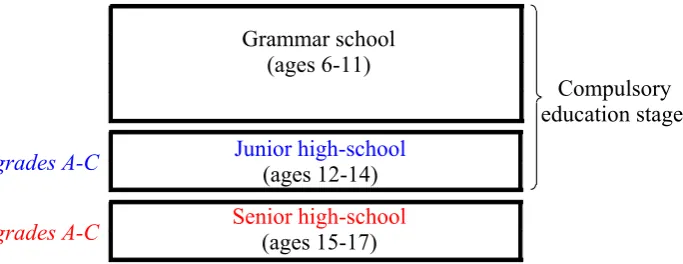
At the present Greek students of ages between 12 and 18, are expected to attend consecutively the
three grades of Gymnasio (freely translated as junior high-school) and three grades of Lykeio (senior
high-school), before they attempt to follow an undergraduate course at some Higher level education
institute through succeeding in an entrance examination. However, the system is not as simple as
briefly described in the above sentence. The junior high-school level is part of the compulsory
education while the senior high-school one is not. Further, the first grade of senior high-school is the
last year of studies where a common curriculum is provided for every student, from then on the
students are offered several options, at the moment being characterized as theoretical, technical and
positive directions the last one focusing mainly on science in the form of Physics, Chemistry, Biology
and Mathematics. To complicate things even more, the classes taken in senior high-school grades B
and C are partitioned into “root” and “direction” ones, even for the disciplines offered exclusively in
one direction, that is a student in class B attending the positive direction has two separate timetables
per week for, say, 2 hours of root Physics and 2 more hours for direction Physics. Separate textbooks
with differing content are provided for each of the above two example courses.
grades A-C
grades A-C
Grammar school
(ages 6-11)
Junior high-school
(ages 12-14)
Senior high-school
(ages 15-17)
Compulsory
education stage
Figure 1. Outline of the Greek educational system. Common courses are provided up to grade A of
senior high-school. From then on, grades B and C divided into three "directions", Theoretical, Positive
(Sciences) and Technical
The uniqueness of the educational system carry on to the end of the secondary education and the final
exams which determine whether a student will continue studies at High level education. The number
and the content of each course that a student will be examined to as well as the relative weight of the
mark he/she will receive in order to complete the full mark of the exams is determined by law which
does not resemble natural or global law, in the sense that it undergoes changes frequently at a rate
higher than the corresponding one for party replacement in government.
1.2 Greek High-School Chemistry Curriculum
Page 201
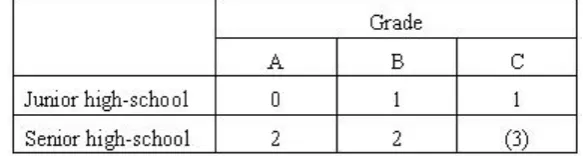
Table 1. Hours per week of Chemistry classes for Greek high-schools as advised by the Ministry of
Education. Numbers in parentheses correspond to additional hours per week for students attending the
“positive direction”.
A brief idea of the content presented and discussed at junior high-school is as follows:
Junior high-school grade B
Chapter 1. Introduction to Chemistry, including states of matter and physical properties of materials.
Chapter 2. From water to atom and from macro to micro-world. Topics include everyday use of water,
water as solvent (including solution concentrations reported in percent per weight or volume), water
pollution, mixture identification and discrimination, water dissociation, chemical reaction (in abstract
form), symbols of the elements and of molecules, meaning of a chemical equation.
Chapter 3. Atmospheric air, its constitution, especially physical and chemical properties of oxygen and
carbon dioxide (without reference to chemical equations), air pollution.
Chapter 4. The ground, its surface and below it, ground pollution.
Junior high-school grade C
Chapter 1. Acids. Arrhenius definition, pH scale, pH of pure water, pH of acidic solutions, pH
measurement.
Chapter 2. Bases. Properties, Arrhenius definition, pH scale of bases.
Chapter 3. Neutralization.
Chapter 4. Salts. General properties, formation of a NaCl crystal.
Chapter 5. Everyday applications of acids, bases and salts. Topics include the human body, detergents,
food, acid rain.
Chapter 6. The periodic table, its origin and history, identification of metals and non-metals within it,
why certain elements present similar behaviour.
Chapter 7. Distinction between metals and non-metals, reaction of metals with acids, alloys.
Chapter 8. Carbon, natural and synthetic carbon polymorphs, carbon dioxide, carbonates, cement.
Chapter 9. Silicon, glass, ceramics, optical fibers, semiconductors.
Chapter 10. Hydrocarbons. General considerations, combustion, hydrocarbon fuels, air pollution and
protection measures.
Chapter 11. Oil, natural gas and petrochemicals. Formation of oil, desulfurization, constitution and
uses of natural gas, petrochemicals especially related to polymers, plastics and discussion of merits
and drawbacks of synthetic polymers.
Page 202
2. THE REPORTED STUDY
2.1 General considerations
The study was carried out by questionnaires distributed to students during a teaching hour. They were
informed that it would not count as a regular test and their participation was on completely voluntary
basis, in accordance with the demands of the Ministry of Education in order to issue approval for the
survey. The initial sample was limited by omitting about 9 % of the answering sheets which were
obviously completed at random or in a provocative way. The material reported hereby consists of the
questionnaires obtained from two consecutive surveys carried out during 2010-11 and 2013-14 school
years respectively. The two surveys were carried out aiming at the understanding of the general
misconceptions of Greek students related to basic aspects of the Chemistry curriculum and comprised
of about 1600 and 1100 questionnaires respectively. The questions were mainly multiple choice but
also true-or-false questions were included (Treagust 1988; Daniel Tan & Treagust, 1999) along with a
few points where some chemical formulae had to be introduced. The aspects covered included
everything that is incorporated into the junior high-school chemistry educational program as well as
that of the first grade of the senior high-school, i.e. atomic model and structure, chemical bond
formation and properties of simple molecules, properties of electrolytes (acids, bases and salts,
including the neutralization reaction), constitution and properties of solutions. Care was taken to
introduce in the possible answer list misconceptions that have been shown to exist in previous
elaborate studies (Kind 2004; Horton 2007).
In the meantime, between the two surveys yet another modification of the chemistry teaching program
for high-schools took place in the form of omitting the acid-base-salt-oxides section, replacing it with
elements of general organic chemistry in the textbook and teaching program of senior high-school
grade A, with analogous implications on the overall background of the students in the years to follow.
In this respect the combination of the results of the two surveys may serve as a measure of the
response of the students towards the aforementioned modification although their initial planning did
not have this target (Bennett 2001). It may further be used as a starting point for a thorough
assessment of the chemistry course and the presentation models it employs because in the Greek
educational system there is a single textbook per year of studies and therefore there is no need to
perform comparative studies in order to evaluate various approaches and models utilized (Thiele &
Treagust, 1995).
In order to keep factors affecting the results to a minimum we consider only the reports from schools
which participated in both surveys. In this sense we hope to have eliminated factors concerning the
attitude of students towards science in general and chemistry in particular. One of these factors is
expected to be the socio-economic status of the family and immediate neighborhood background
(Gorard & See 2009), something which we expect that cannot have changed much over a period of 3
years for people residing in a specific area. Unfortunately, Experimental schools run under the
supervision of Universities are not included in the sample although they participated in both surveys
since in the meantime the admittance to them has changed from random to selection and therefore the
initial background of the two populations that took part in the two surveys would not be unaffected.
Page 203
classification seeming to be one related to the kind of mental processes that a person utilizes in
studying. However, such a partition of the present sample would be out of the question since its
construction would require personal contact and a detailed discussion with every pupil participating in
the test, something impossible considering their number and geographical distribution.
2.2 Description of the sample studied
The sample studied comprises of 1050 questionnaires obtained in two school years, almost evenly
partitioned among them (526 and 524 for school years 2010-11 and 2013-14 respectively). The girls
are considerably more than boys (589 relative to 461) and grade B students participated to a far greater
extent (770 relative 280 from grade C) due to the reluctance of several teachers to “waste” the precious
time of their final year students, in view of the latters’ effort to prepare for the forthcoming exams to
enter Higher education. The sample is further partitioned into the various school types which are
considered, namely 197 in private schools (situated in the city of Thessaloniki), 499 in schools of
urban areas (i.e. towns serving as administrative centers of the Greek state prefectures) and 354 in
public schools of a metropolitan centre, in this case the city of Thessaloniki with 1,5 million
inhabitants. This sort of partition seemed meaningful in view of the widely accepted idea, common to
both students and teachers, that the larger the city the better the educational level of its schools. The
assumption is based on the system applied to the admittance of teachers to school units; in the
beginning of one’s career as secondary school teacher the government proceeds with placing him/her
at some remote part of the country and gradually, based on a point system to which elapsed time of
service plays the major part, one finds oneself “moving” towards the urban centres, ideally finishing in
one of the few large cities, one of which is Thessaloniki. Maturity and experience in the teaching
process is expected to grow with time of service, however this gross model has not always been valid
since it excludes factors like ageing, which slows down the initial stamina of a teacher as well as
invokes long memory effects which though not discussed, are certain to appear to older teachers who
have not attended an educational course for some time.
3. RESULTS OF THE STUDY
Page 204
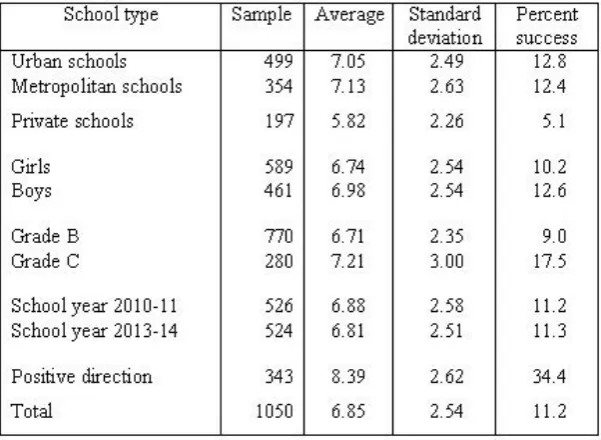
Table 2. Descriptive statistics for the student population included in the study. The percent success
column provides information about the percentage of students that would actually pass an exam with
the provided questionnaire, that is achieve a mark of 10,0 or better.
The overall mean value of chemical knowledge assimilation appears to be rather poor as it reaches just
about 34.3 %. The numbers reported in Table 2 refer to the 0-20 scale adopted by Greek high-schools.
This observation is rather discouraging, with regard to the efforts taken, during the last three decades
at least, to modify and modernize the Greek educational system especially when we compare this
gross result with analogous studies carried out during the above period. Although these previous
studies were performed on much smaller student populations and on more limited target schools, the
common factor remains that the integration of the major chemical aspects into the chemical
background of Greek students lies within the 25 – 34 % margins with a notable single exception of
reaching 40 % when restricted to common household chemicals (Katsikis et al 2015). Discouraging is
also the fact that the above general chemistry conception “test” would be passed only by 11.2 % of the
students that participated in the survey.
These observations indicate a strong and continuous impact of the Greek society on the outcome of
any educational program since the life-goal for a secondary school pupil is set to passing the exams
which will “open the doors” of a higher education institute, in many cases the name, focus and
perspection of the Department being irrelevant. Under this pressure, mainly from the household
environment, the pupils tend to adopt behaviours that will ensure better marks in the classes and better
overall marks in their exams, especially those related to the University entrance exams. It is not
uncommon to come across to responses like “I have no interest in Chemistry because I will not need it
when I will be studying at the Law Department”. Of course, the example of Michael Ventris is not
widely known but even then, in our belief, it would not help in altering the above attitude. Ventris was
a man who was a prodigy in foreign languages but learned only minimal ancient Greek and Latin at
school (early in the 20
thcentury), developed high mathematical skills and graduated from an
Architecture school, cooperated in the deciphering of German military codes during World War II,
only to be known and memorated as being the one to decipher the syllabus-based Linear B language
and correctly interpret it as being the most early up-to-date from of Greek. This example, dicussed
appropriately should make it clear to people that nobody can know for sure what is going to be
needed, in the form of particular knowledge about a topic, later in one’s lifetime.
Page 205
attention to their well-organized “guidance” as of how they will perform better in their exams. It is
therefore either the neglect of trying to teach skills and facts other than those related to the expected
forthcoming major exams by the school or the inherent tendency of the students to adopt the minimum
energy pathway and concentrate only on activities that are going to help them achieve the better
possible marks, and certainly a test like the one undertaken for our study is not among them.
Another notable observation is the value of the standard deviation which, in every case, is considered
extremely large compared to the mean value of the distribution curves realized. This is, in our belief,
another evidence for the widespread nature of pupils attitudes, from total neglect to active engaging, in
practically all the considered sub-groups of the population studied. The same observation holds true
also for the pupils that declare attendance of the science-oriented classes who achieve an expected
larger degree of chemical aspect understanding (42.0 %) as well as a huge success percentage in the
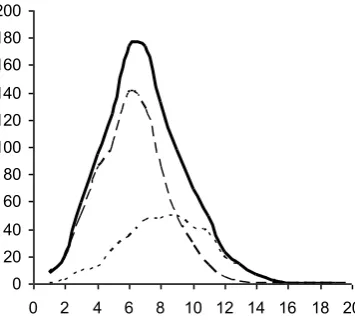
“test” (34.4 %) compared to the population average. As it can be seen from their distribution curve in
Figure 2 the resulting curve is by no means typical but presents at least three distinct peaks, the higher
one located around 12.5 and distinguishing this subgroup of pupils from the rest. Incidentally, an
almost typical distribution curve is realized only in the case of the total sample studied.
0 20 40 60 80 100 120 140 160 180 200
0 2 4 6 8 10 12 14 16 18 20
Figure 2. Distribution curve of the pupils attending the science-focused direction (dotted line) with
respect to those who do not (dashed line). The continuous line represents the total population studied.
The engagement of grade C students focusing on science for their University entrance exams (87 out
of 280 total), is believed to be responsible for the apparent better results of grade C over grade B
students. This percentage is slightly smaller than the overall one, however since these students are
giving their most in concentrating, it is most probable that they start recalling and reorganizing their
previously acquired knowledge and in this respect do better than what they would a year before when
they would be more relaxed. Actually, this subgroup of pupils achieved by far the best overall result
with a mean of 9.91.
Page 206
020 40 60 80 100
0 2 4 6 8 10 12 14 16 18 20
0 20 40 60 80 100 120
0 2 4 6 8 10 12 14 16 18 20
0 20 40 60 80 100 120 140 160
0 2 4 6 8 10 12 14 16 18 20
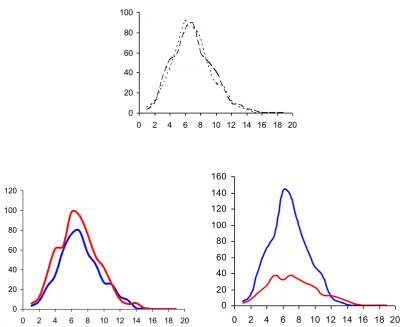
Figure 3. Distribution curves of the evaluation survey. Above, plot of the distribution of the 2010-11
survey (dashed line) versus the 2013-14 one (dotted line). Below left comparison between boys (blue
line) and girls (red line) and below right comparison between grade B (blue line) and grade C (red
line) students.
Post-hoc analyses are employed frequently for statistical purposes and in our case we made use of the
well-documented Bonferroni correction, which, although limiting the significance of the comparisons
attempted and being “conservative”, i.e. tending to overlook slight significance between groups is well
suited for the treatment of the large number of unevenly distributed observations which constitute our
population.
The pairwise comparisons carried out were all at a familywise error level of 95% and their findings
can be expressed in the following:
Concerning school background, metropolitan and other city school units do not appear to have a
statistically significant difference, however private schools appear as a distinct group of school units
presenting disappointing performance probably due to the reluctance of the pupils to consider the test
provided as useful or even challenging for them.
Regarding sex, the results are borderline between indicating a significant difference among boys and
girls or not, while there appears to be a marginal difference between grade B and grade C students.
Finally, the questionnaires of the two separate surveys do not differ providing the main grounds for the
arguments proposed for the general attitude of students towards the chemical education they are
provided with.
Page 207
acclimatization of the young pupils to the logic of putting every possible effort to the success in the
higher education entrance examinations. It is to be noted at this point that all the answering sheets that
were marked as “passed” came from this subcategory of pupils.
The most interesting feature of the study, however, was the absolute match of the two surveys, while
there existed a substantial difference between them regarding the content of the senior high-school
chemistry classes. The two curricula, followed during the two school years when the surveys took
place are summarized in Table 3 and differ obviously by more than what could be called “a small
amount”. Furthermore, since in our effort to keep the study as consistent as possible we did not
introduce Organic Chemistry questions in the second questionnaire, while we eliminated ones that
referred directly to acids, bases and salts, our findings are at least puzzling.
Table 3. Chemical topics taught at senior high-school grade A during the two school years of the
current survey. Numbers in parentheses indicate the desired number of hours devoted to each topic. In
red are marked the differences between the two curricula. School year 2010-11 is on the left column
and 2013-14 on the right.
Page 208
should be an acid, probably distracted by the large number of H atoms in the formula). In this respect
the 2013-14 result should appear better since the lack of the acid-base problem was not substituted by
an organic one because there was not something analogous in the first questionnaire. It seems
however, that the pupils approach the whole curriculum with caution and skepticism, try to rely on
long past recovered ideas and knowledge and do not attempt a rigorous and extended incorporation of
new facts and ideas to their chemical background. Given the large amount of teaching carried out at
senior high-school grade A on acids and bases in 2010, their performance there did not substantiate it
and, in the case of the argument that this was knowledge not appropriate for their background
(something that most probably was called upon in order to substitute the chapter with a different one)
it did not have an important impact on the attitude of students towards chemistry. The lack of solid and
clear criteria-based assessment and consequently a stable grading policy by the government in relation
to the selection of high-school students that will enter University courses, renders them reluctant to
enroll themselves (as well as their teachers too) into a project of understanding principles and
properties but rather tends to let them utilize the well-documented memorizing process which
enhances the chance of mechanically solving problems (although related to Chemistry being almost
purely mathematical in nature). As a result, any reform of the educational program is not practically
getting through in terms of accomplishing the alteration and probably elevation of the understanding
of chemical principles by secondary education pupils (Sadler, 2005). In our opinion, this is the main
reason for the stagnation observed over several decades in the degree of chemical knowledge
assimilation by Greek secondary school students since the ever-changing educational program cannot
operate in any of the standard philosophies accepted and adopted worldwide (Aalsvoort, 2004). In
summary, one may say that the Greek society behaves as an overhead educator, instructing the
teachers to adopt strategies relying on memorizing and algorithmic treatment of data rather than
assimilating facts and ideas, with the furthest and most distinct target being the success of their
students in the entrance examinations to the Higher Education Institutes. Secondary education students
are accordingly directed into this line of attitude focusing only on what might secure their success in
this single time event. Consequently, any attempt to modify the existing educational system radically
or in part is confronted with a Promethean type behavior by the students who have only a single goal
to achieve. The term should not be confused with any fictitious film characters or data accumulation
and analysis systems; it refers to the figure in Greek mythology and in this specific case not to his
cunning or skillfulness or humanitarian characteristics but to his passive acceptance of the eternal
punishment that the above virtues earned him, i.e. to have his liver eaten on a daily basis by an eagle
(the earliest account of the myth being stated by Hesiod the poet in his Theogony).
4. CONCLUSIONS
The assessment of the questionnaires collected provided some information about the overall
assimilation of chemical knowledge by the students. The simple statistics used for the initial step are
summarized in Table 2. The factors that were expected to affect the average mark achieved by the
students were sex, long term memory utilization and general socio-economic background.
The overall mean value of chemical knowledge assimilation appears to be rather poor as it reaches just
about 34 %. It is rather discouraging, with regard to the efforts taken, during the last three decades at
least, to modify and modernize the Greek educational system especially when we compare this gross
result with almost identical ones in analogous studies carried out during the above period.
Another notable feature of the data obtained is the large standard deviations especially considering the
mean values to which they are related to. This is a clear indication of a wide diffusion of students
likely to undertake science degrees among the mostly indifferent to science. The above mentioned
complication related to the direction change possibility renders it more difficult to verify effects of
long term memory since the results observed for grade B and grade C senior high-school students
appear almost identical.
Page 209
A striking feature of the results is that there was not observed a generally expected tendency for better
grading on moving from the less privileged to the more elite schools, that is from rural areas to small
cities and then to public and private schools of the large city, a consequence of the well-established
urbanism movement in Greece and the expected tendency of young people from small towns to seek a
better future in the form of passing the exams to enter an undergraduate course in a large city
University.
More striking still is the observation that although another major reformation of the chemistry
curriculum was put in effect in the meantime between the two separate studies carried out, in the form
of substituting a 12-hour discussion of acids, bases and salts with a 6-hour introduction to organic
chemistry plus some additional material, this did not have a detectable effect on the mean achievement
of the students in the two “tests” taken. The students seem to react to the curriculum modifications in a
generally passive way, resembling the mythical Prometheus who was (chained, of course) expecting
the eagle to come and feast on his liver every day. It is apparent that for the last almost four decades,
during which several such and among them a few more extensive reformations took place, the overall
performance of the Greek high-school students in relation to the chemistry curriculum is stuck
somewhere at one third of the maximum potential. The reforms applied appear to have been
indifferent to the Greek secondary education students in the sense that their effect was in gross terms
speaking, null. In our opinion, this calls for a consistent and thorough evaluation of the present
curriculum in the form of several widely applied studies like the one reported here in order to
determine the strengths and weaknesses it possesses before proceeding with the next modification.
REFERENCES
Aalsvoort, JV 2004, ‘Logical positivism as a tool to analyse the problem of chemistry's lack of
relevance in secondary school chemical education’,
International Journal of Science Education,
vol.
26, no.9, pp. 1151-1168.
Armstrong, DM 1973, Belief, Truth and Knowledge. Cambridge University Press.
Bennett, J 2001, “The development and use of an instrument to assess students' attitude to the study of
chemistry”, International Journal of Science Education, vol. 23, no. 8, pp. 833-845.
Cokelez, A & Dumon, A 2005, “Atom and molecule: upper secondary school French students’
representations in long-term memory”, Chemistry Education Research and Practice, vol. 6, no. 3, pp.
119-135.
Cousins, A 2007, ‘Gender Inclusivity in Secondary Chemistry: A study of male and female
participation in secondary school chemistry’, International Journal of Science Education, vol. 29, no.
6, pp. 711-730.
Daniel Tan, K-C. & Treagust, DF 1999, ‘Evaluating students’ understanding of chemical bonding’,
School Science Review, vol. 81, pp.75-83.
Gorard, S & See, BH 2009, ‘The impact of socio-economic status on participation and attainment in
science’, Studies in Science Education, vol. 45, no. 1, pp. 93-129.
Hodson, D 1992, ‘In search of a meaningful relationship: an exploration of some issues relating to
integration in science and science education’, International Journal of Science Education, vol. 14, no.
5, pp. 541–562.
Horton C., 2007, “Student Alternative Conceptions in Chemistry”,
California Journal of Science
Education, vol. 7, no. 2, pp. 1-78.
Page 210
Katsikis, H, Savvidou, E, Schizodimou, A, Akrivos, PD, Keloglou, G 2015, “Student Misconceptions
In The 21
stCentury. Chemistry Related Conceptions of Greek Senior High School Students”,
Educational Alternatives, vol. 15, pp. 384-394.
Kind, V 2004,
Beyond Appearances: Students’ misconceptions about basic chemical ideas,
2nd
Edition, School of Education, Durham University, UK.
Osborne, J & Collins, S 2001, ‘Pupils’ views of the role and value of the science curriculum: a
focus-group study’, International Journal of Science Education, vol. 23, no. 5, pp. 441–467.
Sadler, DR 2005, “
Interpretations of criteria-based assessment and grading in higher education
”,
Assessment & Evaluation in Higher Education
, vol. 30, no. 2, pp. 175–194.
Taber, KS 2004, “Learning quanta: barriers to stimulating transitions in student understanding of
orbital ideas”, Science Education, vol. 89, pp. 94-116.
Taber, KS 2008, ‘Towards a Curricular Model of the Natureof Science’, Science & Education vol. 17,
pp. 179–218.
Thiele, RB & Treagust, DF 1995, “Analogies in Chemistry textbooks”,
International Journal of
Science Education, vol. 17, no. 6, pp. 783-795.
Treagust, DF 1988, “Development and use of diagnostic tests to evaluate students' misconceptions in
science”, International Journal of Science Education, vol. 10, no 2, pp. 159-169.
Turner, T 2000, “The Science Curriculum: What is it for?”, in J. Sears and P. Sorenson (eds.), Issues
in Science Teaching, Routledge Falmer, London, pp. 4–15.