www.solid-earth.net/5/477/2014/ doi:10.5194/se-5-477-2014
© Author(s) 2014. CC Attribution 3.0 License.
Characterization of hydrochars produced by hydrothermal
carbonization of rice husk
D. Kalderis1, M. S. Kotti1, A. Méndez2, and G. Gascó3
1Department of Environmental and Natural Resources Engineering, Technological and Educational Institute of Crete, Chania,
73100 Crete, Greece
2Departamento de Ingeniería de Materiales, E.T.S.I. Minas, Universidad Politécnica de Madrid, C/Ríos Rosas no. 21, 28003
Madrid, Spain
3Departamento de Edafología, E.T.S.I. Agrónomos, Universidad Politécnica de Madrid, Ciudad Universitaria, 28004 Madrid,
Spain
Correspondence to: D. Kalderis ([email protected])
Received: 24 February 2014 – Published in Solid Earth Discuss.: 4 March 2014 Revised: 25 April 2014 – Accepted: 29 April 2014 – Published: 11 June 2014
Abstract. Biochar is the carbon-rich product obtained when biomass, such as wood, manure or leaves, is heated in a closed container with little or no available air. In more tech-nical terms, biochar is produced by so-called thermal decom-position of organic material under limited supply of oxy-gen (O2), and at relatively low temperatures (< 700◦C).
Hy-drochar differentiates from biochar because it is produced in an aqueous environment, at lower temperatures and longer retention times. This work describes the production of hy-drochar from rice husks using a simple, safe and environ-mentally friendly experimental set-up, previously used for degradation of various wastewaters. Hydrochars were ob-tained at 200◦C and 300◦C and at residence times ranging from 2 to 16 h. All samples were then characterized in terms of yield, surface area, pH, conductivity and elemental analy-sis, and two of them were selected for further testing with re-spect to heating values and heavy metal content. The surface area was low for all hydrochars, indicating that porous struc-ture was not developed during treatment. The hydrochar ob-tained at 300◦C and 6 h residence times showed a predicted higher heating value of 17.8 MJ kg−1, a fixed carbon content of 46.5 % and a fixed carbon recovery of 113 %, indicating a promising behaviour as a fuel.
1 Introduction
Subcritical water is hot water (100–374◦C) under enough pressure to maintain the liquid state. It is an environmen-tally friendly and inexpensive solvent that exhibits a wide range of properties that renders it very effective in solvat-ing and decompossolvat-ing moderately polar or non-polar sub-stances from a wide range of environmental matrices. Sub-critical water can decompose naturally occurring substances and materials, such as complex amino acids, proteins and carbohydrates (sucrose, fructose and sorbose), sodium al-ginate, and brown coal, to produce more valuable and use-ful products. Additionally, subcritical water has been proved to decompose hazardous organic substances and materials such as pentachlorophenol (PCP), fluorochemicals, dioxins, polycyclic aromatic hydrocarbons (PAHs), polychlorinated biphenyls (PCBs) and polyvinyl chloride (PVC) (Kalderis et al., 2008, and references therein).
The hydrothermal treatment of biomass at temperatures in the range of 100–374◦C gives rise to water-soluble
the experimental parameters (residence time, temperature, type of biomass) have been thoroughly described elsewhere (Sevilla and Fuertes, 2009; Jamari et al., 2012; Wahyudiono et al., 2012; Wiedner et al., 2013; Gao et al., 2013; Parshetti et al., 2013; Lu et al., 2013). The products obtained dur-ing treatment are gases (about 10 % of the original biomass, mainly CO2), bio-oil consisting primarily of sugars, acetic
acid, and other organic acids and the solid product (char), which contains about 41–90 % of the mass of the original feedstock. The produced char has a higher energy density and is more hydrophobic than the original biomass (Tufiq Reza et al., 2013).
Compared to other thermochemical processes such as py-rolysis, hydrogenation or gasification, aqueous conversion using subcritical water has the significant advantage of not requiring a drying process for feedstock and therefore can be conducted at high moisture content typical of biomass feed-stocks. The hydrothermal carbonization temperature is usu-ally much lower than that of pyrolysis, gasification, and flash carbonization. The water present can be used as the reaction solvent, whereas at the same time some off-gases, such as CO2, nitrogen oxides, and sulfur oxides, are dissolved in
wa-ter, forming the corresponding acids and/or salts, making fur-ther treatment for air pollution possibly unnecessary. Finally, it is an environmentally friendly method as it requires no ad-ditives and in most cases is simple to set up and operate.
Compared to hydrochars, biochars produced through con-ventional pyrolysis methods have been more thoroughly ap-plied and tested. Research on the applications of hydrochar is still in its early stages. Lately, hydrochars have been tested as soil conditioners and heavy metal immobilization means (Abel et al., 2013; Wagner and Kaupenjohann, 2014), as elec-trochemical supercapacitor electrode materials (Ding et al., 2013a, 2013b) and as anode materials for lithium ion batter-ies (Unur et al., 2013), with promising results. Ongoing work also focuses on their environmental impact and compatibility with agricultural and horticultural systems (Gajic and Koch, 2012; Busch et al., 2013; Bargmann et al., 2013).
Around 20 % of the whole rice grain weight is rice husk. In 2008 the world rice grain production was 661 million tons, and consequently 132 million tons of rice husk were also pro-duced. While there are some established uses for rice husk, it is still considered a waste product in the rice mill indus-try and it is often either burned in the open or disposed of in landfills. Rice husk has been extensively studied for the pro-duction of activated carbon through conventional pyrolysis routes (Kalderis et al., 2008, and references therein). How-ever, the studies that deal with hydrothermal carbonization of rice husk are few. The scope of this study was to use a simple, safe, effective, environmentally friendly method to produce hydrochars from rice husk and characterize the products. Two of the produced hydrochars were selected, and their behaviour as fuels was examined.
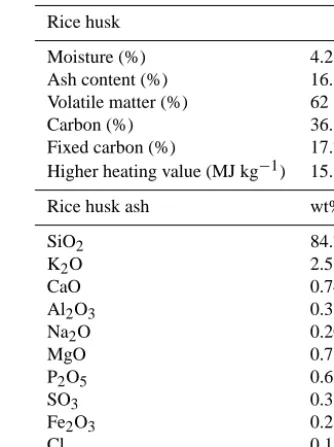
Table 1. Properties of the rice husk (used in this study) and rice
husk ash.
Rice husk
Moisture (%) 4.2 Ash content (%) 16.1 Volatile matter (%) 62 Carbon (%) 36.1 Fixed carbon (%) 17.7 Higher heating value (MJ kg−1) 15.1 Rice husk ash wt%
SiO2 84.7
K2O 2.51
CaO 0.74
Al2O3 0.36
Na2O 0.20
MgO 0.76
P2O5 0.62
SO3 0.38
Fe2O3 0.28
Cl 0.18
2 Materials and methods
Rice husk (RH) was obtained from Janta Rice Mill in Gur-daspur (32.0333◦N–75.40◦E) in India. Rice husk was ini-tially washed thoroughly with water to remove any impuri-ties, dried at 110◦C for 6 h and then ground with a micro-hammer cutter mill and sieved to a 32-mesh (500 µm) parti-cle size. The properties of the feedstock material are shown in brief in Table 1 and described in detail in Kalderis et al. (2008).
The experiments described here are under static condi-tions: no flow is required and no additional use of water. Ad-ditionally, monitoring of the process is not essential, since the oven can be pre-set at the required temperature and res-idence time. Finally, no pumping system is needed to main-tain the system pressure, since pressure is automatically con-trolled by the steam/water equilibrium inside the reactor cell. The experimental set-up is described in detail in Kalderis et al. (2008) and Daskalaki et al. (2011). Briefly, one type of small laboratory reactor was used for hydrothermal treatment studies. The 25 mL reactors were constructed from (6 inches long, 0.64 inches i.d.) 316 stainless steel pipe with male na-tional pipe threads (npt) and female end caps sealed with Teflon tape (Swagelok Company, USA).
cells must contain a sufficient headspace so that the pres-sure inside the cell is controlled by the steam/liquid equilib-rium. A full cell must never be used since the pressures could reach several thousand bar. The reactors were placed in a (pre-heated at the required temperature) gas chromatography oven (Hewlett-Packard 5890, series II) for heating. Zero time was taken when the reactors were placed in the oven. The ex-periments were performed at 200 and 300◦C and residence times of 2, 4, 6, 8, 12 and 16 h (a total of 12 hydrochars). All runs were performed in triplicate. At the end of each exper-imental time, each reactor was removed from the oven and was allowed to cool in room temperature. The solid product (hydrochar) was recovered by filtration, washed with acetone and then with distilled water to remove all traces of acetone and air-dried for 24 h. From now on, the hydrochars produced will be referred to as temperature-residence time, e.g. H-200-2 for the sample obtained at 200◦C and 2 h residence
time.
3 Analysis and characterization
The hydrochar yield was determined as the ratio of the pro-duced hydrochar weight (after washing and drying) to the dry weight of rice husk subjected to hydrothermal treatment:
Hydrochar yield (%)=(W2/W1)×100, (1)
whereW1is the dry weight of the rice husk sample prior to
the treatment andW2is the hydrochar weight.
For measuring pH and electrical conductivity (EC) of hy-drochars, suspensions of 0.01 mol l−1 CaCl2 and distilled
H2O (1:5) were prepared. The mixtures were shaken for 1 h
on a low-speed shaker at room temperature. After sedimen-tation of hydrochar material for another hour, EC and pH were determined in the supernatant (Wiedner et al., 2013). Hydrochar nitrogen adsorption analysis to determine BET surface area and pore structure was carried out at 77 K in a Micromeritics Tristar 3000. The content in C, H, N and S was analysed by an elemental microanalyser LECO CHNS-932, and the oxygen content was determined by difference. The parameters of yield, residence time and specific surface area were used to determine the optimum preparation conditions and the corresponding two hydrochar samples (one at each experimental temperature) to analyse further. As a result, the analyses described below were only applied to the selected hydrochars.
Metal content (Cu, Ni, Zn, Cd, and Pb) was deter-mined using a Perkin Elmer 2280 atomic absorption spec-trophotometer after sample extraction by digestion with 3:
1 (v/v) concentrated HCl/HNO3 following USEPA-3051a
method (USEPA, 1997). The theoretical higher heating value (HHVp) was calculated using an empirical correlation
Figure 1. Hydrochar yields 0
10 20 30 40 50 60 70 80
2 4 6 8 10 12 14 16
H
ydr
oc
ha
r y
ie
ld,
%
residence time (hrs) 200oC
300oC
Figure 1. Hydrochar yields.
oped by Channiwala and Parikh (2002):
HHVpredicted(MJ kg−1)=0.3491C (2)
+1.1783H+0.1005S−0.1034O−0.0015N−0.0211A. Equation 2 is used to predict the HHV, where C, H, S, O, N, and A represent the weight percentages of carbon, hy-drogen, sulfur, oxygen, nitrogen, and ash in hydrochars, re-spectively (Channiwala and Parikh, 2002). Kang et al. (2012) and He et al. (2013) used this formula, and the relative error between the calculated and predicted values was less than 6 %. The selected hydrochars were also subjected to deriva-tive thermogravimetric analysis (TG-dTG) in a Labsys Se-taram thermobalance under air atmosphere and 15◦C min−1 heating rate. Proximate analysis was performed in the same Labsys Setaram thermobalance using N2 atmosphere and
30◦C min−1 heating rate. Moisture content was calculated as the weight loss from the initial temperature to 150◦C.
The volatile fraction (VM) was determined as the weight loss from 150◦C to 600◦C under N
2atmosphere. At this
temper-ature, air was introduced in order to determine the ash con-tent. The fixed carbon percentage content was calculated as 100 % – volatile matter percentage content – ash percentage content. Fixed carbon recovery is the percent of the fixed car-bon content in the biomass that is maintained in the final pro-cessed product. It is an indication of the carbon sequestration potential and was determined as follows:
Fixed C recovery (%)= (3)
(% of fixed C in hydrochar/% of fixed C in rice husk) ×% yield.
4 Results and discussion
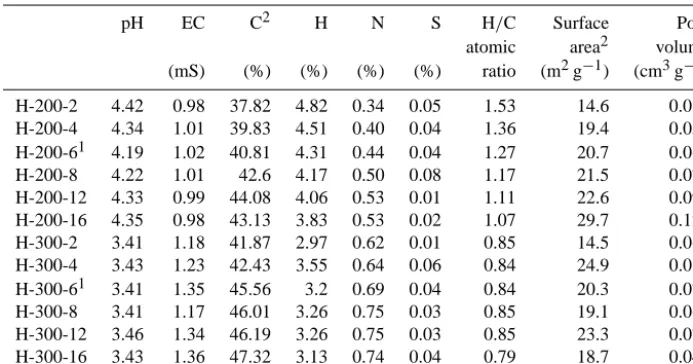
Table 2. Characterization of the hydrochar samples obtained at 200 and 300◦C.
pH EC C2 H N S H/C Surface Pore atomic area2 volume (mS) (%) (%) (%) (%) ratio (m2g−1) (cm3g−1) H-200-2 4.42 0.98 37.82 4.82 0.34 0.05 1.53 14.6 0.034 H-200-4 4.34 1.01 39.83 4.51 0.40 0.04 1.36 19.4 0.056 H-200-61 4.19 1.02 40.81 4.31 0.44 0.04 1.27 20.7 0.064 H-200-8 4.22 1.01 42.6 4.17 0.50 0.08 1.17 21.5 0.076 H-200-12 4.33 0.99 44.08 4.06 0.53 0.01 1.11 22.6 0.092 H-200-16 4.35 0.98 43.13 3.83 0.53 0.02 1.07 29.7 0.128 H-300-2 3.41 1.18 41.87 2.97 0.62 0.01 0.85 14.5 0.065 H-300-4 3.43 1.23 42.43 3.55 0.64 0.06 0.84 24.9 0.082 H-300-61 3.41 1.35 45.56 3.2 0.69 0.04 0.84 20.3 0.074 H-300-8 3.41 1.17 46.01 3.26 0.75 0.03 0.85 19.1 0.069 H-300-12 3.46 1.34 46.19 3.26 0.75 0.03 0.85 23.3 0.073 H-300-16 3.43 1.36 47.32 3.13 0.74 0.04 0.79 18.7 0.049
1These samples were selected for further analyses. 2Average values of triplicate measurements.
yields decrease as the temperature is raised from 200 to 300◦C. This decrease is closely connected with deoxygenat-ing reactions (e.g. dehydration, decarboxylation) and volatile matter conversion, as the oxygen and hydrogen contents be-come lower at higher temperatures (Table 2). The hydrochar yields obtained from the hydrothermal carbonization are in the 66–58 wt% range at 200◦C and 66–36 wt% at 300◦C. At both temperatures, it can be seen that after 6 h of treat-ment, the yield remains somewhat constant. This indicates that any major transformations and structural rearrangements do occur in the first 6 h, after which the products became structurally stable. Gao et al. (2013) and He et al. (2013) ob-served the same trend during the production of hydrochars from water hyacinth and sewage sludge, respectively. The values of carbon content and surface area were used as refer-ence points for the reproducibility of the production method. At each temperature and residence time, triplicate samples were measured in terms of carbon content and surface area, and the relative standard deviation was found to be 9 and 6 %, respectively.
The hydrothermal treatment of rice husk led to an increase in the carbon content of the solid residue from 36.1 % (rice husk, Table 1) to 43 and 47 % in the case of H-200-16 and H-300-16, respectively (Table 2). This shows that the rice husk was only partially carbonized during the process. The increasing trend at 300◦C suggests that a more complete car-bonization of the product can be achieved at longer residence times. The H/C atomic ratio decreased steadily with time, at 200◦C (from 1.53 to 1.07). At 300◦C, in the first 12 h the ra-tio is practically the same and only after 16 h a small decline was observed. This indicates that at the higher temperature the structural rearrangements and reaction pathways occur at a faster rate and the product becomes stable in a smaller amount of time. Therefore, temperature has a more
predom-inant role than time during hydrochar production. This be-haviour is consistent with the formation of a well-condensed material, especially at 300◦C (Sevilla and Fuertes, 2009).
The pH values were acidic, approximately 4.4 and 3.4 for the 200 and 300◦C hydrochars respectively. Electrical con-ductivity was slightly increased with temperature, from a mean of 1 mS cm−1at 200◦C to a mean of 1.2 mS cm−1at 300◦C, indicating high salinity for all samples.
Surface areas and pore volumes were low and very simi-lar for all hydrochar samples. The slightly increasing trend at 200◦C can be attributed to the surface roughness because the
Table 3. Properties of hydrochar samples H-200-6 and H-300-6.
H-200-6 H-300-6 Volatile organic content VM (%) 43.06 15.10 Fixed carbon content FC (%) 29.43 46.57 Fixed carbon recovery (%) 108 113 Ash content (%) 24.54 40.14 Micropore area (m2g−1) 0.8714 1.0036 HHV predicted (MJ kg−1) 15.7 17.8 O (%)1 29.86 10.37 Cu (mg kg−1) nd2 nd Ni (mg kg−1) nd nd Cd (mg kg−1) nd nd Zn (mg kg−1) 0.80 1.32 Pb (mg kg−1) nd nd
1calculated by difference 2non-detected
Figure 2. Van Krevelen diagram showing the position of H-200-6 and H-300-6 hydrochars among known fuels and biomass materials
0 0,2 0,4 0,6 0,8 1 1,2 1,4 1,6 1,8
0 0,1 0,2 0,3 0,4 0,5 0,6
H
/C
a
tom
ic
ra
tio
O/C atomic ratio
H-200-6 H-300-6 beech wood anthracite coal bituminus coal sawdust rice husk
Figure 2. Van Krevelen diagram showing the position of H-200-6
and H-300-6 hydrochars among known fuels and biomass materials.
(Kang et al., 2012). Furthermore, it is worth mentioning that, at the end of hydrothermal process, once the reactor has cooled down, there is only a slight overpressure inside the vessel, which suggests that a small number of gaseous prod-ucts are generated during hydrothermal carbonization. The heavy metal contents after acid digestion were below detec-tion limit, except for Zn2+, which increased a 65 % with tem-perature as compared to biochars obtained by conventional pyrolysis (Méndez et al., 2012).
The atomic H/C and O/C ratios were calculated using the elemental composition data. Results from this analysis are presented in a Van Krevelen diagram (Fig. 2). Van Kreve-len diagrams allow for delineation of reaction pathways and offer a clear insight into the chemical transformations of the carbon-rich material, which are demethanation (produc-tion of methane), dehydra(produc-tion (produc(produc-tion of water) and de-carboxylation (production of carbonyls including carboxylic acids). Figure 2 shows that both the H/C and O/C ratios
de-(a)
(b)
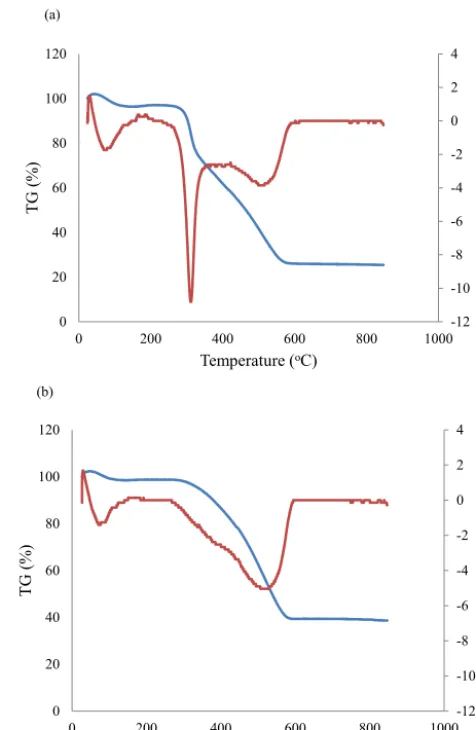
Figure 3. TG-dTG curves for the combustion profiles of (a) H-200-6 and (B) H-300-6 -12 -10 -8 -6 -4 -2 0 2 4
0 20 40 60 80 100 120
0 200 400 600 800 1000
TG (
%)
Temperature (oC)
dTG
(%
/m
in)
-12 -10 -8 -6 -4 -2 0 2 4
0 20 40 60 80 100 120
0 200 400 600 800 1000
TG (
%)
Temperature (oC)
dTG
(%
/m
in)
Figure 3. TG-dTG curves for the combustion profiles of (a)
H-200-6 and (b) H-300-H-200-6.
Figure 4. Nitrogen adsorption and desorption isotherms for H-200-6 and H-300-6 0
10 20 30 40 50 60
0 0,2 0,4 0,6 0,8 1
Q
ua
ntity
a
dsor
be
d (
cm
3/g)
relative pressure (p/po)
H-200-6 H-300-6
Figure 4. Nitrogen adsorption and desorption isotherms for
H-200-6 and H-300-H-200-6.
al. (2013), energy densification of the hydrochars occurs as a result of decreases in solid mass caused by the dehydration and decarboxylation reactions.
The combustion profiles of H-200-6 and H-300-6 are shown in Fig. 3. At temperatures lower than 150◦C, weight loss corresponds to water release from the samples. Then, from 200 to 600◦C, weight loss was related to volatilization and combustion of organic matter. The dTG curve of H-200-6 showed three distinctive bands: the first related to humidity release at temperatures lower than 150◦C; the second band
with a maximum at 310◦C was typical of cellulose combus-tion; and finally the third band with maximum weight loss at
∼520◦C could be related to combustion of more polymer-ized organic matter. Comparing with the H-300-6 curve, the peak related to the presence of cellulose diminishes consid-erably whereas the peak at∼520◦C slightly increases.
Figure 4 shows the N2isotherms for H-200-6 and
H-300-6. In both cases the isotherms could be classified as type II according to the IUPAC classification. Type II isotherms are typically obtained in cases of non-porous or macroporous materials, where unrestricted monolayer–multilayer adsorp-tion can occur. Improvements in the porosity of hydrochars and the surface area are therefore necessary to enable their use as adsorbents of contaminants, hydrogen storage or elec-trical energy storage (supercapacitors). Such improvements have been achieved with a combination of thermal and chem-ical activation methods (Sevilla et al., 2011b).
5 Conclusions
Rice husk was treated in subcritical water (hydrothermal carbonization) in order to obtain hydrochars. A safe and simple to set up and operate system was used, consisting of a stainless steel reactor, caps and a source of heat. Two sets of hydrochars were obtained, corresponding to experimental temperatures of 200 and 300◦C and residence times in
the range of 2–16 h. The carbon contents of the products increased with temperature, whereas the hydrogen and oxygen contents decreased. The surface area was low for all hydrochars, indicating that porous structure was not developed during treatment. Of the two hydrochars tested further (H-200-6 and H-300-6), the latter showed improved fuel properties as indicated by the Van Krevelen diagram and the predicted higher heating value. However, the high ash content of hydrochars from rice husk should be taken into consideration when such materials are to be used as fuels, due to potential slagging or fouling of boiler tubes and corrosion of metal surfaces. Since additional steps (such as activation) are required to increase the surface area – and therefore the adsorption capacity – of the hydrochars, their production for fuel purposes may be a more suitable path-way. The fact that hydrothermal carbonization takes place in an aqueous reaction medium means that wet biomass can be used, thus eliminating any energy-consuming pre-drying steps before treatment. An additional advantage is that unlike dry pyrolysis, any gaseous emissions produced during hydrothermal carbonization are largely dissolved in the char–water slurry. For this reason, hydrothermal carboniza-tion is more flexible and has fewer technical consideracarboniza-tions. However, there is still need for a full characterization of the acetone- and water-soluble fractions of hydrochars, in order to determine any undesirable by-products.
Edited by: J. Paz-Ferreiro
References
Abel, S., Peters, A., Trinks, S., Schonsky, H., Facklam, M., and Wessolek, G.: Impact of biochar and hydrochar addition on wa-ter retention and wawa-ter repellency of sandy soil, Geoderma, 202– 203, 183–191, 2013.
Bargmann, I., Rillig, M. C., Buss, W., Kruse, A., and Kuecke, M.: Hydrochar and biochar effects on Germination of Spring Barley, J. Agron. Crop Sci., 199, 360–373, 2013.
Busch, D., Stark, A., Kammann, C. I., and Glaser, B.: Genotoxic and phytotoxic risk assessment of fresh and treated hydrochar from hydrothermal carbonization compared to biochar from py-rolysis, Ecotox. Environ. Safe., 97, 59–66, 2013.
Channiwala, S. A. and Parikh, P. P.: A unified correlation for esti-mating HHV of solid, liquid and gaseous fuels, Fuel, 81, 1051– 1063, 2002.
Danso-Boateng, E., Holdich, R. G., Shama, G., Wheatley, A. D., So-hail, M., and Martin, S. J.: Kinetics of faecal biomass hydrother-mal carbonisation for hydrochar production, Appl. Energ., 111, 351–357, 2013.
carbons for use as electrochemical supercapacitor electrode ma-terials, Colloids Surfaces A, 423, 104–111, 2013a.
Ding, L., Zou, B., Liu, H., Li, Y., Wang, Z., Su, Y., Guo, Y., and Wang, X.: A new route for conversion of corncob to porous car-bon by hydrolysis and activation, Chem. Eng. J., 225, 300–305, 2013b.
Falco, C., Baccile, N., and Titirici, M.-M.: Morphological and struc-tural differences between glucose, cellulose and lignocellulosic biomass derived hydrothermal carbons, Green Chem., 13, 3273– 3281, 2011a.
Falco, C., Caballero, F. P., Babonneau, F., Gervais, C., Laurent, G., Titirici, M. M., and Baccile, N.: Hydrothermal carbon from biomass: structural differences between hydrothermal and py-rolyzed carbons via13C solid state NMR, Langmuir, 27, 14460– 14471, 2011b.
Gao, Y., Wang, X., Wang, J., Li, X., Cheng, J., Yang, H., and Chen, H.: Effect of residence time on chemical and structural properties of hydrochar obtained by hydrothermal carbonization of water hyacinth, Energy, 58, 376–383, 2013.
Gaji´c, A. and Koch, H.-J.: Sugar beet (Beta vulgaris L.) growth reduction caused by hydrochar is related to nitrogen supply, J. Environ. Qual., 41, 1067–1075, 2012.
He, C., Giannis, A., and Wang, J.-Y.: Conversion of sewage sludge to clean solid fuel using hydrothermal carbonization: hydrochar fuel characteristics and combustion behaviour, Appl. Energ., 111, 257–266, 2013.
Jamari, S. S. and Howse, J. R.: The effect of the hydrothermal carbonization process on palm oil empty fruit bunch, Biomass Bioenergy, 47, 82–90, 2012.
Kalderis, D., Hawthorne, S. B., Clifford, A. A., and Gidarakos, E.: Interaction of soil, water and TNT during degradation of TNT on contaminated soil using subcritical water, J. Hazard. Mater., 159, 329–334, 2008.
Kang, S., Li, X., Fan, J., and Chang, J.: Characterization of hy-drochars produced by hydrothermal carbonization of lignin, cel-lulose, D-xylose, and wood meal, Indust. Engin. Chem. Res., 51, 9012–9023, 2012.
Liu, Z., Quek, A., Kent Hoekman, S., and Balasubramanian, R.: Production of solid biochar fuel from waste biomass by hy-drothermal carbonization, Fuel, 103, 943–949, 2013.
Liu, Z., Quek, A., and Balasubramanian, R.: Preparation and char-acterization of fuel pellets from woody biomass, agro-residues and their corresponding hydrochars, Appl. Energ., 113, 1315– 1322, 2014.
Lu, X., Pellechia, P. J., Flora, J. R. V., and Berge, N. D.: Influence of reaction time and temperature on product formation and char-acteristics associated with the hydrothermal carbonization of cel-lulose, Bioresource Technol., 138, 180–190, 2013.
Méndez, A., Gómez, A., Paz-Ferreiro, J., and Gascó, G.: Effects of sewage sludge biochar on plant metal availability after ap-plication to a Mediterranean soil, Chemosphere, 89, 1354–1359, 2012.
Méndez, A., Terradillos, M., and Gascó, G.: Physicochemical and agronomic properties of biochar from sewage sludge pyrolysed at different temperatures, J. Anal. Appl. Pyrol., 102, 124–130, 2013.
Parshetti, G. K., Kent Hoekman, S., and Balasubramanian, R.: Chemical, structural and combustion characteristics of carbona-ceous products obtained by hydrothermal carbonization of palm empty fruit bunches, Bioresource Technol., 135, 683–689, 2013. Sevilla, M. and Fuertes, A. B.: The production of carbon materials by hydrothermal carbonization of cellulose, Carbon, 47, 2281– 2289, 2009.
Sevilla, M., Macia-Agullo, J. A., and Fuertes, A. B.: Hydrothermal carbonization of biomass as a route for the sequestration of CO2:
chemical and structural properties of the carbonized products, Biomass Bioen., 35, 3152–3159, 2011a.
Sevilla, M., Fuertes, A. B., and Mokaya, R.: High density hydro-gen storage in superactivated carbons from hydrothermally car-bonized renewable organic materials, Energ. Environ. Sci., 4, 1400–1410, 2011b.
Toufiq Reza, M., Lynam, J. G., Helal Uddin, M., and Coro-nella, C. J.: Hydrothermal carbonization: fate of inorganics, Biomass Bioen., 49, 89–94, 2013.
Toor, S. S., Rosendahl, L., and Rudolf, A.: Hydrothermal liquefac-tion of biomass: A review of subcritical water technologies, En-ergy, 36, 2328–2342, 2011.
Unur, E., Brutti, S., Panero, S., and Scrosati, B.: Nanoporous car-bons from hydrothermally treated biomass as anode materials for lithium ion batteries, Micropor. Mesopor. Mat., 174, 25–33, 2013.
USEPA: Method 3051a: Microwave Assisted Acid Dissolution of Sediments, Sludges, Soils and Oils, 2◦edn., US Gov. Print Of-fice, Washington, USA, 1997.
Wagner, A. and Kaupenjohann, M.: Suitability of biochars (pyro-and hydrochars) for metal immobilization on former sewage-field soils, Eur. J. Soil Sci., 65, 139–148, 2014.