ISSN (Online) 2249-6084 (Print) 2250-1029 www.eijppr.com
Development of Sustained Release Floating Tablet
for Cefpodoxime Proxetil (CP)
Krishna Murari
1*, Amresh Gupta
1, Ajay Kumar Dubey
1, Arpita Singh
1,
Umesh Kumar Mishra
21 Goel Institute of Pharmacy & Sciences, Lucknow, U.P, Insdia 2 B.S.A. College of Engineering and Technology, Mathura, U.P, India
ABSTRACT
Oral drug delivery is the most common way of drug delivery by a great deal because of flexible formulation, patient compliance, the ease of administration, and etc. The drug administration to the digestive system normally involves an immediate release formulation, typically a tablet or a capsule. Over the last 30 years, different approaches have been followed to enhance the residence time of an oral drug in the stomach, such as expanding and swelling systems, floating systems, modified-shape systems, high-density systems, bioadhesive systems, and other devices, which delay gastric emptying. Bio-adhesive systems are used to place a delivery device inside the body cavity and lumen to increase the absorption of the drug in a site-specific manner. Studies about the solubility and solution stability of Cefpodoxime proxetil (CP) in buffers with different pH showed that solubility and solution stability of CP has a high dependence on buffer pH. "There was a very high solubility and solution stability in the acidic pH values. The reported study showed similar results. Formulations F15(H1), F15(H2), F15(H3), F16(H1), F16(H2), and F16(H3) prepared at different hardness showed that release of drug from the hydrophilic matrix is independent of the matrix tablet hardness. The obtained results are in support of the reported research work. Various kinetic models were used for describing the release kinetics of all formulations. All the formulations were according to Pappas drug release model with the highest coefficient of determination (r2) than other drug release kinetic models. The release profiles of all formulations were statistically analyzed by Student t-test and ANOVA using GraphPad Prism software. The results concluded that persistent and stable buoyancy was obtained by gas trapping by the hydration of high viscosity grade HPMC K100M. Moreover, this novel floating, the intragastric two-layer tablet is able to stay more in the stomach. Moreover, the two distinct layers allow the separate regulation of the floating ability and drug release kinetics. However, further in-vivo studies are needed to determine whether this translates into improved bioavailability.
Key Words: Oral delivery, Cefpodoxime proxetil, Solubility, Sustained release, Bioavailability.
eIJPPR 2019; 9(2):96-105
HOW TO CITE THIS ARTICLE: Krishna Murari, Amresh Gupta, Ajay Kumar Dubey, Arpita Singh, Umesh Kumar Mishra (2019) “Development of Sustained Release Floating Tablet for Cefpodoxime Proxetil (CP)”, International Journal of Pharmaceutical and Phytopharmacological Research, 9(2), pp.96-105.
INTRODUCTION
Oral drug delivery is a great deal the most common way of drug delivery because of flexible formulation, patient compliance, the ease of administration, etc. [1]. The consumption of drugs to the digestive system normally involves an immediate release formulation, typically a tablet or a capsule. Although such formulations are still preferred for their relative simplicity and low cost, formulations that address specific issues in oral drug delivery require more sophisticated attributes. The extended-release dosage forms are now used in some
products. These products permit a reduced dosing frequency, leading to improved patient compliance and, in some instances, improved pharmacologic response [2]. Extended-release (ER) dosage forms are widely used to improve the therapeutic effect of various essential drugs. However, the extended-release method cannot be the most useful and preferable route for oral delivery of some drugs. For example:
1. Drugs which are absorbed in the upper gastrointestinal tract [3]
2. Drugs which are unstable in lower GIT, because of enzymes of the intestinal lumen or pH
Corresponding author: Krishna Murari
Address: Goel Institute of Pharmacy & Sciences, Lucknow, U.P. E-mail: kishankushwaha2010 @ gmail.com
Relevant conflicts of interest/financial disclosures: The authors declare that the research was conducted in the absence of any commercial or financial relationships that could be construed as a potential conflict of interest .
ISSN (Online) 2249-6084 (Print) 2250-1029 www.eijppr.com
97
variation
3. Drugs which have a little solubility at higher pH like Ofloxacin [4, 5] and Tetracycline
4. Drugs which have adverse activity in colon 5. Drugs, which have local action in the gastric area
Types of Gastroretentive Drug Delivery Systems : These systems have been classified as follows [6]:
1. High-density systems 2. Floating systems
2.1.Hydrodynamically Balanced Systems (HBS) 2.2.Gas-generating systems
2.3.Raft-forming systems 2.4.Low-density systems 3. Expandable systems 4. Superporous hydrogels
5. Bio-adhesive or mucoadhesive systems 6. Magnetic systems
High-density systems
The density of gastric contents is similar to water (1.004 g/cm3). When the person is upright, small pellets with a high-density collapse to the bottom of the stomach and become trapped in the antrum folds and resist the stomach wall’s peristaltic waves. A density of about 2.5 g/cm3 seems necessary to considerably extend the time of gastric residence., Titanium dioxide, barium sulfate iron powder, and zinc oxide are used as excipients. Although there have been some reports about the efficiency in ruminants, there is no positive report or marketed system about human subjects in this field.
Floating systems
The bulk density of these systems is lower than the content of gastric and thus, they stay floating in the stomach for a long time, with the ability to continuously release the drug. Ultimately, the remaining system is evacuated from the stomach.
We can classify these systems into the following types:
Hydrodynamically balanced systems
These systems have a single-unit dosage form, which contains at least one gel-forming hydrophilic polymer. Hydroxy-propyl methylcellulose (HPMC) is mostly used as an excipient although agar, hydroxypropyl cellulose (HPC), hydroxyethyl cellulose (HEC), sodium carboxymethyl cellulose (NaCMC), alginic acid, or carrageenans are also used. The drug is mixed with a polymer and often administered in a gelatin capsule. The capsule is quickly dissolved in the gastric fluid, and a floating mass is produced due to swelling of the surface polymers because of hydration.
Fig. 1: Working principle of the hydrodynamically balanced system [6].
Gas-generating systems
Floatation can also be attained by producing gas bubbles. CO2 can be produced in situ by the combination of bicarbonates or carbonates, that react with acid—either co-formulated as tartaric or citric acid or the natural gastric acid. The optimum stoichiometric ratio of sodium bicarbonate and citric acid for the generation of gas has been reported as 1:0.76.
Fig. 2: the function of a triple-layer system. A. Primary configuration of a triple-layer tablet. B. On contact with the medium of dissolution, the bismuth
layer is quickly dissolved and the matrix starts swelling. C. Tablet is swollen and then it erodes. D.
and E. Tablet is completelyeroded [7].
Raft-forming systems
ISSN (Online) 2249-6084 (Print) 2250-1029 www.eijppr.com
98
Fig. 3: The barrier formed by a raft-forming system [6].
Low-density systems
Gas-producing systems unavoidably have a lag time before floating on the contents of stomach; during this time, the dosage form probably undergoes early depletion through the pyloric sphincter. Therefore, systems with low density (<1g/cm3) are developed with a rapid flotation. These systems are made of materials with low-density, which entrap air or oil. Most of them have multiple units, called ‘‘microballoons’’ because of a core with low-density.
Fig. 4: The structure tabletswith low-density, floating matrix [6].
Expandable systems
If a dosage form in the stomach is larger than the pyloric sphincter, it will resist the gastric transit; but, it should not lead to gastric obstruction either by accumulation or individually, and it should be sufficiently small to be swallowed. Thus, 3 configurations are needed: an expanded gastroretentive form, a small configuration for oral administration, and the final small form which enables depleting after releasing the drug.
4-lobed Disc 4-limbed cross Ring Tetrahedron
Fig. 5: Various geometric forms of unfoldable systems [6].
Superporous hydrogels
Superporous hydrogels, with the average pore size of >100 Am, has many open pores which have been interconnected. When up taking, the person should quickly drink water and so, in one minute it swells to an equilibrium size by capillary wetting. In addition, they are swollen to big size (with a ratio of more than ¨100) and are aimed to have enough mechanical resistance to withstand the pressure by the contraction of the stomach. This is obtained by a hydrophilic particulate substance co-formulation, Ac-Di- Sol (croscarmellose sodium).
ISSN (Online) 2249-6084 (Print) 2250-1029 www.eijppr.com
99
Bioadhesive or mucoadhesive systems
Bioadhesive drug delivery systems (BDDS) localize a delivery device in the lumen in order to increase the absorption of the drug in the particular site. In this approach, bioadhesive polymers are used to adhere to the gastric epithelial surface [1].
Magnetic systems
The system is according to a simple idea with 2 magnets: one in the dosage form and the other over the stomach position on the abdomen. Ito et. al. used this system with bioadhesives granules, which contain ultrafine ferrite (g-Fe2O3) in rabbits. Theses researchers guided them with an external magnet to the esophagus (1700 G) for two minutes and after 2 h almost all of the granules were in the region.
MATERIALS AND METHODS:
I) Preformulation Studies
Preformulation testing is defined as investigating the chemical and physical features of drug substances in combination with excipients or alone. The classical preformulation studies include the chemical and physical features of the solution and solid compounds that would be useful in the drug formulation into an appropriate delivery system.
Physicochemical Characterization of Drug Identification of drug sample
Organoleptic Evaluation
Organoleptic characters of the drug were observed and also recorded by using descriptive terminology.
Infrared (IR) spectrum
The FT-IR spectroscopy was used to record the IR spectrum of CP. Spectrum was recorded with KBr pellet and shown in figure 7 :
A) Analysis of Drug
Scanning of the drug (CP)
CP was evaluated in the following buffers: i. Acid Buffer, pH=1.2
ii. Glycine Buffer, pH=3.0 iii. Phosphate Buffer, pH=6.8
i) The drug scanning in Acid Buffer, pH=1.2
We dissolved 25 mg of the drug in a volume of methanol, not more than 15% of the final volume and made up to 0.1 L in a volumetric flask by the acid buffer, pH=1.2. Then we further diluted this stock solution by the acid buffer to get a concentration of 10 mcg/ml and scanned it by UV-spectrophotometer (UV-1700, Shimadzu). We observed the characteristic peak at 257.8 nm.
ii) The drug scanning in Glycine Buffer, pH=3.0
We dissolved 25 mg of the drug in a volume of methanol, not more than 15% of the final volume and made up to 0.1 L in a volumetric flask by Glycine buffer, pH=3.0. Then we further diluted this stock solution by Glycine buffer to get the concentration of 15 mcg/ml and scanned it by UV-spectrophotometer (UV-1700, Shimadzu). We observed the characteristic peak at 259.2 nm [8].
iii) Scanning of the drug in Phosphate Buffer, pH 6.8 We dissolved 25 mg of the drug in a volume of methanol, not more than 15% of the final volume and made up to 0.1 L in a volumetric flask by phosphate buffer. Then we further diluted this stock solution by phosphate buffer to get a concentration of 10 mcg/ml and scanned it by UV-spectrophotometer (UV-1700, Shimadzu). The characteristic peak was observed at 232.0 nm.
Standard Plots
i) Standard Plot of CP in Acid Buffer, pH=1.2
We dissolved 25 mg of CP in a volume of methanol, not more than 15% of the final volume and made up to 0.1 L in a volumetric flask by the acid buffer. This gave a concentration of 250 mcg/ml (stock solution). Then we further diluted this stock solution to get different concentrations (mcg/ml): 2.5, 5, 7.5, 10, 12.5, 15, 20, and 25. Finally, we took the absorbance at a wavelength of 257.8 nm (Systronics-117).
ii) Standard Plot of CP in Glycine Buffer, pH=3.0. We dissolved 25 mg of CP in a volume of methanol, not more than 15% of the final volume and made up to 0.1 L in a volumetric flask by Glycine buffer. This gave a concentration of 250 mcg/ml (stock solution), which was further diluted to get different concentrations (mcg/ml): 2.5, 5, 7.5, 10, 12.5, 15, 20, and 25. Finally, we took the absorbance at 259.2 nm (Systronics-117).
iii) Standard Plot of CP in Phosphate Buffer, pH 6.8 We dissolved 25 mg of CP in a volume of methanol, not more than 15% of the final volume and made up to 0.1 L in a volumetric flask by phosphate buffer. This gave a concentration of 250 mcg/ml (stock solution), which was further diluted to get different concentrations (mcg/ml): 2.5, 5, 7.5, 10, 12.5, 15, 20, and 25. Finally, we took the absorbance at 232.0 nm (Systronics-117).
B) Studies about the Cefpodoxime Proxetil
Solubility
Solubility Study by Shake Flask Method
We evaluated the solubility of CP by ‘Shake Flask Method’ (given in USP) in buffers with different pH (pH=1.2, pH=3, and pH=6.8) at 37oC ± 0.5. Standard buffer solutions were prepared as per the procedure, given in USP.
ISSN (Online) 2249-6084 (Print) 2250-1029 www.eijppr.com
100
for 2 hours. We used Whatman filter paper (No. 1) to filter the dispersions and analyzed the quantity of the dissolved drug by taking the absorbance at 232.0, 257.8, and 259.2 nm against a respective blank. The dissolved amounts were determined from their respective standard plot.
C) Stability of Cefpodoxime Proxetil at Different
pH
We evaluated the drug stability in a solution form in the buffers with pH values of 6.8, 1.2, and 3.0 for 24 h at 37±0.5 °C as their local environment of the ileum, stomach, and duodenum, respectively. We also dissolved 0.04 g of the drug in 0.1 L of buffers with pH 6.8, 1.2, and 3.0 and then kept at 37 ± 0.5°C in the oven. We took the samples at various time intervals and measured the absorbances, then calculated the drug percent.
D) Studies about the Compatibility of
Drug-Excipients by Ftir Analysis
We took the IR spectra of the absorption of pure drugs and drugs with various excipients using the KBr disc method in the range of 400-4000 cm-1 (Schimadzu IR – Prestige-21) and observed for certain peaks of the drug.
II) Formulation Studies
Development of Formulation
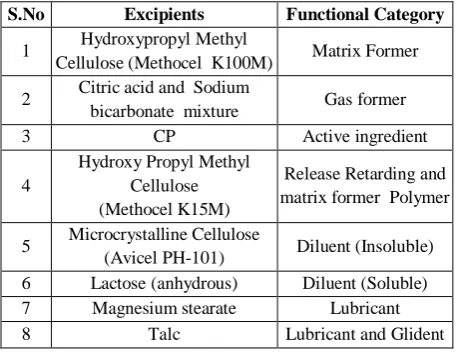
Table 1: List of excipients used in the formulation
S.No Excipients Functional Category
1 Hydroxypropyl Methyl
Cellulose (Methocel K100M) Matrix Former
2 Citric acid and Sodium
bicarbonate mixture Gas former
3 CP Active ingredient
4
Hydroxy Propyl Methyl Cellulose (Methocel K15M)
Release Retarding and matrix former Polymer
5 Microcrystalline Cellulose
(Avicel PH-101) Diluent (Insoluble)
6 Lactose (anhydrous) Diluent (Soluble)
7 Magnesium stearate Lubricant
8 Talc Lubricant and Glident
We used HPMC K15M as a matrix former for the formulation of Bi-layered floating extended release matrix tablet of CP. HPMC K15M formulations are almost insensitive to change in the speed of stirring in the dissolution test, compaction pressure, or storage in the accelerated stress conditions. However HPMC K15M alone may not sustain drug release satisfactorily and it is difficult to achieve the tablet with desired pharmacotechtical properties (compressibility,
flow, and mechanical strength) requiring the addition of fillers and release modifiers.
We used Lactose and microcrystalline cellulose as dilutors to improve tableting characteristics (like compressibility, flow, and mechanical strength) as well as to modify the release of the drug. The inclusion of diluents by “dilution effect” on the polymer, affects the dissolution performance of a matrix
The floating layer preparation
We added the exact weighed amount of HPMC K15M or HPMC K100M, Citric acid and Sodium bicarbonate (and if any other excipients such as Magnesium stearate and Talc) in a motor, completely mixed and sifted through a 40-mesh screen, and subjected the final mixture (powdered) to the compression.
Preparation of the Bi-layered floating tablet
Two steps were needed for the Bi-layer tablet preparation. Preparation of powder mixture for the floating layer and release layer: We added the exact weighed amount of HPMC K100M, citric acid, and sodium bicarbonate (and if other excipients such as Magnesium stearate and Talc) in a Motor, completely mixed and sifted through a 40-mesh screen (powder mixture optimized for floating layer) and added the exact weighed amount of CP, HPMC K15M, Microcrystalline cellulose and Lactose (Anhydrous) (and if other excipients such as Magnesium stearate and Talc) in a Motor, completely mixed and sifted through a 40-mesh screen (powder mixture for release layer).
Compression: At the beginning, we put the powder mixture, optimized for floating layer (FL2) in the dye cavity (diameter 12 mm) of the single-punch machine and preliminary pressed. After that, we added a powder mixture for releasing and subjected to the final compression.
Note: Moisture contents of the dried powder was controlled and maintained between 1-2 %. (If it was not within the limit then the powder was further reprocessed.) In order to study the effect of hardness on the buoyancy and in-vitro drug release, we punched tablets with the composition similar to the batches F15 and F16 at different compression pressures (4, 5, and 6 kg/cm2) and coded as F15(H1), F15(H2), F15(H3), F16(H1), F16(H2), and F16(H3).
III)Evaluation
A) Physical Characteristics
1) Weight variation
ISSN (Online) 2249-6084 (Print) 2250-1029 www.eijppr.com
101
tablets, weighing between 130-324 mg is ± 7.5%, and for tablets, weighing <130 mg is ± 10%.
We weighed 20 tablets collectively and individually, based on the official test and calculated the average weight per tablet from the collective weight. Then we compared the weight of each tablet with the average weight for determining the weight variation.
2) Hardness test
Tablets should have a specific amount of strength and resistance to friability, to tolerate the mechanical shocks of handling in production, packaging, and shipping. We used Monsanto hardness tester to assess the tablet strength. We placed the lower plunger in contact with the tablet and took a zero reading. Then, we turned a threaded bolt and forced the upper plunger against a spring until the tablet was fractured. We recorded the fracture force and deduced the zero force of it.
3) Friability
We conducted this test to evaluate the effect of shock and friction, which can usually cause tablets to break, chip, or cap. It generally reflects the weak cohesion of tablet components. We put the sample of weighed tablets in the chamber and operated the friabilator for 100 revolutions. Finally, we weighed the tablets again. The compressed tablets should not lose their weight more than 1%. 4) Tablet thickness
In addition to the weight variation beyond the permissible limits, variation in the thickness of tablets may result in problems in packaging and counting. The thickness of the tablet should be within ± 5% of the standard value. A vernier caliper was used to measure the thickness.
B) Drug content
We powdered 3 tablets in a mortar and added 200 mg of it in a 0.1 L volumetric flask and dissolved it in a minimum volume of methanol and further adjusted the volume with acid buffer pH=1.2. Then we filtered the solution by using Whatman filter paper (No.1), further diluted it as per requirement, and finally, analyzed spectrophotometrically.
C) Total time of floating, Floating lag time, and Dimensional stability
We determined the floating lag time and the total time of floating in the USP Dissolution Apparatus II in an acid environment (pH=1.2). The volume of the medium was 900 ml at 37 ± 0.5 °C. The speed of rotation was 100 rpm. We took the interval time between the tablet introduction into the solution medium and its floating in the top of solution medium as floating lag time and visually observed the total time of floating and dimensional stability [4].
D) Swelling Behaviors of Bi-Layered Floating
Tablets
The percentage of gained weight by the tablet was considered as swelling extent. We put 3 tablets of each formulation in Petri dishes, containing acid buffer (pH=1.2) and after 1 hour, we withdrew the tablets, pitted the surface with tissue paper, and weighed. After 2 hours, we repeated the process and then noted the weight of tablets every 2 h, until 12 h [9].
We calculated the percent of weight, gained by tablet, using the following formula;
𝑆𝑤𝑒𝑙𝑙𝑖𝑛𝑔 𝐼𝑛𝑑𝑒𝑥 (𝑆𝐼) = {(𝑀𝑡− 𝑀𝑜)/𝑀𝑜} × 100 Where,
S.I = Swelling Index Mt= tablet weight at time t Mo= tablet weight at time t=0
E) In-Vitro Dissolution Studies
We conducted the in-vitro study of the dissolution by using USP Type-I dissolution apparatus in 0.9 L of HCl (0.1N) buffer (pH=1.2) for 12 hours. We kept the medium in a water bath, controlled by a thermostat at 37 ± 0.5 °C. Then we added the pre-weighed tablet into the dissolution and rotated at 100 rpm. At different time intervals, we withdrew 5ml of the sample and assessed by spectrophotometer at 258 nm for the drug release. We also added 5 ml of the fresh relevant medium into the dissolution flask at each withdrawal time.
RESULTS AND DISCUSSION
Preformulation Studies
A) Physicochemical Characterization of Drug
Identification of Drug sample
Organoleptic Evaluation
It is white to light brownish white powder, having a bitter taste and a faint odor.
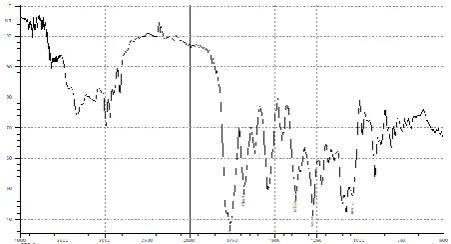
Fig. 7: FTIR spectrum of CP with major peaks at 1053.17, 1377.22, 1681.98, 1763.46, 2985.91, and
ISSN (Online) 2249-6084 (Print) 2250-1029 www.eijppr.com
102 Infrared spectrum
► FTIR spectrum of CP
The pure drug IR absorption spectra were in the range of 400-4000 cm-1 by the KBr disc method (Schimadzu IR – Prestige-21, observed for the specific peaks of the drug.
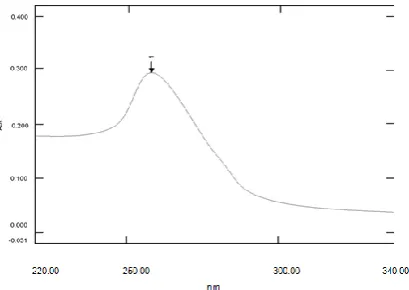
Fig. 8: UV spectrum of CP in Acid buffer pH=1.2
The drug FTIR spectrum showed the major peaks at 1053.17, 1377.22, 1681.98, 1763.46, 2985.91, and 3317.67 (cm-1) which corresponds to the –NH2, SCH2, -C=O (lactam), -C=N-, -C-N- (aromatic primary amine) and C-O stretching groups, respectively, present in the CP molecule.
B) Analysis of drug
Fig. 9: UV spectrum of CP in Glycine buffer pH=3.0
Fig. 10: UV spectrum of CP in Phosphate buffer pH=6.8
Table 2: Summary of the UV Scanning of CP in different Buffers S .N . th e so lv en t u se d t o d is sol ve t h e d ru g T h e sol ve n t u se d to m a k e u p vo lu m e S can n in g s o lu ti o n con ce n tr at ion (m cg/ m l) S can n in g r an ge (n m ) C h ar ac te ri st ic p eak , m a x ( n m ) 1 15 % M et h ano
l Acid Buffer,
pH 1.2 10
220 - 340
257.8
2 Glycine buffer,
pH 3.0 15 259.2
3 Phosphate
Buffer, pH 6.8 10 232.0
The scanning of CP was performed in the acid buffer, pH=1.2, glycine buffer, pH=3.0, and Phosphate buffer, pH=6.8. The characteristic peaks, max were at 257.8, 259.2, and 232.0 respectively.
Standard Plot of CP in Acid buffer, pH=1.2 The stock solution concentration = 250 mcg/ml Drug = CP
Maximum wave-length (max) = 257.8 nm Solvent = Acid buffer, pH=1.2
Table 3: UV Absorbance of CP in Acid buffer, pH=1.2
S.N.
Concentration of Drug (mcg/ml)
Absorbance Absorbance S.D.*
A1 A2 A3
1 0.0 0.0 0.0 0.0 0.0±0.0
2 2.5 0.082 0.079 0.070 0.077±0.0062
3 5.0 0.173 0.169 0.163 0.168±0.0050
4 7.5 0.237 0.236 0.231 0.235±0.0032
5 10.0 0.323 0.317 0.313 0.318±0.0050
6 12.5 0.408 0.412 0.409 0.410±0.0021
7 15.0 0.505 0.493 0.489 0.496±0.0083
8 20.0 0.666 0.656 0.651 0.658±0.0076
9 25.0 0.808 0.787 0.808 0.801±0.0121
*All values are expressed as Mean ± S.D, n=3
ISSN (Online) 2249-6084 (Print) 2250-1029 www.eijppr.com
103
Standard Plot of CP in Glycine buffer, pH=3.0 The stock solution concentration = 250 mcg/ml Drug = CP
Maximum wave-length (max) = 259.2 nm Solvent = Glycine buffer pH 3.0
Table 4: UV Absorbance of CP in Glycine buffer, pH=3.0 S.N. Concentration of Drug (mcg/ml) Absorbance Absorbance
S.D.*
A1 A2 A3
1 0.0 0.0 0.0 0.0 0.0±0.0
2 2.5 0.077 0.077 0.076 0.077±0.0006
3 5.0 0.147 0.137 0.141 0.142±0.0050
4 7.5 0.207 0.205 0.207 0.206±0.0012
5 10.0 0.283 0.284 0.284 0.284±0.0006
6 12.5 0.348 0.344 0.345 0.346±0.0021
7 15.0 0.432 0.430 0.431 0.431±0.0010
8 20.0 0.569 0.570 0.574 0.571±0.0026
9 25.0 0.707 0.701 0.712 0.707±0.0055
*All values are expressed as Mean ± S.D, n=3
Fig. 12: UV Absorbance of CP in Glycine buffer, pH=3.0
Standard Plot of CP in Phosphate buffer, pH=6.8 The stock solution concentration = 250 mcg/ml Drug=CP
Maximum wave-length (max) = 232.0 nm Solvent = Phosphate buffer, pH=6.8
Table 5: UV Absorbance of CP in Phosphate buffer pH 6.8
S.N.
Concentration of Drug (mcg/ml)
Absorbance Absorbance
S.D.*
A1 A2 A3
1 0.0 0.0 0.0 0.0 0.00.0
2 2.5 0.077 0.074 0.073 0.0750.0021
3 5.0 0.137 0.144 0.136 0.1390.0044
4 7.5 0.202 0.207 0.203 0.2040.0026
5 10.0 0.28 0.277 0.293 0.2830.0085
6 12.5 0.349 0.355 0.351 0.3520.0031
7 15.0 0.436 0.439 0.438 0.4380.0015
8 20.0 0.571 0.551 0.579 0.5670.0144
9 25.0 0.691 0.685 0.693 0.6900.0042
*All values are expressed as Mean ± S.D, n=3
Fig. 13: UV Absorbance of CP in Phosphate buffer, pH=6.8
Calibration curve of CP was plotted in the acid buffer (pH=1.2), glycine buffer (pH=3.0), and phosphate buffer (pH=6.8). The critical values for regression coefficient (P) in each plot was less 0.001 (i.e. P < 0.001), which indicated that there was a high correlation between concentrations of drug with absorbances.
C) Solubility Studies of Cp
Because of the low solubility of the drug in water, the solubility study was performed in buffer media having different pH (i.e. acid buffer, pH=1.2; Glycine buffer, pH=3.0; phosphate buffer, pH=6.8).
Table 6: Solubility of CP observed at different pH.
Buffer (pH) In it ia l a m ou n t of d ru g t ak en (m g) D il u t-ion A b sor b a n -ce S ol u b i-li ty (m g/ m l) sol u b il it y ± S .D . Acid buffer (1.2)* 500 (i n 25 m l bu ff er
) 1000
0.341 10.49
10.47 ± 0.26
0.332 10.22
0.348 10.71
Glycine buffer
(3.0)** 100
0.398 1.40
1.36 ± 0.04
0.390 1.38
0.377 1.32
Phosphate
buffer (6.8)*** 20
0.632 0.45
0.45 ± 0.005
0.645 0.46
0.635 0.45
n = 3, S.D. = Standard Deviation, * at ( max) = 257.8 nm, ** at ( max) = 259.2 nm,
ISSN (Online) 2249-6084 (Print) 2250-1029 www.eijppr.com
104
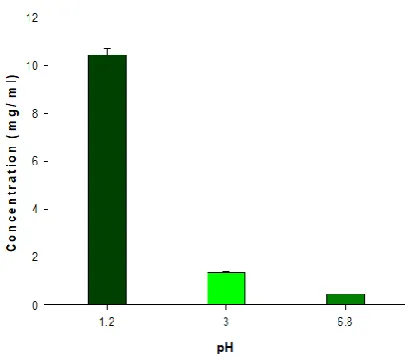
Fig. 14: Solubility of CP observed at different pH.
The CP solubility, observed in buffers of various pH values of 1.2, 3.0, and 6.8 are presented in fig. 14. CP exhibited a strong pH-dependent solubility in different buffers. The highest solubility was observed in acidic pH values (10.47 mg/ml at pH=1.2), while it rapidly dropped as pH increasing (0.45 mg/ml at pH=3.0). The results were similar to the reported study [10].
SUMMARY AND CONCLUSION
This study discussed the preparation of sustained release Bi-layered floating tablets of CP.
Solubility and solution stability studies of CP in buffers with different pH showed that solubility and solution stability of CP highly depends on the pH of the buffers. We observed high solubility and solution stability in the acidic pH values. The results were similar to the reported study [8, 10].
From the FTIR analysis of the pure drug and physical admixtures of drug with other excipients, we found that there was not any interaction between the drug and other excipients.
We used the direct compression method to prepare the sustained release bi-layered floating tablets of CP. All the formulated tablets met the pharmacopoeial standard of uniformity of thickness, friability percentage, weight, and drug content.
The floating behavior of all formulated tablets was uniform because all formulations contained floating layer with similar composition. During the optimization of the floating layer, we observed that lesser floating lag time and prolonged floating time could be obtained by changing the amount of effervescent mixture. We also observed that floating lag time is very dependent on the hardness (density) of the tablets. The obtained results are in support of the reported study [11].
We found that the swelling behavior of all formulated tablets are uniform that is the swelling index increased
with the time increasing. As the rate of swelling increased, the overall release of the drug was also increased.
We did the in-vitro dissolution study by using USP Type-1 dissolution apparatus. We conducted the study in 900mi of 0.1N HCl buffer (pH=1.2) for 12 hours.
Formulations F2 to F6 showed that as the concentration of gel forming polymer HPMC K15M increased, the drug release significantly decreased from 44.79 % to 33.93 % in 12 hours. We obtained similar results in the reported study [11]. The formulations F7, F4, F8, F9, F10, and F11 showed that as the amount of MCC decreased, the drug release significantly increased from 47.75 % to 57.46 % in 12 hours. Similar results were obtained in the reported study. From the in-vitro release profile of formulations F12, F13, F10, F14, F15, and F16, we can conclude that channeling agents, such as lactose (anhydrous) are useful to increase the initial in-vitro release profiles.
REFERENCES
[1] Garg, S. and Sharma, S., 2003. Gastroretentive Drug Delivery Systems, Business Briefing pharmatech, 160-164.
[2] Friend, D.R., 2007. Targeted GI Delivery. In: Touitou, E., Barry, B.W. (Eds.), Enhancement in Drug Delivery, CRC Press, New York, pp. 69-71. [3] Hui, H.W., Robinson, J.R. and Lee, V.H., 1987.
Design and fabrication of oral controlled release drug delivery systems. Controlled Drug Delivery: Fundamentals and Applications (Eds. JR Robinson and, pp.373-374.
[4] Chavanpatil, M., Jain, P., Chaudhari, S., Shear, R., Vavia P.R., 2005. Development of sustained release gastroretentive drug delivery system for ofloxacin: In vitro and in vivo evaluation. Int. J. Pharm. 304, 178-184.
[5] Chavanpatil, M., Jain, P., Chaudhari, S., Shear, R., Vavia P.R., 2006. Novel sustained release, swellable and bioadhesive gastroretentive drug delivery system for Ofloxacin. Int. J. Pharm. 316, 86-92.
[6] Bardonnet, P.L., Faivre, V., Pugh, W.J., Piffaretti, J.C., Falson, F., 2006. Gastroretentive dosage forms: Overview and special case of Helicobacter pylori. J. Controlled Release. 111, 1-18.
[7] Arora, S., Ali, J., Ahuja, A., Khar, R.K., Baboota, S., 2005. Floating drug delivery systems: A review. AAPS Pharm. Sci.Technol. 6, Article 47. [8] Crauste-Manciet, S., Decroix, M., Farinotti, R.,
ISSN (Online) 2249-6084 (Print) 2250-1029 www.eijppr.com
105
[9] Jaimini, M., Rana, A.C., Tanwar, Y.S., 2007. Formulation and evaluation of famotidine floating tablets. Current Drug Deliv. 4, 51-55.
[10]Kakumanua, V.K., Arora, V., Bansal, A.K., 2006. Investigation of factors responsible for low oral bioavailability of cefpodoxime proxetil. Int. J. Pharm. 317, 155-160.
![Fig. 1: Working principle of the hydrodynamically balanced system [6].](https://thumb-us.123doks.com/thumbv2/123dok_us/1417971.1654907/2.595.326.510.412.556/fig-working-principle-hydrodynamically-balanced.webp)