PERSISTENCE OF STAPHYLOCCOCUS AUREUS NASAL CARRIAGEAMONG INDUSTRIAL HOG OPERATION WORKERS AND THEIR HOUSEHOLD CONTACTS IN
NORTH CAROLINA
Elizabeth Pierce
A thesis submitted to the faculty of the University of North Carolina at Chapel Hill in partial fulfillment of the requirements for the degree of Masters of Science in the Department of
Environmental Sciences & Engineering in the Gillings School of Global Public Health.
Chapel Hill 2014
iii ABSTRACT
Elizabeth Pierce: Persistence of Staphylococcus aureus Nasal Carriage among Industrial Hog Operation Workers and Their Household Contacts in North Carolina
(Under the direction of Jill Stewart)
Industrial hog operations (IHOs) are a potential source of exposure to antibiotic-resistant Staphylococcus aureus including methicillin-resistant S. aureus (MRSA). However, the duration of nasal colonization among IHO workers is unknown. In order to better understand nasal
iv
TABLE OF CONTENTS
LIST OF TABLES ... vi
LIST OF FIGURES ... vii
LIST OF ABBREVIATIONS ... viii
CHAPTER 1: INTRODUCTION ... 1
Objectives ... 2
BACKGROUND ... 3
Staphylococcus aureus ... 3
Relationship of S. aureus to Farming Practices ... 5
Characteristics of LA S. aureus and MRSA ... 7
Nasal Carriage Patterns ... 10
Risk Factors for Exposure ... 10
Duration of Colonization ... 12
Transfer of S. aureus to Household Contacts ... 14
RESEARCH RATIONAL... 15
CHAPTER 2: METHODS ... 16
Sample Population... 16
Quantification of S. aureus... 17
Phenotypic Characteristics Confirmation... 18
Molecular Confirmation ... 18
v
Spa Typing and MDRSA Testing ... 19
Statistical Analysis ... 21
IRB Approval ... 21
CHAPTER 3: RESULTS ... 23
Study Population ... 23
Prevalence of S. aureus and MRSA per Household ... 23
Prevalence of S. aureus and MRSA in Individuals ... 24
Quantification of S. aureus in Nasal Swabs ... 26
Quantification and Carriage Relationship ... 30
Antibiotic Resistance... 30
Livestock Association ... 31
CHAPTER 4: DISCUSSION ... 32
Conclusion ... 35
APPENDIX: STAPHYLOCOCCUS AUREUS SURIVIAL EXPERIMENT ... 37
Introduction ... 37
Methods ... 37
Quantification of S. aureus on seeded nasal swabs ... 38
Statistical Analyses ... 38
Results ... 39
Conclusions ... 39
vi
LIST OF TABLES
Table 1: Antibiotics used in susceptibility testing ... 20
Table 2: Distribution of characteristics among 175 participants enrolled ... 23
Table 3: Carriage status of S. aureus and MRSA on the household level ... 24
Table 4: Carriage status of S. aureus and MRSA for all participants ... 26
Table 5: Quantification of S. aureus CFUs/swab for all participants ... 26
Table 6: Quantification of S. aureus CFUs/swab for workers only ... 27
vii
LIST OF FIGURES
Figure 1: Protocol of isolations and characterization of nasal swabs………...22 Figure 2: Distribution of S. aureus carriage status in participants………25 Figure 3: Quantification of S. aureus by CFU/swab by intermittent and persistent
for all participants (a), workers (b), adult non-IHO workers (c), and minors (d)………...…...29 Figure 4: Average S. aureus CFU versus carriage index for all participants………30 Figure 5: Percent of isolates demonstrating complete resistance to antibiotic
viii
LIST OF ABBREVIATIONS
CA Community associated
CAFO Confined animal feeding operation
CC Clonal complex
CFU Colony forming unit
HA Hospital associated
IHO Industrial hog operation
LA Livestock associated
MDRSA Multi-drug resistant Staphylococcus aureus MRSA Methicillin-resistant Staphylococcus aureus
MSSA Methicillin-susceptible S. aureus
PCR Polymerase chain reaction
REACH Rural Empowerment for Community Help
Spa Surface protein A
ST Sequence type
1
CHAPTER 1: INTRODUCTION
Staphylococcus aureus is a bacterium found in the nares of approximately one third of Americans and can result in minor skin infections (Gorwitz et al, 2008). Exposure can also cause dangerous infections that can lead to mortality if the bacteria enter an individual’s body and invade the bloodstream, lungs, joints, bones, or heart (Lowy et al, 1998). In the 1960s, a strain of S. aureus emerged that had evolved resistance to methicillin, a common antibiotic used to treat S. aureus infections. Methicillin-resistant S. aureus (MRSA) poses a health risk as the infection spreads rapidly and is not easily treatable. Furthermore, some strains of S. aureus are multi-drug resistant (MDRSA), with resistance to three or more classes of antibiotics. This acquired
antibiotic resistance makes treatment of infection increasingly difficult (Wu et al, 2010). Strains of MRSA are often classified according to the ecology of infections. Hospital associated MRSA is related to the spread of S. aureus and MRSA within health care
environments. Community associated strains of MRSA have also emerged. These strains are spread in public places such as gyms and daycares and are now classified as endemic within the United States (Zetola et al, 2005). Recently, new strains of MRSA have emerged as livestock associated (LA) MRSA. This type of MRSA has been linked to confined breeding practices of livestock such as horses, cattle, poultry, and hogs (Mulders et al, 2010; Graveland et al, 2011; Cuny et al, 2008). In 2004, livestock associated clonal complex 398 (CC 398) was first
2
antibiotic resistant strain is exchanged between humans and animals with the use of a livestock reservoir (Armand-Lefevre et al., 2005, Price et al, 2012). Although CC 398 is frequently
identified around Europe, it has only been observed in the United States as recently as 2009, first in Iowa and later in North Carolina. (Smith et al, 2009; Rinsky et al., 2013).
Recent studies have related the use of antibiotics in livestock to a higher prevalence of antibiotic resistant MRSA and S. aureus within the animals in industrial livestock settings
(Waters et al, 2011; Pu et al, 2009). Due to the high livestock exposure workers experience while working in confined animal feeding operations (CAFOs), workers are likely to be exposed to LA-MRSA and S. aureus. One study concluded that workers on CAFO hog farms in North Carolina were more likely to be positive for LA-MRSA and S. aureus than antibiotic free farmers (Rinsky et al, 2013).
Although nasal carriage has been repeatedly demonstrated among industrial farm workers, it is unknown if workers whose nasal swabs test positive for S. aureus or MRSA are either briefly contaminated or persistently colonized with the bacteria. This information is important in understanding the potential health risks to the workers. This information is also important to understanding potential transport and transmission pathways of these bacteria. The objective of this study is to examine the dynamics of nasal colonization with S. aureus among people who work at industrial hog operations (IHOs) in Eastern North Carolina, and their household members,
over four months.
Objectives:
The objectives for this research are as follows:
3
2. To determine whether persistence of nasal colonization with S. aureus is associated with concentration of S. aureus;
3. To determine the prevalence of MDRSA within S. aureus isolates; and
4. To determine the potential presence of LA S. aureus and MRSA through antibiotic resistance testing, spa typing, and presence of the scn gene.
The findings contained in this master’s thesis contribute to a larger study which aims to analyze factors which influence carriage rates of S. aureus, MRSA, and MRDSA in the population of interest over a four month period.
BACKGROUND Staphylococcus aureus:
4
resistance and multiply with succeeding generations and replace bacteria that lacks resistance. S. aureus can also be multi-drug resistant (MDRSA), which is classified as being resistant to three or more classes of antibiotics and is acquired in similar manner to methicillin resistance (Rinsky et al., 2013). MDSRA makes treating infections extremely difficult as many of the commonly used antibiotics to treat S. aureus are ineffective, such as cephalosporins and clidamycin.
S. aureus is found most frequently on the skin of individuals as well as within the nasal cavities. Routes of transmission of S. aureus are not well understood however many pathways have been found as humans can become exposed to the staphylococci bacteria. Hospital associated (HA) S. aureus is related to the transfer of the bacteria in hospital settings.
Community associated (CA) S. aureus has reservoirs in human environments such as through parks, wrestling mats, and other commonly used areas that multiple people have access to and the area is not adequately sanitized (Niami et al, 2003). Despite the infection control measures of health care facilities, the rise of HA-MRSA is much higher than CA-MRSA because the
individuals present within hospitals are more likely to have weakened immune systems making them more susceptible to harmful health effects from the exposure. Livestock associated (LA) S. aureus is found in livestock farms such as confined feeding operations that use antibiotics both therapeutically and for non-therapeutic purposes.
5
commonly used for investigation of outbreak settings of S. aureus, as it helps to identify the origin by inferring the possible clonal complex (CC) to which it belongs.
Relationship of S. aureus to Farming Practices:
Over the past sixty years, major livestock practices have shifted from smaller family owned farms to large industrial livestock operations. The conventional practice of livestock farming in the United States is known as confined animal feeding operations (CAFOs) in which livestock animals such as hogs, chickens, and cattle are densely packed into small areas (Vos et al, 2000). The animals are typically denied access to areas to roam and participate in physical activity and are fed a diet heavy in grains to increase their weight quickly. Also confined animal practices supply antibiotics to prevent diseases and for growth enhancement. It is estimated that 87 percent of all antibiotic use in the United States is administrated to livestock, primarily for growth enhancement (Gilchrist et al, 2007). The exposure to low dosages of antibiotics actually ends up not killing the pathogens but instead promotes resistance by selecting for populations that are resistant to the antibiotic. The fecal matter of the livestock also contains antibiotic resistant bacteria and it is estimated that up to 75% of administered antibiotics are excreted (Anderson et al, 2006; Chee-Sanford et al, 2009).
6
be transferred out into groundwater and local water ways (Borjesson, 2009; Anderson et al, 2006). Antibiotic resistant strains of S. aureus also have been found in waterway systems as well as the soil surrounding hog farms, further spreading them into other environments (Schulz et al, 2012).
Not only have antibiotic resistant bacteria from livestock been identified in the
surrounding environments, they are also found in retail meat and dairy products. The presence of LA-MRSA within retail meat has been found in the United States, Canada, and Europe (Hanson et al, 2011). One study in Switzerland determined that MRSA was present in 1.4 percent of samples of mastitis milk (N=142) and 1.3 percent (N=800) of the sampled pigs prior to slaughter (Huber et al, 2010). In Canada, retail meat products from pork, ground beef, and chicken were purchased from stores in four providences and tested for the prevalence of MRSA. According to the reported results, MRSA was present in 9.6 percent of pork (N=230), 5.6 percent of beef (N=198), and 1.2 percent of chicken samples (N=250) (Weese et al, 2010). Although the percent of food samples that contain MRSA are relatively small, it does provide evidence that MRSA can be transferred into food which is produced and sold to the general public who may not come into close contact with the livestock animals.
7
(Gegner, 2001). The hogs are also required have space to roam around and supplies to build bedding areas which have been observed to harbor and reduce the spread of pathogens. Organic practices can be beneficial in the livestock setting as the spread of bacteria such as S. aureus can be reduced under conditions which have a lack of confinement as well as an absence of
antibiotics to lower the chance of strains developing antibiotic resistance (McEwen et al, 2002). The presence of LA-MRSA and S. aureus within the livestock may serve as a risk to IHO workers as it can be transferred to humans. In one study based in North Carolina which
compared workers from antibiotic-free hog farms to CAFOs, it was found that MRSA and MDRSA were present in comparable percentages in workers from both of the types of animal production practices. Despite the similar prevalence, scn negative LA-MDRSA and LA-MRSA, were only found in workers from CAFOs and not in antibiotic-free farm workers (Rinsky et al, 2013). These results support the growing concern that practices that use antibiotics within livestock and confinement promote the spread of antibiotic resistant bacteria such as MRSA, which are difficult to treat and can be dangerous to humans. Another study from the Netherlands showed that calves were more likely to be carriers of MRSA when treated with antibiotics. Also, the use of hygienic practices that were more likely to be associated with antibiotic free farms than with confined practices, such as the use of bedding for animals, had a negative association with the prevalence of MRSA within the calves (Graveland et al., 2010).
Characteristics of LA S. aureus and MRSA:
8
humans and farm animals (Lewis et al, 2008). First identified in the Netherlands, CC398 has also been identified in Hong Kong, Germany, Belgium, Spain, Italy, Austria, Canada, Australia, and the United States (Monecke et al, 2011). Livestock association is also commonly associated with the absence of the scn gene. The absence of the scn gene has suggested that the strain of S. aureus is livestock in origin. The presence of the scn gene is found in low frequencies of S. aureus isolates obtained from livestock (2-35%) compared to humans (90-100%) (Price et al., 2012). Another characteristic of livestock association is complete resistance to tetracycline. The tetracycline resistance gene, tet(M), has been observed in one study to be present in 99 percent of livestock associated isolates (N=70) and none of the human-associated isolates (Price et al, 2012).
LA-MRSAhas been observed in hogs in the United States in rates as high as 49 percent (N=200), with all of the isolates identified as CC398 (Smith et al, 2009). As the livestock animals are contaminated with MRSA, studies have shown that the transfer from animal to human of MRSA is possible through either direct contact, air, or in the animal byproduct used for food. Human exposures to LA-MRSA can occur through occupational exposures and through environmental transmission. Studies have shown that MRSA can become airborne and trapped within dust particles and can be inhaled by individuals (Wilson et al, 2004). Once MRSA has become airborne, the air can be transported downwind from industrial livestock farms and can potentially affect neighbors, although studies have only shown transport downwind to be in small doses 50 m and 150 m from farm sites (Schulz et al, 2012).
9
farms had a high prevalence of MRSA. The study found that 17 percent of human subjects (N=118) tested positive for MRSA after one day of work, with the most important risk factor being direct contact with live pigs (Van Cleef et al, 2011). Veterinarians that work within the livestock farms are also at high risk for being contaminated with MRSA. In Belgium and Danish farms, it was found that veterinarians were positive for MRSA and LA-MRSA at a rate of 9.5 and 7.5 percent, respectively (Garcia-Graells et al, 2012). Despite the high prevalence rate of MRSA colonization among these occupations, the workers within the livestock farms are of the highest concern as they are typically exposed for longer periods and to larger numbers of animals. A study conducted in Iowa and Illinois determined that MRSA was detected in 45 percent of participating farm workers (Smith et al, 2009).
Although the presence of S. aureus and MRSA has been examined since the 1960s, the presence of MRSA has only recently been studied. First reported in the Netherlands, LA-MRSA has now also been identified in Canada as well as the United States (Golding et al, 2010). In the Netherlands, LA-MRSA has been documented to be present in approximately 71 percent of conventional pig herds (Vijver et al, 2013). In the United States, the first pilot study was conducted in Iowa in 2008 which identified CC398 LA-MRSA in 49 and 45 percent of swine (N=299) and farmworkers (N=20), respectively (Smith et al., 2009). Despite initially high percentages of LA-MRSA being reported, another study in the United States that assessed farms from five states found lower rates of occurrence at 4.6 and 20.9 percent of swine (N=1058) and workers (N=148), respectively (Smith et al, 2013). Although instances of LA-MRSA within the United States have not been determined at the same elevated levels as found within the
10
Nasal Carriage Patterns:
Studies that test for prevalence of S. aureus among livestock workers typically test nasal swabs of individuals. However, this test does not distinguish whether an individual is
contaminated with S. aureus, or is colonized with the bacterium. To be contaminated by S. aureus means that an individual is positive for S. aureus within their nasal cavities for a single instance but does not necessarily means that they are a persistent carrier. The individual that is classified as being contaminated will most likely test negative for S. aureus or MRSA within the first couple days of being exposed to the bacterium such as from a bio-aerosol. An individual is classified to be colonized with S. aureus if they test positive for S. aureus within their nasal cavity over a longer period of time and have a pattern of S. aureus positivity that proves to be persistent despite changes in exposure (Hardy et al, 2006).
Risk Factors for Exposure:
11
study suggest that environmental factors are key risk factors in human contamination with MRSA.
Another potential risk factor is the duration of workers’ exposure to the livestock as well as the intensity of the exposure. In a study which looked at two farms in the mid-western United States, the farm classified as having approximately twice the number of swine as the other farm showed a 64 percent prevalence of MRSA in the workers while the other farm exhibited none (Smith et al, 2009). A related study found that farmers who were classified as persistent carriers for MRSA worked on average 35.2 hours per week while intermediate and never-carriers worked 15.8 and 12.7 hours per week, respectively (Graveland et al, 2011). The correlation of the
number of animals an individual is exposed to and the prevalence of MRSA, however, is
dependent on MRSA being presence in the animals and environmental media of the farms. These two studies suggest that the longer a worker is exposed and the higher number of animals a worker is exposed to, the greater the likelihood that the worker will be contaminated with MRSA.
12 Duration of Colonization:
While studies have found that in some cases hospital associated MRSA can colonize a human for up to a year, it is not well understood how long LA-MRSA can persist within humans (Robicsek et al, 2009; Sanford et al, 1994). It may be that once exposed, individuals are able to go home and take a shower and no longer be contaminated. One study that tested showers within hog farms, where workers were sometimes required to shower after work, found up to 26 percent of the shower samples tested positive for MRSA (Larson et al, 2010). This study did not test human workers but did test the swine for prevalence of MRSA so the contribution of MRSA to humans from livestock still remains unclear. It is also unclear whether or not long-term exposure leads to persistent carriage of the LA strain of MRSA or S. aureus.
With the discovery of farm workers carrying LA-MRSA, it is important to determine if the persistence of MRSA colonization is associated with exposure to livestock. Workers who have long-term exposure to livestock have not shown consistent results on the relationship between exposure and colonization. One study conducted on veal calf farmers concluded there was a strong animal exposure association for the colonization of MRSA within the farmer (Graveland et al, 2011). The study found that MRSA was not present after an individual had been away from work and out of contact with the veal calves for a period as long as two weeks, suggesting that LA-MRSA might not be a persistent colonizer within humans. However, one study of hog farmers (N=25) conducted in Germany found that during the farmers’ vacation time of approximately two weeks, 59 percent of farmers did not clear MRSA colonization during their leave from work (Köck et al, 2012). These two longitudinal studies provide conflicting
13
Colonization of human by LA-MRSA over short-term periods of exposure is also unclear. Researchers at the University of Iowa conducted a study where veterinary students visiting local swine farms were tested for presence of LA-MRSA after a short exposure period of up to four hours. Results showed that it was possible for persons visiting contaminated farms to test positive for MRSA in a nasal swab, with 22 percent (N=30) being positive after the visit. All students were negative 24 hours after the visit which suggests the duration of carriage was brief and that short term exposure does not lead to colonization of the bacteria (Frana et al, 2013). One study analyzed MRSA colonization of field workers who helped take samples from animals and animal houses as short term exposure subjects. Although MRSA was found in 17 percent of the workers (N=34) shortly after the initial visits, results showed that 94 percent of these subjects appeared to be MRSA negative 24 hours after they were first exposed (van Cleef et al, 2011). Results from this study also suggest that brief exposure to livestock farms positive for MRSA does not cause persistent carriage within human subjects.
In order to determine how LA-MRSA strains interact with human strains within the nares of humans, one study based in the Netherlands artificially inoculated human subjects once with a combination of treatable and low risk MSSA (methicillin-susceptible Staphylococcus aureus) using equal amounts of both human (ST931) and bovine (ST398) strains within their nasal cavities. The subjects were first treated with soap seven weeks prior in the inoculation to ensure that any previous infections were cleared and then the subjects were followed for 21 days to determine the duration of colonization of the two strains. Of the 14 participants, four were capable of completely clearing both of the stains within 21 days. Of the remaining 10
14
aureus (Slingerland et al, 2012). Results from this study provide evidence that ST398 is able to outcompete human strains and may not necessarily be a poor colonizer as previously observed. The study also showed no differences in the mobile genetic elements of either strain, suggesting that the human and bovine strains did not interact with one another and alter their genetic characteristics.
Transfer of S. aureus to Household Contacts:
Although there is overwhelming evidence suggesting that LA-MRSA and S. aureus can transfer from livestock to humans (Price et al, 2012; Graveland et al, 2010; Golding et al, 2010), little is understood about the potential to transfer from livestock workers to their family
15
family members being exposed and potentially contaminated by MRSA greatly increases when they also have the threat of environmental exposure if living on the farm itself.
The potential for farm workers to transmit MRSA to others within their household is especially concerning for households with children. Children are more susceptible to being colonized with MRSA. Children have shown to be at a higher risk for MRSA due to certain unhygienic habitats such as picking their nose and lack of preventative hand washing (Finn, 2005). In studies that have looked at LA-MRSA within families, children have shown to be more likely colonized with MRSA than other family members (Graveland et al, 2011). Children have weaker immune systems typically than older adults making them more likely to be harmed if there was an outbreak by a dangerous strain of LA-MRSA.
RESEARCH RATIONAL
S. aureus is a bacterium of health concern as it can cause infections in humans. IHOs have been identified as a source of human exposure to livestock associated S. aureus with observed antimicrobial resistance in MRSA and MDRSA, possibly due to the use of
non-therapeutic drugs for livestock production. Previous studies have identified this exposed human population as a concern, however the nasal carriage rates of individuals for S. aureus is still unknown. North Carolina is the second highest producer of hogs in the United States producing 10.1 million hogs annually. The two largest hog producing counties in North Carolina, Duplin and Sampson, are ideal areas to conduct research of occupational exposure to livestock
16
CHAPTER 2: METHODS
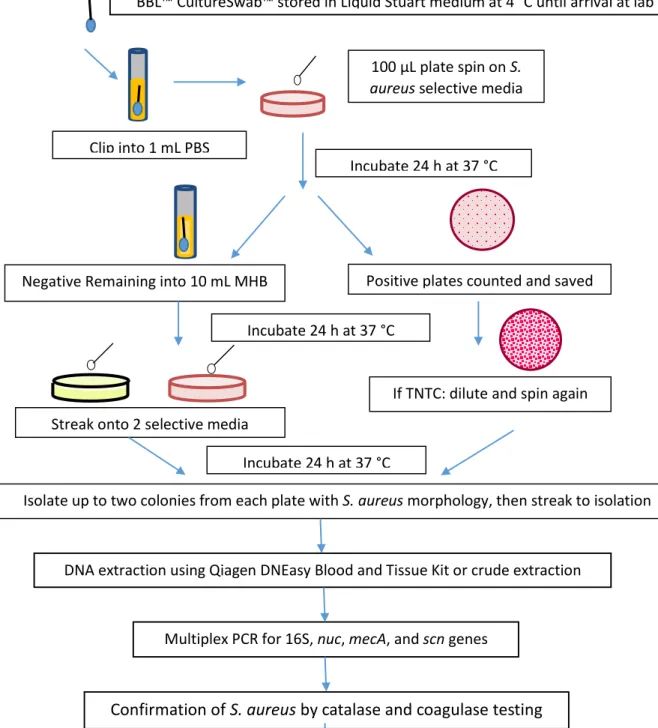
A four month longitudinal study was conducted to evaluate persistence of S. aureus and MRSA nasal carriage among industrial livestock workers and their family members. Genetic analysis was also conducted to determine if the strains of S. aureus detected among this study population were livestock associated. Figure 1 reflects a flow diagram of the laboratory techniques used for sample collection, bacteria isolation, and characterization by biochemical, antibiotic susceptibility, and nucleic acid methods.
Sample Population:
17
was self-collected every two weeks in follow-up visits, resulting in up to a total of nine nasal swabs per participant. The four month period was selected as it was thought to capture
potentially important occupational changes (e.g. quit job at hog operation, take a vacation from job at hog operation, start working at a different hog operation, or a new replacement herd comes into the current hog operation) which could affect presence/levels of S. aureus in the nose, as the previous 14-day study did not show many changes from following workers for only two weeks. Also a four month period was thought to be a short enough period to retain participants for the entire duration.
Quantification of S. aureus:
Up to nine nasal swabs per participant were analyzed for S. aureus. The nasal samples were taken using BD BBL™ CultureSwab™ in and transported in Liquid Stuart Medium Transport which contains sodium glycerophosphate, calcium chloride, mercaptoacetic acid, and distilled water. A trip blank swab was included in batches of nasal swabs to control for any possible contamination while in transport. Once swabs were taken, they were placed into a cooler or refrigerator (4-8 °C) to minimize die-off of any bacteria. The methods used to store and
18
The number of colonies after one day of incubation was counted and recorded. Plates are considered TNTC (too numerous to count) if they appeared to have more than 300 colony
forming units (CFUs). For these samples, a 1 to 10 dilution was made of the original swab in PBS and then re-plated with the same technique used with the neat sample. If the plate still appeared to be TNTC, a 1 to 100 dilution or 1 to 1000 dilution was plated to increase the accuracy of colony counting.
Phenotypic Characteristics Confirmation:
For each of the samples that initially appeared negative during the quantification step, the mixture including PBS and the swab was transferred into a tube of 10 mL of Mueller Hinton Broth with 6.5% NaCl and then incubated overnight at 37 °C. The culture was then streaked onto two different media for confirmation of S. aureus: Baird-Parker and CHROMagar™ (BD, Franklin Lakes, NJ)
.
Using two different media to streak the culture has shown to increase identification of S. aureus positive samples by 29 percent (Nadimpalli et al., 2013). The plates were incubated again overnight at 37 °C. If the cultures on the plates grew up positive for S. aureus (mauve, matte, halo for CHROMagar; black, shiny, halo for Baird-Parker) two positive isolates from either medium were streaked onto the same type of media for isolation.Molecular Confirmation:
19
aureus while mecA is specific for methicillin resistance. Therefore, if an isolate has both the nuc and 16S gene, the isolate is characterized as S. aureus. If the isolate contains all three genes, then the isolate is characterized as MRSA. PCR was also conducted for the presence of the scn gene. The presence of the scn gene serves as another marker to classify isolates obtained during the study as livestock associated. Amplified gene products were confirmed by gel electrophoresis in duplicate along with a positive and negative control for MRSA.
Biochemical Confirmation:
For all isolates on which DNA extraction was performed, biochemical testing for both catalase and coagulase enzymes was conducted to confirm the results from the gel
electrophoresis. Testing for the presence of the catalase enzyme was done by placing the colony on a drop of hydrogen peroxide to ensure the bacteria can convert hydrogen peroxide to
hydrogen gas. This presence of the catalase enzyme is specific to all strains of staphylococci. Testing for the presence of the coagulase enzyme was done by using Rabbit Plasma (BD BBL, Franklin Lakes, NJ) and adding a sample of the isolate into the mixture. A positive result was shown by the vial appearing to have coagulated after 24 hours of incubation, indicating the presence of the coagulase enzyme, which is S. aureus specific.
Spa Typing and MDRSA Testing:
Spa typing was conducted on all isolates that are positive for S. aureus based on
multiplex-PCR and gel electrophoresis. Spa types of livestock origin that are of interest are ones that are indicative of LA S. aureus, primarily CC 398.
20
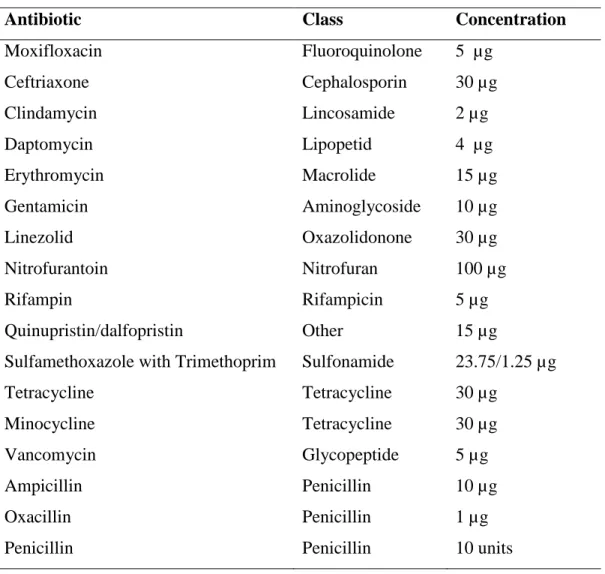
comprised of 16 antibiotics. Isolates are considered to be MDRSA if completely resistant to three or more classes of antibiotics (Table 1). Antibiotic resistance was determined by using theBD Phoenix™ Automated Microbiology System (BD, Franklin Lakes, NJ) which incorporates the BACTEC™ System (BD, Franklin Lakes, NJ) in automatic identification and susceptibility testing of pure isolates. Isolates that exhibit complete resistance to three or more classes of antibiotics were classified as MDRSA. This portion of the testing was conducted at Johns Hopkins University.
Table 1. Antibiotics used in susceptibility testing
Antibiotic Class Concentration
Moxifloxacin Fluoroquinolone 5 µg
Ceftriaxone Cephalosporin 30 µg
Clindamycin Lincosamide 2 µg
Daptomycin Lipopetid 4 µg
Erythromycin Macrolide 15 µg
Gentamicin Aminoglycoside 10 µg
Linezolid Oxazolidonone 30 µg
Nitrofurantoin Nitrofuran 100 µg
Rifampin Rifampicin 5 µg
Quinupristin/dalfopristin Other 15 µg
Sulfamethoxazole with Trimethoprim Sulfonamide 23.75/1.25 µg
Tetracycline Tetracycline 30 µg
Minocycline Tetracycline 30 µg
Vancomycin Glycopeptide 5 µg
Ampicillin Penicillin 10 µg
Oxacillin Penicillin 1 µg
21 Statistical Analysis:
Descriptive statistics was performed on the presence/absence of S. aureus and MRSA within the nares of each individual over the study period to determine the rate of carriage on the individual and household level. Averages, quartiles, and ranges were calculated on the
quantification of S. aureus on both the household and individual level. All significance testing was conducted at a significant level of p=0.05. To test the difference of overall prevalence for S. aureus and MRSA among groups, an exact chi-square test was conducted. A chi-square test was conducted to determine significant difference among carrier status for each participant type. For testing significance of concentration between carriage statuses within groups a one-way analysis of variance was calculated. In testing significance for differences of concentration between participant types, an analysis of variance (ANOVA) was performed. In comparing results to expected values observed in the US population, a chi-squared test was conducted. Significance testing was conducted in comparing results found in the study to those in similar populations by using a two-tailed Z-test on proportion. All statistical analysis was performed using SAS, version 9.3 (SAS Institute Inc, Cary, North Carolina).
IRB Approval:
All procedures were reviewed and approved by the Johns Hopkins Bloomberg School of Public Health institutional review board (Baltimore, Maryland) under IRB number 00004608 with reliance approval from the University of North Carolina at Chapel Hill. Before enrollment, all adult participants provided written informed consent and minors consented under the
22
Figure 1. Protocol of procedures for S. aureus isolations and characterization from nasal swab samples.
Adapted from: (Nadimpalli, 2012). Clip into 1 mL PBS
100 µL plate spin on S.
aureus selective media
Positive plates counted and saved Negative Remaining into 10 mL MHB
Incubate 24 h at 37 °C
Streak onto 2 selective media
Isolate up to two colonies from each plate with S. aureus morphology, then streak to isolation If TNTC: dilute and spin again
Incubate 24 h at 37 °C
Incubate 24 h at 37 °C
BBL™ CultureSwab™ stored in Liquid Stuart medium at 4 °C until arrival at lab
DNA extraction using Qiagen DNEasy Blood and Tissue Kit or crude extraction
Multiplex PCR for 16S, nuc, mecA, and scn genes
Antibiotic susceptibility-test (for MDRSA testing)
Confirmation of S. aureus by catalase and coagulase testing
23
CHAPTER 3: RESULTS Study Population:
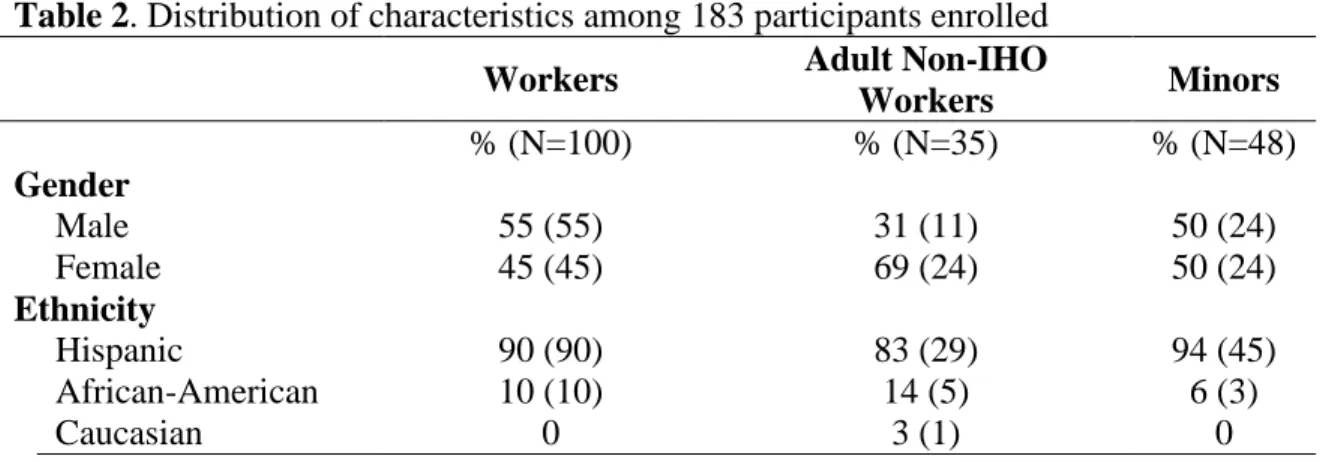
A total of 183 individuals from 75 households were enrolled in this study. Of the 183 individuals who participated, 100 were industrial hog farm workers, 35 were adult household members, and 48 were minors. Of the 183 participants, approximately half were male (49.2 percent) and majority were Hispanic (89.6 percent). The characteristics of the participants are displayed in Table 2. Individuals enrolled in the study were followed for up to four months and carriage results are only reported on 175 individuals who were followed for at least one month.
Table 2. Distribution of characteristics among 183 participants enrolled
Workers Adult Non-IHO
Workers Minors
% (N=100) % (N=35) % (N=48)
Gender
Male 55 (55) 31 (11) 50 (24)
Female 45 (45) 69 (24) 50 (24)
Ethnicity
Hispanic 90 (90) 83 (29) 94 (45)
African-American 10 (10) 14 (5) 6 (3)
Caucasian 0 3 (1) 0
Prevalence of S. aureus and MRSA per Household:
24
carriers where all individuals were positive for S. aureus in at least 80 percent of the data points. The definitions used to outline the different carrier statuses are commonly used as thresholds (VandenBergh et al, 1999).
Eighty-five percent (n=64) of households were never-carrying for MRSA, and fifteen percent (n=11) were intermittent carriers (Table 3). None of the households were persistent carriers for MRSA.
Table 3. Carriage status of S. aureus and MRSA on the household level
Prevalence of S. aureus and MRSA in Individuals:
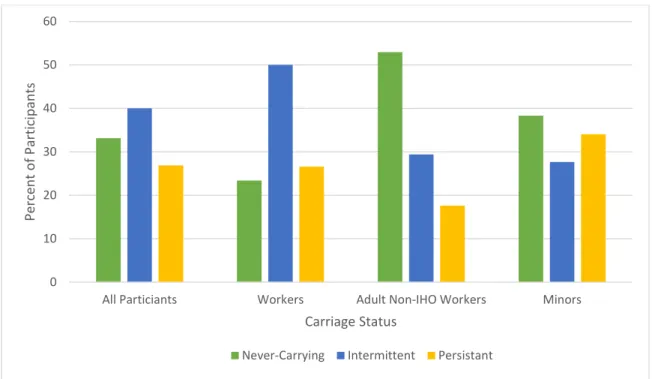
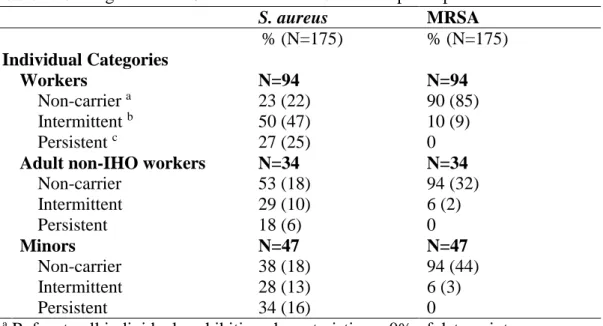
The overall prevalence of S. aureus in the swab analyzed was 48 percent. There appeared to be a significant difference of S. aureus prevalence between the participant groups as workers had the highest prevalence at 52.4 percent (p=0.0024). For the 175 participants, thirty-three percent (n=58) were classified as non-carrying for S. aureus as they never tested positive for S. aureus on all data points (Table 2). Forty percent (n=70) of the individuals exhibited S. aureus between ˃0 to 80 percent of data points and were classified as intermittent carriers. Twenty-seven percent (n=47) of individuals were categorized as persistent workers as they were positive for S. aureus on over 80 percent of data points. In comparing participant type by carriage status, minors appear to significantly have the highest percentage of persistent carriers out of the three
S. aureus MRSA
% (N= 75) % (N= 75)
Carriage Status
Never-Carrying a 17 (13) 85 (64)
Intermittent b 64 (48) 15 (11)
Persistent c 19 (14) 0 (0)
a Refers to all individuals within the household exhibiting characteristic 0% of data points b Refers to all individuals within household exhibiting characteristics ˃0% but ≤80% of data points
25
types at 34 percent (p=0.0043). Workers significantly had the highest percentage of intermittent carriers at 50 percent (p=0.024). Adult household members had the highest percentage of never-carrying participants out of the three at 52.9 percent however this was not statistically significant (p=0.1321).
Figure 2. Distribution of S. aureus carriage status in participants.
The overall prevalence in the swabs analyzed for MRSA was 2.4 percent. There appeared to be a significance difference in the prevalence of MRSA between participant types as workers had the highest with 3.4 percent (p=0.0448). Ninety-two percent (n=161) of participants were never-carrying for MRSA and eight percent (n=14) were intermittent carriers (Table 4). None of the participants were persistent carriers for MRSA.
0 10 20 30 40 50 60
All Particiants Workers Adult Non-IHO Workers Minors
Perc
en
t
o
f P
ar
ticip
an
ts
Carriage Status
26
Table 4. Carriage status of S. aureus and MRSA for all participants
Quantification of S. aureus in Nasal Swabs:
A total of 1016 nasal swabs were analyzed for presence of S. aureus for 175 individuals. Quantification results are for individuals that were followed for at least one month. Of the 58 individuals that were classified as never-carrying of S. aureus, zero CFUs per swab were found (Table 5). Individuals who exhibited an intermittent carriage status (n=70) had on average of 8.5 x 10⁴ CFUs/swab (range: 0 to 3.3 x 10⁶ CFUs/swab). Persistent carriers of S. aureus (n=47) had on average 7.0 x 10⁵ CFUs/swab (range: 0 to 1.2 x 10⁷).
Table 5. Quantification of S. aureus CFUs/swab for all participants
S. aureus MRSA
% (N=175) % (N=175)
Individual Categories
Workers N=94 N=94
Non-carrier a 23 (22) 90 (85)
Intermittent b 50 (47) 10 (9)
Persistent c 27 (25) 0
Adult non-IHO workers N=34 N=34
Non-carrier 53 (18) 94 (32)
Intermittent 29 (10) 6 (2)
Persistent 18 (6) 0
Minors N=47 N=47
Non-carrier 38 (18) 94 (44)
Intermittent 28 (13) 6 (3)
Persistent 34 (16) 0
a Refers to all individuals exhibiting characteristic on 0% of data points
b Refers to all individuals exhibiting characteristics ˃0% but ≤80% of data points c Refers to all individuals exhibiting characteristics ˃80% of data points
N=175 Average
(CFUs/swab) Min Max
Carriage Status
Never-carrying a 58 0 0 0
Intermittent b 70 8.5 x 10⁴ 0 3.3 x 10⁶
Persistent c 47 7.0 x 10⁵ 0 1.2 x 10⁷
a Refers to all individuals exhibiting characteristic 0% of data points
27
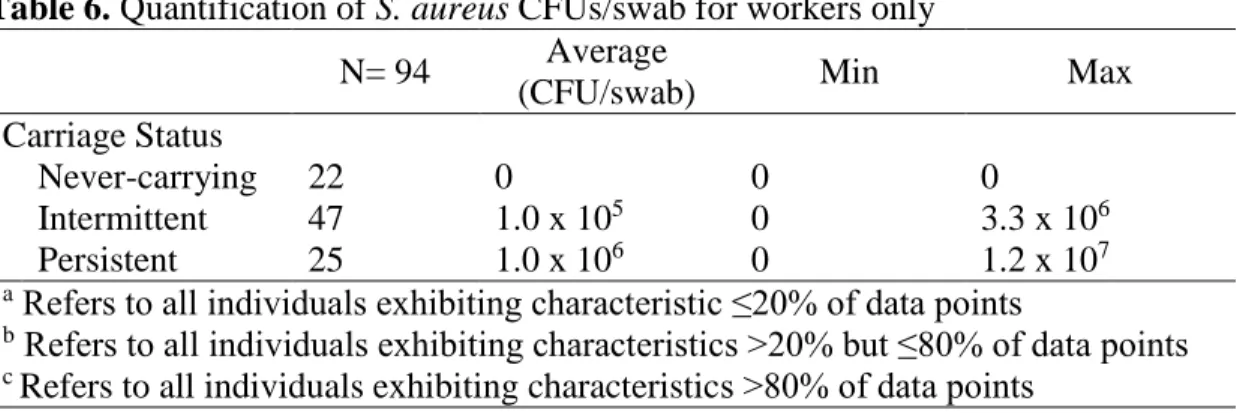
For the 94 industrial hog farmers, twenty-two individuals exhibited characteristics of never-carrying S. aureus had zero CFUs/swab (Table 6). Forty-seven of the workers were intermittent carriers and on average displayed 1.0 x 10⁵ CFUs/swab (range: 0 to 3.3 x 10⁶ CFUs/swab). Twenty-five individuals were persistent carriers of S. aureus and on average displayed 1.0 x 10⁶ CFUs/swab (range: 0 to 1.2 x 10⁷ CFUs/swab).
Table 6. Quantification of S. aureus CFUs/swab for workers only
N= 94 Average
(CFU/swab) Min Max
Carriage Status
Never-carrying 22 0 0 0
Intermittent 47 1.0 x 10⁵ 0 3.3 x 10⁶
Persistent 25 1.0 x 10⁶ 0 1.2 x 10⁷
a Refers to all individuals exhibiting characteristic ≤20% of data points
b Refers to all individuals exhibiting characteristics ˃20% but ≤80% of data points c Refers to all individuals exhibiting characteristics ˃80% of data points
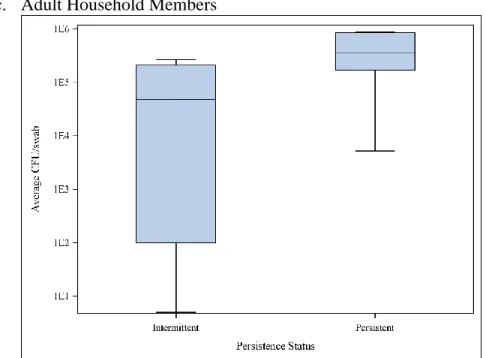
The distribution of quantification of presumptive S. aureus isolates for intermittent and persistent carriers is displayed in Figure 3 and is displayed by participant type. There does not appear to be a significant difference in assessing the difference in the mean S. aureus
28 a. All Participants
29 c. Adult Household Members
d. Minors
30 Quantification and Carriage Relationship:
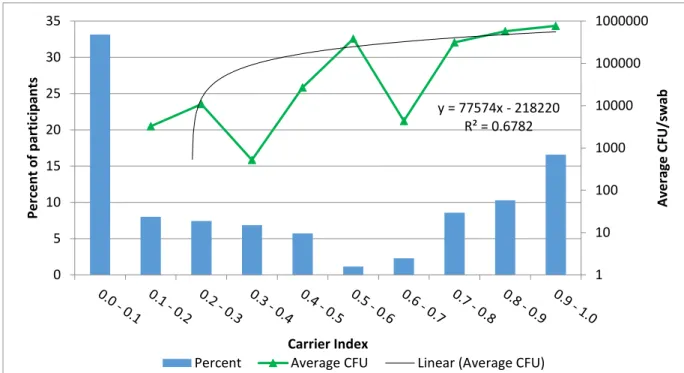
The relationship between quantification of S. aureus in CFUs/swab versus carriage status is displayed in Figure 4 below. There is a positive association between carrier index and
concentration of S. aureus (R2=0.6782).
Figure 4. Average S. aureus CFU versus carriage index for all participants.
Note: Carrier index is an individual’s proportion of swabs which are positive for S. aureus out of the total swabs samples.
Antibiotic Resistance:
A total of 203 presumptive S. aureus isolates from 61 participants were analyzed for antibiotic resistance testing of sixteen different antibiotics from fourteen different classes. Of the 203 isolates, forty-three percent (n=87) demonstrated complete resistance to three or more
antibiotics and are thereby classified as MDRSA (Figure 5). One hundred ninety-three isolates exhibited complete resistance to β-lactams with the second highest group exhibiting resistance to the macrolides. None of the isolates demonstrated complete resistance to lipopeptides,
oxazolidonoes, nitrofurans, rifampicin, sulfonamides, or glycopeptides. y = 77574x - 218220
R² = 0.6782
1 10 100 1000 10000 100000 1000000 0 5 10 15 20 25 30 35 A ve rag e CFU/swab P er ce n t of p ar ti cipan ts Carrier Index
31
Figure 5. Percent of isolates demonstrating complete resistance to antibiotic class by sub-group.
Livestock Association:
Livestock-association was is characterized by absence of the scn gene and complete resistance to tetracycline. A total of 369 isolates from 118 individuals underwent PCR for the presence of the scn gene. Forty percent of the isolates (n=147) did not demonstrate presence of the scn gene. Of the 203 isolates tested for antibiotic susceptibility, 33 percent of the isolates (n=67) demonstrated complete resistance to tetracycline.
0 10 20 30 40 50 60 70 80 90 100 P er cen t of Is ola tes
Worker Adult Non-IHO Worker Minor 14 8 64 9 10 66 9 11
7 1 2 1
47 14
6
12431 38
32
CHAPTER 4: DISCUSSION
This study is the first longitudinal study to track industrial hog farmers and their family members for an extended period of four months to determine carriage status of S. aureus.
Results showed that 27 percent of the participants were persistent carriers of S. aureus (n=47), 40 percent were intermittent (n=70), and 33 percent were never-carrying (n=58) which differs from the 20-60-20 percent distribution of carriage status reported among all healthy Americans (Peacock et al, 2001). The distribution of carriage status observed in this study population in comparison to the US population appears to be significantly different (Χ2=30.895, p<0.001). This provides evidence that the population targeted by this study has higher rates of S. aureus carriage than those without livestock exposure.
Overall, MRSA carriage in the study population was lower than S. aureus carriage with none of the participants being persistent carriers for MRSA. Eight percent of the study
population were intermittent carriers for MRSA (n=14) with the prevalence of 2.4 percent which is higher than the 2002 estimated MRSA prevalence in the US of 0.8 percent in a 2.3 million person study (Kuehnert et al, 2004). The prevalence of MRSA within this study population is significantly different than the observed prevalence in the US population (Χ2=32.880, p<0.001).
33
in this study (Nadimpalli et al, 2014). Twenty seven percent of workers in the 14-day study were described as intermittent carriers for S. aureus compared to the fifty percent (n=47) found in this four month study. The difference between the S. aureus carriage rates between the 14-day study and the workers in this study were all found to not be statistically significant (persistent carriers: Z=1.74, p=0.082; intermittent carriers: Z=-1.95, p=0.051; non-carrying: Z= 0.404, p=0.689). None of the workers were persistent carriers for MRSA in this study compared to the 4.5 percent of the workers in the 14-day study. In comparing MRSA carriage rate, this was the only
difference found to be significantly significant (persistent: Z=2.07, p=0.038; intermittent: Z=-1.55, p=0.121; non-carrying: Z=0.813, p=0.418).
One of the interesting findings from this study was that minors were the group with the highest percentage of persistent carriers of S. aureus at thirty-four percent (n=16) which was significantly different than the rate observed in workers and their adult household contacts (Table 5). This agrees with a previous study that identified minors as more likely to be persistent carriers than adults, and that carriage patterns tend to change between the ages of 10 and 20 years old (Armstrong-Ester, 1976). Workers had the lowest percentage of never-carrying individuals at twenty-three percent (n=22) which was to be expected due to the fact that the workers have the highest level of exposure compared to the other participants in the study population. Over half of the adult household contacts were never-carrying for S. aureus suggesting that the group is the least likely exposed to S. aureus than the other two, however the difference was not significant (p=0.1321).
34
concentration of S. aureus in the nares and are unlikely to be temporarily contaminated or eradicate the bacterium after a short period of time. Also workers had a higher average of CFU/swab for both persistent and intermittent carriers compared to the all study participants however this was not proven to be significantly different.
Approximately 42 percent (n=79) of tested isolates were MDRSA. Of the commonly used antibiotics used to treat specific S. aureus and MRSA infections, the only one to which isolates demonstrated resistance was clindamycin. Isolates tested in this study have not
developed resistance to other common antibiotics such as vancomycin, rifampin, trimethoprim-sulfamethoxozol, linezolid, and daptomycin (Wagener et al, 2014). Interestingly enough of the nine different classes in which any of the isolates demonstrated complete resistance to, eight of them are used in the livestock setting. Only one of the five antibiotic classes that none of the isolates demonstrated resistance to, sulfunonamides, had been used in the livestock setting where the other four are only administered to humans.
Out of the 187 isolates which underwent antibiotic resistance testing, 32 percent (n=59) demonstrated complete resistance to tetracycline, a characteristic of livestock association. The percentage of tetracycline resistance is lower than previously reported values in similar study populations of IHO workers and their family members (46.2 percent); however, it still remains larger than expected outside IHO settings (Rinsky et al, 2012). Additionally, the absence of the scn gene was demonstrated in 39 percent of S. aureus isolates (n=123), suggesting another marker of livestock association.
35
a randomization of participants could be obtained. However, even then, restrictions due to employees frequently changing jobs and transitory employment on the industrial hog farms would undermine the ability to access accurate work records of employees and their current addresses. Another limitation to this study is the lack of appropriate reference groups such as those within the community or other demographically similar farm populations. Having a reference group would be beneficial for drawing conclusions of the study results.
Another limitation to this study was that we were unable to measure the exposure conditions of individuals. The degree to which individuals are exposed to sources of antibiotic resistant bacteria varies due to lifestyle factors. This study would have benefited from being able to analyze working conditions such as through sampling environmental conditions of industrial hogs operations, the livestock the workers are exposed to, as well as any household exposures. While another study is currently being performed to test household environmental samples from some of the participating households, we were not permitted to sample in industrial animal operations of workers. Future studies would benefit from incorporating environmental samples from both the home and work environment to better link sources and exposure pathways that lead to high risk of contamination or colonization of S. aureus.
Conclusion:
36
37
APPENDIX: STAPHYLOCOCCUS AUREUS SURIVIAL EXPERIMENT
Introduction:
Due to logistical constraints imposed by the design of this persistence study, participants’ nasal swabs were stored for up to eight days prior to laboratory analysis. In order to determine whether false negative swabs could result from an eight-day holding time, we conducted a Staphylococccus aureus survival experiment prior to beginning the study. In this experiment, we examined the effect of (a) holding times between one to ten days, (b) storage temperature, and (c) initial inoculation concentration on S. aureus survival.
Methods:
Nasal Swab Seeding
38
Three swabs seeded with 104 CFU and three seeded with 102 CFU were immediately quantified using procedures described below, in order to obtain baseline counts. For the remaining 120 swabs, half of the swabs seeded with 104 CFU (n=30) and half of the swabs seeded with 102 CFU (n=30) were stored at room temperature (25°C), in ambient light. The remaining 60 swabs were stored at 4-8°C.
Quantification of S. aureus on seeded nasal swabs
We assayed three swabs from each of the four experimental groups (Figure 7) on days 1 through 10. Swabs were clipped into 500 µl of PBS and vortexed for 30-60 seconds at high speed. 100 µl of the neat sample and serial 10-fold dilutions there-of were spread on TSA plates using a sterilized spreader and incubated for 24 hours at 37°C. Colonies with S. aureus
morphology were counted manually or by a destructive counter. The detection limit using this method was 5 S. aureus CFU/swab.
Statistical Analyses
39 Results:
Ten-day survival curves for S. aureus seeded onto nasal swabs at concentrations of 104 CFU and 102CFU are presented in Figure 7. S. aureus was recovered throughout the ten-day period from swabs seeded with 104 CFU, regardless of storage temperature. However, S. aureus was only consistently recovered (S. aureus CFU/swab ≥ detection limit for all three replicates) from swabs seeded with 102 CFU through days 1-4.
The effect of storage temperature on survival of S. aureus was unclear among swabs inoculated with 102CFU. However, among swabs inoculated with 104CFU, we observed that storage at 4-8°C resulted in greater survival of S. aureus compared to storage at room
temperature. This effect was statistically significant at p=0.05 on day 5 and after day 7 (Table 7).
Conclusions:
41
Figure 7. Survival of S. aureus seeded onto nasal swabs over a ten-day period.a
42
Table 7. Differences in survival of S. aureus seeded onto nasal swabs when stored at room temperature (25°C) versus refrigeration (4-8°C) over a 10-day period.
aP-value comparing average S. aureus CFU/swab recovered from swabs stored at room temperature versus refrigeration using unpaired, two-sided student t-test and the Satterthwaite approximation.
bP-value cannot be computed because observations are too few or because there is not enough variation among observations within a group.
*Statistically significant difference in survival at the 0.05 level. S. aureus CFU/swab
104 102
Day p-valuea p-valuea
1 0.1697 0.1790
2 0.8112 1.000
3 0.0549 0.4226
4 0.1442 1.000
5 0.0458* 0.6244
6 0.5254 -b
7 0.0119* -
8 0.0162* -
9 0.0401* -
43
WORKS CITED
Anderson, M., and M. Sobsey. "Detection and occurrence of antimicrobially resistant E. coli in groundwater on or near swine farms in eastern North Carolina." Water Science & Technology 54.3 (2006): 211-218.
Armand-Lefevre, Laurence, Raymond Ruimy, and Antoine Andremont. "Clonal comparison of Staphylococcus aureus isolates from healthy pig farmers, human controls, and pigs."
Emerging infectious diseases 11.5 (2005).
Armstrong-Esther, C. A., and J. E. Smith. "Carriage patterns of Staphylococcus aureus in a healthy non-hospital population of adults and children." Annals of human biology 3.3 (1976): 221-227.
Arriola, Carmen S., et al. "Presence of methicillin-resistant Staphylococcus aureus in pigs in Peru." PloS one 6.12 (2011).
Börjesson, Stefan. Antibiotic Resistance in Wastewater: Methicillin-resistant Staphylococcus aureus (MRSA) and antibiotic resistance genes. Diss. Mid Sweden University, 2009. Chee-Sanford, Joanne C., et al. "Fate and transport of antibiotic residues and antibiotic resistance
genes following land application of manure waste." Journal of environmental quality 38.3 (2009): 1086-1108.
Cosgrove, Sara E., et al. "Comparison of mortality associated with methicillin-resistant and methicillin-susceptible Staphylococcus aureus bacteremia: a meta-analysis." Clinical infectious diseases 36.1 (2003): 53-59.
Cuny, Christiane, et al. "Nasal colonization of humans with methicillin-resistant Staphylococcus aureus (MRSA) CC398 with and without exposure to pigs." PLoS One 4.8 (2009): e6800.
Dorado-García, Alejandro, et al. "Risk factors for persistence of livestock-associated MRSA and environmental exposure in veal calf farmers and their family members: an observational longitudinal study." BMJ open 3.9 (2013): e003272.
Eby, Jacob. "The Prevalence Of Antibiotic-Resistant Bacteria On Mosquitoes Collected From A Recreational Park." Prevalence (2010).
Finn, Robert. "Recurrent Infections With MRSA: Treatment Efficacy Is Moderate." Pediatric News (2005).
44
Garcia-Graells, Cristina, et al. "Livestock veterinarians at high risk of acquiring methicillin-resistant Staphylococcus aureus ST398." Epidemiology and infection 140.03 (2012): 383- 389.
Gegner, Lance. "Considerations in organic hog production." ATTRA’s organic matters series 43 (2001).
Gilchrist, Mary J., et al. "The potential role of concentrated animal feeding operations in infectious disease epidemics and antibiotic resistance." Environmental Health Perspectives 115.2 (2007): 313.
Golding, George R., et al. "Livestock-associated methicillin-resistant Staphylococcus aureus sequence type 398 in humans, Canada." Emerging infectious diseases 16.4 (2010): 587. Gómez-Sanz, Elena, et al. "Detection, molecular characterization, and clonal diversity of
methicillin-resistant Staphylococcus aureus CC398 and CC97 in Spanish slaughter pigs of different age groups." Foodborne Pathogens and Disease 7.10 (2010): 1269-1277. Gorwitz, Rachel J., et al. "Changes in the prevalence of nasal colonization with Staphylococcus
aureus in the United States, 2001–2004." Journal of Infectious Diseases 197.9 (2008): 1226-1234.
Graveland, Haitske, et al. "Methicillin resistant Staphylococcus aureus ST398 in veal calf farming: human MRSA carriage related with animal antimicrobial usage and farm hygiene." PloS One 5.6 (2010): e10990.
Graveland, Haitske, et al. "Persistence of livestock associated MRSA CC398 in humans is dependent on intensity of animal contact." PLoS One 6.2 (2011): e16830.
Hallin, Marie, Alexander W. Friedrich, and Marc J. Struelens. "spa typing for epidemiological surveillance of Staphylococcus aureus." Molecular Epidemiology of Microorganisms. Humana Press, 2009. 189-202.
Hanson, B. M., et al. "Prevalence of Staphylococcus aureus and methicillin-resistant
Staphylococcus aureus (MRSA) on retail meat in Iowa." Journal of infection and public health 4.4 (2011): 169-174.
Hardy, Katherine J., et al. "A Study of the Relationship Between Environmental Contamination with Methicillin‐Resistant Staphylococcus Aureus (MRSA) and Patients' Acquisition of MRSA." Infection control and hospital epidemiology 27.2 (2006): 127-132.
Huber, Helen, et al. "Prevalence and characteristics of methicillin-resistant Staphylococcus
45
Iwase, T., et al., “Staphylococcus epidermidis Esp inhibits Staphylococcus aureus biofilm formation and nasal colonization.” Nature (2010): 346-9.
Khanna, T., et al. "Methicillin resistant Staphylococcus aureus colonization in pigs and pig farmers." Veterinary microbiology 128.3 (2008): 298-303.
Köck, Robin, et al. "Persistence of nasal colonization with livestock-associated
methicillin-resistant Staphylococcus aureus in pig farmers after holidays from pig exposure." Applied and environmental microbiology 78.11 (2012): 4046-4047.
Kramer, Axel, Ingeborg Schwebke, and Günter Kampf. "How long do nosocomial pathogens persist on inanimate surfaces? A systematic review." BMC infectious diseases 6.1 (2006): 130.
Kuehnert, Matthew J., et al. "Prevalence of Staphylococcus aureus nasal colonization in the United States, 2001–2002." Journal of Infectious Diseases 193.2 (2006): 172-179.
Larson, Kerry R. Leedom, et al. "Methicillin-resistant Staphylococcus aureus in pork production shower facilities." Applied and environmental microbiology 77.2 (2011): 696-698.
Lewis, Hannah C., et al. "Pigs as source of methicillin-resistant Staphylococcus aureus CC398 infections in humans, Denmark." Emerging infectious diseases 14.9 (2008): 1383.
Liwimbi, Lloyd Chipiliro Siyani. "Antibiotic Resistance and Water Quality: Land Application of Swine Lagoon Effluent as a Potential Source of Antibiotic Resistant Genes in Surface Water." (2009).
Lowy, Franklin D. "Staphylococcus aureus infections." New England Journal of Medicine 339.8 (1998): 520-532.
McEwen, Scott A., and Paula J. Fedorka-Cray. "Antimicrobial use and resistance in animals." Clinical Infectious Diseases 34.Supplement 3 (2002): S93-S106.
Monecke, Stefan, et al. "A field guide to pandemic, epidemic and sporadic clones of methicillin- resistant Staphylococcus aureus." PloS one 6.4 (2011): e17936.
Mulders, M. N., et al. "Prevalence of livestock-associated MRSA in broiler flocks and risk factors for slaughterhouse personnel in The Netherlands." Epidemiology and infection 138.05 (2010): 743-755.
46
Nadimpalli, M., et al. "Identification of Staphylococcus aureus from enriched nasal swabs within 24 hours is improved with use of multiple culture media." Journal of medical
microbiology (2013).
Nadimpalli, M., et al. “Persistence of livestock-associated antibiotic-resistant Staphylococcus aureus among industrial hog operation workers in North Carolina over 14 days.” Submitted for publication (2014).
Naimi, Timothy S., et al. "Comparison of community-and health care–associated methicillin-resistant Staphylococcus aureus infection." JAMA: the journal of the American Medical Association 290.22 (2003): 2976-2984.
Peacock, Sharon J., Ishani de Silva, and Franklin D. Lowy. "What determines nasal carriage of Staphylococcus aureus?." Trends in microbiology 9.12 (2001): 605-610.
Price, Lance B., et al. "Staphylococcus aureus CC398: host adaptation and emergence of methicillin resistance in livestock." MBio 3.1 (2012).
Pu, Shuaihua, Feifei Han, and Beilei Ge. "Isolation and characterization of methicillin-resistant Staphylococcus aureus strains from Louisiana retail meats." Applied and environmental microbiology 75.1 (2009): 265-267.
Reischl, Udo, et al. "Rapid identification of methicillin-resistant Staphylococcus aureus and simultaneous species confirmation using real-time fluorescence PCR." Journal of Clinical Microbiology 38.6 (2000): 2429-2433.
Rinsky, Jessica L., et al. "Livestock-Associated Methicillin and Multidrug Resistant Staphylococcus aureus Is Present among Industrial, Not Antibiotic-Free Livestock Operation Workers in North Carolina." PloS one 8.7 (2013): e67641.
Robicsek, Ari, Jennifer L. Beaumont, and Lance R. Peterson. "Duration of colonization with methicillin-resistant Staphylococcus aureus." Clinical Infectious Diseases 48.7 (2009): 910-913.
Salmenlinna, Saara, et al. "Human cases of methicillin-resistant Staphylococcus aureus CC398, Finland." Emerging infectious diseases 16.10 (2010): 1626.
Sanford, Melissa D., et al. "Efficient detection and long-term persistence of the carriage of methicillin-resistant Staphylococcus aureus." Clinical Infectious Diseases 19.6 (1994): 1123-1128.
Schulz, Jochen, et al. "LA-MRSA contamination of air and soil surfaces in the vicinity of pig barns: A longitudinal study." Applied and Environmental Microbiology (2012).
47
Smith, Tara C., et al. "Methicillin-resistant Staphylococcus aureus (MRSA) strain ST398 is present in midwestern US swine and swine workers." Plos one 4.1 (2009): e4258. Van Cleef, B. A., et al. "High prevalence of nasal MRSA carriage in slaughterhouse workers in
contact with live pigs in The Netherlands." Epidemiol Infect 138.5 (2010): 756-63. van Cleef, Brigitte AGL, et al. "Persistence of livestock-associated methicillin-resistant
Staphylococcus aureus in field workers after short-term occupational exposure to pigs and veal calves." Journal of clinical microbiology 49.3 (2011): 1030-1033.
VandenBergh, Marjolein FQ, et al. "Follow-up of Staphylococcus aureus nasal carriage after 8 years: redefining the persistent carrier state." Journal of clinical microbiology 37.10 (1999): 3133-3140.
Vijver, L. P. L., et al. "Prevalence and Molecular Characteristics of Methicillin‐Resistant Staphylococcus aureus (MRSA) in Organic Pig Herds in The Netherlands." Zoonoses and Public Health (2013).
Vos, CJ de, H. S. Horst, and A. A. Dijkhuizen. "Risk of animal movements for the introduction of contagious animal diseases into densely populated livestock areas of the European Union." (2000).
Waters, Andrew E., et al. "Multidrug-resistant Staphylococcus aureus in US meat and poultry." Clinical Infectious Diseases 52.10 (2011): 1227-1230.
Wagenaar, Jaap A., et al. "Unexpected sequence types in livestock associated
methicillin-resistant Staphylococcus aureus (MRSA): MRSA ST9 and a single locus variant of ST9 in pig farming in China." Veterinary microbiology 139.3 (2009): 405-409.
Weese, J. S., B. P. Avery, and R. J. Reid‐Smith. "Detection and quantification of methicillin‐
resistant Staphylococcus aureus (MRSA) clones in retail meat products." Letters in applied microbiology 51.3 (2010): 338-342.
Wagener, J., & Seybold, U. (2014). MRSA - hygiene management, diagnostics and treatment. Deutsche medizinische Wochenschrift, 139(13), 643–54.
Willer, H., and L. Kilcher. "The World of Organic Agriculture: Statistics and Emerging Trends 2011: Bonn: International Federation of Organic Agriculture Movements (IFOAM)." Frick, Switzerland: Research Institute of Organic Agriculture (FiBL) (2011).
48
Wu, Dejing, et al. "Epidemiology and molecular characteristics of community-associated methicillin-resistant and methicillin-susceptible Staphylococcus aureus from skin/soft tissue infections in a children's hospital in Beijing, China." Diagnostic microbiology and infectious disease 67.1 (2010): 1-8.