PROGRESS TOWARDS THE DESIGN AND SYNTHESIS OF NOVEL ANTI-TUMOR NEO-TANSHINLACTONE ANALOGUES
Joshua D. Brattlie
A thesis submitted to the faculty at the University of North Carolina at Chapel Hill in partial fulfillment of the requirements for the degree of Master of Science in the Division of Chemical
Biology and Medicinal Chemistry in the School of Pharmacy.
Chapel Hill 2014
Approved by:
Kuo-Hsiung Lee
Stephen V. Frye
iii ABSTRACT
Joshua D. Brattlie: Progress Towards the Design and Synthesis of Novel Anti-tumor Neo-tanshinlactone Analogues
(Under the direction of Kenan Distinguished Professor Kuo-Hsiung Lee)
The goals of this research are to design and synthesize novel neo-tanshinlactone
analogues utilizing bioisosterism and molecular modification, and to evaluate their bioactivity as anti-breast cancer agents.
It has been shown that neo-tanshinlactone (1) and several of its analogues retain potent and selective in vitro anti- breast cancer activity. Previous research on neo-tanshinlactone focused on designing a more efficient synthetic route to synthesize 4-ethyl neo-tanshinlactone (2). This improved route was utilized to design and synthesize new compounds to elucidate structure-activity relationships (SAR) of 1. Previously designed novel analogues of 1 also revolved around the systematic breakdown of its individual rings.
iv
ACKNOWLEDGEMENTS
I would first like to thank my mentor, Dr. Kuo-Hsiung Lee, for his constant support and encouragement during my graduate studies. I am tremendously grateful for the opportunity he has given me to work in such an extraordinary environment.
Next, to the members of my student advisory committee, Dr. Stephen Frye and Dr. David Lawrence, I wish to extend my sincere gratitude for their generous offers of advice and criticism.
I would also like to thank Dr. Emika Ohkoshi and Dr. Kyoko Nakagawa-Goto for offering their expertise and experiences throughout my graduate studies.
A tremendous thank you goes to Dr. Xiaoming Yang, who has been an incredible laboratory mentor. He has provided his vast knowledge of chemical synthesis and various laboratory techniques for which I am extremely grateful.
A special thank you goes to Dr. Masuo Goto, who has provided encouragement as well as conducting the cytotoxicity assays. And also to Dr. Susan Morris-Natschke for her help in the preparation of this thesis.
To the rest of the faculty, students, and friends within Dr. Lee’s laboratories, as well as the Eshelman School of Pharmacy, I would like to extend my gratitude for providing me with an experience I will never forget.
v
TABLE OF CONTENTS
LIST OF FIGURES AND TABLES... vii
LIST OF SCHEMES... viii
LIST OF SYMBOLS AND ABBREVIATIONS ... ix
CHAPTER 1: BREAST CANCER: OVERVIEW, TREATMENTS, AND CURRENT THERAPEUTIC AGENTS ...1
1.1 Introduction ...1
1.2 Risk Factors ...1
1.3 Treatments and Currently Used Agents ...3
1.4 References ...10
CHAPTER 2: DESIGN AND PROGRESS TOWARD THE SYNTHESIS OF NOVEL NEO-TANSHINLACTONE ANALOGUES ...12
2.1 Introduction ...12
vi
2.3 Chemistry ...15
2.3.1 Chemistry of 1-ethyl-6-methylfuro[2',3':4,5]pyrano[2,3-e]indol-5(1H)-one ...15
2.3.2 Chemistry of 5-ethyl-1-methylbenzo[h]furo[3,2-c]quinolin-11(10H)-one ...16
2.3.3 Chemistry of 6-ethyl-1-methylbenzo[7,8]chromeno[4,3-b]pyrrol-11(3H)-one ...18
2.4 Results and Conclusions ...20
2.5 Future Studies ...21
2.6 Experimental Section ...22
2.6.1 Chemistry ...22
2.6.2 Cytotoxicity Assay ...32
vii
LIST OF FIGURES AND TABLES
Figure 1-1. Common chemotherapeutic and hormone therapy agents ...6
Figure 1-2. Common targeted therapy agents ...8
Figure 1-3. Therapies targeting EGFR and HER pathways ...9
Figure 2-1. Neo-tanshinlactone and its analogue 4-ethyl neo-tanshinlactone ...14
Figure 2-2. Systematic breakdown of NTL used to elucidate SAR ...14
Figure 2-3. Design of scaffolds A, B, and C along with corresponding analogues 13, 14, and 15 ...15
Table 2-1. Cytotoxicity assay results for analogue 13 ...21
viii
LIST OF SCHEMES
Scheme 2-1. Synthetic pathway to analogue 13 ...16
Scheme 2-2. Synthetic pathway to analogue 14 ...17
Scheme 2-3. Synthetic pathway to analogue 15 ...19
ix
LIST OF SYMBOLS AND ABBREVIATIONS
Ar Argon
ACN Acetonitrile
AlCl3 Aluminum chloride BBr3 Boron tribromide BCl3 Boron trichloride
C Celsius
d Doublet
DCM Dichloromethane
DDQ 2,3-Dichloro-5,6-dicyano-p-benzoquinone DMAP 4-(N,N-Dimethylamino)pyridine
DME 1,2-Dimethoxyethane DMSO Dimethyl sulfoxide EtI Iodoethane
EtMgBr Ethylmagnesium bromide EtOAc Ethyl acetate
g Grams
h Hour
HCl Hydrochloric acid H2O Water
x KOH Potassium hydroxide
m Multiplet
M Molar
MgSO4 Magnesium sulfate min Minutes
mL Milliliters mmol Millimole NaH Sodium hydride NH4Cl Ammonium chloride NH4OH Ammonium hydroxide NMR Nuclear magnetic resonance Pd/C Palladium on activated charcoal
Pd(OH)2/C Palladium hydroxide on activated charcoal POCl3 Phosphorous oxychloride
PPTS Pyridinium-p-toluenesulfonate
q Quintet
rt Room temperature
s Singlet
t Triplet
THF Tetrahydrofuran
1 CHAPTER 1
BREAST CANCER: OVERVIEW, TREATMENTS, AND CURRENT THERAPEUTIC AGENTS
1.1 Introduction
Breast cancer is a form of cancer that develops in the cells of the breast.1 Among women in the United States, breast cancer is the leading form of cancer and, after lung cancer, is the second leading cause of cancer death in women.1 Breast cancer is a worldwide problem; the World Health Organization estimated that in 2011, 508,000 women died worldwide due to breast cancer.2 It is also estimated that more than 230,000 new cases of invasive breast cancer, over 60,000 new cases of carcinoma in situ of the breast, and 40,000 deaths will occur from breast cancer in 2014.1 While breast cancer is more prevalent in women, men are still susceptible. The National Cancer Institute estimates that in 2014, over 2,300 new cases of male breast cancer will occur causing an estimate 430 deaths.3
1.2 Risk Factors
2 Gender
With less than 1% of breast cancer cases being attributed to males, being of the female gender is a significant risk factor.1,5
Age
As women increase in age, their chances of acquiring breast cancer increase. The age at which women start menstruating and start menopause also affect the risk of breast cancer. Women who start menstruating earlier and start menopause later in life have shown an increased risk of developing breast cancer.1,4,6
Race
Caucasian women tend to be at a higher risk of acquiring breast cancer than African-American women, although African-African-American women have a higher risk of death from breast cancer.1
Family history and genetic factors
A family history of breast cancer is a relevant risk factor for acquiring breast cancer. Around 5-10% of all breast cancer cases and between 25-40% of cases in which the patient is under the age of 35 have been associated with hereditary factors. Mutations in BRCA1 and
3 Previous occurrence of breast cancer
Women who have had previous occurrences of breast cancer or other breast diseases, such as atypical epithelial hyperplasia, have an increased risk of acquiring the cancer in the other breast or another area within the same breast.1,4,6
Hormone therapy
The use of combined hormone therapy, in which postmenopausal women take estrogen and progesterone, has been associated with an increased risk of breast cancer. Discontinuation of the therapy seems to lower the risk to levels seen before the hormone therapy. While, an
increased risk in breast cancer has been associated with the use of these hormones, the risk is not as great in comparison to women in which menopause was delayed for the same amount of time.1,4,6
Lifestyle choices
Certain lifestyle choices have also been associated with an increased risk in breast cancer. Some of these include: consuming alcohol and tobacco products, not bearing children, not
breastfeeding, and allowing oneself to become obese or overweight.1,4,6
1.3 Treatments and Currently Used Agents
4 Surgery
In the case of breast cancer, surgery focuses on removing as much of the cancerous tissue as possible. One form of breast cancer surgery is breast-conserving surgery (BCS), also known as lumpectomy. BCS is usually done in situations where the cancer is localized to a small area of the breast. The surgery is also used as a diagnostic tool to determine whether the cancer has spread to the axillary lymph nodes. Radiation therapy is commonly used in combination with BCS. Another form of surgery is mastectomy, which removes the entire breast. Mastectomies are often done when the cancer is not localized to a small area of the breast or as a prophylactic treatment to ensure that the cancer does not metastasize. A radical mastectomy can also be performed in which the axillary lymph nodes are removed along with the breast tissue in cases where the cancer has spread to the lymph nodes.1,6,9
Radiation therapy
Radiation therapy is generally used in combination with surgery or chemotherapy. In combination with surgery, radiation therapy can be used before, in attempt to shrink the size of the tumor to allow for a better outcome for surgery, or after, to ensure than any remaining cancer cells are eradicated from the breast tissue or surrounding area. Radiation therapy consists of treating the affected area with high-energy rays or particles to kill cancer cells.1,6
Chemotherapy
5
tumor or post-surgery in an attempt to rid the body of any remaining cancer cells, and also in combination with hormone therapy. The use of multiple chemotherapy drugs in a combination therapy can also be highly effective in breast cancer treatment.1 Common chemotherapeutic agents include: 1) doxorubicin (Fig. 1-1, 1) and epirubicin (Fig 1-1, 2), topoisomerase II inhibitors which act by intercalating DNA, and halting replication10; 2) paclitaxel (Fig 1-1, 3) and docetaxel (Fig 1-1, 4), microtubule inhibitors which disrupt the normal cell division11; 3) 5-fluorouracil (Fig 1-1, 5), a thymidylate synthase inhibitor which prevents the production of thymidine necessary for DNA replication12; 4) cyclophosphamide (Fig 1-1, 6), a DNA alkylating agent which causes inter-strand and intra-strand DNA linkages leading to apoptosis.12
Hormone therapy
Hormone therapy is useful when the cancer cells are positive for estrogen receptors or progesterone receptors. Estrogen is able to promote the growth of breast cancer cells via these hormone receptors and is the major hormone involved in the development of breast cancer. The goal of hormone therapy is to block the actions of estrogen at these receptors and prevent estrogen-mediated cancer growth. Tamoxifen (Fig 1-1, 7) has been widely used for hormone therapy of breast cancer. Tamoxifen is thought to produce its antitumor activity by competitively inhibiting estrogen from acting on hormone receptors. Anastrazole (Fig 1-1, 8) represents
6
7 Targeted therapy
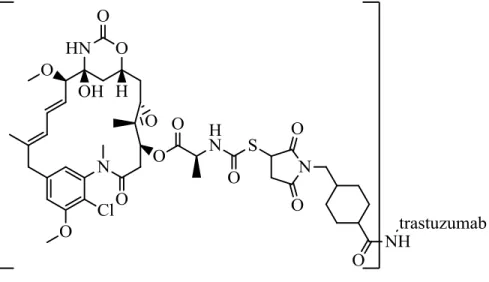
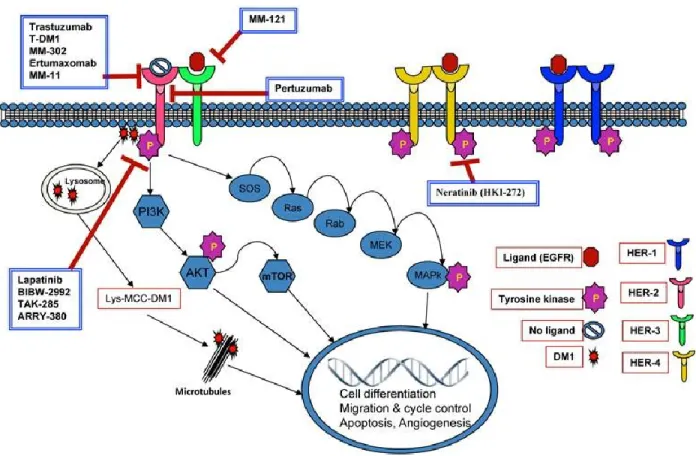
The identification of the molecular targets EGFR(epidermal growth factor receptor) and the related HER-2 (human epidermal growth factor receptor 2) associated with breast cancer has allowed for the development of more targeted therapies. HER2 is overexpressed in around 30% of early-stage and invasive breast cancer cases.14,16,17 A significant correlation has been found between the overexpression of HER-2 and the reduced survival rates and increased recurrence rates in breast cancer patients.14,16,17 Researchers have taken advantage of this discovery to develop agents that target HER2. Common targeted therapy agents include: 1) trastuzumab (Herceptin), an anti-HER2 monoclonal antibody, which uses a humanized mouse monoclonal antibody that targets HER2 on the surface of tumor cells causing internalization and subsequent cell cycle inhibition; 2) pertuzumab, another humanized monoclonal antibody which is often used in combination with trastuzumab as an HER2 dimerization inhibitor, preventing the dimerization of HER2 with other HER receptors; 3) ado-trastuzumab emtansine (Fig 1-2, 9), an anti-HER2 antibody drug conjugate in which the antibody portion of the drug targets HER2, and once binding occurs the conjugate is internalized and subsequent degradation leads to release of the chemotherapeutic drug inside the tumor cell; and 4) lapatinib (Fig 1-2, 10), a dual
EGFR/HER2 inhibitor, which acts via inhibition of the intracellular kinase domains.14,16,17 Figure 1-3 displays the various actions of targeted therapy agents on EGFR and HER receptors. While targeted therapy has been proven to be an effective strategy to treat breast cancer, some
8
can negate the effects of trastuzumab on HER2-overexpressing patients as well as shedding of the HER2 surface receptor protein.18
9
10
1.4 REFERENCES
1. Breast Cancer Overview; the American Cancer Society. 2014. 2. Global Health Estimate; the World Health Organization 3. http://www.cancer.gov/cancertopics/types/breast
4. McPherson, K.; Steel, C. M.; Dixon, J. M. ABC of breast diseases. Breast cancer--epidemiology, risk factors and genetics. British Medical Journal 1994, 309 (6960), 1003-6.
5. Borgen, P.; Wong, G.;Vlamis, V.; Potter, C.; Hoffman, B.; Kinne, D.; McKinnon, W. Current Management of Male Breast Cancer. Annals of Surgery 1992, 215, 451-457. 6. Hortobagyi, G. N., Treatment of breast cancer. The New England Journal of Medicine
1998, 339 (14), 974-84.
7. Lux, M. P.; Fasching, P. A.; Beckmann, M. W., Hereditary breast and ovarian cancer: review and future perspectives. Journal of Molecular Medicine (Berlin) 2006, 84 (1), 16-28.
8. Amar, S.; Roy, V.; Perez, E. A., Treatment of metastatic breast cancer: looking towards the future. Breast Cancer Research and Treatment 2009, 114 (3), 413-22.
9. Howard, J. H.; Bland, K. I., Current management and treatment strategies for breast cancer. Current Opinion in Obstetrics & Gynecology 2012, 24 (1), 44-8.
10. Pommier, Y.; Leo, E.; Zhang, H.; Marchand, C., DNA topoisomerases and their
poisoning by anticancer and antibacterial drugs. Chemistry & Biology 2010, 17 (5), 421-33.
11. Crown, J.; O'Leary, M., The taxanes: an update. Lancet 2000, 355 (9210), 1176-8. 12. James A. McCubrey, R. A. F., Patrick M. Navolanic, Alberto M. Martelli, Linda S.
Steelman, Chemotherapy for Breast Cancer. In Methods of Cancer Diagnosis, Therapy and Prognosis, Hayat, M. A., Ed. Springer Netherlands: 2008; Vol. 1, pp 319-325. 13. Osborne, C. K., Tamoxifen in the treatment of breast cancer. The New England Journal
of Medicine 1998, 339 (22), 1609-18.
14. Higgins, M. J.; Baselga, J., Targeted therapies for breast cancer. The Journal of Clinical Investigation 2011, 121 (10), 3797-803.
11
16. Bange, J.; Zwick, E.; Ullrich, A., Molecular targets for breast cancer therapy and prevention. Nature Medicine 2001, 7 (5), 548-52.
17. Shawver, L. K.; Slamon, D.; Ullrich, A., Smart drugs: tyrosine kinase inhibitors in cancer therapy. Cancer Cell 2002, 1 (2), 117-23.
18. Ross, J.; Slodkowska, E.; Symmans, F.; Pusztai, L.; Ravdin, P.; Hortobagyi, G., The HER-2 receptor and breast cancer: ten years of targeted anti-HER-2 therapy and personalized medicine. The Oncologist 2009, 14, 320-368.
12 CHAPTER 2
DESIGN AND PROGRESS TOWARD THE SYNTHESIS OF NOVEL NEO-TANSHINLACTONE ANALOGUES
2.1 Introduction
Natural products have been used extensively throughout history as remedies for various ailments. In the past, these remedies would have included crude forms of the drug such as teas, tinctures or powders. Modern technology has now allowed us to isolate the bioactive constituents from natural sources to use as drugs, or drug leads.1,2 Natural products offer immense structural variety and chemical diversity that are unique and would not likely be discovered by the
traditional medicinal chemistry approaches.3,4 Early efforts in drug discovery from natural products led to drugs such as digoxin, morphine, codeine, aspirin, penicillin, and quinine.2,5 The use of natural products has had a huge impact on modern drug discovery. Between 1984 and 2004, around 50% of drugs introduced to the market were in some way derived from natural products. This percentage increased to 78 in the case of antibacterial agents.1 Accordingly, it is no surprise that over 60% of all currently used anticancer agents are derived from natural products.6 For these reasons, our group has maintained interest in the discovery of novel anticancer agents from natural sources.
13
blood vessels such as atherosclerosis and blood clotting abnormalities are just a few of the ailments treated with Tanshen.7,8 Extensive work has been done to determine the bioactive constituents of Tanshen, and more than 70 compounds have been isolated. These compounds have been divided into two groups, water-soluble and lipophilic. In 2004, Dr. Xihong Wang isolated neo-tanshinlactone (NTL, 11) (Figure 2-1) from an ethanol extract of Salvia
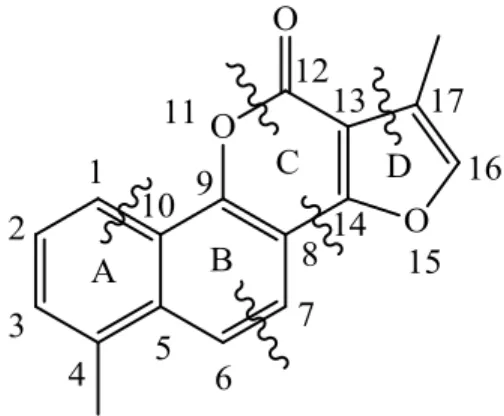
miltiorrhiza. After evaluating 11 in vitro, it was found that 11 expressed significant anti-breast cancer activity in comparison to Tamoxifen. Neo-tanshinlactone exhibited a 10-fold increase in potency and was 20-fold more selective than Tamoxifen when tested against ER+ and HER++ breast cancer cells.9 Further studies done by Dr. Wang led to the development of 4-ethyl neo-tanshinlactone (ENTL, 12) (Figure 2-1), which displayed increased potency in comparison to 11 against breast cancer cell lines MCF-7 and SK-BR-3.10 Research on 11 and 12 was continued by Dr. Yizhou Dong, from our group, who designed numerous analogues of 11 to elucidate
structure-activity relationship (SAR) correlations for this compound. Dr. Dong focused his studies on optimization of the synthesis of 12 and the systematic breakdown of the ring
structures of 11, as depicted by the wavy lines in Figure 2-2. In general, Dr. Dong found several important SAR correlations: 1) the C-4 position was important for anti-breast cancer activity and selectivity with ethyl being the most effective along with 2-bromoethyl and propyl; 2) the C-17 and C-16 positions were also important for activity with a methyl group at C-17 and a hydrogen atom at C-16 being the most favorable combination; 3) the lactone ring-C was essential for activity; 4) unsaturated rings were preferable over their saturated counterparts for rings A and D, an aromatic moiety for ring-A and a furan moiety for ring-D being the most preferable (Figure
2-2).11,12 Due to these findings, we felt that continued modification of 11 was warranted to design
14
Figure 2-1. Neo-tanshinlactone and its analogue 4-ethyl neo-tanshinlactone
Figure 2-2. Systematic breakdown of NTL used to elucidate SAR
2.2 Design
15
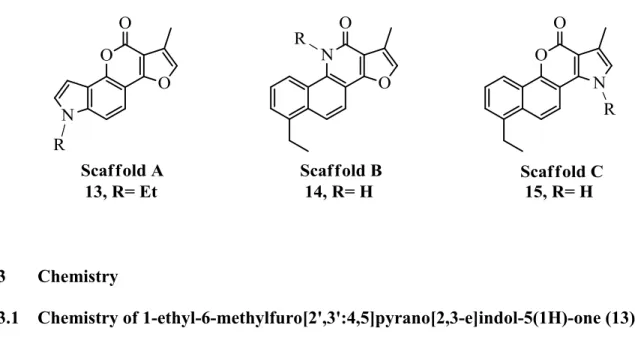
Figure 2-3. Design of scaffolds A, B, and C along with corresponding analogues 13, 14, and 15
2.3 Chemistry
16
Scheme 2-1. Synthetic pathway to analogue 13
Reagents and conditions: (a) NaH, EtI, THF 0°C rt, Ar, overnight; (b) NaH, EtOAc, DME, 0°C reflux, Ar, 3 h; (c) DDQ, 1,4-dioxane, relux, 2 h; (d) NaH, diethyl carbonate, toluene, 100°C, 5 h; (e) chloroacetone, AcOH, ammonium acetate, toluene, EtOH, rt 60°C reflux, 5 h.
2.3.2 Chemistry of 5-ethyl-1-methylbenzo[h]furo[3,2-c]quinolin-11(10H)-one (14)
17
to produce the naphthol 23.12 The aryloxyamide 24 was produced by treating the naphthol with ethyl 2-bromopropionate to generate the naphthalene ester, followed by production of the amide 24 via amination of the ethyl ester.17 The naphthylamine 25 was generated from the
aryloxyamide using potassium hydroxide via cleavage of the aryl C-O bond and subsequent cleavage of the amide C-N bond.17 Friedel-Craft’s acylation of the naphthylamine with boron trichloride, aluminum chloride, and acetonitrile generated 26.18 From 26, the previous method of acylation and internal cyclization gave 27, followed by tandem alkylation/intramolecular Aldol reactions were generate 14.12
18
Reagents and conditions: (a) EtMgBr, ZnCl2, THF, rt 0°C rt, Ar, overnight; (b) Pd/C (10%), Triglyme, 250°C, 2 days; (c) BBr3, DCM, 0°C reflux, Ar, 3 h; (d) (i) ethyl
2-bromopropionate, K2CO3, KI, acetone, reflux, 12 h; (ii) NH4OH (28-30%), EtOH, rt, 18 h; (e) KOH, DMSO, 140°C, 12 h; (f) BCl3, AlCl3, ACN, DME, 0°C reflux, Ar, 24 h; (g) NaH, diethyl carbonate, toluene, 100°C, Ar, 5 h; (h) chloroacetone, AcOH, ammonium acetate, EtOH, toluene, rt 60°C reflux, Ar, 24 h.
19
carboxybenzyl group via hydrogenation using Pd(OH)2/C under H2 atmosphere to afford the target compound (2-methyl-1,3-dioxolan-2-yl)methanamine, (34).22 The next step, which has yet to be completed, would be to react compounds 29 and 34 in the presence of triethylamine, followed by an acetic acid/H2O work up to afford the final compound 15.24
Scheme 2-3. Proposed synthetic pathway to analogue 15
20
Scheme 2-4. Synthetic pathway to (2-methyl-1,3-dioxolan-2-yl)methanamine reagent 34
Reagents and conditions: (a) Benzyl chloroformate, DMAP, triethylamine, DMSO, 50°C, Ar, 5 h; (b) oxalyl chloride, DMSO, triethylamine, DCM, -78°C rt, 1.3 h; (c) PPTS, ethylene glycol, benzene, reflux, 4 h; (d) Pd(OH)2/C (20%), EtOAc, H2, 50 psi, 5 h.
2.4 Results and Conclusions
21
cervical cancer); and KB-VIN (multidrug-resistant KB cell line). Paclitaxel, a clinically used anti-breast cancer agent was used for comparison. Compound 13 (JDB5-54 in Figure 2-1) showed no significant cytotoxicity with the average IC50 being greater than 34 µM for the three non-breast cancer cell lines and the triple negative breast cancer cell lines (Table 2-1).
Compound 13 exhibited a decreased potency in comparison to NTL and ENTL, and the selectivity towards breast cancer has also diminished. In conclusion, we have successfully synthesized two novel neo-tanshinlactone analogues, 13 and 14, and have made progress toward the synthesis of a third novel analogue, 15.
Table 2-1. Cytotoxicity assay results for analogue 13
SK-BR-3, negative, PgR-negative, HER2-overexpressed breast cancer; MCF-7, ER-positive, PgR±, negative breast cancer; ZR-75-1, ER-ER-positive, PgR-negative, HER2-overexpressed breast cancer; MDA-MB-231, Triple-negative (ER-nega/PgR-nega/erbB2 (HER2)-nega) breast cancer A549, Lung adenocarcinoma;; KB, originally isolated as the epidermoid carcinoma of the nasopharynx (ATCC stock cell line KB is recently clarified as the HeLa) KB-VIN, Multidrug-resistant KB cell line.
2.5 Future Studies
22
the nitrogen of the lactam ring which replaced one lactone oxygen in neo-tanshinlactone. Further studies will also be done to increase hydrophobicity, in hopes to increase membrane
permeability.
2.6 Experimental Section
2.6.1 Chemistry
Materials and Methods. 1H NMR spectra were measured on a Varian 400 MHz
VNMRS spectrometer using TMS as an internal standard. The solvent used was either CDCl3 or (CD3)2SO, as indicated in the detailed procedure. Mass spectra were measured on a Shimadzu LCMS-2010 instrument. TLC analysis was performed on Sorbent Technologies aluminum backed silica XG TLC plates and preparatory TLC was performed on ANALTECH Uniplate Silica Gel GF 1500 micron plates. Flash chromatography was performed on either Teledyne Isco CombiFlashRf or Biotage Isolera Prime instruments using Teledyne Isco RediSepRf normal phase columns and 230-400 mesh silica gel from Fisher Chemical. Chemicals were obtained from Aldrich, Fisher, TCI America, or Acros Organics.
Synthesis of 1-ethyl-6-methylfuro[2',3':4,5]pyrano[2,3-e]indol-5(1H)-one (13). 1-Ethyl-tetrahydro-4H-indol-4-one, 17. To cooled solution of
23
organic layer was then dried over magnesium sulfate (MgSO4), filtered, concentrated in vacuo, and purified via flash chromatography over silica gel, eluting with EtOAc:hexane (1:4), to give 17 as a pale yellow viscous oil. 1.46 g (90% yield). 1H NMR (400 MHz, CDCl3, ppm): δ 6.59-6.58 (1H, d, J = 4 Hz, aromatic), 6.56-6.55 (1H, d, J = 4 Hz, aromatic), 3.90-3.84 (2H, q, J = 8 Hz, CH2), 2.76-2.72 (2H, t, J = 8 Hz, CH2), 2.49-2.45 (2H, t, J = 8 Hz, CH2), 2.19-2.15 (2H, m, CH2), 1.41-1.39 (3H, t, J = 4 Hz, CH3)
5-Acetyl-1-ethyl-4-oxo-4,5,6,7-tetrahydroindole, 18. To a stirred solution of sodium hydride (5.40 g, 135 mmol) in dry 1,2-dimethoxyethane (30 mL) was added 1-ethyl-1,5,6,7-tetrahydro-4H-indol-4-one (1.47 g, 9 mmol) in 25 mL dry 1,2-dimethoxyethane at 0 °C under argon atmosphere. The reaction mixture was stirred for 30 min and EtOAc (4.4 mL, 45 mmol) was added dropwise. The reaction mixture was then heated to reflux for 3 h. After completion of the reaction as determined by TLC analysis, ice cold NH4Cl was added dropwise to quench the reaction and the mixture was then poured into a separatory funnel containing NH4Cl. The organic layer was extracted with EtOAc (3 x 50 mL), washed with brine, dried over MgSO4, filtered and concentrated under reduced pressure. The crude product was purified by flash chromatography over silica gel, eluting with EtOAc:hexane (1:4) to give a light yellow viscous oil. 756 mg (41% yield). 1H NMR (400 MHz, CDCl3, ppm): δ 6.59-6.58 (1H, d, J = 4 Hz, aromatic), 6.54-6.53 (1H, d, J = 4 Hz, aromatic), 3.87-3.81 (2H, q, J = 8 Hz, CH2), 3.52-3.50 (1H, t, J = 8 Hz, CH), 3.04-2.97 (1H, m, CH2), 2.70-2.63 (1H, m, CH2), 2.58-2.51 (2H, m, CH2), 2.29 (1H, s, CH3), 2.24-2.19 (1H, m, CH2), 1.38-1.36 (3H, t, J = 4, CH2). MS: m/z (M+2) 207.
5-Acetyl-4-hydroxy-1-ethyl-indole, 19. To dry 1,4-dioxane (20 mL) was added
24
mixture was cooled in an ice bath, filtered through celite, and washed with 1,4-dioxane. The filtrate was then evaporated under reduced pressure. The remaining crude product was purified via flash chromatography over silica gel, eluting with EtOAc:hexane (1:5) to give a pale yellow solid. 481 mg (64%). 1H NMR (400 MHz, CDCl3, ppm): δ 13.63 (1H, s, OH), 7.51-7.49 (1H, d,
J = 8 Hz, aromatic), 7.35-7.25 (1H, d, J = 4 Hz, aromatic), 6.84-6.82 (1H, d, J = 8 Hz, aromatic), 6.79-6.78 (1H, d, J = 4 Hz, aromatic), 4.18-4.12 (2H, q, J = 8 Hz, CH2), 2.64 (3H, s, CH3), 1.49-1.45 (3H, t, J = 8 Hz, CH3).
7-Ethyl-4-hydroxypyrano[2,3-e]indol-2(7H)-one, 20. To a stirred suspension of sodium hydride (60% dispersion in mineral oil, 473 mg, 11.83 mmol) in anhydrous toluene (15 mL) was added dropwise 5-acetyl-4-hydroxy-1-ethyl-indole (481 mg, 2.37 mmol) in 10 mL anhydrous toluene under argon atmosphere. Diethyl carbonate (0.43 mL, 3.56 mmol) in 5 mL anhydrous toluene was added dropwise to the reaction vessel and the mixture was heated to 100 °C for 5 h. The solvent was removed under reduced pressure and the remaining residue was treated with H2O (25 mL). The solution was acidified to a pH of 1-2 with 1M HCl causing a precipitate to form. The precipitate was filtered and washed several times with H2O. The resulting crude product was used in the next step without further purification. Pale yellow solid. 1H NMR (400 MHz, (CD3)2SO, ppm): δ 12.19 (1H, s, OH), 7.56-7.54 (1H, d, J = 8 Hz, aromatic), 7.53-7.52 (1H, d, J = 4 Hz, aromatic), 7.49-7.47 (1H, d, J = 8 Hz, aromatic), 6.72-6.71 (1H, d, J = 4 Hz, aromatic), 5.49 (1H, s, CH), 4.31-4.25 (2H, q, J = 8 Hz, CH2), 1.40-1.36 (3H, t, J = 8 Hz, CH3).
25
Chloroacetone (0.174 mL, 2.18 mmol) was then added and the mixture was stirred at rt for 30 min, heated to 60°C for 30 min, followed by heating to reflux for 5 h. When no further
transformation occurred as determined by TLC analysis, the reaction mixture was cooled to rt, diluted with H2O, and the organic layer was extracted with EtOAc (3 x 30 mL). The organic layers were combined, dried over MgSO4, filtered, and the solvent was removed under reduced pressure. The remaining crude product was purified via flash chromatography over silica gel, eluting with EtOAc:hexane (1:6). 83 mg (71% yield). Pale yellow solid. 1H NMR (400 MHz, CDCl3, ppm): δ 7.64-7.62 (1H, d, J = 8 Hz, aromatic), 7.34 (1H, s, aromatic), 7.31-7.29 (1H, d, J = 8 Hz, aromatic), 7.18-7.17 (1H, d, J = 4 Hz, aromatic), 6.95-6.94 (1H, d, J = 4 Hz, aromatic), 4.26-4.20 (2H, q, J = 8 Hz, CH2), 2.39 (3H, s, CH3), 1.53-1.49 (3H, t, J = 8 Hz, CH3). MS: m/z 268.
Synthesis of 5-ethyl-1-naphthol intermediate 23.
1-Ethyl-5-methoxynaphthalene, 22. To a solution of ethylmagnesium bromide (1.0 M
26
Once cooled, the mixture was filtered through celite, washed with EtOAc (3 x 50 mL), poured into a separatory funnel, extracted with EtOAc (3 x 50 mL), dried over MgSO4, and the solvent was removed under reduced pressure. Flash chromatography was done over silica gel, eluting with EtOAc:hexane (1:9) to afford 1-ethyl-5-methoxynaphthalene. 4.13 g (60% yield). Light yellow viscous oil. 1H NMR (400 MHz, CDCl3, ppm): δ 8.16-8.14 (1H, d, J = 8 Hz, aromatic), 7.64-7.62 (1H, d, J = 8 Hz, aromatic), 7.43-7.42 (1H, d, J = 4 Hz, aromatic), 7.41-7.39 (1H, t, J = 4 Hz, aromatic), 7.38-7.34 (1H, t, J = 8 Hz, aromatic), 6.83-6.82 (1H, d, J = 4 Hz, aromatic), 4.00 (1H, s, OCH3), 3.12-3.06 (2H, q, J = 8 Hz, CH2), 1.39-1.35 (3H, t, J = 8 Hz, CH3). MS: m/z 186.
5-Ethyl-1-naphthol, 23. To a stirred solution of 1-ethyl-5-methoxynaphthalene (4.12 g, 22.1 mmol) in 25 mL anhydrous DCM at 0°C was added boron tribromide (1.0 M in DCM, 66 mL, 66 mmol) dropwise. After removing the ice bath, the reaction mixture was allowed to warm to rt and heated to reflux for 3 h. After completion of the reaction as determined by TLC
27
Synthesis of 5-ethyl-1-methylbenzo[h]furo[3,2-c]quinolin-11(10H)-one (14).
2-((5-Ethylnaphthalen-1-yl)oxy)propanamide, 24. A mixture of 5-ethyl-1-naphthol (1.10 g, 6.39 mmol), ethyl 2-bromopropionate (1.24 mL, 9.58 mmol), anhydrous K2CO3 (1.76 g, 12.77 mmol), and KI (106 mg, 0.64 mmol) was refluxed in dry acetone (30 mL) for 12 h. The mixture was cooled to rt and the solvent was removed under reduced pressure. H2O was added to the remaining residue, extracted three times with DCM, dried over MgSO4, filtered, and
concentrated under reduced pressure. Aqueous NH4OH (28-30% NH4 in H2O, 15 mL) was added to the residue and the mixture was dissolved in 15 mL of EtOH. This mixture was stirred at rt for 18 h, then the solvent was removed under reduced pressure, and the remaining residue was purified by flash chromatography over silica gel, eluting with an EtOAc-hexane gradient to afford the desired aryloxyamide 24. 500 mg (32% yield). Pale pink solid. 1H NMR (400 MHz, CDCl3, ppm): δ 8.16-8.14 (1H, d, J = 8 Hz, aromatic), 7.72-7.70 (1H, d, J = 8 Hz, aromatic), 7.46-7.42 (1H, t, J = 8 Hz, aromatic), 7.41-7.37 (1H, t, J = 8 Hz, aromatic), 7.39-7.37 (1H, d, J = 8 Hz, aromatic), 6.84-6.82 (1H, d, J = 8 Hz, aromatic), 6.43 (2H, b, NH2), 4.90-4.86 (1H, q, J = 8 Hz, CH), 3.12-3.08 (2H, q, J = 8 Hz, CH2), 1.73-1.71 (3H, d, J = 8 Hz, CH3), 1.39-1.35 (3H, t, J = 8 Hz, CH3). MS:m/z 244.
5-Ethylnaphthalen-1-amine, 25. A mixture of the prepared aryloxyamide 24 (1.27 g, 5.22 mmol) and KOH (586 mg, 10.44 mmol) in 25 mL dry DMSO was heated to 140°C for 12 h. The mixture was cooled to rt, diluted with saturated brine, and extracted with DCM. The
28
= 8 Hz, aromatic), 7.36-7.29 (2H, m, aromatic), 6.80-6.78 (1H, d, J = 8 Hz, aromatic), 4.13 (2H, b, CH2), 3.12-3.08 (2H, q, J = 8 Hz, CH2), 1.39-1.35 (3H, t, J = 8 Hz, CH3).
1-(1-Amino-5-ethylnaphthalen-2-yl)ethanone, 26. To a solution of boron trichloride (1.0M solution in DCM, 1.3 mL, 1.3 mmol) was added a solution of 5-ethylnaphthalen-1-amine (200 mg, 1.18 mmol) in 10 mL of 1,2-dichloroethane at 0°C under inert atmosphere. Anhydrous aluminum chloride (173 mg, 1.3 mmol) and anhydrous acetonitrile (0.062 mL, 1.18 mmol) were then added and the mixture was refluxed for 24 h. The solution was then cooled to 0°C, 2N HCl was added, and the mixture was stirred at 80°C for 30 min. Then, the mixture was extracted with DCM, washed with 1N NaOH and brine, dried over MgSO4, filtered and concentrated under reduced pressure to afford the crude product. Flash chromatography was done over silica gel, eluting with EtOAc:hexane (1:6). 210 mg (84% yield). Pale yellow solid. 1H NMR (400 MHz, CDCl3, ppm): δ 7.81-7.79 (1H, d, J = 8 Hz, aromatic), 7.75-7.72 (1H, d, J = 12 Hz, aromatic), 7.58 (2H, b, NH2), 7.44-7.38 (2H, m, aromatic), 7.27-7.26 (1H, d, J = 4 Hz, aromatic), 3.08-3.02 (2H, q, J = 8 Hz, CH2), 2.67 (3H, s, CH3), 1.38-1.34 (3H, t, J = 8 Hz, CH3).
29
mL) was added a mixture of AcOH (0.096 mL, 1.68 mmol) and ammonium acetate (129 mg, 1.68 mmol) in EtOH (2 mL) under argon atmosphere. Chloroacetone (0.134 mL, 1.68 mmol) was then added and the mixture was stirred at rt for 30 min, heated to 60°C for 30 min, followed by heating to reflux for 24 h. When no further transformation occurred as determined by TLC analysis, the reaction mixture was cooled to rt, diluted with H2O, and the organic layer was extracted with EtOAc (3 x 30 mL). The remaining brown residue was rinsed with EtOAc leaving a light yellow solid, which was dissolved in a mixture of CHCl3 and MeOH and subjected to preparatory TLC analysis using a EtOAc:hexane (1:1) solvent mixture to separate the final product from the starting material. The band corresponding to the final product was scraped from the TLC plate and subjected to flash chromatography without a column, eluting with
CHCl3:MeOH (4:1) to provide a sample for NMR analysis. Pale yellow solid. 1H NMR (400 MHz, CDCl3, ppm): δ10.06 (1H, s, NH), 8.21-8.19 (1H, d, J = 8 Hz, aromatic), 7.94-7.92 (1H, d,
J = 8 Hz, aromatic), 7.63-7.59 (1H, t, J = 8 Hz, aromatic), 7.51-7.49 (1H, d, J = 8 Hz, aromatic), 7.46 (1H, s, aromatic), 3.19-3.13 (2H, q, J = 8 Hz, CH2), 2.51 (3H, s, CH3), 1.43-1.39 (3H, t, J = 8 Hz, CH3). MS: m/z (M+1) 278.
Synthesis of (2-methyl-1,3-dioxolan-2-yl)methanamine (34).
30
fractions were concentrated under reduced pressure to afford the intermediate benzyl 2-hydroxypropylcarbamate, 31. DMSO (3.57 mL50.21 mmol) was added to a solution of oxalyl chloride (3.28 mL, 37.65 mmol) in 40 mL DCM at -78°C under argon atmosphere. This mixture was stirred for 20 min after which a solution of benzyl 2-hydroxypropylcarbamate in 20 mL was added and the mixture was stirred for a further 1 h. Triethylamine (10.66 mL) was then added to the reaction and the mixture was allowed to warm to rt, followed by a wash with 1M HCl and aqueous saturated sodium bicarbonate, successively. The organic layer was dried over MgSO4, filtered, and concentrated under reduced pressure. Flash chromatography was done over silica gel, eluting with EtOAc:hexane (1:2). 1.40 g (17% yield). Clear oil. 1H NMR (400 MHz, CDCl3, ppm): δ 7.36-7.31 (5H, m, aromatic), 5.46 (1H, b, NH), 5.12 (2H, s, CH2), 4.1 (2H, s, CH2), 2.19 (3H, s, CH3). MS: m/z (M+1) 208.
Benzyl (methyl-1,3-dioxolan-yl)methylcarbamate, 33. A mixture of benzyl 2-oxopropylcarbamate (1.40 g, 6.75 mmol), pyridinium p-toluenesulfonate (71 mg, 0.28 mmol), and ethylene glycol (1.21 mL, 21.61 mmol) in dry benzene (20 mL) was refluxed for 4 h. H2O was added to quench the reaction and the organic layer was washed with H2O, saturated aqueous sodium bicarbonate, and brine. The organic phase was dried over MgSO4, filtered, and
concentrated under reduced pressure. Flash chromatography was done over silica gel, eluting with EtOAc:hexane (1:3). 1.62 g (95% yield). Clear oil. 1H NMR (400 MHz, CDCl3, ppm): δ 7.36-7.31 (5H, m, aromatic), 5.11 (2H, s, CH2), 4.97 (1H, b, NH), 3.99-3.88 (4H, m, (CH2)2), 3.36-3.35 (2H, d, J = 8Hz, CH2), 1.33 (3H, s, CH3). MS: m/z (M+1) 252.
(2-Methyl-1,3-dioxolan-2-yl)methanamine, 34. Benzyl
31
H2 atmosphere at 50 psi. The mixture was filtered through celite and the filtrate was evaporated under reduced pressure and dried in the air overnight to afford (2-methyl-1,3-dioxolan-2-yl)methanamine. 655 mg (87% yield). Pale yellow solid. 1H NMR (400 MHz, CDCl3, ppm): δ 4.01-3.97 (4H, m, (CH2)2), 2.76 (2H, s, CH2), 1.48 (2H, s, NH2), 1.30 (3H, s, CH3). MS: m/z 117.
Synthesis of 6-ethyl-1-methylbenzo[7,8]chromeno[4,3-b]pyrrol-11(3H)-one (15).
7-Ethyl-4-hydroxy-2H-benzo[h]chromen-2-one, 28. A mixture of 5-ethyl-1-naphthol (1.34 g, 7.75 mmol) and Meldrum’s acid (1.17 g, 8.14 mmol) was heated to 90°C for 5 h. After cooling to rt, the mixture was then diluted with saturated aqueous sodium bicarbonate and extracted with EtOAc. The aqueous layer was acidified to a pH of 1-2 using 12M HCl and extracted several times with DCM. The organic layers were combined, dried over MgSO4, filtered, and concentrated under reduced pressure to afford the malonic acid ester intermediate. Eaton’s reagent (13 mL) was then added and the mixture was heated to 70°C for 1.5 h. After the reaction mixture cooled to rt, H2O was added while stirring, the precipitate was filtered off and washed several times with H2O, dried in the air overnight and recrystallized from EtOH. 610 mg (33% yield). Light yellow solid. 1H NMR (400 MHz, (CD3)2SO, ppm): δ 12.61 (1H, s, OH), 8.26-8.24 (1H, d, J = 8 Hz, aromatic), 8.01-7.98 (1H, d, J = 12 Hz, aromatic), 7.88-7.84 (1H, t, J
= 8 Hz, aromatic), 7.66-7.58 (2H, m, aromatic), 5.69 (1H, s, CH), 3.15-3.09 (2H, q, J = 8 Hz, CH2), 1.34-1.30 (3H, t, J = 8 Hz, CH3). MS: m/z 240.
32
concentrated under reduced pressure. Flash chromatography was done over silica gel, eluting with EtOAc:hexane (1:9). 160 mg (41% yield). Light yellow solid. 1H NMR (400 MHz, CDCl3, ppm): δ 8.47-8.45 (1H, d, J = 8 Hz, aromatic), 7.99-7.97 (1H, d, J = 12 Hz, aromatic), 7.88-7.86 (1H, d, J = 8 Hz, aromatic), 7.62-7.54 (2H, m, aromatic), 6.69 (1H, s, CH), 3.17-3.11 (2H, q, J = 8 Hz, CH2), 1.41-1.37 (3H, t, J = 8 Hz, CH3). MS: m/z 259.
2.6.2 Cytotoxicity Assay
The following human tumor cell lines were used in the assay: A549 (lung carcinoma), KB (originally isolated from epidermoid carcinoma of the nasopharynx), KB-VIN (VIN-resistant KB subline showing MDR phenotype by overexpressing P-gp), MCF-7 (estrogen receptor (ER)-positive, HER2-negative breast cancer), SK-BR-3 (ER-negative, progesterone receptor (PgR)-negative, HER2-overexpressing breast cancer), ZR-75-1 (ER-positive, HER2-overexpressing breast cancer) . All cell lines were obtained either from the Lineberger Comprehensive Cancer Center (UNC-CH) or from the ATCC (Manassas, VA), except KB-VIN, which was a generous gift of Professor Y.-C. Cheng (Yale University). All cell lines were maintained in RPMI-1640 medium containing 2 mM l-glutamine and 25 mM HEPES (HyClone), supplemented with 10% heat-inactivated fetal bovine serum (HyClone), 100 µg/mL streptomycin, 100 IU/mL penicillin, and 0.25 µg/mL amphotericin B (Cellgro) at 37 C with 5% CO2 in air. KB-VIN cell line was
33
34
2.7 REFERENCES
1. Vuorela, P.; Leinonenb, M.; Saikkuc, P.; Tammelaa, P.; Rauhad, J. P.; Wennberge, T.; Vuorela, H., Natural products in the process of finding new drug candidates. Current Medicinal Chemistry 2004, 11 (11), 1375-89.
2. Balunas, M. J.; Kinghorn, A. D., Drug discovery from medicinal plants. Life Sciences
2005, 78 (5), 431-41.
3. Saklani, A.; Kutty, S. K., Plant-derived compounds in clinical trials. Drug Discovery Today 2008, 13 (3-4), 161-71.
4. "Anticancer agents from natural products, 2d ed." Reference & Research Book News Dec. 2011. Academic OneFile. Web. 4 Apr. 2014.
5. Rishton, G. M., Natural products as a robust source of new drugs and drug leads: past successes and present day issues. The American Journal of Cardiology 2008, 101 (10A), 43D-49D.
6. Bhanot, A.; Sharma, R.; Noolvi, M. Natural sources as potential anti-cancer agents: A review. International Journal of Phytomedicine 2011, 3, 9-26.
7. Wang, X.; Morris-Natschke, S. L.; Lee, K. H., New developments in the chemistry and biology of the bioactive constituents of Tanshen. Medicinal Research Reviews 2007, 27
(1), 133-48.
8. Lee, K.-H.; Morris-Natschke, S. L.; Brattlie, J.; Xie, J.; Belding, E., Chapter 6 Modern Drug Discovery from Chinese Materia Medica Used in Traditional Chinese Medicine. In
Traditional Chinese Medicine: Scientific Basis for Its Use, The Royal Society of Chemistry: 2013; pp 81-134.
9. Wang, X.; Bastow, K. F.; Sun, C. M.; Lin, Y. L.; Yu, H. J.; Don, M. J.; Wu, T. S.; Nakamura, S.; Lee, K. H., Antitumor agents. 239. Isolation, structure elucidation, total synthesis, and anti-breast cancer activity of neo-tanshinlactone from Salvia miltiorrhiza.
Journal of Medicinal Chemistry 2004, 47 (23), 5816-9.
10. Wang, X.; Nakagawa-Goto, K.; Bastow, K. F.; Don, M. J.; Lin, Y. L.; Wu, T. S.; Lee, K. H., Antitumor agents. 254. Synthesis and biological evaluation of novel
neo-tanshinlactone analogues as potent anti-breast cancer agents. Journal of Medicinal Chemistry 2006, 49 (18), 5631-4.
35
12. Dong, Y.; Shi, Q.; Pai, H. C.; Peng, C. Y.; Pan, S. L.; Teng, C. M.; Nakagawa-Goto, K.; Yu, D.; Liu, Y. N.; Wu, P. C.; Bastow, K. F.; Morris-Natschke, S. L.; Brossi, A.; Lang, J. Y.; Hsu, J. L.; Hung, M. C.; Lee, E. Y.; Lee, K. H., Antitumor agents. 272. Structure-activity relationships and in vivo selective anti-breast cancer Structure-activity of novel neo-tanshinlactone analogues. Journal of Medicinal Chemistry 2010, 53 (5), 2299-308. 13. Kemnitzer, W.; Drewe, J.; Jiang, S.; Zhang, H.; Crogan-Grundy, C.; Labreque, D.;
Bubenick, M.; Attardo, G.; Denis, R.; Lamothe, S.; Gourdeau, H.; Tseng, B.; Kasibhatla, S.; Cai, S. X., Discovery of 4-aryl-4H-chromenes as a new series of apoptosis inducers using a cell- and caspase-based high throughput screening assay. 4. Structure-activity relationships of N-alkyl substituted pyrrole fused at the 7,8-positions. Journal of Medicinal Chemistry 2008, 51 (3), 417-423.
14. Yadav, P. P.; Gupta, P.; Chaturvedi, A. K.; Shukla, P. K.; Maurya, R., Synthesis of 4-hydroxy-1-methylindole and benzo[b]thiophen-4-ol based unnatural flavonoids as new class of antimicrobial agents. Bioorganic & Medicinal Chemistry 2005, 13 (5), 1497-1505.
15. Jung, J. C.; Jung, Y. J.; Park, O. S., A convenient one-pot synthesis of
4-hydroxycoumarin, 4-hydroxythiocoumarin, and 4-hydroxyquinolin-2(1H)-one. Synthetic Communications 2001, 31 (8), 1195-1200.
16. Zhao, P. L.; Wang, L.; Zhu, X. L.; Huang, X. Q.; Zhan, C. G.; Wu, J. W.; Yang, G. F., Subnanomolar inhibitor of cytochrome bc(1) complex designed by optimizing interaction with conformationally flexible residues. Journal of American Chemical Society 2010, 132
(1), 185-194.
17. Yu, J. Z.; Zhang, P. Z.; Wu, J.; Shang, Z. C., Metal-free C-N bond-forming reaction: straightforward synthesis of anilines, through cleavage of aryl C-O bond and amide C-N bond. Tetrahedron Letters 2013, 54 (24), 3167-3170.
18. Jin, G. H.; Ha, S. K.; Park, H. M.; Kang, B.; Kim, S. Y.; Kim, H. D.; Ryu, J. H.; Jeon, R., Synthesis of azaisoflavones and their inhibitory activities of NO production in activated microglia. Bioorganic & Medicinal Chemistry Letters 2008, 18 (14), 4092-4094. 19. Park, S. J.; Lee, J. C.; Lee, K. I., A facile synthesis of hydroxycoumarin and
4-hydroxy-2-quinolone derivatives. Bulletin of the Korean Chemical Society 2007, 28 (7), 1203-1205.
20. Gao, W.-T.; Hou, W.-D.; Zheng, M.-R.; Tang, L.-J., Clean and convenient one-pot synthesis of 4-hydroxycoumarin and 4-hydroxy-2-quinolinone derivatives. Synthetic Communications 2010, 40 (5), 732-738.
21. Zhou, X.; Wang, X. B.; Wang, T.; Kong, L. Y., Design, synthesis, and
36
22. Sako, K.; Aoyama, H.; Sato, S.; Hashimoto, Y.; Baba, M., gamma-carboline derivatives with anti-bovine viral diarrhea virus (BVDV) activity. Bioorganic & Medicinal
Chemistry 2008, 16 (7), 3780-3790.
23. Deng, Y.; Curran, P.; Shipps, G.; Zhao, L.; Siddiqui, M.; Popovici-Muller, J.; Duca, J.; Hruza, A.; Fischman, T.; Madison, V.; Zhang, R.; McNemar, C.; Mayhood, T.; Windsor, W.; Lees, E.; Parry, D. Novel High Affinity Quinoline-based Kinase Ligands. US Patent Pub No. US 2008/0045568. 2008.
24. Alberola, A.; Alvaro, R.; Andres, J. M.; Calvo, B.; Gonzalez, A., Synthesis of
[1]Benzopyrano[4,3-B]Pyrrol-4(1h)-Ones from 4-Chlorocoumarin. Synthesis-Stuttgart