PHARMACOLOGICALREVIEWS Pharmacol Rev 68:264–355, April 2016 Copyright © 2016 by The American Society for Pharmacology and Experimental Therapeutics
ASSOCIATE EDITOR: ERIC L. BARKER
Psychedelics
David E. Nichols
Eschelman School of Pharmacy, University of North Carolina, Chapel Hill, North Carolina
Abstract . . . 266
I. Introduction . . . 266
A. Historical Use . . . 268
B. What Are Psychedelics? . . . 268
C. Psychedelics Can Engender Ecstatic States with Persistent Positive Personality Change . . . 271
II. Safety of Psychedelics. . . 273
A. General Issues of Safety and Mental Health in Psychedelic Users. . . 275
B. Adverse Reactions . . . 276
C. Hallucinogen Persisting Perception Disorder . . . 277
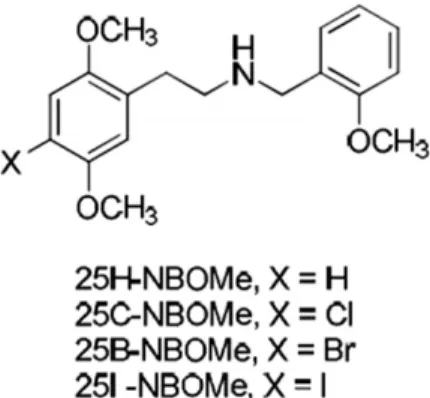
D. N-(2-methoxybenzyl)-2,5-dimethoxy-4-substituted phenethylamines (NBOMe) Compounds . . . 278
III. Mechanism of Action. . . 279
A. Evidence for Agonist or Partial Agonist Action at Serotonin 5-Hydroxytryptamine 2A Receptors . . . 280
B. Production of Tolerance . . . 281
C. Functional Selectivity at the Serotonin 5-Hydroxytryptamine 2A Receptor . . . 283
D. Role of Glutamate . . . 290
E. A Role forg-Aminobutyric Acid . . . 295
F. Possible Role of Other Receptors . . . 295
IV. Where Is the Serotonin 5-Hydroxytryptamine 2A Receptor Expressed? . . . 299
A. Serotonin 5-Hydroxytryptamine 2A Receptor Expression in the Cortex . . . 300
B. Serotonin 5-Hydroxytryptamine 2A Receptor Expression in the Thalamus and Reticular Nucleus . . . 301
C. Serotonin 5-Hydroxytryptamine 2A Receptor Expression in Primary Visual Cortex V1 . . 302
D. Effects of Psychedelics on Raphe Cell Firing. . . 302
E. Serotonin 5-Hydroxytryptamine 2A Receptor Expression in the Ventral Tegmental Area . . . 302
F. Effect of Psychedelics on the Locus Coeruleus . . . 303
G. Serotonin 5-Hydroxytryptamine 2A Receptor Expression in the Amygdala . . . 304
H. A Role for the Claustrum? . . . 305
V. Effects on Visual Perception . . . 306
VI. Effects on Sleep. . . 309
VII. Effects on Time Perception . . . 309
VIII. Use of Animal Models. . . 311
A. Rat Models . . . 312
1. Drug Discrimination. . . 312
2. Effects on Locomotor Activity . . . 315
3. Prepulse Inhibition . . . 315
B. Mouse Models . . . 315
1. Head Twitch Response . . . 316
This research was supported by the National Institutes of Health National Institute on Drug Abuse [Grant R01DA-02189] and the Robert C. and Charlotte P. Anderson endowment.
Address correspondence to:Dr. David E. Nichols, Eschelman School of Pharmacy, University of North Carolina, 120 Mason Farm Road, 2113 Genetic Medicine Bldg, Chapel Hill, NC 27514. E-mail: [email protected]
dx.doi.org/10.1124/pr.115.011478.
2. Drug Discrimination. . . 317
3. Effects on Locomotor Activity . . . 318
C. Rabbit Models . . . 319
D. Zebrafish Models . . . 321
E. Drosophila melanogaster. . . 321
F. Monkey Models . . . 322
IX. Potential Therapeutic Value for Psychedelics . . . 323
A. Alleviation of Anxiety and Depression in Life-Threatening Illness. . . 323
B. Possible Use in Depression. . . 326
C. Obsessive-Compulsive Disorder . . . 328
D. Treatment of Alcoholism or Nicotine Addiction . . . 329
E. Cluster Headaches. . . 329
F. Autism . . . 330
ABBREVIATIONS: 2C-I, 2-(4-iodo-2,5-dimethoxyphenyl)aminoethane; 2C-T-7, 2,5-dimethoxy-4-n-propylthiophenethylamine; 5-CSRTT, five-choice serial reaction time task; 5-HT, 5-hydroxytryptamine (serotonin); 5-HTP,L-5-hydroxytryptophan; 5-MeO-DIPT, 5-methoxy-N,N-diisopropyltryptamine;
5-MeO-DMT, 5-methoxy-N,N-dimethyltryptamine; 5D-ASC, five-dimensional altered states of consciousness; 8-OH-DPAT, 7-(dipropylamino)-1,2,3,4-tetrahydronaphthalene; A-381393, 2-[4-(3,4-dimethylphenyl)piperazin-1-ylmethyl]-1H-benzoimidazole; AA, arachidonic acid; ABT-724, 2-[(4-pyridin-2-ylpiperazin-1-yl)methyl]-1H-benzimidazole); ACC, anterior cingulate cortex; ACh, acetylcholine; ACP-103,N-(4-fluorophenylmethyl)-N -(1-methylpiper-idin-4-yl)-N9-(4-(2-methylpropyloxy)phenylmethyl)carbamide; AD, Alzheimer’s disease; AMRS, Adjective Mood Rating Scale; AMS,a-methylserotonin; APZ, Abnormal Mental States; ASC, altered state of consciousness; ASR, acoustic startle response; BDI, Beck Depression Inventory; BDNF, brain-derived neurotrophic factor; BOL, BOL-148, 2-bromo-lysergic acid-N,N-diethylamide; BOLD, blood oxygen level–dependent; BP554, 1-[3-(3,4-methylenedioxyphenoxy)propyl]-4-phenyl-piperazine; BPD, borderline personality disorder; BPM, behavioral pattern monitor; CBF, cerebral blood flow; CHO, Chinese hamster ovary; CIMBI-5,N-(2-methoxybenzyl)-2,5-dimethoxy-4-iodophenethylamine; Cimbi-36,N-(2-[11 C]methoxybenzyl)-2,5-dimethoxy-4-bromophenethylamine; CMRglu, cerebral metabolic rate of glucose; CNS, central nervous system; CRPD, cancer-related psychosocial distress; CSTC, cortico–striato–thalamocortical; CT, complete transection; DH, double hemisection; DMN, default mode network; DMT,N,N-dimethyltryptamine; DOB, 1-(4-bromo-2,5-dimethoxyphenyl)-2-aminopropane; DOC, 1-(4-chloro-2,5-dimethoxyphenyl)-2-aminopropane; DOI, 1-(4-iodo-2,5-dimethoxyphenyl)-2-aminopropane; DOM, 2,5-dimethoxy-4-methylamphetamine; DPT,N,N-dipropyltryptamine; DSA, dichoptic stimulus alternation;DSM-IV,Diagnostic and Statistical Manual of Mental Disorders, 4th Edition; EEG, electroencephalography; EGF, epidermal growth factor; EGFP, enhanced green fluorescent protein; EMD 281014, 7-[[4-[2-(4-fluorophenyl)ethyl]-1-piperazinyl]carbonyl]-1H-indole-3-carbonitrile hydrochloride; EPSC, excitatory postsynaptic current; EPSP, excitatory postsynaptic potential; ERK, extracellular signal-regulated kinase; FAIR, Frankfurt Attention Inventory; FDG, fludeoxyglucose; fMRI, functional magnetic resonance imaging; FR, fixed ratio; GAD, glutamate decarboxylase; GPCR, G protein–coupled receptor; GTPgS, guanosine 59-3-O-(thio)triphosphate; H-reflex, Hoffman reflex; HAM-A, Hamilton Rating Scale for Anxiety; HAM-D, Hamilton Rating Scale for Depression; HEK-293, human embryonic kidney 293; HPPD, hallucinogen persisting perception disorder; HTR, head twitch response; i3, intracellular loop 3; IL, interleukin; IOP, intraocular pressure; IP, inositol phosphate; ISI, interstimulus interval; JHU, Johns Hopkins University; KO, knockout; L-745,870, 3-[[4-(4-chlorophenyl)piperazin-1-yl]methyl]-1-1H-pyrrolo[2,3-b]pyridine; LC, locus coeruleus; LFCO, low frequency cortical oscillation; LFP, local field potential; LOC, lateral occipital complex; LSD, (5R,8R)-(+)-lysergic acid-N,N-diethylamide; LY293558, (3S,4aR,6R,8aR)-6-[2-(2H-tetrazol-5-yl) ethyl]-1,2,3,4,4a,5,6,7,8,8a-decahydroisoquinoline-3-carboxylic acid; LTP, long-term potentiation; LY294002, 2-morpholin-4-yl-8-phenylchromen-4-one; LY341495, 2-[(1S,2S)-2-carboxycyclopropyl]-3-(9H-xanthen-9-yl)-D-alanine; LY354740, (1S,2S,5R,6S)-2-aminobicyclo[3.1.0]hexane-2,6-dicarboxylic acid;
LY379268 [(1R, 4R,5S,6R)-4-amino-2-oxabicyclo[3.1.0]hexane-4,6-dicarboxylic acid; LY566332, N-(49-cyano-biphenyl-3-yl)-N -(3-pyridinylmethyl)-ethanesulfonamide hydrochloride; M100907, (R)-(+)-a-(2,3-dimethoxyphenyl)-1-[2-(4-fluorophenyl)ethyl]-4-pipidinemethanol; MAO, monoamine oxidase; MAPK, mitogen-activated protein kinase; MDD, major depressive disorder; MDL100907, (R)-(+)-a -(2,3-dimethoxyphenyl)-1-[2-(4-fluorophenyl)ethyl]-4-piperinemethanol; MDL11939, a-phenyl-1-(2-phenylethyl)-4-piperidine methanol; MDMA, 3,4-methylenedioxymethamphetamine; MEF, mouse embryonic fibroblast; MEG, magnetoencephalography; MEK, mitogen-activated protein kinase kinase; mGluR, metabotropic glutamate receptor; MK-212, 6-chloro-2-(1-piperazinyl)pyrazine; MK-801, (5R,10S)-(2)-5-methyl-10,11-dihydro-5H-dibenzo[a,d]cylcohepten-5,10-imine; MPEP, 2-methyl-6-(phenylethynyl)-pyridine; mPFC, medial prefrontal cortex; MUA, multiunit activity; NE, norepinephrine; NMDA, N-methyl-D-aspartate; NMS,N -methylspiperone; NSDUH, National Survey on Drug Use and Health; NT-3, neurotrophin-3; NYU, New York University; OCD, obsessive-compulsive disorder; OFC, orbitofrontal cortex; OVA, ovalbumin; PAG, periaqueductal gray matter; PCC, posterior cingulate cortex; PCP, phencyclidine; PCR, polymerase chain reaction; PD, Parkinson’s disease; PD98059, 2-(2-amino-3-methoxyphenyl)-4H-1-benzopyran-4-one; PET, positron emission tomography; PFC, prefrontal cortex; phMRI, pharmacological magnetic resonance imaging; PI, phosphoinositide; PI3K, phosphoinositide 3-kinase; PKC, protein kinase C; PLA2, phospholipase A2; PLC, phospholipase C; PMA, phorbol ester; PP2, 4-amino-5-(4-chlorophenyl)-7-(dimethylethyl)pyrazolo [3,4-d]pyrimidine; PPI, prepulse inhibition; PTSD, post-traumatic stress disorder; RA, rheumatoid arthritis; REM, rapid eye movement; Ro25-6981, (aR,bS)-a-(4-hydroxyphenyl)-b-methyl-4-(phenylmethyl)-1-piperidinepropanol; Ro60-0175, (S)-6-chloro-5-fluoro-1H-indole-2-propanamine; ROI, region of interest; RS102221,N-{5-[5-(2,4-dioxo-1,3,8-triazaspiro[4.5]dec-8-yl)pentanoyl]-2,4-dimethoxyphenyl}-4-(trifluoromethyl)benzenesulfonamide; RSC, retro-splenial cortex; RSK, ribosomal S6 kinase; RT, reverse transcription; SB-206553, 3,5-dihydro-5-methyl-N-3-pyridinylbenzo[1,2-b:4,5-b’]dipyrrole-1(2H )-carboxamide hydrochloride; SB-242084, 6-chloro-5-methyl-N-{6-[(2-methylpyridin-3-yl)oxy]pyridin-3-yl}indoline-1-carboxamide; SB-243213, 2,3-dihydro-5-methyl-N-[6-[(2-methyl-3-pyridinyl)oxy]-3-pyridinyl]-6-(trifluoromethyl)-1H-indole-1-carboxamide; SCH23390, 7-chloro-3-methyl-1-phenyl-1,2,4,5-tetra-hydro-3-benzazepin-8-ol; SCI, spinal cord injury; SER-082 [(+)-cis4, 5,7a,8,9,10,11,11a-octahydro-7H-10-methylindolo[1,7-bc][2,6]-naphthyridine; sEPSC, spontaneous excitatory postsynaptic current; SERT, serotonin transporter; SL0101, 3-[(3,4-di-O-acetyl-6-deoxy-a-L
G. Cognitive Function . . . 330
H. Creativity . . . 331
I. 3,4-Methylenedioxymethamphetamine in Post-Traumatic Stress Disorder . . . 332
J. Use as Ocular Hypotensives for Glaucoma. . . 332
K. Tissue Regeneration . . . 333
L. Effects on Immune Response. . . 334
M. Effects on Cell Differentiation and Growth . . . 335
X. Models of Psychosis . . . 336
XI. Use as Tools to Study Brain Function and Connectivity. . . 337
XII. Conclusion and Outlook . . . 344
Acknowledgments. . . 345
References . . . 345
Abstract——Psychedelics (serotonergic hallucino-gens) are powerful psychoactive substances that alter perception and mood and affect numerous cognitive processes. They are generally considered physiologi-cally safe and do not lead to dependence or addiction. Their origin predates written history, and they were employed by early cultures in many sociocultural and ritual contexts. After the virtually contemporaneous discovery of (5R,8R)-(+)-lysergic acid-N,N-diethylamide (LSD)-25 and the identification of serotonin in the brain, early research focused intensively on the possibility that LSD and other psychedelics had a serotonergic basis for their action. Today there is a consensus that psychedelics are agonists or partial agonists at brain serotonin 5-hydroxytryptamine 2A receptors, with particular importance on those expressed on apical dendrites of neocortical pyramidal cells in layer V. Several useful rodent models have been developed over the years to help unravel the neurochemical correlates of
serotonin 5-hydroxytryptamine 2A receptor activation in the brain, and a variety of imaging techniques have been employed to identify key brain areas that are directly affected by psychedelics. Recent and exciting developments in the field have occurred in clinical research, where several double-blind placebo-controlled phase 2 studies of psilocybin-assisted psychotherapy in patients with cancer-related psychosocial distress have demonstrated unprecedented positive relief of anxiety and depression. Two small pilot studies of psilocybin-assisted psychotherapy also have shown positive benefit in treating both alcohol and nicotine addiction. Recently, blood oxygen level–dependent functional magnetic resonance imaging and magnetoencephalography have been employed for in vivo brain imaging in humans after administration of a psychedelic, and results indicate that intravenously administered psilocybin and LSD produce decreases in oscillatory power in areas of the brain’s default mode network.
I. Introduction
I was delighted when the editors invited me to write a review on“psychedelics,”perhaps a watershed moment, representing a shift in opinion that has been developing for more than 3 decades with respect to research and understanding of psychedelics. When I began my graduate studies in 1969, it was politically correct in scientific circles to refer to these substances only as
psychotomimetics, a negative term suggesting that they
fostered a mental state resembling psychosis (Hoffer, 1967). Later, as it was realized that these compounds did not provide very realistic models of psychosis or mental illness, it became more correct to refer to them
as hallucinogens, again a pejorative term suggesting
that they principally produce hallucinations. Yet that is not what they do in most users at ordinary doses, so this term likewise is not particularly descriptive or useful, although it is still widely used and seems to remain the preferred name for these substances in most scientific writing. In addition, the termhallucinogenis often used as a rather broad category to include all kinds of psychoactive molecules, including cannabinoids, “ ec-stasy,”dissociative agents, and others.
This review will focus exclusively on the so-called classic serotonergic hallucinogens (psychedelics), which
are substances that exert their effects primarily by an agonist (or partial agonist) action on brain serotonin 5-hydroxytryptamine (5-HT) 2A receptors, as discussed later. The discussion will not consider cannabinoids, dissociatives such as ketamine, salvinorin A (a specific opioid k agonist), or entactogens such as 3,4-methyl-enedioxymethamphetamine (MDMA). In certain con-texts, all of these and some related agents have been swept into the catchall category “hallucinogens.” Al-though they all can produce profound changes in consciousness, they have a different mechanism of action and will not be discussed unless there is a specific reason to do so.
on Drug Abuse and the National Institute of Mental Health) have no mission to support research on poten-tially useful properties of psychedelics. Yet this term has remained popular with the public and even appears to be gaining popularity. As I intend to show in this discussion, however, the idea that psychedelics may have useful properties is not at all farfetched, and very recent clinical studies have reinforced the belief by many that psychedelics are well worth studying from a number of different perspectives. Indeed, one of the most striking developments in this field has been the initiation and successful completion of a variety of clinical studies of psychedelics in the past 15 years, most of which have been targeted to specific medical indications. As will be discussed later, the results have been, in the main, remarkably positive.
It should be kept in mind that the relative dearth of research on psychedelics in the past half century did not result from a lack of scientific interest, but rather occurred as a consequence of political forces that manifested principally in the United States in the 1960s and 1970s (Grinspoon and Bakalar, 1979). Use of (5R,8R)-(+)-lysergic acid-N,N-diethylamide (LSD) and marijuana by so-called hippies who demonstrated against the Vietnam War during the 1960s created great consternation among authorities and legislative bodies, both at the federal and state levels. Antiwar attitudes and rejection of conventional social norms by adolescents and college students were often perceived by the mainstream culture to be a consequence of drug use; hence, these substances were often believed to be “perverting” the minds of our youth. Furthermore, the outspoken Harvard University professor and firebrand Timothy Leary encouraged young people to“turn on, tune in, and drop out,”essentially coaching them to take drugs, discover their true selves, and abandon convention. Such messages did not play well with the mainstream culture, all while the mass media fanned the flames of public hysteria with greatly exaggerated reports of drug-induced insanity, chromosomal damage, attempts to fly, and so forth.
Strict laws were quickly passed. After the passage of the Controlled Substances Act of 1970, LSD and other psychedelics known at the time were placed into the most restrictive category of drugs, Schedule 1. This classification made them virtually impossible to study clinically and effectively ended any significant research into the pharmacology and medical value of psyche-delics for more than 3 decades. Nevertheless, there can be no doubt that psychedelics played a substantial role in defining the youth culture of the 1960s and 1970s, with books and essays too numerous to cite being written on this topic. It is believed that more than 30 million people have used LSD, psilocybin, or mescaline (Krebs and Johansen, 2013). One suspects that had LSD never been discovered, the world might look very different today than it does now, for better or worse, depending on one’s perspective.
Despite the recreational use of psychedelics, a quote from a book by Grinspoon and Bakalar (1979 Pg 192) needs to be kept in mind:
Many people remember vaguely that LSD and other psyche-delic drugs were once used experimentally in psychiatry, but few realize how much and how long they were used. This was not a quickly rejected and forgotten fad. Between 1950 and the mid-1960s there were more than a thousand clinical papers discussing 40,000 patients, several dozen books, and six in-ternational conferences on psychedelic drug therapy. It aroused the interest of many psychiatrists who were in no sense cultural rebels or especially radical in their attitudes.
One very important scientific consequence of the discovery of LSD also is often overlooked. The powerful psychologic effect of LSD was accidently discovered in 1943 (Hofmann, 1979a), followed only a decade later in 1953 by the detection of serotonin in the mammalian brain (Twarog and Page, 1953). The presence of the tryptamine moiety within LSD was also quickly seen to be the scaffold for the chemical structure of serotonin (Fig. 1).
This recognition led to a proposal only 1 year later by Woolley and Shaw (1954) that “mental disturbances caused by lysergic acid diethylamide were to be attrib-uted to an interference with the action of serotonin in the brain.” Therefore, one could reasonably argue that the whole field of serotonin neuroscience, and especially the role of serotonin in brain function, was catalyzed by the discovery of LSD! By way of illustra-tion, in 1952, there were only 10 publications in the National Library of Medicine concerning serotonin, nearly all of them dealing with some aspect of its ability to constrict blood vessels. Only 8 years later, in 1960, there were 300 publications on serotonin, 35 of which were now focused on studies of serotonin in the brain. For comparison, in 1960, there were only 197 publica-tions about norepinephrine (NE)/noradrenaline, a neurotransmitter that had been discovered and stud-ied in the mid-1940s. Green (2008) provides an in-teresting overview of the 1950–1970 period of intense research activity after the discovery of serotonin in the brain.
There have been numerous recent reviews on this topic, usually titled as hallucinogens, and the reader is encouraged to consult these works for further details
(Nichols, 2004; Nichols and Chemel, 2006; Fantegrossi et al., 2008a; Green, 2008; Passie et al., 2008; Winter, 2009; Griffiths and Grob, 2010; Vollenweider and Kometer, 2010; Brandt and Passie, 2012; Beck and Bonnet, 2013; Halberstadt and Geyer, 2013b; Baumeister et al., 2014; Halberstadt, 2014; Tyls et al., 2014). I wrote a com-prehensive review on the subject in 2004, so the literature considered for this review will focus pri-marily, but not exclusively, on the years from 2004 to the present.
A. Historical Use
Psychedelics are a class of drug that cannot be fully understood without reference to a number of other fields of research, including anthropology, ethnopharmacol-ogy, psychiatry, psycholethnopharmacol-ogy, sociolethnopharmacol-ogy, and others. This review will focus mostly on pharmacology, both pre-clinical and pre-clinical, but on occasion reference will be made to aspects of some of those other areas.
Psychedelics may be the oldest class of psychophar-macological agents known to man. Important examples of these substances include a substance used in ancient India known asSoma, which was highly revered and is frequently mentioned in the Rigveda, with numerous Vedic hymns written in praise of Soma (Wasson and Ingalls, 1971). In the ancient village of Eleusis, outside Athens, for more than 2000 years there was an annual all-night secret ceremony that is believed to have involved ingestion of a hallucinogenic brew known as
kck«on(Wasson et al., 1978). We know almost nothing about the ceremony other than that profound insights about life could be achieved, and it was apparently a treasured once-in-a-lifetime opportunity for any Greek citizen who had not been convicted of murder.
Psilocybin mushrooms were used by the Aztec sha-man in healing and in a variety of religious and divinatory rituals. These mushrooms were known as
teonanacatl, meaning “god’s flesh” (Ott and Bigwood,
1978; Schultes and Hofmann, 1979). The use of various psychoactive plant materials and substances was com-mon in pre-Columbian Mesoamerican societies, includ-ing the Olmec, Zapotec, Maya, and Aztec cultures (Carod-Artal, 2015). In the Bradshaw rock art in the Kimberly region of Australia and in the Sandawe rock art in the Kolo region of Eastern Tanzania, one finds
uniquely shared images such as the“mushroom head” symbol of psilocybin use, suggesting that the two cultures were linked and had shamanic practices that used psychoactive mushrooms (Pettigrew, 2011).
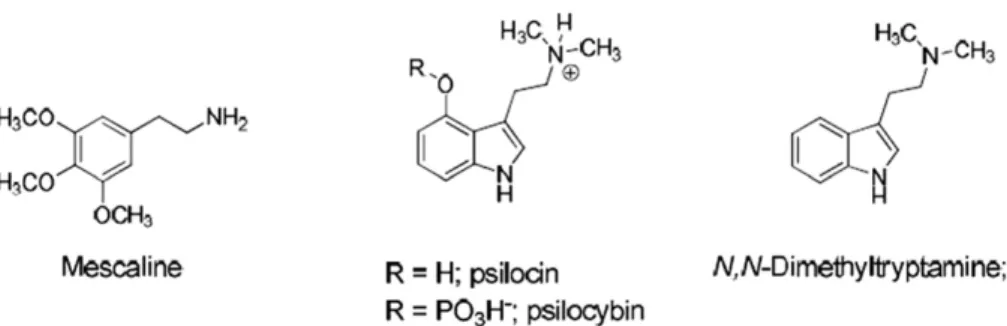
Peyote (Lophophora williamsii) is a small cactus native to the American Southwest and Northern Mexico that has been used for millennia and is consumed as a sacrament during services of the Native American Church. Two peyote samples from a cave on the Rio Grande River in Texas were analyzed and subjected to radiocarbon dating. The average age of the samples, both of which contained mescaline, dated to 3780–3660 BCE (El-Seedi et al., 2005). This evidence supports the use of peyote by Native North Americans as long ago as 5700 years (Bruhn et al., 2002). Classic psychedelics that have been extensively studied include LSD, shown earlier, mescaline, psilocybin, andN,N -dimethyltrypta-mine (DMT) (Fig. 2).
Ayahuasca, also known as yagé or hoasca, has a long history of use by natives in the Amazon valley of South America (Dobkin de Rios, 1971; Schultes and Hofmann, 1979). Ayahuasca is a decoction prepared from an admixture of two plants: the pounded bark from
Banisteriopsis caapi vines and leaves from Psychotria
viridis. The latter contains the hallucinogen DMT, a
Schedule 1 controlled substance under U.S. law, and it is generally considered that the psychoactive effects of ayahuasca can be attributed to its DMT content. Although DMT is not orally active, B. caapi contains
b-carboline alkaloids that inhibit the liver monoamine oxidase (MAO) that normally breaks down DMT; thus, ayahuasca is taken orally as a“tea.”Its use has been incorporated as a sacrament into the religious practices of two syncretic Brazilian churches [União do Vegetal (UDV) and the Santo Daime] that have branches in the United States, with the U.S. Supreme Court rendering a 2006 decision to allow the use of ayahuasca by the UDV under the Religious Freedom Restoration Act.
B. What Are Psychedelics?
In view of the widespread historical use of psyche-delics as sacraments in a variety of other cultures, Jaffe’s (1990) definition for the class of psychedelics can perhaps be appreciated: “…the feature that distin-guishes the psychedelic agents from other classes of
drug is their capacity reliably to induce states of altered perception, thought, and feeling that are not experi-enced otherwise except in dreams or at times of re-ligious exaltation.” All pharmacologists will recognize that this definition for a class of psychoactive drugs is indeed quite unique!
One of the pioneers of LSD research, the late Daniel X. Freedman, noted that “…one basic dimension of behavior… compellingly revealed in LSD states is ‘portentousness’—the capacity of the mind to see more than it can tell, to experience more than it can explicate, to believe in and be impressed with more than it can rationally justify, to experience boundlessness and ‘boundaryless’events, from the banal to the profound” (Freedman, 1968). Freedman’s observation is com-pletely consistent with Jaffe’s definition.
The use of psychedelics as a central feature of many religious practices, as well as the profound and unique psychopharmacological effects suggested by Jaffe’s def-inition and the observations of Freedman, surely makes us aware that psychedelics are an exceptional category of mind-altering substances. Indeed, this knowledge prompted Ruck et al. (1979) to coin the wordentheogen
as a replacement for the terms hallucinogen and psychedelic, both of which they felt had negative connotations. Entheogen is derived from the Greek roots entheos, meaning “God (theos) within,” and
gen-esthe, meaning“to generate.”The word entheogen thus
essentially refers to a substance or material that generates God or the divine within someone. Although the term entheogen is now seeing fairly wide acceptance within the culture of those who use these substances “recreationally,”a search of the term in the National Library of Medicine finds only five hits. Although it seems unlikely that the term entheogen will be adopted within the formal scientific community, the reader should realize that in some circles entheogen is gener-ally synonymous with psychedelic. Nonetheless, it should be appreciated that the effects produced by psychedelics are highly dependent on the set (mental expectation) of the user and the setting (environment). A set and setting designed to facilitate a mystical experience will increase the probability of such an occurrence, whereas an unstructured or party-type setting is less likely to lead to a positive outcome.
Studerus et al. (2012) investigated the importance of 24 predictor variables on the acute response to psilocy-bin and confirmed that nonpharmacological factors play an important role in the effects of psilocybin. Variables examined included age, sex, education, personality traits, drug pre-experience, mental state before drug intake, experimental setting, and drug dose. Their analysis was based on pooled data from 23 controlled experimental studies involving 261 healthy volunteers who had participated in 409 psilocybin administrations over a 19-year period in the authors’laboratory. Multi-ple linear mixed-effects models were fitted for each of 15
response variables. Drug dose was shown to be the most important predictor for all measured response vari-ables, but several nonpharmacological variables signif-icantly contributed to the effects of psilocybin. Specifically, having a high score in the personality trait of absorption, being in an emotionally excitable and active state immediately before drug intake, and having experienced few psychologic problems in past weeks were most strongly associated with pleasant and mystical-type experiences. High emotional excitability, young age, and an experimental setting involving positron emission tomography (PET) most strongly predicted unpleasant and/or anxious reactions to psilo-cybin. Interestingly, in addition to confirming that nonpharmacological variables play an important role in the effects of psilocybin, an experimental setting involving PET most strongly predicted unpleasant and/ or anxious reactions to psilocybin.
and the name was further revised to the OAV scales (Bodmer et al., 1994) and later to the five-dimensional altered states of consciousness (5D-ASC) (Dittrich et al., 2006). Details of the development of the original APZ questionnaire and its further refinements were sum-marized by Studerus et al. (2010). To overcome a variety of methodological limitations, Studerus et al. (2010) carried out a psychometric evaluation of the OAV and 5D-ASC in a relatively large sample from 43 pooled experimental studies of healthy subjects who had re-ceived psilocybin, ketamine, or MDMA. The total sample was composed of 591 drug sessions. After comprehensive and detailed statistical analyses, the authors found that the original OAV scales were multidimensional constructs, and arrived at an im-proved final model that had 11 factors: experience of unity, spiritual experience, blissful state, insightful-ness, disembodiment, impaired control and cognition, anxiety, complex imagery, elementary imagery, audio-visual synesthesia, and changed meaning of percepts. Correlations between the 11 factors and their associa-tion with the original OAV scales were presented. The new lower-order scales were proposed to be better suited to assess drug-induced ASCs.
Mechanistically, psychedelics have agonist or partial agonist activity at brain serotonin 5-HT2A receptors. This molecular characterization will be elaborated in some detail later in this review, and aspects of the anatomic and functional importance of this receptor type will also be extensively explored. Discussions over the years with many colleagues working in the phar-maceutical industry have informed me that if upon screening a potential new drug is found to have serotonin 5-HT2A agonist activity, it nearly always signals the end to any further development of that molecule.
A recent study by Turton et al. (2014) reported on the subjective experience of intravenous psilocybin admin-istered during a functional magnetic resonance imaging (fMRI) examination. Fifteen volunteers were adminis-tered an intravenous infusion of either placebo or 2 mg psilocybin and were blinded as to whether they would receive placebo or drug for a particular experiment. Drug infusion began 6 minutes after the start of a scan in a magnetic resonance imaging scanner. Subjects completed a visual analog scale rating the intensity of the drug experience at the start of the scan and prior to drug infusion, 5 minutes postinfusion, and 12 minutes postinfusion. All subjects subsequently were inter-viewed about the drug effects, and interviews were analyzed using interpretative phenomenological analy-sis, a qualitative method. All subjects reported that the onset of drug effect was very rapid and intense, with a duration of effect lasting 10–15 minutes. The investi-gators identified nine broad categories of phenome-nology. Altered somatosensory, visual, auditory, and proprioceptive sensations were reported, with 14 of 15
subjects describing perceptual changes as the primary effect of the drug. Thirteen subjects reported changes in perception of time, either speeding up or slowing down. The report describes a variety of effects on cognition, mood, memory, and spiritual or mystical experiences. Overall, subjects found the experience difficult to de-scribe, yet most found it pleasant and positive.
In a new study by Schmid et al. (2015), LSD (200mg) was administered orally to 16 healthy subjects in a double-blind, randomized, placebo-controlled, crossover study. LSD produced a pronounced alteration in waking consciousness that lasted for 12 hours and included visual hallucinations, audio-visual synesthesia, and positively experienced derealization and depersonaliza-tion phenomena. Compared with placebo, LSD in-creased subjective well-being, happiness, closeness to others, openness, and trust. Increases in blood pressure, heart rate, body temperature, pupil size, plasma corti-sol, prolactin, oxytocin, and epinephrine also were measured. On the 5D-ASC scale, LSD produced higher scores than did psilocybin or DMT. The authors also described subjective effects on mood that were similar to those reported for MDMA that might be useful in psychotherapy. No severe acute adverse effects were observed and the effects subsided completely within 72 hours.
In a very recent study by Carhart-Harris et al. (2015a), LSD was shown to enhance responsiveness to suggestion. Their study was prompted by very early reports indicating that LSD increased suggestibility (Sjobergand Hollister, 1965; Middlefell, 1967). Thus, Carhart-Harris et al. (2015a) administered LSD (40–80
mg, i.v.) to 10 healthy volunteers in a within-subject placebo-controlled design. Suggestibility and cued men-tal imagery were assessed using the Creative Imagi-nation Scale and a mental imagery test. The two instruments were administered between 110 and 140 minutes after drug infusion, at the peak of the drug effect. Subjects scored significantly higher on the Cre-ative Imagination Scale, but not the mental imagery test after LSD administration, compared with placebo. The magnitude of suggestibility enhancement was positively correlated with the subject’s baseline trait conscientiousness. This enhanced suggestibility may have implications for the use of LSD as an adjunct to psychotherapy, but it also indicates that individuals with a high trait conscientiousness are particularly sensitive to the suggestibility-enhancement effect of LSD.
1972). Gaston and Eagle (1970) also reported that the presence of music was much preferable to its absence in alcoholic patients undergoing treatment using LSD therapy, both by patient preference and treatment results. Numerous other studies had been reported on the value of music in the context of various shamanic and therapeutic approaches (see references in Kaelen et al., 2015). Very recently, therefore, Kaelen et al. (2015) tested the hypothesis that the emotional re-sponse to music is enhanced by LSD. Ten participants were administered placebo or various doses of LSD, including 40, 50, 70, or 80 mg, infused intravenously over 3 minutes. They then listened to five different instrumental music tracks on each of two study days: a placebo day followed by an LSD day, separated by 5–7 days. Music tracks were chosen that produced the highest liking and lowest familiarity by a separate sample of nine participants. The question “How emo-tionally affected were you by the music?” was asked immediately after each track and served as the study’s primary outcome. The nine-category Geneva Emotional Music Scale (Zentner et al., 2008) was also used. Mean scores for all music stimuli in response to the question “how emotionally affected were you by the music?”were significantly higher for the LSD condition than for placebo. In addition, all nine factors on the Geneva Emotional Music Scale were scored higher after LSD administration than after placebo. Emotions related to transcendence also were enhanced by LSD. Specific emotions showing the strongest enhancement included wonder, transcendence, tenderness, and power. Fur-thermore, there was a significant positive relationship between ratings of the intensity of the LSD effect and emotional arousal to music. The results of Zentner et al. (2008) support the hypothesis that LSD enhances music-evoked emotion.
C. Psychedelics Can Engender Ecstatic States with Persistent Positive Personality Change
The experimental study of mystical or ecstatic states engendered by psychedelics perhaps began with the so-called“Good Friday experiment,”carried out at Boston University’s Marsh Chapel in 1962 by Walter Pahnke as his research for the Ph.D. in religion and society at the Harvard Divinity School. Pahnke (1963) examined the similarities and differences between experiences de-scribed by mystics and those induced by psilocybin. On Good Friday in 1962, 20 Christian theological student volunteers attended a 2.5-hour religious service in Boston University’s Marsh Chapel. The setting and preparation of the subjects was designed to optimize a spiritual or mystical experience. In a double-blind pro-cedure, subjects were given either an oral dose of 30 mg psilocybin, or a 200-mg placebo dose of nicotinic acid, administered in identical capsules. Based on responses to a variety of instruments and questionnaires, subjects who received psilocybin had experiences that were
indistinguishable from those experienced by mystics. The experiences were powerful and personally mean-ingful. Doblin (1991) reported a follow-up to the Pahnke study in 1989 and was able to locate and interview 19 of the original 20 experimental participants. All of the psilocybin subjects felt that the experience had signif-icantly affected their lives in a positive way and they expressed appreciation for having participated in the experiment.
An extension of the Good Friday experiment was recently carried out by Griffiths et al. (2006). The investigators used rigorous double-blind clinical methods to evaluate acute and longer-term effects of psilocybin (30 mg/70 kg) compared with an active comparator compound (40 mg/70 kg methylphenidate). A complex design was used to obscure which treatments were administered from the study participants and the monitors, and the study was designed to minimize adverse effects. Thirty-six healthy volunteers were enrolled, all of whom indicated some participation in regular religious or spiritual activities. Instruments used to assess effects 7 hours after drug administration were the HRS, the Addiction Research Center Inven-tory, the States of Consciousness questionnaire, and the Mysticism Scale. Seven to 8 weeks after each session, and before any additional session, subjects completed the Persisting Effects Questionnaire, the Mysticism Scale–Lifetime, the Spiritual Transcendence Scale, the NEO Personality Inventory, and the Positive and Negative Affect Schedule Expanded Form. Based on measures of mystical experience, 22 of the 36 volunteers had a complete mystical experience after psilocybin administration, whereas only 4 did after the methyl-phenidate (placebo) sessions. Based on ratings of per-sonal meaningfulness and spiritual experience, 67% of the volunteers rated the psilocybin experience to be either the single most meaningful experience of their lives or among the top five most meaningful experiences in their lives. Based on community observer ratings, psilocybin sessions were associated with signifi-cant positive changes in the volunteer’s behavior and attitudes.
Thus, when psilocybin was administered under struc-tured conditions to well prepared volunteers, it occa-sioned experiences that had marked similarities to classic mystical experiences, imparting to the participants sub-stantial personal meaning and spiritual significance. The investigators point out that the high value some subjects placed on the psilocybin experience may in part explain the long-term historical use of psychedelics within some cultures for divinatory or religious purposes. Griffiths et al. (2006) conclude with the statement that, “The ability to prospectively occasion mystical experiences should permit rigorous scientific investigations about their causes and consequences.”
study. Subjects were asked to identify in which session they experienced the“most pronounced changes in your ordinary mental process.” It was found that the 14-month retrospective follow-up ratings for the psilocybin session did not differ significantly from the immediate postsession ratings. Compared with methylpheni-date, the psilocybin experience produced significant increases in ratings of positive attitudes, mood, social effects, and behavior at 14 months of follow-up. At the 14-month follow-up, 58% of the 36 volunteers still rated the psilocybin experience as among the five most personally meaningful experiences of their lives and 67% rated it as among the five most spiritually signif-icant experiences of their lives.
A second study using a similar protocol with 18 volunteers examined dose effects of psilocybin, using 0, 5, 10, 20, and 30 mg/70 kg (Griffiths et al., 2011). The percentage of subjects who met the criteria for having a complete mystical-type experience increased with dose. Overall, 72.2% of volunteers had complete mystical experiences at either or both doses of 20 and 30 mg/70 kg. Positive ratings about life, attitudes about self, mood, social effects, and behavior also increased as a function of dose. Ratings at the 14-month follow-up were undiminished compared with ratings at 1 month after the sessions.
MacLean et al. (2011) analyzed the data from the two double-blind controlled studies of psilocybin reported by Griffiths et al. (2006, 2011). In particular, their goal was to use the NEO Personality Inventory to analyze possible personality changes that might have occurred after the high-dose psilocybin sessions in those studies. It is generally believed that personality traits are relatively enduring and that an individual’s personality is predominantly stable across the lifespan. Yet evi-dence also exists that significant life events may dramatically change adult personality (see references in MacLean et al., 2011). The most widely accepted model of personality structure is the five-factor model, which describes five broad domains of personality: neuroticism, extroversion, openness, agreeableness, and conscientiousness (see references in MacLean et al., 2011). The authors suggest that numerous sub-jective claims of long-term changes after hallucinogen use appear to align with the personality trait of “openness,”which encompasses aesthetic appreciation and sensitivity, imagination and fantasy, and broad-minded tolerance of others’ viewpoints and values. Thus, they hypothesize that the mystical experiences reported in the studies by Griffiths et al. might lead to enduring increases in openness. Analysis of personality was assessed 1 to 2 months after a high-dose psilocybin session and again 16 months later to determine the persistence of any personality change(s). Consis-tent with their hypothesis, a mystical experience after psilocybin administration was significantly correlated with increases in openness. No such effect was seen
after methylphenidate treatment. In addition, there were no significant changes in any of the other four personality factors after psilocybin administration. At the 16-month follow-up, openness levels still remained significantly elevated. The authors note that “This is the first study to demonstrate changes in personality in healthy adults after an experimentally manipulated discrete event.”
Studerus et al. (2011) pooled raw data from eight double-blind placebo-controlled experimental psilocy-bin studies conducted between 1999 and 2008. The data were analyzed for acute, short- and long-term subjective effects of psilocybin in 110 healthy human subjects who had received between one and four doses of 45–315
mg/kg psilocybin. Studerus et al. (2011) reported that nearly 40% of the participants in their laboratory studies of psilocybin claimed positive long-term changes in aesthetic experience and in their relationship with the environment (i.e., nature) after their psilocybin sessions. At 8–16 months after psilocybin sessions, more than 60% of subjects rated the experience as“very enriching,”and more than 90% described it as enriching to at least a medium degree. These effects occurred despite the fact that no attempt was made in their experiments to optimize conditions for a spiritual or mystical experience, which contrasts with the setting and preparations used in the two Griffiths studies cited above.
Bouso et al. (2012) compared 127 regular ayahuasca users with 115 actively religious controls who did not use ayahuasca. Baseline measurements were taken of general psychologic well-being, mental health, and cognition and the groups were then compared 1 year later to determine whether regular ayahuasca use had an effect on these measurements. Regular ayahuasca users showed lower scores on all psychopathology scales as assessed by the Symptom Checklist 90–Revised, as well as on measures of harm avoidance and self-directedness. Participants scored higher on a measure of psychosocial well-being and performed better on the Stroop test (an indicator of resistance to emotional interference) and the Wisconsin Card Sorting Task (a measure of working memory). No evidence of psycho-logic maladjustment, mental health deterioration, or cognitive impairment was found in the ayahuasca-using group.
Lerner and Lyvers (2006) compared users of psyche-delic drugs with users of nonpsychepsyche-delic drugs and nonillicit drug–using social drinkers. Samples were drawn from Israel and Australia. Compared with the other two groups, psychedelic drug users scored signif-icantly higher on mystical beliefs (e.g., oneness with God and the universe), life values of spirituality, and concern for others, and scored lower on the value of financial prosperity, irrespective of culture of origin.
including psychedelics. Only about 25% reported“ spir-itual” motives for using psychedelics, yet use of high doses of LSD and psilocybin was significantly correlated in a dose-related manner with scores on two well known indices of mystical experiences; use of MDMA, cannabis, cocaine, opiates, or alcohol was not. Thus, even when taken recreationally, psychedelics have the potential to induce mystical experiences.
Quite interestingly, the underlying neuronal basis for mystical/spiritual experiences has recently been the subject of scientific investigation. Kometer et al. (2015) studied the neuronal basis of spiritual experiences and insightfulness after administration of psilocybin to human subjects. They conducted a double-blind, placebo-controlled study and administered psilocybin (170 or 215mg/kg, p.o.) to 50 healthy human volunteers. Electroencephalography (EEG) data were recorded from 64 scalp electrodes. Exact low-resolution brain electromagnetic tomography was applied to compute the three-dimensional intracerebral current density values of the scalp-recorded EEG rhythms. They used lagged phase synchronization, a new measure that can capture nonlinear neuronal relationships to as-sess dynamic functional connectivity (Pascual-Marqui et al., 2011).
The 11-dimension 5D-ASC questionnaire was used to quantify the subjective psychologic effects of psilocybin, with a particular interest in the spiritual experience subscale, and the related subscales of experience of unity, comprising experience of oneness with the envi-ronment and the self, insightfulness, measuring pro-found insights into life and existence, blissful state, measuring experiences of pleasure, inner peace, and love. Voxel-wise product-moment correlations between current source density in the psilocybin condition and the 11-dimension 5D-ASC subscale scores were com-puted by regression analysis.
Psilocybin significantly increased scores of all sub-scales on the 5D-ASC but significantly decreased cur-rent source density of oscillations in all frequency bands up to 20 Hz closed condition) or up to 30 Hz (eyes-open condition). There was a significant and consistent psilocybin-induced reduction of current source density across low frequency bands (,20 Hz) in the posterior cingulate cortex (PCC) and the retrosplenial cortex (RSC). Psilocybin decreased the current source density of neuronal 1.5- to 2.0-Hz oscillations within a neural network comprising the PCC, anterior cingulate cortex (ACC), and parahippocampal regions. The intensity of psilocybin-induced spiritual experience and insightful-ness correlated with the lagged phase synchronization of 1.5-to 2.0-Hz d oscillations between the RSC, para-hippocampus, and lateral orbitofrontal area.
The extent of lagged phase synchronization within a network of deep cortical structures strongly and posi-tively correlated with score on the insightfulness sub-scale of the 5D-ASC and spiritual experiences subsub-scales
of the 5D-ASC during the eyes-closed condition. Lagged phase synchronization of 1.5- to 4-Hz d oscillations within a network comprising the RSC, parahippocam-pus, and lateral orbitofrontal area was associated with spiritual experiences and insightfulness.
These findings of Kometer et al. (2015) provide further evidence that decreased ongoing oscillations below 20 Hz, particularly u/a oscillations, may be a common mechanism of action of psychedelics. The decrease in lower frequency oscillations was found to be localized within an extended network that included the PCC, RSC, ACC, and parahippocampal regions, a network that strongly overlaps with the default mode network (DMN). Thus, psilocybin may modulate default mode functions by decreasing ongoing lower frequency oscillations within this network.
Lower frequency oscillations, particularly in the a
range, mediate rhythmic cortical inhibition of neuronal ensembles (see references in Kometer et al., 2015). The marked decrease in lower frequency oscillations ob-served in this study may indicate that psilocybin induces a shift of the resting excitation/inhibition balance toward excitation, which would be expected to disrupt the ordinary temporal structure of neuronal processes within the extended DMN.
Lagged phase synchronization was strongly associ-ated with the psilocybin-induced state of consciousness, supporting the view that neural integration, rather than activity, underlies the state of consciousness. Scores of the spiritual experiences subscale of the 5D-ASC questionnaire were also associated with increased lagged phase synchronization ofdoscillations between parahippocampal regions and the RSC. Kometer et al., (2015) speculate that the neuronal network processes they identified may constitute a crucial pathway that can be modulated by serotonergic receptors to regulate mental health, a conclusion that would be consistent with some of the potential positive mental health outcomes discussed earlier in this section.
II. Safety of Psychedelics
after recreational use. The discussion will then turn to some generally recognized adverse reactions, followed by case reports of some more serious and even fatal reactions to psychedelics. It should be emphasized that these latter fatalities, which are rare, have occurred after use of newer synthetic phenethylamine compounds, and not as a result of ingestion of LSD, psilocybin, mescaline, or DMT.
Analysis of early published reports on adverse reac-tions and long-term negative sequelae induced by classic psychedelics failed to identify significant adverse events; if long-term adverse effects from repeated use did occur, they were subtle or nonsignificant (Strassman, 1984; Halpern and Pope, 1999). Their reviews were based on reports from supervised clinical studies using pure drugs, so the same conclusions might not apply to recreational use of drugs with unknown identities or purity.
These substances do not lead to addiction or depen-dence and are not considered to be reinforcing (O’Brien, 2001). This is understandable when one realizes that the serotonergic hallucinogens do not have direct effects on brain dopaminergic systems, a pharmacology that ap-pears essential for nearly all drugs that can engender dependence. Attempts to train animals to self-administer hallucinogens, an animal model that can predict abuse liability, have generally been unsuccessful.
Using 2001–2004 data drawn from the National Survey on Drug Use and Health (NSDUH), Krebs and Johansen (2013) recently evaluated possible associa-tions between lifetime use of psychedelics and current mental health in the U.S. adult population. In a large sample of respondents, 13.4% reported lifetime psyche-delic use. No significant associations were found be-tween lifetime use of any psychedelic or past-year use of LSD and increased rate of any mental health outcome. Surprisingly, in several cases, use of psychedelics was associated with a lower mental health problem rate.
A statewide survey of the adult population in Colo-rado sought to determine whether psychedelic use was correlated with the lifetime risk of panic attacks (Bonn-Miller et al., 2007). No association was found between psychedelic use and panic attacks, but psychedelic abuse and dependence were significantly related to an increased lifetime risk of panic attacks. It should be noted that in this study, however, phencyclidine (PCP) was included in their survey as a psychedelic, and this substance, in contrast with the classic serotonergic psychedelics, can cause dependence.
Peyote (L. williamsii) is a small cactus that grows in the Southwestern United States and Northern Mexico. It contains the psychedelic compound mescaline and has been used for centuries by Native American pop-ulations in rituals and ceremonies. Mescaline is also found in the San Pedro and Peruvian Torch cacti, and these have also been used ceremonially. Although peyote is classified as a Schedule 1 controlled substance, members of the Native American Church have a legal
exemption to use it in their religious services. Halpern et al. (2005) compared 61 Navajo Native American Church members who regularly ingested peyote with 79 individuals reporting minimal use of peyote, alcohol, or other substances. Cognitive function was assessed using the Rand Mental Health Inventory and 10 standard neuropsychological tests of memory and attentional/executive functions. The peyote-using group showed no significant deficits on the Rand Mental Health Inventory or on any of the 10 other tests used. For the peyote-using group, total lifetime peyote exposure was not associated with neuropsychological performance.
By contrast, recreational use of peyote has led to adverse events, although peyote exposures reported to poison control centers are relatively rare compared with other drugs of abuse. In 2007, for example, only 116 peyote or mescaline exposures were reported to U.S. poison control centers out of more than 2.4 million total drug exposures (Bronstein et al., 2008). Carstairs and Cantrell (2010) retrospectively reviewed the California Poison Control System electronic database between the years 1997 and 2008 for reports of cases involving adverse reactions to peyote or mescaline ingestion when it was the sole intoxicating agent. A total of 31 cases were identified that met their inclusion criteria. Life-threatening symptoms did not occur, and most expo-sures were associated with only mild to moderate clinical effects, which most commonly included tachy-cardia and central nervous system (CNS) effects. Symp-toms typically resolved within 24 hours or less and did not usually require anything more than supportive measures or sedation. One case of a prolonged peyote-induced psychosis was reported by Lu et al. (2004), in which the psychosis resolved after sleep. The case involved a 54-year-old Native American man with no prior history of psychosis. He drank peyote juice during a healing ceremony and within a few hours became convinced that he was hunted by animal spirits. He was unable to sleep for 2 weeks, at which time he developed visual and auditory hallucinations of the spirits and became increasingly depressed. He was persuaded to enter a hospital, where he received trazodone to help him sleep. He fell asleep and slept for 15 hours, which led to complete resolution of his psychotic symptoms. The authors speculated that his psychosis was a result of his prolonged sleep deprivation.
The only scores that were increased on the AMRS were “general inactivation,” “emotional excitability,” and “dreaminess.”Hasler et al. (2004) found no evidence that psilocybin is hazardous with respect to somatic health.
Bouso et al. (2015) used magnetic resonance imaging to examine potential differences in cortical thickness in 22 Spanish regular users of ayahuasca, compared with 22 matched controls. Inclusion criterion for ayahuasca users was that they had used it at least 50 times in the 2 previous years. Subjects also were assessed using three neuropsychological tests, including the two-back test to assess working memory, the Wisconsin Card Sorting Test to assess executive function, and a switching task to assess set shifting. Personality was also assessed by self-report using the Spanish version of the Tempera-ment and Character Inventory–Revised questionnaire. Ayahuasca users scored significantly better than con-trols on several variables derived from the neuropsy-chological tests. No increased psychopathology or worse neuropsychological performance was observed in the ayahuasca group, consistent with findings reported earlier by Grob et al. (1996) for ayahuasca users who were members of the Brazilian church, the UDV. Indeed, ayahuasca users scored significantly better than controls on “harm avoidance,” and its subscale “anticipatory worry,”and significantly higher on“ self-transcendence.” Cortical thinning was found for six brain areas in the ayahuasca group: the middle frontal gyrus, the inferior frontal gyrus, the precuneus, the superior frontal gyrus, and the PCC. By contrast, cortical thickening was seen in the precentral gyrus and the ACC. Correlation analysis revealed that life-time use of ayahuasca was inversely correlated to cortical thickness in the PCC.
A. General Issues of Safety and Mental Health in Psychedelic Users
Although there is a general public perception that psychedelic drugs are dangerous, from a physiologic standpoint they are in fact one of the safest known classes of CNS drugs. They do not cause addiction, and no overdose deaths have occurred after ingestion of typical doses of LSD, psilocybin, or mescaline. Cohen (1967) and Jaffe (1985) have both stated that death due to direct LSD toxicity is unknown. Indeed, recreational users who have consumed massive doses of LSD have survived. For example, eight individuals who believed they had cocaine accidentally insufflated an extremely high dose of LSD. Their plasma LSD levels were reported as between 1000 and 7000mg/100 ml (recall that a typical total oral dose of LSD might be 100–200mg). These individuals all became comatose, with hyperthermia, vomiting, light gastric bleeding, and respiratory problems. With hospital treat-ment, however, all eight survived and without apparent residual effects (Klock et al., 1974).
Although the classic psychedelics have not been directly responsible for causing death, the judgment of
users is certainly impaired while under the influence of these drugs. This is a particular concern when halluci-nogens are used in unsupervised settings. Users may believe that they are invincible or possess superpowers and may do things they would not normally consider, such as believing they can fly (Reynolds and Jindrich, 1985), jumping from buildings (Keeler and Reifler, 1967), or incurring severe ocular damage by prolonged staring at the sun (Schatz and Mendelblatt, 1973; Fuller, 1976).
Studerus et al. (2010) analyzed acute, short-, and long-term subjective effects of psilocybin in healthy humans. Again, using pooled raw data from eight double-blind placebo-controlled experimental studies conducted between 1999 and 2008, their analysis in-cluded 110 healthy subjects who had received between one and four oral doses of psilocybin (45–315 mg/kg body weight). Psilocybin dose-dependently induced pro-found changes in mood, perception, thought, and self-experience, but most subjects described the experience as pleasurable, enriching, and nonthreatening. Acute adverse reactions were characterized by strong dyspho-ria and/or anxiety/panic, but occurred only at the two highest doses of psilocybin in a relatively small number of subjects. All acute adverse drug reactions were successfully managed through interpersonal support and did not require psychopharmacological interven-tion. Follow-up questionnaires indicated no subsequent drug abuse, persisting perception disorders, prolonged psychosis, or other long-term impairment of functioning in any of the subjects. The results indicate that the administration of modest psilocybin doses to healthy, high-functioning, and well prepared subjects in the context of a carefully monitored research environment carries an acceptable level of risk.
ASCs, and a degree of clinical sensitivity; 2) a physical environment that is safe, aesthetically pleasing, and comfortable; 3) careful subject preparation, including several meetings to establish rapport and trust with the monitors; 4) a detailed consent form and explanations of the study procedures, detailed discussions about the range of potential experiences, and time of onset and duration of the effects; and 5) an available physician in the event of an untoward medical reaction. Anyone contemplating carrying out a clinical research program with a psychedelic is strongly encouraged to read the detailed guidelines presented by Johnson et al. (2008).
Krebs and Johansen (2013) evaluated any association between lifetime use of psychedelics and current mental health in the adult population. Data were analyzed for 2001–2004 for 130,152 randomly selected NSDUH respondents; 21,967 respondents (13.4% weighted) re-ported lifetime psychedelic use. The authors found no significant association between lifetime use of any psychedelic and increased rate of any mental health outcomes. Indeed, they discovered that psychedelic use was associated with a lower rate of mental health problems in several cases. Johansen and Krebs (2015) subsequently analyzed a new data set of 135,095 randomly selected U.S. adults that included 19,299 users of psychedelics. Data were from the NSDUH for 2008–2011. As in their earlier study, the authors found no significant associations between lifetime use of psychedelics and increased likelihood of past-year serious psychologic distress, mental health treatment, depression, anxiety, or suicidal thoughts, plans, or attempts. Johansen and Krebs (2015) failed to find any evidence that use of psychedelics is an independent risk factor for mental health problems. Indeed, they report that lifetime use of psychedelics was associated with
decreasedinpatient psychiatric treatment.
Hendricks et al. (2014) analyzed data from 2002–2007 for 25,622 individuals charged with a felony in the Southeastern United States and under community corrections supervision in the Treatment Accountabil-ity for Safer Communities program, which is a case management intervention program for individuals with a history of substance involvement. The authors exam-ined relationships between any hallucinogen use dis-order (versus no hallucinogen use disdis-order) and all available sociodemographic and psychosocial variables. They report that any hallucinogen use disorder was associated with a decreased probability of supervision failure. They note the contrast with any cannabis, cocaine, alcohol, opiate, or amphetamine use disorder, each of which was associated with anincreased proba-bility of supervision failure. Their results suggest that hallucinogens may promote alcohol and other drug abstinence and prosocial behavior in a population with high rates of recidivism.
In a more recent report by Hendricks et al. (2015), the authors evaluated any relationship between use of a
classic psychedelic and psychologic distress and suici-dality among more than 190,000 U.S. respondents pooled from the NSDUH for 2008–2012. Lifetime use of a psychedelic was associated with significantly re-duced odds of month psychologic distress, past-year suicidal thinking, past-past-year suicidal planning, or past-year suicide attempt. By contrast, lifetime use of other illicit drugs was associated with an increased
likelihood of these outcomes. The authors suggest that classic psychedelics may hold promise in the prevention of suicide. These findings are consistent with the surveys of Krebs and Johansen (2013) and Johansen and Krebs (2015); in all three studies, the authors suggest that their data are not compatible with the highly restricted legal status of psychedelics and that more extensive clinical research is warranted.
B. Adverse Reactions
Use of high doses of psychedelics can lead to vascular problems because the 5-HT2A receptor is associated with vascular smooth muscle contraction, platelet ag-gregation, thrombus formation, and coronary artery spasms (Nagatomo et al., 2004). Acute vasoconstriction caused by serotonin is usually shared by activation of 5-HT1Band 5-HT2Areceptors; however, in intracranial arteries, only the 5-HT1Breceptor mediates constriction (Kaumann and Levy, 2006). Both 5-HT2A and 5-HT1B receptors can mediate coronary artery spasm. 5-HT2A receptors also constrict the portal venous system, in-cluding esophageal collaterals in cirrhosis. Data from studies by Ootsuka et al. (2004) suggest that spinal 5-HT2Areceptors contribute to sympathetically induced cutaneous vasoconstriction regulated by the raphe/ parapyramidal neurons in the brainstem.
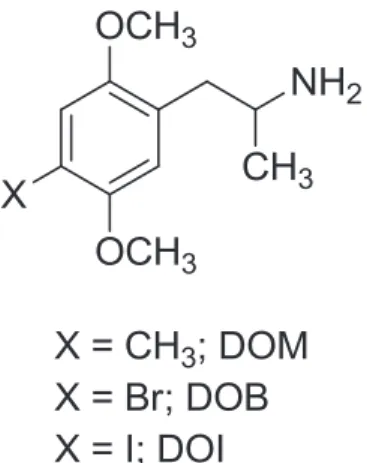
Balíková (2005) reports a fatal and nonfatal overdose after ingestion of the psychedelic phenethylamine 2,5-dimethoxy-4-bromoamphetamine (DOB) by two male individuals. Gas chromatography–mass spectrometry was used to detect the presence of DOB in both gastric and urine samples of the two men. Although one subject survived, the other suffered convulsions and metabolic acidosis and died 6 days after admission.
Psilocybin, when administered in a controlled set-ting, has frequently been reported to cause transient, delayed headache, with incidence, duration, and sever-ity increased in a dose-related manner (Johnson et al., 2012). Bickel et al. (2005) reported the case of a 25-year-old hepatitis C–infected man, who presented with severe rhabdomyolysis and acute renal failure after
Psilocybe mushroom ingestion. He later developed
encephalopathy with cortical blindness. Respiratory and cardiovascular support, mechanical ventilation, continuous venovenous hemodialysis, and corticoste-roid treatment led to improvement and the patient recovered completely over several months.
(Tiscione and Miller, 2006). The subject apparently did not exhibit any response to the crash of his automobile, seemingly unaware of the severity of his situation or immediate surroundings.
Although very rare, there have been reports of rhabdomyolysis after ingestion of LSD (Berrens et al., 2010). A newer tryptamine, 5-methoxy-N,N -diisopro-pyltryptamine (“foxy”) also produced rhabdomyolysis and transient acute renal failure in an otherwise healthy 23-year-old man (Alatrash et al., 2006).
Although many ergot alkaloids are known to produce vasospasm, especially after chronic use, LSD has rarely been associated with this adverse effect. Nevertheless, Raval et al. (2008) reported on a 19-year-old woman who experienced severe lower-extremity ischemia related to a single use of LSD 3 days prior to presentation. After intra-arterial nitroglycerin and verapamil failed, bal-loon percutaneous transluminal angioplasty therapy led to rapid clinical improvement in lower-extremity perfusion. As of the date of the report, the patient had not required a major amputation.
Sunness (2004) described a 15-year-old female pa-tient with a 2-year history of afterimages and photo-phobia after a history of drug use that included LSD, marijuana, and other illicit drugs. She had discontinued LSD 1 year prior to examination. Although the author connected her visual problems with her prior LSD use, it is not at all clear from the report that her LSD use was the cause of her visual problem.
Bernhard and Ulrich (2009) reported a case of cortical blindness in a 15-year-old girl. She had headache and nausea 5 days after taking LSD and suddenly developed complete blindness in both eyes. The blindness per-sisted for 48 hours. Over the next 3 months, the subject had three more episodes of complete blindness that lasted 12–36 hours, with no visual disturbances be-tween episodes. The authors suggested that the tempo-rary blindness might be a correlate of “flashbacks” caused by LSD.
Toxicity also has been noted for several of the so-called designer drugs. For example, Jovel et al. (2014) reported the case of a healthy young male individual who ingested 5-methoxy-N,N-diallytryptamine, one of the emerging new tryptamine-type research chemicals. The patient was admitted with extreme agitation, tachycardia, diaphoresis, and combativeness that re-quired physical restraint and intravenous sedation, but the patient did recover.
Andreasen et al. (2009) reported a fatality involv-ing the potent synthetic psychedelic phenethylamine compound 1-(8-bromobenzo[1,2-b; 4,5-b
9]difuran-4-yl)-2-aminopropane, known commonly as Bromo-Dragonfly. An 18-year-old woman was found dead after ingesting 1 ml of a “hallucinogenic liquid.” She and her boyfriend had ingested it between 10 and 11 PM on the previous evening and then they both fell asleep. On awakening at 5 AM the next morning, the woman’s boyfriend
discovered that she was dead. Autopsy findings 3 days after her death included edema of the lungs, slight edema of the brain, spleen enlargement, irritation of the mucous membrane in the stomach, and ischemic changes in the kidneys. Her femoral blood concentra-tion of the drug was 4.7mg/kg. The bottle containing the hallucinogenic liquid was recovered and analyzed by ultraperformance liquid chromatography time-of-flight mass spectrometry, high-performance liquid chroma-tography diode array detection, 1H nuclear magnetic resonance, and 13C nuclear magnetic resonance and found to contain a solution of almost pure Bromo-Dragonfly. Based on the solution concentration and the amount of solution consumed, it was estimated that she had ingested approximately 700mg. Although that would seem to be a relatively small dose, no other drugs were discovered in her system, including the absence of ethanol.
It is often difficult to establish whether the drug is pure or has been coingested with other unknown drugs of unknown purity. For example, Ovaska et al. (2008) reported a case of“sympathomimetic toxicity” in a patient who was reported to have ingested 2,5-dimethoxy-4-chloroamphetamine (DOC), yet toxico-logical screening showed the patient had ingested both DOC and MDMA.
Data for 2005 to 2006 from the Texas Poison Con-trol Centers were reviewed for mushroom exposures (Barbee et al., 2009). There were a total of 742 exposures, which were all acute and intentional. Of those, 59 individuals were admitted to a hospital, with 17 requiring admission to a critical care unit. Nonethe-less, only 10 of the admissions that were identified involved psilocybin. Of all of the admissions, major toxic reactions were uncommon, with no deaths reported.
C. Hallucinogen Persisting Perception Disorder
One adverse effect of hallucinogen use, particularly associated with LSD use, is hallucinogen persisting perception disorder (HPPD). This term has displaced an earlier somewhat more nonspecific one known as“ flash-backs,” which was a re-experiencing of one or more of the perceptual effects induced by a hallucinogen at some later time, after the acute drug effects had worn off. HPPD is composed of afterimages, perception of move-ment in peripheral visual fields, blurring of small patterns, halo effects, and macro- and micropsia long after the drug has been used.
The Diagnostic and Statistical Manual of Mental
Disorders, 4th Edition (DSM-IV), Text Revision