THE ASSOCIATIONS AMONG SPORT-RELATED CONCUSSION, HEAD IMPACT BIOMECHANICS, AND EMOTION DYSREGULATION IN HIGH SCHOOL ATHLETES
Melissa Ann Fraser
A dissertation submitted to the faculty at the University of North Carolina at Chapel Hill in partial fulfillment of the requirements for the degree of Doctor of Philosophy in the Human Movement
Science Curricula in the University of North Carolina at Chapel Hill.
Chapel Hill 2016
Approved by:
Kevin M. Guskiewicz Barbara L. Fredrickson Anthony C. Hackney Stephen W. Marshall Jason P. Mihalik
ABSTRACT
Melissa Ann Fraser: The Associations Among Sport-Related Concussion, Head Impact Biomechanics, and Emotion Dysregulation in High School Athletes
(Under the direction of Kevin M. Guskiewicz)
Background: Current recommendations advise athletic trainers to develop and implement
plans for athletes’ with psychological concerns.[1] Associations between head impact severity (impact frequency, location, and magnitude) and sport-related concussion (SRC) have been identified in football players. However, it is unknown if the inclusion of emotion dysregulation measures may improve clinicians’ ability to identify at-risk players at baseline with respect to head impact biomechanics and incident SRC. Objectives: This prospective longitudinal study included four objectives: 1) To assess the associations between concussion history and preseason emotion dysregulation measures in high school student-athletes, 2) to assess the associations among preseason baseline emotion dysregulation scores, competition Impact Severity Profiles (ISP), and in-season incident concussion in high school football players, 3) To determine the associations among in-season incident SRC, full season ISPs and emotion dysregulation change-scores in high school football players, and 4) To determine the
Our emotion dysregulation measures included depression (PHQ-9), anxiety (GAD-7), impulsivity (BIS-11), and aggression (BPAQ), and perceived stress (PSS4, covariate only). Linear
regressions were utilized for all analyses. Results: Our data only supported our first hypothesis. Concussion history was associated with significantly higher depression (p=0.004) and
To my mother, mentor, best friend, confidante, and advisor, Cindy Moegenburg. My path has not always been smooth and often much longer and more difficult than necessary probably. But
through it all I could always count on you to be there to give me guidance, support, the truth, a smile, a thoughtful card, and most importantly your love and prayers. Never in my wildest dreams did I think that I would be getting my doctorate, but here I am and I owe a great deal of
this accomplishment to you. Even though the miles between us the last 15 years have been great (certainly not by your choosing), you have been my rock and my inspiration. Your path to personal, professional, and spiritual success was also not straight and was fraught with several challenges. Yet through it all your determination and beautiful soul helped elevate you past the difficult tasks and decisions. I am so proud of all that you have accomplished and never miss
the chance to tell people all about you. Everyone who meets you is forever changed for the better. I hope to one day be as strong and faithful of a Good Samaritan as you have been your
entire life. God blessed me with you. I hope one day you are as proud of me as I am of you. Love always,
ACKNOWLEDGEMENTS
“It takes a village”, but in my case it took several. I would be remiss not to acknowledge how my past has gotten me to this momentous life achievement. Drs Dan Foster, Jay Hertel, and Craig Denegar were truly exceptional mentors who cultivated my growth as an ATC, educator, and researcher. I’m not sure there are enough pages to explain how much Ruben Cantu influenced me personally and professionally. His support and understanding through my initial years as a staff ATC and educator were unsurpassable. That he knew me enough to have me stay with the Dodds in 2010 after my injury speaks the most of his understanding of my weaknesses and support of my strengths. Thank you so much sir. While there are too many names to mention, a heartfelt thank you goes out to all the H.S. athletes, coaches, and administrators for their cooperation, and to the approximately 35 undergraduate students for their hard work and dedication, often in terrible weather, with baseline tests, on-field video and data collection, and video analysis. This wouldn’t have been possible without all of you.
I am grateful for my exceptional dissertation committee without whom my dissertation and graduation would not be possible. Having so many world leaders on my committee was both a blessing and a curse. I have learned that all meetings must be scheduled no less than 4 months in advance in hopes that all invitees might attend and that surrounding yourself with excellence can only improve your outcomes. I need to specifically thank my mentor and
committee chair Kevin Guskiewicz. I could not have been more blessed when you accepted me as a prospective PhD candidate. You took a chance and I will be forever grateful while
attempting to pay it forward.
PREFACE
TABLE OF CONTENTS
LIST OF TABLES ... xii
LIST OF FIGURES ... xiv
LIST OF ABBREVIATIONS ... xv
CHAPTER 1: INTRODUCTION ...18
1.1. Head impact biomechanics ...18
1.2. Emotion Dysregulation ...21
1.3 Statement of the Problem ...22
1.4 Research Variables ...23
1.5. Research Questions (Figure 1.3) ...26
1.6. Exploratory Research Question ...27
1.7. Operational Definitions ...28
1.8. Assumptions ...29
1.9. Delimitations ...30
1.10. Limitations ...30
1.11. Significance of the Proposed Study ...31
CHAPTER 2: LITERATURE REVIEW ...33
Introduction ...33
2.1. Head Impact Biomechanics ...34
2.1.1 Head Impact Telemetry System (HITS) ... 37
2.2: The Neurometabolic Cascade of Concussion ...41
2.3. Emotion Dysregulation and TBI ...42
2.3.1. Differences in SRC and TBI Mechanisms and Outcomes ... 44
2.3.3. Depression ... 47
2.3.4. Anxiety in TBI ... 54
2.3.5. Impulsivity and TBI ... 58
2.3.6. Aggression and TBI ... 60
2.3.7. Emotion Dysregulation and Neurodegenerative Diseases ... 62
2.4 Age related differences ...64
CHAPTER 3: METHODOLOGY ...67
3.1. Recruitment ...69
3.1.1. Participant Recruitment ... 69
3.2. Participants ...70
3.2.1. Inclusion ... 71
3.2.2. Exclusion ... 71
3.3. Instrumentation ...71
3.3.1. Head Impact Telemetry System (HITS) ... 71
Implementation of the Head Impact Telemetry System (HITS) ...72
3.4. Concussion History and Emotion Dysregulation Questionnaires (PHQ-9, GAD-7, BIS-11, BPAQ, PSS4) ...74
3.4.1. Implementation of the Concussion History and Emotion Dysregulation Measures ... 76
3.4.2. Patient Health Questionnaire (PHQ-9) ... 77
3.4.3. Generalized Anxiety Disorder 7-item Scale (GAD-7) ... 78
3.4.4. Barrett Impulsiveness Scale –11 (BIS-11) ... 79
3.4.5. Buss-Perry Aggression Questionnaire (BPAQ) ... 80
3.4.6. Perceived Stress Scale – 4 item (PSS4) ... 82
3.5. Potential Problems and Alternative Strategies ...82
3.6. Statistical Analysis ...84
3.6.1. General Information ... 84
3.6.3. Covariates ... 87
3.7. Power Analysis ...90
CHAPTER 4: MANUSCRIPTS ...91
Manuscript 1: Associations between Sport-Related Concussion and Emotion Dysregulation in High School Student-Athletes ...91
INTRODUCTION ... 92
METHODS ... 93
RESULTS ... 99
DISCUSSION ... 101
REFERENCE ... 108
Manuscript 2: Emotion Dysregulation Measures and Impact Severity Profiles in High School Football Players ... 116
INTRODUCTION ... 117
METHODS ... 120
RESULTS ... 129
DISCUSSION ... 131
REFERENCES ... 140
CHAPTER 5: SUMMARY OF FINDINGS AND ADDITIONAL DATA ANALYSES AND TABLES ... 151
5.1. Overall Summary of Findings ... 151
5.2. Additional Head Impact Severity Analysis Results, Interpretations, and Tables ... 153
5.2.1. Additional Results: Cumulative Head Impacts and Emotion Dysregulation ... 153
5.2.1.1. Cumulative Head Impact Severity and Full Emotion Dysregulation Models at Preseason ... 154
5.2.1.2. Head Impact Severity and Individual Emotion Dysregulation Models at Preseason ... 154
5.2.1.3. Individual Competition Head Impact Severity Measures and Full Emotion Dysregulation Scores ... 155
5.2.2. Additional Interpretations: Cumulative Head Impacts and
Emotion Dysregulation ... 155
5.2.2.1. Cumulative Head Impact Severity and Full Emotion Dysregulation Models at Preseason ... 155
5.2.2.2. Head Impact Severity and Individual Emotion Dysregulation Models ... 159
5.2.2.3. Competition Head Impact Severity and Full Emotion Dysregulation Scores ... 159
APPENDIX 1: HIT System ... 168
APPENDIX 2: MASTER PROTOCOL ... 169
APPENDIX 3: PRESEAON CONCUSSION HISTORY AND EMOTION DYSREGULATION QUESITONNAIRE ... 170
APPENDIX 4: POSTSEASON CONCUSSION HISTORY AND EMOTION DYSREGULATION QUESTIONNAIRE ... 171
APPENDIX 5: PARENT/GUARDIAN LETTER FOR ELEVATED DEPRESSION AND ANXIETY SCORES... 172
APPENDIX 6: FOOTBALL DAILY LOG ... 173
APPENDIX 7: ALL SPORTS PARENT LETTER ... 174
APPENDIX 8: 1-PAGE EXPLANATION FOR PARENTS ... 175
APPENDIX 9: BIS-11: ITEM MODIFICATIONS ... 176
LIST OF TABLES
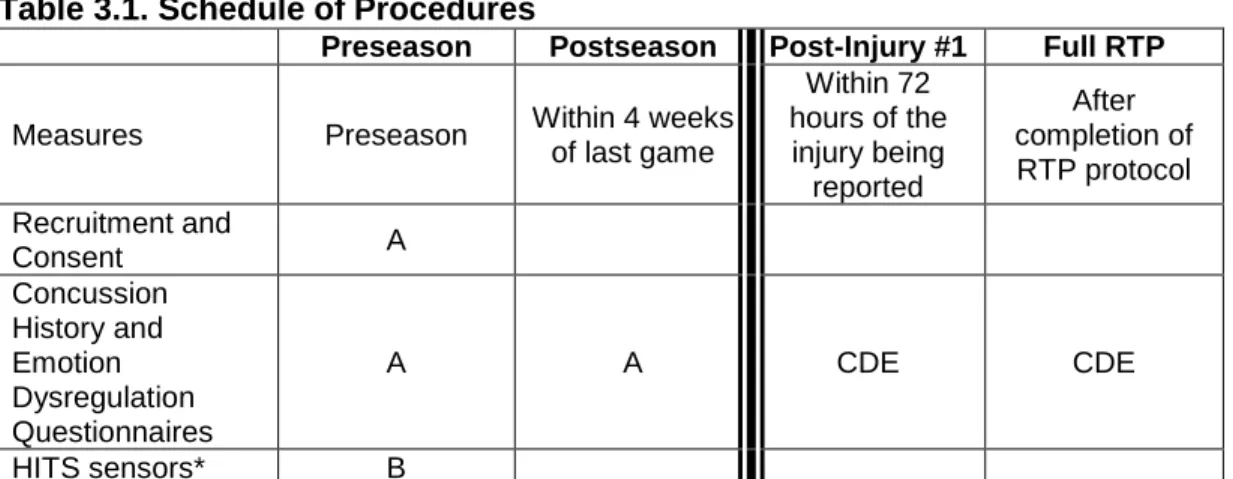
Table 3.1. Schedule of Procedures ...68
Table 3.2. Project Time Line ...69
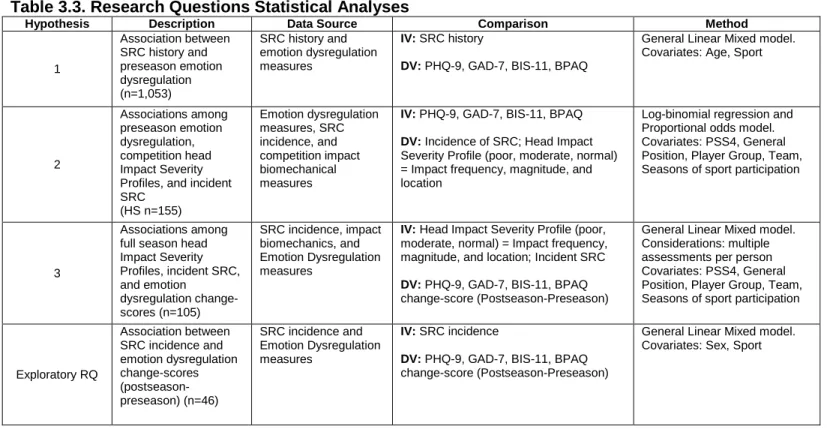
Table 3.3. Research Questions Statistical Analyses ...89
Table 4.1.1. Sex, Sport Type, and Contact Level by Sport ... 114
Table 4.1.2. Demographics at Preseason ... 114
Table 4.1.3. Preseason Emotion Dysregulation Scores by Concussion History... 114
Table 4.1.4. Mean Difference (95% CI and p-value) Preseason Concussion History and Individual Emotion Dysregulation Models ... 115
Table 4.1.5. Demographic Data and Emotion Dysregulation Change-Scores for Concussed Athletes ... 115
Table 4.2.1. Preseason Emotion Dysregulation Scores for Instrumented Football Players: Competitions Only ... 147
Table 4.2.2 Cumulative Competition Impact Severity Variables for Instrumented Football Players ... 147
Table 4.2.3. Prediction of Competition Impact Severity Profiles (ISP) Using Individual Preseason Emotion Dysregulation Measure Models Controlling for Team and Seasons of Sport Participation: B (95% CI) p-value ... 148
Table 4.2.4. Prediction of Competition Impact Severity Profile (ISP) Using Full Preseason Emotion Dysregulation Measure Models Controlling for Team and Seasons of Sport Participation: B (95% CI) p-value ... 148
Table 4.2.5. Emotion Dysregulation Change-scores (Postseason – Preseason) for Instrumented Football Players: Full Season ... 149
Table 4.2.6. Cumulative Impact Severity Variables for Instrumented Football Players: Full Season ... 149
Table 4.2.7. Prediction of Individual Emotion Dysregulation Change-Scores Using Full Season Impact Severity Profile (ISP) Models Controlling for Team and Seasons of Sport Participation: B (95% CI) p-value ... 150
Table 5.1. Prediction of Cumulative Competition Head Impact Severity Using Full Preseason Emotion Dysregulation Measure Models, Controlling for Team, and Seasons of Sport Participation: B (95% CI) p-value ... 161
Table 5.3. Prediction of Individual Competition Head impact Severity for Individual Impacts Using Full Season Emotion Dysregulation Measure
Models: B (95% CI) p-value ... 165 Table 5.4. Prediction of Competition Head Impact Severity for Individual Impacts
Using Preseason Individual Emotion Dysregulation Models: B (95% CI)
p-value ... 166 Table 5.5. Comparison of 5th (score) and 95th (score) Percentiles for Individual
Competition Impacts Using Full Preseason Emotion Dysregulation
LIST OF FIGURES
Figure 1.1: Procedural Progression ...22 Figure 1.2. Theoretical progression from pre-competition status to
neurodegenerative disease in athletes. ...23 Figure 1.3. Conceptual model of the cyclical relationship between Emotion
Dysregulation Profile and Head Impact Severity Profiles over sequential
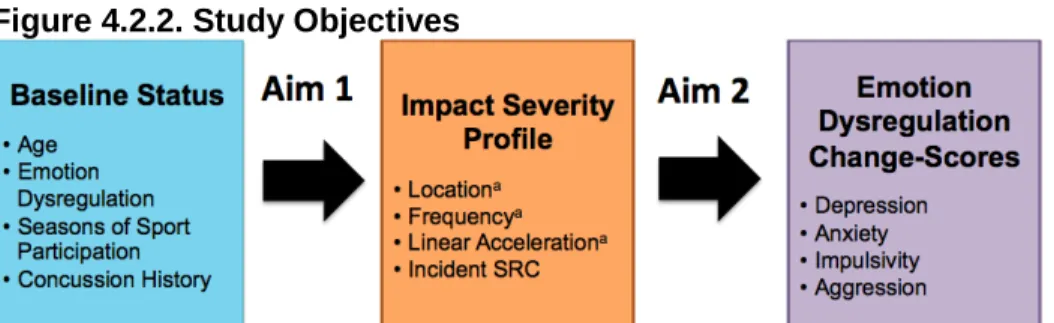
seasons. ...28 Figure 3.1. Participant Groupings ...68 Figure 4.2.1. Theoretical Model: The Cyclical Relationship Between Emotion
Dysregulation Profiles and Impact Severity Profiles Over Sequential
LIST OF ABBREVIATIONS ACC Anterior Cingulate Cortex
AD Alzheimer’s Disease
ADD/ADHD Attention Deficit Disorder/Attention Deficit Hyperactivity Disorder AT Athletic Trainer
BDI-II Beck Depression Inventory - II
BPAQ Buss Perry Aggression Questionnaire BIS Barratt Impulsivity Scale
CG Center of Gravity CSF Cerebrospinal fluid
CTE Chronic Traumatic Encephalopathy dlPFC Dorsolateral PreFrontal Cortex
DSM Diagnostic Statistical Manual of Mental Health Disorders
FB Football
IL Interleukin
fMRI Functional Magnetic Resonance Imaging GAD Generalized Anxiety Disorder
GAD-7 Generalized Anxiety Disorder 7-Item Scale GCS Glasgow Coma Scale
GSI Gadd Severity Index HIC Head Injury Criterion
HITS Head Impact Telemetry System
HITsp Head Impact Telemetry severity profile
HS High School
IED Intermittent Explosive Disorder ISP Injury Severity Profile
LOC Loss of Consciousness LHA Lifetime History of Aggression MCI Mild Cognitive Impairment MDD Major Depressive Disorder mOFC Medial Orbitofrontal Cortex MRI Magnetic Resonance Imaging mTBI Mild Traumatic Brain Injury NA Negative Affect
NFL National Football League OFC Orbitofrontal Cortex PA Positive Affect PAG Periaqueductal Gray PCC Posterior Cingulate Cortex PCS Postconcussive Syndrome PD Parkinson’s Disease PFC Prefrontal Cortex
PHQ-9 Patient Health Questionnaire 9-Item
Pre Preseason
Post Postseason
PI#1 Post Injury #1
STAI State-Trait Anxiety Inventory for Adults TBI Traumatic Brain Injury
TNF-α Tumor Necrosis Factor –α
CHAPTER 1: INTRODUCTION
An estimated 1.6 million sport-related concussions (SRC) occur annually in the United States.[2] At least 5.3 million Americans are currently suffering from long-term effects of concussion equating to $60 billion lost in medical benefits and productivity.[2] Non-athletic moderate-severe traumatic brain injury (TBI) typically results in a greater number of significant short- and long-term repercussions compared to SRCs. However, the risk of sustained deficits has been shown to increase as the number of SRCs reaches and then surpasses three.[3-5] TBIs are associated with structural,[6-8] functional,[9-27] and neurometabolic[28] brain changes, emotion dysregulation[29-51] (personality and affect), cognitive,[37, 52-60] vestibular,[21, 53, 61, 62] and physiological alterations,[63-70] as well as increased risk and earlier incidence of developing neurodegenerative diseases.[71] There is a plethora of research evaluating the
relationship between SRCs and structural,[72, 73] functional[72, 74-88] and neurometabolic[89] brain activity, cognition,[3, 90-99] balance,[92, 95, 100-117] mild cognitive impairment (MCI),[3] and impact biomechanics,[106, 108, 110, 118-143] but data evaluating potential emotion
dysregulation consequences are lacking. [77, 83, 144-147]
1.1. Head impact biomechanics
Several SRC assessment tools have been evaluated and employed effectively over the last several decades addressing symptomology, cognition, balance, and vision. Head impact biomechanics have also been studied at both the high school and
equipment, and rule changes to increase safety. Sport-related head impact
biomechanics studies have demonstrated a direct relationship between head impact location, frequency, and magnitude with athletes who are at risk for head and neck trauma during participation.[5, 106, 134, 135, 137, 148-151]
American football has been the most widely analyzed sport with the Head Impact Telemetry System (HITS) (Riddell, Elyria, OH) being the most commonly utilized head impact biomechanics assessment tool in literature.[5, 106, 125-127, 152] This triaxial
accelerometer system contains six single-axis accelerometers, a wireless telemetry unit, a removable battery, and an onboard data storage unit arranged in a horseshoe pattern
(Appendix 1). The system is triggered when an athlete sustains a linear impact ≥10g, recording the subject ID, date, time, magnitude, and location of the impact. High school football players sustain an average of 520-652 impacts per season, while the range of impacts sustained by collegiate football players per season varies far more (258-1400).[127] The average linear (93.3g and 118.4g) and rotational (6505.2 rad/sec2 and 5311.6 rad/sec2) acceleration for concussive impacts in high school football and collegiate football players was reported in a 2012 meta-analysis of football concussion biomechanics. Of note, only 0.02% (98) of the 560,000 collisions analyzed resulted in SRCs.[153]
magnitude compared to linemen. Thirdly, impact biomechanics are not correlated with any of the current clinical measures for SRC[106, 123] and thereforecannot be used as a diagnostic tool or to predict concussion outcomes.
Prolonged alterations in symptoms, cognition, and balance after SRC have been reported in a multitude of studies. [95, 100, 104, 105, 155-158] However, there is a lack of evidence evaluating changes that may occur over time due to repeated head impacts (RHI),[152] or if an association exists betweenhead impact biomechanics and clinical measures of SRC in humans. [108] Broglio, et al. did not observe a correlation between symptoms, neurocognitive change scores, and their head impact biomechanics data (peak linear and rotational acceleration, HIT severity profile (HITsp) in a four-year high school football study that included 20 reported concussions.[123] They also did not observe significant relationships between the neurocognitive change-scores and impact frequency, cumulative linear or rotational acceleration, or the cumulative HITsp from all impacts leading up to a concussive injury. These findings gave support to a similar study evaluating the relationship between the acute effects of concussion and impact biomechanics in collegiate football players.[106] The authors of both studies concluded that football impact biomechanics are not useful predictors of injury severity in
concussed athletes.
It is important to note that while these studies have compared impact
1.2. Emotion Dysregulation
Neuropsychiatry is the study and treatment of cognitive, emotional, and behavioral problems caused by neurologic disorders. This field is unique from both neurology and psychiatry due to its belief that the two fields are in fact intertwined and that all patients should be treated as such. The general position of neuropsychiatrists is that mental states are brain states and that any neurological illness or injury will lead to alternations in cognition, emotion, and behavior.[159] As mentioned above, SRC research has been investigating the cognitive and balance effects of SRC for decades. However inadvertently, researchers have consistently omitted emotion dysregulation measures (i.e., the negative psychological consequences of injury) as outcome variables in their SRC studies. The same cannot be said of studies involving moderate and severe TBI.
Investigators of non-athletic moderate-severe TBIs have been exploring the emotion dysregulation consequences of head injuries for more than 50 years. Moderate-severe TBI studies with non-athletic,[39, 160-164] military,[41, 165, 166] and animal[167, 168]
populations have correlated heightened depression, anxiety, aggression, and impulsivity with poor long-term health outcomes (violence, loss of job/relationships,
personality disorders are also strongly correlated with one another in all populations, including moderate-severe TBI.[33, 42, 160, 186, 188-191]
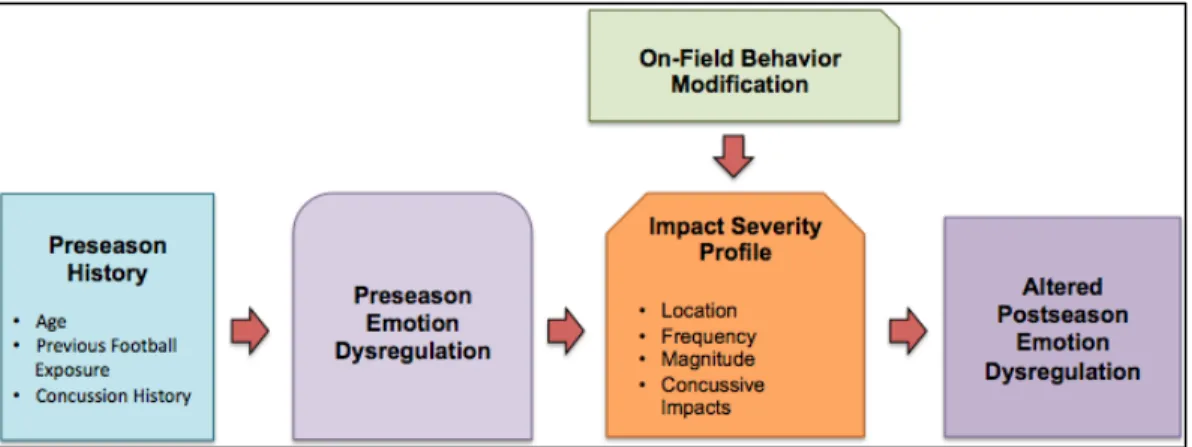
More importantly, no studies currently exist evaluating the associations between sport exposure, SRC, impact biomechanics, and emotion dysregulation measures. If the clinical goal is to treat the entire person and ensure optimal outcomes, this line of research appears to be the next logical step (Figure 1.1). To fully understand the
relationships among sport, head impact biomechanics, and SRCs (history and incidence) on short- and long-term emotion dysregulation alterations, it is necessary to expand this science to include a variety of sports, including football, in a longitudinal prospective analysis.
Figure 1.1: Procedural Progression
1.3 Statement of the Problem
Understanding the association of SRC, history of contact versus non-contact participation, head impact biomechanics, and emotion dysregulation measures could allow for early, cost-effective annual athlete evaluations with additional interventions to assess changes after each season and/or SRC. It would then be possible to
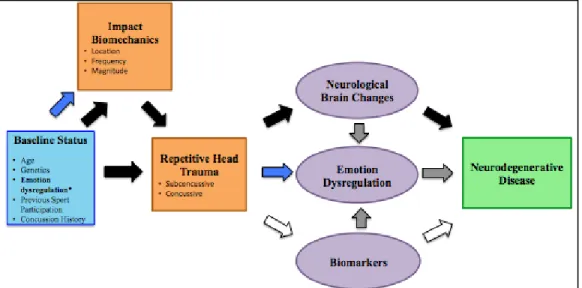
the progression of symptoms associated with significant neurodegenerative diseases through early detection and interventions (behavior modification, counseling, etc.). Our current study will be a first-step in evaluating the associations that exist between history of sport participation, SRC history and incidence, head impact biomechanics, and emotion dysregulation measures in high school athletes (Figure 1.2).
Figure 1.2. Theoretical progression from pre-competition status to neurodegenerative disease in athletes. Black arrows represent what we currently know. Grey arrows are based on non-sport related TBI and limited sport-related concussion data. White arrows have yet to be determined. Blue arrows represent our research questions.
1.4 Research Variables
*The use of these as independent or dependent variables is listed in Tables 3.3 and 3.4. 1. Group
a. Participant (P): Full-time student-athletes who were on the active varsity
or junior varsity roster for their respective sport at one of the three schools
i. Football player (FB): Full-time student-athletes who were on the
active varsity or junior varsity football roster at one of the three
respective schools at the start of the study.
ii. Teammate Control (Control): Full-time student-athletes on the
active team roster at one of the three respective schools at the
start of the season that were matched to the Age, position, play
2. Age: Age was evaluated as a continuous variable from 13-19 years of age.
3. Time
a. Preseason: Preseason Concussion History and Emotion Dysregulation Questionnaire (all) were gathered in the first few weeks of preseason participation for all participants.
b. Postseason: Postseason Concussion History and Emotion Dysregulation Questionnaire were collected within 4 weeks of the last game/practice for each participant.
c. Post-concussion – initial injury: Post-Injury #1 Concussion History and Emotion Dysregulation Questionnaire were collected within 72 hours of the student-athlete reporting the SRC, from the injured student-athlete, a matched teammate and a non-contact sport control.
d. Post-concussion – return to play (RTP): After completion of a school-based return to play protocol the Full Return to Play Concussion History and Emotion Dysregulation Questionnaire were completed by the
concussed athlete, a matched teammate, and a non-contact sport control. 4. Contact Level
a. No-contact: cross country, swimming, tennis, track
5. Sport Type
a. Individual: cross country, diving, pole vault, swimming, tennis, track, and wrestling
b. Team: baseball, basketball, field hockey, football, lacrosse, soccer, softball, and volleyball
6. Emotion Dysregulation measures: The following emotion dysregulation measures were collected via the four Concussion History and Emotion Dysregulation
Questionnaires.
a. Affective measures:
i. Depression: Patient Health Questionnaire 9-item (PHQ-9)
ii. Anxiety: Generalized Anxiety Disorder 7-item Scale (GAD-7)
b. Personality measures:
i. Impulsivity: Barrett Impulsivity Scale – 11 (BIS-11)
ii. Aggression: Buss Perry Aggression Questionnaire (BPAQ)
c. Stress measure:
i. Perceived Stress Scale – 4 (PSS-4). The PSS-4 was included only as a covariate. It was not analyzed as a primary outcome variable. 7. Impact Biomechanical measures (Football only)
a. Impact frequency: The number of impacts sustained by a football player
≥10g.
b. Impact magnitude: The severity of an impact to the body or head.
i. Linear acceleration (g): The rate of change in velocity along a
straight line. All impacts > 10g were recorded.
ii. Rotational acceleration (rad/s2): The rate of change in
c. Impact location: The HITS system data were used to determine the
location of the impact to the head. It was divided into the following four
categories[134]
i. Front: Any impact within 45 degrees from either side of the
anterior mid-sagittal plane (Includes impacts to the facemask)
ii. Top: Any impact at an angle >60 degrees in elevation
iii. Side: Any anterior or posterior impact within 45 degrees of the
mid-sagittal plane. This is further defined as occurring to the right
or left of the helmet.
iv. Back: Any impact within 45 degrees from either side of the
posterior mid-sagittal plane
8. Impact Severity Profile (ISP) (football only): At the completion of the season the following criteria were used to determine each player’s profile status: Player sustained 1) more than 20% of their impacts were to the crown of their head, or 2) more than 7% of impacts exceeded 2 standard deviations above the mean peak linear acceleration (>60 g linear acceleration). All impact data were gathered via the HITS accelerometers.
a. Poor: Players who met two of the criteria denoted above. b. Moderate: Players who met one of the criteria noted above.
c. Normal: Any football player who did not meet any of the above criteria.
1.5. Research Questions (Figure 1.3)
Research Question 1: What is the association between concussion history and preseason emotion dysregulation measures in high school student-athletes?
Research Question 2: What are the associations among preseason emotion dysregulation, competition ISPs, and in-season incident concussion in high school football players wearing instrumented helmets?
Hypothesis 2: A worse emotion dysregulation profile at preseason will be associated with a worse competition ISP and/or an increased likelihood for in-season
incident SRC over the course of one season.
Research Question 3: What are the associations among in-season incident SRC, full season ISP, and emotion dysregulation change-scores in high school football players wearing instrumented helmets over one season?
Hypothesis 3: In football players, incident SRC and a worse full season ISP (top of head impacts and/or more severe impacts) during one season will be associated with worse emotion dysregulation profiles at postseason, relative to the
preseason emotion dysregulation profiles in the same individuals.
1.6. Exploratory Research Question
Exploratory Research Question: What is the association between in-season incident
concussions on emotion dysregulation change-scores (postseason-preseason) in high school student-athletes over one season?
Exploratory Hypothesis: Student-athletes sustaining an in-season incident
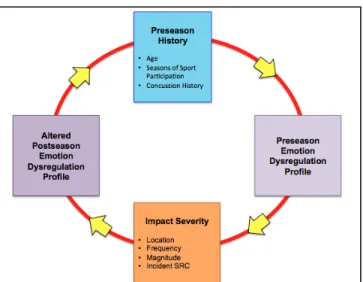
Figure 1.3. Conceptual model of the cyclical relationship between Emotion
Dysregulation Profile and Impact Severity Profiles (ISP) over sequential seasons.
1.7. Operational Definitions
Concussion: A complex pathophysiological process affecting the brain, induced by biomechanical forces.[192]
Emotion Dysregulation Profile: The emotion dysregulation measures (PHQ-9, GAD-7, BIS-11, and BPAQ) were evaluated independently to determine individual profiles and together to determine full profiles (analyses contained both affective and personality measures). A higher score on these measures indicated a worse emotion dysregulation profile and a lower score indicated a healthier Emotion Dysregulation Profile.
Seasons of sport participation: At preseason, the participants were asked to sum all years of organized participation for their respective sport. This count included organized youth teams and partial seasons that ended early due to injury, illness, etc. At
postseason they were instructed to include the season they had just finished in their count.
Sport-related concussion (SRC): Any concussion that occurred during sports participation that was diagnosed by a medical provider.
Traumatic Brain Injury (TBI): While SRC falls under the broader definition of TBI, for the purposes of this study TBI referred to all non-sport-related head injuries. It encompassed a range from mild to severe in nature. These injuries commonly result in the following reductions in the patient’s Glasgow Coma Scale scores: mild TBI (mTBI): 13-15, moderate TBI: 9-12 severe TBI: <8.
1.8. Assumptions
1. All football helmets were fit correctly, and the football players had their helmets properly secured to their heads for all impacts.
2. The high school football players enrolled in this study were representative of all football players of similar age and level.
3. The amount of contact within each sport among the schools was homogeneous. 4. All participants were able to accurately recall all past SRCs.
6. There was homogeneity between the participants and within the respective high school groups (football players vs. non-contact controls, males vs. females, contact vs. low-contact vs. no-contact) at baseline.
7. Contact with the parent/guardian(s) and athletic trainers concerning elevated emotion dysregulation scores did not affect the study outcomes.
1.9. Delimitations
1. Data were collected from public high schools and not private because public schools were the most accessible schools with football teams for our
researchers.
1.10. Limitations
1. One of the high school football teams had worn accelerometers during the 2012/13-2014/15 academic years, but the 2015/16 academic year was the first year for the other two high school football teams. Their comfort level wearing the accelerometers could have affected enrollment and data collection.
2. Additionally, it is possible that the emotion dysregulation scores for the student-athletes at the two new schools could have differed from the returning school, due to a novelty affect for these athletes.
3. Emotion dysregulation measures were collected via a self-report Internet based program, Qualtrics.com, instead of using a licensed neuropsychologist. However, the measures have been well validated and have been utilized in this manner by our group in previous studies.
study. Exposure to the intervention could have lead to heterogeneity between the intervention and control schools.
1.11. Significance of the Proposed Study
The National Football League (NFL) has agreed to pay $765 million with a $5 million per person cap to 2,400 retired players who report long-term emotion regulation and neurological alterations after sustaining SRCs in the NFL.[193] The retired NFL players have reported developing conditions including chronic headaches,[194]
depression,[4, 99, 144, 182] Alzheimer’s disease (AD),[194] mild cognitive impairment (MCI),[4, 99, 144, 182, 194] dementia[4, 144, 194] and chronic traumatic encephalopathy (CTE).[194]
Researchers have found retired NFL players with 3+ SRCs are more likely to experience neurological problems and depression than players with 0-2 SRCs.[3, 4, 182] The average recovery from a SRC is 7-10 days[195] with a significant increase in recurrent SRCs as the history increases from 0-3.[5]
Non-athletic moderate-severe TBIs are commonly an isolated incident associated with structural damage and lengthy recovery periods, if full recovery is attained. TBIs have been correlated with increased emotional arousal, specifically depression,[4, 36, 44, 163, 196, 197] anxiety,[29, 32, 36, 56, 176, 198] impulsivity,[38, 52, 199, 200] aggression[38, 43, 44, 164, 197] resulting in diminished short and long-term quality of life.
long-term outcomes of RHI and SRC, and will have implications on accelerated diagnosis and treatment of at-risk athletes. The ability to identify an association between SRC, head impact biomechanics, and self-reported emotional regulation changes will help us ascertain a more efficient method to identify early onset of neurological dementia,
CHAPTER 2: LITERATURE REVIEW Introduction
Traumatic brain injury (TBI) is “an alteration in brain function, or other evidence of brain pathology, caused by an external force”.[201] Under this definition, an “alteration in brain function” necessitates the presence of at least one of the following: decreased or loss of consciousness (LOC), any memory loss (amnesia), neurological deficits, or an altered mental state. The literature describes TBI as continuum spanning from mild to severe, with sport-related concussion (SRC) situated to the far left, below mild TBIs (mTBI). Most studies involving TBI research are conducted in emergency departments, in- or out-patient rehabilitation centers, or a mixture of these. The majority of participants recruited for these studies experience at least one of the following: diminished Glasgow Coma Scale (GCS) scores, confirmed structural damage via imaging, LOC, and/or amnesia. It is not uncommon for these individuals to exhibit prolonged deficits for weeks to years.
balance, sleep, fatigue, cognition (memory, executive control), and psychological disturbances (including depression, aggression, and anxiety).
One important distinction that has been overlooked by TBI researchers is the frequency in which athletes sustain concussive and subconcussive repeated head impacts (RHI) compared to those who suffer a mild-severe TBI. Most individuals may sustain 1-2 TBIs in their lifetime, whereas some contact sport athletes have been shown to sustain more than 1000 subconcussive RHI in one season[5] and report multiple SRCs throughout the duration of their athletic career.[3, 4, 99] The accumulation of RHI and multiple SRCs some athletes sustain over the course of their athletic career may in fact increase the overall severity of these head injuries and shift SRCs to the right on the TBI continuum. This lateral shift may help explain why some athletes later in life have been shown to display cognitive deficits and emotional dysregulation similar to those
described in the TBI literature.[3, 4, 99]
2.1. Head Impact Biomechanics
Naunheim et al. published the first sport-related head impact biomechanical study using triaxial accelerometers in 2000.[204] This study was the jumping point for all subsequent studies, with the first on-field application of this technology occurring in 2003.[205] Since then, a multitude of researchers have investigated the relationships between sport-related head impact biomechanics and level (adolescent, middle school, high school, college, professional), event (practice vs. game), position, play type, sex, infractions, anticipation level, neck strength, and incidence of SRC.
student-athlete participating in 1 practice or competition in which he or she was exposed to the possibility of athletic injury, regardless of the time associated with that
participation”.[206]
Head impact biomechanics studies have consistently found several important football-related factors indicating elevated injury risk. Across all impact biomechanical studies impact frequency and magnitude are greater in games compared to practices.[106, 121, 126-129, 134, 137, 142] Several studies have found correlations between player position and impact magnitude in high school and collegiate football players[106, 121, 126-128, 134, 142] suggesting a potential injury risk escalation for certain field positions (e.g., linemen, running backs, linebackers). Linemen consistently sustain the greatest number of impacts over the course of a season, but these impacts are typically lower in magnitude than the specialty players. In 2009, Broglio et al. reported high school football players average 15.87 ± 17.87 impacts per session, with impacts occurring 1.04, 1.69, and 1.98 times more frequently for defensive line players than offensive line, offensive skill, and defensive skill respectively.[126] However, others have reported a slightly differing distribution of player position impact frequency for both high school and collegiate football players.[106, 122, 128] In a college sample, event (practice, game) impacts ranged from 11.5 (defensive linemen) to 3.2 (quarterbacks) in practices and from 29.8
A great deal of research has investigated the frequency, magnitude and
subsequent effects of impact location. Impacts occur most often to the front of the helmet (facemask) followed by the back, side, and top,[106, 121, 126-129, 134] with one middle school study finding back impacts to slightly surpass front.[130] Crisco et al. reported that offensive linemen experience the greatest percentage of front impacts, whereas quarterbacks experience the opposite (back>front).[128] Additionally, linemen, defensive backs, and linebackers all had a greater frequency of front impacts compared to back. Importantly, regardless of playing level, top of the head impacts result in the highest linear magnitude in football and ice hockey athletes.[106, 121, 126-129, 134, 137, 142] This finding is concerning due to the increased risk of head and neck injuries with top of the head impacts. However, our 2014 pilot data indicated that the number and magnitude of top impacts provided by the HITS data may be exaggerated and should be investigated further. Additionally, top of head impacts also result in more SRCs compared to other head impact locations.[152]
Ommaya and Gennarelli discovered that rotational accelerations were far more critical in determining concussion outcomes compared to translational forces using a head acceleration device able to isolate linear and rotational acceleration forces.[208] They found concussion incidence was more common with moving rhesus monkey heads as opposed to fixed heads receiving blows with similar forces. Football athletes are often taught to contract their neck musculature (bull their neck, “hulk up”) prior to impacts and look straight ahead to couple the head and neck thus reducing rotational forces. While this approach may be effective on the field for reducing neck injures, human studies using player neck strength, neck circumference, height, and body mass have not
greater risk for head injury.[210] Of note, two football studies indicated individuals with stronger musculature might actually be a greater risk for higher magnitude impacts.[138, 209] All such studies recommend further investigation with improved methodology to determine the practicality of Ommaya and Gennarelli’s theory in sports.
A youth ice hockey biomechanical study found head impacts related to infractions result in significantly greater linear magnitudes compared to impacts without associated infractions.[136] Interestingly, Mihalik et al. did not find any significant differences in impact magnitude between striking and struck ice hockey players indicating both players are at an increased risk for injury.[136] Additionally, increased closing distance[135, 139] (e.g. open field/ice impacts) and unanticipated impacts[135] result in increased linear acceleration. Together these studies indicate an on- and off-field behavior modification intervention to improve technique and field awareness may result in reduced impact severity, top of the head impacts, and overall risk of injury. Finally, It is important to note that studies
investigating the influence of head impact biomechanics on emotion dysregulation in the short- and long-term are lacking.
2.1.1 Head Impact Telemetry System (HITS)
The majority of sport-related head impact biomechanics research has utilized the Head Impact Telemetry System (HITS) (Riddell, Elyria, OH) in football populations. This triaxial accelerometer system contains six single-axis accelerometers, a wireless
antero-posterior and mediolateral axes.[211] All linear measures are calculated using the center of the head as the center of gravity (CG) and a novel algorithm developed by Simbex.[212] The algorithm is oriented with the x-axis in the positive direction posteriorly, the y-axis positive moving away from the right side of the head, and the z-axis is positive in the superior direction, with the CG at (0,0,0).[205] The linear acceleration vector is combined with the assumed rotation point 10cm inferior to the CG to estimate rotational
acceleration.[211] Error has been estimated at 10% in magnitude and 10 degrees for impact location with these algorithms. The azimuth and elevation are used to determine the impact location. Azimuth is the angle between the point of interest and the reference vector on the reference plane (sagittal, coronal, transverse). The HITS azimuth angle is the angle between the impact direction vector as it passes through the CG and a horizontal plane that also passes through the CG.[205]. The HIT system has been validated in the field[205, 212] and in the laboratory.[213] Using a Riddell VSR-4 helmet, Duma et al. reported the estimated impact location and magnitude for each location were replicated within ± 0.41 cm and the average impact location error for both the azimuth and elevation was limited to ±1.20 cm.[205]
The system is triggered when an athlete sustains a linear impact ≥10g to their head or body. Data is recorded for 40 ms (8 ms prior to the impact and 32 ms
the cloud, the system removes all data points deemed to be artifact and stores the remaining impacts on their system, which is then available for download and analysis by the research team.
The HITS impact data can be used to calculate head impact severity measures that are commonly used and have been validated, including Head Injury Criterion (HIC) and Gadd Severity Index (GSI),[205] as well as a Head Impact Telemetry severity profile (HITsp).[214] HIC is the likelihood of an injury arising from an impact. Duma et al. defined it as the maximum value of the integral of acceleration over a 36 second pulse, but may also be calculated using smaller time intervals (e.g., 15 ms).[205] HITS data is reported in relation to this shorter time interval as HIC15 in several studies.[75, 119, 120, 213, 214] The average injury threshold is determined through the GSI calculation. GSI calculates a value for pulses with various durations using the integral of acceleration with respect to time.[205] Finally, HITsp is a predictive measure used to determine the risk of concussion. It uses the peak linear and rotational accelerations, impact duration and location to determine a weighted composite score.[214] SRC incidence in high school and collegiate football players has been correlated with HITsp.[214] It was also found to be more
predictive of injury than HIC and GSI. All three of these composite scores have been described in detail previously and are computed by the HITS software.[205, 214]
Football studies have shown biomechanical data (impact magnitude and location) correlate well with concussion incidence, but that the sensitivity of these variables is still quite low.[3, 125, 214] Using the model described previously, Ommaya developed an injury risk curve using rhesus monkeys and isolated linear and rotational accelerations, suggesting greater magnitudes are more deleterious.[215] His injury risk model indicated a rotational acceleration of 4500 rad/sec2 threshold when the rotational velocity is under 30 rad/sec in the sagittal plane. Ommaya was able to measure
application of his methods with humans is nearly impossible. Human studies and real-life impacts never occur in this manner. Linear and rotational acceleration has been noted with every impact recorded and these impacts typically involve some form of rotation in all three planes.
Efforts have been made to improve the clinical utility of HITS data by determining a more practical injury risk curve. Rowson et al. were able to determine a risk injury curve utilizing HITS data collected over 3 seasons from 335 Division I collegiate football players.[211] In that time, they captured nearly 287,000 impacts, including 57 concussive head impacts. Subconcussive and concussive impacts to the front and back together constituted 67.5% and 57.9% of the total impacts, followed by side (17.3%, 12.3%) and top (15.2%, 29.8%) impacts. As expected, the rotational acceleration for concussive impacts was greater than subconcussive. The researchers were quick to point out that rotational acceleration is only a piece of the puzzle and rotational velocity has equal importance. Ommaya et al. found velocity and duration were instrumental in their whiplash findings.[216] This finding was significant since many football impacts involve some form of whiplash that produces the rotational and linear accelerations seen using the HIT Systems.
Head impact biomechanics measures over the last 15 years have improved immensely. Algorithms have been altered to improve impact magnitude accuracy (e.g., HITS). Technological advances have resulted in miniaturized accelerometers that can be worn by helmetless athletes (e.g., X2 XPatch and Mouthguard [X2 Biosystems, Seattle, WA]). The validity and reliability for these measures have yet to be determined, but the advent of these systems now gives researchers the ability assess the head impact biomechanics of non-helmeted sports (soccer, basketball, field hockey) as well as helmeted sports other than football and ice hockey (lacrosse). Even with these
head impact biomechanics and concussion incidence and outcome, there is a gap in current literature investigating it’s association with the emotion dysregulation seen in TBI literature and reported by retired professional athletes. Thus, a prospective longitudinal study investigating this relationship is the next step to improving the safety and care of our current and future athletes.
2.2: The Neurometabolic Cascade of Concussion
Giza and Hovda have amassed the results of several head impact biomechanical and physiological studies to describe the “Neurometabolic Cascade of Concussion”.[217, 218] The presence of a neurometabolic cascade following head injury has been
established, during which the affected cells experience a rapid increase in calcium and sodium and a decrease in potassium.[219, 220] This ionic flux triggers hyperglycolysis to alleviate the increased demand for adenosine triphosphate and increased adenosine diphosphate. The resulting glycolytic hyper-drive occurs when most of the surrounding vessels are vasoconstricted, thus causing a mismatch in nutrient supply and demand. The mitochondria attempt to correct the issue by increasing uptake of the calcium. However, this is only effective for a short time before the calcium influx results in mitochondrial dysfunction, consequently aggravating the oxidative metabolism failure and sending the system further into an energy crisis. Additionally, the injured cells are releasing free radicals, which only potentiate the issue. A state of decreased metabolic functioning follows shortly thereafter, lasting for up to 7 to 10 days.[217, 218] Not
surprisingly, most individuals who sustain SRCs experience symptoms for approximately the same length of time. The duration of these effects seems to be related to age,
concussion history, and injury severity.[5, 106, 149] To fully understand the effects of sport, head impact biomechanics, and SRCs on short- and long-term alterations, it is
2.3. Emotion Dysregulation and TBI
A history of mild-severe TBI has been shown to lead to psychological long-term decline.[39, 47, 48, 51, 177] Victims of TBI suffer cognitively, physiologically, physically, and have reported difficulties with emotion regulation. Researchers have begun to evaluate emotion dysregulation after non-athletic TBI and SRC utilizing multiple measures including self-report measures.[8, 163, 221-224] Moderate-severe TBI research has shown up to 75%[38, 43, 44, 164] of these individuals experience increased depression, anxiety,
aggression, and/or impulsivity resulting in diminished short and long-term quality of life. Additionally, these four affective behaviors are highly correlated in TBI populations.[42, 43, 49, 160, 169, 181, 191, 225-227] In a 12-month study comparing TBI patients to trauma patients without neurological consequences, 33% (30 out of 91) of the TBI patients developed major depressive disorder (MDD).[44] Of those who developed MDD, 76.7% and 56.7% also developed anxiety and aggressive behaviors respectively. It is widely believed that depression and anxiety result from difficulties in emotion regulation and that those with less effective management techniques are more likely to experience more severe
symptoms and for longer durations eventually cascading into clinical levels of depression and anxiety.
The most frequently reported emotional alterations are depression and anxiety after head injuries. These two affective emotions/behaviors are highly correlated in all populations.[228] Elevations in depression and anxiety have been noted in both sport-related and non-sport sport-related groups[4, 85, 99, 180, 228, 229] as well as after single[85, 97, 229] and repetitive concussions.[4, 97, 99] There is also evidence of metabolic changes correlating with elevated depression despite negative neuroimaging findings.[229] Other affective behaviors have been reported after non-sport related head injuries including
non-sport related populations. Some of the TBI studies were not conducted until several decades after the head injuries occurred so it is difficult to determine how much and at what point these changes occurred.[58] Most of the SRC-related work has involved long-term emotion regulatory complications.[4, 99] It is possible that these changes started early in their sporting careers and continued to progress with continued sport participation. Continued football participation necessitates continued exposure to head impacts. While a few may result in SRCs, the greater majority of these impacts are typically
subconcussive. To date, no published research indicates how subconcussive impacts may affect emotion regulation in athletes (male or female, contact or non-contact sports).
It has been argued by some TBI researchers that a large number of individuals who suffered moderate-severe TBIs were already experiencing (un)diagnosed emotion regulation conditions (e.g., depression, anger, anxiety, disinhibition) prior to their injury.[42, 44] Alternately, it is possible that these individuals actually do experience significant personality and affective changes after their TBIs. In a study of severe TBI patients with no previous history of emotion dysregulation, Ciurli et al. found increased age to be significantly correlated with dysphoria/depression and nighttime disturbances, and individuals with focal lesions had 4 times greater risk of developing anxiety
compared to healthy controls at a minimum of 30 days post-injury.[230] Overall, their participants reported a high number of emotion dysregulation symptoms, apathy (42%), irritability (37%), dysphoria/depressed mood (29%), disinhibition (28%), eating
disturbances (27%), and agitation (24%). Anxiety, depression, aggression, and fatigue were significantly correlated with psychosocial function (Sydney Psychosocial
Reintegration Scale) and with one another in a 10-year follow-up study of mild to severe TBI patients.[36]
found associations between depression, structurally altered brain regions (gray matter, white matter, ventricles, cerebrospinal fluid [CSF]), regional and network activation abnormalities, and physiological biomarkers in those with and without TBI patients.[83, 99, 177, 231-249] These studies accentuate the importance of evaluating and treating the entire person after a head injury, which cannot be attained with current SRC evaluation and treatment protocols that omit emotion dysregulation measures.
2.3.1. Differences in SRC and TBI Mechanisms and Outcomes
There is a great disparity in the frequency of impacts sustained when comparing TBI and SRC populations. Most TBI victims experience one traumatic event resulting in both focal and gross damage. In 2010, the Centers for the Study of Disease Control and Prevention released a report detailing the epidemiology of TBI in the United States from 2002-2006.[250] The most common mechanisms for TBI-related hospitalizations and deaths in the United States were motor vehicle accidents (20.7%, 31%), falls (22.7%, 18.9%), and assaults (5.6%, 11.3%), with male hospitalization and deaths (61.9%, 73.7%) exceeding females’ (38.1%, 26.3%) respectively. TBI mechanisms are typically at a much higher velocity and are more commonly associated with additional injuries including skull and cervical spine fractures, intracranial hemorrhage, and extended recovery compared to SRC.
the greater majority of these impacts do not result in concussions.[106] As stated previously, SRCs have been correlated with increased risk for long-term health
consequences, however the subconcussive impacts have not yet been shown to predict late-life outcomes. Nevertheless, the cumulative magnitude and/or frequency of
subconcussive and concussive head impacts may result in many of the same emotion dysregulation changes noted in TBI literature. For instance, a group of retired NFL players suspected to have developed chronic traumatic encephalopathy (CTE) after recurrent RHIs and SRCs were believed to have increased emotion dysregulation possibly causing them to commit murder and/or suicide.[146, 194] However, these decreases in emotion regulation are speculative as CTE can only be diagnosed post-mortem and the players were not evaluated for emotion dysregulation prior to their death.
Finally, structural and functional changes have been noted in TBI and SRC populations. Interestingly, differences have been noted in structural changes with
respect TBI history. Typically, total brain, gray, and white matter volumes are diminished compared to healthy controls and the ventricles are enlarged in moderate-severe TBI patients without increased emotion dysregulation.[32, 254] Specifically, the somatosensory, temporal, cerebellar, parietal, and parahippocampal gray matter regions in those with multiple mild TBIs were significantly smaller compared to those with a history of only one SRC and healthy controls.[255] Those with a history of only one mild TBI showed
were not experiencing increased emotion dysregulation, but imaging detected significant changes compared to healthy controls. Therefore, it is probable that since the seat of emotion regulation responses lies within the brain, that the increased emotion
dysregulation associated with TBI must at least be driven in part by some form of structural or functional modification.
2.3.2. Emotion Dysregulation and Postconcussive Syndrome (PCS)
It is believed approximately 15% of the estimated 1.6 million SRCs that occur annually go on to suffer from post-concussive syndrome (PCS).[202] PCS occurs even after very “mild” traumatic brain injuries (mTBI). Mild TBIs are typically defined as having LOC less than 30min and a Glasgow Coma Scale (GCS) of 13-15, with the majority of SRCs falling within this definition. Most PCS definitions require the presence of post-concussive symptoms for at least 3 months after injury.[203] However, the symptom incidence and severity can be extremely variable. The general areas most often affected include: vision, balance, sleep, fatigue, cognition (memory, executive control), and increased emotion dysregulation (depression, anxiety, aggression, and impulsivity). LOC, amnesia,[256] and initial symptom severity[256] are strongly correlated with PCS. Additionally, a history of three or more (3+) concussions is another sound indicator for these sustained deficits.[4, 5, 257, 258]
cognitive abilities, who are younger, and are male, are less likely to develop PCS.[97, 170, 181, 260]
One of the issues in diagnosing PCS is that increased emotion dysregulation complications are sometimes present in the absence of cognitive deficits.[59] Most field clinicians, particularly certified athletic trainers and team physicians, are not clinical psychologists and do not have the objective psychological measures available, or the training to interpret them. Commonly, this gap in concussion care results in undiagnosed emotion dysregulation sequelae that may lead to physical and/or psychological
complication for the athletes in the short and/or long term. Linking this gap in research with previous findings indicating long-term emotion dysregulation as well as structural and functional brain changes after non-athletic TBIs, have led us to question if these same long-term consequences are also present after SRC.
2.3.3. Depression
In 2008, The World Health Organization declared major depressive disorder (MDD) as the leading neuropsychiatric disorder worldwide.[261] One’s inability to regulate their emotions may result in depression.[262-266]. Harder, Cutler, and Rockart suggested that shame may be another route to depression.[267] This seems particularly applicable in all levels of sport. If an athlete performs either extremely poorly in one competition, or consistently below their own or others’ expectations, they may feel shame concerning their athletic abilities. These athletes may feel that they let themselves, their team, coaches, parents, fans, classmates, and even the community down with a suboptimal performance. If this were to become a more consistent occurrence, it is possible that these athletes could develop depression-like symptoms.
associated with loss of personal goal attainment. Sociotropic individuals are more likely to report depressive symptoms from a strained interpersonal relationship, whereas unattained personal goals are more likely to cause depression in those with more autonomy. These findings may give us insight as to why not all athletes develop
depression when held from participation due to an injury. If they are more sociotropic in nature, but still allowed to attend team activities, they may not experience depressive symptoms even though they are not allowed to participate. However, an autonomous athlete would be more likely to report elevated levels of depression with similar
involvement due to their lack of athletic participation, and thus diminishing their ability to attain personal goals and assist the team in athletic achievements. Thus each
individual’s interpretation and reaction to the social, educational, and athletic stressors imposed upon or by them will be determined by their underlying personality.
Studies have indicated that depression is correlated with total symptom reporting and cognition in student-athletes. In a preseason baseline study of healthy high school and collegiate student-athletes Covassin et al. found significant group differences for depression in total reported symptoms, somatic/migraine symptoms, emotional
symptoms, sleep and cognition (visual memory).[269] The severe depression group was significantly higher in all symptom categories and had a significantly lower verbal memory score compared to the minimal depression group. They also reported significantly more total and migraine-related symptoms compared to the moderate group. The mild depression group reported significantly fewer cognitive symptoms compared to the severe group. Finally, the moderate and mild groups reported significantly more emotional symptoms compared to minimal group.
Depression symptoms have also been correlated with decreased activation of the nucleus accumbens, bilateral dorsal caudate, and left posterior putamen via
have also been conducted to support positive neurological alterations due to treatment for depression.[271-274] Functional neuronal alterations seem to be dependent on the previous and current medications.[275] Patients with decreased symptoms also show increased activity in Brodmann area 10 and the right dorsolateral prefrontal cortex (dlPFC).[245] Treatments to increase positive affect in depressed patients have resulted in increases in sustained nucleus accumbens and fronto-straital connectivity.[271] These findings all support altered neuronal function exists in those with depression, but that with the correct treatment, abnormal functions may be diminished or resolved. For the current project, these findings suggest that elevated depression over the course of a competitive season, or following a concussion may be attenuated with treatment. More importantly, if participants are currently taking medications to moderate pre-existing depression, their depression scores may not be affected by time or SRC to the same degree as participants not taking these medications. Additionally, if a participant seeks medical attention for depression after completing their baseline assessment, and begins taking medication for depression, their post-injury or pre- to postseason change scores may not accurately reflect their depression level if they were to complete an emotion dysregulation assessment without medication. However, the likelihood of a large number of participants initiating this care during our study is low.
individuals who present with depression/anxiety post-TBI are significantly more likely to report more symptoms with greater severity, view their injury/neurological condition as being worse and, view their cognitive abilities as being significantly worse than those without depression/anxiety.[277]
Failiia et al. found TBI patients with a pre-morbid history of mood disorders (depression, anxiety) were 2.15 and 2.02 times more likely to experience risk for posttraumatic depression at 6 and 12 months post-injury compared to those with no history of mood disorder.[241] Hart et al. also found an increased risk for depression following TBI in those with pre-existing mood disorders as well as substance abuse.[196] Importantly, Tessa Hart’s group found women to be more at risk for depression following TBI. This finding is supported by a great deal of literature suggesting females are more likely to report symptoms after an injury than males. Sex differences for depression incidence are not isolated to TBI. Significantly more females are consistently reported to experience depressive symptoms than males for numerous reasons including, social power, victimization, chronic stress, hormonal fluctuations, and coping abilities.[278] However, a large study of collegiate and high school athletes found no sex or age
differences for total symptom score on the Beck Depression Inventory-II (BDI-II).[269] This inconsistency may be related to the measure utilized in the athlete study. The BDI-II may not be a sensitive enough measure to capture depressive symptoms in this population. Other possibilities for the non-significant findings may be a reflection of the test
administration mode, regional differences, or that athletes have been found to have more optimistic and positive attitudes than the general population.[279] This study will investigate these differences with an alternate depression instrument in an effort to determine answers some of these questions.
separated the depressed from the nondepressed patients were feeling hopeless, worthless, and difficulty enjoying activities. The most commonly reported symptoms in the depressed group were fatigue (29%), anger/irritability (28%), distractibility (28%), and rumination (25%). Those who were impoverished and unemployed were among the most likely to meet the MDD criteria. Surprisingly, injury severity was not significantly correlated with reported depression symptoms.[196, 197] MDD at 1-year post-TBI was associated with higher odds of depression one year later[181] suggesting possible emotional dysregulation issues. Those who are not depressed one year after a TBI, but become dependent on illicit substances, have lower cognitive scores and increased overall disability are correlated with symptom worsening. Depression is a common symptom of both Alzheimer’s disease (AD) and mild cognitive impairment (MCI)[99] and has been tied to chronic traumatic encephalopathy (CTE),[146, 194, 280, 281] all of which have negative ties to quality and longevity of life.
Additionally, several studies have identified physiological changes correlated with depression-related TBI. The primary TBI depression-related biomarkers mentioned in the literature include cerebral spinal fluid surface markers, inflammatory biomarkers (interleukins, TNF-α), brain-derived neurotrophic factor, and S100B in human and animal models.[64, 162, 282-284] Little work has been done in this area with SRC populations and should be considered as the next step in SRC emotion regulation research.
Compared to TBI literature, there has been very little emphasis put on determining the relationship between SRC and depression. 75 high school and
points, which is a deviation from the general populace. Nonsignificant sex differences in athletes are not unusual and may be associated with their overall elevated optimism levels. Female (n=147) and male (n=385) athletes currently in training, ranging in age from 16-30 years, exhibit lower pessimism than their non-athlete cohorts (n=262, n=435).[279] BDI-II depression symptom scores also correlated with cognitive abilities (memory, reaction time) through day 14. Specifically, they found somatic depression was related to slower reaction times at 7 days post-injury and lower visual memory at 14 days post-injury. Neural responses in depression-related brain regions have been correlated with symptom severity after SRC in adult males.[85] A neuroimaging study involving 45 retired NFL players with a history of SRC found one third of the players reported symptoms of depression (mild to marked) on the BDI-II and nine players met the criteria for major depression or other depression on the patient health questionnaire (PHQ).[77] Carson et al. did not find any associations between depression and the
neuroimaging measures, but the neuroimaging alterations were related to alcohol usage. Chen et al. found male contact sport athletes (recreational, amateur,
professional) complaining of mild and moderate depression post-SRC had significantly greater PCS scores than the controls and those without depression post-SRC.[85] This finding is consistent with both TBI and SRC literature. Depressed individuals are more likely to complain of a greater number and severity of symptoms. The concussed athletes exhibiting depression symptoms tended to be less accurate and slower during memory and control tasks compared to the controls, but the differences were not
regions of interest in athletes experiencing depression symptoms post SRC. Thirdly, it demonstrated a relationship between emotion dysregulation measures and structural and functional changes post SRC. Fourth, the functional findings were similar to several previous mild TBI studies.
2.3.4. Anxiety in TBI
Anxiety is also a common psychological complication after TBI, occurring in 47-63% of the affected population.[198, 285] The most common anxiety-related disorders reported after TBI include, posttraumatic stress disorder, generalized anxiety disorder (GAD), obsessive-compulsive disorder, and panic disorder. Diagnosis of one of more of these is often problematic because they are often co-morbidities of each other and/or with depression. Similar to depression, females are twice as likely to report symptoms of anxiety compared to males for many of the same reasons listed above.[286, 287] Many of these anxiety-related disorders have been positively correlated with mild to moderate military TBIs.[59] PTSD, characterized by nightmares and intrusive thoughts, is more common after mild-moderate TBI than severe TBI, especially if the patient suffered a bout of amnesia.[288] PTSD is primarily associated with experiencing various forms of trauma (physical & psychological), much like what an athlete would experience when they sustain a SRC. LOC and amnesia after a TBI may function as a protective
mechanism resulting in inability fully remember the traumatic episode. PTSD is far less common in both military and civilians who experience these symptoms.
GAD is defined as excessive worry and/or distress about a wide variety of
activities that cannot be attributed to other anxiety disorders that has been present for at least 6 months.[203] Individuals who are diagnosed with GAD experience difficulty