Leaders in innovation, product features, and market reach for
Identity Provisioning. Your compass for finding the right path in
the market.
KuppingerCole Leadership Compass
by Martin Kuppinger | October
2012
Content
1. Management Summary ... 4 2. Methodology... 5 3. Product Rating ... 7 4. Vendor Rating ... 9 5. Vendor Coverage ... 10 6. Market Segment ... 117. Specific features analyzed ... 13
8. Market Leaders ... 15
9. Product Leaders ... 16
10. Innovation Leaders ... 17
11. Product evaluation ... 18
11.1 Atos DirX Identity ... 19
11.2 Avatier Identity and Access Risk Management Suite ... 20
11.3 Beta Systems SAM Enterprise Identity Management Suite ... 21
11.4 CA IdentityMinder ... 22
KuppingerCole
Leadership Compass
Identity Provisioning
11.13 ILEX Meibo/MPP ... 31
11.14 iSM bi-Cube ... 32
11.15 Microsoft Forefront Identity Manager ... 33
11.16 Identity Manager from NetIQ ... 34
11.17 Omada Identity Suite (based on Microsoft FIM) ... 35
11.18 Oracle Identity Manager ... 36
11.19 Quest One Identity Manager ... 37
11.20 SailPoint IdentityIQ ... 38
11.21 SAP NetWeaver Identity Management ... 39
11.22 The Dot Net Factory EmpowerID ... 40
12. Products at a glance ... 41 Related Research Documents
Product Report: CrossIdeas IDEAS – 70620
July 2012
Product Report: Quest One Identity Manager 5 – 70133
Dec. 2011
Advisory Note: The Open API Economy - 70352
Dec. 2011
Vendor Report: Fischer International – 70254
Nov. 2011
Vendor Report: Courion – 70353
Nov. 2011
Scenario: Understanding Identity and Access Management – 70129
Oct. 2011
Product Report: SailPoint IdentityIQ 5.2 – 70287
Oct. 2011
Product Report: Evidian Identity & Access Manager 9 – 70130
Oct. 2011
Product Report: DirX Identity 8.2 – 70134
Oct. 2011
Technology Report: Access Governance Architectures – 70219
1. Management Summary
Identity Provisioning is still one of the core segments of the overall IAM market. Thus it comes to no surprise that this segment is more crowded by vendors than virtually all the other IAM market segments. This Leadership Compass provides an overview and analysis of the Identity Provisioning market segments.
It shows that there are several established vendors with mature solutions, but also some very interesting smaller or regional vendors with a good potential for growth and for delivering what customers require.
Picking solutions always requires a thorough analysis of customer requirements and a comparison with product features. Leadership does not always mean that a product is the best fit. However, this Leadership Compass will help identifying those vendors customers should have a closer look at.
2. Methodology
KuppingerCole Leadership Compass is a tool which provides an overview of a
particular IT market segment and identifies the leader in that market segment. It is the compass which assists you in identifying the vendors and products in a particular market segment which you should consider for product decisions.
It should be noted that it is inadequate to pick vendors based only on the information provided within this report. Customers must always define their specific requirements and analyze in greater detail what they need. This report doesn’t provide any
recommendations for picking a vendor for a specific customer scenario. This can be done only based on a more thorough and comprehensive analysis of customer requirements and a more detailed mapping of these requirements to product features, i.e. a complete assessment.
We look at four types of leaders:
Product Leaders: Product Leaders identify the leading-edge products in the particular market segment. These products deliver to a large extent what we expect from products in that market segment. They are mature.
Market Leaders: Market Leaders are vendor which have a large, global
customer base and a strong partner network to support their customers. A lack in global presence or breadth of partners can prevent a vendor from becoming a Market Leader.
Innovation Leaders: Innovation Leaders are those vendors which are driving innovation in the particular market segment. They provide several of the most innovative and upcoming features we hope to see in the particular market segment.
Overall Leaders: Overall Leaders are identified based on a combined rating, looking at the strength of products, the market presence, and the innovation of vendors. Overall Leaders might have slight weaknesses in some areas but become an Overall Leader by being above average in all areas.
For every area, we distinguish between three levels of products:
Leaders: This identifies the leaders as defined above. Leaders are products which are exceptionally strong in particular areas or overall.
Challengers: This level identifies products which are not yet leaders but have specific strengths which might make them leaders. Typically these products are also mature and might be leading-edge when looking at specific use cases and customer requirements.
Followers: This group contains products which lag behind in some areas, such as a limited feature set or only a regional presence. The best of these
products might have specific strengths, making them a good or even best choice for specific use cases and customer requirements but are of limited
Our rating is based on a broad range of input and a long experience in that market segment. Input consists of experience from KuppingerCole advisory projects,
feedback from customers using the products, product documentation, a questionnaire sent out before creating the KuppingerCole Leadership Compass, and other sources.
3. Product Rating
KuppingerCole as an analyst company regularly does evaluations of products and vendors. The results are, amongst other types of publications and services, published in the KuppingerCole Leadership Compass Reports, KuppingerCole Product Reports, and KuppingerCole Vendor Reports. KuppingerCole uses a standardized rating to provide a quick overview on our perception of the products or vendors. Providing a quick overview of the KuppingerCole rating of products requires an approach combining clarity, accuracy, and completeness of information at a glance. KuppingerCole uses the following categories to rate products:
Security Functionality Integration
Interoperability Usability
Security – security is measured by the degree of security within the product.
Information Security is a key element and requirement in the KuppingerCole IT Model (#70129 Scenario Understanding IT Service and Security Management). Thus, providing a mature approach to security and having a well-defined internal security concept are key factors when evaluating products. Shortcomings such as having no or only a very coarse-grained, internal authorization concept are understood as weaknesses in security. Known security vulnerabilities and hacks are also understood as weaknesses. The rating then is based on the severity of such issues and the way a vendor deals with them.
Functionality – this is measured in relation to three factors. One is what the vendor promises to deliver. The second is the status of the industry. The third factor is what KuppingerCole would expect the industry to deliver to meet customer requirements. In mature market segments, the status of the industry and KuppingerCole
expectations usually are virtually the same. In emerging markets they might differ significantly, with no single vendor meeting the expectations of KuppingerCole, thus leading to relatively low ratings for all products in that market segment. Not
providing what customers can expect on average from vendors in a market segment usually leads to a degradation of the rating, unless the product provides other features or uses another approach which appears to provide customer benefits. Integration—integration is measured by the degree in which the vendor has
integrated the individual technologies or products in the portfolio. Thus, when we use the term integration, we are referring to the extent in which products interoperate with themselves. This detail can be uncovered by looking at what an administrator is required to do in the deployment, operation, management and discontinuation of the product. The degree of integration is then directly related to how much overhead this process requires. For example: if each product maintains its own set of names and passwords for every person involved, it is not well integrated. And if products use different databases or different administration tools with inconsistent user interfaces, they are not well integrated. On the other hand, if a single name and password can allow the admin to deal with all aspects of the product suite, then a better level of
Interoperability—interoperability also can have many meanings. We use the term “interoperability” to refer to the ability of a product to work with other vendors’ products, standards, or technologies. In this context it means the degree to which the vendor has integrated the individual products or technologies with other products or standards that are important outside of the product family. Extensibility is part of this and measured by the degree to which a vendor allows its technologies and products to be extended for the purposes of its constituents. We think Extensibility is so important that it is given equal status so as to insure its importance and
understanding by both the vendor and the customer. As we move forward, just providing good documentation is inadequate. We are moving to an era when
acceptable extensibility will require programmatic access through a well-documented and secure set of APIs. Refer to the Open API Economy Document (#70352 Advisory Note: The Open API Economy) for more information about the nature and state of extensibility and interoperability.
Usability —accessibility refers to the degree in which the vendor enables the accessibility to its technologies and products to its constituencies. This typically addresses two aspects of usability – the end user view and the administrator view. Sometimes just good documentation can create adequate accessibility. However, overall we have strong expectations regarding well integrated user interfaces and a high degree of consistency across user interfaces of a product or different products of a vendor. We also expect vendors to follow common, established approaches to user interface design.
We focus on security, functionality, integration, interoperability, and usability for the following key reasons:
Increased People Participation—Human participation in systems at any level is the highest area of cost and potential breakdown for any IT endeavor.
Lack of Security, Functionality, Integration, Interoperability, and Usability— Lack of excellence in any of these areas will only result in increased human participation in deploying and maintaining IT systems.
Increased Identity and Security Exposure to Failure—Increased People
Participation and Lack of Security, Functionality, Integration, Interoperability, and Usability not only significantly increase costs, but inevitably lead to mistakes and breakdowns. This will create openings for attack and failure. Thus when KuppingerCole evaluates a set of technologies or products from a given
4. Vendor Rating
For vendors, additional ratings are used as part of the vendor evaluation. The specific areas we rate for vendors are
Innovativeness Market position
Financial strength Ecosystem
Innovativeness – this is measured as the capability to drive innovation in a direction which aligns with the KuppingerCole understanding of the particular market
segment(s) the vendor is in. Innovation has no value by itself but needs to provide clear benefits to the customer. However, being innovative is an important factor for trust in vendors, because innovative vendors are more likely to remain leading-edge. An important element of this dimension of the KuppingerCole ratings is the support of standardization initiatives if applicable. Driving innovation without standardization frequently leads to lock-in scenarios. Thus active participation in standardization initiatives adds to the positive rating of innovativeness.
Market position – measures the position the vendor has in the market or the relevant market segments. This is an average rating over all markets in which a vendor is active, e.g. being weak in one segment doesn’t lead to a very low overall rating. This factor takes into account the vendor’s presence in major markets.
Financial strength – even while KuppingerCole doesn’t consider size to be a value by itself, financial strength is an important factor for customers when making decisions. In general, publicly available financial information is an important factor therein. Companies which are venture-financed are in general more likely to become an acquisition target, with massive risks for the execution of the vendor’s roadmap. Ecosystem – this dimension looks at the ecosystem of the vendor. It focuses mainly on the partner base of a vendor and the approach the vendor takes to act as a “good citizen” in heterogeneous IT environments.
5. Vendor Coverage
KuppingerCole tries to include all vendors within a specific market segment in their Leadership Compass documents. The scope of the document is global coverage, including vendors which are only active in regional markets like Germany or the US. However, there might be vendors which don’t appear in a Leadership Compass document due to various reasons:
Limited market visibility: There might be vendors and products which are not on our radar yet, despite our continuous market research and work with advisory customers. This usually is a clear indicator of a lack in Market Leadership.
Denial of participation: Vendors might decide on not participating in our evaluation and refuse to become part of the Leadership Compass document. KuppingerCole tends to include their products anyway as long as sufficient information for evaluation is available, thus providing a comprehensive overview of leaders in the particular market segment.
Lack of information supply: Products of vendors which don’t provide the information we have requested for the Leadership Compass document will not appear in the document unless we have access to sufficient information from other sources.
Borderline classification: Some products might have only small overlap with the market segment we are analyzing. In these cases we might decide not to include the product in that KuppingerCole Leadership Compass.
The target is providing a comprehensive view of the products in a market segment. KuppingerCole will provide regular updates on their Leadership Compass documents.
6. Market Segment
This KuppingerCole Leadership Compass looks at the category of Identity Provisioning systems. Identity Provisioning products as we know them today are mostly organized around those four components:
Connectors
Reconciliation engine coupled with a repository engine
Workflow engine
Form generator to handle graphical user interface Identity Provisioning products today typically provide some basic, sometimes also some more evolved, access governance functionality. This includes, for example, role management and reporting. Other typical features are user self-service, delegated administration, and password management. In addition to this, configurable workflows for request procedures and approvals are a key element.
It is impossible to understand Identity Provisioning complexity without having a quick look backward. Most historical Identity Provisioning products in the market date back to the late 1990’s and early 2000’s. They were designed back then and have evolved over time. That was the time of central authentication repositories and
meta-directories, and the area of three-tier web architectures. In fact those years fit with the explosion of distributed systems IT departments had to handle. On one hand the number of systems (servers, desktops, applications, network hardware, etc.) to control was growing exponentially, while the number of skilled system administrators wasn’t growing at the same rate. On the other hand the number of requests from business units to add new users, grant privileges, enforces policies etc. was exploding. Last but not least everything had to be executed faster and faster and served at a lower cost.
As a result early Identity Provisioning systems were designed to help automate systems administration of IT. Before Identity Provisioning, it was common to wait days or even weeks for a user to get an account on a mainframe resource or application. With Identity Provisioning, business owners became able to serve end-user requests almost in real time from a small web interface, this without asking the permission of any IBM mainframe administrator.
For those reasons, the first Identity Provisioning systems started to focus on
connectivity with targeted systems: how to populate a user on an IBM-3270, how to enable someone on Cisco's VPN, … Obviously as soon as the system administration bottleneck was handled, the problem moved to the next level. As it was now simple to grant access to any resource, users had accounts on multiple systems, and the issue moved from “how do I grant access to John on this or that system ?” to “how do I control what John has access to ?”. To verify that grants were given on purpose, Identity Provisioning introduces the concept of workflow to verify authorizations before accepting a request. Then in order to keep track of allocated resources a central repository was built, couple with a reconciliation engine.
Last but not least as requests were now handled directly by business owners or end-users, traditional command lines became a “no go” option and a friendly GUI
interface became one of the most important components of any Identity Provisioning implementation.
In recent years, compliance and basic access governance functions became a must have feature. Many regulations such as Sarbanes-Oxley, Gramm-Leach-Bliley, EU Privacy Protection Directive, etc. moved the responsibility of enforcing identity management policies from system and business administrators to the top
management. As a direct result, key requirement for Identity Provisioning moved from “how to quickly enable my business?” to “how to make sure no one can sue me?” That put new challenges on Identity Provisioning.
With Access Governance, a new product category appeared that somewhat overlaps and somewhat integrates with classical Identity Provisioning (#70,219 Access
Governance Architectures). While it remains obvious that – whatever some vendors claim – the provisioning requirement is not going to be disappear any time soon, but will continue to change.
When looking at Identity Provisioning in that Leadership Compass, our expectations are that products provide mature basic capabilities as defined at the beginning of this section plus sufficient role management and basic access recertification capabilities. We don’t necessarily expect full Access Governance functionality, i.e. access
analytics, recertification, risk management, and related features. We also don’t expect what some vendors call Access Intelligence, i.e. advanced analytical capabilities beyond what is commonly found in Access Governance products. We also expect products to provide a strong and flexible internal security model, flexibility in customization, and other standard features any software product should provide like the ability not to lose customizations when updating a product.
7. Specific features analyzed
When evaluating the products, besides looking at the aspects of overall functionality
size of the company number of customers number of developers
partner ecosystem licensing models
traditional core features of Identity Provisioning
we also considered some specific features. These include:
Connector toolkit A toolkit for simple creation of custom connectors to target systems is highly recommended.
Heritage of connectors Having connectors as OEM components or provided by partners is considered a risk for ongoing support and available know-how at the vendor.
ESB interfaces Having interfaces to ESBs (Enterprise Service Bus) adds architectural options for integrating Identity Provisioning with existing systems and for connecting to target
systems.
SRM interfaces We expect that systems provide out-of-the-box
integration to leading SRM (Service Request Management) systems for manual fulfillment of provisioning requests. SPML/SCIM support Support for these two standards (Service Provisioning
Markup Language/ System for Cross-domain Identity Management) is highly recommended.
Deployment models Supporting different deployment models like hard/soft appliances and cloud deployment gives customer a broader choice.
Customization Systems that require little or no coding and that support scripting or, if programming is required, a range of programming languages, are preferred.
Authentication mechanisms We expect Identity Provisioning systems to support different types of authentication to the system, including strong authentication options, to limit the risk of fraud using these systems.
Internal security model All systems are required to have a sufficiently strong and fine-grained internal security model.
Multi tenancy Given the increasing number of cloud deployments, but also specific requirements in multi-national and large organizations, support for multi-tenancy is highly recommended.
Role/SoD concept Provisioning should be feasible based on role concepts and with support for the definition of SoD rules
(Segregation of Duties), despite the fact that Access Governance tools are increasingly used on top of Identity Provisioning.
Shopping cart paradigm These approaches are pretty popular for simplifying the access request management process by using shopping cart paradigms familiar to the users.
The support for these functions is added to our evaluation of the products. We’ve also looked at specific USPs (Unique Selling Propositions) and innovative features of
8. Market Leaders
Based on our evaluation of the products, we’ve identified (as mentioned above) different types of leaders in the Identity Provisioning market segment. The market leaders are shown in figure 1.
Fig. 1: Market leaders in the Identity Provisioning market segment.
The market is affected by a situation where several very large software vendors compete with a large number of smaller vendors, which, frequently, are only acting regionally. Market leadership is mainly a hint at the overall position of the vendor, its strength in sales, and its partner ecosystem. It has to be noted that this doesn’t allow any conclusion about whether the products of the different vendors fit to the
9. Product Leaders
The second view we provide is about product leadership. That view is mainly based on the analysis of product features and the overall capabilities of the various products.
Fig. 2: Product leaders in the Identity Provisioning market segment.
Here it has to be noted that products which appear more at the left side frequently gained their rating because they take another approach to Identity Provisioning than usual. That is particularly true for vendors like CrossIdeas, Ilex, econet, Avatier, or even Evidian.
Again, to select a product it is important to look at the specific features and map them to the customer requirements. There are sufficient examples where products which weren’t “feature leaders” still were the better fit for specific customer scenarios.
10. Innovation Leaders
The third angle we took when evaluating products was about innovation. Innovation is, from our perspective, a key capability in IT market segments. Innovation is what customers require to receive new releases that meet new requirements. Thus, a look at innovation leaders is also important, beyond analyzing product features.
Fig. 3: Innovation leaders in the Identity Provisioning market segment.
Again, in some cases products which appear more to the left of that figure do not necessarily fail in innovation but are focused on specific requirements or very focused approaches, like Evidian with their focus on a more complete solution for SMBs and their tight integration of Access Management, Single Sign-On, and Identity
Provisioning or Ilex with their toolset approach for quickly developing IAM applications plus a specific solution for the needs of SMBs.
11. Product evaluation
This section contains a quick rating for every product we’ve included in this KuppingerCole Leadership Compass document. For many of the products there are additional KuppingerCole Product Reports available, providing more detailed information.
11.1 Atos DirX Identity
Atos IT Solutions and Services acquired the former Siemens SIS (IT Solutions and Services) unit. As part of this acquisition, the DirX products became part of the Atos portfolio. DirX Identity is the Identity Provisioning solution within that portfolio. The product is well established in the market, with several very large installations. It is sort of a standard Identity Provisioning product covering the classical features
commonly found in that market segment, like connectors to target systems, workflow functionality, role management, and additional access governance capabilities. In addition, Atos provides a number of vertical integrations for industries like Facility Management and Healthcare, based on the specific domain knowledge and with technical integrations.
Strengths/Opportunities
Mature, well established product with proven ability to execute in very large scale deployments
Strong role- and rule-based approach for provisioning
Consistent use of web services for interoperability
Weaknesses/Threats
Room for improvement regarding flexibility of integrated Access Governance features
No support for enterprise bus concepts
Table 1: Atos DirX Identity major strengths and weaknesses.
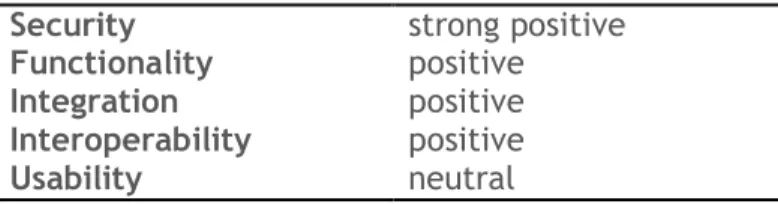
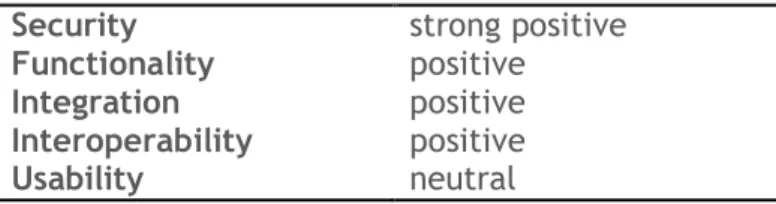
Besides the neutral usability rating which is mainly caused by limitations in delivery models and above average need for programming in customization, the product rating overall is positive. The product has strong capabilities in core provisioning features including connectivity to target systems and scalability and high-availability features. It also provides a strong role management approach. Based on the long history in role management, the concepts implemented in that area are very mature and leading-edge. Atos has added additional capabilities for a more flexible management beyond roles, based, for example, on organizational structures and using rules to manage entitlements. Main features are exposed via web services, which allows for simple interoperability.
Security strong positive
Functionality positive
Integration positive
Interoperability positive
Usability neutral
Table 2: Atos DirX Identity rating.
Overall, Atos DirX Identity is a mature and feature-rich product. Atos provides its own managed services and has a worldwide presence. The partner ecosystem is fairly limited.
11.2 Avatier Identity and Access Risk Management Suite
Avatier is a vendor which follows a different approach than most other vendors in the Identity Provisioning market. The different components of its offering focus on
providing a simple and familiar experience to end users along with an easy-to-use graphical configuration interface for administrators. The latest innovation feature support for new types of mobile devices and a shopping cart approach for requesting access, assets and other resources. Overall, the paradigm is very much driven by a service request-oriented approach and a high degree of user centrism while still providing broad support for automation. The focus is clearly on a configuration approach providing lower time-to-value compared to more complex solutions.
Strengths/Opportunities
Innovative, highly user-centric approach on Identity Provisioning.
Fast implementation focusing on end user service requests.
Weaknesses/Threats
Some lack of support for authentication mechanism or multi-tenancy.
Very limited partner ecosystem.
No significant footprint outside of North America.
Table 3: Avatier Identity and Access Risk Management Suite major strengths and weaknesses. This makes the Avatier solution an interesting alternative to common approach on Identity Provisioning. However it will not suit the needs of all customers. Security is good but some features like a broad support for different, strong authentication mechanisms is lacking as well as multi-tenancy support. Avatier clearly is one of the products which either fit to what customers are looking for or not – it is different but worth having a look at. A shortcoming of Avatier clearly is their very limited partner ecosystem. Avatier claims that the simplicity of the solution reduces this
requirement. Security positive Functionality positive Integration positive Interoperability neutral Usability positive
Table 4: Avatier Identity and Access Risk Management Suite rating.
Overall, Avatier Identity and Access Risk Management Suite is an interesting choice for several customers, taking another approach to Identity Provisioning than most of
11.3 Beta Systems SAM Enterprise Identity Management Suite
Beta Systems is a German vendor, offering its SAM Enterprise Identity Management Suite for many years now. The company has a significant customer base, with some focus on the finance industry. It is sort of a standard Identity Provisioning product covering the classical features commonly found in that market segment, like connectors to target systems, workflow functionality, and role management. Beta Systems recently started improving the integrated Access Governance/Intelligence functionality.
Strengths/Opportunities Very mature approach to role management
Connector approach with tight application integration, supporting also Dynamic Authorization Management
Strong support for mainframe environments
Weaknesses/Threats
Based on several components with some conceptual differences
Just starting adding Access Governance and Intelligence functionality
Table 5: Beta Systems SAM Enterprise Identity Management Suite major strengths and weaknesses.
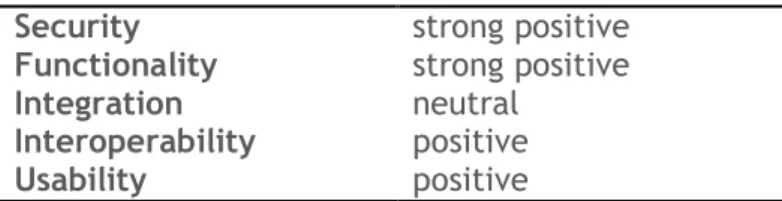
Beta Systems SAM Enterprise Identity Management Suite supports a broad range of platforms, with exceptionally strong support for mainframe environments. Over the course of the last few years, Beta Systems has enhanced the functionality
significantly, partially by adding components acquired or licensed from other vendors. That results in a slight lack of integration at the administrative level. However, user interfaces are well integrated. The company is just starting to add enhanced Access Governance and Intelligence functionality. However, support for role management is strong, based on a long experience. Besides this Beta Systems is one of the few vendors offering connectors with tight application integration, allowing applications to request authorization decisions at runtime and thus enabling Dynamic
Authorization Management as an integrated feature.
Security strong positive
Functionality strong positive
Integration neutral
Interoperability positive
Usability positive
Table 6: Beta Systems SAM Enterprise Identity Management Suite rating.
Overall, Beta Systems SAM Enterprise Identity Management Suite is a mature and feature-rich product. Beta Systems has a presence in major markets and a sufficient partner ecosystem.
11.4 CA IdentityMinder
CA Technologies is amongst the largest infrastructure software vendors worldwide and offers a broad portfolio of products in the IAM market segment, including CA
IdentityMinder (formerly CA Identity Manager) as its solution for Identity Provisioning. This tool is built on different tools CA Technologies had developed and acquired over time. The current version is well integrated and provides the full feature set to be expected from Identity Provisioning solutions.
Strengths/Opportunities
Mature product with a broad range of features and good integration of these Tight integration with other CA products including CA GovernanceMinder (Access Governance)
Large customer base
Weaknesses/Threats
Requires CA SiteMinder for advanced internal security features like different authentication mechanisms
Relatively small number of partners in ecosystem but strong own service offerings
Table 7: CA IdentityMinder major strengths and weaknesses.
Based on the long history of the product and the market position of CA Technologies, it is no surprise that CA has done a large number of deployments of CA
IdentityMinder. As a consequence, there is - besides a mature and rich feature set - a number of additional solutions from CA Services available which add to this
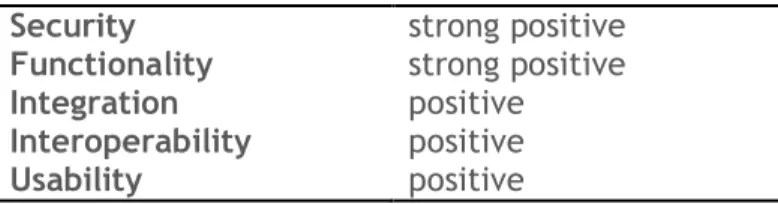
functionality. Like some other vendors, CA Technologies is following a concept which tries to avoid too many redundancies between the products in its portfolio. Thus most Access Governance features are part of CA GovernanceMinder, whilst CA SiteMinder acts as sort of the “first line of defense” when it comes to security. This approach is not uncommon and has its strengths (when building on the entire ecosystem) and potential weaknesses (when requiring just one of the products but some functionality beyond its core features).
Security strong positive
Functionality strong positive
Integration positive
Interoperability positive
Usability positive
Table 8: CA IdentityMinder rating.
11.5 Courion Access Risk Management Suite
Courion is a vendor which has evolved from supporting specific problems especially around password synchronization towards a company with a suite covering major areas of IAM today. The Courion Access Risk Management Suite is their integrated offering which includes the provisioning capabilities but also adds advanced Access Governance and Access Risk Management capabilities on top of that. Courion has chosen to extend the reach of its main product beyond core provisioning and take the path of providing a more comprehensive suite covering several capabilities.
Strengths/Opportunities
Broad, integrated feature set for provisioning and access governance Mature provisioning capabilities Good connectivity also with more complex platforms like mainframe environments
Weaknesses/Threats
No significant footprint in the market outside of North America
Suite approach might provide more functionality than required (but is modular)
Table 9: Courion Access Risk Management Suite major strengths and weaknesses.
Courion has opted for an approach which focuses on providing a broad set of features and enhancing Identity Provisioning beyond its traditional scope. Given that the suite is sufficiently modular, that allows customers to rely on portions of this feature set if required. Classical provisioning capabilities are strong, with a significant number of connectors also covering the more complex target platforms. Courion also provides exceptionally strong integration with other elements of IT infrastructure like SIEM platforms etc.
Security strong positive
Functionality strong positive
Integration positive
Interoperability positive
Usability positive
Table 10: Courion Access Risk Management Suite rating.
Overall, Courion has a very strong product offering with a broad feature set. Their major weakness is the lack of an ecosystem and footprint outside of the North American market.
11.6 CrossIdeas IDEAS
CrossIdeas is an Italian vendor which started as part of the largest Italian system integrator, Engineering spA. They have been in the market for several years now. Originally they provided a Dynamic Authorization Management system for
externalizing authorization decisions from applications. Over time, strong role management and overall Access Governance capabilities have been added. Recently, CrossIdeas – beyond connecting to other provisioning tools – started adding its own connectors. Thus they also can directly provision to target systems now. However, they didn’t start as provisioning tool from scratch but took another, rather uncommon way.
Strengths/Opportunities
Excellent business-oriented framework for managing access, including full Access Governance
Integration with Dynamic Authorization Management, beyond static provisioning
Weaknesses/Threats
Limited number of own connectors, just started building their connector
framework
Very small but growing partner ecosystem
Different approach than classical
provisioning, based on Access Governance capabilities, will not fit to every use case Table 11: CrossIdeas IDEAS major strengths and weaknesses.
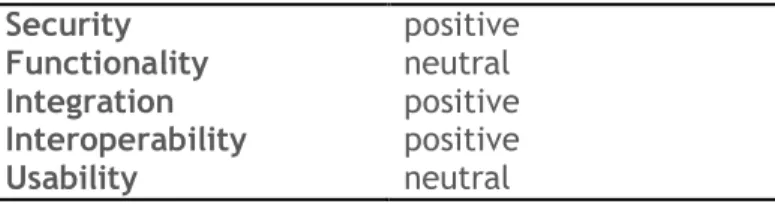
Due to its history, IDEAS is not a typical Identity Provisioning solution. However, having some provisioning capabilities available now qualifies them as a newcomer in this market, which is moving towards providing increased Access Governance
capabilities anyway. Besides their strong features in that area with a very business-centric approach, tying well into existing business processes, a rather rare feature in that market segment is the tight integration with Dynamic Authorization
Management, allowing it to externalize authorization decisions instead of just statically provisioning access controls to target systems. On the other hand, their connector framework as of now is somewhat limited so customers have to carefully evaluate whether this is what they require.
Security strong positive
Functionality neutral
Integration neutral
Interoperability neutral
11.7 econet cMatrix
The German software vendor econet entered the Identity Provisioning market with another approach than most of the other vendors. Their product econet cMatrix is titled “an Identity & Services Manager”, not only providing access controls but also the management of IT services like mail services, telephony, and others a user requires. Thus their provisioning scope is larger than what most other vendors focus on. On the other hand, their reach towards a multitude of platforms is somewhat limited in contrast to other vendors.
Strengths/Opportunities
Service provisioning beyond access controls, including eMail accounts etc. out-of-the-box.
Lightweight offering for SMB customers. Service Management-oriented approach.
Weaknesses/Threats
No MSP/cloud offerings available yet. Processes frequently require coding. Limited presence in the market, small partner ecosystem.
Table 13: econet cMatrix major strengths and weaknesses.
In general, econet is following an approach which is closer to Service Request
Management (SRM) than that which most other vendors offer. The target is to provide everything to the user that the user requires, based on defined processes and
integrated with audit capabilities. However, if customers need specific processes beyond the standard processes – which will be the case in most large environments – coding is virtually inevitable. Besides this, market presence is rather limited and as of now focused mainly on Germany.
Security strong positive
Functionality positive
Integration positive
Interoperability positive
Usability neutral
Table 14: econet cMatrix rating.
Overall, econet cMatrix provides an interesting set of features which should suit many customer scenarios well, due to their focus on provisioning all types of services. However, market presence is somewhat limited and customization shouldn’t be underestimated.
11.8 Evidian Identity & Access Manager
The French vendor Evidian is part of Groupe Bull, one of the leading European IT companies. Evidian has been in the IAM business for many years. Their product, Identity & Access Manager, has been developed over a number of years and provides a good set of features in Identity Provisioning. The target market of Evidian is mid-sized businesses for whom they provide an integrated solution with all major features required. These go beyond pure Identity Provisioning, allowing customers to
implement an integrated approach for core IAM requirements. Notably, Evidian has in its fairly large customer base also several very large accounts, not being limited to smaller deployments.
Strengths/Opportunities
Established product with good feature set in core functionality.
Excellent integration to Evidian SSO/Access Management solutions. Integrated offering with a consistent concept for managing identities and access.
Weaknesses/Threats
Limited deployment models.
Conceptual approach might not be a perfect fit to some customer
requirements.
No ESB and SRM integration out-of-the-box.
Table 15: Evidian Identity & Access Manager major strengths and weaknesses.
Evidian has developed a tightly integrated product which covers all major aspects of Identity Provisioning. It is focused on providing a consistent set of processes for users. Besides the core provisioning capability, the product is tightly integrated with the SSO (Single Sign-On) and Access Management solutions offered by Evidian. A shortcoming is the lack of cloud/MSP deployment models and appliance offerings. There is also a lack of advanced integration, like support for ESB (Enterprise Service Bus) concepts or SRM (Service Request Management) integration out-of-the-box. On the other hand the product can use existing external workflow systems. The product allows a quick start for many scenarios, especially in medium-sized business. However it might not be the perfect fit for some customer scenarios.
Security strong positive
Functionality positive
Integration positive
Interoperability positive
11.9 Fischer Automated Role & Account Management
Fischer International Identity is a vendor which is different from all other provisioning vendors in that the company focuses on SaaS delivery models for IAM as their main approach and core competency. The product is available for on-premise deployment as well but the entire architecture has been defined for SaaS deployments, requiring only a gateway at the customer’s sites. However, this approach suits well also for on-premise. Based on that concept, full multi-tenancy is a logical design principle of the solution.
Strengths/Opportunities
SaaS delivery model as standard option. No coding required, customization is done via configuration and graphical design components.
Well-defined user interfaces for quick-start deployments.
Weaknesses/Threats
No ESB support yet, SaaS approach is more difficult to integrate.
User interfaces might not suit every organization’s needs.
Table 17: Fischer Automated Role & Account Management major strengths and weaknesses. Their SaaS delivery model is supported by several MSPs, including Wipro as a global partner. Due to their SaaS approach, the clear focus is on providing a large set of features, well-defined standard configurations, and avoiding programming. There is no need for coding, but sometimes intensive configuration is needed. Besides that there are graphical tools for designing user interfaces and workflows. For companies looking for tight and flexible integration with existing IT solutions, the SaaS approach might become an inhibitor. Even for on-premise deployments, the ETL-based
approach for interoperability might be too limited in more complex scenarios. Despite the good out-of-the-box user interfaces, they might not suit every customer’s needs – pure customization might hit its limits. The partner ecosystem of Fischer is still somewhat limited in size but growing and based on few global, engaged partners.
Security strong positive
Functionality positive
Integration positive
Interoperability positive
Usability strong positive
Table 18: Fischer Automated Role & Account Management rating.
Overall, Fischer provides an interesting approach to Identity Provisioning. SaaS deployments are interesting, however they might not suit the needs of every
customer, including global organizations with legal requirements regarding the data held outside of the organization.
11.10 ForgeRock OpenIDM
ForgeRock is a company providing open source IAM solutions. One of their products is OpenIDM 2.0, an open source provisioning solution. This is not built on the former Sun Identity Manager/Oracle Waveset product but leverages the OpenICF connector framework which adopted the former Sun Microsystems open source project “Identity Connector Framework”. The product has a somewhat limited capability with several features still missing. Nevertheless it may be an option for companies looking for open source solutions only or focusing on approaches which they can greatly customize to suit specific needs. The product strategy for OpenIDM is focused on a “one stack” approach with integration to other products and lightweight APIs for easy, accessible adoption. This might suit the needs of customers which need to heavily customize or very tightly integrate a provisioning tool with existing IT environments.
Strengths/Opportunities
Open source product for Identity Provisioning.
Broad set of connectors based on OpenICF framework.
Weaknesses/Threats
Somewhat limited set of features. Very limited partner ecosystem and deployment models as of now. No support for role management.
Table 19: ForgeRock OpenIDM major strengths and weaknesses.
ForgeRock provides a basic Identity Provisioning solution as of now. There are some fundamental features missing, including support for role management approaches. ForgeRock claims that this limitation can be addressed by mimicking it through their rule-based concept, however that would be fairly complex in most organizations. The partner ecosystem is also limited, as well as deployment options. A strength is the breadth of available connectors based on the open source OpenICF project and, for some customers, the fact that the product is open source and flexible to integrate and customize. Security positive Functionality neutral Integration positive Interoperability positive Usability neutral
11.11 Hitachi ID Management Suite
Hitachi ID provides a product called ID Management Suite which is a mature solution for managing identities and their access. It integrates Access Governance features, including SoD (Segregation of Duty) support and certification features. The product builds on an open, flexible architecture. The price to pay for that flexibility might be an above average effort for coding when it comes to customization. Hitachi ID
provides a well-defined model for segregation of code and customizations, allowing retaining customizations beyond release changes.
Strengths/Opportunities
Good support for Access Governance features.
Mature solution supporting Identity Provisioning requirements.
Tight integration with Microsoft SharePoint and Windows Explorer.
Weaknesses/Threats
No shopping cart paradigm supported. Customization might require above average coding.
Limited footprint outside of North America.
Table 21: Hitachi ID Management Suite major strengths and weaknesses.
In general, the product provides a mature set of features, delivering what customers typically need. However, the architecture and access control model have to be carefully reviewed to understand whether they suit the needs of the organization. The architecture provides high flexibility and scalability and is well-thought out. On the other hand customization needs might be above average and some features like shopping cart paradigms are not supported out of the box. The SoD approach
implemented ensures that SoD violations and the impact of changes are handled correctly at all layers in a multi-layered role/entitlement model which is not the case with all products in the market. Some specific strengths are the integration with Microsoft SharePoint and Windows Explorer, allowing users to directly request access on resources from these environments.
Security strong positive
Functionality positive
Integration positive
Interoperability positive
Usability neutral
Table 22: Hitachi ID Management Suite rating.
Overall, Hitachi ID Management Suite is an interesting product with a well-thought architecture and feature set, providing good flexibility. It thus is an interesting alternative to established products. The vendor still has a limited footprint outside of North America.
11.12 IBM Security Identity Manager
IBM Security Identity Manager, formerly known as IBM Tivoli Identity Manager (ITIM), is one of the most established products in the market. The name change is due to the formation of an IBM Security Business Unit. Thus several Tivoli products have been shifted to that new unit and the brand name has changed. However, it is still the same well-known product. IBM has a very large installed base, ranging amongst the top 5 vendors in the worldwide market in that aspect.
Strengths/Opportunities
Mature product with good support for standard feature set.
Strong support for different target systems.
Integration with User Activity Monitoring.
Weaknesses/Threats
Workflow and role management based on separate components.
No multi-tenancy support yet.
Table 23: IBM Security Identity Manager major strengths and weaknesses.
IBM Security Identity Manager is an established product supporting a broad range of different target systems with deep integration. With the new role management capabilities and enhanced workflow capabilities based on another IBM product (former Lombardi) IBM has addressed some of the functional shortcomings of former releases. However, the price to pay is an increased number of different components which have to work together. IBM provides out-of-the-box integration, nevertheless there are several components at the system-level which needs to be handled. Another critical aspect is the lack of real multi-tenancy support. On the other hand, IBM Security Identity Manager is integrated with User Activity Monitoring features and Governance capabilities of other IBM solutions, fitting well into more comprehensive concepts of overall governance and security.
Security strong positive
Functionality positive
Integration positive
Interoperability positive
Usability neutral
Table 24: IBM Security Identity Manager rating.
Overall, IBM Security Identity Manager is a mature offering. IBM has added several new features, but at the price of of having a set of like external workflow systems.
11.13 ILEX Meibo/MPP
ILEX is a French vendor which provides two different but tightly related tools in the area of Identity and Access Management. Both are somewhat different from other provisioning approaches in that the main idea is to provide a tool which allows customers to quickly create an Identity Management solution. Thus the products are no exact fit for the product category of Identity Provisioning but might be very interesting for specific customer requirements. The underlying tool is named Meibo. The second solution is a customized solution with standard features called MPP (Meibo People Pack) and is based on Meibo. MPP is clearly targeted at the SMB market.
Strengths/Opportunities
Flexible tool for creating custom Identity Management solutions.
Integration with SSO/Access Management solution.
Out-of-the-box solutions targeted on SMBs and industry-specific solution for
Healthcare available.
Weaknesses/Threats
Limited feature set available out-of-the-box in MPP (SMB product).
Meibo is a tool, not a solution.
Very limited visibility outside of France.
Table 25: ILEX Meibo/MPP major strengths and weaknesses.
The approach of Meibo is interesting, however – besides the low-end solution of MPP – this is more about a tool for creating custom Identity Management solutions like management or request interfaces to existing directories than about a typical Identity Provisioning product. Thus, it might be complementary to existing Identity
Provisioning products when it comes to building custom add-ons. Its strength is the tight integration with the Access Management and Single Sign-On solutions offered by ILEX. There is also a Role Management tool available now which allows to design role management applications which can be natively plugged into other Meibo solutions.
Security positive
Functionality positive
Integration positive
Interoperability neutral
Usability positive
Table 26: ILEX Meibo/MPP rating.
Overall, ILEX Meibo should be considered more an add-on to existing Identity Provisioning solutions, while the MPP product might be a fit for SMBs. As an add-on and to implement custom solutions, Meibo could provide significant value even in existing IAM deployments.
11.14 iSM bi-Cube
iSM is a German vendor which offers an Identity Provisioning solution with a well-thought out approach to role management and processes. In contrast to other vendors, iSM also delivers out-of-the-box standard processes for setting up
provisioning. Overall, the conceptual strength of iSM is considerable. However, that also might become a limiting factor in projects given that the methodology and customer requirements have to be a good fit.
Strengths/Opportunities
Broad set of functionality provided. Well-thought role model and delivery of standard processes.
Support for different deployment models.
Weaknesses/Threats
Conceptual approach needs to be well understood.
Very small partner ecosystem. No footprint in the market outside of Germany and Austria.
Table 27: iSM bi-Cube major strengths and weaknesses.
A positive aspect of the product clearly is that it delivers a broad set of functionality based on a well-thought conceptual approach and methodology. Specific strengths are the role model and, as mentioned above, the standard processes provided. Another strength is that iSM supports a broad range of deployment models, including cloud deployments, and supports multi-tenancy. On the other hand there is a lack of integration partners and of visibility outside of the local markets.
Security strong positive
Functionality positive
Integration positive
Interoperability neutral
Usability positive
Table 28: iSM bi-Cube rating.
Overall, iSM bi-Cube is an interesting product offering, but with limited visibility in the market. Customers have to understand the conceptual approach taken by iSM which provides strong flexibility but is rather specific.
11.15 Microsoft Forefront Identity Manager
Microsoft’s offering in the Identity Provisioning market segment is the Microsoft Forefront Identity Manager (FIM), which has been recently extended with Access Governance capabilities that have been acquired in an asset deal from BHOLD. The product is pretty popular in Windows/Active Directory centric environments where it has its strengths. Despite the addition of Access Governance capabilities, FIM still follows a relatively technical approach to Identity Provisioning with focus more on synchronization than on workflows.
Strengths/Opportunities
Microsoft recently has added Access Governance functionality.
Strong integration with Windows/Active Directory environments.
Weaknesses/Threats
Coding is required in many situations. Still a pretty technical approach on Identity Provisioning.
Enterprise level workflow and integration partially relies on 3rd party products or
customization.
Table 29: Microsoft Forefront Identity Manager major strengths and weaknesses. With the addition of the BHOLD functionality Microsoft makes a significant step forward. However, these are in fact two different products with significant
conceptual differences. It will take some while for deeper integration. A shortcoming of FIM is that it requires coding in many situations, more frequently than many other products in the market. Besides this, due to its concept, simple user interfaces and workflow-driven approaches frequently are implemented by either customization or using 3rd party products.
Security strong positive
Functionality neutral
Integration positive
Interoperability neutral
Usability neutral
Table 30: Microsoft Forefront Identity Manager rating.
Overall, Microsoft FIM is mainly an option either as part of some integrated provisioning products, focusing on Windows/Active Directory environments or
environments which are heavily Windows/Active Directory-centric. Another option is deployment together with additional 3rd party solutions adding missing features.
11.16 Identity Manager from NetIQ
Identity Manager from NetIQ is the former Novell Identity Manager which became part of NetIQ after the acquisition of Novell by The Attachmate Group. The product is amongst the ones with the largest user bases globally. It is very mature, supporting a broad range of target systems with specific connectors. Identity Manager is clearly targeted as an Identity Provisioning product with integrated role management and reporting capabilities. NetIQ also offers a stand-alone Access Governance Suite that is tightly integrated with Identity Manager for full Access Governance capabilities.
Strengths/Opportunities
Very large customer base and ecosystem. Strong, mature functionality covering all major aspects of Identity Provisioning. Strong support for a variety of target systems.
Weaknesses/Threats
Limited out-of-the-box Access Governance functionality but tightly integrated with NetIQ Access Governance Suite.
Rich functionality sometimes complex to understand.
Table 31: Identity Manager from NetIQ major strengths and weaknesses.
For extended Access Governance requirements, NetIQ offers its Access Governance suite which integrates Identity Manager with SailPoint IdentityIQ as the additional Access Governance product – sold as NetIQ Access Governance Suite. When looking at Identity Manager and its functionality, the breadth of available functionality is
somewhat complex when starting to work with the product. On the other hand, NetIQ provides sophisticated tools to create and manage the Identity Provisioning
environment, which go well beyond what many other vendors are offering.
Security strong positive
Functionality strong positive
Integration positive
Interoperability positive
Usability positive
Table 32: Identity Manager from NetIQ rating.
Overall, Identity Manager from NetIQ remains a leading-edge product in the Identity Provisioning market segment with its broad, mature functionality.
11.17 Omada Identity Suite (based on Microsoft FIM)
Omada, a Danish vendor, provides the Omada Identity Suite. This product typically makes use of Microsoft Forefront Identity Manager (FIM) for integrating with backend systems. However this is not a mandatory component. Omada potentially also can use ESB (Enterprise Service Bus) integrations or connect to other provisioning systems. In the common deployment model, i.e. FIM environments, Omada not only adds a business layer to Microsoft FIM for workflows, role management, and other features but also provides its own connectors (management agents in the terms of Microsoft FIM) to connect to specific environments like SAP systems. These features can be provided for any other underlying technology as well. Due to the major enhancements the product delivers and due to its go-to-market independence, this product is
covered in this document as a solution which typically is combined with FIM but separate from FIM.
Strengths/Opportunities
Significant enhancements for Microsoft FIM.
Strong features in workflows and role management.
Provides advanced SAP connectivity for Microsoft FIM environments.
Weaknesses/Threats
Some (increasing) overlap to Microsoft FIM added features.
Dependency on Microsoft FIM or other solutions for fulfillment.
Table 33: Omada Identity Suite major strengths and weaknesses.
This approach has its strengths and weaknesses. Opting for Omada Identity Suite not necessarily but commonly implies opting for Microsoft FIM, requiring licensing of both products. In any case it requires an additional fulfillment layer. The features of Omada Identity Suite are potentially available for other fulfillment options (i.e. other provisioning solutions) but with no out-of-the-box integrations as of now. This might change over time and has been done by Omada on a project basis.. The strong support for SAP environments and the added features for workflows, role
management, Access Governance, and other business-centric functions, on the other hand, is a strength. However, Microsoft FIM in its current release also adds some of these capabilities, leading to an increasing overlap with Omada Identity Suite. Still, using Omada Identity Suite reduces complexity in customizing FIM environments by providing out-of-the-box capabilities.
Security strong positive
Functionality positive
Integration positive
Interoperability positive
Usability positive
Table 34: Omada Identity Suite rating.
Overall, Omada Identity Suite is a very interesting complement to Microsoft FIM and, in combination, leads to a strong offering in the Identity Provisioning market. Besides that the product might be used as an integration layer on top of other or multiple Identity Provisioning tools.
11.18 Oracle Identity Manager
Oracle Identity Manager is the Identity Provisioning component within the Oracle IAM portfolio. It provides mature capabilities in that area which have again been
significantly improved with the 11g R2 release. Oracle over the past years has acquired a lot of different products. However, the company had defined a clear strategy for integration and is successfully delivering on that strategy. Oracle has delivered successfully on that strategy. This includes providing a consistent approach to service interfaces and other integrations. A consequence of that strategy is that Oracle tries to avoid redundancies and overlap of products. Thus, in some areas other Oracle products might be required to provide specific functionality – which is not uncommon for the IAM portfolios of large vendors.
Strengths/Opportunities
Mature, feature-rich product focused on Identity Provisioning.
Clear separation of functionality from other modules of Oracle IAM portfolio. Very broad support for different environments and enterprise-level architectures.
Weaknesses/Threats
Depending on use cases there exist several dependencies on other
components of the Oracle IAM portfolio.
Table 35: Oracle Identity Manager major strengths and weaknesses.
Oracle Identity Manager, being a powerful solution, has been considered a relatively complex product regarding installation, basic configuration, and customization. With the new release, Oracle has made significant progress in these areas. Important changes include an extensible data model. Customizations can be done without coding in many situations and are clearly segregated from Oracle code. Features like shopping cart approaches have been implemented. Still a shortcoming is the fact that some few connectors are OEMed, which might lead to issues regarding
implementation support. On the other hand, Oracle Identity Manager gains by its enterprise-level design, supporting modern architectural concepts like externalized workflow systems and other features.
Security strong positive
Functionality strong positive
Integration positive
Interoperability positive
11.19 Quest One Identity Manager
Quest One Identity Manager came to the Quest portfolio through the acquisition of the German vendor Völcker Informatik. The tool formerly known as ActiveEntry is now a cornerstone of the entire Quest IAM portfolio. Quest One Identity Manager builds on a sophisticated, consistent concept which allows for fairly simple customization and manages all dependencies between different objects in a very advanced way. The standard user interfaces of the product are very well constructed. Customization is straightforward
Strengths/Opportunities
Innovative, user-friendly interfaces. Well-thought out, sophisticated architecture and concepts.
Integrated shopping cart paradigm and other leading-edge features.
Weaknesses/Threats
Product concept must be understood – different from standard approaches.
Table 37: Quest One Identity Manager major strengths and weaknesses.
The product convinces with some rather uncommon features. While shopping cart approaches can be found in an increasing number of products, other features like the ability to simulate the effect of changes or the ability to show the state of any point in time in the past are rather unique. Customization is fairly straightforward, mainly done through configuration or based on creating rules. However, the concept needs to be well understood given that it is different from typical approaches to Identity Provisioning. In addition, the consistent architecture might become a limitation in some cases for specific needs of customization. However, the flexibility for
customization has been greatly increased over the past few years.
Security strong positive
Functionality strong positive
Integration positive
Interoperability positive
Usability strong positive
Table 38: Quest One Identity Manager rating.
Overall the product is amongst the most interesting and unique offerings in the Identity Provisioning market.
11.20 SailPoint IdentityIQ
SailPoint started as a vendor specialized in Access Governance. In 2010 it became a player in the Identity Provisioning market through by expanding its flagship product, IdentityIQ, to include Lifecycle Manager and Provisioning Engine. In 2011, SailPoint assumed the support and maintenance of BMC’s ControlSA assets, further expanding its footprint in the provisioning market. The SailPoint IdentityIQ product now is a solution integrates Access Governance and Identity Provisioning capabilities into a single product. In contrast to most other vendors, SailPoint provides its own Identity Provisioning connector technology but also provides out-of-the-box connectivity to Identity Provisioning solutions of other vendors.
Strengths/Opportunities
Strong Access Governance capabilities. Integration capabilities with other provisioning systems and SRM out-of-the-box.
User-friendly interfaces.
Weaknesses/Threats No multi-tenancy support.
Table 39: SailPoint IdentityIQ major strengths and weaknesses.
Due to its origin in the Access Governance market, the IdentityIQ user interfaces are geared towards business users. The approach in general is very much business-driven and less technology-focused than what some of the “classical” vendors in that market provide. Besides supporting connectivity to target systems via Identity Provisioning, the product also directly supports integration with SRM (Service Request Management) tools. Amongst the shortcomings there is the lack of multi-tenancy support.
Security strong positive
Functionality strong positive
Integration positive
Interoperability Positive
Usability positive
Table 40: SailPoint IdentityIQ rating.
Overall, the product is an interesting alternative to the standard approaches to Identity Provisioning and gains by its strong capabilities for integrating with different tools in that area plus the out-of-the-box Access Governance features.