R E S E A R C H
Open Access
Integrating postpartum contraceptive
counseling and IUD insertion services into
maternity care in Nepal: results from
stepped-wedge randomized controlled trial
Elina Pradhan
1, David Canning
2, Iqbal H. Shah
2*, Mahesh Puri
3, Erin Pearson
4, Kusum Thapa
5, Lata Bajracharya
5,
Manju Maharjan
3, Dev C. Maharjan
3, Lata Bajracharya
5, Ganga Shakya
5and Pushpa Chaudhary
6Abstract
Background:In Nepal, 54% of women have an unmet need for family planning within the 2 years following a
birth. Provision of a long-acting and reversible contraceptive method at the time of birth in health facilities could improve access to postpartum family planning for women who want to space or limit their births. This paper examines the impact of an intervention that introduced postpartum contraceptive counseling in antenatal care and immediate postpartum intra-uterine device (PPIUD) insertion services following institutional delivery, with the intent to eventually integrate PPIUD counseling and insertion services as part of routine maternity care in Nepal.
Methods:This study took place in six large tertiary hospitals. All women who gave birth in these hospitals in the 18-month period between September 2015 and March 2017 were asked to participate. A total of 75,587 women (99.6% consent rate) gave consent to be interviewed while in postnatal ward after delivery and before discharge from hospital. We use a stepped-wedge cluster randomized design with randomization of the intervention timing at the hospital level. The baseline data collection began prior to the intervention in all hospitals and the
intervention was introduced into the hospitals in two steps, with first group of three hospitals implementing the intervention 3 months after the baseline had begun, and second group of three hospitals implementing the intervention 9 months after the baseline had begun. We estimate the overall effect using a linear regression with a wild bootstrap to estimate valid standard errors given the cluster randomized design. We also estimate the effect of being counseled on PPIUD uptake.
Results:Our Intent-to-Treat analysis shows that being exposed to the intervention increased PPIUD counseling among women by 25 percentage points (pp) [95% CI: 14–40 pp], and PPIUD uptake by four percentage points [95% CI: 3–6 pp]. Our adherence-adjusted estimate shows that, on average, being counseled due to the intervention increased PPIUD uptake by about 17 percentage points [95% CI: 14–40 pp].
Conclusions:The intervention increased PPIUD counseling rates and PPIUD uptake among women in the six study
hospitals. If counseling had covered all women in the sample, PPIUD uptake would have been higher. Our results suggest that providing high quality counseling and insertion services generates higher demand for PPIUD services and could reduce unmet need.
Trial registration:Trial registered on March 11, 2016 with ClinicalTrials.gov,NCT02718222.
Keywords:Nepal, Postpartum contraception, Counseling, IUD uptake, Impact evaluation
© The Author(s). 2019Open AccessThis article is distributed under the terms of the Creative Commons Attribution 4.0 International License (http://creativecommons.org/licenses/by/4.0/), which permits unrestricted use, distribution, and reproduction in any medium, provided you give appropriate credit to the original author(s) and the source, provide a link to the Creative Commons license, and indicate if changes were made. The Creative Commons Public Domain Dedication waiver (http://creativecommons.org/publicdomain/zero/1.0/) applies to the data made available in this article, unless otherwise stated.
* Correspondence:[email protected]
2Department of Global Health and Population, Harvard T. H. Chan School of Public Health, 665 Huntington Avenue, Boston, MA 02115, USA
Plain English summary
Intra-uterine contraceptive device (IUD) inserted soon after delivery provides long-term protection against un-intended pregnancy and can be a particularly suitable option for women who visit hospitals for delivery, but may not revisit because of distance or cost of transporta-tion. Therefore, an intervention launched in Nepal: (1) counseled women on family planning methods after de-livery during their antenatal care visits, (2) trained med-ical staff to insert IUD following delivery, referred as the postpartum period, and (3) thus aimed to integrate post-partum family planning, and postpost-partum IUD (PPIUD) services into regular maternity services. We examine the impact of this intervention on contraceptive counseling and PPIUD uptake. All women who gave birth in six ter-tiary hospitals in the 18-month period between Septem-ber 2015 and March 2017 were asked to participate and 75,587 women who agreed were interviewed after deliv-ery and before discharge from hospital. Baseline data were collected for 3 months in first group of hospitals after which intervention was launched in these hospitals, and the second group of hospitals had 9 months of base-line data collection before the intervention was launched. Our analysis shows that the intervention in-creased PPIUD counseling by 25 percentage points. It also increased PPIUD uptake by four percentage points. If all women were counseled by the program, PPIUD up-take would have increased by 17 percentage points. Our results suggest that providing high quality counseling and insertion services generates higher demand for PPIUD services and could help women meet their fertil-ity desires to space or limit childbearing in Nepal and in similar contexts.
Background
Increased access to family planning in low-income coun-tries is linked to reduced maternal morbidity and mortal-ity, and reduced infant and child morbidity and mortality [1–4]. The International Conference on Population and Development (ICPD) Programme of Action that was adopted by 179 UN member states in 1994 advocated the right to plan a family size and birth spacing as cen-tral reasons for expanding family planning access [5,6]. Globally, although there has been an impressive in-crease in access to family planning in the last few de-cades [7], much work remains in ensuring the ICPD goals of provision of universal access to reproductive health services, including family planning.
In Nepal, contraceptive prevalence among married women aged 15–49 years increased from 19 to 53% be-tween 1990 and 2016, and while the unmet need for family planning decreased from 34 to 24% over the same period [7, 8], concerted efforts are still needed to in-crease access, especially in the postpartum period. Only
9% of the women are counseled on family planning dur-ing their postpartum period in Nepal, and 54% have an unmet need for family planning within the 2 years fol-lowing a birth [8]. Despite the World Health Organiza-tion’s (WHO) recommendation of waiting at least 2 years after a live birth before attempting the next preg-nancy to reduce the risk of adverse maternal, perinatal and infant outcomes [9], 25% of women in Nepal be-come pregnant within 24 months postpartum [10]. Hence, there is a gap in postpartum family planning (PPFP) coun-seling and uptake in Nepal, and with rising coverage of antenatal care (ANC) and institutional delivery, an oppor-tunity to understand whether an attempt to integrate post-partum family planning services into maternity care would improve uptake of postpartum family planning in Nepal.
Global rates of antenatal care visits and skilled birth attendance have increased in the past decades [11], and Nepal is no exception. In the period 2014–2016, 84% of women who gave birth had at least one antenatal care visit, and 57% of all births took place in a health facility (skilled birth attendance was 58%) [8]. This is a sharp in-crease from 2001 when only 9% of the women gave birth in a health facility in Nepal [12].
For many women in Nepal who have limited access to healthcare services, antenatal visits, facility delivery, and postnatal visits present important opportunities for coun-seling and provision of family planning services, which may enable them to meet their birth spacing or limiting desires by offering a long-acting and reversible method [13].
Offering family planning counseling during antenatal visits, and provision of an IUD in immediate postpartum period (PPIUD) to women undertaking delivery in a health facility can be an effective way of reducing the unmet need for family planning in the postpartum period. IUD is a safe, effective, long-lasting and revers-ible method of contraception [14, 15]. PPIUD, inserted in the immediate postpartum period: (1) is associated with fewer side effects and discomfort during insertion compared to an interval IUD (inserted after more than 4 weeks postpartum), (2) has higher continuation rates at 6 months [16], and (3) is recommended by the WHO as safe for use by all women, including breastfeeding women or women who are HIV positive [15].
We believe this is the first study that aims to investi-gate the causal impact of provision of PPFP counseling and PPIUD insertion services as a part of routine mater-nity care. We use a randomized stepped-wedge cluster design to evaluate the causal impact of the provision of these services by employing a hospital level randomized rollout with hospitals adopting the intervention in two waves that were 6 months apart. This allows us to esti-mate the impact of the intervention while controlling for underlying trends in PPIUD use. The aim of this paper is to estimate the impact of the intervention on PPIUD counseling and uptake using data collected from women after delivery and before discharge from hospital—by measuring the intervention uptake, we hope to under-stand the feasibility of integrating PPFP counseling and PPIUD insertion services into facility-based antenatal and delivery care in Nepal.
The intervention aimed to change provider knowledge and behavior by training them on postpartum family planning, including PPIUD counseling and insertion techniques, and to change patient knowledge and behav-ior through counseling by the trained providers. How-ever, human resource constraints in health facilities could attenuate the impact of the training program on PPIUD counseling and uptake [17]. Since not all women who delivered after the intervention began were coun-seled, we also provide adherence-adjusted estimates of
the effect of being counseled on PPIUD uptake. This gives the causal effect of being counseled due to the intervention on PPIUD uptake, removing any selection bias of targeting particular women. Moreover, it has been shown that the quality of PPIUD counseling can affect uptake of PPIUD [18]. We therefore estimate how variations in the quality of counseling affected PPIUD uptake.
Methods
This trial is registered with ClinicalTrials.gov with ID: NCT02718222. Detailed study protocol has been pub-lished elsewhere [19]. However, main features of the study are described below.
Study population
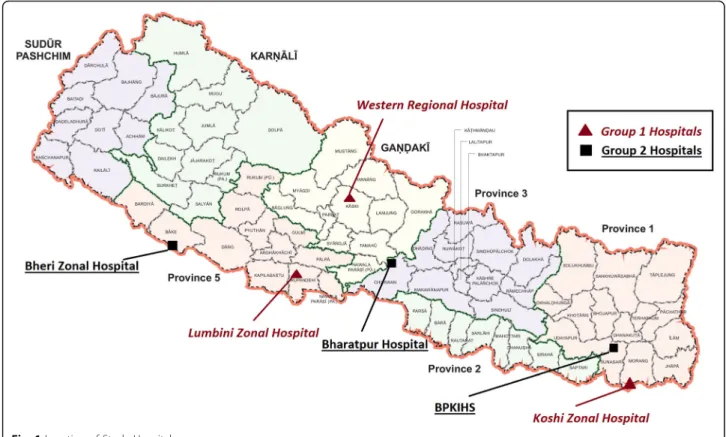
This study took place in six tertiary hospitals: Bharatpur Hospital, Bheri Zonal Hospital, BP Koirala Institute of Health Sciences (BPKIHS), Koshi Zonal Hospital, Lum-bini Zonal Hospital and Western Regional Hospital. Four of the study hospitals are in Terai region, and two (BPKIHS and Western Regional Hospital) in Hill region. Figure1 shows a map with the location of these hospi-tals. The inclusion criteria for hospital sites in this study were: (i) high volume of obstetric caseloads (> 6000 a year), (ii) large catchment area, and (iii) not located in the capital city, with the intent to ascertain if the intervention
could successfully build capacity in hospitals outside of Kathmandu valley. All women who gave birth in these six hospitals in the 18-month period between 8th September 2015 and 8th March 2017 were eligible to be included in the study sample unless their primary residence was out-side of Nepal. Out of a total of 75,897 women eligible to enroll in the research study during the enrollment period, 75,587 (99.6%) consented to be interviewed, and inter-views were conducted after delivery but prior to discharge from hospital. The full sample used in this study consti-tutes of 75,566 women with complete information among those who consented to participate in the study.
Ethical approval for this study was obtained through Nepal Health Research Council, and the Harvard T. H Chan School of Public Health Office of Human Research Administration granted exempt status to the study as Harvard only received de-identified data.
Study design
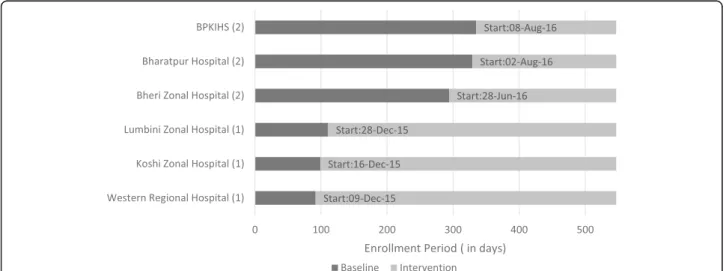
We use a stepped-wedge cluster randomized design. All hospitals had at least 3 months of baseline data collec-tion, and the intervention was introduced into the hospi-tals in two steps. Six hospihospi-tals were placed in pairs matched by geography (Hill versus Terai), and then by the annual obstetric caseload. Each pair was randomized into either group 1 (early intervention) or group 2 (late intervention). The three pairs were: (i) Western Regional and BPKIHS, (ii) Lumbini Zonal and Bharatpur, and (iii) Koshi Zonal and Bheri Zonal. The three hospitals in Group 1 (Lumbini Zonal, Koshi Zonal and Western Re-gional) were scheduled to start their intervention in the fourth month after 3-month baseline data collection, and Group 2 hospitals (BPKIHS, Bharatpur and Bheri Zonal) were scheduled to start their intervention in the tenth month after 9-month baseline data collection.
Figure 2 shows the baseline and intervention period in each of the six hospitals. All hospital baseline data collec-tion began on September 8, 2015. Actual timing of the start of the intervention by hospitals in each group varied slightly due to the need for trainers to move between hos-pitals to provide training. Group 1 hoshos-pitals began the intervention a few weeks apart from each other, in De-cember 2015, whereas the intervention in Group 2 began in the summer of 2016.
The intervention
The intervention was designed and implemented by International Federation of Gynecology and Obstetrics (FIGO) in partnership with Nepal Society of Obstetri-cians and Gynaecologists (NESOG). FIGO and NESOG designed the intervention in adherence with the national health systems and training guidelines and in coordin-ation with the Ministry of Health and Populcoordin-ation in Nepal to ensure sustainability of any future scale-up of the program.
The intervention comprised of: (1) informational work-shops for female community health volunteers and gen-eral hospital staff, (2) training of maternity care providers in postpartum family planning counseling, PPIUD in-sertion techniques and complication management, (3) provision of postpartum family planning leaflets to be dis-tributed during counseling, (4) an information wall chart and video to be displayed in the hospital waiting area, (5) provision of Kelley’s forceps for vaginal PPIUD insertion and IUDs to be provided to hospitals by the Ministry of Health and Population (IUDs were free at point-of-care to women), (6) one service provider in each hospital being designated as facility coordinator for the program, and (7) regular monitoring of counseling and insertion data by NESOG and FIGO.
Provider training
Health professionals in the study hospitals who provide obstetric services—senior and junior doctors, nurses and midwives—were trained to provide postpartum family planning counseling services during antenatal visits, and to undertake PPIUD insertions. Each training workshop was 3 days long with six sessions, which included techniques in providing counseling services along with lectures, vid-eos, practice IUD insertion sessions in MAMA-U manne-quin models for vaginal and intra-caesarian procedures, and discussion of infection prevention, side-effects and complication management. Pre-training and mid-training knowledge assessments were also conducted along with role plays and group discussions to facilitate the training.
The providers were also trained to utilize postpartum family planning leaflets during counseling. These leaflets contain information about benefits of birth spacing, and information on different contraceptives, with guidelines on when to begin using them postpartum.
Counseling and consent for insertion, and intervention inclusion criteria
If a woman in the study was counseled on PPIUD, she could have been counseled either during her antenatal visit if she visited the hospital for antenatal care (ANC), or during her postnatal care (PNC) in a ward after deliv-ery, or in antenatal wards if she arrived early for the birth and was not in active labor. She could also be counseled both during ANC and after admission to the hospital for delivery.
If women chose to have a PPIUD inserted, consent for insertion was taken at the point of choice (either at ANC or PNC), and confirmed and noted in maternity records immediately before the insertion process. For literate women, the consent was in written form, and thumb print was taken if women were illiterate. Though the consent form was in Nepali, women were explained the process and content of the consent form in their own language by providers. Note that IUDs are provided for free at point-of-care based on national reproductive health policy guidelines, and the IUDs used in the intervention sites were non-hormonal IUDs that last 12 years.
In terms of the intervention inclusion criteria, all preg-nant women who visited the hospital for antenatal coun-seling or delivery services (vaginal or caesarean section) were eligible for PPFP counseling services, and all those who consented to PPIUD were eligible for IUD insertion in the immediate postpartum period.
Data collection and composition of the questionnaire Enumerators posted in the hospitals interviewed women in the postnatal wards using structured questionnaires and the data were recorded electronically on hand-held tablets. The study questionnaire included questions about
women’s socio-demographic background, birth history, ANC visits, previous contraceptive use, any family plan-ning and PPIUD counseling received during the antenatal or postnatal period, their satisfaction with these counsel-ing services, uptake of PPIUD, and future fertility desires.
Outcomes of interest and key treatment variable
PPIUD counseling is a binary variable that indicates whether the woman reported receiving counseling for PPIUD either during ANC or after admission to the hos-pital for delivery. PPIUD uptake is also defined as an indicator variable for women who chose to accept inser-tion of a PPIUD. There were 27 women in our study who choose to accept PPIUD as postpartum contracep-tion but did not receive a PPIUD because of complica-tions during delivery and/or insertion. These women are defined as having chosen PPIUD because we intend to measure demand for PPIUD as a result of the interven-tion. Our key “treatment” variable is exposure to the intervention defined as delivering in a hospital after the start of the intervention as set out in Fig.2.
Analytic strategy
Our intention-to-treat analysis (ITT) estimates the impact of the intervention on PPIUD counseling and PPIUD up-take. This impact was analyzed using a linear regression explaining the outcome (whether counseled on PPIUD and whether PPIUD was requested) with exposure to the intervention controlling for hospital fixed effects and month fixed effects to adjust for differences between hos-pitals and any underlying time trends. The differential timing of the intervention across hospitals allows us to identify the effect of the intervention separately from pure time effects. We provide estimates with just these hospital-level and time dummy explanatory variables, and with additional controls for the background characteristics of the women.
While the outcome variable is binary, we have a fully saturated model with discrete explanatory variables where every individual is in one of a finite number of strata; in this case, the prediction of the outcome given by the linear probability model is simply the average outcome for the stratum, and hence is a well-specified model for the binary outcome of PPIUD uptake. We can therefore estimate the intention-to-treat effect using a simple linear regression and the treatment effect is simply the difference in out-comes between the treatment and control groups [20].
Equation 1 below represents our basic ITT model, where the dependent variable yiht is a dummy variable
indicating PPIUD counseling received, or PPIUD uptake, by woman i who gave birth in hospital h, on day t. The main explanatory variable of interest is Postht which is
before the start of the intervention. The set of dh
vari-ables represents hospital fixed effects for hospitals (h) 1 through 5, with hospital 0 as reference. The set of τm
variables represent month fixed-effects dummies for months 1 through 17 of the study with month 0 as refer-ence. The Xi represents a vector of variables
represent-ing the characteristics of woman i. We report results with (1) only the hospital, and time fixed effects and intervention effect, and (2) additional results where we also include these additional woman level variables.
Our regression is therefore:
yiht¼αþβPosthtþ
X5
h¼1
dhþX
17
m¼1
τmþγXi
þϵiht ð1Þ
Our primary interest is in the coefficient β which is the effect of the intervention. However, not all women in the intervention hospitals were counseled. Women may not have visited the study hospitals for antenatal care, receiving care at local clinics nearer their homes, and therefore may not have been exposed to the interven-tion. We therefore also calculate an adherence-adjusted effect of the intervention on PPIUD uptake, or the im-pact of being counseled due to the intervention on accepting PPIUD, calculated using an instrumental vari-able approach [21].
Outcomes for women who visit the same hospital are likely to be correlated with each other due to unob-served hospital level variables. Hence, inference needs to be corrected for the potential correlation in the error term across women in the same hospital. Since we only have six hospitals, or six clusters, in our study, the standard cluster robust variance estimator based on a large number of clusters may be invalid [22]. We use the wild cluster bootstrap method with six-point bootstrap weight distribution to estimate the statistical significance of the effect size for all models. This approach has been shown to have good properties with six clusters [23–25].
We also present results from a descriptive analysis on how the quality of counseling affects PPIUD uptake among women who were counseled. We look at how the provision of a PPIUD information leaflet, the opportun-ity to ask questions, and women’s knowledge of benefits or disadvantages of PPIUD, are related to the likelihood of accepting PPIUD.
Stata MP version 14.2 was used to perform all analyses (StataCorp LLC, College Station TX, USA).
Results
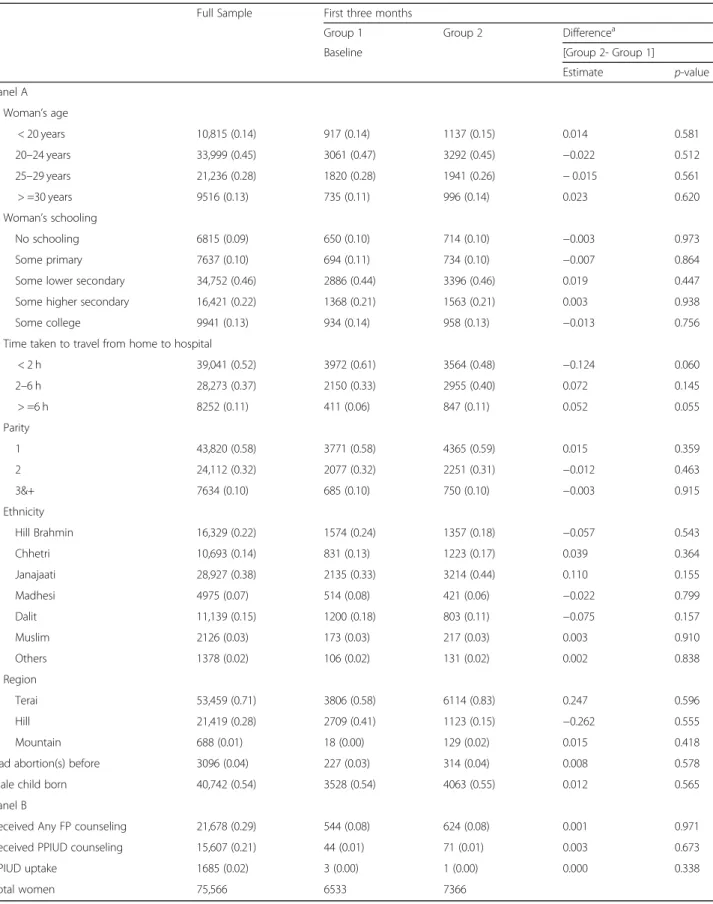
Table 1 reports the descriptive statistics of the women level covariates used in the analysis. Column 1 shows the mean of each variable for the full sample of 75,566 women. Columns 2 and 3 show the mean of each
variable for the Group 1 and Group 2 hospitals during the first 3 months of data collection, and before the intervention began in either group. With individual-level randomization of the intervention, we would expect the means of these covariates to be equal. Because we ran-domized at the hospital-level, and there are few hospi-tals, there may be systematic differences in the two populations. Column 4 reports a test of the hypothesis that the two groups of hospitals have the same mean characteristics for women during the pre-intervention period using the wild bootstrap method. We find that Group 2 hospitals tended to have women who had lon-ger travel times to reach the hospital. However, other co-variates appear to be balanced across the two groups of hospitals.
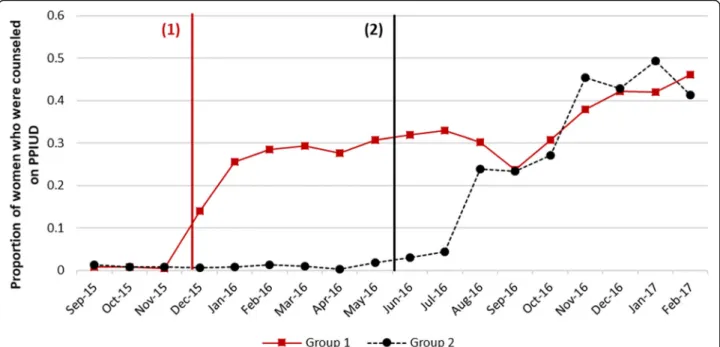
Figure 3 shows the trends in PPIUD counseling rates in the six hospitals. During the baseline period, all hospi-tals had very low counseling rates and in all hospihospi-tals, there was a clear rise in counseling rates immediately after the intervention started. There is also some vari-ability in counseling rates across the hospitals in the same group. Rates in Western Regional hospital were generally higher compared to the other hospitals. The highest monthly counseling rate achieved during the intervention period varied from 29 to 67% across the six study hospitals.
The counseling on any method of family planning also increased (Fig. 4) following the intervention. Overall, counseling on any method increased by 23 percentage points (pp) [CI: 5.3–41.0 pp] following the intervention compared to the pre-intervention period.
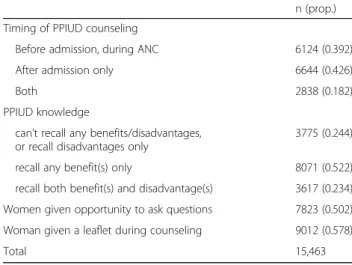
Table 2 shows the timing of PPIUD counseling, and selected measures of counseling quality. Around 39% of women were counseled in the antenatal period; 43% were counseled only after admission for delivery; and 18% were counseled both before and after admission. Among women who were counseled, only 50% reported having given an opportunity to ask questions during counseling sessions, and 58% reported receiving the postpartum family planning information leaflet. We asked women to recall benefits and some disadvantages of PPIUD and interviewers checked these responses against a list of benefits and disadvantages the coun-selors were trained to discuss with women. Among those counseled, 52% could recall only benefits of PPIUD, 23% could recall at least one benefit and one disadvantage, and 24% could not recall any benefits or disadvantages of the method, or could recall only disadvantages.
Table 1Frequency and proportion of women in the first 3 months baseline period, by background and hospital group
Full Sample First three months
Group 1 Group 2 Differencea
Baseline [Group 2- Group 1]
Estimate p-value
Panel A
Woman’s age
< 20 years 10,815 (0.14) 917 (0.14) 1137 (0.15) 0.014 0.581
20–24 years 33,999 (0.45) 3061 (0.47) 3292 (0.45) −0.022 0.512
25–29 years 21,236 (0.28) 1820 (0.28) 1941 (0.26) −0.015 0.561
> =30 years 9516 (0.13) 735 (0.11) 996 (0.14) 0.023 0.620
Woman’s schooling
No schooling 6815 (0.09) 650 (0.10) 714 (0.10) −0.003 0.973
Some primary 7637 (0.10) 694 (0.11) 734 (0.10) −0.007 0.864
Some lower secondary 34,752 (0.46) 2886 (0.44) 3396 (0.46) 0.019 0.447
Some higher secondary 16,421 (0.22) 1368 (0.21) 1563 (0.21) 0.003 0.938
Some college 9941 (0.13) 934 (0.14) 958 (0.13) −0.013 0.756
Time taken to travel from home to hospital
< 2 h 39,041 (0.52) 3972 (0.61) 3564 (0.48) −0.124 0.060
2–6 h 28,273 (0.37) 2150 (0.33) 2955 (0.40) 0.072 0.145
> =6 h 8252 (0.11) 411 (0.06) 847 (0.11) 0.052 0.055
Parity
1 43,820 (0.58) 3771 (0.58) 4365 (0.59) 0.015 0.359
2 24,112 (0.32) 2077 (0.32) 2251 (0.31) −0.012 0.463
3&+ 7634 (0.10) 685 (0.10) 750 (0.10) −0.003 0.915
Ethnicity
Hill Brahmin 16,329 (0.22) 1574 (0.24) 1357 (0.18) −0.057 0.543
Chhetri 10,693 (0.14) 831 (0.13) 1223 (0.17) 0.039 0.364
Janajaati 28,927 (0.38) 2135 (0.33) 3214 (0.44) 0.110 0.155
Madhesi 4975 (0.07) 514 (0.08) 421 (0.06) −0.022 0.799
Dalit 11,139 (0.15) 1200 (0.18) 803 (0.11) −0.075 0.157
Muslim 2126 (0.03) 173 (0.03) 217 (0.03) 0.003 0.910
Others 1378 (0.02) 106 (0.02) 131 (0.02) 0.002 0.838
Region
Terai 53,459 (0.71) 3806 (0.58) 6114 (0.83) 0.247 0.596
Hill 21,419 (0.28) 2709 (0.41) 1123 (0.15) −0.262 0.555
Mountain 688 (0.01) 18 (0.00) 129 (0.02) 0.015 0.418
Had abortion(s) before 3096 (0.04) 227 (0.03) 314 (0.04) 0.008 0.578
Male child born 40,742 (0.54) 3528 (0.54) 4063 (0.55) 0.012 0.565
Panel B
Received Any FP counseling 21,678 (0.29) 544 (0.08) 624 (0.08) 0.001 0.971
Received PPIUD counseling 15,607 (0.21) 44 (0.01) 71 (0.01) 0.003 0.673
PPIUD uptake 1685 (0.02) 3 (0.00) 1 (0.00) 0.000 0.338
Total women 75,566 6533 7366
a
of providers and the start of the intervention, but shows a downward trend later.
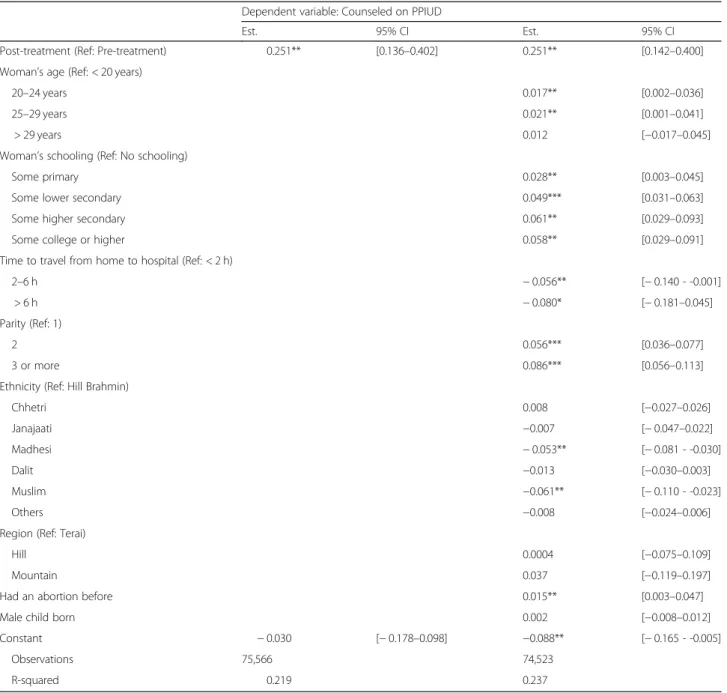
Table3shows estimates of the effect of the intervention on PPIUD counseling in column 1 with the confidence interval in column 2. The estimate in column 1 controls only for hospital and month fixed effects, and we include results with additional characteristics of the women and birth as controls in column 3 with confidence intervals of
these estimates given in column 4. On average, we find that the intervention increased the counseling rate by 25 pp. [95%CI: 14–40 pp]. Our effect estimate for the inter-vention does not depend on the inclusion of the individual women level controls, which is expected since these do not change much between the baseline and intervention periods and are unlikely to explain the increase in the out-come variable between the two periods.
Fig. 3Trends in PPIUD counseling rates. Note: Approximate intervention start-dates in group 1 and 2 hospitals shown by black and red vertical lines respectively. For exact dates of intervention, please see Fig.2
While the intervention increased counseling rates overall, Table 3 shows that some subgroups of women were more likely to be counseled. Women aged 20–29 years of age and more educated women were more likely to receive PPIUD counseling. Madhesi and Muslim women were less likely to receive counseling, as were those who had long travel distances to the hospital. Counseling rates were higher among women with high parity, and among women who had previously had an abortion. The distance variable may reflect a lack of coun-seling in the hospital in the antenatal period and exposure to staff trained in antenatal PPIUD counseling. The other factors related to being counseled may reflect provider
bias in the appropriateness of the method to certain women, or some types of women refusing counseling.
We also estimate variance inflation factor (VIF) of the adjusted model to test for multicollinearity, and find that there is some collinearity with a mean VIF of 2.16, and a VIF of 3.75 for the treatment variable in the first and the second model. We decided to keep the model structure for both models as this level of VIF is considered acceptable (< 5).
In Table4we report the results of a similar ITT model for the effect of the intervention on PPIUD uptake. We find the intervention increased PPIUD uptake by 4.4 pp. [95%CI: 2.8–6.4 pp]. Again, the inclusion of the women level variables has little effect on our interven-tion effect estimate. Uptake varies across different groups of women, but this may reflect differences in counseling rates or difference in uptake conditional on being counseled.
The ITT estimates in Table 4 show the impact of the intervention on uptake of PPIUD. However, PPIUD coun-seling coverage was very incomplete even during the inter-vention period, and many more women might have accepted PPIUD if they had been counseled. We therefore wish to estimate the effect of being counseled on PPIUD uptake; this would give us an estimate of how successful the intervention could have been if all women had been counseled. A simple estimate of the effect of counseling on PPIUD uptake is likely to be biased if counseling was targeted by providers to focus on women more likely to accept PPIUD. Indeed, in Table 3 we see that counseling is correlated with the characteristics of
Table 2Characteristics of PPIUD counseling and PPIUD knowledge if counseled
n (prop.)
Timing of PPIUD counseling
Before admission, during ANC 6124 (0.392)
After admission only 6644 (0.426)
Both 2838 (0.182)
PPIUD knowledge
can’t recall any benefits/disadvantages, or recall disadvantages only
3775 (0.244)
recall any benefit(s) only 8071 (0.522)
recall both benefit(s) and disadvantage(s) 3617 (0.234)
Women given opportunity to ask questions 7823 (0.502)
Woman given a leaflet during counseling 9012 (0.578)
Total 15,463
women that suggests some targeting of counseling may be occurring. If this is the case, extending counseling to additional women may have lower impact than in those already being counseled.
In order to avoid this problem of targeted counsel-ing we estimate the “adherence-adjusted” effect of the intervention, the effect of the intervention on PPIUD among those counseled due purely to the intervention and not targeting. Formally, this is an instrumental vari-able estimate where we use the predicted probability of counseling from column 3 of Table 3 as the explanatory
variable in a two-stage procedure [21]. The results in Table 5 show the effect of counseling on PPIUD uptake using this approach to remove the effect of targeting. The adherence-adjusted estimate implies that receiving coun-seling due to the intervention increases uptake of PPIUD by around 17 percentage points [95% CI: 14–40 pp].
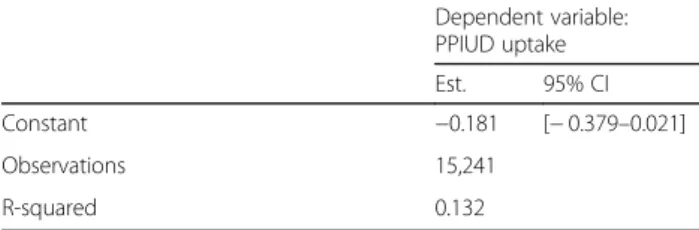
Table 6 shows the determinants of PPIUD uptake among women who were counseled. Women who were counseled in the hospital after admission for delivery were more likely to take up PPIUD. Our measures of the quality of counseling, in the form of having the
Table 3Intent-to-Treat Effect of the intervention on PPIUD counseling
Dependent variable: Counseled on PPIUD
Est. 95% CI Est. 95% CI
Post-treatment (Ref: Pre-treatment) 0.251** [0.136–0.402] 0.251** [0.142–0.400]
Woman’s age (Ref: < 20 years)
20–24 years 0.017** [0.002–0.036]
25–29 years 0.021** [0.001–0.041]
> 29 years 0.012 [−0.017–0.045]
Woman’s schooling (Ref: No schooling)
Some primary 0.028** [0.003–0.045]
Some lower secondary 0.049*** [0.031–0.063]
Some higher secondary 0.061** [0.029–0.093]
Some college or higher 0.058** [0.029–0.091]
Time to travel from home to hospital (Ref: < 2 h)
2–6 h −0.056** [−0.140 - -0.001]
> 6 h −0.080* [−0.181–0.045]
Parity (Ref: 1)
2 0.056*** [0.036–0.077]
3 or more 0.086*** [0.056–0.113]
Ethnicity (Ref: Hill Brahmin)
Chhetri 0.008 [−0.027–0.026]
Janajaati −0.007 [−0.047–0.022]
Madhesi −0.053** [−0.081 - -0.030]
Dalit −0.013 [−0.030–0.003]
Muslim −0.061** [−0.110 - -0.023]
Others −0.008 [−0.024–0.006]
Region (Ref: Terai)
Hill 0.0004 [−0.075–0.109]
Mountain 0.037 [−0.119–0.197]
Had an abortion before 0.015** [0.003–0.047]
Male child born 0.002 [−0.008–0.012]
Constant −0.030 [−0.178–0.098] −0.088** [−0.165 - -0.005]
Observations 75,566 74,523
R-squared 0.219 0.237
opportunity to ask questions during counseling, and be-ing able to remember benefits and disadvantages of PPIUD are correlated with a higher rate of PPIUD up-take. Being given a PPIUD information leaflet, however, did not seem to be related to uptake. Women with sec-ondary or higher education are less likely to take up PPIUD, and Muslim women were less likely to choose PPIUD compared to Hill Brahmin women. PPIUD up-take was higher among women with more children, and those who wanted to space or limit their future pregnancies.
Discussion
The results from this study show that the intervention had a statistically significant impact on increasing PPIUD counseling rates and PPIUD uptake among women in the six study hospitals. We further find that the impact of the intervention on PPIUD uptake was about four times larger in women who were counseled.
However, we find that only a quarter of women were counseled on family planning, and furthermore, nearly one-third of those counseled were told of only one contraceptive method. In addition, a substantial number
Table 4Intent-to-Treat Effect of the intervention on PPIUD uptake
Dependent variable: PPIUD uptake
Est. 95% CI Est. 95% CI
Post-treatment (Ref: Pre-treatment) 0.044*** [0.027–0.064] 0.044*** [0.028–0.064]
Woman’s age (Ref: < 20 years)
20–24 years −0.004* [−0.008–0.001]
25–29 years −0.007** [−0.010 - −0.004]
> 29 years −0.001 [−0.008–0.008]
Woman’s schooling (Ref: No schooling)
Some primary 0.0004 [−0.017–0.016]
Some lower secondary −0.002 [−0.020–0.009]
Some higher secondary −0.003 [−0.023–0.009]
Some college −0.003 [−0.024–0.012]
Time to travel from home to hospital (Ref: < 2 h)
2–6 h 0.0006 [−0.004–0.007]
> 6 h −0.001 [−0.014–0.007]
Parity (Ref: 1)
2 0.022** [0.012–0.034]
3 or more 0.030** [0.018–0.045]
Ethnicity (Ref: Hill Brahmin)
Chhetri 0.003* [0.000–0.007]
Janajaati 0.003** [0.001–0.008]
Madhesi −0.002 [−0.010–0.011]
Dalit 0.0001 [−0.005–0.006]
Muslim −0.010** [−0.025 - -0.003]
Others 0.001 [−0.007–0.010]
Region (Ref: Terai)
Hill −0.001 [−0.010–0.011]
Mountain 0.0007 [−0.016–0.018]
Had an abortion before 0.011** [0.006–0.018]
Male child born 0.003** [0.001–0.007]
Constant −0.005** [−0.014 - -0.001] −0.013 [−0.031–0.010]
Observations 75,566 74,523
R-squared 0.017 0.025
of women were only counseled after admission to the hospital for delivery, rather than in the antenatal period. The intervention focused on training in the hospital delivery wards and their antenatal care facilities and many women, particularly those living far from a hos-pital, may have had their antenatal care elsewhere. There is substantial variation in counseling rates be-tween different groups of women which may reflect access to hospital-based antenatal services but which may also reflect provider bias in the appropriateness of the method for different groups.
Quality of care is a critical factor that determines service uptake and method continuation. We found that patients who were likely offered higher quality care (women coun-seled on both benefits and disadvantages of the method) were more likely to take up PPIUD as compared to women offered lower quality care (women who only knew benefits or disadvantages). A paper that examined adverse effects of PPIUD insertion across six countries where this intervention was implemented found 22% of women with PPIUD reporting at least one adverse ef-fect at 6-week follow-up, with 6.9% reporting vaginal
Table 5Adherence-adjusted Impact of the Intervention—Impact of PPIUD counseling on PPIUD uptake
Dependent variable: PPIUD uptake
Est. 95% CI Est. 95% CI
Counseled on PPIUD 0.173*** [0.098–0.246] 0.174*** [0.099–0.249]
Woman’s age (Ref: < 20)
20–24 years −0.006** [−0.012 - -0.001]
25–29 years −0.009** [−0.014 - -0.004]
> 29 years −0.002 [−0.012–0.007]
Woman’s schooling (Ref: No schooling)
Some primary −0.004 [−0.014–0.011]
Some lower secondary −0.009* [−0.023–0.001]
Some higher secondary −0.013** [−0.027 - -0.004]
Some college −0.013** [−0.028 - -0.003]
Time to travel from home to hospital (Ref: < 2 h)
2–6 h 0.010** [0.001–0.022]
> 6 h 0.012** [0.005–0.019]
Parity (Ref: 1)
2 0.013** [0.004–0.021]
3 or more 0.016** [0.003–0.029]
Ethnicity (Ref: Hill Brahmin)
Chhetri 0.003 [−0.003–0.011]
Janajaati 0.005* [0.000–0.013]
Madhesi 0.007 [−0.002–0.018]
Dalit 0.002 [−0.003–0.007]
Muslim 0.0003 [−0.006–0.009]
Others 0.004 [−0.007–0.020]
Region (Ref: Terai)
Hill −0.001 [−0.007–0.001]
Mountain −0.007 [−0.032–0.019]
Had an abortion before 0.010** [0.005–0.018]
Male child born 0.002*** [0.001–0.004]
Constant −0.0006 [−0.023–0.023] −0.0003 [−0.024–0.024]
Observations 75,566 74,525
R-squared 0.053 0.058
All regression models adjusted for hospital and month fixed effects
discharge, 4.4% abdominal pain, and 2.4% irregular blee-ding [26]. The same study reported expulsion rate of 3.9% by 6 weeks since PPIUD insertion in Nepal, as compared to a minimum of 1.2% in Tanzania and 4.3% in Kenya, and a removal rate of 7.4% in Nepal as compared to 2.6% in Kenya and 8.3% in Tanzania. Note that for the study above, the 6-week follow-up rate for Nepal was the high-est at 84%, and was between (42–54) % for the remaining five countries indicating that the expulsion and removal data were more complete for Nepal than for the other countries. The high removal rate by women in Nepal sug-gests a need for improvement in quality of counseling. This may also reflect dynamics of an economy based on large number of Nepalese men working abroad where women often decide on contraceptive methods alone, and husbands, when they come back for short periods of time are not satisfied with the method as they do not receive any information or counseling on the method. These re-sults suggest a need for modified counseling approach in Nepal catered to country-specific labor and household power dynamics.
Another aspect of quality of care is the health system readiness and provider’s capacity to deliver care. A paper examining provider perspectives on the FIGO-NESOG intervention in Nepal finds that the providers in the study hospitals were positive about implementing PPFP counseling and PPIUD insertion services as a part of routine maternity care, but identified several supply-side issues preventing them from providing high-quality care including: (1) shortage of human resources, (2) lack of supplies and (3) lack of support from the hospital man-agement [27]. Hence, improvements in health systems readiness to deliver these services would not only im-prove provider morale, but could also imim-prove counsel-ing rates and method uptake.
Among those counseled, women who expressed their desire to limit or space their future pregnancies were more likely to take up PPIUD compared to women who were unsure about limiting. As older women and women with higher parity are more likely to want to space or limit their future pregnancies [28], higher PPIUD uptake by older women, women with high parity births, or history
Table 6Determinants of PPIUD uptake among women who were counseled
Dependent variable: PPIUD uptake
Est. 95% CI
Woman given a leaflet during counseling −0.008 [−0.050–0.053]
PPIUD Knowledge (Ref: Women can’t recall any benefits/disadvantages, or disadvantages only)
recall benefit(s) only 0.054** [0.026–0.080]
recall both benefit(s) and disadvantage(s) 0.122*** [0.091–0.198]
Women given opportunity to ask questions 0.043** [0.012–0.095]
Timing of PPIUD Counseling (Ref: Before Admission, during ANC)
After Admission Only 0.144** [0.096–0.237]
Both 0.093** [0.055–0.187]
Woman’s Age (Ref: < 20)
20–24 years −0.020** [−0.036–0.000]
25–29 years −0.036** [−0.045 - -0.027]
> 29 years −0.015 [−0.035–0.037]
Woman’s Schooling (Ref: No schooling)
Some Primary −0.015 [−0.054–0.070]
Some Lower Secondary −0.042 [−0.072–0.013]
Some Higher Secondary −0.045 [−0.072–0.011]
Some College −0.051* [−0.083–0.012]
Time to travel from home to hospital (Ref: < 2 h)
2–6 h 0.008 [−0.011–0.038]
> 6 h −0.0027 [−0.046–0.074]
Parity (Ref: 1)
2 0.039** [0.011–0.055]
3 or more 0.050* [−0.003–0.076]
Ethnicity (Ref: Hill Brahmin)
Chhetri 0.007 [−0.010–0.029]
Janajaati 0.010 [−0.004–0.036]
Madhesi −0.003 [−0.041–0.107]
Dalit −0.002 [−0.026–0.034]
Muslim −0.035* [−0.061–0.003]
Others 0.003 [−0.042–0.048]
Region (Ref: Terai)
Hill −0.008 [−0.057–0.049]
Mountain 0.017 [−0.145–0.144]
Had an abortion before 0.025* [−0.006–0.042]
Male child born 0.014*** [0.006–0.027]
Future Fertility Preference (Ref: Unsure about Limiting)
Want to Space 0.023** [0.006–0.054]
Want to Limit 0.020*** [0.006–0.049]
Undecided on Spacing −0.006 [−0.060–0.017]
Can’t get Pregnant −0.119** [−0.240 - -0.053]
Refused/Other −0.068** [−0.182 - -0.003]
Table 6Determinants of PPIUD uptake among women who were counseled(Continued)
Dependent variable: PPIUD uptake
Est. 95% CI
Constant −0.181 [−0.379–0.021]
Observations 15,241
R-squared 0.132
of abortion might mean that the intervention enabled women to meet their unmet need for family planning. This heterogeneity implies that these sub-populations might be prioritized by policymakers during scale-up to reach populations with the highest demand for postpar-tum contraception.
The main analytical strategy of the study was to exam-ine the intent-to-treat effect, and the impact on those who were actually treated (that is, who were counseled). However, there is also some heterogeneity in fidelity to the intervention across the different hospital sites, where counseling rates at some hospitals in some months were as high as 67%. Examining key factors behind this het-erogeneous uptake of the intervention at the hospital and even at the provider level is an important area of fu-ture research.
The women in our study are not nationally representa-tive. On average, they are younger and have more years of schooling than women of reproductive age in Nepal [8]. In targeting tertiary hospitals with high obstetric caseloads, our study excludes women who delivered at home, or in smaller primary health care centers. The im-plementation design also does not include adolescent girls who also have a high unmet need for contraception primarily to delay age at first childbirth [29, 30]. By de-sign, the study was implemented in large tertiary hospi-tals but in many rural areas, births either take place in lower level district hospitals, primary health centers or health posts, and it is unclear if the intervention could be implemented in these smaller facilities. Implications on program resources including costs and logistics to ex-pand PPFP and PPIUD services to the numerous district hospitals, and other health facilities need to be weighed against the benefits of expanded reach to women who often have even more limited access to postpartum family planning, and might benefit more from a long-acting and reversible method given higher time, cost and distance barriers to seeking care from health facilities.
High unmet need of postpartum family planning, and contraceptive prevalence rate that has only moved from 48 to 52.6% in the last decade (2006 to 2016) requires that the public health system in Nepal be introduced to innovative reproductive health interventions to ensure universal access to high-quality reproductive and sexual health services. This study aimed to understand the feasibility of one such innovation, which was the attempt to integrate postpartum family planning counseling and PPIUD insertion service provision into routine maternity care services in Nepal. Our evaluation demonstrates that incorporating PPIUD services into routine maternity care is feasible, and there is a demand for the PPIUD from women who have need for spacing or limiting their births. The intervention had a reasonable impact on PPIUD counseling rates, though it fell well short of full
coverage of women delivering in the intervention hospi-tals, and a smaller, but statistically significant impact on PPIUD uptake, particularly among those who received high-quality counseling. We conclude that the interven-tion had a positive impact though its effectiveness might be improved by expanding the coverage of counseling and ensuring that the counseling is of high quality.
Conclusions
The intervention designed and implemented by FIGO and NESOG increased PPIUD counseling rates and PPIUD uptake among women, especially among older women, those with high parity, and those who received better quality counseling. Had the counseling covered all women who gave birth, PPIUD uptake would have been four times higher. Our results suggest that the program impact could be improved further by: (1) expanding the coverage of PPFP counseling during antenatal care, and (2) improving quality of counseling. Increasing the cover-age of high-quality counseling will likely require increased human resources for health and a shift in emphasis to counseling during the antenatal period in health centers providing antenatal care and not just in hospital antenatal clinics.
Abbreviations
ANC:Antenatal Care; BPKIHS: BP Koirala Institute of Health Sciences; CI: Confidence Interval; FIGO: International Federation of Obstetricians and Gynaecologists; ICPD: International Conference on Population and Development; ITT: Intention-To-Treat; IUD: Intra-Uterine Device; NESOG: Nepal Society of Obstetricians and Gynaecologists; PNC: Postnatal Care; PP: Percentage Point; PPIUD: Postpartum Intra-Uterine Device; VIF: Variance Inflation Factor; WHO: World Health Organization
Acknowledgements
We gratefully acknowledge the advice and support generously extended by Sir Sabaratnam Arulkumaran. The facility coordinators in the six study hospitals were critical for the implementation of the study. We are especially grateful to all study participants who kindly responded to questions by the interviewers.
Funding
The funding for the study was provided by the Susan Thompson Buffett Foundation. The funding body played no role in the design of the study and collection, analysis, and interpretation of data or in writing the manuscript.
Availability of data and materials
Data and materials from the study may be available upon request from the Center for Research on Environment, Health and Population Activities, Kusunti, Lalitpur, P.O. Box 9626, Kathmandu, Nepal.
Authors’contributions
Ethics approval and consent to participate
Ethical approval for this study was obtained through Nepal Health Research Council. The Harvard T. H Chan School of Public Health Office of Human Research Administration granted exempt status to the study as Harvard only received de-identified data. All women were first informed of the purpose of the study and what their participation may entail before seeking their con-sent. Only women who consented to participate were interviewed and in-cluded in this study.
Consent for publication Not applicable.
Competing interests
We have read and understood theReproductive Healthpolicy on declaration of interests and declare that we have no competing interests.
Publisher’s Note
Springer Nature remains neutral with regard to jurisdictional claims in published maps and institutional affiliations.
Author details
1The World Bank Group, 1818 H Street NW, Washington, DC 20433, USA. 2Department of Global Health and Population, Harvard T. H. Chan School of Public Health, 665 Huntington Avenue, Boston, MA 02115, USA.3Center for Research on Environment, Health and Population Activities (CREHPA), Kusunti, Lalitpur, P.O. Box 9626, Kathmandu, Nepal.4Ipas, P. O. Box 9990, Chapel Hill, NC 27515, USA.5Nepal Society of Obstetricians and Gynaecologists (NESOG), Paropakar Maternity & Women’s Hospital, Thapathali, Kathmandu 23700, Nepal.6Ministry of Health and Population, Kathmandu, Nepal.
Received: 9 May 2018 Accepted: 15 May 2019
References
1. Cleland J, Conde-Agudelo A, Peterson H, Ross J, Tsui A. Contraception and health. Lancet. 2012 Jul 20;380(9837):149–56.
2. Cleland J, Bernstein S, Ezeh A, Faundes A, Glasier A, Innis J. Family planning: the unfinished agenda. Lancet. 2006;368(9549):1810–27.
3. Rutstein SO. Effects of preceding birth intervals on neonatal, infant and under-five years mortality and nutritional status in developing countries: evidence from the demographic and health surveys. Int J Gynecol Obstet. 2005;89:S7–24.
4. Kozuki N, Walker N. Exploring the association between short/long preceding birth intervals and child mortality: using reference birth interval children of the same mother as comparison. BMC Public Health. 2013;13(Suppl 3):S6. 5. UNFPA. Programme of action of the United Nations international
conference on population and development. Cairo: UN; 1994.
6. Cohen SA, Richards CL. The Cairo consensus: population, development and women. Fam Plan Perspect. 1994;26(6):272–7.
7. Alkema L, Kantorova V, Menozzi C, Biddlecom A. National, regional, and global rates and trends in contraceptive prevalence and unmet need for family planning between 1990 and 2015: a systematic and comprehensive analysis. Lancet. 2013 17;381(9878):1642–52.
8. Ministry of Health, Nepal, New ERA, ICF. Nepal Demographic and Health Survey 2016. Kathmandu, Nepal: Ministry of Health, Nepal; 2017. Available from:https://www.dhsprogram.com/pubs/pdf/fr336/fr336.pdf.
9. World Health Organization. Report of a WHO technical consultation on birth spacing, 2005. Geneva: World Health Organization; 2007.
10. Ministry of Health and Population (MOHP) [Nepal], New ERA, and Macro International Inc. Nepal Demographic and Health Survey 2011. Kathmandu, Nepal: Ministry of Health and Population, New ERA, and Macro International Inc.; 2012.
11. Stanton C, Blanc AK, Croft T, Choi Y. Skilled care at birth in the developing world: progress to date and strategies for expanding coverage. J Biosoc Sci. 2007;39(1):109–20.
12. Ministry of Health [Nepal], New ERA, ORC Macro. Nepal Demographic and Health Survey 2001. Calverton, Maryland, USA: Family Health Division, Ministry of Health; New ERA; and ORC Macro; 2002.
13. Pfitzer A, Mackenzie D, Blanchard H, Hyjazi Y, Kumar S, Kassa SL, et al. A facility birth can be the time to start family planning: postpartum
intrauterine device experiences from six countries. Int J Gynecol Obstet. 2015;130:S54–61.
14. Kapp N, Curtis KM. Intrauterine device insertion during the postpartum period: a systematic review. Contraception. 2009;80(4):327–36.
15. World Health Organization. Programming strategies for postpartum family planning [Internet]. Geneva, Switzerland: World Health Organization; 2013 [cited 2016 Dec 21]. Available from:http://apps.who.int/iris/handle/ 10665/93680
16. Lopez LM, Bernholc A, Hubacher D, Stuart G, Van Vliet HA. Immediate postpartum insertion of intrauterine device for contraception. In: Cochrane database of systematic reviews [internet]. John Wiley & Sons, Ltd; 2015 [cited 2016 Dec 22]. Available from:http://onlinelibrary.wiley.com/ doi/10.1002/14651858.CD003036.pub3/abstract
17. McPake B, Witter S, Ensor T, Fustukian S, Newlands D, Martineau T, et al. Removing financial barriers to access reproductive, maternal and newborn health services: the challenges and policy implications for human resources for health. Hum Resour Health. 2013;11:46.
18. Karra M, Canning D, Foster S, Shah IH, Senanayake H, Ratnasiri UDP, et al. Location and content of counselling and acceptance of postpartum IUD in Sri Lanka. Reprod Health. 2017;14(14):42.
19. Canning D, Shah IH, Pearson E, Pradhan E, Karra M, Senderowicz L, et al. Institutionalizing postpartum intrauterine device (IUD) services in Sri Lanka, Tanzania, and Nepal: study protocol for a cluster-randomized stepped-wedge trial. BMC Pregnancy Childbirth. 2016;16:362.
20. Clarke PS, Palmer TM, Windmeijer F. Estimating structural mean models with multiple instrumental variables using the generalised method of moments. Stat Sci. 2015 Feb;30(1):96–117.
21. Hernán MA, Hernández-Díaz S. Beyond the intention-to-treat in comparative effectiveness research. Clin Trials. 2012;9(1):48–55.
22. Bertrand M, Duflo E, Mullainathan S. How much should we trust differences-in-differences estimates? Q J Econ. 2004;119(1):249–75.
23. Cameron AC, Gelbach JB, Miller DL. Bootstrap-based improvements for inference with clustered errors. Rev Econ Stat. 2008;90(3):414–27. 24. Webb MD. Reworking wild bootstrap based inference for clustered errors
[internet]. Queen’s University, Department of Economics; 2014 [cited 2016 Dec 16]. Report No.: 1315. Available from:https://ideas.repec.org/p/qed/ wpaper/1315.html.
25. Roodman D. BOOTTEST: Stata module to provide fast execution of the wild bootstrap with null imposed [Internet]. Boston College Department of Economics; 2016 [cited 2016 Dec 16]. (Statistical Software Components). Available from:https://ideas.repec.org/c/boc/bocode/s458121.html
26. Makins A, Taghinejadi N, Sethi M, Machiyama K, Munganyizi P, Odongo E, et al. FIGO postpartum intrauterine device initiative: complication rates across six countries. Int J Gynecol Obstet. 2018;143(S1):20–7.
27. Puri MC, Maharjan M, Pearson E, Pradhan E, Dhungel Y, Khadka A, et al. Delivering postpartum family planning services in Nepal: are providers supportive? BMC Health Serv Res. 2018;18(1):948.
28. Lith LMV, Yahner M, Bakamjian L. Women’s growing desire to limit births in sub-Saharan Africa: meeting the challenge. Glob Health Sci Pract. 2013;1(1):97–107.
29. Shah IH, Åhman E. Unsafe abortion differentials in 2008 by age and developing country region: high burden among young women. Reprod Health Matters. 2012;20(39):169–73.