272
USE ORGANIC FERTILIZERS IN THE MODERN AGRICULTURE
Lavinia Burtan1, Anca Rovena Lăcătușu1, Carmen Sîrbu1, Traian Cioroianu1, Rodica Lazăr 1
, Mihaela Lungu1, R. Lăcătușu1
1National Institute for Soil Science, Agrochemistry and Environment– ICPA Bucharest, Blvd.
Mărăști no. 61, Sector 1 Bucharest E-mail: [email protected]
Key-words: organic fertilizers, agri-environment, agricultural policies
ABSTRACT
The paper presents a synthesis of soil fertilization technologies, practices, methods, and measures that can be applied by each farmer within his farm, depending on the local specificity, respecting the environmental protection. Intensive farming with high yields requires large amounts of nutrients that the Romanian soil, even the most fertile, cannot
fully provide, being absolutely necessary to supplement it with fertilizers. A part of the
applied fertilizers are not consumed by crops and can be lost through surface leakage or infiltration water, which can result in aquatic system pollution. Intensification of agriculture by using both organic and mineral nitrogen-based fertilizers has caused surface waters eutrophication and the accumulation of nitrates in drinking water sources, which can generate serious effects on human and animal health. Adopting the environment-friendly agricultural technologies means both increasing the farmers' interest in the use of organic
fertilizers and, implicitly, increasing the requested quantities. The manure used for
centuries in agriculture obviously cannot ensure this necessity, which has led to intense research to find new compostable raw materials for the production of new fertilizers to provide nutrient needs for crops, safe and environmentally friendly. According to the Rural Development Regulation no. 1305/2013, at least 30% of the European Agricultural Fund for Rural Development is dedicated to measures that contribute to the achievement of environmental and climate objectives, biodiversity conservation, natural resources protection (especially soil and water), greenhouse gas emission reduction, traditional landscape conservation and agri-environment policies will be implemented through National Rural Development Program 2014-2020.
INTRODUCTION
The concern regarding the protection and conservation of the soil fertility remains very current and global, with a practical interest in the whole of humanity, therefore it must receive the greatest attention, both from the society in general and especially from the governmental bodies, placing it on the same level of importance to the protection of water, air, and biodiversity (Pârvan Lavinia et al., 2015). Soil pollution means any action that causes the disruption of normal soil functioning as a support and living environment of different natural or man-made ecosystems, physical, chemical or biological disturbance of the soil, and the appearance of characteristics reflecting the degradation of its fertility, respectively the reduction of bioproductive capacity from a qualitative and / or quantitative point of view (Răuţă and Cârstea, 1983). Agricultural land is intersected by the surface hydrographic network draining into it and which, along with ground water, may be vulnerable to pollution, especially from agricultural sources. Agricultural activities can cause serious problems in terms of diffuse pollution of surface and/or groundwater bodies.
Modern agriculture has to offer increasing quantities of agricultural products in the context of global demographic growth, but also organic products for a much smaller and more selective market segment.
273
application of simple or complex classical fertilizers, the modernization and efficiency of fertilization procedures, the use of mathematical methods and models for processing the data resulted from the use of "tracers" on soil nutrient dynamics, soil-plant system and the relationship with fertilization methods, increase in the percentage of extra-radicular fertilization with / without phytoregulators and the application of liquid fertilizers, effects of fertilization with organic fertilizers and organo-minerals, principles, methods and effects of the use of biofertilizers, the role of microelements in plant nutrition and the effect on products quality, the use of "intelligent" fertilizer with controlled release of nutrients, the ratio between the fertilization levels and methods and the quality of agricultural products, the relationship between fertilization and environmental protection (Cioroianu et al., 2009).
A fertilizer can be a natural or synthetic product of a simple or complex mineral and/or organic nature, used to increase soil fertility and to ensure the growth and normal development of plants (Dumitru et al., 2015). David and Velicica Davidescu (1981) have defined fertilizers as "simple or compound mineral or organic substances, natural or synthesized, applied in solid or liquid form into or at the surface of the soil, or plant, for completing the need for nutrient ions and improving the conditions for the growth and development of agricultural plants, facilitating the decomposition of organic residues, increasing the microbiological activity and the general soil fertility status, in order to increase the crop production from a quantitative and qualitative point of view and with a minimum or no disturbance of the ecological environment ".
Fertilizers are the main agrochemical pathways for quantitative and qualitative modification of agricultural production, and influence on soil fertility (Rusu et al., 2005). Hera (2002) argued that soil fertility status is the key factor for sustainable agriculture and is a decisive indicator of the economic and social situation and the living standards of rural residents.
ENVIRONMENT PROTECTION IN AGRICULTURE
EU Strategy concerning environment protection in agriculture
Concerns about the unfavorable effects of agriculture on the environment have begun since the 70's of the last century. These include the increased specialization of agricultural holdings, excessive use of fertilizers and pesticides, high densities of livestock and especially in the southern Member States, the expansion of irrigated areas. The price guarantees for agricultural products, previously provided under the common agricultural policy, have encouraged these intensive agricultural practices financed by the European Agricultural Fund for Rural Development (EAFRD) (EC Regulation 1698/2005).
Since 1987, the EU has been co-financing the agri-environment payments of the Member States to meet the double challenge of reducing the negative effects of intensive agriculture and maintaining the positive effects of extensive agriculture. The purpose of these payments is to "continue to encourage farmers and other land managers to exercise a real function at the service of the whole society by introducing or maintaining farming methods compatible with the protection and improvement of the environment, landscapes
and their characteristics, natural resources, soil and genetic diversity "(Regulation No
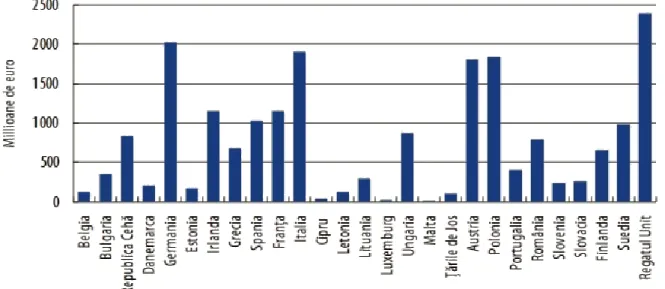
1698/2005). The EU funds allocated to agri-environment payments for the period 2007-2013 were 22.2 billion euros. Agri-environment payments encourage farmers to apply environment-friendly farming methods compatible with the environment, a core policy of the European Union for which about 2.5 billion euros are spent annually from EU funds, the responsibilities for managing them being shared between the Commission and the Member States (Figure. 1).
274
responsible for the effective implementation of agricultural practices. These contracts cover intervals of between five and seven years and detail the commitments the beneficiary must undertake. These commitments cover a wide range of agricultural practices, which can be grouped in Table no. 1.
Figure 1 The financial allocations for each Member State
(Source: DG AGRI: Rural Development in the European Union - Statistical and Economic Information - Report 2009 (Section 4.1.1 EAFRD – Overview of the Financial Plans)
Table 1. The main categories of agricultural practices for agri-environment payments
1 Organic Agriculture 2 Integrated production
3 Other actions to extend agricultural exploitation systems: reduction of fertilizers, reduction of pesticides and extensive exploitation of livestock
4 Crop rotation, maintenance of land withdrawn from agricultural production 5 Actions to prevent or reduce soil erosion
6 Genetic resources (local races in danger of extinction from agriculture, plants threatened by genetic erosion)
7 Actions to conserve and enhance biodiversity
8 Landscape maintenance, including preservation of historical features on agricultural land
9 Water related actions (excluding nutrient management), such as buffer strips and wetland management
Source: European Court of Auditors, Special Report no. 7/2011 At the level of the European Union, starting with 2005, through the Community Agricultural Policy, the fundamental transformation of the rural development policy with the determined horizon for the period 2007-2013 was initiated. The objectives of the CAP reform have been focused on the sustainable development of agriculture from economic, social and environmental points of view.
275
areas at EU level: biodiversity, the preservation, and development of agriculture and forestry, water and climate change. The objectives of the EU's rural development policy are accompanied by coherent clusters of measures, requiring improvement of the environment and rural areas through support for land management.
The EU's rural development policy is funded through the European Agricultural Fund for Rural Development (EAFRD) worth €100 billion from 2014-2020, with each EU country receiving a financial allocation for the 7-year period. This will leverage a further €61 billion of public funding in the Member States.
Member States and regions draw up their rural development programs based on the needs of their territories and addressing at least four of the following six common EU priorities:
fostering knowledge transfer and innovation in agriculture, forestry and rural areas
enhancing the viability and competitiveness of all types of agriculture, and promoting innovative farm technologies and sustainable forest management promoting food chain organization, animal welfare and risk management in
agriculture
restoring, preserving and enhancing ecosystems related to agriculture and forestry
promoting resource efficiency and supporting the shift toward a low-carbon and climate-resilient economy in the agriculture, food and forestry sectors
promoting social inclusion, poverty reduction and economic development in rural areas
The Common Agricultural Policy contributes to preventing and mitigating soil degradation processes. In particular, agri-environment measures offer opportunities for favoring the build-up of soil organic matter, enhancement of soil biodiversity, reduction of soil erosion, contamination and compaction.
The European Commission adopted in 2006 a soil protection thematic strategy, including a proposal for a Soil Framework Directive that aimed at the soil functions preservation, the prevention of soil degradation and the restoration of degraded soils. Unfortunately, the Member States were not able to find a common position on the Commission proposal about the Soil Directive.
Implementation of the Community Strategy on environmental protection in agriculture in Romania
In Romania, the extension of sustainable agriculture at farm level was one of the major objectives of the Romania's Sustainable Development Strategy for 2007-2013, in accordance with the Community Strategic Guidelines for European Rural Development Policy.
276
Although our country has intensified efforts towards sustainable development, the sharp decline in greenhouse gas emissions from 61.2 t CO2 eq/capita in 1997 to 52.0 t CO2 eq/capita in 2002 does not reflect the effectiveness of environmental policy but the economic decline of 1990-1999. The lack of statistical information does not allow an assessment of the contribution of agriculture to total CO2 emissions. Under these conditions, Romanian agriculture has the potential for sustainable development by taking over and adapting agricultural practices towards obtaining ecologically food products in line with European standards.
Directive 2000/60 / EC of the European Parliament and of the Council which establishing a framework for Community action in the field of water policy (Water Framework Directive), was transposed in Romanian legislation into the Water Law no. 107/1996, being the main normative act that have as objective the quality of water.
Council Directive 91/676 / EEC of 12 December 1991 on the protection of waters against pollution caused by nitrates from agricultural sources, known as 'Nitrates Directive', has been transposed into Romanian legislation by Government Decision no. 964/2000 for the approval of the Action Plan for the protection of waters against pollution by nitrates from agricultural sources, having as main objectives the reduction and prevention of this type of pollution. Thus, areas, where surface waters and groundwater have a nitrate concentration exceeding the maximum allowable limit of 50 mg / l, can be considered vulnerable to nitrate pollution and the requirements of Directive 91/676 / EEC must be strictly observed in these areas.
In this context, has been elaborated the Code of good agricultural practices for the protection of waters against pollution with nitrates from agricultural sources, approved by Order of the Minister of Environment and Water Management and of the Minister of Agriculture, Forests and Rural Development no. 1.182 / 1.270 / 2005, modified and completed by Order no. 990/1809/2015. Also, by the Order of the Minister of Health no. 119/2014 for the approval of Hygiene and Public Health Standards for the population life environment, the minimum distance of 500 m from the housing of the intensive livestock systems platforms was regulated.
The methodology for calculating nutrient content in manure was established based
on adaptation to the conditions in our country (climate, animal husbandry systems, manure storage systems) of the methods proposed in the IPCC Guidelines for the greenhouse gases emissions from the livestock breeding, differentiated for each animal category, and breeding system. According to the Code of Good Agricultural Practice for water protection against nitrate pollution from agricultural sources, the amount of nitrogen from the use of organic fertilizers on agricultural land should not exceed 170 kg of nitrogen/ha/year (Dumitru et al. 2015).
For farms with more than 100 livestock units, storage and processing of manure is done in accordance with the requirements of the Environmental Agreement, or if the farm is covered by the Industrial Emissions Directive - IED 2010/75, and with the requirements of the Integrated Environmental Agreement for the agricultural exploitation functioning. The same conditions are required for the farm fertilization plan which should be based on an agrochemical study carried out by specialized bodies of the Ministry of Agriculture and Rural Development.
According to the Code of Good Agricultural Practice for water protection against nitrate pollution from agricultural sources, it is forbidden to apply manure, as well as any
type of fertilizer on excess water or snow covered land; when the soil is frozen; the soil is
277
agricultural activities are prohibited, namely application of any kind of fertilizers and pesticides.
In accordance with the provisions of Government Decision no. 930/2005 for approval of the special norms regarding the character and size of the sanitary and hydrogeological protection zones, it is forbidden to use any kind fertilizers in the protection areas established around the water capture works, the constructions and installations for drinking water supply, the potable bottling water sources, the mineral water sources used for therapeutic purposes or for bottling, as well as the therapeutic lakes and muds.
ORGANIC FERTILIZERS USED IN AGRICULTURE
Organic fertilizers are represented by various organic residues, resulted from different economic sectors, but also some natural products (peat) or cultivated plants (green fertilizers), which are significant sources of fertilizing elements. Of these, residues from animal husbandry are predominant: manure, urine, sludge (slurry) from cattle and pig breeding complexes, poultry manure, plus urban and communal waste: compost from urban organic waste, sludge from urban waste water treatment plants, composts of household waste and industrial waste: sludge from wine distilleries and from beer production, cellulose residues from paper manufacture, tannin residues (Lăcătuşu, 2006).
The research carried out by (Ciobanu et al., 2003, Hera, 1994) pointed out that chemical fertilizers are the main source for compensation of the losses from agricultural ecosystems, while organic fertilizers of animal or vegetable origin are used to maintain an adequate level of organic matter.
Waste water resulting from agricultural activities is an effluent loaded with small amounts of solid matter consisting of water contaminated with manure, urine, milk, and products used for the stable washing and cleaning. These generally have biochemical oxygen demand up to 2000 mg / l and the dry matter content less than 1%. The unfermented and undiluted waste water-manure mixture, ready to be spread, has an average composition of 0.33-0.73% total nitrogen, 1.56-1.94% potassium, 0.01-0.03% phosphorus. Most of the nitrogen (70-80%) is in ammoniacal form and the mixture is rather poor in phosphorus.
By fermentation, the composition of this liquid fertilizer varies according to the proportion of water in the mixture, which may contain on average: 0.15-0.70% total nitrogen, 0.1-0.4% ammoniacal nitrogen, 1.5% K2O, 0.03-0.05% P2O5, 0.06-CaO, 2% dry matter. It can be used both in fermented and unfermented state.When it is discharged into the field it is always necessary to be diluted with water so that the final ratio animal manure: water to be 1: 6-1: 10 when it is applied during vegetation, and at least 1: 3-1: 4 when it is used as a basic fertilizer.
Manure is not only a source of nutrients but at the same time, it contributes to increase the amount of carbon dioxide into the atmosphere. Between the amount of carbon dioxide released by the soil in the time unit and its fertility is a tight bond, so it is more fertile as this amount is higher (Dumitru and Simota, 2011). When it is rationally used, manure increases the water retention capacity of almost 20% in all soils, particularly in sandy soils, leading to increased crop yields. Well decomposed organic matter associated with the coarser organic material improves the physical properties of loamy soils which make them more permeable to air and water by an average of 32-40%. The manure increases soil buffering capacity and humus content. It also contributes to soil structure formation due to increased particle cohesion. Organic fertilization contributes to the organic matter content increasing and leads to the physical, chemical and biological soil properties improvement (Bumatov 1967, Blaze, 1967, Condei, 1967, Olteanu, 2000).
278
ammonia, uric acid, creatinine, amino acids etc.) and mineral substances in amount of 3-4% of the wet weight, or 30-40% of the dry matter.The dry matter content of solid manure varies between 16.2% (cattle) and 34.5% (sheep) and in the liquid ones 6.2% (cattle) to 12.8% (sheep). In animal manure other than organic matter and essential nutrients (N, P, K, Ca, S, Mg) there are many microelements and growth stimulants (heteroauxin, biotin etc.).
Fermented manure. To having a good manure, it must be fermented in the platform. When manure is stored in unsuitable piles, nitrogen losses - which are one of its main components - easily reach 30-50%. Under normal storage conditions, after 5-6 months, losses of 20-40% of the manure initial mass are recorded. Also, the amount of CO2 released by the manure decomposition is quite high.For one hour, 0.5-2 g of CO2 can be released per square meter, depending on the intensity of the microbiological processes. By the complete decomposition of 30 t of manure to the final products CO2 + H2O, about 10 t CO2 is formed. By using 30 t / ha of manure in the summer, the amount of CO2 per 1 ha increases by 100-200 kg in 24 hours, meaning 15-30 times than normal. The highest CO2 release occurs when organic and mineral fertilizers are used simultaneously.
Restraint periods for field application of fertilizers are defined by the time in which the average air temperature falls below 50C. This interval corresponds to the period when the crop's nutritional requirements are low or when the risk of percolation/surface leakage is high. The manure is usually administered in autumn with the base soil work under favorable weather conditions (preferably cloudy weather with slightly wind).
The fertilization of permanent meadows (pastures and meadows) with organic fertilizers is subjected to the condition of not exceeding the 170 kg N / ha-1 year, and to compliance with the restraining periods.
Compost. The most organic wastes can be successfully composted. For example, paper and food waste often make up 50% of municipal solid waste. City slurries, manure, crop, and food processing residues are excellent for composting. Approximately 50% of the residues are organic matter, composting playing an important role in the integrated waste management plan in any community (Dumitru et al., 2011).
According to Barth et al. (2008), the amount of compostable waste and green waste collected from households in the 27 EU countries is estimated at 80.1 million t, of which 9.5% or 23.6 million t are collected selectively. For the 27 EU member states, the total amount of compost is 13.2 million tons, of which: 4.8 million tons (36%) household waste compost; 5.7 million tons (43%) of green waste compost; 1.4 million tons (10.4%) municipal sludge compost and 1.4 million tons (1.4%) compost from the waste mixture. Green waste compost is recommended to be used as an alternative fertilizer for phosphorus mineral fertilizers and as a soil conditioner, especially in potentially water-polluting areas through runoff from agricultural land (Greenchip Recycling Pty, 1999).
Urban and industrial development of localities, as well as the general increase in the population living standard, lead to the production of increasingly large amounts of domestic, street and industrial waste, which requires high costs for collection and neutralization, in order to avoid environmental pollution (Dumitru et al., 2011).
As example, in the last decade of previous century in USA an estimated 96 billion pounds of waste food were produced each year. For the disposal of this high amount of food waste and residuals, composting become an alternative and farm operations were been among the food residual composting pioneers. Thus, between 1995 and 1998 the full-scale and pilot composting stations projects grew to 138 in 1996, 214 in 1997, and reached 250 in 1998, an average growth rate of 83% per year and 331% over the four years of the survey (Hammer și Tuszynski, 1999).
279
from 1995 to 2015. Recycling and composting together accounted for 45 % in 2015 relative to waste generation.
The major advantage of compost does not consist only in its fertilizing capacity but in its ability to improve the physical characteristics of the soil, to increase the water retention capacity, and as a support for a biological system that can retain the nitrogen from chemical fertilizers, and then release it, after a while, to the plants (Canway et al., 1980). Basalo (1974) points out that the idea of using compost as an ally of mineral fertilizers and not as a competitor of these must be accepted.
In order to have the lowest possible content of pollutants in compost, it is advisable to eliminate them before starting the composting process. Since the latest standards are set, solid waste managers and composting facility operators need to understand the effectiveness of the different options to reduce contaminant levels. There is a great variety of possible approaches, of which: 1) reducing or eliminating the level of contaminants in products destined to become solid municipal waste; 2) separation of sources of organic materials for separating collection and composting; 3) separation of contaminants at source for separate collection and storage; 4) separation of contaminants from solid municipal waste to a centralized station before composting; 5) separation of contaminants from municipal solid waste compost into a centralized station (Richard et al., 1994).
In order to be used in agriculture, composts must be certified by an accredited independent laboratory.
In the USA, the production and quality of the compost are regulated by the Environmental Protection Agency of each state, which is also responsible for waste management. The main restrictions imposed are 1) to meet standards for the reduction of pathogens; 2) the level of metals and organic compounds should not lead to the food chain contamination; 3) the level of lead content does not generate an unacceptable risk for transfer to the plant.
According to European Community regulations (2008), heavy metal loading limits for soil treated with composted municipal sludge are: 1-3 mg / kg Cd, 100-150 mg / kg Cr, 50-10 mg / kg Cu, 30-75 mg / kg Ni, 50-300 mg / kg Pb, 150-300 mg / kg Zn.
The compost can be used in various fields such as improvement of degraded lands, as a culture substrate in parks, greenhouses and solaria, as a fertilizer for field crops, vegetables, vineyards and orchards but also as a mulch (Pommel et al. 1977, De Haan, 1981, Assche et al., 1982, 1984, Dalzell et al., 1988, and Zdrilaw, 1986).
The advantages of composting animal manures compared with direct application to soil of untreated manure are sanitation, reduction of volume and moisture, odor removal, safe storage, and a more uniform, easier to transport byproduct than untreated manure (Szogi et al., 2015).
Other advantages of composting the manure:
-composting converts the nitrogen content of manure into more stable organic forms; even if this involves some nitrogen loss, what remains is less susceptible to washing and loss as ammonia;
-the manure from thick bedding (as is currently the case in cattle complexes) has a high C: N ratio, thus, when it is applied on the soil causes so-called "nitrogen hunger" (the excess carbon of the manure leads to the use of assimilable nitrogen reserves by the microorganisms in the soil, which cannot be accessed by the crops). The composting process leads to increasing of the C: N ratio to an acceptable level so that it can be applied in the field without producing nitrogen hunger;
-heat generation during the composting process reduces the number of weed seeds and pathogenic microorganisms in manure;
280
buy the majority of the fodder, or where the number of animals is not correlated with the land available for manure landfilling, or in densely populated areas; many worries are caused by leakage of landfills on the frozen lands and nitrate contamination of water from wells; composting converts nutrients into forms that are harder to be leachate into the groundwater or are harder to be engaged in surface leakage;
-the use of compost leads to reducing of the diffuse pollution from agriculture; -the soil fertilized only with compost gives to plants a surplus of nutrients in May-September, but also a deficit in the rest of the time, which requires supplementation with mineral fertilizers.
For delivery, the compost must be accompanied by a certificate which must include at least the following: humidity (less than 50%); total nitrogen content (over 1.5% a.s.); C: N ratio (10-18); pH (6.0-7.8).
CONCLUSIONS
Through the Community Agricultural Policy, starting with 2005, the fundamental transformation of rural development policy has been initiated, focusing on the sustainable development of agriculture in economic, social and environmental terms.
Agri-environment payments are the most important financial measure for implementing the EU's rural development policy for 2007-2013.
Agri-environment measures contribute to the prevention and mitigation of soil degradation processes, providing opportunities for promoting the accumulation of organic matter in the soil, increasing soil biodiversity, reducing soil erosion, contamination, and compaction.
Romania's Sustainable Development Strategy for 2007-2013 has as main objective the extension of sustainable agriculture to agricultural farms.
The National Strategy for Sustainable Development of Romania - Horizons 2013-2020-2030 establishes the main action directions for ensuring food security and safety by correlating the quantitative and qualitative measures of agricultural yield with the requirements for maintaining and increasing soil fertility, biodiversity, and environmental protection.
Efforts to implement European legislation on environmental protection in agriculture have resulted in a series of normative acts such as Water Law no. 107/1996, H.G. no. 964/2000 for the approval of the Action Plan for the protection of waters against nitrate pollution from agricultural sources, Order of the Minister of Environment and Waters Management and of the Minister of Agriculture, Forests and Rural Development no. 1.182 / 1.270 / 2005, modified and completed by Order no. 990/1809/2015 for the approval of the Code of Good Agricultural Practice for the protection of waters against pollution by nitrates from agricultural sources.
The best organic fertilizers are different types of compost whose major advantages are, beside fertilizing capacity, their ability to improve the physical characteristics of the soil, to increase the water retention capacity, to increase the soil organic matter, to convert nutrients into forms harder to be leachate into the groundwater or harder to be engaged in surface leakage.
The use of organic fertilizers in modern agriculture according to the methodology regulated by the European legislation implemented in our country is in full compliance with environmental protection.
ACKNOWLEGMENTS
The paper was drawn up in the frame of the research project PN 16-07.02.05
281
BIBLIOGRAPHY
1. Assche C. Van, Uyttebroeck P., 1982. Demand, supply and aplication possibilities of
domestic waste compost in agriculture and horticulture. Agricultural Wastes, 4, p.
203-212
2. Assche C. Van, Uyttebroeck P., 1984. Plant analysis of lettuce and spinach grown
on domestic waste compost. Katholieke Universiteit Leuven, Belgium
3. Barth J., Amlinger F., Favoino E., Siebert Stefanie, Kehres B., Gottschall R., Bieker Marion, Lobig Anita, Bidlingmaier W., 2008. Compost production and use in
the EU, Final Report, Tender No. J02/35/2006, European Commission DG Joint
Research Centre/ITPS
4. Basalo C., 1974. Les ordures menajeres el l'agricultura. Techno Municip., Franța, vol.
69, nr. 1
5. Blasse W., 1967, Probleme de fertilizare a solului. Oestban, nr. 2, D.D.R.
6. Bumatov G.M., 1967, Folosirea concomitentă a gunoiului de grajd din zona viticolă
de N-V. Grădina, via și livada, nr. 3
7. Canway A., Ross R., 1980. Handbook of industrial wastes disposal. Van Nostrand Reinhold Environmental Engineering Series, New York
8. Ciobanu Gh., Sarca Gh., Ciobanu Cornelia, Lazăr Gh., 2003, Evoluția potențialului
fosfatic în experiențe de lungă durată cu îngrășăminte și amendamente, în condițiile
solului brun-luvic de la Oradea. Simpozionul Național ,,Folosirea îngrășămintelor cu
fosfor în România. Aspecte actuale și de perspectivă (CIEC), Editura Agris- Redacția Revistelor Agricole București, pp. 470
9. Cioroianu T., Sîrbu Carmen, Dumitru M., Dorneanu A., Ștefănescu Daniela, 2009,
Îngrășăminte neconvenționale – Fertilizanți lichizi. Editura Estfalia, București
10. Condei Gh., 1967, Fertilizarea solului în viticultură. Editura Agrosilvică, București
11. Curtea de Conturi Europeană, Raportul special nr. 7/2011.
https://www.eca.europa.eu/Lists/News/NEWS1109_19/NEWS1109_19_RO.PDF
12. Danzell H.W., Biddlestone A.J., Gray K.R., Thurairajan K., 1988. Amenagement du
sol: production et usage du compost en milieu tropical et subtropical. Bulletin
pedologique de la FAO, no. 56, Rome
13. Davidescu D., Davidescu V. 1981. Agrochimia modernă. Editura Academiei Române, Bucureşti.
14. Dumitru M., Simota C., 2011, Producerea și valorificarea composturilor. Editura Sitech Craiova
15. Dumitru M., Simota C., Cioroianu T., 2015, Codul de bune practici agricole pentru
protecția apelor împotriva poluării cu nitrați din surse agricole. Editura eKARIOKA,
București
16. Hammer Miriam, Tuszynsky C., 1999. Composting Food Residuals-food products
travel full circle. USDA, APHIS-VS-CEAH.
https://www.aphis.usda.gov/animal_health/emergingissues/downloads/compost6.pdf 17. Hann S., 1981. Results of municipal waste compost research over more than fifty
years at the Institute for Soil Fertility at Haren, Groningen, the Netherlands. Neth. J.
Agric. Sci. 29, p. 49-61
18. Hera Cr., V. Mihăilă, 1994. Long Term Agricultural Experiments in Eastern Europe. CAB International. From R. A. Leigh and A.E. Johnston (eds.) 220-227.
19. Hera Cr., 2002. Fertilitatea solului, factor hotărâtor în dezvoltarea durabilă și performantă a agriculturii României. În: Folosirea rațională și conservarea solurilor românești. Ed. Academiei Române, București
20. Lăcătușu R., Rizea Nineta, Lazăr Rodica, Lungu Mihaela, Kovacsovics Beatrice, 2006, Evoluția mobilității în experiențe de lungă durată cu azot și fosfor efectuate în
282
Drăgănești-Vlașca și Turda. Simpozionul Internațional ,,Managementul nutrienţilor
pentru îmbunătățirea calității culturilor și conservarea mediului’’ CIEC. Editura – Redacția Revistelor Agricole, București, pp. 253
21. Olteanu I., 2002, Viticultura. Editura Universitaria, Craiova
22. Pârvan Lavinia, Dumitru Mihail, Cioroianu Traian, Sîrbu Carmen., 2015,
Tehnologii de bioremediere a solurilor poluate cu țiței. Editura Sitech, Craiova. ISBN
978-606-11-4613-0
23. Pommel B., Juste C., 1977. La valorisation agricole de dechets:1) Le compost
urbain. INRA, SEICNRA, Versailles
24. Răuță C., Cârstea St., 1983. Prevenirea și combaterea poluării solului. Ed. Ceres, București
25. Regulamentului (CE) nr. 1698/2005 al Consiliului din 20 septembrie 2005 privind sprijinul pentru dezvoltare rurală acordat din Fondul european agricol pentru dezvoltare rurală (FEADR), JO L 277, 21.10.2005, p. 1.
26. Richard L., Woodbury P., 1994. What materials should be composted. BioCycle, Journal of composting & organics recycling;35(9):63-68
27. Rusu M., Mărghitaș Marilena, Mihăiescu Tania, Oroian I., Dumitraș Adelina, 2005, Tratat de agrochimie. Editura Ceres București. ISBN: 973-40-0727-0
28. Szogi Ariel A., Matias B. Vanotti, Kyoung S. Ro, Methods for Treatment of Animal Manures to Reduce Nutrient Pollution Prior to Soil Application, Curr Pollution Rep (2015) 1: 47. https://doi.org/10.1007/s40726-015-0005-1
29. Zdrilaw G., 1986. Agrotechnical basses for developing plant production on light soils. Roczniki Nauk Rolniczych, Seria GT83, Z4
30. ***DG AGRI: Rural Development in the European Union - Statistical and Economic Information - Report 2009 (Section 4.1.1 EAFRD – Overview of the Financial Plans.
https://ec.europa.eu/agriculture/sites/agriculture/files/statistics/rural-development/2009/rd_report_2009_foreword_content.pdf
31. ***Directiva 2000/60/CE a Parlamentului European și a Consiliului din 23 octombrie 2000 de stabilire a unui cadru de politică comunitară în domeniul apei (JO L 327, 22.12.2000, p. 1)
32. ***Directiva 2010/75/UE a Parlamentului European şi a Consiliului din 24 noiembrie 2010 privind emisiile industriale (prevenirea și controlul integrat al poluării) (reformare) Jurnalul Oficial al Uniunii Europene L 334/17
33. ***Directiva 91/676/EEC privind protectia apelor impotriva poluarii cu nitrati din surse agricole (Directiva Nitrati)
34. ***Eurostat. Municipal waste statistics, 2017. http://ec.europa.eu/eurostat/statistics-explained/index.php/Municipal_waste_statistics
35. ***Greenchip Recycling Pty Ltd., 1999. Greenchip Compost Trials, North East Victoria Australia. Internet publication. www.ecorecycle.vic.gov.au
36. ***HG nr. 930 din 11 august 2005 pentru aprobarea Normelor speciale privind caracterul si marimea zonelor de protectie sanitara si hidrogeologica, Monitorul Oficial al României nr 800 din 02.09.2005.
37. ***Hotărârea nr. 964/2000 privind aprobarea Planului de acțiune pentru protecția apelor împotriva poluării cu nitrați proveniți din surse agricole. Text publicat în M.Of. al României. În vigoare de la 24 noiembrie 2000
38. ***Legea 107/1996 –Legea Apelor, publicat în M. Of. Nr. 244/8 ct. 1996
39. ***Ministerul Mediului și Dezvoltării Durabile, 2008. Strategia Naţională pentru Dezvoltare Durabilă a României Orizonturi 2013-2020-2030, București 2008.
283
40. ***Ordin nr. 119/2014 pentru aprobarea Normelor de igiena si sănătate publica privind mediul de viață al populației. Publicat in Monitorul Oficial, Partea I nr. 127 din 21 februarie 2014