NURSES’ WORK AND HOW IT IMPACTS HIV OUTCOMES IN NAMIBIA
Gillian Izabelle Adynski
A dissertation submitted to the faculty at the University of North Carolina at Chapel Hill in partial fulfillment of the requirements for the degree of Doctorate of Philosophy in the School of
Nursing.
Chapel Hill 2020
ii © 2020
iii
ABSTRACT
Gillian Izabelle Adynski: Nurses’ Work and How it Impacts HIV Outcomes in Namibia (Under the direction of Cheryl B. Jones)
This three-paper dissertation examined the relationships among nurse staffing, nurse attitudes, and organizational outcomes for nurses working in outpatient settings in Namibian public health facilities. Guided by the job resource-demand (JD-R) model (Bakker & Demerouti, 2007), the dissertation used a multi-method approach to explore different aspects of the model. Paper 1 (Chapter 2) presents the findings of a scoping review of the literature conducted to understand the relationships among adequate nurse staffing (conceptualized either as a job demand or as a resource), nurse attitudes (including burnout, motivation, etc.), and
organizational outcomes (to include patient outcomes) in outpatient settings. Paper 2 (Chapter 3) presents a secondary analysis of data gathered in 73 Namibian health care facilities to examine, through a Poisson regression, the relationship between nurse staffing and two key organizational outcomes of HIV care, Viral Load Documentation (VLD) and Viral Load Suppression (VLS). Paper 3 (Chapter 4) presents a directed content analysis of qualitative interviews with Namibian nurses to examine how they perceive job attitudes, how job-related factors affect their job attitudes, and how their job attitudes affect their ability to do their jobs well.
iv
costs. Nurse staffing was also associated with nurse attitudes, and nurse attitudes were associated with improved organizational outcomes. The findings of the quantitative analysis presented in Chapter 3 indicate a positive relationship between nurse staffing, measured using the workload indicator of staffing needs (WISN) ratio, and VLD. The findings indicated no significant relationship between nurse staffing and VLS. The findings of the qualitative directed content analysis presented in Chapter 4 indicate that nurses perceived job attitudes encompass the following themes: empowerment, motivation, pride, satisfaction, burnout, dissatisfaction, and frustration. Also, the nurses in my sample indicated that job-related factors, personal factors, and patient outcomes influenced their job attitudes. Nurses also perceived that their job attitudes affected their ability to do their jobs well.
v
vi
ACKNOWLEDGEMENTS
In 2014, I embarked on a new journey toward a PhD in Nursing through the opportunity provided by the Alex and Rita Hillman Foundation’s Hillman Scholars in Nursing Innovation Program, an integrated BSN to PhD program. Through the opportunities provided by this program, I have developed in ways I could not imagine, including being able to pursue emergency care nursing, traveling the world, developing my global health research skills, and disseminating my work through national conferences. I want to acknowledge the funding sources and people who have guided me toward the completion of this dissertation.
vii
which supported me as I completed my primary dissertation data collection in Namibia. These funding opportunities were necessary for me to be able to reduce my other personal funding mechanisms, notably clinical and teaching assistant positions, and they allowed me to focus on completing my dissertation project.
I would like to use this section to thank the many people who were essential to me throughout this process. First to my husband Harry, a fellow nurse researcher: Without you I would not have been able to complete this dissertation. Whether it was a long night spent writing and revising this dissertation or after simply listening and making sure I was fed after a 12-hour clinical shift, you always encouraged both my drive and self-care. Thank you to my friends and family who have provided much-needed support throughout the stressors of pursuing a doctorate degree. Thank you to my sister Jax for patiently reading and editing this work. Thank you to my parents and both my friends, Tyler and Cody, for always encouraging me through the ups and downs of the PhD.
Thank you to the Accessibility Resource Center. The resources and accommodations provided by your services enabled me, as a dyslexic student, to pursue this program. Coming to Carolina I was able to finally receive the support needed to facilitate my growth as a student. Without these services, I do not know if I would have been able to get into nursing school, let alone a bridge BSN to PhD program. Thank you for your continued support for students like me; you enable us to pursue our goals and strive toward our full potential.
Thank you to all my committee members for your commitment and willingness to share your expertise and to provide opportunities for me to develop as a global health nurse researcher. To my committee chair Dr. Cheryl Jones, thank you for sharing your knowledge and for
viii
beginning of this journey, since my undergraduate honors project in nursing, to today. Without you, I would not have connected with IntraHealth International, and this dissertation would not have been possible. I thank you for your commitment to quality and for pushing me to produce the best dissertation possible.
To Dr. Pamela McQuide, thank you for sharing your global health expertise and for connecting me to Intrahealth International. I was able to participate in multiple internships in which I gained essential hands-on global health research experiences. Thank you to Ria and the entire Intrahealth Namibia office for helping me navigate the Namibian Ministry of Health and Social Services as well as logistics with data collection. Without you all, I would not have been able to complete this project. Both Dr. McQuide and the Intrahealth team were able to make me feel at home halfway across the world and provided me the opportunity to get a glimpse into the Namibian health care system.
To Dr. George Knafl, thank you for your statistical expertise and patience as you guided me through my quantitative analysis exploring nurse staffing and HIV outcomes. Thank you to Dr. Jennifer Leeman for sharing your qualitative expertise and for guiding me through my qualitative analysis of Namibian Nurses delivering HIV related services. Thank you to Dr. Gwen Sherwood for sharing your global health expertise, which also guided this dissertation project. Without each one of my committee members and the Intrahealth Namibia office, this
ix
TABLE OF CONTENTS
LIST OF TABLES ... xii
LIST OF FIGURES ... xiv
LIST OF ABBREVIATIONS ... xv
CHAPTER 1: INTRODUCTION ... 1
Background and Statement of Problem ... 3
Theoretical Approach ... 9
Study Purpose, Specific Aims and Methods ... 15
Chapter Summary ... 21
CHAPTER 2: NURSE STAFFING, NURSE ATTITUDES, AND ORGANIZATIONAL OUTCOMES IN OUTPATIENT SETTINGS: A SCOPING REVIEW ... 22
Background Literature ... 23
Theoretical Approach ... 25
Methods ... 27
Results ... 33
Discussion ... 58
Conclusions ... 65
CHAPTER 3 (PAPER 2): THE RELATIONSHIP BETWEEN NURSE STAFFING AND HIV OUTCOMES IN NAMIBIA ... 66
Theoretical Approach ... 73
Methods ... 75
x
Discussion ... 103
Conclusions and Recommendations ... 108
CHAPTER 4 (PAPER 3): NAMIBIAN NURSES’ ATTITUDES ABOUT THEIR JOBS ... 110
Theoretical Approach ... 112
Relevant Literature ... 112
Methods ... 114
Results ... 123
Discussion ... 141
Conclusions and Recommendations ... 146
CHAPTER 5: DISCUSSION ... 148
Summary of Major Findings ... 149
Strengths of the Dissertation ... 162
Limitations to Generalization of Dissertation Findings ... 164
Implications... 167
Conclusion ... 177
APPENDIX A: SEARCH STRATEGY DOCUMENTATION ... 181
APPENDIX B: DEFINITIONS OF NURSE STAFFING USED IN THIS REVIEW ... 185
APPENDIX C: DEFINITION OF TYPES OF NURSING STAFF ... 186
APPENDIX D: INDIVIDUAL STUDY DATA EXTRACTION TEMPLATE ... 187
APPENDIX E: STAFFING MEASURES AND OUTCOMES ... 188
APPENDIX F: NURSES’ ATTITUDES ABOUT WORK, MEASURES, PREDICTORS AND OUTCOMES ... 190
xi
APPENDIX H: STEPS OF CALCULATING THE WORKLOAD
INDICATOR OF STAFFING NEEDS ... 192
APPENDIX I: “HOW WISN ELEMENTS INTERRELATE” WISN MANUAL (WHO, 2010 P 26) ... 194
APPENDIX J: CONSENT FORM ... 195
APPENDIX K: DEMOGRAPHIC DATA FORM ... 199
APPENDIX L: SEMI-STRUCTURED INTERVIEW ... 200
xii
LIST OF TABLES
Table 1.1 - Overview of Research Questions and Methods for Addressing ... 17
Table 2.1 - Included Articles’ Purpose, Theories, Country of Origins, Designs, Settings/Sample, and Measures... 36
Table 2.2 - The Relationship Between Nurse Staffing and Nurse Attitudes and Organizational Outcomes ... 55
Table 2.3 - Summary of Nurse Attitudes and Organizational Outcomes in Outpatient Facilities ... 58
Table 3.1 - Overview of Facilities and Sample ... 76
Table 3.2 - Definitions of the Independent and Dependent Variables ... 77
Table 3.3 - Overview of Models Discussed ... 91
Table 3.4 - Descriptive Statistics for Predictor Variables of Viral Load Suppression and Viral Load Documentation by Facility Type ... 91
Table 3.5 - Prevalence of Viral Load Documentation and Viral Load Suppression by Health Facility Type ... 94
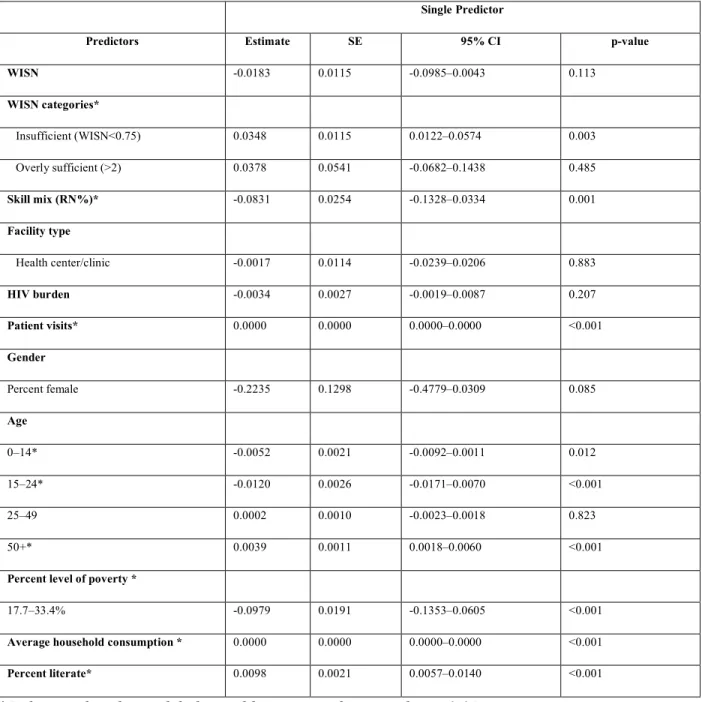
Table 3.6 - Single Predictor Regression Models for Viral Load Documentation Outcome ... 95
Table 3.7 - Single Predictor Models for Regression for Viral Load Suppression ... 97
Table 3.8 - Multiple Predictor Model for Continuous WISN Predictor and Viral Load Documentation... 99
Table 3.9 - Multiple Predictor Model for Categorical WISN Predictor and Viral Load Documentation... 100
Table 3.10 - Two Predictor Models with Independent Variable of Categorical WISN and Viral Load Suppression Outcome ... 102
Table 4.1 - Namibian Districts in Each Area ... 116
Table 4.2 - Sampling Strategy ... 117
Table 4.3 - Codebook aligning research aims with the JD-R ... 122
xiii
Table 4.5 - Work Related Factors that Affected Nurses’ Job Attitudes ... 129
Table 4.6 - Positive Outcomes of Nurses’ Job Attitudes ... 140
Table 4.7 - Negative Outcomes of Nurses’ Job Attitudes ... 141
xiv
LIST OF FIGURES
Figure 1.1 - The Job Demands-Resources Model (Bakker & Demerouti,
2007)... 10
Figure 1.2 - Constructs of Interest ... 12
Figure 1.3 - Definition of Nurse Staffing, Nurse Attitude and Organizational Outcomes ... 15
Figure 2.1 - Scoping Review PRISMA Diagram ... 31
Figure 2.2 - Proposed Relationships among Nurse Staffing, Nurse Attitudes and Organizational Outcomes... 34
Figure 3.1 - The Scatterplot of WISN and VLD ... 98
Figure 3.2 - The Scatterplot of WISN and VLS ... 101
xv
LIST OF ABBREVIATIONS
ART Anti-Retroviral Medications CAF Categorical Allowance Factor CAS Categorical Allowance Standard
CDC Center for Disease Control and Prevention
CHC Community Health Center
COPD Chronic Obstructive Pulmonary Disease
EHP Emergency-Hire Nursing Program
EN Enrolled Nurse
FTE Full Time Equivalent
FY Fiscal Year
HIV Human Immunodeficiency Virus
HPPD Nursing Hours Per Patient Day
IAF Individual Allowance Factor
IAS Individual Allowance Standard ICN International Council of Nurses IRB Institutional Review Board
JD-R Job Demand-Resource Model
LIS Laboratory Information System
LPN Licensed Practical Nurse
MoHSS Ministry of Health and Social Services
xvi
NAD Namibian Dollars
NGO Non-Governmental Organization
NHIES Namibia Household Income and Expenditure Survey NIMART Nurse-Initiated Management of Anti-Retroviral Therapy NP
PCP
Nurse Practitioner Primary Care Provider
PEPFAR President’s Emergency Plan for AIDS Relief PES-NWI Practice Environment Scale of Nursing Work Index
PI Principal Investigator
RN Registered Nurse
UNAIDS United Nations’ Program on HIV/AIDS UNC University of North Carolina at Chapel Hill
USAID United States Agency for International Development UTAP USAID HIV Clinical Services Technical Assistance Project UWES Utrecht Work Engagement Scale
VA Veterans Affairs
VLD Viral Load Documentation
VLS Viral Load Suppression
WHO World Health Organization
1
CHAPTER 1: INTRODUCTION
Nurses are the largest segment of the health workforce, making up almost half, or 20.7 million, of the 43.5 million health workers worldwide (Crisp, Brownie, & Refsum, 2018). Unlike other health-professional groups, nurses uniquely focus on holistic, preventative care and patient-centered care through their education and training, and their services are cost-effective and of high quality (Crisp et al., 2018). With the global emphasis on preventative care, health
promotion, and wellness, investing in the nursing workforce now is critically important (Crisp et al., 2018).
Unfortunately, because of a severe shortage of nurses, many countries around the world cannot provide needed preventive care, health promotion care, and wellness care. One of the biggest concerns associated with a shortage of nurses is the potential impact on nurse-staffing levels across different health care settings. When there is a shortage at a global or national level, health care facilities, nursing units, and wards are often left understaffed, pushing nurses’ workloads higher and making it increasingly difficult for nurses to deliver needed patient care.
2
country’s population, with approximately 12.6% of the population living with HIV in 2018 (Phia Project, 2018). Without proper nurse-staffing levels, patients may not receive the high-quality care that they need from nurses.
When nurses work in conditions of staffing shortages, their attitudes about their jobs, such as perceived stress and job satisfaction, may be negatively affected, and these attitudes adversely affect patient health outcomes (Aiken, Clarke, Sloane, Sochalski, & Silber, 2002). Nurses’ job attitudes, or their beliefs about, feelings toward, or attachment to their jobs (Judge & Kammeyer-Mueller, 2012) may manifest as job satisfaction (Chu & Hsu, 2011), organizational commitment (Chu & Hsu, 2011), job engagement (Freeney & Tiernan, 2009), work motivation (Toode, Routasalo, & Suominen, 2011), or burnout (Van Bogaert et al., 2017). Several
organizational outcomes have been linked to nurses’ job attitudes: higher nurse-perceived quality of patient care (Asiret, Kapucu, Kose, Kurt, & Ersoy, 2017), fewer health care acquired infections and patient falls (Van Bogaert et al., 2017), and fewer medication errors
(Nantsupawat, Nantsupawat, Kunaviktikul, Turale, & Poghosyan, 2016). Therefore, achieving positive patient outcomes is dependent on adequate nurse-staffing levels and on nurses’ positive job attitudes. Nurses need both to perform at a high level in their work.
3
Background and Statement of Problem
Namibia is a country in Sub-Saharan Africa that has a population of almost 2.5 million people. The average per capita income is NAD (Namibian dollars) $9,880, with great economic disparities across individuals and groups. Approximately 12.6% of the Namibian adult
population is living with HIV, with some regions experiencing rates as high as 23.3% (Phia Project, 2018). Namibia is one of nine countries, along with Botswana, Lesotho, Malawi, Mozambique, South Africa, Swaziland, Zambia and Zimbabwe, with an HIV prevalence over 10% (CDC, 2017; UNICEF, 2019). In fact, HIV/AIDS is the leading cause of death in Namibia (CDC, 2017).
Although there is no known cure for HIV, once an individual is infected and
appropriately treated, they can live a full life with HIV. The goal of HIV treatment is, first, to identify whether an individual has tested positive for HIV and then to get the individual on the proper treatment to suppress their HIV viral load.Viral load is a term that indicates the amount of HIV circulating in an individual’s blood (AIDSinfo, 2018). To suppress an individual’s viral load, the individual takes certain prescribed medications, a regimen known as anti-retroviral treatment (ART). This treatment prevents the virus from destroying the immune systems of HIV-positive individuals. Without this treatment, individuals would be unable to overcome even a minor infectious disease, and would most likely die.
4
their viral load. Taking these actions will prolong the quality and longevity of life for those living with HIV and will prevent HIV transmission to new individuals.
Namibia is currently addressing its HIV disease burden by working toward the United Nations’ Program on HIV/AIDS (UNAIDS) international goal of 90-90-90—that is, 90% of HIV-positive Namibians know their HIV status, 90% of Namibians who are diagnosed with HIV are on ART, and 90% of individuals on ART have a suppressed viral load (UNAIDS, 2014). 1 In 2017, it was documented that 90% of Namibians with HIV knew their HIV status (UNAIDS, 2014).
However, only 84% of HIV-positive adults and children received ART, and only 74% of those who received ART had a suppressed viral load (UNAIDS, 2017a). Thus, there is still work needed in Namibia to achieve the UNAIDS goal of 90-90-90, namely improved HIV testing, counseling, and treatment.
To work toward the 90-90-90 goal, patients must be tested and counseled about their HIV status. Then, a plan must be established for all HIV-positive individuals to begin ART medications. Once on medications, the effectiveness of the medications must be determined by testing patients’ viral load. While on ART, Patients must have a viral load documented in their chart at least once every 12 months (PEPFAR, 2017). A viral load is considered suppressed if the virus is below 1000 copies/ml (PEPFAR, 2017).
To implement the steps needed to address the 90-90-90 goal in Namibia, HIV services are needed to treat the high HIV prevalence. Health workers are also needed throughout the HIV treatment to ensure that patients’ care is properly managed and to provide high-quality HIV
5
services to all Namibians. Viral load documentation (VLD) and viral load suppression (VLS) of Namibians living with HIV are key indicators of successful HIV treatment.
Namibian Health Workforce and Health System
Namibia has approximately three health workers (e.g., doctors, nurses, and midwives) per 1000 population, which is higher than the World Health Organization’s (WHO) recommendation of 2.5 health workers per 1000 population (AHO, 2018). The most recent statistics on the
Namibian health workforce suggests that there is approximately 1 physician for every 3,000 Namibians and 1 registered nurse (RN) or midwife for every 700 Namibians total in the public and private health sectors (AHO, 2018). In the public health sector alone, however, fewer than 2 health workers per 1,000 population work in Namibia, which is lower than the WHO’s
recommendation of 2.5 health workers per 1,000 population (AHO, 2018). These statistics highlight Namibia’s shortage of public-sector health workers relative to the WHO’s recommended number of health workers.
6
backgrounds, both types have similar scopes of practice, play very similar roles in HIV services, and have been well-integrated into the Namibian nurse workforce.
Another important element of the Namibian health system is the organization of health facilities in Namibia. Hospitals tend to be located centrally, whereas clinics are located in remote areas and health centers are in geographic areas that are neither central nor remote. HIV services are provided at all facilities. Both physicians and nurses deliver care, but physicians are located only in hospitals, and nurses are generally key staff members for health centers and clinics and are often the only staff in these facilities. District hospitals are usually staffed with a ratio of one doctor to seven nurses, while intermediate hospitals are staffed with one doctor to five nurses. Health centers have ratios of one registered nurse to two enrolled nurses, but clinics have one registered nurse to one enrolled nurse ratios (Titus et al., 2015). These numbers correspond with the number of patients seen at each type of facility, with the most patients being seen at
intermediate hospitals and the least at clinics. However, these numbers also highlight the lack of physicians at health centers and clinics, emphasizing nurses’ important role in delivering HIV services at these facilities. Clinics are often staffed with only one nurse (Titus et al., 2015). This organization of health facilities and staff highlight the importance of the nursing workforce in HIV services in Namibia, as nurses alone provide HIV services in remotely located health centers and clinics.
Interventions to Improve the Namibian HIV Services
7
Development (USAID) awarded IntraHealth a contract to implement the HIV Clinical Services Technical Assistance Project (UTAP). The purposes of UTAP were, first, to strengthen the public health system and NGOs to deliver high-quality, accessible services for HIV prevention, care, and treatment, and, second, to reduce HIV morbidity and the occurrence of new HIV cases (Intrahealth International, 2015). To achieve these project goals, IntraHealth focused on
enhancing health workers’ abilities to deliver high-quality HIV services and on building capacity among local NGOs and public-sector facilities to deliver high-quality integrated HIV services in Namibia (IntraHealth International, 2018).
In collaboration with the Ministry of Health and Social Services (MoHSS), IntraHealth assessed the staffing of key sectors of the Namibian public health workforce—nurses,
physicians, pharmacists, and pharmacy assistants—to identify areas of greatest needs in the Namibian health workforce. IntraHealth conducted a survey tool designed by the WHO, the workload indicator of staffing needs (WISN), to assess the workload capacity of each sector. The results indicated that the supply of nurses was poorly distributed among public hospitals, health centers, and clinics (McQuide et al., 2013). To address this maldistribution and improve the quality of HIV services, IntraHealth, in partnership with the MoHSS, focused on improving staffing levels in Namibian facilities by hiring nurses out of retirement and hiring expatriate nurses (IntraHealth International, 2018).
8
issued prescriptions, nurses were able to manage medications, but they were not able to initiate treatments for patients. Therefore, patients needed to go to centralized hospital locations in order to be prescribed ART medications.
NIMART changed the way that HIV patients were managed. Specifically, nurses were trained both to initiate and to manage patients on ART medications, which allowed patients to receive HIV care and begin ART medications from nurses employed in health centers and clinics located in the more remote areas of Namibia (Intrahealth International, 2015). Prior to
implementing this training, the Health Professional Council of Namibia changed the scope of practice for nurses to allow them to prescribe and manage HIV medications.
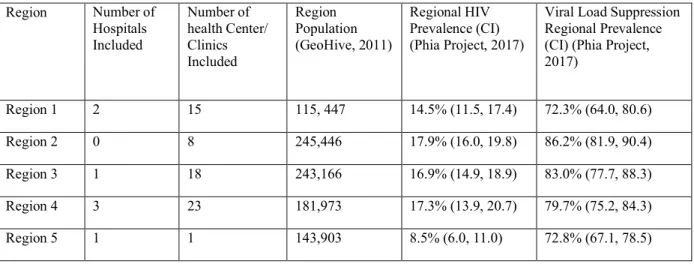
By training nurses through NIMART, Namibia safely shifted some of the workload for delivering HIV care from physicians to nurses. In partnership with the Namibian government, USAID, and other donors, IntraHealth implemented this project in 73 hospitals, health centers, and clinics throughout eight districts with the highest HIV burden in Northern Namibia
(IntraHealth International, 2015; IntraHealth International, 2017). The training began in
September 2015, and NIMART-trained nurses joined facilities over the next two years (Mdala et al., 2018). In subsequent reports, 86% of patients who received HIV care at these public health facilities had a suppressed viral load, a rate similar to that of patients who received their care at district hospitals (Mdala et al., 2018).
9
nurses could prescribe and manage HIV medications autonomously. Both ENs and RNs participated in NIMART training.
Given recent interventions to improve HIV services and HIV outcomes related to the nursing workforce in Namibia, it is especially important to understand the relationship between nurse staffing, nurse attitudes, and outcomes in Namibia, as nurses are a vital part in the fight against HIV in Namibia. Therefore, this dissertation will examine nurse staffing and nurse attitudes to understand how these factors impact HIV outcomes in Namibia.
Theoretical Approach
10
Figure 1.1
The job demands-resources model (Bakker & Demerouti, 2007)
Job demands are various job-related physical, psychological, social, and organizational factors that affect individuals’ abilities to achieve work-related goals (Bakker & Demerouti, 2007). For example, when job demands are high, workers may experience negative effects, such as job strain, and the organization may ultimately experience negative outcomes. Examples of job demands include high workloads, intense time pressures, challenging physical environments, or emotional demands from shift work (Demerouti et al., 2001).
11
demands and job resources essentially reflect the overall job conditions that are shaped by the organization and within which employees work (Bakker & Demerouti, 2017).
Strain is defined as job-related anxiety, exhaustion, or dissatisfaction that arises from an individual’s job. High job demands are postulated to increase worker strain (Bakker &
Demerouti, 2007). In JD-R research from 2014, the construct of strain was redefined and
operationalized as burnout, a state of exhaustion and cynicism toward work (Bakker, Demerouti, & Sanz-Vergel, 2014).
Motivation reflects an employee’s engagement, energy, and satisfaction arising from their work (Bakker & Demerouti, 2007). In recent JD-R development, motivation was redefined and operationalized as worker engagement, or a positive state of vigor, dedication, and absorption about one’s job (Bakker et al., 2014). High job resources were postulated to foster worker engagement. Taken together, worker strain and motivation reflect individuals’ job attitudes. Positive job attitudes are postulated to lead to higher job performance and to increase organizational outcomes (Bakker & Demerouti, 2017).
Organizational outcomes are conceptualized as an organization’s financial or service goals (Bakker, Demerouti, & Verbeke, 2004). As worker engagement increases, organizational outcomes are also proposed to increase. However, as work strain or burnout increases,
organizational outcomes are expected to decrease (Bakker & Demerouti, 2007). In a health care delivery organization, organizational outcomes may be related to patients because patients are the recipients of organizational services.
12
Second, job demands moderate the relationship between job resources and motivation. That is, the relationship between job resources and worker engagement may be weakened (or
strengthened) if job demands are high (or low). Third, job resources moderate the relationship between job demands and work strain or burnout; that is, the relationship between job demands and work strain/burnout is weakened (or strengthened) if job resources are high (or low).
The conceptual approach used in this study was derived from the JD-R, and it focuses on select areas of the model. This dissertation examined the relationships between, first, job
conditions (i.e., job demands and resources) and organizational outcomes (patient HIV
outcomes), second, job conditions and job attitudes (i.e., burnout and engagement), and, last, the relationship between job attitudes and organizational outcomes. Figure 1.2 illustrates the
constructs examined in this dissertation.
Figure 1.2
13
The JD-R has been used to study different types of workers, including nurses, across different job sectors. The original model developed by Demerouti et al., in 2001, was used to examine the job demands and resources of 374 employees in 21 different jobs from different organizations in northern Germany, including teachers, nurses, industry workers, and more. The authors reported that there was a positive relationship between job demands and work
strain/burnout (operationalized as employee exhaustion) and a positive relationship between job resources and motivation (operationalized as job engagement) (Demerouti et al., 2001). Several studies also have reported a positive relationship between high worker motivation and improved business unit performance, customer satisfaction, employee loyalty, profitability, productivity, improved safety, and employee retention (Bakker & Demerouti, 2007; Bakker et al., 2004; Harter, Schmidt, & Hayes, 2002). The JD-R has also been used to examine nurse motivation, defined as nurse engagement, which has been linked to increased patient safety and patient satisfaction (Argentero, Dell’Olivo, & Santa Ferretti, 2008; Halbesleben, Wakefield, Wakefield, & Cooper, 2008). Therefore, this study used the JD-R to examine the nurse staffing and nurse attitudes on HIV-related outcomes in public hospitals, health centers, and clinics in Namibia.
14
For this study nurses’ job attitudes were defined as nurses’ beliefs about, feelings toward, and attachment to their jobs (Judge & Kammeyer-Mueller, 2012). Based on the JD-R, nurse-staffing levels that are adequate and represent a job resource are expected to bring about more positive job attitudes and, in turn, to improve organizational outcomes.
The organizational outcomes of interest in this dissertation are VLD and VLS because they are key indicators of successful HIV treatment. Based on the JD-R, I anticipated that nurse-staffing levels were positively related to nurse attitudes, and, in turn, to viral load documentation and viral load suppression in patients. Figure 1.3 outlines the variables of interest for this
15
Figure 1.3
Definitions of Nurse Staffing, Nurse Attitude, and Organizational Outcomes
Study Purpose, Specific Aims, and Methods
The purpose of this dissertation is to examine nurse job conditions, nurse attitudes, and organizational outcomes in HIV services in Namibia. Using multiple methods, this dissertation combined both quantitative and qualitative approaches to help gain a richer understanding of the role of nurses in achieving high-quality patient outcomes (Creswell, Klassen, Plano Clark, & Smith, 2011).Two methods were used in this dissertation: first, a secondary analysis of existing data gathered in 73 public health facilities in Namibia that participated in the IntraHealth project
Job conditions
• Job-related physical, psychological, social, and organizational factors that affect individuals in achieving work-related goals and, ultimately, organizations in achieving performance outcomes (Bakker &
Demerouti, 2007)
• Specifically, the job condition of nurse staffing is the appropriate
number of suitably educated nurses available for deployment at all times to meet patient care needs and deliver quality care (ICN, 2018)
Nurse attitudes
• One’s beliefs about, feelings toward, and attachment to one’s job (Judge & Kammeyer-Mueller, 2012)
Organizational outcomes
16
to examine the relationship between nurse staffing and, second, HIV-patient outcomes and qualitative interviews of staff from 14 of these facilities to examine nurses’ attitudes about their jobs. Specifically, this dissertation addresses the following questions:
1. What are the relationships among nurse staffing, nurse attitudes, and organizational outcomes in outpatient settings?
2. What is the relationship between nurse staffing and organizational outcomes (specifically VLD and VLS) in a sample of Namibian outpatient health facilities?
3. What are the attitudes of Namibian nurses who work in outpatient settings toward their jobs?
a. What factors contribute to nurses’ attitudes about their jobs?
b. How do nurses’ attitudes about their job contribute to organizational outcomes (specifically viral load documentation and viral load suppression)?
17
Table 1.1
Overview of Research Questions and Methods for Addressing
Question Paper Areas of
Framework addressed
Methods
Question 1 Paper 1 (Chapter 2) Nurse staffing, nurse attitudes, organizational outcomes
Scoping review
Question 1,2 Paper 2 (Chapter 3) Nurse staffing, organizational outcomes
Quantitative secondary analysis using existing nurse staffing and outcomes data from IntraHealth and MoHSS
Question 1,3 Paper 3 (Chapter 4) Nurse attitudes Qualitative directed content analysis of semi-structured interviews with Namibian nurses
Paper 1 (Chapter 2): Nurse Staffing, Nurse Attitudes, and Organizational Outcomes in
Outpatient settings: A Scoping Review
This paper reviews and synthesizes the available literature on nurse staffing, nurse attitudes, and their relationships with organizational outcomes in outpatient settings. A scoping review was chosen for this analysis to provide a broad and comprehensive review of the
literature and to provide a foundation for subsequent chapters. This scoping review follows PRISMA guidelines for scoping reviews (Tricco et al., 2018).
A preliminary search of the literature was conducted, and it was determined that
sufficient literature was available for the review. An expanded literature search was conducted to explore the relationships among nurse staffing, nurses’ job attitudes, and organizational
18
analysis published in a refereed journal or grey literature that examines nurse staffing, nurse attitudes, and/or organizational outcomes, they were included in this review. Two reviewers completed the title, abstract, and full-text screen reviews for all identified studies to determine if they met these criteria. Data were extracted on specific aspects of each study: purpose of study, country of origin, study design, theory/framework, setting and sample, staffing measures, nurse attitude measures, outcome measures, and study findings. Findings were used to understand the relationships among nurse staffing, nurse attitudes, and organizational outcomes in outpatient settings. The findings of this review provided support for other chapters in this dissertation by uncovering how nurse staffing affects organizational outcomes in outpatient settings, how nurse staffing affects nurses’ attitudes, and how nurses’ job attitudes affect their ability to provide care in health care organizations.
Target Journal
The journal Health Policy and Planning is the target journal for this paper. This journal focuses on health policy and systems research, has an international focus, and has published prior workforce studies and papers on similar topics. This paper is particularly well-suited to this journal because the paper is consistent with the journal’s focus. This paper contributes an analysis of published literature in the policy-relevant areas of nurse staffing, nurse attitudes, and outcomes.
Paper 2 (Chapter 3): The Relationship Between Nurse Staffing and HIV Outcomes in
Namibian Outpatient Settings
19
participated in the IntraHealth UTAP project. The independent variable, nurse staffing, was operationalized using the WISN ratio, gathered via the WISN tool, to estimate a staffing ratio of the number of actual to needed nurses (WHO, 2010). The WISN tool is widely used in many low- and middle-income countries to determine how to make staffing decisions at a unit, regional, or national level for a variety of different cadres of health workers (Doosty, Maleki, & Yarmohammadian, 2019). Despite the widespread use of the WISN to make clinical and organizational decisions, there are no reports of its use in research. You might also be able to simplify by writing: “The dependent variables, VLD and VLS of individuals living with HIV who were cared for in the 73 Namibian public health facilities, were measured using HIV indicators recommended in the President’s Emergency Plan for AIDS Relief (PEPFAR) (PEPFAR, 2017). These measures were originally collected by IntraHealth for evaluation purposes. This paper modeled the impact of nurse staffing and other control variables on patient’s VLD and VLS at a facility level to determine the relationship between nurse staffing and organizational outcomes.
Target Journal
20
Chapter 4 (Paper 3): Namibian Nurses’ Attitudes About Their Jobs
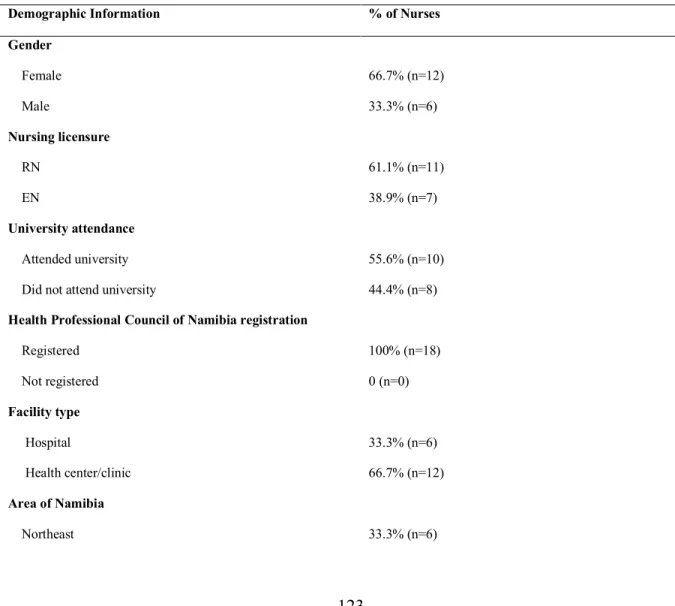
This chapter outlines the qualitative portion of this dissertation by exploring both the job attitudes of Namibian nurses working in outpatient settings about their job and the factors that shape their job attitudes. To achieve this purpose, in-person, qualitative interviews were conducted with 18 nurses working in outpatient 14 public health facilities in Namibia. An interview guide was developed based on past research on nurses’ attitudes about their jobs, and the guide was reviewed by an expert panel. Analysis of interview data was conducted using directed content analysis (Hsieh & Shannon, 2005). Transcripts were coded using Atlas.ti to formulate categories that represent the data. Using the JD-R, I analyzed codes and categories to determine the extent to which they reflected the constructs of job demands, job resources, worker strain, worker motivation, and organizational outcomes. This approach supported the
development of a rich depiction of how Namibian nurses describe their attitudes toward their jobs and related factors.
Target Journal
The target journal for this paper is the International Journal of Nursing Studies. This journal publishs research on health care delivery, organization, workforce, policy, and
21
Chapter 5
Chapter 5 provides a discussion of dissertation findings presented in previous chapters, including major study findings, the interpretation of meaning from study findings, and the significance of these findings for the study aims. In addition, this chapter discusses the
limitations of this dissertation; the ways these findings inform future research, administration, education, and policymaking; and recommendations for moving this research forward in future projects.
Chapter Summary
22
CHAPTER 2: NURSE STAFFING, NURSE ATTITUDES, AND ORGANIZATIONAL OUTCOMES IN OUTPATIENT SETTINGS: A SCOPING REVIEW
Nurses are an integral part of the health workforce and key to achieving global universal health coverage (Crisp et al., 2018). Yet, nurses often work in poor conditions and lack adequate organizational supports, both of which prevent them from delivering high-quality care (Crisp et al., 2018). To overcome these challenges, nurse staffing must be adequate (Ball et al., 2018) and nurses must be engaged in their jobs and have a positive attitude about their jobs (Asiret et al., 2017; Van Bogaert et al., 2017).
The relationships among nurse staffing, nurses’ job attitudes, and a variety of different organizational outcomes have been studied in detail. Although several published literature reviews on the topic have focused almost exclusively on inpatient care, nurse staffing in
outpatient settings has been largely overlooked. Outpatient settings, or care delivered to patients outside of an institutional inpatient bed (WHO, 2009), is a key part of the health care continuum, as it is aimed at preventing disease and promoting wellness. However, a review of the literature on the relationship between nurse staffing or nurses’ job attitudes and patient outcomes in outpatient settings has not been reported.
23
staffing, nurse attitudes, and organizational outcomes in outpatient settings will help inform policies related to global outpatient nursing workforces and will highlight gaps in research specific to the nurse staffing and nurse attitudes.
Background Literature
Nurse staffing is defined as having an appropriate number of nurses available, at appropriate times, with an appropriate educational mix, and with appropriate competencies to meet patient care needs and deliver quality nursing care (ICN, 2018a). This background literature section first reviews various measures of nurse staffing and then briefly discusses previous research on nurse staffing and nurse attitudes.
Measures of Nurse Staffing
There are several ways that nurse staffing has been measured in prior research. A review of 17 nurse staffing research papers revealed 6 primary nurse staffing measures used in prior research: patient to nurse ratios, the number of full time equivalent nurses available, the number of nursing hours per patient day, nursing skill mix (e.g., the proportion of RNs relative to other types of nursing staff), nurses’ perceptions of staffing adequacy, and nurses’ self-reports of the numbers of assigned patients cared for during a shift or some defined period of time (Min & Scott, 2016). Another commonly used nurse staffing measure is the WISN, a tool that the WHO recommends that countries use to make staffing decisions (WHO, 2010); however, a scoping review of the uses of the WISN reveals that this tool has not been used as a measure in research (Doosty et al., 2019). No review was found that reported a scoping literature review on measures of nurse staffing in outpatient settings. This review will examine measures of nurse staffing by focusing on staffing measures in relationship among nurse staffing, nurse attitudes, and
24
Nurse Staffing
Prior research examining the relationships between nurse staffing and patient outcomes in inpatient care reported an inverse relationship between nurse staffing and the following patient outcomes: mortality (Mark, Harless, McCue, & Xu, 2004), ulcers (He, Staggs, Bergquist-Beringer, & Dunton, 2016), cases of hospital acquired pneumonia (Kane, Shamliyan, Mueller, Duval, & Wilt, 2007), rates of respiratory failures (Kane et al., 2007), cardiac arrests (Kane et al., 2007), and prognostic staging for HIV patients (Aiken, Sloane, Lake, Sochalski, & Weber, 1999). These findings indicate a positive relationship between nurse staffing and organizational outcomes for inpatient care, but no reviews report a synthesis of the literature on nurse staffing research in outpatient settings.
Nurse Attitudes
25
Shemueli, Dolan, Suárez Ceretti, & Nuñez del Prado, 2016). Although this work has not been replicated yet in outpatient settings, it nonetheless highlights the importance of nurses’ job attitudes toward organizational outcomes, which most likely impact nurse staffing in outpatient settings.
Summary of Background Literature
Past nurse staffing research has used a variety of measures to study nurse staffing to better explain nurses’ job intentions related to inpatient settings, but this research has ignored outpatient settings. The gap in understanding between nurse staffing, nurse attitudes, and
organizational outcomes in outpatient settings is increasingly relevant to address because it helps identify differences in both nurse staffing and nurse attitudes and differences between outpatient and inpatient settings.
Theoretical Approach
In this scoping review, nurse staffing and nurse attitudes are viewed through the lens of the JD-R. This model hypothesizes that the job conditions of demands (e.g., workload) and resources (e.g., adequate nurse staffing) affect worker attitudes, which, in turn, affect organizational outcomes (Bakker & Demerouti, 2017; Bakker, Hakanen, Demerouti, & Xanthopoulou, 2007; Demerouti et al., 2001).
Job demands are conceptualized as various physical, psychological, social, and
26
resources are physical, psychological, social, and organizational factors that help individuals achieve work-related goals and, ultimately, help organizations achieve performance goals. This scoping review will report the findings of studies demonstrating nurse staffing in outpatient settings in one of two ways, either as a demand (e.g., if staffing is reported to be inadequate or insufficient) or as a resource (e.g., if staffing is reported to be adequate or sufficient).
The JD-R conceptualizes job attitudes as workerburnout (Demerouti et al., 2001), or the state of exhaustion and cynicism toward work (Bakker et al., 2014), and as worker engagement,
or the positive affective state of vigor, dedication, and absorption in one’s job and work (Bakker et al., 2014). This scoping review will report the findings of studies that examine nurses’ job attitudes to include burnout, engagement, and other measures of nurse attitudes in outpatient settings that both appear in the literature and conform with the definition of nurses’ beliefs about, feelings toward, and attachment to their jobs (such as job satisfaction, motivation at work, or frustration at work) (Judge & Kammeyer-Mueller, 2012).
27
Methods
My approach to this scoping review was guided by the PRISMA guidelines for scoping reviews (Tricco et al., 2018). Scoping reviews are a type of literature review that uses
methodological standardization to map broad topics, with the specific aim of mapping the literatures’ volume, nature, and characteristics (Pham et al., 2014). This is an appropriate methodology for topics that have not yet been extensively reviewed, such as nurse staffing and nurse attitudes in outpatient settings (Pham et al., 2014). In keeping with the work of Arskey and O’Malley (2005), Levac et al., (2010), and the PRISMA guidelines (Tricco et al., 2018), this scoping review involved the following five steps: identifying the research question; searching for and identifying relevant studies; selecting studies; charting the data; and collating, summarizing and reporting results. Each of these steps are addressed below (Tricco et al., 2018).
Identifying the Research Question
This study sought to answer the following research question: What are the relationships among nurse staffing, nurse attitudes, and organizational outcomes in outpatient settings? This question was identified based on the JD-R because it highlights the relationship between job conditions, which include nurse staffing, nurse attitudes, and organizational outcomes.
Identifying Relevant Studies
28
PubMed, Ebscohost CINAHL, and Ebscohost Global Health is provided in Appendix A. Reference lists of included studies were searched to find additional relevant articles. No
publication date restrictions were included on the search to ensure a comprehensive inclusion of relevant literature.
This scoping review included both qualitative and quantitative studies published in English. The inclusion criteria for this scoping review focused on prior research conducted on nurse staffing, nurse attitudes, and organizational outcomes research. Studies were specifically excluded if they did not examine nurses or if they do not include either nurse staffing or nurse attitudes as a variable of interest. Staffing studies were included in the review if the purposes of studies were consistent with the purpose of this study and if nurse staffing was defined in a way that is consistent with the ICN’s definition of nurse staffing (ICN, 2018a). In keeping with the purpose of the review, only studies of nurse staffing conducted in outpatient settings were included. All types of nursing personnel were considered in this examination of nurse staff, including nurse practitioners (NPs), registered nurses (RNs), enrolled nurses (ENs), licensed practical nurses (LPNs), and nursing assistants (NAs); definitions for each term are provided in Appendix C.
Nurse attitudes was defined as nurses’ beliefs about, feelings toward, and attachment to one’s job (Judge & Kammeyer-Mueller, 2012). This definition was sufficiently broad to include attitudes such as job burnout, frustration, stress, satisfaction, engagement, and motivation.
29
Selecting Studies
All articles identified during the search were entered into the software Covidence to screen articles with two reviewers. In this step, final decisions about the inclusion or exclusion of results from the above search were made to obtain a final sample. This step involved two stages, each undertaken to determine the fit between the purpose of this review and the studies obtained from the literature search. The title and abstract of each article were reviewed first; then, for each remaining article, a full text article screen was undertaken. At both stages, two reviewers read all articles to determine if the article should be included in the review. Two reviewers were used to decrease potential bias in literature selection and review (Tricco et al., 2018). A PRISMA flow diagram (Figure 2.1) was created to describe the search results, including the articles excluded at each step in the process and the final sample of articles (Tricco et al., 2018). Studies were
categorized into the three areas of interest to assess the potential magnitude and scope of available research (Grant & Booth, 2009).
30
a peer-reviewed scholarly paper, or the article was not set in an outpatient settings setting. This process yielded a final sample of 39 studies.
31
Figure 2.1
Scoping Review PRISMA Diagram
Charting the Data
During the review, two documents were prepared to record the data gathered: a data extraction template for the review of each study and a data extraction matrix that compiled important information across all the studies reviewed. First, each study was extracted into a data extraction template, as shown in Appendix D. The extraction template included specific aspects of the JD-R relevant to this study, including the job resource or demand of nurse staffing, nurse attitudes, and organizational outcomes identified in the literature. To address quality of the
Records identified through database searching
(n = 1982)
Additional records identified through other sources
(n =0)
Duplicates Removed (n =376)
Records screened
(n =1606) Records excluded (n =1431)
Full-text articles assessed for eligibility
(n =175)
Full-text articles excluded, with reasons
(n =136): Cannot Isolate Nursing
Personnel (n=15) No Staffing or Attitude
Measure (n=11) No Outcome Measure (n=62)
Not in English (n=11) Not Eligible Grey Literature
(n=15) Wrong Setting (n=22) Sample for final
32
included studies, information on the purpose of study, study design, setting, sample, and
measures were extracted. The extraction of data from individual studies allowed for a review of each study by key area of the JDR. The extraction templates focused on the research question of this scoping review and on the information needed to assess the quality of each article reviewed.
Second, information from the data extraction template for each study was compiled and transferred to a data extraction matrix, which allowed for cross-study comparisons of articles, as shown in Appendix E. The matrix was developed to focus on key variables of interest: nurse staffing, nurse attitudes, and organizational outcomes. This matrix facilitated the categorization of important research methods that reflect study findings and quality, including the purpose of study, study design, and sample size and characteristics.
Collating, Summarizing, and Reporting Results
This final step was divided into 3 sub-steps that were necessary to complete the review: reporting the initial results of the review, evaluating the results relative to the research question, and presenting the greater meaning of the results (Levac, Colquhoun, & O'Brien, 2010). The first step, reporting the initial results, was completed by collating and presenting demographic data on all studies through a numerical summary. This sub-step documented study design theory, setting, sample, and the countries of origin for each study (Levac et al., 2010). This sub-step also helped identify the specific measures of nurse staffing, nurse attitudes, and organizational outcomes for each study, and to identify the specific research methods that were used.
33
Lastly,future research, practice, and policy implications were evaluated for all studies (Levac et al., 2010). This step involved connecting the results of this review that focused on outpatient settings to previous published research.
Results
34
Figure 2.2
Proposed Relationships among Nurse Staffing, Nurse Attitudes and Organizational Outcomes
Overview of Key Findings
An overview of included articles can be found in table 2.1. The origin for each of the 39 studies included the following: 24 studies conducted in the United States, three studies
conducted in the United Kingdom and three in Australia; two studies conducted in Canada and two in South Africa, four conducted in other countries (i.e., in Indonesia, Kenya, Netherlands and Spain), and one study conducted in several countries. Only three studies cited theories that were used to guide the work. These theories were organizational theory, self-determination theory, and Donabedian’s structure-process-outcome framework. The sample of interest in most studies was RNs (n=30), followed by NPs (n=10), LPNs (n=5), practice nurse (n=3), nurse managers (n=1), and district (i.e., community) nurses (n=1).
35
nurses, and other health care providers), and in others the unit of analysis was the health care facility. For the quantitative studies, sample sizes ranged from 63 to 88,682 individuals and from 53 to 2,518 health care facilities. For the qualitative studies, sample sizes ranged from 8 to 101 subjects. For the quantitative studies, types of designs included cross-sectional survey design (n=17), cross-sectional observation design (n=6), case studies (n=2), quasi-experimental (n=2), simulation model (n=2), and quasi-experimental study (n=1). The qualitative studies were either qualitative descriptive (n=6) or qualitative comparative (n=1) designs. Lastly, there were two mixed methods studies (n=2).
36
Table 2.1
Included Articles’ Purpose, Theories, Country of Origins, Designs, Settings/Sample, and Measures
Citation Purpose Theory
Country
of Origin Design Setting/Sample Nurse Type
Model Construct
Nurse Staffing Measure (if applicable)
1
Aita et al., 2001
The aim was to describe patient care staff patterns and roles in community-based
family practices Not Cited USA
Qualitative comparative
18 community-based family
practices RN, LPN Staffing FTEs
2
Ammi et al., 2017
Examine the association between different dimensions of nurses’ activity and patients’ experience with
primary care Not Cited Canada
Cross-sectional survey
7,061 patients in primary care facilities across
10 provinces RN, NP Staffing FTEs
3
Barber et al., 2007
To describe the changes in the number of physicians, nurses, and midwives per region and their effects on prenatal,
child, and adult care Not Cited Indonesia Cross-sectional survey
7,000 households in half of the 26 provinces and 992 public
facilities RN Staffing
Nurse staffing in public facilities
4 Basu et al., 2015a
To create a simulation model to understand how practice utilization, revenues, and expenses may change in the context of workforce and
financing changes Not Cited USA Simulation model 2,518 primary care practices NP Staffing Types of health workers staffed
5
Basu et al., 2015b
To estimate financial implications of chronic care management payment for
primary care practices. Not Cited USA
Simulation model 31,229 patients from the national ambulatory medical care survey; 2500 practices across
the country RN Staffing
Types of health workers staffed
6
Chuang et al., 2017
To examine barriers in providing primary care adaptations to better understand women veterans
needs Not Cited USA
Qualitative descriptive
73 primary care providers and staff RN
Staffing,
37
Citation Purpose Theory
Country
of Origin Design Setting/Sample Nurse Type
Model Construct
Nurse Staffing Measure (if applicable)
7
Celentano, 1978
The aim was to compare Health Associates and NPs in their job satisfaction, workload, and various
outcomes at work Not Cited USA
Cross-sectional survey
143 recent NP
graduates NP Attitude N/A
8 Delobelle et al., 2011
Aims to explain the relationship between demographic variables, job satisfaction, and turnover intent among primary care
nurses Not Cited South Africa
Cross-sectional survey
175 nurses in 20 fixed and 6 mobile PC
clinics RN Attitude N/A
9
Dunbar et al., 2019
The aim is to identify how remote-area nurse staffing issues are perceived by clinic managers, nurses, and
community members. Not Cited Australia
Qualitative descriptive
5 Managers, 29 Remote Area Nurses, 12
Aboriginal staff RN Staffing Perceived staffing adequacy
10
Edwards et al., 2018
To understand which delegation of tasks occurs in teams and the factors associated with greater delegation and delegation’s
association with burnout Not Cited USA
Cross-sectional survey 777 VA primary care providers-nurse dyads RN
Staffing,
attitude Perceived staffing adequacy
11
Friese & Himes-Ferris, 2013
Investigate job satisfaction and intent to stay for ambulatory oncology nurses (RNs & LPNs)
Donabedi an Structure Process Outcomes Framewor
k USA
Cross-sectional survey
402 oncology nurses employed in the ambulatory
setting RN
Staffing,
attitude Perceived staffing adequacy
12
Friese et al., 2012
To identify the relationship between the organizational structures and processes of care in ambulatory oncology settings associated with increased risk of unintentional
chemotherapy Not Cited USA
Cross-sectional survey 242 oncology nurses working outside the hospital
38
Citation Purpose Theory
Country
of Origin Design Setting/Sample Nurse Type
Model Construct
Nurse Staffing Measure (if applicable)
13
Friese et al., 2016
To identify factors associated with job satisfaction and turnover through measures that reflect the ambulatory setting for nurses and NPs working in a national cancer
institute Not Cited USA
Cross-sectional survey
319 nurses and NPs in an ambulatory setting of a national cancer institute RN
Staffing,
attitude Perceived staffing adequacy
14
Gardner & Walton, 2011
To explore nurse satisfaction and dissatisfaction with the work environment in outpatient hemodialysis
facilities Not Cited USA
Qualitative descriptive and cross-sectional survey 101 nurse participants from 35 focus groups in outpatient hemodialysis units RN
Staffing,
attitude Perceived staffing adequacy
15
Graveley & Littlefield, 1992
Compare cost effectiveness analysis of three low-risk prenatal clinic staffing models: physician based, mixed staffing (physician, NP, RN, and NA), and nurse
based Not Cited USA
Cross-sectional survey
156 subjects, all women who attended the
clinics NP Staffing
Types of health workers staffed
16 Griffiths et al., 2011
To determine relationships between QOC and nurse staffing in general practice and determine if that relationship is enhanced by
other organizational factors Not Cited United Kingdom
Cross-sectional
survey 8,409 general practices RN, Practice Nurse Staffing FTEs
17
Griffiths et al., 2010
The aim of this study was to examine whether practice nurse staffing level is similarly associated with non-elective hospital admissions in three clinical areas: asthma, chronic obstructive
pulmonary disease (COPD),
and diabetes. Not Cited
United Kingdom Cross-sectional survey 7,456 primary
care practices Practice Nurse Staffing FTEs
18 Gruber et al., 2008
To understand how to safely increase the number of chemotherapy patients seen in
a clinic in a day Not Cited USA
Pre/post-test intervention (QI project)
967 patients at an outpatient chemotherapy
unit RN Staffing Nurse vacancies
19
Huang et al., 2017
To develop a staffing model
that can safely see more Not Cited USA
Pre/post-test intervention
19 chair
39
Citation Purpose Theory
Country
of Origin Design Setting/Sample Nurse Type
Model Construct
Nurse Staffing Measure (if applicable)
patients in an outpatient
chemotherapy clinic chemotherapy infusion centers
20
Ireland et al., 2004
The purpose of this study was to determine which aspects of care staff RNs were responsible for in ambulatory
settings Not Cited
USA & Canada Cross-sectional survey 3705 ambulatory oncology
nursing RN Staffing Nurse vacancies
21
Jackson et al., 2011
Examine potential associations between inclusion of mid-level providers in United States Veterans Affairs (VA) primary care programs and
diabetes control. Not Cited USA
Cross-sectional observational
88,682 patients at 198 clinics in the VA primary
care systems NP Staffing
Proportion of nurses to total Staff; 22 Lamkin et al., 2001; Lamkin et al., 2002
To explore how RNs perceive nurse staffing levels in oncology nursing and how they cope with staffing
shortfalls Not Cited USA
Cross-sectional survey
185 outpatient RNs; 342 nurse executives in outpatient oncology
settings RN Staffing
perceived staffing adequacy; agency nurse use; float nurse use
23
Lelli et al., 2015
To examine if differences exist in the levels of autonomy and job satisfaction among primary care NPs employed in retail clinics versus traditional primary
care settings. Not Cited USA
Cross-sectional survey
310 primary
care NPs NP Attitude
N/A
24
Levine et al., 2017
To examine if staffing in primary care-mental health of the VA health systems is related to quality of
depressive care Not Cited USA
Cross-sectional observational /survey Psychologists, social workers, nurses, and psychiatric medication prescribers from 349 primary care
sites RN Staffing FTEs
25
Lukewich et al., 2016
The purpose of this study was to examine the relation between primary care delivery models that
incorporate RNs and clinical Not Cited Canada
Cross-sectional survey
15 primary care practices; patient sample was from adult diabetes
patients RN Staffing
40
Citation Purpose Theory
Country
of Origin Design Setting/Sample Nurse Type
Model Construct
Nurse Staffing Measure (if applicable)
outcomes of patients with type 2 diabetes.
26
March et al., 2017
Spanish primary health care teams need to perform community activities as part of their jobs (i.e., walking groups, neighborhood meetings, school-based health programs). This study aims to identify factors related to participation in these
activities Not Cited Spain Case studies
304 health care teams in primary care in
Spain RN Staffing
proportion of nurses to total staff
27
Matthews, 2005
To determine adequate nursing personnel staffing to minimize costs while still performing all tasks and
duties Not Cited USA
Cross-sectional observational Internal Medicine Outpatient Clinic to use as
a model RN, LPN Staffing
Types of health workers staffed
28
Munyewend e et al., 2014
The objective of the study was to determine the overall job satisfaction of primary care clinic nursing managers and the predictors of their job satisfaction in two South
African provinces. Not Cited South Africa Cross-sectional survey; qualitative descriptive 108 nurse managers at primary health care services. Nurse Managers Staffing,
attitude Perceived staffing adequacy
29
Norful et al., 2018
To understand Primary care provider (PCP) perspectives in primary care and understand how increased RN
staffing impacts primary care Not Cited USA
Qualitative descriptive
26 PCPs (12 physicians, 14 NPs) at primary
care practices RN Staffing Perceived staffing adequacy
30 Perry et al., 2018
To explore antecedents and outcomes of nurse self-reported job satisfaction- and dissatisfaction-based turnover cognitions
Self Determina tion
Theory USA
Cross-sectional survey
2596 nurses (RNs & LPNs) at 110 army treatment facilities (hospitals &
41
Citation Purpose Theory
Country
of Origin Design Setting/Sample Nurse Type
Model Construct
Nurse Staffing Measure (if applicable)
31
Pietruszewsk i et al., 2014
To understand associations between staffing for a depression collaborative care program and enrollment and
remission rates Not Cited USA
Cross-sectional observational
63 primary care clinics, project leaders at 12
medical groups RN, LPN Staffing
Types of health workers staffed
32
Pittman et al., 2016
This study explores perceptions of CEOs of community health centers (CHCs) that have a variety of
staff configurations. Not Cited USA
Qualitative descriptive
19 CEOs of community
health centers NP, RN, LPN Staffing
Types of health workers staffed
33
Plant & Coombes, 2003
The research aim was to discover which factors were considered relevant by practice and community nurses in the locality when they decided to take sick
leave. Not Cited
United Kingdom
Qualitative descriptive
8 primary care-based nursing staff practice nurses, district nurses, health visitors, and nurse managers RN, Practice Nurse, District
Nurse Attitude N/A
34
Poghosyan et al., 2017
To examine NP practice environment in primary care organizations' association with NP retention measures
Generally Organizati onal
Theorists USA
Cross-sectional survey
63 NPs at PC
organizations NP Attitude N/A
35
Russell et al., 2017
To explore turnover and retention metrics in remote
Australian communities Not Cited Australia Cross-sectional observational
53 remote
located clinics RN Staffing FTEs
36
Thompson et al., 1982
To evaluate the effectiveness of the NP program at Clinic A compared to the effectiveness of the traditional program at
Clinic B Not Cited USA Case studies
735 general or pelvic examinations performed at Clinic A and 685 performed at Clinic B from January to
March, 197 NP Staffing
42
Citation Purpose Theory
Country
of Origin Design Setting/Sample Nurse Type
Model Construct
Nurse Staffing Measure (if applicable)
37
van der Biezen et al., 2016
To provide insight into the impact of substituting general practitioners with NPs in out-of-hours services on (1) the number of patients and (2) general practitioners’ caseload (patient characteristics, urgency levels, types of complaints).
Background. Not Cited
Netherlan ds Quasi-experimental study 12,092 patient data from medical records in primary care general practitioner’s
cooperative NP Staffing
Types of health workers staffed
38
Vindigni et al., 2014
To assess the feasibility of utilizing a small-scale, low-cost, pilot evaluation in assessing the short-term impact of Kenya’s emergency-hire nursing program (EHP) on the delivery of health services (outpatient visits and maternal-child health indicators) in two underserved health districts with high HIV/AIDS
prevalence. Not Cited Kenya
Qualitative descriptive One key informant interview was also conducted with a convenience sample of medical, nursing, and clinical officer managers at each site (n =
13) RN
Staffing, attitude
Nurse staffing in public facilities
39
Zhao et al., 2019
To compare the costs of turnover among nurses and to compare the costs of
agency-employed nurses Not Cited Australia Cross-sectional observational 99 Departments of Health remote-health