D i s i n f e c t i o n a n d
S t e r i l i z a t i o n i n H e a l t h C a re
F a c i l i t i e s :
An Overview and Current Issues
William A. Rutala,PhD, MPHa,b,*, David J. Weber, MD, MPHa,b
INTRODUCTION
In the United States in 2010 there were approximately 51.4 million inpatient surgical procedures and an even larger number of invasive medical procedures.1In 2009, there were more than 6.9 million gastrointestinal (GI) upper, 11.5 million GI lower, and 228,000 biliary endoscopies performed.2Each of these procedures involves contact by a medical device or surgical instrument with patients’ sterile tissue or mucous membranes. A major risk of all such procedures is the introduction of pathogenic
Potential Conflicts of Interest: Dr W.A. Rutala is a consultant for Clorox and has received hon-oraria from 3M. Dr D.J. Weber is a consultant for Clorox and Germitec.
aHospital Epidemiology, University of North Carolina Health Care System, Chapel Hill, NC 27514, USA;bDivision of Infectious Diseases, University of North Carolina School of Medicine, Chapel Hill, NC 27599-7030, USA
* Corresponding author. Hospital Epidemiology, UNC Hospitals, Room 1001, West Wing, Mann-ing Drive, Chapel Hill, NC 27599-7030.
E-mail address:[email protected] KEYWORDS
DisinfectionSterilizationHealth care facilities
KEY POINTS
All invasive procedures involve contact by a medical device or surgical instrument with pa-tients’ sterile tissue or mucous membrane.
The level of disinfection or sterilization depends on the intended use of the object: critical (items that contact sterile tissue, such as surgical instrument), semicritical (items that con-tact mucous membranes, such as endoscopes), and noncritical (items that concon-tact only intact skin, such as stethoscopes) require sterilization, high-level disinfection, or low-level disinfection, respectively.
Cleaning must precede high-level disinfection and sterilization.
Failure to properly disinfect devices used in health care (eg, endoscopes) has led to many outbreaks.
Health care providers should be familiar with current issues, such as the role of the envi-ronment in disease transmission, reprocessing semicritical items (eg, endoscopes), and new technologies (eg, hydrogen peroxide mist).
microbes,whichcanleadtoinfection.Failuretoproperlydisinfectorsterilize equip-mentmay leadtotransmissionviacontaminatedmedical andsurgicaldevices(eg, carbapenem-resistantEnterobacteriaceae[CRE]).3,4
Achievingdisinfectionandsterilizationthroughtheuseofdisinfectantsand steriliza-tionpracticesisessentialforensuringthatmedicalandsurgicalinstrumentsdonot transmitinfectiouspathogenstopatients.Becauseitisnotnecessarytosterilizeall patient-careitems,healthcarepoliciesmustidentifywhethercleaning,disinfection, orsterilizationisindicatedbasedprimarilyoneachitem’sintendeduse,manufacturers recommendations,andguidelines.
Multiplestudiesinmanycountrieshavedocumentedlackofcompliancewith estab-lishedguidelinesfordisinfectionandsterilization.5Failuretocomplywithscientifically basedguidelineshasledtonumerousoutbreaksandpatientexposures.6–8Because of noncompliance with recommended reprocessing procedures, the Centers for DiseaseControlandPrevention(CDC)andtheFoodandDrugAdministration(FDA) issuedahealthadvisoryalertinghealthcareprovidersandfacilitiesaboutthepublic healthneedtoproperlymaintain,clean,anddisinfectandsterilizereusablemedical devicesinSeptember2015.9Inthisarticle,whichisanupdatedandmodifiedversion ofearlierarticles,10–14apragmaticapproachtothejudiciousselectionandproperuse of disinfection and sterilization processes is presented, based on well-designed studies assessing the efficacy(via laboratoryinvestigations) andeffectiveness (via clinicalstudies)ofdisinfectionandsterilizationprocedures.
ARATIONALAPPROACHTODISINFECTIONANDSTERILIZATION
Almost50yearsago,EarleH.Spaulding15devisedarationalapproachtodisinfection andsterilizationofpatient-careitemsorequipment.Thisclassificationschemeisso clearandlogicalthatithasbeenretained,refined,andsuccessfullyusedbyinfection controlprofessionalsandotherswhenplanningmethodsfordisinfectionor steriliza-tion.10–14 Spaulding thought that the nature of disinfection could be understood morereadilyifinstrumentsanditemsforpatientcareweredividedinto3categories basedonthedegreeofriskofinfectioninvolvedintheuseoftheitems.The3 cate-gories he describedwere critical, semicritical, and noncritical.This terminology is usedbytheCDC’s“GuidelinesforEnvironmentalInfectionControlinHealthcare Fa-cilities”16andtheCDC’s“GuidelineforDisinfectionandSterilizationinHealthcare Fa-cilities.”13 These categories and the methods to achieve sterilization, high-level disinfection, and low-level disinfection are summarized in Table 1. Although the schemeremainsvalid,therearesomeexamplesofdisinfectionstudieswithprions, vi-ruses,mycobacteria,andprotozoathatchallengethecurrentdefinitionsand expec-tationsofhigh-leveldisinfection(HLD)andlow-leveldisinfection.22
Table 1
Methods for disinfection and sterilization of patient-care items and environmental surfaces
Process Level of Microbial Inactivation Method Examples (with Processing Times) Health Care Application (Examples)
Sterilizationa Destroys all microorganisms,
including bacterial spores
High temperature Steam (w40 min), dry heat (1–6 h
depending on temperature)
Heat-tolerant critical (surgical instruments) and semicritical patient-care items
Low temperature Ethylene oxide gas (w15 h), HP gas
plasma (28–52 min), HP and ozone (46 min), HP vapor (55 min)
Heat-sensitive critical and semicritical patient-care items
Liquid immersion Chemical sterilantsb: >2% glut
(w10 h); 1.12% glut with 1.93%
phenol (12 h); 7.35% HP with 0.23% PA (3 h); 8.3% HP with 7.0% PA (5 h); 7.5% HP (6 h); 1.0% HP with
0.08% PA (8 h);0.2% PA (12 min at
50C–56C)
Heat-sensitive critical and semicritical patient-care items that can be immersed
HLD Destroys all microorganisms
except some bacterial spores
Heat automated Pasteurization (65C–77C, 30 min) Heat-sensitive semicritical items (eg,
respiratory therapy equipment)
Liquid immersion Chemical sterilants/HLDsb: >2% glut
(20–90 min at 20C–25C); >2% glut
(5 min at 35.0C–37.8C); 0.55%
OPA (12 min at 20C); 1.12% glut
with 1.93% phenol (20 min at 25C);
7.35% HP with 0.23% PA (15 min at
20C); 7.5% HP (30 min at 20C);
1.0% HP with 0.08% PA (25 min); 400–450 ppm chlorine (10 min at
20C); 2.0% HP (8 min at 20C); 3.4%
glut with 26% isopropanol (10 min
at 20C)
Heat-sensitive semicritical items (eg, GI endoscopes, bronchoscopes, endocavitary probes)
Table 1
(continued)
Process Level of Microbial Inactivation Method Examples (with Processing Times) Health Care Application (Examples)
Low-level disinfection
Destroys vegetative bacteria and some fungi and viruses but not mycobacteria or spores
Liquid contact EPA-registered hospital disinfectant
with no tuberculocidal claim (eg, chlorine-based products, phenolics, improved HP, HP plus PA,
quaternary ammonium compounds, exposure times at least 1 min) or 70%–90% alcohol
Noncritical patient care item (blood pressure cuff) or surface (bedside table) with no visible blood
Abbreviations:EPA, Environmental Protection Agency; glut, glutaraldehyde; HLD, high-level disinfection; HP, hydrogen peroxide; OPA, ortho-phthalaldehyde; PA, peracetic acid; ppm, parts per million.
aPrions (such as Creutzfeldt-Jakob disease) exhibit an unusual resistance to conventional chemical and physical decontamination methods and are not readily
inactivated by conventional sterilization procedures.17
bConsult the FDA-cleared package insert for information about the cleared contact time and temperature, and see reference18for discussion why greater than
2% glutaraldehyde products are used at a reduced exposure time (2% glutaraldehyde at 20 minutes, 20C). Increasing the temperature using an automated
endo-scope reprocesser (AER) will reduce the contact time (eg, ortho-phthalaldehyde 12 minutes at 20C but 5 minutes at 25C in AER). Exposure temperatures for some
of the aforementioned high-level disinfectants varies from 20C to 25C; check FDA-cleared temperature conditions.19Tubing must be completely filled for
high-level disinfection and liquid chemical sterilization. Material compatibility should be investigated when appropriate (eg, hydrogen peroxide [HP] and HP with per-acetic acid will cause functional damage to endoscopes). Intermediate-level disinfectants destroy vegetative bacteria, mycobacteria, most viruses, and most fungi
but not spores and may include chlorine-based products, phenolics, and improved HP. Intermediate-level disinfectants are not included inTable 1as there as there
is no device or surface for which intermediate-level disinfection is specifically recommended over low-level disinfection.
recommendations requires sterilization technology that achieves a sterility assurance level of 10 6of complex medical instruments, such as duodenoscopes. Ideally, this
shift would eventually involve not only endoscopes that secondarily enter normally sterile tissue (eg, duodenoscopes, bronchoscopes) but also other semicritical devices (eg, GI endoscopes).24,25
Critical Items
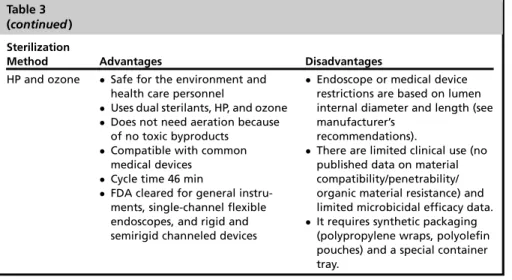
Critical items are so called because of the high risk of infection if such an item is contaminated with any microorganism, including bacterial spores. Thus, it is critical that objects that enter sterile tissue or the vascular system be sterile because any mi-crobial contamination could result in disease transmission. This category includes sur-gical instruments, cardiac and urinary catheters, and implants used in sterile body cavities. The items in this category should be purchased as sterile or be sterilized by steam sterilization if possible. If heat sensitive, the object may be treated with ethylene oxide (ETO), hydrogen peroxide (HP) gas plasma, vaporized HP, HP vapor (HPV) plus ozone, or by liquid chemical sterilants if other methods are unsuitable. Table 1andTables 2and3list sterilization processes and liquid chemical sterilants and the advantages and disadvantages of each. With the exception of 0.2% peracetic acid (12 minutes at 50C–56C), the indicated exposure times for liquid chemical ster-ilants range from 3 to 12 hours.19Liquid chemical sterilants can be relied on to pro-duce sterility only if cleaning, which eliminates organic and inorganic material, precedes treatment and if proper guidelines as to concentration, contact time, tem-perature, and pH are met. Another limitation to sterilization of devices with liquid chemical sterilants is that the devices cannot be wrapped during processing in a liquid chemical sterilant; thus, it is impossible to maintain sterility following processing and during storage. Furthermore, devices may require rinsing following exposure to the liquid chemical sterilant with water that, in general, is not sterile. Therefore, because of the inherent limitations of using liquid chemical sterilants in a nonautomated (or automated) reprocessor, their use should be restricted to reprocessing critical devices that are heat sensitive and incompatible with other sterilization methods.
In contrast to semicritical items that have been associated with greater than 100 outbreaks of infection,6critical items have rarely,26if ever, been associated with dis-ease transmission. For example, any deviation from proper reprocessing (such as crevices associated with the elevator channel) of an endoscope could lead to failure to eliminate contamination with a possibility of subsequent patient-to-patient trans-mission due to a low or nonexistent margin of safety. This low (or nonexistent) margin of safety associated with endoscope reprocessing compares with the 17-log10margin
of safety associated with cleaning and sterilization of surgical instruments (ie, 12-log10
reduction via sterilization and at least a net 5-log10reduction based on the microbial
load on surgical instruments [2-logs]27and microbial reduction via a washer disinfec-tor [7-logs]).18
Semicritical Items
Table 2
Summary of advantages and disadvantages of chemical agents used as chemical sterilantsaor as high-level disinfectants
Sterilization
Method Advantages Disadvantages
Peracetic acid/HP
No activation required
Odor or irritation not significant
Material compatibility concerns (lead, brass, copper, zinc) both
cosmetic and functional
Limited clinical experience
Potential for eye and skin damage
Glutaraldehyde Numerous use studies published
Relatively inexpensive
Excellent material compatibility
Respiratory irritation from glutaraldehyde vapor
Pungent and irritating odor
Relatively slow mycobactericidal activity (unless other disinfectants
added such as phenolic, alcohol)
Coagulates blood and fixes tissue to surfaces
Allergic contact dermatitis
HP No activation required
May enhance removal of organic matter and organisms
No disposal issues
No odor or irritation issues
Does not coagulate blood or fix tissues to surfaces
InactivatesCryptosporidium
Use studies published
Material compatibility concerns (brass, zinc, copper, and
nickel/sil-ver plating) both cosmetic and functional
Serious eye damage with contact
OPA Fast-acting high-level disinfectant
No activation required
Odor not significant
Excellent materials compatibility claimed
Does not coagulate blood or fix tissues to surfaces claimed
Stains protein gray (eg, skin, mucous membranes, clothing, and
environmental surfaces)
Limited clinical experience
More expensive than glutaraldehyde
Eye irritation with contact
Slow sporicidal activity
Anaphylactic reactions to OPA in patients with bladder cancer with
Peracetic acid Standardized cycle (eg, Liquid Chemical Sterilant Processing System using Peracetic Acid, rinsed with extensively treated potable water)
Low temperature (50C–55C) liquid immersion sterilization
Environmental friendly byproducts (acetic acid, O2, H20)
Fully automated
Single-use system eliminates need for concentration testing
May enhance removal of organic material and endotoxin
No adverse health effects to operators under normal operating
conditions
Compatible with many materials and instruments
Does not coagulate blood or fix tissues to surfaces
Sterilant flows through scope facilitating salt, protein, and microbe
removal
Rapidly sporicidal
Provides procedure standardization (constant dilution, perfusion of
channel, temperatures, exposure)
Potential material incompatibility (eg, aluminum anodized coating
becomes dull)
Used for immersible instruments only
Biological indicator may not be suitable for routine monitoring
One scope or a small number of instruments can be processed in a
cycle
More expensive (endoscope repairs, operating costs, purchase
costs) than high-level disinfection
Serious eye and skin damage (concentrated solution) with contact
Point-of-use system, no sterile storage
An AER using 0.2% peracetic acid not FDA cleared as sterilization
process but HLD
Improved HP (2.0%); HLD
No activation required
No odor
Nonstaining
No special venting requirements
Manual or automated applications
12-mo shelf-life, 14-d reuse
8 min at 20C HLD claim
Material compatibility concerns due to limited clinical experience
Antimicrobial claims not independently verified
Organic material resistance concerns due to limited data
Abbreviations:AER, automated endoscope reprocessor; OPA, ortho-phthalaldehyde.
aAll products effective in presence of organic soil, relatively easy to use, and have a broad spectrum of antimicrobial activity (bacteria, fungi, viruses, bacterial
spores, and mycobacteria). The aforementioned characteristics are documented in the literature; contact the manufacturer of the instrument and sterilant for additional information. All products listed are cleared by the FDA as chemical sterilants except ortho-phthalaldehyde, which is an FDA-cleared HLD.
Table 3
Summary of advantages and disadvantages of commonly used sterilization technologies
Sterilization
Method Advantages Disadvantages
Steam Nontoxic to patients, staff, environment
Cycle easy to control and monitor Rapidly microbicidal
Least affected by organic/inor-ganic soils among sterilization processes listed
Rapid cycle time
Penetrates medical packaging, device lumens
It is deleterious for heat-sensitive instruments.
Microsurgical instruments are damaged by repeated exposure. It may leave instruments wet,
causing them to rust. There is potential for burns.
HP gas plasma Safe for the environment and health care personnel Leaves no toxic residuals Cycle time28 min, and no
aera-tion necessary
Used for heat- and moisture-sensitive items because process temperature <50C
Simple to operate, install (208-V outlet), and monitor
Compatible with most medical devices
Only requires electrical outlet
Cellulose (paper), linens, and liquids cannot be processed. Endoscope or medical device
restrictions are based on lumen internal diameter and length (see manufacturer’s
recommendations).
It requires synthetic packaging (polypropylene wraps, polyolefin pouches) and a special container tray.
HP may be toxic at levels >1 ppm TWA.
100% ETO Penetrates packaging materials, device lumens
Potential for gas leak and ETO exposure minimized by single-dose cartridge and negative-pressure chamber
Simple to operate and monitor Compatible with most medical
materials
It requires aeration time to remove ETO residue.
ETO is toxic, a carcinogen, and flammable.
ETO emission is regulated by states, but catalytic cell removes 99.9% of ETO and converts it to carbon dioxide and water. ETO cartridges should be stored in
flammable liquid storage cabinet. It has a lengthy cycle/aeration
time. Vaporized HP Safe for the environment and
health care personnel
Leaves no toxic residue; no aera-tion necessary
Cycle time 55 min
Used for heat- and moisture-sensitive items (metal and nonmetal devices)
Medical device restrictions are based on lumen internal diameter and length; see manufacturer’s recommendations (eg, stainless steel lumen 1 mm diameter, 125 mm length).
It is not used for liquid, linens, powders, or any cellulose materials.
Requires synthetic packaging (polypropylene).
There are limited materials compatibility data.
There are limited clinical use and comparative microbicidal efficacy data.
common bacterial spores but susceptible to other organisms, such as bacteria, myco-bacteria, and viruses. Semicritical items minimally require HLD using chemical disin-fectants. Glutaraldehyde, HP, ortho-phthalaldehyde (OPA), peracetic acid with HP, and chlorine (via electrochemical activation) are cleared by the FDA19and are depend-able high-level disinfectants provided the factors influencing germicidal procedures are met (see Tables 1and2). The exposure time for most high-level disinfectants varies from 8 to 45 minutes at 20C to 25C.19
Because semicritical equipment has been associated with reprocessing errors that result in patient lookback and patient notifications, it is essential that control measures be instituted to prevent patient exposures.7Before new equipment (especially semi-critical equipment as the margin of safety is less than that for sterilization)25is used for patient care on more than one patient, reprocessing procedures for that equipment should be developed. Staff should receive training on the safe use and reprocessing of the equipment and be competency tested. At the University of North Carolina (UNC) Hospitals, to ensure patient-safe instruments, all staff that reprocess semicritical in-struments (eg, inin-struments which contact a mucous membrane such as vaginal probes, endoscopes, prostate probes) are required to attend a 3-hour class on HLD of semicritical instruments. The class includes the rationale for and importance of high-level disinfection, discussion of high-level disinfectants and exposure times, reprocessing steps, monitoring minimum effective concentration, personal protective equipment, and the reprocessing environment (establish dirty-to-clean flow). Infection control rounds or audits should be conducted annually in all clinical areas that repro-cess critical and semicritical devices to ensure adherence to the reprorepro-cessing stan-dards and policies. Results of infection control rounds should be provided to the unit managers, and deficiencies in reprocessing should be corrected and the correc-tive measures documented to infection control within 2 weeks (immediately correct patient safety issues, such as exposure time to high-level disinfectant).
Noncritical Items
Noncritical items are those that come in contact with intact skin but not mucous mem-branes. Intact skin acts as an effective barrier to most microorganisms; therefore, the
Table 3 (continued)
Sterilization
Method Advantages Disadvantages
HP and ozone Safe for the environment and health care personnel
Uses dual sterilants, HP, and ozone Does not need aeration because
of no toxic byproducts Compatible with common
medical devices Cycle time 46 min
FDA cleared for general instru-ments, single-channel flexible endoscopes, and rigid and semirigid channeled devices
Endoscope or medical device restrictions are based on lumen internal diameter and length (see manufacturer’s
recommendations).
There are limited clinical use (no published data on material compatibility/penetrability/ organic material resistance) and limited microbicidal efficacy data. It requires synthetic packaging
(polypropylene wraps, polyolefin pouches) and a special container tray.
Abbreviations:ETO, ethylene oxide; HP, hydrogen peroxide; TWA, time-weighted average.
Physicians use endoscopes to diagnose and treat numerous medical disorders. Although endoscopes represent a valuable diagnostic and therapeutic tool in modern medicine, more health care–associated outbreaks have been linked to contaminated endoscopes than to any other reusable medical device.6,8 Additionally, endemic transmission of infections associated with GI endoscopes may go unrecognized for several reasons, including inadequate surveillance of outpatient procedures, long lag time between colonization and infection, low frequency of infection, and because pathogens are the usual enteric flora. In addition, the risk of some procedures might be lower than others (eg, colonoscopy vs ERCP), whereby normally sterile areas are contaminated in the latter. In order to prevent the spread of health care–associated infections (HAIs), all heat-sensitive endoscopes (eg, GI endoscopes, bronchoscopes, nasopharyngoscopes) must be properly cleaned and, at a minimum, subjected to HLD following each use. HLD can be expected to destroy all microorganisms; although when high numbers of bacterial spores are present, a few spores may survive.
Recommendations for the cleaning and disinfection of endoscopic equipment have been published and should be strictly followed.13,35,36 Unfortunately, audits have shown that personnel often do not adhere to guidelines on reprocessing5and out-breaks of infection continue to occur.3,6,8,37 Additionally, recent studies have sug-gested that current reprocessing guidelines are not sufficient to ensure successful decontamination.38In order to minimize patient risks and ensure that reprocessing personnel are properly trained, there should be initial and annual competency testing for each individual who is involved in reprocessing endoscopic instruments.13,35,36
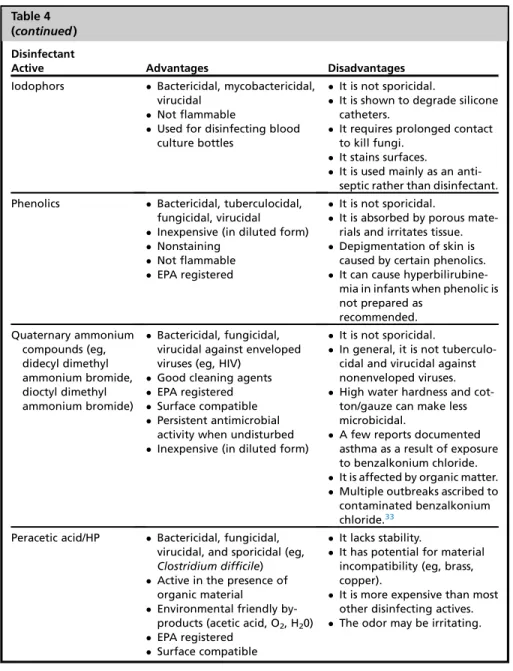
In general, endoscope disinfection or sterilization with a liquid chemical sterilant or high-level disinfectant involves 5 steps after leak testing: (1) clean: mechanically clean internal and external surfaces, including brushing internal channels and flushing each internal channel with water and a enzymatic cleaner or detergent; (2) disinfect: immerse endoscope in high-level disinfectant (or chemical sterilant) and perfuse (elim-inates air pockets and ensures contact of the germicide with the internal channels) disinfectant into all accessible channels, such as the suction/biopsy channel and air/water channel, and expose for a time recommended for specific products; (3) rinse: rinse the endoscope and all channels with sterile water, filtered water (commonly used sterilityofitemscomingincontactwithintactskinis“notcritical.”Examplesof noncrit-icalitemsarebedpans,bloodpressurecuffs,crutches,bedrails,linens,bedside ta-bles,patientfurniture,andfloors.Incontrasttocriticalandsomesemicriticalitems, most noncriticalreusable itemsmay be decontaminatedwheretheyare used and donotneedtobetransportedtoacentralprocessingarea.Thereisvirtuallyno docu-mentedriskoftransmittinginfectiousagentstopatientsvianoncriticalitems31when theyareusedasnoncriticalitemsanddonotcontactnonintactskinand/ormucous membranes. However,theseitems(eg, bedside tables,bed rails)could potentially contributetosecondarytransmissionbycontaminatinghandsofhealthcarepersonnel orbycontactwithmedicalequipmentthatwillsubsequentlycomeincontactwith pa-tients.32Table1andTable4listseverallow-leveldisinfectantsthatmaybeusedfor noncriticalitems.Table4liststheadvantagesanddisadvantagesofthelow-level dis-infectantsthatareusedonnoncriticalpatientcareitems(eg,bloodpressurecuffs)and noncritical environmentalsurfaces. The exposure time for low-level disinfection of noncriticalitemsisatleast1minute.
CURRENTISSUESINDISINFECTIONANDSTERILIZATION
Table 4
Summary of advantages and disadvantages of disinfectants used as low-level disinfectants
Disinfectant
Active Advantages Disadvantages
Alcohol Bactericidal, tuberculocidal, fungicidal, virucidal Fast acting Noncorrosive Nonstaining
Used to disinfect small sur-faces, such as rubber stoppers on medication vials
No toxic residue
It is not sporicidal.
It is affected by organic matter. It is slow acting against
non-enveloped viruses (eg, norovirus).
It has no detergent or cleaning properties.
It is not EPA registered. It damages some instruments
(eg, harden rubber, deterio-rate glue).
It is flammable. (Large amounts require special storage.)
It evaporates rapidly making contact time compliance difficult.
It is not recommended for use on large surfaces.
Outbreaks are ascribed to contaminated alcohol.33 Sodium hypochlorite Bactericidal, tuberculocidal,
fungicidal, virucidal Sporicidal
Fast acting
Inexpensive (in diluted form) Not flammable
Unaffected by water hardness Reduces biofilms on surfaces Relatively stable (eg, 50%
reduction in chlorine concen-tration in 30 d)34
Used as the disinfectant in water treatment
EPA registered
There is a reaction hazard with acids and ammonias. It leaves a salt residue. Corrosive to metals (some
ready-to-use products may be formulated with corrosion inhibitors)
It is unstable when active. (Some ready-to-use products may be formulated with stabilizers to achieve longer shelf-life.)
It is affected by organic matter. It discolors/stains fabrics. A potential hazard is
produc-tion of trihalomethane. It has an odor. (Some
ready-to-use products may be formulated with odor inhibitors.). It is irritating at high concentrations. Improved HP Bactericidal, tuberculocidal,
fungicidal, virucidal Fast efficacy
Easy compliance with wet-contact times
Safe for workers (lowest EPA toxicity category, IV) Benign for the environment Surface compatible Nonstaining EPA registered Not flammable
It is more expensive than most other disinfecting actives. It is not sporicidal at low
concentrations.
with automated endoscope reprocessors), or tap water; (4) dry: rinse the insertion tube and inner channels with alcohol and dry with forced air after disinfection and before storage; and (5) store: store the endoscope in a way that prevents recontamination and promotes drying (eg, hung vertically).
Table 4 (continued)
Disinfectant
Active Advantages Disadvantages
Iodophors Bactericidal, mycobactericidal, virucidal
Not flammable
Used for disinfecting blood culture bottles
It is not sporicidal.
It is shown to degrade silicone catheters.
It requires prolonged contact to kill fungi.
It stains surfaces.
It is used mainly as an anti-septic rather than disinfectant. Phenolics Bactericidal, tuberculocidal,
fungicidal, virucidal Inexpensive (in diluted form) Nonstaining
Not flammable EPA registered
It is not sporicidal.
It is absorbed by porous mate-rials and irritates tissue. Depigmentation of skin is
caused by certain phenolics. It can cause hyperbilirubine-mia in infants when phenolic is not prepared as
recommended. Quaternary ammonium compounds (eg, didecyl dimethyl ammonium bromide, dioctyl dimethyl ammonium bromide) Bactericidal, fungicidal, virucidal against enveloped viruses (eg, HIV)
Good cleaning agents EPA registered Surface compatible Persistent antimicrobial
activity when undisturbed Inexpensive (in diluted form)
It is not sporicidal.
In general, it is not tuberculo-cidal and virutuberculo-cidal against nonenveloped viruses. High water hardness and
cot-ton/gauze can make less microbicidal.
A few reports documented asthma as a result of exposure to benzalkonium chloride. It is affected by organic matter. Multiple outbreaks ascribed to contaminated benzalkonium chloride.33
Peracetic acid/HP Bactericidal, fungicidal, virucidal, and sporicidal (eg,
Clostridium difficile) Active in the presence of
organic material
Environmental friendly by-products (acetic acid, O2, H20) EPA registered
Surface compatible
It lacks stability.
It has potential for material incompatibility (eg, brass, copper).
It is more expensive than most other disinfecting actives. The odor may be irritating.
If low-level disinfectant is prepared on-site (not ready to use), document correct concentration at a routine frequency.
Abbreviations:EPA, Environmental Protection Agency; HIV, human immunodeficiency virus; HP, hydrogen peroxide.
Outbreaks of carbapenem-resistant Enterobacteriaceae infection associated with duodenoscopes: what can we do to prevent infections?
In the past 3 years, multiple reports of outbreaks have led the FDA, the CDC, and na-tional news to raise awareness among the public and health care professionals that the complex design of duodenoscopes (used primarily for ERCP) may impede effec-tive reprocessing. Several recent publications have associated multidrug-resistant (MDR) bacterial infections, especially due to CRE, in patients who have undergone ERCP with reprocessed duodenoscopes.3,4,25,37,39 Unlike other endoscope out-breaks,6these recent outbreaks occurred even when the manufacturer’s instructions and professional guidelines were followed correctly.3,4
The key concern raised by these outbreaks is that current reprocessing guidelines are not adequate to ensure a patient-safe GI endoscope (one devoid of potential path-ogens), as the margin of safety associated with reprocessing endoscopes is minimal or nonexistent. There are at least 2 (and maybe 3) reasons for this reprocessing failure and why outbreaks continue to occur. First, studies have shown that the internal chan-nel of GI endoscopes, including duodenoscopes, may contain 107 10 (7–10-log
10)
enteric microorganisms.40,41 Investigations have demonstrated that the cleaning step in endoscope reprocessing results in a 2- to 6-log10reduction of microbes and
the HLD step results in another 4- to 6-log10reduction of mycobacteria for a total
6-to 12-log10reduction of microbes.40–42 Thus, the margin of safety associated with
cleaning and HLD of GI endoscopes is minimal or nonexistent (level of contamination: 4-log10 [maximum contamination, minimal cleaning/HLD] to 5-log10 [minimum
contamination, maximum cleaning/HLD]). Therefore, any deviation from proper reprocessing (such as crevices associated with the elevator channel) could lead to fail-ure to eliminate contamination with a possibility of subsequent patient-to-patient transmission. This low (or nonexistent) margin of safety associated with endoscope reprocessing compares with the 17-log10margin of safety associated with cleaning
and sterilization of surgical instruments.23
Second, GI endoscopes not only have heavy microbial contamination (107–1010
bacteria) but they are also complex with long, narrow channels, right-angle turns, and difficult-to-clean and disinfect components (eg, elevator channel). The elevator channel in duodenoscopes is unique to side-viewing endoscopes. It has a separate channel and provides orientation of catheters, guidewires, and accessories into the endoscopic visual field.25 This channel is complex in design and has crevices that are difficult to access with a cleaning brush and may impede effective reprocessing.43 Based on this and other recent studies, it is likely that MDR pathogens are acting as marker or indicator organisms for ineffective reprocessing of the complex design of duodenoscopes, which is an infectious risk to patients.
Third, biofilms could impact endoscope reprocessing failure and continued endoscope-related outbreaks.44Biofilms are multilayered bacteria plus exopolysac-charides that cement cells to surfaces. They develop in a wet environment. If reproc-essing is performed promptly after use and the endoscope is dry, the opportunity for biofilm formation is minimal.45,46However, the formation of endoscopic biofilm during clinical practice may be related to reuse of reprocessing methods, such as reuse of detergent, manual cleaning, and incomplete drying.47 Ideally, reprocessing should be initiated within an hour of use; however, there are no evidence-based guidelines on delayed endoscope reprocessing.48It is unclear if biofilms contribute to failure of endoscope reprocessing.
There is excellent evidence in the scientific literature that environmental contamination plays an important role in the transmission of several key health care–associated path-ogens, including methicillin-resistant Staphylococcus aureus (MRSA), vancomycin-resistant Enterococcus (VRE), Acinetobacter sp, norovirus, and Clostridium difficile.50–53All these pathogens have been demonstrated to persist in the environ-ment for days (in some cases months), frequently contaminate the environenviron-mental sur-faces in rooms of colonized or infected patients, transiently colonize the hands of health care personnel, be transmitted by health care personnel, and cause outbreaks in which environmental transmission was deemed to play a role. Importantly, a study by Stiefel and colleagues54demonstrated that contact with the environment was just as likely to contaminate the hands of health care personnel as was direct contact with patients. Further, admission to a room in which the previous patient had been colo-nized or infected with MRSA, VRE, AcinetobacterorC difficile has been shown to be a risk factor for newly admitted patients to develop colonization or infection.55–57
Improving room cleaning and disinfection and demonstrating the effectiveness of surface decontamination in reducing health care–associated infections
Investigators have reported that intervention programs aimed at improving surface cleaning and disinfection reduced HAIs.58Such interventions have generally included multiple activities: disinfectant product substitutions and interventions to improve the effectiveness of cleaning and disinfection (eg, improved housekeeper education, monitoring the thoroughness of cleaning [eg, by use of ATP assays or fluorescent dyes] with feedback of performance to the environmental service workers, and/or use of cleaning checklists).58–61Health care facilities must also allow adequate time evidenced-based practices, including equipment maintenance, and routine audits withatleastyearlycompetencytestingofreprocessingstaff.13,35,36Allreprocessing personnelmustbeknowledgeableandthoroughlytrainedonthereprocessing instruc-tionsforduodenoscopes.Thistrainingincludesthenewrecommendationstousea smallbristlecleaningbrushandforadditionalflushingandcleaningstepsofthe duo-denoscopeelevatorchannel(http://medical.olympusamerica.com/sites/default/files/ pdf/150326_TJF-Q180V_Customer_letter.pdf).Althoughthesestepsweredescribed asvalidated,nopublicdataareavailableontheabilityofthesenewcleaning recom-mendationstoyieldanERCPscopedevoidofbacteria.Butwemustdomoreor addi-tional outbreaks will likely continue. For example, all hospitals that reprocess duodenoscopesshouldselectoneoftheenhancedmethodsforreprocessing duode-noscopes.Theseenhancedmethodshavebeenpriorityrankedwiththefirstproviding thegreatestmarginofsafety.25Theyinclude(1)ETOsterilizationafterHLDwith peri-odicmicrobiologicsurveillance; (2) doubleHLDwithperiodicmicrobiologic surveil-lance;(3) HLDwithscopequarantineuntilnegativecultureresultsarereturned; (4) liquidchemicalsterilantprocessingsystemusingperaceticacid(rinsedwith exten-sivelytreatedpotablewater)withperiodicmicrobiologicsurveillance;(5)other FDA-cleared low-temperature sterilization technology (provided material compatibility andsterilizationvalidationtestingperformedusingthesterilizerandendoscope)after HLD,withperiodicmicrobiologicsurveillance;and(6)HLDwithperiodicmicrobiologic surveillance.Thesesupplementalmeasurestoenhanceduodenoscopereprocessing madeinMay-June201525werereinforcedbytheFDAinAugust2015.43UNC Hospi-talshaschosenETOsterilizationafterHLDwithperiodicmicrobiologicsurveillanceas itsprimaryreprocessingmethodforduodenoscopesandiftheETOsterilizerisnot available,thendoubleHLDwithperiodicmicrobiologicsurveillance.49
for room processing to ensure adherence to all steps recommended by institutional policies and professional organization guidelines. The authors have found that collab-oration between infection prevention and environmental services staff, nursing, and management is critical to an effective environmental cleaning program. This collabo-ration includes ensuring that environmental services staff recognize the significance and relationship of adhering to proper work procedures to reduction of microbial contamination. The assignment of cleaning responsibility (eg, medical equipment to be cleaned by nursing; environmental surfaces to be cleaned by environmental ser-vice) is also important to ensure all objects and surfaces in a patient room are decon-taminated, especially the surfaces of medical equipment (eg, cardiac monitors). Improved environmental cleaning has been demonstrated to reduce the environ-mental contamination with VRE,61 MRSA,62 and
C difficile.63 Further, all studies have only focused improvement on a limited number of high-risk objects. Thus, a concern of published studies is that they have only demonstrated improved cleaning of a limited number of high-risk objects (or targeted objects) not an improvement in the overall thoroughness of room decontamination, which is the objective.
To the authors’ knowledge only one study has objectively evaluated what consti-tutes high-touch objects in a patient room and no study has demonstrated epidemio-logically what constitutes a high-risk object. Examples of what the literature refers to as high-touch objects includes bed rails, intravenous (IV) poles, call buttons, door knobs, floors, and bathroom facilities64; however, a study demonstrated high-touch objects in the intensive care unit were the bed rail, bed surface, and supply cart, whereas the high-touch surfaces in a patient ward were the bed rail, over-bed table, IV pump, and bed surface.65 Importantly, the level of microbial contamination of room surfaces was not statistically different regardless of how often they were touched before and after cleaning. Until research identifies which objects and surfaces pose the greatest risk of pathogen transmission, all noncritical surfaces that are touched must be cleaned/disinfected.66
No-touch (or mechanical) methods for room decontamination
As noted earlier, multiple studies have demonstrated that environmental surfaces and objects in rooms are frequently not properly cleaned and these surfaces may be important in transmission of health care–associated pathogens. Further, although interventions aimed at improving cleaning thoroughness have demonstrated effective-ness, many surfaces remain inadequately cleaned and, therefore, potentially contam-inated. For this reason, several manufacturers have developed room disinfection units that can decontaminate environmental surfaces and objects. These no-touch systems generally use one of 2 methods: either UV light or HPV/mist.53 These technologies supplement, but do not replace, standard cleaning and disinfection because surfaces must be physically cleaned of dirt and debris.
Disinfection and sterilization are critical components of infection control. Unfortu-nately, breaches of disinfection and sterilization guidelines are not uncommon. Patient notifications due to improper reprocessing of semicritical (eg, endoscopes) and critical medical instruments have occurred regularly.7This referenced article also provides a method for assessing patient risk for adverse events, especially infection. Use of a 14-step algorithm (Box 2) can guide an institution in managing potential disinfection and sterilization failures.7,86
Human Papilloma Virus
Human papilloma virus is an extremely common sexually acquired infection and is the most important cause of cervical cancer. A 2014 article reported that the FDA-cleared high-level disinfectants (ie, glutaraldehyde, OPA) tested did not inactivate human pap-illoma virus, a nonenveloped virus.87 These findings are inconsistent with many method,organicloadandorientationofcarriers(eg,parallelvsperpendicular).Data demonstratethatseveralUVsystemshaveeffectiveness(eg,eliminate>3-log10
vege-tativebacteria[MRSA,VRE,Acinetobacterbaumannii] and>2.4-log10 Cdifficile) at relativelyshortexposuretimes(eg,5–25minutesforbacteria, 10–60minutes forC difficilespores).68–70Thestudiesalsodemonstratedreducedeffectivenesswhen sur-faceswerenotindirectline-of-sight.68–72
Hydrogenperoxidesystemsforroomdecontamination Severalsystemsthatproduce HP(eg,HPV,aerosolizeddrymistHP)havebeenstudiedfortheirabilityto decontam-inateenvironmentalsurfacesandobjectsinhospitalrooms.HPVhasbeenusedfor thedecontamination ofrooms inhealthcare.73–83 Studies havedemonstratedthat HP systems are a highly effective method for eradicating various pathogens (eg, MRSA,Mycobacteriumtuberculosis,Serratia,Cdifficilespores,Clostridiumbotulinum
spores)fromrooms,furniture,andequipment.
Comparison of ultraviolet irradiation versus hydrogen peroxide for room decontamination UVdevicesandHPsystemshavetheirownadvantagesand disad-vantages(Table5),53andthereisnowampleevidencethattheseno-touchsystems can reduce environmental contamination with health care–associated pathogens andreduceHAIs.84However,eachspecificmarketedsystemshouldbestudiedand its efficacy demonstrated before being introduced into health care facilities. The mainadvantageofbothtypesofunitsistheirabilitytoachievesubstantialreductions invegetativebacteria.AnotheradvantageistheirabilitytosubstantiallyreduceC diffi-cile spores,aslow-leveldisinfectants(such asquaternaryammoniumcompounds) haveonly limitedorno measurableactivity againstspore-forming bacteria.85 Both systemsareresidualfree,andtheydecontaminateallexposedsurfacesand equip-mentintheroom.
Based ondata thatdemonstrated a reductionofcolonizationsand/or infections associated with these technologies, theauthors recommend they should be used forterminalroomdecontaminationafterdischargeofpatientsoncontactprecautions. Because different UV and HP systems vary substantially, infection preventionists should review the peer-reviewed literature and the advantages/disadvantages of each technology (Box1) andchoose onlydevices with demonstratedbactericidal capability asassessedby carriertests and/ortheability todisinfectactual patient rooms.Ultimately,onewouldselectadevicethatalsohasdemonstratedtheability toreduceHAIs.84
Table 5
Clinical trials using ultraviolet or hydrogen peroxide devices for terminal room disinfection to reduce health care–associated infections
Author, Year Design Setting Modality Tested Pathogens Outcome (HAI)
Assessment of HH Compliance
Assessment of EVS Cleaning
Other HAI Prevention Initiatives
Boyce, 2008 Before-after (CDI
high incidence wards)
Community hospital
HPV (Bioquell) CDI 2.28–1.28 per 1000
Pt-days (P5.047)
No No NA
Cooper, 2011 Before-after (2
cycles)
Hospitals HPV (NS) CDI Decreased cases
(incidence NS)
No No Yes
Levin, 2013 Before-after Community
hospital
UV-PX, Xenex CDI 9.46–4.45 per 10,000
Pt-days (P5.01)
No No Yes
Passaretti, 2013
Prospective cohort (comparison of MDRO acquisition; admitted to rooms with or without HPV
decontamination)
Academic center
HPV (Bioquell) MRSA
VRE CDI MDRO-all
2.3–1.2 (P5.30)
7.2–2.4 (P<.01)
2.4–1.0 (P5.19)
12.6–6.2 per 1000
Pt-days (P<.01)
No No No
Manian, 2013 Before-after Community
hospital
HPV (Bioquell) CDI 0.88–0.55 cases per
1000 Pt-days
(P<.0001)
Yes No No
Table 5
(continued)
Author, Year Design Setting Modality Tested Pathogens Outcome (HAI)
Assessment of HH Compliance
Assessment of EVS Cleaning
Other HAI Prevention Initiatives
Hass, 2014 Before-after Academic
center
UV-PX, Xenex CDI
MRSA VRE MDRO-GNB Total
0.79–0.65 per 1000
Pt-days (P5.02)
0.45–0.33 per 1000
Pt-days (P5.007)
0.90–0.73 per 1000
Pt-days (P5.002)
0.52–0.42 per 1000
Pt-days (P5.04)
2.67–2.14 per 1000
Pt-days (P<.001)
No Yes Yes
Mitchell, 2014 Before-after Acute care
hospital
Dry hydrogen peroxide vapor (Nocospray, New Work City, NY)
MRSA (colonization and infection)
9.0–5.3 per 10,000
Pt-days (P<.001)
Yes No Yes
Miller, 2015 Before-after Urban
hospital
UV-PX, Xenex CDI 23.3–8.3 per 10,000
Pt-days (P5.02)
No No Yes
Nagaraja, 2015 Before-after Academic
center
UV-PX, Xenex CDI 1.06–0.83 per 1000
Pt-days (P5.06)
No No No
Pegues, 2015 Before-after Academic
center
UV-C (Optimum) CDI 30.34–22.85 per
10,000 Pt-days
(IRR50.49, 95%
CI 0.26–0.94,
P5.03)
Yes Yes No
Anderson, 2015 RCT 9 Hospitals UV-C (Tru-D) MRSA, VRE, CDI 51.3–33.9 per 10,000
Pt-days (P5.036)
Yes Yes No
Abbreviations:CDI,Clostridium difficileinfections; CI, confidence interval; EVS, environmental service; GNB, gram-negative bacteria; HH, hand hygiene; IRR, inci-dence rate ratio; MDRO, multidrug-resistant organism; NA, not applicable; NS, not stated; Pt, patient; RCT, randomized controlled trial; UV-PX, ultraviolet light, pulsed xenon device.
Box 1
Advantages and disadvantages of room decontamination by ultraviolet irradiation units and
hydrogen peroxide1systems
Ultraviolet irradiation
Advantages
There is reliable biocidal activity against a wide range of health care–associated pathogens. Room surfaces and equipment are decontaminated.
There is rapid room decontamination (w5–25 minutes) for vegetative bacteria, which reduces the downtime of the room before another patient can be admitted.
It is demonstrated to reduce HAIs (eg,C difficile, MRSA).
It is effective againstC difficile, although requires longer exposure (w10–50 minutes). HVAC system does not need to be disabled and the room does not need to be sealed. UV is residual free and does not give rise to health or safety concerns.
There are no consumable products, so costs include only capital equipment and staff time. There is good distribution in the room of UV energy via an automated monitoring system. Disadvantages
All patients and staff must be removed from the room before decontamination, thus, limiting use to terminal room decontamination.
Decontamination can only be accomplished at terminal disinfection (ie, cannot be used for daily disinfection) as room must be emptied of people.
Capital equipment costs are substantial.
It does not remove dust and stains, which are important to patients and visitors; hence, cleaning must precede UV decontamination.
It is sensitive to use parameters (eg, dose, distance, carrier or surface tested, exposure time, pathogen).
It requires that equipment and furniture be moved away from the walls.
HP systems
Advantages
It has reliable biocidal activity against a wide range of health care–associated pathogens. Room surfaces and equipment are decontaminated.
It has been demonstrated to reduce HAIs (eg,C difficile, MRSA, VRE). It is useful for disinfecting complex equipment and furniture.
It does not require that furniture and equipment be moved away from the walls.
HP is residual free and does not give rise to health or safety concerns (aeration unit converts HP into oxygen and water).
There is uniform distribution in the room via an automated dispersal system. Disadvantages
All patients and staff must be removed from the room before decontamination, thus, limiting use to terminal room decontamination.
HVAC system must be disabled to prevent unwanted dilution of HP during use, and the doors must be closed with gaps sealed by tape.
Decontamination can only be accomplished as terminal disinfection (ie, cannot be used for daily disinfection) as room must be emptied of people.
Capital equipment costs are substantial.
Decontamination requires approximately 2.0 to 5.0 hours.
It does not remove dust and stains, which are important to patients and visitors; hence, cleaning must precede UV decontamination.
It is sensitive to use parameters (eg, HP concentration, pathogen, exposure time).
Abbreviation:HVAC, heating, ventilation, and air conditioning.
articles in the peer-reviewed literature, which demonstrates that high-level disinfec-tants, such as OPA and glutaraldehyde, inactivate nonenveloped viruses, such as hepatitis A virus, polio, adenovirus, norovirus, and so forth. Because the high-level dis-infectants are commonly used to disinfect endocavitary probes (eg, vaginal probes, rectal probes), there is an urgency to corroborating these data. In a conversation with CDC staff regarding this issue, it was determined hospitals should continue to use the FDA-cleared high-level disinfectants consistent with the manufacturers’ in-structions until the data can be corroborated. Data have demonstrated the activity of a HP mist device to inactivate human papilloma virus.88
Hydrogen Peroxide Mist System for Probes
Although the most common way of performing HLD of contaminated endocavitary probes is by immersion in an FDA-cleared high-level disinfectant (eg, glutaraldehyde), an alternative procedure for disinfecting the endocavitary and surface probes is a HP mist system, which uses 35% HP at 56C with the probe reaching no more than 40C (ie, Trophon EPR, Nanosonics, Alexandria, Australia). In one study, the results demonstrated complete inactivation (>6-log10reduction) of VRE and a CRE-Klebsiella pneumoniaestrain both in the presence and absence of 5% fetal calf serum (FCS). The Trophon EPR system showed good, but not complete, inactivation ofMycobacterium terrae(5.2-log10reduction forM terraewith FCS, a 4.6-log10reduction forM terrae
without FCS) and C difficile spores (5.1-log10 reduction for C difficile spores
with FCS, 6.2-log10 reduction for C difficile spores without FCS).89 To simulate a Box 2
Protocol for exposure investigation after the failure to follow disinfection and sterilization principles
1. Confirm disinfection or sterilization reprocessing failure
2. Embargo any improperly disinfected or sterilized items
3. Do not use the questionable disinfection or sterilization unit (eg, sterilizer, automated endoscope reprocessor)
4. Inform key stakeholders
5. Conduct a complete and thorough evaluation of the cause of the disinfection/sterilization failure
6. Prepare a line listing of potentially exposed patients
7. Assess whether disinfection or sterilization failure increases patient risk for infection
8. Inform expanded list of stakeholders of the reprocessing issue
9. Develop a hypothesis for the disinfection or sterilization failure and initiate corrective action
10. Develop a method to assess potential adverse patient events
11. Consider notification of state and federal authorities
12. Consider patient notification
13. Develop long-term follow-up plan
14. Perform after-action report
worse-case condition, cleaning was not done before disinfection in these experiments; but proper cleaning of probes is necessary to ensure the success of high-level disinfec-tion. Other data have demonstrated the activity of Trophon to inactivate human papil-loma virus88and other pathogens (eg, bacteria, mycobacteria, viruses) including a greater than 6-log10reduction ofM terraeandC difficilespores in carrier tests and a
greater than 6-log10reduction inM terraeon inoculated ultrasound probes.90These
re-sults differ slightly from those presented earlier, presumably because of the differences in testing methodology. In the authors’ study only the probe devices were inoculated (carriers of different materials were not tested); for recovery of bacteria on the probe, the probes were immersed in media (not swabbed, which would likely result in lower recovery).89The Trophon system processes the portion of the probe that has mucous membrane contact but also the handle of endocavitary probes, which may be contam-inated; it is an alternative to high-level chemical disinfection for ultrasound probes.
Do Not Reuse Single-Use Devices
The Department of Justice and the FDA have joined forces in prosecuting health care providers that reuse single-use devices. For example, one physician was criminally prosecuted for reusing needle guides meant for single use during prostate proce-dures. These prosecutions are based on conspiracy to commit adulteration and Medi-care fraud. Third-party reprocessing is allowed by the FDA as the reprocessor is considered the device manufacturer as defined under the Code of Federal Regulations Title 21 Part 820.
Storage of Semicritical Items
In 2011, The Joint Commission (TJC) recommended that laryngoscope blades be packaged in a way that prevents recontamination. Examples of compliant storage include, but are not limited to, a peel pouch or a closed plastic bag. Examples of non-compliant storage would include unwrapped blades in an anesthesia drawer as well as an unwrapped blade on top of or within a code cart. The packaging not only prevents recontamination but also distinguishes a processed from a nonprocessed semicritical item, such as a specula, laryngoscope blade, or endoscope. The use of a tagging sys-tem, in both inpatient and outpatient facilities,91that separates processed from non-processed items minimizes the risk that a nondisinfected, semicritical device would be used and potentially lead to cross-transmission of a pathogen.7This tagging system could involve a tag (eg, green tag, patient ready; red tag, requires reprocessing) for GI endoscopes or a plastic sheath or plastic-paper peel pouch (eg, endocavitary probes). Ideally, hospitals and ambulatory care facilities91 (as appropriate) should develop a strategy (eg, tagging, storage covers for patient-ready devices) that pre-vents patient exposures to contaminated devices.
Immersion Versus Perfusion of Channel Scopes Such as Cystoscopes
In the United States, it is estimated that more than 4 million cystoscopies are per-formed each year.29,92Cystoscopy is a diagnostic procedure that uses an endoscope especially designed to examine the bladder, lower urinary tract, and prostate gland or is used to collect urine samples, perform biopsies, and remove small stones. A flexible or rigid scope can be used to carry out the procedure. Because the procedure, and other channeled scopes (eg, hysteroscopes, some nasopharyngoscopes), involves a medical device in contact with the patients’ mucous membranes, it is considered a semicritical device that must minimally be high-level disinfected.
Laryngoscopes are routinely used to view the vocal cords and larynx and facilitate airway management. It typically consists of a blade that connects to a handle, which usually contains 2 batteries that power the light source. Limited guidelines are avail-able for reprocessing laryngoscope blades and handles, and hospital practices vary.95–97 For example, some guidelines recommend and hospitals use low-level disinfection of the handle as it does not have direct contact with a mucous membrane, whereas others recommend the handle be high-level disinfected to prevent disease transmission. Although blades have been linked to HAIs, handles have not been directly linked to HAIs. However, reports of contamination with blood (40% of the han-dles positive for occult blood) and potentially pathogenic microorganisms (86% of the handles deemed ready for patient use were contaminated with pathogens, such asS aureus, Acinetobacter) suggest its potential,97–100and the blade and handle function together. For this reason, it is ideal that the blades and handles be high-level disin-fected or sterilized even if a protective barrier or sheath is used during the procedure. In 2007, the state of California required that both blades and handles be HLD or ster-ilized. UNC Hospitals is sterilizing the blades and handles (ie, blades via HP gas plasma, handle [without batteries] by steam). Other methods for HLD or sterilization are acceptable, but one must ensure the blade and handle are compatible with the HLD or sterilization process chosen. After sterilization the blades and handles are checked for function before packaging and then packaged in a Ziploc bag. Per TJC, the laryngoscope blade and handle must be packaged in a way that prevents recontamination after processing (Frequently Asked Questions, The Joint Commis-sion, October 24, 2011). Examples of compliant storage include, but are not limited to, a peel pack after sterilization (long-term storage) or wrapping in a sterile towel (short-term storage).
Recent advances in video technology have led to the development of video laryn-goscopes, such as the GlideScope (Verathon Medical, Bothell, WA) and McGrath (Medtronic, Minneapolis, MN) video laryngoscopes.92These new intubation devices assist in difficult airway management. For the McGrath an image is displayed on a liquid-crystal display screen that is contained within a monitor mounted to the handle of the device. A sterile, single-use disposable laryngoscope blade covers the camera and light-emitting diode assembly to prevent direct patient contact. Even though a cover is used, HLD or sterilization via ETO or HP gas plasma (battery removed) is recommended for the McGrath MAC video laryngoscope.93The manu-facturer states, whenever practical, a HLD or sterilization is preferred to a wipe-based process.
7-log10 colony-formingunit [CFU]) did not occur unless the channel was actively perfusedwiththeglutaraldehyde.Infact,failuretoperfusethechannelledtoonly min-imal,ifany,reductioninbacterialcontamination.However,completeinactivationof 108 CFUofbothVREandCREwasachievedwhenthechannelwasactivelyperfused. It seems thatno high-level disinfectantentered thechannel unlessit was actively perfused,asthelevelofmicrobialcontaminationwasnot reducedbyimmersion.29 Thisfailuretoperfusethechanneloccursbecausetheairpressureinthechannelis strongerthanthefluidpressureatthefluid-airinterface.Recommendationsare pro-videdforcystoscopeHLDandincludeactivelyperfusingthedevicewhileimmersed inthehigh-leveldisinfectant.93Unfortunately,somecystoscopereprocessing recom-mendationspublishedintheliteratureareincorrect.Forexample,investigatorshave recommendedcompleteimmersionofthecystoscopeintothehigh-leveldisinfectant butdidnotmentionperfusionofthehigh-leveldisinfectantintothechannel.94
The portable GlideScope video laryngoscope system is available in a single-use and a reusable configuration. They should be cleaned and disinfected per the manu-facturer’s recommendations. The single-use system features a reusable video baton and sterile stats that must be disposed of immediately after use. Low-level disinfection is recommended for the video baton after each use using an Environmental Protection Agency–registered disinfectant (eg, antimicrobial disposable wipe per manufacturer’s instructions) after each use. The manufacturer recommends HLD for the video baton when it is visibly soiled.
The manufacturer recommends that the advanced video laryngoscope reusable blade be high-level disinfected and the GlideRite rigid stylets be sterilized.101
Emerging Pathogens, Antibiotic-Resistant Bacteria, and Bioterrorism Agents
Emerging pathogens are of growing concern to the general public and infection control professionals. Relevant pathogens include Ebola,102MDR organisms such as CRE, Enterovirus D68, MDR pathogens, Middle East respiratory syndrome-Coronavirus, MDRM tuberculosis, human papilloma virus, norovirus, and nontubercu-lous mycobacteria (eg,M chelonae). The susceptibility of each of these pathogens to chemical disinfectants/sterilants has been studied; all of these pathogens (or surro-gate microbes such as feline-calicivirus for Norwalk virus, vaccinia for variola,103 and Bacillus atrophaeus [formerly B subtilis] for B anthracis) are susceptible to currently available chemical disinfectants/sterilants.19,104Standard sterilization and disinfection procedures for patient-care equipment (as recommended in this article) are adequate to sterilize or disinfect instruments or devices contaminated with blood or other body fluids from persons infected with blood-borne pathogens, emerging pathogens, and bioterrorism agents, with the exception of prions, HPV, andC difficile
spores (see earlier discussion). No changes in current procedures for cleaning, disin-fecting, or sterilizing need to be made.13
In addition, there are no data to show that antibiotic-resistant bacteria (MRSA, VRE, MDR M tuberculosis) are less sensitive to the liquid chemical germicides than antibiotic-sensitive bacteria at currently used germicide contact conditions and concentrations.105–107
SUMMARY
When properly used, disinfection and sterilization can ensure the safe use of invasive and noninvasive medical devices. The method of disinfection and sterilization de-pends on the intended use of the medical device: critical items (contact sterile tissue) must be sterilized before use; semicritical items (contact mucous membranes or non-intact skin) must be high-level disinfected; and noncritical items (contact non-intact skin) should receive low-level disinfection. Cleaning should always precede HLD and ster-ilization. Current disinfection and sterilization guidelines must be strictly followed.
REFERENCES
1. Centers for Disease Control and Prevention. National hospital discharge survey: 2010 table, procedures by selected patient characteristics-number by proce-dure category and age. 2010.
2. Peery AF, Dellon ES, Lund J, et al. Burden of gastrointestinal disease in the United States: 2012 update. Gastroenterology 2012;143:1179–87.
4. Wendorf KA, Kay M, Baliga C, et al. Endoscopic retrograde cholangiopancreatography-associated AmpCEscherichia colioutbreak. Infect Control Hosp Epidemiol 2015;36:634–42.
5. Ofstead CL, Wetzler HP, Snyder AK, et al. Endoscope reprocessing methods: a prospective study on the impact of human factors and automation. Gastroen-terol Nurs 2010;33:304–11.
6. Kovaleva J, Peters FT, van der Mei HC, et al. Transmission of infection by flexible gastrointestinal endoscopy and bronchoscopy. Clin Microbiol Rev 2013;26: 231–54.
7. Rutala WA, Weber DJ. How to assess risk of disease transmission to patients when there is a failure to follow recommended disinfection and sterilization guidelines. Infect Control Hosp Epidemiol 2007;28:146–55.
8. Weber DJ, Rutala WA. Lessons learned from outbreaks and pseudo-outbreaks associated with bronchoscopy. Infect Control Hosp Epidemiol 2012;33:230–4. 9. Centers for Disease Control and Prevention. Immediate need for healthcare
fa-cilities to review procedures for cleaning, disinfecting, and sterilizing reusable medical devices. 2015. Available at:http://emergency.cdc.gov/han/han00382. asp. Accessed 18 May, 2016.
10. Rutala WA, Weber DJ. Disinfection, sterilization and control of hospital waste. In: Bennett JE, Dolan R, Blaser MJ, editors. Principles and practice of infectious diseases. Philadelphia: Elsevier Saunders; 2015. p. 3294–309.
11. Rutala WA, Weber DJ. Disinfection, Sterilization and Antisepsis: An Overview. Am J Infect Control 2016;44:e1–66.
12. Rutala WA, Weber DJ. Cleaning, disinfection and sterilization. In: Grota P, editor. APIC text of infection control and epidemiology. 4th edition. Washington, DC: Association for Professionals in Infection Control and Epidemiology, Inc.; 2014. p. 31.1–31.15.
13. Rutala WA, Weber DJ, HICPAC. Guideline for disinfection and sterilization in healthcare facilities, 2008. Atlanta (GA): Centers for Disease Control and Prevention; 2008. Available at: http://www.cdc.gov/hicpac/pdf/guidelines/ Disinfection_Nov_2008.pdf.
14. Rutala WA, Weber DJ. Disinfection and sterilization in healthcare facilities. In: Han J, editor Practical healthcare epidemiology. 4th edition: University of Chi-cago Press, in press.
15. Spaulding EH. Chemical disinfection of medical and surgical materials. In: Lawrence C, Block SS, editors. Disinfection, sterilization, and preservation. Phil-adelphia: Lea & Febiger; 1968. p. 517–31.
16. Sehulster L, Chinn RYW, Healthcare Infection Control Practices Advisory Com-mittee. Guidelines for environmental infection control in health-care facilities. MMWR Morb Mortal Wkly Rep 2003;52:1–44.
17. Rutala WA, Weber DJ. Disinfection and sterilization of prion-contaminated med-ical instruments, reply to Belay. Infect Control Hosp Epidemiol 2010;31:1306–7. 18. Rutala WA, Gergen MF, Weber DJ. Efficacy of a washer-disinfector in eliminating healthcare-associated pathogens from surgical instruments. Infect Control Hosp Epidemiol 2014;35:883–5.
20. Rutala WA, Weber DJ. Disinfection and sterilization in healthcare facilities. In: Han J, ed. SHEA practical healthcare epidemiology University of Chicago Press. 21. Kohn WG, Collins AS, Cleveland JL, et al. Guidelines for infection control in
dental health-care settings–2003. MMWR Recomm Rep 2003;52:1–61. 22. McDonnell G, Burke P. Disinfection: is it time to reconsider Spaulding? J Hosp
Infect 2011;78:163–70.
23. Food and Drug Administration. Brief summary of the gastroenterology and urol-ogy devices panel meeting. 2015.
24. Rutala WA, Weber DJ. Gastrointestinal endoscopes: a need to shift from disin-fection to sterilization? JAMA 2014;312:1405–6.
25. Rutala WA, Weber DJ. ERCP scopes: what can we do to prevent infections? Infect Control Hosp Epidemiol 2015;36:643–8.
26. Tosh PK, Disbot M, Duffy JM, et al. Outbreak ofPseudomonas aeruginosa sur-gical site infections after arthroscopic procedures: Texas, 2009. Infect Control Hosp Epidemiol 2011;32:1179–86.
27. Rutala WA, Gergen MF, Weber DJ. Microbial contamination on used surgical in-struments. Infect Control Hosp Epidemiol 2014;35:1068–70.
28. Rutala WA, Gergen MF, Weber DJ. Disinfection of a probe used in ultrasound-guided prostate biopsy. Infect Control Hosp Epidemiol 2007;28:916–9. 29. Rutala WA, Gergen MF, Bringhurst J, et al. Effective high-level disinfection of
cystoscopes: is perfusion of channels required? Infect Control Hosp Epidemiol 2016;37(2):228–31.
30. Rutala WA, Gergen MF, Weber DJ. Disinfection of an infrared coagulation device used to treat hemorrhoids. Am J Infect Control 2012;40:78–9.
31. Weber DJ, Rutala WA. Role of environmental contamination in the transmission of vancomycin-resistant enterococci. Infect Control Hosp Epidemiol 1997;18: 306–9.
32. Weber DJ, Rutala WA, Miller MB, et al. Role of hospital surfaces in the transmis-sion of emerging health care-associated pathogens: norovirus, Clostridium diffi-cile, and Acinetobacter species. Am J Infect Control 2010;38:S25–33.
33. Weber DJ, Rutala WA, Sickbert-Bennett EE. Outbreaks associated with contam-inated antiseptics and disinfectants. Antimicrob Agents Chemother 2007;51: 4217–24.
34. Rutala WA, Cole EC, Thomann CA, et al. Stability and bactericidal activity of chlorine solutions. Infect Control Hosp Epidemiol 1998;19:323–7.
35. Petersen BT, Chennat J, Cohen J, et al. Multisociety guideline on reprocessing flexible GI endoscopes: 2011. Infect Control Hosp Epidemiol 2011;32:527–37. 36. Society of Gastroenterology Nurses and Associates I. Standards of infection
control and reprocessing of flexible gastrointestinal endoscopes. Gastroenterol Nurs 2013;36:293–303.
37. Muscarella LF. Risk of transmission of carbapenem-resistant Enterobacteria-ceae and related “superbugs” during gastrointestinal endoscopy. World J Gas-trointest Endosc 2014;6:457–74.
38. Ofstead CL, Wetzler HP, Doyle EM, et al. Persistent contamination on colono-scopes and gastrocolono-scopes detected by biologic cultures and rapid indicators despite reprocessing performed in accordance with guidelines. Am J Infect Control 2015;43:794–801.