IMPACT OF HIV PROJECT ECHO (EXTENTIONS FOR COMMUNITY HEALTH OUTCOMES) IN KAZAKHSTAN
Janell Wright
A dissertation submitted to the faculty at the University of North Carolina at Chapel Hill in partial fulfillment of the requirements for the degree of Doctor of Public Health in the Department of Health Policy and Management in the Gillings School of Global Public Health.
Chapel Hill 2018
ii © 2018 Janell Wright
iii ABSTRACT
Janell Wright: Impact of HIV Project ECHO (Extensions for Community Health Outcomes) in Kazakhstan
(Under the direction of Sandra Greene)
In 2016, Kazakh Medical University for Continuous Education (KazMUCE) in
collaboration with Columbia University and the US CDC, conducted a pilot program to replicate Project ECHO, a weekly innovative, virtual mentoring and training CME platform for healthcare workers. A 10-month HIV case-based curriculum was developed and implemented by
KazMUCE, which served as a Training Center for the for 24 HIV treatment facilities located throughout the country. An evaluation was developed aimed at exploring the value of Project ECHO as a CME model in Kazakhstan using the desired outcomes from each level in Moore’s Expanded CME Evaluation Framework. The study objective was to evaluate the relationship between Project ECHO and capacity-building among clinicians for providing high-quality care for people living with HIV in Kazakhstan. Methods included conducting and analyzing pre- and post- knowledge assessments, self- efficacy, and satisfaction surveys among all participants, as well as conducting nine in-depth interviews and five focus group discussions among participants.
iv
evidence-based concepts reinforced through the real-time practical case presentations and short didactic sessions. Providers also mentioned that the case-based learning provided a unique opportunity for providers to gain information to apply in their service delivery. Reports from respondents suggest that providers improved their performance, specifically the quality of prescribing effective treatment, managing side effects of the treatment as well as complications associated with HIV infection. As a result, providers shared that their patients’ outcomes have improved.
The high degree of site participation, individual attendance, and support for the program among healthcare workers suggests that Project ECHO is a feasible model of CME in
v
This work is dedicated to the healthcare workers in Kazakhstan who have devoted their lives to caring and treating people living with HIV and their families in Kazakhstan. You are public
vi
ACKNOWLEDGEMENTS
This research would not have been possible without the team of people who came along beside me to help me, support me, and cheer me on. I am incredibly grateful to my twin sister, Kari Joy Wright, who has been there 24/7 to encourage me through the valleys and give me pep talks along the steep climb to the finish line. Thank you for never letting me quit!
The Project ECHO implementation and evaluation team in Kazakhstan has been a constant encouragement for completing this research. Dr. Indira Aitmagambetova, the CDC Associate Director in the CAR office, has been an ever-present support to me along the whole journey. She always encourages ideas, including implementing and evaluating Project ECHO in Kazakhstan. She pushed me beyond what I thought possible. Dr. Zhanna and Dr. Raushan at the Kazakhstan Medical University for Continuous Education are truly trail blazers of continuing medical education in Central Asia. They inspired me with their innovation and resourcefulness and provided me with any assistance I needed to navigate conducting research in their country. I will forever be grateful for the ease in working with the ICAP team led by Dr. Anna Deryabina, who encouraged me to pursue evaluating Project ECHO. An enormous thank you to the ICAP team for assisting with gathering all of the secondary data needed for this research.
I am thankful to Laura Tison and Dr. Tom Spira at CDC who first introduced the idea of Project ECHO to me and provided support above and beyond their call of duty to ensure
vii
ECHO Institute team at the University of New Mexico who have been so generous with their time and resources to assist the ECHO team in Kazakhstan.
I would like to thank my classmates in Cohort 11 who were the best companions and cheerleaders along this journey. Also, I want to acknowledge my committee members for their persistence in encouraging me to stretch myself to produce a quality research product. In particular, thank you to Dr. Sandra Greene, who chaired my dissertation committee and guided me through the process. A special thank you to Dr. RJ Simonds who encouraged me to start the DrPH program in 2015 and agreed to serve as part of my dissertation committee. Thank you for believing in me!
Finally, I know I would not have gotten to this point without the support and
viii
TABLE OF CONTENTS
LIST OF TABLES ... xi
LIST OF FIGURES ... xii
LIST OF ABBREVIATIONS ... xiii
CHAPTER 1: INTRODUCTION ... 1
HIV Burden of Disease in Kazakhstan ... 1
Human Resources and Policy Environment ... 2
Project ECHO Intervention ... 4
Theoretical Basis for Project ECHO ... 5
Components and Model of Project ECHO ... 7
Description of the Implementation of the Pilot Intervention ... 8
Study Objective and Aims ... 10
Guiding Conceptual Framework ... 11
CHAPTER 2: LITERATURE REVIEW ... 13
Methods... 13
Results ... 15
Discussion ... 25
Limitations ... 25
CHAPTER 3: METHODOLOGY AND STUDY DESIGN ... 27
ix
Approach ... 28
Sample Size and Inclusion Criteria ... 30
Data Collection ... 31
Process Data ... 32
Multiple Choice Knowledge Assessment ... 32
Self-Efficacy Survey and Professional Satisfaction Survey ... 33
Focus Groups and In-Depth Interviews with ECHO Clinic Participants ... 34
Informed Consent... 36
Data Analysis ... 37
Participant Assessments and Surveys ... 37
Focus Groups and Interviews... 37
Data Security, Storage and Data Management of All Project ECHO Evaluation Records .. 38
Potential Risks ... 39
CHAPTER 4: RESULTS ... 40
Aim 1: To examine the attitudes and practices of HIV providers toward participating in Project ECHO ... 41
Level 1: Participation Results ... 42
Level 2: Satisfaction Results ... 43
Aim 2: To evaluate changes in participating providers’ self-assessed professional satisfaction, HIV knowledge, and self-efficacy to provide essential components of HIV clinical care ... 50
Level 3: Knowledge ... 50
Level 4: Competence Results... 53
x
Level 5: Performance Results ... 57
Level 6: Patients’ Health ... 61
CHAPTER 5: DISCUSSION ... 64
CHAPTER 6: PLAN FOR CHANGE ... 71
Ministry of Health in Kazakhstan ... 72
ECHO Institute at University of New Mexico ... 79
APPENDIX A: HIV TREATMENT FACILITIES IDENTIFIED FOR PROJECT ECHO ... 85
APPENDIX B: INTERVIEW GUIDE FOR IN-DEPTH INTERVIEW ... 86
APPENDIX C: CONSENT FORM FOR IN-DEPTH INTERVIEWS... 91
APPENDIX D: INTERVIEW GUIDE FOR FOCUS GROUPS IN KAZAKHSTAN ... 95
APPENDIX E: CHARACTERISTICS OF IN-DEPTH INTERVIEW RESPONDENTS ... 100
APPENDIX F: CHARACTERISTICS OF RESPONDENTS FROM FOCUS GROUPS ... 101
APPENDIX G: LIST OF TERMS AND DEFINITIONS ... 103
xi
LIST OF TABLES
Table 1. Expanded outcomes framework for planning and assessing CME programs ... 12
Table 2. Summary of research measurement outcomes and data collection methods. ... 27
Table 3. Summary of inclusion criteria and sample size. ... 31
Table 4. Summary of qualitative emerging primary themes based on research aims and Moore’s expanded CME framework. ... 40
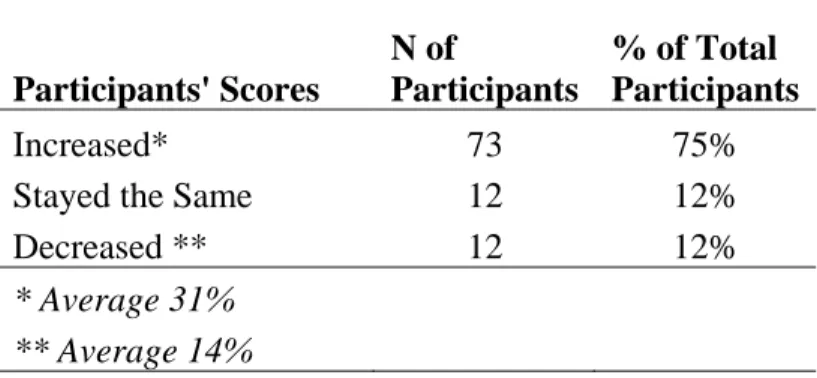
Table 5. Pre- and post-knowledge assessment score results. ... 50
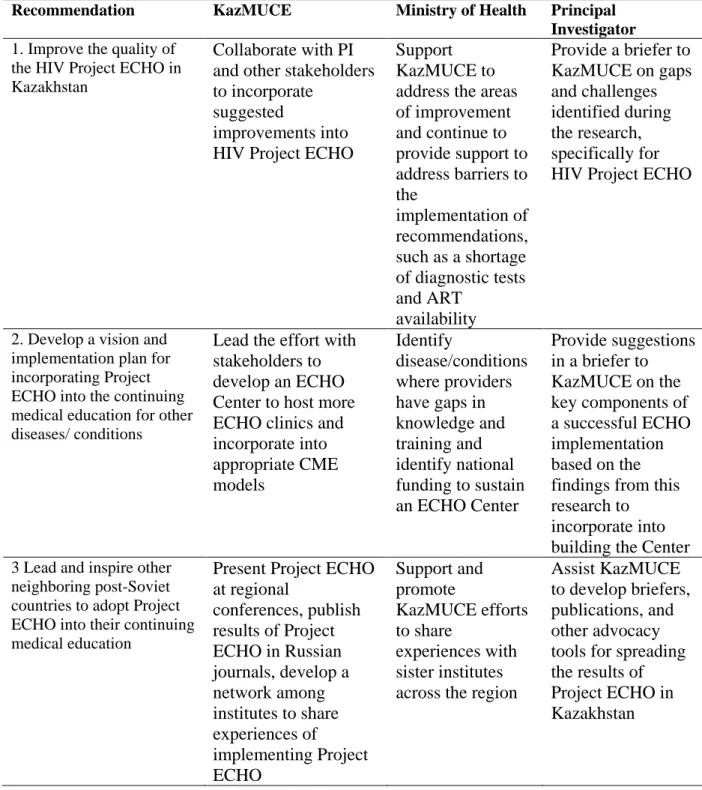
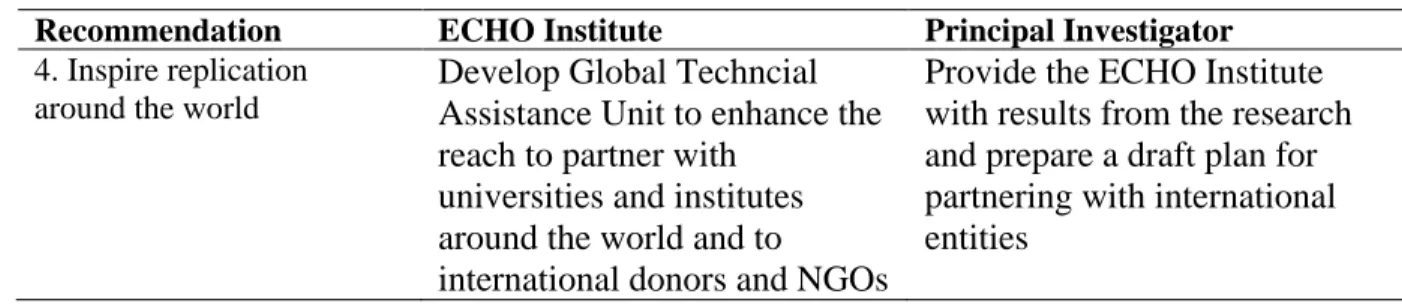
Table 6. Plan for change recommendations for Kazakhstan. ... 73
xii
LIST OF FIGURES
Figure 1. Kazakhstan HIV Project ECHO curriculum modules Sept 2016- June 2017 ... 10
Figure 2. Literature review process diagram on project ECHO feasibility and impact ... 15
Figure 3. Number of publications by year ... 16
Figure 4. Project ECHO participants’ specialty ... 42
Figure 5. Results of retrospective survey of participants’ self-efficacy before and after Project ECHO ... 54
Figure 6. Results of retrospective survey of participants’ professional satisfaction ... 55
xiii
LIST OF ABBREVIATIONS
ADS Associate Director for Science (at CDC) ART Antiretroviral Therapy
CDC Centers for Disease Control and Prevention
CHW Community Health Workers
CME Continuing Medical Education
ECHO Extension for Community Healthcare Outcomes EECA Eastern Europe and Central Asia
FG Focus Group
HCV Hepatitis C Virus
HCW Health Care Worker
HIV Human Immunodeficiency Virus
ICAP International Center for AIDS Care and Treatment Program IDI In-Depth Interviews
KazMUCE Kazakh Medical University for Continuous Education KazNMU Kazakh National Medical University
MOH Ministry of Health
MOHSD Ministry of Health and Social Development
PCP Primary Care Physician
PEPFAR President’s Emergency Plan for AIDS Relief PLHIV People Living with HIV
xiv PWID People Who Inject Drugs
QI Quality Improvement
RAC Republican AIDS Center
SEV Scientific Ethics Verification (at CDC) SME Subject Matter Experts
TB Tuberculosis
UNM University of New Mexico
1
CHAPTER 1: INTRODUCTION HIV Burden of Disease in Kazakhstan
The region of Eastern Europe and Central Asia (EECA) is one of the few regions in the world where the HIV epidemic is still on the rise.1 Currently, countries in Central Asia, including Kazakhstan, face concentrated HIV epidemics; the most common mode of transmission is
sharing infected syringes and needles among people who inject drugs (PWID). The HIV prevalence among PWID is 9.3%.2 Late HIV diagnosis, delayed initiation of patients on HIV/AIDS antiretroviral therapy (ART), and low adherence to treatment contribute to the
continuous spread of the infection and high mortality among people living with HIV (PLHIV). In June 2014, the U.S. Global AIDS Coordinator, Dr. Deborah Birx, announced that the United States program to respond to the worldwide AIDS epidemic, the President’s Emergency Plan for AIDS Relief (PEPFAR), would be committed to aggressive scale-up of adult and pediatric ART across PEPFAR-supported countries in an effort to reach epidemic control.1 This was following the 2014 UNAIDS (the Joint United Nations Programme on HIV/AIDS) announcement of a new “90-90-90” strategy for controlling the HIV epidemic worldwide. This strategy calls for 90% of estimated PLHIV to be diagnosed, 90% of diagnosed PLHIV to be treated with ART, and 90% of PLHIV on ART to be virally suppressed.3
Kazakhstan receives funding and support from PEPFAR. In Kazakhstan there are 26,000 estimated PLHIV.4 As of January 2017, 20,841 were diagnosed in the country. Although
2
(VL) suppression.2 In order to implement the 90-90-90 strategy based on the estimated PLHIV in Kazakhstan, the health system will need to cover 21,060 PLHIV with ART. Therefore, they will need to continue serving 11,482 patients plus initiate 9,578 additional patients on ART. In the short-term the government of Kazakhstan announced that they will procure ART for a total of 14,740 patients by the end of 2018, and by 2020 the government plans to procure ART to cover 90% of registered cases. To reach this goal in Kazakhstan there will need to be significant investment in building the capacity of the health care system to absorb more patients on ART and maintain quality treatment for those currently on treatment.
Human Resources and Policy Environment
In 2011-2012 an assessment of HIV clinical services in Kazakhstan described the policies and regulations that drive the current structure of the HIV services.5 This assessment explained that HIV treatment services are provided through a network of 24 specialized local facilities – oblast (provincial) and city AIDS Centers which are both coordinated centrally by the
Republican AIDS Center (RAC) in Almaty, Kazakhstan. The RAC is a regulating entity that gathers and analyzes data and sets policies. Therefore, the RAC has a national mandate to coordinate HIV surveillance, prevention, care, and treatment activities across the country
including setting the standards for the workforce in each facility. The oblast, which is equivalent to a U.S. state, and city AIDS Centers offer HIV testing, prevention interventions, and care and treatment services for PLHIV. Primary health care facilities and other specialized medical facilities refer PLHIV to AIDS Centers. In some situations, they collect blood samples for HIV testing to be conducted at AIDS Centers. However, all treatment initiation and case management is done at the AIDS Centers.5
3
the department, two clinicians, and three nurses.5 For AIDS Centers that have a high volume of patients, such as those in the cities of Karaganda and Almaty, there may be additional clinicians and nurses. During this assessment of clinical services it was noted that most providers at the AIDS Center completed postgraduate training in HIV management either at the Kazakh National Medical University or Almaty State Institute of Postgraduate Medical Education.5 However, clinicians reported challenges in providing proper clinical management of PLHIV.5 One of the reasons for this is that the training focuses on transferring theoretical knowledge and does not target the building of critical clinical decision-making skills or include sufficient time for case studies and discussion of clinical examples.5 The consequences of limited levels of knowledge and skills among clinicians applying national guidelines to their case management resulted in low enrollment of identified PLHIV into treatment; a lack of ART adherence support by clinical staff; low patient retention rates; limited patient follow-up due to an ineffective patient data management system; low levels of tuberculosis (TB) screening among PLHIV due to a lack of coordination among service providers; and inadequate prescription of cotrimoxazole and isoniazid preventive therapies.5
4
essential form of building competencies, reinforcing skills, and ensuring that they have the knowledge and confidence to deliver high quality ART services. These programs are supported through PEPFAR donor funds, as the clinical assessment noted that there is limited number of staff at the clinical department funded by the Republican AIDS Center to conduct regular monitoring visits and provide sufficient technical support to city and oblast AIDS center in PLHIV case management.5 In 2015, UNAIDS advocated among stakeholders to assist in building the capacity of healthcare workers to meet the need of doubling of treatment. At the same time, in 2015 PEPFAR revised its strategy to concentrate resources for on-site mentoring support to facilities in two oblasts in Kazakhstan in order to demonstrate a model of how to reach the 90-90-90 UNAIDS goal in a given area. Therefore, the on-site mentoring and in-service training was limited to only two oblasts. Unfortunately, the RAC has been unable to replicate the donor supported on-site program in other oblasts with funding from the national budget.
Given the providers’ limited capacity to manage HIV cases,5 the urgency to scale up treatment to provide services, and limited funds to provide on-site mentoring and in-service training, CDC partnered with ICAP at Columbia University and the Kazakh Medical University for Continuous Education (KazMUCE), to implement a new continuing medical education initiative called Project ECHO (Extension for Community Healthcare Outcomes) to reach more providers across the country.
Project ECHO Intervention
5
of August 2017 Project ECHO has been replicated in 23 countries on six continents including Argentina, Australia, Brazil, Canada, Cote d’Ivoire, Ecuador, Egypt, Georgia, India, Kenya, Mexico, Namibia, Tanzania, Uganda, the UK, Uruguay, and Vietnam.6 The basis of the intervention is using a virtual platform to conduct mentoring and training where the expert specialists sit at a “hub” site and teams or individuals sit at “spoke” sites in their clinical facilities.7
Project ECHO is aimed at increasing knowledge, skills, and confidence of HCWs who lack expertise to treat or manage complex diseases and where there are large distances for referrals from HCWs to specialists.8 Beyond the traditional learning model, Project ECHO is designed to maximize adult learning and facilitate communities of practice. Dr. Bruce
Struminger, Associate Director of ECHO, wrote:
“Virtual communities of practice, such as those that use the Project ECHO model, go beyond virtual classrooms by developing knowledge networks that promote real-time, multidirectional learning and teaching, with a strong emphasis on peer-to- peer sharing and learning. Knowledge delivery and mentoring are combined with opportunities for live discussion and problem solving in situations where meeting in person is impractical and cost-prohibitive.”6
Theoretical Basis for Project ECHO
The theoretical basis of the learning process in Project ECHO incorporates three theories of learning10: Social Cognitive Theory,11 Situated Learning Theory,12 and Community of Practice Theory.13
Social Cognitive Theory describes three key factors that increase a person’s confidence to change their behavior: 1) personal belief that acting upon the new information will
outweigh the costs of continuing with the status quo or doing nothing; 2) self-efficacy to implement and perform the new action; and 3) direct positive reinforcement after
6
the clinical mentor and the hub team are influencing the learners at the spoke sites by (1) providing new information about how they can improve patient outcomes (didactic sessions); (2) providing concrete examples of how a provider can implement the information (case presentations); (3) and reinforcing the information through positive feedback from the hub team (who are seen as the top experts in HIV in Kazakhstan) both during the sessions and with follow-up emails that include additional resources and materials.
Situated Learning Theory suggests that learning in the context of collaboration and social interaction contributes to the success of the learning process.12 If providers perceive themselves as part of a community of peers this creates a learning benefit above what other traditional trainings or one-on-one mentoring provide. Project ECHO differs from self-guided online or virtual education programs by maximizing ongoing interaction with peers and experts, using the virtual platform to connect people where everyone is learning together and at the same time.
7 Components and Model of Project ECHO
The ECHO clinic session is about one hour long every week and starts with introductions of all participants at the hub and at the spokes on video and/or phone. The learning session starts with a case presentation, followed by a brief 15-20-minute didactic presentation on an aspect of the disease management, and ends with another case presentation. De-identified cases to be presented are submitted by participants in advance of the ECHO clinic in a standard case template. The participant who submits the case presents it based on the information provided in the template. The clinical mentor solicits clarifying questions from participants, and then from participants at the hub. The clinical mentor also solicits recommendations and suggestions from participants and provides final recommendations, which are summarized and later sent to the presenters electronically. Participant who are interested in obtaining no-cost continuing medical education (CME) credits register online at the start of the clinic and then complete a brief electronic questionnaire at the end of the ECHO clinic.15
The model uses three learning components to develop clinical skills to care for patients: mentoring and coaching from expert specialists, learning from peer-to-peer interaction, and short didactic trainings from expert specialists. 16 The success of the model of Project ECHO is built around three levels of outreach at the clinical level through the participating providers. The first level of outreach is to improve the treatment to the index patient whose case is presented during the ECHO session. The second level is for providers to apply the knowledge gained through the case presentation to other patients in their care. The third level is for the provider through
self-8
efficacy.18 It is meant to enhance the knowledge of the primary care providers, permit patients to continue receiving care from their primary providers, and reduce the need for referrals.19
Given the success that Project ECHO has achieved, I hypothesized that this model of continuing medical education through virtual training and mentoring would lead to increased HIV clinical management knowledge and improved quality of clinical services, as well as enhanced competency in HIV case management.
Description of the Implementation of the Pilot Intervention
The first phase of HIV Project ECHO took place from September 2016 to June 2017. This first phase also served as a pilot to evaluate the impact of the initiative in Kazakhstan. Participants were recruited and selected to participate in the pilot and evaluation of Project ECHO from all 24 treatment facilities in Kazakhstan (23 city and provincial AIDS Centers and the Mother and Child Health Center in Shymkent).
Prior to launching Project ECHO in the summer of 2016, a working group from Kazakhstan traveled to the ECHO Institute in New Mexico to participate in the immersion
training and sign partnership agreements with UNM. Based on this experience the working group also developed the implementation plan and evaluation for the pilot phase. They also conducted a public press briefing and launch of the initiative at KazMUCE to gain the support and backing of major stakeholders, including the Ministry of Health.
9
KazMUCE was signed between KazMUCE, ICAP, and RAC to establish a non-binding partnership for supporting Project ECHO.
The curriculum was developed based on a needs assessment conducted by the clinical coordinator as she recruited participants into Project ECHO. The curriculum included nine modules, covering 38 topics (see Figure 1). The curriculum was approved and accredited by the Kazakhstan Ministry of Education, allowing KazMUCE to distribute CME credits to the
participants upon completion of 90% of the sessions. The sessions were designed based on the approved curriculum and lasted 60 minutes. A short didactic session was presented for each topic by the clinical coordinator or a guest specialist. Participants were pre-selected to present a case from their treatment facility pertaining to the topic. The curriculum built in a few sessions where case presentations outside of its parameters were introduced to allow for the discussion of pressing cases. At the end of each session, the session’s presentations, patient recommendations from the experts, and links to educational literature/modern publications were sent to participants via email.
10
Figure 1. Kazakhstan HIV Project ECHO curriculum modules Sept 2016- June 2017.
The clinical coordinator, Dr. Zhanna Zeypedenovna Trumova, is also the head of the Evidenced-Based Medicine Center at KazMUCE and is accredited as an independent expert of the Republic of Kazakhstan on infectious diseases. She has a medical degree from the Aktobe State Medical Institute and did her clinical residency at the Academy of Medical Sciences in USSR. She worked as a clinician for twenty years and then became the Chief of the Clinical Department at the Republican AIDS Center for ten years. Since 2013 she has served as the clinical expert on HIV at KazMUCE. During her tenure at the Republican AIDS Center she became widely known and respected among HIV providers in Kazakhstan.
Study Objective and Aims
Objective: To evaluate the relationship between Project ECHO and capacity-building among clinicians for providing high-quality PLHIV care in Kazakhstan.
Module 1: HIV and Evidence-Based Medicine; one session.
Module 2: HIV. HIV-Associated (secondary) Conditions; seven sessions.
Module 3: Illnesses, Not Related to HIV; five sessions.
Module 4: Antiretroviral Therapy; five sessions.
Module 5: HIV in Children; five sessions.
Module 6: Prevention of Mother-to-Child Transmission of HIV (PMTCT); five
sessions.
Module 7: Infection Control. Biosafety of Patients and Health Professionals in
Health Care Facilities; three sessions.
Module 8: Multidisciplinary Approach to Management of HIV-Positive Patients. Counseling as a Model of Psychological Support to PLHIV. 3 clinics.
11
Aim 1: To examine the attitudes and practices of HIV providers toward participating in Project ECHO.
Aim 2: To evaluate changes in participating providers’ HIV knowledge, self-assessed professional satisfaction, and self-efficacy to provide essential components of HIV clinical care.
Aim 3: To explore the degree to which participants integrated knowledge and skills gained while participating in Project ECHO into their clinical practice to benefit PLHIV patients. Guiding Conceptual Framework
Project ECHO is a continuing medical education (CME) model.9 The underlying
hypothesis of CME is that physicians must commit to continuous learning in order to provide the best possible care for their patients.20 The guiding theoretical and practical basis for studying Project ECHO as a method of capacity-building through CME is the Expanded Outcomes Framework for Planning and Assessing CME put forward by Dr. Donald E. Moore and his team at Vanderbilt University.20 The Expanded CME Framework builds upon the original framework for outcomes assessment that was proposed by Dr. Moore in 2003 and includes seven levels of potential CME outcomes. The framework was designed to propose a comprehensive way of planning and assessing continuing medical education. The focus is on achieving desired outcomes, including improved physician performance and better health outcomes. Table 1 provides a description by Moore of each outcome level.
12
framework suggests that there are many levels to CME and the desired outcomes can be measured together or independently. Also, Moore and his team suggest that ideally a CME program would be planned based on all levels in this comprehensive framework. They recognize, however, that not all CME programs can or have been planned in such a comprehensive way but still can be assessed using desired outcomes of any level. This research assessed Levels 1-6. Table 1. Expanded outcomes framework for planning and assessing CME programs (adapted from Moore). 20
Expanded CME Framework Levels
Description
Participation Level 1
The number of physicians and others who participated in the CME activity
Satisfaction Level 2
The degree to which the expectations of the participants about the setting and delivery of the CME activity were met
Learning: Declarative Knowledge
Level 3A
The degree to which participants state what the CME activity intended them to know
Learning: Procedural Knowledge
Level 3B
The degree to which participants state how to do what the CME activity intended them to know how to do
Competence Level 4
The degree to which participants show in an educational setting how to do what the CME activity intended them to be able to do Performance
Level 5
The degree to which participants do what the CME activity intended them to be able to do in practice
Patient Health Level 6
The degree to which the health status of patients improves due to changes in the practice behavior of participants
Community Health Level 7
13
CHAPTER 2: LITERATURE REVIEW
Since its inception in 2003, Project ECHO has been replicated all over the world to address capacity-building of providers for various diseases or conditions. The objective of this systematic literature review is to examine the existing evidence of Project ECHO effectiveness. I have organized the literature based on Moore’s Expanded CME Framework seven levels of CME outcomes: Participation, Satisfaction, Learning (declarative and procedural knowledge),
Competence, Performance, Patient Health, Community Health. Methods
I conducted a systematic literature review of peer reviewed journal articles using
PubMed, Global Health (ephost) and Scopus. Since Project ECHO is a specific intervention with strict replication criteria I used the following search term: “Project ECHO” OR “Extensions for Community Health Outcomes.” I searched the English language literature from January 2003- December 2017 since the initial pilot of Project ECHO was launched in 2003.21 Additional studies were identified through reference lists of previously found studies or articles related to Project ECHO.
The inclusion criteria were as follows:
1) Articles describing the replication process of Project ECHO and/or the feasibility of the replication in any given context
2) Evaluations of Project ECHO impact including the original Project ECHO in the University of New Mexico and any replications of Project ECHO
14 The exclusion criteria were as follows:
1) Project ECHO was not the main focus of the study Data extraction and classification
15
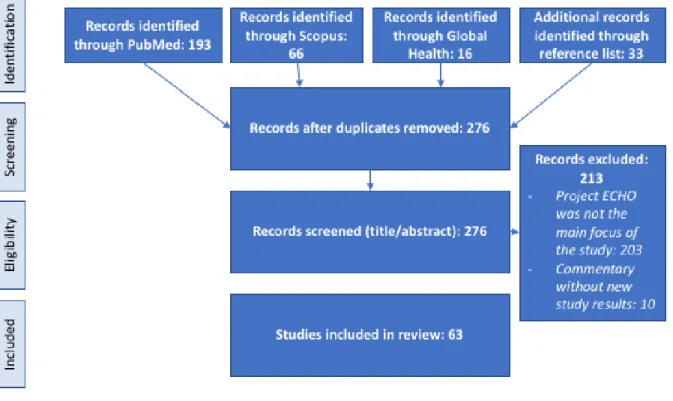
Figure 2. Literature review process diagram on project ECHO feasibility and impact. Results
I reviewed 63 articles for this literature review. The general description and overview of the literature is summarized first, followed by a description of the outcomes using Moore’s Expanded CME Framework. I also included the methodology used in the literature to evaluate Project ECHO.
16
11 published in 2016. In 2017, 27 articles were published as Project ECHO replication models around the world became more established. Figure 3 illustrates the exponential growth in the literature base, especially in 2017.
Figure 3. Number of publications by year.
The literature contained evaluations of Project ECHO clinics in North America, including New Mexico, Utah, Arizona, Pacific Northwest, Missouri, Massachusetts, Michigan, and
Ontario. Also, the literature covers Project ECHO clinics that span the US through Indian Health Services, Veterans Affairs (VA) and the Military Health Service. Three articles evaluated Project ECHO outside of North America: Northern Ireland, Argentina and India18,23,24. Similar to the other evaluations of Project ECHO in North America, they described limited health provider resources and scarcity of treatment facilities in rural areas as an impetus for starting Project ECHO.18,23,24
Project ECHO started as a telementoring and training for primary care physicians (PCP) involved in treating Hepatitis C. Fifteen articles explain the implementation of Hepatitis Project ECHO.7,9,10,25–36 Six articles compare Project ECHO replication models across multiple diseases or conditions primarily at the VA or UNM.17,37–41 Eight articles discussed treating chronic pain
2
0 0 1 2
4 2
6 8
11 27
17
as the population in the United States is seeking increased treatment of pain with narcotics.42–49 Five articles examined the program for addiction in the context of increased substance abuse in the United States.5,2730 Three articles described the Bone Health teleECHO at UNM.53–55 Three articles described Project ECHO for diabetes type II in the United States as obesity and sedentary lifestyle increases.56–58 Five articles evaluated how Project ECHO has been replicated to assist providers with care and treatment for geriatric patients to improve mental health59–61 or as they transition from surgery to care.62,63 The following Project ECHO clinics for other diseases or conditions were described by one or two articles in the context of either complex case
management or increases in prevalence of the condition or disease: complex care for low income patients,64,65 women’s health,66 palliative care,24,67 HIV,68 multiple sclerosis,69 hypertension,19 autism,70 antipsychotic use,71 transgender health,72 tobacco cessation,73 antimicrobial
stewardship,74 behavioral health,75,76 public health,39 and Zika.77
Of the literature reviewed, 42 evaluation studies included participation (Level 1); 22 explored participant satisfaction with the program (Level 2); 19 described the learning outcomes of participants (Level 3); 18 examined competence, which included perceived self-efficacy and professional satisfaction (Level 4); 16 evaluated performance of participants as a result of participation in ECHO (Level 5); 10 assessed patient outcomes (Level 6); and 1 discussed community health outcomes (Level 7). Some studies addressed more than one level of desired outcomes.
Participation (Level 1)
18
participants averaged about 20-45 with variation in participation for every session. The main method used for data collection was participation logs from the electronic iECHO tool, which collects statistics on each ECHO session.
Satisfaction (Level 2)
Twenty-two articles described participant satisfaction with their involvement in Project ECHO. All articles reported a high participant satisfaction with the sessions and/or the design of Project ECHO.10,17,18,27,29,33,38,44,46–48,51,52,61,63,66,69,70,75,76,78,79 The main method of collecting participant satisfaction results was through administering surveys after six months and up to two years from the start of implementation of the Project ECHO.10,17,18,27,29,44,51,52,66,70,78,79 Qualitative data from interviews or focus groups was another method of obtaining information about
participants’ satisfaction with the program.33,38,46–48,61,69
Providers reported several factors that led to their satisfaction with participating in Project ECHO. One factor was having access to a multidisciplinary team or expert panel who could provide comprehensive and expert advice.18,33,43,61 However, one study noted that
providers were frustrated when they received too many opinions from the multidisciplinary team during the sessions.65 Other factors expressed by participants which contributed to their
satisfaction with Project ECHO included improving participants’ expertise,33,46,48 increased networks and community of practice,47,48 and receiving continuing medical education.50,65,70 In the New Mexico model, if network clinicians manage 20 Hepatitis C patients through a year of antiviral therapy and demonstrate competence they can be eligible for certification of the Hepatitis C treatment expertise, which was a motivation for participation in Project ECHO.7
19
program to train providers on women’s health because there was a lack of knowledge on how to treat female patients. They conducted 18 interviews with PCP participants over the span of two years starting the month of the initiation of the intervention. Some of the interviewees reported finding the ECHO sessions helpful with the case presentation and through the interviews a common theme emerged: how they had used a session to assist with another case.66 However, in the study they also received feedback that while participants increased their knowledge, the range of topics was too broad and it was difficult to implement the recommendations.66
A study by Susan Kellie described how one ECHO project used the platform for distance learning for disseminating information about antimicrobial stewardship.74 While presenting cases during the session is a trademark of the ECHO model, this ECHO program was instead designed to teach new information and maximize the peer-to-peer interaction by having robust
conversations about how each hospital or center implements antimicrobial stewardship. This deviation from the model still resulted in high satisfaction among the participants.74
In a study conducted by Elisa Fisher, which evaluated Project ECHO to improve geriatric mental health care, her team conducted interviews with participants.61 The study found that access to experts and a professional support community fostered the most satisfaction for Project ECHO, especially among rural clinicians in smaller cities. Participating clinicians who already had access to experts at larger teaching or urban hospitals reported less satisfaction.61
Participants noted the main factor contributing to dissatisfaction with Project ECHO was loss of productivity during the sessions; therefore, providers reported lack of time or protected time to participate.26,28,33,44,65 One study describing the implementation of Project ECHO in the Pacific Northwest stated how the hub addressed this issue. The hub staff advocated for
20
provides free CMEs and also enhances provider self-efficacy.65 Additionally, a study from the UNM also described how the hub provides monetary reimbursement to providers as an incentive for taking the time to prepare and present a case during a session.26
There is a chance for selection bias among these results since participation in Project ECHO is voluntary and participants who completed the surveys presumably had an interest in Project ECHO before joining.
Knowledge (Level 3)
Nineteen studies focused on evaluating knowledge gained during Project ECHO. Thirteen studies assessed participants’ self-reported impact on knowledge after participating in Project ECHO using post-session surveys, focus groups or interviews.10,33,37,38,43,46–48,61,66,68,69,75 Also, six studies assessed impact on knowledge by using a multiple choice test before
participation in Project ECHO and after a set number of sessions, usually after six months to a year of participation.9,19,50,52,76,80 All studies reported moderate to high levels of knowledge improvement.
Competence (Level 4)
21
In an evaluation of the UNM Project ECHO Pain, researchers used focus groups
conducted by video teleconference and included nine questions on five topics conducted by the ECHO Pain evaluation staff and the medical director. Of the 14 clinicians who participated in ECHO Pain for one year or longer, nine clinicians agreed to join a focus group. The results showed that the participants were motivated to continue participating because they felt less isolated and they felt encouragement from the hub team, which gave them confidence in their work.82
In a study by Micah Mazurek, which assessed ECHO participants’ outcomes on
managing autism, self-efficacy was evaluated using self-reported questionnaires at baseline and then after the study period.70 Participants reported the degree to which they felt confident to provide care in a specific area using a six-point Likert Scale and the study found tha confidence levels improved significantly.
Performance (Level 5)
Sixteen studies assessed Project ECHO’s impact on participants’ performance. Six studies conducted post-intervention or post-session surveys to measure self-reported changes in service delivery performance.9,28,44,63,66,70,74,75. Six studies reviewed patient-level data to assess changes in provider service delivery as a result of participating in Project ECHO.15,45,46,50,61,63,71 One study conducted focus groups43 and one study conducted interviews66 to explore how providers applied their gained knowledge to their practice.
The ECHO Autism study by Mazurek assessed practice behavior using a before and after self-reported questionnaire. Participants were asked to indicate if they had administered a
22
A study by Joanna Katzman used focus groups to study performance outcomes of the Project ECHO Pain.43 Participants described how they applied concepts from Project ECHO to treat patients and help them get off narcotics. Additionally, the providers mentioned they had changed their attitude toward the patients, learned how to talk with patients, and used the information gained during the sessions for serving their other patients.43
A study by Elisa Fisher evaluating Project ECHO in a geriatric mental health care setting analyzed data on health care utilization and costs before and after the implementation of Project ECHO at the spoke sites. The researchers followed patients of participating spoke sites and found they had fewer ER visits for issues related to mental health than in previous years. The results showed there was a 24% reduction in costs associated with emergency room use. The other metrics had a downward trend but were not found to be statistically significant.61
Miriam Komaromy conducted a study in which her team administered post-session surveys linked to receiving CME credits. The surveys had open-ended questions for participants to discuss whether the information would be useful in caring for their own patients and if so, in what way. Of the responses from 299 post-session surveys, 77% stated that the case discussion influenced their patient care plan.75
Patient Outcomes (Level 6)
23
fast-tracked to appropriate care.51 This improved the access to care for patients. In another study on the implementation of Project ECHO in the Veteran’s Health Care (VHC) by Tahan, about half of the SCAN-ECHO consultations resulted in patients receiving their treatment from their local PCP instead of being referred to specialist, also improving the access to acute treatment.44 The remaining half were referred to the VHA Medical Center when the treatment involved equipment or services not available through their PCP.83
Eight studies reviewed patient-level data to assess impact on patient outcomes and all demonstrated improvements to patients’ health outcomes.25,27,32,58,59,61,62,71 In the first article published on patient outcomes, Dr. Sanjeev Aurora from the University of New Mexico led a prospective cohort patient chart review comparing Hepatitis C treatment outcomes (viral suppression) from the mentoring spoke sites with the hub sites and found that there was equal success in patient outcomes.25 The study showed that 58.2% of the patients at the ECHO spoke sites had a sustained viral load suppression response, and 57.5% of patients at the UNM HCV clinic had a sustained viral load suppression response, which was almost the same rate.25Dr. Stephen Gordon led a prospective matched-cohort study in a nursing home context,
demonstrating that the intervention sites had a significant decrease in using physical restraints and a significant decrease in residents receiving antipsychotic medications compared to the control group.60
24
mortality in the 29 cases in whom improvement was reported.59 In a study by Watts evaluating Project ECHO for diabetes, researchers used retrospective chart review and found that the glycemic control improved in all of the patients who were treated by participating PCPs
compared to the overall improvement of glycemic control; this development does not appear to be the result of some system-wide improvement from other interventions.58
In a CDC report, Kiren Mitruka examined the patient outcomes on Project ECHO Hep C in Arizona and Utah using clinical data. The study determined that 46% of HCV-infected
patients reached by teleECHO clinics received treatment, a proportion that was more than twice that observed in another CDC report for patients receiving Hepatitis treatment (14%-22%).27 Community Health Outcomes (Level 7)
One study evaluated the impact of Project ECHO participation on community health.50 In New Mexico the state legislature mandated CME for providers administering opioids to manage pain. A Project ECHO was designed to fulfill this requirement. The six courses were attended by a cumulative 1,090 participants.
25 Discussion
The literature describes how Project ECHO has been replicated mainly in North America to train and mentor providers in the care of a chronic disease or condition. The literature is also multiplying each year as Project ECHO is replicated and implemented in more contexts. My organization and analysis of the studies examined different levels of outcomes of Project ECHO as a CME in the context of Moore’s Expanded CME Framework. Most of the literature includes evaluating the outcomes of Moore’s first six levels and only one examining level 7: Community Health Outcomes.
The studies employed many different methodologies, both qualitative and quantitative, for collecting evaluation results. Most of the studies used a combination of post-session surveys, focus groups, interviews and patient-level data to analyze the desired outcomes in the Expanded CME Framework. Multiple methods used in the literature to capture desired outcomes will be used in the methods for this research.
Of the literature evaluating Project ECHO, there is a limited number of articles highlighting Project ECHO replication in a developing country context and there is only one article dedicated to the description and implementation of an HIV Project ECHO. The purpose of this research is to use the methods and findings from the literature to guide the evaluation of the impact of HIV Project ECHO on providers and patients in Kazakhstan.
Limitations
26
uncompensated. While some evaluations were able to capture a large number of respondents, many had a smaller respondent size pool.
Many of the studies noted the lack of comparison groups as a limitation, especially among the studies that evaluated participants’ changes in knowledge. While these studies employed pre- and post-test results to measure changes in participants’ knowledge, these changes could also be attributed to other training programs or professional development activities.
One limitation of using Moore’s Framework was the assessment of Level 4: Competence. Moore’s Framework describes “Competence” as evaluating the degree to which participants can demonstrate in an educational setting how to do what the CME activity intended them to be able to do.20 In many trainings, especially for medical professions, a practicum is included with supervision from a professor or instructor to ensure that providers can perform the intended task. Since Project ECHO is a virtual training program with up to 50 participants in a session, it is difficult for all of the providers in the large setting to demonstrate their knowledge. There were no studies evaluating participants’ demonstrated knowledge within Project ECHO sessions other than peer-to-peer discussions of cases or follow-up from cases. Therefore, the studies that captured competency focused mainly on self-reported changes in confidence to implement and apply the knowledge gained.
27
CHAPTER 3: METHODOLOGY AND STUDY DESIGN Study Design
The study design employed a multiple method approach to evaluate the three aims for this research. Each aim was addressed through assessing one or more of the levels of desired outcomes in Moore’s Expanded CME Framework. While Moore outlines seven levels of desired outcomes, the scope of this study assesses Levels 1-6 using quantitative and qualitative
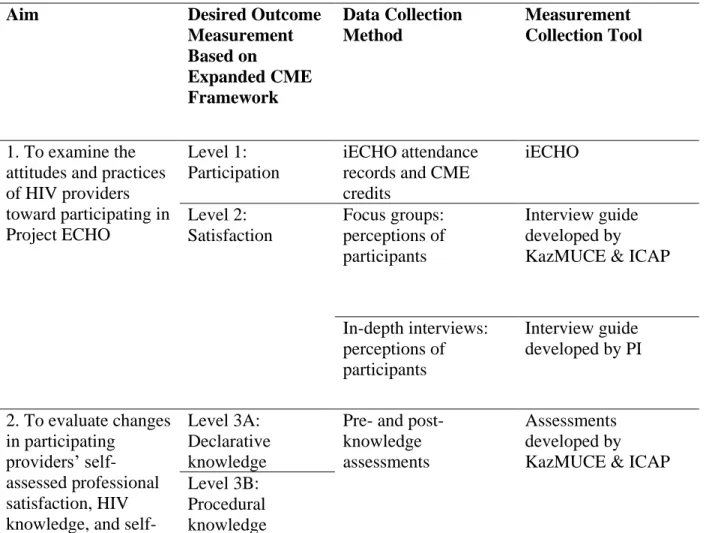
methodology applied from the literature review (see Table 2).
Table 2. Summary of research measurement outcomes and data collection methods.
Aim Desired Outcome
Measurement Based on Expanded CME Framework Data Collection Method Measurement Collection Tool
1. To examine the attitudes and practices of HIV providers toward participating in Project ECHO
Level 1: Participation
iECHO attendance records and CME credits iECHO Level 2: Satisfaction Focus groups: perceptions of participants Interview guide developed by KazMUCE & ICAP
In-depth interviews: perceptions of participants
Interview guide developed by PI
2. To evaluate changes in participating
providers’ self-assessed professional satisfaction, HIV knowledge, and
self-Level 3A: Declarative knowledge
Pre- and post- knowledge assessments
Assessments developed by KazMUCE & ICAP Level 3B:
28 efficacy to provide
essential components of HIV clinical care
Level 4: Competence Post-intervention self-assessed self-efficacy and professional satisfaction survey
Surveys developed by KazMUCE & ICAP
Focus groups: self-reported knowledge gained, self-report of competence, intention to change
Interview guide developed by KazMUCE & ICAP
In-depth interviews: self-reported knowledge gained, self-report of competence, intention to change Interview guide developed by PI
3. To explore the degree to which participants have integrated knowledge and skills gained while participating in Project ECHO into their clinical practice to benefit PLHIV patients
Level 5: Performance Level 6: Patient Outcomes
Focus groups: self-report of performance of applied knowledge and patient outcomes
Interview guide developed by KazMUCE & ICAP
In-depth interviews: self-report of
performance of applied knowledge and patient outcomes
Interview guide developed by PI
Approach
In order to address the first aim, I analyzed the desired outcomes from Level 1:
29
to understand from the provider’s perspective what were the motivating factors and barriers for participation in Project ECHO.
In order to address the second aim, I analyzed the desired outcomes from Level 3: Knowledge and Level 4: Competence in Moore’s Expanded CME Framework. Changes in providers’ knowledge were evaluated by analyzing pre-and post-knowledge assessments as well as analyzing focus group and interview responses for statements about what Project ECHO intended them to know and how to do what Project ECHO intended. Changes in providers’ competence were evaluated through analyzing a post-intervention survey focused on
self-efficacy and job satisfaction. Also, opinions expressed by participants during in-depth interviews and focus groups were analyzed to understand the providers’ perceived changes in confidence levels to apply their knowledge gained by participating in Project ECHO. By evaluating the changes in provider knowledge and competency through focus groups and in-depth interviews, I sought to demonstrate whether Project ECHO was useful in increasing knowledge of HIV clinical case management and how it changed providers’ confidence and competence. The perceived benefit to the provider of participating in a training program is essential to on-going participation.
30
specific cases (de-identified) where providers were able to apply their knowledge to improve service delivery. It is important to demonstrate to decision makers not only that Project ECHO has benefited providers but that there has been an impact on improved service delivery. Sample Size and Inclusion Criteria
The pilot of Project ECHO started in September 2016 and physicians from HIV service delivery sites were invited to attend. All 24 treatment facilitates in Kazakhstan became
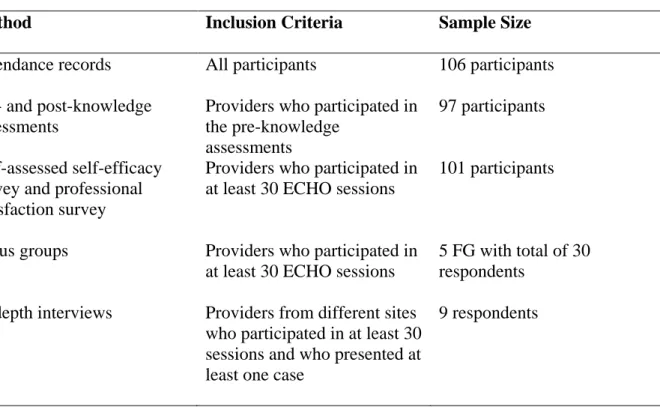
participating spokes (23 AIDS Centers and the specialized Mother and Child HIV clinic in Shymkent- see appendix A for complete list of sites). Table 3 describes the inclusion criteria for the final sample sizes included in this study. There was a total of 106 participants who joined Project ECHO during the course of the pilot and agreed to participate in the evaluation. A total of 103 took the assessment and 100 took the post- assessment. Only 97 took both the
31
Table 3. Summary of inclusion criteria and sample size.
Method Inclusion Criteria Sample Size
Attendance records All participants 106 participants Pre- and post-knowledge
assessments
Providers who participated in the pre-knowledge
assessments
97 participants
Self-assessed self-efficacy survey and professional satisfaction survey
Providers who participated in at least 30 ECHO sessions
101 participants
Focus groups Providers who participated in at least 30 ECHO sessions
5 FG with total of 30 respondents
In-depth interviews Providers from different sites who participated in at least 30 sessions and who presented at least one case
9 respondents
Data Collection
32 Process Data
During the first year of implementation, Project ECHO staff evaluated the participation in Project ECHO (Level 1). The process records provided data on who registered to participate versus who actually participated, how many didactic sessions and patients’ cases were presented, and how the ECHO sessions were staffed. Project ECHO contains a software application,
“iECHO,” a web-based partner relations management tool that is used to track data for ECHO sessions and activities. It also provides reporting functions for ECHO session performance and provides online resources to ECHO partners.
A project administrator for the Project ECHO team was responsible for routinely entering data into iECHO and documenting a complete record of ECHO session performance. During an ECHO session, the project administrator was able to view the name of each site that was
participating in the session. Documentation of individual participants was completed by either a verbal or electronic roll call during the session. Information was entered and stored in the iECHO application. The data stored in iECHO was protected with 128 AES bit encryption, Secured Socket Layer (SSL) encryption and required secure user logins and passwords.
Additionally, KazMUCE provided CME credits to all participants who participated in at least 90% of the 38 sessions. A summary report of the process data was provided to me including the number of total participants, the percentage of sessions attended by the participants, CMEs credited and participants’ specialties.
Multiple Choice Knowledge Assessment
33
curriculum for ECHO sessions. The curriculum topics were identified through a rapid needs assessment conducted with providers at the pilot sites, as well as suggestions from subject matter experts.
Multiple-choice questions addressed the following topics: HIV testing and interpretation of test results; evaluation and management of patients with common and serious opportunistic infections such as tuberculosis (TB), central nervous system (CNS) toxoplasmosis, cryptococcal meningitis, etc., and HIV-TB co-infection; interpretation of viral load results; first and second-line ART regimens; antiretroviral toxicities; ART drug-drug interactions; ART drug resistance; management of HIV-Hepatitis B virus co-infection; management of HIV during pregnancy; management of HIV-exposed infants; pediatric HIV management; malaria in HIV; common long-term complications of HIV; and ART and Quality Management.
Self-Efficacy Survey and Professional Satisfaction Survey
Two additional surveys were administered among ECHO participants. A survey measuring self-efficacy centered on providers’ perceptions of their own skills and level of expertise in serving as a clinician. Participants selected their level of competency from a Likert Scale of very low to excellent. The project participants were asked to assess their own
competence in management of patients with HIV before and after participation in Project ECHO, based on 24 characteristics, including:
Counseling patients on ART initiation
Assessment of a patient's condition, selection of drugs for ART for different patient groups, therapy initiation, monitoring, and change of ART regimens Supporting patients to adhere to ART
34
Prevention, diagnosis, and treatment of opportunistic infections and co-morbidities
Management of non-communicable diseases, including hypertension, dyslipidemia, diabetes mellitus, renal disease, and malignant tumors in PLHIV Pre-exposure and post-exposure prophylaxis
Another survey included an assessment of providers’ level of job satisfaction. Again, the project participants were asked to assess their own professional satisfaction before and after participation in Project ECHO using a Likert Scale from “totally disagree” to “fully agree” with the following statements:
I feel professional isolation at my workplace.
I can easily take a personal rapport with my colleagues.
I can easily turn to clinicians if I need to get professional feedback or help from them. I can easily access resources for professional development (improve knowledge). When I need help or support from clinicians, I can get in touch with an HIV expert in
appropriate time.
I have the opportunity to regularly share my clinical experience with colleagues. I am generally satisfied with my work.
I am sure that I can improve the quality of health services delivery in my facility. Focus Groups and In-Depth Interviews with ECHO Clinic Participants
35
E and Appendix F provide a description of the respondents in the in-depth interviews and focus groups, respectively.
The transcripts of the focus groups and interviews were de-identified, transcribed in Russian and translated into English. The English transcripts were provided to me in Word documents by a professional translation company in Kazakhstan familiar with the translation of public health documents and used by many public health organizations to do written translation. The translations were reviewed by CDC or ICAP staff familiar with the English and Russian terminology and who had participated in the focus groups or interviews to ensure the fidelity of the translation to the spirit of what was said in Russian. Russian and English translated
transcripts were provided to me for review and analysis. I also have a working knowledge of Russian, specifically with public health terminology. I was also able to reference the Russian transcripts when there was a confusing translation to better understand the spirit of the quote. Finally, I cross-referenced any confusing quotes with notes I had taken during the interviews. The focus group questions probed into participants’ perspectives on session usefulness and how they selected patient cases to present in an ECHO session, including identification of quality gaps in patient care. Respondents also included self-reported changes in knowledge, competence, and performance (see Appendix D).
36
Interviewees were approached to participate based on the following criteria: they had participated in at least 30 out of 38 sessions of their group of Project ECHO and they had presented at least one case. They were then categorized by facility and one was randomly selected from each facility. I included the criteria of having presented at least one case so that I could ask questions about their presenting experience, since that is a major component of Project ECHO. I also wanted perspectives from participants at different facilities to understand the impact of Project ECHO in different settings. Once the participants were identified as meeting the criteria, they were approached by email for participation in the in-depth interview. There were ten participants who met the criteria and all ten agreed to participate. One interviewee was unable to complete the interview due to competing work demands at the time of the interview. The remaining nine participants were able to complete the full interviews. The interviews were scheduled for a time convenient for each provider and were conducted using the Project ECHO virtual platform, Zoom. Before each interview, the interviewee was sent the informed consent form (Appendix C) to explain the purpose and the procedures of the study. Those who agreed to participate provided verbal consent (described in the next section) and completed the interview.
The data collection team for the in-depth interviews was comprised of two interviewers, the CDC Associate Director and the principal investigator (me). The CDC Associate Director conducted the interview in Russian. A professional Russian-English translator provided simultaneous translation for me during each session. The Russian Zoom video session was recorded, transcribed, and translated into English and presented to me in a Word document. Informed Consent
37
study and received details of the relevant study procedures and of procedures to protect their confidentiality. A copy of the consent form for the in-depth interviews (Appendix D) was sent to the participants via email. Prior to recording, participants were instructed not to use any
identifiable patient information. Participants were informed that they could withdraw from participation at any time without giving an explanation. Participants also agreed to have Zoom video session recording during the focus groups and the in-depth interviews. The protocol for conducting the study, as well as the consent form, was approved by the Ethics Committee of the Ministry of Health, Kazakhstan and CDC Associate Director of Science.
Data Analysis
Participant Assessments and Surveys
I used descriptive statistics to analyze the results of the pre- and post-knowledge assessments and surveys. I compared the mean number of questions answered correctly in the pre- and post-knowledge assessments to analyze the overall increase or decrease of knowledge of the group. I also did a pairwise analysis to analyze the individual increase or decrease of
knowledge. To analyze the survey results I compared the mean score from the participants’ recall of their baseline status and their post-intervention status.
Focus Groups and Interviews
Transcripts from the focus groups and in-depth interviews were analyzed using template analysis. This method provides a systematic technique for categorizing qualitative data.84
38
The transcripts from both the focus groups and in-depth interviews were formatted in Word documents. The data were then grouped under the priori codes and then further grouped into meaningful patterns and/or themes in which the data were labeled for certain words or content. Themes were identified, interpreted, and developed into emergent codes. Under each a priori code there were 2-4 emergent codes that were included as subthemes. A second coder verified the coding of both priori codes and emerging codes for three of the nine interviews. After identifying themes and patterns, the data were organized and displayed according to the desired outcomes of the expanded framework as a narrative in order to facilitate the organization of the results.
Data Security, Storage and Data Management of All Project ECHO Evaluation Records
The data collected during the first year of implementation from provider assessments, focus groups, interviews, and surveys were not sensitive enough to cause safety concerns to either patients or providers. The project does not involve the collection of any identifying patient information or personal health information. Therefore, risks regarding data security and breach of confidentiality were minimal.
Appropriate security measures were taken to ensure the security and confidentiality of respondent data. Paper surveys were scanned digitally and stored electronically, separately from de-identified data (i.e., stripped of regional names and personal identifying information) on a secure ICAP network drive. Paper copies of respondent data, including consent forms and responses to verbal questionnaires, were kept in a locked ICAP office, accessible only to Project ECHO evaluation staff. Online survey data were saved on ICAP servers and transferred
39
Data from paper forms entered into a de-identified electronic database resided on password-protected, secure ICAP servers. ICAP shared a copy of all electronic data with me to facilitate analysis of the data. External hard drive back-ups are kept in a locked cabinet in the ICAP office.
All completed screening forms, digital recording, and field notes are kept in a locked cabinet at the ICAP office. All electronic data were saved on password-protected computers. Access to paper forms and electronic files were restricted to study investigators. Paper forms and electronic files will be stored for up to two years after data collection and will then be destroyed. Potential Risks
40
CHAPTER 4: RESULTS
The results address the key finding in response to the three aims of this dissertation. Quantitative results and qualitative results will be presented as they address each aim. A concept table (Table 4) was used to organize the results from the focus groups and the in-depth
interviews and outline the priori themes from the Expanded CME Framework and the emerging themes. Quotations used in this section were taken directly from the focus groups and interviews and are attributed anonymously to the person (or organization they represent) in the narrative. To avoid pronouns that would disclose the gender, name of a person, or specific organizational entity, pronouns and personal nouns have been substituted with “s/he”, “they,” “their” or “them” to help ensure anonymity.
Table 4. Summary of qualitative emerging primary themes based on research aims and Moore’s expanded CME framework.
Aim 1: To examine the attitudes and practices of HIV providers toward participating in Project ECHO
Framework Concept: Satisfaction Emerging Themes:
o Satisfaction with the virtual platform of Project ECHO
o Satisfaction with the knowledge gained during Project ECHO
o Satisfaction with the community of practice o Challenges with participation
41 Framework Concept: Knowledge
Emerging Themes: o Increased learning of antiretroviral therapy (ART)
o Increased learning on coinfections, comorbidities, and HIV-related complications
o Increased knowledge of managing HIV among special populations o Diffusion of knowledge
Framework Concept: Competence
Emerging Themes o Increased competence to apply case-based learning o Increased confidence to prescribe ART
Aim 3: To explore the degree to which participants integrated knowledge and skills gained while participating in Project ECHO into their clinical practice to benefit PLHIV patients
Framework Concept: Performance
Emerging Themes o Applied recommendations and learning o Improved analysis and diagnostics
o Improved prescribing of effective ART regimens
o Improved ability to manage ART side effects, comorbidities, and HIV-related complications
o Barriers to applying recommendations and learning
Framework Concept: Patient’s Health
Emerging Themes o General health improvements
o Adherence to ART and reduced viral load o Reduction of comorbidities and coinfections
Aim 1: To examine the attitudes and practices of HIV providers toward participating in Project ECHO
42 Level 1: Participation Results
As previously indicated, all 24 treatment facilities participated as spoke sites. All
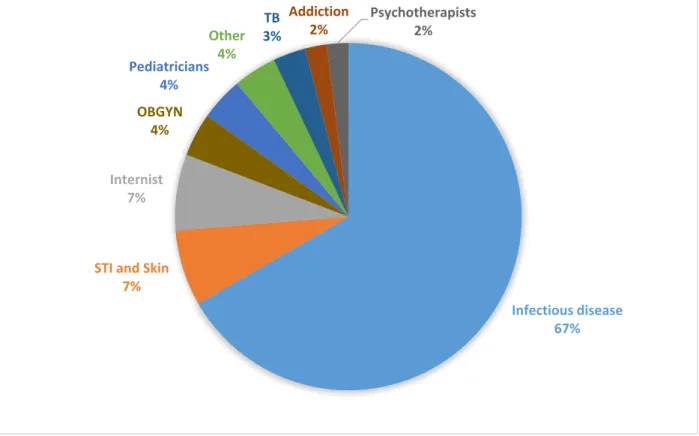
participants were physicians and worked at one of the HIV treatment facility spoke sites. For the pilot of Project ECHO, two groups were formed to include approximately 50 doctors in each group. The two groups conducted separate sessions that were carried out on the same topic on the same day. There were 38 sessions for each group for a total of 76 sessions during the pilot of Project ECHO. Upon completion of Project ECHO, 101 participants attended at least 30 out of 38 sessions and received state recognized certificates on completion of 54 hours of professional development training (KazMUCE). Figure 4 illustrates the breakdown of participants’
specialties; the infectious disease specialty had the highest degree of participation. Figure 4. Project ECHO participants’ specialty (N = 106).
Infectious disease 67% STI and Skin
7% Internist
7% OBGYN
4%
Pediatricians 4%
Other 4%
TB 3%
Addiction 2%
43 Level 2: Satisfaction Results
The respondents expressed positive views and opinions of their participation in Project ECHO. They also shared some challenges with participation.
Satisfaction with the Virtual Platform of Project ECHO
Respondents stated that they appreciated the format of Project ECHO. Specifically, they appreciated that the sessions were conducted at a convenient time during their work day and there was no travel associated with the training, allowing them to stay with their families. One respondent said, “We did not need to travel anywhere; we all were in one place and it was very convenient to have such a wonderful on-the-job training while staying with your family – kids and husband – and receiving this valuable and useful knowledge that we need.”
Unlike other in-person trainings or seminars, several respondents emphasized, “The fact that we did not have to interfere with people's work in terms of business trips or some kind of long specialization helped us unbelievably. In other words, in the process of work it took an hour a week, but we got this great clinical experience.”
Respondents noted that the virtual platform allowed them to participate in the sessions even when they were away. One respondent said, “What I really liked is that when I was on a business trip I did not miss out [on] anything, since I connected to the sessions via my cell phone.” Along with this, participants were satisfied that Project ECHO is “on-the job training” and “free of charge.”