It Takes Two: The Dyadic Effects of Communicating Gratitude Blair Kirsten Puleo
The Department of Psychology: Senior Honor Thesis The University of North Carolina at Chapel Hill
25 April 2014
Abstract
It Takes Two: The Dyadic Effects of Communicating Gratitude
Five, six, seven, eight... and one. You take center stage with your partner. Accompanying the beat, you both move in relation to one another. Communicating both verbally and nonverbally, your movements are coordinated: sometimes in tandem, sometimes in opposition. It is as though you both are telling a story with your bodies. Dance is a medium for emotional expression and social interaction via non-verbal communication. For some, rhythm comes naturally. But for others, much practice is necessary. Analogously, the same can be said for relationships. The common idiomatic expression ‘it takes two to tango’ inextricably relates these two concepts. The saying is often extended beyond the style of dance as it illustrates the dual nature of a situation. The tango is a dance that involves complimentary rhythmic movements between two people. A healthy relationship can similarly be defined as it involves the dynamics between two people who are committed to, supportive of, and respectful towards one other. Each takes time, effort, practice, and patience. And notably, they both need two people to function. But surprisingly, little scientific research has delved into this dyadic nature of couples. Specifically, the area of expressions of gratitude within couples has received little examination. The current investigation tries to fill this gap by analyzing the momentary effects of gratitude in couples through a dyadic perspective. Like a dance, one should take into account both members’ actions and behaviors.
Preliminary Evidence
sense of connectedness with others, augment optimistic perceptions and even reduce anxiety (Dulin et al., 2001; Emmons & McCullough, 2003; Kerr et al., 2014).
Positive psychology interventions increase happiness levels and promote positive emotions, behaviors, and cognitions when the activity is continually rendered overtime (Sin & Lyubomirsky, 2009; Toepfer et al., 2012). Activities in such interventions include practicing random acts of kindness and expressing gratitude. In the current investigation, we view expressions of gratitude from one person to another as being synonymous with kind actions. In fact, Algoe and colleagues found that perceived responsiveness of an expression of gratitude for a kind gesture was a positive predictor for the target’s (the partner who received the expression of gratitude) relationship satisfaction 6 months later (2013), which suggests long-term positive benefits for both members of the dyad. However, little is known about the effects of gratitude momentarily after the expression.
In the current study, we strive to understand the transitory effects of expressing gratitude using a relationships scientist’s lens. This viewpoint suggests that the behavior of both members of the dyad matters. Therefore, we examine the behavior of expressing gratitude and the behavioral response of receiving an expression of gratitude, while measuring the associations of these behaviors on the positive emotions of the individual expressing gratitude.
Dyadic Perspective
manifestation of the experience as it signifies returning the favor while acknowledging the kind act (McCullough et al., 2001; Algoe & Haidt, 2009).
When trying to explain a dyadic interaction, understanding which member of the dyad that one is talking about can get rather confusing fast. So, to clarify, we are going to use the famous couple, Prince William and Kate Middleton, for illustration. Let us say that William did something kind for Kate. In turn, Kate felt that that kind act was responsive to her needs and she liked it (Algoe, Haidt, & Gable, 2008; McCullough et al., 2001). She was then motivated to be kind back, so she expressed her gratitude towards
William, thus, giving Kate the title of the ‘expresser’ and William the title of the ‘target’ (as William is the target of Kate’s expression of gratitude). Obviously, the order of who is the target and who is the expresser can change, as both members’ role in the dyad can fluctuate.
for the relationship overall (Christensen & Heavey, 1990; Berns et al., 1999; Gottman & Levenson, 2004). Even though these two examples are quite different, they offer important evidence that demonstrates that full dyadic effects are at play within many interpersonal interactions.
Observational Coding of Behaviors
Observational coding highlights specific behaviors of each person within the interaction. It can reveal people’s perceptions of their partner (Notarius & Markman, 1989). It has even assisted in further understanding the nature of relationships; for instance: conflict resolution in marriage, demand-withdrawal patterns in interactions, the role of positive and negative affectivity in relationships, and constructive responses to positive event disclosures (Gable et al., 2006; Gottman & Notarius, 2000). These existing coding schemes have been helpful in relationships research, but they are not fully applicable to our examination. To date, researchers have not analyzed the behavioral responses to receiving an expression of gratitude. Therefore, we chose to tackle this question through the observational methods of coding each person’s behavior to examine the emotional effects on the expresser of gratitude and ultimately see the dyadic effects of communicating gratitude.
Expresser’s Behavior: Praising
relationship. To do this, one should praise their partner; really emphasizing the ‘you’ in thank you (2014). This means that when the expresser focuses on the target and the target’s overall revered qualities beyond the benefit itself, he or she will likely connect more closely with their partner. Praise reflects felt gratitude, so the greater expression of praise, the greater the felt gratitude (Algoe & Way, 2014) and in turn, the greater the experience of positive emotions since gratitude is one way to be kind and being kind feels good (Dunn et al., 2014). Therefore, more praise is associated with more experienced positive emotions. Hence, our first tested hypothesis evaluated whether an expresser’s praising behavior will predict a greater degree of experienced positive emotions for the expresser in the moment.
Target’s Behavior: Responding to an Expression of Gratitude
considered constructs of validation, empathy and humility are similar in that each is associated with relationship outcome but different in nature.
Validation. According to Koerner and Linehan, validation’s active role in communication serves to substantiate a partner’s behavior (2009). Specifically, validating one’s expression communicates that his or her statements are understandable contextually (Linehan, 1993). It is characterized as communicating acceptance of another’s emotions, behaviors, and cognitions (Lynch et al., 2006). Recently, validating expressions were even shown to increase the listener’s sense of belonging and self- esteem (Kim & Kim, 2013). Therefore, these results imply that a validating behavioral response influences the expresser’s momentary feelings in everyday interactions.
Empathy. Empathy has been characterized as vicariously experiencing the situational emotions, behaviors, and cognitions of another person (Kim & Kim, 2013). This other-focused emotion is generally target-specific, in that it harbors the felt emotion of another (Blader & Rothman, 2014), thus being essential in dyadic contexts. The aptitude to empathize by accurately experiencing the situation of another is considered to be crucial in relationship maintenance (Davis, 1994; Davis, 1983). In fact, individuals who are highly empathic often capitalize on these traits in relationships. By doing so, their relationships are more satisfying and less conflicted (Chow et al., 2013). This suggests that an empathic behavioral response might influence relationship satisfaction by way of impacting the momentary positive emotional experience of the expresser.
2004). For illustration, when asked to recall acts of kindness, individuals, who humbly described another’s action activated more positive and emotional responses (gratitude, feeling valued) and less negative emotional responses (mistrust) in themselves (Exline, 2012). These positive benefits are even extended into predictive prosocial behaviors, such as generosity (Exline & Hill, 2012), hence illustrating that humble individuals look past their own self-interest and are open to giving to others, as they view others as being worthy of receiving good things. Specifically in relationships, a humble disposition fosters social bonds with others, while also building and maintaining quality relationships (Davis et al., 2013; Peters, Rowatt, & Johnston, 2011). Thus, the behavioral response of humility is an applicable measurement to assess, as it has potential implications for the expresser.
It Takes Two: The Interaction between the Expresser and the Target
We tested for the unique effects of these variables, while controlling for one another. It is not unusual for an expression and a response to be correlated within a couple, as one can expect two people with similar values and approaches in life to be together as a couple. Thus, in turn, we eliminate this possible overlap between the variables by seeing which particular variable (an expression or a response) significantly predicts more experienced positive emotions for the expresser (Hypothesis 1 and 2) and whether they have an interactive effect (Hypothesis 3).
Current Study
In the current study, romantic couples attended two lab sessions where each partner expressed gratitude towards one another. Two different teams of research assistants coded both verbal and nonverbal behavioral expressions and responses of each dyad member from their videotaped interactions. Algoe and colleagues noted that elements of felt emotion, motivation, and interpersonal skill would influence some expressions of gratitude (2013). Thus, we assumed the same to be true for responses to expressed gratitude.
Method Participants
Originally, there were 80 romantically involved heterosexual couples. Three same-sex couples partook but were excluded because of limitations in data analytic technique and therefore, leaving 77 heterosexual couples (N = 154). Recruited from around Chapel Hill, North Carolina, participants had been in a romantic relationship for at least 6 months. On average, members were 28 years old (Mdn = 25; range = 18 to 57) and in a relationship for about 4 years (range = 6 months to 35 years; M = 50.07 months; Mdn = 30.5). At the beginning of the study 55.8% were dating; 39% were married; 3.9% were engaged. Participants identified as White/Caucasian (73.4%), Black/African American (13%), East or South Asian (4.5%), or Hispanic (3.9%); 9.1% identified as multiracial.
Procedure
Research assistants observationally coded the behavioral responses of each interaction using novel coding schemes. Videotaped interactions of the couples expressing gratitude were the mediums of these observations (see Algoe et al., 2013 and Algoe & Way, 2014 for couples procedure in the primary study).
Visits to the Lab
disclosures occurred in the first lab session. Gratitude expressions occurred in the second lab session.
Outside the Lab Sessions
Before arriving to the first lab session, participants completed the 7-item Relationship Satisfaction Scale (Hendrick, 1988; e.g., “In general, how satisfied are you with your relationship?”; α = .81). In between lab sessions, nightly questionnaires were completed and collectively gathered from 14 nights from each member (28 total reports for each couple).
Instructions and Measures for Videotaped Interactions
All interactions were structured following Gable et al. (2006). First, participants received the instructions for the conversation topic (see below), then independently described the event that they chose. After completing their brief description, participants were told that they would have up to 5 minutes to talk about their chosen event, and that the target was free to add to or talk as much or as little as they would under normal circumstances. After the interaction, they independently answered questions regarding the interaction, before switching roles and repeating the process. Individuals were randomly assigned to either express first or listen first.
Expressed Gratitude Task. Each member was asked to choose a recent event for which they felt that their partner had done something nice that made them feel grateful. They were told that they would each have a chance to thank their partner. Specifically, they were instructed (Algoe et al., 2013):
you to think about a specific positive thing your partner did for you recently for which you felt grateful. Your partner’s positive gesture may be something that happened before but continues to make you grateful, or something going on now. Some examples would be helping to solve a problem, surprising you with a gift, taking time to listen to a concern, spending time doing something he or she would not typically do, or similar things. We’d like you to pick something good that has been on your mind recently, no matter how big or small. We will ask you to thank your partner for his or her kind gesture in your interaction.
Measure of Emotional Response. After each interaction, participants rated their agreement with several items to measure their emotional response. They completed this questionnaire twice: once about after their partner expressed and once after they expressed. Using a 24-item measure, both positive and negative emotions were assessed on a 0 (not at all true / never true) to 6 (very true / true all of the time) scale (e.g., satisfied, disgusted, rejected, loving, etc.). The 11 positive words (i.e., peaceful, loving, amused, proud) were averaged into one mean composite score (α = 0.90 after receiving an expression of gratitude; α = 0.86 after providing an expression of gratitude.
Observational Coding of Behavior
the coding scheme). The validation code is defined as, “The extent to which the listener genuinely validated the expresser’s perception of benefactors’ intent” (see Appendix for the coding scheme). The empathy code is defined as, “The extent to which the listener genuinely empathizes with the expresser’s expression for his or her actions or personal qualities related to those actions” (recognition of needs) (see Appendix for the coding scheme). The humility code is defined as, “The extent to which the listener genuinely humbly responds to the expresser’s expression for his or her action or personal qualities related to those actions” (low self-focus/ appreciates being appreciated) (see Appendix for the coding scheme).
Results Preliminary Analyses
We computed intra-class correlations as an estimate of inter-rater reliability. Scores above 0.80 are conventionally considered acceptable. The scores behind each of the coders are averaged to form a single quality score for each behavioral response of each interaction. The inter-rater reliability was averaged across four coders’ ratings to create an expression mean for each participant: praising (α = 0.78), validation (α = 0.80), empathy (α = 0.85), and global humility (α = 0.77). We averaged together the 11 positive emotion words from the Expressed Appreciation questionnaire to create a positive emotions mean for each participant (α = 0.86).
Data Analysis Strategy
consideration that each couple is independent of another couple, but each individual in every couple is likely to be similar. So, we cannot assume that each participant was independently selected from the population. Thus, since we assume member’s responses will effect their partner’s response, multilevel modeling looks at each member of the dyad independently, while controlling for their shared accounts.
Descriptive Statistics
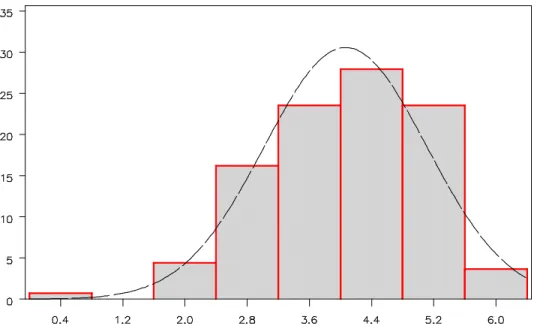
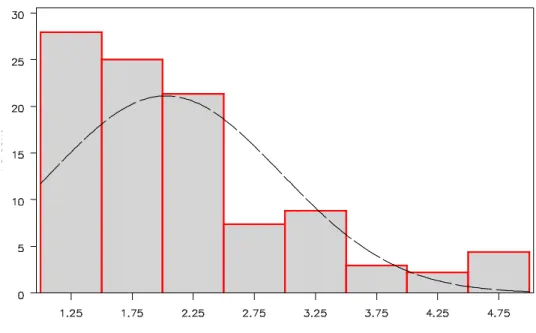
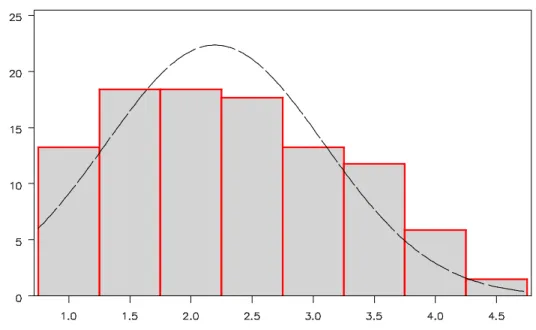
We calculated the means and standard deviations of all variables: positive emotions after “my” expression of gratitude (M = 4.06, SD = 1.04), praising (M = 3.25, SD = 0.70), validation (M = 2.65, SD = 0.90), empathy (M = 2.03, SD = 0.94), and global humility (M = 2.20, SD = 0.89) (see Appendix: Figures 1-5 for distribution).
Hypothesis One
Hypothesis 1 evaluated whether the expresser’s high-quality praising behavior would predict a greater degree of experienced positive emotions for the expresser. The regression predicting positive emotions from degree of praise was not statistically significant (β = 0.21, p = 0.11); Hypothesis 1 was not supported.
Hypothesis Two
Hypothesis 2 evaluated that whether the target’s high-quality behavioral response would predict a greater degree of experienced positive emotions for the expresser. The regressions predicting positive emotions from degree of empathy (β = 0.06; p = 0.52), validation (β = -0.06, p = 0.53) and humility (β = -0.10, p = 0.31) were not statistically significant; All of Hypothesis 2 was not supported.
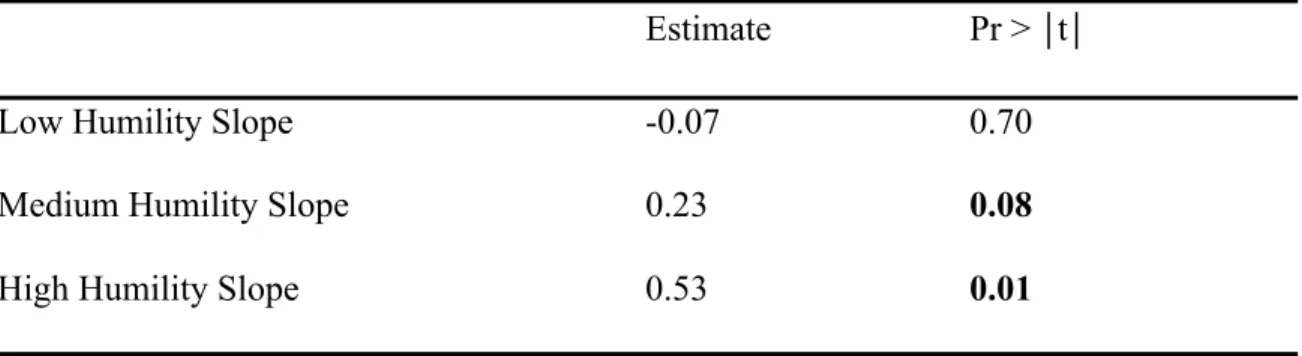
Hypothesis 3 evaluated whether an expresser’s high-quality praising behavior and a target’s high-quality behavioral response would have an interactive effect to provide an even greater degree of experienced positive emotions for the expresser. To test this hypothesis, we ran a linear regression simultaneously including praising behavior, the behavioral response of interest, and the interaction term between them. The interaction term was not statistically significant for the behavioral responses of empathy (β = 0.05. p = 0.70) and validation (β = 0.13, p = 0.39), but was statistically significant for the behavioral response of humility (β = 0.33, p = 0.02) (see Tables 2a-c and Figure 1); Thus, Hypothesis 3 was partially supported. We probed the interaction to try and understand the nature of these effects. To do this, we tested different levels of humility by evaluating the simple slopes. Broken up into thirds, the data revealed no statistically significant effects for low humility (β = -0.07, p = 0.70), marginally statistically significant effects for medium humility (β = 0.23, p = 0.08), and statistically significant effects for high humility (β = 0.53, p = 0.01) (see Table 3 and Figure 1). Thus, indicating that a high praising behavior coupled with a high humble response forecasts the most optimal levels of experienced positive emotions for the expresser.
Moderator Analyses
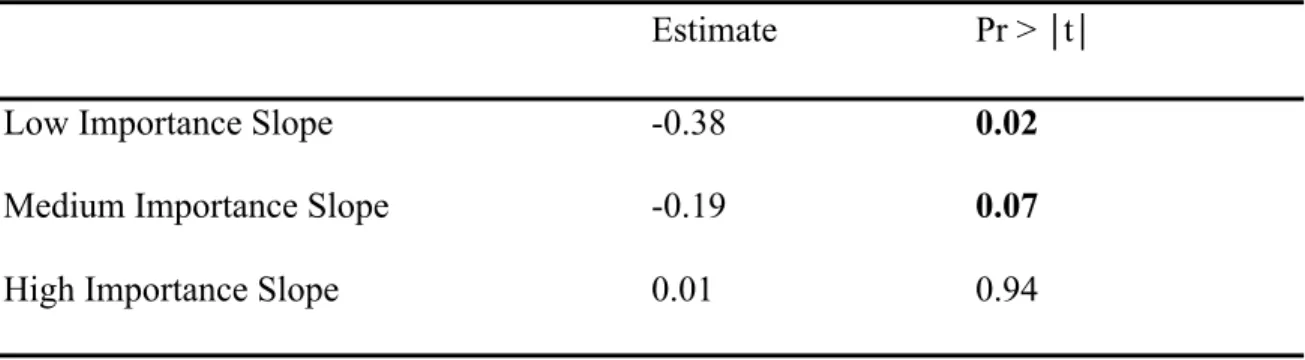
importance does not moderate Hypothesis 1 or any part of Hypothesis 3 (all p values greater than 0.10). However, it does play a moderating role in Hypothesis 2 as the behavioral response of empathy (β = 0.14, p = 0.04) proved to be statistically significant and the behavioral responses of validation (β = 0.11, p = 0.09) and humility (β = 0.13, p = 0.06) proved to be marginally statistically significant (see Tables 4a, 5a, & 6a). We probed the interaction to try and understand the nature of these effects. To do this, we tested different levels of event importance by evaluating the simple slopes for each behavioral response. Results revealed no statistically significant effects for empathy paired with low importance (β = -0.26, p = 0.12), with medium importance (β = -0.05, p = 0.64), and high importance (β = 0.16, p = 0.15) (see Table 4b). Thus, indicating that a high praising behavior coupled with a high empathic response forecasts the most optimal levels of experienced positive emotions for the expresser only when the expresser rated the event as highly important. Results also revealed a marginally statistically significant effect for validation paired with low importance (β = -0.24, p = 0.08) and no statistically significant effects for validation paired with medium importance (β = -0.07, p = 0.47), and high importance (β = 0.09, p = 0.50) (see Table 5b). Furthermore, results revealed a statistically significant effect for humility paired with low importance (β = -0.38, p = 0.02), a marginally statistically significant effects for humility paired with medium importance (β = -0.19, p = 0.07), and no statistically significant effect for humility paired with high importance (β = 0.01, p = 0.94) (see Table 6b).
Discussion
responding did interact with one way of expressing. Specifically, the behavioral response of humility and the behavioral expression of praising illustrated consistency with our novel Hypothesis 3.
This finding is interesting in the fact that it exhibits that both dyad members’ actions and behaviors should be taken into account when considering the interaction’s effect on the expresser’s positive emotions. Serving as nice complements to one another, both gratitude and humility are innately other-focused emotions, and when appropriately expressed together they promote positive emotions for the expresser of gratitude in the moment. By taking a dyadic perspective to literature of expressed gratitude, this finding exemplifies the importance of examining both partners’ actions.
Limitations/ Directions for Further Research
gratitude depends on the impact of a response to gratitude (and vise versa) in order to have the combined significant effect of inducing the most experienced positive emotions for the expresser.
puts their self-interest aside to orient themselves towards the welfare of others, while a grateful individual positively acknowledges another’s kind actions for the self.
Further directions could delve into the possibility that a high-praising behavior might lead to a partner’s humble behavioral response only to the extent that the target is also experiencing self-conscious negative emotions (e.g., guilt). It would be interesting to see whether negative emotions are potentially a driving force of the positive emotions experienced by the expresser. Moreover, certain positive emotions might be boosted more than others after expressing gratitude. So, one might want to look at certain subsets of those positive emotions (e.g., love, appreciation) to whether other positive emotions are at play during these interactions. Additionally, it was interesting that the results showed a dip in experienced positive emotions for the expresser when they were low on praising and their partner was high on humility. One possible explanation for this view could be that the expresser did not think their expression was that important, but when their partner responded with such high humility by redirecting and increasing the praise to them, their experienced positive emotions were dampened. Therefore, we speculate that it is not just the more praising behavior the better and the more humility the better, rather they only jointly produce better outcomes when situationally appropriate.
References
Algoe, S. B., & Haidt, J. (2009). Witnessing excellence in action: The 'other-praising'
emotions of elevation, gratitude, and admiration. The Journal Of Positive
Psychology, 4(2), 105-127. doi:10.1080/17439760802650519.
Algoe, S. B., Haidt, J., & Gable, S. L. (2008). Beyond reciprocity: Gratitude and
relationships in everyday life. Emotion, 8, 425-429.
doi:10.1037/1528-3542.8.3.425.
Algoe, S. B., Fredrickson, B. L., & Gable, S. L. (2013). The social function of the
emotion of gratitude via expression. Emotion. Advance online publication. doi:
10.1037/a0032701.
Algoe, S. B. & Way, B. M. (2014). Evidence for a role of the oxytocin system, indexed
by genetic variation in CD38, in the social bonding effects of expressed gratitude.
Social Cognitive and Affective Neuroscience. Online first.
doi:10.1093/scan/nst182.
Berns, S. B., Jacobson, N. S., Gottman, J. M. (1999). Demand–withdraw interaction in couples with a violent husband. Journal of Consulting and Clinical Psychology, 67(5), 666-674. doi: 10.1037/0022-006X.67.5.666.
Blader, S. L., & Rothman, N. B. (2014). Paving the road to preferential treatment with
good intentions: Empathy, accountability and fairness. Journal Of Experimental
Social Psychology, 5065-81. doi:10.1016/j.jesp.2013.09.001.
Chow, C., Ruhl, H., & Buhrmester, D. (2013). The mediating role of interpersonal
approach. Journal Of Adolescence, 36(1), 191-200.
doi:10.1016/j.adolescence.2012.10.004.
Christensen, A., & Heavey, C. L. (1990). Gender and social structure in the demand/withdraw pattern of marital conflict. Journal of Personality and Social Psychology, 59(1), 73-81. doi: 10.1037/0022-3514.59.1.73.
Davis, M. H. (1983). Measuring individual differences in empathy: Evidence for a multidimensional approach. Journal of Personal and Social Psychology, 44(1983), pp. 113-126.
Davis, M. H. (1994). Empathy: A social psychological approach. Westview press, Boulder, CO.
Davis, D. E., Worthington, E. R., Hook, J. N., Emmons, R. A., Hill, P. C., Bollinger, R.
A., & Van Tongeren, D. R. (2013). Humility and the development and repair of
social bonds: Two longitudinal studies. Self And Identity, 12(1), 58-77.
doi:10.1080/15298868.2011.636509.
Dulin, P., Hill, R. D., Anderson, J., & Rasmussen, D. (2001). Altruism as a predictor of
life satisfaction in a sample of low-income older adult service providers. Journal
Of Mental Health And Aging, 7(3), 349-360.
Dunn, E. W., Aknin, L. B., & Norton, M. I. (2014). Prosocial spending and happiness:
Using money to benefit others pays off. Current Directions In Psychological
Science, 23(1), 41-47.
Emmons, R. A., & McCullough, M. E. (2003). Counting blessings versus burdens: An
experimental investigation of gratitude and subjective well-being in daily life.
Exline, J. J. (2012). Humility and the ability to receive from others. Journal of
Psychology and Christianity, 31(1), 40-50.
Exline, J. J., & Hill, P. C. (2012). Humility: A consistent and robust predictor of
generosity. The Journal Of Positive Psychology, 7(3), 208-218.
doi:10.1080/17439760.2012.671348.
Exline, J., & Geyer, A. L. (2004). Perceptions of humility: A preliminary study. Self And
Identity, 3(2), 95-114. doi:10.1080/13576500342000077.
Gable, S. L., Gonzaga, G. C., & Strachman, A. (2006). Will you be there for me when
things go right? Supportive responses to positive event disclosures. Journal of
Personality and Social Psychology, 91, 904-917.
doi:10.1037/0011-3514.91.5.904.
Gable, S. L., Reis, H. T., Impett, E. A., & Asher, E. R. (2004). What Do You Do When
Things Go Right? The Intrapersonal and Interpersonal Benefits of Sharing
Positive Events. Journal Of Personality And Social Psychology, 87(2), 228-245.
doi:10.1037/0022-3514.87.2.228.
Gottman, J. M., & Notarius, C. I. (2000). Decade in review: Observing marital
interaction. Journal of Marriage and the Family, 62, 927 947.
Gottman, J. M., & Levenson, R. W. (2004). The timing of divorce: Predicting when a
couple will divorce over a 14-year period. Journal of Marriage and Family,
62(3), 737-745. doi: 10.1111/j.1741-3737.2000.00737.x.
Hendrick, S. S. (1988). A generic measure of relationship satisfaction. Journal of
Kerr, S. L., O’Donovan, A., & Pepping, C. A. (2014). Can gratitude and kindness
interventions enhance well-being in a clinical sample?. Journal Of Happiness
Studies, doi:10.1007/s10902-013-9492-1.
Kim, E., & Kim, C. (2013). Comparative effects of empathic verbal responses: Reflection
versus validation. Journal Of Counseling Psychology, 60(3), 439-444.
doi:10.1037/a0032786.
Koerner, K., & Linehan, M. M. (2009). Validation principles and strategies. In W. T.
O'Donohue, J. E. Fisher (Eds.), General Principles and Empirically Supported
Techniques of Cognitive Behavior Therapy (pp. 674-680). Hoboken, NJ US: John
Wiley & Sons Inc.
Linehan, M. M. (1993). Cognitive-behavioral treatment of BPD. New York, NY: Guilford Press.
Lynch, T. R., Chapman, A. L., Rosenthal, M. Z., Kuo, J. R., & Linehan, M. M. (2006). Mechanisms of change in dialectical behavior therapy: Theoretical and empirical observations. Journal of Clinical Psychology, 62, 459–480. doi:10.1002/jclp.20243.
Maisel, N. C., Gable, S. L., & Strachman, A. (2008). Responsive behaviors in good times
and in bad. Personal Relationships, 15(3), 317-338.
doi:10.1111/j.1475-6811.2008.00201.x.
McCullough, M. E., Kilpatrick, S. D., Emmons, R. A., & Larson, D. B. (2001). Is
gratitude a moral affect?. Psychological Bulletin, 127(2), 249-266.
Notarius, C. I., & Markman, H. J. (1989). Coding marital interaction: A sampling and
discussion of current issues. Behavioral Assessment, 11, 1 11.
Peters, A., Rowatt, W., & Johnson, M. (2011). Associations between dispositional
humility and social relationship quality. Psychology, 2(3), 155-161.
Sansone, R. A., & Sansone, L. A. (2010). Gratitude and well being: The benefits of
appreciation. Psychiatry, 7(11), 18-21.
Schopler, J., & Compere, J. S. (1971). Effects of being kind or harsh to another on liking.
Journal Of Personality And Social Psychology, 20(2), 155-159.
doi:10.1037/h0031689.
Sin, N. L., & Lyubomirsky, S. (2009). Enhancing well-being and alleviating depressive
symptoms with positive psychology interventions: A practice-friendly
meta-analysis. Journal Of Clinical Psychology, 65(5), 467-487. doi:10.1002/jclp.20593.
Toepfer, S. M., Cichy, K., & Peters, P. (2012). Letters of gratitude: Further evidence for
author benefits. Journal Of Happiness Studies, 13(1), 187-201.
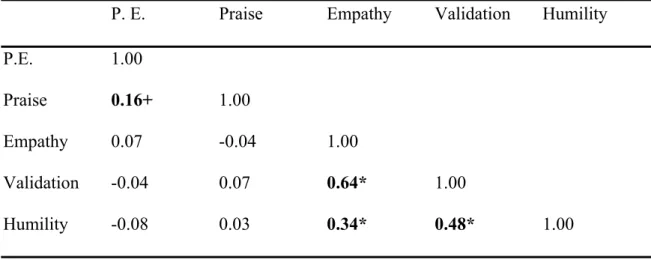
Table 1: Pearson Correlation Coefficients of the Variables
P. E. Praise Empathy Validation Humility P.E. 1.00
Praise 0.16+ 1.00
Empathy 0.07 -0.04 1.00
Validation -0.04 0.07 0.64* 1.00
Humility -0.08 0.03 0.34* 0.48* 1.00
Note: N = 136
P.E. = Positive Emotions + p = .06
Table 2a: Hypothesis 3: Praising Behavior and Empathy Estimate Pr > ⎪t⎪
Praise x Empathy 0.05 0.70
Note: N = 136
Table 2b: Hypothesis 3: Praising Behavior and Validation Estimate Pr > ⎪t⎪
Praise x Validation 0.13 0.39
Note: N = 136
Table 2c: Hypothesis 3: Praising Behavior and Humility Estimate Pr > ⎪t⎪
Praise x Humility 0.33 0.02
Table 3: Hypothesis 3: Praising Behavior and Humility Simple Effects Estimate Pr > ⎪t⎪
Low Humility Slope -0.07 0.70
Medium Humility Slope 0.23 0.08
High Humility Slope 0.53 0.01
Note: N = 136
Table 4a: Empathy with Event Importance
Estimate Pr > ⎪t⎪
Empathy x Event Importance 0.14 0.04
Note: N = 136
Table 4b: Empathy with Event Importance Simple Effects
Estimate Pr > ⎪t⎪
Low Importance Slope -0.26 0.12
Medium Importance Slope -0.05 0.64
High Importance Slope 0.16 0.15
Note: N = 136
Table 5a: Validation with Event Importance
Estimate Pr > ⎪t⎪ Validation x Event Importance 0.11 0.09 Note: N = 136
Table 5b: Validation with Event Importance Simple Effects
Estimate Pr > ⎪t⎪
Low Importance Slope -0.24 0.08
Medium Importance Slope -0.07 0.47
High Importance Slope 0.10 0.50
Note: N = 136
Table 6a: Humility with Event Importance
Estimate Pr > ⎪t⎪ Humility x Event Importance 0.13 0.06 Note: N = 136
Table 6b: Humility with Event Importance Simple Slopes
Estimate Pr > ⎪t⎪
Low Importance Slope -0.38 0.02
Medium Importance Slope -0.19 0.07
High Importance Slope 0.01 0.94
Note: N = 136
Appendix
Coding Schemes for Behavioral Responses
Expressions of Gratitude
“The extent to which the speaker genuinely praises the listener for his or her actions or personal qualities related to the actions.”
The coding scale encompasses both verbal and non-verbal behaviors, because the “right” words could be spoken either sincerely or insincerely.
The scale ranges from 1 to 5, with each number consisting of the following values: 1 = no or one minor statement of praise for the benefactor’s action;
2 = little praise for benefactor’s actions, more formal than heartfelt, with few (if any) details of the nice thing the benefactor did, some (although little) eye contact and warm smile when praising;
3 = average expression of genuine praiseworthiness, some details of the praiseworthy actions including occasional warm smiles and direct eye contact while praising;
4 = good expression of genuine praiseworthiness, including explicit and detailed elaboration on the benefactor’s praiseworthy action as well as warm smiles and direct eye contact while making the praising statements (also may refer to how the behavior is just one example of a class of behaviors);
5 = excellent expression of benefactor’s praiseworthiness, including elaboration on the praiseworthy features of the benefactor’s actions and may generalize the behavior to the character of the benefactor (e.g., “It’s not just this; you do this kind of thing for people all the time.”; “I love seeing it; you’re amazing.”) and certainly warm smiles and direct eye contact while making the praising statements.
Validation
“The extent to which the listener genuinely validates the expresser’s perception of benefactor’s intent.”
The scale ranges from 1 to 5, with each number consisting of the following values:
1 = no or one minor statement of affirmation about the intentional actions;
2 = little validation for the expression of gratitude, more formal than heartfelt, with few (if any_ details affirming the intention of their actions, some (although little) eye contact, warm smiles, cinched eyebrows, and head nodding (e.g. “You’re welcome.”);
3 = average response to the expression of gratitude, some details of the validating actions including occasional direct eye contact, warm smiles, cinched eyebrows, and head nodding;
5 = excellent response to the expression of gratitude, including explicit and detailed elaboration on acknowledging and confirming the expresser’s expressions (e.g. “I meant to do it for you.”) – definitely direct eye contact, warm smiles, cinched eyebrows, and head nodding;
Empathy
“The extent to which the listener genuinely empathizes with the expresser’s experience.”
The scale ranges from 1 to 5, with each number consisting of the following values: 1 = no or one minor explicit statement of empathy [low other-focus];
2 = little explicit empathy, more formal than heartfelt, with few (if any) details of the expresser’s experience, some (although little) warm smiles and eye contact;
3 = average explicit empathy, some details of the expresser’s experience including occasional warm smiles and direct eye contact [average other-focus];
4 = good explicit empathy, including detailed elaboration on the understanding of the expresser’s experience as well as warm smiles, direct eye contact, and cinched eyebrows; 5 = excellent explicit empathy, including detailed elaboration on the understanding of the expresser’s experience (e.g., “I know that you needed it;” “I know you have been stressed a lot lately and I thought ‘this’ would really help”; putting themselves in their partners’ shoes) – definitely warm smiles, direct eye contact, cinched eyebrows, and leaning in towards their partner [high other-focus];
Humility
“The extent to which the listener genuinely humbly responds to the expresser’s expression of gratitude.”
A humble response is one that is consistent with the idea that the listener is low on self-focus.
There are three parts to coding for humility: FIRST, tally the number of humble statements.
(Example statements: “I tried…” “I really enjoyed it;” “Not a problem;” “Awe;” “It couldn’t have happened without your help;” “I am happy to help;” “You’re welcome;” “It was nothing;” “I don’t mind doing things like ‘that’ for you;” “Glad you enjoyed it;” “I like doing things like that with you”)
Generally, a humble response should include: redirecting praise (deflective statements), and recognizing and appreciating the help of others.
SECOND, apply a strictly nonverbal code to the video to the peak display of humility.
1 = no or minor nonverbal display of humility, little presentation of a downward head tilt to the side with warm smiles and averting eye contact;
2 = average nonverbal display of humility, moderate presentation of a downward head tilt to the side with warm smiles and averting eye contact;
3 = excellent nonverbal display of humility, distinctively shows a downward head tilt to the side with warm smiles and averting eye contact in this position;
THIRD, apply an overall global rating for the quality of the humility exhibited by the listener. Incorporate your number of explicit statements and coded extent of non-verbal behavior into this final code.
The scale ranges from 1 to 5, with each number consisting of the following values: 1 = seldom expression of genuine humility;
2 = little expression of genuine humility; 3 = somewhat expressed genuine humility; 4 = much expressed genuine humility;
Figure 1a: Descriptive Statistics: Positive Emotions after My Expression of Appreciation
Figure 1b: Descriptive Statistics: Praising
Positive Emotions after My Expression of Appreciation
P
erc
ent
Praising
P
erc
Figure 1c: Descriptive Statistics: Empathy
Figure 1d: Descriptive Statistics: Validation Empathy
P
erc
ent
Validation
P
erc
Figure 1e: Descriptive Statistics: Humility
Global Humility
P
erc