Disorder
Brittain L. Mahaffey, M.A.
This dissertation is submitted to the faculty of the University of North Carolina at Chapel Hill in partial fulfillment of the requirements for a degree of Doctor of Philosophy in the Department of Psychology (Clinical Psychology).
Chapel Hill 2012
Approved by:
ii © 2013
iii
BRITTAIN L. MAHAFFEY: Evaluating a Cognitive-Behavioral Model of Pathological Mirror Gazing: Implications for the Maintenance of Anxiety and Appearance
iv
distortions play a greater role in eliciting dissatisfaction than previously thought. Further, they suggest that these types of tasks do not elicit subjective anxiety in healthy
v
ACKNOWLEDGEMENTS
I would like to thank my Committee for their guidance and support throughout this process. I would also like to express my gratitude to my mentor, Dr. Jonathan
vi
TABLE OF CONTENTS
LIST OF TABLES………..……….viii
LIST OF FIGURES………..………..…ix
ABBREVIATIONS……….………x
Chapter I. EVALUATING A COGNITIVE-BEHAVIORAL MODEL OF PATHOLOGICAL MIRROR GAZING: IMPLICATIONS FOR THE MAINTENANCE OF ANXIETY AND APPEARANCE DISSATISFACTION IN BODY DYSMORPHIC DISORDER……...…….1
Cognitive Behavioral Models of BDD………...………3
Similarities between BDD and Anxiety Disorders: The Role of Safety Behaviors………..5
Safety behaviors in panic disorder and social phobia……….………..5
Compulsions in OCD……….5
Excessive mirror gazing and BDD………..………..6
Experimental Research and Mirror Gazing………..9
Specific Aims and Hypotheses of the Present Study………..7
II. METHODS………..…20
Participants………..………20
vii
III. RESULTS………....34
Main Analysis………..………..…………..….37
Manipulation Check and Exploratory Measures……....………...…40
IV. DISCUSSION…..………..…..…………42
viii
LIST OF TABLES
Table
1. Correlations, Means, and Standard Deviations of Primary Study
Variables at Baseline...48 2. Fixed Effects (Top) and Variance-Covariance Estimates (Bottom) for Models
ix
LIST OF FIGURES
Figure
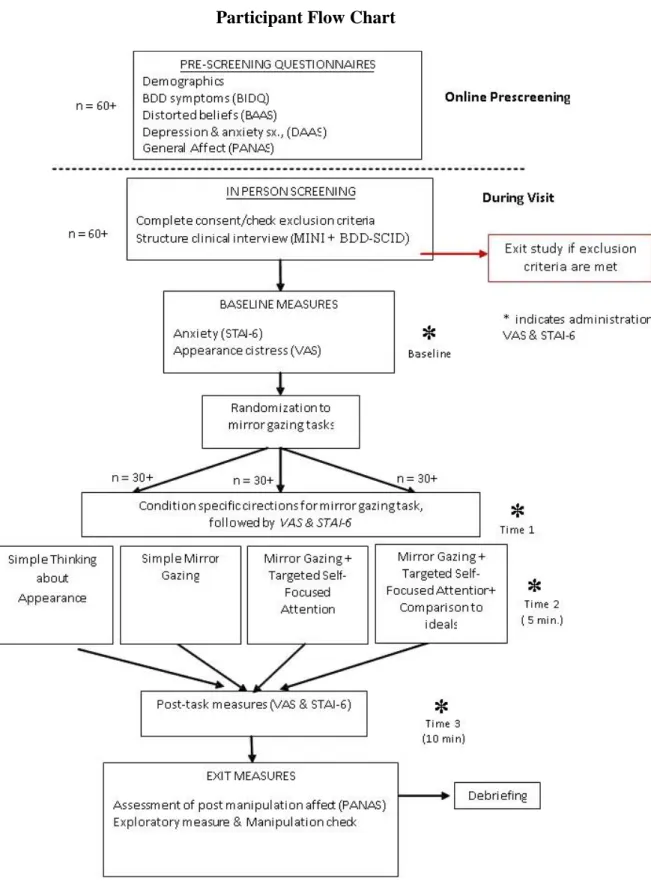
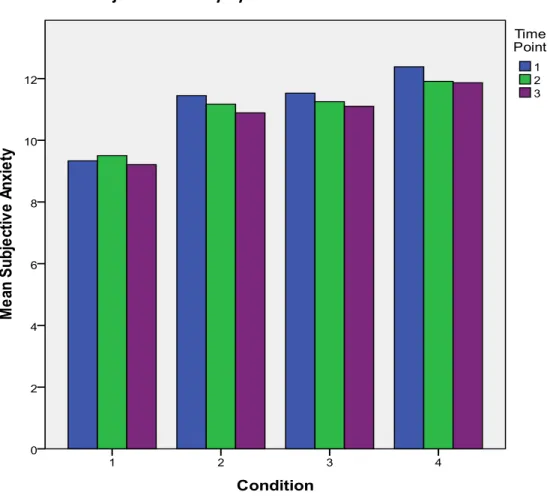
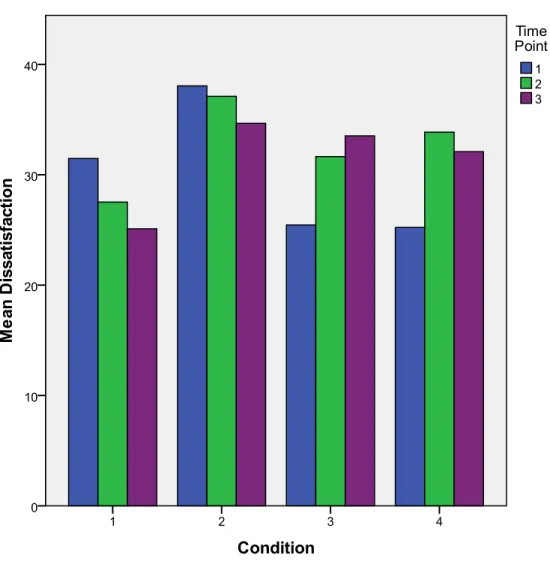
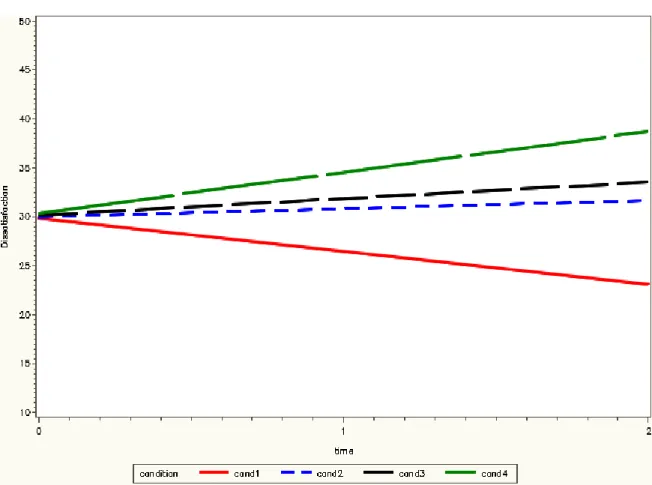
1. Participant Flow, Study Design...52 2. Mean Subjective Anxiety by Condition and Time of Assessment...………..53 3. Mean Image Dissatisfaction by Condition and Time of Assessment…...……….54 4. Regression of Dissatisfaction on Time by Condition,
x
ABBREVIATIONS
EVALUATING A COGNITIVE-BEHAVIORAL MODEL OF PATHOLOGICAL MIRROR GAZING: IMPLICATIONS FOR THE MAINTENANCE OF ANXIETY AND APPEARANE DISSATISFACTION IN BODY DYSMORPHIC DISORDER
Body dysmorphic disorder (BDD) is a condition in which an individual is excessively preoccupied with an imagined physical defect or a very slight physical anomaly
(American Psychiatric Association [APA], 2000). Unlike those with anorexia or bulimia nervosa, patients with BDD are not primarily concerned with their weight or overall body shape. Instead, their worries center on specific body areas such as the hair, skin, ears, eyes or nose. Thus, a patient with BDD might be convinced that their nose is horribly deformed, where an outside observer can detect no defect. While preoccupations with easily observable body areas are most common, patients may also be concerned with the appearance of less visible areas such as their muscles or genitals (Albertini & Phillips, 1999). These preoccupations tend to be significantly time consuming. BDD patients spend 3-8 hours a day on average, thinking about their “defect,” scrutinizing their appearance in mirrors, or trying to camouflage the area with make-up or clothing
(Phillips, 1996; Veale, 2000). Although there is some variability in prevalence estimates, BDD is thought to affect slightly more than 2% of the adult US population and to occur at roughly equal rates in women and men (Koran, Abujaoude, Large, & Serpe, 2008; Phillips & Diaz, 1997).
2
measures than individuals with major depression (Phillips, Menard, Fay, & Pango, 2005). Further, they report extremely high levels of suicidal ideation (45-75%; Perugi et al., 1997; Phillips, McElroy, Keck, Pope & Hudson, 1993) and suicide attempts (22-24%; Phillips & Diaz, 1997; Veale et al., 1996). Finally, data suggest that the probability of a BDD patient attaining symptom remission without intervention is extremely low. One study found that the likelihood of patients achieving functional remission over a three year period was less than 5.7% (Phillips, Quinn, & Stout, 2008). Despite the severity of this disorder, BDD remains under-researched compared to other body image disorders (Veale, 2004). Thus, research to illuminate the etiological and maintaining factors involved in BDD is critically needed.
Highlighting the questions that remain about this disorder, in recent years, critics have questioned BDD’s classification within the DSM-IV-TR (APA, 2000) nosology as a somatoform disorder. Criticism focuses on the fact that BDD is rarely comorbid with other disorders in the category and the fact that BDD seems to differ significantly from somatoform disorders in terms of structure and form (Gunstad & Phillips, 2003;
Hollander, Cohen, & Simeon, 1993; Phillips, Price, Greenberg, & Rasmussen, 2003). For example, BDD is characterized by obsessional preoccupations and repetitive behaviors; conversion disorder, a more prototypical somatoform disorder, in contrast is
characterized by deficits in sensory functions such as medically unexplained paralysis or blindness. Further while patients with BDD experience marked distress from their
3
2000), than to somatoform disorders. The functional similarities between BDD and anxiety disorders, as discussed next, are evident in cognitive behavioral models of BDD.
Cognitive Behavioral Models of BDD
A number of models have been proposed to explain the development and
maintenance of BDD. Of these, cognitive behavioral models (e.g., Neziroglu, Roberts, & Yaryura-Tobias, 2004; Veale 2004; Veale et al., 1996) have received the most attention and empirical support. These models stem from Cash’s (2002) cognitive-social model of body image disturbance. It proposes that factors such as cultural socialization,
interpersonal experiences, physical characteristics, and personality characteristics lead to the development of negative body image and attitudes. These attitudes in turn elicit negative emotions and behaviors related to body image that are maintained via negative reinforcement. These models also incorporate other factors thought to play a role in the maintenance of BDD such as imagery, attentional biases, and cognitive comparisons to beauty ideals (Neziroglu, Khemlani-Patel, Veale, 2008). Amongst the cognitive
behavioral models, Veale’s (2004; Veale et al., 1996) account of BDD has received the most empirical scrutiny; thus it will be described in further detail here.
According to Veale’s model (2004; Veale et al., 1996), two factors are thought to underlie the development of BDD: (a) maladaptive beliefs about the importance and necessity of bodily perfection and (b) selective negative self-focused attention.
4
1990). In the case of BDD, self-focused attention takes the form of a heightened awareness of, and focus on, a negative mental image of one’s own physical appearance. Self-focused attention is also thought to play an important role in other disorders such as social phobia (e.g., Clark & Wells, 1995). In social phobia, however, self-focused attention takes the form of an attentional shift towards one’s behavior (e.g, the quality of one’s voice, physical signs of anxiety such as blushing and shaking etc.) rather than one’s appearance.
5
Similarities between BDD and Anxiety Disorders: The Role of Safety Behaviors
Veale’s model of BDD illustrates the significant functional and conceptual
similarities between this condition and the anxiety disorders. Specifically, accounts of these disorders all involve behaviors that are intended to reduce anxiety (i.e., “safety behaviors”), but that paradoxically maintain the problem and the related distorted beliefs.
Safety behaviors in panic disorder and social phobia. Individuals with anxiety
disorders, such as social phobia or panic disorder, engage in safety behaviors in an attempt to prevent the occurrence of a feared catastrophe (Salkovskis, 1991). However, these behaviors prevent the individual from learning that the likelihood and severity of the feared outcome are relatively low. Although safety behaviors may provide a brief reduction in anxiety, they ultimately maintain the problem by increasing self-focused attention, hypervigilance for threat, and negative feedback from others (Salkovskis, 1991). For example, a man with social phobia may deliberately remain quiet in social situations so that others won’t notice his “ineptitude” with small talk. This strategy may make him less anxious at first but ultimately it reminds him of his belief that he is inept, making him increasingly anxious and vigilant for social slips. His consequent quietness and distraction make him appear awkward to others and result in negative social
feedback. Thus, ironically his reliance on this safety behavior results in confirmation of his belief that he is socially incompetent, perpetuating his anxiety.
Compulsions in OCD. In the context of OCD, compulsions function analogously
6
2006). Generally, compulsions provide temporary relief from anxiety and are thus negatively reinforced. In the long term, however, compulsions paradoxically increase anxiety by reminding the individual of their obsessional concerns, and by preventing opportunities for disconfirmation of faulty beliefs (Salkovskis, 1985; Salkovskis, 1989). For example, a woman with obsessional thoughts about catching HIV might engage in excessive hand washing because it briefly makes her less anxious. The hand washing compulsion, however, also reminds her of her belief that she is likely to catch HIV. Thereby in the long run the ritual increases the frequency of her intrusive thoughts, and provokes further anxiety. Additionally, engaging in the ritual leads her to falsely conclude that her continued health is due to her hand washing and not to the extremely low likelihood of being infected with HIV to begin with. Therefore, safety behaviors and compulsions are attempts at anxiety management that ultimately perpetuate distress by increasing the perception of danger and preventing disconfirmation of unrealistic beliefs. In the context of BDD, mirror gazing is perhaps the best example of a faulty anxiety management strategy which functions analogously to a compulsion or safety behavior.
Excessive mirror gazing and BDD. While healthy individuals may spend a few
7
Therefore, existing data may even underestimate of the true prevalence of excessive mirror gazing in this population.
Mirror gazing, like a safety behavior or compulsion, is thought to be performed in an effort to mitigate the anxiety provoked by internal (e.g., negative thoughts about one’s appearance) or external (e.g., mirrors, photographs) appearance-relevant stimuli. Specifically, negative thoughts may take the form of predictions that seeing one’s own reflection will trigger repulsion or disgust, or worries that one’s own appearance is so repulsive that it will result in social rejection. For example, a patient with BDD might have intrusive thoughts that his nose is horribly deformed and that others will be repulsed by it. He then feels the urge to examine his nose in a mirror in order to reassure himself that defect is “not so bad” or not so noticeable to others. As in safety behaviors or compulsions, however, his mirror gazing backfires making him feel exquisitely sensitive to his appearance, and thus even more anxious and distressed about how he looks.
8
consequence of these perceptual changes, the patient loses their sense of proportions resulting in distorted or enlarged images of the “defective” area (Veale & Riley, 2001). Second, cognitive comparisons to beauty ideals are problematic because the individual uses inappropriate comparison targets or unrealistic ideals. Thus if our anxious patient compares his nose to that of a male model, this is likely to confirm his belief that his nose is in fact ugly in comparison.
Patients report that the urge to engage in mirror gazing is extremely strong. In fact,
many individuals with BDD endorse the belief that looking in the mirror is the only way
to gain relief from the distress provoked by negative thoughts about their appearance
(Veale & Riley, 2001). Despite this, there appears to be some recognition that mirror
gazing is not an effective means or reducing anxiety and distress. For example, some
individuals may alternate between scrutinizing their appearance in mirrors excessively
and avoiding mirrors entirely. In one study, as many as 67% of individuals with BDD
engaged in “selective” mirror avoidance. That is, they either avoided certain mirrors
because they did not like the way they appeared in them or they avoided all mirrors for
limited periods of time (Veale & Riley, 2001). If patients realize that looking in the
mirror results in increased distress, then why does mirror gazing behavior persist? Veale
(2004) suggests that gazing behavior persists because patients are intermittently
positively reinforced when they see themselves in a “good light” or in a “good mirror.”
This may lead patients to believe that looking in different mirrors may have more a more
positive outcome. There may also be some mood dependent reinforcement where in the
individual views their reflection while they are in a good mood and, via emotional
9
“My nose must not look that bad after all”). Thus, these brief intermittent positive
encounters with the mirror may be sufficient to maintain gazing behavior.
Given the pervasiveness of excessive mirror gazing, and the key role it is thought
to play in the maintenance of distress, most CBT based interventions for BDD make
some attempt to help patients to change the way they use mirrors (e.g., McKay, Todaro,
Neziroglu, Campisi, Moritz, & Yaryura-Tobias, 1997; Rosen, Reiter, & Orosan, 1995). Historically this may have resulted in some therapists suggesting that patients avoid
mirrors entirely (Veale & Riley, 2001). This is both impossible and counterproductive.
This mirror avoidance is similar to the rituals that some individuals with BDD resort to
on their own. It results in the maintenance of distorted body image and excessive distress
when patients accidentally catch a glimpse of themselves in reflective surfaces. Thus, a
more nuanced understanding of how mirror gazing works to provoke anxiety and
dissatisfaction is needed to help develop interventions that teach patients realistic and
healthy ways to use mirrors. Veale’s (2004) theory provides likely candidate mechanisms
(i.e., selective negative self-focused attention, and cognitive comparisons to beauty
ideals) which warrant empirical investigation.
Experimental Research and Mirror Gazing
Early research involving mirror gazing mostly focused on using it as a means of
evoking self –focused attention. For example, in a series of studies in the 1970’s,
researchers found that the presence of a mirror during experimental manipulations led
participants to become more self critical and to attribute more responsibility for the
10
Wicklund, 1972, 1973; Fisher, 1970). From this body of research Duval and Wicklund
(1972) formulated objective self awareness theory. It postulates that whenever a person is
in a given environment, anything that reminds that person of their role as an object in the
world will cause him or her to focus attention on him or herself while excluding all other
factors in the environment. Thus, when events occur, whether positive or negative, the
person will attribute causality to themselves. Wicklund and Duval (1971) found that
mirrors, audio recordings of one’s own voice, and the presence of TV cameras are all
effective means of increasing awareness of the self as an object.
Extending from this work Buss and Scheier (1976) described state and trait
aspects of self awareness as “self-awareness” and “self-consciousness” respectively. Buss
and Scherier (1976) found that being in a state of heightened self-awareness could be
induced by mirror exposure. Further, being in a state of heightened self-awareness and
possessing high trait self-consciousness both increased the likelihood of attributing
responsibility for an event to oneself. More recent research has examined the respective
roles of self-consciousness and self-awareness with regards to the attractiveness contrast
effect (Thornton & Maurice, 1999). The attractiveness contrast effect occurs when one is
exposed to others who are more physically attractive than they themselves are and, as a
consequence, the individual’s self-ratings of attractiveness become more negative
(Thorton & Moore, 1993). In a study of the relationship between self-awareness and the
attractiveness contrast effect, Thornton and Maurice (1999) surveyed the trait
self-consciousness of 57 undergraduate women. In order to elicit the attractiveness contrast
effect, they asked participants to evaluate the “fashion image” being portrayed in
11
mirror while making these ratings in order to heighten state self-awareness; the other half
made ratings in the absence of a mirror. The experimenters found that both trait
self-consciousness and state self-awareness increased the magnitude of the attractiveness
contrast effect. They were unable to assess the impact of the interaction of
self-consciousness and self-awareness due to insufficient sample size. This study has
important implications for understanding mirror gazing in BDD. If, as posited by Veale
(2004), patients are making comparisons between their own appearance and an imagined
ideal of attractiveness, gazing in the mirror may serve to increase appearance
dissatisfaction by increasing state self-awareness and thereby accentuating the
attractiveness contrast effect.
Given that mirror gazing appears to heighten self-focused attention and awareness
of the self as an object, it has also been investigated in the context of social phobia.
Self-focused attention is thought to play a critical role in the maintenance of social phobia by
increasing hypervigilance for threat and by hindering performance on tasks which require
attention to external social cues (Clark & Wells, 1995). In a series of studies Hofmann
and Heinrichs (2002, 2003) examined the impact of a mirror manipulation on
self-evaluative statements in health undergraduates and social phobia patients. Participants
were randomized into either a mirror present or mirror absent condition and then asked to
write down three positive and three negative statements about themselves. Self statements
tended to focus on appearance, competence, socially relevant personality characteristics,
and non-socially relevant personality characteristics. Patients with generalized social
phobia and students both reported more positive (e.g., “I have nice hair”) and negative
12
within the other three categories. Students and patients with specific subtypes of social
phobia also reported less negative non-socially relevant personality characteristics (e.g.,
“I am lazy”) when exposed to mirrors. These findings suggest that mirror exposure does
in fact heighten public self-awareness but may also moderate negative evaluation of
private aspects of the self. It is interesting that the number of positive and negative
self-statements about appearance were balanced. This may, however, reflect the demands of
the task (i.e., participants were instructed to give a balanced number of positive and
negative statements). Thus, it remains unclear what the balance of appearance
self-evaluations might be under more naturalistic conditions.
Beyond the work related to the social aspects of mirror gazing, there is very little
research available on mirror gazing as it pertains to BDD and body image disorders. To
date, there has been only one large self-report study of mirror gazing behavior in patients.
Veale and Riley (2001) gathered data on “short” and “long” mirror gazing sessions in a
sample of 55 patients with BDD and 55 healthy controls matched for age and sex.
Patients and controls responded to self-report questionnaires about thoughts, feelings, and
behaviors during “short” and “long” mirror gazing sessions in the past month. A long
session was defined as the longest time during the day that the person spends in front of a mirror. Patients were significantly more likely than controls to report one or more long mirror gazing session per day. The duration of long sessions was also significantly
greater for patients than controls, with patients reporting an average session length of
72.5 minutes. Patients also engaged in significantly more short sessions per day than
controls. The length of short sessions, however, did not differ significantly between
13
The study also revealed that most patients engaged in gazing because they hoped that
they would look different and because they felt the need to be certain of exactly how they looked. Further, most reported that they believed that they would feel worse if they resisted gazing. Despite this conviction, patients experienced a no significant increase in distress when they resisted gazing. Further, on average they reported feeling significantly worse about their appearance after mirror gazing. Patients were more likely than controls to selectively focus on the area of their perceived defect, rather than to evaluate their body as a whole. Finally patients, but not controls, tended to focus on internal
impressions or feelings in judging how they looked during long sessions. Patients, but not controls, also appeared to engage in cognitive comparisons while gazing in the mirror, reporting behaviors such as, “pulling my features or squashing my nose to see how I'd look if I had plastic surgery”; “pull ugly faces to prove how disgusting I am” or “I try to permanently fix my image mentally.”
Overall, these data are consistent with Veale’s (2004) model in that they suggest that selective self-focused attention to the perceived defect and cognitive comparisons to beauty ideals play an integral role in mirror gazing behavior. These findings also suggest that mirror gazing is motivated by poor affective forecasting and a drive to seek safety from one’s own negative internal body image. Therefore, Veale and Riley suggest that mirror gazing is, “best conceptualized as a series of idiosyncratic and complex safety behaviours, that [are] designed to prevent a feared outcome and in which the patient is seeking safety (Salkovskis, 1991).”
14
patients with BDD and 25 healthy controls. Patients and controls were asked to engage in a brief mirror check followed by a ten minutes of mirror gazing. Patients and controls both reported significantly greater appearance dissatisfaction and self-focused attention post-gazing than at baseline. Patients, however, reported significantly greater increases in dissatisfaction and self-focused attention than controls. This study provides more
evidence that increases in self-focused attention may mediate increases in appearance dissatisfaction. The fact that this study was observational in nature, however, precludes us from drawing causal conclusions about the effects of self-focused attention. The impact of cognitive comparisons to beauty ideals was also not examined here. Further, this study only examined the impact of mirror gazing on appearance dissatisfaction and not on anxiety. It is difficult to argue that mirror gazing fits the anxiety disorder model of safety behaviors when we have no data on the relationship between the behavior and anxiety per se.
Moving beyond descriptive and observational research, Mulken and Jansen (2008) sought to experimentally test the theory that prolonged inspection of the “ugly” part in the mirror might cause BDD patients to lose their sense of proportions, thereby increasing negative evaluations of their own appearance (Veale and Riley, 2001). On the basis of this theory, Mulken and Jansen (2008) hypothesized that a similar effect could be produced in healthy individuals who were induced to engage in prolonged mirror gazing. Fifty female undergraduates alternately viewed their own face in the mirror for 3.5 minutes and a photograph of a neutral female face for 3.5 minutes. The order of
15
face and that of the face in the photograph. Overall, contrary to the experimenters’ hypothesis, mirror gazing did not result in more negative evaluations of one’s own appearance. In fact when participants were divided in to high and low appearance satisfaction groups, as measured by baseline self report, participants who were initially high in satisfaction actually showed significant increases in satisfaction post-gazing. There was, however, a statistically non-significant trend for low satisfaction women to show a decrease in satisfaction post gazing.
These findings appear contradictory to those reported by Windheim, Veale and Anson (2011), in that they suggest that mirror gazing, at least for brief sessions, is not in itself sufficient to increase appearance dissatisfaction. It may be that short gazing
sessions (i.e., four minutes as opposed to ten minutes) are not sufficient to provoke increases in self-focused attention in healthy individuals. Thus, if self-focused attention mediates increases in dissatisfaction, this might explain why such a brief session would fail to provoke appearance dissatisfaction. Alternately, the short duration of gazing might not have been sufficient to provoke perceptual distortions, thus preventing the expected increases in dissatisfaction. In short, design problems with this study prevent us from drawing any conclusions about the role of either self-focused attention or perceptual distortions in mirror gazing.
16
Following from this, Shafran, Lee, Payne, and Fairburn (2007) examined the impact of “body checking” on body dissatisfaction and feelings of fatness in 60 undergraduate women. Given that this study was focused on weight and shape concerns, participants were asked to examine themselves in their underwear in front of a full length mirror. Half of the participants were assigned to a “high body checking” condition in which they were asked to scrutinize their bodies in a critical way in the mirror. The remaining half of participants were assigned to a “low body checking” condition in which they were asked to refrain from body checking and to instead examine their bodies in a neutral way. Post manipulation, body dissatisfaction and feelings of fatness increased among those in the high body checking condition and decreased among those in the low body checking condition. The body checking manipulation in this study likely approximated a
17
Specific Aims and Hypotheses of the Present Study
18
In order to accomplish these aims, we compared simply thinking about one’s appearance and simply mirror gazing to gazing conditions designed to replicate the two key cognitive processes that Veale (2004) proposed occur when individuals with clinical BDD mirror gaze: (1) selective negative self-focused attention to an area of
dissatisfaction and (2) cognitive comparisons to beauty ideals. Each of our conditions built upon one another so that we would be able to isolate the individual and additive effects of simply thinking about one’s appearance, mirror gazing, selective negative self-focused attention (SFA), and cognitive comparisons to ideals. That is, condition 1
included only a prompt directing participants to think about their appearance, condition 2 asked participants to engage in simple mirror gazing, condition 3 required gazing and negative self-focused attention, and condition 4 included gazing, negative self-focused attention and cognitive comparisons to ideals. We aimed to replicate these processes in a sample of healthy individuals so that we might infer causation where previous
19
dissatisfaction; participants in the gazing plus self-focused attention group (condition 3) would start with higher levels and show greater increases in anxiety and appearance distress over time compared to those in condition 1 and; participants in the gazing plus self-focused attention plus cognitive comparisons group (condition 4) would start with the highest levels and show the greatest increases over time in anxiety and appearance distress. The effect of condition was predicted to hold above and beyond the effects of general distress and baseline measures of anxiety and appearance dissatisfaction. Finally, we hypothesized that there would be a main effect of distorted beliefs about the
METHODS
Participants
Eighty-seven undergraduate women from the University of North Carolina at Chapel Hill (UNC) Introduction to Psychology participant pool were invited and agreed to participate in the present study. All eighty-seven women had completed a general online prescreening survey and denied having a current DSM-IV-TR Axis I mood or anxiety disorder, a current or past eating disorder, psychotic disorder, or body dysmorphic disorder. Following recruitment, participants were further assessed for the presence of these disorders via a structured clinical interview. Eight women were excluded following the clinical interview because they were presently experiencing a mood disorder (n = 4), OCD (n=1) or had a history of an eating or body image disorder (n =3). The remaining 79 women were randomized into one of four experimental conditions. Participants ranged in age from 17 to 28 years old (mean = 20.01, SD =1.49). The sample predominantly identified as Caucasian (63.20%), African American (14.9%), Asian (12.6%), or Latino/Hispanic (5.7%).
Given that the aim of the present study was to experimentally induce and test the mechanisms thought to provoke anxiety and body image dissatisfaction during mirror gazing episodes, we elected to use a healthy sample in which these cognitive
21
and appearance anxiety tend to be more pronounced in younger adults and
adolescents (Tiggemann and Lynch, 2001). Thus, a young adult sample was viewed as likely to possess a fair amount of variability in distorted beliefs and to be responsive to manipulations of self-focused attention and mental comparisons to perceived ideals. In order to maximize internal validity, only females were included in this study of mirror gazing. Although BDD affects men and women at approximately equal rates, women are significantly more likely than men to engage in mirror checking and camouflaging behaviors (Phillips & Diaz, 1997; Phillips, Menard, and Fay, 2006; Perugi et al., 1997). Thus, the use of a female sample was thought to more accurately reflect the population of individuals most at risk of engaging in this behavior.
The experimental protocol for this study was approved by UNC’s Institutional Review Board (IRB). Further, all participant recruitment and study procedures were conducted in accordance with IRB guidelines. Participants will received between .5 and 1.5 hours of credit towards the completion of a six-hour course requirement for research participation. Credit was assigned to participants on the basis of how much time they spend completing the study (i.e., 8 participants only completed the clinical interview and were assigned ½ hour of credit for their time).
Procedures
Online prescreening. Before being invited to participate in this study, participants
22
the UNC IRB. Participants in the prescreening study were informed that they may or may not be invited to participate in additional studies depending on their eligibility for those studies. This online screening battery was administered via secure Qualtrics survey software and all data were dynamically encrypted and stored on a secure server. This online survey was used for collection of demographic information and contained empirically validated measures of anxiety, depression, BDD symptoms, and distorted beliefs about body image. We chose to assess for distorted beliefs prior to the
experimental session in order to minimize the risk of sensitizing participants to body image concerns during the experiment. In addition to these symptom measures, the online survey assessed for the presence of exclusionary criteria via open ended questions (e.g., “have you ever been diagnosed with a psychological disorder?”). Participant responses to these questions were carefully reviewed by study staff prior to inviting individuals to participate in the experimental portion of this study.
Experimental session. A visual outline of the general procedures of the study,
23
asked to think about their physical appearance. Thus, participation in this study may involve some temporary anxiety or discomfort. Risks of long-term emotional or psychological consequences are low, as the activities that you may be asked to engage in–looking in the mirror, examining perceived facial flaws, comparing oneself to others— are similar to activities that most healthy adults engage in on a daily basis.” Participants were also be informed that there is a possibility of some anxiety and distress related to answering screening questions about psychological symptoms.
Following completion of consent procedures, the experimenter administered a
structured clinical interview in order to screen for exclusionary criteria. All experimenters were trained and evaluated for inter-rater reliability on this measure. Participants who met criteria for an exclusionary psychiatric condition, as outlined above, were thanked for their time and dismissed from the experiment. Contact information for on campus
psychological treatment resources was provided to all participants. No participants endorsed suicidal ideation or intent at any time during the interview or experimental portion of the study.
Following the interview, eligible participants completed baseline measures of anxiety and appearance satisfaction. Subsequent to completion of baseline measures, participants were randomized into one of four experimental conditions using a pre-generated random number table as follows: 1) simple attention to appearance (n = 19), 2) simple mirror gazing (n = 18), 3) mirror gazing + negative selective self-focused attention (NSFA; n = 20), and 4) mirror gazing + NSFA + comparison to beauty ideals (n = 22). These
24
anxiogenic nature of mirror gazing in BDD: 1) negative selective self-focused attention to perceived “flaws” and 2) cognitive comparisons to imagined beauty ideals. Conditions 1 (simple attention to appearance) and 2 (simple mirror gazing) served as a control
condition for the effects of thinking about one’s appearance in the absence of a mirror and for mirror gazing alone. If the anxiogenic effects of mirror gazing are simply due to thinking about one’s appearance or the perceptual distortions associated with prolonged mirror gazing, then these control conditions should perform comparably to the other conditions in terms of provoking anxiety and appearance dissatisfaction.
Following randomization, participants were seated at a table with a covered,
freestanding, 12” diameter mirror, placed 12 inches in front of them. Mirror height was adjusted so that the participant’s full face was visible. This mirror distance and size were chosen to prevent inclusion of other body parts in the visual field and to approximate naturalistic mirror gazing conditions. We elected to ask participants to gaze only at their face in order to minimize the likelihood of evoking concerns about overall body size or shape. Room illumination was also controlled across conditions. That is, all sessions took place in the same well lit interior room. A lamp with a 100 watt, soft white florescent bulb was placed behind the participant and used simulate the lighting of a bathroom or dressing room.
25
also received similar directions but were also asked to identify, from a provided list, the area of their face or head that they are “least satisfied with.” The list of face and head areas was generated based on data from several survey studies of patients with BDD (Phillips & Diaz, 1997; Perugi, et al., 1997; Phillips, Menard & Fay, 2006). The list includes all face or head regions which were most commonly identified by women across these studies. Skin quality (e.g., blotchiness, discoloration, wrinkles, pimples, acne, or blemishes) was the most commonly identified area of dissatisfaction (n = 23), followed by ear shape or placement (n = 6). Other participants identified aspects of the cheeks, chin, head hair, eyebrows, neck, or jaw line as least satisfactory. Participants in these conditions were asked to write a detailed description of the selected area, explaining their dissatisfaction with it. After selecting a facial/head area and describing it, participants in both of these groups were asked to concentrate and focus on the identified area while gazing into the mirror. In addition selecting and describing an area of dissatisfaction, participants in condition 4 were also asked to compare their identified facial/head area to an imagined ideal of this facial/head area. Participants were instructed to write a
description of this imagined ideal including as much detail as possible. This process was intended to heighten the salience of this mental image during the mirror gazing task.
Following administration of the condition specific directions, participants repeated the anxiety and appearance satisfaction measures administered at baseline. These
measures were administered at this juncture in order to capture the potential effects of the experimental directions alone (i.e., prior to actively engaging in mirror gazing).
26
for a period of ten minutes (conditions 2-4). A period of ten minutes was selected based on the fact that previous research suggests that a gazing period of ten minutes is
sufficiently long to provoke appearance dissatisfaction in healthy controls (Windheim, Veale, & Anson, 2011). Further, pilot testing suggested that a mirror gazing session of 10 minutes was sufficient to discomfort in participants blind to the hypotheses of the study and informed confederates. The experimenter observed the participant during the mirror gazing session via closed circuit camera in order to ensure that the participant is
following directions. Participants were informed that a camera was present and that the experimenter could see and hear them but that nothing was being recorded. A protocol was followed to insure participants adhered to the task directions and did not engage in other distracting tasks. During pilot testing participants were observed via the camera playing with or adjusting the mirror. Thus, due to concerns about changing focal
perspectives of the mirror, a directive asking participants not to touch or adjust the mirror was added to the experimental directions. Although it is possible that the camera’s
presence may have elicited some additional discomfort for participants, the camera was present in all four conditions. Thus, use of video surveillance was not confounded with condition. Further, individuals with BDD often engage in mirror gazing in public, using other shiny surfaces such as windows or CDs to scrutinize their “defect” (Veale & Riley, 2001). Therefore, the presence or awareness of an observer does not in itself compromise the ecological validity of the mirror gazing task.
27
stopped timing of the task. The mirror remained uncovered in front of the participant during the completion of these measures. Following completion of the measures, the timer was restarted and the participant was instructed to continue gazing for an additional five minutes. Finally, post-task measures were completed with the mirror present and uncovered. The directions for the mid-task and post-task measures prompted the participant to reflect on how they felt “right now in this moment” with regards to their level of anxiety and dissatisfaction with their appearance. We elected to use in-vivo, rather than retrospective, reporting here in order to minimize recall bias and in order to allow for examination of trajectories in change over time for this data.
Following completion of the mirror gazing task, participants in all four conditions completed the Positive and Negative Affect Scales (PANAS-S; Watson, Clark, & Tellegen, 1988). This measure was administered in order to assess participant’s general affective responses to participating in the experimental task. Finally, all participants completed a manipulation check/exploratory items measure and underwent debriefing.
Measures
General distress. Depression, Anxiety, and Stress Scale- Short Form (DASS-21;
Lovibond & Lovibond, 1995). The 21-item short-form DASS will be used to assess for symptoms of depression and anxiety. Participants use a 4-point Likert type scale (0 = “did not apply to me at all” ; 3 = “applied to me very much” ) to rate how much a given statement applied to them over the past week. The DASS-21 is composed of three
28
(Henry & Crawford, 2005). The DASS displayed excellent internal consistency in this sample (α = .97). The DASS was administered online as part of the prescreening battery.
Body dysmorphic symptoms. The Body Image Disturbance Questionnaire
(BIDQ; Cash, Phillips, Santos, & Hrabosky, 2004) is a seven-item self-report assessment derived from the Body Dysmorphic Disorder Questionnaire (Dufresne et al.,
2001; Phillips, 2005), a widely used clinical screening measure for BDD. The BIDQ assesses concern and preoccupation with physical appearance; appearance-related distress; the effects of body image concerns on aspects of social, occupational/academic, and role functioning; and avoidant behavior. Based on a 5-point Likert type scale format, higher scores indicate greater overall body image disturbance. Research suggests that the BIDQ is a highly reliable and valid measure of body image concerns in nonclinical samples (Cash and Grasso, 2005, Cash et al., 2004, Rudiger et al., 2007). The BIDQ displayed excellent internal consistency in this sample (α = .90). The BIDQ was also administered online as part of the prescreening battery.
Distorted beliefs. The Beliefs about Appearances Scale (BAAS; Spangler & Stice,
2001) is a 20-item measure of dysfunctional attitudes about body appearance. The BAAS is a unidimensional scale that addresses beliefs about appearance related to several
domains: interpersonal situations, achievement, one’s self-view, and feelings. Participants rate their agreement with survey items using a 5-point Likert type scale (0 = “not at all”; 4 = “extremely”). The BAAS is highly reliable and internally consistent (α= .94 -.96; Spangler & Stice, 2001). The BAAS displayed excellent internal consistency in this sample (α = .97). The measure is also highly correlated with other measures of
29
appearance related beliefs. The BAAS was administered online as part of the prescreening battery.
Affect. The Positive and Negative Affect Schedule, state version (PANAS-S;
Watson, Clark, & Tellegen, 1988) consists of two 10-item mood scales (i.e., positive affect [PA] and negative affect [NA]). Each mood scale contains ten affect related words (e.g., irritable, interested) and asks participants to rate “the extent to which [they] feel this way right now” on a five point Likert type scale (1 = “very slightly or not at all” to 5 = “extremely”). The PANAS possesses good internal consistency convergent and
discriminate validity (Watson et al., 1988). The PANAS displayed good internal
consistency in this sample (α’s = .84-.87). The PANAS was administered to participants primarily as a measure of affective reactivity to participating in the experimental task. The PANAS was administered both prior to and following completion of the
experimental task.
Clinical interview. The Mini International Neuropsychiatric Interview (MINI;
30
was incorporated into the MINI in between the bulimia nervosa and generalized anxiety disorder modules.
The Eating Attitudes Test- 26. The EAT-26 is one of the most widely used
standardized measures of eating symptoms and concerns frequently observed in
individuals with eating disorders (Garner and Garfinkel, 1979; Garner, Olmsted, Bohr, & Garfinkel, 1982). The 26 item version (Garner, 1989) is a likert style scale which is highly valid and possesses good internal consistency (Garner, Olmsted, Bohr, & Garfinkel, 1982). The EAT-26 displayed good internal consistency in this sample (α = .81).Generally, a score of greater than 20 is considered indicative of the possible presence of disordered eating behavior or attitudes. In the present study, individuals with scores greater than or equal to 20 were excluded from participation. This cutoff was used both for the protection of individual participants and to ensure that the sample was selected from a healthy population.
Repeated measures of appearance distress. Three visual analogue scales
31
baseline, time 1- post-directions, time 2- mid-task, and time 3- post-task).
Administrations of this measure are indicated by an asterisk in the schematic of the study flow available in Figure 1. Participants were asked to respond to the VASs as they feel “in this moment.” Research suggests that VASs have good reliability in validity in a variety of contexts (McCormack, Horne, & Sheather, 1988).
Repeated measures of state anxiety. The State Trait Anxiety Inventory, six item
short form (STAI-6; Marteau & Beckker, 1992) is an abbreviated form of the original 20-item STAI state questionnaire. The STAI-6 asks participants to indicate how much they feel a particular emotion (e.g., “I feel upset”) in a given moment on a 4-point Likert type scale (1 = “not at all”, to 4 = “very much”). The original 20-item “state” form of the STAI is a widely used, highly reliable measure of transitory anxiety states (α= .92;
Speilberg et al, 1983). The results of a recent study suggest that the Marteau and Becker (1992) version of the STAI-6 is superior alternate versions in terms of fit in confirmatory factor analytic analyses (Tluczek, Henriques, & Brown, 2009). This version of the STAI-6 also has good internal consistency (α= .79 - .81) and is very highly correlated (r ~ .95) with the original 20-item version (Tluczek, Henriques, & Brown, 2009). The STAI-6 also displayed good internal consistency in this sample (α’s = .75-.80).The scale is sensitive to change over repeated administrations (Marteau & Beckker, 1992). The STAI-6 was administered at the same four time points as the appearance distress VASs. Analogously to the VASs, participants were asked to evaluate their anxiety “right now, at this
moment.”
Manipulation check & exploratory questions. In order to assess adherence to
32
VAS what percentage of time they spent on the following: (a) focusing on a specific facial feature, (b) focusing on the whole face, (c) focusing on other things. Participants’ responses on these items could only add up to 100%. For example, a participant could indicate that they spent 50% on a specific feature, 30% on their face overall, and 20% on other things. Participants in conditions 3 and 4 were expected to indicate that they spent more time gazing at a specific facial feature than those in conditions 1 and 2.
In addition to this participants in all four conditions were also asked to indicate (a) how much time they spent comparing their appearance to the appearance of others, and (b) how much time they spent imagining how they might change the appearance of their face or head (e.g., by getting plastic surgery, going to a dermatologist etc) and (c) how much time they spent thinking of other things. This was again a forced choice set where responses were constrained to sum to 100%. We also asked participants in all conditions to briefly describe their thoughts during the experiments in an open ended free response questions. Although only those in condition 4 were instructed to engage in comparisons to beauty ideals, we expected that comparisons might be naturally occurring in
participants across the other conditions as well. Thus, we elected to explanatorily evaluate the frequency of these types of thought across all conditions. Further, as discussed previously, individuals simply asked to mirror gaze without further directions (as in condition 1) may sometimes report increased appearance satisfaction (Mulkens & Jansen, 2008). Researchers have hypothesized that an increase might occur because the individuals are either focusing on the face as a whole, rather than selectively attending to certain features, or are focusing on a feature that they find particularly pleasing in
33
RESULTS
The primary aim of this study was to assess patterns of change in subjective
anxiety and appearance distress over the course of a mirror gazing task and to predict
individual differences in these patterns from a function of the predictor variables (i.e.,
experimental condition and preexisting distorted beliefs about the importance of beauty).
Given the longitudinal nature of this data, a multilevel modeling data analytic approach was utilized. Multilevel modeling (MLM), also referred to as hierarchical linear modeling (HLM), is an extension of the general linear model and does not assume that observations are independent of one another. Longitudinal data from repeated measures designs are hierarchical in nature (i.e., repeated observations nested within person) and thus can be
represented as MLM growth models. These growth models consist of two-levels wherein
individual growth is represented at Level 1 and interindividual differences are
represented at Level 2 (Raudenbush and Bryk, 2002).
Traditionally, data from repeated measures designs has been analyzed using fixed
effects methods such as repeated measures analyses of variance (ANOVA).
RM-ANOVA relies on the assumption that individual observations are independent of one
another. Because multilevel data are by nature correlated, this assumption is commonly
violated, resulting in standard errors and p values which are too small and t values which
are too large. MLM, on the other hand, does not assume independence of observations,
35
the analysis (Max & Onghena, 1999). Thus because MLM is built for nested data, it
provides a more accurate option for analysis of longitudinal data. Utilizing an MLM
approach therefore enabled us to examine changes in subjective anxiety and appearance
distress longitudinally during the course of a mirror gazing episode.
On average, the sample endorsed low levels of anxiety, appearance
dissatisfaction, and negative affect. The sample also displayed moderate levels of positive affect. Further, levels of negative affect, as measured by the PANAS, remained stable across the duration of the experimental task t(76) = -1.21, p = .23 (See Table 1 for means, standard deviations, and correlations among study variables). Given that the distributions of scores on these variables were moderately positively skewed, the variables were log transformed and the distributions were reexamined. Implementing a log transformation, however, did not improve the skewness of these variables and thus, the original non-transformed variables were utilized in subsequent analyses.
36
focus on the longitudinal trajectory of appearance distress over time in this sample (see Figure 3).
Diagnostics indicated that there were two cases which fell more than two standard deviations from the mean on the measure of body image related cognitive distortions. Graphical and statistical analyses suggested, however, that the inclusion of these two cases in the data set did not exert undue influence on model fit. One additional outlier was identified in the process of model fit evaluation and was excluded due to the fact that the case adversely affected level 1 and level 2 residual distributions. Further examination of this outlier suggested that this individual may have engaged in random responding. In line with model assumptions, residuals for all covariates appeared homoscedastic. No other violations of model assumptions were detected.
37 Main Analysis
38
Step 2. The first substantive model tested the hypothesis that there would be a
main effect of time, whereby participants’ appearance dissatisfaction would increase over the course of the experiment. For this model, time of assessment was centered around the first post-baseline assessment (time 1), and then entered at level 1. Thus, these results can be interpreted as changes in anxiety or appearance distress relative to levels of these variables at time 1. Random intercept and slope terms were fitted for “time” in this model. This model produced a non-significant fixed effect for time, indicating that there is no main effect of time observed in this data.
Step 3. Following from this we fitted a third model in order to assess whether the
addition of several time invariant control variables contributed to the prediction of appearance dissatisfaction. We incorporated the variables at level 2 in addition to the level 1 effect of “time.” Although time was non-significant in the previous step, it was retained here in order to allow for the examination of a potential time by condition interaction in subsequent models. Therefore, baseline appearance dissatisfaction (self reported via VAS) and general distress (i.e., DASS) were regressed on appearance distress. Baseline appearance dissatisfaction and general distress both significantly
predicted individual intercepts (see Table 2). This suggests that women with higher levels of baseline appearance dissatisfaction and general distress remained more dissatisfied throughout the task than those who reported lower baseline dissatisfaction and general distress. These two variables together explained an additional 29.20% of the variance in individual intercepts. Both variables were retained in subsequent models.
Step 4. Subsequently a fourth model was fitted to test our hypothesis that
39
variable and appearance beliefs. In order to accomplish this we incorporated the effect of “condition” at level 2 in addition to the effects of “time” (level 1) and the variables retained in step 3. Only a fixed effect was estimated for “condition” because it was an experimental variable and was expected to have the same effect on trajectories across individuals. The fixed effect for condition was non-significant indicating the absence of a main effect of condition. Although the mean dissatisfaction at time 1 varied between conditions, the difference in intercepts across conditions at time 1 was not significant in this model (see Table 2).
Step 5. The final model tested the hypothesis that there would be a
time*condition cross level interaction and that there would be a main effect of
appearance beliefs such that women endorsing higher levels of appearance beliefs (i.e., higher BAAS scores) would remain more dissatisfied throughout the task as compared to women endorsing lower levels of appearance beliefs. Random and fixed effects were estimated for the slope and intercept of the interaction term.
The interaction of time*condition was significant (see Table 2) and thus retained in this final step. The inclusion of this interaction term accounted for an additional 47% of the unexplained within person variance in dissatisfaction over and above the previous step. The interaction was probed using model implied simple trajectories and the
regression of anxiety on time by condition was plotted (see Figure 4). Only the
40
in their dissatisfaction over the course of the task. Those in conditions two and three reported no significant change in dissatisfaction from time one to the end of the task.
The inclusion of appearance beliefs at this step was also significant (see Table 2) and accounted for an additional 66% of the remaining unexplained between person variance observed in step 4. That is, higher endorsement of appearance beliefs predicted more appearance dissatisfaction across the duration of the task. The interaction of
appearance beliefs* condition was also tested at this juncture but was non-significant and removed from the model in order to conserve power.
Overall, these results indicate that women in this sample who reported more appearance dissatisfaction, higher levels of general distress, and higher levels of negative appearance beliefs responded to tasks requiring them to consider their appearance with higher levels of dissatisfaction. Further, women who were asked to consider their appearance in the absence of a mirror generally became more satisfied over time. Conversely, women who were asked to consider their appearance while mirror gazing reported sustained dissatisfaction over time. Finally, only women who were asked compare their appearance to imagined idiosyncratic beauty ideals, while mirror gazing, reported longitudinal increases in dissatisfaction over time.
Manipulation Check and Exploratory Measures
41
opposed to other topics. Participants in conditions 1 and 2 spent relatively less time focused on a specific facial feature as compared to those in conditions 3 and 4. This suggests that the induction of specific negative self-focused attention in the latter two conditions was successful. Participants in all four conditions were also asked (a) How much time they spent comparing their appearance to the appearance of others, and (b) How much time they spent imagining how they might change the appearance of their face or head (e.g., by getting plastic surgery, going to a dermatologist etc). Participants in conditions 2-4 spent more time that those in condition 1 considering how they might change their appearance. Despite the absence of any prompt to do so, participants in condition 1 spent the most time considering their appearance in contrast to the
DISCUSSION
The aim of the present study was to experimentally examine the cognitive and attentional processes thought to underlie pathological mirror gazing behavior. Previous observational studies have failed to provide a means of evaluating potential causal relationships between these variables and appearance dissatisfaction. Further, previous research has largely neglected to examine subjective anxiety as an outcome of mirror gazing, despite wide speculation that BDD is functionally related to anxiety disorders. Therefore, the present study is critical to understanding how mirror gazing functions to maintain distress in disorder such as BDD and to clarifying the nature of the relationship between the behaviors observed in BDD and anxiety disorders.
43
gazing without specific instructions, as in condition 2, was only sufficient to maintain one’s level of appearance dissatisfaction over the course of ten minutes.
First, these findings have important implications for the competing hypothesis that the effects of mirror gazing are mediated by some aspect of simply viewing one’s appearance for a prolonged period of time. It may seem intuitive that some mechanism other than visually inspecting one’s appearance is responsible for the harmful effects of mirror gazing reported by those with disorders such as BDD. Certainly many of us use mirrors for daily activities without any adverse emotional consequences. To date,
however, there existed no empirical data to support the argument that inspecting of one’s appearance in a mirror for a prolonged period of time could not elicit a negative affective state. All previous studies, which we are aware of, have conflated visual inspection with directions to engage in either verbal or written self-appraisal (e.g., Shafran, Lee, Payne, and Fairburn, 2007). Thus, this finding is important because it allows us to rule out the possibility, at least in healthy samples, that prolonged gazing is inherently problematic. Further, it suggests that more complex cognitive and attentional process are at play in individuals with body image disorders who report distress related to mirror gazing.
The absence of a negative effect of prolonged simple gazing may also suggest that perceptual distortions are not the means by which mirror gazing exerts its harmful effects. The perceptual distortions argument suggests that the act of directing intense prolonged attention to any particular body feature will lead to visual perceptual distortions.
44
intensity (Phillips, Kim, & Hudson, 1995). Although not instructed to do so, individuals in condition 2 reported spending a great deal of time focusing on specific facial features. Thus, if a perceptual distortion effect were occurring we would have expected to see a significant increase in dissatisfaction in this group. It must be noted, however, that we do not know if individuals in this group focused on one specific feature, or a number of different specific features in succession. If the latter were occurring, then perceptual distortions might be less likely to occur. Further, as noted earlier, it is not uncommon for those with BDD to engage in gazing sessions in excess of an hour in duration (Veale & Riley, 2001). Thus, it remains possible that perceptual distortions only occur during longer gazing episodes and that even a 10-minute trial might not be sufficient in duration to elicit such an effect.
45
spending as much time focused on a specific facial feature as they did considering their face as a whole. Therefore, it appears that the protective factors at play here are more complicated than the attentional focus of the individual.
Perhaps individuals with generally positive body image possess some protective positive bias which is activated by evaluation of their own appearance. This idea is consistent with Wicklund and Duval’s (1971) assertion that when the construct of the self as an object is activated, responsibility for positive or negative events in the environment will be attributed to one’s self. In the case of those with pre-existing positive body image, “positive events” may be cognitive in nature. That is, a prompt to think about one’s appearance may trigger memories or thoughts about being positive evaluated by others (e.g., receiving complements) or cause one to engage in favorable social
comparisons between one’s own appearance and the appearance of others. This latter supposition is supported by the fact that individuals in condition 1 indicated spending more time engaged in social comparisons than participants in any of the other conditions. This is also in line with Veale’s (2004) argument that emotional reasoning plays an important role in the negative-self evaluation occurring in those with BDD during mirror gazing. In this case it is possible that emotional reasoning is operating in the opposite direction in healthy individuals such that general positive emotions going into the task trigger positive, rather than negative, self attributions.
46
the presence of a perceptual distortion effect, it is also not consistent with the idea that a positive bias or positive emotional reasoning effect occurred in the simple mirror gazing sample. Thus, it seems that in this sample there was something fundamentally different about the cognitive or attentional processes activated when participants were asked to consider their appearance in the presence, as opposed to the absence, of a mirror. It may be that the presence of a mirror exerts a reality grounding effect, thereby counteracting unrealistic or inflated elements of the individual’s positive bias. For example, an individual with healthy appearance satisfaction may believe that they generally have “good skin.” When they are asked to think on their appearance in the absence of a mirror, memories of being satisfied with their skin or complemented on their skin may be
activated thereby further decreasing their appearance dissatisfaction. When they think on the appearance of their skin in the presence of a mirror, however, they may notice small blemishes or imperfections, which in turn counteract the influence of their positive appearance bias. Interestingly, participants in this condition spent less time engaged in social comparisons than those in condition 1. Although this finding is a bit puzzling, it could be that this is evidence that the presence of a mirror in and of itself prompts individuals to engage in a greater degree of self-focused, rather than other-focused, attention. It should also be noted that Mulkens and Jansen (2008) only found increased satisfaction following gazing when they used a median split to divide their already
47
the grounding effect of the mirror. This could explain why their high satisfaction sample would perform analogously to condition 1 here.
If general self-focused attention and mirrors in and of themselves are not sufficient to provoke increased dissatisfaction, we must now evaluate Veale’s (2004) proposed mechanisms: targeted self-focused attention and cognitive comparisons to beauty ideals. Only those participants in the condition that included comparisons to beauty ideals, in addition to gazing and targeted negative SFA (i.e., condition 4) showed a significant increase in dissatisfaction over the course of the gazing trial. It is notable, however, that the overall trajectory of change in dissatisfaction in this group and the group only engaged in gazing and targeted negative SFA (condition 3) were very similar. Further, individuals in both conditions 3 and 4 reported spending a considerable amount of time imagining how they might change or improve their appearance (e.g., via plastic surgery or dermatological interventions). That is, even though participants in condition 3 were not instructed to make comparisons to beauty ideals or imagine changes, these types of comparisons were naturally occurring. Therefore, it seems that targeted attention to an area of dissatisfaction is sufficient to evoke thoughts of beauty ideals and desired
48
to a specific facial feature plays a significant role in triggering the increased body dissatisfaction observed in conjunction with excessive mirror gazing.
Because both groups 3 and 4 were actively engaged in making comparisons to beauty ideals, we cannot clearly evaluate the individual contributions of targeted negative self-focused attention and comparisons to beauty ideals. Indeed it may be artificial to even attempt to do so. We intentionally elected not to use an external means of prompting comparisons to beauty ideals (e.g., photographs from fashion magazines) in order to approximate a more naturalistic gazing environment and maximize external validity. It may be that people are simply not capable of negatively evaluating their appearance without imagining how it might be better or more perfect. This would imply a more pernicious role for targeted negative self-focused attention.
Finally, we sought to evaluate the relationship between mirror gazing and
subjective anxiety. Given the wide speculation of a close relationship between BDD and the anxiety disorders, there has been a conspicuous absence of research aimed at
49
studies, however, would clearly contradict the notion that mirror gazing does not evoke anxiety in those with BDD (e.g., Phillips, McElroy, Keck, Pope, & Hudson, 1993).
Due to our experimental objectives we intentionally selected a well sample for this study in order to be able to better control the cognitive and attentional factors at play. As a consequence of this sample selection choice, however, we generally recruited a sample which was low in appearance related cognitive distortions. It is likely that these distortions are themselves responsible for the anxiogenic nature of mirror gazing
behavior in those with BDD. That is, if for example someone believes that looking good is critical to being liked by others then they are much more likely to respond with anxiety when the integrity of their appearance is challenged. Thus, it is perhaps not surprising that in a sample with low levels of these types of cognitive distortions that we failed to find a relationship between mirror gazing and anxiety. It may be that in symptomatic populations these types of cognitive distortions mediate an anxious response to behaviors such as mirror gazing.
It is also possible that there is some other fundamental difference between people with and without BDD. Healthy samples are frequently used as analogues for individuals with anxiety disorders because anxiety symptoms and related cognitive distortions generally exist on a continuum from non-distressed to distressed populations (e.g., Stopa and Clark, 2001). This may not, however, be the case for BDD. Larger studies are needed to evaluate the prevalence and nature of these variables across distressed and