AN EXPLORATION OF STUDENT AND TEACHER SOCIAL PRESENCE IN ASYNCHRONOUS DISCUSSION IN AN ONLINE ADVANCED PLACEMENT
COURSE FOR RURAL HIGH SCHOOL STUDENTS
Claire de la Varre
A dissertation submitted to the faculty of the University of North Carolina at Chapel Hill in partial fulfillment of the requirements for the degree of Doctor of Philosophy in the School of Education (Educational Psychology, Measurement and Evaluation).
Chapel Hill 2012
ii
ABSTRACT
CLAIRE DE LA VARRE: An Exploration of Student and Teacher Social Presence in Asynchronous Discussion in an Online Advanced Placement Course for Rural High School
Students
(Under the direction of Jill Hamm)
iii
iv
TABLE OF CONTENTS
LIST OF TABLES ... viii
LIST OF FIGURES ... ix
Chapter I. INTRODUCTION ...1
The Evolution of Distance Education ...5
ODE in K-12 Settings ...5
Summary of Research Comparing ODE with Face-to-Face Learning ...7
Student Dropout in ODE ...7
Lack of ODE Research at the K-12 Level ...8
Theoretical Framework: Social Constructivism ...10
Purpose of the Study ...15
Summary of Chapter One ...16
II. LITERATURE REVIEW ...17
Common Problems in ODE ...17
Learning through Interaction ...20
Characteristics of Asynchronous, Threaded Discussion ...23
The Community of Inquiry (COI) Framework ...25
Social Presence ...27
v
The Role of the Online Teacher and Teacher Social Presence ...35
Summary of Chapter Two ...37
Research Questions ...38
III. RESEARCH PROCEDURES AND METHODOLOGY ...39
Differences between cohorts ...41
Data Collection and Preparation ...42
Participant Demographics ...42
Definition of Enrollment and Dropout ...42
Description of DBs Used in Analysis ...43
Missing Data ...44
Data Analysis ...45
Content Analysis ...45
The Importance of Counting ...47
Measuring Social Presence ...48
Social Presence Component of the COI Framework ...48
Teacher Social Presence ...50
Rational for Additional Social Presence Codes ...51
Interpersonality Taxonomy ...52
Expanding the Social Presence Model ...53
Coding the data ...54
Inter-Coder Reliability ...55
Coder Training ...56
vi
Relevance of the study ...62
IV. RESULTS ...63
Measuring Social Presence ...64
First Research Question ...65
Student SPD in the Three Subcategories ...69
Examination of Individual Social Presence Codes ...70
Summary of Findings for the First Research Question ...85
Second Research Question ...85
Patterns of Interaction for Individual Teachers ...86
Summary of Findings for the Second Research Question ...94
Third Research Question...95
Overall Four-Week Drop Rate by Teacher ...96
Comparing Students who Completed the Course with those who Dropped ...97
Dropout Characteristics of Students Associated with Different Teachers ...98
Summary of Findings for the Third Research Question ...99
V. DISCUSSION ...101
Teacher Social Presence Patterns ...101
Activity in Online Discussion ...104
Social Presence and Student Dropout ...105
Revisiting the Conceptual Framework...109
Implications for Practice ...111
vii
Strengths of the Study ...116
Limitations of the Study...117
Conclusion ...119
APPENDIX A: How I Will Assess Your Discussion Board Work ...124
APPENDIX B: Introduction to Threaded Discussions ...126
APPENDIX C: List of 18 codes, with sources and descriptions, in the expanded social presence (ESP) model ...128
APPENDIX D: Positionality Statement...130
viii
LIST OF TABLES
Table
1. Description of discussion boards ...44
2. Description of codes in the social presence component of the COI framework ...49
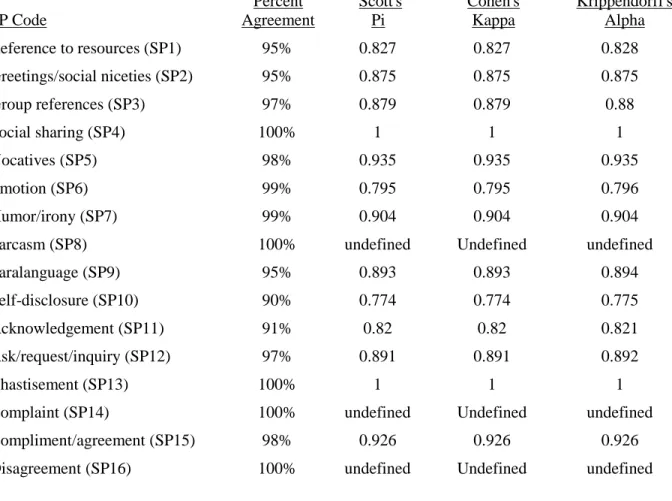
3. Comparison of COI-SP and the interpersonality taxonomy 53 4. Inter-coder reliability ...60
5. Coder stability across two time points ...61
6. Number of times social presence codes were applied ...67
7. Percentage of students who engaged in social presence behaviors ...68
ix
LIST OF FIGURES
Figure
1. Community of Inquiry Framework ...26
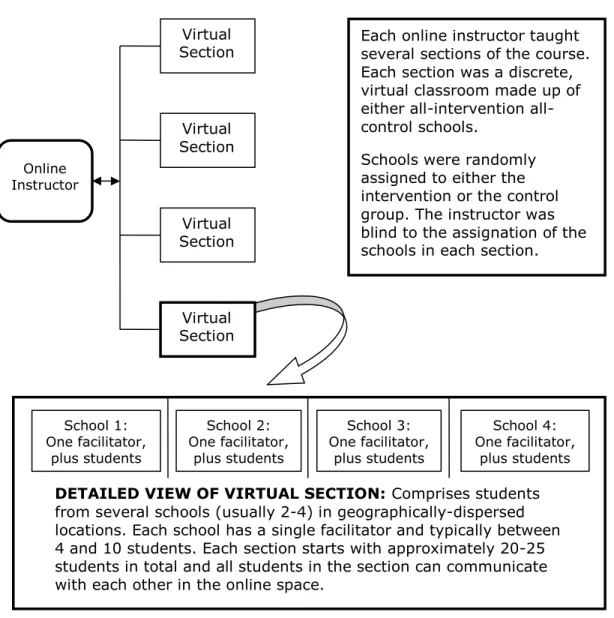
2. Detailed view of course organization and structure of virtual class section ...40
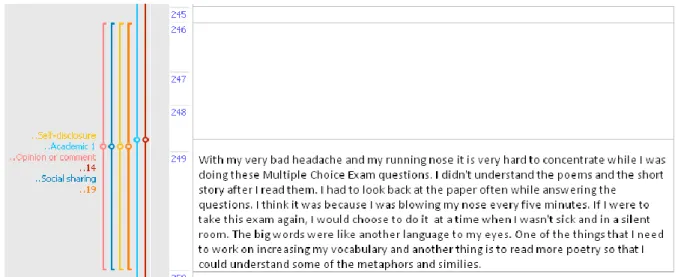
3. Message coded by first coder ...57
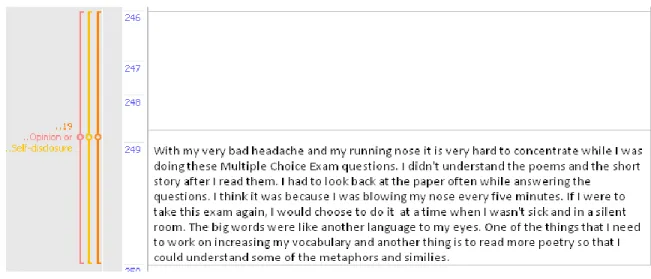
4. Message coded by second coder ...58
5. Comparison of messages posted by instructors with mean student messages ...66
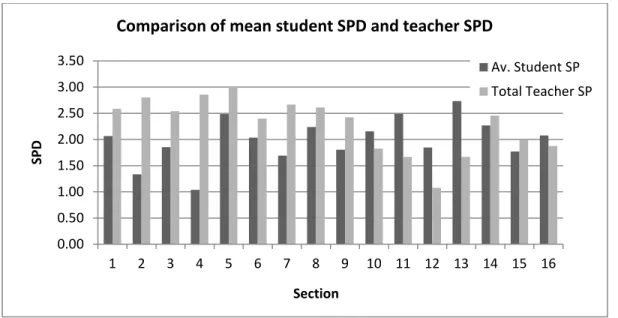
6. Comparison of mean student SPD and teacher SPD ...67
7. Student SPD in the three subcategories ...69
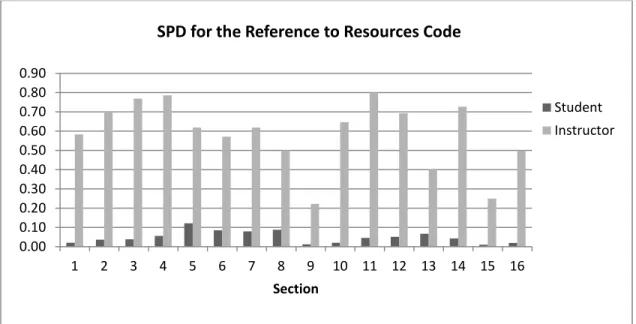
8. SPD for the reference to resources code ...70
9. SPD for the greetings/social niceties code ...71
10. SPD for the group references code ...72
11. SPD for the social sharing code ...73
12. SPD for the vocatives code ...74
13. SPD for the emotion code ...75
14. SPD for the humor/irony code ...76
15. SPD for the sarcasm code ...77
16. SPD for the paralanguage code ...78
17. SPD for the self-disclosure code ...79
18. SPD for the acknowledgement code ...80
19. SPD for the ask/request/inquiry code ...81
20. SPD for the chastisement code ...82
x
22. SPD for the compliment/agreement code ...84
23. SPD for the disagreement/critique code ...84
24. Teacher One: social presence subcategories ...89
25. Teacher Two: social presence subcategories ...90
26. Teacher Three: social presence subcategories ...92
27. Teacher Four: social presence subcategories ...94
28. Drop rate by the 4-week point ...96
29. Overall 4-week drop rate, by teacher ...96
CHAPTER 1 INTRODUCTION
Rural schools educate 30% percent of all K-12 students in the United States (National Center for Education Statistics, 2007), with the majority of these enrolled in schools of fewer than 400 students (Hobbs, 2004). In order to address challenges of declining populations and the inability to attract qualified teachers to rural areas (Barbour & Mulcahy, 2009; de la Varre, Keane, Irvin, & Hannum, 2009), rural schools increasingly turn to online distance education (ODE). ODE offers an alternative route of access to advanced courses and can help increase career aspirations and opportunities for rural students (Barbour & Mulcahy, 2009; Downs & Moller, 1999; Simonson, Schlosser & Hanson 1999; Simonson, Smaldino, Albright, & Zvacek, 2006; Singh & Dika, 2003). However, much research on ODE has reported high dropout rates and student perceptions of isolation and lack of support, in part due to the lack of visual and other non-verbal cues between student and teacher, and the often asynchronous nature of classes (Carr, 2000; de la Varre, et al., 2009; Roblyer, 2006;
Simpson, 2004; Zweig, 2003, cited in Rice, 2006; Parker 1999).
2
students may therefore be greater than for their counterparts in urban or suburban schools and younger students may be particularly vulnerable to isolation and lack of social interaction (Hannum, Irvin, Banks, & Farmer, 2009; Hobbs, 2004). Teacher-student interaction is thought to be an important factor in student success in post-secondary ODE populations, (Hawkins, Barbour, & Graham, 2011; Tallent-Runnels, Thomas, Lan, & Cooper, 2006). Less is known about K-12 populations although supportive teacher-student interactions increase motivation and encourage progress (Hawkins, Barbour, & Graham, 2011; Nippard & Murphy, 2007)
In order to address these issues of isolation and dropout, many ODE courses include asynchronous, threaded discussion boards (DBs) where students can interact and socialize. The aims of online discussion may be multiple, including helping to foster a sense of
community in the course, a place for ongoing thoughtful and self-reflective discourse among peers, and an arena for cognitive work. Online discussion in ODE is often a graded, formal course activity that involves content-based discussion where students interact and learn from each other, rather than merely a social meeting place, although some courses do also provide DBs purely for socializing (Mazzolini & Maddison, 2003).
3
therefore occur in the context of interpersonal interaction, and reflect the degree of
reciprocal, mutual awareness of others, and interpersonal contact in the online environment (Aragon, 2003).
The present study is a secondary analysis of data collected from the Supporting Distance Learning in Small Rural School Districts1 study (“Supporting Distance Learning”), conducted in two cohorts by the National Research Center for Rural Educational Support (NRCRES) between 2007 and 2009. This was a randomized, controlled design with a
sample of over 700 high school students in 93 small, rural schools in 29 states across the U.S. Students were enrolled in a year-long online Advanced Placement (AP) English Literature and Composition course, in a total of 30 virtual course sections, taught by five online teachers. The intervention focused on expanding the role of the on-site facilitator, who provided students with local school-based support. While it is likely that the facilitators’ behaviors and activities in the local classrooms exerted some influence on their students’ attitudes to and engagement in the ODE course, facilitators did not participate in the online discussion.
The present study focuses only on social presence behaviors by students and teachers in the DBs and also examines student dropout through the lens of social presence. The findings were derived from a content analysis of transcripts of online discussion by rural high school students and their online teachers during the first month of the second cohort (2008-2009). The time period examined was chosen because the majority of students who dropped the course did so in the first four weeks. Additional data comes from post-course interviews with the online teachers. The theoretical framework guiding this study is Vygotsky’s social
1
4
constructivism, which posits that learning is a social activity and student interaction is a key component of learning (Anderson, 2004; Aragon, 2003; Berge, 1996; Bibeau, 2001; Fulford & Zhang, 1993; McDonald, 2007; Moore, 1993; Richardson & Swan, 2003; Stanford-Bowers, 2008). The present study also draws on social presence research, particularly that which has utilized the Community of Inquiry (COI) framework (Garrison, Anderson, & Archer, 2001). The COI is a frequently used explanatory framework for understanding the educational experience of ODE (Akyol, 2009; Shea et al., 2010; Wise et al., 2004), and was originally conceived as “a description of the learning process in a social constructivist paradigm” (Annand, 2011). The COI offers a model for systematic empirical investigation of social presence and its relation to other learning-related elements, namely cognitive presence and teaching presence (Arbaugh, Cleveland-Innes, Diaz, Garrison, Ice, Richardson, Shea, & Swan, 2008; Oztok & Brett, 2011; Rourke & Kanuka, 2009; Shea & Bidjerano, 2009).
This introductory chapter provides a rationale for exploring patterns of social
5 The Evolution of Distance Education
Distance education – access to educational opportunities for those who cannot
physically attend a campus or school – has been evolving since the 19th century and has been defined as the delivery of courses that are not restricted to a same-time or same-place
learning model (Moore, 1993; Simonson, et al., 2006). Beginning with mail-based correspondence courses and over time incorporating new technologies that arose, e.g., telephone, radio, TV, and video, much distance education now makes use of interactive computing technologies. Computer and Web-based technologies offer opportunities for interactivity and access to the ideas and opinions of others that were simply not possible with the older, mail-based courses or those that employed unidirectional delivery formats (Wise, Chang, Duffy, & del Valle, 2004). This has led to rapid growth in the use of distance education (Hawkins & Barbour, 2010; Setzer & Lewis, 2005; Wise et al., 2004). Although not all online learning is at a distance, and not all distance education occurs online, the associated terminology has often been used interchangeably in research literature (Rice, 2006). Online distance education (ODE) is the term used throughout this study.
ODE in K-12 Settings
6
1,030,000 students (Picciano & Seaman, 2009). The most successful online students are independent, intrinsically motivated, self-regulating learners, with effective
time-management, reading, writing, and information-searching skills (Haughey & Muirhead, 1999; Land, Nwadei, Stufflebeam, & Olaka, 2003; Parker, 1999). However, ODE is not only available to the brightest and the best students; it is considered a flexible option for non-traditional students like homeschoolers, and a convenient way to deliver remedial, credit-recovery courses.
ODE is also a feasible and attractive choice for rural schools. The limited demand for advanced level courses combined with chronic problems attracting qualified teachers to rural areas mean that rural schools often cannot provide a comprehensive curriculum and may be at risk of consolidation. As a result, they increasingly turn to ODE as an alternative route of access to advanced courses and to increase career aspirations and opportunities (Barbour & Mulcahy, 2009; Downs & Moller, 1999; Simonson, et al., 1999; Simonson, et al., 2006; Singh & Dika, 2003). In 2005, the National Research Center on Rural Education Support (NRCRES) conducted the first national ODE survey to focus exclusively on rural school districts (Hannum, Farmer, Veal, Barber, & Banks, 2006). The survey found that the
majority of the participating districts (85%) had used ODE before, and 69% of districts were using ODE at the time of the survey.
7
peers during normal school hours. Providers of K-12 online courses therefore often utilize the teacher-facilitator model, assigning a local staff member as on-site facilitator or mentor to support students.
Summary of Research Comparing ODE with Face-to-Face Learning
A considerable amount of research over the past two decades has compared ODE with face-to-face learning, most frequently looking at academic achievement or student satisfaction. Generally, these comparative media studies have shown little or no difference in academic outcomes (Bernard et al., 2004; Cavanaugh et al., 2004; Hannum & McCombs, 2008; Hobbs, 2004; Russell, 1999), often concluding that most of the factors that contribute to the effectiveness of ODE are equally applicable in face-to-face settings (Zhao, Lei, Yan, Lai, & Tan, 2005). While a large body of research has shown no significant difference in learning outcomes when comparing ODE to traditional face-to-face classes, feelings of isolation (Aragon, 2003; Cereijo, Young, & Wilhelm, 2001; McInnerney & Roberts, 2004; Paloff & Pratt, 1999; Wegerif, 1998) and high attrition rates – sometimes greater than 50% (Carr, 2000; Parker 1999; Roblyer, 2006; Simpson, 2004; Zweig, 2003) – are commonly reported by online learners.
Student Dropout in ODE
8
financial status, and importance of GPA. If social presence influences student persistence in a course, it may be because it facilitates a sense of connectedness and a feeling of belonging to a group. Brown (2001) found that a number of reasons affected the sense of belonging for an individual, e.g. the student was focused only on gaining knowledge or credits, did not want to interact, was disengaged due to health, family, work or technology problems, preferred face-to-face meetings, or did not give the class enough time or make it a high priority. Dropout reasons given by adults may differ from those of high school students, who have different goals, but due to a lack of research literature at the K-12 level (Barbour & Reeves, 2009; DiPietro, Ferdig, Black, & Preston, 2008) and no common definition of dropout, typical dropout rates for high school ODE courses are difficult to determine (Roblyer, 2006).
Lack of ODE Research at the K-12 level
As a number of researchers have noted, any technology used in education should not be implemented merely because it is available, convenient, or popular, but because it
facilitates positive outcomes (Biesenbach-Lucas, 2003; Mason, 1998; Paloff & Pratt, 2001; Sudweeks & Simoff, 1999). However, evidence to support positive outcomes and thus the use of specific technologies or strategies in ODE is currently minimal or lacking, particularly in K-12 populations. ODE research has typically been conducted on samples of college students or adult learners, and the K-12 research that does exist is rarely from a controlled or systematic design that would allow researchers to posit causal relationships (Hannum, 2009; Smith, Clark, & Blomeyer, 2005). Cavanaugh et al. (2004) identified only 14 empirical research studies that looked at achievement outcomes in online learning with K-12
9
studies that looked specifically at asynchronous discussion in ODE between 1997 and 2007, but none of these was conducted on K-12 students.
As the field of ODE matures, it is vital that researchers build an empirical evidence base to inform the design and development of online courses for K-12 learners, including identifying and attending to the contextual factors that contribute to student success in ODE. This will require a shift from comparative media studies that merely confirm what has already been established by the research literature to studies that compare pedagogies, technologies, and social support strategies across online courses, and explore the environments within which these are implemented (Hannum, 2009; Lockee, Burton, & Moore, 2001). It is important to consider how ODE can make the best use of technologies that enhance interactivity, communication and collaboration (Beldarrain, 2008; Anderson, 2004), and support the different populations that use ODE (Barbour, 2007). Specifically, more examination is needed of the variables that might contribute to making the widely-used asynchronous threaded online discussion boards (DBs) an effective tool for learning,
10
collaborative learning, or for a combination of these. (Appendices A and B detail the requirements for DB participation in this study).
In addition to the previously mentioned concerns, the adoption of computer-based technologies in education has outpaced the ability of researchers to provide empirical and theory-based support for the efficacy of such technologies (Cavanaugh, Barbour, & Clark, 2009; Cavanaugh, et al., 2004; Garrison, et al., 2001; O’Dwyer, Carey, & Kleiman, 2007; Slough & Mueller, 2006). As a result, theories applied to ODE tend to come either from classroom-based educational research, research into online media in the field of
communications, or sociological literature (Hiltz, Coppola, Rotter, Turoff, & Fich, 2000). While some of this research is undoubtedly relevant to ODE settings, again, much of it studies post-secondary populations. High school students are at a different developmental stage in terms of critical thinking abilities, self-regulation, and other cognitive skills when compared to college students or adults (Barbour, 2007; Barbour & Reeves, 2009; Hudson, 2002) and so have different needs as learners. Cavanaugh et al. (2004) included a caveat: “The temptation may be to attempt to apply or adapt findings from studies of K–12
classroom learning or adult distance learning, but K–12 distance education is fundamentally unique” (p. 4).
Theoretical Overview: Social Constructivism
11
constructivist models for which knowledge is no longer considered to be something external to the learner that is transmitted in one direction only, from teacher to student (Goertzen, & Kristjansson, 2007; Jonassen et al., 1995; Shea, 2006; Stanford-Bowers, 2008; Vrasidas, 2000). The social-constructivist theories of Russian psychologist Lev Vygotsky have played a large part in this shift and provide the conceptual framework for this study.
Vygotsky wrote about the mutual effects of culture and social interactions on learning, although his work was not widely known in the West until decades after his premature death in 1934. Vygotsky believed that social interactions shape both thought and speech in the developing child, arguing that cognitive functions are ultimately derived from dialogue, which first occurs between individuals and then within the self (Blunden, 1997): “Every higher psychological function was external because it was social before it became an internal, individual psychological function; it was formerly a social relationship between two people” (Vygotsky, 1934/1987, v3, 144-145).
ODE courses are often designed around principles of social constructivism, in which social activity and interaction are key components of the learning process (Anderson, 2004; Berge, 1996; Fulford & Zhang, 1993; McDonald, 2007; Moore, 1993; Richardson & Swan, 2003; Stanford-Bowers, 2008; Tu, 2002). Particularly relevant to online arenas for
interaction and collaboration is Vygotsky’s notion of the zone of proximal development
(ZPD): “The distance between the actual development level as determined through
independent problem solving and the level of potential development as determined through problem solving under adult guidance or in collaboration with more capable peers”
12
ability through social interactions with more knowledgeable collaborators (Barbour & Rich, 2007; Garrison, & Arbaugh, 2007). This is known as “scaffolding,” a term first introduced
by Wood, Bruner, and Ross (1976). Scaffolding should include “explicit guidance, modeling, encouragement, mirroring, and feedback” (Salomon & Perkins, 1998, p.6) and, when
effective, increases the ability of each participant in group discussion to function
independently, ideally creating an enjoyable experience for all participants (Granott, 2006). The meaning of this metaphor is often extended to describe mutually supportive interactions among peers rather than just collaboration with a more capable partner (Granott, 2006). What is most important is a “willingness on the part of all participants to learn with and from each other” (Wells, 1999). In an online discussion forum, the group collectively becomes the ZPD for each individual participant. Students learn from each other, enabling them to
practice skills and develop capabilities in a group setting with the assistance and support of others, before applying those skills independently (Borthick, Jones, & Wakai, 2003). Social presence supports these processes by facilitating discourse, helping to foster a sense of connectedness between group members, and allowing participants to feel they “know” the other members of the group (Wise et al., 2004).
13
and work collaboratively is a contemporary example of the tools, e.g., computer, software, keyboard, and monitor, and the symbols, e.g., text and language, that mediate learning (Tu, 2002).
If knowledge and meaning are socially constructed, cognitive activities cannot be considered in isolation from the social and environmental contexts in which they occur (Salomon & Perkins, 1998). Vygotsky believed that the types of interaction available to the learner, and the tools and symbols that mediate those interactions, depend on both the culture and context in which those learners are embedded (Davydov & Kerr, 1995). As the culture and contexts in which ODE learners in high school are embedded are different from those in higher education settings, it can be expected that ODE in high schools may differ in some respects from ODE for post-secondary learners. Even within a single online course, students embedded in different schools experience different local environments which may influence their online experiences. In order to facilitate online interaction, as well as build connections between students situated in a variety of local settings, ODE courses often integrate online discussion into the online course. Access to DBs allows students to communicate, exchange ideas, reflect upon course content, interact with the teacher, learn collaboratively, and socialize. In the DBs, interactions are primarily text-based, and in any text-based
communication medium there is an inherentlack of visual and other non-verbal cues, such as tone of voice, to help the reader understand what the “speaker” means to convey.
Participants therefore learn about each other through “performance rather than appearance” (Walther, 1996):
14
Vygotsky’s work was concerned with face-to-face interactions and he believed that gestures, such as pointing, were an important part of these interactions: "Gestures, it has been correctly said, are writing in air, and written signs frequently are simply gestures that have been fixed" (Vygotsky, 1978, p. 107). Vygotsky felt that adults’ gestures during social interactions were “an essential part of the communication and thus of guidance that adults provide” and that the child’s gestures were “a crucial source of feedback for the adult” as well as contributing to the child’s internalization process (McNeill, McCullough, & Tyrone, 1994). If in face-to-face interactions “gestures embody and thus display a host of
assumptions about both the social and physical world” (McNeill, McCullough, & Tyrone, 1994, p. 147) then it is important to determine how such assumptions are transmitted in online interactions and how they are manifested in text. Social presence theories explore how people are able to project themselves interpersonally, and cognitively represent themselves and others intrapersonally, in analogous ways, within both face-to-face and computer-mediated settings. Learning through computer-mediated and text-based
interactions is indeed possible, as much research looking at outcomes in ODE has shown. If social and academic outcomes are similar in both settings, it implies that individuals are able to derive social information from cues within the language and paralanguage used in text-based computer-mediated interactions, in ways that are similar to the information gleaned from spoken language and accompanying gestures and other non-verbal cues in direct face-to-face interactions.
15
interactions that become internalized via online environments rely in part on social presence cues. Social presence research is an attempt to identify and categorize exactly what is contained in the text that allows readers to participate in what they perceive to be an interpersonal interaction – a conversation - with a real person. Social presence research attends to not only the content of the text but to paralinguistic cues that indicate the tone and emotions associated with the discussion. These include the appearance of the text and how it has been embellished for emphasis and whether emoticons, slang, and abbreviations are used to indicate sarcasm, humor, or other affective information. Paralinguistic embellishment of text is therefore an example of Vygotsky’s “gestures that have been fixed” through written signs (Vygotsky, 1978, p. 107) and, as with gestures that accompany spoken language (Kendon, 2000), these paralinguistic elements allow the “speaker” to convey more than one speech act at the same time.
Purpose of the Study
16
A considerable body of literature addresses social presence in online learning in higher education (Annand, 2011; Beuchot & Bullen, 2005; Gunawardena & Zittle, 1997; Hiltz, 1998; Morgan, 2010; Oren, Mioduser, & Nachmias, 2002; Shea and Bidjerano 2010), often referencing the social presence component of the Community of Inquiry (COI)
framework (Rourke, Anderson, Garrison, & Archer, 2001). However, very little research has looked specifically at teacher social presence (Swan & Shih, 2005; Whiteside, 2008; Wise et al., 2004), and little is known about social presence in K-12 ODE settings. Therefore this study explores the social presence behaviors of K-12 ODE students and their teachers in online discussion, and whether social presence is associated with student dropout. Summary of Chapter 1
CHAPTER 2 LITERATURE REVIEW
In ODE courses that are designed and delivered within the social constructivist paradigm, interactivity between students and their peers, and between students and their teacher, is to be desired because it is presumed to facilitate learning (Wise, et al., 2004). Consequently, opportunities for interaction such as the provision of DBs are frequently built into the curriculum. Use of DBs in ODE is often a graded, mandated activity, but DBs may also be provided as an online space for students to introduce themselves and socialize (Wise et al., 2004). Social presence, thought to facilitate and sustain discourse and support the formation of community in online groups, is a factor that has been widely studied in
computer-mediated discourse, particularly in higher education. There has however been little social presence research in K-12 or rural settings, and few studies have examined the
contribution of teachers to social presence in ODE (Swan & Shih, 2005; Wise et al., 2004). This chapter contains a review of the relevant literature regarding (i) common
problems in ODE, (ii) learning through interaction, (iii) social presence and its definition, (iv) social presence and sense of community, (v) characteristics of asynchronous threaded
discussion, and (vi) the role of the online teacher, and then presents the research questions that guide this study.
Common Problems in ODE
18
immediacy—the psychological closeness between teacher and student. In the traditional face-to-face classroom, teacher immediacy is conveyed through behaviors that include non-verbal signals such as smiling, eye contact, relaxed body posture, and non-verbal signals such as praise and the use of humor (Arbaugh, 2001; Gorham, 1988; Rourke, Anderson, Garrison, & Archer, 1999). Shea (2006) found that students perceived a “stronger sense of learning community” when exposed to teachers who displayed more immediacy behaviors. Delayed feedback and misunderstanding or frustration caused by the absence of nonverbal cues can lead to feelings of student isolation from the teacher as well as from other students in the course (Hannum & McCombs, 2008; Barbour, 2007; Carr, 2000; Roblyer, 2006; Simpson, 2004; Rovai, 2002; Tu & McIsaac, 2002). Student isolation, often attributed to a lack of personal interaction and support (Moore & Kearsley, 1996), is a significant factor in the high dropout rates commonly reported in ODE studies (Diaz, 2002; Hill & Raven, 2000; O'Brien & Renner, 2002; Picciano, 2002; Wise et al., 2004).
19
that online courses frequently offer the only access to advanced courses (Simonson, Smaldino, Albright, & Zvacek, 2006). Thus, students may have no choice other than to enroll in ODE, even though they lack the desired characteristics (Barbour & Mulcahy, 2009). Rural students are accustomed to being educated in learning environments with high levels of intimacy and teacher immediacy, and typically feel a strong sense of belonging and
connectedness both to school and community (de la Varre, Keane, Irvin, & Hannum, 2009; Hedlund, 1993). Consequently, rural students may find it more of a challenge to adjust to the demands of ODE than their urban or suburban counterparts, even with appropriate academic and technological abilities (Hannum, Irvin, Banks, & Farmer, 2009). It may be particularly important for students to develop a sense of connectedness online where courses are
asynchronous in nature and students are most vulnerable to perceptions of isolation (Rovai, 2002).
20 Learning through Interaction
Vygotsky (1981, p.163) stated that “all higher mental functions are internalized social relationships,” reflecting his belief that knowledge originates in social interactions. A
number of more recent researchers concur that in both traditional classrooms and distance education settings learning occurs through interpersonal interaction (Anderson, 2004; Garrison, & Kanuka, 2004; Hudson, 2002; Jung, Choi, Lim, & Leem, 2002; McDonald, 2007; Stacey, 2002). It is through interaction that students process their learning experiences and incorporate multiple perspectives (Jonassen, 1995; Meyer, 2003; Wise et al., 2004; Woo & Reeves, 2007). Knowledge is therefore perceived uniquely according the individual’s prior experience, does not exist independently of the learner, and is influenced by
community, culture, family values, race, ethnicity, gender, socioeconomic status and many other variables (Woo & Reeves, 2007; Vrasidas, 2000).
21
According to Brown (2001), online community building proceeds in three stages. Firstly, the students make the acquaintance of the other online participants. Secondly,
students begin to feel kinship through participation in “long, thoughtful, threaded discussion” (p. 24) on topics that all participants find important, and thirdly, a sense of camaraderie develops through online interaction sustained over time and augmented by communications outside the immediate course environment. Brown (2001) concluded that the students who described themselves as “connected” behaved in certain ways: class became a priority to which they were willing to devote time, and students were motivated to interact with their peers and did so in a respectful manner.
Brown (2001) also attends to the shifts that occur as students move from being novice online learners to “veterans.” She notes that new students spend a large proportion of their time becoming familiar and comfortable with the technology and interface, understanding learner-centered methods, and becoming familiar with course structure and content. She illustrates this with a “time triangle,” where the base represents the time that students take adjusting to the course, and the peak represents engagement with the class content and the construction of community. Over time the triangle becomes inverted: students who are familiar with online learning spend much more time in community-building and engaging with the course content and very little on the technology of the class (Brown, 2001).
22
and a lack of visible interaction is not the same as a lack of participation (Dennen, 2008; Fleming, 2008; Han, & Hill, 2006; Rourke, Anderson, Garrison & Archer, 2001; Schrire, 2006). So, a fifth dimension in which interaction occurs is vicariously, through reading and observation (Beldarrain, 2008; Sutton, 2005). Indeed, as online participants should ideally shift between private reflection and shared discourse (Garrison, Anderson, & Archer, 2001), it makes sense that students sometimes log into forums simply to read discussion posts without actively contributing.
Students who read but do not post at all, sometimes known as “lurkers” (McDonald, 2007), may not be appreciated by teachers who feel that they are benefiting from the
participation of others without sharing their own knowledge or opinions (Fleming, 2008). However, there is some evidence that indicates that lurking is a strategy that ranges from “passive information gathering” (Ramirez, Walther, Burgoon, & Sunnafrank, 2002) to active learning associated with positive academic outcomes (Dennen, 2008; Fleming, 2008;
23
discussion would be penalized, although students who post to DBs are certainly expected to read the posts of other students.
Characteristics of Asynchronous Threaded Discussion
Threaded discussion is analogous, but not entirely equivalent to face-to-face
24
their own arguments with evidence and are encouraged to question the viewpoints of both peers and the teacher is one way in which students develop the competencies they need in order to think critically and rigorously, interpret, analyze, and evaluate information (Larson & Keiper, 2002). However, simply making tools for collaboration and communication available by no means guarantees that students will use them for these purposes, and social presence per se, does not guarantee that students will engage in the cognitive work of learning (Garrison & Arbaugh, 2007). Formal rules for communication can be established within the course to facilitate personal interaction, for instance, stick to the topic, do not monopolize the conversation, avoid over-aggressive language, and do not type in all capitals, but these may demand new competencies and participants may take time to become
comfortable with them (Baglione & Nastansi, 2007; Kerka, 1996).
Schellens & Valcke (2002) found that increased discussion led to greater levels of knowledge construction, increased social cohesion, and greater levels of student engagement and satisfaction, while Rovai (2001) stated that the sense of classroom community increased as the volume of online discussion increased. Nevertheless, students who have to contend with burgeoning amounts of information generated through multiple, simultaneous
interactions with peers may have difficulty keeping track of concurrent discussions, leading to feelings of overwhelm that are detrimental to the sense of community (Fleming, 2008; Hiltz, 1998). An excess of social comments in academic, content-related forums may be perceived by students as wasting time, not getting to the point or interfering with useful learning (Rourke & Anderson, 2002; Rourke, Anderson, Garrison, & Archer, 1999). Course designers therefore often include a social arena separate from those forums used for
25
disrupting the work environment. Some researchers suggest that the overall course design should integrate opportunities for socialization into the syllabus (Pate, Smaldino, Mayall & Luetkehans, 2009) while Beuchot and Bullen (2005) suggest that online course designers should include time before the cognitive work begins to allow participants to interact and attend to the social and emotional climate of the virtual class.
In a learning environment, having a common educational purpose and participating in shared learning activities constitutes a community of inquiry, which is one variety of a community of practice (Wenger, 1999; Whiteside, 2007). The idea of communities of practice closely echoes Vygotsky’s ZPD. Learning occurs experientially and in natural settings by participation in communities of practice made up of individuals with differing levels of expertise. Learners play an increasingly central role as they increase in competence and ability and become fluent in the values and culture of that community of practice.
Education thus becomes “a mutual developmental process between communities and individuals” as learners move along the continuum from novice to expert (Wenger, 1999, p. 263). However, in high school settings, and probably in many higher education settings too, the community of practice is composed of a single expert (the teacher) with the rest of the group being novices (Annand, 2011), although the novices will have varying degrees of knowledge and experience with the content of the course.
The Community of Inquiry (COI) Framework
26
various models, Garrison, Anderson, & Archer (2000) published the Community of Inquiry (COI) model (Figure 1), intended to provide a robust framework for textual analysis of computer conferencing in higher education (Garrison, & Arbaugh, 2007; Swan, 2002; Whiteside, 2007).
Figure 1: Community of Inquiry framework [by author permission]
27
processes” (Anderson, Rourke, Garrison, & Archer, 2001). Learning is thought to occur as an interaction of these three elements, which are believed to contribute to the total education experience, whether in a face-to-face or online environment (Garrison, at al., 1999; Garrison, & Kanuka, 2004). Thus the COI model was intended to describe “the learning process within a social constructivist paradigm” (Annand, 2011). The structure of the COI model has been confirmed through a number of factor analyses (Garrison, & Arbaugh, 2007), and according to Google Scholar (February 23, 2012) the initial article (Garrison, et al., 2000) has been cited in over 1200 other works. Recent critiques of the COI framework suggest that social presence might occur as a result of the interaction of the cognitive and teaching presences, and also that social presence does not seem to directly affect learning (Akyol & Garrison, 2008; Annand, 2001; Wise et al., 2004).
Social Presence
28
much more complicated than previously imagined” (Tu, 2002, p. 146). Biocca, Harms, & Burgoon (2003) defined social presence as “a sense that the mediated representation of the other enables some level of access to the other’s attentional, cognitive, or affective states” (p. 334) while Picciano’s (2002) definition refers to “a student's sense of belonging in a course or group and the ability to interact with others, although physical contact is not available” (p. 25). Harms et al. (2006) stress that social presence should be considered a property of the individual in the process of interacting with others; participants have a greater or lesser degree of “reciprocal awareness” and “behavioral interdependence” where what one person says influences the next and group members learn from each other. Social presence helps to promote trust and self-disclosure in the online environment (Gunawardena, Nolla, Wilson, Lopez-Islas, Ramirez-Angel, & Megchun-Alpizar, 2001). A lack of trust within an online
group can lead to feelings of discomfort and may mean that members hesitate to participate
due to fear of ridicule or low expectations that participation will be beneficial (McFadzean &
McKenzie, 2001).
Social presence researchers in the 1980s and early 1990s expressed fears that Internet-based learning was not conducive to the formation of online relationships and even that online communication was characterized by more hostile interactions than face-to-face communication (Oren et al., 2002; Stacey, 2002; Walther, 1996). Siegel, Dubrovsky,
Kiesler, and McGuire (1986, p. 161) believed that computer-mediated communication would “reduce feelings of embarrassment, guilt and empathy for others; produce less social
29
numbers of people as a place for making social connections and sharing information, with an evident shift from tools that support individuals to tools that support interpersonal interaction (Brown, 2002; Oren et al., 2002). Despite the absence of non-verbal cues, text-based
immediacy behaviors such as the use of emoticons, exaggerated punctuation and other paralinguistic cues contribute elements of both written and spoken language to online discourse and contribute to social presence (Weinberger, 2002; Wilkins, 1991). Text can convey both the meaning intended by the author, and new, additional or alternative meanings according to how that text is perceived by the reader (Tu, 2002). Therefore these immediacy indicators help individuals gauge and adjust to the social presence of other participants in the forum, thus maintaining “affective equilibrium,” in much the same way as participants in face-to-face discussion (Swan & Shih, 2005). However, Swan and Shih (2005) note that not all participants in online discussion adapt to the lack of non-verbal cues by increasing their social presence behaviors; some write more formally in an effort to clarify meaning.
Online modes of communication can be highly interactive and even “hyperpersonal” (Swan, 2002; Walther, 1996). Weinberger (2002, p. 111) describes online, asynchronous discussion as “a new type of public space that enables a new type of participation.” It is apparent then, that in spite of the lack of non-verbal cues in text-based, DBs, participants are able to develop meaningful online relationships, consisting of a combination of elements that Hudson (2002) refers to as “candlepower”:
…surprising intensity, personal depth, and intimacy can arise in an online forum. In essence, one is working in the dark, with attention highly focused—and people highly engaged—within a small patch of light where the narrative takes place. In
asynchronous dialogue, words linger, thoughts are not interrupted… the very
30
Researchers have developed a variety of instruments designed to operationalize social presence, focusing on perceptions of social presence or observable behaviors such as
interaction and the use of cohesive language in online environments (see Lowenthal, 2009). Although recent definitions of social presence tend towards descriptions of a concept that is socially constructed by the group (Harms et al., 2006; Lowenthal, 2009; Whiteside, 2007), each individual in the group has a part to play in fostering and maintaining social presence. Arbaugh et al. (2008) define social presence as “the ability of participants to identify with the community, communicate purposefully in a trusting environment, and develop inter-personal
relationships by way of projecting their individual personalities.” In addition, Tu and McIsaac (2002) highlight the importance of individual characteristics and traits such as attitudes to technology, keyboarding skills, and reading and writing ability in contributing to social presence. Wise et al. (2004) found that other factors affect students’ perceptions of social presence in an online group, including their level of trust and their purpose for taking the class and learning intentions: students who took their courses more seriously produced higher quality work. Wise et al. (2004) conclude that social presence is not a causal factor in students’ learning but rather is a correlational factor: “While students recognize and respond in kind to social presence, they do not learn more, feel they learned more, or feel the
experience was more useful when social presence is high (p. 267).” Social Presence and Sense of Community
31
learning outcomes (Hatzipanagos, 2006; Hoskins & Van Hooff, 2005; McDonald, 2007; Saritas, 2008). Social presence describes the mutual acknowledgement of participants in online discussion and their reciprocal responses and behaviors towards each other (Rovai, 2002). Through these behaviors, participants are able to project individual personality and affect into the group setting, and thus participants mutually perceive each other as “real” people (Gunawardena & Zittle, 1997). Aragon (2003) describes social presence as “one of the most significant factors in improving instructional effectiveness and building a sense of
community,” while Whiteside (2007) states that the concept “motivates participants to take an active role in their own and peers’ construction of knowledge.”
Social presence has been found to be strongly associated with student satisfaction and persistence in online courses (Goertzen & Kristjansson, 2007; Santovec, 2004). In online, text-based environments, social presence is considered by many researchers to be a crucial component that lays the foundation for critical thinking—an outcome that can be considered a major goal of education (Garrison, & Arbaugh, 2007). It is also presumed to be a
prerequisite factor for cognitive presence, a cycle of discussion and reflection through which students make meaning and do the cognitive work of learning (Beuchot & Bullen, 2005; Garrison, Anderson, & Archer, 2001). While social presence per se does not guarantee that a discussion forum will result in critical discourse, it is unlikely that such discourse will
develop without it (Garrison, & Arbaugh, 2007; Rourke & Anderson, 2002).
32
how they perceived the presence of other participants. Swan and Shih (2005) compared students in an online, graduate-level course who perceived social presence to be high with students who perceived social presence to be low. They found that the students who perceived low social presence also had fewer social presence indicators in their messages than the students who perceived high social presence. These students thought that social interactions were a waste of time, did not like the online format, and found socializing difficult or pointless. However, the Swan and Shih (2005) survey actually asked students about perceived sense of community. A sense of community is a perception of individuals that they belong and are connected to the group entity (McMillan & Chavis, 1986; Rovai, 2002). Rovai (2002) recognized the connection between social presence and community, stating that “as social presence goes down, so does sense of community” but while social presence behaviors are a prerequisite for a sense of community, social presence is not the same as community. Therefore, when Swan and Shih (2005) found that students with low SPD perceived low class social presence, they actually meant that those students perceived a low sense of community or belonging. While the terms “social presence” and “sense of community” are often used interchangeably by researchers, the concepts derive from
33
Research in corporate settings has demonstrated that community-building enhances group performance (Lave & Wenger, 1991). Fostering a climate in which people feel comfortable disclosing personal information, and thus contribute to and build social
presence, increases the likelihood of a sense of community among participants (Rovai, 2002). When all participants have a collective understanding of their roles and interactions this enables a deeper understanding of the content with which the group is engaged(Lave & Wenger, 1991; Rogoff, 1994). Rovai (2002) gives a summary definition of a community, derived from several researchers, as a group of people whose characteristics include connectedness, interactivity, reciprocity, trust, and a common purpose. Indeed, without shared goals, meaningful discussion and a sense of community may not be possible (Han & Hill, 2006). Beuchot and Bullen (2005) found that DBs characterized as having more social presence showed increased interactivity among participants, and interactivity is widely acknowledged to be crucial in the formation of learning communities (Anderson, 2005; Wenger et al., 2002). Dawson (2006) found that greater levels of interaction, both with teachers and peers, increased the sense of community as well as the satisfaction that students felt in their courses.
It seems reasonable to suppose that a sense of community in online educational settings may influence outcomes (Hill, Raven, & Han, 2005). Perceptions of belonging to a community and of feeling like an “insider” have been found to increase student motivation, engagement and satisfaction (Wegerif, 1998). According to Rovai (2002), several researchers have indicated that a sense of community facilitates the transmission of information between participants in a virtual environment, as well as reinforcing commitment, cooperation and
34
know about each other, the more likely they are to establish trust, seek support, and thus find satisfaction.” Without these characteristics, meaningful discussion may not be possible (Han & Hill, 2006). Preece (1999) found that emotional support may be closely associated with information sharing, finding that empathy among participants in online support groups was one critical ingredient in the formation of community.
However, not all individuals in an online community have similar perceptions of connectedness or belonging (Brown, 2001). This is perhaps because both individual characteristics and group behaviors contribute to a sense of community, as do shared goals (Rovai, 2002). In a community of inquiry most students recognize that they are there not just to socialize but also to engage in academic and cognitive activities (Garrison, 2007). Shih and Swan (2005) found that different perceptions of social presence depended on underlying differences in student perceptions of the nature and purpose of the online discussion. These differing perceptions influenced how students projected themselves through aspects of social presence, including their language use, tone and communication style, and how they
35
concerning health, family, work or technology, a preference for face-to-face learning environments, or failure to make the class a high priority.
The Role of the Online Teacher and Teacher Social Presence
While much research using the COI framework has focused on the individual types of
presences there has been far less examination of how these presences support, influence, and
interact with each other (Garrison, Cleveland-Innes, & Fung, 2010). Very few studies have
examined how teacher social presence, which exists in the overlap between the teaching and
social presences, exerts an effect on social presence. Wise et al. (2004) examined the role of teacher social presence in a higher education ODE setting, stating that “the teacher almost certainly plays a critical role in fostering … sense of community and is part of that
community” (p. 249).
In courses designed on a social constructivist model, the online teacher becomes more like a facilitator of learning, the “guide on the side” rather than the “sage on the stage”
36
be “reinforcing and elaborating their current misconceptions,” and so online teachers need to engage in the multiple functions of modeling, monitoring and moderating online interactions; they need to be “visible” to students (Paloff & Pratt, 2001). The role of the online teacher should include the creation of a positive environment that supports learners both socially and academically, facilitating communication among all participants, responsibility for planning and implementation of the curriculum, and guiding students towards higher learning
outcomes using direct instruction (Anderson et al., 2001). All of these activities fall within the element of teaching presence, in the COI framework.
Research has indicated that teaching presence is a major factor in determining student satisfaction, and perceptions of learning, and helps to promote student engagement,
interaction, and sense of community (Akyol & Garrison, 2008; Anderson et al., 2001; Arbaugh, et al., 2008; Garrison et al., 2010; Kupczynski, 2010; Morgan, 2011; Shea, Li, Swan, & Pickett, 2005). Of course, none of the presences in the COI model exist in isolation (Shea & Bidjerano, 2008). Online teachers are also participants in the DBs and therefore contribute to social presence. In the COI framework, teacher social presence exists in the overlap between teaching presence and social presence, where the teacher helps to set the climate for learning (Anderson, Rourke, Garrison, & Archer, 2001).
Coppola, Hiltz, and Rotter (2004) suggest that to be effective in terms of building community and establishing trust, online teachers must establish their presence in the course immediately, by modeling “solidarity, congeniality, and affiliation,” responding to posts with enthusiasm, expressing positive course expectations, and “reinforcing predictable patterns in communication and action.” Discussing the connection between teacher immediacy
37
“enhance their "humanness" via humor and self-disclosure (p. 52).” This comment would seem pertinent to online teachers and also to this study, as those two items are affective indicators of social presence within the COI framework. Wise et al. (2004) also stress the importance of trust in students’ perceptions of the social presence: students with a low level of trust might be less aware of social cues that help to build community.
Although the effect of student-teacher interactions on learning outcomes has been extensively documented in traditional classrooms, there is a lack of corresponding research that examines these relationships online (Swan, 2003). Research on the influence of online teacher behaviors has primarily focused on students’ perceptions of learning, and less on actual teacher activity. Thus, the precise nature and the optimum level of interaction between teacher and student in the online environment are as yet unclear, as a moderator style that stresses content, and discourages social behaviors, can be detrimental to discussion (Slough & Mueller, 2006). Harms et al. (2006) discuss the importance of online teacher interactions in the course, suggesting teachers should encourage collaboration between students, engage with students (but not excessively) and provide timely feedback. Harms et al. (2006) also include suggestions as to how online teachers can participate fully in the course, by modeling and facilitating discourse and encouraging interaction and self-disclosure:
Conscientiously using activities that encourage students to get to know each other (especially early on in the course) is important in any course—but is essential in the virtual school environment. Teachers can become a part of the learning community— sharing their personal experiences and feelings and encouraging students to do the same (no page number given).
Summary of Chapter Two
38
presence is associated with a range of positive outcomes in ODE, including increased
interactivity, a greater perception of satisfaction with course and instructor, and helps foster a sense of community. However, little social presence research has been conducted in K-12 or rural settings, or has examined teacher social presence, and the optimal mode and manner of teacher behavior and interaction with students in K-12 ODE settings is unknown.
Using the research reviewed in this chapter as a basis for further exploration, this study presents findings from a qualitative content analysis of transcripts of online discussion, to examine patterns of student and teacher social presence behavior in an ODE course. The study includes additional data from year-end interviews with online teachers, and looks at student dropout through a social presence lens.
Research Questions
The aims of this study are a) to examine the patterns of social presence constructed by rural high school students and their teachers through their interactions on multiple
asynchronous threaded discussion boards in an online AP English Literature and
Composition course, and b) to explore associations between social presence and dropout. The research questions relating to these aims are as follows:
1. How do the patterns of social presence behaviors by students and teachers in the online discussion boards compare across sections?
CHAPTER 3
RESEARCH PROCEDURES AND METHODOLOGY
40
online course. The results from the pre-test showed no differences in the scores or abilities of the students across groups.
The intervention focused on expanding the role of the on-site facilitator. Participating schools were randomly assigned to either the intervention or control group, with the
intervention group being exposed to enhanced facilitator training. Once schools were as-signed, sections of the
Figure 2: Detailed view of course organization and structure of virtual class section Virtual
Section
School 1: One facilitator,
plus students
DETAILED VIEW OF VIRTUAL SECTION: Comprises students from several schools (usually 2-4) in geographically-dispersed locations. Each school has a single facilitator and typically between 4 and 10 students. Each section starts with approximately 20-25 students in total and all students in the section can communicate with each other in the online space.
Each online instructor taught several sections of the course. Each section was a discrete, virtual classroom made up of either intervention all-control schools.
Schools were randomly assigned to either the intervention or the control group. The instructor was blind to the assignation of the schools in each section.
41
online course (20-25 students each) were created to include up to four small rural schools. Each course section formed a discrete, virtual classroom. The facilitators supported the students in their online interactions with their virtual peers, their peers in the local classroom, and the online instructor. Schools within each treatment group were randomly distributed across instructors, with instructors blind to the assignment of schools. To prevent
contamination, each section consisted of either all-control students or all-intervention students.
All schools adhered to an identical course timetable, although the course itself was asynchronous because schools within any given section were on different daily schedules and often in different time zones. The online teacher was required to respond to student
questions or inquiries within a 24-hour period. Within each section, students were able to communicate with their online peers through participation in multiple text-based,
asynchronous threaded discussion forums (DBs). Most DBs were academic in nature, relating to specific modules of study, while others were provided to enable students to introduce themselves and interact socially. Peer to peer interactions were limited to those students within the same section.
Differences between Cohorts
Cohort 1 had two online teachers and 10 course sections while cohort 2 had five online teachers and 20 course sections. Cohort 2 instructors started the year with
42
for the first few weeks until a substantial percentage of students dropped the course,
calendars were adjusted, and the sections became stable. This was not entirely unexpected: real-world situations are frequently messy, complex and heterogeneous (Lacey & Luff, 2001; Sandelowski, 2001). However, by cohort 2 these issues had been resolved and the course curriculum was based upon the final adjusted curriculum in cohort 1. For these reasons, the data analyzed in this study were taken solely from cohort 2.
Data Collection and Preparation
Participant demograpics. The students in Cohort 2 consisted of 77% females and 23% males. Ethnically, the student cohort was 91% white, 2.4% Hispanic, and less than 2% each black, Asian, and American Indian. The online teachers were all white females and all had prior online teaching experience and AP experience.
43
the most critical to examine for indicators that participants were building social presence and community.
Description of DBs used in analysis. While collaborative exercises may have been built into the course activities later in the academic year (see Appendix A), during the first four weeks students were only required to post their individual thoughts and opinions and respond to others’ posts on the DBs. The course management system (Blackboard™) automatically captured all activities by users of the system, e.g. students, online instructors, facilitators, researchers and administrative staff. Each message was automatically assigned a timestamp by Blackboard™ and was archived. The content from the DBs started during the first four weeks of the course were exported as text files for analysis. A detailed description of each DB is given in Table 1 and instructions to students regarding DB participation can be found in Appendices A and B. The social and office DBs were open throughout the whole of the course. The ice-breaker exercise and the two academic DBs associated with particular teaching modules were time-limited. However, the forums were contiguous so the students in each section essentially had a continuous, year-long discussion experience. This
44 Table 1
Description of Discussion Boards
Forum Name and Purpose Forum Description
Introduction to threaded discussion: structured mandatory ice-breaker activity
Students’ first chance to use an ATD forum. The instructions directly encouraged
interactivity: “This is your first opportunity to introduce yourself to the class and to meet virtually the other folks with whom you will be learning and agonizing. Be sure to make your original post as well as respond to some of your new classmates.”
Homeroom: Social Interaction
Year-long, optional social forum where students were free to discuss any topic. Students were reminded: “This is a place for you to talk to each other outside of our scheduled class period.” Only the first month of the social board will be examined.
Teacher’s office: Administrative
For questions about the logistics of the course, e.g. calendars, schedules, grading, or
Blackboard.
Academic Content
1. AP Multiple Choice Practice
2. Faulkner Discussion
Two content-related forums from the first four weeks of the course are examined:
Discussion about the AP multiple choice practice exam.
Discussion about William Faulkner’s short story “A Rose for Emily.”
45
one of the facilitators associated with the fifth teacher had inadvertently deleted most of the discussion board data from the first month of the course.
Data from Year-End Teacher Interviews. Teachers were debriefed at the end of each academic year in the Supporting Distance Learning study. These interviews were concerned mainly with the behaviors of and interactions with on-site facilitators, as the facilitators were the main focus of the study. Teachers were briefly asked to comment on discussion board usage and usefulness. Any teacher comments used to corroborate or elaborate on findings in the present study came from this small subset of interview data that was relevant to online discussion.
Data Analysis. Qualitative data analysis (QDA) involves looking for patterns,
positing mechanisms or processes, and looking for evidence to confirm these (Robson, 1993, p. 476). Merriam (1990, p.17) cites Patton’s (1985) definition of the goals of QDA:
…it is not attempting to predict what may happen in the future necessarily, but to understand the nature of that setting—what it means for participants to be in that setting, what their lives are like, what’s going on for them, what their meanings are, what the world looks like in that particular setting.
46
(2005) describe qualitative content analysis as “a research method for the subjective interpretation of the content of text data through the systematic classification process of coding and identifying themes or patterns” (p. 1278).
The process initially starts with counting manifest content, e.g., the social presence indicators in the ESP model. The analysis then proceeds to include latent meanings – those which can be inferred from the texts. As Zhang and Wildemuth (2009, p. 310) note, this method appears quantitative in the preliminary stages, although the ultimate aim is an
inductive exploration of the indicator codes. The process of content analysis is systemic and reiterative, involving multiple readings of text and examination of codes, because as the coding proceeds it may bring to light patterns or enable discoveries that necessitate re-reading the text (Seidel, 1998). The underlying text and the behaviors encapsulated by the text are of primary importance; the codes themselves are heuristic pointers to the data and a way of grouping text that is similar in some way (Seidel, 1998).
47
application of codes and reduced reliability (Fahy, 2001). Other researchers prefer the sentence (Corich, Kinshuk, & Jeffrey, 2007; Fahy, 2001) or the message (Rourke et al., 2000) as the logical choice of unit of analysis. Too small a unit of analysis can result in a fragmenting of the larger meaning of the conversation or discourse while too great a unit may mean missing some of the detail that a more granular approach would reveal (Garrison, et al., 2006). This echoes what Vygotsky stated: “By unit we mean a product of analysis which… retains all the basic properties of the whole and which cannot be further divided without losing them” (Vygotsky, 1962, p.4).
For this study, the unit of analysis is the message, which is easily defined and unambiguous for coders to recognize. A single message may have several purposes, e.g., serving as a greeting to the group, providing information, and disclosing the feelings of the sender. Qualitative content analysis allows the coder to assign more than one category to a text unit at the same time (Tesch, 1990). Such a message could therefore be described with multiple codes, but each code denotes only the presence of social presence indicator rather than how many times that indicator appears within a message.
The importance of counting. Qualitative data analysis software automatically counts the number of codes in any category, which can be helpful for several reasons. As Weinstein and Tamur (1978) stated: “… when one attempts to detect and describe patterning
![Figure 1: Community of Inquiry framework [by author permission]](https://thumb-us.123doks.com/thumbv2/123dok_us/8306939.2200085/36.918.261.694.269.674/figure-community-inquiry-framework-author-permission.webp)