Ocean Acidification:
From Knowledge to Action
Washington State Blue Ribbon Panel on Ocean Acidification
William D. Ruckelshaus Madrona Venture Group
lisa ayeRs, Pacific County Commission
The honoRable bRian blake, Washington State House of
Representatives
sTeven bloomfielD, Mason County Commission
shallin busch, NOAA Northwest Fisheries Science Center
chRis Davis, The Nature Conservancy
bill DeWey, Taylor Shellfish Company
The honoRable noRm Dicks, U.S. House of Representatives
RichaRD a. feely, NOAA Pacific Marine Environmental Laboratory
caRolyn fRieDman, University of Washington School of Aquatic &
Fishery Sciences
The honoRable PeTeR GolDmaRk, Washington Department of Natural
Resources
saRa kenDall, Weyerhaeuser Company
TeRRie klinGeR, University of Washington School of Marine &
Environmental Affairs
The honoRable micah mccaRTy, Makah Tribe
Jay J. manninG Cascadia Law Group
Dennis J. mcleRRan,* EPA Region 10
eDWaRD miles, University of Washington Climate Impacts Group
Jan neWTon, University of Washington Applied Physics Laboratory
beTsy PeaboDy, Pacific Shellfish Institute and Puget Sound Restoration
Fund
The honoRable kevin RankeR, Washington State Senate
JennifeR Ruesink, University of Washington Department of Biology
Ron sims, Puget Sound Partnership
The honoRable noRma smiTh, Washington State House of
Representatives
TeD sTuRDevanT, Washington Department of Ecology
The honoRable Dan sWeckeR, Washington State Senate
GeoRGe WalDbusseR, Oregon State University, College of Ocean &
Atmospheric Sciences
bRaD WaRRen, Sustainable Fisheries Partnership
TeRRy Williams, Tulalip Tribes
Washington state Blue RiBBon Panel
on ocean acidification
co-chairs
Project team
Hedia Adelsman, Washington Department of Ecology
Lara Whitely Binder, University of Washington Climate Impacts Group Meg Chadsey, Washington Sea Grant
contributors
We thank the many authors and contributors for their extensive work in the development of this report. Special thanks goes to members of the work groups who developed the recommendations (see Appendix 2 for the list of participants).
funding entities
We also want to thank the following funding entities for their support of the Washington State Blue Ribbon Panel’s work:
National Oceanic and Atmospheric Administration Rockefeller Brothers Funds
Stanford University Center for Ocean Solutions Sustainable Fisheries Partnership
The Bullitt Foundation The Ocean Conservancy
U.S. Environmental Protection Agency
University of Washington Climate Impacts Group University of Washington College of the Environment Washington Department of Ecology
Washington Department of Natural Resources Washington Sea Grant
editing and Production
Sandra Bigley, NOAA Pacific Marine Environmental Laboratory Tonya Clayton, Aqueous Media, LLC
Bonnie DeJoseph, Washington Sea Grant
Photographs were provided by a number of individuals and entities. see Photo credits in appendix 5 for more information.
This report is available on the Washington Department of Ecology’s website at https://fortress.wa.gov/ecy/publications/SummaryPages/1201015.html
For more information contact: Executive Office
Washington Department of Ecology P.O. Box 47600
Olympia, WA 98504-7600 Phone: 360-407-7000
Recommended citation format:
Washington State Blue Ribbon Panel on Ocean Acidification (2012): Ocean Acidification:
From Knowledge to Action, Washington State’s Strategic Response. H. Adelsman and L. Whitely Binder (eds). Washington Department of Ecology, Olympia, Washington. Publication no. 12-01-015.
For a technical summary of ocean acidification in Washington, see:
Feely, R.A., T. Klinger, J.A. Newton, and M. Chadsey (2012): Scientific Summary of
Ocean Acidification in Washington State Marine Waters. NOAA OAR Special Report. This technical summary is available on the Washington Department of Ecology’s website at: https://fortress.wa.gov/ecy/publications/SummaryPages/1201016.html
accessibility options:
If you need this document in a format for the visually impaired, call the Executive Office at 360-407-7000. Persons with hearing loss, call 711 for Washington Relay Service. Persons with a speech disability, call 877-833-6341.
Contents
Summary
ixWhat is Ocean Acidification? xi
Why Does Washington Need to Act on Ocean Acidification? xii
Ocean Acidification: From Knowledge to Action xvi
A Time to Act xix
1. Introduction
1
2. Ocean Acidification in Washington State Marine Waters
7
2.1 Ocean Acidification: Causes and Trends 9
2.2 Local Ocean Acidification: Contributing Processes and Regional Distinctions 11
2.3 Species Responses to Ocean Acidification 16
2.4 Ecosystem Responses to Ocean Acidification 21
2.5 Summary 23
3. Responding to Ocean Acidification
25
4. Reduce Emissions of Carbon Dioxide
33
Strategy 4.1 – Take action to reduce global, national, and local emissions of
carbon dioxide. 37
5. Reduce Local Land-Based Contributions to
Ocean Acidification
41
Strategy 5.1 – Strengthen and augment existing pollutant reduction actions
to reduce nutrients and organic carbon. 46
Strategy 5.2 – Impose stringent controls to reduce and limit nutrients and organic carbon from sources that are contributing significantly to acidification of
Strategy 6.2 – Increase the capacity of resource managers and the shellfish
industry to adapt to ocean acidification. 58
Strategy 6.3 – Enhance resilience of native and cultivated shellfish populations
and ecosystems on which they depend. 61
7. Invest in Washington’s Ability to Monitor and Investigate the
Causes and Effects of Ocean Acidification
65
Strategy 7.1 – Understand the status and trends of ocean acidification in
Washington’s marine waters. 68
Strategy 7.2 - Identify factors that contribute to ocean acidification in
Washington waters, and estimate the relative contribution of each. 72 Strategy 7.3 - Characterize biological responses of local species to ocean
acidification and associated stressors. 74
Strategy 7.4 – Build capabilities for short-term forecasting and long-term
prediction of ocean acidification. 76
8. Inform, Educate and Engage Stakeholders, the Public, and
Decision Makers in Addressing Ocean Acidification
79
Strategy 8.1 – Share information showing that ocean acidification is a real
and recognized problem in Washington State. 81
Strategy 8.2 – Increase ocean acidification literacy. 84
9. Maintain a Sustainable and Coordinated Focus on
Ocean Acidification
87
Strategy 9.1 - Ensure effective and efficient multi-agency coordination and
10. Conclusions
93
Appendices 97
Appendix 1. Summary Table of Panel Recommendations 99
Appendix 2. Blue Ribbon Panel Workgroup 111
Appendix 3: Examples of Ocean Governance Structures 115
Appendix 4. Acronyms and Glossary 119
Appendix 5. Photo Credits 127
B
ETWEEN 2005 AND 2009, DISASTROUS production failures at Pacific Northwestoyster hatcheries signaled a shift in ocean chemistry that has profound implications for Washington’s marine environment. Billions of oyster larvae were dying at the hatcheries, which raise young oysters in seawater. Research soon revealed the cause: the arrival of low-pH seawater along the West Coast, which created conditions corrosive to shell-forming organisms like young oysters. The problem, in short, was
ocean acidification.
What is Ocean Acidification?
Ocean acidification is a reduction in the pH1 of seawater for an extended period of time
due primarily to the uptake of carbon dioxide from the atmosphere by the ocean. Local
sources of acidification such as nitrogen oxides and sulfur oxide gases, or nutrients and
organic carbon from wastewater discharges and runoff from land-based activities, can
also contribute to ocean acidification in marine waters.
Since the beginning of the industrial era more than 250 years ago, the rapid growth in fossil fuel burning (for example, coal and oil) and land use changes have caused a dramatic rise in carbon dioxide emissions. About one-quarter of these human-generated emissions have been absorbed by the oceans. Through a well-understood series of chemical reactions, carbon dioxide gas has an acidifying effect when dissolved in seawater. As a result, the average acidity (as measured by the hydrogen ion concentration) of the surface ocean has increased about 30 percent since 1750.
Today’s ocean acidification is important not only for the amount of change that has occurred thus far but also for how quickly it is happening. The current rate of acidifi -cation is nearly ten times faster than any time in the past 50 million years, outpacing the ocean’s capacity to restore oceanic pH and carbonate chemistry. The rapid pace of change also gives marine organisms, marine ecosystems, and humans less time to adapt, evolve, or otherwise adjust to the changing circumstances. At the current rate of global carbon dioxide emissions, the average acidity of the surface ocean is expected to increase by 100–150 percent over pre-industrial levels by the end of this century.
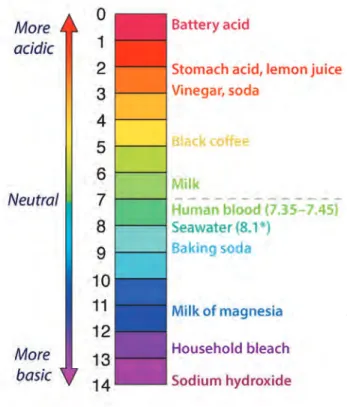
1 pH is defined as the negative log of the hydrogen ion concentration in a solution. Neutral pH is 7.0. Solutions with pH values less than 7.0 are “acidic,” and those with pH values greater than 7.0 are “basic.” Because pH is expressed on a logarithmic scale, a small change in pH corresponds to a large change in acidity.
Why Does Washington Need to Act on Ocean Acidification?
As will be explained below, Washington is particularly vulnerable to ocean acidifi -cation. In addition, acidification has significant implications for Washington’s marine environment, our state and local economies, and tribes.
Washington is Particularly Vulnerable to Ocean Acidification
Washington’s marine waters are particularly vulnerable to ocean acidification because of regional factors that exacerbate the acidifying effects of global carbon dioxide emissions. One of the most important regional factors is coastal upwelling, which brings offshore water that is rich in carbon dioxide and low in pH up from the deep ocean and onto the continental shelf.
Because upwelled water has spent decades circulating at depth, the carbon dioxide content in today’s upwelled water reflects naturally occurring carbon dioxide generated by biological processes in the ocean as well as carbon dioxide absorbed from the atmosphere 30 to 50 years ago when the water was last in contact with the atmosphere. The half-century transit time between contact with the atmosphere and re-emergence along the coast means that today’s upwelled water bears the imprint of the atmosphere in about 1970, when the concentration of carbon dioxide in the atmosphere was much lower relative to today’s concentration. Since then carbon dioxide concentrations have continued to climb and so has the “carbon loading” of the waters making their way to the Washington coast. Consequently, we will continue to see more acidifying conditions coming from upwelled waters for several decades to come.
Other regional factors affecting ocean acidification in Washington include runoff of nutrients and organic carbon (such as plants and freshwater algae) from land, and local emissions of carbon dioxide, nitrogen oxides, and sulfur oxides, which are absorbed by seawater from the atmosphere. The relative importance of these local drivers varies by location. For example, acidification along the outer coast of Washington and Puget Sound is strongly influenced by coastal upwelling while acidification in shallow estuaries, including those in Puget Sound, may be particularly influenced by inflows of fresh water (which is naturally lower in pH than seawater) carrying nutrients and organic carbon from human and natural sources. The added organic carbon, as well as nutrients that stimulate excessive algal growth, can make seawater more acidic when algae and other organic matter decompose.
Ocean Acidification is a Risk to
Washington’s Marine Species and
Ecosystems
Many life processes, including photosyn-thesis, growth, respiration, recruitment, reproduction, and behavior are sensitive to carbon dioxide and pH. As a result, ocean acidification has the potential to affect a wide range of organisms, from seagrasses to fish, in many different ways.
Research shows that organisms that use the mineral calcium carbonate (usually in the form of calcite or aragonite) to make shells, skeletons, or other vital body parts are particularly affected. These organisms, known generally as calcifiers, are found throughout Washington’s marine environment (Box S-1).
Ocean acidification leads to conditions that are chemically corrosive for shellfish and other calcifiers. When carbon dioxide concentrations in seawater increase, the availability of carbonate ions (a key component of calcium carbonate) decreases, making it more difficult for calcifiers to form, build, and maintain calcium shells and other calcium carbonate-based body parts. If the carbonate ion concentration dips too low, the seawater becomes chemi-cally corrosive to calcium carbonate. Some calcifiers will therefore experience greater difficulty in making or maintaining their shells, slower growth rates, and higher mortality. Shellfish larvae and juveniles are especially vulnerable.
Box S-1. Ocean acidification
can affect many Puget
Sound species.
More than 30 percent of Puget Sound’s marine species are vulnerable to
ocean acidification by virtue of their
dependency on the mineral calcium carbonate to make shells, skeletons, and other hard body parts. Puget
Sound calcifiers include oysters, clams,
scallops, mussels, abalone, crabs, geoducks (pictured above), barnacles, sea urchins (pictured below), sand dollars, sea stars, and sea cucumbers. Even some seaweeds produce calcium carbonate structures.
Ocean acidification also has implications for the broader marine environment. Many calci -fiers provide habitat, shelter, and/or food for various plants and animals. For example, rockfish and sharks rely on habitat created by deepwater corals off the Washington coast. Pteropods, the delicate free-swimming snails eaten by seabirds, whales, and fish (especially Alaska pink salmon), can experience shell dissolution and grow more slowly in acidified waters (Figure S-1). Some species of copepods, the small crustaceans eaten by juvenile herring and salmon, experience similar problems with growth. Impacts on species like pteropods and copepods are a significant concern because of their ability to affect entire marine food webs.
Figure S-1. The pteropod, or “sea butterfly,” is a tiny sea snail about the size of a small
pea that plays an integral role in marine food webs. The photos above show what happens to a pteropod’s shell when placed in seawater with pH and carbonate levels projected for the year 2100. The shell slowly dissolved over 45 days. Used with permission from National Geographic.
Ocean Acidification is a Risk to Washington’s Marine Economy and Tribes
Washington is the country’s top provider of farmed oysters, clams, and mussels. Annual sales of farmed
shellfish from Washington account for almost
85 percent of U.S. West Coast sales (including Alaska).2 The estimated total annual economic impact of shellfish aquaculture is $270 million, with shellfish growers directly and indirectly employing
more than 3,200 people.3 Shellfish are also an integral part of Washington’s commercial wild
fisheries, generating over two-thirds of the harvest value of these fisheries.4 Shellfish of ecological and economic importance include oysters, mussels (native and Mediterranean), clams (e.g., geoduck, razor, littleneck, Manila), scallops, Dungeness crab, shrimp (e.g., spot prawns, pink shrimp), pinto abalone, and urchins.
The economic benefits of Washington’s wild and
hatchery-based seafood harvests extend well beyond the value of the harvest when it arrives on
shore. For example, licensing for recreational shellfish harvesting generates $3 million
annually in state revenue and recreational oyster and clam harvesters contribute more
than $27 million annually to coastal economies.5 Overall, Washington’s seafood industry generates over 42,000 jobs in Washington and contributes at least $1.7 billion to gross state product through profits and employment at neighborhood seafood restaurants,
distributors, and retailers.6 While our understanding of how ocean acidification affects the range of species driving this economic activity is limited at this time, it is clear that
the impacts of ocean acidification on Washington’s marine industry could extend far into
and beyond the state’s local and regional economies.
2 See Pacific Coast Shellfish Growers Association table of production statistics, 2011, http://pcsga.net/
wp-content/uploads/2011/02/production_stats.pdf
3 Washington Shellfish Initiative white paper, December 2011, http://www.governor.wa.gov/news/
shellfish_white_paper_20111209.pdf
4 National Marine Fisheries Service, Office of Science and Technology. (2012). Commercial Fisheries Statistics:
Annual Landings by Species for Washington, accessed 9/28/12.
https://www.st.nmfs.noaa.gov/commercial-fisheries/index
5 See Washington Shellfish Initiative white paper, December 2011, referenced above
6 U.S. Department of Commerce, National Atmospheric and Oceanographic Administration. (2011). Fisheries Pike Place Market, Seattle. Local seafood is an important economic driver for the state’s economy.
Ocean acidification also has important cultural implications. To Washington’s tribal communities, ocean acidification is a natural resource issue and a significant challenge to their continued identity and cultural survival. With salmon at just a fraction of their former abundance, tribal fishers are depending more on shellfish to support their families; almost all of the commercial wild clam fisheries in Puget Sound are tribal. The tribes also harvest wild shellfish for ceremonial and subsistence purposes.
Ocean Acidification: From Knowledge to Action
Recognizing the risks of ocean acidification to Washington, Governor Christine Gregoire created the Washington State Blue Ribbon Panel on Ocean Acidification (referred to here as “the Panel”) to chart a course for addressing the causes and consequences of acidification. The Panel, convened in February 2012, was assembled under the auspices of the Washington Shellfish Initiative, a regional partnership established to implement the National Oceanic and Atmospheric Administration’s (NOAA) National Shellfish Initiative.7 Members included scientists; public opinion leaders; industry representatives; state, local, federal, and tribal policymakers; and conservation community representa-tives. The Governor charged the Panel to:
•
Review and summarize the current state of scientific knowledge of ocean acidification,•
Identify the research and monitoring needed to increase scientific understanding and improve resource management,•
Develop recommendations to respond to ocean acidification and reduce its harmful causes and effects, and•
Identify opportunities to improve coordination and partnerships and to enhance public awareness and understanding of ocean acidification and how to address it.7 NOAA’s National Shellfish Initiative recognizes the broad suite of benefits provided by shellfish production and restoration. Its goal is to stimulate coastal economies and improve the health of estuaries by increasing commercial shellfish production and native shellfish populations.
A Lummi family digs clams in Puget Sound. Shellfish are an important source of nutrition for Indian people in western Washington.
This report, and the accompanying technical document Scientific Summary of
Ocean Acidification in Washington State Marine Waters,8 constitute the Panel’s
report of its findings and recommenda -tions for action.
Panel Recommendations
The strategies and actions recommended by the Panel recognize the need for action across a range of areas (Box S-2).
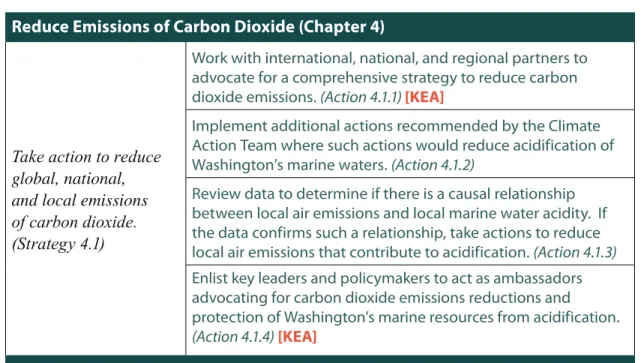
First is the urgent need to slow the pace of ocean acidification by reducing the sources that cause the problem. Global carbon dioxide emissions are the biggest driver of acidification in the oceans overall and, broadly speaking, in Washington’s marine waters. The Panel calls on Washington to continue its efforts to reduce carbon dioxide emissions while providing leadership in regional, national, and international forums to advocate for comprehensive carbon dioxide emissions reductions.
Washington’s shellfish industry and native ecosystems cannot rely on emissions reduc-tions alone, however. Our marine waters are continuing to acidify and reducing carbon dioxide emissions takes time. To rely solely on those reductions would result in significant—and in some cases irreversible—economic, cultural, and environmental impacts. Additional local actions, including local source reduction
and adaptation and remediation, are necessary to “buy time” while society collectively works to reduce global carbon dioxide emissions.
Box S-2. Major Action Areas.
The Panel recommends 42 actions in the following areas. Collectively, these focal points form the structure of a comprehensive strategy for addressing ocean acidification in Washington’s marine waters.
1. Reduce emissions of carbon dioxide;
2. Reduce local land-based contribu-tions to ocean acidification;
3. Increase our ability to adapt to and remediate the impacts of ocean acidification;
4. Invest in Washington’s ability to monitor and investigate the causes and effects of ocean acidification;
5. Inform, educate, and engage stake-holders, the public, and decision makers in responding to ocean acidification; and
6. Maintain a sustainable and coordi-nated focus on ocean acidification at all levels of government.
Each action includes a brief description. Implementation leads, partners, time frame, and estimated costs are included in Appendix 1.
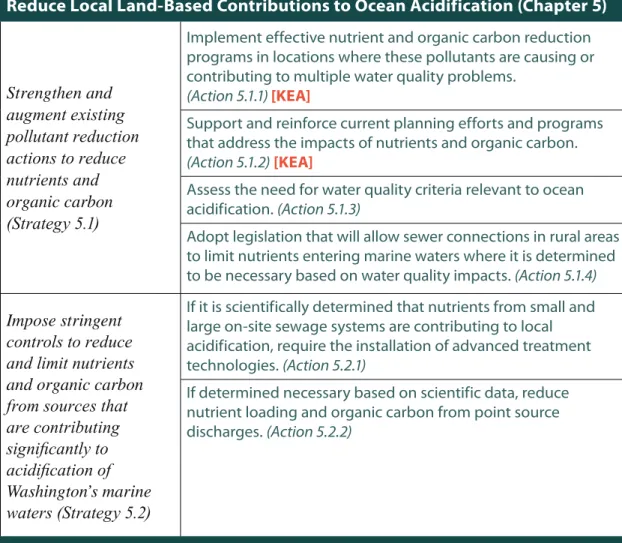
Local source reduction requires reducing local land-based pollutants that enhance acidification in marine waters by generating additional carbon dioxide. Most notable are inputs of nitrogen and organic carbon from point, nonpoint, and natural sources. Panel recommendations in this area focus on strengthening existing local source control programs to achieve the needed reductions in nutrient and organic carbon pollutants. In some cases, more stringent controls of nutrients and organic carbon pollutants may be required. Adaptation and remediation help ensure the continued viability of native and commercial shellfish species and healthy marine ecosystems in Washington. The adaptation and remediation actions recommended by the Panel provide tools and information that resource managers and shellfish growers can use to strategically adjust to changing conditions and to restore and enhance the resilience of Washington’s shellfish and natural systems. The recommendations also utilize both new and tested technologies for remediating local seawater conditions.
Critical to all of these efforts is research, monitoring, and public engagement. While we have a broad foundation of information on which to build recommendations, important knowledge gaps remain. Investing in research and monitoring will help fill those gaps and ensure that our efforts to reduce the risks of ocean acidification are appropriately focused and effective. Major objectives in the Panel’s research and monitoring recommendations include increasing our understanding of the status and trends of ocean acidification in Washington’s marine waters, characterizing biological responses of local species to acidi-fication, and developing capabilities for short-term forecasting and long-term prediction. Outreach and public engagement connects Washingtonians to the problem of ocean acidi-fication by informing them about the science and the significance of changing ocean chemistry for Washington’s economy, environment, and tribes. This can empower citizens and businesses to help develop and implement solutions. Key elements of the Panel’s outreach and public education recommendations include sharing information on acidification with the public and other audiences, facilitating the exchange of information and ideas between stakeholders, and increasing ocean acidification literacy.
Finally, the Panel recognizes that ocean acidification is not a one-time problem with quick and easy solutions. It is a long-term challenge that requires a sustained effort across all these fronts—global and local source reduction, adaptation and remediation, research and monitoring, and public education—and continued engagement by and with governmental and non-governmental entities, industry, and the public. Maintaining a sustainable and coordinated focus on ocean acidification is necessary for ensuring our long-term success. To that end, the Panel recommends creating a coordinating mechanism
to facilitate implementation of the Panel’s recommendations, continued engagement with stakeholders, and scientific collaboration.
The recommended strategies and actions included in this report each have a role in reducing the impacts of ocean acidification and action should be taken on each of them. The Panel recognizes, however, that it is not possible to implement all the recommenda-tions simultaneously. Consequently, it has designated a subset of acrecommenda-tions as “Key Early Actions” (KEAs). KEAs are actions the Panel considers to be essential next steps for reducing the risks associated with acidification and are independent of assumptions about the availability of funding or political feasibility. A list of KEAs is provided in
Table S-1. A complete list of the Panel’s strategies and actions is provided in Table 1.
A Time to Act
Washington State will need to respond vigorously to ocean acidification if we are going to avoid significant and possibly irreversible losses to our marine environment and all it supports, including shellfish farming and wild harvest of shellfish and other commercially and culturally important marine species. Public investment by the state is needed, as are public-private partnerships that promote innovative solutions to acidifi -cation. Additionally, the Panel calls on Congress, the White House, NOAA, and other federal agencies to support our efforts to address acidification and, in particular, to take a leading role in the recommended research agenda so the nature of the problem facing Washington and the majority of other coastal states can be better understood and more effectively addressed.
Washington has many resources to leverage in implementing the Panel’s recommended actions. We have world-class scientists in our region who are already working in a variety of applicable fields. Additionally, we have an important source of understanding in the traditional and historical knowledge of tribes. State agencies, businesses, and tribes are taking the lead in developing innovative approaches that reduce carbon dioxide and nutrient runoff in Washington, and state and tribal leaders are actively engaging with our federal partners to find solutions to ocean acidification. We also have a shellfish industry committed to protecting native ecosystems as well as farmed resources, and a diverse nonprofit community ready to work with the public on understanding the problem of ocean acidification and how we might solve it. Finally, we have citizens who value the rich and diverse ecosystems in Washington’s marine waters.
It is time to coordinate and harness these resources and start tackling the many challenges that will come with ocean acidification. It is time to act.
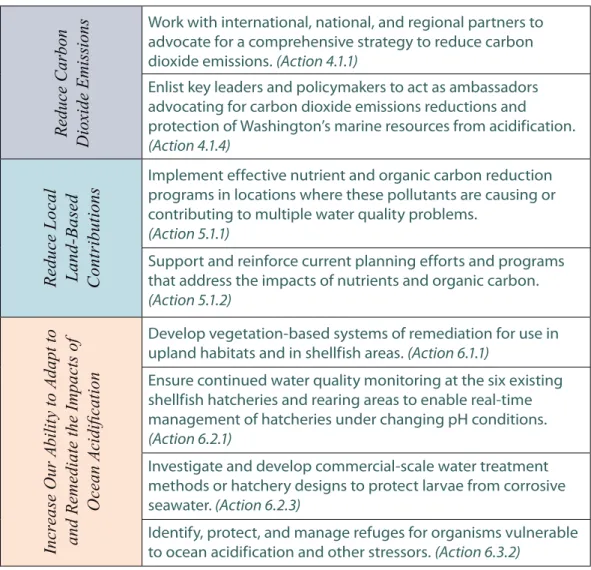
Table S-1. Blue Ribbon Panel Recommendations: Key Early Actions Re du ce C ar bo n D io xi de E m is sio
ns Work with international, national, and regional partners to advocate for a comprehensive strategy to reduce carbon dioxide emissions. (Action 4.1.1)
Enlist key leaders and policymakers to act as ambassadors advocating for carbon dioxide emissions reductions and protection of Washington’s marine resources from acidification.
(Action 4.1.4) Re du ce L oc al La nd -B ase d C on tr ib ut ion
s Implement effective nutrient and organic carbon reduction programs in locations where these pollutants are causing or contributing to multiple water quality problems.
(Action 5.1.1)
Support and reinforce current planning efforts and programs that address the impacts of nutrients and organic carbon.
(Action 5.1.2) I nc re as e O ur A bi lit y t o A da pt t o an d R em ed ia te t he I m pa ct s o f O ce an A cid ifi cat io n
Develop vegetation-based systems of remediation for use in upland habitats and in shellfish areas. (Action 6.1.1)
Ensure continued water quality monitoring at the six existing shellfish hatcheries and rearing areas to enable real-time management of hatcheries under changing pH conditions.
(Action 6.2.1)
Investigate and develop commercial-scale water treatment methods or hatchery designs to protect larvae from corrosive seawater. (Action 6.2.3)
Identify, protect, and manage refuges for organisms vulnerable to ocean acidification and other stressors. (Action 6.3.2)
In ve st i n W as hi ng to n’ s A bi lit y t o M on ito r a nd I nv es tig at e t he E ffe ct s o f O ce an A cid ifi cat io n
Establish an expanded and sustained ocean acidification monitoring network to measure trends in local acidification conditions and related biological responses. (Action 7.1.1)
Quantify key natural and human-influenced processes that contribute to acidification based on estimates of sources, sinks, and transfer rates for carbon and nitrogen. (Action 7.2.1)
Determine the association between water and sediment chemistry and shellfish production in hatcheries and in the natural environment. (Action 7.3.1)
Conduct laboratory studies to assess the direct effects of ocean acidification, alone and in combination with other stressors, on local species and ecosystems. (Action 7.3.2)
Establish the ability to make short-term forecasts of corrosive conditions for application to shellfish hatcheries, growing areas, and other areas of concern. (Action 7.4.1)
In fo rm , E du ca te , a nd En ga ge S ta ke ho lde rs , th e P ub lic , a nd D ec isi on M ak ers i n A dd re ss in g O ce an A cid ifi cat io
n Identify key findings for use by the Governor, Panel members, and others who will act as ambassadors on ocean acidification.
(Action 8.1.1)
Increase understanding of ocean acidification among key stakeholders, target audiences, and local communities to help implement the Panel’s recommendations. (Action 8.1.2)
Provide a forum for agricultural, business, and other stake-holders to engage with coastal resource users and managers in developing and implementing solutions. (Action 8.1.4)
M ai nt ai n a Su stai na bl e an d C oo rd in at ed F oc us on O ce an A ci di fic at io
n Charge, by gubernatorial action, a person in the Governor’s Office or an existing or new organization to coordinate implementation of the Panel’s recommendations with other ocean and coastal actions. (Action 9.1.1)
Create an ocean acidification science coordination team to promote scientific collaboration across agencies and organiza-tions and connect ocean acidification science to adaptation and policy needs. (Action 9.1.2)
Introduction
1
B
etween 2005 and 2009, several major commercial Pacific Northwestoyster hatcheries experienced disastrous production failures when billions of oyster larvae (the youngest oysters), mysteriously died. The Whiskey Creek Shellfish Hatchery in Netarts Bay, Oregon—the primary supplier to independent Washington State oyster growers—reported that larvae dissolved in their tanks. At the same time, reproduction by Pacific oysters in Willapa Bay, Washington, which is a major source of wild oyster seed, was also very poor.
The problem was first thought to be disease associated with a naturally occurring bacterium, and one hatchery alone spent more than $250,000 to remove the suspect pathogen. Larvae continued to die even in pathogen-free waters, however. Recent research12 has identified changing ocean chemistry—specifically, ocean acidification— as the primary cause of this massive
mortality. Additional research13 also showed that the problem of increasing ocean acidity will worsen significantly along the Pacific Northwest coastline in the coming years.
Ocean acidification poses a serious threat to Washington’s marine economy, cultures, and environment. The Pacific Northwest shellfish industry has been among the first to feel significant, recog-nizable effects (Box 1). Washington is
the country’s leading producer of farmed oysters, clams, and mussels. Annual sales of shellfish grown in Washington exceed $107 million, accounting for almost 85 percent of West Coast sales (including Alaska).14 Oysters alone account for more than 80 percent of the state’s farmed shellfish harvest and more than 50 percent of its total annual sales ($58 million).15 Geoduck and other clam sales contribute an additional $20 million each.16
12 Barton, A., Hales, B., Waldbusser, G. G., Langdon, C., & Feely, R. (2012). The Pacific oyster, Crassostrea
gigas, shows negative correlation to naturally elevated carbon dioxide levels: Implications for near-term
ocean acidification effects. Limnology and Oceanography, 57(3), 698-710. doi: http://dx.doi.org/10.4319/
lo.2012.57.3.0698
13 Gruber, N., Hauri, C., Lachkar, Z., Loher, D., Frölicher, T. L., & Plattner, G.-K. (2012). Rapid progression
of ocean acidification in the California Current System. Science, 337(6091), 220–223. doi: http://dx.doi.
org/10.1126/science.1216773
14 Pacific Coast Shellfish Growers Association table of production statistics (2011), http://pcsga.net/
wp-content/uploads/2011/02/production_stats.pdf
15 See Pacific Coast Shellfish Growers Association table of production statistics, referenced above Nisbet Oyster Company, Willapa Bay, Washington
The estimated total annual economic impact of shellfish aquaculture is $270 million, and shellfish growers directly and indirectly employ more than 3,200 people.17 But this is only part of the picture. Commercial harvests of wild seafood also contribute significantly to Washington’s economy. Shellfish generate more than two-thirds of the harvest value of Washington’s commercial wild fisheries.18 Notable is the value of wild-harvested Pacific geoduck clam (about $32 million)19 and Dungeness crab (about $49 million).20
The economic impact of Washington’s wild and farmed seafood harvests extends well beyond the value of the harvest when it reaches shore. For example, tourists and residents pay $3 million annually for state licenses to harvest wild shellfish, and recreational oyster and clam harvesters contributing more than $27 million annually to coastal economies.21
17 Washington Shellfish Initiative white paper, December 2011, http://www.governor.wa.gov/news/
shellfish_white_paper_20111209.pdf
18 National Marine Fisheries Service, Office of Science and Technology. (2012). Commercial fisheries statistics:
Annual landings by species for Washington, accessed 9/28/12. https://www.st.nmfs.noaa.gov/commercial-fisheries/index
19 Washington Department of Fish and Wildlife. (2011). Commercial wild stock geoduck fishery landings
and ex-vessel value in Washington, accessed 10/29/12. http://wdfw.wa.gov/fishing/commercial/geoduck/ geoduck_historic_landings_value_table.pdf
20 See National Marine Fisheries Service (2012), referenced above.
21 See Washington Shellfish Initiative white paper, December 2011, referenced above
Box 1. Northwest Pacific oyster larvae: “canaries in the coal mine”?
Just as caged canaries once alerted underground coal miners to bad air, so too have Pacific oyster larvae signaled the advent of what hatchery workers call “bad water.” Even in optimal conditions, shellfish larvae must spend a great deal of energy to build their protective shells and grow to the next life stage, and many die. In acidified seawater, the task of building a protective shell is even more difficult. The newest shells are also especially prone to chemical dissolution. This combination of factors makes oyster larvae particularly vulnerable to changes in their environment. The impacts of ocean acidification in Washington were first noticed in the shellfish industry because of the drastic collapse in hatchery larvae between 2005 and 2009. The collapse not only disrupted seed supplies for oyster farms coast-wide; it consti-tuted the first documented loss to seafood producers and consumers from today’s rapidly increasing ocean acidity. Similarly important changes could be occurring in our estuarine and open marine waters. For this reason, Washington’s oysters truly are “canaries in the coal mine.”
Washington’s seafood industry generates profits and employment at neighborhood seafood restaurants, distributors, and retailers, contributing over 42,000 jobs in Washington and at least $1.7 billion to the gross state product.22 While our understanding of how ocean
acidification affects the full range of species driving this economic activity is limited at this time, it is clear that the impacts of ocean acidification on Washington’s marine industry could reach far into and beyond the state’s local and regional economies. To Washington’s tribal
commu-nities, ocean acidification is both a natural resource issue and a significant challenge to their continued identity and cultural survival. Shellfish are a key part of an ecosystem that has continu-ously supported human civili-zation here since shortly after the glaciers receded. To the tribes, increasing ocean acidity is the latest of many threats to that life-sustaining ecosystem. A half dozen fish species are already gone from Puget Sound and more
are threatened, and salmon habitat and wetlands continue to be degraded and lost to devel-opment. With salmon populations just a fraction of their former abundance, tribal fishers are depending more on shellfish to support their families; almost all of the commercial wild clam fisheries in Puget Sound are tribal. The tribes also harvest wild shellfish for ceremonial and subsistence purposes.
Finally, as described in Chapter 2, ocean acidification is not only a threat to shellfish; it
also threatens Washington’s broader marine ecosystem. A growing catalog of scientific studies indicates that many other saltwater plants and animals are adversely affected by acidification. This includes species that are direct drivers of economic activity (such as salmon or rockfish) as well as species that indirectly affect the marine environment and all that it supports via food web interactions.
22 U.S. Department of Commerce, National Atmospheric and Oceanographic Administration (2011). Fisheries
Economics of the U.S. 2009: Economics and Sociocultural Status and Trends Series. www.st.nmfs.noaa.gov/st5/ publication/index.html
Suquamish and Port Gamble S’Klallam tribes and Point No Point Treaty Council staff spread manila clam seed on Indian Island in Puget Sound.
Washington’s Blue Ribbon Panel on Ocean Acidification
Recognizing the threat to Washington’s shellfish industry, its tribal communities, and its broader marine environment, Governor Christine Gregoire created the Washington State Blue Ribbon Panel on Ocean Acidification (referred to as the “Panel”). The Panel was convened in February 2012 under the auspices of the Washington Shellfish Initiative,23 the regional partnership created to implement the National Oceanic and Atmospheric Administration’s (NOAA) National Shellfish Initiative.24 The Panel consisted of scien-tists; public opinion leaders; industry representatives; state, local, federal, and tribal policymakers; and conservation community representatives. It was strongly supported by Dr. Jane Lubchenco, Administrator of NOAA.
Governor Gregoire charged the panel with the responsibility to:
•
Review and summarize the current state of scientific knowledge about ocean acidification,•
Identify the research and monitoring needed to increase scientific understanding and improve resource management,•
Develop recommendations to respond to ocean acidification and reduce its harmful causes and effects, and•
Identify opportunities to improve coordination and partnerships and to enhance public awareness and understanding of ocean acidification and how to address it. This report, and the accompanying technical document, Scientific Summary of OceanAcidification in Washington State Marine Waters,25 constitute the Panel’s report of
its findings and recommendations for action. The report begins with a brief scientific overview of ocean acidification based on the technical document prepared by and for the Panel. The remaining chapters present the Panel’s recommendations, which focus on the need to reduce carbon dioxide emissions and local land-based contributions to acidifi -cation, increase our ability to adapt to and remediate the impacts of ocean acidifi-cation, invest in our ability to monitor and further investigate the causes and consequences of acidification, inform the public and other key stakeholders about acidification and what it means for Washington, and maintain a sustainable and coordinated focus on ocean acidi-fication. Implementation leads, partners, time frame, and estimated costs for each of the Panel’s recommendations are included in Appendix 1.
23 For more on the Washington Shellfish Initiative, see: http://www.psp.wa.gov/shellfish.php
24 For more on the National Shellfish Initiative, see http://www.nmfs.noaa.gov/aquaculture/policy/
shellfish_initiative_homepage.html
Ocean Acidification in
Washington State Marine Waters
T
HIS CHAPTER SUMMARIzES CURRENT SCIENTIFIC understanding of the causes and consequences of ocean acidification in Washington’s marine waters. This understanding, described in greater detail in Scientific Summary of Ocean Acidificationin Washington State Marine Waters,26 constitutes the basis for the Panel recommendations that follow.
2.1 Ocean Acidification: Causes and Trends
Ocean acidification is a reduction in the pH of seawater for an extended period of time due primarily to the uptake of carbon dioxide from the atmosphere by the ocean. Local sources of acidification such as nitrogen oxides and sulfur oxide gases, or nutrients and organic carbon from wastewater discharges and runoff from land-based activities, can also contribute to ocean acidification in marine waters. For more on pH, see Figure 1. Carbon dioxide emissions are the leading cause of ocean acidification. Since the beginning of the industrial era in the mid-1700s, the atmospheric concentration of carbon dioxide has increased 40 percent, primarily because of burning fossil fuels such as oil and coal and changing land uses. Today’s concentration of carbon dioxide—392 parts per million (ppm)—far exceeds the natural range of atmospheric carbon dioxide over the last 800,000 years.27 About one-quarter of these human-generated emissions have been absorbed by the oceans.
Through a well-understood series of chemical reactions, carbon dioxide has an acidifying effect when dissolved in seawater. As a result, upper-ocean pH has decreased, gradually at first and now more rapidly (Box 2). Over the last 250 years, the average upper-ocean pH has decreased by about 0.1 units, from about 8.2 to 8.1. This drop in pH corresponds to an increase in the average acidity (as measured by the hydrogen ion concentration) of the surface ocean of about 30 percent. At the current rate of carbon dioxide emissions, the average acidity of the surface ocean is expected to increase by 100 to 150 percent over preindustrial levels by the end of this century.
26 Available at: https://fortress.wa.gov/ecy/publications/SummaryPages/1201016.html
27 NOAA Earth System Laboratory (http://www.esrl.noaa.gov/gmd/ccgg/trends/); Global Climate Change
Impacts in the United States, Thomas R. Karl, Jerry M. Melillo, and Thomas C. Peterson (eds.). Cambridge University http://downloads.globalchange.gov/usimpacts/pdfs/climate-impacts-report.pdf
Ocean Acidification is About More Than pH
As ocean water becomes more acidic, several direct chemical consequences—all important to marine life—occur.
First, the amount (or concentration) of carbonate ion in seawater decreases. Carbonate ion is an essential building block required by many marine animals and some plants to form the mineral calcium carbonate, which the organisms use to build shells, skeletons, or other hard parts. Such organisms are known as calcifiers. As the amount of carbon dioxide in seawater increases, the amount of carbonate ions in seawater decreases, making it more difficult for calcifiers to build calcium carbonate-based body parts. Since the beginning of the industrial era, the average carbonate ion concentration in the upper ocean has fallen approximately 16 percent.
Second, the water becomes more chemically corrosive to two important forms of calcium carbonate: calcite and aragonite. Carbonate saturation state is a metric used to provide an estimate of how readily calcite and aragonite dissolve or form in seawater. When
Figure 1. The pH Scale. pH is defined as the negative log of the hydrogen ion concentration in a solution. Neutral pH is 7.0. Solutions with pH values less than 7.0 are “acidic,” and those with pH values greater than 7.0 are “basic.” Because pH is expressed on a logarithmic scale, a small change in pH corresponds to a large change in acidity. This means that a pH of 7 is ten times more acidic than a pH of 8. The pH value of common liquids is also shown.
the carbonate saturation state drops below a critical threshold value of 1.0, seawater becomes corrosive to shell material. Aragonite, the mineral used by pteropods, corals, and most larval bivalves, is about twice as susceptible to dissolution as calcite. In the northeast Pacific Ocean, aragonite-corrosive conditions are rapidly expanding into shallower, more biologically sensitive areas at a rate of about five feet per year. The spread of calcite-corrosive conditions, by contrast, is still largely confined to deeper waters.
2.2 Local Ocean Acidification:
Contributing Processes and Regional
Distinctions
2.2.1 Contributing Processes
Ocean acidification due to the absorption of carbon dioxide from the atmosphere is a global phenomenon, but several factors, some unique to Washington, increase our vulnerability to regional acidification (Figure 2). Local processes that drive ocean acidification in our
marine waters include seasonal upwelling of Pacific Ocean water rich in carbon dioxide and nutrients, deliveries of nutrients and organic carbon from land, and absorption of other (non-carbon dioxide) acidifying gases from the atmosphere.
Ocean Upwelling. When strong northerly winds blow along Washington’s outer coast, surface seawater is pushed away from the coastline and deeper offshore water is drawn up to replace it. This upwelled water is naturally rich in nutrients, high in carbon dioxide, and low in pH due to biological processes in the ocean. However, today’s upwelled waters are also carrying an ever-growing load of human-generated carbon dioxide picked up from the atmosphere 30 to 50 years ago when the water was last in contact with the atmosphere. As a result, today’s upwelled water is more corrosive to calcifying organisms like oysters, clams, scallops, mussels, crabs, abalone, and pteropods than would be seen from natural conditions alone. It also means that this water will become increasingly corrosive in coming decades as water with more recent (and higher) human-generated carbon dioxide content upwells (Box 3).
Box 2. Ocean
acidification is
progressing very
rapidly.
The current rate of ocean
acidification is nearly
ten times faster than any time in the past 50 million years. Such rapid change can outpace the ocean’s natural ability to restore oceanic pH and carbonate chemistry. The rapid pace of change also gives marine organisms, marine ecosystems, and humans less time to adapt, evolve, or otherwise adjust to the changing circumstances.
Upwelling has a strong influence on marine chemistry in Puget Sound as well as on the outer coast. Upwelled water enters Puget Sound through the Juan de Fuca submarine canyon in the summer and fall months, when wind patterns create favorable conditions for upwelling. The result is a decline in the pH of water near the sea bottom in Puget Sound, particularly in Hood Canal.
Deliveries of Nutrients, Organic Carbon, and Fresh Water from Land to the Sea. The near-surface waters off the Washington coast are unusually productive due to nitrogen 28 Kelly, R., Foley, M., Fisher, W., Feely, R., Halpern, B., Waldbusser, G., & Caldwell, M. (2011). Mitigating local
causes of ocean acidification with existing laws. Science, 332(6033), 1036.
Figure 2. A range of sources, including upwelled seawater rich in carbon dioxide (CO2) and excess
nutri-ents and organic carbon from point and nonpoint sources, can contribute to acidification of marine waters. Absorption of carbon dioxide, nitrogen oxides (NOX), and sulfur oxides (SOX) from the atmosphere into marine
and other nutrients delivered from deeper offshore waters and from rivers. In the sunlit waters of the upper ocean, this “fertilizer” stimulates vigorous algal growth that sometimes explodes into intense blooms. Human activities often increase the flow of nutrients from land to marine waters, strength-ening the potential for algal blooms. When the bloom ends, the dying algal material sinks into deeper water and decays, consuming oxygen and releasing large amounts of carbon dioxide into the water. In some cases, this can lead to hypoxia (Box 4). The carbon dioxide released from this process of growth and decay has the same acidifying effect as carbon dioxide absorbed into seawater from the atmosphere—both processes lower pH and make water more corrosive to calcium carbonate.
Another important land-to-sea input is dissolved organic carbon delivered by rivers and streams. Rivers are typically lower in pH than seawater, with values ranging from approximately 6.5 to 8.5 due to minerals leached from soils or the decom-position of organic matter (such as plant material, freshwater algae, and some types of sewage effluents) in the river water itself or in the local streams that feed them. Municipal and industrial wastewater can also reduce pH in the immediate vicinity of a discharge point, especially in poorly flushed areas. When fresh water and seawater mix at river mouths or in estuaries, the water can sometimes be corrosive to calcifying organisms. This is the case for the Columbia River in summer and in Puget Sound in winter.
Absorption of Acidifying Gases Other Than Carbon Dioxide. In some coastal areas, other acidifying gases may be locally important. For example, nitrogen oxides and sulfur oxides may contribute to local acidification downwind from their primary sources. Contributors of these gases include motor vehicles, ships, and electric utilities.
Box 3. Washington’s
acidification problem
will get worse before
it gets better.
Today’s upwelled waters bear the imprint of contact with the atmosphere in about 1970, when the concen-tration of carbon dioxide in the atmosphere was only about 325 ppm. Since then, atmospheric carbon dioxide has continued to climb and so has the “carbon loading” of the waters that will
eventually make their way to our coast. The half-century transit time between contact with the atmosphere, sinking and circulation at depth, and re-emergence along the Washington coast means that we will continue to see more acidifying conditions coming from upwelled waters
for several decades after atmospheric levels of carbon dioxide begin to decline.
2.2.1 Regional Distinctions
Different combinations of acidifying processes, and varying degrees of contribution from each, influence acidification in Washington’s major marine regions. These include the outer coast, the Columbia River Estuary, Puget Sound and the Strait of Juan de Fuca, and other shallow estuaries such as Willapa Bay and Totten Inlet.
The Outer Coast. A number of processes contribute to acidification on Washington’s outer coast but not all have been quantified. The human contribution is almost entirely due to atmospheric carbon dioxide from global sources that has increased the carbon dioxide content of upwelled ocean water. Upwelling waters also bring rich stores of nitrogen into the sunlit upper ocean, thus kicking off vigorous algal bloom events that lead to summertime hypoxia and acidification at depth as a result of decomposition. Another major feature of the outer coast is outflow from the Columbia River, which delivers more than three-quarters of the freshwater that feeds into the Pacific Ocean along the U.S. West Coast north of San Francisco. This affects pH in at least three ways. First, the pH of Columbia River water is generally lower than surface seawater (R.A. Feely, unpublished data). Second, the river delivers iron and silicates that can stimulate intense algal bloom events, leading to hypoxia and acidification. Third, when the river plume (outflow) flows northward, it can temporarily shield the southern Washington coast from upwelled water or it can press recently upwelled waters against the coastline. The Columbia River therefore can either prevent or prolong the outer coast’s exposure to potentially corrosive seawater, depending on conditions.
The Columbia River Estuary. The wide, shallow Columbia River estuary is unique within Washington. Although 2.5 miles wide at the river-mouth bar, the estuary is only 60 feet
Box 4. Hypoxia and
ocean acidification.
In estuaries with little mixing between surface water and water at depth, the decay of organic matter can create high carbon dioxide, low-oxygen (“hypoxic”) conditions at depth that are stressful or fatal to marine species. Hypoxic conditions indicate high rates of decom-position, which produce carbon dioxide and reduce the pH of water just as the accumulation of atmospheric carbon dioxide reduces pH. Thus, hypoxia is an indicator of areas where the process of decomposition is
contrib-uting to ocean acidification.
Furthermore, because the
acidification associated
with hypoxia is in addition
to the acidification caused
by the absorption of carbon dioxide from the atmosphere, hypoxia is also an indicator of areas where we may see more pronounced ocean
deep, roughly one-tenth as deep as Puget Sound. Levels of photosynthesis are limited in the Columbia River estuary because its turbid (cloudy) waters limit light penetration. As a result, river inputs of organic carbon are important to fueling the estuary ecosystem. The primary influence on ocean acidification conditions in the Columbia River estuary is the naturally low pH of the Columbia River and its tributaries. Decomposition of organic carbon can drive the pH even lower.
Puget Sound and the Strait of Juan de Fuca. Acidification in Puget Sound and the Strait of Juan de Fuca is strongly influenced by the ocean, with corrosive upwelled water flowing in at depth and lingering in subsurface layers. In estuarine environments within Puget Sound, inputs of nutrients and organic carbon can further reduce pH, dissolved oxygen, and carbonate saturation state by stimulating microbial respi-ration. In developed or urbanized regions, localized high
concentra-tions of atmospheric carbon dioxide, nitrogen oxides, and sulfur oxides can also acidify marine waters, but whether this local enhancement has resulted in significant increases of local acidity is not known.
Acidification conditions in Puget Sound vary strongly from place to place and across the seasons. Winter observations show well-mixed, corrosive waters, while summer and fall are characterized by less well-mixed, layered waters that tend to confine corrosive waters to deeper subsurface areas. Many parts of Puget Sound are corrosive to aragonite in the deeper waters. Some of the lowest pH levels and aragonite saturation states observed in Washington marine waters have been measured in the southern part of the Hood Canal basin.
Bainbridge Island in Puget Sound
Other Shallow Estuaries.29 Estuaries such as Willapa Bay (on the outer coast) and Totten Inlet (in Puget Sound) tend to be well-mixed and physically different from the deep, layered estuaries of Puget Sound like Hood Canal, Dabob Bay, and the Main Basin. Because of their relatively small size, upwelling and fresh water inputs can strongly influence acidification in shallow estuaries. Additionally, photosynthesis and respiration rates can be very high in shallow estuaries because good light penetration allows for the growth of algae and other plants within the water and on the sea floor. High rates of plant and algal growth can in turn lead to increased carbon dioxide at depth via decomposition of the resulting organic matter. These growth rates are further stimulated when rivers transport land-based nutrients and organic carbon from natural and human sources to marine waters. All of these inputs can lead to increased carbon dioxide, reduced pH, and lower aragonite and calcite saturation states in shallow estuaries. Local atmospheric carbon dioxide emissions are not likely to be a significant driver of ocean acidification in shallow estuaries along the outer coast because the urban corridor is distant, but these could be a factor in Puget Sound’s shallow estuaries.
2.3 Species Responses to Ocean Acidification
Many life processes, including photosynthesis, growth, respiration, recruitment, repro-duction, and behavior are sensitive to carbon dioxide and pH. As a result, acidification can affect a wide range of organisms, from seagrass to fish, in diverse ways. Much of our scientific understanding of species responses comes from experimental studies. These studies reveal positive, negative, and unexpected impacts. For example, some seagrass species appear to benefit from carbon dioxide enrichment, and some macroalgae (for example, kelp) also could respond positively to elevated carbon dioxide.
Many calcifying species are vulnerable to ocean acidification by virtue of their depen -dence on the mineral calcium carbonate (in the form of calcite or aragonite) to build, grow, and maintain shells, skeletons, and other vital body parts. More than 30 percent of Puget Sound’s marine species are calcifiers, including such familiar seashore animals as barnacles, sea urchins, sand dollars, sea stars, sea cucumbers, and crabs. Shellfish— including oysters, geoducks and other clams, mussels, and abalone—are also calcifiers, as are many of the most common types of tiny single-celled organisms and protists (foraminifera) that are prey for many small marine invertebrates and fish. Even some local seaweeds produce calcium carbonate structures.
As noted in Section 2.1, ocean acidification makes an essential component of calcium carbonate—the carbonate ion —scarce. Calcifiers can therefore experience greater difficulty in making and maintaining their shells, slower growth rates, and higher mortality rates (Figures 3 and
4). Researchers have observed, for example, that experi-mentally elevated carbon dioxide impairs development and reduces survival among larvae of the increasingly rare
northern abalone. The shellfish industry, as previously noted, has seen increased larval mortality of oysters as seawater carbon dioxide levels have risen.
Many calcifiers are valued not only for their economic significance but also for the important services they provide to society and other organisms. For example, oysters, clams, and crabs improve water quality by removing floating organic particles. Deepwater corals off the Washington coast provide habitat, shelter, and host food for many plants and animals, including rockfish and sharks. Pteropods are an important food source for young salmon and other high-latitude animals, such as seabirds and whales. The future of these tiny swimmers is of particular concern. Among all pteropod species studied to date, shell-building and growth rates decline when pH decreases and shell corrosion occurs when waters are under-saturated with aragonite (Figure 5).
Some animals important to marine food webs, community structure, and diversity are potentially sensitive to acidification in ways unrelated to shell-building. Some species of copepods, the small crustaceans eaten by juvenile herring and salmon, experience decreased growth, egg production, and
Some examples of Puget Sound calcifiers (clockwise from upper left): blue mussels; juvenile king crab and pink calcifying algae; Dungeness crab.
Pteropods are tiny swimming snails that are an important source of food for young salmon.
30 Talmage, S.C. and C. Gobler, 2010. Effects of past, present, and future ocean carbon dioxide concentrations
on the growth of larval shellfish, Proceedings of the National Academy of Sciences, vol. 107, pp. 17,246–17,251.
Figure 3. Scanning electron microscope images of 36-day-old hard clam larvae
(Mercenaria mercenaria, left) and 52-day-old bay scallop larvae (Argopecten irradians, right) grown under different carbon dioxide levels: near-preindustrial atmosphere (about 250 ppm), ambient present-day atmosphere (about 390 ppm), a moderate atmospheric level predicted for the year 2100 (about 750 ppm), and a high future atmospheric level (about 1500 ppm). Animals grown under near-preindustrial atmosphere carbon dioxide levels had thicker, more robust shells than those grown under present-day conditions. Animals exposed to levels expected later this century had malformed and eroded shells. Image reprinted with permission from S. Talmage and C. Gobler, 2010.31
Figure 4. Pacific oyster larvae from the same spawn, raised by the Taylors Shellfish Hatchery in natural waters of Dabob Bay, Washington under favorable (left column, pH (total) = 8.00) and unfavorable (right column, pH (total) = 7.49) carbonate chemistry. The carbonate chemistry conditions shown below the columns are of the incoming waters used to spawn larvae; similarly unfavorable water conditions occur at Dabob Bay and Netarts Bay, Oregon, due to regional upwelling of high pCO2 waters to the surface. Images are Scanning Electron Microscopy (SEM) of
representative larval shells from each condition from 1 to 4 days post-fertilization. Because the sampling is destructive, each larva shown is a different organism, and should not be interpreted as the same larva ageing through time. Under more acidified conditions (right column) devel-opment of shell is impaired; arrows show defects (creases) and some features (light patches on shell) that are suggestive of dissolution. The extent of deformation shown would result in mortality of larvae were they not sampled; larval shell shape is a commonly used metric of biological fitness for bivalves. The scale bar in the upper right panel is 0.1 mm, or approximately the diameter of a human hair. Photo credit- Brunner/Waldbusser. Used with permission.
Figure 5. The pteropod, or “sea butterfly,” is a tiny sea snail about the size of a small pea eaten by a variety of species, including seabirds, fish, and whales. The photos above show what happens to a pteropod’s shell when placed in seawater with pH and carbonate levels projected for the year 2100. The shell slowly dissolved over 45 days.
hatching success as well as increased mortality. High carbon dioxide also negatively affects sea urchin egg fertilization. Urchins are important in local food webs because they consume kelp and can severely limit its abundance.
The responses of many groups of plants and animals to ocean acidification remain unstudied or under-studied. Moreover, co-occurring stressors can be important in height-ening or otherwise modifying acidification’s effects. Marine microbes, algae, plants, and animals are experiencing rapid ocean acidification together with other stress-inducing environmental changes, including rising temperatures, decreasing oxygen, and increasing pollution. The few studies on these interacting factors indicate that co-occurring stresses often increase an organism’s sensitivity to ocean acidification.
2.4 Ecosystem Responses to Ocean Acidification
Understanding the implications of ocean acidification means more than learning about the responses of individual species, such as a particular type of clam, octopus, or crab. While scientists have primarily studied the direct effects of ocean acidification on laboratory algae, plants, and animals, indirect effects mediated by food webs or changes in species interactions can also be important. For example, young salmon consume pteropods, and people consume salmon; consequently, declines in the abundance of pteropods could indirectly affect people by changing the number of salmon available for humans.
Some animals, known as keystone species, are of particular interest because their fates can determine the fates of whole communities. Removing a single important predator, for example, can have effects that reverberate throughout the food web. In a Mukkaw Bay experiment (on the Makah Reservation in Washington), removal of a predatory sea star led to major changes; with predation eased, competition for intertidal space intensified among the remaining inhabitants and the number of local species rapidly declined.31 Acidification-driven changes in populations of keystone species could have strong domino effects on local ecosystems. Sea stars, urchins, and salmon are among Washington’s keystone marine species.
Understanding how the relationships and interactions among seawater chemistry, microbes, algae, plants, animals, and people are changing over time is also important. Complex interactions can be difficult to discern, and feedbacks can exist. In addition to the chemistry of the atmosphere and ocean influencing marine life, marine life has a reciprocal influence on the chemistry of ocean and atmosphere. Notably, photosyn -thesis and respiration are not merely responsive to seawater pH; their daily cycles can 31 Wagner, S. C. (2012) Keystone Species. Nature Education Knowledge, 3(10):51 ; see also Paine, R.T. (1966)