and Selection over Knowledge Graphs
Leila Feddoul1,2(B) , Sirko Schindler2 , and Frank L¨offler1 1 Heinz Nixdorf Chair for Distributed Information Systems,
Friedrich Schiller University Jena, Jena, Germany
{leila.feddoul,frank.loeffler}@uni-jena.de
2 Institute of Data Science, German Aerospace Center DLR, Jena, Germany {leila.feddoul,sirko.schindler}@dlr.de
Abstract. With the continuous growth of the Linked Data Cloud,
adequate methods to efficiently explore semantic data are increasingly required. Faceted browsing is an established technique for exploratory search. Users are given an overview of a collection’s attributes that can be used to progressively refine their filter criteria and delve into the data. However, manual facet predefinition is often inappropriate for at least three reasons: Firstly, heterogeneous and large scale knowledge graphs offer a huge number of possible facets. Choosing among them may be virtually impossible without algorithmic support. Secondly, knowledge graphs are often constantly changing, hence, predefinitions need to be redone or adapted. Finally, facets are generally applied to only a subset of resources (e.g., search query results). Thus, they have to match this subset and not the knowledge graph as a whole. Precomputing facets for each possible subset is impractical except for very small graphs.
We present our approach for automatic facet generation and selection over knowledge graphs. We propose methods for (1) candidate facet gen-eration and (2) facet ranking, based on metrics that both judge a facet in isolation as well as in relation to others. We integrate those methods in an overall system workflow that also explores indirect facets, before we present the results of an initial evaluation.
Keywords: Faceted browsing
·
Facet ranking·
Knowledge graph·
Exploratory search1
Introduction
A facet is by definition1 a particular aspect or feature of something. In the present work, this is applied to a set of resources that could be viewed under different aspects. Each aspect is called afacet and consists of several categories, facet values, which can be used to filter the initial resource set. The number of resources that are associated with a certain facet value is calledvalue size.
1 Oxford Dictionaries:https://en.oxforddictionaries.com/definition/facet. c
The Author(s) 2019
M. Acosta et al. (Eds.): SEMANTiCS 2019, LNCS 11702, pp. 310–325, 2019. https://doi.org/10.1007/978-3-030-33220-4_23
Considering an example, a list of books can be viewed under the aspect of theirgenre. Choosing the facet valuescience fiction, books of this specificgenre would be selected. The number of selected resources then corresponds to the value size of the facet valuescience fiction. The same list could be viewed under the aspect of their publication year, with each sublist containing only books published in one particular year. These two aspects,genre andpublication year, are just two of the many possible facets for books.
To obtain different facets, we assume each resource to have properties assigned, linking them either to other resources (genre, with, e.g., a descrip-tion for itself) or plain literal values (publicadescrip-tion year). While our method works on any resource set possessing such properties, we use semantic models as rig-orous formulation. In particular, we consider knowledge graphs (KGs). They provide significant advantages for the creation of facets: First of all, assuming the resources are drawn from a rich KG, we automatically get a large amount of direct resource information from their properties. The values of those properties may be resources themselves and can be used to generate indirect facets over the initial resource set. For example, an indirect facet for books can be anauthor’s place of birth, whereplace of birth is linked toauthor, not to thebook itself.
However, considering continuously changing and heterogeneous resources, manually predefining facets is often impractical. Using concepts from large KGs, e.g., the Linked Data Cloud, for semantic annotation induces a large number of possible facets. Hence, an automated method has to rank the large number of candidate facets to be able to pick the most suitable ones among them.
Nevertheless, determining the single, best facet is not enough. Users generally expect a list of facets to choose from. Moreover, this list should not be extremely long, and its items should be “useful” both individually and as collection. Were it not for the requirement of usefulness also as collection, simply choosing the top-k highest-ranked facets would be sufficient. However, avoiding facets that are semantically very close to each other is important as well. After their iden-tification, criteria need to be defined to decide which of the candidates to drop to arrive at the final list of facets.
We propose an approach fordynamic facet generationandfacet ranking over KGs. Our ranking is based on intra- and inter-facet metrics to determine the usefulness of a facet, also in the presence of others. A key aspect is exploiting indirect properties to find better categorizations. Since inter-facet metrics have not been satisfactorily addressed so far, we present semantic similarity as a usefulness criterion.
Based on our previously proposed workflow [1], we integrated all methods into an initial prototypical implementation [2]. While this leverages data from a specific KG, i.e., Wikidata [3], the methods we describe and use are generally applicable without or with only minimal changes to a wide range of KGs. Possi-ble applications include exploratory browsing of a data catalog of semantically annotated datasets, or the reduction of a search result set using facets as filters. In Sect.2we first revisit some of the related works in this direction. We then discuss methods we used for candidate facet generation and ranking in Sect.3
and propose our workflow in Sect.4. We present evaluation results in Sect.5. Finally, we conclude and discuss future work in Sect.6.
2
Related Work
Faceted browsing over KGs has been the subject of various research efforts, e.g., [4]. Prominent approaches such asOntogator [5] ormSpace[6] usestatically predefined facets for data navigation and do not consider continuously changing data sources. Moreover, their evaluation scenarios suppose data homogeneity and domain-dependent collections like cultural artifacts [5] or classical music [6]. Other projects include BrowseRDF, Parallax, gFacet, Faceted Wikipedia, VisiNav, Rhizomer, SPARKLIS, SemFacet, Grafa, MediaFaces, and Hip-palus ([7–17], resp.). Facets are eitherdynamically selected from a precomputed set of facets ordynamically generated on the fly. The latter type of facets relies on building dynamic SPARQL queries and executing them on the respective SPARQL endpoints. Grafa [15] proposed a selection strategy to precompute only a subset of possible facets to avoid indexing of all data.
Some of these projects assume a homogeneous data source [7,17], using very specific data sets from the domains of, e.g. species [17], other contribu-tions account for domain heterogeneity [8–16] and base their work on large scale KGs such as Wikidata [3], Dbpedia [18], or Freebase [19]. However, in some projects [9,10,12,13], an initial interaction (resource type specification) is required, before any facets are generated.
Various aspects of facet generation are discussed. This includes facet rank-ing [7,10–12,15–17],entity type pivoting2 [8,9,11–14],visualization [8,9,11–13], indirect facet generation [6,7,9,13,14], orperformance issues [10,13,15].
Facet ranking is of particular importance for dynamic facet generation in order to select from the considerable number of facet candidates. Frequency-based rankingwas adopted by [10–12,15]. InFaceted Wikipedia [10], facet values are ranked based on the value sizes. For facet ranking, the most frequent facets corresponding to the selected type are candidates. They are ranked based on their most frequent facet value. Note that a ranking is applied only in case of resource type selection, otherwise generic facets are displayed.VisiNav [11] also adopts a frequency-based approach to rank facets and facet values inspired by PageRank [20]. The respective scores are calculated based on the PageRank score of the data sources [21]. Rhizomer [12] defines relevant facets based on the properties usage frequency in the resource type instances and the number of different facet values. In Grafa [15], facets are ranked according to the num-ber of search result resources that have a value for the specific facet and facet values are ordered by PageRank.BrowseRDF[7] proposes three metrics to mea-sure the quality of facets: (1) predicate balance, considering faceted browsing as the operation of traversing a decision tree where the tree should be well bal-anced (2) object cardinality, the number of facet values as also considered in [12]
(3) predicate frequency similar to [10,12,15]. The metrics are combined to a final score that is used to rank facets. InMediaFaces [16], facets are ranked based on the analysis of image search query logs andusers tags ofFlickr3 public images. Hippalus [17] introduces a different ranking approach involving user interactions where users rank facets and facet values according to their manually defined preferences.
We notice that all the previously described efforts concerning facet ranking only involveintra-facet metrics that rate facets individually without taking into consideration the significance of facet co-occurrence, or in other wordsinter-facet metrics. To the best of our knowledge, only Facetedpedia [22] includes a metric for measuring the collective usefulness of a facets collection. However, it does not take advantage of KGs or semantically annotated collections, but generates facets over Wikipedia4 pages based on the Wikipedia category system. They consider the navigational cost, i.e. the number of edges traversed, as an intra-facet metric that is based on the number of steps required to reach target articles and the number of choices at each step. Furthermore, facets are penalized if they have a lowcoverage, i.e., not all the articles can be reached using the considered facet. Besides the navigational cost, the average pairwise similarity is proposed as an inter-facet metric. However, the used metric is specifically designed to be applied on the Wikipedia category system and is not generic enough to express semantic similarity in the sense of arbitrary KGs.
3
Methods
Before presenting our proposed workflow, this section provides details on the employed methods. This includes initial candidate facet generation, handling of literal facet values, and the metrics used to compare facets. The latter discussion is split into two parts: Intra-facet metrics evaluate a facet in isolation, whereas inter-facet metrics judge facets in relation to others.
3.1 Candidate Facet Generation
We aim to generate facets over a set of resources given by their respective Inter-nationalized Resource Identifiers (IRIs) within the KG. In such a graph we treat the relations of the given resources as their properties and thus any applicable property path is equivalent to a candidate facet. To achieve a better categoriza-tion of resources, we consider not only the direct properties (i.e., values that are connected to the resource by a single link), but also indirect properties (i.e., chained links are needed to connect a resource and a value). As an example, consider a set of resources referring to people. A direct property can be derived from a relation place of birth pointing to instances of a class city. An indirect property could then also exploit an existing link between city and country5 to
3 https://www.flickr.com/. 4 https://www.wikipedia.org/.
arrange the connected cities into possibly fewer categories6. Indirect properties are only possible, if the range of the associated relation is not a literal, as those can not be the subject of further statements in the standard RDF model.
A candidate facet is now given by a property path within the KG. In case of direct properties this path is of length one, whereas for indirect properties any path length greater than one is possible. However, longer paths loosen the connection between resources and facets values. At some point this renders a facet useless for the given task or at least makes it unclear to users how that facet is supposed to support them. Furthermore, longer paths increase the number of candidates and thus require more computations in later phases. For these reasons, we limit the path length for candidates by a threshold τ.
We categorize candidate facets into two types: (1) Categorical facets that result from property paths connecting exclusively to other resources and (2) quantitative facetswhose values are given by literals. While we allow quantitative candidates for numeric or date literals, we exclude string literals. The rationale is that those oftentimes contain labels or descriptions specific to single resources and, hence, are barely shared between different ones. As facets rely on common values to categorize the given input set, these properties will only rarely provide a suitable candidate facet. If a string value is common to multiple resources, there is a high chance, that this should have been modeled as a distinct resource instead of a literal. Of course, resources are often not modeled perfectly. Future work might need to include these to be able to cope with this type of data.
3.2 Clustering of Quantitative Facets
As mentioned before, facets can be created from numeric or date literals. Unlike categorical facets, it is highly unlikely that the number of distinct values is suf-ficiently small to generate a useful facet. However, these values can be clustered by dividing their continuous range into discrete subranges.
The clustering step is only applied to quantitative facets. It replaces the associated values with value ranges. The number of these clusters is determined by the optimum value cardinality as defined by the respective intra-facet met-ric (see Subsect.3.3). The clustering technique itself is a consequence of the rationale behind another intra-facet metric, the value dispersion. It assembles approximately the same number of values in each cluster.
3.3 Intra-Facet Metrics
To select the most useful facets among the candidates, we define metrics to judge their usefulness. The first set of metrics presented here assigns scores to individual candidates independently of each other. Each metric is designed to reflect one intuition of what constitutes a useful facet.
The first requirement concerns the applicability of the facet. For each facet we also include an unknown value. This accumulates the resources that do not
support the respective property path, i.e., at least one of the corresponding rela-tions is missing for this resource. For heterogeneous resource sets, theunknown value size will be non-zero for most facets. However, for a facet to be useful, it should apply to as many resources as possible. So we strive for the value size of unknown to be small in comparison with the overall size of the resource set.
These thoughts lead to the definition of predicate probability of a facet f,
scorepredicateP rob, as given in Eq.1. It calculates, for a randomly chosen resource,
the probability to support the property path of a given facet.
scorepredicateP rob(f) =
|supporting resources|
|resources| (1)
Our next requirement deals with the number of facet values. We consider a facet with only a single value as not useful, as it can not be used to narrow down the given set of resources. But then again, facets with too many values provide little help as well. Here, users have to scan through a long list of possible options, which may even rival the number of input resources. We believe that there is a number of values that is optimal in the sense that it balances between a concise categorization and a sufficient number of options to choose from.
Following these considerations, we define the value cardinality,
scorevalueCard, of a facet f with a number of values cf as given in Eq.2. The
minimum cardinality is denoted by minCard and the optimal one byoptCard. Note that we chose an asymmetric function that favors facets with fewer values rather than more. This follows the intuition that better categorizations tend to have fewer categories. The parameter θ= 0 allows to adjust the preference for value sizes between minCard andoptCard.
scorevalueCard(f) = ⎧ ⎪ ⎪ ⎨ ⎪ ⎪ ⎩ 0 ifcf< minCard ecf −optCard θ2 ifminCard≤cf ≤optCard 1 1+(cf−optCard) ifcf> optCard (2)
Our final requirement follows the principle of self-balancing search trees: Each decision made while traversing the tree should eliminate roughly the same number of results from consideration. In other words, no leaf node (representing a specific result) is preferred over others in terms of steps needed to reach it from the root node. Similarly, we do not want to favor any specific category.
For a facet, this means that all value sizes within a single facet should be approximately equal7. As a measure for the variance in value sizes, we employ the coefficient of variationcv(see Eq.3). We chose this coefficient over the plain
stan-dard deviation, as it allows to better compare across multiple facets with possibly different value sizes. Using this, we define the value dispersion,scoredispersion,
7 The subsets induced by the different facet values do not have to be disjoint. A single
resource may be linked to several such values. Consider, e.g., the relation part of that relatescountry andcontinent. Here, the individualRussiais connected to two continents,Asia andEurope, thus appearing as part of both facet values’ results.
as given in Eq.4. Here, N is the number of facet values, xi denotes the value
size of theith facet value, andxis the average of all value sizes. We exclude the value size of the special facet valueunknown from this calculation, as this value is already exploited inscorepredicateP rob.
cv(f) = 1 N × N i=1(xi−x)2 x (3) scoredispersion(f) = 1 1 +cv(f) (4) All presented metrics are designed to return only values in the range between zero and one. In order to combine them into a single metric used in the ranking process (see Sect.4), we can use a weighted average as shown in Eq.5. With the individual weights summing up to one as well, we assure that the final scoreis also between zero and one.
score(f) = wpredicateP rob×scorepredicateP rob
+wdispersion×scoredispersion
+wvalueCard×scorevalueCard (5)
with
i
wi = 1
3.4 Inter-Facet Metrics
In contrast to their intra-facet counterparts, inter-facet metrics assess the rela-tionship between different candidate facets. We usesemantic similarity of facets as an inter-facet metric. The motivation is to prevent facets that are too close to one another and thus would provide about the same partitioning of the resource set. Moreover, semantically distant facets increase the chances of meeting users’ information need and/or mindset.
Generally, no restrictions are imposed on thesemantic similarity measure chosen to be included in the current facet generation workflow. However, we base our workflow on a structure-based measure that combines the shortest path length and the depth. In particular, we consider the one proposed by [23] as reference similarity metric between two conceptsciandcj, defined as follows:
sim(ci, cj) =e−α·length(ci,cj).
eβ·depth(clcs)−e−β·depth(clcs)
eβ·depth(clcs)+e−β·depth(clcs) (6)
wherelength(ci, cj) is the shortest path length betweenciandcjanddepth(clcs)
is the shortest path length between the Least Common Subsumer (LCS) of the two concepts, clcs and the root concept. α ≥0 and β > 0 are used to adjust
the importance assigned to the shortest path length and the depth, respectively. Based on the correlation evaluation conducted by [23], the optimal parameters areα= 0.2 andβ= 0.6.
The previously defined semantic similarity metric takes a pair of concepts as input. Therefore, a mapping between properties and concepts needs to be available. For this purpose, we exploit a particular characteristic of Wikidata’s data model: Properties are annotated with a matching entity. For example, the property author (P50) is itself linked to the entity author (Q482980). This allows us to retrieve entities corresponding to the property path of a facet.
When comparing two facets, we first retrieve the respective entities for the first property in their property paths. We then calculate thesemantic similarity between the entity pair. Two entities are considered similar, ifsimis larger than a defined thresholdσ. Since we calculate the similarity over Wikidata taxonomy, we only consider links usingsubclass of (P279) andinstance of (P31) here.
4
Workflow
We consider the facet generation to be part of larger applications. In particu-lar, we assume that the retrieval of an initial resource set is subject to other independent components. Hence, details of the resource retrieval process are out of scope at this point. For the sake of argument, we base our workflow on the results of a keyword-based full text search over the string properties of entities in the KG. Its result is represented as a set of IRIs, each identifies a single result item or resource and forms the input to our proposed facet generation workflow. We structured the overall process into four phases as shown in Fig.1.
Phase 1 Phase 2 Phase 3 Phase 4
Candidate generation Intra-facet scoring and ranking Selection of better categorization Inter-facet scoring and filtering
Fig. 1.Phases of the facet generation process.
Phase 1: Candidate Generation
This first phase enumerates possible facets by querying for a list of property-paths associated with the input list of resources. As the predicate probabil-ity scorepredicateP rob is a simple metric, we choose to include it as part of the
query. Candidates that have a scorepredicateP rob below a predefined threshold,
minP redP rob, are already removed in this phase. This reduces the necessary data transfers and the calculation of computationally expensive metrics. The result is a list of candidates, each comprised of a basic graph pattern (BGP), that describes the facet, and a score to reflect the fraction of resources it applies to.
Phase 2: Intra-Facet Scoring and Ranking
As a prerequisite for the remaining intra-facet metrics, now the facet values along with the respective value size are retrieved from the SPARQL endpoint.
We distinguish between object and data properties8 at this point. The latter are subjected to the clustering described in Subsect.3.2 to derive comparable characteristics with regard to intra-facet metrics.
After augmenting the facets with their respective values, the remaining intra-facet metrics,scoredispersionandscorevalueCard, are calculated for all candidates.
This allows us to compute the final intra-facet score, score(f), and accordingly rank all facets in decreasing order.
Phase 3: Selection of Better Categorization
The number of necessary inter-facet metrics calculations grows quadratically with the remaining number of candidates. To reduce the list of candidates before the next step, we exploit a key characteristic of the semantic similarity metric. The similarity only depends on the first direct property of each facet. Con-sequently, out of all candidates sharing the direct property, only one will be chosen for the final result, as all others will be too similar to it. Leveraging this observation, we can group the candidates by their direct properties and only choose the best-ranked one within each group.
Phase 4: Inter-Facet Scoring and Filtering
The final result is derived by consecutively applying inter-facet metrics to chosen pairs of candidates. Calculating semantic similarities is rather expensive. To minimize the comparisons required, facets are selected in a greedy fashion.
LetCbe the list of candidates in decreasing order w.r.t. the intra-facet metric scoring of Phase 2 andS be the final collection of facets as returned by Phase 4.
(i) InitializeS with the best-ranked facet.
(ii) Take the next facet out ofCand compare it with the facets inS. (iii) If it is not closely semantically similar to any facet inS, add it toS. (iv) Continue with Step (ii) until the desired number of facets is reached or there
are no more candidates left.
Finally, S will contain a subset of facets deemed most suitable for the given input set of resources. The suitability has been determined by employing both the intra- and inter-facet metrics, which can be extended or changed without affecting the corresponding workflow.Scan now be presented to users. Note that selecting specific value and subsequently reducing the result set will trigger a new facet generation process, as the basis for our calculations—the input resource set—might have changed substantially.
5
Evaluation
The methods described in Sect.3 were implemented in a prototype that issues dynamic SPARQL queries to the public SPARQL endpoint of Wikidata (WDQS)9. The source code is available online [2], under an MIT license.
8 Data properties using string literals have already been excluded in the candidate
generation. That means, only numeric and date literals are considered here.
Table 1.Number of candidates depending on path length and number of IRIs. #IRIs 100 1000 2000 3000 4000
τ = 1 37 52 65 66 75
τ = 2 901 1643 2039 2342 2648 τ = 3 16076 31543 39318 44619 50843
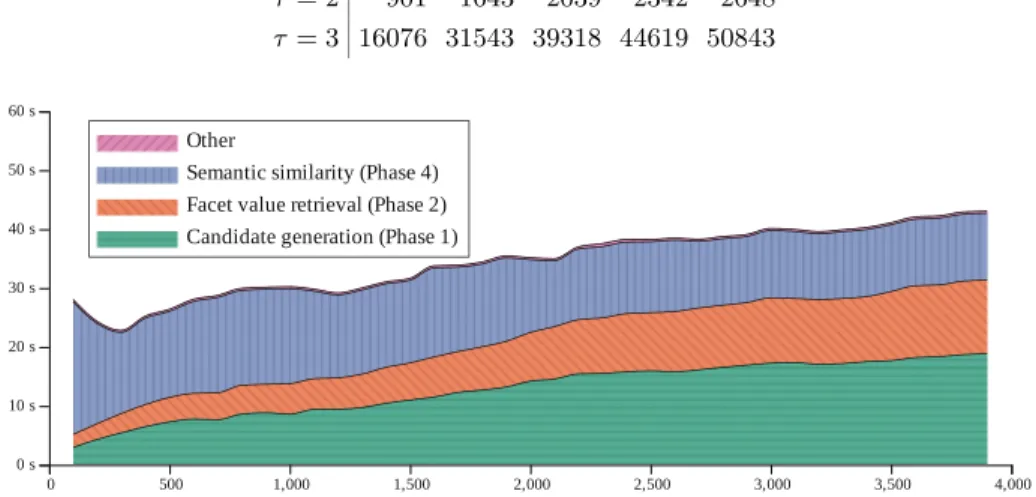
Fig. 2.Benchmark results: average timings depending on the input IRI size.
5.1 Benchmarking
To evaluate the performance of our prototype we used a collection of IRIs extracted from Wikidata (instances ofnovel (Q8261) or its subclasses).
First, we examined the change in the number of candidates depending on the path length τ and number of input IRIs. Results are shown in Table1. As expected, the number of candidates increases significantly –about 20-fold– for each additional hop in the paths. However, a growth in input IRIs yields only a small effect in comparison. These figures and the considerations of Subsect.3.1, led to a path length of τ= 2 for the remainder of the evaluation.
Subsequently, we looked at the run-time of our prototype for varying sizes of input IRIs. We fixed the semantic similarity threshold (σ= 0.70), the parameters for value cardinality scoring (optCard = 10, minCard = 2, and θ = 3), and the predicate probability threshold (minP redP rob = 0.1). Figure2 shows a breakdown of the measured execution times, averaged over about 350 individual measurements over the course of a week. We observe a less than linear growth of run-time depending on the input IRI size. The most expensive operations are (1) candidate generation, (2)facet value retrieval, and (3) semantic similarity. Other operations such as intra-facet metric calculation and selection of better categorization do not contribute significantly. A detailed analysis revealed that the execution times are largely dominated by querying the SPARQL endpoint.
Overall, we acknowledge that the current performance prohibits any pro-ductive use. However, the overwhelming impact of query response times on the
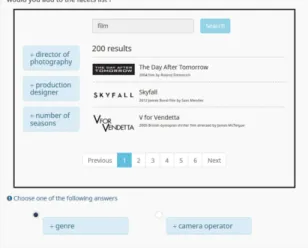
Fig. 3.User evaluation: Fictitious interface forfacet selection task.
overall execution time indicates potential for improvement. Further paralleliza-tion and caching of reoccurring queries might prove fruitful.
5.2 User Evaluation
Setup.In a survey-based user evaluation, we examined whether facets generated by the proposed workflow match user expectations. Based on a fictitious scenario, we assumed an initial search with the keyword “film”.
After introducing users to the general concepts of faceted search and the given scenario, we asked for user preferences in a series of questions categorized into two kinds of situations: one for facet selection and one for facet ranking. In facet selection (cf. Fig.3), users were presented with a static user interface that resembles a common search engine and includes three different facets, e.g., director of photography,production designer, andnumber of seasons. They were then given two more facets, e.g., genre and camera operator, and were asked which would be a better addition to the existing three facets. Infacet ranking, we presented three to four different facets per question and asked users to rate their usefulness in the given scenario using a five point Likert scale [24].
Unlikefacet selection, where only facet headers are shown,facet ranking also includes facet values. Unless noted otherwise, all facets and their values are modeled according to the data present in Wikidata as of February 2019 using a path length ofτ= 2. The facets are generated by an initial, prototypical imple-mentation of the workflow, but were manually adapted to reflect the respective evaluation intent to emphasize specific intra-facet scores.
Using these situations, the following order of questions was used in the survey. Overall, we created a pool of 43 questions, out of which a random subset of 15
very frequent 19% frequent 50% occasionally 19% rarely 4% very rarely 8%
Fig. 4.Usage of facets. An option “never” was provided, but not chosen by any user.
was chosen for each user. This approach is intended to reduce the bias that might arise from certain terms used throughout.
In a first set of questions we focus on inter-facet comparisons using facet selection. In particular, this evolves around theselection of better categorization (Phase 3 in Sect.4) andsemantic similarity (Subsect.3.4).
A second set of questions usesfacet ranking with facets modeled after Wiki-data. This compares multiple indirect facets with their respective direct coun-terparts. Here, the indirect facets also vary in their intra-facet scores, allowing us to evaluate our strategy in theselection of better categorization.
Finally, we usedfacet ranking, this time with abstract facets, i.e., replacing facet headers with “Facet 1” etc. and values with “Value 1” etc. The reason is again to reduce bias stemming from the actual semantics of the proposed facets. In this last part of the evaluation, we issued questions, where the proposed facets differed only with respect to one intra-facet metric10. In a similar fashion, we also examined combinations of two and all three proposed intra-facet metrics.
For the survey, we recruited 26 volunteers differing in age (18–44) and edu-cational background. In total, they performed 130 facet selections and 936 indi-vidual facet ratings. Most of the participants stated at least an occasional use of facets, if they are provided (cf. Fig.4). Consequently, we assume that they are familiar with the general behavior of faceted browsing.
Results. For each question in facet selection, we derive the percentage of par-ticipant selections that match the system decision. Figure5 shows the results of the first question set with each dot representing agreement of one particular question11. For theselection of better categorization we see an overall agreement between the survey users and our system of ∼83%.
The average result for semantic similarity is mixed (∼63%). How-ever, when analyzing the agreement per question, we see a more polarized result. While users most often agree on a specific facet, our system is not always able to concur with this choice. This leads us to believe that the survey responses were driven more by the applicability of the individual facet and not its relation to the already given ones. Yet, this is dependent on the available information and hence, out of control of the proposed workflow.
Infacet ranking, we are not interested in the specific numerical values each metric provides, but focus on the ranking induced by those metrics. To compare the ranking determined by our system with the ranking induced by the sur-10The respective other metrics did not vary within a small error margin.
0% 20% 40% 60% 80% 100% Semantic similarity
Selection of better categorization
Fig. 5.Agreement of participants and system infacet selection. One dot per question.
-1 -0.5 0 0.5 1 Categorization Card Disp Prob Card, Disp Card, Prob Disp, Prob Card, Disp, Prob
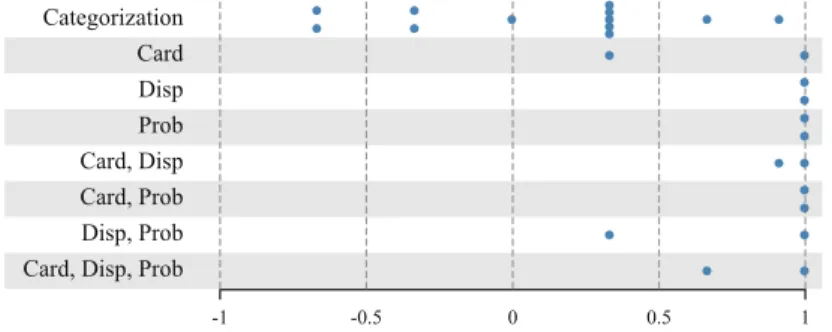
Fig. 6.Rank correlation for facet ranking tasks. One dot per survey question. Value Cardinality (Card), Value Dispersion (Disp), Predicate Probability (Prop).
vey responses, we encoded the latter using numerical values and calculated an average rating for each facet. For each question, we ranked the presented facets according to these ratings, which results in a survey ranking. We then chose Kendall’s Tau-B12to compare oursystem ranking with this survey ranking.
The survey responses for the second question set, concerned with the selection of better categorization, are shown in the topmost lane of Fig.6. The overall result shows no clear support for our approach in this step. When there was no (obvious) relation between the indirect property and the initial resource set (e.g., a facet forcountry of origin/driving side), users rated the facet rather low. However, the system sometimes favors these facets, as they oftentimes provide a good categorization with respect to the defined metrics. On other occasions, like the facetcountry of origin/continent, both users and the system agree that this is a helpful facet. This leads us to believe that, although indirect facets are promising, they require additional refinement to ensure their relevancy.
The final question set verified our metrics independent of semantic biases induced by real-world facets. Results are shown in the lower parts of Fig.6. In general, survey participants agree almost completely with our approach. The only exceptions are due to a tie (Card, Disp) or a different opinion about the order of one particular pair of facets (Disp, Prob andCard, Disp, Prob).
The user evaluation suggests that the technical criteria seem well suited in isolation. However, resulting facets not only have to be evaluated against each 12Kendall’s Tau-B is a variant of Kendall’s Tau that also accounts for possible ties in
the ranking. Values range from +1 for identical rankings to−1 for inverse ones. A value of 0 hints towards no correlation between the involved rankings.
other, but also against the semantic context of the input IRIs. While in search tasks user input can be used to assess this intent, it remains open how this can automatically be approximated for arbitrary resource sets.
6
Conclusion
We have proposed methods to enable automatic facet generation and ranking over KGs. In particular, we provided an approach for dynamic candidate facet generation for arbitrary input sets of resources. We defined intra- and inter-facet metrics to rank the candidates and reduce the possible facet space by selecting the most useful ones. We explored indirect properties to find better catego-rizations and consequently enhance facets’ usefulness. We proposed semantic similarity as a criterion to select among multiple candidate facets. Finally, we developed a holistic workflow that integrates all proposed methods.
Initial survey results support the used metrics. While indirect facets show promise as a helpful addition, their relevancy for the initial resource set needs to be ensured. This latter issue is also the main focus of our future efforts: How can we estimate the relatedness to the initial input for indirect facets? Another prime direction is a performance improvement of our initial prototype, to make it applicable for real-world systems (e.g., caching and parallelization of queries).
References
1. Feddoul, L., Schindler, S., L¨offler, F.: Semantic relatedness as an inter-facet metric for facet selection over knowledge graphs. In: ESWC 2019 (2019, in press) 2. Schindler, S., Feddoul, L.: Semantic Facets (2019). https://doi.org/10.5281/
zenodo.2784142
3. Vrandeˇci´c, D., Kr¨otzsch, M.: Wikidata: a free collaborative knowledgebase. Com-mun. ACM (2014).https://doi.org/10.1145/2629489
4. Tzitzikas, Y., Manolis, N., Papadakos, P.: Faceted exploration of RDF/S Datasets: a survey. J. Intell. Inf. Syst. 48(2), 329–364 (2016). https://doi.org/10.1007/ s10844-016-0413-8
5. M¨akel¨a, E., Hyv¨onen, E., Saarela, S.: Ontogator — a semantic view-based search engine service for web applications. In: Cruz, I., et al. (eds.) ISWC 2006. LNCS, vol. 4273, pp. 847–860. Springer, Heidelberg (2006). https://doi.org/10.1007/ 11926078 61
6. Schraefel, M.C., Smith, D.A., Owens, A., Russell, A., Harris, C., Wilson, M.: The evolving mSpace platform: leveraging the semantic web on the trail of the Memex. In: Proceedings of the Sixteenth ACM Conference on Hypertext and Hypermedia, HYPERTEXT 2005, pp. 174–183. ACM (2005).https://doi.org/10.1145/1083356. 1083391
7. Oren, E., Delbru, R., Decker, S.: Extending faceted navigation for RDF data. In: Cruz, I., et al. (eds.) ISWC 2006. LNCS, vol. 4273, pp. 559–572. Springer, Heidelberg (2006).https://doi.org/10.1007/11926078 40
8. Huynh, D., Karger, D.: Parallax and companion: set-based browsing for the data web. Technical report, Metaweb Technologies Inc. (2009)
9. Heim, P., Ziegler, J., Lohmann, S.: gFacet: a browser for the web of data. In: Pro-ceedings of the International Workshop on Interacting with Multimedia Content in the Social Semantic Web (IMC-SSW 2008), Aachen (2008)
10. Hahn, R., et al.: Faceted wikipedia search. In: Abramowicz, W., Tolksdorf, R. (eds.) BIS 2010. LNBIP, vol. 47, pp. 1–11. Springer, Heidelberg (2010).https://doi.org/ 10.1007/978-3-642-12814-1 1
11. Harth, A.: VisiNav: a system for visual search and navigation on web data. J. Web Semant.8(4), 348–354 (2010).https://doi.org/10.1016/j.websem.2010.08.001. Semantic Web Challenge 2009 – User Interaction in Semantic Web research 12. Brunetti, J.M., Garc´ıa, R., Auer, S.: From overview to facets and pivoting for
interactive exploration of semantic web data. Int. J. Semant. Web Inf. Syst.9(1), 1–20 (2013).https://doi.org/10.4018/jswis.2013010101
13. Ferr´e, S.: Expressive and scalable query-based faceted search over SPARQL end-points. In: Mika, P., et al. (eds.) ISWC 2014. LNCS, vol. 8797, pp. 438–453. Springer, Cham (2014).https://doi.org/10.1007/978-3-319-11915-1 28
14. Arenas, M., Grau, B.C., Kharlamov, E., Marciuska, S., Zheleznyakov, D.: Faceted search Over RDF-based knowledge graphs. Web Semant. Sci., Serv. Agents World Wide Web37(0) (2016).https://doi.org/10.1016/j.websem.2015.12.002
15. Moreno-Vega, J., Hogan, A.: GraFa: scalable faceted browsing for RDF graphs. In: Vrandeˇci´c, D., et al. (eds.) ISWC 2018. LNCS, vol. 11136, pp. 301–317. Springer, Cham (2018).https://doi.org/10.1007/978-3-030-00671-6 18
16. van Zwol, R., et al.: Faceted exploration of image search results. In: Proceedings of the 19th International Conference on World Wide Web, WWW 2010, pp. 961–970. ACM (2010).https://doi.org/10.1145/1772690.1772788
17. Papadakos, P., Tzitzikas, Y.: Hippalus: preference-enriched faceted exploration. In: EDBT/ICDT Workshops. CEUR Workshop Proceedings, vol. 1133, pp. 167–172. CEUR-WS.org (2014)
18. Lehmann, J., et al.: DBpedia - a large-scale, multilingual knowledge base extracted from Wikipedia. Semant. Web J. 6(2), 167–195 (2015).https://doi.org/10.3233/ SW-140134
19. Bollacker, K., Evans, C., Paritosh, P., Sturge, T., Taylor, J.: Freebase: a collabo-ratively created graph database for structuring human knowledge. In: Proceedings of the 2008 ACM SIGMOD International Conference on Management of Data, SIGMOD 2008, pp. 1247–1250. ACM, New York (2008).https://doi.org/10.1145/ 1376616.1376746
20. Page, L., Brin, S., Motwani, R., Winograd, T.: The PageRank citation ranking: bringing order to the web. In: Proceedings of the 7th International World Wide Web Conference, Brisbane, Australia, pp. 161–172 (1998)
21. Harth, A., Kinsella, S., Decker, S.: Using naming authority to rank data and ontolo-gies for web search. In: Bernstein, A., et al. (eds.) ISWC 2009. LNCS, vol. 5823, pp. 277–292. Springer, Heidelberg (2009). https://doi.org/10.1007/978-3-642-04930-9 18
22. Li, C., Yan, N., Roy, S.B., Lisham, L., Das, G.: Facetedpedia: dynamic generation of query-dependent faceted interfaces for Wikipedia. In: Proceedings of the 19th International Conference on World Wide Web, WWW 2010, pp. 651–660. ACM, New York (2010).https://doi.org/10.1145/1772690.1772757
23. Li, Y., Bandar, Z.A., Mclean, D.: An approach for measuring semantic similarity between words using multiple information sources. IEEE Trans. Knowl. Data Eng. 15(4), 871–882 (2003).https://doi.org/10.1109/TKDE.2003.1209005
24. Likert, R.: A technique for the measurement of attitudes. Arch. Psychol.22, 5–55 (1932)
Open Access This chapter is licensed under the terms of the Creative Commons Attribution 4.0 International License (http://creativecommons.org/licenses/by/4.0/), which permits use, sharing, adaptation, distribution and reproduction in any medium or format, as long as you give appropriate credit to the original author(s) and the source, provide a link to the Creative Commons license and indicate if changes were made.
The images or other third party material in this chapter are included in the chapter’s Creative Commons license, unless indicated otherwise in a credit line to the material. If material is not included in the chapter’s Creative Commons license and your intended use is not permitted by statutory regulation or exceeds the permitted use, you will need to obtain permission directly from the copyright holder.