ScholarWorks
Walden Dissertations and Doctoral Studies Walden Dissertations and Doctoral StudiesCollection
2017
Educating Nurses on Workflow Changes from
Electronic Health Record Adoption
Rhoda Lynn Atienza San Jose Walden University
Follow this and additional works at:https://scholarworks.waldenu.edu/dissertations
Part of theCurriculum and Instruction Commons,Databases and Information Systems Commons, and theNursing Commons
This Dissertation is brought to you for free and open access by the Walden Dissertations and Doctoral Studies Collection at ScholarWorks. It has been accepted for inclusion in Walden Dissertations and Doctoral Studies by an authorized administrator of ScholarWorks. For more information, please [email protected].
Walden University
College of Health Sciences
This is to certify that the doctoral study by
Rhoda Lynn San Jose
has been found to be complete and satisfactory in all respects, and that any and all revisions required by
the review committee have been made.
Review Committee
Dr. Joan Moon, Committee Chairperson, Health Services Faculty Dr. Cheryl Holly, Committee Member, Health Services Faculty
Dr. Casey Cole, University Reviewer, Health Services Faculty
Chief Academic Officer Eric Riedel, Ph.D.
Walden University 2017
Abstract
Educating Nurses on Workflow Changes from Electronic Health Record Adoption
by
Rhoda Lynn San Jose
MSN, Western Governors University, 2011 BSN, Manila Doctors College, 1995
Project Submitted in Partial Fulfillment of the Requirements for the Degree of
Doctor of Nursing Practice
Walden University February 2017
Abstract
Workflow issues related to adoption of the electronic health record (EHR) has led to unsafe workarounds, decreased productivity, inefficient clinical documentation and slow rates of EHR adoption. The problem addressed in this quality improvement project was nurses’ lack of knowledge about workflow changes due to EHR adoption. The purpose of this project was to identify changes in workflow and to develop an educational module to communicate the changes. This project was guided by both the ADDIE model (analysis, design, development, implementation, and evaluation) and the diffusion of innovations theory. Five stages were involved: process mapping, cognitive walkthrough, eLearning module development, pilot study, and evaluation. The process maps and cognitive walkthrough revealed significant workflow changes particularly in clinical practice guidelines, emergency department treatment plan, and the interdisciplinary care plan. The eLearning module was developed to describe workflow changes using gamification, scenario-based learning, and EHR simulation. The 14-item course evaluation included a 6-point Likert scale and closed- and open-ended questions. A purposive sample of nurses (N = 30) from the emergency department and inpatient care areas were invited to
complete the eLearning module and course evaluation. Data were collected until
saturation was achieved (n = 15). Descriptive statistics revealed the participants’ positive learning experience. This quality improvement project is expected to contribute to positive social change by facilitating the effective use of the new EHR which can improve the quality of patient care, promote patient safety, reduce healthcare costs, and improve patient outcomes.
Educating Nurses on Workflow Changes from Electronic Health Record Adoption
by
Rhoda Lynn San Jose
MSN, Western Governors University, 2011 BSN, Manila Doctors College, 1995
Project Submitted in Partial Fulfillment of the Requirements for the Degree of
Doctor of Nursing Practice
Walden University February 2017
Dedication
This project is dedicated to my parents who have instilled in me the value of education, perseverance, and the pursuit of excellence. This project is also dedicated to my loving husband, Rafael, who inspires me each day to continue to achieve my dreams and become a better nurse and person. There is no doubt that without his continued love, motivation, and support I could not have conquered one of the biggest milestones of my life.
Acknowledgments
I would like to acknowledge the motivational instruction and guidance of Dr. Janet Kasoff, Dr. Deidra Brown, and Susan Grossman. Their brilliance and expertise provided me with a deep appreciation and passion for nursing education, evidence-based practice, and healthcare informatics. I would also like to recognize the generous efforts and expertise of Abibatu Bello-Shittu, Anne Brennan, Kelvin Perez, senior nursing leadership, subject matter experts, nursing research council, and all registered nurses who participated in this project.
I would like to thank Dr. Joan Moon, my project chair, for her tireless mentorship efforts, patience and continued guidance. Likewise, I would like to thank my friends and colleagues who have inspired me to pursue my professional endeavors.
i
Table of Contents
List of Tables ...v
List of Figures ... vi
Section 1: Nature of the Project ...1
Introduction ...1
Background ...3
Problem Statement ...4
Purpose ...5
Project Goals and Outcomes ...5
Goals… ... 5
Outcomes ... 5
Framework for the Project ...6
Nature of the Project ...6
Definition of Terms...7
Assumptions ...8
Scope and Delimitations ...8
Significance...9
Summary ...9
Section 2: Review of Literature ...10
Introduction ...10
Health IT ...11
ii
EHR Adoption and Workflows ...13
EHR Training ...13
ADDIE Model of Instructional Design ...14
The ADDIE Model ... 15
Use of ADDIE Model ... 16
Diffusion of Innovations Theory ...18
Characteristics of Innovations ... 18
The Innovation-Decision Process ... 19
Diffusion of Innovations Theory and EHR Adoption... 20
Background and Context...23
Summary ...23
Section 3: Approach/Methods...25
Introduction ...25
The Project Team ... 26
Team Meetings... 26
DNP Project Activities ... 27
Setting and Population ... 28
Sampling and Recruitment ... 29
Ethical Protection of Participants... 30
Instrument ... 30
Data Collection ... 30
iii
Time and Resources ... 31
Pilot Implementation ... 32
Evaluation ... 32
Summary ...32
Section 4: Findings and Recommendations ...34
Introduction ...34
Evaluation, Findings, and Discussion ...34
Outcome 1. Process Maps ... 34
Outcome 2: Cognitive Walkthrough/Comparative Analysis ... 36
Outcome 3. eLearning Module ... 37
Implications...43
Policy.. ... 43
Practice ... 43
Research ... 45
Social Change ... 45
Strengths and Limitations ...45
Analysis of Self ...46
As Scholar ... 46
As Practitioner ... 47
As Project Manager... 47
Contribution to My Professional Development ... 48
iv
Section 5: Scholarly Product ...50
Podium Presentation Abstract ...50
Identification of Professional Practice Gap ... 50
Outcomes ... 51
Abstract ... 51
Teaching Method ... 52
References (abstract only) ... 52
References ...53
Appendix A: Process Maps ...62
Appendix B: eLearning Module Screenshots ...66
Appendix C: Curriculum Plan ...78
v List of Tables
Table 1. DNP Project Activities... 27
Table 2. Mean Respondent Scores on 6-Point Likert Scale... 40
Table 3. Closed-ended Questions ... 41
vi List of Figures
Figure 1. The ADDIE model of instructional design. ... 15 Figure 2. Communication channels, factors, and outcomes in the innovation-decision
process ... 20 Figure 3. Cognitive walkthrough template ... 37
Section 1: Nature of the Project
Introduction
The Doctor of Nursing Practice (DNP) is a practice-focused degree with an emphasis on innovative and evidence-based practice that reflects the use of credible research findings to improve practice (American Association of Colleges of Nursing [AACN], 2006). This DNP project focused on the role of the DNP-prepared nurse in informatics, a specialty that aligns with the DNP Essentials of Doctoral Education for Advanced Nursing Practice IV: Information Systems/Technology and Patient Care Technology for the Improvement and Transformation of Health Care (AACN, 2006).
Successful adoption of the electronic health record (EHR) necessitates an
understanding of workflows and how EHR impact the daily tasks of clinicians. Workflow refers to the sequence and interaction of physical and mental tasks performed by staff within and between work environments (Agency for Healthcare Research and Quality [AHRQ], n.d.). In this project I addressed the nurses’ lack of knowledge about workflow changes that result from adoption of the EHR. This project is expected to contribute to positive social change by enhancing nurses’ knowledge of on workflow changes and thus facilitating the effective use of the new EHR. The effective use and continued adoption of EHR can improve the quality of patient care, promote patient safety, reduce healthcare costs, and improve patient outcomes.
The enactment of the Health Information Technology for Economic and Clinical Health (HITECH) Act in 2009 mandates that the U.S. Department of Health and Human Services (HHS) promote the adoption and meaningful use of health information
technology (IT, Office of the National Coordinator for Health Information Technology [ONC], 2015). This law prompted the widespread adoption of health IT, including the use of certified electronic health records (EHRs) in ambulatory and hospital settings (ONC, 2015).
The hospital system that was involved in this DNP quality improvement (QI) project transitioned from paper and electronic-based medical records (EMR) to a comprehensive EHR that fully integrates inpatient and ambulatory EHRs, utilization management, and clinical information systems on inpatient care management. An EMR is a paper chart in a digital format that contains notes and information gathered by clinicians within a single practice or hospital setting. Whereas, an EHR is a database that contains a comprehensive view of patient information collected by and shared with all authorized clinicians involved in a patient's care within and across different care settings (ONC, 2015). This hospital health system, located in an East Coast metropolitan area , is an integrated delivery network comprised of 11 hospitals, an extended care facility, multiple primary and specialty care practices, school health, home health, care management, and managed care programs. I work as a manager of training and development in the care management/managed care division.
The hospital’s clinical leadership identified a lack of knowledge among nurses regarding clinical workflow changes that result from EHR adoption. The director of nursing presented this issue and discussed the need to develop and implement an
educational module that would describe the workflow changes and enhance the use of the new EHR. This project has implications for positive social change.by enhancing the
knowledge of nurses on workflow changes and thus facilitating the effective use of the new EHR that can improve the quality of patient care, promote patient safety, reduce healthcare costs, and improve patient outcomes.
Background
Research articles suggest that EHR adoption is challenging across health care organizations (Desroches, Painter, & Jha, 2013; McAlearney, Robbins, Kowalczyk, Chisolm, & Song, 2012; Yan et al., 2014). According to an Institute of Medicine (IOM, 2012) report on health IT and patient safety, a more in-depth understanding of how health IT can cause harm and affect workflows is required to fully achieve its potential benefits to IT. Some of the factors critical to the success of EHR adoption include end-user attitude toward EHR, end-user participation, interoperability, technical support, training, and workflow impact (Gray, 2014; McAlearney et al., 2012; Najaftorkaman &
Ghapanchi, 2014). According to the California Network of EHR Adoption, the impact of EHR on workflows is the most significant factor in the success of EHR adoption
(California Healthcare Foundation [CHF], 2011). Workflow issues associated with EHR implementation have contributed to provider dissatisfaction, slow rates of EHR adoption, decreased productivity, and inefficient clinical documentation which can decrease patient safety and outcomes (Lowry et al., 2015). Workflows associated with clinical and
practice management processes change when implementing EHRs. Recognizing the changes on clinical workflows through process mapping is vital to successful EHR implementation (AHRQ, n.d.; ONC, 2012). Process maps provide a visual representation of tasks within processes; the maps can be used as a blueprint for implementation
training, for establishing best practices and organizational standards, and for subsequent optimization and redesign (CHF, 2011; ONC, 2012). Changes to workflows need to be communicated appropriately to nurses through education (Topaz, Rao, Creber, & Bowles, 2013). Nurses’ lack of knowledge about workflow changes can lead to inefficient and unsafe workarounds (Lowry et al., 2015).
Problem Statement
As the target hospital system transitioned from hybrid clinical documentation (paper and electronic-based medical record) to a fully integrated EHR, changes to the clinical and administrative workflows were anticipated. Unexpected changes can cause significant disruption in patient care, billing, and communication among patients and providers. Issues on workflow changes associated with EHR adoption can lead to poor clinical documentation, fragmented patient care, and increased risks to patient safety. Moreover, changes to the clinical workflow—when steps are added or eliminated in work processes—can impact the way nurses perform tasks and complete them. For example, to complete clinical tasks in response to workflow challenges, clinicians tend to develop workarounds or temporary fixes (Lowry et al., 2015). These workarounds may reduce the quality and efficiency of patient care (Zheng, Ciemins, Lanham, & Lindberg, 2015). By identifying how workflows will change and anticipating them, informed decisions can be made (AHRQ, n.d.).
Nurses lack knowledge about workflow changes caused by EHR adoption. The clinical leadership identified this problem during EHR design meetings with application analysts, instructional designers, and subject matter experts (SMEs). To address this gap,
the director of nursing for the EHR project sought for ways to communicate the changes through training.
Purpose
The purpose of this QI project was to identify the changes in workflow caused by adopting the EHR and to develop an educational module to address them in the
emergency department (ED) and inpatient care areas. The review of literature confirmed that EHR training programs that discussed the benefits of EHR as well as the workflow changes led to improved learning outcomes and the effective use of EHRs (Bredfeldt, Awad, Joseph, & Snyder, 2013; McAlearney et al., 2012).
EHR training is focused on the technical aspects of the EHR, such as navigational functions, and does not include information about the impact to workflows (Harrington, 2015). This QI project involved the development of an educational module to describe the significant workflow changes and address the gap between evidence and current practice.
Project Goals and Outcomes Goals
The goal of this QI project was to facilitate end-user knowledge of workflow changes caused by EHR adoption.
Outcomes
The project has three outcomes: (a) process maps (see Appendix A), (b) a cognitive walkthrough and comparative analysis of old and new workflows and (c) an eLearning module (see Appendix B).
Framework for the Project
The main framework for this QI project was a model of instructional design called ADDIE: Analysis, Design, Development, Implementation, Evaluation (Hodell, 2011). ADDIE provided a structure for analyzing the learning gaps, identifying the workflow changes, defining the learning objectives, selecting delivery strategies, developing the course content, deploying the module, and gathering feedback from pilot program
participants. The secondary framework for this project was the diffusion of innovations () theory (Rogers, 2003). DOI informed the project about the EHR adoption process and how the perceptions of end users affected the rate of adoption.
Nature of the Project
The team approach for this project—of which I was the leader—included several members: the nursing senior leadership for the EHR project, the director of professional practice and nursing quality officer, the director of clinical education, two EHR training managers, two clinical faculty members, the eLearning expert, and two EHR instructional designers. The process maps were developed to identify the clinical functions and tasks performed by registered nurses (RNs) in the ED and inpatient care areas. A series of meetings with the clinical faculty and instructional designers were conducted for the cognitive walkthroughs and comparative analysis of the ED and inpatient care workflows. An eLearning module was developed using innovative strategies such as gamification, scenario-based learning, and simulation. RN participants completed a pilot
of the eLearning module and then evaluated the course. Descriptive statistics were used to describe the course evaluation results and then summarize them.
Definition of Terms
The following terms were used in this QI project.
Cognitive walkthrough. A cognitive walkthrough is a task-oriented method for evaluating the usability of health information systems (Khajouei, Esfahani, & Jahani, 2016).
Electronic health record(EHR). An EHR is a computerized version of a patient’s paper chart that includes the patient’s medical history, diagnoses, medications, treatment plans, medications, immunization records, allergies, images, and laboratory results. EHRs facilitate sharing of information across more than one organization or group of providers who are involved in a patient’s care. In addition, EHRs allows access to evidence-based tools, use of clinical decision support, and streamline workflows (ONC, 2013).
Electronic medical record(EMR). An EMR is a computerized version of a patient’s paper chart that contains medical and treatment records that can be accessed within a provider’s office (ONC, 2013).
Gamification. Gamification is defined as the “use of game-based mechanics, aesthetics, and game thinking to engage people, motivate action, promote learning, and solve problems” (Kapp, 2012, p. 10).
Process mapping. Process mapping, also known as flowcharting, involves the illustration of all tasks necessary to carry out a process and identification of points at which one process interconnects with another (CHF, 2011).
Usability. Usability is the “effectiveness, efficiency, and satisfaction with which specific users can achieve a specific set of tasks in a particular environment” (Schoeffel, 2003, p. 6)
Workarounds. Workarounds are behaviors end users use to overcome perceived limitations in a health IT system as responses to workflow issues (Friedman et al., 2014).
Workflow. Workflow refers to the sequence and interaction of physical and mental tasks performed by staff within and between work environments (AHRQ, n.d.).
Assumptions
Assumptions are statements that are considered to be true but have not been scientifically proven (Grove, Burns, & Gray, 2013). This project involved an educational module about the workflow changes that resulted from adoption of the EHR. Knowledge of the current workflow and the learners’ readiness to learn are significant to the project’s success. The assumptions for this QI project were:
1. Nurses had the basic knowledge of the current workflow.
2. Nurses were willing and were ready to learn about the workflow changes.
Scope and Delimitations
The scope of this QI project was limited to RNs in both the ED and inpatient care. The process maps, cognitive walkthroughs, comparative analysis, and eLearning content were focused on clinical workflows that have significant changes in the ED and inpatient care areas.
Significance
The effective use of EHRs can improve patient care; can (a) facilitate better care coordination, (b) increase practice efficiencies and cost savings, (c) foster patient-provider communication, (d) reduce errors, (e) improve patient safety, and (f) facilitate better patient outcomes (ONC, 2013). EHR adoption is a complex process that can significantly impact clinical workflows. This QI project sought to enhance end-user training and improve the communication of workflow changes among nurses across the hospital system. Teaching nurses about workflow changes in the EHR adoption process will help them use and adopt the EHR. This project could facilitate opportunities for process improvement after the EHR adoption and it could be useful for training new staff.
Summary
In Section 1, I presented an overview of the problem about the nurses’ lack of knowledge on clinical workflow changes resulting from EHR adoption. This overview emphasized the significance of workflow development in the EHR adoption process, and in particular, the inclusion of workflow changes in end-user training. The purpose of this QI project was to identify the changes in the workflows and to develop an educational module to communicate the changes. This project aimed to facilitate end-user knowledge of workflow changes caused by EHR adoption. The outcomes of the project include process maps, a cognitive walkthrough, and an eLearning module. Moreover, the ADDIE and DOI theory guided this project.
In Section 2, the literature is reviewed on the following topics: EHR adoption, workflow changes, and the theoretical underpinnings of the project.
Section 2: Review of Literature
Introduction
The problem identified in this QI project was nurses’ lack of knowledge about the clinical workflow changes caused by the adoption of EHR. The purpose of this project was to identify the workflows changes caused by EHR adoption and to develop an educational module for nurses on workflow changes in the ED and inpatient care areas. Health IT, such as EHRs, plays a vital role in making health care safe, effective, patient-centered, timely, efficient, and equitable (IOM, 2012). The Health Information
Technology for Economic and Clinical Health (HITECH) Act has prompted the widespread adoption of EHR across health care organizations (ONC, 2015). EHR adoption is a complex process that can significantly impact clinical workflows. Changes to the clinical workflows have been identified as one of the critical barriers to successful EHR adoption. These changes need to be appropriately communicated to clinicians through training (Topaz et al., 2013). The literature review provides a description of what has been published on the following topics: health IT, EHR adoption, EHR adoption impact on workflows, EHR training, instructional strategies, and the ADDIE and DOI frameworks used in the project.
The following databases were used in the literature search: Cumulative Index to Nursing and Allied Health Literature (CINAHL), MEDLINE, Computers & Applied Sciences Complete, , and Google Scholar. The following search terms were used: health information technology, meaningful use, EHR, implementation, workflow, clinicians, nurses, physicians, training, EHR adoption, diffusion of innovation, instructional design,
gamification, scenario-based learning, simulation, and ADDIE model. Approximately 85 foundational, seminal, and reviewed articles were reviewed, of which 51 peer-reviewed journal articles, research studies, systematic reviews, reports, and textbooks (published between 2000 and 2016) were included in the review.
Health IT
IOM (2012) describes health IT as a broad range of products, including EHRs, personal health records, and health information exchanges. They store a broad range of health data, provide clinical decision support, facilitate communication among patients and providers, promote patient engagement, and reduce medical errors. Health IT consists of computers (), software, and devices integrated into processes and workflows used by people in an organization. Based on the IOM report (2012) on health IT and patient safety, health IT, when developed and implemented effectively, can transform health care into one that is “safe, effective, patient-centered, timely, efficient, and equitable” (IOM, 2001, p. 7). Conversely, IOM reported that evidence about the impact of health IT on patient safety is limited to medication safety; IOM cited case reports that, due to variations and inconsistencies in health IT products, health IT can risk patient safety. Because health IT has been adopted widely in the U.S. health care systems, numerous studies have been conducted to determine whether health IT improves the quality and safety of health care. According to the report of Banger and Graber (2015), based on systematic reviews of 826 articles published from 2006 to 2014, health IT improves patient safety. Nonetheless, the authors concluded that the evidence calls for more work and research on the indirect factors that support or prevent successful implementation and
use of health IT. The HITECH Act and meaningful use regulations have pointed up the need for more research to determine the environments or situations in which some health IT adoptions are successful and others are not (Jones, Rudin, Perry, & Shekelle, 2014).
HITECH Act and Meaningful Use
The enactment of the HITECH Act in 2009 mandated the HHS to promote the adoption and meaningful use of health IT (ONC, 2015). This law has accelerated the widespread adoption of health IT to comply with the meaningful use regulations, including the use of certified EHRs in the ambulatory and hospital settings. Meaningful use involves the use of certified EHRs to
Improve quality, safety, efficiency, and reduce health disparities
Engage patients and family
Improve coordination, and population, and public health
Maintain privacy and security of patient health information (ONC, 2015) The Centers for Medicare and Medicaid Services (CMS, 2015) have incentive programs that provide incentive payments to eligible professionals, eligible hospitals, and critical access hospitals that implement, upgrade, and achieve specific objectives of meaningful use stages. The objectives include: to create a baseline for electronic data capture and sharing (Stage 1); to begin using EHR for continuous quality improvement at the point of care, promote patient engagement, and demonstrate ability to share data with patients and providers across the care continuum (Stage 2); and to promote improvements in quality, safety, and efficiency to improve health outcomes (Stage 3) (Ahmad & Tsang, 2013; ONC, 2015). The passage of the HITECH Act and meaningful use bring changes to
the workflows and impacts how clinicians perform and complete tasks to achieve a desired goal.
EHR Adoption and Workflows
EHR adoption has been reported to be challenging across health care
organizations (Desroches et al., 2013; McAlearney et al., 2012; Yan et al., 2014). Some of the factors that are critical to the success of EHR adoption include end-user
participation and attitude toward EHRs, interoperability, technical support, workflow impact, and training (Gray, 2014; McAlearney et al., 2012; Najaftorkaman & Ghapanchi, 2014). The California Network of EHR Adoption considers the impact of EHR to
workflows as the most significant factor in the adoption process (CHF, 2011). While workflow analysis is part of the EHR design process, inadequate time is spent in
integrating actual clinical workflows into EHR (Friedman et al., 2014). Workflow issues associated with EHR implementation have contributed to provider dissatisfaction, slow rates of EHR adoption, decreased productivity, and inefficient clinical documentation which can negatively impact patient safety and outcomes (Lowry et al., 2015).
Understanding workflow effects of EHR is critical as alterations in clinical workflows have been one of the major barriers to successful EHR adoption (Vishwanath, Singh, & Winkelstein, 2010).
EHR Training
EHR training is critical to the success of EHR adoption. Changes to the workflows resulting from EHR adoption need to be appropriately communicated to clinicians through education (Topaz et al., 2013). In general, EHR training programs are
focused on navigating functions and EHR features (Harrington, 2015). EHR training programs that go beyond the technical aspects and emphasize the positive potential of the EHR associated with the change will lead to better learning outcomes and effective use of EHR (McAlearney et al., 2012). Clinicians will likely use and adopt the EHR if they perceive the benefits associated with the change. EHR training is effective when training is tailored to individual roles (role-based), actual working environment (mock training), and clinical workflows (process-based) (CHF, 2010; Cresswell, Bates, & Sheikh, 2013).
In a systematic review of 98 peer-reviewed journal publications, Nguyen, Belluci, and Nguyen (2014) reported the benefits and issues associated with the success or failure of EHR adoption. The authors emphasized the significance of integrating the clinical benefits and efficiencies of new EHRs into the training curriculum. Additionally, a mixed method study of 54 participants by Bredfeltdt et al. (2013) revealed the effectiveness and impact of a post-implementation EHR training that integrated topics related to EHR features and workflows. The study involved the development of EHR training classes using concrete patient scenarios on patient-level data management and workflow-related documentation tools. The training was well received by participants and resulted in an increased use of EHR tools that impact workflows.
ADDIE Model of Instructional Design
The ADDIE model of instructional design was used as the framework for this project. The elements of the model are Analysis, Design, Development, Implementation,
Evaluation (Hodell, 2011). This model provided a structure for illustrating workflows through process mapping; cognitive walkthroughs and comparative analysis of old and
new workflows; development of learning objectives, course content, and eLearning module; posting of eLearning module to the learning management system (LMS); distribution and collection of course evaluation; and analysis of evaluation results.
The ADDIE Model
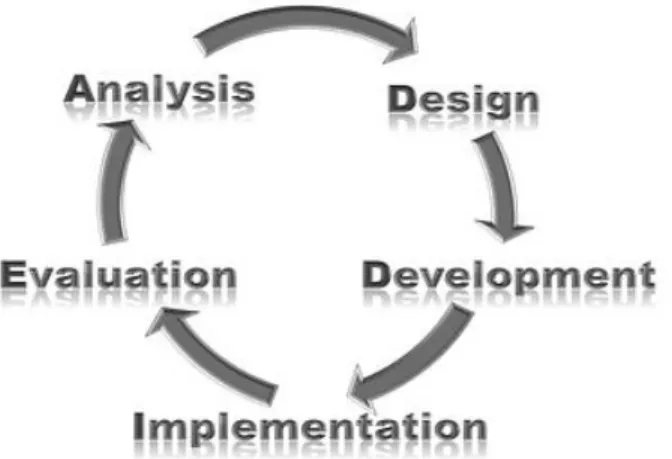
This instructional design model is an iterative process (Sengstack & Boicey, 2015) in which repetition of the elements occurs until the process yields to a desired result. Figure 1 illustrates the cyclical process of ADDIE elements.
Figure 1. The ADDIE model of instructional design.
Analysis. Analysis is the foundation of an educational project. This element is the data-gathering phase in the ADDIE process in which pertinent information is gathered from subject matter experts that will be used throughout the process (Hodell, 2011). Information gathered through analysis may include the organizational needs that drive the educational project, nurses’ learning needs, purpose and goals, identified gaps in
performance, root cause of performance gap, current and future processes or workflows, roles and patient care areas affected by EHR adoption, and possible instructional
methods.
Design. Design is the blueprint or outline of an educational project. This element involves the development of learning objectives, selection of delivery method,
identification of expected outcomes, schedule, equipment, and budget (Hodell, 2011; Robinson & Dearmon, 2013; Sengstack & Boicey, 2015).
Development. Development entails the production of materials based on the learning objectives, pilot testing, and revisions. This element involves collaboration with the stakeholders and subject matter experts to review and validate content (Hodell, 2011; Sengstack & Boicey, 2015).
Implementation. Implementation involves the delivery of educational materials to the learners through the method that was determined during the analysis and design phases. This element also includes the course evaluations, which provide an opportunity to gather information about how learners are gaining knowledge, and whether the educational materials are effective (Sengstack & Boicey, 2015). The course evaluation results may be used to make necessary improvements to the educational materials.
Evaluation.Evaluation takes place in every element of the ADDIE process. This element involves an appraisal of all tasks within each element to make essential
improvements to the educational project (Hodell, 2011).
Use of ADDIE Model
The ADDIE model of instructional design is a systematic and iterative approach to content development. This model has been widely used by educators and instructional designers from across different industries. The use of this model dates back in the 1970s
when the Florida State University initially developed the model for the U.S. Armed Forces (Molenda, 2003). Multak, Khazraee, Rogers, and Dalrymple (2013) utilized the ADDIE model to evaluate EHR systems for educational use in a nursing informatics curriculum. The curriculum incorporated an EHR training program, which includes classroom lectures, and computer-based, simulated sessions that provided students access to an EHR system prior to using one with actual patients.
A mixed method study by Fink and Beck (2015) used the ADDIE model to develop and evaluate an online educational program to teach older adults to determine and assess high quality web-based health information. In developing the educational program, the researchers identified the participants’ learning needs and preferences through focus groups and interviews (analysis), which guided the content selection and methodology (design). The researchers developed a prototype of the online education program, conducted a pilot test, and prototype review (development). Eighteen
participants were asked to complete two online educational programs (experimental and comparison program) and an online evaluation survey to appraise each program’s
usability, appearance, and usefulness (implementation). Qualitative and quantitative data results were analyzed (evaluation). The experimental program yielded positive results.
Robinson and Dearmon (2013) used the ADDIE model to develop an evidence-based educational project to enhance knowledge transfer in undergraduate nursing students. The authors used the ADDIE model as the framework for simulation activities and a tool for the standardization of teaching and learning processes. Details about the
project implementation such as participants and project outcomes were not indicated in the article.
Diffusion of Innovations Theory
Rogers’ DOI theory was used to inform the project about EHR adoption process and how end-users’ perceptions affect the rate of adoption. Rogers (2003) defined diffusion as “the process in which an innovation is communicated through certain channels over time among the members of a social system” (p. 5). Derived from this definition, the four main elements in the diffusion of innovations are the (1) innovation, (2) communication channels, (3) time, and (4) the social system. These elements were used to describe the characteristics of innovations, the innovation-decision process related to EHR adoption, the impact of EHR on clinical workflows, and communication of the changes among nurses across the hospital system.
Characteristics of Innovations
Rogers (2003) proposes five characteristics of innovations to describe how individuals perceive innovations and how these perceptions affect the rate of adoption. These characteristics of innovations informed this project about how the perceptions of end users affected the rate of adoption.
Relative advantage. Relative advantage is the perceived benefit that the
innovation is better than the previous idea. A more positive perceived relative advantage of an innovation will result in faster adoption rate (Rogers, 2003). An end-user who perceives that the new EHR is better than the previous means of documentation (paper and electronic-based) may rapidly accept and use the EHR.
Compatibility. Compatibility is the perceived value of an innovation as being consistent with existing values, previous experiences, and needs. An innovation that is compatible with the norms and values of a social system will result in faster adoption rate (Rogers, 2003). An EHR that is compatible with the organization’s business and clinical workflows, end-users’ characteristics, and population may result in faster adoption.
Complexity. Complexity is the perceived disadvantage of innovation as being difficult to understand and use. A complex innovation will result in slow adoption rate (Rogers, 2003). An EHR with complex designs and poor usability can be difficult to learn and can lead to slower adoption.
Trialability. Trialability is the perceived ability of an individual to experience an innovation on a pilot basis. Implementing an innovation on a trial basis will result to faster adoption (Rogers, 2003). Implementing an EHR in a phased approach and allowing end-users to practice using a simulated EHR environment can decrease difficulties in learning complicated applications.
Observability. Observability is the perceived ability of an individual to see the outcomes of an innovation will result to faster adoption (Rogers, 2003). A phased approach where departments in the organization implement the new EHR in phases over time may allow end-users to see the achievements and challenges of previous
departments.
The Innovation-Decision Process
A new idea or innovation such as using a new EHR brings a certain degree of uncertainty and unpredictability. Communicating information about the innovation can
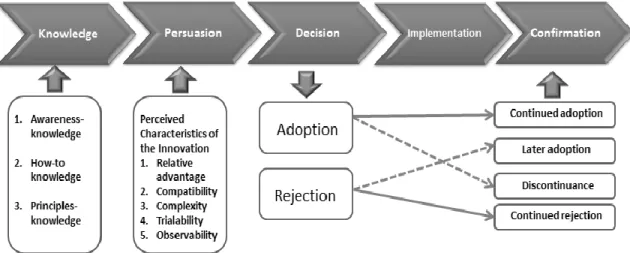
reduce uncertainty and perceived risks. The innovation-decision process depicted in Figure 2, has five stages: knowledge, persuasion, decision, implementation, and confirmation. This process is a path through which an individual obtains or receives initial information about an innovation and gains understanding of how innovation works; develops either positive or negative attitude towards the innovation which leads to an option to adopt or reject the innovation; implements; and confirms whether to adopt or reject the innovation (Rogers, 2003).
Figure 2. Communication channels, factors, and outcomes in the innovation-decision process. Adapted from “A Model of Five Stages in the Innovation-Decision Process,” by E. Rogers, 2003, Diffusion of Innovations, 5E, p. 170. Copyright 1995, 2003 by Everett M. Rogers. Copyright 1962, 1971, 1983, by Free Press, a Division of Simon & Schuster, Inc. Reprinted with permission.
Diffusion of Innovations Theory and EHR Adoption
The DOI theory has been used as a conceptual framework to describe factors affecting EHR adoption and to derive evidence-based strategies that address barriers to EHR adoption. A quantitative study by Harmon, Fogle, & Rousell, (2015) with 23 participants used the DOI theory to assess and analyze nurses’ perceptions of an EHR
five years post-implementation. The study was guided by the main elements of DOI as described by Rogers (2003): Innovation, communication, time, and social system. As defined in the study, the innovation is the EHR, communication is the transfer of information from one individual or organization to another, the social system is the nurses in the organization, and time is described as 5 years post-implementation. The researchers concluded with three recommendations that may improve the use of the EHR and contribute to evidence-based practices for future implementations and innovations. The recommendations include: enhance communication among caregivers using communication tools; facilitate EHR optimization that integrates clinical decision
support; and conduct further time-motion research to determine the time spent on clinical tasks and to identify complex processes and workarounds related to the EHR.
In a systematic review, Kruse, DeShazo, and Kim (2014) explored 25 articles about an extensive range of organizational and environmental factors associated with the adoption of EHRs using the DOI theory and organization theories. The researchers used the characteristics of innovation: relative advantage, compatibility, complexity,
trialability, and observability. Based on the systematic review, a conceptual model that is specific to large-scale EHR implementations was developed to explain the factors of EHR adoption. The researchers concluded with recommendations to perform empirical studies to better understand effective adoption strategies and measure the positive and negative effects of each of the identified factors.
The DOI theory was used to understand the process of how an innovation is communicated through education and how education helps individuals going through
innovation to decrease the degree of uncertainty, to have positive behaviors, and effectively use and adopt the innovation.
Instructional Strategies
Innovative instructional strategies such as gamification, scenario-based learning, and simulation were integrated into the eLearning module. Gamification is defined as the “use of game-based mechanics, aesthetics, and game thinking to engage people, motivate action, promote learning, and solve problems” (Kapp, 2012, p. 10). In a systematic review of 170 scholarly articles (Gibbs, Hewitt, & McLeod, 2016), researchers explored the use of game design elements in EHR training. The review revealed that the
integration of game-based design to EHR system training facilitates active versus passive learning in a safe and learner-centered environment; engages and motivates learners; improves and accelerates learning; and improves role-based and team-based learning. Using game-based techniques provides an innovative way of teaching that meets all types of learning styles and facilitates critical thinking (Brull & Finlayson, 2016).
Scenario-based learning can enhance skills and accelerate expertise through a series of simulated task challenges that can be organized from simple to complex concepts (Clark, 2013). In an article about a focused clinician workflow EHR training (Nicklaus, Kusser, Zessin, & Amaya, 2015), the authors described how an EHR training was successfully transformed through the use of teaching strategies including workflow-focused scenarios.
Simulation replicates complex scenarios that enable the evaluation of clinical skills in a wide-range manner (Mohan, Scholl, & Gold, 2015). In an educational study on
simulation and EHR training (Vuk et al, 2015), the researchers revealed the positive impact of simulation training on providers self-confidence and preparedness to use EHRs. The participants described the simulation training as an excellent and effective way to learn EHRs (Vuk et al, 2015).
Background and Context
Driven by the hospital health system’s strategic vision and mission, government regulatory requirements, Meaningful use requirements, and incentive programs, the system transitioned from paper and electronic medical records (EMRs) into an EHR that fully integrates the inpatient and ambulatory EMRs, utilization management, and
inpatient care management clinical information systems. In 2015, the health system began a phased approach to EHR implementation in the primary, specialty care practices, occupational health services, and school health. The EHR roll out continued in four hospital campuses in 2016. This QI project involved a team approach with myself as the leader. The project was conducted to facilitate end-user knowledge of workflow changes resulting in EHR adoption.
Summary
In this section, I reviewed the scholarly literature and described how health IT could impact the quality, safety, and efficiency of healthcare. Literature confirmed the widespread adoption of EHRs, the anticipated changes to workflows caused by EHR adoption, the critical aspect of communicating the workflow changes to nurses in addition to technical EHR training, and the effective use of innovative instructional
strategies. Moreover, I presented existing scholarship related to the ADDIE model and the Diffusion of Innovation theory.
In Section 3, I discussed the approach and methods that were used in this project based on the ADDIE model. In addition, I described the population, sampling,
Section 3: Approach/Methods
Introduction
The purpose of this project was to identify the workflow changes resulting from EHR adoption and to develop an educational module for nurses about the workflow changes. This project was conducted to facilitate end-user knowledge of workflow changes caused by EHR adoption. This section covers the following topics: approach and rationale, population, sampling, recruitment, data collection, data analysis, time and resources, and evaluation.
Approach and Rationale
To carry out the project activities, this QI project used a team approach and the ADDIE model of instructional design.. A team approach was selected to bring diverse perspectives to the discussion. Effective teams are comprised of members representing leadership expertise within the organization who have the necessary knowledge, skill, and authority to achieve project outcomes. The types of expertise include project sponsorship, clinical leadership, technical expertise, and day-to-day leadership (AHRQ, 2013). The team members’ qualities and expertise offered a wide array of knowledge and skills from different health care disciplines which were significant to the project’s
success. Each team member provided expertise on old and current workflows, including the use of current EHR, along with other clinical information systems, paper-based patient records, and new EHR functions. The team used the ADDIE model to ensure that all pertinent activities were completed in an organized and efficient manner. The
The Project Team
I was the leader of the project team and was responsible for day-to-day leadership; I also ensured the progress and completion of the project’s activities. The other team members were as follows: the nursing senior leadership for the EHR project, the director of professional practice and nursing quality officer, the director of clinical education, two EHR training managers, two clinical faculty members, the eLearning expert, and two EHR instructional designers. The team members represented each type of expertise in nursing, education, and informatics: project sponsorship, clinical leadership, technical expertise, and day-to-day leadership. Each member had different
responsibilities. The, the EHR project director, who was the project sponsor and had executive authority in the organization, oversaw the project activities, including data collection, and served as the liaison to senior management and other key leaders of the hospital system. The clinical directors and EHR training managers represented the clinical leadership. The clinical faculty, EHR instructional designers, and eLearning expert represented the clinical and technical expertise.
Team Meetings
Effective team meetings are necessary to ensure the successful completion of tasks to achieve project outcomes. Some of the meeting practices that support productive team processes include organizing meeting logistics, providing an agenda before the meeting, starting/ending meetings on time, assigning tasks and action items, facilitating and summarizing decisions, evaluating and planning for improvement, and providing meeting minutes promptly (Association of American Medical Colleges, n.d.). These
recommendations were used as a guide during team meetings. In accordance with the ADDIE model, the meetings were scheduled with specific team members, based on the agenda, type of expertise, and project tasks. The meetings were conducted twice a week over a 10-week period. Each meeting ran for 1–2 hours.
DNP Project Activities
The project activities for identifying the workflow changes and developing an educational module for nurses include collaboration with the project team. Leadership support and team collaboration were significant to the project’s success. The contexts of the analysis, design, development, implementation, and evaluation components of the ADDIE model guided the project. Table 1 outlines the activities based on these components.
Table 1
DNP Project Activities
Activities
Analysis 1. Identified problem and purpose 2. Analysis and synthesis of literature
3. Identified stakeholders, clinical faculty, instructional designers 4. Met with stakeholders
5. Assessed the organization’s needs, barriers and facilitators, and related initiatives
6. Identified gaps between current state and desired state 7. Identified current technology environment
8. Identified roles that will be affected
9. Initiated meetings with the clinical faculty and instructional designers
10.Identified old and new workflows, roles, and patient care areas affected by EHR adoption
11.Selected areas of focus (roles, patient care areas, tasks) 12.Conducted a series of meetings to develop process maps
13.Conducted a series of cognitive walkthrough meetings focused on the role of the RN and role-specific tasks in the ED and inpatient
care areas
14.Reviewed clinical and administrative policies and procedures 15.Performed comparative analyses of workflows
16.Identified pilot participants (RNs from the ED and inpatient care areas)
17.Presented approved proposal to the team and nursing research council
Design 1. Developed workflow processes based on cognitive walkthroughs 2. Selected training delivery methods, eLearning authoring,
gamification, and simulation tools
3. Designed learning objectives based on cognitive walkthroughs 4. Designed course outline
5. Designed the curriculum plan
6. Designed plan for implementation and evaluation
Development 1. Documented new ED and inpatient care workflows using Microsoft Visio (process maps)
2. Developed course content on workflow changes using Adobe Spark and Captivate (eLearning module)
3. Integrated video, gamification, scenarios, and simulation
4. Reviewed eLearning module with the EHR director of nursing and eLearning expert
5. Revised content based on feedback
6. Conducted a final review with the EHR director of nursing, clinical faculty, and instructional designers
7. Prepared eLearning module for publishing
Implementation 1. Published eLearning module in the learning management system 2. Assigned eLearning module to RN participants
3. Sent email notification to RN participants
Evaluation 1. Collected course evaluation results from the learning management system
2. Summarized and analyzed course evaluation results using descriptive statistics
Setting and Population
This QI project was conducted in a hospital health system, located in an East Coast metropolitan area of the United States. The health system is an integrated delivery
network comprised of eleven hospitals, an extended care facility, multiple primary and specialty care practices, school health, home care, care management, and managed care programs. In 2015, the health system began a phased approach of EHR implementation in the primary, specialty care practices, occupational health services, and school health. The EHR roll out continued in four hospital campuses in 2016. This project involved the development of an eLearning module designed to educate nurses about workflow changes resulting from EHR adoption. Also, this project involved RN volunteers who completed the eLearning module and course evaluation. The target population was RNs in the ED and inpatient care areas who have successfully completed the initial EHR implementation training.
Sampling and Recruitment
Purposive sampling was used in this project. In purposive sampling, the researcher selects a sample based on specific characteristics of a given population and then locates for potential participants that meet those characteristics (Terry, 2015). The specific characteristics for potential participants include registered nurses who provide direct patient care in the ED and inpatient care areas and have completed the initial EHR implementation training. The approved project proposal was presented to the project team, senior clinical leadership, and the nursing research council. The clinical directors of nursing and administrative nurse managers from three hospital campuses, as well as the chair, advisers, and members of the nursing research council offered help in asking for RN volunteers from the ED and inpatient care areas to complete and evaluate the
eLearning module. They provided names and work email addresses of 30 potential RN participants from the ED and inpatient care areas.
Ethical Protection of Participants
To ensure that the project met the ethical standards of the university and the hospital system, the ethics pre-application, or Form A, was submitted both to the Walden University IRB and to the hospital system’s IRB for review and approval. The Walden University IRB approved the project (03-25-16-0454790); the hospital system’s IRB reviewed the application and granted the project exempt status (IRB# 2016-6087). The eLearning module was distributed to potential participants through the LMS.
Participation was completely voluntary. Completion of the eLearning module and course evaluation through the LMS implied consent. No demographic information was collected and only aggregate course evaluation results were generated from the LMS.
Instrument
The hospital system uses a standard course evaluation for eLearning modules delivered through the LMS. I published the eLearning module into the LMS and used the same course evaluation embedded in the system. The course evaluation includes a 6-point Likert scale (7 items) followed by closed-ended (4 items) and open-ended questions (3 items). The Likert scale ran from 1 (strongly disagree) to 6 (strongly agree).
Data Collection
The eLearning module along with the course evaluation was distributed to 30 RN volunteers through the LMS. I used the process of data saturation for data collection. This process takes place when a researcher collects data from potential participants, begins to
gather the same responses from most participants, and no additional new information is achieved (Terry, 2015). A weekly report was generated from the LMS for 3 weeks when saturation was achieved after 15 participants.
Data Analysis
Descriptive statistics are data analysis methods used to describe, to compare, and to characterize a relationship (Polit, 2010). Descriptive statistics was used to summarize the course evaluation data obtained from participants. The data analysis included the total sample size and the response rate for each item in the course evaluation. Responses from the course evaluation were generated from the LMS into a spreadsheet. The Likert items were analyzed by obtaining the mean scores for each item and were summarized in a table format. The percentage of respondents who selected an alternative for each closed-ended item was obtained. A narrative description was used to report the responses for closed-ended items. Also, the responses for open-ended items were summarized and presented in a table format.
Time and Resources
The hospital health system was at the peak of the EHR adoption process. The senior clinical leadership and EHR project directors had a rigorous schedule that was focused on achieving strict EHR project implementation milestones. The challenge was time and the project team members’ conflicting schedules. This challenge affected the timeframe necessary to identify, compare, and document the old and new workflows. Budget was not considered as a challenge as there were no additional costs related to the project activities.
Pilot Implementation
The eLearning module was published into the LMS. RN participants completed a pilot of the eLearning module. Participants completed a course evaluation upon
completion of the eLearning module. As recommended by the EHR director of nursing, I provided the EHR training manager and the director of professional practice and research with a copy of the eLearning module for future use. The eLearning module can be
retrieved from the EHR training library and the LMS.
Evaluation
An ongoing evaluation was conducted to appraise the progress of activities within the analysis, design, and development elements of the ADDIE model. Upon completion of the eLearning module by participants, immediate feedback on the learning experience was obtained using a course evaluation embedded in the LMS. The course evaluation includes a Likert scale followed by a few open-ended questions. Course evaluation results were summarized and analyzed using descriptive statistics.
Summary
In this section, I described the team approach and the ADDIE model used to carry out the project activities. These activities involved process mapping, cognitive
walkthrough, eLearning module development, pilot study, and evaluation. The Walden University IRB approved the project with the (approval number 03-25-16-0454790); the hospital system’s IRB reviewed the application and granted the project with an exempt status (IRB# 2016-6087). A purposive sample of nurses (N = 30) from the ED and inpatient care areas were invited to complete the eLearning module and course
evaluation. Descriptive statistics was used to summarize the course evaluation data obtained from participants.
In Section 4, I discuss the process maps, cognitive walkthrough and comparative analysis, eLearning module, and course evaluation results. I summarize how the
outcomes were achieved based on the ADDIE model; I present the implications, recommendations, as well as the study’s strengths and limitations. Finally, I analyze myself as a scholar, educator, change agent, and project manager are.
Section 4: Findings and Recommendations
Introduction
The purpose of this QI project was to identify the changes the workflow that resulted from EHR adoption and to develop an educational module about the workflow changes for nurses in the ED and inpatient care. The goal was to facilitate end-user knowledge and improve communication of workflow changes resulting from EHR adoption.
The three outcomes were achieved: process maps (see Appendix A), cognitive walkthrough/comparative analysis, and eLearning module (see Appendix B). The project team identified significant workflow changes in the ED and inpatient care. It
recommended that the eLearning module should focus on significant workflow changes and facilitate practice in completing the ED treatment plan and the interdisciplinary care plan. Overall, the course evaluation revealed positive results. In Section 4, I describe the evaluation and findings of each outcome, the implications of the project, strengths and limitations, and my abilities as a scholar, practitioner, and project manager.
Evaluation, Findings, and Discussion
This QI project involved the identification of workflows, an in-depth workflow analysis, eLearning module development, pilot implementation, and evaluation. The ADDIE model of instructional design guided the complex process.
Outcome 1. Process Maps
Discussion. The process maps were developed to illustrate the sequence of steps in the clinical process and the flow of work performed by RNs in the ED and inpatient
care areas. The workflows presented each step of the activity, the roles involved, and how a particular activity is completed and documented. The EHR director of nursing, the principal stakeholder, provided operational oversight and leadership support. The director of professional practice, the quality officer, and the director of clinical education for the hospital system provided SME support for identifying and comparing workflows. A series of team meetings was conducted to identify the steps and related policies and procedures. Based on those discussions, I developed role-based workflows using Microsoft Visio to illustrate the processes in the ED and inpatient care areas.
The process maps showed the differences between the old and current workflows. The system-wide transition to a single and comprehensive EHR facilitated the
streamlining of workflows and standardization of processes across the three hospital campuses.
Evaluation. From the process of mapping out the workflows in the ED and inpatient care areas, the following workflow changes were identified:
ED registration
ED triage
ED assessment
Mobile device for ED documentation
ED treatment plan
Patient hand-off from ED to inpatient care area
Chart review for all campuses
Medication administration
Task assignments
Best practice advisories integration
Clinical practice guidelines integration
Interdisciplinary care planning
Patient education
Data. None
Recommendations. The team recommended that specific tasks within the
workflows identified in the process maps need to be analyzed. The steps in the workflows and documentation requirements need to be verified and aligned with the hospital policies and procedures.
Outcome 2: Cognitive Walkthrough/Comparative Analysis
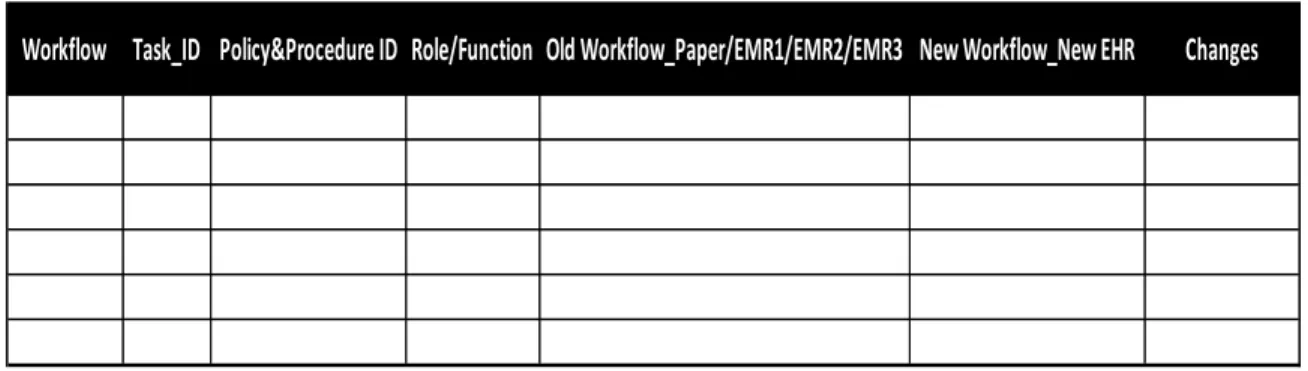
Discussion. A cognitive walkthrough is a task-oriented method for evaluating the usability of health information systems (Khajouei et al., 2016). This approach was used for the purpose of comparing specific tasks and analyzing changes between the old and current workflows in the ED and patient care areas. The team conducted a series of meetings to identify and analyze the steps within the workflows using the process maps as a guide. During the cognitive walkthrough meetings, Microsoft Excel spreadsheets were used to document and organize data for analysis. The columns within the
spreadsheet were formatted to encompass the tasks, policy and procedure, role/function, steps, old workflow (using paper/EMR1/EMR2/EMR3), new EHR, and changes. Figure 3 presents the cognitive walkthrough template showing these data points.
Workflow Task_ID Policy&Procedure ID Role/Function Old Workflow_Paper/EMR1/EMR2/EMR3 New Workflow_New EHR Changes
Figure 3. Cognitive walkthrough template.
Evaluation. The team compared and analyzed the old workflows that include the use of paper and three clinical information systems and the new workflows associated with the new EHR. After a series of cognitive walkthrough meetings, the team
summarized the significant workflow changes. The project team accepted the summary.
Data. None
Recommendations. The team recommended that the eLearning module should address the significant workflow changes and should focus on new tasks such as completing the ED treatment plan and the inpatient interdisciplinary care planning including the integration of clinical practice guidelines.
Outcome 3. eLearning Module
Discussion. The course content for eLearning module was developed based on the process maps and cognitive walkthrough summary. The educational curriculum plan was developed which included the learning objectives, content outline, evidence, method of presentation, and method of evaluation. Instructional strategies, such as gamification, scenario-based learning, and simulation, were incorporated into the eLearning. The eLearning module was developed using Adobe Spark and Adobe Captivate authoring
tools to create the video, interactive tab templates, game-based quiz, scenarios, and EHR simulation.
The eLearning module presents the significant workflow changes and facilitates practice in completing EHR tasks through simulation. The module begins with an introduction video about the HITECH Act, Meaningful Use, and workflow changes resulting from EHR adoption. Next, the learner is directed to a set of slides describing the significant workflow changes in the ED and inpatient care areas. Learners view the slides at their own pace by clicking the tabs to proceed to the next slide. Afterwards, the learner completes a 12-item game-based quiz that provides real-time self-assessment of progress. Learners earn points for each correct answer. Immediate feedback is provided for
incorrect answers. Multiple attempts are allowed.
The next part of the module branches into two role-specific paths. The learner who works in the ED selects the “ED treatment plan” and completes the simulation for ED treatment plan. The learner who works in the inpatient care areas selects the “Care Plan” and completes the simulation for the inpatient care plan. Workflow-focused scenarios were presented for each path to guide the simulation. The scenarios are customized to the learner’s role and care setting. These scenarios were reviewed and approved by the project team. The EHR screens and features were replicated to enhance learning while providing a safe and realistic environment. Simple hints and immediate feedback are provided to describe next actions or steps in the simulated EHR. Multiple attempts are allowed. Completion of the eLearning module and course evaluation takes approximately 15 minutes.
The eLearning module was published into the LMS. The senior leadership and nursing research council have provided the names and work email addresses of potential RN participants from the ED and inpatient care areas. The eLearning module was assigned and an email notification was sent automatically to 30 candidates. The pilot implementation ran for 3 weeks in collaboration with the EHR training team and EHR director of nursing.
Evaluation. The team reviewed and approved the curriculum plan and eLearning design. The team conducted ongoing reviews and revisions. Prior to publishing, the EHR director of nursing, clinical faculty, instructional designers, and eLearning expert
conducted a final review and approved the module.
Data. Upon completion of the eLearning module, the participants provided immediate feedback on the learning experience through the course evaluation embedded in the LMS. In collaboration with the eLearning expert, I ran weekly reports from the LMS until saturation of information was achieved. I was able to obtain adequate
information in three weeks from 15 RN participants. The overall response rate was 50%. All participants provided responses for each item. The course evaluation includes a seven-item Likert scale followed by a few closed-ended and open-ended questions. The Likert scale had a six-point rating scale, from 1 (strongly disagree) to 6 (strongly agree). The mean scores for each question ranged from 5.13 to 5.40. Table 2 lists the Likert questions and corresponding mean scores.
Table 2
Mean Respondent Scores on 6-Point Likert Scale
Question Question Mean score 1 Course had clearly stated objectives. 5.13 2 Course content objectives were related to
the purpose/goals of the activity. 5.33 3
Course content organized in an orderly manner and contributed to the achievement of the learning objectives.
5.27
4
The technology used was effective and appropriate for the delivery of course content.
5.40
5 The course content was effective. 5.27 6 Delivery method was appropriate for the
course content. 5.27 7 Course content was valuable, informative
and met my expectations. 5.27
Following the Likert items, the participants were asked about their level of
understanding with the course content before and after completing the eLearning module. One-third of the respondents indicated that their level of understanding increased after completing the eLearning module while two-thirds of the respondents indicated that there was no change. Seventy-three percent of the respondents expressed that they would recommend the eLearning module to others. Some of them commented that the
eLearning module was “good” and “helpful.” Five of the respondents indicated that they had gained a basic understanding, five indicated that their knowledge and skills
to their day-day job function and productivity. Table 3 lists the closed-ended questions and response options.
Table 3
Closed-ended Questions
Question
number Question
8
Before completing this course activity, my level of understanding with this course content was:
Novice/Beginner
Competent/Proficient
Expert
9
After completing this course activity, my level of understanding with this course content was:
Novice/Beginner
Competent/Proficient
Expert
10 I would recommend this course to others:
11
As a result of this continuing e-learning activity:
I gained a basic understanding of the elements of course activity.
I have gained in an increase of knowledge and skills from this course activity.
I will be able to apply the elements of the training to my day-day job function and productivity.
I remain unclear about elements of the course activity.
Table 4 presents detailed responses to the open-ended questions. Overall, the feedback from the participants was positive.