Lincoln
University
Digital
Dissertation
Copyright
Statement
The
digital
copy
of
this
dissertation
is
protected
by
the
Copyright
Act
1994
(New
Zealand).
This
dissertation
may
be
consulted
by
you,
provided
you
comply
with
the
provisions
of
the
Act
and
the
following
conditions
of
use:
you
will
use
the
copy
only
for
the
purposes
of
research
or
private
study
you
will
recognise
the
author's
right
to
be
identified
as
the
author
of
the
dissertation
and
due
acknowledgement
will
be
made
to
the
author
where
appropriate
you
will
obtain
the
author's
permission
before
publishing
any
material
from
the
dissertation.
The Evolution of a State-funded Subdivision –
A Case Study: Aranui and Wainoni
A dissertation
submitted in partial fulfilment
of the requirements for the Degree of
Master of Environmental Policy
at
Lincoln University
by
Felicity Boyd
Lincoln University
2011
ii
Abstract of a dissertation submitted in partial fulfilment of the
requirements for the Degree of Master of Environmental Policy.
Abstract
The Evolution of a State-funded Subdivision –
A Case Study: Aranui and Wainoni
by
Felicity Boyd
It is no secret that there is a problem with the suburb of Aranui. Developed in the 1950s, Aranui and neighbouring Wainoni are an example of the large-scale, state-funded
subdivisions of the time, yet, unlike similar developments in the North Island, they have received little to no attention from researchers. In light of the recent Canterbury
earthquakes, this dissertation aims to trace the evolution of these suburbs until the 1970s and act as the first stage of a more comprehensive review of state housing and the
Aranui/Wainoni area. By critically reviewing existing literature on state housing and housing policy in New Zealand, as well as undertaking archival research, this dissertation addresses the international influences on state housing in New Zealand generally and the development of the Aranui and Wainoni area more specifically in order to provide a foundation for
answering the question, "What went so wrong?"
iii
Acknowledgements
I am very grateful for the guidance of Dr Roy Montgomery as my supervisor. His knowledge and expertise has been invaluable in shaping the development of this research and his willingness to meet regularly, provide constructive feedback and respond to my many queries has been much appreciated.
The staff at the Wellington office of Archives New Zealand were particularly helpful throughout the time I spent in their reading room. Being new to archival research, I
appreciate the staff taking time to explain the processes to me and provide advice on finding relevant material.
Finally I would like to thank my partner, Scott Russell, for his encouragement and support throughout this process.
iv
Table of Contents
Abstract ... ii Acknowledgements ... iii Table of Contents ... iv List of Figures ... vi Chapter 1 Introduction ... 71.1 Rationale for the Research 8 1.2 Research Aim 9 1.3 Research Objectives 9 1.4 Methodology 10 1.5 Limitations 10 Chapter 2 International Housing Policy ... 12
2.1 Introduction 12 2.2 Public Housing in Britain 12 2.2.1 Slums and Garden Cities 12 2.2.2 World Wars and Local Authorities 1920-1945 13 2.2.3 Post-war Redevelopment from 1945 15 2.2.4 New Towns 16 2.3 Public Housing in the United States of America 17 2.3.1 Houses for War Workers 17 2.3.2 Slum Clearance 18 2.3.3 The Move to Higher Density 19 2.3.4 Criticisms of Public Housing 20 2.3.5 Levittown 20 2.4 Summary 21 Chapter 3 New Zealand Housing Policies: An Historical Overview ... 23
3.1 Introduction 23
3.2 The Lead-up to State Housing 23
3.3 The First State Houses 1891-1934 24
3.3.1 The Workers’ Dwellings Act 1905 24
3.3.2 Housing Design 24
3.3.3 State Financing from 1906 26
3.3.4 Urban Planning: A Fledgling Profession 27
3.4 The Height of Popularity 1936-1949 28
3.4.1 Housing Crisis 28
3.4.2 The State Housing Programme 29
3.4.3 Housing Design 30
3.4.4 Problems with the State Housing Programme 34
3.4.5 From the State Advances Corporation to the Ministry of Works 34
3.4.6 Rent Inequality 35
3.5 Changing Attitudes Towards State Housing 1949-1960 35
3.5.1 The Desire for Change 35
3.5.2 Reducing Demand 36
3.5.3 The Growth of the Planning Profession 36
v
3.5.5 Housing Design 38
3.5.6 Changes in Political Support 38
3.5.7 The Multi-Unit and Duplexes 39
3.5.8 Criticism of Multi-Units and Duplexes 40
3.5.9 Attitudes to State Housing 40
3.6 Winding up the Scheme 1960-1970 41
3.6.1 The Downgrading of the Housing Division 42
3.6.2 Single-class neighbourhoods 42
3.6.3 Large-scale Development and Medium Density Housing 43
3.7 Summary 43
Chapter 4 The Naenae Development ... 44
4.1 Introduction 44
4.2 The Hutt Valley Scheme 44
4.3 International Influences 45
4.3.1 American and British Influences 45
4.3.2 Radburn 46
4.4 Plans for Naenae 46
4.5 The Reality of Naenae 48
4.6 Summary 49
Chapter 5 A Case Study: Aranui and Wainoni ... 50
5.1 Introduction 50
5.2 History of the Area 51
5.2.1 The Surrounding Environment 51
5.2.2 Urban Development in Aranui and Wainoni 52
5.3 Land Purchase 54
5.3.1 Cook’s First Offer 1939 54
5.3.2 Cook’s Second Offer 1951 56
5.3.3 Cook’s Resistance 56
5.4 Development and Design 59
5.4.1 Medium Density Housing: Multi-untis and Duplexes 60
5.4.2 The Siting of Housing Designs 64
5.4.3 The Group Building Scheme 67
5.4.4 The Reserve and Shopping Centre 68
5.5 Early Issues 70
5.5.1 Multi-Units and Duplexes 70
5.5.2 Landscaping 72
5.6 Earthquake Implications 74
5.7 Summary 76
Chapter 6 Conclusion... 77
6.1 State Housing in New Zealand 77
6.2 Aranui and Wainoni 78
6.3 Future Research 79
6.3.1 American Influences 79
6.3.2 Aranui and Wainoni 80
References ... 81 Appendix A ... 89 Appendix B ... 90
vi
List of Figures
Figure 1: Workers’ dwellings on Patrick Street, Petone ... 25
Figure 2: Hurst Seager’s ‘Design No 3’ in the Heretaunga Settlement, 1906 ... 26
Figure 3: Prime Minister Savage carrying furniture into the first state house, Wellington 1937 ... 31
Figure 4: Aerial view of Oranga, part of the Onehunga subdivision, 1947 ... 32
Figure 5: Plan for Workers’ Dwelling 1900 ... 33
Figure 6: Plan for State House 1938 ... 33
Figure 7: Multi-units in Porirua East in the 1950s ... 39
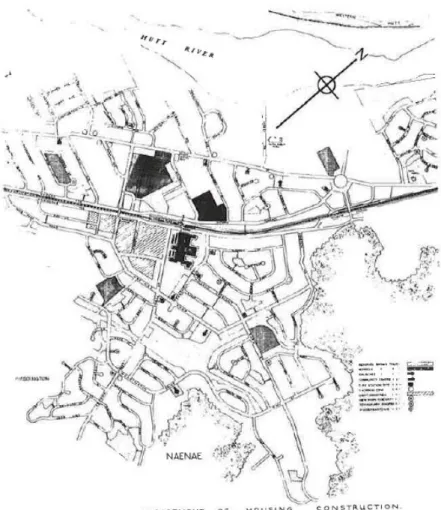
Figure 8: Plans for Naenae from the Department of Housing Construction ... 47
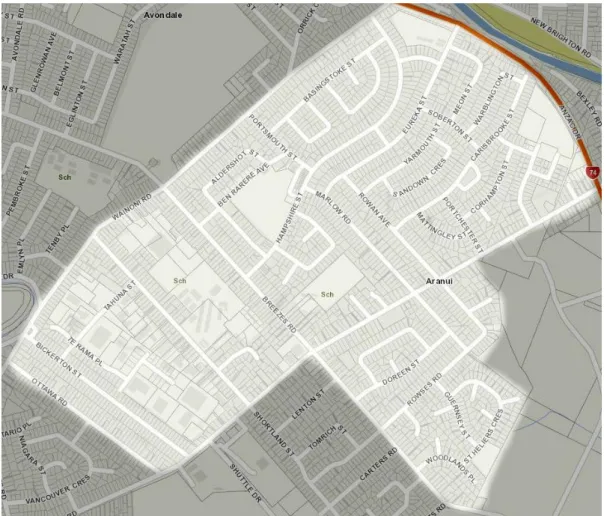
Figure 9: Aranui and Wainoni area for the purposes of this research ... 51
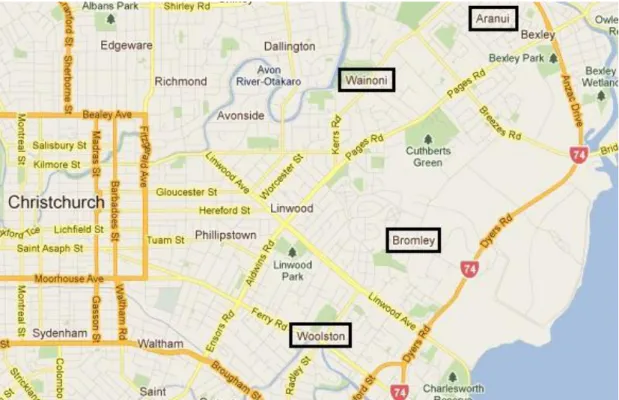
Figure 10: Map showing Bromley and Woolston in relation to Aranui and Wainoni ... 52
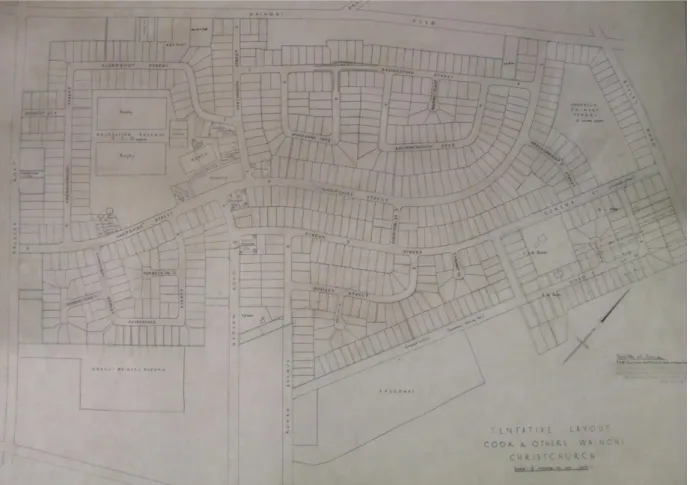
Figure 11: Tentative scheme plan for Wainoni Block 1954 ... 60
Figure 12: Proposed Portsmouth/Hampshire multi-units 1956 ... 62
Figure 13: Multi-units on Hampshire Street 1957 ... 63
Figure 14: Areas zoned and to be zoned ‘Residential B’ 1958 ... 64
Figure 15: Section of Mattingley Street showing proposed housing designs ... 65
Figure 16: Plan for duplexes on Portsmouth Street ... 66
Figure 17: Newly constructed duplexes on Portsmouth Street 1960... 67
Figure 18: Group Building Scheme sections in Aranui ... 68
Figure 19: Church sites in Aranui c.1958 ... 69
Figure 20: Wind damage and sand erosion in Hampshire Street 1963 ... 72
Figure 21: Damage at the corner of Portchester Street and Pages Road ... 74
Figure 22: Roadworks in front of older style duplexes, Rowan Avenue ... 74
Figure 23: Row of abandoned houses on the damaged Aldershot Street ... 75
7
Chapter 1
Introduction
A search of internet-based social media (Appendix 1) highlights what most
Christchurch residents already know: there is a problem with the suburb of Aranui. Aranui and the neighbouring suburb of Wainoni, located on the eastern side of Christchurch, were developed simultaneously during the mid-twentieth century by the New Zealand Government as part of a national state housing scheme. Since then, the area has become increasingly deprived, “materially, socially, culturally and spiritually” (Scanlon, 2000, p. 1). In 2000, the situation in Aranui was sufficiently deplorable to merit attention from central government in the form of the Aranui
Community Renewal Project, the first scheme of its kind in New Zealand that aimed
to address the issues present in Aranui (Ministry for the Environment, 2011). In a national study of well-being entitled Degrees of Deprivation in New Zealand
undertaken in 2000, Aranui was one of three suburbs in Christchurch ranked at the bottom of a national scale of deprivation (Crampton, Salmond, Kirkpatrick,
Scarborough, & Skelly, 2000).
With Housing New Zealand announcing recently that more than a thousand new state houses would be built in the Auckland region, it is timely to revisit unpopular state housing areas such as Aranui and Wainoni in more depth than has been awarded in the past. This is particularly important in Christchurch following the devastating series of earthquakes, particularly the February 22 earthquake.
Although the land in Aranui and Wainoni has been largely zoned ‘green’ (suitable for rebuilding), there has been significant damage to houses and services infrastructure in the area. There will undoubtedly be changes to the physical structure of Aranui and Wainoni. In order to avoid the pitfalls of the past, it is imperative that these areas are critically examined now before the rebuilding process begins.
While answering questions about the state of affairs in Aranui and Wainoni is largely outside the scope of this dissertation, it is hoped that through critical examination of existing literature and a consolidation of fragmented materials on the development
8
of the area a foundation can be laid for further analysis. While the relatively few previous studies on state housing have tended to focus upon housing forms and styles and sociological factors, this dissertation seeks to address these aspects as well as an environment, but not solely geographic, dimension in understanding why Aranui and Wainoni have fared so poorly as liveable environments. Seen as
experiments in town planning, the evolution of state-funded subdivisions such as Aranui and Wainoni can inform future development. To provide a suitable context for the discussion of Aranui and Wainoni area, a discussion of housing policies in the twentieth century in Great Britain and the United States will begin this dissertation. Following this, a more detailed examination of the existing literature surrounding the New Zealand situation in the twentieth century will be provided, addressing housing policy as well as the social and political contexts. As is considered the orthodox approach in such case studies, Naenae, an example of one of the larger, more widely recognised and researched state-funded subdivisions, will be discussed in order to provide a point of comparison. To begin the examination of Aranui and Wainoni, a brief history of the area and the details surrounding the purchase of land for the subdivision will first be provided, followed by the development of the area
throughout the 1950s and 1960s as well as a discussion of the various design aspects of the area, including the shopping centre and the construction of multi-units and duplexes. The issues of multi-units and duplexes, and problems with landscaping are outlined to reflect the early dissatisfaction with Aranui and Wainoni. To conclude, I will suggest a number of reasons for the unpopularity of Aranui and Wainoni based on the discussions in chapter five. I will also suggest two areas which require further research: the influence of American thinking on New Zealand planning, and the evolution of Aranui and Wainoni beyond 1970.
1.1
Rationale for the Research
The importance of the twentieth century state housing programme to the development of New Zealand society is well-established in social histories of the country. Social histories, such as Schrader’s (2005) We Call it Home and Ferguson’s (1994) Building the New Zealand Dream, provide accurate and well-written accounts of the development of the state housing programme from the early twentieth
9
century. While these are informative accounts, there is a distinct lack of discussion regarding the planning of state-housing areas. A number of state housing areas around New Zealand have been studied by academics, including the Sheriff Block in Gisborne (McCallum, 1975) and Naenae (Schrader, 1993b). This dissertation seeks to follow a similar approach to that of McCallum and Schrader by undertaking a
preliminary investigation into the evolution of Aranui and Wainoni until 1970, an area which has been largely neglected by academic research.
1.2
Research Aim
At the present time, information regarding the planning and development history of the Aranui and Wainoni area is fragmented and is distributed throughout a range of archives and libraries across the country. This research, first and foremost, aims to bring this information together into one consolidated resource. It is hoped that this consolidation will provide a framework for further analysis in this area in the future. Explanations for the area’s grim reputation cannot begin to be discussed without first understanding how and why the area was planned and developed.
1.3
Research Objectives
The objectives of this research are:
To critically examine the existing literature on state housing during the twentieth century.
To describe and explain the development and evolution of the state-funded
subdivision of the Aranui and Wainoni area.
To discuss this evolution in the context of the broader State housing history during the twentieth century.
To consolidate existing material on Aranui and Wainoni in order to provide a foundation for further analysis.
10
1.4
Methodology
This research is of an investigative nature and primarily aims to draw together information which is currently fragmented and widely distributed through a range of various sources. As such, and considering the historical nature of the topic, the research methods undertaken will consist of a review of historical and archived material in both Christchurch and Wellington. In order to explore international and New Zealand housing policy as well as the broader social and political context of New Zealand during the twentieth century, a review of existing literature will be undertaken. The development of Naenae during the 1940s and 1950s has been well-researched, particularly by historian Ben Schrader (1993a; 1996). To provide a comparative study, an overview of the Naenae development will be provided. Undertaking primary research by way of interviews with local and head office planning staff associated was considered as an additional method of gathering information. However, there were a number of reasons for choosing not to pursue this particular method. Primarily, the process of planning and developing of state housing and state subdivisions is largely an “unauthored” function of government, making it difficult to trace key decision-makers or sources for ideas beyond the well-documented first phase of the 1930s and 1940s, before Aranui and Wainoni were developed. Any relevant staff who were able to be identified would be likely well into their retirements, if not deceased. The limitations inherent in the dissertation scale of research meant that this method was not considered practicable.
1.5
Limitations
The most significant limitation faced during this research was the aftermath of the Canterbury earthquakes, particularly the devastating event which occurred on 22 February 2011. As all of my immediate family are located within the Eastern suburbs of Christchurch, and most suffered significant damage to their homes and basic services, the aftermath of the earthquake provided personally trying circumstances within which to conduct research.
The Lincoln campus was closed for the first two weeks of the university year, shortening the timeframe for this research. Additionally, a number of important
11
resources closed for longer periods following the earthquake. The Christchurch office of Archives New Zealand, where most of the archival material relating to the development of Aranui and Wainoni is held, closed following the February 22 earthquake and only reopened with limited access from August 22. Gaining access to archival material remains a difficult process and, as a result, the financial cost of requesting archival material has risen significantly. I was fortunate that my
supervisor, Dr Roy Montgomery, had previously visited and photographed many of the relevant archived files which make up the bulk of this research, however being unable to fully utilise the Christchurch office was a considerable limitation to the depth and breadth of this research.
The closures of and resultant limited access to the libraries at the University of Canterbury restricted my access to relevant literature, requiring reliance on the (sometimes lengthy) interloan process. Additionally, the closure of the Christchurch City Council central library (which, as of 5 November 2011, has still yet to reopen due to its location within the red zone) had similar effects on my research.
12
Chapter 2
International Housing Policy
2.1
Introduction
Development of urban areas and planning in New Zealand occurred within a wider international context. Particularly in the late nineteenth century and the first half of the twentieth century, countries around the world were reacting to the effects of industrialisation, the Great Depression and two World Wars. This resulted in a trend in Western states towards provision for public (or social) housing. New Zealand was influenced by ideas from a range of countries, however existing literature suggests that the strongest influences during this period were Great Britain and the United States of America (Miller, 2002; Cameron, 1970; Schrader, 1993). This chapter outlines the development of public housing in the United States and Great Britain during the late nineteenth and twentieth centuries until 1950.
2.2
Public Housing in Britain
2.2.1 Slums and Garden CitiesAs a result of industrialisation, urban areas in Britain became increasing
overcrowded and unsanitary in the nineteenth century. Rural residents moved to cities in search of employment at such rates that the infrastructure of cities could not keep up, leading to squalid living conditions and the development of slum areas. Growing concern about public health issues within urban areas led to the formal beginning of a town planning profession in Britain (Miller, 2002). Additionally, the issues surrounding inner-city slums brought health and housing issues to the centre of social and political thinking at the time (Shapely, 2008).
One notable response to the urban ills of British cities came from Ebenezer Howard in the late nineteenth century. Howard’s publication Tomorrow: A Peaceful Path to
Real Reform (1898) influenced professionals involved in urban design and
management world-wide. Howard’s solution to poor living conditions was to
13
Collective ownership would ensure that growth of communities was orderly, and profits from rentals would be used to finance the city’s infrastructure and welfare services (Schrader, 1993a). The first Garden City was built at Letchworth in 1903, however the development failed to meet designers’ expectations (Schrader, 1993a). The designers of Letchworth, Raymond Unwin and Barry Parker, were also involved in smaller-scale versions of Garden Cities, known as Garden Suburbs (Schrader, 1993a). While the reality of Garden Cities never matched what the idea proposed in theory, the influence of these ideas was so great that, at the start of the twentieth century, urban planning was largely synonymous with Garden Cities in the Western world and the principles of Howard’s theory contributed to the planning and design of urban areas throughout the world.
2.2.2 World Wars and Local Authorities 1920-1945
From 1890, British local authorities were increasingly granted greater powers to remove slum areas in cities and to refurbish or completely replace existing older homes (Shapely, 2008). Local authorities around the country undertook small housing development projects in the early twentieth century, but a more focused, comprehensive approach was not established until 1919 with the introduction of the Housing and Town Planning Act. With the return of servicemen after World War I, demand for housing increased rapidly throughout Britain. The 1919 Act established the construction of subsidised, low-cost housing as a national responsibility (United Kingdom Parliament, 2011). Through the Act, local authorities were responsible for developing rental housing accommodation for working-class people. The Act contained high targets for new houses to be constructed which ultimately proved too high, prompting review of housing policies in the 1920s (Shapely, 2008).
In response to acute housing shortages in the post-war years, the Housing Act 1924 allowed for substantial grants to local authorities to assist in housing development (United Kingdom Parliament, 2011). The housing responsibilities of local authorities, supported financially by central government, continued to grow throughout the 1920s. While new housing areas outside the traditional boundaries of British towns provided some housing relief for the working classes, slums remained an issue of
14
concern in the 1920s (Shapely, 2008). In order to address the growing problem of inner-city slums, the Housing Act 1930 was passed which required local authorities to clear slum areas (United Kingdom Parliament, 2011). This Act contributed to more slum clearance than had ever previously occurred, while also providing for construction of more new housing (United Kingdom Parliament, 2011).
During the 1930s, the focus of both central government and local authorities was on clearing slum areas in order to improve the quality of British urban areas, and
providing public housing for working class citizens. As a result of the Acts of the 1920s and 1930s, by 1935 an estimated 580,000 houses had been built yet demand continued to grow (Shapely, 2008). By 1939, the Housing Act 1930 had contributed to the clearing of an estimated 245,000 houses around Britain, however predictions suggested a further 472,000 still urgently required demolition (Shapely, 2008). Both the clearance of slums and the building of new houses meant that the physical fabric of Britain’s urban areas underwent significant change in the inter-war years. Social surveys carried out in the inter-war years showed that new houses were far superior in quality to older dwellings and the cottage design adopted by local authorities was popular with tenants (Shapely, 2008). Perhaps most significantly, tenants were no longer at the mercy of private landlords, known for exploitative management practices (Shapely, 2008). Through the construction and tenanting of new houses built by local authorities, tenants gained higher living standards and basic rights (Shapely, 2008).
Housing construction slowed considerably in the early 1940s with the beginning of World War II in 1939. During World War II, housing policy continued to be discussed by central government and came to include provision for a very large building
programme which would contribute to the replacement of older dwellings in cities as well as providing employment for returning servicemen (Malpass, 2004). Housing policy in this period outlined that while early stages would rely on construction of houses by local authorities, over time this would return to pre-war patterns of private enterprise constructing the majority of houses (Malpass, 2004). This approach to housing policy was founded on the view that public housing would underpin the housing market rather than compete with it by providing a residual
15
service (Malpass, 2004). In practice, this resulted in a strong focus on local authorities providing the majority of new houses for a far longer period than was predicted during the war years (Malpass, 2004).
2.2.3 Post-war Redevelopment from 1945
Despite the nationalisation of industries such as rail and road transport and steel production, housing was left largely to the private rental sector and large house construction companies (Malpass, 2004). The post-war housing programme focused on the state nursing the construction industry through the difficult years
immediately following the conclusion of the war (Malpass, 2004). One of the most considerable problems facing the government at this time was bomb damage as a result of the war. Additionally, the prevalence of slums in cities remained an issue of concern, but materials and labour were in short supply (Shapely, 2008). One method for moving people out of slums and into higher quality, local authority-built housing came in the form of the New Towns Act 1946. The Act introduced a new form of planned community: New Towns, discussed further below in section 2.3.4.
In 1951 the Conservative Government took office and announced a target of building 300,000 houses per year with a clear emphasis on increasing the capacity of the private construction sector (Shapely, 2008). Figures for local authority-built housing construction reached their peak in 1953 before begining to decline (Malpass, 2004). Local authorities were advised in 1954 to refocus on slum clearance and subsidies for newly finished houses constructed by local authorities were reduced by 17.4%, despite continuing inflation and rising costs in building materials (Malpass, 2004). The government’s desire to push housing construction back into the private sector was realised as the 1950s progressed. By 1959 the number of houses built by local authorities had dropped from 78 per cent to 43 per cent of the total number of houses built (Malpass, 2004). The changes to housing policy in 1954 resulted in housing moving from a predominantly state-funded model to a more market-based system. Although at a reduced level in comparison to the post-war years, local authorities continued to construct a significant amount of houses throughout the late 1950s and 1960s. Local authorities directed their efforts into slum clearance, an
16
approach that was emphasised by central government in the late 1950s and early 1960s.
As Minister for Housing and Local Government in the early 1960s, Keith Joseph amended the existing subsidy scheme to encourage local authorities to implement higher density forms of housing including tower blocks, maisonettes and multi-deck access flats (Shapely, 2008). These were encouraged largely as they were seen to be quick and cost-effective solutions to the decay in inner-city areas, however this change was not welcomed by tenants. While some local authorities such as
Liverpool and London had a long history of building higher density dwellings, others were “decidedly cool to the new concrete developments” and continued to prefer traditional cottages (Shapely, 2008). Between 1955 and 1975 an estimated 440,000 higher density flats were built, predominantly in urban areas and tenanted by former residents of slum clearance areas (Shapely, 2008). Poor construction plagued the development of such blocks, with a number of expensive and dangerous faults with buildings emerging in the mid-1960s. The low quality of workmanship and well-publicised faults with such buildings continued to plague local authorities during the rest of the twentieth century.
2.2.4 New Towns
Following World War II, local authorities had difficulty with land availability and the associated high prices of land, particularly within existing urban areas (Shapely, 2008). At the same time, local authorities needed to move large numbers of people out of slum areas in order to clear these. The New Towns Act 1946 proposed a method of undertaking large-scale developments for housing: New Towns. The Act allowed the government to designate large areas of land for housing and set up government-funded bodies to oversee the development of the towns, of which there came to be nearly thirty around Britain (Malpass, 2004). The New Towns were an extension of Howard’s Garden City idea and focused on developing land outside traditional urban borders for large numbers of people relocated out of slums
17
to provide an alternative to piecemeal suburban development on the fringes of urban areas.
There are three distinct phases of New Towns. The first phase, between 1946 and 1950 reflected Howard’s garden City principles and split areas of residential
development into neighbourhood units to promote community spirit (Cullingworth & Nadin, 2006). The second phase, from the late 1950s to the early 1960s,
abandoned the neighbourhood unit concept and focused largely on incorporating vehicles into the planning of the areas (Cullingworth & Nadin, 2006). The final phase occurred in the late 1960s and was focused predominantly on allowing for increased growth as a result of the rapid expansion of suburban areas (Cullingworth & Nadin, 2006). With changes in the political agenda, and the resolution of the housing crises, New Towns, and public housing more generally, received significantly less attention from governments from the 1970s.
2.3
Public Housing in the United States of America
2.3.1 Houses for War WorkersSimilarly to Great Britain, poverty and poor standards of living were issues of considerable concern for the government in the United States at the end of the nineteenth century (Schrader, 1993b). Despite the deteriorating conditions of many inner-city areas, it was not until after World War I that these issues began to be addressed by the government. At the conclusion of the war the United States faced a significant housing shortage. The economy of the time posed a significant problem for those wishing to purchase or rent houses, with booms and collapses occurring in the real estate market and high residential mortgage debts (Wright, 1981).
Herbert Hoover, Secretary of Commerce, first began coordinating a programme to address the housing shortage and the weakness of the construction industry in 1920 (Wright, 1981). When he entered office the following year, this programme became government policy and the Division of Building and Housing was established (Wright, 1981). The focus of the government was primarily in stimulating the construction industry by supporting mass production and year-round construction. Additionally, the Department of Labour promoted home ownership through the sale of
federally-18
funded houses to war workers (Wright, 1981). As a result, the government began to undertake development of subdivisions at low to moderate cost (Wright, 1981). Perhaps due to the availability of land in the United States, the focus of the government was the provision of detached, single unit dwellings for families. 2.3.2 Slum Clearance
By the 1930s, federal government was responsible for a significant portion of housing in the United States. In the process, the government had strengthened the construction industry and endorsed home-financing institutions through their housing policy (Wright, 1981). Upon coming into office in 1933, President Franklin Roosevelt cautiously supported federal programmes to clear slums and build houses in both cities and in the countryside (Wright, 1981). The Public Works
Administration (PWA) was established in 1933 and directed to undertake slum clearance and construction of low-rent public housing in cities. The PWA began these activities within the year, and by 1938 was responsible for clearing over 10,000 substandard houses and building an estimated 22,000 new housing units (Wright, 1981).
States and municipalities, in addition to the federal government, also had the right to purchase and clear substandard properties. PWA officials set up local housing authorities that were in charge of deciding where public housing should be located and who should gain access to such housing (Wright, 1981). Although it was intended that construction be of low-rent public housing, PWA housing in practice was aimed towards the so-called ‘deserving poor’ – people with steady, moderate incomes who had been negatively impacted by the Great Depression (Wright, 1981). Despite the focus on clearing slum areas, there was no requirement that people displaced by slum clearance were housed in PWA housing and, in fact, most could not have afforded the PWA rents (Jackson, 1985). This led to large displacement of residents as increasing numbers of slums were cleared. The PWA developments received considerable criticism, largely from groups who viewed the government’s involvement in housing provision as hurting private construction companies. Criticisms were also levelled at the design of PWA housing. Houses were built to a
19
very high standard, higher than most private housing, which led to claims that public housing was so appealing that the desire of Americans to purchase their own homes was diminishing (Wright, 1981).
2.3.3 The Move to Higher Density
In 1934 the National Housing Act was passed which set up a public housing programme as well as a new agency, the Federal Housing Administration (FHA) to stimulate the private market (Jackson, 1985). With the outbreak of World War II, housing construction budgets were redirected towards providing dwellings for defence workers and their families (Wright, 1981). With around ten million
Americans discharged from the armed forces following the conclusion of the war in 1945, housing quickly became scarce (Wright, 1981). As a result, the Housing Act 1949 was passed which contained a range of provisions to address the housing shortages including federal financing of slum clearance and increasing federal financing for the purpose of building over 800,000 public housing units (Jackson, 1985). The Act included provision for the construction of higher density apartment blocks, however construction was quickly criticised for being ‘shoddy’ and, in some cases, dangerous (Wright, 1981). At the end of the 1940s, building firm Levitt and Sons began to build planned communities named Levittown in various locations around New York and Illinois, discussed further in section 2.3.2.
Despite regulations stating public housing was intended for the very poor, public housing authorities exercised considerable discretion in tenanting dwellings in the 1940s, favouring traditional nuclear families (Wright, 1981). In the 1950s the quality of public housing began to decline, with room sizes decreased and densities
increased (Wright, 1981). Former minimum standards became new maximum standards (Jackson, 1985). With large numbers of poor Americans left in difficult circumstances due to the clearing of slums, public housing in the 1950s began to change from providing high quality suburban housing for families on moderate incomes to providing low-cost urban housing (largely in high density dwellings) to the poor (Schrader, 2006). Standardisation led to the construction of high density, monotonous public housing with an institutional appearance (Wright, 1981). As
20
black Americans, disproportionately represented in poor communities, began to move into public housing areas, white Americans moved out (Schrader, 2006). The status of public housing fell, particularly among middle and working class Americans, who favoured private construction of houses, and homeownership over rental accommodation (Schrader, 2006). As the stigma of public housing areas grew and the quality of the construction fell in the 1950s, public housing areas began to resemble the slums of earlier years.
2.3.4 Criticisms of Public Housing
Public housing areas were widely criticised in the 1960s for the standards of living apparent in the areas. As a result, the government undertook a number of investigations into urban conditions and housing problems. The National Commission on Urban Problems labelled public housing as inadequate and anti-community, and blamed the development of high density apartment blocks and towers (Wright, 1981). This report, among others from the government,
recommended a return to larger units, a decrease in densities and a policy of ‘scattering’ public housing to assist integration between subsidised and non-subsidised residents (Wright, 1981). Political issues such as tenant selection and management were notably absent from such reports. By the conclusion of the 1960s, public housing areas had attracted a negative stigma that seemed insurmountable.
2.3.5 Levittown
Levitt and Sons became the most well-known building company in the post-war years (Wright, 1981). Throughout the 1930s, Abraham Levitt and his sons, William and Alfred, developed their methods of construction so that they were able to build large numbers of houses on far shorter timeframes than traditional construction allowed. In 1941, Levitt and Sons was granted a government contract to construct 2,350 war workers’ homes in Virginia (Jackson, 1985). The contract was a learning curve for the builders who, over the construction period, developed methods for laying dozens of concrete foundations per day and preassembling walls and roofs
21
(Jackson, 1985). Levitt and Sons received further contracts during the mid-1940s which allowed them to fine tune their construction techniques.
In 1947 the company purchased 4,000 acres (1,618 hectares) of land outside New York which became the site of the first Levittown (Jackson, 1985). The method of construction practiced reflected Fordist principles: the builders developed a 27 step procedure, and crews of workers were trained to do one specific job to increase efficiency and lower the number of highly skilled workers required (Jackson, 1985). At the peak of production, more than thirty houses were constructed per day (Jackson, 1985). Levittown came to accommodate 17,400 houses and 82,000 residents and was the largest housing development to have ever been constructed by one building company (Jackson, 1985). Further Levittowns were built in
Philadelphia and New Jersey and were hugely successful with house buyers. These extremely large developments were made possible financially through mortgage insurance from the FHA (Jackson, 1985). Reflecting Garden City principles,
Levittowns included curvilinear roading layouts, peripheral thoroughfares for traffic, reserve areas, recreation facilities, and shopping areas (Jackson, 1985). Landscaping included gardens, grassed areas, shrubs and around 40,000 fruit trees (Wright, 1981). Builders around the country adopted the methods of Levitt and Sons, while Americans rushed to purchase houses within Levittown developments.
2.4
Summary
British and American housing policy was influenced by a number of events of
international significance, namely World War I, the Great Depression and World War II. Public housing became a concern of both governments as a result of the post-war housing crises and the perceived need for slum clearance due to the deterioration in inner-city living conditions. Early housing policy provided a point of difference between the governments. The British government focused on providing housing for the urban poor, however in the United States early schemes were directed towards moderate-income families affected by the Depression. While British public housing was delegated to local authorities which were guided by national policy, in the United States the federal government became directly involved through the PWA,
22
FHA and the creation of public housing authorities. In both cases, the demand for public housing led to the development of large areas of land for planning housing communities. In Great Britain, New Towns located outside traditional urban areas provided a solution to the land availability and cost concerns of local authorities. In the United States, firms such as Levitt and Sons took advantage of government financing programmes in order to construct large-scale planned communities. As a result of growing demand, both governments began to move away from
construction of traditional single-unit dwellings to higher density buildings such as apartment blocks and towers during the 1950s. By the 1960s, higher density areas had become the subject of widespread criticism and public housing more generally became the subject of negative perceptions which proved difficult to displace in the proceeding decades.
23
Chapter 3
New Zealand Housing Policies: An Historical Overview
3.1
Introduction
State housing in New Zealand is often considered to have its beginnings in the 1930s with the First Labour Government. While this period was clearly very significant, the origins of state housing and housing policies more generally in New Zealand date back to the late nineteenth century. This chapter seeks to provide a historical overview of housing policy in New Zealand from the late nineteenth century until 1970, including the changing social, political and environmental contexts.
3.2
The Lead-up to State Housing
With the arrival of European settlers in the nineteenth century came plans for New Zealand’s urban areas, many based on existing British towns and cities. Although the extent to which these plans were adhered to varies throughout the country, there is no question that British-based urban planning arrived in New Zealand along with Edward Gibbon Wakefield and the New Zealand Company. Despite these promising beginnings, urban planning was largely overshadowed by a focus on land-use and rural areas. New Zealand was considered a “rurally derived and rooted society” which relied heavily on agriculture to support the country’s economy (Miller, 2002b, p. 447). A free market approach to city building, wide-spread urban land speculation and a lack of regulation of building activities meant that the development of urban areas was often undertaken in a laissez-faire manner (Schrader, 2005).
With only roads and railway construction administered by the Immigration and Public Works Department, and little provision for services such as rubbish removal and effluent treatment, urban areas became hot spots for diseases such as typhoid and scarlet fever (Schrader, 2005). Particularly in city centres, these urban areas became home to the ‘urban underclass’ – largely criminals and the poor. Growing concern about these ‘urban ills’ coupled with the perseverance of a small number of
24
town planning enthusiasts meant that a more comprehensive, urban-focused form of planning began to receive attention at the beginning of the twentieth century.
3.3
The First State Houses 1891-1934
3.3.1 The Workers’ Dwellings Act 1905
The First Liberal Government came into office in 1891. This instigated a change in the state’s approach to the economy away from laissez-faire towards more
pragmatic intervention by the state. The First Liberal Government, influenced by the expressed importance of the countryside to New Zealanders, favoured rural
resettlement – sending unwanted urban workers back to the country – as a method of dealing with urban problems. However they acknowledged that this would not be possible in every situation and compromised by promoting the suburban allotment (Schrader, 2005). Despite the promotion of the country as an idyllic paradise in comparison to the ills of the city, workers were reluctant to move beyond the boundaries of the city. Additionally, no improvements were being made to inner-city areas. It soon became apparent that simply providing land for workers was not enough – the state must also supply homes.
3.3.2 Housing Design
After visiting local council-built workers’ housing in London and Glasgow in the late 1890s, Prime Minister Richard Seddon returned to New Zealand with a vision of an affordable, freehold house for New Zealand workers (Fill, 1984). The introduction of the Workers’ Dwellings Bill 1905 made the Liberals the first Western government to build houses for citizens, and set the scene for years to come in New Zealand. A competition was held in order to attract the best possible designs for the new workers’ dwellings. One hundred and fifty entries were received from architects, with designs varying according to location (Ashford, 1994). Seddon believed that by providing architecturally designed, high quality housing, urban areas would become more aesthetically pleasing, which would in turn improve the health of workers (Fill, 1984). Most of the submitted designs followed one of the two domestic architecture
25
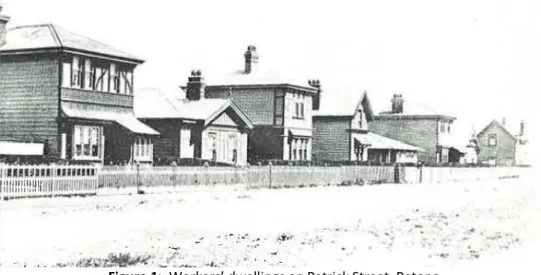
trends of the time: the traditional villa or the new bungalow style, the latter very popular with architects, as illustrated in figure 1 below.
Figure 1: Workers’ dwellings on Patrick Street, Petone Source: Fill, 1984, p. 18
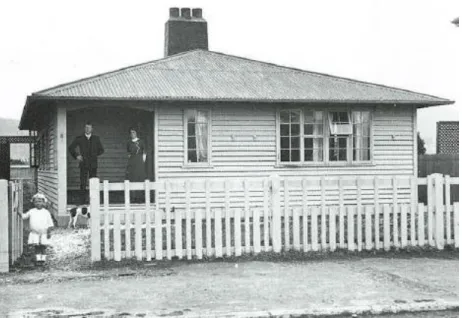
Thirty four designs were selected which all contained five rooms: living room, kitchen/dining room and three bedrooms, as well as a bathroom and generally two outbuildings – an outhouse and coal store (Fill, 1984). All designs included a central hallway, and some provided a small porch or verandah. The dwellings were to be constructed of permanent materials – wood, concrete or brick with concrete foundations – and settlements were laid out in traditional grid patterns (Fill, 1984). Designs by local architects for each area were chosen to allow architects to be directly involved in the planning and construction of their particular design. One such architect was Hurst Seager who, in collaboration with Basil Hooper, produced a plan known as ‘Design No. 3’, a bungalow style house built in the Heretaunga
Settlement at Petone in Wellington, site of the first workers’ dwellings (Ashford, 1994). While there is no traceable link between Hurst Seager’s design and the later State houses, Design No. 3 contains a number of features which may have pre-figured the later mid-twentieth century state houses, particularly the use of weatherboards and casement windows, and the basic rectangular floor plan.
26
Figure 2: Hurst Seager’s ‘Design No 3’ in the Heretaunga Settlement, 1906 Source: Fill, 1984, p. 16
Despite Seddon’s intentions, the workers’ dwellings were largely unpopular due to their distance from places of employment, high expense and the fixed, long-term nature of the lease agreements (Schrader, 2005). Workers were unimpressed, and the scheme fell flat.
3.3.3 State Financing from 1906
The Government Advances to Workers Act 1906 allowed urban workers with land to borrow up to £450 from the government in order to build their own home (Isaac & Olssen, 2000). This was followed by the Workers’ Dwellings Act 1910 which
extended the scheme further, with the state offering to build houses for landless urban workers for a deposit of just £10 (Schrader, 2005). This proved to be far more popular with workers than the failed Act of 1905.
In 1912 the Reform Government came into power and began to sell off the public housing stock. Despite the failure of the 1905 scheme, it became the starting point for debates on housing policy and state intervention for at least the next decade. As a further development to the 1910 Act, the Reform Government introduced the State Advances Act 1913 which established the State Advances Office and provided state-funded loans to workers wishing to build homes (State Advances Act 1913). In 1919 the housing Act was introduced, and became the basis for the state housing scheme which defined the mid-twentieth century.
27
The principles that underpinned the housing policies of the Liberal and Reform Governments were straightforward: the state was to cover costs without subsidising those receiving direct housing assistance, and direct housing assistance was
restricted for skilled workers and the middle class (Schrader, 2006). Guiding these policies was the vision of the suburban family home – the compromise between inner-city slums and idyllic country living. Contrary to existing circumstances, the first public housing schemes in New Zealand were aimed at providing good quality homes for workers, not to provide subsidised housing for those on low incomes. State-funded houses represented nearly half the houses being built in New Zealand by the end of the 1920s (Schrader, 2005).
3.3.4 Urban Planning: A Fledgling Profession
Urban planning in New Zealand had its legislative beginnings under the Reform Government. In 1926, Prime Minister William Massey was persuaded by a young planner-architect, Reginald Hammond, that New Zealand-specific urban planning legislation was useful and necessary; and so the Town-planning Act 1926 was introduced (Miller, 2007). This Act outlined a framework for planning for urban areas which required all boroughs with over a thousand people to prepare a plan. With only seven Royal Town Planning Institute (the professional body of Britain) members in New Zealand, and only two of these members having any formal
training, this was a daunting task (Miller, 2007). Hammond, the first New Zealander to gain a formal qualification in planning, was appointed Director of Town Planning but resigned after only a year. John Mawson, who had considerable experience in planning, took over from Hammond and remained Director of Town Planning until 1933. The Wall Street Crash of 1929 and resultant Great Depression hindered the progress of planning in New Zealand. The Town Planning Institute of New Zealand was launched on 27 February 1930 by the Minister of Internal Affairs, the portfolio responsible for planning (Miller, 2007). Despite this promising beginning, the planning profession remained largely stagnant throughout the Depression years. The Reform Government’s response to the Wall Street Crash was to immediately cut public spending, and so the building sector quickly came to a standstill. With a
28
sudden decrease in the number of state-funded houses being built, overcrowding quickly became an issue within urban areas.
3.4
The Height of Popularity 1936-1949
3.4.1 Housing CrisisShortly after coming into power in 1935, the First Labour Government announced its intention to address the housing shortage in New Zealand. After the hardship of the Depression, the First Labour Government was determined to utilise state resources in order to ensure improved standards of living for all New Zealanders. This marked an important ideological shift from that of the earlier Liberal and Reform
Governments. The First Labour Government was determined that public housing would comprise an essential part of the overall housing stock in New Zealand and placed a strong emphasis on the importance of the building industry to New
Zealand’s economy. A key figure in the development of Labour’s new state housing programme was John A Lee. When Labour came into office in 1935, Lee expected to join Cabinet, however after the pair clashed over various policies Savage did not appoint Lee to Cabinet (Olssen, 2010). Instead, he was appointed Under-Secretary of Finance, a position which did not have any legal status until the following year, signalling Savage’s mistrust of Lee. From 1936 Lee was responsible for housing, answering to Nash, Minister of Finance. Lee was determined to create a socialist housing scheme and oversaw the large-scale programme of construction which came to define the minimum standard for housing throughout New Zealand (Olssen, 2010).
Poor living conditions in inner-city areas topped the political agenda, and Minister of Finance Gordon Coates in particular became very vocal in advocating for the removal of these areas (Schrader, 2005). Coates advocated for the demolition of slum-like dwellings that were unable to be upgraded to an acceptable standard, and for the introduction of planning controls in order to prevent future recurrence of slum-like areas (Schrader, 2005). This shift signalled an end to New Zealand’s laissez-faire approach to urban planning as local and central government began to gradually expand their responsibilities to include planning during the 1930s.
29 3.4.2 The State Housing Programme
The housing policies of the First Labour Government emphasised state lending, state housing and support of the building industry. A survey on housing conditions was commenced in 1936 and revealed the poor quality of the housing stock in New Zealand and the problem of overcrowding (Ferguson, 1994). It quickly became apparent that the State Advances scheme would not solve the growing housing crisis and so in the 1936 Budget, Labour revealed that 5000 rental homes would be
constructed by the state under the Housing Act 1919 (Schrader, 2005). The
reasoning behind this decision was that the increase in housing construction would provide employment for those without jobs, while the use of New Zealand materials would stimulate local manufacturing which would, in turn, generate economic growth (Schrader, 2005). The quality of houses would increase and the state, as landlord, would provide tenants with security, similar to the rental agreements in Europe.
The State Advances Corporation was established by the State Advances Corporation Act 1936. The Act created the Housing Construction Department (HCD) within the SAC to administer the construction of new state rental houses – the construction itself was to be undertaken by private contractors through a tendering process (Archives New Zealand, 2004). Arthur Tyndall was appointed Director of the HCD, with Hammond as Town Planner and Gordon Wilson as Chief Architect. The
appointment of Hammond helped to legitimate the planning profession, bringing it firmly into the sphere of central government. The Director of the HCD reported to the Parliamentary Under-Secretary to the Minister of Finance, not to the head of the SAC. The HCD was responsible for buying suitable land for housing, and providing architectural plans for buildings. The Public Works Department was then required to prepare these sites for housing construction. After the houses were built, they were turned over to the SAC, which was responsible for administering the rental
30 3.4.3 Housing Design
According to Schrader (2005), the most widely accepted explanation for how the government originally developed plans for state houses maintains that in June 1936 Prime Minister Michael Savage, Minister of Finance Walter Nash and
Under-Secretary to the Minister of Finance John A Lee met with the New Zealand Institute of Architects (NZIA). The NZIA offered the services of its members and the
government accepted. NZIA members produced more than 400 different designs within the following months (Ferguson, 1994). These original plans focused solely on single-unit houses in suburbs. Lee had made this focus clear prior to the release of plans and explained that the “suburban-based municipal housing programmes of Sweden were better suited to New Zealand conditions than the tenement schemes of urban Britain” (Schrader, 2005, p. 36). Lee despised the English terraced housing for workers and was adamant that New Zealand’s scheme would be different: the majority of houses would be detached, individual units on sizeable sections and no two houses within a particular area would be of the same design to avoid monotony (Shaw, 2003). Lee also insisted that houses would adhere to a high standard of construction and that they would be built from New Zealand materials.
The HCD required plans for four-, five- and six-roomed houses, with the majority being five-roomed. Within each group of ten houses would be ten different house plans including elevations and materials as well as architectural design (Shaw, 2003). In a shift from the workers’ dwellings designs, the designs produced were largely in the English Cottage style. The Californian bungalow, considered the height of domestic architectural fashion during the 1920s, was beginning to decline in
popularity; however its influence on the designs of the 1930s state houses cannot be overlooked.
In 1937, the first state house was built and opened at 12 Fife Lane, Miramar, Wellington by the HCD. Prime Minister Savage was present to officially open the first state house and assisted the new tenants in shifting their furniture into the new home. A photograph of Savage carrying in a bulky wooden table (see Figure 4)
31
became a New Zealand icon, and was considered the central image of the First Labour Government’s state housing scheme.
Figure 3: Prime Minister Savage carrying furniture into the first state house, Wellington 1937 Source: Michael Joseph Savage. (1937). Alexander Turnbull Library, (File Print Collection, Box 5,
Reference Number PAColl-5800-49), Wellington.
The subdivisions designed by the First Labour Government followed a clear vision: garden suburbs dotted with a variety of cottage-like houses (Ferguson, 1994). This can be seen in suburbs such as Naenae and Onehunga, shown in Figure 4 below. Cul-de-sacs and curved streets replaced the traditional grid pattern in the belief that this would keep residential areas free from unwanted noise and danger, and abolish monotony (Firth, 1949). House designs were very popular with women in particular who felt that architects were finally designing houses with the housewife in mind. Labour aimed to create “houses that weren’t modernistic, or period, or quaint, but faced the sun and suited the climate and didn’t pretend to be anything else but good common-sense houses for New Zealanders to live in” (Schrader, 2000, p. 132).
32
Figure 4: Aerial view of Oranga, part of the Onehunga subdivision, 1947
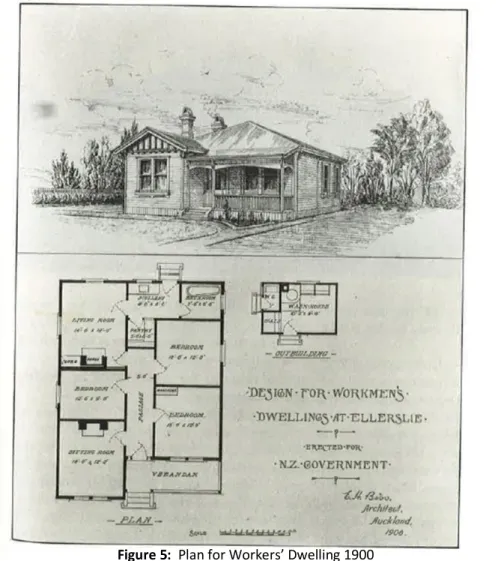
Source: Aerial view of state houses at the Harp of Erin Estate, Oranga, Onehunga, Auckland. (1947). Alexander Turnbull Library (File Print Collection, Box 4, Reference Number PFP-019291), Wellington Labour sought to redesign the traditional family home from earlier layouts which included provision for servants’ areas, to a more socially-oriented family home. State houses had two spatial zones: the public and the private (Schrader, 2000). The evolution of the floor plans of state houses from the original workers dwellings to those constructed by the First Labour Government is outlined in greater detail in Figures 5 and 6 below. To promote the image of a community garden, the fronts of sections were left unfenced. Although the government used a series of basic plans for their state houses, officials stressed the diversity of construction and roofing materials as well as colour, and siting of windows and porches (Firth, 1949).
While Labour’s state house visions were clear, plans were constantly being revised in order to reduce costs. With this distinct vision for the family home, it is unsurprising that Labour was known to discriminate in favour of married couples with at least one child (Schrader, 2005). State-funded family suburbs were designed and promoted for a specific type of family. Those not meeting these specifications were single people, single mothers, and those with large families (Ferguson, 1994). It soon became clear that while the state-funded family home in the suburbs may have been widely shared, as a norm it was only so for married couples with no more than five children.
33 Figure 5: Plan for Workers’ Dwelling 1900
Source: Shaw, 2003, p. 227 Figure 6: Plan for State House 1938 Source: Hodgson, 1990, p. 132
The floor plans for the first state houses of the Labour Government differed in a number of ways to the workers’ dwellings of thirty years earlier. Indoor sewage disposal and electricity eliminated the need for separate outhouses while the traditional sitting room disappeared and the living room became the focal point of the home. The scullery and pantry areas were assimilated into a larger kitchen room and the size of the main passage or hallway was also reduced, likely due to the changing of public and private zones within the home.
34 3.4.4 Problems with the State Housing Programme
Despite its popularity, Labour’s state housing scheme was not without problems. Most significantly, due to shortages after the Depression, there were not enough materials in New Zealand to keep up with demand. Similarly, there was an apparent lack of skilled craftsmen capable of completing work to the standard required. By February 1939, 57 state houses were being completed per week (Schrader, 2005). While this would normally be considered a high rate of completion, with over 10,000 applicants on the waiting list for state rental houses the rate of completion was not keeping up with demand (Schrader, 2005). Many within government felt that the only company capable of construction on this scale was the Fletcher Construction Company Ltd, founded by James Fletcher in 1919. However, builders disagreed, claiming that the main problem was the material shortage, not a lack of capacity within companies (Ferguson, 1994).
3.4.5 From the State Advances Corporation to the Ministry of Works
By 1943, 14,892 state houses had been constructed in 146 towns around New Zealand, despite building activities being largely suspended 1942-1944 due to World War II (Archives New Zealand, 2004). By this time it had become clear that the HCD needed to purchase and develop very large lots of undeveloped land in order to provide enough land for the
construction programme. This would require large-scale engineering construction for services such as sewage and water, and was not an activity previously undertaken by the HCD. As a result of this and other pressures, the Ministry of Works (MoW) was established through the Ministry of Works Act 1943 (Noonan, 1975). The HCD was transferred from the now defunct Public Works Department to the new MoW and renamed the Housing Division (Noonan, 1975). This meant that state housing construction was shifted from its original home within the SAC.
The new division was separated into three sections: administration, architectural (including subsections for community planning and quantity surveying) and land (including subsections for land purchase, land planning, landscape, and engineering) (Archives New Zealand, 2004). It is worth noting the separation of community planning (another term for town, city and regional planning) from land planning within these sections. Despite the development of town planning as a profession, it was clear that town planning and land planning were to be
35
considered separate sectors. James Fletcher, of the Fletcher Construction Company, was appointed Commissioner of Works (Boyce, 2010). The Housing Division quickly moved into large-scale development. This type of development required a far longer programme timeframe, and put pressure on civil engineers, surveyors and architects, all of whom were in short supply.
3.4.6 Rent Inequality
Cost recovery had long been a strong principle of the housing policies of the First Labour Government. However, during World War II this was undermined when the government refused to increase the rents of state houses despite the rising costs of constructing new state homes, claiming that such a rise in rent would break its promise of security of tenure to tenants (Schrader, 2005). A housing conference held in 1944 estimated that rents on state houses were approximately half that of a private house built to the same standard
(Schrader, 2005). By the 1940s this meant that relatively well-off workers were receiving subsidised housing from the state, while the poor were paying market rents on private properties. With housing shortages becoming even more severe in the post-war years, this inequality in the housing market began to anger the public.
3.5
Changing Attitudes Towards State Housing 1949-1960
3.5.1 The Desire for ChangeThe First Labour Government developed housing policies that captured the attention and imagination of people in a way that has never quite been achieved since. Although the state housing scheme was not immune to problems, there is no question that the actions of the First Labour Government led to a substantial improvement in the quality of the housing stock in New Zealand and provided homes for thousands of New Zealanders. The
codification of the suburban family home during this time set the parameters for housing and urban development for most of the twentieth century (Ferguson, 1994). Increasing dissatisfaction with the inequality in the housing market, coupled with anger about the unfair bias in tenant selection and the lack of relief for the poorest citizens meant that by the 1949 elections, New Zealand was ready for change.
The election of the First National Government to power saw a change in direction in housing policy and the state housing scheme. With 45,000 people on waiting lists, National had two
36
immediate priorities: reduce waiting lists and build more houses (Ferguson, 1994). Unlike Labour, National did not support the ‘state house dream’ – instead, it promoted home ownership, believing that this helped develop “initiative, self-reliance, thrift, and other good qualities which go to make up the moral strength of the nation” (Schrader, 2005, p. 47). Additionally, the abandonment of the principle of cost-recovery by Labour meant that the state housing account was in significant debt (Schrader, 2005). With this in mind, National began an active campaign to sell off state houses. This came to form the distinction between the First Labour Government and the First National Government: while Labour viewed state houses as a form of long-term tenure for certain sectors of society, National saw state houses as providing an opportunity for those locked out of home ownership. 3.5.2 Reducing Demand
National attempted to reduce waiting lists in a number of ways. Firstly, rents were raised for new tenants in order to even out the rental housing market. Secondly, an income limit of £520 a year was established in order to direct state housing towards the poorer sectors of society (Schrader, 2005). This was a significant ideological shift – prior to this decision, state housing had been designed to enable workers to live in affordable, good quality houses. As a background theme to National’s housing policies, existing tenants were encouraged to purchase their state homes and join the “property-owning democracy” (Schrader, 2005, p. 48). National was not suppotive of the state housing scheme that had been created by the Labour Government. By selling houses, the government hoped to reduce the state housing stock, increase home ownership, and reduce the state housing account debt.
3.5.3 The Growth of the Planning Profession
The 1950s were a positive growth period for town planning as a discipline. The Town Planning Institute (New Zealand Branch) became the New Zealand Institute of Professional Town and Country Planners (NZIPTCP) in 1949, and strengthened considerably. With the growth of the Housing Division, planning quickly became an activity administered by government departments and was almost solely focused on regulation (Dart, 1973). Traditional blue-print or master plan approaches found favour in New Zealand due to the strong influence of North American and British practitioners – along with economic, social and political behaviour, New Zealand inherited its planning practices from the northern hemisphere. The introduction of the Town and Country Planning Act in 1953 replaced the