University of New England
DUNE: DigitalUNE
All Theses And Dissertations Theses and Dissertations
8-1-2018
A Study Of Urban Principals’ Perceptions Of
Technology Implementation And STEM Program
Sustainability
David D. Colter
University of New England
Follow this and additional works at:http://dune.une.edu/theses Part of theEducational Leadership Commons
© 2018 David D. Colter
This Dissertation is brought to you for free and open access by the Theses and Dissertations at DUNE: DigitalUNE. It has been accepted for inclusion in All Theses And Dissertations by an authorized administrator of DUNE: DigitalUNE. For more information, please [email protected].
Preferred Citation
Colter, David D., "A Study Of Urban Principals’ Perceptions Of Technology Implementation And STEM Program Sustainability" (2018).All Theses And Dissertations. 169.
A STUDY OF URBAN PRINCIPALS’ PERCEPTIONS OF TECHNOLOGY IMPLEMENTATION AND STEM PROGRAM SUSTAINABILITY
By David D. Colter
BBA (Prairie View A&M University) 2002 M.Ed. (Prairie View A&M University) 2004
A DISSERTATION
Presented to the Affiliated Faculty of
The College of Graduate and Professional Studies at the University of New England Submitted in Partial Fulfillment of Requirements
For the degree of Doctor of Education
Portland & Biddeford, Maine
ii Copyright by
David D. Colter 2018
iii
David D. Colter 2018 Educational Leadership
A STUDY OF URBAN PRINCIPALS’ PERCEPTIONS OF TECHNOLOGY IMPLEMENTATION AND STEM PROGRAM SUSTAINABILITY
ABSTRACT
STEM careers are becoming more prominent in today’s workforce. The platform of today’s industries derives from science, technology, engineering, and math, the study of which ultimately provides students and stakeholders with the foundation to function in a globally diverse society. Due to therecent budget shortfalls, the existence of STEM programs within this Texas Urban School District was threatened. District principals were directed to review their respective budgets to determine where potential cuts could be made. The purpose of this qualitative phonomenological study was to describe the perceptions of urban district principals regarding technology implementation and identify recommendations for the sustainability of STEM programs within this Texas Urban School District. This research study consisted of six STEM principals, with two of each representing the elementary, middle, and high school levels. The research questions that guide this study are: (1) What are the perceptions of principals regarding the implementation of technology within urban schools? (2) What are the perceptions of principals regarding the sustainability of STEM programs within urban schools? (3) How do urban principals develop knowledge about STEM education? (4) What are the perceptions of principals regarding barriers to learning for STEM students? The results of this study revealed that technology implementation is indeed a vital component in urban education. Collectively, implementation of the technology needed for STEM learning apparently cannot be fully realized if principals lack access due to funding or other circumstances that repress its utilization.
iv
Technology implementation and STEM program sustainability can be increased through programs and businesses that consistently provide STEM resources, higher education contacts, and career pathway opportunities. Continuous professional development and training is needed for STEM instructors, as they educate students as technology evolves and as they strive to support a growing workforce. This study found that STEM learning and teachers’ technology implementation are interwoven and work together to build a bridge to prepare students for today’s workforce.
Key words: STEM, Principals, Sustainability, Perceptions, Technology Implementation, Phenomenology, Budget Deficit, Women, Minorities, Funding
v
University of New England
Doctor of Education Educational Leadership
This dissertation was presented by
David D. Colter
It was presented on May 23rd, 2018
And approved by:
Michelle Collay, Ph.D., Lead Advisor University of New England
Suzan Nelson, Ed.D., Secondary Advisor University of New England
Josephine Rice, Ed.D., Affiliate Committee Member University of Houston
vi
ACKNOWLEDGEMENTS
First, I would like to take this time to thank God for His grace and mercy. Without Him, this would not have been possible.
To my loving wife, Crystal; the love I have for you is immeasurable and infinite. I love you “pass the moon to forever!” Thank you for taking this journey with me.
Thanks a million to Dr. Michelle Collay for being an educational pioneer who inspires and propels transformational leadership in every way. Your shoulders have provided a powerful foundation for aspiring scholar-practitioners like me to become a phenomenal change agent.
Dr. Josephine Rice, thank you for indefatigable guidance, modeling, and teaching the true spirit of what it means to be a transformational leader for the past 8 years. Your famous quote that “things are either historical or draft” continues to inspire me to push for more in the realms of digital leadership, education, and within the community. I understand that my life’s work is yet to be done.
Dr. Suzan Nelson, thank you for your encouragement and support; especially through those hard times when I could not see the path. You were a beacon of light along this journey, and I am always grateful for your guidance.
Dr. S. Lachlin Verrett thanks a million for the years of unwavering prayers, mentorship, guidance, brotherhood, encouragement, and wisdom. You reminded me that prayer is powerful, and to always keep the faith in Him. “Onward and Upward, always!”
Thanks a million to Berti Brown, Tonya Yeromenko, Dr. Marshal Dupas, Dr. Bonita Morgan, Dr. Albert Lemons, Ruby Andrews, Ivy Levingston, and Lauren Ford for inspiring me with such grace, wisdom, and prayers. You reminded me that there is only one choice, victory!
vii
Thanks a million to my family at B’s Barber Shop! I love you more than you know! Your support along this journey gave me the strength to “keep on keeping on!”
Thank you to my loving grandparents David and Pearlie Colter who consistently equip me to empower myself and influence others. I appreciate you teaching me the value of “listen” and “silent”, which are ultimately one in the same. The sum of these values is learning, which is indispensable! Rest in paradise “Nanny, now also my Guardian Angel!” I love and miss you so much!
Last but certainly not least, much love and thanks goes to my “First Guardian Angel,” my mother, Carmen S. Colter. The determination, sacrifice, and commitment that you exhibited continuously remind me of my purpose, while instilling the confidence that it is ok to pursue greatness. You always emphasized the meaning of American, with the last four letters spelling, “I can.” Mama this is for you. Please hug and give Nanny a big kiss for me. Continue to rest in paradise!
viii
TABLE OF CONTENTS
CHAPTER ONE: INTRODUCTION ...1
The Role of Principals in STEM Programs and Technology Implementation ...2
Urban School District Challenges ...7
Statement of the Problem ...8
Purpose of the Study ...9
Research Questions ...11
Conceptual Framework ...12
Assumptions, Limitations, Scope ...13
Significance...14
Definition of Terms...15
Summary ...16
CHAPTER TWO: REVIEW OF LITERATURE ...18
STEM: A Historical Virtual Paradigm ...18
Urban Campus Technology Leadership through the Eyes of ISTE ...20
Digital Age Learning Culture ...22
Visionary Virtual Leadership ...23
Digital Citizenship ...24
Systematic Improvement ...27
Excellence in Digital Enhanced Professional Practice ...28
Technology Leadership, Productivity, & Practice in Texas ...29
Assessment & Evaluation ...30
ix
Technological Pedagogical Content Knowledge Model (TPACK) ...32
TPACK Forms of Pedagogical Content Knowledge ...32
Contexts of TPACK ...33
Urban Campus Administrators and Transformational Leadership ...34
Urban Technology Change Agents ...35
Transformational and Technological Leadership Strategies...35
The Urban Campus Administrator as Learning and Teaching Motivator...36
Intellectual Stimulation through Technological Leadership ...36
Idealized Influence of Urban Technological Leadership ...37
Campus Administrator Transformational Behavior Characteristics ...37
Vision for Technology Leadership and STEM Programs in Urban Education ...38
Visionary Leadership ...38
Technology Support, Management & Operations in Urban Education ...39
Encouraging Technological Innovation in Urban Schools ...39
STEM in the Future ...39
Learning Analytics ...41
Mobile Learning...43
Online Virtual and Remote Learning Laboratories ...45
Gaming ...46
Wearable Technologies ...48
x
STEM Program Sustainability ...51
Summary ...52
CHAPTER THREE: METHODOLOGY ...53
Setting ...53 Research Sample ...54 Data ...55 Analysis...56 Participant Rights ...57 Potential Limitations ...58 Summary ...59
CHAPTER FOUR: RESULTS ...60
Analysis Method ...60
STEM Principals’ Background ...61
Coding ...64
Presentation of Results ...65
Research Question 1 ...65
Theme 1: STEM Skills and Technology Are Imperative ...66
STEM Elementary School Principals ...66
STEM Middle School Principals ...67
STEM High School Principals ...67
Theme 2: Students Must Have Hands-on STEM Experience ...68
STEM Elementary School Principals ...68
xi
STEM High School Principals ...69
Theme 3: More STEM Technology is Needed ...70
STEM Elementary School Principals ...70
STEM Middle School Principals ...71
STEM High School Principals ...71
Theme 4: Exposing Students to STEM Early Sets the Stage...71
STEM Elementary School Principals ...72
STEM Middle School Principals ...72
STEM High School Principals ...73
Theme 5: Engaging and Empowering Girls in STEM is Important ...73
STEM Elementary School Principals ...74
STEM Middle School Principals ...74
STEM High School Principals ...74
Research Question 2 ...75
Theme 1: Partnering and Collaborating STEM Increases Sustainability ..76
STEM Elementary School Principals ...76
STEM Middle School Principals ...76
STEM High School Principals ...77
Theme 2: Engaging Stakeholders is Vital to STEM Sustainability ...77
STEM Elementary School Principals ...77
STEM Middle School Principals ...78
STEM High School Principals ...78
xii
STEM Elementary School Principals ...79
STEM Middle School Principals ...79
STEM High School Principals ...80
Theme 4: Resources are Needed for Sustainability ...80
STEM Elementary School Principals ...80
STEM Middle School Principals ...81
STEM High School Principals ...81
Theme 5: Leveraging Teachers’ Expertise Increases Sustainability ...82
STEM Elementary School Principals ...82
STEM Middle School Principals ...82
STEM High School Principals ...83
Research Question 3 ...83
Theme 1: Education, Professional Development, and Training ...84
STEM Elementary School Principals ...84
STEM Middle School Principals ...85
STEM High School Principals ...85
Theme 2: Principals Do Their Own Research ...86
STEM Elementary School Principals ...86
STEM Middle School Principals ...86
STEM High School Principals ...87
Theme 3: Principals and Staff Receive Coaching...87
STEM Elementary School Principals ...88
xiii
STEM High School Principals ...88
Research Question 4 ...89
Theme 1: Lack of Funding is a Barrier ...90
STEM Elementary School Principals ...90
STEM Middle School Principals ...90
STEM High School Principals ...91
Theme 2: Lack of Adequate STEM Staff is a Barrier ...91
STEM Elementary School Principals ...91
STEM Middle School Principals ...92
STEM High School Principals ...92
Theme 3: Lack of Resources Can be a Barrier ...93
STEM Elementary School Principals ...93
STEM Middle School Principals ...93
STEM High School Principals ...94
Theme 4: Not Leveraging Technology Most Effectively Can be a Barrier ...94
STEM Elementary School Principals ...94
STEM Middle School Principals ...95
STEM High School Principals ...95
Theme 5: Location of STEM Programming Can be a Barrier ...95
STEM Elementary School Principals ...96
STEM Middle School Principals ...96
xiv
Theme 6: Students’ Lack of Skills Can be a Barrier ...97
STEM Elementary School Principals ...97
STEM Middle School Principals ...97
STEM High School Principals ...97
Summary ...98
CHAPTER FIVE: DISCUSSION ...99
Interpretation of Findings ...100
Research Question 1 ...101
Theme 1: STEM Skills and Technology for Students Are Imperative ....101
Theme 2: Students Must Have Hands-on STEM Experience ...102
Theme 3: More STEM Technology is Needed ...102
Theme 4: Exposing Students to STEM Early Sets the Stage...103
Theme 5: Engaging and Empowering Girls in STEM is Important ...104
Research Question 2 ...104
Theme 1: Partnering and Collaborating to Facilitate STEM Increases Sustainability...105
Theme 2: Engaging Stakeholders is a Key to Sustainability ...105
Theme 3: Principals’ STEM Vision is Part of Sustainability ...106
Theme 4: Resources are Needed for Sustainability ...107
Theme 5: Leveraging Teachers’ Expertise Increases Sustainability ...107
Research Question 3 ...108
Theme 1: Education, Professional Development, and Training ...109
xv
Theme 3: Principals and Staff Receive Coaching...110
Research Question 4 ...111
Theme 1: Lack of Funding as a Barrier ...111
Theme 2: Lack of Adequate STEM Staff as a Barrier ...113
Theme 3: Lack of Resources as a Barrier ...114
Theme 4: Not Leveraging Technology Most Effectively as a Barrier...114
Theme 5: Location of STEM Programming as a Barrier (Lack of Access) ...115
Theme 6: Students’ Lack of Skills as a Barrier ...116
Implications...117
STEM Principals’ Similarities ...117
STEM Principals’ Differences ...119
STEM Sustainability and Funding Opportunities ...120
STEM Mentoring Programs ...121
Minority Focused STEM Organizations ...121
Recommendations for Action ...124
Project Lead the Way Action Plan ...124
Recommendations for Further Research ...128
Women and Minorities in STEM – Underrepresented Minorities...129
STEM to STEAM ...130
Limitations ...130
Summary ...131
REFERENCES ...134
APPENDIX A: Informational Letter ...159
xvi
APPENDIX C: A Study of Urban Principals’ Perceptions of Technology Implementation and
STEM Program Sustainability Principal Interview Guide...164
APPENDIX D: Frequency of Themes for Research Question 1 ...166
APPENDIX E: Frequency of Themes for Research Question 2 ...167
APPENDIX F: Frequency of Themes for Research Question 3 ...168
APPENDIX G: Frequency of Themes for Research Question 4 ...169
APPENDIX H: The State of Women in STEM………...170
xvii
LIST OF TABLES
Table 4.1: Demographics of STEM Principals ...63
Table 4.2: Themes and Definitions for Research Question 1 ...65
Table 4.3: Themes and Definitions for Research Question 2 ...75
Table 4.4: Themes and Definitions for Research Question 3 ...84
xviii
LIST OF FIGURES
Figure 1.1: Conceptual Framework ...13
Figure 2.1: ISTE Standards for Administrators ...21
Figure 2.2: Technological Pedagogical Content Knowledge Framework (TPACK) ...34
1
CHAPTER ONE INTRODUCTION
One of the major educational goals established during the Obama Administration was that students in the United States of America would uphold the highest international ranking comparable to other nations (Modi, Salmond & Schoenberg, 2012). In his address introducing the “Educate to Innovate” campaign, he placed great importance on expanding the STEM pipeline for a robust and innovative workforce (Modi, Salmond & Schoenberg, 2012).He asserted the significance of all students being able to think critically in STEM education. Furthermore, Obama made reference to the critical need for all ethnic backgrounds to be represented in all STEM-related workforce areas. The acronym STEM refers to science, technology, engineering, and mathematics and addresses the growing disconnect between the skills that employers need in a rapidly increasing technological world(Rotherham, 2011). STEM careers in the United States have grown at three times the pace of non-STEM jobs, and are expected to remain at this pace through the next decade (Modi, Salmond & Schoenberg, 2012). During this time, ninety million dollars was allocated to ensure that educators would receive the training required to provide students with the skills and the competitive edge needed globally (Burke, L. M. & McNeill, 2011). STEM campus leaders and supporters assert that cutting edge instruction in science, engineering, mathematics, and the integration of
technological resources will help to prepare students towards surpassing other nations as candidates and leaders in the global industry within STEM related fields (Brown, Reardon & Merrill, 2011). Recently, the STEM to STEAM movement has taken root and is surging forward positively to meet the needs of a 21st century economy (Yakman, 2006).In 2015, Georgette Yakman researched the humanities, arts universities, professional organizations, and art groups
2
to form a more extensive level of analysis of "art" category. Art "A" covers a wide range of humanities and arts subjects, covering social studies, language, physical, musical, fine and performing (Yakman, 2006). The arts were added to address the components that many employers, educators, and parents have voiced as critical elements for students to thrive in the present and rapidly approaching future (Yakman, 2006).Ninety percent of teachers possessed at
least one computer in their classrooms by 2010. Seventy-seven percent of the U.S. population age three and over were exposed to the Internet by 2013.
The Role of Principals in STEM Programs and Technology Implementation
Competence in the STEM standards has become a factor in political and economic decision-making. More than ever now in the greater society, the STEM components of science, technology, engineering, and mathematics possess direct links to human health and the goods and services that contribute to personal and social welfare. Adequate funding, strategic planning, and decision making also are major components in technology implementation. To that end, the tenants of STEM and technology implementation are interwoven and work together to build a bridge for all fields in today’s industry.
Because technology continues to transform the various operations within today’s society, it is pertinent that principals and administrators become adept at using and administering virtual technology. This transformation poses implications for preparing principals with the capacity to critically think, decipher, and implement cutting-edge learning that equips students for
increasingly sophisticated personal media and workplaces. Collectively, the technology needed for STEM cannot reach its highest potential if principals lack access due to funding or encounter other barriers that suppress its utilization (Fairlie, 2012; McNierney, 2004; McHale, 2007). The speed of technology implementation is lessened partly because of divided priorities and the
3
absence of accurate data, resources, and the knowledge of how to make decisions to guide implementation (Roekel, 2008). If evolving technologies were not applied to STEM education, today’s current dominant technologies idealized in the past would not exist.
Many implementation challenges should be acknowledged during the shift to STEM education. As a leadership tactic, it is important that STEM initiatives be communicated and that prinicpals listen to stakeholders. Combining expectations with discussions about resources and support increases strong communication at the campus level. Incorporating a new STEM project-based approach into a school’s current pedagogical philosophy and improvement plan has to be initially shared and understood by all stakeholders for successful implementation. The focus must be kept on new initiatives for students and a positive academic outcome. To assist with successful implementation, it would be helpful for principals and educators to create professional goals for the visual, reading/writing, auditory, and kinesthetic learners across all subjects. It is also essential that principals and other educators evaluate and reflect on the learning process. Creating goals gives them the opportunity to enhance their own knowledge, reassess
assumptions, and ask better questions to improve instruction and student achievement. Professional learning communities allow principals and educators to share and vet projects, while adopting a learning approach to creating authentic experiences for students (Peters, Burton, Kaminsky, Lynch, Behrend, Han, Ross, & House, 2014).
Another leadership strategy that can strengthen principals’ background knowledge of STEM initiatives is teaming up with surrounding businesses and stakeholders that embody the components of STEM in today’s workforce. Such partnerships provide real world opportunities that allow students to gain preliminary experience and keep principals abreast of the most current trends that can then inform campus curricula plans.
4
School districts are mandating professional development for principals and other educators to ensure that instruction is aligned to state standards and to respond to the needs of students across all disciplines. Principals should participate in professional development programs respectively designed to help them acquire greater awareness of STEM teaching pedagogy, the individual STEM disciplines, and the mechanics of implementing STEM instruction within a single school (Bybee, 2013). These efforts will provide adequate STEM education for all students, while at the same time generating a professional learning community of principals who can learn from one another as they work to strengthen STEM education in urban schools. Such training offers a model that could be scaled to prepare principals and reach a greater number of students. These types of professional development include both principals and educators. It would need to be accommodated slightly to meet the needs of both administrators and educators, with break-out assemblies to discuss issues of singular concern to each group. Using the strategies by developed experts in the field, would support the implementation process and help to ensure that students benefit from the best practices (Vasquez, Sneider & Comer, 2013).
Principals must be well advised with regards to how technology is implemented in urban schools and how teachers need to adapt their instructional methods to incorporate new devices (Sheninger, 2014). Today’s learners are increasingly becoming connected to an engaging multimedia world empowered by technology. To that end, technology implementation has become an integral component of everyday life and has changed the way stakeholders
communicate, work, and live. As the recent demand for human resources in science, technology, engineering, and mathematics (STEM), the development of STEM professionals is called
5
worldwide. The critical need continues in education to equip principals, students, and teachers, with skills and resources to implement quality instruction (Bybee, 2013).
The relationship between technologies offered in urban areas and STEM is technology access and implementation. Online connectivity is continuously shaping the world's economic and social interactions and communication. Internet accessibility by way of wireless access points, mobile networks, or grounded broadband connections is providing individuals the ability to connect online daily. Funding for science, technology, engineering, and mathematics
education is one of the most active and growing fields of philanthropy. Great improvements have been made in infusing technology into urban school instruction. School districts have
significantly invested in virtual learning environments required to implement STEM programs and evaluate student learning. They have rallied resources to acquire software and technical support for students and staff. Some have even established curriculum standards for STEM technology to ensure that students achieve a certain level of competency before they graduate (Van Roekel, 2008).
Technology implementation and STEM education for the general school population led by principals should be planned and purposeful. STEM is a vital component of today’s
classroom instruction and influences the learning environment. Technology in the general education population supports curricular goals student learning objectives. The integration of technology at urban high school campuses encourages higher order thinking skills. Technology is used to encourage collaboration in and out of the classroom, as well as facilitate projects that would be difficult or impossible. Technology supports the construction of knowledge in general education and is essential to the learning activity (Davis, 2010).
6
Additional skills are required for applying knowledge of those subjects in the real world. Principals and teachers must be made aware of funding and resources so that STEM programs can operate. The hiring process performed by principals for staff at STEM schools can include assessing prospective teachers’ comfort levels with the adoption of STEM curriculum and collaborative skills. STEM schools leadership should strive to have similar hiring filters in place, while principals approach education through training, technology implementation and then onward towards STEM curriculum integration. Awareness is critical for STEM education implementation. For STEM schools to be successful, principals must be mindful of equipment, materials, upkeep, repair, and additional expenses that add to the overall campus budget. Accommodations should also be made for students lacking information and communication technology access outside of school. These are critical strategies to avoid potential barriers and enhance innovation with STEM. Through partnerships with businesses and universities, grants or donations may be able to cover some of the costs of providing resources for students. For schools to know what technology services are needed and by whom, some type of assessment should be conducted (Sersion, Schools & Stevens, 2012).
Technology implementation for students in STEM education typically is successful when teachers use problem-, project-, or design-based assignments to engage students in addressing complex contexts that reflect real-world situations. Current research in project-based learning illustrates that projects can increase student interest in science, technology, engineering, and math (STEM) because they connect students in solving actual problems, working with others, and producing real world solutions (Fortus, Krajcikb, Dershimerb, Marx, & Mamlok-Naamand, 2005). Technology implementation in STEM means operating within the context of tasks that compel students to use knowledge and skills from multiple disciplines.
7
District leadership plays a vital role in implementing technology effectively into the classroom as is considered a complex school-wide change (Schrum, Galizio, & Ledesma, 2011). Effective technology implementation requires a cultural shift away from traditional instructional practices and towards technology-based practices designed to improve learning. To facilitate this change initiative, several districts are exploring opportunities for stakeholders and students that include collaborative learning opportunities, online repositories of tutorials and lesson plans, and coaching. Principals serve as the key catalyst in the implementation of technology used for instruction in school settings (National Center for Education Statistics, 2010). The International Society for Technology in Education’s (ISTE) National Educational Administrators Standards supports this research towards exploring the themes that surround: digital-age learning culture, visionary leadership, and excellence in professional practice (ISTE, 2015). Technology
implementation has been shown to help create more authentic learning environments where students are encouraged to attend, have a greater chance of communication, and have more opportunities to use higher order problem-solving skills that are connected to real world applications. The decision makers in public schools establish the climate for technology
integration into the educational system (Holt, C., & Burkman, 2013). While decisions about staff training, learning platforms, and networks remain a very local matter, a set of well-recognized challenges face school leaders (Holt, C., & Burkman, 2013). These include integration of technology into the classroom to improve instruction, the availability of funding for technology, and accessibility for all students regardless of personal means (Holt & Burkman, 2013).
Urban School District Challenges
The platform of many of today’s industries derives from science, technology,
8
the foundation towards functioning in a globally diverse society(Yakman, 2006). STEM curriculum is an interdisciplinary means of providing students with advanced project-based learning opportunities and real-world experiences. This was initially introduced during the latter portion of the twentieth century and quickly became an educational emphasis that ignited support from the United States Government (Thomas & Williams, 2010). Each year, urban schools receive a percentage of supplemental funding from the United States Government. The extra funding within this Texas Urban School District allows principals to hire educators that are specifically trained in STEM subjects within schools. It also provides students the opportunity to participate in hands-on learning with labs, virtually enhanced curricula, and field trips.
District school boards review annual budgets to account for all expenditures that define the operations of the organization. For over a decade, this Urban School District has supported its magnet, gifted and talented, fine arts, and STEM education based upon the funding allotted from the state and government. During the 2016-17 school years, the district, unfortunately, faced a significant budget shortfall of 107 million dollars. Chapter 41 of the Texas Education Code, the state school funding system expects districts designated as property-wealthy to direct tax dollars back to the state (Texas Education Agency, Ch. 41, 2016). This process is known as “recapture” and is commonly referred to as “Robin Hood” (Texas Education Agency, Ch. 41, 2016). The money is then redistributed to districts deemed to be property-poor, as well as to the state’s general fund for use for non-education purposes.
Statement of Problem
Due to therecent budget shortfalls within the last few years, the existence of STEM programs within this Texas Urban School District has been threatened. District personnel and principals were directed to review their respective budgets to determine where potential cuts
9
could be allocated. Many of these cuts ultimately affected the reduction of school curriculum electives and the STEM programs with a reduction in resources and staff members qualified to teach in STEM-specific areas. How do principals sustain these STEM programs despite the challenges that they face? This study examined the factors that principals perceive as challenging STEM program sustainability at urban campuses (Texas Education Agency, Ch. 41, 2016). The principals’ perceptions regarding the impact of budget cuts is a central factor in identifying sustainability strategies.
Purpose of the Study
The purpose of this qualitative study is to describe the perceptions of urban district principals regarding technology implementation and identify recommendations for the sustainability of STEM programs within this Texas Urban School District. Leaders must establish a clear vision while executing a process that includes technological savviness, global awareness, communication, stakeholder engagement, and innovation. With regards to urban district stakeholders, various professionals are influential in ensuring the improvement and constant development of all stakeholders. The findings of this study address the select campus principals’ perceptions and emerging themes they perceived as influencing STEM program sustainability.
As reported in a publication by the National Research Council (2011), STEM education occurs in some capacity in most United States schools; however, the level of effectiveness with implementation varies significantly (Howard, 2014). Although supportive of program goals and with positive intentions, many educators and their institutions have failed to fully implement the approaches needed to produce educated, highly prepared students that potential employers are seeking (Hughes, 2009).
10
Because the technology demands of the twenty-first century are constantly evolving, the federal and state mandates suggest that principals must adjust their existing curricula to include the latest digital leadership practices (Sheninger, 2014). Such a commitment ultimately supports the validity of STEM Programs and technological implementation practices in education.
As a technology implementation and STEM sustainability strategy in challenging urban areas, securing business partnerships and STEM outreach programs has provided school districts the access to curated content, collegial learning, and personalization based on district goals and data implications for future growth (Bybee, 2013). These programs engage with local schools, administrators, educators, after-school programs, students, and families to enhance the
understanding and appreciation of science, technology, engineering and math subjects. This includes making STEM education accessible to underperforming and underrepresented groups (Bybee, 2013).
In 2016, Massachusetts Institute of Technology announced a new initiative known as the PK-12 Action Group. This initiative aims to bring MIT’s unique “Mind and Hand” learning approach beyond the campus to pre-kindergarten through grade twelve learners and teachers around the world, building upon existing efforts and developing new ones (Bybee, 2013). The action groups recognize a growing necessity in STEM education by starting new research, design, and outreach programs that will transform how students learn and the understanding of how students learn. This means consistent designing of targeted solutions that range from low-cost laboratory instruments to innovative computing environments (Bybee, 2013). The result of this advancement renders the understanding of teaching and learning through a various set of research methodologies, from basic cognitive science and neuroscience to design-based research and classroom experiments (Bybee, 2013).
11
The Rice Office of STEM Engagement (R-STEM) supports and promotes Rice University's wide-ranging efforts to progress K-12 science, technology, engineering and
mathematics (STEM) education in regional school districts (Rice, 2017). It serves as the central point of contact for school districts, administrators, parents, students, nonprofit organizations, faculty, and others in the region, regarding various STEM programs. The Dream Achievement through Mentorship strives to increase the number of underrepresented minority students and women with interest in pursuing undergraduate degrees in STEM fields (Rice, 2017). Rice University students studying in STEM-related fields and principals that are alumni serve as mentors for small teams of high school students. Providing access to interactive classes, global networking, and infusing STEM expert-led online training has allowed districts to utilize virtual platforms to transform instructional practice and reinforce the professional growth of their stakeholders.
Research Questions
The research questions that guide this study ask:
1. What are the perceptions of principals regarding the implementation of technology within urban schools?
2. What are the perceptions of principals regarding the sustainability of STEM programs within urban schools?
3. How do urban principals develop knowledge about STEM education?
4. What are the perceptions of principals regarding barriers to learning for STEM students?
12
Conceptual Framework
The conceptual framework for this study conveys the interrelationship of the distributed cognition theory, the ISTE National Educational Technology Standards for Administrators, and the transformational leadership theory. The transformational leadership theory provides the concepts of idealized influence, individualized consideration, inspirational motivation, intellectual stimulation. These tenets will ultimately surface as the campus administrators describe their experiences regarding urban district technology implementation and STEM Program sustainability.
The ISTE National Educational Technology Standards renders digital citizenship, digital-age learning culture, excellence in professional practice, and visionary leadership. Each of these elements is deemed a vital component of successful administrative practices and is supported by Texas Education Agency. As the principals describe their challenges, these concepts were explored regarding how technology is implemented and how STEM Programs might be continuously sttrengthened and sustained.
Distributed cognition and distributed leadership suggests that virtual resources can be studied as technological artifacts to promote learning within an organizational setting. This theory requires the sharing of cognitive activity among the parts and participants of this system, which can be other individuals or artifacts such as, technologies or media (Bell & Winn, 2000). The participants distribute their cognition among other learners and physical or digital artifacts by externally displaying their knowledge (Bell & Winn, 2000). The role of technology within the distributed cognition theory is that of a valuable component within an urban school system, in which the stakeholders are interacting. This interaction can either help to distribute their
13
knowledge, off-load certain amounts of cognitive work making the cognitive load less, and contribute to scaffolding new capabilities (Bell & Winn, 2000).
All three of these units provide the platform to investigate the principal perceptions of technology implementation and how STEM Programs are sustained. Figure 1.1 below provides a model of these three concepts combined to serve as the foundational framework of this study.
Figure 1.1: Conceptual Framework. This figure depicts the elements that complete the framework of this study.
Assumptions, Limitations, and Scope
Today’s millennials are placing heavy demands on educational stakeholders to create learning environments that are flexible, easily accessible, measurable, and immediately transferable to real-world employment situations (Sheninger, 2014). Stakeholders are
recognizing that incorporating a myriad of technological tools, mobile devices, and web-based instruction has created a new, quickly-evolving era of educational opportunities for learners.
The transformational leadership and distributive cognition theories support a variety of strategies that can stimulate an organization's change processes. This is especially essential for the various technological tools that are utilized by urban school district stakeholders. Several
Tranformational Leadership Theory
(idealized influence, individualized consideration, inspirational motivation, intellectual stimulation)
Distributed Cognition
(Distributed Leadership, Technological Artifacts)
ISTE National Educational Technology Administrator
Standards
(digital citizenship, digital-age learning culture, excellence in professional practice, visionary leadership)
14
campus leaders consistently implement these resources through the applications of learning management systems (LMS), Web 2.0 Tools, and various drivers of social media. Distribution cognition also reveals restrictions that are implied by the embodied nature of the representational media that are inevitably employed in carrying out a given task (Bell & Winn, 2000). This is mostly reminiscent of larger organizations that utilize technology on a greater scale, such as Texas Urban School District. Bennis and Nanus (2007) stated that, “the larger the organization, the greater their complexity of interaction, and the quicker their shift in emphasis over time” (p. 87).
Another limitation to consider is stakeholders who are unwilling to change or accept the evolution of technology. Mainstream society is now more heavily invested in utilizing
technologies for both personal and professional reasons. The continuum of this type of development poses implications for today’s urban educational organizations, as they strive to remain relevant for the students of the twenty-first century. Now is the time to transform educational institutions into rigorous and vibrant learning communities that are digitally connected and extend access to practical tools that help stakeholders unleash creativity and innovation (Sheninger, 2014).
Significance
Providing urban schools with the accessibility to technological resources and ISTE aligned STEM curricula ultimately helps to support the development of stakeholders in
becoming producers and evaluators of knowledge. Most importantly, students develop the skills they need to compete in today’s technologically demanding economy. As technology evolves, campus administrators must understand that implementing technology and incorporating STEM Programs into school curricula helps to enhance innovation, rigor, critical thinking, and
real-15
world preparation. The implementation of technology can engage, connect, empower, and enhance stakeholder relations (Sheninger, 2014). This vision of leadership begins with
identifying obstacles to change, and specific solutions to overcome them to transform today’s schools (Sheninger, 2014).
Definition of Terms
For the purposes of this study, the following definitions were used:
Accessibility: The capability of engaging into a virtual platform through the utilization of a digital resource (Geer & Sweeney, 2012).
Blended Learning: An educational program where a user is provided the opportunity to experience learning through a face-to-face and virtual platform (Sheninger, 2014).
Categories: Conceptual elements that cover or span many individual examples or units of the data previously identified (Creswell 2013, p. 181).
Commerce: The electronic buying and selling of goods (Winn, 2012).
Digital Citizenship: The standards of behavior regarding technology usage (Ribble & Miller, 2013).
Distributed Leadership: An emerging set of ideas that frequently diverge from one another (Spillane, 2015).
Etiquette: The criteria of conduct or procedure of a particular setting and environment.
Learning Management System (LMS): A software application that provided the virtual platform for data tracking, documentation, collaboration reporting, training, and professional development (Sheninger, 2014).
Professional Learning Community: A continuing process in which educators work collaboratively in recurring cycles of shared examination and action research to achieve
16
improved results for the students they serve (Sparapani, Pietras, Rogers, Voydanoff, MacKay & Fuchs, 2016).
Stakeholder: A person or entity that has vested interest in an organization (Fulton, 2012).
Sustainability: Maintain full operation of any K-12 school program over multiple years with adequate funding and staffing resources to deliver the overall intent of the specialized program.
Technology: Refers to personal computers, networking devices and other computing devices (e.g., electronic whiteboards and personal digital assistants (PDAs); also includes software, digital media, and communications tools such as the Internet, e-mail, CD-ROMs, and video conferencing (Principals Technology Leadership Assessment, n.d).
Technology planning: Any process by which multiple stakeholder groups (e.g., district
administration, school administration, faculty, and parents) convene to develop a strategy for the use or expanded use of technology in instruction and operations. Technology planning need not be separate from other planning efforts but should be a recurring theme if integrated within a more comprehensive planning process (Principals Technology Leadership Assessment, n.d).
Web 2.0 Tools: the transition from basic Internet usage to second generation dynamics and web applications.
Summary
Technology implementation and STEM programs provide channels for district principals to ensure learning opportunities for all stakeholders. This alone challenges principals to provide students with the accessibility to more STEM funded opportunities. As funds are lessened or become constrained, the opportunities for students are may be threatened. Principals must prepare with effective strategies to address the demands that are becoming evident in society (Sheninger, 2014). It is safe to predict that innovative, non-traditional technological leadership
17
modalities will continue to grow over the next decade, in both quantity and quality (Sheninger, 2014). Within urban school districts, technology has contributed: social networking, personal learning networks, learning management systems, professional learning communities, and various other components that continually make learning possible at any time. Web-based instruction has rapidly gained popularity with younger tech-savvy learners, thus providing the flexibility demanded by stakeholders in K-12 and higher education institutions alike. The scope of this analysis speaks to the evolution of traditional instructor-led environments towards e-learning implementation. This chapter provides an introductory look into the impetus that
surrounds the technology implementation and how budget cuts have threatened STEM education plans within this Texas Urban School District. As a result of the budget constraints, several campuses and district offices experienced a reduction in force of staff and partnerships that rendered STEM support resources. Chapter 2 will explore the literature that defines the history, expectations of principals, and vision regarding technology implementation and intent of STEM programs.
18
CHAPTER TWO REVIEW OF LITERATURE
The review of literature for this study is apportioned into four sections. First: the review examines the historical nature of STEM and the impact of technology within political, economic and social platforms. Second, it will explore the perceptions of principals and curriculum
development aligned to the International Society for Technology in Education’s (ISTE) National Educational Administrators’ Standards the Texas Education Agency (TEA), and technology implementation through the technology, pedagogy, and content knowledge framework
(TPACK). Third, the transformational leadership factors are reviewed to understand how campus administratorsenact program implementation as agents of change inside the urban STEM school environment. Finally, this review will explore the leadership and vision for technology in urban and STEM education, as the evolution of virtual practices has become inevitable in society. The review of the literature provides the premise for further investigation of technological
implementation models and describes implications for school leadership and STEM program continuity.
STEM: A Historical Virtual Paradigm
The Soviet Union’s launch of Sputnik in 1957 heightened the awareness of the need for science and technology education in the United States (Thomas & Williams, 2010). According to Confrey, House, and Bhanot (2008), it was competition heightened by the Cold War and the race to early space exploration that brought about the emergence of a focus on mathematics and science in the late 1950s and early 1960s. These politically motivated forces spurred the United States to embrace STEM education aggressively. This reactive response according to Thomas and Williams (2010) is consistent with history. STEM education has always moved to the
19
forefront in step with historical events that potentially threaten our national defense or our international economic position. An immediate response to one such threat was the passing of the National Defense Education Act (1958), a bill created to fund education improvements in mathematics and science (Drew, 2011). “New math”, for example, emerged as one of the reforms from the NDEA and the National Science Foundation (NSF) in an attempt to transform the teaching of mathematics. The NDEA funded several reforms, as the search for new
approaches to instruction was undertaken (Drew, 2011). This mid-twentieth century event that challenged America’s global position with technology is an early example of the influence politics has had on educational decisions in history.
The STEM movement was beginning to gain attention during the 1960’s and 1970’s as evidenced from the momentum gained over the decades based on the economic and social issues of the time. It was in the early 1990s that the National Science Foundation (NSF) began referring to programs that incorporated the academic content areas of science, mathematics, engineering, and technology as: ‘SMET.' The acronym lacked appeal and quickly changed to STEM (Science, Technology, Engineering & Mathematics) as reported by Sanders (2009). According to Bybee (2010), the term has been used as a label for any event, policy, program, or practice that involves one or several of the STEM disciplines (p. 30).
When STEM was initially introduced as a concept, according to Bybee (2010), it gained the attention of many groups concerned about the ‘eroding’ academic performance of United States students. The concerns were legitimate. Based on 2007 measures from Trends in International Mathematics and Science Study (TIMSS), though the United States was once a leader in STEM, it lost that status some time ago (Alvarez, Edwards & Harris, 2010); as of 2011 the U.S. ranked 22nd in science, and 31st in math among peers in comparative countries around
20
the world (Burke & McNeill, 2011). The STEM phenomenon is not a new initiative (Thomas & Williams, 2010). The authors stated that it had been a century since schools first identified concerns about the political, economic and social topics associated with STEM education.
In the State of Texas, STEM education in schools has become more evident. Many of its districts have recognized the urgency to address the growing STEM education and industry needs across the state. Different states will of course need distinct education and workforce strategies for filling the pipeline of STEM talent in areas of greatest need (Langdon, McKittrick, Beede, Khan, & Doms, 2011). Students who gain a strong STEM foundation today will face brighter prospects in years to come (Langdon, McKittrick, Beede, Khan, & Doms, 2011). Their skills will be resilient even as markets and technologies change. States that focus on the STEM learning of their youth are investing in a prosperous future where they can attract innovative new industries (Langdon, McKittrick, Beede, Khan, & Doms, 2011).
Urban Campus Technology Leadership through the Eyes of ISTE
As the continuum of technology leadership evolves within education, there is a need for campus administrators to equip their students with access to the latest virtual technology and strategies. Effective preparation of teachers makes it feasible for them to connect with today’s learners, as they are utilizing technology as their most major method of communication, instruction, information gathering, and learning. This is because most students have been immersed in technology as adolescents. To prepare campus administrators for technological implementation in urban schools, the International Society Technology Education (ISTE) developed the NETS-A Standards for Administrators to support school leaders with guidelines for technology training and preparation strategies to implement at the campus level and
21
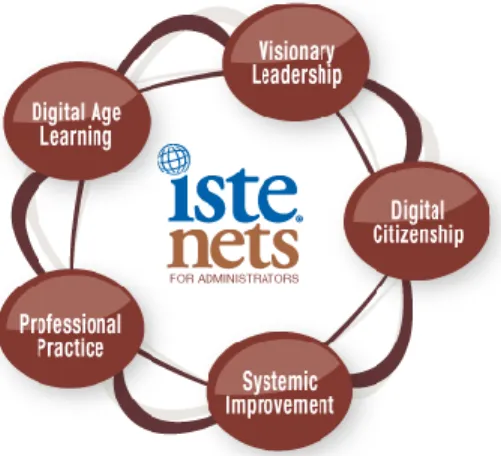
Technology Education (ISTE), concurred that since school administrators play a prominent role in the implementation of school reform, their perceptions concerning technology implementation are most relevant (ISTE, 2015). ISTE maintains a membership of over one hundred thousand educators and a publication called The Journal of Research on Technology in Education (JRTE), which offers an extensive array of professional development, conferences, and online resources (ISTE, 2015). These five standards in Figure 2.1 promote an approach by school leaders that is comprehensive in its provisions for an atmosphere favorable to learning using digital modalities. These standards provide the lens that will be used to examine the factors that drive successful technology implementation in a Texas Urban School District.
The International Society for Technology in Education’s (ISTE) National Educational Administrators Standards supports this research exploring the themes that surround: digital-age learning culture, visionary leadership, and excellence in professional practice. The leitmotif of these areas provides an extensive look at the successes and challenges that campus
administrators identify. Figure 2.1 below displays a model of the components that formulate the administrator strands.
Figure 2.1: ISTE Standards for Administrators. This figure depicts the virtual components that guide administrators through embedding technology at campuses and workplaces (ISTE, 2015).
22
Digital Age Learning Culture
A digital-age learning culture is one that is focused on collaboration and communication. From a STEM perspective, the digital leader is called to create, encourage and sustain a culture where stakeholders discuss, observe, critique, and plan together (Bybee, 2013). The creation of this collaborative culture is the most important action the school leader can take to ensure successful integration of technology for enhanced learning. Campus leaders strive to make sure that learners gain a relevant knowledge by promoting instructional innovation, modeling effective use of technology, and monitoring how technologies and related practice are infused into the curriculum. Innovative stakeholders have an opportunity to blend face-to-face and digital learning models to advance learning in the twenty-first century.
Digital age learning calls for a new form of responsibility for school leaders. Skills shortages in STEM (Science, Technology, Engineering, and Math) education have been
identified as threats to learning development around the world, and have been reported in United States, Europe, and Australia (AIG, 2013). Many school districts possess a core technology plan to guide leaders to move forward from being unprepared or unqualified to identifying and integrating technology into instructional practices. To take part in digital age learning, stakeholders must explore, evaluate, and apply technology as it correlates with differentiated instruction. Technology offers some convenience with being always readily available. Digital age learning that includes a STEM curriculum helps to build the relationship between teacher and learner. It engages students in higher-order thinking skills and supports the creation of content and critical thinking. Students are introduced to a culture of collaborative learning strategies (AIG, 2013).
23
Visionary Virtual Leadership
District leaders must articulate a shared vision of how technology will be effectively used to support teaching, learning, and school management (Sheninger, 2014). Many stakeholders are affected by the incorporation of technology in schools; therefore, it is imperative that all
audiences be recognized and involved in the process. Generating and communicating a vision suggests an understanding of how educational technology affects each audience and why it is relevant to each audience. When the vision is conveyed in ways that are meaningful,
stakeholders are more likely to share in the vision. There must be consensus that every stakeholder has a voice and the assumption that all are willing to embrace the technological changes of today. A vision begins with dialog but will only become a reality with action (Sheninger, 2014).
It is recommended that school districts articulate a shared vision that incorporates
technology into the arena of curriculum and instruction. School leaders must take proprietorship in a vision to ensure that campus technology programs are cutting-edge and moving forward. Technology has become more accessible everywhere and is becoming more user-friendly (International Center for Leadership in Education & Sheninger, 2014). However, it is unquestionably critical that education leaders stay abreast of the technological trends in the upcoming years. Stakeholders may accept that technology can be used in various ways but might not possess the knowledge of the larger educational infrastructure and implications for
implementation. However, the larger the school district, the more multidimensional the technology plan becomes, as leaders distinguish between existing assets and needs while providing the support to staff. As there is often a just-in-time need for resources, campus administrators must provide continuous support to their teachers. Educational staff can
24
experience growth more efficiently if a district has embraced a proactive technology plan preliminarily (Fulton, 2012).
The lack of a vision for technology renders the outcome of mediocrity. The final
challenge is school leaders being unaware of virtual advancements and sustaining programs that are not relevant. There is a continued momentum in technology, which requires all leaders to remain visionary and respond accordingly. Not being adept with the latest technology and the awareness of its progression will leave inadequacies within the urban school district (Sheninger, 2014).
Educators are providing more virtually enhanced programming with the explosion of online learning formats. This format of teaching is nontraditional and responds to the
expectations of many stakeholders. Once reserved for colleges and universities, public school districts now implement virtual modalities for learning, training, collaboration, and data capturing. Texas employs The Texas Virtual School Network (TxVSN). The network gives students access to online courses and instructors. The classes are taught by state-certified instructors trained to deliver quality online instruction (Texas Education Agency, 2016). As online courses have commenced, there is a greater need for virtual textbooks, tablets, and smartphones. These needs challenge educational leaders to become more innovative with and knowledgeable about instructional strategies that align the interwoven concepts of technology and STEM. Constant checkpoints are required to ensure that technology plans are meeting organizational needs within and beyond the classroom.
Digital Citizenship
Oftenoverlooked is the proper use of technology within school districts. Stakeholders are required to sign and support satisfactory use policies. It is the obligation and commitment of the
25
school district to ensure that all parties concerned understand the social, ethical, and legal concerns and liabilities as parallel to virtual environments (Ribble, Bailey, & Ross, 2014). All educational leaders have to facilitate the open discussion with their students and staff about appropriate technology use. From that point, campus administrators can present information to their staff, so all involved can be more knowledgeable and work together to identify and understand the proper and competent use of digital resources in education.
Digital citizenship is established within the standards of behavior regarding technology usage. As a means of learning the complexities of digital citizenship and the issues of technology use, abuse, and misuse, there are nine common domains of behavior that make up digital
citizenship (Ribble & Miller, 2013). The nine standard fields are etiquette, communication, education, access, commerce, responsibility, rights, safety, and security.
Etiquette is the criteria of conduct or procedure of a particular setting and environment. Attention to etiquette for online behavior makes everyone a role model for students. The obstacle with teaching digital technology is not all the rules have been written about uses for these
devices. Communication is the electronic exchange of information. Communication requires use of cell phones, instant messages (IM), and e-mail. These routes of communication have
revolutionized the means with which technology users interact. These forms of communication have generated a new social formation of whom, how, and when people associate. Education is the manner of teaching about and acquiring technology and the application of technology (Geer & Sweeney, 2012). It is becoming technology inspired and more ordinary every year.
Technology availability in the classroom is becoming as common as the whiteboard and pencil. Teaching students to use technology, however, has not developed and improved equally. Digital inspired teaching does not regularly incorporate teaching about proper and improper practices of
26
technology resource use (Geer & Sweeney, 2012). Access requires recognition of the
responsibilities of electronic participation in the virtual community (Geer & Sweeney, 2012). Full access is beneficial to technology development since it provides more opportunities for scores of people to access and use alternative methods of communication. Some stakeholders might face the challenge of usage or accessibility to virtual tools in the new digital society. Often these options are only accessible to a small group of stakeholders, even though the price of technology is varied.
Commerce refers to the electronic buying and selling of goods (Winn, 2012). Online shopping is quickly becoming the standard way of purchasing many products, and students need to understand this method. The object of retailers is to inform citizens of the latest and greatest merchandise available. Discussing digital commerce is critical. There is reliability for electronic responsibility for behaviors and actions. Students have learned about it at an early age and have discovered it simple to find and download material from the Internet. Unfortunately,
distinguishing right from wrong, legal or illegal, is a challenge for many (The Recording Industry Association of America (RIAA), 2016). When generating or distributing something digitally, students must understand the related copyright protection as any other content authors. Safety is the physical welfare in the digital technology world. Students must be cognizant of the physical risks and threats that are natural in using technology. Sensitive information is stored electronically. Web sites use data protection software to protect personal and confidential information. Students have to learn about the use of virus protection, firewalls, and off-site storage to protect electronic data. Digital security goes beyond guarding equipment. It includes protecting one’s identity from outside influences that would cause financial and social harm (Winn, 2012).
27
Systematic Improvement
Campus leaders at all levels must consider the various perspectives on technology and prepare for the implications. First, educational leaders have to look at their schools and identify the challenges with their technology. Inadequate technologies must be evident in the shared vision. The technology plan should indicate the current status of the resources. If integrating technology is a priority, a long-term goal should be evident. There should be an evaluation of how students and teachers are using technology in classrooms. To proceed with any instruction, there should be evidence that resources are implemented correctly. The evidence will support the assurance of instruction and learning. Policies and procedures within the technology plan should align with the school district's digital leadership vision. Not all school districts are the same. Some possess leading technology professionals in management who maintain and develop both the tools and the curriculum. Administrators, teachers, students, and instructional technology staff must work harmoniously to communicate the evolving technology needs and perspectives. To resume advancing the educational system through the dynamic and inventive use of
technology resources, leaders must implement digital age leadership (Lagemann, 2015).
Technology in education is directed for the benefit of the tools and applications used. The technology must be adequate in the acquisition of knowledge. The interaction between users and resources must render tangible effects for using technology. Software programs used in the classrooms must possess the potential to influence student’s learning experience significantly. Educational software should render the pedagogy of the program valuable and relevant. Relevant pedagogy is required to engage and involve children in learning with the easiness of use,
satisfaction, and interactivity between the child and programs. Also, the software program tracks data and monitors the progress of the student's learning (Stošić, 2015).
28
Excellence in Digital Enhanced Professional Practice
Urban campus leaders endorse an environment of professional education and innovation that empowers educators to broaden student learning through the infusion of modern-day technologies and virtual resources. This transformational leadership approach encourages collaboration and communication among members of respective professional learning
communities and fosters the formation of a digital-age learning culture. As a technology leader, one must be active in ensuring that instruction is innovative while still meeting curriculum outcomes and student learning gains (Sheninger, 2014).
Professional learning is now presented in face-to-face settings and on virtual platforms. Learning virtually has become more modern and accessible. Professional development
opportunities in technology also permit stakeholders to earn trust and change more into technology refinement (Kopcha, 2012). The approach is to create a technology task force to assist in coaching and training. Training programs can be purchased to assist as well. Training must be continuous and provide support. Some suggestion includes starting stakeholders at one skill level. They can progress through succeeding steps in a ranking arrangement. The user will obtain information with technology while recording their growth and learning. Alternatively, stakeholders should have the option to test out. Stakeholders with advanced skills can move past their current skill set. It is motivating to some to receive incentives for completing training cycles.
Course management systems like Moodle, Blackboard, or Canvas can provide the platform to share classes or information with stakeholders. Campus administrators will be more inclined to complete training after school or remotely. Teachers can work with the technology in their classrooms for practice. Digital leaders should inspire teachers to collaborate after training
29
and attend technology conferences. Also, it would be beneficial for the moderator to create a team of trainers for those that need additional support. To safeguard the success of a technology plan, facilitators have to be creative and use the best methods to promote collaboration, learning, and technology usage (Buabeng-Andoh, 2012).
Technology Leadership, Productivity, & Practice in Texas
Around the world, the tremendous need for and growth in technology have shaped every sector of business, government, society, and life. These significant changes are pertinent to creating earning success for future generations. Advances in science, technology, engineering and mathematics (STEM education) around the world have put in motion a new generation of intellectual and economic expectations. Advanced technologies are affordable and accessible, and therefore, more inclusive. Whereas, in the past, diverse individuals and small groups of marginalized people were not considered a competitive force in the economic structure of society. At the same time, large corporate organizations of the twentieth century are facing challenges with old infrastructure. Human resources departments are toiling to attain the intellectual talent and skill set essential for growth in an economy that flourishes because of intellectual labor (Scott, 2012).
Texas has an ambitious digital learning plan when compared on a national scale to other states. It ranks eleventh in the United States in a report conducted by Digital Learning Now (Alexander & Golsan, 2014). In a three-part phase, the Texas Education Agency (TEA) has a plan in place to meet educational demands. By the year 2020, all Texas schools will have successfully implemented The Long-Range Plan for Technology, 2006-2020, of the Texas Education Agency for full integration of technology in schools. The plan tracks the status of educational technology, and the goal is to prepare students to operate in the twenty-first century