LSU Digital Commons
LSU Doctoral Dissertations Graduate School
6-13-2018
Investigating eLearning Continuance Through
Expectation Disconfirmation Theory
Susana Reyes Lee
Louisiana State University and Agricultural and Mechanical College, [email protected]
Follow this and additional works at:https://digitalcommons.lsu.edu/gradschool_dissertations Part of theAdult and Continuing Education Commons, and theTraining and Development Commons
This Dissertation is brought to you for free and open access by the Graduate School at LSU Digital Commons. It has been accepted for inclusion in LSU Doctoral Dissertations by an authorized graduate school editor of LSU Digital Commons. For more information, please [email protected].
Recommended Citation
Lee, Susana Reyes, "Investigating eLearning Continuance Through Expectation Disconfirmation Theory" (2018).LSU Doctoral Dissertations. 4615.
A Dissertation
Submitted to the Graduate Faculty of the Louisiana State University and Agricultural and Mechanical College
in partial fulfillment of the requirements for the degree of
Doctor of Philosophy in
The School of Leadership & Human Resource
Development
by
Susana Reyes Lee
B.S., Louisiana State University, 1996 M.S., Louisiana State University, 2000
Por ustedes, Mami y Papi, lo logre!
Mis hermanos: R. Johana Zeno, Ramon Reyes, Jerry Reyes Mis hijos: Miles, Xana, y Cruz
My biggest supporter: William Boyd Lee, II Con Dios y Por Dios. Amen.
ACKNOWLEDGEMENTS
Even through the challenges, I have learned to appreciate this journey. My sincerest thanks to my final committee members. To my advisor, Dr. Tracey Rizzuto, I appreciate your guidance, support, understanding, and confidence. Thank you to Dr. Petra Robinson, Dr. Sunyoung Park, and Dr. Malcolm Richardson for being outstanding in providing such well-needed and specific guidance and support. My initial road in this program started by taking an undergraduate course with Dr. Elwood “Ed” Holton. I have also had the pleasure of being encouraged and mentored in this journey by Dr. Michael Burnett, Dr. Krisanna Machtmes, Dr. Joe Kotrlik, Dr. Earl Johnson, and Dr. Reid Bates.
My research would not have been a reality without assistance from several others. A special thanks to Louisiana State University (LSU) for allowing me to use data from a sponsored program. I am especially appreciative of the support I received from each of my employers through this journey. They, like my committee, believed my work was important. Thank you Tom Tucker, Lee Ann Murphey, Germaine Tarver, Rochelle Barnette, Victoria Hess, and Kelly Papania. Thank you to the most recent work family of motivators which includes Jessica Louque, Thomas Rudd, Zachary Stephens, Rick Williams, Krugerrand Hollins, and Daniel Adkins. To all of the special parents, friends, colleagues, and acquaintances that assisted with my kids and my husband when you knew that we needed it. Thank you to Dr. Kimberley Williams and Anne Roberts who stepped in at the end to give me the extra boost that was needed.
A huge thanks to my ultimate academic support net. Dr. Regina Leingang, Dr. Missy Korduner, and Dr. Vicky Katsioloudes, your words, support, friendship, and love have been, and will continue to be, more than appreciated.
My family deserves a great acknowledgement. Thank you Mami, Papi, Ramon, Yokasta, Jerry, Chunee, Johana, Micah, Alysia, Carlos, Patricia, and William. Although my father-in-law did not get to see me finish this journey here, I know that he is smiling big on this one and saying ‘Finally!’. Thank you, brother-in-law, for setting the path and providing much needed
encouragement. Thank you, my sister, for knowing when to push and when to pull. I appreciate you more than you will ever know. You made sure that we kept going. Thank you to my kids who, over these last few years, have been understanding with their mother for not being everywhere or being able to do everything that they wanted. Hope that I have taught you something, but my biggest hope is that I have made you proud. The hugest acknowledgement goes out to my husband, William Boyd Lee, II. From the day I announced that we were accepted to LSU (again), you supported, you cooked, you cleaned, you drove, you did it all. We have done it! Now to see what’s next!
TABLE OF CONTENTS
ACKNOWLEDGEMENTS ... iii
LIST OF TABLES ... viii
LIST OF FIGURES ... x
ACRONYMS ... xi
NOMENCLATURE ... xiv
ABSTRACT ... xviii
CHAPTER 1. INTRODUCTION ... 1
1.1 Background and Rationale ...1
1.2 Why Study First Responders? ...4
1.3 Continuing Professional Development (CPD) ...5
1.4 Continuing Professional Development (CPD) and Human Resource Development (HRD) ...7
1.5 eLearning ...9
1.6 CPD eLearning: Putting it all Together ...11
1.7 Satisfaction to Continuance (Intentions and Behaviors) ...13
1.8 Statement of the Problem ...15
1.9 Purpose of this Study ...20
1.10 Research Objectives and Questions ...21
1.11 Significance and Contribution of Study ...22
CHAPTER 2. LITERATURE REVIEW AND STATEMENT OF HYPOTHESES ... 25
2.1 Expectation Disconfirmation Theory (EDT) ...26
2.2 DeLone and McLean Information Systems Success (D&M ISS) Model ...31
2.3 Expectation and Perception (Hypothesis 1) ...35
2.4 Expectation and Disconfirmation (Hypothesis 2) ...37
2.5 Perception and Disconfirmation (Hypothesis 3) ...39
2.6 Expectation and Satisfaction (Hypothesis 4) ...41
2.7 Perception and Satisfaction (Hypothesis 5) ...43
2.8 Disconfirmation and Satisfaction (Hypothesis 6) ...44
2.9 Satisfaction and Continuance Intention (Hypothesis 7) ...45
2.10 Satisfaction and Continuance Behavior (Hypothesis 8) ...46
2.11 Continuance Intention and Continuance Behavior (Hypothesis 9)...47
2.12 Motivation to Learn in Adults...48
2.13 Motivation and Continuance Intention and Behavior (Hypotheses 10 and 11) ...52
CHAPTER 3. RESEARCH DESIGN AND METHODOLOGY ... 55
3.1 Introduction ...55
3.2 Problem and Purpose Overview...55
3.4 Research Design and Analysis ...57
3.5 Research Appropriateness ...60
3.6 Participants and Procedures ...61
3.7 Data Collection ...63
3.8 Instrumentation Development ...63
3.9 Procedure for Pilot Test ...80
3.10 Procedure for Actual Survey ...83
3.11 Analytic Strategy ...84
3.12 Statistical Power and Sample Size ...85
3.13 Common Method Variance Consideration ...86
3.14 Ethical Considerations and Study Approval ...87
CHAPTER 4. RESULTS ... 88
4.1 Descriptive Data...88
4.2 Preliminary Analysis ...90
4.3 Hypothesis Testing...92
4.4 Common Method Variance Analysis ...104
CHAPTER 5. DISCUSSION ... 110
5.1 Summary of the Study ...110
5.2 Summary of Findings ...111
5.3 Contributions to the Literature ...116
5.4 Limitations of the Study...118
5.5 Delimitations of the Study ...120
5.6 Suggestions for Further Research and Practice ...120
5.7 Conclusion ...122
REFERENCES ... 124
APPENDIX A. PRE-NOTIFICATION POSTCARD ... 141
APPENDIX B. SURVEY EMAIL COVER LETTER ... 142
APPENDIX C. FOLLOW-UP SURVEY EMAILS ... 143
APPENDIX D. POWER CALCULATOR RESULTS ... 150
APPENDIX E. IRB APPROVAL... 151
APPENDIX F. RESEARCH OBJECTIVES AND QUESTIONS ... 152
APPENDIX G. HYPOTHESES TESTING TABLE ... 153
APPENDIX H. RESEARCH INSTRUMENT ... 155
H.1 Research Protocol ...165
H.2 eLearning Satisfaction: Online Survey Study ...166
LIST OF TABLES
Table 1. CPD eLearning Course Completion Totals Over 5 Years ... 58
Table 2. Information Quality Expectation (IQE) Construct Items ... 67
Table 3. Service Quality Expectation (SrQE) Construct Items ... 68
Table 4. System Quality Expectation (SyQE) Construct Items ... 69
Table 5. Information Quality Perception (IQP) Construct Items ... 71
Table 6. Service Quality Perception (SrQP) Construct Items... 72
Table 7. System Quality Perception (SyQP) Construct Items ... 72
Table 8. Disconfirmation (DSC) Construct Items ... 74
Table 9. Satisfaction (SAT) Construct Items ... 75
Table 10. Continuance Intention (CI) Construct Items ... 76
Table 11. Continuance Behavior (CB) Construct Items ... 77
Table 12. Motivation (MOT) Construct Items with Intrinsic (IMOT) Identified ... 78
Table 13. General Satisfaction (GS) Construct Items for Common Method Variance ... 79
Table 14. A Detailed Profile of the Pilot Respondents ... 81
Table 15. Reliability Statistics of Scales for Pilot Testing ... 82
Table 16. Detailed Profile of Respondents in Study ... 89
Table 17. Basic Statistics of the Study... 93
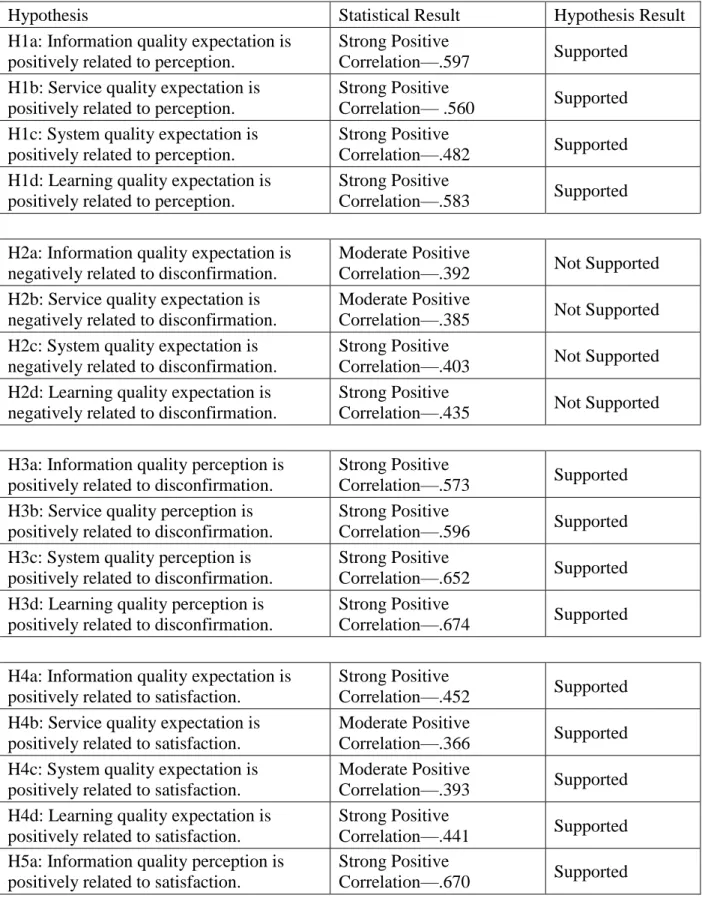
Table 18. Synopsis of Hypotheses and Findings ... 94
Table 19. Courses by Completion Level for Participants ... 100
Table 20. Total Variance Explained ... 104
Table 21. Result Estimates with and without Common Latent Factor (CLF) ... 108
LIST OF FIGURES
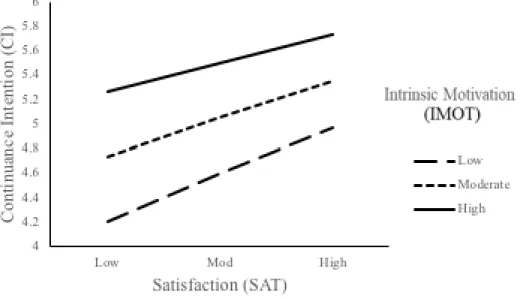
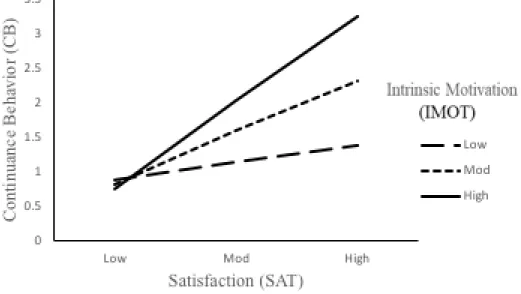
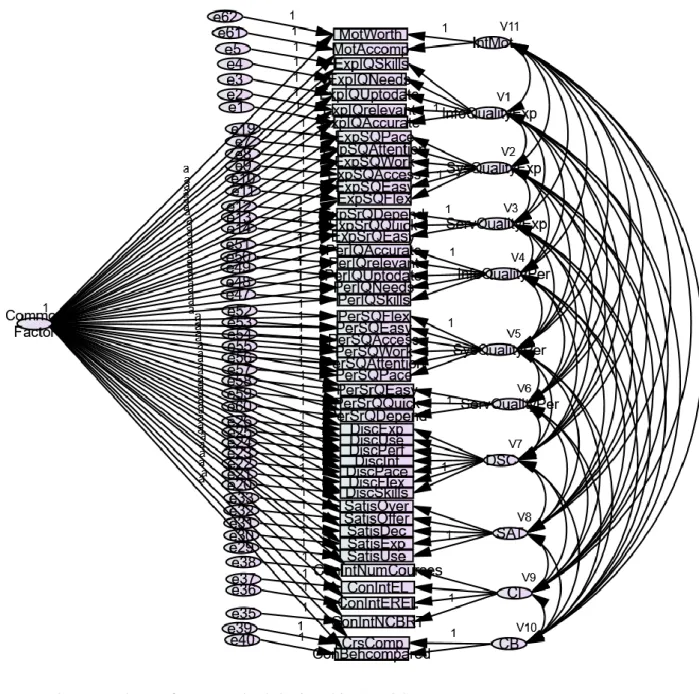
Figure 1. The conceptual framework used in this study. ... 19 Figure 2. This is Oliver’s (1977) Expectation Disconfirmation Theory (EDT) model. ... 27 Figure 3. This is the DeLone and McLean (2003) Information System Success (D&M ISS) model... 32 Figure 4. The proposed research model including this study’s referenced hypotheses. ... 34 Figure 5. Interaction Plot for Intrinsic Motivation and Satisfaction on Continuance Intention 102 Figure 6. Interaction Plot for Intrinsic Motivation and Satisfaction on Continuance Behavior 103 Figure 7. Common Latent Factor Method Depicted in AMOS ... 107
ACRONYMS
ACB Actual Continuance Behavior
AMOS Analysis of a Moment Structures
ANOVA Analysis of Variance
CB Continuance Behavior
CBC Continuance Behavior Compared
CI Continuance Intention
CLF Common Latent Factor
CMV Common Method Variance
CPD Continuing Professional Development
CPE Continuing Professional Education
CVI Content Validity Index
D&M ISS DeLone and McLean Information Systems Success
DHS Department of Homeland Security
DSC Disconfirmation
ECM Expectation Confirmation Model
ECT Expectation Confirmation Theory
EDT Expectation Disconfirmation Theory
eLSS elearning Satisfaction and Success Survey
EMOT Extrinsic Motivation
FEMA Federal Emergency Management Agency
GS General Satisfaction
I-CVI Item-Level Content Validity Index
IMOT Intrinsic Motivation
IQE Information Quality Expectation
IQP Information Quality Perception
IS Information Systems
IT Information Technology
LMS Learning Management System
LQE Learning Quality Expectation
LQP Learning Quality Perception
LSU Louisiana State University
MOT Motivation
MV Marker Variable
NOSQ Neutral Objects Satisfaction Questionnaire NTED National Training and Education Division
SAT Satisfaction
SDT Self-Determination Theory
SME Subject Matter Expert
SPSS Statistical Package for the Social Sciences
SyQE System Quality Expectation
SyQP System Quality Perception
SrQE Service Quality Expectation
SrQP Service Quality Perception
NOMENCLATURE
Acceptance—the initial use of eLearning (Chiu et al., 2005)
Andragogy—“the art and science of helping adults learn” (Knowles, 1980, p.43)
Asynchronous—not existing or happening at the same time; when learning happens online but is not happening at the same place or same time within a group of learners (edglossary.org, n.d.)
Confirmation—positive disconfirmation; performance is better than expected
Continuance (completion, persistence, actual use; courses completed)—use behavior; self-reported use (Petter & McLean, 2009)
Continuance intention—stated likelihood to engage in a behavior (Oliver, 2014); intention to continue to use or courses intended to complete
Continuing professional development (CPD) (also continuing professional education,
professional learning, or staff development)—an area of adult and continuing education that concerns professional groups and their ongoing learning and development (Coady, 2015; Jeris, 2010); means by which professions across the world ensure that their knowledge and skills remain up-to-date and relevant to changing needs and
environments; a significant contributor to the quality and reputation of professions as well as the quality of national and international social life and economic wellbeing (Friedman, 2012); a field of practice and study focused on the ongoing learning needs of professionals (Cervero, 2001)
Disconfirmation—when discrepancies occur (being better or worse than expected) between prior expectations and actual performance or observation (Churchill & Suprenant, 1982; Oliver, 2014)
eLearning (electronic delivery of learning; also e-learning, online learning, or web-based training)—the education and instruction of learners with the aid of technology (Clark & Mayer, 2003; Moore, Dickson-Deane, & Galyen, 2011; Phillips et al., 2011); the provision of content through technology and using pictures, words, and video to help learners reach learning objectives thereby improving their employing organizations (Clark & Mayer, 2003)
Emergency response—actions taken by emergency responders to react to a disaster
Emergency responders—those responsible for the protection and preservation of life, property, evidence, and the environment. Emergency responders can include anyone in the following categories: fire service, law enforcement, emergency medical services (EMS), hazardous materials response, public safety communications, public health, healthcare, emergency management agency, public works, and governmental administrative personnel (Who Do We Serve?, 2016)
Expectation—predicted or anticipated performance (Churchill & Suprenant, 1982; Oliver, 2014) Expectation Disconfirmation Theory (EDT) (also known as Expectation Confirmation Theory,
Expectancy Disconfirmation Theory, and Expectancy Confirmation Theory)—a theory that seeks to explain post-purchase or post-adoption satisfaction as a function of pre-usage expectations, post-pre-usage perceived performance, and disconfirmation of beliefs First responders—those emergency responders, usually the first to arrive, who are responsible for
assistance; usually includes emergency management, emergency medical services, fire service, governmental administrative, hazardous materials personnel, healthcare, law enforcement, public health, public safety communications, and public works (NTED, n.d.)
Human resource development (HRD)—“a process for developing and unleashing human expertise for the purpose of improving performance” (Swanson & Holton, 2009, p. 99); “The field of study and practice responsible for fostering long-term, work-related learning capacity at the individual, group, and organizational level of organizations” (Watkins, 1989, p.427)
Information quality—the characteristics of the eLearning output such as accuracy, timeliness, and completeness (DeLone & McLean, 1992, 2003; Petter & McLean, 2009)
Intrinsic motivation—the natural tendency for a person to want to learn and be a part of something (Davis, Bagozzi, & Warshaw, 1992; Venkatesh, 1999; Yoo, Han, & Huang, 2012)
Law enforcement—individuals who work, on a full-time, part-time, or voluntary basis, for agencies at the local, municipal, and state levels with responsibilities as sworn law enforcement officers (NTED Catalog, n.d.).
Learning—the process by which people gain knowledge, sensitiveness, or mastery of skills through experience or study (Houle, 1980)
Learning management system (LMS)—complex, purpose-built, enterprise-wide software applications that deliver courses and track learner activity (Klein & Ware, 2003) Learning quality—the combination or aggregate of information quality, system quality, and
Lifelong learning (learners)—continuation during a person's lifetime of planned, directed processes for adding and incorporating active learning to an individual’s values,
assumptions, competencies, habits, expectations, motivators, concerns, thought patterns, learning style, attitudes, worldview, and other behaviors (Hoberman, Mailick, & Ebert, 1994)
Motivation—the natural capacity to direct energy in the pursuit of a goal; components related to expectancy and importance (Wlodkowski, 1997)
Perception (of performance)—what users believe about the rendered service or delivered product (Chou, Lin, Woung, & Tsai, 2012)
Professional development—the enhancement of thought, information processing, problem solving, decision making, and reasoning and judgment skills and the ability to attain expertise by taking a more intuitive approach to the topic (Daley, 2000)
Quality—judgement or performance excellence (Oliver, 2014)
Satisfaction—when users or consumers are pleasurably fulfilled after comparing performance to their expectations (Oliver, 2014); the approval or likeability of CPD eLearning and its output (Petter & McLean, 2009)
Service quality—support of the learners, often measured by responsiveness, reliability, and empathy of the support organization (Petter & McLean, 2009)
System quality—technical performance of the eLearning system in terms of reliability,
convenience, ease of use, functionality, and other system metrics (DeLone & McLean, 1992, 2003; Petter & McLean, 2009)
Workforce development—“systemic coordination between public and private work programs, policies, and contexts” (Roth, 2004, p. 10)
ABSTRACT
This study set out to investigate the Continuing Professional Development (CPD) eLearning participation and completion phenomenon of learners and to explore motivation of CPD eLearning intentions and completions. This study focused on why learners choose CPD eLearning and why they continue in CPD eLearning. Based on the Expectations Disconfirmation theory (EDT) and the DeLone and McLean Information Systems Success Model (1992), a survey was developed and then sent to a cross-section of registered CPD eLearners from the first
responder community. After the data was collected 217 responses were analyzed with SPSS correlational techniques and through PROCESS which is a modeling tool. The study found that overall information, service, system, and learning expectations and perceptions of quality are positively related to each other as well as disconfirmation and satisfaction. Furthermore,
disconfirmation was found to be positively correlated to satisfaction. Continuance intention and continuance behavior were positively related to each other as well as to satisfaction, respectively. Intrinsic motivation did have a moderation effect on satisfaction as it related to continuance intention and continuance behavior. Although generalization of the results should be exercised with caution, this study offers implications to CPD eLearning research and theory building with relation to disconfirmation, satisfaction, motivation, continuance intention, and continuance behavior. Many variables, ultimately, positively affect CPD eLearning continuance. Learners that are more satisfied tend to continue in CPD eLearning, but also have the motivation to continue in other types of eLearning. CPD eLearning quality and the learner’s motivation should not be forgotten if learner continuance is the goal. Continuance behavior is related to the
learner’s satisfaction. All parties involved in the development and delivery of the CPD eLearning should be mindful. The study fills a gap in the CPD eLearning literature. This study had a mix of
first responders that had and had not completed the CPD eLearning. This provides a different perspective than most studies tend to gather.
CHAPTER 1. INTRODUCTION
1.1 Background and Rationale
Globally, millions of adults engage in professional development opportunities using technology (Friedman, 2012; Ambient Insight Research, 2015; Horrigan, 2016; Ross, Barr, & Stevens, 2013). As technology evolves, so does its hosting capacities for serving the educational and learning needs of adults seeking to hone their knowledge and skill development (Sleezer, Conti, & Nolan, 2004). The demand for technology-based workplace learning and training presents an interesting and complex dynamic worth exploring (Bierema & Eraut, 2004; Horrigan, 2016). Only 10 years ago, online learning was still an emerging trend in higher education and the workplace (Chen, Lin, & Kinshuk, 2008; Kidd, 2010). But today, according to a 2016 Pew Research Center report, 36% of all adults are professionals who have taken training to improve their job skills, advance their careers, or obtain a license or certification (Horrigan, 2016). This report also found that 55% of those professionals completed their learning on the internet. The education and instruction of learners with the aid of technology, also known as eLearning (Clark & Mayer, 2003; Moore, Dickson-Deane, & Galyen, 2011; Phillips, McNaught, & Kennedy, 2011), continues to influence research in the human resource development (HRD) and adult learning fields after many years (Mansvelt, Suddaby, O'Hara, & Gilbert, 2009; Park & Choi, 2009).
While continuing professional development (CPD) has been widely studied (Houle, 1980; Coady, 2015), more research is needed to better understand the factors related to its continued use through the mechanisms of eLearning. CPD is the field of practice and study that includes formal, nonformal, and informal approaches to the continual learning and development of professionals (Eraut, 1994; Jeris, 2010). CPD offered via eLearning (CPD eLearning) is often
employed to deliver training (ASTD, 2012; Russ-Eft, Watkins, Marsick, Jacobs, & McLean, 2014) to reach learners and workforces that are spread out geographically and to train emergent skill demands quickly and in real time (ASTD, 2013; Russ-Eft et al., 2014). Although the majority of adults tend to learn in an elective manner, much of the research has focused on employer-mandated eLearning (Eraut, 2004; Merriam, Caffarella, & Baumgartner, 2007; Tough, 1978). In andragogy, which is defined as “the art and science of helping adults learn,” adult learners are characterized as more self-directed and independent (Knowles, 1980; Knowles, Holton, & Swanson, 2005). Both employees and the organization depend on nonformal, informal, and formal learning opportunities as they relate to employee tasks, knowledge, and products (Baskett & Marsick, 1992; Li, Brake, Champion, Fuller, Gabel, & Hatcher-Busch, 2009; Merriam, Caffarella, & Baumgartner, 2007).
As the need for professional skill and knowledge grows, many public and private
organizations seek opportunities to meet the continuing education demands so they can strive for continuous quality improvement and greater public accountability (Bierema & Eraut, 2004; Coady, 2015). Thoughts about CPD might immediately call to mind teachers who find themselves in a constantly changing field where they need to stay current on instructional methods and best practices (Cranton, 2016; Myers, 2013). Healthcare professionals may also come to mind since they must stay abreast of new symptoms, treatments, and technologies (Joyce & Cowman, 2007; Liang & Wu, 2010; Ross et al., 2013). First responders should come to mind as well. For first responders, successful, high-quality CPD eLearning is a matter of life or death because their services depend heavily on the proper use of high-level skills (Collin, Van der Heijden, & Lewis, 2012; Dirkx, Gilley, & Gilley, 2004). Emergency medical technicians (EMTs), as first responders, are now expected to have more than a certification in basic
emergency services; now they must be able to conduct an effective tactical response to prevent or mitigate a terrorist incident involving a radiological, biological, or chemical agent. Better performance in both the assessment of and response to these situations leads to improved accountability results for the public. Although many professions participate in CPD eLearning, much of the literature and research reports that the areas of medicine, nursing, and first response are increasingly using this mode of training (Friedman, 2012; Wetta-Hall et al., 2006). In addition, there are many other non-medical first responders, such as law enforcement and fire service, who also rely heavily on CPD eLearning to ensure quality performance. The uptake of CPD eLearning among these occupational groups is only likely to increase. Therefore,
understanding how to improve CPD eLearning among these occupational groups is an important issue for investigation (Friedman, 2012).
CPD eLearning empirical research stands to make a great impact and add value to the literature by understanding how to improve the degree to which eLearners successfully complete CPD eLearning (Phillips et al., 2011; Russ-Eft et al., 2014), particularly among first responders who depend upon it so greatly (Coady, 2015). Additionally, research into improved participation in and completion of CPD eLearning is of great importance to the field of HRD since it is tasked with ensuring that organizations properly prepare and develop people. While some organizations provide excellent opportunities for CPD eLearning, many adults, particularly first responders, rely on career self-management to enhance their knowledge, skills, and performance in their current role. Research that accounts for the unique career self-management challenges of first responders (as opposed to traditional students in higher education degree programs where a significant portion of the eLearning literature is situated) is needed to establish the proper
method, support structures, and tools that can support CPD completion and success for first responder occupations.
Cherrstrom, Robbins, & Bixby (2017) conducted a systematic analysis in the Adult Learning journal based on adult and continuing education topics covered from 2006 to 2015. Training- and professional development-focused articles represented 7.6% of the articles in the journal’s publications during the study’s time period. Teaching, learning, and curriculum were at the top with about 26.2%, literacy was at 13.1%, and international was at 11%. Conceptual research design was the most widely used at 72.4% with empirical at 27.6%. This study also highlighted the need for more research in non-academic field settings. For these reasons, this study investigated the user experience and completions of CPD eLearning among first
responders.
1.2 Why Study First Responders?
Many studies describe incidents surrounding the September 11, 2001 (9/11), events as so disastrous and massive that it is no wonder that they served as a catalyst to research and changes within many professions, communities, and organizations (Pattillo, 2003). Those catastrophic events stimulated the creation of the Department of Homeland Security (Homeland Security Act of 2002, 2002) with its initial mission of preventing terrorist attacks, reducing vulnerability, and minimizing damage while assisting with recovery. For many, the events of 9/11 would also serve as a learning stimulus that motivated learning and training by individuals and organizations (London & Sessa, 2007). Additional and more recent successful terrorist acts such as the Boston Marathon bombings continue to call attention to the national importance of proper preparation and training in counterterrorism (Dodds, 2013; Shane, 2013). Researchers are interested in learning more about steps taken to improve the state of preparedness, response, and training in
communities where devastating, terror-related events have already challenged first responders (Bailey & Cree, 2011; Wetta-Hall, Fredrickson, Ablah, Cook, & Molgaard, 2006).
Although the Global Terrorism Database has found an overall decline in terrorist attacks over the last three decades (National Consortium for the Study of Terrorism and Responses to Terrorism [START], 2012; Shane, 2013), researchers believe that thwarted attempts of terrorism (Carafano, Bucci, & Zuckerman, 2012; Dahl, 2011) further support the necessity for disaster and counterterrorism training. In the United States, first responders are challenged in environmental- and human-initiated threats that require quick decision making and actions (Dahl, 2011; Davis et al., 2004). Citizens and communities rely on the government to be the leader in providing training for first responders in emergency management of disasters, crises, and threats. Before answering the call to mass consequence events, first responders must learn the necessary knowledge, skills, and abilities to perform successfully. For first responders to properly train towards successful individual and organizational performance, they need access to on-demand, geographically independent opportunities for job-relevant learning (Park & Jacobs, 2011; Hager, 2004; Jarvis, 2010).
1.3 Continuing Professional Development (CPD)
CPD is the field of practice and study that includes formal, nonformal, and informal approaches to the continual learning and development of professionals (Eraut, 1994; Jeris, 2010). CPD is used synonymously with lifelong learning (Collin et al., 2012). Although most American research and literature has used the term continuing professional education (CPE), this study used the terminology of CPD which is often used synonymously in the literature. There are many other terms associated with CPD including professional learning, professional
development, and staff development to name a few (Coady, 2015). Through CPD, many adults keep up with new developments, achieve skill mastery, seek to understand the connections of
their field to related disciplines, and grow as people as well as professionals (Houle, 1980). Since many terms are used to define and represent CPD, it is worth clarifying the term for the purpose of this study. The term continuing is used because individuals must have the desire and motivation to continue to learn whether mandated or not. The term professional is used because these learners are the people who are in control of their career and their learning. The term development is used because these professionals must pursue their own development to provide a great service to those who count on them.
Global research points to the idea that workplace learning, organizational learning, and CPD affect individual and organizational performance regardless of whether the learning is formal, informal, or nonformal (Friedman, 2012; Hager, 2004; London & Sessa, 2007; Park & Jacobs, 2011; Wetta-Hall et al., 2006). Many formal offerings include organized conferences, courses, or educational events (Friedman, 2012; Jeris, 2010). Informal learning has been associated with greater flexibility and freedom (Eraut, 2004). Informal learning activities provide opportunities for research (Bailey, 2015; Eraut, 2004). The control is primarily in the hands of the learners, so self-perception and self-awareness are critical (Collin et al., 2012). Even after professionals have gained formal knowledge as a requirement for their profession, they need further development past their initial training (Bierema & Eraut, 2004). They may need to prove their authority or establish accountability to those they serve (Bierema & Eraut, 2004). Professionals must be able to respond quickly to change (Ross et al., 2013). They must demonstrate responsibility and a commitment to develop themselves beyond school, college, or university programs to be successful (Coady, 2015; Collin et al., 2012; Houle, 1980; Ross et al., 2013). If professionals participate inconsistently or erratically in CPD, then it would seem natural that the quality of their service might also be inconsistent and erratic (Bailey, 2015).
Many national and international entities have begun recognizing that voluntary learning and development as well as lifelong learning continue to increase in importance for individuals, organizations and, ultimately, society (Coady, 2015; Collin et al., 2012).
Many professionals participate in licensing and credentialing programs mandated by their professions (Friedman, 2012). Many occupations have recognized the need to ensure that their professionals continue learning beyond pre-professional education, so they can provide better service over their lifetime of practice (Collin et al., 2012; Houle, 1980; Van Loo & Rocco, 2006). The medical field took the first step in establishing licensure and certification systems in the early 1900s (Cervero & Daley, 2016). During the 1980s, many professions increased their usage of CPD for licensing and certifying.
In 2015, almost 51% of the total workforce, nearly 81 million, were professional workers in the United States (AFL-CIO Department for Professional Employees, 2015). This has
doubled from 25% as reported in 1988 (Cervero, 2000; Van Loo & Rocco, 2006). Data also shows that, in CPD, demographics and the work environment may be factors in determining effectiveness (Daley & Cervero, 2016). CPD engagement and continuance are often topics of study in the research. Barriers of interest include personal factors such as energy, motivation, and self-efficacy (Ross et al., 2013). In addition, other barriers in the research include the ability to access appropriate learning opportunities and to physically get to the CPD offering (Ross et al., 2013). Some researchers have also discussed the limitation found in that most providers assume that attendance equals learning (Daley & Cervero, 2016; Webster-Wright, 2009).
1.4 Continuing Professional Development (CPD) and Human Resource Development (HRD)
Although they are independent from each other, the human resource development (HRD) research and the CPD research continue to contribute to each other because of their many
similarities (Daley, 2004; Dirkx & Austin, 2002; Van Loo & Rocco, 2006). A collective set of articles provided a viewpoint on HRD and CPD boundaries including their similarities and differences and where they converge on theory and research (Jeris & Daley, 2004). Even today, it seems the two areas and their knowledge remain on separate paths, but the real world
continues to merge them, which keeps citation lists very small (Daley, 2004; Jeris & Daley, 2004). Research refers to them as yoked concepts because of the degree to which they are related (Daley, 2004; Roth, 2004; Sleezer, Conti, & Nolan, 2004). Both manage to provide development that aims at improving individuals’ knowledge level, but HRD also emphasizes performance (Sleezer, Conti, & Nolan, 2004; Van Loo & Rocco, 2006). Collaboration between the two fields can assist in theory building and practice development to improve each in many ways (Daley, 2004).
HRD continues to examine its definition, origin, aims, and goals (Bierema & Eraut, 2004; Roth, 2004; Sleezer, Conti, & Nolan, 2004). Kuchinke (2001) referred to HRD as a field with multiple disciplines. Theoretical models from the economics, industrial psychology, adult learning, organizational behavior, and management fields that emphasize systems theory help to shape HRD (Watkins, 1991). Although not the most popular view, research has found a few HRD definitions which recognize that HRD may take place both inside and outside of the workplace (Hamlin & Stewart, 2011). After a thorough review and thematic analysis of definitions that have been shared for HRD, Hamlin and Stewart (2011, p. 210) found four common core purposes, which are
• “improving individual or group effectiveness and performance,” • “improving organisational effectiveness and performance,” • “developing knowledge, skills, and competencies,” and
• “enhancing human potential and personal growth.”
Research shows that it is important to view HRD, CPD, and workforce development as an integrated system while keeping in mind all stakeholders (Bierema & Eraut, 2004; Roth, 2004). When comparing CPD and HRD, a common element is the workplace (Bierema & Eraut, 2004; Roth, 2004). Much of the CPD research fails to connect because scholars and practitioners stay close to organizations within their individual professions (Roth, 2004). More HRD
professionals are tasked with managing CPD due to the increased number of professionals having to complete CPD requirements (Sleezer, Conti, & Nolan, 2004; Van Loo & Rocco, 2006). Higher education institutions are not the sole or the primary providers of CPD. CPD providers include professional associations, employers, independent for-profit organizations, and governmental agencies (Van Loo & Rocco, 2006; Sleezer, Conti, & Nolan, 2004). Change is a vital component of success for CPD and HRD when focused on updating knowledge and expertise (Dirkx, Gilley, & Gilley, 2004).
1.5 eLearning
Even though the early 1900s brought about communication and teaching over the radio signals, technology did not take a major leap until much later. Since the 1960s, technology has been experiencing an evolution that has brought it from curiosity to full integration, including teaching and learning, into our daily lives (Harasim, 2000; Kidd, 2010; Lowenthal, Wilson, & Parrish, 2009; Phillips et al., 2011). Harasim (2000) claimed that online learning was born not too long after the invention of email in the 1970s. The world is truly digital, and technology may soon be essential to learning. The world continues to provide many different choices of not only what to learn, but how to learn.
While eLearning is certainly not new, there is still no consensus on its meaning or even the terminology used to describe the concept (Guri-Rosenblit & Gros, 2011; Kidd, 2010;
Littlejohn & Pegler, 2007; Moore, Dickson-Deane, & Galyen, 2011; Phillips et al., 2011). Researchers found that learning environments are often labeled inconsistently. It is best to describe a learning environment by its instructional characteristics which includes the technology used and the actual context (Caudill & Reeves, 2012; Friesen, 2009; Littlejohn & Pegler, 2007; Lowenthal et al., 2009; Moore et al., 2011; Phillips et al., 2011; Slotte & Herbert, 2006). Past research discussed the importance of having the context described when using the terminology so that there is better understanding of how exactly the term is being used, and thus less confusion among practitioners and policy makers.
The issue of having varied expressions and meanings causes difficulty when trying to connect concepts that may be related (Lowenthal et al., 2009). It will be more difficult for generalizations and comparisons unless everyone starts to speak the same language. Another aspect is that eLearning is a multi-disciplinary field and ever changing, therefore it has been evaluated and researched differently (Friesen, 2009; Phillips et al., 2011). Friesen (2009) posited that eLearning research should take the multi-disciplinary field of knowledge to promote more efficiency, effectiveness, and accessibility with better investigation and optimization of its use (Lowenthal et al., 2009). Lowenthal et al. (2009) provided a very good review, synthesis, and expansion of classifications with more specific language to limit some commonly encountered issues. These issues include confounded research results, confused practitioners, and limited course design. Lowenthal et al. (2009) pointed out issues with journal articles and submission restrictions that might have limited the details shared about the eLearning context.
Unfortunately, eLearning does not have a long history of rigorous research (Kidd, 2010; Lowenthal, Wilson, & Parrish, 2009; Phillips, McNaught, & Kennedy, 2011). Overall, much of the research is anecdotal, is not very systematic or empirical, and is not very generalizable to
different audiences (Collin et al., 2012). Much of the research also represents studies conducted on students in higher education (Chen et al., 2008; Kidd, 2010). General searches for eLearning or online learning-related articles manifest many hits. By narrowing the databases used and the types of articles, a more manageable and stronger, yet smaller, literature base is evident (Waight & Stewart, 2009).
1.6 CPD eLearning: Putting it all Together
Many organizations provide CPD in various delivery settings and modalities (Cervero, 2000; Cervero & Daley, 2011, 2016; Coady, 2015; Dirkx & Austin, 2005). More self-directed learning options such as interactive, mobile, and even social media provide greater flexibility to professionals (Cervero & Daley, 2016). CPD has incorporated distance education for a long time, but technology has continued to alter how CPD providers prepare their offerings (Daley, 2004; Roth, 2004; Umble & Dooley, 2004). CPD eLearning has provided an opportunity for professionals to access learning at any time and from anywhere. This study focused on CPD eLearning in a context where learners access and take courses with no interaction from a live instructor nor collaboration with other learners.
Research gives many reasons for opting to use technology as a medium for the delivery of CPD eLearning (Caudill & Reeves, 2012; Daley, 2002; Long, Dubois, & Faley, 2009; Waight & Stewart, 2009). For example, the U.S. economy has been very unstable for quite some time. Given the issue of decreasing budgets, which are under even more scrutiny these days, there is always a search for how to deliver training more efficiently and effectively. The majority of CPD eLearning does not occur at the workplace; often, it is offered by a for-profit provider (Cervero, 2001), a public university, or a governmental agency (Umble & Dooley, 2004). At the same time, CPD offerings, especially in distance education and eLearning delivery formats, have increased in workplaces (Cervero, 2001; Van Loo & Rocco, 2006). Despite the increase in CPD
eLearning over the years, little is known about who participates and what factors may be related to actual completion and continuance. There is a need for CPD eLearning research to take a multi-disciplinary approach to promote more efficiency, effectiveness, and accessibility with improved investigation (Friesen, 2009).
There is often the dilemma of measuring and evaluating success (Umble & Dooley, 2004; Cervero & Daley, 2016). Although they do not charge directly for their services, public sector organizations must produce evidence of the outcomes of their programs (Umble & Dooley, 2004). The need for a more business-minded plan with stronger strategic and marketing focus is evident (Umble & Dooley, 2004). The ultimate winners or losers of CPD eLearning end up being the customers who use or pay for the services (Umble & Dooley, 2004). CPD eLearning must be designed and delivered with quality that will satisfy multiple categories of stakeholders (Umble & Dooley, 2004). The type of transformation necessary for CPD eLearning is usually specific and immediate for individuals as they are expected to perform certain behaviors in any type of setting (Caudill & Reeves, 2012; Ubell, 2010).
Adult learner characteristics, instructional design, and the comfort of the technology may affect CPD eLearning continuance (Umble & Dooley, 2004). However, lack of time, course enrollment procedures, low employee motivation, and employee turnover have been found to affect CPD eLearning success in the educational and work contexts (Long, Dubois, & Faley, 2009). Adult learners may also feel that their needs are not being met, and they subsequently may not complete the course or program (Umble & Dooley, 2004). Barriers to completion may vary in specificity, but Umble and Dooley (2004) classified most to be situational, institutional, dispositional, or epistemological. Situational barriers included a poor learning environment or other responsibilities of the learners. Institutional barriers included cost or institutional
procedural problems. Dispositional barriers included those that are more inherent to individuals such as time management, interest, motivation, and attitude towards the content. Some research cites that communication techniques and self-efficacy may also be barriers to assess (Umble & Dooley, 2004).
1.7 Satisfaction to Continuance (Intentions and Behaviors)
Both practitioner reports and scholarly research show the global outlook will continue to have great growth in the availability of self-directed, self-paced CPD eLearning (DeRouin et al., 2005; Docebo, 2014). Learners have a choice in selecting and completing CPD eLearning. For those who make the initial investment, the ultimate return is not realized if people do not use the CPD eLearning (Lee, Hsieh, & Hsu, 2011). Research has called attention to the importance of studying completion barriers to voluntary CPD eLearning, including the need to determine whether host organizations achieve a return on investment (Long, Dubois, & Faley, 2009).
Many factors affect whether or not individuals will do something or take action on something. In CPD eLearning, learners must adopt the particular technology that is acceptable for their need. Thereafter, continuance is predicated on their decision to continue with their initial choice. Fishbein (1967) provided early research on the Theory of Reasoned Action (TRA) which discussed individuals’ attitudes as well as the importance of how others perceive and react to particular actions. The choice to choose and continue CPD eLearning can certainly involve the perceptions of the learners, their supervisor, their organization, and even their colleagues. The Theory of Planned Behavior (TPB) extended the TRA by incorporating the possibility of constraints that have been placed on individuals when their intentions have been to behave in a particular manner. The perceived behavior control defined individuals’ perceived level of difficulty to perform a behavior. This is generally classified on a continuum based on the level of difficulty for several areas including effort and resources (Ajzen, 1985). Earlier research
already established the link between satisfaction and post-purchase decisions (Oliver, 1980) and, in this case, continuance behavior or actual use.
An advantage of CPD eLearning that may relate to first responders includes the asynchronous aspect for its flexibility and ease of access (Caudill & Reeves, 2012). Because often times eLearning is a self-selection decision (considered informal training) that learners complete as a self-paced and self-directed model (Bailey, 2015; Moore et al., 2011), Long et al. (2009) identified barriers and issues to completion. Some of these barriers included lack of time, poor course enrollment process, low employee motivation, and employee turnover.
Moreover, there is a great deal of interest in research related to CPD eLearning, and specifically pertaining to reasons for dropouts and attrition as well as completion rates and contributing factors to persistence in eLearning (e.g. Hardman & Robertson, 2012; O’Connor, Sceiford, Wang, Voucar-Szocki, & Griffin, 2003; Umble & Dooley, 2004). Hardman and Robertson (2012) also discussed some success factors associated with adult learning
participation which included being younger, having higher levels of education, having a job, being highly skilled, having a white-collar job, and working at a large organization (Tuijnman & Boudard, 2001).
Related studies have addressed continuance intention (e.g., Chiu, Hsu, Sun, Lin, and Sun, (2005); Chiu, Sun, Sun, & Ju., 2007; Chiu & Wang, 2008; Liao et al., 2007; Roca et al., 2006; Waight & Stewart, 2009). The actual learning experience is credited with being important in learners’ beliefs, attitudes, and continuance intention. Roca et al. (2006) explored expanding the Technology Acceptance Model (TAM) by using constructs from the Expectation
Disconfirmation Theory (EDT) as well as including quality elements from DeLone and McLean (1992). If this occurred, organizations such as the eLearning provider in this study might
experience high attrition and high incompletion rates. O’Connor et al. (2003) recommended that organizations not use the eLearning dropout rate as a primary indicator of success; they did recommend, however, that organizations review the design, implementation, supporting system and overall strategy if the attrition rate reaches 50% or greater. Continuance intention and continuance, or actual use, definitely warrant some attention (Lin, 2011).
1.8 Statement of the Problem
Many individuals, organizations, and associations have found eLearning to be the best method of delivery for CPD (National Intelligence Council, 2012; Russ-Eft et al., 2014; Umble & Dooley, 2004). CPD eLearning uses technology to engage adult learners in continuing professional development (Coady, 2015; Umble & Dooley, 2004). Agencies, associations, and other organizations often offer CPD eLearning as a way for adult learners to progress or maintain their status in their professional careers (Clark & Mayer, 2003; Merriam, Caffarella, &
Baumgartner, 2007; Moore, Dickson-Deane, & Galyen, 2011; Phillips et al., 2011). Although CPD eLearning seems to be an ideal delivery means for efficiently distributing standardized cost-effective training, a significantly low percentage of enrolled learners complete the training through this delivery format (Jun, 2004, 2005; Long, Dubois, & Faley, 2009).
There is existing research on CPD eLearning, but it is limited in these three ways. First, there are different outcome measures of success. Learners all have their own perception of the quality of the training (Sleezer, Conti, & Nolan, 2004). Too often learner satisfaction and program success are measured as the number of learners that actually complete courses (Chiu et al., 2005; Levy, 2007). Feedback may also need to be collected from learners who did not complete the entire course so that a full view of whether CPD eLearning was successful can be obtained. Second, overly simplistic models may not control for the degree to which these variables simultaneously (or even interactively) contribute to the learning experience. Several
factors must be balanced to develop a more holistic understanding of CPD eLearning. Research designs that omit any of these variables might overlook the chance to explore the relationship of satisfaction to continuance behavior starting with learners’ expectations and perceptions. High dropout failure rates, avoidance of courses due to poor quality reputation, poor learning
outcomes as well as poor return on investment limit training effectiveness and spotlight the importance of understanding mechanisms and factors that enhance learner satisfaction with and completion of professional development (Baskett & Marsick, 1992; Ke, 2010; Li, Brake,
Champion, Fuller, Gabel, & Hatcher-Busch, 2009; Merriam et al., 2007). The third limitation is that many models do not account for actual continuance in the design. This does not allow the researcher to fully understand how learner satisfaction leads to continuance and actual training completion.
A pervasive CPD eLearning problem is that many learners do not complete the courses they begin (Jun, 2004, 2005; Long, Dubois, & Faley, 2009). Since learners did not continue or complete the course material, many view those courses as failures or as an unsuccessful result of eLearning. After all, it is impossible to count or evaluate learner completion that does not exist (Sun, Tsai, Finger, Chen, & Yeh, 2008).
As progress into this digital age continues, more associations and organizations want to increase their online course and program offerings because of the benefits offered by eLearning as evidenced in the 2012 ASTD State of the Industry Report (Miller, 2012). Although
Kirkpatrick reactions criteria is often used as an evaluation for training in isolation (Kirkpatrick & Kirkpatrick, 2007), critics of the model point out that within the CPD eLearning context, learners have to continue and complete eLearning to give this feedback. Therefore, this criteria
alone does not sufficiently assess or predict learner satisfaction with CPD eLearning or their continuance behavior.
The CPD eLearning process involves many procedures and systems. First, CPD eLearners are motivated intrinsically or extrinsically to select eLearning as their preferred learning format for a particular topic (Deci, Koestner, & Ryan, 2001). Even before learners fill out an online registration form, they have established expectations on the quality of that training (Oliver, 1977, 1980 ; DeLone & McLean, 1992). Learners have already begun asking
themselves these quesitons. Will the system work properly? Will the content be what I need? Will the provided service meet my needs? Then, after registering in the CPD eLearning used in this study, learners were issued a user name and password along with the website information so they could enter the learning management system (LMS). Once they logged in, learners could take several courses. All courses had a pre-test module, one or more content modules, and a post-test module. Learners could contact CPD eLearning representatives through email or by phone with questions or for assistance. Learners could even chat online through the LMS. Some learners even sent their communications through Facebook, Twitter, and YouTube. Through this process, the learners began forming perceptions based on their initial expectations. This
determined, in turn, if the learners were satisfied and, ultimately, their intention and actual continuance in the courses (Oliver, 1980). Also, learners initial motivation to register for CPD eLearning provided some insight on whether they ultimately completed a course (Deci et al., 2001).
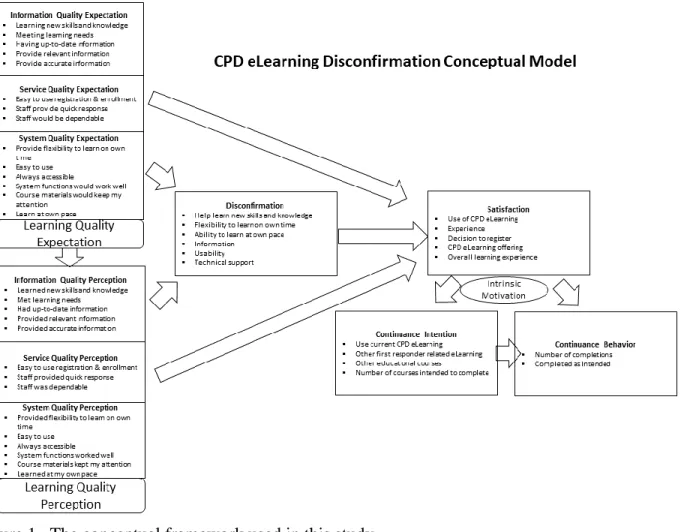
As depicted in Figure 1, this study focused on CPD eLearning continuance, or the process of progressing through a training program until completion. This researcher suggested that learner expectations were very important factors that affected the outcome and success of CPD
eLearning. When learners decided to participate in CPD eLearning, they began with an anticipation of performance (Churchill & Suprenant, 1982; Oliver, 2014). These expectations and perceptions included specifics on the content, the system, and the service in CPD eLearning. Researchers have long studied how people react when there is a discrepancy between their expectations and their perception of actual performance (Anderson, 1962). Anderson (1962) presented the concept that those whose expectations were too high might have had an even lower level of satisfaction than those who began with lower expectations. Many have built upon that concept and have connected from disconfirmation to satisfaction, which then affected the intent to continue using a particular service or product (Oliver, 1977). In this context, if learners were satisfied with CPD eLearning, they continued to complete the CPD eLearning as they intended. This experience also helped them set expectations for their next CPD eLearning experience. Because motivation has also been discussed in the literature as a critical factor for determining the success of CPD eLearning, the construct is introduced as a moderator between satisfaction and continuance intention and between satisfaction and continuance behavior (Chen & Jang, 2010; Sorebo, Halvari, Gulli, & Kristansen, 2009).
Figure 1. The conceptual framework used in this study.
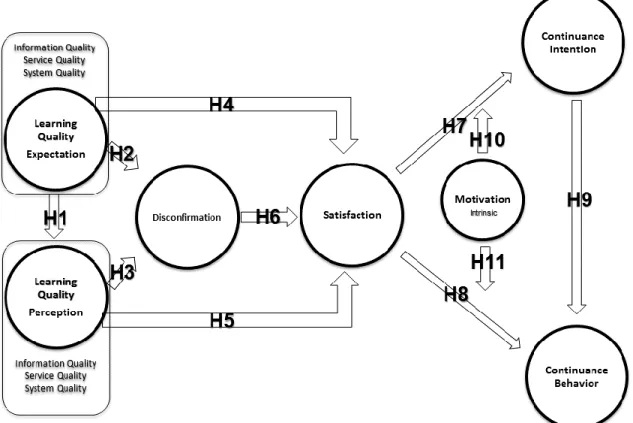
As illustrated in (Figure 1), the conceptual framework in this study assumes that learners form initial quality expectations. Learners then compare their expectations to their perception of the actual events after they have begun participating in CPD eLearning. That comparison of their expectations and perceptions is related to the positive or negative disconfirmation choice. This disconfirmation then has a direct bearing on the learners’ satisfaction level of CPD eLearning. Learners’ satisfaction is also associated with both continuance intention and actual continuance behavior. Continuance intention has also been shown in some instances to predict and correlate to actual continuance behavior. As a moderating variable, motivation is theorized to have a significant relationship with continuance intention and actual continuance behavior.
The Expectation Disconfirmation Theory (EDT) has sought to explain satisfaction as an outcome of expectations, perceptions of performance, and disconfirmation of people’s beliefs (Oliver, 1980). The main components of this conceptual framework include Expectation, Perception, Disconfirmation, Satisfaction, and Continuance Intention. Combining this model with details from motivation research and the DeLone and McLean (2003) Information Systems Success (D&M ISS) model to also focus on the quality and actual use of eLearning may provide a stronger model for CPD eLearning continuance behavior. The research model and hypotheses present the influence of satisfaction on continuance behavior through the theoretical lens of the EDT.
The researcher for this current study postulated that understanding learning quality expectations and perceptions could assist in interpreting when CPD eLearners are satisfied and when they have completed courses. Also included within those expectations and perceptions are variables that specifically look at expectations and perceptions in the areas of information
quality, system quality, and service quality based on the D&M ISS model. This model has a long line of previous studies in the area of information systems and technology that have aimed to show the relationship between these quality constructs and, subsequently, usage intentions, usage satisfaction, and net system benefits. Equally important, this study built upon studies that showed that satisfaction affects continuance intention and actual continuance behavior. As a moderating variable, motivation is also proposed to have an effect on continuance intention and actual continuance behavior.
1.9 Purpose of this Study
In an attempt to investigate factors that may account for CPD eLearning satisfaction and completion, this study examined first responders enrolled in a CPD eLearning training course.
their expectations and perception of eLearning quality, disconfirmation, and satisfaction. This investigation also explored whether learner motivation moderated the relationship between satisfaction and continuance intention or satisfaction and actual continuance behavior. The investigation employed a survey of variables selected through an extension of EDT in order to understand the CPD eLearning experience of first responders.
1.10 Research Objectives and Questions
This research set out to empirically test and address the following:
1. The learning and development industry uses a misspecified model. To date, few studies have included the measure of quality (DeLone & McLean, 2003) in the expectation, perception, and disconfirmation constructs.
a. What are the relationships between expectations and perceptions of CPD eLearning as they relate to the quality of information, service, system, and overall learning?
b. In what way do expectations and perceptions of quality relate to disconfirmation?
2. To propose a theory that better explains the actual link between satisfaction and continuance. By not including the constructs of motivation and actual continuance behavior, the research model may not fully describe relationships and results that may be associated with CPD eLearning continuance intention.
a. Is there a difference between those CPD eLearners who report satisfaction versus those who are dissatisfied with CPD eLearning? How do the
expectations, perceptions, and levels of disconfirmation relate to their level of satisfaction of CPD eLearning?
b. What is the relationship between satisfaction and continuance intention of CPD eLearning?
c. What is the relationship between satisfaction and continuance of CPD eLearning?
d. Does motivation moderate the relationship between satisfaction and continuance intention?
e. Does motivation moderate the relationship between satisfaction and actual continuance?
1.11 Significance and Contribution of Study
Investigation into improved CPD eLearning practices among first responders stands to benefit society by improving the professional learning capacities of a much-needed workforce (e.g., EMS, firefighter, etc.). In addition, such investigation may also benefit eLearning practices by improving the quality and design of CPD eLearning in workplaces that depend on it for essential training and professional development needs.
In addition to the applied contributions, the scientific aspect of this research intends to open the door to combining previously used theories from other areas of research and to test a model that incorporates learner expectations of quality, perceptions of quality, disconfirmation, and satisfaction to provide a more holistic understanding of the eLearning process. For practical purposes, qualitative feedback on information, system, service, and overall learning quality provides more detailed insight into the factors that enhance (or detract from) CPD eLearning. Training sponsors and hosts can use this insight to improve the training process and to lead the industry to a better understanding of what affects learners’ intentions to complete CPD
1. This study adds to the EDT literature on motivation, quality, and continuance. 2. This study adds to the CPD literature on eLearning and first response.
3. This study adds to the eLearning literature on first response and CPD.
4. This study adds to the HRD literature on first response, eLearning, and CPD. Challenges to CPD eLearning have been well-documented (Ke, 2010; Pereira, Ramos, Andrade & Oliveira, 2015; Rey Moreno, Rufín Moreno & Medina Molina, 2013) and have carried both scientific and practical importance, as described in what follows. Learners who drop out of CPD eLearning courses do not typically evaluate the training programs; this results in an incomplete understanding of the role of learner satisfaction on training completion (Jun, 2004, 2005; Long, Dubois, & Faley, 2009; Sun et al., 2008). The reasons for opting out of trainings are not fully understood. This study aimed to address this knowledge gap by shedding light on the mechanisms and factors that link CPD eLearning satisfaction, continuance, and actual continuance behavior (Pereira et al., 2015; Rey Moreno et al., 2013) within the first responder setting.
Practical use may be found by those who create and manage CPD eLearning if a relationship can be found in learner satisfaction that may help to increase completion rates by optimizing factors and constructs investigated in this study. Policy makers and researchers alike can gain necessary insight from this study, which aimed to understand CPD eLearning quality expectations, perceptions (Chiu et al., 2005; McKinney, Kanghyun, & Zahedi, 2002), and satisfaction from a broad spectrum of first responders (Donavant, 2009; Liang & Wu, 2010; Wetta-Hall, Fredrickson, Ablah, Cook, & Molgaard, 2006). Practitioners and scholars seeking a better understanding of CPD eLearning success can benefit from a more robust research design that incorporates a comprehensive set of theoretical variables which are thought to influence
adult learner satisfaction and continuance. A better understanding of how these factors affect learner satisfaction and training completion would allow practitioners to develop better CPD eLearning systems, procedures, and support systems, which would improve these valued human resource training and development outcomes.
Further investigation is necessary to analyze the relationships among CPD eLearner expectations, satisfaction, motivations, intentions, and completions. When course evaluations are conducted only after course completion, the perspectives of those learners who did not continue or complete the learning are omitted from consideration.
CHAPTER 2. LITERATURE REVIEW AND STATEMENT OF HYPOTHESES
“Professions do not become obsolete, but professionals can.” (Hoberman, Mailick, & Ebert, 1994)The following section reviews the literature as it relates to the purpose of this study and provides the basic rationale for this study’s research hypotheses.
This study set out to investigate the CPD eLearning satisfaction and completion phenomenon of adult learners. Given the importance of this question to demand, high-criticality, and highly dynamic fields, observation for this study focused on first responders. The goal was to advance understanding in the relationships among expectations of quality,
perceptions of quality, disconfirmation, and satisfaction of first responders who complete CPD in an eLearning environment. This investigation also explored whether first responders’ motivation moderated the relationship between satisfaction and continuance intention or satisfaction and actual continuance behavior. This study focused on why first responders choose CPD eLearning and why they continue in CPD eLearning.
This study extended the Expectation Disconfirmation Theory (EDT) to investigate relationships among expectations of quality, perceptions of quality, disconfirmation, and satisfaction by examining continuance intention and actual continuance behavior in CPD eLearning. This research also examined the role of motivation as a moderating factor and its importance to satisfaction and continuance. Ultimately, this research sought to test a model that would improve the understanding of variable relationships as it related to satisfaction,
continuance intention, and actual continuance behavior.
As indicated in the conceptual framework (Figure 1), this study borrowed the notion of CPD eLearning continuance as a sequential process that ultimately results in a cyclical learning
loop. As an initial step toward understanding the CPD eLearning process, this study adopted the first loop in the cyclical sequence beginning with developing learning expectations, to
perceptions that emerge during the learning process and which result in ultimate reflections on the satisfaction with the learning experience. The resulting sequence model was the basis for EDT integration into this study’s proposed model. Given the complexity of the model, the following discussion dissects the CPD eLearning process into two parts: first, elaboration on the development of expectations, and second, discussion of learners’ appraisal of learning quality.
This research was interested in investigating why adults engage in the act of learning. Furthermore, it is important to know how adults’ expectations, satisfaction, and motivation play a part in their continuance intentions and behavior. When other types and mediums are
introduced in how content and learning are delivered, other factors may play a part in whether or not adult learners choose to continue the learning.
2.1 Expectation Disconfirmation Theory (EDT)
The Expectation Disconfirmation Theory (EDT) originated in the marketing and consumer behavior areas, but it has been applied to many other contexts including technology where the term Expectation Confirmation Theory (ECT) has been used. EDT can also be applied in areas of adult learning and organizational development; after all, adults involved in learning and training are consumers who demand quality and satisfaction (Dominici & Palumbo, 2013).
Early researchers laid the foundation to support the importance of understanding how consumers react when there is disparity between their expectations and their perceptions of actual performance (Anderson, 1962). Additionally, studies have connected satisfaction to continuance intention and actual continuance or usage (Tse, Nicosia, & Wilton, 1990).
(Chiu et al., 2005). This research study was interested in learning more about factors that may affect continuance in eLearning.
Figure 2. This is Oliver’s (1977) expectation disconfirmation theory (EDT) model. Early models (Figure 2) advocated that satisfaction depended on expectation and
expectancy disconfirmation (Oliver, 1977). Oliver (1977) further emphasized the importance of measuring disconfirmation separately since it had an independent, additive effect on satisfaction (Anderson, 1973). The EDT model proposed three possible outcomes: positive disconfirmation (perception exceeds expectation), confirmation (perception meets expectation), and negative disconfirmation (perception does not meet expectation). Positive disconfirmation was the only one that led to satisfaction since negative disconfirmation led to dissatisfaction (Churchill & Suprenant, 1982). This left those in the confirmation stage feeling neutral or indifferent.
EDT initially focused on consumer behavior in purchasing. Later, it proposed that satisfaction depended on consumers’ expectations and perceptions of performance after the purchase (Oliver, 1977). A better view of the relationships among expectation, disconfirmation, satisfaction, attitude, and purchase intention was provided through an actual purchase situation and some time for usage (Oliver, 1980). This research operationalized the expectation,
disconfirmation, and satisfaction constructs while including individuals who did not make a purchase. Earlier studies had used the change score between the attitude and expectation levels to generate the disconfirmation result, but Oliver (1980) operationalized disconfirmation as a