Evaluation of the
CLIMIT Programme
Oxford Research was established in 1995 and is part of the Oxford Group. The company is a full service re-search company offering rere-search and management consultancy services within the areas of international development, science & innovation, business development and welfare issues.
Oxford Research also carries out evaluations (especially management evaluations of programmes and organiza-tions) and analyzes, and offers consultancy on strategy. The research company combines academic depth, excellence in communication and strategic understanding. Currently Oxford Research has branches in Den-mark, Norway and Sweden, and has wide experience in conducting European research projects.
Oxford Research is also research partner of the European Network for Social and Economic Research (ENSR). Our staff experience in coordination of multi-country projects was confirmed by other partners as Oxford Re-search holds the position as president of the Network. Covering 32 countries, the network works with interna-tional policy studies.
See our website for more information: http://www.oxford.no/
Element Energy Ltd Element Energy is a dynamic and growing strategic energy consultancy. We specialize in the intelligent analysis of low-carbon energy, and help our clients (in the sectors of transport, power generation and buildings) to understand low-carbon energy.
Over the past eight years we have gathered a team of experts based in London and Cambridge, who provide robust technical insights into low-carbon energy markets.
See our website for more information: http://www.element-energy.co.uk/
THEMA Consulting Group is a consultancy with expert competence within advice and analyses for the energy and electricity industry. Our business idea is that deep insight into energy and climate policies combined with in-depth understanding of market dynamics is crucial in order to provide excellent business and strategy advice to energy market agents, authorities and industry associations.
See our website for more information: http://www.t-cg.no/?L=E
Oxford Research:
NORWAY DENMARK Oxford Research AS Kjøita 42 4630 Kristiansand Norge Telefon: (+47) 40 00 57 93 [email protected]Oxford Research A/S Falkoner Allé 20, 4. sal 2000 Frederiksberg C Danmark Telefon: (+45) 33 69 13 69 Fax: (+45) 33 69 13 33 [email protected] SWEDEN BELGIUM Oxford Research AB Box 7578 Norrlandsgatan 12 103 93 Stockholm Telefon: (+46) 702965449 [email protected] Oxford Research c/o ENSR
5, Rue Archimède, Box 4 1000 Brussels
Phone +32 2 5100884 Fax +32 2 5100885
Title: Evaluation of the CLIMIT programme
Contractor: Gassnova SF
Project period: April – september 2011 Project leader: Tor Borgar Hansen
Authors: From Oxford Research AS: Tor Borgar Hansen, Bjørn Brastad, Aase Marthe J. Horrigmo and André Flatnes
From Element Energy Ltd: Harsh Pershad From Thema Consulting Group: Eivind Magnus
Short summary: Our main conclusions are that the CLIMIT Programme has been very important in stimulating relevant R&D-activities and that there have been important achievements, both among the Gassnova- and RCN-funded CLIMIT-projects. Many interesting ideas and prospects for further R&D activities have been devel-oped. Some of the research activities are within areas which could turn out to be next generation technologies with applications also outside the CCS value chain. CLIMIT-funded research has ‘narrowed’, rather than closed the knowledge gaps and has provided options for improved performance of CCS systems. Whilst causality is difficult to prove, the steady progress made by Norwegian stakehold-ers working with international partnstakehold-ers may have reassured policymakstakehold-ers and businesses on the likely viability of CCS, and this has helped support the case for financing CCS demonstration.
Therefore, the CLIMIT Programme can be said to have made the prospects of global CCS deployment more likely than would have been the case without, and maintained Norway’s position in many aspects of CCS.
Foreword
The unprecedented challenges of climate change demand unprecedented solutions. In the 1990s, Norwegian industry led the world through initiating the Sleipner project to capture and permanently store CO2 from the atmosphere. Norway has since maintained the lead in developing carbon capture and storage technology, ac-tive in research, development and demonstration. The CLIMIT Programme, administered by Gassnova and the Research Council of Norway, is arguably the most concentrated and systematic endeavour worldwide to close CCS knowledge gaps, reduce risks and costs, and improve the performance of CCS.
With such a pioneering programme, it is useful to reflect on the achievements over the first phase.
In March 2011 the task of evaluating the CLIMIT Programme was assigned to Oxford Research AS, Thema Con-sulting Group AS and Element Energy Ltd by Gassnova SF.
The purpose of the evaluation has been to make a systematic review of the achieved results from the CLIMIT Programme and assess these against the programme's objectives.
In the first phase of the CLIMIT Programme, 199 projects have been funded across all aspects of CO2 capture, transport and storage. Whilst considerable further work is still required, the analysis in this report demon-strates considerable progress has been made. Norway has brought eventual commercial CCS deployment worldwide closer to reality. The detailed analysis described in this report provides valuable understanding on where the achievements have been most significant. The results are potentially of relevance globally as coun-tries seek to support technology development
We would like to thank all those who contributed to this evaluation – both in the interviews, in the survey and in the technical audit. These include managers of projects financed under the CLIMIT Programme as well as representatives from the authorities, agencies, NGOs, programme managers and members of the programme’s Board.
A special thank you to our main contact persons from the CLIMIT secretariat: Mr. Aage Stangeland from the Research Council of Norway and Mr. Ståle Aakenes from Gassnova SF. We are grateful for their provision of huge amounts of information and for the smooth co-operation. We sincerely hope that our reports and the tailor-made indicator system for forthcoming evaluations and monitoring may be of use to the CLIMIT Pro-gramme when its future course is being shaped.
Kristiansand, October 2011
Harald Furre CEO
Index
Chapter 1. Executive summary ...9
1.1 Conclusions... 9
1.1.1 Effort and activities ...9
1.1.2 Results and effects...9
1.1.3 Additionality ...10
1.1.4 Main conclusions...10
1.2 Reflections ... 10
1.2.1 Potential for commercialization? ...10
1.2.2 Risk profile of CLIMIT project portfolio ...11
1.2.3 Projections for CCS...12
Chapter 2. Norsk sammendrag...13
2.1 Konklusjoner ... 13
2.1.1 Innsats og aktiviteter ...13
2.1.2 Resultater og effekter ...14
2.1.3 Addisjonalitet ...14
2.2 Resultater fra teknisk revisjon ... 15
2.3 Refleksjoner ... 16
2.3.1 Potensiale for kommersialisering? ...16
2.3.2 Risikoprofil i CLIMITs prosjektportefølje...17
2.3.3 Fremtidsutsikter for CO2-håndtering ...17
Chapter 3. The CLIMIT Programme ...19
3.1 CLIMIT - Background ... 19
3.2 The mandate of CLIMIT ... 19
3.3 Organisation of CLIMIT ... 20
3.4 CLIMIT budgets and grant size ... 21
3.5 RCN evaluations ... 21
Chapter 4. CCS – value chain: Technological challenges and gaps ...23
Chapter 5. Objectives of the evaluation ...27
5.1 Indicator system ... 27
5.2 Results, impacts and goal achievement... 27
5.2.1 Goal achievement ...27
5.3 Further issues ... 28
5.3.1 Additionality ...28
5.3.2 International research cooperation...28
5.4 Operationalization of evaluation questions ... 28
Chapter 6. Methodological approach and data sources ... 31
6.1 Measuring results and effects ... 31
6.2 A conceptual model for measuring effects of long-term RD&D initiatives in the energy area ... 32
6.3 Data sources ... 32
6.3.1 Register data ... 32
6.3.2 Interviews ... 33
6.3.3 Survey ... 34
6.3.4 Technology assessment ... 35
Chapter 7. Results from interviews ... 39
7.1 Introduction ... 39
7.2 The informant’s views on the mandate and the main objectives ... 39
7.3 Efforts and activities ... 39
7.3.1 Relevance of the activities and the structure of the project portfolio ... 39
7.3.2 International cooperation and participation in the Programme ... 40
7.3.3 Link between the CLIMIT Programme and the Mongstad Technology Senter ... 40
7.3.4 Transparency ... 41
7.4 Results and effects ... 41
7.4.1 Has the CLIMIT Programme contributed to accelerating the commercialization of CCS technology? ... 41
7.4.2 In which areas have the programme given the most important contributions? ... 41
7.4.3 Cooperation between Norwegian and International research institution and commercial actors ... 42
7.4.4 International attention? ... 42
7.4.5 Implication for education programmes in Norway ... 42
7.4.6 Application of the knowledge outside of pure CCS ... 42
7.4.7 New technology companies ... 42
7.5 Additionality ... 43
Chapter 8. Results from survey ... 45
8.1 Background information on projects (refinement of registry data) ... 45
8.1.1 Project portfolio composition: RCN- and Gassnova-funded projects ... 45
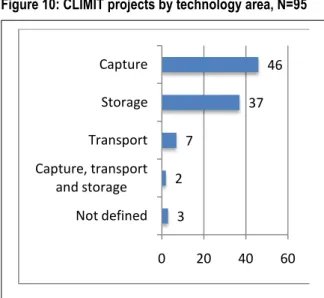
8.1.2 Specific technological areas for CLIMIT projects ... 45
8.1.3 Link to other CLIMIT projects and Mongstad CCS projects ... 47
8.2 Additionality and project deliverables ... 49
8.2.1 Input additionality ... 49
8.2.2 Deliverables in CLIMIT projects ... 50
8.2.3 Enhanced cooperation and new partners ... 55
8.2.4 Economic performance ... 56
8.2.5 Knowledge development and project continuation ... 56
8.2.7 CLIMIT in comparison with international programmes ...60
8.2.8 Project contribution to CLIMIT goals ...61
8.2.9 Project impact on overall CLIMIT goals ...65
Chapter 9. Overall results from technical audit ...67
Chapter 10. Conclusion and reflections ...69
10.1 Conclusions... 69
10.1.1 Effort and activities ...69
10.1.2 Results and effects...70
10.1.3 Additionality ...71
10.2 Reflections ... 71
10.2.1 Potential for commercialization? ...71
10.2.2 Risk profile of CLIMIT project portfolio ...72
10.2.3 Projections for CCS...72
Chapter 11. Appendices ...75
11.1 Interview guide ... 75
11.2 Interview informants ... 77
11.3 Survey questionnaire ... 78
11.4 PhDs and PostDocs in the CLIMIT Programme... 91
List of tables
Table 1: Important events in the CLIMIT Programme ... 19
Table 2: CLIMIT budget by beneficiaries, 2005-2010 ... 21
Table 3: CLIMIT budget by funding source, 2005-2010 ... 21
Table 4: CLIMIT budget allocation by technology area, 2005-2010 ... 21
Table 5: CLIMIT project portfolio as per April 2011, by project status ... 33
Table 6: CLIMIT project portfolio as per April 2011, by programme type and technology area ... 33
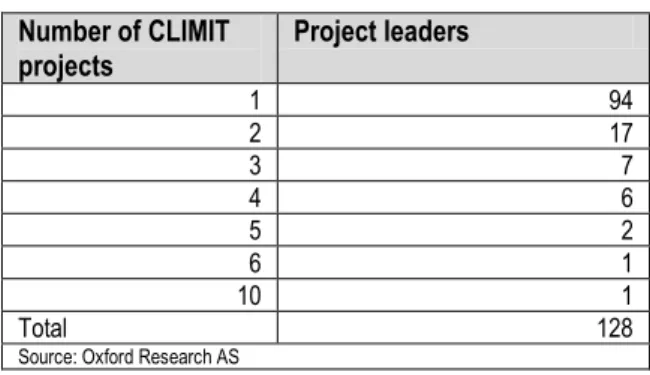
Table 7: CLIMIT projects and project leaders ... 33
Table 8: Interviewees in the evaluation ... 34
Table 9: Survey response status and response rate ... 34
Table 10: Shortlist of CLIMIT candidate projects for technical analysis ... 36
List of figures
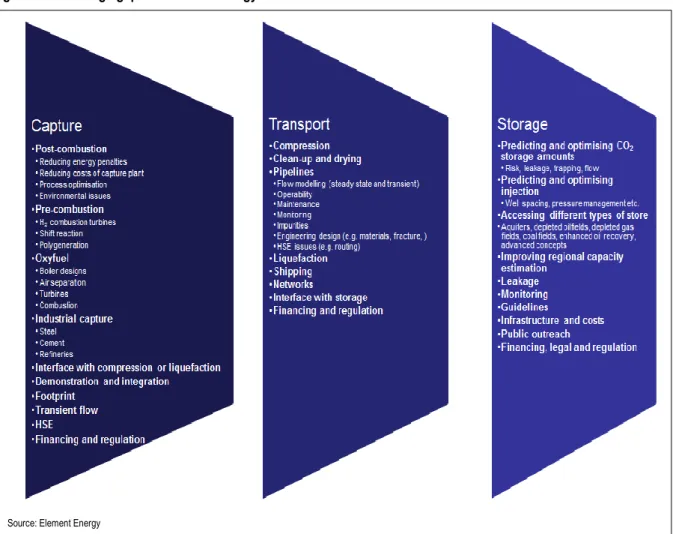
Figure 1: Organizational overview of CLIMIT ... 20Figure 2: Knowledge gaps in CCS technology ... 24
Figure 3: Operationalization of evaluation questions ... 29
Figure 4: The possibility for measuring effects ... 31
Figure 6: Model for measuring activities, results and effects of long-term RD&D initiatives in the energy area ... 32
Figure 5: Effect and additionality ... 32
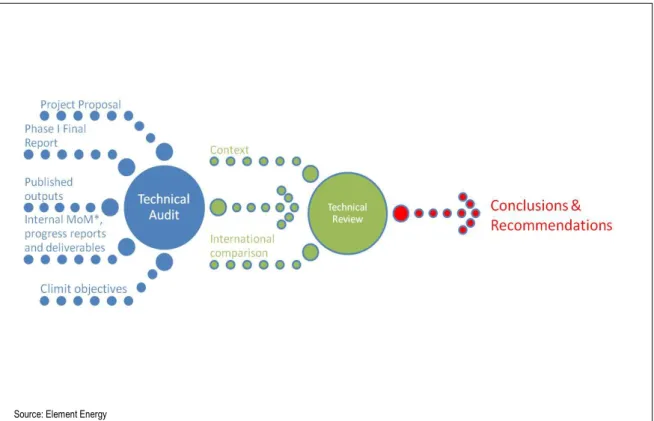
Figure 7: Technical audit process ... 35
Figure 8: Methodology of the technical audit ... 37
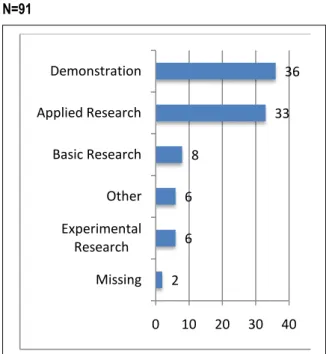
Figure 9: Main purpose of the project, frequencies, N=91 ... 45
Figure 10: CLIMIT projects by technology area, N=95 ... 46
Figure 11: CLIMIT capture projects by subarea, frequencies, N=45 ... 46
Figure 12: CLIMIT storage projects by subarea, frequencies, N=37 ... 47
Figure 13: CLIMIT transport projects by subarea, frequencies, N=7 ... 47
Figure 14: Content of CLIMIT project linkages, frequencies, N=37 ... 48
Figure 15: Link to Mongstad CCS projects, frequencies, N=15 ... 48
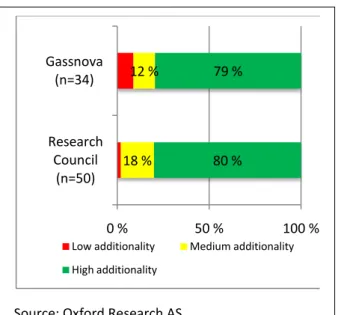
Figure 16: Additionality of CLIMIT projects by funding-source ... 49
Figure 17: Additionality of CLIMIT projects by technology area ... 49
Figure 18: Respondent assessment of alternative sources of project finance if no CLIMIT support, by funding source ... 50
Figure 19: Respondent assessment of alternative sources of project finance if no CLIMIT support, by technology area ... 50
Figure 20: Intended deliverables in CLIMIT projects ... 51
Figure 21: Deliverables of CLIMIT projects, by timeframe of accomplishment ... 53
Figure 22: Programme influence on deliverables ... 54
Figure 23: Partner influence on deliverables ... 55
Figure 24: Enhanced cooperation and new partners in CLIMIT projects ... 55
Figure 25: CLIMIT influence on economic performance ... 56
Figure 26: CLIMIT projects contribution to knowledge development ... 56
Figure 27: CLIMIT project follow-up activities, in percentage ... 57
Figure 28: How would you evaluate your project’s commercial potential, in percent? N=84 ... 58
Figure 29: CCS-project portfolio’s commercial potential, in percent, N=22 ... 59
Figure 30: Are you aware of any comparable international programmes which support projects similar to your own, in percent (n=84)? .... 60
Figure 31: Comparison with international programme, in percent ... 60
Figure 32: Gassnova-funded projects, in percent (n=34) ... 61
Figure 33: Project contribution to CLIMIT goals – Capture projects ... 62
Figure 34: Project contribution to CLIMIT goals – Storage projects ... 63
Figure 35: Project contribution to CLIMIT goals – Transport projects ... 64
Figure 36: CCS-project portfolio’s contribution to CLIMIT goals ... 65
Chapter 1.
Executive summary
1.1
Conclusions
1.1.1 Effort and activities
The project portfolio is relevant in terms of achieving the objectives of CLIMIT. The projects have targeted the entire range of activities from scientific outputs to commercialization. Although the majority of projects have focused on scientific activities, around half of them have ambitions of launching new com-mercial products and services and new processes. These have a focus on international CCS activity as well as Norway-specific issues.
The CLIMIT Programme is still in an early phase. This is reflected in our results. Except for scientific publi-cations, no differences in targeted deliverables are found when comparing projects funded by the Re-search Council of Norway (RCN) or Gassnova. In terms of balance within the CLIMIT project port-folio, there seems to be issues regarding the balance between, on the one hand research- and demonstra-tion projects, and on the other hand technology areas. First, the question arises whether there should be a clearer divide between research and demonstration activities in the CLIMIT Programme. As the technology develops, it must be discussed whether the RCN-funded projects should become more oriented towards (basic) research activities and whether Gassnova should strive to focus more on pre-commercial projects which aim at prototyp-ing, piloting and demonstration as well as more pure commercial activities. Although Gassnova and the RCN have established a secretariat for the pro-gramme staffed with personnel from both organiza-tions, this would allow for further specialization of skills within the organizations. Second, there are also few basic research projects, which are often spurred by findings of other projects. This must also be dis-cussed in the light of the fact that HSE-related topics seem to be underrepresented in the project portfo-lio. Third, perhaps too little emphasis has been placed on the transportation area. This is an area
where Norwegian industry should have a competi-tive advantage.
There is much cooperation in the projects; however they have not opened up for very many new part-ners entering the programme. This may indicate that most of the relevant Norwegian partners are already participating in the programme. Another reflection is that the programme may have contributed to strengthening already existing relations. The recog-nition of the importance of international coopera-tion seems to have increased over time, not least because of the perception of increased complexity in the CCS-area.
In sum, CLIMIT projects address all of the gaps dis-cussed in chapter 3 to varying degrees, consistent with the opportunity to make an impact given the evolving priorities of Norwegian and wider stake-holders.
1.1.2 Results and effects
The CLIMIT project portfolio has yielded results that contribute to the programme’s objectives in various areas. Most notably, we find that approximately half of the projects which have had ambitions to do so, have already submitted patent applications, ob-tained patents and developed prototypes. New processes have already been developed by 1/3 of the projects which set out to do so.
While some projects already have started, or will start shortly, the process of commercialization, oth-ers have developed new knowledge or technology and have yet to start the process of commercializing their technology. Others again are in a very early stage and have not developed new knowledge or technology yet. Thus, it is highly uncertain whether
To what extent can results be documented in terms of scientific publications and commercia-lization of technologies?
Have the projects contributed to filling any technology gaps?
To what extent have the projects portfolio (ef-fort and activities) been relevant for achieving the overall objectives of the Program?
or not these projects have a commercial potential at this stage.
The CLIMIT Programme has so far only to a very limited degree contributed to new company start-ups, new product lines or businesses or definition of new standards. Moreover, among those that origi-nally had the ambition to commercialize their tech-nology, the success rate is low when compared to the success rate in knowledge and technology de-velopment. However, the development of new processes has both been targeted in many projects and has a higher success rate. Except for scientific publications, no differences in achieved deliverables are found when comparing the RCN-funded projects with those funded by Gassnova.
Another important finding of this study is that part-ners are regarded as very important for achieving results, both in the scientific and commercial area.
1.1.3 Additionality
The CLIMIT Programme has not only been a pre-condition for financing projects, but has also stimu-lated the research institutions and the industry to develop new ideas, which would not have been developed without the programme.
In general the CLIMIT Programme has very high additionality, as confirmed by interviews and sur-veys. Almost ¾ of the respondents claimed that the financial resources offered by CLIMIT had a high influence on their ability to carry out the project. This view was further strengthened by the very low number of respondents that said that finding alter-native sources of finance would have been easy. The picture is somewhat more nuanced when the results are broken down on project type. In general, the project leaders from the Gassnova-funded projects state that it is harder to find alternative sources of financing than what the project leaders from the RCN-funded projects state.
While the program overall has had a high influence on project deliverables, the patent area does not fit into this picture. Here the projects that have tar-geted this, state that CLIMIT-support only has had a medium to no influence on the outcome.
1.1.4 Main conclusions
Our main conclusions are that the CLIMIT Pro-gramme has been very important in stimulating relevant R&D activities and that there have been important achievements, both in the projects funded by Gassnova and those funded by RCN. Many inter-esting ideas and prospects for further R&D activities have been developed. Some of the research activi-ties are within areas which could turn out to be next generation technologies with applications also out-side the CCS value chain.
CLIMIT-funded research has narrowed the know-ledge gaps and provided options for improved per-formance of CCS systems. Whilst causality is difficult to prove, the steady progress made by Norwegian stakeholders working with international partners may have reassured policymakers and businesses on the likely viability of CCS, and this has helped sup-port the case for financing CCS demonstration projects.
Therefore, the CLIMIT Programme can be said to have made the prospects of global CCS deployment more likely than would have been the case without, and maintained Norway’s position in many aspects of CCS.
1.2
Reflections
Based on the main conclusions of this evaluation, two dimensions are recommended for further dis-cussion among CLIMIT stakeholders.
1.2.1 Potential for commercialization?
Even the most ardent CCS enthusiasts would agree that despite significant progress in every area identi-fied on the technology gaps slide in Norway through CLIMIT, it is difficult to escape the conclusions that (i) nearly all the same knowledge gaps exist today, albeit these are much better constrained, (ii) the challenges of deploying CCS technology remain sub-stantial; and (iii) a sustained research, development and demonstration activity is still required to realize the benefits that CCS deployment could bring. This evaluation contains findings indicating that the Nor-wegian industry, though better positioned than previously is by and large not positioned to follow up every new CCS technology development identified in under CLIMIT. There are many factors supporting Would the activities have been carried out
such a hypothesis. One is that there are giant inter-national actors already in the market place which would be hard to compete with for smaller compa-nies, in particular in the carbon capture part of the value chain. Another could be that the commercial risks involved in CCS technology ventures are gener-ally too high for many Norwegian actors, since they expect that there is a long way to go before CCS is likely to be commercial. The possibility remains that it never would. A third factor could be that demon-stration projects generally are capital intensive and the commercial actors cannot afford the financial risk involved. However there are exceptions. The most frequently mentioned in the interviews are Aker Clean Carbon, Statoil and Veritas which have good positions for participating in various market segments in a future CCS industry. Aker Clean Car-bon is for example a participant in the proposed post-combustion capture project at Scottish Power’s Longannet Power Station, which is expected to be operational starting between 2015 and 2020. There is no doubt that Norwegian research institu-tions are at the research forefront in many technol-ogies within the CCS value chain, which partly is the merit of the CLIMIT Programme. That is a significant achievement. However, since CCS is far from being commercial and because the uncertainties regarding the future of CCS as a main technology option in the transition to a sustainable energy future, the ques-tion for Norwegian Authorities would be how to keep and develop the competence built up so far. The commercial drivers needed to bring the activity further without significant public support are to a large degree not there yet. This, combined with the lack of Norwegian companies able or willing to in-volve own resources in technology projects will be, as we see it, one of the main challenges for the fu-ture. Therefore, CLIMIT stakeholders should discuss the possibility of opening up the programme for international participation.
Even though the technology gaps have been re-duced, CCS technology is still immature and there are several areas where the need for more research is significant. There are also areas where the indus-try could be reluctant to participate. For projects where industry financing is a precondition, industry hesitation could in some cases be an obstacle for developing new ideas and concepts developed in the research institutions. The Program should therefore consider if it is possible, within the framework of the ESA-rules, to support some development and dem-onstration projects with lower and even without industry financing.
Research, Development and Demonstration activity in CCS is occurring in many countries and in the EU bloc as a whole. Other countries and institutions are joining the CCS community, eager to share in any benefits from being early developers or adopters of CCS technology. In some cases this has led to dupli-cation, so that the case for additionality from CLIMIT will become harder to substantiate in the future with increasing competition. However rather than being viewed as wasteful, it is possible that this approach encourages innovation.
IEA and other estimates suggest that very large take up of CCS technology would occur by the 2030s. Given this long lead time, it is not clear whether the early leads developed by Norway’s academic and commercial institutes will be sustained into the 2030s and beyond when the growth of CCS could take off.
1.2.2 Risk profile of CLIMIT project portfolio
In general, it is necessary to find sound balance be-tween the projects’ additionality and the results obtained. High additionality is of no value if the projects fail, i.e. a reasonable level of risk must be identified. In regard of CLIMIT, it is only one of the surveyed projects that state that the project has proven that the technological path is not promising. This result can be interpreted in several ways: The CLIMIT Programme has worked actively to
raise the quality of the projects, resulting in a very high success rate. This is achieved through an active dialogue with applicants in the applica-tion process.
The CLIMIT Programme is too risk-averse. This is related to two points. First, even if the level of risk is higher, the expected rate of return might be higher. Second, to enhance future develop-ment, it may be important to clarify that the path doesn’t work to a larger degree. This is re-lated to a discussion of the scope of the project portfolio. Is the scope wide enough? As pointed out above, the technology gaps are bigger than anticipated, making it hard to “pick the win-ners”. This might call for a broader portfolio of projects.
Given the fact that many projects are still ongo-ing and the programme may be labeled as beongo-ing in an early phase, it could also be argued that it is premature to judge the risk profile of the pro-gramme.
It is not difficult to find some merit in all three pers-pectives. However, given the fact that both the CLI-MIT Programme and technology development in CCS in general is still in an early phase, we believe that the project portfolio should be wider, rather than narrower. Regardless of which perspective is chosen, we believe this is a key question in the development of CLIMIT.
1.2.3 Projections for CCS
Through the CLIMIT Programme, a large amount of Norwegian RD&D activity is concentrated on CCS. It is worth a final remark that stakeholders should be aware that technology growth is always difficult to predict and impossible to guarantee. Whilst there are grounds for some optimism from this evaluation, ‘optimism bias’ must be avoided.
There are a number of long term outcomes (e.g. 2050) for the CCS industry:
CCS and the related technologies funded by CLIMIT contribute a major role to meeting cli-mate objective, partly through Norwegian
activi-ty, and Norway industry shares in the multi-trillion dollar market that ensues.
CCS contributes a major role to meeting climate objectives, but Norwegian industry is unable to profit from CCS, perhaps because ‘winning’ technologies or supply chains are developed elsewhere. In this case mankind in general still benefits, but Norwegians may have paid a dis-proportionate price to help move CCS along. CCS contributes only a minor role in reducing
world CO2 emissions, perhaps because world
CO2 emissions are not controlled or because
other approaches prove more viable. In this scenario, and even if Norwegian industry plays a major role in the CCS market that does exist, it may have been more profitable for Norway to invest resources elsewhere.
It will probably not be apparent for at least another decade which of these outcomes is most likely for CCS and Norway’s contribution to CCS.
Chapter 2.
Norsk sammendrag
2.1
Konklusjoner
Vår hovedkonklusjon er at CLIMIT-programmet har vært svært viktig i stimuleringen av relevante FoU-aktiviteter og at det har vært oppnådd viktige resul-tater, både blant Gassnova-finansierte prosjekter og prosjekter finansiert av Norges Forskningsråd (NFR). Det har blitt utviklet mange interessante ideer og framtidsutsikter for videre FoU-aktiviteter. Noen av forskningsaktivitetene er innenfor områder som kan vise seg å være neste generasjons teknologier med mulighet for anvendelser også utenfor verdikjeden for CO2-håndtering.
CLIMIT finansiert forskning har både innsnevret kunnskapsgapet og frembrakt alternativer for bedre ytelse i CO2-håndteringssystemer. Til tross for at det
er vanskelig å påvise klare årsakssammenhenger, så kan den stabile fremgangen hos norske interessenter som jobber med internasjonale partnere ha gitt politikere og bedrifter rundt om i verden ny tiltro til levedyktigheten til CO2-håndtering. Dette har styrket
oppslutningen rundt finansiering av CO2
-håndtering-demonstrasjonsaktiviteter.
På denne bakgrunn kan CLIMIT-programmet sies å ha gjort utsiktene for global utbredelse av CO2
-håndteringsteknologi mer sannsynlig enn det som hadde vært tilfellet uten programmet. Programmet har også bidratt til å opprettholde Norges posisjon i mange områder innenfor CO2-håndtering.
I det følgende vil vi presentere og reflektere over de viktigste funnene i denne evalueringen med ut-gangspunkt i hovedproblemstillingene i evaluering-en.
2.1.1 Innsats og aktiviteter
Prosjektporteføljen er relevant i forhold til å oppnå målene i CLIMIT. Prosjektene er rettet mot hele spekteret av aktiviteter; fra vitenskapelige resultater til kommersialisering. Selv om de fleste prosjektene har fokusert på vitenskapelige aktiviteter, har rundt halvparten av dem ambisjoner om å lansere nye kommersielle produkter og tjenester samt nye pro-sesser. Disse har også fokus på både internasjonalt rettede CO2-håndteringsaktiviteter så vel som mer
særnorske spørsmål.
CLIMIT-programmet er fortsatt i en tidlig fase. Dette gjenspeiles i våre resultater. Med unntak for vi-tenskapelige publikasjoner, er det ikke funnet for-skjeller i målrettede leveranser mellom prosjekter finansiert av NFR og Gassnova.
Når det gjelder balansen innad i CLIMITs prosjekt-portefølje, synes det å være et avklaringsbehov mel-lom forsknings -og demonstrasjonsprosjekter på den ene siden og teknologiområder på den andre siden. For det første kan det stilles spørsmålstegn ved om det bør være et klarere skille mellom forsknings- og demonstrasjonsaktiviteter i CLIMIT-programmet. Etter hvert som teknologien utvikler seg, må man diskutere om prosjekter finansiert av NFR bør bli mer orientert mot (grunnleggende) forskningsaktiviteter og hvorvidt Gassnova bør tilstrebe seg på å fokusere mer på pre-kommersielle prosjekter som tar sike på prototyper, pilotering og demonstrasjonsaktiviteter samt mer rene kommersielle aktiviteter. Selv om Gassnova og Forskningsrådet har etablert et sekreta-riat for programmet bemannet med personell fra begge organisasjonene, vil dette gi rom for ytterlige-re spesialisering innenfor organisasjonene. Oppgaver som prosjektutvalg, håndtering av pågående pro-sjekter og evaluering krever ulike sett av kompetan-se og erfaring avhengig av hvilken type prosjekter det gjelder.
For det andre så er det et kun et fåtalls grunnforsk-ningsprosjekter, som ofte har sitt utspring i funn fra andre prosjekter. Dette er også noe som må diskute-res sett i lys av at HMS- relaterte temaer synes å være underrepresentert i prosjektporteføljen. For det tredje er det muligens for blitt lagt for lite vekt på transportområdet. Dette er et område der norsk industri burde ha konkurransefortrinn. Det er mye samarbeid i prosjektene, men de har likevel ikke ført til mange nye samarbeidspartnere i programmet. Dette kan tyde på at de fleste av de aktuelle norske partnerne allerede deltar i pro-grammet. En annen refleksjon er at programmet kan ha bidratt til å styrke allerede eksisterende relasjo-ner. Erkjennelsen av betydningen av internasjonalt samarbeid synes å ha økt over tid, ikke minst på grunn av erkjennelsen av økt kompleksitet innenfor CO2-håndteringsområdet.
Oppsummert kan man si at CLIMIT prosjekter i større eller mindre grad adresserer teknologigapene som er diskutert i kapittel 4 i denne rapporten. Dette er i samsvar med de mulighetene til å gjøre en forskjell sett ut fra hvordan prioriteringer gjort av norske og andre interessenter er i ferd med å utvikle seg.
2.1.2 Resultater og effekter
CLIMITs prosjektportefølje har gitt resultater som bidrar til programmets mål på ulike områder. Vi finner at omtrent halvparten av prosjektene som har hatt ambisjoner å sende inn patentsøknader, ta patenter og utvikle prototyper allerede har oppnådd dette. Nye prosesser har allerede blitt utviklet i en tredjedel av prosjektene som har hatt dette som mål.
Mens noen prosjekter allerede har startet eller vil starte om kort tid med kommersialiseringsprosesser, har andre utviklet ny kunnskap eller teknologi, og har ennå til gode å starte med kommersialiserings-prosessen for deres teknologi. En tredje gruppe av prosjekter er i en veldig tidlig fase og har ikke utvik-let ny kunnskap eller teknologi ennå. Dermed er det høyst usikkert hvorvidt disse prosjektene har et kommersielt potensiale på dette stadiet.
CLIMIT-programmet har så langt bare i svært be-grenset grad bidratt til nye bedriftsetableringer, nye produktlinjer eller bedrifter eller definisjon av nye standarder. Dessuten er det slik at blant prosjekter som opprinnelig hadde ambisjoner om å kommersia-lisere sin teknologi, så er suksessraten – ikke uventet - lav i forhold til suksessraten for prosjekter som kun har som målsetning å utvikle ny kunnskap og tekno-logi. Imidlertid har prosjekter som har hatt som mål-setning å utvikle nye prosesser en høy grad av suk-sess.
Med unntak for vitenskapelige publikasjoner, er det ingen forskjeller i oppnådde resultater mellom pro-sjekter finansiert av NFR og Gassnova.
Når vi ser på konkrete resultater innen teknologiut-vikling, har det blitt oppnådd svært positive resulta-ter innen viktige områder som:
Aminteknologi; det er blitt dokumentert en vesentlig reduksjon i energiforbruk
CO2 lagring; flere prosjekter har sørget for bedre
kunnskap når det gjelder CO2-oppførselen i
re-servoarer og det er utviklet metoder for overvå-king av CO2
Miljøspørsmål; CLIMIT prosjekter har gitt en bedre forståelse av luftforurensning fra amin-prosesser
Retningslinjer for bedre praksis som også gir et bedre grunnlag for sertifisering av CO2
-håndteringsteknologi
Dessuten er det blitt identifisert lovende resultater innenfor områder som:
Overvåkningen av CO2 i reservoarer
Kjemisk ”looping” Forbrenningsteknologi Membranteknologi
Et annet viktig funn i denne evalueringen er at part-nere synes å være svært viktige for å oppnå resulta-ter. Dette gjelder både innenfor det vitenskapelige og det kommersielle området.
CLIMIT-programmet har også gitt resultater i forhold til universitetenes utdanningsportefølje. For det første har programmet ført til mer enn 50 doktor-grader(PhD) og Post-doc stillinger. For det andre har det blitt utviklet nye bachelorkurs som resultat av CLIMIT-prosjekter både ved Universitetet i Bergen og Høgskolen i Telemark. For det tredje tilbyr universi-tetene i Oslo og Bergen samt Norsk teknisk-naturvitenskapelige universitet (NTNU) CO2
-håndteringsrelevante kurs på masternivå og PhD-nivå.
Samlet sett er det vår oppfatning at CLIMIT-programmet har bidratt til en akselerasjon av CO2
-håndteringsteknologi. Dette er oppnådd gjennom utvikling av kunnskap på viktige områder og ved å redusere teknologigap. Selv om gapene har vist seg å være større enn opprinnelig antatt, det vil si at det tidshorisonten før CO2-håndteringsteknologi blir
kommersielt attraktiv har økt siden CLIMIT-programmet startet, betyr ikke dette at CLIMIT-programmet i seg selv er mindre relevant. Tvert imot, vi ser ingen grunn til at CLIMIT ikke bør videreføres.
2.1.3 Addisjonalitet
CLIMIT-programmet har ikke bare vært en forutset-ning for finansiering av prosjekter, men det har også stimulert forskningsinstitusjonene og industrien til å
utvikle nye ideer som ikke ville ha blitt utviklet uten programmet.
Generelt sett oppviser CLIMIT-programmet svært høy addisjonalitet, noe som bekreftes gjennom in-tervjuer og spørreundersøkelsen. Nærmere ¾ av respondentene hevder at de økonomiske ressursene som tilbys av CLIMIT har hatt stor betydning for deres evne til å gjennomføre prosjektet. Dette fun-net styrkes ytterligere gjennom et svært lavt antall respondenter som mener at det ville ha vært enkelt å finne alternative finansieringskilder. Imidlertid ser det ut til at respondentene som har mottatt støtte fra NFR er av den oppfatning at det er noe lettere å finne alternative finansieringskilder enn responden-tene som representerer Gassnova-finansierte sjekter. Dette skyldes sannsynligvis størrelsen i pro-sjektene.
Programmet har generelt hatt stor betydning for prosjektenes resultater på de aller fleste områder. Et unntak er patenter. Representanter for prosjektene som har hatt patentering som målsetning rapporte-rer at CLIMIT-støtten kun har hatt middels eller ing-en innflytelse på deres oppnådde resultater.
2.2
Resultater fra teknisk revisjon
Omfanget av vitenskapelige publikasjoner og PhD/post-doc-kvalifiserte personer som har sitt utspring i CLIMIT-programmet, har gitt en viss kvan-titativ innsikt i fremdriften av de CLIMIT- finansierte prosjektene. Selv en overflatisk vurdering av pro-sjektlisten som er finansiert av CLIMIT i løpet av de siste årene, avdekker en betydelig bredde av utfors-kede temaer. Prosjektene adresserer nesten samtli-ge problemstillinsamtli-ger som er relevante for utbredel-sen av CO2-håndtering, både i Norge og
internasjo-nalt. Det store flertallet har vært rettet mot fangst og lagring. I tråd med de forventede høye kostnade-ne og de respektive utfordringer i forhold til fangst og lagring, synes dette fornuftig.
Historisk sett har forsknings- og utviklingsinveste-ringer (FoU) i lavkarbon teknologier vært uforutsig-bare. Da CLIMIT-programmet ble etablert var det usikkerhet knyttet til hvorvidt andre land ville etab-lere egne FoU programmer innenfor CO2-håndtering.
I praksis har det vist seg at andre land har arbeidet med CO2-håndtering, og at internasjonalt
forsknings-samarbeid innen CO2-håndtering er svært utbredt.
Mange sider ved de norske prosjektene som er un-dersøkt i detalj i denne tekniske revisjonen kan
hev-des å være i verdensklasse, spesielt når vi ser på områder der det finnes internasjonale forskere som også arbeider med lignede problemstillinger. En god indikasjon på dette er også den høye norske delta-gelsen på internasjonale fagkonferanser.
Når man tar i betraktning de tre prosjektene som ble undersøkt nærmere i den tekniske revisjonen, har disse gjennomført mesteparten av sin aktivitet i tråd med deres opprinnelige planer. I de tilfeller der det foreligger avvik fra opprinnelige planer, har arbeidet allikevel vært i samsvar med CLIMTs målsetninger og behov i den gryende CO2-håndterings- industrien har
blitt ivaretatt. I mange tilfeller indikerer publikasjo-ner og interne rapporter at viktige milepæler er nådd, til tross for at to av prosjektene ikke var full-ført på evalueringstidspunktet. I disse tilfellene er våre vurderinger basert på framdriftsrapporter. Forskningen som er gjennomført i SOLVit- og BIGCO2 prosjektene har påvist at ulike fangstkonfigurasjoner er teknisk gjennomførbare. Det er imidlertid fremde-les en lang vei å gå før disse er kommersialiserbare da kostnadene fortsatt er for høye. Delvis er dette, slik som utfordringene assosiert med karbonfangst, nå langt bedre forstått. Det samme gjelder utford-ringene knyttet til skalerbarhet. De etablerte meto-dene og utstyret for membranproduksjon, simule-ring og kostnadsanalyse, samt testing av løsemidler, bør være nyttige i en stund fremover, og vil sannsyn-ligvis fortsette å være tiltrekkende i forhold til inter-nasjonalt samarbeid. Det foreligger så langt ingen bevis på at det endelige målet for BIGCO2, som er en kombinasjon av 50 % kostnadsreduksjon, 90 % fangstrate og 7 % energistraff, er nådd. Prosjektets tidsrammer åpner imidlertid for at disse målsetning-ene kan oppnås på et smålsetning-enere tidspunkt. Den tekniske revisjonen har ikke lykkes i bringe på det rene hvor-vidt det å samle såpass forskjellige delprosjekter eller arbeidspakker under "BIG"-paraplyen vil for-bedre forskningskvaliteten. Imidlertid har dette grepet ført til økt frihet for prosjektlederne til å (re)allokere ressurser for å kunne imøtekomme end-ring i prioriteend-ringer, kapasitet og finansieend-ring. Pro-sjektlederen for BIGCO2 har bekreftet at en rekke endringer i prosjektets målsettinger og leveranser ble bestemt gjennom diskusjoner i komiteer. I forbindelse med SSC-RAMORE fremkommer det et liknende mønster, dvs. mye fremgang i prosjektene, leveranser i tråd med forventede mål, og større innsikt i konkrete problemstillinger, men med en erkjennelse av at utfordringene rundt lagring er betydelige, og at det vil ta lang tid å adressere dem på en god måte.
Vi vil trekke frem noen generelle problemstillinger som det kan være verdt å undersøke videre dersom de oppdages i flere andre prosjekter i CLIMIT-porteføljen:
Prosjektoverlapping: Overlappingen mellom SOLVit, BIGH2, BIGCLC and BIGCO2 gjør det vanskelig å knytte til oppnådde resultatene til spesifikke prosjekter. De to prosjektene ble vi-dereført med noen justeringer i arrangementet mellom partnerne, noe som førte til at BIGCO2 endret sitt fokus mot grunnleggende forskning. Innen grunnforskning kan en muligens oppnå bedre resultater ved en slik paraplyorganisering. Det kan blant annet føre til at det blir lettere å omfordele ressurser, at det oppnås bedre sam-spill mellom institusjoner, at kapasiteten utnyt-tes bedre samt at det kan fremme tverrfaglig kommunikasjon.
Fleksibilitet: Det er tydelig at partnerne i SOLVit prosjektet har tilpasset seg utsettelsen av pilot-test anlegget. Dette har de gjort ved å konsent-rere seg om resultater ved Mobile Test Unit, som er direkte relevant for Aker Clean Carbons tilbudte løsningsforslag om å forsyne Longanne-tanlegget med fangstteknologi.
Publiseringskvalitet: Norske forskere synes å være godt representert på internasjonale konfe-ranser og workshops, til tross for at produksjo-nen i fagfellevurderte tidsskrifter var lavere enn opprinnelig antatt.
Målformulering: SOLVit prosjektet synes å ha nådd sitt energimål, likevel kunne dette ha blitt definert på en mer hensiktsmessig måte ved starten av prosjektet for å kunne knytte det mer opp mot arbeidsflyten.
2.3
Refleksjoner
Med basis i hovedkonklusjonene i denne evaluering-en vil vi trekke frem to forhold som bør tas opp til nærmere diskusjon og avklaring blant CLIMITs inter-essenter.
2.3.1 Potensiale for kommersialisering?
CLIMIT har gitt vesentlige til å redusere teknologiga-pene på alle områder som er blitt identifisert gjen-nom denne evalueringen. Selv de ivrigste CO2
-håndteringsentusiastene vil imidlertid si seg enige i at til tross for de betydelige fremskrittene som er
gjort i Norge, er det vanskelig å ikke konkludere med at:
Nesten alle de samme kunnskapsgapene eksis-terer også i dag, selv om disse ville vært mye større dersom CLIMIT-programmet ikke hadde eksistert
Det fremdeles er betydelige utfordringer med å ta i bruk CO2-håndteringsteknologi
En vedvarende forsknings-, utviklings- og de-monstrasjonsaktivitet fortsatt er nødvendig for å virkeliggjøre de fordelene som en utrulling av CO2-håndtering kan bringe med seg.
Denne evalueringen indikerer at norsk industri, til tross for å være bedre posisjonert enn tidligere, i det store og hele ikke er rustet til å følge opp alle de nye teknologiske mulighetene som er identifisert gjen-nom CLIMIT. Det er mange faktorer som støtter en slik hypotese. En av dem er at det finnes allerede betydelig store internasjonale aktører på markedet. Disse vil det være vanskelig å konkurrere med for mindre bedrifter, særlig i karbonfangst-delen av verdikjeden. En annen kan være at den kommersielle risikoen forbundet med utvikling av CO2
-håndteringsteknologi generelt er for høy. Mange norske aktører forventer at det er en lang vei å gå før CO2-håndtering vil være kommersielt interessant, og
det er fremdeles mulig for at den aldri vil bli kom-mersiell. En tredje faktor kan være at demonstra-sjonsprosjekter generelt er kapitalintensive og kommersielle aktører ikke er villige til å ta den øko-nomiske risikoen som følger med. Det finnes likevel unntak. De som er hyppigst nevnt i intervjuer er Aker Clean Carbon, Statoil og Veritas. Disse aktørene er godt posisjonert for å delta i ulike markedssegmen-ter i en fremtidig CO2-håndteringsindustri. Aker
Clean Carbon er for eksempel deltaker i det foreslåt-te etforeslåt-terbrennings fangst- prosjekforeslåt-tet på Scottish Po-wers Longannet kraftstasjonen, som forventes å være klar for driftsstart mellom 2015 og 2020. Det er ingen tvil om at norske forskningsinstitusjoner er i forskningsfronten innenfor mange teknologier i verdikjeden for CO2-håndtering. Dette kan delvis
tilskrives CLIMIT-programmet og må sies å være en betydelig prestasjon. Men ettersom CO2
-håndteringsteknologi er langt fra å være kommersia-liserbar og fordi det er usikkerhet knyttet til mulighe-tene for CO2-håndtering som et viktig
teknologial-ternativ i overgangen til en bærekraftig energifrem-tid, er et viktig spørsmål for norske myndigheter hvordan en kan beholde og videreutvikle den kom-petansen som er bygd opp så langt.
De kommersielle insentivene som trengs for å bringe CO2-håndteringsutviklingen videre uten betydelig
offentlig støtte er i all hovedsak enda ikke tilstede. I tillegg er det en mangel på norske selskaper som er i stand til eller villig til å bruke egne ressurser i tekno-logiprosjekter. Dette vil være de viktigste utfordring-ene i fremtiden. Derfor bør CLIMITs interessenter diskutere muligheten for å åpne opp programmet for internasjonal deltakelse.
Til tross for at teknologigapene har blitt redusert, er CO2-håndteringsteknologien i det store og det hele
fortsatt umoden og det er flere områder der beho-vet for mer forskning er betydelig. Det finnes også områder der industrien kan være lite tvillige til å delta og hvor det muligens hadde vært bedre å ut-vikle demonstrasjonsprosjekter uten krav om indust-rifinansiering.
Forsknings-, utviklings- og demonstrasjonsaktivitet innen CO2-håndtering foregår i mange land og i EU.
Andre land og institusjoner har blitt en del av CCS- samfunnet. De fleste har ambisjoner om å høste fordeler knyttet til det å være i forkant, både når det gjelder utvikling og bruk av CO2
-håndteringsteknologi. I noen tilfeller har dette ført til dobbeltarbeid, slik at addisjonaliteten eller merver-dien som kan tilskrives CLIMIT vil være vanskeligere å påvise i fremtiden. Selv om addisjonaliteten redu-seres, er det mulig at den økte konkurransen vil føre til høyere innovasjon.
Utredninger fra IEA og andre tyder på at utrulling av CO2-håndteringsteknologi i stor skala vil finne sted
rundt 2030. Gitt denne lange tidshorisonten, er det uklart om de satsinger som hittil har blitt utviklet av norske akademiske og kommersielle aktører vil bli videreført inn i 2030- årene og fremover, altså i den perioden der veksten av CO2-håndtering i IEAs CCS
Roadmap anslås å bli sterkest.
2.3.2 Risikoprofil i CLIMITs prosjektportefølje
Generelt sett er det nødvendig å finne en fornuftig balanse mellom prosjektenes addisjonalitet og de resultatene som oppnås. Høy addisjonalitet gir ingen verdi dersom prosjektene mislykkes. Det er med andre ord nødvendig å finne et rimelig risikonivå. I forbindelse med spørreskjemaundersøkelsen blant prosjektledere for CLIMIT-finansierte prosjekter finner vi bare ett som sier at teknologien ikke er verd å jobbe videre med. Dette resultatet kan tolkes på flere måter:
CLIMIT-programmet har arbeidet aktivt for å heve kvaliteten på prosjektene, noe som resul-terer i en svært høy suksessrate. Dette kan opp-nås gjennom en aktiv dialog med søkerne i søk-nadsprosessen.
CLIMIT-programmet er for lite risikovillig. Dette er forbundet med to forhold. Til tross for at risi-koen er høyere, kan det hende at forventet av-kastning ville blitt høyere dersom en hadde tatt enda høyere risiko. For det andre, for å forbedre fremtidig teknologiutvikling er det også viktig å klargjøre hvilke teknologier som ikke fungerer i større grad enn i dag. Dette er knyttet til en dis-kusjon av den teknologiske bredden i prosjekt-porteføljen. Er bredden stort nok? Som påpekt ovenfor, teknologigapene er større enn forven-tet, noe som gjør det vanskelig å "peke ut vin-nerne". Dette kan peke i retning av en bredere prosjektportefølje.
Gitt det faktum at mange prosjekter er fortsatt pågående, og at programmet er i en tidlig fase, kan det også argumenteres for at det er for tid-lig å vurdere risikoprofilen til programmet. Det er ikke vanskelig å finne argumenter for alle tre perspektivene. Likevel, gitt det faktum at både CLI-MIT-programmet og teknologiutviklingen innenfor CO2-håndtering generelt fortsatt er i en tidlig fase,
mener vi at prosjektporteføljen heller bør være bre-dere istedenfor smalere. Uavhengig av hvilket pers-pektiv som velges, mener vi dette er et sentralt spørsmål som må drøftes i forbindelse med den videre utviklingen av CLIMIT programmet. Uavhengig av hvilken tolkning er valgt, tror vi fortsatt at dette er et sentralt spørsmål i utviklingen av CLIMIT.
2.3.3 Fremtidsutsikter for CO2-håndtering
CLIMIT programmet har bidratt til konsentrasjon av en stor mengde norsk forsknings-, utviklings- og demonstrasjonsaktivitet aktivitet innenfor CO2
-håndtering. Det er viktig å være klar over at teknolo-gisk utvikling og vekst alltid er vanskelig å forutsi og umulig å garantere for. Mens denne evalueringen gir grunnlag for en viss optimisme, må overoptimisme likevel unngås.
Det er utviklet flere scenarier for utviklingen av CO2
-håndteringsindustrien på lang sikt (f.eks 2050). De mest fremtredende er:
CO2-håndtering og relaterte teknologier
imøte-komme klimamålene, dels gjennom norsk aktivi-tet, og norsk industri lykkes i tillegg med å ta sin andel av det enorme markedet som åpner seg opp. Dette vil gi nordmenn store velferdsmessi-ge velferdsmessi-gevinster i tillegg til de globale klimavelferdsmessi-gevins- klimagevins-tene som oppstår.
CO2-håndtering bidrar til å imøtekomme
klima-målene ved å spille en viktig rolle, men norsk in-dustri er ikke i stand til å ta en del av CO2
-håndteringsmarkedet. Dette kan skyldes at «vinner» teknologier eller forsyningskjeder er utviklet andre steder. I dette tilfellet vil mennes-keheten generelt sett fremdeles høste fordeler,
men vi nordmenn kan ha betalt en uforholds-messig høy pris i forhold til andre land gjennom vårt bidrag til å videreutvikle CO2-håndtering.
CO2-håndtering spiller bare en mindre rolle i
reduksjonen verdens CO2-utslipp, muligens fordi
CO2-utslipp ikke blir kontrollert eller fordi andre
teknologier viser seg å være bedre. Selv om norsk industri spiller en viktig rolle i CO2
-håndteringsmarkedet som eksisterer, kan det vise seg at det ville ha vært mer lønnsomt for Norge å investere ressurser i andre alternativer. Det vil trolig ikke være mulig å påvise hvilke av disse scenariene som vil inntreffe før om tidligst ti år.
Chapter 3.
The CLIMIT Programme
3.1
CLIMIT - Background
As a result of Norway’s innovative offshore CO2
taxa-tion, Norway-based Statoil pioneered the world’s first true carbon dioxide capture and storage project in the 1990s. This project has resulted in the separa-tion of CO2 from natural gas at the Sleipner gas field
and re-injection of approximately one million tonnes of CO2 each year for long term storage in the Utsira
aquifer.
With this project, Norway emerged as a leading developer of CCS technology, and Norwegian-based research institutes and companies have been active across the world in advancing CCS technology. CCS is suited to large point sources of CO2 emissions to
atmosphere, for example from fossil fuel use at power stations and heavy industry.
In 2002 the Bondevik Government appointed a committee (Gassteknologiutvalget) for assessing the organizational framework for promoting climate friendly technologies for natural gas utilization. In its report, the committee underlined the need for hav-ing a consistent toolbox of measures along the whole innovation process from research, via devel-opment, demonstration to commercialization. The committee did also propose that the Government should establish a new state owned Innovation Company for gas technology development. The Gov-ernment followed up by establishing Gassnova SF January 1st 2005.
The CLIMIT Research Programme was also estab-lished January 1st 2005, partly based on the commit-tee’s proposal. The objective was to support devel-opment of Carbon Capture and Storage (CCS) tech-nology for power generation based on natural gas in Norway. At that point of time, gas power had been a political headache for years, and CCS was launched as a way out of the political backwater that domestic use of natural gas for power generation had been. The programme was a continuation of the Research Council of Norway’s programme KLIMATEK which was part of the RENERGI-programme. In 2008, the mandate was extended to cover all power genera-tion technologies based on fossil fuels. Two years after, in 2010, the mandate was further extended to also include emissions from industrial activities.
Table 1: Important events in the CLIMIT Programme
Year Event
2002 Gassteknologiutvalget's report presented 2004 Government White Paper - St.meld. 47
(2003-2004) on Innovation of gas friendly technology 2004 First mandate for the CLIMIT Programme
formulated by the Ministry of Petroleum and Energy
2005 The CLIMIT Programme launched
2008 The climate change agreement (Klimaforliket) reinforces CCS as an important tool for achiev-ing Norwegian climate change goals
2008 The CLIMIT Programme includes CCS for coal 2010 The CLIMIT Programme includes industry
emissions
3.2
The mandate of CLIMIT
In the first mandate formulated by the Ministry of Oil and Energy dated June 25 2004, it was underlined that one important objective was to ensure that the R&D activities in Norway was coordinated across important institutions and actors. CLIMIT should be a national research programme involving actors from academia as well from the industry.
The revision and broadening of the mandate in 2008 and 2010 was clearly a recognition that the deploy-ment of CCS is relevant for all kinds of CO2 emissions
from fossil combustion processes, and that the commercialization of CCS related technologies is dependent on their relevance for the international market, and that an international deployment of CCS technology is essential for its contribution to curb global emissions. So instead of having a national focus, the focus has gradually become more interna-tional, where the stated motivation was to contrib-ute to the international struggle to reduce CO2
-emissions.
The main objective of the programme has been formulated somewhat differently over time. In 1995 the vision was to “Establish profitable gas power stations with CCS in Norway”. In the short term more specifically to:
Qualify and reduce costs of CCS
Establish methods for safe geological storage of CCS
Improve and develop technologies which have the potential to significantly improve the energy efficiency in carbon capture processes
To develop robust methods for CO2 storage
which fulfils international obligations and agreements
The main objective restated in 2008 to; “ Commercial-ize power generation with CCS through research, develop-ment and demonstration projects”. The reference to gas power was removed and replaced with power gen-eration in general, indicating that all kinds of fossil fuels involved in power generation should be in-cluded in the CLIMIT Programme.
In 2010 the mandate was extended to include emis-sions from the industry as well. The main objective was again restated to: “Accelerate the commercializa-tion of CCS through economic stimulacommercializa-tion of Research, Development and Demonstration.”
The motivation for Norway to engage in CCS tech-nology development through a national R&D pro-gramme has been refined and extended, including elements such as:
Develop competitive Norwegian CCS technology to serve a future international market
To make fossil fuels utilization acceptable also within the framework of a low carbon economy Make gas power plants with CCS an option for
Norwegian security of supply considerations Reduce emissions from Norwegian industry and
to ensure the same industry’s competitiveness in a low carbon society
Capitalize on the storage capacity on the Nor-wegian Continental Shelf (NCS)
With reference to the main objective and the moti-vation of the Programme, its focus areas should be where Norway could “make a difference”, by: Extensively supporting R&D activities to foster
new concepts to bring costs for CCS down Building on the competence and experience in
Norwegian industry clusters and companies with ability to develop geological storage, including the prospects of utilizing storage capacity in geological structures on the NCS
Building on the experience, infrastructure and commercial basis which flue gas capturing have in Norway, and by utilizing synergies between power generation and industries
The main measures are:
Long term support to R&D activities (2010-2014) Support to pilot and demonstration projects of
proven technologies (2010-2014)
Support to pilot and demonstration of new technologies (2015-2019)
Contributions to the commercialization of new technologies (2020-)
3.3
Organisation of CLIMIT
The organization of the program is showed in figure 1 below. Under supervision of the Ministry of Petro-leum and Energy, the program is a common under-taking by the Research Council of Norway (RCN) and Gassnova, in which RCN takes care of the research projects, while Gassnova has the responsibility for projects in the development and demonstration phases. The MPE has the responsibility for the for-mulating the mandate and the financing. A common programme board formulates the strategy and con-siders project applications. Gassnova coordinates the activities through a separate secretariat.
Figure 1: Organizational overview of CLIMIT
Organisation
1
•Strategy •Approval of
applications
•Execute CLIMIT strategy •Review & recommend of
applications •Follow-up of projects •Networking •Mandate •Financing CLIMIT Program Board 10 members CLIMIT – R&D Research Council Secretariat CLIMIT – demo Gassnova Source: Gassnova
3.4
CLIMIT budgets and grant size
During the 6 years period from 2005 to 2010, NOK 897 millions have been granted, of which NOK 638 million (71 percent) to research projects and NOK 259 million (29 %) to Demo projects. 25 percent has been allocated to Universities, 46 percent to institu-tions and 30 percent to companies. The 5 largest receivers have been allocated 75 percent of the funds, while the 10 largest 81 percent. The 5 largest beneficiaries as of April 2011 are:
Table 2: CLIMIT budget by beneficiaries, 2005-2010
Institution Support in MNOK
SINTEF 281
Statoil 115
NTNU 81
IFE 60
Universitetet i Bergen 53
Source: Oxford Research AS
If the budget is split between RCN and Gassnova-funded projects, the following emerges:
Table 3: CLIMIT budget by funding source, 2005-2010
Funding source MNOK
RCN 102
Researcher projects (Forskeprosjekt) 22
User-driven Innovation Projects (BIP) 10
Competence-building Projects with User Involvement (KMB)
70
Gassnova 257
Technological Feasibility Projects 82
Main Projects 174
Conference Support 1
Source: Oxford Research AS
The allocation of funds between the different phases in the value chain is as follows:
Table 4: CLIMIT budget allocation by technology area, 2005-2010
Technology area Share
Carbon Capture 49 %
Storage 34 %
Transport 12 %
Other 5 %
Source: Oxford Research AS
When allocating grants, the determination of maxi-mum grant rates is based on ESA's rules for state aid. The maximum grant that can be allocated is gener-ally 50 % for development projects and 25 % for demonstration projects. However, it is underlined that the maximum grant shall not be more than what is needed to have an incentive effect on the activity being applied for. Although the programme is open to non-Norwegian partners, an important requirement is that the project contributes to tech-nology development and capacity building in Norway within the field of CO2 capture and storage. In ef-fect, this implies that the main applicant must be a Norwegian legal entity.
3.5
RCN evaluations
In their annual reports, the RCN assesses the results and the challenges in the Programme.
Over time, RCN has concluded that it has turned out to be more difficult than anticipated to mobilize commercial actors in the programme. One reason is the uncertainty regarding the future potential of CCS and the economic risk involved. Even though CCS is regarded by important institutions such as IEA as a part of the solution to the climate change problem, it is still controversial both internationally and do-mestically. Therefore it has taken longer time than expected to establish demonstration projects with participation from the industry. It has also been more difficult to get a general acceptance that the priority which have been given to CCS in Norway is more than political indulgence.
The technological challenges to get the costs down have been revealed to be demanding, and even though there has been technological achievements, it is still a long way to go before CCS is close to be commercial.
Chapter 4.
CCS – value chain: Technological
chal-lenges and gaps
The guiding philosophy associated with geological CCS technologies is the prevention of significant emissions of CO2 to the atmosphere. This is achieved
by the addition of processes that separate CO2 from
other products in the process and re-directing this to a geological storage that can be expected to hold the CO2 securely for thousands of years (potentially
longer). For technical, environmental, logistical and economic reasons, the CO2 must typically be purified
and transported by pipeline or ship from the site where the CO2 is produced to where it can be stored.
Ideally the fate of the buried CO2 is then monitored
to ensure that there are no long-term dangers. Some analysts expect that large-scale deployment CCS could contribute up to 19% of global decarbonisation potential by 2050, reducing the costs mitigating climate change relative to other options by 70%, and increasing the probability that global climate objec-tives could be met.
Confidence in the potential for CCS comes from a recognition that the individual steps of CO2
separa-tion, CO2 transport, geological CO2 injection and
monitoring fluid movement underground have been used for many years by different industries, most notably the oil and gas industry. Confidence has also come from preliminary estimates of storage
poten-tial that showed this to be both abundant and widely distributed geographically, in many areas within reasonable distances of existing CO2 emitters.
However the application to CO2 from power and
industrial sources, the transport requirements from sources to stores, the requirement for injected CO2
to remain secure for long timescales, the much lar-ger scale of a CCS project and or integrated system compared to existing practice, and the need to inte-grate diverse supply chains pose a multitude of new and unique challenges.
These challenges are diverse. Some barriers ought to be solved through improved scientific understanding and engineering. These have been the major focus of CLIMIT investment. However, as with other carbon abatement measures, CCS also faces political, eco-nomic, legal, commercial, and regulatory challenges. The focus of CLIMIT, and the international CCS community at large, has been primarily directed at (i) demonstration activity which broadly seeks to ensure engineering viability, integration, and scal-ability of existing technologies whilst containing costs and risks, and (ii) research and development activity which seeks to close knowledge gaps and improve the performance of CCS.
Figure 2: Knowledge gaps in CCS technology
The figure above delineates key technology gaps associated with CCS in terms of CO2 capture, CO2
transport and CO2 storage. The majority of issues in
the Figure were highlighted to the international community already by 2005, for example in the Car-bon Sequestration Leadership Forum. They are rele-vant in Norway directly for its own CCS activities, and to Norwegian researchers and industry that wish to develop and participate in any future global CCS industry.
It is useful to describe some of the gaps as these form the context around which CLIMIT projects can be evaluated.
There are at least three basic philosophies for CO2
capture from fossil fuel power stations, post-combustion, pre-combustion and oxyfuel capture. Post-combustion technology can use chemicals and processes that have been successfully applied to the clean-up of CO2 from, for example, natural gas
streams. However these processes involve large equipment and energy input, which raises costs. Furthermore, when used with the oxygen rich flue gas these chemicals degrade, leading to by-products that could have adverse environmental impacts. CLIMIT projects such as SOLVit and BIGCO2 have work packages dedicated to improving post-combustion capture technology to reduce costs and environmental impacts.
Pre-combustion capture involves drastic plant redes-ign so that power is generated from hydrogen com-bustion in air, with the hydrogen generated from the fossil fuel followed by separation of the CO2. Projects
such as BIGCO2 seek to provide fundamental under-standing of hydrogen combustion and improved membranes for hydrogen separation.
Oxyfuel capture involves moderate plant redesign so that combustion happens in oxygen instead of air. BIGCO2 seeks to provide fundamental understanding Source: Element Energy