UNIVERSITY OF DERBY
A Formulation and Critical Evaluation of an
Inter-Personal Communication Skills
Objective Structured Clinical Examination (OSCE) in
Pre-Registration Occupational Therapy Education
Pauline Rowe
Work Based Project submitted to the
University of Derby in partial fulfilment of the
requirements for the degree of
Doctor of Education
CONTENTS
Page No.
Abstract
Chapter One: Introducing the Project
1- 7
Introduction 2
Personal statement 3
Chapter Two: Literature Review
8-37
The WBP in the context of occupational therapy education 9 Fitness for practice and purpose in a first Practice Placement Education 12Client centred practice 18
Identification of interaction skills and the assessment of them 23
Competence 25
Objective Structured Clinical Examinations 27
Validity and reliability of OSCEs in assessment 28
OSCEs for inter-personal communication 31
The potential of OSCEs in teaching and learning 33
Conclusions 35
Aims of the WBP 37
Chapter Three: Research Methodology
38-67
General research methodology and my personal stance 39Formulating an OSCE of inter-personal skills with content validity 42
Trialling the OSCE for student perceptions of its value 48
Questionnaires 49
Interviews 53
Evaluating the OSCE checklist as an aid to self-evaluation and assessment of students’ self-awareness and skills of reflection. 56
Ethical considerations 60
Overview of the research design 65
Summary 67
Chapter Four: Findings and Analysis
68-159
Introduction 69Formulating a valid OSCE –First round of focus groups with PPEds 70
Formulating a valid OSCE -Second round of focus groups with PPEds 74
Face Validity of the OSCE 83
Summary 93
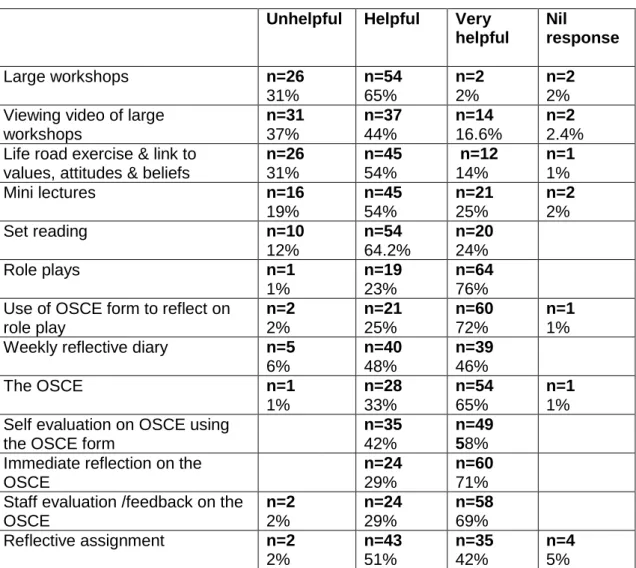
Student evaluation of the OSCE and the module 94
Questionnaires 95
What students would keep the same if designing the module 96
What students would you change if designing the module 99
Summary 102
Views on OSCE as the assessment 116
Summary 121
Evaluating the OSCE checklist as an aid to self evaluation and assessment of students’ self-awareness and skills of reflection 123
Summary 145
Third year students’ perspective on the OSCE 147
Summary 157
Concluding remarks 158
Chapter Five: Discussion
160-188
Introduction 161The content validity of the proposed OSCE 163
The role of the checklist in assessment 168
The students’ perspective 171
The potential impact on student learning 177
The OSCE in feedback, formative self-assessment and reflection 182
Summary 187
Chapter Six: Reflections, Conclusions and
Recommendations
189-198
Introduction 190Reflections on the research process 190
Conclusions 195
Recommendations 197
Concluding remarks 198
References:
199-225
List of Tables
Page No.
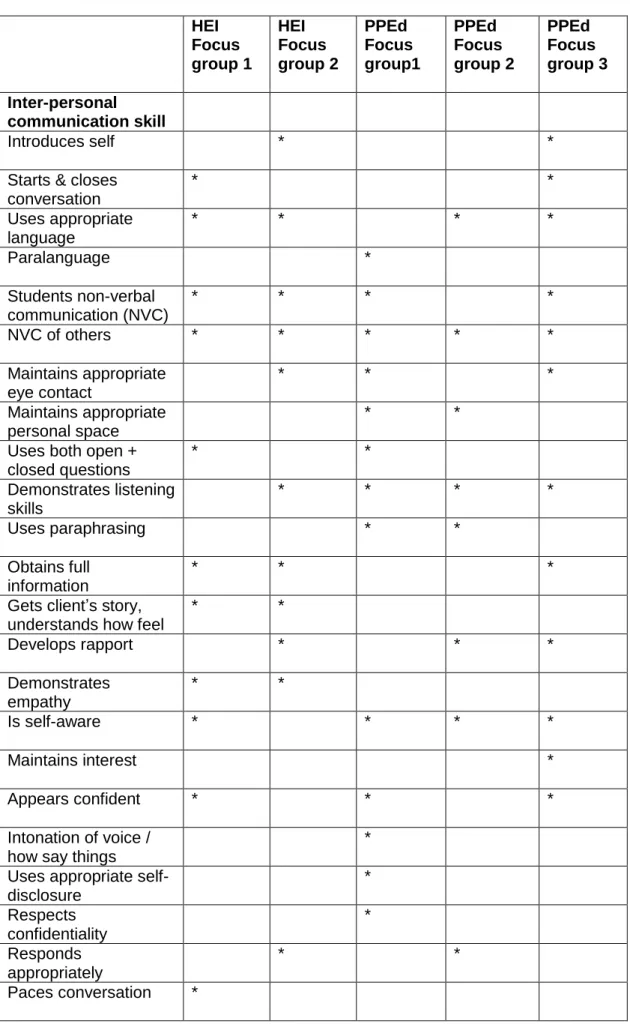
Table 1 Skills to be developed prior to a first practice placement 72 Table 2 PPEds grading of DVD role played OSCE 75
Table 3 Students’ evaluation of the module 96
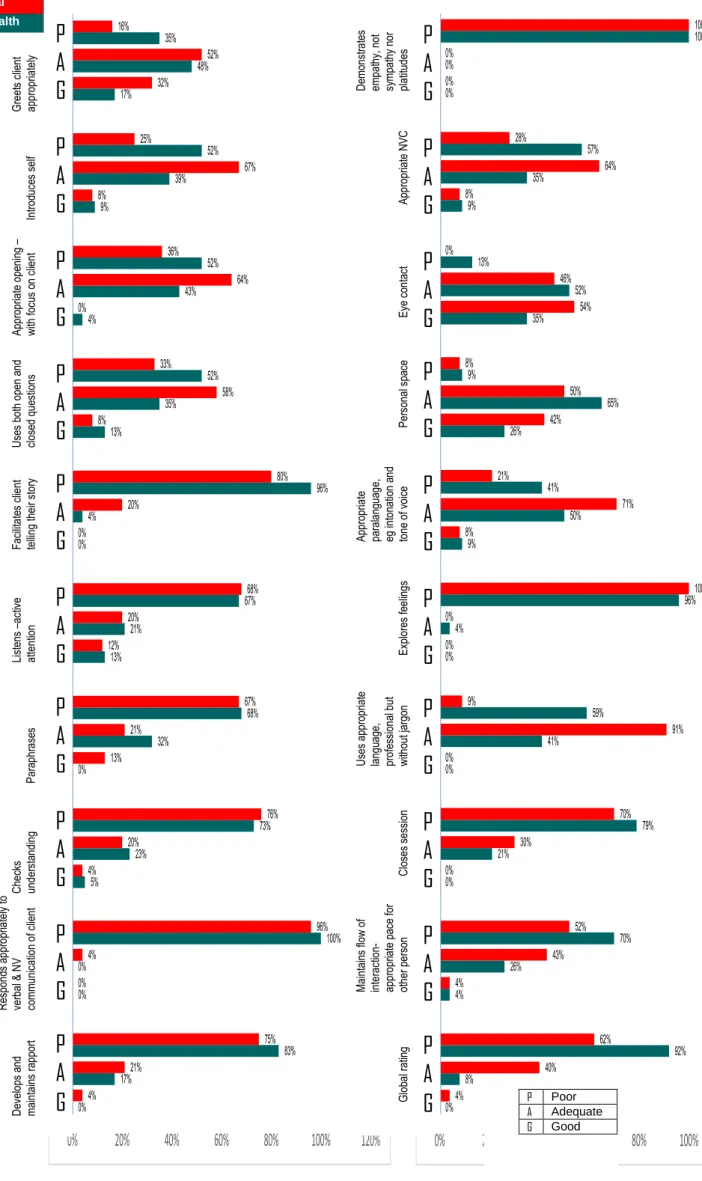
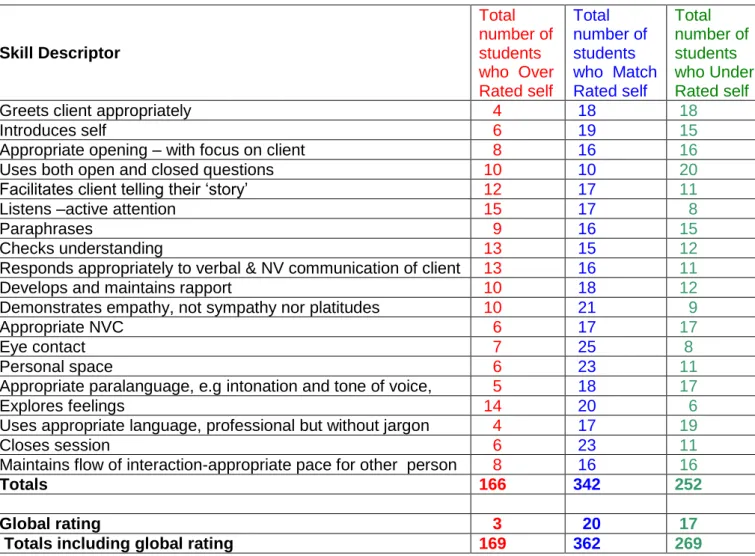
Tables 4 a,b,c&dComparison of staff – student ratings for each student
for each skill descriptor 124-127
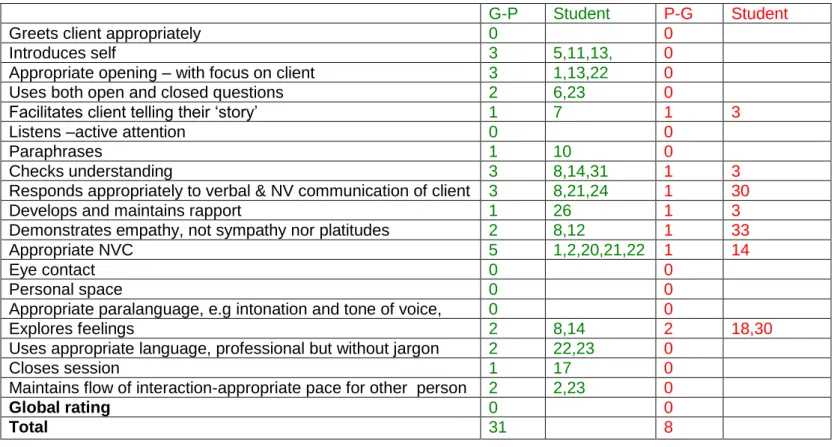
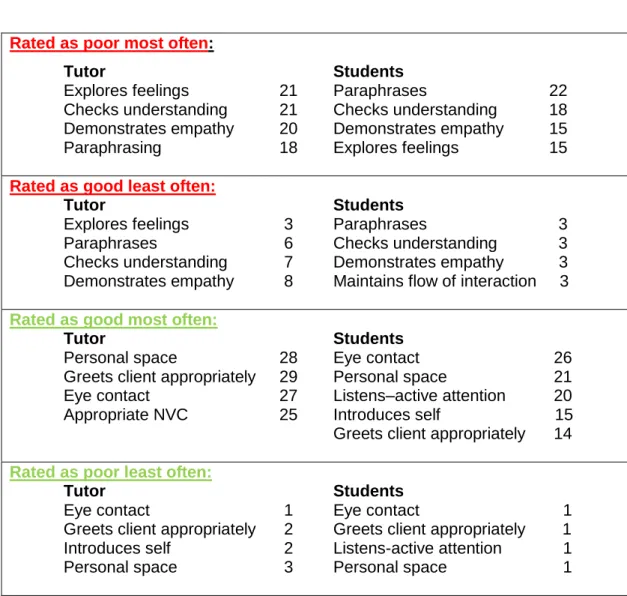
Table 5 Totals for each descriptor where student self-assessment was over rated, matched or under rated compared with tutor ratings 128 Table 6 Staff–student grades comparison for each descriptor 130 Table 7 Skills for which students self under- and over- rated by two grades 131 Table 8 Skills which most predominantly rated good or poor 134 Table 9 a, Comparison of staff – student ratings for each student
for each skill descriptor for students globally rated as poor 136 Tables 9 b & c, Comparison of staff – student ratings for each student
for each skill descriptor for students globally rated as adequate 137-138 Table 9 d, Comparison of staff – student ratings for each student
for each skill descriptor for students globally rated as good 139 Table 10 Summary of skills match ratings for poor adequate and good
students 140
Table 11 OSCE staff checklist scores versus global ratings 143
List of Figures
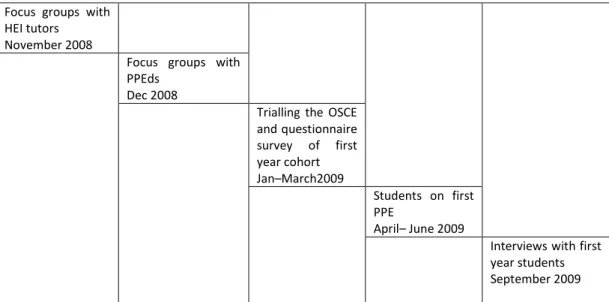
Figure 1 Proposed schedule of events during the research process 56
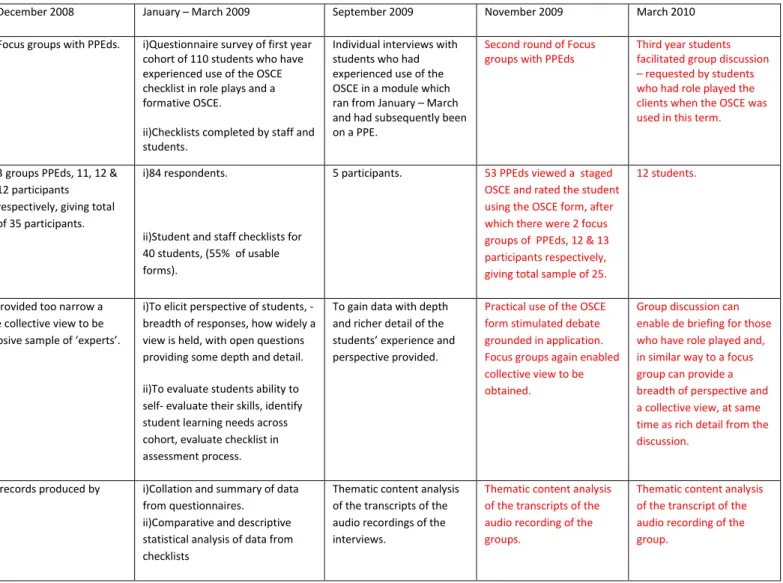
Figure 2 Summary of research process: Schedule, methods, rationale and analysis 66
List of Appendices
Appendix 1: Focus group schedule for PPEds Appendix 2: Focus group schedule for HEI lecturers
Appendix 3: Student Questionnaire-Evaluation of the module and OSCE Appendix 4: Information to first year students requesting participation in interviews
Appendix 5: Student interviews
Appendix 6: Practice placement educators’ letter of information and consent Appendix 7: OSCE – Communication Skills Checklist
Appendix 8: OSCE DVD case scenario information
Appendix 9: Sample of Turning Point grading of the role played OSCE Appendix 10: Focus group schedule -second round with PPEds
Abstract
Occupational Therapy is a client centred, holistic allied health profession in which the quality of a supportive, empowering therapist-client relationship is seen as having a key and central role in effective therapy. A minimum of a 1000 hours of practice placement education (PPE) must be successfully completed in pre-registration programmes, which are charged with ensuring graduates are fit for practice and purpose. This Work Based Project focussed on how pre-registration education can best equip students for a first PPE in terms of sufficient inter-personal communication skills.
Primary data collection was conducted between November 2008 and March 2010. The project firstly employed thematic content analysis of data elicited from two rounds of focus group surveys of practice placement educators (PPEds) to identify a baseline of inter-personal communication skills required prior to embarking on a first PPE. This data was used to formulate an objective structured clinical examination (OSCE) checklist of inter-personal communication skills, which was then utilised as a formative assessment and in role play scenarios in taught sessions with one first year pre-registration occupational therapy cohort. This cohort was surveyed via a questionnaire and in addition five students were interviewed. Subsequently a group of third year students, who role played clients for the OSCE, participated in a facilitated discussion on their perceptions of the OSCE. The data on students’ perceptions and an analysis and comparison of staff and student ratings of performance in the formative OSCE, were utilised in a critical evaluation of the use of this OSCE as a teaching and assessment tool.
The findings indicate a level of agreement on the content of the OSCE checklist, providing content validity to this particular assessment. PPEds, and first and third year students are positive about the use of an OSCE when it is used as a formative experience. Students recommend that if used as a summative assessment the OSCE is combined with a reflective piece. Objective structured clinical examinations have long been established in other health care professions such as medicine and nursing. This project has provided evidence indicating that an OSCE of inter-personal communication skills is a valid assessment tool for occupational therapy pre-registration students, and that it can also facilitate student reflection, self-awareness and learning. It has also identified profession specific inter-personal communication skills required for embarking on a first PPE.
1
Chapter One: Introducing the Project
Introduction
Personal Statement
2
Introduction
Occupational therapy (OT) is defined by its professional body, the College of Occupational Therapists (COT) as a profession which:
“assists people of all ages to achieve health and life satisfaction by improving their ability to carry out the activities that they need or choose to do in their daily lives”, (COT, 2013, p.2, citing COT Council, 2005).
Qualification to practice as an Occupational Therapist (OTt) is gained via successful completion of a relevant degree course, which has the overarching remit of ensuring graduates are fit for practice and purpose. To meet this, however, there exists a tension between theoretical and practical knowledge and ability, in short, between the academic /tacit and propositional knowledge, and when and how to best develop and assess this. National curriculum (COT, 2009) and standards of education and proficiencies required of health professionals by professional and registering bodies, the COT (2008) and Health and Care Professions Council (HCPC, 2012a & 2013) respectively, guide providers of education whilst still leaving flexibility in course design and delivery. A key element, in line with the requirements of the World Federation of Occupational Therapists (WFOT, 2002) is that each student must have successfully completed a minimum of 1000 hours in practice placement education, (PPE). Higher education institutes (HEIs) also therefore need to consider how best to prepare students for PPE, which can be in very diverse areas of practice.
It may seem an impossibly huge task to prepare students for the specifics of every PPE they may be allocated. However, originally founded on humanistic principles, OT theory and practice, although having evolved over the decades, has continued to retain the relationship with the client as a central tenet of professional practice. This is illustrated by texts and research that acknowledge the importance of the ‘therapists use or self’ (Mosey, 1986, Schwartzberg, 1988, Hagedorn, 1992, Taylor, et al 2009) the therapeutic alliance (Huss, 1977, Wilson, 1980, Lloyd and Maas, 1992, Lyons, 1994, Wright St-Clair, 2001) inter-personal skills (Roush, 1995,
3
Fawcett and Strickland 1998) and the practitioner relating on a personal level with the client (McKinnon, 2000, Cole and McLean, 2003, Peloquin, 2003) within the holistic, humanistic profession of OT. All of these can be seen as components of the OT process and in particular the OTt-client communication and interaction.
It seems, then, surprising that Taylor (2008) feels that despite therapeutic use of self being critically important, ‘how to do it is somewhat abstract’ (Taylor, 2008, p.3). This does, though, reinforce my belief that pre-registration courses need specified discrete aspects which focus on developing students inter-personal skills for practice. Previous unpublished research I conducted as part of my MEd (Rowe, 1993) identified how students felt a taken module which primarily focussed on inter-personal communication was central in how they responded to situations in the clinical setting during their first practice placement education. This WBP evolved from a continuing personal and professional questioning of how and when pre-registration students inter-personal communication skills relevant for OT practice should best be introduced, developed and assessed. The formulation of the project also occurred in relation to team discussions during re-validation meetings for the BSc(Hons) Occupational Therapy course on which I am a lecturer.
The following sections outline my personal journey and stance and then go on to identify and evaluate relevant literature and research to inform the debate around the importance of inter-personal skills in practice and the development and assessment of them.
Personal statement:
My professional path has always been centred on OT, first, on qualifying in 1973 as an OTt, and subsequently, from 1985 to date, as a lecturer on pre-registration OT courses.
4
This research project was initiated by two of my passions, firstly this being enabling the learning of pre-registration healthcare professionals, specifically OTt’s, and, secondly, based on a belief in inter-personal communication as a central tenet of effective therapy, my ongoing desire to ensure these skills are given sufficient and appropriate explicit focus within pre-registration programmes.
Having worked as an OTt predominantly in mental health before taking up a post in higher education as a tutor at what was then a National Health Service School, I found myself assigned to teach anatomy and physiology, albeit also with responsibility for ‘teaching’ group dynamics. For me, these two areas both had challenges of how to help students make sense of ‘theory’. Memories of my own experiences as an OT student were mainly of sitting in one anatomy lecture after another, where tutors dictated notes straight from text books on such things as the position and actions of muscles. So, I came to my new position as a neophyte tutor with a desire to help students and a belief that the way to do this was by using practical and experiential learning, albeit then with no knowledge and understanding of such things as the potential range of learning styles within a group of students. What was already in place was some experiential learning in the parts of the curriculum which focussed on group dynamics, but anatomy and physiology remained mainly lecture format, with seminars being in reality mini-lectures to smaller numbers of students.
Over the ensuing years I have developed my skills via formal qualifications such as the Certificate of Higher Education and a Masters in Education, and through experiences with colleagues and students. I have retained my role in the anatomy and physiology modules, but my interest has rested more and more on holistic, client centred practice and within this inter-personal communication skills. At the time of embarking on my Masters dissertation I chose to focus on how students communication skills might be developed and the role of experiential learning in developing these skills. This was in response to my concern to safeguard the experiential nature of these modules because the staff student ratios and ‘contact time ‘ were being
5
questioned by management as part of a move to reduce contact time for each module.
During these same years the education of allied health professionals such as OTts has changed and developed. These changes saw the qualification become Honours degree level rather than a Diploma, with some pre-registration programmes being at Masters level, and the move of programmes to reside in higher education, usually universities, as is the case for the programme focussed on in this WBP. Within this shift there has seemed to me to have been an increasing emphasis on academic skills and theoretical knowledge, and for OT this has to some extent mirrored and been in parallel with the profession’s seeming continual need to prove its worth by a more scientific, theoretical base. The role of assessment has been devolved to the providing institutions rather than reliance on national examinations. In each quinquennial re-validation the team I am part of wrestle with how best to structure the course to equip students for effective practice as graduates. Central within this is the assessment process. It seemed to me, though, that the theory - practice links in the programme were at risk of becoming diluted, with the 1,000 hours of PPE being seen more and more as the place where skills are developed and assessed. Although these hours are essential, and successful completion of them is a requirement of professional bodies, such as WFOT (2002), there is the concern as to how much responsibility for practical expertise development and assessment should be devolved to practice, rather than feature as an assessed component within a taught programme.
During the time I was considering the focus of my intended WBP, the programme team were in the midst of a re-validation. In these meetings there was a growing concern and debate around the balance of theory and practice and the need for more HEI based assessment of skills, along with recognition of the tension between skills based assessment and the need for academic rigour appropriate for each level of study. As previously stated, the application of theory and knowledge has been seen to reside mainly in the 1000 hours in PPE that all students must successfully complete for
6
professional recognition and application for licence to practice. However, there is a responsibility to prepare students for this practice placement and the content and balance of this preparation was something the team was debating. During these discussions it became apparent that the majority of programme staff felt that students should be required to demonstrate some competence prior to the first placement in the form of a practical test and the idea of an objective structured clinical examination (OSCE) was raised. With the large range of placement areas students can go to it was difficult to identify a manageable, realistic scope of skills to be included in this assessment that would be applicable across all areas of practice. I, therefore, proposed to the team that as inter-personal communication is relevant irrespective of area of practice it would be appropriate to consider these skills as a focus of pre requisite skills for a first PPE. This suggestion received a positive response from the team.
In the re-validation thus far it had been agreed to retain the one module in the first year of the under graduate pre-registration programme with a focus on the development and assessment of communication skills. The team discussions had resulted in the decision to retain the experiential nature of the module, albeit with more use of role plays versus group work, but the main focus of team discussion now turned to the assessment of the module. This had traditionally been a written assignment which required students to reflect on their experiences and their inter-personal communication. Although the ability to reflect can be seen as a key element of establishing and maintaining effective communication, it does not in itself mean that the person can communicate effectively in practice. I had noticed that students who achieved A range grades in assignments were not necessarily adept at communication in experiential sessions. The team thereby agreed that a practical test of abilities would be more appropriate. Hence this research idea began to be formulated.
As a team we had never used practical tests as a means of formal assessment so there seemed a need to develop an assessment method and tool. Assessment drives learning, so I began to consider that, if the
7
assessment method is the most appropriate for the learning outcomes, it might also be an integral part of the learning process. The team decision was to investigate the use of an OSCE. What remained then was how an OSCE could be used for this, when usually this tool is utilised to assess more quantifiable tasks with set procedural steps. The team had limited knowledge of OSCEs, so, - and with only a year to go before the validation
event-, I decided this was an area on which I might productively focus.
The overall remit of OT pre-registration programmes is to ensure graduates are fit for practice and purpose. My quest became framed around the need to ensure students are fit for their first PPE, specifically in terms of their inter-personal communication skills.
In the following chapter and literature review I go on to firstly strengthen the rationale for this being an important focus for OT educators arguing that appropriate communication is central to effective practice as a student as well as for qualified practitioners. This leads on to a review of the OSCE as a method of assessment and in particular its role in assessing inter-personal communication skills, with an additional consideration of its potential in facilitating learning.
8
Chapter Two: Literature Review
The WBP in the context of occupational therapy education
Fitness for practice and purpose in a first PPE Client centred practice
Identification of interaction skills and the assessment of them Competence
OSCEs
Validity and reliability of OSCEs in assessment OSCEs for inter-personal communication
The potential of OSCEs in teaching and learning Conclusions
9
The WBP in the context of occupational therapy education
My stance and belief in the importance of the therapist’s inter-personal communication skills is based on OT being a client centered, holistic profession in which, the client-therapist relationship is an integral (Palmadottir, 2006) and key (Taylor, 2008) factor for an effective occupational therapy process, the desired outcome being that:
“the client achieves a satisfying performance and balance of occupations in areas of self-care, productivity and leisure, that will support recovery, health, well being and social participation”. (Creek, 2003, p.32).
The qualities of a supportive, empowering therapeutic relationship have been shown to have a positive impact on rehabilitation (Cole and McClean, 2003, Palmadottir, 2003, Peloquin 2003, Pellat, 2004, Hall, et al 2010) and authors have researched client experiences of rehabilitation and found that the relationship formed with the therapist can be perceived by clients as more important than interventions and technical expertise (Darragh, et al 2001, Pellat, 2004).
For therapists to establish and utilise this therapeutic relationship they must first have developed inter-personal communication skills, the relationship being:
“a trusting connection and rapport established between therapist and client through collaboration, communication, therapist empathy and mutual understanding and respect”. (Cole and McLean, 2003, p.44). It would seem, then, that overt focus on developing understanding of, and expertise in establishing this therapeutic alliance would be apparent within pre-registration education. Currently in the United Kingdom, pre-registration programmes are at Honours or Masters degree level and provided by HEIs. Programmes which, on successful completion, entitle application for registration with the Health and Care Professions Council (HCPC) formerly Health Professions Council (HPC) and afford licence to practice, must be
10
validated by the HCPC and COT and are thereby charged with producing graduates fit for safe and effective professional practice (COT 2008, HCPC, 2013). The curriculum for any programme in the United Kingdom is outlined in COT Curriculum Framework Document (2009) and COT also publishes national pre-registration education standards (COT, 2008). Standards of education and training (SETs) are also set by HCPC (2012a) and each programme of study must meet these in order for its graduates to be deemed to meet profession specific standards of proficiency (HCPC, 2013) necessary for eligibility to apply for admission to the professional register and practice as an OTt.
The curriculum must remain relevant to current practice, and integration of theory and practice must be central to the curriculum (HCPC SETs, 2012a, section 4.4 and 4.3) with the measurement of student performance being objective and assuring fitness to practice (ibid, 6.4 & 6.1). Section 8 of the standards of proficiency, (SOPs), focusses on effective communication (HCPC, 2013) and identifies the need to be able to modify and demonstrate effective communication skills as appropriate to the situation and person(s) involved.
The section of the curriculum framework (COT, 2004) concerned with the philosophy and beliefs, states:
“Core processes of Occupational therapy are using oneself therapeutically……The person’s engagement in the therapeutic process is the most important aspect of intervention, therefore occupational therapy is most effective when it is a partnership between the person and the therapist …. The therapist /person interaction is a dynamic, collaborative process in which choice and control are negotiated”. (section 3.2).
The curriculum framework goes on to list five profession specific skills and states that to build and maintain a collaborative relationship with the individual:
11
“this skill involves an understanding, development and use of oneself within the therapeutic relationship. Enhanced skills in communication with the individual are paramount within the relationship”. (COT, 2004, Section 5.3.6.a.).
However, the document provides no definition of what is considered to constitute ‘enhanced communication skills’ and interpretation of this could vary considerably. The revised curriculum guidance (COT, 2009) also recognises the need of graduates to be able to build therapeutic, collaborative relationships according to the principles of person centred care (section, 3.i, ii & iii). Both of these documents acknowledge the importance of enabling each HEI team, when designing the programme of study, to have the freedom to decide how and at what point the requirements of the curriculum are met and to have some flexibility in this, in order for the team to be responsive and proactive to changing drivers such as health and social care national policy and guidelines. The Standards of Education (COT, 2008) require that a range of learning, teaching and assessment methods and strategies are used that underpin the professional philosophy of OT (Standard 3.1) and that the assessment design and procedures assure fitness for practice, purpose, profession and academic award (Standard 3.2).
It would seem, therefore, that research into what clinicians and practitioners in HEIs in the UK consider to be ‘enhanced communication skills’ sufficient to equip students for practice, and the range of how these skills are developed and assessed potentially has national relevance to educators, practitioners and professional regulatory bodies. As previously stated, during pre-registration programmes there is a requirement for students to successfully complete of a minimum of 1000 hours in PPE, and these elements of the programmes are recognised as key times for developing students’ professional identity and for their linking theoretical knowledge, skills and values with professional practice (COT, 2004 & 2009), but there remains debate as to whether some skills might best be developed to some extent prior to placement rather than a presumption that placement is the optimum context in which to develop them per se. This, therefore, led me to identify that there is scope to focus on the preparation of students for their
12
first PPE with regards to their inter-personal communication skills, to ensure they are equipped with sufficient knowledge and skills for safe practice, albeit at the level of student practitioner, and commensurate with the stage of the programme they have reached. Literature on practitioner skills is focussed on graduates and qualified staff, so identifying the base line level of skills required and investigating how best to assess that this has been attained prior to a first PPE, is seen as a professionally relevant focus for this WBP.
The following sections consider the balance of the art and science of client centred practice and present a case for effective inter-personal communication as a generic and key skill within professional practice.
Fitness for practice and purpose in a first PPE
Each HEI providing pre-registration programmes is charged with ensuring graduates are fit for practice and purpose as well as for award, the measures of this being to some extent guided by COT and HCPC (op cit). Duke (2004) feels that since the publication of A First Class Service (DoH, 1998) and Meeting the Challenge (DoH, 2000) attention has become more focussed on competence.
There is acknowledgment that PPE is a critical and central component of pre-registration programmes (AOTA, 2003, COT, 2004, WFOT, 2002) and is a means of achieving, ‘fitness for award, practice and purpose’ (COT, 2004, p.5). Indeed subsequent editions of the standards of pre-registration education in the UK (COT, 2008) saw this integration to be of such importance that they no longer presented the standards for placement education as separate. It is argued that PPE is where theory is applied to and integrated with practice (AOTA, 2003, Mason and Bull, 2006, Tan, et al 2004) and is essential in developing professional behaviour, identity and expertise (Bonello, 2001) and a time when competence is assessed, with a minimum of 1000 hours of PPE needing to be successfully completed,
13
(WFOT, 2002). It can also be a stressful time for students and placement educators, possibly due to inadequate preparation (Spiliotopoulou, 2007).
This WBP takes this questioning further by focussing attention on whether HEIs need to consider assessing students’ fitness for practice and purpose to take on their role as students in a first PPE.
Since the mid 1980’s there have been studies on placement education and Bonello (2001) presented a critical review of literature up to the late 1990’s, and identified this examined rationale, processes and content of practice learning. Lindstrom-Hazel and West–Frasier (2004) feel that students are increasingly being required to ‘hit the ground running’ and function at least as an advanced beginner, as defined by Benner (1984) as they begin a level II placement. Recognising the potential need to enhance their students’ preparation for PPE Lindstrom-Hazel and West Frasier (op cit) and Knecht-Sabres, et al (2013) utilised problem case–based learning with standardised simulated patient interactions, and both studies found students positively evaluated these methods, feeling an increase in confidence and skills.
A search of indexes for the British Journal of Occupational Therapy (BJOT) between January 2000 and December 2013 identified a total of 31 articles the titles of which included ‘practice placement’, ’fieldwork’, ‘practice education’ or ‘practice educators’. None of these considered preparation for placement, apart from Spiliotopoulou (2007) who considered the role of a delineated preparation for placement in the form of an induction programme. The stance of this WBP is that a more explicit and integrated approach to preparation for placement education is worthy of consideration. With the proliferation of knowledge and expertise, coupled with the diversity of areas of practice that students can go to on placement, the question remains as to what is most useful to equip students with.
Over the years there have been ever changing demands on health and social care practitioners as policy and legislation and the social contexts in which people live have evolved(Higgs and Titchen, 2001).Rapid advances in
14
technology and medical knowledge also impact on practice and the need, indeed it could be said the demand, for a sound evidence base has increased (Davis, et al 2003, Law and MacDermid, 2008). In addition, the areas in which OTt’s work are increasing beyond statutory health and social care sectors (COT, 2009) to include education and judicial systems, the private and commercial sectors and work with homeless and displaced persons groups. So, although the underlying philosophy and premise of beliefs around the inherent occupational nature and needs of people remain constant, the knowledge base is continually changing, as it is expanded, refined and refocused. Whereas historically programmes and curricula were content driven with specified ‘facts’ to be learnt, there is now a recognition of the impossibility of knowing everything one ever needs to know. Adamson, et al (1998) felt at that point there had not been any large empirical investigation to match the skills required in a rapidly changing health care environment with what is acquired by students during pre-registration education. The curriculum framework (COT, 2009) aims to continue the principles of its predecessor (COT, 2004) in being non prescriptive and flexible to allow for:
“responsive and proactive changes to take place to reflect the political and educational drivers of the day”. (COT, 2009, p.3).
The challenge, then, to HEIs, although guided by COT and HCPC, may be thought to require:
“a judicious selection of the knowledge, skills and attitudes necessary for effective professional practice…….. an ability to ‘read the runes’ of future health and social care policy, theory and research for at least the ensuing decade as well as taking account of approaches to education and inquiry”. (Blair and Robertson, 2005, p.269).
The question remains as to what guides this ‘judicious selection’.
Barnitt and Salmond (2000) summarise the task of educators to be that of equipping students with the skills and abilities needed, but do not include
15
knowledge base. However, later in the article, when discussing employers viewpoint, they note the expectation that newly qualified OTt’s can describe the theory base of practice, but do not specify this further. In their article Blair and Robertson (2005) relate their debate on curriculum development to meeting the seemingly conflicting demands between ‘hard’ evidence based stance of health outcome measures and ‘best practice’, and the ‘soft complexities’ of OT practice, and go on to question and discuss the consequent dissonance between:
“ontological assumptions, ways of generating knowledge and practice within OT”. (p.269).
Higgs and Titchen (2001) have similar concerns when considering practice development, noting obstacles to this include a predominant valuing of propositional knowledge, generated by research, and although they do not limit this to quantitative, ‘hard evidence’ based they do go on to note:
“a naïve expectation for research…. to provide certainties in an uncertain world”. (p. 527).
Similarly Rycroft-Malone, et al (2004) note how, in health care, evidence has been interpreted in relation to notions of proof and rationality. Using Eraut’s (1985, 2000) terms of propositional or codified, and non-propositional or personal knowledge Rycroft-Malone, et al (2004) go on to debate how in order to practise evidence based, person centred care, practitioners need to draw on and to integrate multiple sources of knowledge from both of these categories and to utilise them in the context of the, ‘particular complex, multi- faceted clinical environment’, (p.83).
Occupational therapy has long been seen as both an art and a science, indeed Mosey (1986) began her definition of OT by saying it is:
“the art and science of using selected theories,...and the practice of OT requires skillful execution of personal interactions on the part of the therapist”. (p. 3).
16
However, there has been more focus on science than art, particularly at certain times such as in the 1970’s when the profession’s emphasis, along with other allied health professions, shifted to seeming to need a scientific, medical, reductionist, evidence base, in contrast with its humanistic values. This shift is indicated, as Peloquin (1989) notes, by, between 1972 and 1981, the deletion of the phrase ‘art and science’ from the American Occupational Therapy Association’s definition of OT. She does not indicate how it was incorporated in subsequent definitions, but on the AOTA website, under ‘Facts sheets and roles of occupational therapy’, is the following statement available to the general public:
“Occupational therapy is a science-driven, evidence-based profession that enables people of all ages to live life to its fullest by helping them promote health and prevent—or live better with—illness, injury or disability”.
http://www.aota.org/Consumers/WhatisOT.aspx, [accessed 3rd June
2010].
It seems, then, that there is still potentially a higher valuing of the ‘science’, but I feel it is not as helpful to consider the art versus science of practice, but more appropriately perhaps to consider them, not as opposing polarities, with the science seen as the more important, but rather as how the two are equally important and intertwined for effective practice. As Williams and Paterson (2009) note:
“we must ensure that the literature accurately reflects all components of good evidence-based decision-making, that is both the ‘art’ as well as the ‘science’ of practice”. (p. 689)
With the shift in delivery of care to a community health model, and practice becoming more complex and diverse (Overton, et al 2009) this is currently particularly relevant. Certainly in its definitions for the United Kingdom, COT does not focus on the knowledge base, the definition being:
“Occupational therapy enables people to achieve health, well being, and life satisfaction through participation in occupation”. (COT, 2013, p.1)
17
This document also cites WFOT, which provides a similar definition of OT, adding the client centred aspect:
“Occupational therapy is a client-centred health care profession concerned with promoting health and well being through occupation. The primary goal of occupational therapy is to enable people to participate in the activities of everyday life”. (WFOT, 2010.)
The technical, rational knowledge of professional health and social care practitioners, of whatever professional base, may seemingly be an obvious necessity and an axiomatic expectation of clients. However, research is indicating that outcomes of treatment and clients’ evaluations of service provision are not solely, nor possibly mainly, based on this type of clinical expertise, but on the relationship and inter-personal communication between the client and the health care professional (Williams, et al 1998, Beck, et al 2002, Cruz and Pincus, 2002, Blank, 2004, Palmadottir, 2006). It seems the way in which care is delivered, and indeed a system to evaluate provision from a care versus cure orientation (Ong, et al 1998) is important. From an OT perspective, Deveraux (1984) specified the caring relationship as the art of practice, and similarly, Peloquin (1989) felt the art of practice in OT, as well as being concerned with the meaning of occupation in a person’s life, is intrinsically centred on relationships and the qualities that make these meaningful, and equates to the ‘soul of practice’, (p.219). Even at that time she felt this concept had been under-represented in OT literature in the previous decade.
When considering further the selection of knowledge, skills and attitudes required for effective practice (Blair and Robertson, 2005) it would seem to me that the ‘art of practice’ is central, regardless of specific areas or specialities within which OTt’s work. This is distinct from ‘professional artistry’, as described by Higgs and Titchen (2001, p.528) as an advanced level of clinical competence, which enables the practitioner to use and apply a blend of propositional, professional craft and personal knowledge; and ‘judgment artistry’ defined as:
18
“the cognitive, metacognitive and humanistic aspects of judgment in professional practice”. (Paterson & Higgs, 2001, cited in Paterson, et al 2005, p.409).
The art of practice, I would suggest, is inherently necessary in order to achieve either of these, but it might also be seen as part of preliminary development towards them. Weinstein (1998) feels that it is through the art of practice that therapists empower their clients by forming meaningful inter-personal relationships with them, and she goes on to cite Kielhofner (1983) and Koomar and Bundy (1991) to support the point that, although treatment can be seen as a complex orchestration of ‘science and art’, ‘art’ is the major determinant of successful intervention.
Creek (2003) identifies 7 core skills of OTts, these together being the expert knowledge and abilities shared by all OTts irrespective of their field of practice, and one of these is ‘collaborating with the client’, which in turn entails:
“building a collaborative relationship with the client that will promote reflection, autonomy and engagement in the therapeutic process”. (Creek, 2003, p. 36).
This in essence embodies the client centred ethos of OT, and with that the establishment of a particular therapeutic relationship, which Crepeau, et al (2003) feel in OT is a manifestation of its artistry.
So when considering how HEIs prepare students for their first PPE the elements that comprise the art of client centred practice require explicit attention so that the students might best begin their journey towards ultimate practitioner competence.
Client centred practice
Carl Rogers pioneered and developed humanistic, client centred therapy based on the premise of each individual having inherent goodness and also
19
their having the abilities, under the right conditions, to provide solutions to their own problems. The phenomenological stance he advocates fits well with OT in its valuing of each individual. Restall et al (2003) writing in the Canadian Journal of OT feel that the values and beliefs in a client centred approach to practice have always been evident in and remain fundamental to the profession and its practice. This is in contrast to Law (1998) who writes that client centeredness has been part of Canadian OT philosophy only since the 1980’s, but she is nonetheless an advocate, stating that OT at its best is client centred.
Hong, et al (2000) writing in the British Journal of Occupational Therapy (BJOT) feel that since the 1950’s OT has progressively adopted client centred views based on humanistic theories. Gage and Polatajko (1995) go so far as to suggest a change of term to ‘client driven’, (p.117), to more adequately recognise and address the active and directing role of the client, versus a therapist’s focus on a client’s needs. In a similar vein Higgs and Titchen (2001, p.527) see the professional as having specialist knowledge, which can be shared with the client in a reciprocal ‘working with’ versus ‘doing to’ relationship.
In its Code of Ethics and Professional Conduct the COT states that it is committed to client centred practice (COT, 2000 & 2010) and further that therapists should foster relationships centred on the needs of service users and their family and carers (COT, 2010, 4.2). Yet in 1999, Sumsion identified a need to define client centred practice for the UK and, having surveyed 64 practitioners, produced a draft definition, which she went on the following year to refine:
“Client centred occupational therapy is a partnership between the client and the therapist that empowers the client to engage in functional performance and fulfil his or her occupational roles in a variety of environments. The client participates actively in negotiating goals which are given priority and are at the centre of assessment, intervention and evaluation. Throughout the process the therapist listens to and respects the client’s values,
20
adapts the interventions to meet the client’s needs and enables the client to make informed choices”. (Sumsion, 2000, p.308).
Such a client centred model fits the profession’s humanistic origins and re-emerging focus (Sumsion, 2006, Higgs and Titchen, 2001). Some research has been conducted to ascertain links between client centred practice and patient satisfaction (Corring and Cook, 1999, Palmadottir, 2006). Although OT researchers have questioned if OTts do practice in a client centred way (Blank, 2004, Lane, 2000) they are also writing from a stance of advocating client centeredness, and are concerned with identifying what prevents the OTs in their studies, who are based in community mental health and early discharge teams respectively, from working in this way. The factors they identified as potential barriers to client centred practice fit with the categories identified by Restall, et al (2003) and written about in chapters in Sumsion (2006) these being variables of the therapist, the client and the environment. Blank identifies the therapist as the key variable, whereas Lane (2000) is more concerned to highlight external pressures such as resources, fast turn round times and managerial initiatives intended to achieve standardisation of care.
Restall, et al (2003) propose a framework of strategies to overcome barriers to client centred practice. This consists of five categories of strategies: personal reflection, client centred processes, practice settings, community organizing and, coalition advocacy and political action, but these writers appear to pre-suppose the clinicians have the ability to make changes required having identified on what aspects in their circle of influence they have chosen to centre and act on.
With this increasingly established acceptance within OT of the value of client centred practice it falls to HEIs to facilitate students’ expertise in implementing it within their practice. Blair and Robertson (2005) questioning the priorities in curriculum development, remind the reader that although research and ‘best practice’ evidence are seen to rest more within ‘hard’ versus ‘soft’ evidence, and an uncontested realism, the ontological
21
assumptions of OT are person focussed. They go on to consider that the practice of OT is concerned with soft complexity questions around values, perceptions and existential questions concerning doing and being, and on p.273, cite Cusick (2001) on the danger of:
“losing our ‘professional soul’ if, (sic), spiritual , emotional and humanistic dimensions are relegated to a lesser role”. (Cusick, 2001, p.110).
Giving a priority to this aspect of practice may not be in itself sufficient, as, particularly for students, there is a need to identify how this client centeredness is achieved in practice.
The essence of client centred practice is seen as being the particular therapeutic relationship, characteristics of this helping relationship being genuineness, acceptance, via unconditional positive regard, a sensitive empathy – a desire to understand (Rogers, 1951, Rogers, 1967). The task is to communicate these to the client, not merely the therapist feeling them (Rogers, 1967, p.284,) achievement of the best therapeutic relationship being related to good inter-personal relationships (Rogers, 1951, p. 53).
Recognising the importance of the therapeutic relationship, Myerscough (1992) sees communication as the key to establishing this, with this constituting the cornerstone of effective therapy. It has been found that communication can have a positive influence on patient satisfaction (Robinson and Heritage 2006, Sung Soo, et al 2008, Haskard, et al 2009) adherence to treatment (Haskard Zolnierek and DiMatteo, 2009) and improved health outcomes such as symptom reduction and improved function (Roter, 2000).
Writing from an OT perspective, Taylor, et al (2009) feel that although historically the importance of therapist interactions with clients has been emphasized, there is no consistent terminology, and having reviewed literature they conclude that:
22
“little is known about how therapists learn about therapeutic use of self and how they experience and manage the therapeutic relationship’, (p.200), ...‘but commonly discussions address communication, emotional exchange and collaboration and partnership”. (p.198).
Tickle-Degnen (2002) sees the development and maintenance of rapport and the working alliance as lower level pre-requisites for the attainment of the higher level therapeutic alliance of client centred OT practice.
Some text books on interaction in a therapeutic context note concepts rather than the specifics of how to attain an effective therapeutic alliance. This is not entirely surprising since there cannot be a prescriptive list of things to do and say, the principles of how to structure and focus each particular interaction being that there needs to be flexible adaptation, based on observation and intuition (Kagan and Evans, 1995, Burnard, 2005) communication being interactive and context related (Koprowska, 2008). However, Burnard (1997) felt there is a recognised set of communication skills, and numerous texts do similarly identify ones those authors feel are key to effective interaction and some also give guidance and ideas on how to ‘learn’ such skills (see for example, Williams 1997, Kurtz, et al 2005, Donnelly and Neville, 2008).
In relation to OT, Blank (2004) although only surveying seven service users of community mental health OT, did identify some characteristics of the therapist which facilitated a positive relationship. These included personality, behaviour and the client centred skills of the therapist, with a directive, overly didactic approach being seen as a barrier. Client centred skills were seen as when the therapist was non-judgmental, and demonstrated acceptance, respect, trust and empathy. Helpful behaviours were cited as being skilled communication, empowering, enabling, showing concern and interest. However, what constitutes ‘skilled communication’ is not defined in the paper.
23
This leads, then, to consider what has already been developed in terms of defining and assessing specific communication behaviours in health care contexts so that these can provide a useful basis on which to focus skill development and assessment and contribute to my thinking about how best to build an OT specific learning and assessment OSCE.
Identification of interaction skills and the assessment of them
Research on identifying the specifics of interaction has been conducted mainly in the area of medicine. The Roter Interaction Analysis System, (RIAS), a method for coding medical dialogue, has been used extensively in medical literature and research on doctor-patient interactions across a broad range of clinical areas (Roter and Larson, 2002). Ong, et al (1995) feel that studying the interactive behaviours of doctors and patients is essential if outcomes of patient care are to be enhanced, and support the use of systems, such as the RIAS, which capture the ‘care’ or affective, socio- emotional communications, as well as the task focussed, cure oriented aspects. The need for both aspects to be incorporated in communication is recognised by other authors, albeit with different terminology, with Kagan and Evans (1995) denoting these as cognitive, emotional and behavioural, and Bayne et al (1998) as informational and emotional care. Conclusions of the meta-analysis by Haskard Zolnierek and DiMatteo (2009) state that interventions should incorporate affective / psychosocial and instrumental / task oriented behaviours and can positively affect patient adherence.
Although this research has sought to identify and categorise elements that facilitate or constitute communication others have recognised the range of factors that have to be addressed. Amongst these are Williams, et al (1998) who conducted a review of literature published between 1968 and 1997 which focussed on doctor-patient communication and patient satisfaction. Based on this they feel that investigating the relationship between client centeredness and patient satisfaction is problematic and complex, with clients’ mood and reason for consultation impacting on the satisfaction rating. Further these authors argue that researchers’ measures of how
24
doctors achieved this client centeredness often had methodological flaws. They did, however, conclude that higher patient centeredness and empathy are associated with increased patient satisfaction. Other aspects they reviewed were the balance of information provision, which varied between contexts and reasons for consultation, and the doctor patient relationship and expressions of affect which they concluded were overall important factors in satisfaction.
Bensing, et al (2003) and Epstein (2006) similarly urge a recognition of the impact of the context within which the interaction takes place, and the bi- or multi – directionality that exists when communication is at least between the clinician and patient, and can be with relatives or friends also present. This reinforces that each interaction is a unique experience as there are the particular and individual needs and focus of the patient and clinician and the context and purpose of the encounter. The question then arises as to whether it is possible, nor indeed appropriate, to define and quantify optimum use of certain verbal and nonverbal responses, since there cannot be a prescriptive set of instructions to follow, and indeed if this is attempted it would negate and proclude true or authentic ‘dialogue’. For students, though, the basic skills need to be identified and practised so these can then be utilised appropriately in their response to each particular client and can, according to Fadlon, et al (2004) form a structured model which helps both insecure and over confident students.
It would seem then that for students, whatever formats of learning and assessment are utilised, these need to incorporate these factors and, in the case of the assessment tools, still retain objectivity and parity between and for all students.
The literature and research on OSCEs will now be reviewed to examine the scope for a rationale to be provided for this being a potential assessment method. This will begin with a review of the concept of ‘competence’, before OSCEs in general and then OSCEs for communication skills are discussed. The potential of OSCEs for guiding learning will then be considered.
25
Competence
As discussed earlier, OTts are required to develop competence during their pre-registration education in line with national curriculum (COT, 2004) and professional standards, if they are to be eligible to apply for licence to practice. In addition there has been a move towards a competence based career framework (DoH, 2008) and a requirement for evidence of continuing professional development (HCPC, 2102b) to ensure competence is maintained post - registration.
Part of this WBP is concerned to investigate the premise that when considering students’ skills development and assessment prior to a first PPE the clear identification of the key abilities required to begin to form a therapeutic, client centred relationship could form the basis of the assessment process and in turn assist students in their learning. This concern is based on assessment being seen as the driving force of student attention and so it has a key, central role in the learning process (Martin and Jolly, 2002, Havnes, 2004, Larsen and Jeppe-Jensen, 2008). So it would seem that it is imperative that assessment is an integrated part of the learning experience and matches competencies being learnt (Wass, et al 2001) and is meaningful and applied consistently (Panzarella and Manyon, 2006).
It must be acknowledged that attempts to systematically define the critical elements in the practice of health professionals at various stages of professional development is one of the major tasks facing assessors today and yet it remains fundamental to good practice (Crossley, et al 2002). However, assessment of clinical performance is complex and controversial (Martin and Jolly, 2002) and one of the most challenging tasks is how to assess it objectively (Walsh, et al 2009).
Higgs, et al (2001) argue for there being three types of knowledge: propositional, craft and personal, and that these come together in clinical
26
encounters, which means preparation for practice requires a complex interplay of these different ways of knowing. Levels of knowledge have been categorised in Miller’s pyramid of competence, as ‘know’, ‘knows how’, ‘shows how’, and ‘does’ (Miller, 1990) to provide a conceptual framework for defining a clear focus for assessment. Since its original inception the addition of two foundation levels, ‘heard of’ and ‘knows about’ have been considered (Peile, 2006). For a[ny] assessment identifying readiness for a first PPE, the ‘shows how’ level would seem to be most relevant, the ‘does’ being embodied in PPE itself. There remains a need to define competence and the specific competencies that can be used to measure it. Attention will now turn to this.
Competence is defined by tacit rather than explicit knowledge, and based on a review of literature between 1966 and 2001 Epstein and Humbert (2002) propose a definition of professional competence intended to encompass important domains of medical practice:
“The habitual and judicious use of communication, knowledge, technical skills, clinical reasoning, emotions, values, and reflection in daily practice for the benefit of the individual and the community served”. (Epstein and Humbert, 2002, p. 226).
The associated requirement of ‘judicious use’ is also reflected in proposals by Verma, et al (2006) who consider core competencies for health professionals, and note that competence is more than knowledge. Listing similar domains to Epstein and Humbert (2002) they go on to view competence as behaviours that describe excellent performance in a particular work context, be that in a role, job or function. Eraut (1998) also sees attribution of competence as involving judgments of quality, not solely the acceptable standard delineating between competent and not competent, but also indicating levels of achievement, and so thereby encouraging the attainment of excellence. It seems pertinent then to now go on to review assessment methods that are focussed on measuring such refined understandings of competence.
27
OSCEs
The OSCE was first introduced into medical education by Harden et al (1975) as a means of assessing clinical competence. The operational basis of this assessment tool being that students rotated round a number of stations, spending a few minutes, usually between five and ten, at each, carrying out a procedure as identified on a written instruction and then answering questions on their findings and interpretations of them. Harden and colleagues continued to refine their work (Harden and Gleeson, 1979, Harden 1988, Harden, 1991) which became recognised as an innovative assessment method which was adopted by other medical educators, who further researched its applications and development. It is utilisation of this assessment procedure which seems of potential value to this project’s concerns.
Rushforth (2007) states that within a few years of the introduction of OSCEs other professions began to use them in pre-registration courses. However, she does not fully substantiate this claim, only citing two articles based in nursing (McKnight, et al 1987, Ross, et al 1988) and another two from allied health professions, these being Nayer (1993) in Physiotherapy Canada and Wessel, et al (2003) in Journal of Allied Health. Zraick, et al (2003) based in speech and language therapy, feel little formal attention has been given to the use within that profession, with no published research. Major (2005) also claims there is evidence to support the use of OSCE in OT, physiotherapy and radiation therapy, but again only cites one article from each discipline, the one for physiotherapy again being Nayer (1993) and for OT Edwards and Martin (1989).
A search of CINAHL conducted in 2009, using key words ‘OSCE’ and ‘Occupational Therapy’ produced just one article, this again being Edwards and Martin (1989). Key words ‘OSCE’ and ‘Nursing’ resulted in 71 articles being displayed. Although not all were research based, this difference in number of publications can be seen as indicative of relative usage of OSCEs in these two professions, with very limited recognition within OT. Searches on Medline resulted in 697 items for ‘OSCE’, but only one for ‘OSCE’ and
28
‘Occupational Therapy’, and this was based in dental practice and referred to OT only in terms of knowledge of that profession being one of the aims of the programme under study. Search terms ‘OSCE’ and ‘Nursing’ identified 52 articles and ‘OSCE’ ‘Nursing’ and ‘Communication skills’ resulted in two, neither of which had these as a main focus.
A repeat of this search in 2014, identified a total of 480 and 1,182 articles for the search term ‘OSCE’ on CINAHL and Medline respectively, and 98 and 99 for ‘OSCE’ and ‘Nursing’. This indicates ongoing research by other professions. However, ‘OSCE’ and ‘Occupational Therapy’ searches only identified four articles on CINAHL and via Medline only one article and this was one of the four found on CINAHL. Of these four one was the piece by Edwards and Martin (1989) and the other three were all by a group of authors based in Japan (Kanada, et al 2012, Hiroaki, et al 2013a, Hiroaki, et al 2013b). These were not solely based in OT, as physical therapy was also included. The articles presented different aspects of ongoing data they were collecting on the potential of OSCEs to standardise clinical skill achievement and make comparisons between university and practical training. The specific ‘clinical abilities’ they were comparing were not identified and none of the articles were clear in terms of methodology, nor findings. The final article did recommend further studies on how OSCEs might enable standardisation of assessment.
This lack of OT specific research indicates the relevance of this WBP. Much of the literature is based in medicine and some in nursing and these now will therefore be utilised in discussion alongside relevant texts from OT and other fields such as counselling, where inter-personal skills are fundamental.
Validity and reliability of OSCEs in assessment
Medical and nursing literature has evaluated OSCEs in terms of the procedure’s reliability and content, context, and concurrent validity. The original use of station specific checklists, seen to remove subjectivity of the examination process, has more recently been questioned in terms of
29
measuring performance in that this may reward thoroughness over competence (Regehr, et al 1999). Indeed it has been argued that novices can score higher than experts when rated solely by using checklists (Hodges, et al 1998, Hodges, et al 1999) since these do not reflect the complex and hierarchical problem solving or interaction style of experienced clinicians, and checklist marking grids may restrict examiners (Hodges and McIlroy, 2003). Research has therefore considered if global ratings are more valid and reliable (Hodges, et al 1998, Regehr, et al 1998, Hodges and McIlroy, 2003, Park, et al 2004, Mazor, et al 2005) with results providing evidence that global rating scales or a combination of global and checklist scales can be a reliable and valid method of rating. However, this would seem to remove the intended objectivity, with the individuality of each examiner’s perceptions having more impact on the process. The work of Cooper, et al (2006) is therefore useful in attempting to identify the key decision making processes of examiners in OSCEs. Based on conceptual frameworks of analytical and intuitive decision making, they conclude that “Recognition Primed Decision-making”, also referred to as ‘gut reaction’, best describes these. This would seem to support concerns around the lack of objectivity, but, even though they found some correlation between checklists and global scores, albeit with global ratings tending to be lower, they do not suggest sole use of global rating, rather a combination of the two, particularly for borderline candidates. What their work adds is acknowledgment of the influence of intuition, particularly in the assessment of the ‘softer’ skills such as inter-personal communication.
Barman (2005) critiqued OSCEs based on findings published between 1975 and 2004 and concluded that it can be a reasonably reliable, valid and objective method of assessment, but for a comprehensive assessment of clinical competence other methods should be used in conjunction. Caraccio and Englander (2000) reviewed paediatric literature published in Great Britain and United States between 1975 and 1999. They concluded that acceptable reliability and validity can be achieved for the OSCE, and a combination of OSCE, standardized board examinations and direct observations in the clinical setting has the potential to become the ‘gold
30
standard’ for measuring physician competence. However, this relates to when the assessment is ‘high stakes’, that is, it is the final process deciding if the candidate should qualify, whereas the proposed OSCE in this WBP is for one module in the first year of pre-registration education.
Walsh, et al (2009) having reviewed literature between 1968 and 2008 with the aim of describing the utility of the OSCE to measure one form of clinical competence in nursing, note that it may not reflect the clinical reality of holistic practice. Mitchell, et al (2009) similarly discuss if a holistic perspective of competence can be assessed by OSCEs and more generally, the potential to be measuring ‘performance’ versus ‘competence’. They consider the need for incorporating context and the integration of skills, but even then they argue that there may be difficulties in measuring subjective constructs such as caring and empathy. Hatala, et al (2011) similarly feel that potentially OSCEs fragment complex situations and so conducted a pilot study into whether three sequential OSCE stations based on the same patient, but each designed to assess separate content and competencies, could address this and provide a sense of patient continuity. From such preliminary research definitive conclusions cannot be drawn but their findings are indicative of the value of a combination of typical OSCE stations and their modified version.
When wanting to assess competence in inter-personal communication it is how the subjective, complex dynamics, can be measured and assessed that has been the focus of research. Recognising the complexities and individuality of each interaction, the attainment of ‘objectivity’ in its assessment merits further discussion. Indeed, in the original article Harden, et al (1975) recognise this by reference to Stokes (1974), who writes on the nebulus but crucial area of building rapport, likeability and poise. The following section will therefore review the literature and research in this area.