Multimodal Biometric System using Iris and
Inner-Knuckle Print
V. Arulalan
N. Geetha
V. Premanand
M. Tech. Student, M. Tech. Student, M. Tech. Student,
Department Of Computer, Science and Engineering,
Department Of Computer, Science and Engineering,
Department Of Computer, Science and Engineering, Manakula Vinayagar Institute of
Technology,
Manakula Vinayagar Institute of Technology,
Manakula Vinayagar Institute of Technology, Pondicherry, INDIA. Pondicherry, INDIA. Pondicherry, INDIA.
ABSTRACT
Multimodal biometrics system becomes an inexorable trend in future. Multimodal biometrics overcomes many drawbacks over unimodal biometrics. Some of the drawbacks are non-universality, noisy data and spoof attack. Multimodal biometric is more efficient and accurate than unimodal system. In this paper we present a multimodal biometric recognition system using Iris and finger Inner-knuckle print. This system will give excellent result over performance.
Keywords
Iris, Inner-knuckle print, Biometric Fusion, Matching score, Multibiometrics.
1.
INTRODUCTION
A biometric system is usually used for recognition based on physiological or behavioral characteristics of an individual. Biometrics system becomes robust method for authentication [1]. Finger print, Knuckle print, face, palm print, Iris are comes under physiological characteristics. While Gait, writing style and voice are comes under behavioral characteristics. Uniqueness, universality and permanence are the three important aspects in biometrics system. Biometrics authentication system were used in various fields like airports, railways stations and etc. Biometrics systems are divided into two categories namely unimodal or monomodal systems and multimodal systems. Unimodal systems uses only one trait whereas the multimodal systems uses more than two traits for identification and verification. Through multimodal biometric system excellent security can be achieved besides enhancing matching accuracy, multimodal biometrics has more advantages than monomodal biometrics [2]. In multimodal biometrics there are five categories under fusion ways [3.4]
Single trait and multiple sensor.
Multi biometric trait.
Single trait and multiple units.
Single trait and multiple classifier.
Single trait and multiple instances.
Fusion can be done at any three possible levels namely feature extraction level, Matching score level, and decision levels [5.6]. Each levels of fusion has its own advantages and disadvantages. In Feature level fusion the main problem is the choice of best classifier for high dimensional joint feature vectors. In Matching score level fusion the biometric systems each act as a unimodal system. In Matching score level fusion in order to make two or more biometric score into similar domain we make use of Normalization techniques [7, 8]. Due to less complexity matching score level fusion is used widely
by the researchers [9, 10, 11, 12]. In 1998, the first multimodal biometrics recognition system have been proposed by Fierrez-aguilar and Ortega-garaa, using face, minutiae-based finger and online signature, the fusion is done at matching score level[13]. In 2000, [14] A.k.Jain, Duin RPW, Mao j, proposed inner-knuckle print for personal authentication. In 2004, [15], Li Q, Qiu ZD, Sun et al proposed inner-knuckle print personal identification system. In 2007, [16] Luo RF, Lin TS, Wu T proposed line detection in Inner-knuckle print using Random transform and singular value decomposition. In 2008, [17] using finger, face and hand geometric modalities recognition is done, matching score is the fusion done and the method of fusion is Likelihood ratio. In 2010, [18] Goh Kah Ong Michael, Tee Connie, Andrew Teoh Beng Jin, proposed palm print and Inner-knuckle print biometric recognition system. In 2012. [19] Ramachandra and Abilash, proposed multimodal biometric system using face and finger print. In this paper we propose a new multimodal biometric authentication system using Iris and Inner-knuckle print. Fusion is done at score level. This paper is organized as follows section (2) describes proposed multimodal biometric system, section (3) consists of database used and the performance measure and section (4) consists of conclusion.
2.
PROPOSED MULTIMODAL
BIOMETRIC SYSTEM
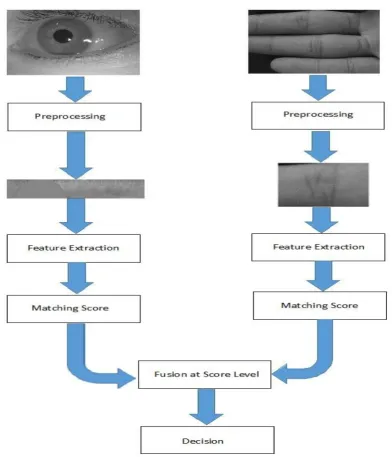
Fig.1 show the proposed system diagram. In the proposed system first Region of interest is extracted by applying preprocessing. Then the feature of each biometric ROI is extracted and with the extracted features the matching score is found from the corresponding template. After finding the matching score they were fused to form unique matching score which is finally used for decision making either the user is accepted or imposter.
2.1 Monomodal Biom`etrics System Used in
Proposed System
2.1.1 Iris Identification System
Iris recognition is well known and accurate biometric system for recognition. Each iris are different for twins like finger print [20]. The FAR and FRR are low in this recognition system. The recognition steps as follows
Step 1: Apply Linear Hough Transform to separate upper and the lower eyelids. For removal of eyelashes we used simple threshold.
6 Step 3: Normalization technique done using Daugman’s
algorithm [21].
Step 4: Applying Haar Wavelet decomposition and Neural networks (Neu Wave Networks) the feature extraction process is done by transforming the normalized image into different wavelet co-efficient which will form a bit patterns [22]. Fig. 2 shows the Neu Wave Networks.
Step 5: Finally matching is done using calculated Hamming distance (HD) [23].
HDI=1/n( 𝑛𝑖=1𝑝𝑖⨁𝑞𝑖)
2.1.2 Inner Knuckle Print Identification
System
For personal recognition Inner knuckle print plays a vital role and generate more interests in biometrics [24]. The IKP are unique among the persons. The IKP recognition has two stages namely Region of interest extraction and line feature extraction based on guided image filtering.
2.1.2.1 Region of Interest Extraction
Three fingers are captured (middle finger, ring finger, little finger) using high resolution camera. Segmentation is done in single finger to extract the ROI.
Algorithm for ROI extraction follows:
[image:2.595.106.499.263.721.2]Step 1: Gray image is obtained from original image. Step 2: Horizontal lines are extracted using Gabor filter.
Fig. 2 Neu Wave Networks
Step3: Horizontal projection histogram is produced to segment the middle finger region from the original image.
2.1.2.2 Line Feature Extracted Based On
Guided Image Filtering
In this section we discuss about guided image filtering method and derivative line detection method. The guided filter has least edge produce of properties like popular preserving properties like the popular bilateral filter [25]. Using guided image filtering will remove noise and keeps no change to the edge features. After this process the lines of IKP are detected using derivative line detection method [26]. At last the hamming distance is calculated using
HD
IKP=1/n(
𝑛𝑖=1𝑝𝑖⨁𝑞𝑖
)
2.2 Score Level Fusion
The two scores of the biometric traits are combined for fusion. This matching score level fusion is commonly used approaches in multimodal biometric recognition. It provides more effectiveness, ease implementation and conceptual simplicity. This is the dominant option in many published papers [27].
Before the fusion approach the normalization technique is applied. Many normalization techniques are there namely Max, TanH and Z-score [27].In this paper we used Min-Max rule
S’=(S-Min)/(Max-Min)
Where Min and Max denotes the minimum and maximum score range.
After the normalization technique the fusion of two traits are done by Weighted Sum Rule
Weighted Sum Rule= 𝑛𝑖=1 𝑤𝑖𝑠𝑖
Where n= number of match score needed to be fused,
S=matching score,
Wi= weight for each score.
3.
DATABASES AND PERFORMANCE
MEASURE
3.1 Databases
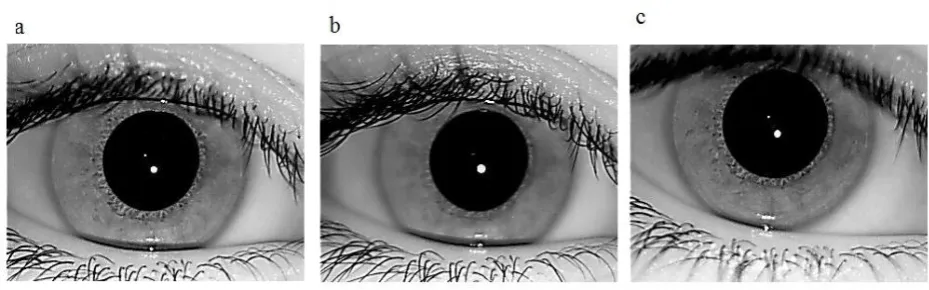
For Iris we can use CASIA Iris Image Database [28]. In this all Iris image are 8 bit gray level in format of JPEG Sample Iris image of CASIA Iris Database are shown in fig. 3.
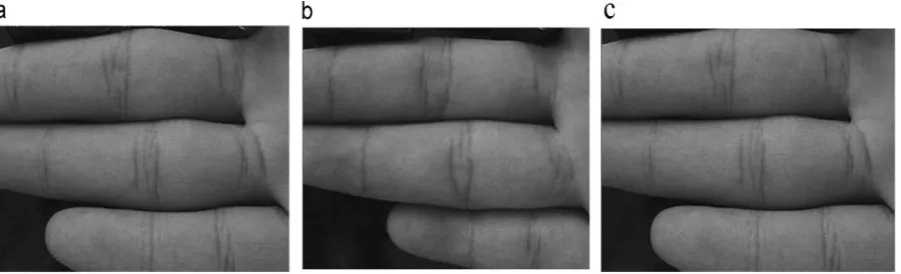
[image:3.595.64.529.503.648.2]8 Fig. 4 Sample IKP images
For Inner-knuckle print the images are acquired using camera on which users finger are captured. Sample images of IKP are shown in fig. 4.
3.2 Performance Measure
The performance measure of the biometric system are by False Acceptance Rate (FAR), False Rejecting Rate (FRR) and Genuine Acceptance Rate (GAR) [29, 30].
FAR
(%)
=
no . of accepted impostertotal no . of imposter test
𝑋 100%
FRR
(%)
=
no . of accepted impostertotal no .of imposter test
𝑋 100%
GAR
(%) =100-FRR (%)
4.
CONCLUSION
In this paper, we proposed the multimodal biometric recognition system by combining the Iris and Inner-Knuckle Print which gives high security with less computational complexity. The fusion is carried out at Matching score level. Our proposed system will show the best performance in accuracy and effectiveness. This multimodal biometric system can be implemented in any commercial purpose to acquire high security. Our future work investigated to combine the multimodal technique with the optimization algorithms to improve the efficiency of feature extraction and the fusion method.
5.
REFERENCES
[1] M. Deriche, “Trends and Challenges in Mono and Multi Biometrics,” in Proc. of Image Processing Theory, Tools and Application (IPTA), Sousse, pp.1-9, 23-26 Nov 2008.
[2] A. Ross, K. Nandakumar and A. K. Jain. Handbook of Multibiometrics. Springer, New York, USA, 1st edition, 2006.
[3] A. Ross and A. Jain, “Multimodal biometrics: An overview,” 12th European Signal Processing Conference, Vienna, pp. 1221–1224, 2004.
[4] Yu Wang, Zaiwen Liu, "A Survey on Multimodal Biometrics," Advances in Automation And Robotics, Vol.2, LNEE 123, pp. 387-396, Springer-Verlag Berlin Heidelberg, 2011.
[5] Ross, A., Jain, A.K., “Information fusion in biometrics,” Pattern Recognition Letters 24, pp. 2125–2215, 2003.
[6] Ross, A. and Jain, A. K. “Information Fusion in Biometrics”. 3rd Int'l Conference on Audio- and Video-Based Person Authentication (AVBPA), pp. 354-359, Sweden, June 6-8, 2001.
[7] Ross, A., Jain, A.K.: Multimodal biometrics: An overview. In: 12th European Signal Processing Conference, Vienna, pp. 1221–1224 (2004)
[8] Ross, A., Jain, A.K.: Information fusion in biometrics. Pattern Recognition Letters 24,2125–2215 (2003)
[9] S. Hariprasath and T. Prabakar, “Multimodal Biometric Recognition using Iris Feature Extraction and Palmprint Features,” in Proc. of International Conference on Advances in Engineering, Science and Management (ICAESM), Nagapattinam, pp. 174-179, 30-31 March 2012.
[10] A. Kumar, M. Hanmandlu and S. Vasikarla, “Rank Level Integration of Face Based Biometrics,” in Proc. of Ninth International Conference on Information Technology: New Generations (ITNG), Las Vegas, pp. 36-41, 16-18 April 2012.
[11] S. Jahanbin, Hyohoon Choi and A. Bovik, “Passive Multimodal 2D+3D Face Recognition using Gabor Features and Landmark Distances,” IEEE Trans. on Information Forensics and Security, vol. 6, no. 4, pp. 1287-1304, Dec. 2011.
[12] T. Murakami and K. Takahashi, “Fast and Accurate Biometric Identification Using Score Level Indexing and Fusion,” in Proc. Of International Joint Conference on Biometrics (IJCB), USA, pp.978-985, 2011.
[13] J. Fierrez-Aguilar, J. Ortega-Garcia, D. Garcia-Romero, and J. Gonzalez Rodriguez, ―A comparative evaluation of fusion strategies for multimodal biometric verification,‖in Proc. 4th Int, Conf,Audio-video-based Biometric Person Authentication , J. Kittler and M. Nixon, Eds., 2003 vol. LNCS 2688, pp. 830–837
[14] Michael, G.K.O., Connie, T. ; Jin, A.T.B., Industrial Electronics and Applications (ICIEA), 2010 the 5th IEEE Conference, 323 – 329.
[15] Sarat C. Dass, Karthik Nandakumar, and Anil K. Jain, Principled Approach to Score Level Fusion in Multimodal Biometric Systems, Proceedings of AVBPA 2005.
Techniques”, IOSR Journal of Computer Engineering (IOSRJCE), No. 3 (July-Aug. 2012).
[17] Jain AK, Duin RPW, Mao J (2000) Statistical pattern recognition: a review. IEEE TransPattern Anal Mach Intell 22(1):4–37.
[18] Li Q, Qiu ZD, Sun DM et al (2004) Personal identification using knuckle print. Advances in Biometric Person Authentication. In: Proceedings of SINOBIOMETRICS’04, pp 680–689.
[19] Luo RF, Lin TS, Wu T (2007) Personal recognition with finger crease pattern. Opto-Electron Eng 34(6):116–121.
[20] Arulalan.V, Balamurugan.G, Premanand.V, A Survey on Biometric Recognition Techniques, International Journal of Advanced Research in Computer and Communication Engineering Vol. 3, Issue 2, February 2014.
[21] J. Daugman, “High Confidence Visual Recognition of Persons by a Test of Statistical Independence,” IEEE Trans. Pattern Anal. Machine Intell, vol. 15, pp. 1148-61, 1993.
[22] Aditya, A., & Stephanie, S. (2010). A novel biorthogonal wavelet network system for off-angle iris recognition. Pattern Recognition, 43, 987–1007.
[23] L. Ma, T. Tan, Y. Wang and D. Zhang, “Efficient Iris Recognition by Characterizing Key Local Variations”, IEEE Transactions on Image Processing, Vol. 13, No. 6, June 2004, pp739-750.
[24] A. Kumar and C. Ravikanth, “Personal authentication using finger knuckle surface”, IEEE Trans. Info. Forensics & Security, vol. 4, no. 1, pp. 98-110, March 2009.
[25] Tomasi C, Manduchi R (1998) Bilateral filtering for gray and color images. In: Proceedings of IEEE international computer vision (ICCV) conference.
[26] Wu X, Zhang David, Wang K (2006) Palm-line extraction and matching for personal authentication. IEEE Trans Syst Man Cybern Part A 36(5):978–98.
[27] A. Pour, K. Faez, and R. Amirfattahi “Multimodal biometric system using face, ear and gait biometrics”, 10th International Conference on Information Science, Signal Processing and their Applications (ISSPA 2010).
[28] Chinese Academy of Science - Institute of Automation, Database of the Eye Grayscale Images. http://www.sinobiometrics.com.
[29] T. Sabareeswari and S. Stuwart,” Identification of a Person Using Multimodal Biometric System”, International Journal of Computer Applications (0975 – 8887) Vol. 3 – No.9, July 2010