i
THE DEVELOPMENT OF A FRAMEWORK FOR
MANAGEMENT DEVELOPMENT IN THE LIBYAN
OIL SECTOR: A CASE STUDY OF THE
UPSTREAM OIL COMPANIES
Nagi Mohmed MILLAD
School of the Built Environment
College of Science and Technology
University of Salford, Salford, UK
Submitted In Partial Fulfilment of the Requirements of the
Degree of Doctor of Philosophy, June 2013
ii
IN THE NAME OF ALLAH, MOST GRACIOUS, MOST MERCIFUL
DEDICATION
Much-loved Parents
“And your Lord has decreed that you worship none but Him; and that you be dutiful to your parents. If one of them or both of them attain old age in your life, say not them a word of disrespect, nor shout at them but address them in terms of honor” (Qur’an, Surat Al-Isra (17),Ayah23).
Best Brother
For his full support and an endless encouragement
Dear Wife
For her continuous bear, patient and love
Eldest Sweetheart Daughter
For her full help, prayers and patience
Honey Sons and Daughters
Alaa, Mohamed, AbdulRauf, Asraa, Suzan, Fatima
Hoping to be a candle that lights their future
Beloved Sister, Brother and their families
iii
ACKNOWLEDGMENTS
IN THE NAME OF ALLAH, MOST GRACIOUS, MOST MERCIFUL
All praises are due to Allah SWT who created man and taught him things which he never knew who has taught (the writing) by the pen. Has taught man that which he knew not”. Alhamdulillah, with permissible of Allah, for giving me the health and an effort to make the completion of this thesis possible. And peace and prayers be upon the messenger Mohammed. I would like to thank my parents and pray for them for many years of their love, guidance, appreciation, understanding, support and patience in all my academic pursuits, without their prayers, satisfaction and support I would never have reached this stage. “My lord, bestow on them your mercy as they did bring me up when l was small”.
The author would like to appreciate and thank the following people who have contributed greatly in accomplishment of this thesis, to them I owe a great deal, and I must convey to them my thanks and acknowledgement, and without whom this thesis would not have been possible.
First of all, my greatest gratitude and sincerest appreciation is given to my supervisors Dr. Monty Sutrisna and Professor Les Ruddock for their constant guidance, great co-operation, immense assistance, patience, constructive comments, kind treatment, support and their continued encouragement throughout the different stages of this research.
I am most grateful to all members of staff in school of The Built Environment and The College of Science and Technology at The University of Salford for their help and support. Especially, Professor Vian Ahmed, Professor Charles Egbu, Dr Jason Underwood, Cheryl Batley, Moire Mort, Rachel Lilley, Carol Gordon, Nathalie Howarth and Catriona Barkley.
iv
oil sector Library, General Authority for information Library and Central Bank of Libya Library.
I wish to extend my thanks to my colleague and friends at the University of Salford. Much gratitude also to theses who were involved in my pilot study both in the UK and Libya for their kindness and comments.
I would like to express my sincere acknowledgement to those mangers of the Libyan oil companies (Waha and Repsol companies) and National oil corporation (NOC), special thanks are owed to Mr A. Salama the member management committee of Waha company and Mr M. Khazmi the Head of Law department in Repsol company who participated in this study, spending a long time and offering valuable data, without their patience and help it was impossible to complete this study.
My greatest gratitude is to my brother, sister and their families for their patience, encouragement and support. My special thanks to my brother Saad for his love and guidance towards the beneficial avenue of seeking knowledge and understanding this Life and the hereafter.
My last but certainly not least, gratitude and sincerest appreciation is given to my large family: my wife Khearya, my sons Alaa, Mohamed, AbdulRauf, my daughters Turea, Asraa, Suzan and Fatima for the patience shown by them in allowing me to occasionally discord some aspects of family life, and being with me here in the UK that is make my time more enjoyable and lively. My special love and thanks are due to lovely wife and eldest sweetheart daughter for their tolerance, encouragement, prayers, help, patience and continuous support throughout the period of this research.
v
ABSTRACT
Due to increased globalisation of markets and liberalisation of local economies, businesses all over the world are developing increasingly competitive strategies. Management development is central to the success of these strategies. Therefore there is an increasing interest in management development and human resources development in Libya. The hope being that these forms of development can improve, and upgrade, the performance of Libyan human resources to achieve the required level of effectiveness, and to attain competitiveness in the world economy. The main objectives of this research are to develop the framework to implement management development programmes and to analyse the current management development practices in Libyan organisations and explore the extent to which transference of Western management development practices, if such transference is possible, has in fact occurred. The study carried out was essentially an evaluation to assess the value of management development; the specific focus of this evaluation was on two comparative cases in the Libyan oil Industry. The research project was carried out in the oil sector which has a particular importance to Libya’s economic prosperity and should be the first place that management development takes place, but equally would be the best place for the transfer of Western management practice to occur.
A case study design was used which involved an empirical investigation of a particular contemporary phenomenon within its real life context using multiple sources of evidence. The main data collection tool was a questionnaire which meant that all the completed responses could be collected within a short period of time and any initial doubts that the respondents might have on any question were clarified on the spot. This also allowed the introduction of the research topic and meant the respondents could be motivated to offer their frank answers. Telephone interviews were used in retrospectively to gather specific information regarding management development within the companies which allowed triangulation. Reliability analyses using Cronbach’s alpha as well as univariate analysis were carried out as were multivariate analyses such as factor analysis (FA) and multiple logistic regression. The non parametric Mann-Whitney test was used to evaluate the association between the instruments (scale).
vi
TABLE OF CONTENTS
CHAPTER ONE
INTRODUCTION TO THE RESEARCH
.
Page
Dedication Ii
Acknowledgement Iii
Abstract V
Table of Contents Vi
List of Tables Xii
List of Figures Xiv
List of Abbreviations Xv
References Xvi
Appendixes Xvi
Page
1.0. Introduction 1
1.1. Human Resource Development 3
1.2. National Human Resource Development 4
1.3. Organisational Human Resource Development 5
1.4. Management Development 7
1.5. Management Development in Libya 8
1.6. The Significance of the Oil Sector 9
1.7. The Need for this Research 11
1.8. The Research Outline 12
1.8.1. Research Aim 12
1.8.2. Resreach Objectives 13
1.9. The Research Contribution 13
vii
CHAPTER TWO
THE POLITICAL, ECONOMIC, SOCIAL AND TECHNOLOGICAL
ENVIRONMENT OF LIBYA
Page
2.0. Introduction 16
2.1. Background to Libya 71
2.2. Political Developments Since Independence 71
2.3. Libyan Economic Environment 02
2.3.1. The Period from 1969-1980 02
2.3.2. After the Revolution 1980-2000 03
2.3.3. The New Millennium 06
2.3.4. Economic Development from a Knowledge Perspective
29
2.4 The Social System 29
2.5. Technological Environment 32
2.6. Arab and Libyan National Human Development 37
2.7. Arab and Libyan Management Development 39
2.8. Conclusions 40
CHAPTER THREE
THE IMPACT OF CULTURE ON MANAGEMENT
DEVELOPMENT (MD) IN LIBYA
Pages
3.0. Introduction 44
3.1. The Concept of Culture 47
3.2. Cultural Differences Across Nations 48
3.3. National Culture 52
3.4. Organisational Culture 53
3.5. The Influence of National Culture on Organisational Culture 55 3.6. The Influence of Organisational Culture on Managerial
Culture
57
3.7. Management in Developing Countries 60
3.8. Transferability of Management Theory Across Cultures 62
viii
CHAPTER FOUR
HUMAN RESOURCE DEVELOPMENT AND MANAGEMENT
DEVELOPMENT LITERATURE REVIEW
Pages
4.0. Introduction 68
4.1. The Need for Human Resource Development HRD 69
4.1.1. The Purpose of HRD 71
4.1.2. Performance Management 73
4.1.3. Performance Improvement 74
4.1.4. Value of HRD 76
4.1.5. Theories and Approaches to HRD 77
4.1.6. Boundaries of HRD 79
4.2. Globalisation of HRD 80
4.2.1. International HRD (IHRD) 82
4.2.2. National HRD 83
4.2.3. Converging HRD 84
4.3. What is Meant by Management Development? 86
4.3.1. The Purpose, Processes and Value of MD 88 4.3.2. Management Development, Organisational Strategy
and Policy
90 4.3.3. Implementing MD and Selecting Managers for
Development
93
4.3.4. Evaluation of MD 99
4.3.5. Rationales, Theories, Approaches, Models and Typologies of MD
102
4.4. Management Development and Culture 108
4.4.1. Anglo-Saxon MD 108
4.4.2. European MD 109
4.4.3. MD in the Transitional Economies 110
4.4.4. MD in the East 111
4.4.5. MD in Africa 112
4.4.6. MD and Islam 113
4.4.7. MD in the Middle –East 113
4.4.8. MD in Libya 114
4.5. Conclusions from the Review of All the Literature 116
CHAPTER FIVE
RESEARCH METHODOLOGY
Page
5.0. Introduction 120
5.1. Research Definition 122
5.2. Types of Research 123
ix
5.4. Research Philosophy 125
5.5. Research Approach 131
5.6. Research Strategy 133
5.6.1. Case Study Strategy 133
5.6.2. Evaluating the Case Study Strategy 136
5.6.3. Case Study Background 137
5.6.4. Research Planning 138
5.7. Data Collection Methods 140
5.7.1. The Sampling Technique 146
5.8. Data Analysis Strategy 148
5.8.1. Statistical Methods 149
5.9. Credibility of Research Methodology 150
5.9.1. Validity and Realiability 151
5.9.1.1. Reliability 151
5.9.1.2. Validity 153
5.9.2. Testing for normality and reliability 154
5.10. Summary 154
CHAPTER SIX
THE CASES STUDIED
Page
6.0. Introduction 157
6.1. The National Oil Corporation NOC 159
6.1.1. Problems of Providing Manpower in the Oil Sector 161
6.2. Case A: The WAHA Oil Company 167
6.2.1. Training and Development Within the Company 170 6.2.2. Outline of the Training Department 172 6.2.3. Training Plan in the Waha Oil Company 176
6.2.4. Summary of Case A: The Waha Oil Company 180
6.3. Case B: REPSOL Oil Operations 180
6.3.1. Training and Development Within the Company 183 6.3.2. Outline of the Training Department 185 6.3.3. Training Plan in the Repsol Oil Operations 188 6.3.4 Summary of Case B: Repsol Oil Operations 190 6.4. Analysis of the Data Collected from Each of the Cases Studied 191
6.4.1. Descriptive Statistics 191
6.4.2. Reliability Analysis 194
6.4.3. Mann-Whitney Test 198
6.4.4. Factor Analysis 199
6.4.5. Logistic Regression 207
x
CHAPTER SEVEN
DISCUSSION OF FINDINGS
Page
7.0. Introduction 211
7.1. Discussion of the Qualitative Results 213
7.1.1. Documentary Evidence 214
7.1.2. Information from Telephone Interviews 216
7.2. Discussion of the Quantitative Results 222
7.2.1. Personnel Profile of Respondents 222
7.2.2. The Questionnaire 223
7.2.3. Discussion of Findings from Questionnaire 225
7.2.4. Significantly Different Responses 227
7.2.5. Significantly Similar Negative Responses 231
7.2.6. Anomalous Factor Responses 233
7.3. Summary of the Analysis 235
7.4. Development of the Conceptual Framework 237
7.4.1. Globalisation 239
7.4.2. Development Policy 239
7.4.3. Development Strategy 240
7.4.4. International HRD 241
7.4.5. National HRD 241
7.5. Organisational HRD 242
7.5.1. Management Development (MD) 244
7.5.2. MD Strategy 244
7.5.3. MD Policy 246
7.5.4. Implementation of MD Plans 246
7.5.5. Selection for and Methods and Approaches to MD 248
7.5.6. Evaluation of MD 252
7.5.7. The Applicability/ Transferability of Western MD 254
xi
CHAPTER EIGHT
CONCLUSIONS, LIMITATIONS, CONTRIBUTION, AND
RECOMMENDATIONS
Page
8.0. Introduction 262
8.1 The Current body of Knowledge 263
8.2 Libyan culture and environment 265
8.3 Transferability of Western MD models 266
8.4 Factors affecting the effective implementation of MD 268
8.5 The Conceptual Framework 274
8.6. Limitations of the Research 276
8.7. Contribution of this Research 277
xii
LIST OF TABLES
Pages
Table 2.1: Foreign Assistance Allocation to Libya During 1952-1960 Libyan Fiscal Years: (£L 1,000)
21 Table 2.2: Libyan GDP by Sector - 1970-2002 (In million LD) 25 Table 2.3: Summary of Libyan Macro-Economic Performance 1991-2005 28 Table 2.4: Monitoring Human Development (Extract from UNDP
Report).
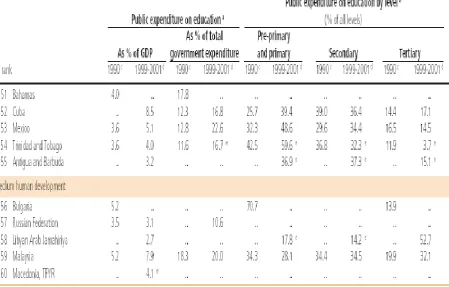
33 Table 2.5: Libyan Expenditure on Education (Extract from UNDP
Report).
34 Table 2.6: Diffusion and Creation of Technology (Extract from UNDP
Report).
35 Table 3.1: Index Scores and Ranks for the Arab Countries and East and
West Africa
49
Table 3.2: Culture Dimensions Responses 50
Table 3.3: Priorities of Cultural Values 61
Table 4.1: Features of African and Western Worldview Dealing With a Cultural Diverse Work Environment
81
Table 4.2: Models for Leadership Identification 106
Table 5.1: Classification of Main Type of Research 123 Table 5.2: Contrasting Implications of Positivism and Constructivism 130 Table 5.3: Major Differences Between Deductive and Inductive
Approaches Research
132 Table 5.4: Relevant Situations for Different Research Strategies 135 Table 6.1: Number of Student Graduated During 2003-2007 161 Table 6.2: Number of Technician Graduated During 2003-2007 162 Table 6.3: The Percentage of Planning and Implementation of TDPs 162 Table 6.4: Human Resources in Oil Sector According to Nationality (2007) 163 Table 6.5: General Analysis of the Plan for Training and Development in
the Oil Sector
165 Table 6.6: Human Resources in Waha Oil Company (2007) 168 Table 6.7: Waha Oil Company Managers Responses to Interview by
Telephone (2012)
171 Table 6.8: Internal TD Plans for Waha Oil Company According to
(number-durations-estimated fees (2007)
173 Table 6.9: External TD Plans for Waha Oil Company According to
(number-durations-estimated fees (2007)
173 Table 6.10: Internal Training Plans for Waha Oil Company According to
Areas That Need Training (2007)
176
Table 6.11: External Training Plans for Waha Oil Company According to Areas that Need Training (2007).
xiii Company (2007)
Table 6.13: Estimated TD Fees in Waha Oil Company in Libyan Dinar (2007)
178
Table 6.14: Waha Oil Company Statictics (2007) 179
Table 6.15: Human Resources in Repsol Oil Operations (2007) 182 Table 6.16: Repsol Oil Operations Managers Responses to Interview by
Telephone (2012)
184 Table 6.17: Internal TD Plans for Repsol Oil Operations According to
(number-durations-estimated fees (2007)
185 Table 6.18: External TD Plans for Repsol Oil Operations According to
(number-durations-estimated fees (2007)
186 Table 6.19: Internal Training Plans for Repsol Oil Operations According
to Areas That Need Training (2007)
188 Table 6.20: External Training Plans for Repsol Oil Operations According
to Areas That Need Training (2007)
188 Table 6.21: TD Plans for Internal and External Training in Repsol oil
Operations (2007)
190 Table 6.22: Estimated TD Fees in Repsol Oil Operations in Libyan Dinar
(2007)
190
Table 6.23: Cronbach's Alpha 194
Table 6.24: Statistics for Reliability 196
Table 6.25: The Results of Mann-Whitney Test 199
Table 6.26: Squared Multiple Correlation (SMC) 201
Table 6.27: Total Variance Explained (unrotated factors) 202 Table 6.28: Pattern Matrix With Absolute Value of Loadings 204
Table 6.29: Loadings After Orthogonal Rotation 206
Table 6.30: Results From Logistic Regression Predicting Company's Status (Libyan or foreign)
209
Table 7.1 List of Factors Considered 226
Table 7.2 MD Awarence 226
Table 7.3 Performance Monitoring 231
Table 7.4 Influence in Selection 233
Table 7.5 MD Procedure 235
xiv
LIST OF FIGURES
Page
Figure 1.1: The Research Framework 13
Figure 4.1: A Systems Model of Performance Improvement 74 Figure 4.2: The Theoretical Foundations of Performance Improvement
Theory
75
Figure 5.1: Diagram of Research Methodology 122
Figure 5.2: Research Process Onion 128
Figure 5.3: Inductive Research 131
Figure 5.4: Deductive Research 132
Figure 6.1: Libya's Oil Production and Consumption, 1986-2006 158
Figure 6.2: Training and Development Plan (2007) 163
Figure 6.3: Human Resources in Oil Sector According to the Companie's Activities (2007).
164
Figure 6.4: Training and Development Plan (2007) 166
Figure 6.5: Estimated Fees for TD Programs (2007) 167
Figure 6.6: Management Structure of Waha Oil Company (2010) 169 Figure 6.7: The Organisation Structure of TD Department of Waha Oil
Company (2010).
175 Figure 6.8: Management Structure of Repsol Oil Operations (2010) 181 Figure 6.9: The Organisation Structure of TD Department of Repsol Oil
Operations (2010)
187
Figure 6.10: Pie Chart for Company 192
Figure 6.11: Pie Chart for Age 192
Figure 6.12: Pie Chart for Gender 193
Figure 6.13: Pie Chart for Qualification 193
Figure 6.14: Pie Chart for Job Grade 194
Figure 6.15: Scree Plot 202
Figure 6.16: Loading Plot (Factor 2 Vs Factor 1 ) Unrotated 205 Figure 6.17: Loading Plot (Factor 2 Vs Factor 1) Orthogonal Rotation 207
Figure 7.1: The Research Framework 212
Figure 7.2: The Conceptual Framework 238
xv
LIST OF ABBREVIATIONS
AC Arab Countries
AGC Arab Gulf Countries
CBL Central Bank of Libya
EU European Union
FA Factor Analysis
GDP Gross Domestic Product
GPC General People’s Congress GPC General People’s Committee
GSESR General Secretariat for Education and Scientific Research
GSPLAJ Great Socialist People’s Libyan Arab Jamahiriya
HCIMT High Centre for Industrial Management Technology
HRD Human Resources Development
HRM Human Resource Management
IMF International Monetary Fund
IOCs International Oil Companies
LD Libyan Dinar
LPG Liquefied Petroleum Gas
MD Management Development
MDP Management Development Programme
MNC’s Multi National Companies
MT Management Training
MTD Management Training and Development
MTDPs Management Training and Development Programmes
NAID National Agency of Information and Documentation
NHDR National Human Development Report
NOC National Oil Corporation
NVQs National Vocational Qualifications
PCA Principal Component Analysis
ROO Respol Oil Operations
SMC Squared Multiple Correlation
SOP Secretariat Of Petroleum
UN United Nations
UNDP United Nations Development Programme
USD United State Doler
xvi
BIBLIOGRAPHY
APPENDICES
Page
References 281
Page
Appendix One: Letter From the Researcher to Authority of NOC (In Arabic) 304 Appendix Two: Letter about Questionnaire from the Research to the companies
(In Arabic)
306
Appendix Three: Letter about Questionnaire from the Research to the companies (In English)
307
Appendix Four: Information Required From WAHA Company (Case A) (In Arabic)
308
Appendix Five: Information Required From REPSOL Company (Case B) (In Arabic)
309
1
CHAPTER ONE
INTRODUCTION TO THE RESEARCH
1.0. Introduction:
All over the world as local economies face liberalisation businesses are developing increasingly competitive strategies. There is no doubt that management development (MD) is central to the success of modern organisations and in many ways bears the central role of ensuring a work-force capable of responding to the competitive needs of the increasingly global framework in which modern organisations function. Argyris, 1994 argued that business and industry will find it hard to survive in the 21st century unless employees are adequately equipped with the skills needed to allow them to increase significantly their contribution to organisational goods and objectives. It is nearly impossible to build human capital; considered a basis for sustainable development, without special educational, training and development programs for human resources (Al-Geryani, 2005). According to Lee (2007, p.98)
“there has been much debate recently about globalization and globalism’, the debate has occurred within the media, linked to cultural imperialism, to free trade, and to issues of poverty and development, and also within Human Resource Development (HRD) circles, linked to standardization of professional criteria, course provision”.
This accounted for the changing approach to human resource development (HRD) issues in the international scene under the impact of globalisation, (Weir, 2000). There are a number of terms in use for International HRD, it is also known as cross-national HRD, transnational HRD, and global HRD) this concept, despite what it was called, was beginning to influence not only how national HRD policy was being formed, but also what HRD issues and challenges were being faced by a developing country (Wang and McLean, 2007). Despite tremendous investments in education and training in the Arab Gulf countries, the supply of indigenous manpower is still below demand for example;
“….in 1985 expatriates represent 61% of the labour force in these countries and almost 40% of their total population”
2
Libyan organisations face problems because of a lack of skilled managers, which affects the productivity of these organisations (UNDP Report, 20003). The report states that Arab countries have to adopt three important principles to be modernised, which are, human investment through education and training, viewing workers as intellectual assets, and implanting and nurturing innovative, developmental and cost saving behaviours in companies and government. According to Tregaskis et al. (2001, p. 100)
“The two most critical issues to be considered in any investigation of human resource development are. First of all does country context influence organisational HRD practice? Secondly, do Multi-national companies (MNCs) localise their HRD practices to account for national demands?”
In this research into management development (MD) the same two questions are asked in the Libyan context. There is a very serious gap in the knowledge concerning this topic, and this study of both human resource development (HRD) in general, as well as MD in particular will fill that gap. A number of studies into the area were carried out nearly ten years ago however this research is intended to bring knowledge of MD in the Libyan context up to date. HRD is considered at an individual, organisational, national as well as international level in light of the effect that globalisation is having on the need for greater competitiveness in firms. A much more recent development is the pressure being placed on oil producing countries to improve their effectiveness and increase production in order to meet the demands of the global market.
3
achieving the goals of an organisation, especially in developing countries such as Libya. Therefore, MD is important factor in improving employee’s skills and abilities to achieve the predefined management goals of any organisation. Employees should be sufficiently skilled to perform effectively. In this chapter the background to the area of research is presented, in the first section human resource development (HRD) is considered, and its definition, purpose and contribution are highlighted. Next national and organisational HRD are investigated in sections of there own and finally management development (MD) and the need for greater research in this particular area is presented as the rationale for this study.
1.1. Human Resource Development
Human resource development is concerned with the implementation of systems to develop the competencies of any organisations human resources, (Garavan et al., 1999). There have been many debates about the whereabouts of the development of the concepts of HRM and HRD, it is believed that (HRM) and HRD were not only developed in the United States of America but also bear the imprint of the U.S.’s universalistic research paradigm (Brewster et al., 2004). Additionally it is hoped that HRD professionals if they have greater knowledge will be more able to design and implement MD programs that are more applicable and better suited to their organisations particular context (Wang &Wang 2006).
4
The desired outcome of this 'high commitment' developmental approach was to produce resourceful humans rather than having to adopt an overtly controlling approach to the management of human resources. According to Tregaskis (1998, p. 136)
“…an organization’s human-resource development (HRD) system is a key mechanism for enabling the achievement of business goals through what has been argued to be one of the few remaining sources of competitive advantage, namely, people, it is also closely linked to national contextual factors”.
Literature on HRD is generally preoccupied with identifying the factors that trigger HRD activity and proving that there is a causal link between human resource development investment and organisational and business performance. McGuire and Jorgensen (2011) argue that HRD is primarily triggered by organisational strategy, external labour market strategies, changes in internal labour market needs, and the value systems within an organisation. There is a great need for more attention to be paid to definitional matters and the types of values and assumptions about organisations and managing that underpin much of the academic debate within HRD. According to Metcalfe & Rees, (2005) more attention must be paid to the debates that are ongoing about the social and ethical responsibility of HRD, therefore by implication highlighting the fact that HRD has a key role in developing communities. Woodall et al. (2002, p. 341) in reviewing convergence and divergence in HRD roles and practices across Europe, highlighted that “…it has to be acknowledged that the contextual factors in mainland Europe are an important influence upon HRD outcomes”.
1.2. National Human Resource Development
5
critical for organisations that work across nations to define IHRD to accommodate common themes that relate to cross-national or transnational HRD activities, (Wang & McLean, 2007). According to Lynham and Cunningham, (2006) a glance across national cases reveals insights to build on what is already known about the emergence and nature of (HRD) and the national level, national human resource development (NHRD), specifically in the context of the developing world.
When nations are the targeted performance system, the purpose of HRD becomes to develop and unleash human expertise for national economic performance, political and social development, growth, and well-being by enabling and enhancing the learning and performance capabilities of individuals, family units, communities, other social groupings, organisations (of all types), and thereby the nation as a whole (McLean, 2004; McLean & McLean, 2001). National context can be considered a key predictor of organisational HRD practice, however, globalisation has introduced many changes, one of which has been the increasing presence of foreign multinationals, or multinational enterprises (MNEs), in host countries (McLean, 2004). Under such conditions, there is a need to compare the role of the host-national context to that of the parent in shaping MNE management practice at an organisational level.
1.3. Organisational Human Resource Development
6
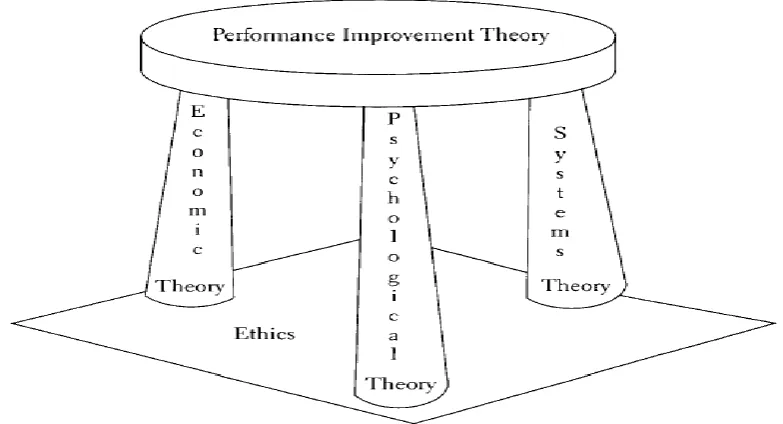
theory domains (psychological theory, economic theory, and systems theory), (Swanson 2007).
In the theory of psychology HRD must clarify the goals of individual contributors, work-process owners, work teams, and organisation leaders. Additionally it must develop the knowledge and expertise and harmonise the goals and behaviours among individual contributors, work-process owners, work teams, and organisation leaders. In the theory of economics HRD must justify its own use of scarce resources and by adding value to the organisation create long-term sustainable economic performance. In addition it must add short-term and long-term value from investments in the development of knowledge and expertise in individuals and groups. Finally in the theory of systems HRD must understand how it and other subsystems connect and disconnect from the host organisation. Additionally it must help its host organisation retain its purpose and effectiveness and shape alternative futures.
The HRD profession is an applied, goal-oriented field dedicated to helping diverse work systems solve problems, develop and improve (Bates & Chen, 2004). Because value orientations provide relatively enduring evaluative standards, that people can use to make decisions about how things should happen, they have the capacity to motivate individual behaviour and affect specific actions. Therefore, defining and measuring value orientations are important, because these orientations help to determine how HRD professionals perceive and make decisions about HRD activities and outcomes (Bates & Chen, 2004). Such research may provide potentially important insights into how HRD is practiced and how activities and actions may be ordered in a given situation.
7
policy statements can be a key component in attempts to create strategically focused MD (Mabey, 2002).
1.4. Management Development (MD)
“Despite the wide currency and use of the term management development (MD) between scholars in the management field there is no specific agreed definition between management scientists”, Huczynski (1983, p. 1). The reason for the difference in perception is because organisations and individuals choose only one MD perspective as their underlying approach to management development (Huczynski, 1983). Therefore, there are a lot of definitions for MD derived from a range of perspectives. This research argues that an organisational emphasis on the MD function is likely to be central to moving developing economies into a more competitive position in the global economy. Those organisations that give priority to MD might more successfully meet their own goals and play a significant role in driving the whole economy as it moves into internationally competitive markets, (Wang et al., 2009). In such conditions the aim of MD should be to increase workgroup and organisational effectiveness which, in turn, is a function of the interaction between the characteristics of the organisation, that is, environment and people. Furthermore MD should bear strategic importance and must be used as a competitive weapon for continued organisational survival and success (Hussey, 1988). Management Development programmes are, therefore, designed to increase managerial effectiveness by providing the working managers with additional knowledge and skills.
There is a debate however about what the purpose of MD should be and even about what actually constitutes management development. Even at an individual level it is a common experience that, “when asked how they developed for their jobs as managers individuals will reply that they ‘learned from experience’,” Mumford (1995 p. 21). Formal MD processes, whether described as the total system which might move people from one job to another, or the appraisal process, or attendance on courses, were very rarely highlighted even where managers had participated in such formal processes (Gold et al., 2010).
8
have a desire to progress and to learn. Keep (1992) points put that MD activities affect relative economic performance and competitiveness both at the level of the individual enterprise and the national economy. A company that offers employees the opportunity to improve and add new skills, thereby making them more valuable to current and future employers, may be more successful in attracting new employees and even retaining existing ones, than those lacking such programmes. Woodall and Winstanley (1998, p. 4) believe that MD is, “… a process of acquiring knowledge and skills in order to improve current or future managerial performance”. De Simone et al. (2002 p. 515) point out that, “The changes that have occurred in organizations in the past decade have only complicated this picture”. In the past research studies looked at management in hierarchically structured organisations operating in relatively stable environments. More recently organisations have had to respond to environmental challenges to stay competitive and the structures and strategies they use for MD have changed. This underscores the need for HRD professionals to identify what the management job is (and needs to be) in their own organisation before they can design and deliver MD processes and programs that will meet the needs of their own business and contribute to its competitiveness and effectiveness.
1.5. Management Development in Libya
Recently, countries have been giving more attention to the manager responsible for the achievement of the goals of competitiveness and effectiveness in various organisations. This attention has taken various forms but all of them seek to train and develop these mangers and serve as a basic link between the countries and people on one side and their future on the other (McGuire and Jrgensen, 2011) .Many developing countries, including Libya, “…have paid a great deal of attention to national economic and social problems, but less attention has been given to managerial and organisational problems, which have an important impact on the performance of development plans”, Abbas (1996 p. 20. In implementing their economic development plans, these countries need managers, and other professionals, but at the same time they are surrounded by a complex and changeable environment in terms of increases in organisation size, technological advancement, labour movement, high inflation and a competitive world market. For this development to succeed,
9
and industry, the performance level of such organisations depends on the quality of their managers, and an effective managerial workforce that can solve economic, social and even political problems”.
(Abbas 1996, p. 21)
Managerial effectiveness is strongly dependent on appropriate decision-making procedures, and these depend on the skills, knowledge and attitudes of the managers who make them. Mangers need to acquire appropriate knowledge and skills to enable them to create solutions for their difficulties and problems and to take appropriate decisions. In Libya management training and development has comparatively recently become an issue Almhdie & Nyambegera, (2004). After oil was discovered in the 1960s and the revolution took place in 1969, the size of industrial and business organisations became larger than ever before. The country created a new cadre to manage these organisations, with new recruitment and promotion procedures, which created new problems and a need for more training and development. There has been some pervious research that has highlighted problems in the contemporary situation. For example Fituri (1992) when looking at training in the WAHA Oil Company pointed out that senior managers in Libya are the most important group of human capital in organisations and that they had needs for management training and development that were not necessarily being met and there was a real need for qualified managers, professional institutes and integrated programmes.
However, little is known recently about MD in Libya, or indeed in the Arab world generally, previous studies include (Atiyyah, 1993; Abdalla & Al-Homoud, 1995; Agnaia 1996a and 1996b, 1997). With only these few studies available which are not empirically based and which tend to be subjective in nature, it is not yet possible to accurately evaluate MD in that part of the world. This study by investigating MD in the Libyan context with reference to the affects of globalisation, multi-national companies MNC’s and Libya’s new relationship with the West is a contribution to that understanding.
1.6. The Significance of the Oil Sector
10
of the oil workforce started in the early 1980s, Libya still suffers from a shortage of national skilled workers and technicians in the oil sector. Ghiadi (1986) mentioned that the problem in the Libyan oil sector was due to the lack of qualified personnel who had graduated from the Libyan educational institutions. Consequently, all the Libyan oil companies still rely on expatriates in many jobs (Porter & Yergin, 2006). Budhwar and Debrah (2001) suggested the need for sector-specific human resources management practices in oil-dominated countries and observed that Libyan oil companies suffer from an acute shortage of competent employees.
In the early seventies, the Libyan oil companies started training and development program by sending high school students to American universities and to British polytechnic institutes mainly to study for City & Guilds. By the late 1970s all oil companies started to see benefits from these training and development programs by receiving the first generation of correctly educated and trained individuals. These training and development programs became very important during the 1990s, when the oil companies spent more money on training and development and more opportunities were given, but the problem of the shortage of competent employees still exists (Budhwar and Debrah, 2001).
11
acreage remain unexplored and exploration licenses cover only one-third of the country’s surface area (Quinlan, 2004).
In fact Porter & Yergin (2006) argue that Libya needs to significantly increase its annual funding for oil and gas activities, to almost US$ 3.5Bn. The oil sector in Libyan has been used far beyond the scope of economic development over the years it has also been used socially and politically (Ejigu & Sherif, 1994). These political and social goals include nation-building and socialisation. Secondly, “the oil sector constitutes the main source of Libyan income, with export revenues accounting for 95% of Libya’s hard currency earning and around 75% of the government expenditure” (Bahgat, 2004 p. 100). Thirdly, potential future investments in the oil sector are very high, as shown by the recent successful licensing bid by a group of oil giants (Libyan TV, January, 2005; NOC, 2009). The fourth reason for choosing this sector to study is that, Libya is in a transitional phase from a central economy to a free market economy and more research in the area of management is required in all sectors, to investigate the claim that MD can lead to increased competitiveness. Also at an international level since the early 2000s, Libyan crude oil has become important for European countries as North Sea Crude oil can not fulfil Europe’s demand due to its declining production. Therefore, in order to diversify its sources of energy, the EU is showing great interest in Libya (Bahgat, 2004).
1.7. The Need for this Research
12
construction of different cultural and institutional factors, and that those developed in the context of western cultural values, cannot be adopted in developing countries like Libya. Although Libya has, from the outset, been attempting to diversify its economic base, with strong emphasis on industry, it has largely neglected the human factor in the development equation. Much attention has been paid to national economic and social problems, but less to managerial problems (Agnaia, 1997). According to the United Nations, Libya’s co-operation framework for 2003-2005 raises human resource development and capacity building as one of the main issues (UNDP DPCPO, 2002). One of the fundamental deficits in the Arab countries mentioned in the National Human Development Report is the shortage in knowledge in absorption, application and creation, and despite higher spending on education than most other world regions, major concerns persist including inadequate coverage, high failure and repetition rates, poor quality and a low level of knowledge attainment and limited analytical and innovative capacity (UNDP DPCPO, 2002).
1.8. The Research Outline
1.8.1 Research AimThe aim of this research is to develop a framework in order to assist in the implementation of MD in Libyan oil companies and to evaluate the applicability and transferability of western models of MD to the Libyan companies.
13
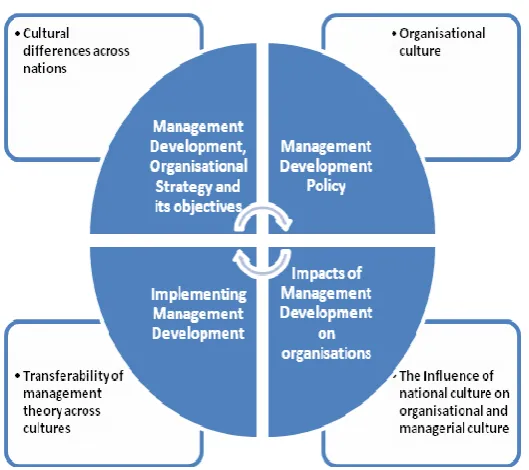
Figure 1.1: The Research Framework
1.8.2 Research Objectives:
1. To review the current body of knowledge in management development to critically examine practices in Libyan oil sector.
2. To examine Libyan culture and environment to discover their influence on human resource and management development.
3. To asses the applicability and transferability of western MD models to the Libyan context.
4. To study the impact of external factors (Political, Social, Economic and Technological) and internal factors towards effective implementation of management development in Libyan oil companies.
5. To develop a framework to enable adaptation of management development to improve practices in the Libyan Oil sector.
1.9. The Research Contribution
14
MD in the context of Libya. Additionally, it will contribute to knowledge by identifying the key factors affecting MD programs in Libya. Also, the study will contribute towards an improvement of the understanding of MD practices by adding something new about the development of management in the Arab countries, and presenting new knowledge to expend the existing literature in the area. Additionally, during literature review, the research has found a lack of scholarly work regarding MD practice in the West in comparison to Libya, and this study will consequently provide an opportunity to enhance the literature.
1.10. Structure of the Thesis
The thesis is divided into eight chapters:
Chapter One: Highlights the global, national and organisational aspects of HRD and indicates the need for research into MD as its importance increases in highly competitive world markets. As implementation of adequate MD strategy and policy can be affected by social, political, cultural and economic factors. The first chapter of the literature review looks at these aspects;therefore
Chapter Two: Discusses the background to the Libyan environment, by presenting a P.E.S.T. analysis and investigates the impact of these factors on Libyan management development. Additionally the next chapter of the literature review
Chapter Three: considers the ways in which the western concept of management development might be applicable or otherwise, to the non-western environment of Libya. It concentrates on the issues of national and organisational culture and their impact on management development in developing countries in general and Libya in particular. The final chapter of the literature review
15
Chapter Five: discusses the research methodology employed for the study. It contains a review and discussion of research methods, their advantages and disadvantages. It describes the research philosophy, research approach, research design, and data collection methods. Additionally, it provides a justification for adopting each of these approaches, and details the data collection method and the tools of analysis employed.
Chapter Six: provides an insight into the cases to be studied and the documentary and anecdotal evidence concerning the value, contribution and purpose of management development within each company. As well as the analysis of the data collected.
Chapter Seven: provides a discussion of the analysis of responses of the surveyed Libyan managers, about the state of management development in two Libyan oil companies. The discussion of the findings drawn by the research in the light of the conceptual framework and research aim, objectives and the information gathered from literature reviewed is also presented.
Chapter Eight: Concludes the thesis as a whole, significant findings from the analysis are highlighted and linked to the literature reviewed, conclusions are drawn with regard to the aims and objectives and theory set out for this research. Additionally in this chapter the research indicates the contribution this study has made to knowledge of management development in Libya today. Finally the limitations of the research carried out are highlighted and suggestions and recommendations for future research both in the area of Libyan management development are offered.
16
CHAPTER TWO
THE POLITICAL, ECONOMIC, SOCIAL AND TECHNOLOGICAL
ENVIRONMENT OF LIBYA
2.0. Introduction
Before reviewing whether the western concept of a management development (MD) performance paradigm might be applicable or otherwise, to the non-western national and organisational culture of Libya, in chapter three and the human resource/ management development literature in chapter four, it is important to review the Libyan environment in which this study is taking place. This is due to the fact that as mentioned in the introductory chapter, Tregaskis et al. (2001) pointed out that one of the most critical issues to be considered in any investigation of human resource development is does country context influence HRD practice. Many developing countries, including Libya, have paid a great deal of attention to national economic and social problems, but less attention has been given to, “managerial and organisational problems, which have an important impact on the performance of national development plans”, Almhdie and Nyambegera (2004, p. 178). In implementing their economic development plans, these countries need managers, and other professionals, but at the same time they are surrounded by a complex and changeable environment in terms of increases in organisation size, technological advancement, labour movement, high inflation and a competitive world market.
17
environment will provide an opportunity to explore the extent to which this, performance led philosophy, can be applied to the Libya context.
This chapter therefore focuses on the Libyan environmental conditions that have influenced its present MD thinking. The main elements that are looked at in this chapter are those political, economic, sociological and technological factors, that all impinge upon the development of management, and hence the improvement of managerial talent in Libya. But first of all this chapter considers Libya’s geographical and historical background.
2.1. Background to Libya
It is worth noting the particularity of Libya if compared with the rest of North-African countries which shared several institutional characteristics and historical backgrounds. Two factors have profoundly affected the evolution of Libya, its oil wealth and the political changes implemented by Libyan leader, Colonel Qadhafi, since his rise to power. Qadhafi created his own political system which is theoretically, a grass-roots democracy providing an alternative between Western bourgeois Democracy and Communism. After a period of international isolation, Libya has recently inaugurated a new political course. Both the European Union and more recently the USA have been observing these changes closely, thus, aware of its strategic relevance, Libya aims to become a central interlocutor in the dialogue between the West and the Arab countries in the framework of Euro-Mediterranean Partnership, (Gavin, 2005).
18
Any national human resource development (NHRD) policy must be based on the country’s population. Hence, in looking at HRD it is necessary to understand the structure of the nation, its demographics, and its other geographical characteristics. The demographic reality is a formidable demand on public policy, particularly in education, food supplies, jobs, drinking water, environment and housing. Even oil-rich Gulf States are grappling with similar demands and pressures from this demographic reality and each have paid particular attention to MD, through the Arab Organisation for Management Development established in 1982.
In 1969, the monarchy was overthrown by a group of army officers on the 1st September Revolution, and The Revolutionary Command Council (RCC) took power, proclaiming the birth of the Libyan Arab Republic. Under a decree promulgated by the RCC in November 1976, provision was made for the creation of the General National Congress of Arab Socialist Union (ASU); the country’s only permitted political party. Thereafter, in 1977, the ASU became the General People’s Congress (GPC) and Libya then became a ’state of the Masses’ or a Jamahiriya. At this time the term rentier state became applied to Libya and other Arab states with similar economic situations (El-Fathaly & Palmer, 1980). Rentier states are those which receive revenue from their raw material production under circumstances that do little to stimulate their overall economic development. Other production is very insignificant. One of the principles declared by the Libyan Revolution in 1969 was socialism, which led to state enterprises being the only form of enterprise allowed to operate. Accordingly, the industry sector became directly managed by the state agencies, and its objective is to achieve a high degree of self - sufficiency and self - reliance, and to create a non - oil economy. The Revolution Command Council adopted a program of comprehensive economic planning to decrease dependence on oil and the foreign capital and to provide a future based on the mobilisation of the potential of the masses. This strategy was deepened by the General Peoples Congress after the dissolution of the government and the transformation of the republic into the Jamahiriya in March 1977.
2.2. Political Developments since Independence
19
supervision of the General Secretary and General Secretariat, which make the final decisions. Yet it would be inaccurate to dismiss the GPC as a mere rubber stamp. It has functioned as a clearinghouse and sounding board, receiving the views of the masses (through lower level representative congresses, committees, and functional organisations) and transmitting them to the General Secretariat and General People’s Committee. Conversely, it transmits the decisions of the national leadership to the masses, encouraging mass participation in the political system and lending legitimacy to General Secretariat decisions and policies through advice and formal approval. This new political system was a combination of socialism and Islam, which Quadafi called the Third International Theory. Alvi, (1994 p. 159) pointed out that:
“This theory with its rejection of both existing major economic systems capitalism and socialism proposed an egalitarian approach to economic and social progress in which fulfilment of individual’s basic needs were regarded as a matter of his/her right”.
The theory rejected private ownership of the means of production, as well as the profit motive. It contends that as long as the real “producers” (wage-earners) are paid wages in any system (capitalism or socialism), no matter how high their wages and fringe benefits are, they will always be exploited (Alvi, 1994). Therefore this theory proposes joint-ownership of production units with workers partnership, rather than increased wages and benefits, creating incentive strong enough to increase productivity. As a result there is a particular type of mass ownership within organisations that is legislated for in Libyan law. Elkabawi (2003, p. 114) states that, “everyone who works in an organisation, which actually produces goods, is legally entitled to a share of the profits generated from their labour”. This scheme of production sharing for partners, not wage earners is the most common method used to provide a group incentive for increased productivity in Libya. This scheme is also intended to institute a flexible reward structure that reflects an organisations actual economic position and is also expected to enhance employees’ security and identification with the company, and to attract and retain producers more easily (AL-Geryani, 2005).
20
(2003). This system has existed in Libya for some time and its main goals are to reward an individual employee directly based on their contribution to the organisations production, make sure that responsibility is truly co-operative and finally the system makes sure that producers feel as though they are owners and are treated fairly. (Deeb and Deeb,1982) workers are members of the Producers’ Congress which meets at least twice a year or sometimes more often depending on the business it wants to conduct. The Producers’ Congress elects members of both, the Producer’s Affairs Committees and PC with the Producer’s Affairs Committees consisting mainly of people engaged in semi-skilled work with no executive power (Farhat, 1979).
Management decisions are taken by the PCs which is headed by a secretary elected by people working in an establishment in addition to highly educated employees with long working experience in that establishment. The secretary of that PC works full-time for a period of three years and receives the same salary as he/she did before the election to that position with additional allowances. The other members of the PC retain their positions (usually departmental heads) in the establishment during their tenure. There have recently been some astonishing changes in Libya’s stance against the US and the EU these changes have brought the country out of its political and economic isolation, (UNDP DPCPO 2002). The recent policy change has Libya’s economy, but also its political reputation, benefiting from this new openness. A better relationship with the EU and the US seems the only way to successfully diversify its economy.
2.3. Libyan Economic Environment
21
some progress is being made by those seeking to open up the economy, the lifting of import tariffs on more than 3,500 commodities is just one such sign.(Porter and Yergin,2006) One of the key managerial challenges now is to transform organisational culture to promote organisational change in order to survive the turbulent economic environment and implement successful strategies to adapt to the new market environment. In looking at the economic aspects of Libyan life, it is important to remember that before the discovery of oil in 1959 and the commencement of oil-production in 1961, Libya was one of the poorest countries in the world (Vandewalle, 1998) with very bleak prospects for economic development with no source of power and mineral resources and agriculture being the main source of national income. According to Farley (1971 p.132), about “80% of its population was engaged in agriculture and animal husbandry whilst the rest of the population lived in towns such as Tripoli, Benghazi, Sebha, and Misurata”.
Table 2.1: Foreign Assistance Allocation to Libya during 1952-1960 Libyan Fiscal Years: (LD 1,000)
Country Total Allocation %
United States 41,138 56
United Kingdom 28,740 39
France 893 1
Italy 1,070 1
United Arab Republic 50
-Turkey 50
-Pakistan 10
-UN Technical Assistance 1,964 3
Total 73,915 100
Source: The Economic Development of Libya 1960, Cited in Abbas, 1987).
22
average per capita income of less than $30 per year in 1951, which by 1960 had risen to $100 per year. (Abbas, 1987) Its Gross Domestic Product (GDP) being £L15 million Libyan pounds in 1955 by 1958 this had increased to £L52 million (Abuarroush, 1996; Giurnaz, 1985). It is interesting to find that during the early years of independence the main Libyan export was scrap metal that was salvaged from the debris of the Second World War (Abbas, 1987). Libya was dependent on aid from foreign states and payments for the use of military bases (Table 2.1). Additionally, there was a heavy reliance on advisors including technicians from the UK, USA and UN (Abbas, 1987).
2.3.1. The Period From 1969-1980
After the Revolution of 1969, the structure of the Libyan economy had changed dramatically. One of the principles of Revolution was Arab Nationalism which had led to the issuing of laws requiring the nationalisation of foreign businesses such as banks, changing the oil prices, and participation in production (Vandewalle, 1998). Libya was at the forefront for achieving Arab unity and agreed to meet periodically with other Arab States for planning in the political, economic and social fields. It was willing to help more than one country with their economic problems by providing funds and supplying fuel. Libya and other Arab countries also agreed to the gradual integration of laws affecting travel, transportation, employment and property holding. Many agreements were made to merge the legal systems, information services and trade barriers. According to Birks & Sinclair (1980, p. 136) “…due to the shortage of labour, Libya had also employed many Arab people from Egypt, Tunisia and Sudan of which nearly, …170,000 workers were from Egypt and 70,000 from Tunisia”. During this period, “Libya’s oil price had increased from $2.3 per barrel in 1969 to $25 per barrel in 1979” (Abbas, 1987).
23
by creating alternative ways to achieve economic growth. El-Fathaly and Palmer (1980 p. 44) said of the Libyan oil policy:
“The first September revolution (1969) changed the priorities of the development strategy by giving different emphasis to certain sectors. Since the start of the new regime attention has been focused on planning and development to effectuate a shift in the social and economic structures a state of full dependence on the oil sector to one of balanced growth for all the sectors”.
2.3.2. After the Revolution 1980-2000
By the end of 1981, with the exception of the agricultural sector, all private ownership in Libya was abolished. Housing ownership was restricted to one house per family, business enterprises were replaced by government agencies, and workers took over private and public factories. (Atiyyah,1993) Private sector was completely replaced by People’s Committees, with retail activity being controlled by the state – administered supermarkets. According to Alvi (1994) many social and economic changes occurred in the country after the second part of the Green Book (1978) had changed all wage earners into partners through the institutions of mandatory profit-sharing and workers committees. This encouraged workers to become involved in the day-to-day management of companies in which they worked (Abuarrosh, 1996). Although the new socialist ideology was aimed at transforming the status of wage labourer to those of partners, the situation of wage labourers who took over the plants where they were working was still unclear. Indeed, ‘the only change worthy of mention was the change of the title of ‘wages’ to ‘producers, shares’ (Abbas 1990, p 100).
24
25
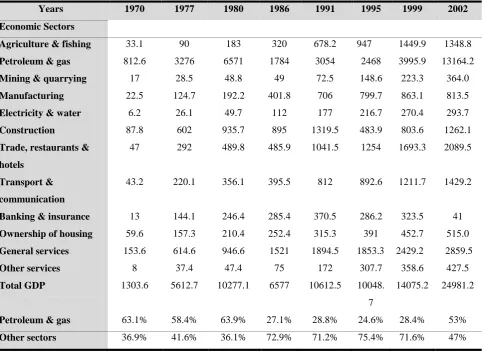
Table 2.2: Libyan GDP by Sector - 1970-2002 (In million LD)
Years 1970 1977 1980 1986 1991 1995 1999 2002
Economic Sectors
Agriculture & fishing 33.1 90 183 320 678.2 947 1449.9 1348.8
Petroleum & gas 812.6 3276 6571 1784 3054 2468 3995.9 13164.2
Mining & quarrying 17 28.5 48.8 49 72.5 148.6 223.3 364.0
Manufacturing 22.5 124.7 192.2 401.8 706 799.7 863.1 813.5
Electricity & water 6.2 26.1 49.7 112 177 216.7 270.4 293.7
Construction 87.8 602 935.7 895 1319.5 483.9 803.6 1262.1
Trade, restaurants &
hotels
47 292 489.8 485.9 1041.5 1254 1693.3 2089.5
Transport &
communication
43.2 220.1 356.1 395.5 812 892.6 1211.7 1429.2
Banking & insurance 13 144.1 246.4 285.4 370.5 286.2 323.5 41
Ownership of housing 59.6 157.3 210.4 252.4 315.3 391 452.7 515.0
General services 153.6 614.6 946.6 1521 1894.5 1853.3 2429.2 2859.5
Other services 8 37.4 47.4 75 172 307.7 358.6 427.5
Total GDP 1303.6 5612.7 10277.1 6577 10612.5 10048.
7
14075.2 24981.2
Petroleum & gas 63.1% 58.4% 63.9% 27.1% 28.8% 24.6% 28.4% 53%
Other sectors 36.9% 41.6% 36.1% 72.9% 71.2% 75.4% 71.6% 47%
Sources: Central Bank of Libya (1994, 1995, 1998, 2001, 2002); Ganous et al, (1994)
26
2.3.3. The New Millennium
In 2000 the Libyan General People’s Congress and the Government authorities embarked on an ambitious programme of decentralization, abolishing most central government functions and making the devolution of responsibility to 31 governorates (sha ‘biyat) a national priority (Aghile,2000). This has highlighted a need for capacity building to support the decentralization process, in particular at the governorate level. It also presents an opportunity to respond more accurately to some of the country’s development needs, through increased needs-based targeting of resources. Complementing this, support is needed for a number of central authorities to develop capacity in areas such as environment and information and communications technology (ICT) and to upgrade public services (Twati and Gammack, 2006). Such support at the central and governorate levels is valuable for assisting the development of the country and contributing to economic reform. In 2002, the public sector employed some 70 per cent of the workforce and although consideration been given to ways of reforming the public sector, little reform has yet been attempted. A new short term national development plan is due to begin from 2003. However longer term strategies for the development of the economy have yet to be decided on, (UNDP DPCPO Report 2002).
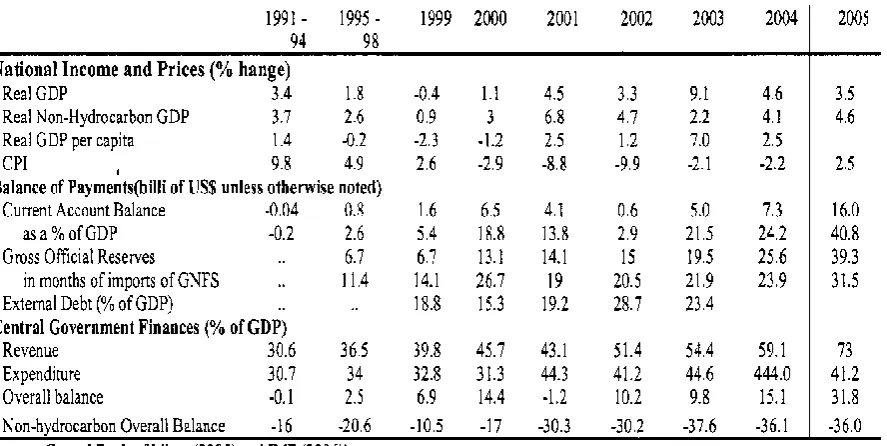
According to the International Monetary Fund (IMF, 2003), the Libyan economy, which is still heavily reliant upon the oil sector, remains largely state controlled and regulated, although in 2002, the authorities initiated steps to liberalise the economy. On January 1, 2002, the dual exchange rate system was unified at a fixed rate of One Libyan Dinar (LD) equal to 0.608 US$ along with the foreign exchange rationing and import licensing requirements being eliminated. This resulted in economic developments in 2002 being influenced by these factors and by the accommodating fiscal and credit policies in an environment of continuing high oil prices. Real non-oil GDP grew by about 3% and deflation continued with a 9.8% decline in the Consumer Price Index (CPI). The external current account shifted to a deficit for the first time since 1998, and gross official reserves decreased slightly too about US$13.7 billion.