Public Health Dissertations School of Public Health
12-21-2018
Child Maltreatment Victimization and Adolescent
Weapon Carrying: Exploring the Role of In-Home
Firearm Access and Parent-Child Relationships
Melissa OsborneFollow this and additional works at:https://scholarworks.gsu.edu/sph_diss
This Dissertation is brought to you for free and open access by the School of Public Health at ScholarWorks @ Georgia State University. It has been accepted for inclusion in Public Health Dissertations by an authorized administrator of ScholarWorks @ Georgia State University. For more information, please [email protected].
Recommended Citation
Osborne, Melissa, "Child Maltreatment Victimization and Adolescent Weapon Carrying: Exploring the Role of In-Home Firearm Access and Parent-Child Relationships." Dissertation, Georgia State University, 2018.
CHILD MALTREATMENT VICTIMIZATION AND ADOLESCENT WEAPON CARRYING:
EXPLORING THE ROLE OF IN-HOME FIREARM ACCESS AND
PARENT-CHILD RELATIONSHIPS
By
MELISSA C. OSBORNE
NOVEMBER 2018
EXPLORING THE ROLE OF IN-HOME FIREARM ACCESS AND
PARENT-CHILD RELATIONSHIPS
by
MELISSA C. OSBORNE
BACHELOR OF ARTS IN SOCIOLOGY BERRY COLLEGE, 2007
MASTER OF PUBLIC HEALTH IN EPIDEMIOLOGY GEORGIA STATE UNIVERSITY, 2012
A Dissertation Submitted to the Graduate Faculty of Georgia State University in Partial Fulfillment
of the
Requirements for the Degree
DOCTOR OF PHILOSOPHY IN PUBLIC HEALTH
EXPLORING THE ROLE OF IN-HOME FIREARM ACCESS AND
PARENT-CHILD RELATIONSHIPS
by
MELISSA C. OSBORNE
Approved by:
__Shannon Self-Brown, PhD____ Committee Chair
___Betty Lai, PhD___ Committee Member
___Greta Massetti, PhD___ Committee Member
I would first like to thank the participants of the Longitudinal Studies of Child Abuse and Neglect (LONGSCAN), without whom this research would not be possible and the LONGSCAN research team who have supported and continue to support this work since its inception. In particular, thank you to Holly Larrabee at the National Data Archive on Child Abuse and Neglect for responding to questions about this dataset throughout the dissertation process.
Additionally, I would like to thank my dissertation committee chair and members: Dr. Shannon Self-Brown (chair), Dr. Betty Lai (member), and Dr. Greta Massetti (member). I am grateful to have been guided through my dissertation work by a group of such talented mentors. You truly put the “commit” in “committee.” Your questions and feedback helped me to think critically about this topic in order to develop meaningful research questions that have
applicability to real-world practice and policy.
Chapter 1: Literature Review and Statement of Purpose……….1
Youth Violence………1
Adolescent Weapon Carrying………..2
Child Maltreatment and Weapon Carrying………...7
Mediators in the Relation between Child Maltreatment and Weapon Carrying and Theoretical Underpinnings……….…11
Statement of Purpose and Hypotheses………...17
Chapter 2: Methods………....…....21
Subjects and Settings………....….21
Measures………23
Analytic Plan………...…23
Chapter 3: Results………...…31
Descriptive Statistics………..31
Preliminary Testing of Proposed Mediators………..33
Mediation Models………..35
Ad Hoc Analyses………...……38
Chapter 4: Discussion, Future Directions, and Conclusion………...39
Main Research Questions……….…….39
Ad Hoc Analyses……….……..41
Additional Findings of Interest……….…….……43
Limitations……….…....47
Implications and Conclusion………..……49
References………...52
Appendix A: Tables………..….70
Figure 1. Mediation models exploring mother-child relationship quality as mediator in the
relation between child-reported CM and weapon carriage………..76
Figure 1a. Child-reported emotional abuse as independent variable………..76
Figure 1b. Child-reported physical abuse as independent variable………...76
Figure 1c. Child-reported sexual abuse as independent variable………76
Figure 2. Mediation models exploring mother-child relationship quality as mediator in the relation between CPS-substantiated CM and weapon carriage…..……….……..77
Figure 2a. CPS-substantiated emotional abuse as independent variable…………..77
Chapter 1: Literature Review and Statement of Purpose
Youth Violence
Adolescent Weapon Carrying
Scope of the problem. Weapon carrying by adolescents1 is considered a delinquent
behavior and has been associated with youth violence (DuRant, Getts, Cadenhead, & Woodes, 1995; DuRant, Kahn, Beckford, & Woods, 1997; Resnick, Ireland, & Borowsky, 2004; Stickley et al., 2015). Negative sequelae associated with adolescent weapon carrying include decreased life satisfaction as well as decreased emotional health (Valois, Zullig, Huebner, & Drane, 2001; Walsh et al., 2013). According to data from the 2017 nationally representative Youth Risk Behavior Surveillance System (YRBSS), which includes data on health risk behaviors reported by 9th through 12th graders in the U.S., approximately 16% of students reported carrying a
weapon, such as a gun, knife, or club, in the last 30 days. This percentage was far greater among males (24%) compared to females (7%). For both males and females, rates of weapon carrying were highest in the 11th grade (25% and 9%, respectively). For males, the rate of weapon
carrying was lowest, on average, among 9th and 12th graders (both 23%); for females, the rate
was lowest among 10th graders (6%) (Kann et al., 2018).
Other studies have also estimated the rates of adolescent weapon carrying. A study of students in a low-income, predominantly African-American Baltimore school district found that 18% of 6th grade respondents reported weapon carrying in the last 30 days. This is a particularly
high rate given the young age of the study participants, which may have been due to their being selected from a school considered “persistently dangerous” according to State of Maryland policy definitions (Finigan-Carr, Cheng, Gielen, Haynie, & Simons-Morton, 2015). Another
1 There are different definitions for the time period known as adolescence. Definitions range from as low as 10
study assessed adolescents in 7th, 9th, 11th, and 12th grades in a high-risk school district in the
U.S. Approximately 17% of respondents in this study reported weapon carrying in the last 30 days (Leeb, Barker, & Strine, 2007). Yet another study using data collected from five sites across the U.S. from children at-risk for CM found that 7% of 12-year olds reported carrying a weapon in the past year (Lewis et al., 2007).
be used such as in gang activities, compared with white youth (Nielsen, Martinez, & Rosenfeld, 2005).
Trend analyses indicated that there was a statistically significant2 decrease in adolescent
weapon carrying from 1991 to 2017, dropping from 26% of students to 16% of students.
However, there was not a statistically significant change from 2015 to 2017 (Kann et al., 2018). Other research using nationally representative data of youth in grades 6th through 10th found that
from 1998 to 2010, weapon carrying increased significantly for white youth but not for adolescents from any other racial category (Perius, Brooks-Russeii, Wang, & Iannotti, 2014). The overall decrease since the early 1990s may be due, in part, to an increased use of metal detectors at schools, as research has indicated that rates of weapon carrying are significantly lower at schools with metal detectors (Centers for Disease Control and Prevention, 1993; Johnson, 2000). However, researchers suggest that a lack of continued decrease in more recent years may be due to a focus on bullying prevention programs in schools. These programs have been effective in reducing bullying but typically do not include a weapon involvement
component (Perius et al., 2014).
Several studies have examined firearm carrying behaviors specifically. One study assessed firearm possession rates among adolescents ages 14 to 24 years who were presenting in the emergency department for an assault-related injury. Participants were asked about the frequency of carrying a gun outside the home in the last six months, the reason for carrying, and the source of the handgun outside the home. They were also asked if they personally owned a gun and where they obtained a handgun paid for with cash. In this sample, 23% of adolescents
2 From this point forward, the term, “significant” will be used to refer to a statistically significant relationship. Other
indicated that they had possessed a firearm in the last six months. Of those, 42% carried the firearm outside the home, 15% were less than 18 years of age, and 32% had children of their own. Adolescents most often reported protection as the primary purpose for carrying a firearm (37%). Only 17% reported purchasing the firearm from a legal source, with the majority of the remainder not endorsing a response to this question. Over half of the sample (52%) indicated that they could obtain a firearm with little to no trouble (Carter et al., 2013).
Another study looked specifically at juvenile offenders and firearm carrying behaviors. Data were from a longitudinal study conducted from 2000 to 2010 in Arizona and Pennsylvania of adolescents who were considered serious offenders in the juvenile justice system. Study participants were asked at baseline if they had ever carried a gun and were asked at each follow-up assessment if they had carried a gun in the last six months. Almost half (47%) of study participants indicated that they had carried a gun in their lifetime at the baseline assessment. Gun carriage at baseline was significantly associated with exposure to violence (as a victim or as a witness) in bivariate as well difference in differences analyses (Loughran, Reid, Collins, & Mulvey, 2016). Other research using Youth Risk Behavior Survey (YRBS) data from 2001-2011 looked at 55 risk factors for gun possession. Survey respondents were asked if they had carried a gun in the last 30 days. The authors conducted hierarchical clustering of individual risk factor items to compute odds ratios for gun carriage in the past 30 days. Examining odds ratios for gun carrying over time, the strongest associations were with alcohol, tobacco, and other drug use overall and at school (Ruggles & Rajan, 2014).
Finigan-Carr et al., 2015; Leeb et al., 2007). Research has also indicated that white youth report weapon carrying in greater numbers than youth of other races (Carter et al., 2013; Kann et al., 2018). Ferguson and Meehan (2010) looked at data from the Ohio YRBS to examine risk factors for weapon carrying. They found that, in addition to being male, youth self-reporting illegal substance use and those exhibiting antisocial personality traits had increased odds of weapon carrying. Carter and colleagues (2013) conducted a multivariate logistic regression analysis examining firearm possession among adolescents presenting in an emergency room, and results indicated that males, those not receiving public assistance, those reporting illicit drug use, those with retaliatory attitudes, and those in a serious fight within the last six months were at increased odds of reporting firearm possession. There were no significant findings with regard to race, although a lower percentage of black participants reported gun carriage compared with white participants. Recent research has examined the racial disparity in weapon carrying. Beardslee and colleagues (2018) used data on black and white boys from the Pittsburgh Youth Study, a longitudinal study of a sample of high-risk boys recruited from Pittsburgh public schools. This study found that a greater percentage of black boys carried weapons compared to white boys. Further analyses led researchers to conclude that the disparity in weapon carriage was due to black boys’ early exposure to risk factors for weapon carriage such as childhood conduct problems and peer delinquency.
Additionally, child maltreatment has been identified as a risk factor for weapon carrying (Leeb et al., 2007; Lewis et al., 2007). This will be discussed further below.
Child Maltreatment and Weapon Carrying
Background on child maltreatment. Child maltreatment (CM) is the abuse or neglect
of a child under the age of 18 by a parent or other caregiver and includes acts of commission (e.g., physical abuse, sexual abuse) and acts of omission (e.g., emotional neglect, inadequate supervision) (Leeb, Paulozzi, Melanson, Simon, & Arias, 2008). In 2016, there were 3.5 million children in the U.S. who were involved as the subject of one or more reports to child protective services. Of these, 676,000 children were considered to be victims of a substantiated report, one in which there was evidence indicating that CM occurred (US Department of Health & Human Services [DHHS], Administration for Children and Families, Administration on Children Youth and Families Children’s Bureau, 2018). Children are most vulnerable to CM in their earliest years. Approximately 29% of CM victims were under the age of three years, and children under age one had the highest rates of CM (24.8/1,000 children).
There are racial disparities in CM. Of CM victims in 2016, 45% were white, 22% were Hispanic, and 21% were black. Among these three groups, rates of CM were highest among black children (13.9/1,000 children). Rates of CM among Hispanic and white children were similar to one another (8.0/1,000 and 8.1/1,000, respectively). Differences exist by child gender as well, with girl victims (9.5/1,000) having higher rates than boy victims (8.7/1,000) (US DHHS, 2018).
abused. Parents were most often the perpetrators of CM (78%). Another 6% were a relative other than a parent. The national rate of CM in 2016 was 9.1/1,000 children in the population. However rates vary by state from a low of 1.6/1,000 in Pennsylvania to a high of 23.3/1,000 in Massachusetts (US DHHS, 2018). While no studies to-date have identified regions of the country in which CM occurs in clusters, there have been ecological studies at the state-, census tract-, or neighborhood-level that identified factors such as income inequality, child poverty rate, unemployment rate, and child care burden are correlates of CM (Eckenrode, Smith, McCarthy, & Dineen, 2014; Freisthler, Merritt, & LaScala, 2006).
CM is associated with a range of negative outcomes including those to physical and mental health as well as to the individual and society. Research indicates that CM is associated with short-term and long-term problems including internalizing and externalizing problems in later childhood, cardiovascular disease, and depression (Danese et al., 2009; Felitti et al., 1998; Leeb, Lewis, & Zolotor, 2011; F. Li, Godinet, & Thompson, 2014). The economic impact of CM was estimated to be $124 billion in 2008, the most recent estimate. This is due to a variety of factors including healthcare costs, child welfare costs, and loss of productivity (Fang, Brown, Florence, & Mercy, 2012).
The effect of child maltreatment on weapon carrying. Many studies have established
assistance showed a stronger relationship between CM and having a violent petition compared to those not receiving assistance, on average (Mersky & Reynolds, 2007).
Yun and colleagues (2011) found a connection between CM and violent delinquency for specific types of maltreatment. The researchers used data from the National Longitudinal Study on Adolescent Health (Add Health), a nationally representative sample of over 10,000 youth, which began when the participants were in grades 7 through 12. CM data were retrospective child-reported accounts collected when the participants were young adults. Participants were asked about CM occurring before entering sixth grade; 14% reported physical abuse, 4% reported sexual abuse, and 9% reported neglect. This research found that early physical abuse was not significantly associated with delinquency in adolescence, but sexual abuse and neglect were associated with and increased odds of delinquency.
A review of studies examining CM and violent delinquency identified 12 studies dating back to the late 1980s. Researchers found consistent evidence of a link between CM and violent delinquency, especially in the case of physical abuse. They noted that CM occurring during adolescence appears to be a particularly strong predictor of violent delinquent behavior. There was no strong evidence of gender differences in the relation between CM and delinquent behavior. The researchers noted that more studies should examine this issue and more longitudinal studies should be conducted (Maas, Herrenkohl, & Sousa, 2008).
Researchers using data from the 2007 Minnesota Student Survey assessed weapon carrying specifically in addition to overall delinquent behavior (Duke, Pettingell, Mcmorris, & Borowsky, 2010). The survey asked the students, who were in 6th, 9th, and 12th grades, about
boys) reporting carrying a weapon on school property in the past month. For girls, experiencing physical abuse increased the odds of weapon carrying 4.22 times, on average (95% confidence interval [CI]: 3.79, 4.69). Sexual abuse victimization also increased the odds of weapon carrying in the cases of perpetration by a family member (odds ratio [OR]:4.06, 95% CI: 3.52, 4.69) and perpetration by a non-family member (OR: 4.06, 95% CI: 3.61, 4.56). For boys, experiencing physical abuse increased the odds of weapon carrying by 3.62 times (95% CI: 3.36, 3.90). Sexual abuse victimization also increased the odds of weapon carrying in the cases of perpetration by a family member (OR: 6.82, 95% CI: 5.92, 7.86) and perpetration by a non-family member (OR: 6.46, 95% CI: 5.80, 7.20).
among males was not significantly related to weapon carrying. Having a firearm available in the home increased the odds of weapon carrying significantly (AOR: 3.05, 95% CI: 2.28, 4.07).
One study used data from the Longitudinal Studies of Child Abuse and Neglect (LONGSCAN), which includes data from children at varying risk levels for CM who were recruited from five study sites around the country. Data collected when the children were approximately 12 years old were used for this study. Of the children assessed at age 12, 7% reporting carrying a weapon in the past year, 22% reported physical abuse, and 15% reported sexual abuse. Both child self-reported physical abuse (AOR: 2.85, 95% CI: 1.31, 6.21) and sexual abuse (AOR: 4.36, 95% CI: 1.69, 11.26) victimization were significantly associated with weapon carrying. This study examined perceived need for a weapon, as a mediator, and it was found to be a mediator in both the case of physical abuse and sexual abuse (Lewis et al., 2007).
Mediators in the Relation between CM History and Adolescent Weapon Carrying and
Theoretical Underpinnings
Lewis and colleagues (2007) examined a mediator in the relation between CM and weapon carrying at the intrapersonal level of the social-ecological model. The social-ecological model has been used widely to better understand many public health problems. The model was initially used in CM research in the 1970s but has since been applied to other public health issues including youth violence (Farrell, Henry, & Bettencourt, 2013; Mikhail & Nemeth, 2016). The model has four levels: intrapersonal, interpersonal/relationship, community, and societal.
an individual that affect the health problem. For example, an individual’s history of depression may impact their likelihood for substance use disorder (Bronfenbrenner, 1979; Centers for Disease Control and Prevention, 2015; Dahlberg & Krug, 2002).
While other studies have examined youth violence broadly through the lens of the social-ecological model, the study by Lewis and colleagues (2007) is the only one to-date that has specifically investigated a potential mediator in the association between CM and weapon carrying among adolescents using this theoretical framework. They examined the perceived need for a weapon, a variable at the intrapersonal level, as a possible mediator in this relation. They posited that CM victims may be more likely to view the world as threatening and feel more vulnerable, increasing their likelihood for carrying a weapon. Their analysis found this to be true in the case of physical abuse and in the case of sexual abuse among girls. Their work provides a better understanding of why CM and weapon carrying are related at the intrapersonal level. However, it is important to understand factors at multiple levels of the social-ecological model in order to better inform interventions in a holistic way, improving their effectiveness (Dahlberg & Krug, 2002). Thus, research delineating the risk factors that play a role in weapon carrying at other levels is warranted.
Adolescent in-home firearm access. Estimates from self-report data indicate that many adolescents have access to firearms in the U.S. Add Health data that included a nationally-representative sample of adolescents ages 12-18 years were analyzed to assess risk for in-home access to firearms and/or alcohol. Firearm access was assessed by asking, “Is a gun easily available to you in your home?” Almost one-quarter (24%) of adolescents reported in-home firearm access based on this question (Swahn, Hammig, & Ikeda, 2002). Other studies have found even higher estimates of adolescent access to firearms. Using data from the National Comorbidity Survey-Adolescent Supplement, a nationally representative survey of adolescents between ages 13 and 18 years, researchers obtained estimates of the proportion of adolescents in the U.S. reporting access to a firearm. Participants were predominantly non-Hispanic white (82%) and a large portion lived in the south (45%). Adolescents were asked how many firearms were in their home, and those who reported at least one were asked, “Could you get [the gun/one of the guns] and shoot it right now if you wanted to? Or is either the gun or the ammunition put where you can’t get it?” Those who responded, “Could get it,” were considered to have firearm access. Almost half (41%) of those indicating the presence of at least one firearm in the home responded that they had easy access to it and could shoot it (Simonetti, Mackelprang, Rowhani-Rahbar, Zatzick, & Rivara, 2015). In another study of violent offending and victimization using Add Health data, Ruback and colleagues (2011) found that being male, white, living in a two-parent home, being of high socioeconomic status, and living in a rural area were associated with firearm access. They also found that adolescent involvement with weapons was associated with the presence of a gun in the home, even if the involvement was with a weapon outside the home.
children across the U.S. examined the presence of a firearm in the home. Approximately 20% of parents reported that a firearm was kept in or around the home. Consistent with previous
research on regional variability in gun ownership, the greatest percentage of those keeping a firearm in the home was in the southeastern U.S. (the Birmingham, Alabama study site) (Ladapo et al., 2016). Another study using these data looked at other factors associated with parents reporting a firearm in the home. This study found that, compared to non-Hispanic white parents, non-Hispanic black parents (AOR: 0.56, 95% CI: 0.42, 0.76) and Hispanic parents (AOR: 0.44, 95% CI: 0.30, 0.65) had lower odds of keeping a firearm in the home (Schwebel et al., 2014). It is important to note that because the parents in this study were almost all women, the number of homes with a firearm may have been underreported, as research has found that in homes with one male and one female living together, overall agreement between pairs is low, with women reporting fewer guns than men (Coyne-Beasley, Johnson, Johnson, Webster, & Wiebe, 2001).
Fisher, & DeGarmo, 2007; Windham et al., 2004; Zuravin, 1989). However, the effect of CM on in-home firearm access has not been specifically investigated.
There is a paucity of research on the association between in-home firearm access and adolescent weapon carrying. However, one study found evidence that the relationship is
significant and positive. In their study of CM and weapon carrying, Leeb and colleagues (2007) found that, on average, adolescents were at 3 times greater odds of weapon carrying if they reported firearms were available in the home (95% CI: 2.28, 4.07). While there is very limited research on firearm access and adolescent weapon carrying, the relationship between adolescent in-home access to firearms and involvement in violent delinquent behavior, which is associated with weapon involvement, has been established in the literature (Hardy, 2006; Ruback et al., 2011). A study using data from Add Health looked at the association between adolescent in-home firearm access and self-reported violent offending and violent victimization in the past 12 months. Results indicated that in-home firearm access increased the odds of both violent
offending and violent victimization at Wave 2. With regard to violent offending, they found that firearm access was significantly associated with being in a serious fight, pulling a weapon on someone, and hurting someone badly enough to require medical attention. The authors suggest that the adolescents do not use a firearm from home when committing these offenses. They note that, although the firearm itself may have not been directly related to the violent offending or victimization, access alone may contribute to a “factor or process” that increases risk (Ruback et al., 2011).
Parent-child relationship quality. A child’s relationship with his or her parents may also help explain the effect of CM on weapon carrying. Research has found that CM
studies meeting the predefined inclusion criteria that investigated the effect of multiple types of CM on attachment. Results of the meta-analysis found that CM victimization was associated with a 7% increase, on average, of having an insecure attachment. Researchers suggested a closer look at the effects by type of CM (Baer & Martinez, 2006).
The parent-child relationship has also been found to have an effect on youth delinquent behaviors in general. One study examined these effects using Add Health data. Mother-child and father-child attachment scores were combined if the child completed a father-child
attachment scale (i.e., if he or she had a father figure on whom to report). If no father figure was identified, the score for mother-child attachment was used. Results indicated a significant negative effect of parental attachment on overall number of delinquent acts, as well as on indicators for property delinquency and violent delinquency (Gault-Sherman, 2012).
Another study examined this relationship in a sample of 7th, 9th, and 11th grade youth in
one U.S. county. Youth in the study self-reported delinquent behaviors as well as positivity and negativity toward parents. Their parents reported on time spent together on a range of activities. Positivity toward parents was found to have a significant negative effect on delinquency.
Negativity toward parents and time spent with parents was not significantly related to delinquency (Worthen, 2012).
Other work has looked more specifically at weapon carrying as an outcome. Orpinas and colleagues (1999) conducted such a study using cross-sectional data from 6th, 7th, and 8th graders
participants reported weapon carriage in the past 30 days; 11% reported carrying a handgun. Students who reported that they got along “very badly” with their parents had greater odds of handgun carrying compared to those who reported that they got along “very well” with their parents (OR: 1.37, 95% CI: 1.3, 1.5). In the study by Leeb and colleagues (2007) examining the relationship between CM and weapon carrying, child-reported parental support in the past 30 days and child-reported parental monitoring were both included in the adjusted model. There was not a significant relationship between parental support and weapon carrying, but parental monitoring was associated with significantly decreased odds of weapon carrying, on average.
Statement of Purpose and Hypotheses
The purpose of this research is to conduct an exploratory study that will examine
potential mediators in the relation between CM and adolescent weapon carrying, two factors that have an established relationship in the literature (Duke et al., 2010; Leeb et al., 2007; Lewis et al., 2007). The proposed mediators are: in-home firearm access, quality of relationship with father, and quality of relationship with mother.
Finally, this study will, in part, include firearm-related research by examining in-home firearm access and weapon carrying. Firearm research overall is an area that has been
understudied and has been sensitive to the policies that limit funding for certain areas of research. Most recently, the trend in publications on this topic has shown a decrease.
Publications on firearm violence increased substantially between the mid-1980s and late 1990s. However, by 2012, firearm violence publications decreased 64%. Additionally, the number of researchers in this topic area is limited, without a steady increase since the late 1990s (Alcorn, 2016). In the late 1990s there was a change in policy that prohibited federal funding from being used to “advocate or promote gun control” (Ladapo, Rodwin, Ryan, Trasande, & Blustein, 2013, p. 532). Research has found that, as one would expect, this had an effect on the number of publications related to firearms. Although firearms accounted for approximately 13% of deaths between 1991 and 2010, firearm research accounted for less than 1% (0.3%) of publications during that time period. However, trends in publications on other health outcomes with similar impacts increased during that time period. In 2013, Present Obama clarified the language of the policy from the 1990s, stating that the law allowed for firearm research as long as it did not support work encouraging or promoting gun control directly. This led to the release of more funding announcements for firearm research. It is yet to be seen if this directive has resulted in a substantial increase in publications in this field (Ladapo et al., 2013). The proposed study will address a gap in the literature by adding to this area of research that is in need of more published evidence.
show evidence of mediation, this information could be used to inform parenting programs and child welfare policies. Specifically, modifiable factors have been identified as potential
mediators. These factors can be improved upon through skills training and knowledge provided to parents. Millions of families in which CM is occurring or who are at risk for CM become involved in parenting programs (US DHHS, 2018). Parenting programs are recommended as part of the Centers for Disease Control and Prevention’s strategies to address youth violence. These evidence-based programs, such as Nurse Family Partnership and The Incredible Years, already have existing curricula into which these new concepts could be incorporated (David-Ferdon et al., 2016). For instance, if in-home firearm access helps in explaining the relation between CM and weapon carrying, parenting programs can include information on gun safety throughout the lifespan. Similarly, parenting programs could provide parents with skills that improve the parent-child relationship and could help parents understand developmental changes in their child during adolescence and ways to maintain a positive relationship during this time. Early intervention in this area could help in improving later outcomes. Additionally,
identification of other risk factors could aid in program and policy decisions, particularly those related to firearms, a topic area for which research is lacking. Ultimately, the information gleaned from this study can be used to guide policy and practice decisions that will have a wide public health impact and hopefully reduce the burden of adolescent weapon involvement.
Research questions and hypotheses. The proposed mediators are modifiable factors at
the interpersonal level of the social-ecological model and are a part of the family environment. Thus, this work will build on the work of Lewis and colleagues (2007), who identified a
(1) Does in-home firearm access act as a potential mediator in the relation between early CM and later weapon carrying in adolescence?
(2) Does quality of relationship with father act as a potential mediator in the relation between early CM and later weapon carrying?
(3) Does quality of relationship with mother act as a potential mediator in the relation between early CM and later weapon carrying?
These questions will be assessed separately for the following reporting sources and types of CM: parent-reported emotional abuse and physical abuse; child-reported emotional abuse, physical abuse, and sexual abuse; and CPS-substantiated emotional abuse, physical abuse, and sexual abuse. Based on the prior research examining the relationships between these variables as well as the theoretical framework for this study, it is hypothesized that:
(1) In-home firearm access at age 14 will partially mediate the relation between CM through age 12 and weapon carrying at age 18.
(2) Quality of relationship with father at age 14 will partially mediate the relation between CM through age 12 and weapon carrying at age 18.
Chapter 2: Methods
Subjects and Settings
Study design. Data for this study are from the Longitudinal Studies of Child Abuse and Neglect (LONGSCAN) (Runyan et al., 1998, 2014). LONGSCAN is a consortium of research studies spanning five different sites across the U.S. The purpose of the research is to better understand the etiology and effects of CM by following children and their families from early childhood through adolescence. Families in the studies were at varying degrees of risk for CM in order to compare outcomes. The five study sites are named for their region of the U.S.: East, Midwest, Northwest, Southwest, and South. The East, Midwest, and Northwest sites are located in urban areas, while the Southwest site is suburban. The South site includes urban, suburban, and rural areas of one southern state. Thus, a variety of areas of the country are represented, as are varying levels of urbanicity. The studies began enrolling participants in 1991 and continued collecting data through 2012. Participants were enrolled in the study when the child was four years old or younger. Data collection from parents, children, and teachers (beginning at the age-6 assessment) occurred when the children were ages 4, age-6, 8, 12, 14, 1age-6, and 18. Parents and children were interviewed separately. Additionally, Child Protective Services (CPS) records were reviewed periodically throughout the study. Participants were contacted in between research assessments with the goal of achieving high levels of retention.
other factors. In the Midwest site (n=245), approximately two-thirds of the sample were CPS-involved families. The remainder of the sample were non-CPS CPS-involved neighborhood control families. In the Northwest site (n=254), children were identified after being considered at moderate risk of CM based on a referral to CPS. Over half (about 60%) of the referrals were later substantiated. In the Southwest site (n=330), all children were in out-of-home placement due to CM before age 4. No comparison group was recruited for this site, but 112 of the children were returned to their parents by the age 4 assessment. In the South site (n=243), children were identified as being at-risk based on public health tracking. Two controls were matched for each at-risk child.
As stated earlier, data collection occurred when the children were ages 4, 6, 8, 12, 14, 16, and 18 years. Participants were given face-to-face interviews (with the exception of teachers) at ages 4, 6, and 8, with computer-assisted face-to-face interviews utilized at the age 8 assessment. Beginning with the age 12 assessment the audio computer assisted self-interview (ACASI) system was employed to conduct assessments. Teachers were sent pencil-and-paper forms in the mail throughout the studies (Larrabee & Lewis, 2015).
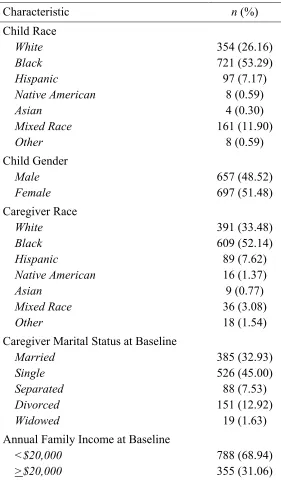
Characteristics of study participants. LONGSCAN participants (N=1,354 parent-child
Northwest site, 23% from the Southwest site, and 18% from the South site (Larrabee & Lewis, 2015).
Analytic sample. Due to attrition and non-response over the course of this longitudinal study, data are missing on several study variables. Parent- and child-reported CM variables were collected at the age 12 assessment. Data were missing from 469 and 470 caregivers on the parent-reported psychological aggression and physical assault variables, respectively. Data were also missing on the child-reported psychological abuse (n=471), physical abuse (n=473), and sexual abuse (n=480) measures. There was no missing data on the cps-reported data, as research staff examined records for all participants. Proposed mediators (i.e., firearm access, relationship with father, and relationship with mother) were assessed at age 14. Data were missing from 501 participants on the firearm access variable; from 693 participants on the relationship with father variable; and from 505 participants on the relationship with mother variable. The dependent variable, weapon carrying, was assessed at age 18. Data were missing from 450 participants on this variable.
Measures
Dependent variable. Adolescent weapon carrying was captured using a single item from a self-report measure on adolescent delinquency and violent behavior that was created for the Denver Youth Study (Huizinga, Esbensen, & Weiher, 1991). It was assessed at the age 18 assessment. The item used in analyses asked, “How many times in the last year have you carried a hidden weapon?” Responses included, “Never,” “One or two times,” “Between three and nine times,” and “10 or more times.” For this study, a binary variable was created to indicate any weapon carrying in the last year.
Proposed mediators. Data for the three proposed mediators (in-home firearm access, quality of relationship with father, and quality of relationship with mother) were all collected at the age 14 assessment. Further information on each variable follows.
In-home firearm access. Firearm access was assessed with six questions developed by the research team that were included in the age 14 assessment. The items reflect the adolescent’s knowledge of firearms in the home, handling of loaded firearms in general, access to firearms in the home, and access to loaded or unlocked firearms in the home. The assessment item utilized for this study was, “Are there any guns now kept in or around your home?” Response options were, “No,” “Yes, one gun,” “Yes, more than one gun,” or “Don’t know.” A binary variable was created based on this question to reflect if the adolescent indicated that there were no guns in the home (0) or if the adolescent indicated that there were one or more guns in the home (1). “Don’t know” responses were coded as missing.
item) to five (“Always” or “Very much”). Example items include, “How close do you feel to your father/mother?” and, “Do you make decisions together?” Mean scores were calculated based on the average of the six items. Before responding to the items, participants were first asked if they live with their father/mother or someone who acts as a father/mother figure. If participants indicated that they did not live with a birth father/birth mother they were asked to respond to the items with the father/mother figure in mind. Quality of relationship with the father/mother was assessed at age 12 and at age 14. The data from the age 14 assessment were used in this analysis. Internal consistency for the mean scores of the quality of the relationship with the father and with the mother was excellent (α=.88 and α=.85, respectively). Because the
scores for quality of relationship with the father and for quality of relationship with the mother were not normally distributed, the scores were cubed, and the transformed variables were used in the analyses.
Independent variable. Child maltreatment (CM) was measured using data from three
sources: parent self-report, child self-report, and official records. Parent self-reported CM was measured using the Parent-Child Conflict Tactics Scale (CTS-PC) (Straus, Hamby, Finkelhor, Moore, & Runyan, 1998). The CTS-PC includes 22 items assessing the frequency of various parenting behaviors over the past year. Behaviors include appropriate, harsh, or abusive
maintain consistency with the data collection time points for the child-reported variables used in this study, parent-reported data from the assessment at 12 years were used.
Child self-reported lifetime experience of CM was assessed at age 12 and included experiences of psychological abuse, physical abuse, and sexual abuse. Questions were
developed by the LONGSCAN research team and were based on definitions established in the literature and recognized by experts in the field (Barnett, Manly, & Cicchetti, 1993; Knight, Smith, Martin, Lewis, & The LONGSCAN Investigator Group, 2008). Physical abuse items included 18 items that led to more questions, if applicable, about the age of occurrence, frequency, and perpetrator. Sexual abuse items included 11 stem questions and psychological abuse items included 26 stem questions that followed a similar pattern to the physical abuse questions whereby participants were asked about age of occurrence, frequency, and perpetrator, if applicable, for each item. Children were asked about lifetime occurrence and occurrence in the past year. Regarding frequency of abusive behaviors, response options for the physical and sexual abuse questions were ordinal (“never,” “1 time,” “2 or 3 times,” “4 or more times”). Response options for psychological abuse were also ordinal but were, “never,” “sometimes,” or “often.” Binary variables for emotional, physical, and sexual abuse were created to indicate if that type of abuse ever occurred (i.e., the participant responded “Yes” to any of the stem questions). Example items include: “Have any of your parents ever blamed you for other
people’s problems when they were not your fault?” “Has any adult ever tried to choke, drown, or smother you?” and “Has anyone tried to put some part of their body or anything else inside your private parts or bottom?”
records. Abstractors achieved 90% inter-rater reliability in coding the narratives for information such as what was being reported and conclusions drawn. While there are similar outcomes between those with substantiated (i.e., confirmed) and unsubstantiated (i.e., unconfirmed) CM cases (Hussey et al., 2005; Kohl, Jonson-Reid, & Drake, 2009), only substantiated cases will be regarded as CM in this study because of the sample being selected due to their risk for CM. The additional distinction of substantiation is important in this instance. Binary variables were created to indicate any substantiated emotional, physical, and sexual abuse cases on the child through age 12.
Propensity score variables. For the calculation of the propensity score, used as a covariate in the final models, parental history of victimization and parenting attitudes at baseline were used as predictors.
Parental history of physical assault victimization. The parent’s history of CM was assessed through a single question: “When you were a child or teenage were you ever physically hurt by a parent or someone else (like hit slapped, beaten, shaken, burned, or anything like that)?” This question was asked of all caregivers at baseline. The variable was modeled as a binary variable indicating the presence (1) or absence (0) of abuse as a child or teenager.
Parenting attitudes. Parenting attitudes were assessed using the Adult-Adolescent Parenting Inventory (Bavolek, 1984). The AAPI has 32 items and 4 scales: appropriate expectations (expanded version), appropriate empathy, rejection of physical punishment, and appropriate family roles. Items are rated on a scale from one (“strongly agree”) to five
Analytic Plan
Descriptive statistics and bivariate relationships were analyzed in SAS 9.4 (SAS Institute Inc., Cary, NC). Mediation analyses were conducted in Mplus version 8 (Muthen & Muthen, 1999-2017). Bias-corrected 95% confidence intervals were bootstrap-generated (draws=5,000). Parameter estimates in the mediation models were calculated using a mean- and
variance-adjusted weighted least squares (WLSMV) estimator and a probit link function. WLSMV is an estimation method used with nonnormally distributed data that has been found to perform better than maximum likelihood under such conditions. It is also a good alternative when sample sizes are not large enough for weighted least squares (Beauducel & Herzberg, 2006; C.-H. Li, 2016). Probit regression results are similar to those of logistic regression results. However, probit regression uses the inverse of the cumulative distribution function of the normal distribution. Unlike logit results, probit estimates cannot be interpreted in terms of change in log odds, but they provide information on the direction and magnitude of the change in the probit (Muthen, Muthen, & Asparouhov, 2016, pp. 222–224). The level of significance for all tests was set at
α=.05. This dissertation research was approved by the Georgia State University Institutional
Review Board and deemed not human subjects research.
Analyses were run separately for each CM reporting source and type. That is, the following types of CM were considered as independent variables: Parent-reported emotional abuse and physical abuse; child-reported emotional abuse, physical abuse, and sexual abuse; and CPS-substantiated emotional abuse, physical abuse, and sexual abuse. To determine if a
were tested in logistic regression models; for quality of relationship the associations were tested in linear regression models using the transformed variables. Next, the bivariate relationship between each of the proposed mediators and the dependent variable was tested in logistic
regression models. These relationships are referred to as the b path in a mediation model (Baron & Kenny, 1986). If the a path and the b path were both statistically significant, a mediation model was tested. While a statistically significant relationship between the independent and dependent variables (the c path of the mediation model) was initially considered a prerequisite for testing mediation (Baron & Kenny, 1986), this is no longer the case. This is because there could be inconsistent mediation, in which the direct and indirect effects have opposite signs (Hayes, 2017; Valeri & Vanderweele, 2013), and this type of relationship would only be uncovered by testing the mediation model.
Covariate selection and propensity score calculation. Covariates included in the final mediation models included annual family income at baseline, child gender, and study site. Family income and child gender were selected based on prior research. Study site was included to address the potential for lack of independence of observations due to the overall sample consisting of samples from five different sites in which different sampling methods were used. A propensity score was also included as a covariate in the final models for psychological and physical abuse. Propensity score analysis provides a method of approximating randomization when randomization is not an option. That is, because it is not possible or ethical to randomize children to CM or non-CM groups, a propensity score strategy (in this case, propensity score adjustment) approximates randomization and minimizes bias due to possible systematic
likelihood of group membership given a set of baseline variables, and the final mediation models were adjusted to account for these scores. Propensity scores were calculated separately for each CM reporting source and type. Variables in the propensity score models were parental history of CM and each of the four scale scores on the AAPI, as parental history of abuse and parenting attitudes are risk factors for CM (Centers for Disease Control and Prevention, 2018; Sidebotham & Heron, 2006). Although other risk factors for CM such as child gender and family income were assessed at baseline, these were not included in the propensity score calculation so that they could be included in the final mediation models without the risk of multicollinearity.
Chapter 3: Results
Descriptive Statistics
Dependent variable. Data on the dependent variable, adolescent weapon carrying, were
collected at the age 18 assessment.
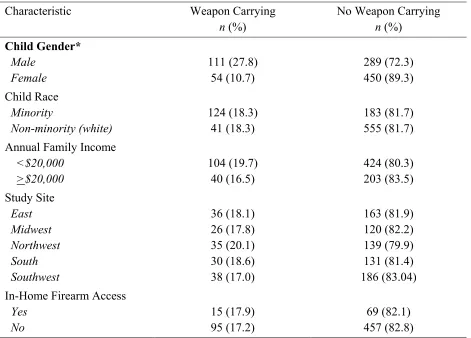
Adolescent weapon carrying. Approximately 18% of adolescent participants (n=165) reported having carried a hidden weapon at least once in the last 12 months. This was relatively evenly distributed among the five study sites, ranging from 17% at the Southwest site (n=38) to 20% at the Northwest site (n=35). A significantly larger proportion of boys compared to girls
reported weapon carrying (28% and 11%, respectively; χ2[1]=43.38, p<.001). Chi-square tests
did not reveal any statistically significant differences in weapon carriage by race/ethnicity or by income level. See Table 2 for more details.
Independent variable. Child maltreatment (CM) was assessed at the age 12 assessment
and was broken down by reporting source and type of maltreatment.
Child maltreatment. Parent-reported psychological aggression was widely reported, with 90% of the sample at the age 12 assessment (n=794) reporting that this type of abuse had
Proposed mediator variables. Adolescents’ reported in-home firearm access, their reported quality of the relationship with their mothers, and the relationship with their fathers were assessed at the age 14 assessment.
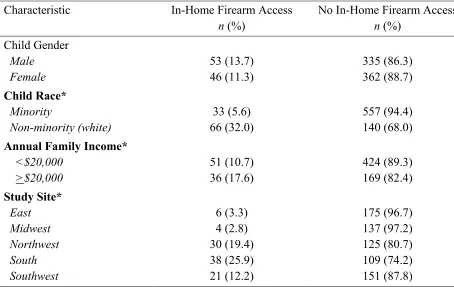
In-home firearm access. Approximately 12% of adolescents (n=99) indicated that at least one gun was present in or around the home. The percentage of adolescents reporting the presence of a gun in the home was greatest at the South study site (26%, n=38) followed by the Northwest site (19%, n=30). The percentage was lowest at the Midwest site (3%, n=4) and at the East site (3%, n=6). The presence of a gun in the home was reported among a greater percentage boys (14%) than girls (11%), but this difference was not statistically significant. A significantly greater percentage of white adolescents (32%, n=66) reported a gun in the home compared to minority (i.e., non-white) adolescents (6%, n=33; χ2[1]=98.06, p<.001). A greater percentage of
adolescents in families reporting an annual income of $20,000 or more indicated the presence of a gun in the home compared to those in families reporting an annual income of less than $20,000
(18% vs. 11%, respectively; χ2[1]=5.98, p=.01). See Table 3 for more details.
Quality of relationship with father. The mean score for adolescent quality of
relationship with father was 4.01 (SD=0.84; n=661). Scores ranged from one to five, with higher scores indicating a better quality relationship. The average score was lowest at the South study site (3.87, SD=0.94) and highest at the Midwest site (4.19, SD=0.74). The mean score for boys (4.13, SD=0.76) was significantly different from the mean score for girls (3.88, SD=0.89;
t[640.21]=-3.83, p<.001). Additionally, the mean score for non-white adolescents (4.07,
SD=0.81) was significantly different from the mean score for white adolescents (3.86, SD=0.88;
Quality of relationship with mother. The mean score for adolescent quality of relationship with mother was 4.20 (SD=0.69; n=849). Scores ranged from one to five. The average score was lowest at the Northwest study site (4.05, SD=0.65) and highest at the Midwest site (4.37, SD=0.60). There was no statistically significant difference between the mean score for boys (4.23, SD=0.66) and the mean score for girls (4.17, SD=0.73; t[845.11]=-1.31, p=.19). The mean score for non-white adolescents (4.24, SD=0.70) was significantly different than the mean score for white adolescents (4.07, SD=0.67; t[847]=-3.11, p=.002). The mean score for those from families reporting an annual income of less than $20,000 at baseline (4.24, SD=0.68) was significantly different from the mean score for those from families reporting an annual income of $20,000 or more (4.04, SD=0.72; t[723]=3.67, p<.001).
Propensity score variables. Parental history of physical abuse victimization, as
measured by a single assessment item, and parenting attitudes, measured by the four scales of the Adult-Adolescent Parenting Inventory (AAPI), were assessed at baseline. These variables were used to create propensity scores. Almost one-third (32%, n=294) of parents indicated a history of physical abuse victimization at the age four assessment (baseline). The mean score for the Appropriate Expectations scale (expanded version) of the AAPI was 47.75 (SD=6.36); the possible range of scores is 0-60. Higher scores on this and all AAPI scales indicate more appropriate behavior. The mean score for the Appropriate Empathy scale was 30.03 (SD=5.51); the possible range of scores is 0-40). The mean score for the Non-Corporal Discipline scale was 37.19 (SD=6.29); the possible range of scores is 0-50. The mean score for the Appropriate Family Roles scale was 29.23 (SD=6.63); the possible range of scores is 0-40.
In-home firearm access. To determine if firearm access should be tested as a mediator in the relation between CM by age 12 and adolescent weapon carrying at age 18, a bivariate logistic regression model was first tested between CM (all reporting sources and types separately) and firearm access (the a path). There was statistically significant relationship between parent-reported physical abuse up to age 12 and adolescent-reported firearm access at age 14 (β=0.63, 95% confidence interval [CI]: 0.09, 1.17; B=0.16). Additionally, the
relationship between child-reported physical abuse and firearm access was statistically
significant (β=0.63, 95% CI: 0.13, 1.12, B=0.14). No other categories of CM were significantly associated with firearm access. Because there were statistically significant results for the a path, the relationship between firearm access at age 14 and weapon carrying at age 18 was tested (the b path). This relationship was not statistically significant (β=0.04, 95% CI: -0.56, 0.64, B=0.01). Thus, firearm access at age 14 was not tested as a mediator.
Quality of relationship with father. To determine if the quality of relationship with father should be tested as a mediator, a bivariate linear regression model was first tested between CM and the transformed relationship variable (the a path). All types of child-reported CM were significantly related to quality of relationship with father. CPS-reported emotional and physical abuse were significantly related to quality of relationship with father. However, the quality of relationship with father was not significantly related to weapon carrying at age 18 (the b path). Thus, quality of relationship with father at age 14 was not tested as a mediator.
were significantly related to the quality of relationship with mother as were CPS-reported emotional and physical abuse. Additionally, quality of relationship with mother was
significantly associated with weapon carrying at age 18 (β=-0.009, 95% CI: -0.01, -0.003, B =-0.15). Thus, mediation models were pursued testing quality of relationship with mother at age 14 as a mediator in the relation between all types of child-reported CM and CPS-substantiated emotional and physical abuse through age 12 and weapon carrying at age 18.
Mediation Models
Child-reported CM. Separate mediation models were tested examining quality of the
relationship with mother at age 14 as a mediator between child-reported emotional, physical and sexual abuse up to age 12 and weapon carrying at age 18. All models included the following covariates: child gender, family income at baseline, and study site. Additionally, the models for emotional abuse and physical abuse included model-specific propensity scores. Chi-square model difference testing was used to compare models with and without covariates. In all cases, the null hypothesis that including the additional covariates did not improve the model fit was rejected. See Table 4 for model results.
significant association (B=0.29, 95% CI: 0.15, 0.41). Results also indicated that the indirect effects were not significant (0.02, 95% CI: -0.03, 0.07). See Figure 1a and Table 6 for more details.
Child-reported physical abuse. In the model that included the independent variable, proposed mediator, and dependent variable, the standardized estimate for the effect of physical abuse on weapon carrying was 0.07 (95% CI: -0.05, 0.17). In the final mediation model for child-reported physical abuse, child physical abuse was significantly related to the quality of relationship with mother (B=-0.15, 95% CI: -0.24, -0.06), as was income (B=0.14, 95% CI: -0.23, -0.05), and study site (B=-0.17, 95% CI: -0.26, -0.07). No other variables were
significantly associated with quality of relationship with mother. In looking at weapon carrying as the outcome, child gender was the only variable with which there was a significant association (B=0.27, 95% CI: 0.14, 0.40). The indirect effects were not significant (0.01, 95% CI: -0.01, 0.04). See Figure 1b and Table 6 for more details.
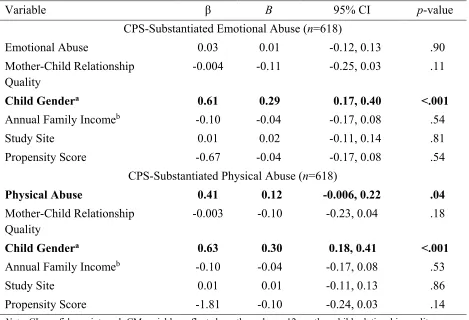
CPS-substantiated CM. Separate mediation models were tested examining quality of the relationship with mother as a mediator between CPS-substantiated emotional and physical abuse and weapon carrying. Both models included the following covariates: child gender, family income at baseline, study site, and model-specific propensity scores. Chi-square model
difference testing was used to compare models with and without covariates. In both cases, the null hypothesis that including the additional covariates did not improve the model fit was rejected. In instances in which p-values indicated statistical significance, but 95% CIs included 0, p-values are provided. See Table 5 for model results.
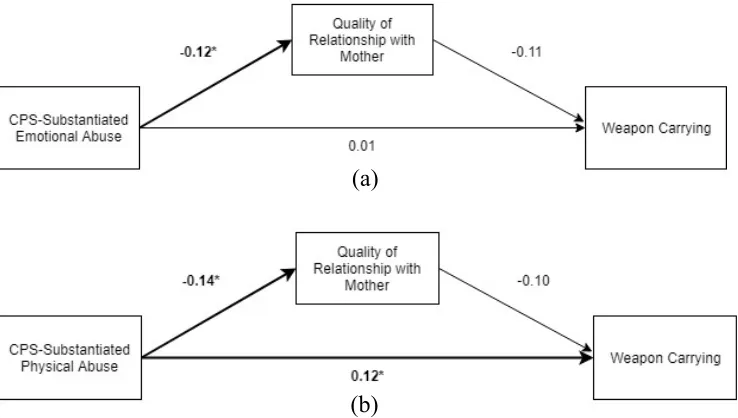
CPS-substantiated emotional abuse. In the model that included the independent variable, proposed mediator, and dependent variable, the standardized estimate for the effect of emotional abuse on weapon carrying was -0.03 (95% CI: -0.11, 0.08). In the final mediation model for CPS-substantiated emotional abuse, which included covariates in addition to the mediator, emotional abuse was significantly associated with quality of relationship with mother (B=-0.12, 95% CI: -0.21, -0.03), as was income (B=-0.09, 95% CI: -0.17, -0.004), study site (B =-0.15, 95% CI: -0.24, -0.-0.06), and propensity score (B=-0.10, 95% CI: -0.19, -0.02). No other variables were significantly associated with quality of relationship with mother. In looking at weapon carrying as the outcome, child gender was the only variable with which there was a significant association (B=0.29, 95% CI: 0.17, 0.40). The indirect effects were not significant in this model (0.01, 95% CI: -0.001, 0.04). See Figure 2a and Table 6 for more details.
relationship with mother (B=-0.14, 95% CI: -0.22, -0.05), as was study site (B=0.15, 95% CI: -0.24, -0.06), and propensity score (B=-0.09, 95% CI: -0.18, 0.003, p=.048). No other variables were significantly associated with quality of relationship with mother. In looking at weapon carrying as the outcome, there was a significant association with physical abuse (B=0.12, 95% CI: -0.006, 0.22, p=.04), as well as with child gender (B=0.30, 95% CI: 0.18, 0.41). The indirect effects were not significant (0.01, 95% CI: -0.003, 0.04). See Figure 2b and Table 6 for more details.
Ad Hoc Analyses
Chapter 4: Discussion, Future Directions, and Conclusion
This research sought to elucidate the relation between CM and weapon carrying, for which a significant relationship has been established in previous research (Leeb et al., 2007; Lewis et al., 2007), by examining potential mediators using longitudinal data. Prior research has examined a variable at the intrapersonal level, perceived need for a weapon, and found it to act as a mediator in the cases of child-reported physical abuse and sexual abuse (Lewis et al., 2007). The current study looked to extend this work by examining potential mediators at the
interpersonal/environmental level: in-home firearm access, quality of relationship with father, and quality of relationship with mother. These variables are modifiable, and, if evidence of mediation was established, could be targeted by evidence-based parenting programs that work with families experiencing CM. Surprisingly, none of the proposed variables served as mediators.
Main Research Questions
While in-home firearm access was not related to weapon carrying, parent-reported and child-reported physical abuse were associated with an increase in the odds of reporting a firearm in the home. This is an interesting finding, considering that the population at-risk for CM does not typically have the factors associated with the presence of a gun in the home, such as high income. This was not a main research question, and, as such, a rigorous analysis of these variables was not conducted, which would have included control variables. Future research should examine this relationship more closely to determine if it continues to hold true when confounding variables are held constant.
Quality of relationship with father as mediator. Results were similar for quality of relationship with father at age 14. All types of child-reported CM were significantly associated with quality of relationship with father as well as CPS-substantiated emotional abuse and
physical abuse, consistent with previous research (L. Li et al., 2016), but it was determined not to act as a mediator due to the lack of a significant association with later weapon carriage. Other research encountered a similar pattern. A study in Norway looked at potential mediators in the relation between living in a single-parent (mother or father) divorced home and adolescent antisocial and risky behavior. They found that mother-child conflict mediated this relation in single-mother homes, but father-child conflict was not a mediator in single-father homes (Breivik, Olweus, & Endresen, 2009). While information on whom the child lived with (e.g., both biological parents, biological mother only, etc.) was not available in the current study, it could be the case that many of the children were living primarily with their mothers, making the relationship more impactful on their behaviors. Future work should examine the interaction of child gender and quality of father-child relationship on weapon carrying. Additionally,
relationship quality at age 18 as well, as it may be the case that current relationship status is as important, or more important, in its effects on delinquent behavior as opposed to previous relationship quality.
Quality of relationship with mother as mediator. All types of child-reported CM and
CPS-substantiated emotional abuse and physical abuse were significantly negatively associated with the quality of relationship with mother, consistent with previous research (Baer & Martinez, 2006; Sousa et al., 2011). It, in turn, was significantly negatively associated with the dependent variable in bivariate analyses and was tested as a mediator. In mediation models, these five types of CM tested were all significantly negatively associated, on average, with quality of relationship with mother, controlling for child gender family income, study site, and propensity score. These final models also found that all types of CM tested were not significantly associated with weapon carrying, with the exception of substantiated physical abuse. Children with a
CPS-substantiated physical abuse case by age 12 had, on average, higher odds of weapon carrying at age 18, controlling for confounders. It should be noted that the 95% CI for this estimate
included 0. However, significant results in this study were identified as those with a p-value less than .05. Thus, the estimate was considered significant. Results of mediation models indicated that quality of relationship with mother did not serve as a mediator in the relation between CM and weapon carriage in any of the models, as indirect effects were not significant in any case. This is contrary to what was expected. Thus, none of these exploratory main study hypotheses proposing firearm access, quality of relationship with father, and with mother as mediators, were supported.
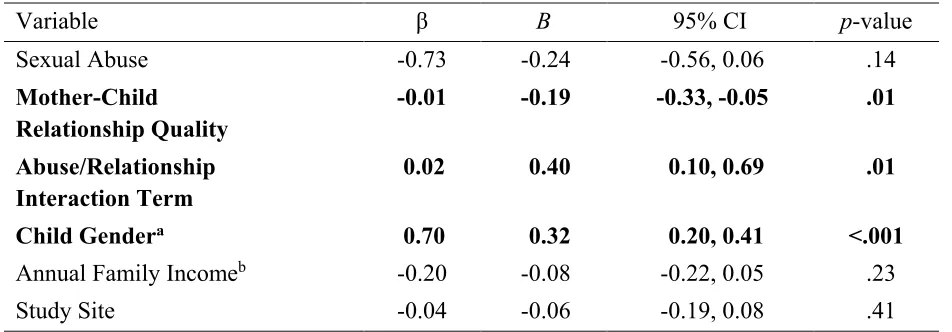
The ad hoc moderation analyses showed that quality of relationship with mother at age 14 served as a moderator in the relation between early child-reported sexual abuse and later weapon carrying. Specifically, results indicated that, on average, the effect of child-reported sexual abuse on weapon carrying was higher at higher levels of relationship quality and lower at lower levels of relationship quality, controlling for confounders. This finding is contrary to what would have been expected, especially given the negative association between relationship quality and weapon carrying in previous analyses and prior research indicating that parent-child
relationship is negatively correlated with delinquent behavior (Haegerich, Oman, Vesely, Aspy, & Tolma, 2013; Orpinas et al., 1999; Thurnherr, Michaud, Berchtold, Akré, & Suris, 2009).
While this is unexpected, given that better mother-child relationship quality is typically a
protective factor against delinquent behavior (Breivik et al., 2009; Klahr, Rueter, Mcgue, Iacono, & Burt, 2011), mothers of sexual abuse victims who have a high quality or close relationship with their children may have trouble setting boundaries. This could allow adolescents the latitude to engage in delinquent behavior. Numerous studies have shown that nonoffending mothers of child sexual abuse victims, on average, have inconsistent parenting behaviors, exhibit poor parental monitoring, and report a low sense of parental competence. Researchers report this is likely due to an increased risk of distress and depression after a child is sexually abused (Jobe-Shields, Swiecicki, Fritz, Stinnette, & Hanson, 2016; Mannarino, Cohen, Deblinger, & Steer, 2007; Pazdera, McWey, Mullis, & Carbonell, 2013; Santa-Sosa, Steer, Deblinger, & Runyon, 2013). It should be noted that the perpetrator of the CM was not taken into account in the current analyses. In child sexual abuse cases, however, the vast majority of perpetrators are not
role of mother-child relationship in the sexual abuse model compared to the other types of CM. This is preliminary work on this topic, and further research should be conducted to help explain these findings.
Additional Findings of Interest
In addition to the findings on the proposed mediators and moderator, this study adds to the literature by providing descriptive information on firearm access and weapon carrying, two areas of research that have historically been understudied (Alcorn, 2016; Ladapo et al., 2013).
In-home firearm access. Approximately 12% of study participants reported a firearm in the home. This is lower than other research assessing adolescent firearm access at home, which found over 22-24% of adolescents reporting in-home firearm access (Swahn et al., 2002;
Watkins & Lizotte, 2011). However, these studies used nationally representative samples with over 10,000 participants in non-child welfare populations. The current study is smaller and targeted families at risk for CM. These families reported very low annual income levels at baseline (less than $20,000 for 69% of families at baseline) and were predominantly non-white (74% of children). Adolescent reports of a firearm in the home are associated with higher family income and with being white (Carter et al., 2013; Swahn et al., 2002). This may have led to the lower rate of in-home firearms in this study. Additionally, because this study involved a sample of families at risk for CM, there were participants living with an adoptive (11%) or foster (2%) parent at the age 14 assessment. Other participants may have lived in homes where an
Of the five different study sites in the U.S., in-home firearms were reported in greatest numbers in the South and Northwest sites, which is consistent with geographical gun ownership patterns (Kalesan, Villarreal, Keyes, & Galea, 2016). Also consistent with previous research, in-home firearms were reported by a significantly greater percentage of white adolescents compared to non-white adolescents and by those from homes in the higher income category (Ruback et al., 2011; Simckes et al., 2017; Simonetti et al., 2015; Swahn et al., 2002). The difference was especially substantial by race, with 32% of white adolescents reporting access compared to 6% of non-white adolescents. In bivariate logistic regression analyses, parent-reported physical abuse and child-reported physical abuse were significantly associated with in-home firearm access. Specifically, children whose parents reported or who self-reported physical abuse had, on average, increased odds of in-home firearm access at age 14 compared to those who had not experienced physical abuse per parent- and self-report.