Anthropology Theses Department of Anthropology
5-3-2017
A Bioarchaeological Approach to Social Transition
in the Pre-Hispanic Andes: A Diachronic Study of
Health at Tumilaca la Chimba, Peru
Shannon A. Lowman Georgia State University
Follow this and additional works at:https://scholarworks.gsu.edu/anthro_theses
This Thesis is brought to you for free and open access by the Department of Anthropology at ScholarWorks @ Georgia State University. It has been accepted for inclusion in Anthropology Theses by an authorized administrator of ScholarWorks @ Georgia State University. For more information, please [email protected].
Recommended Citation
Lowman, Shannon A., "A Bioarchaeological Approach to Social Transition in the Pre-Hispanic Andes: A Diachronic Study of Health at Tumilaca la Chimba, Peru." Thesis, Georgia State University, 2017.
HISPANIC ANDES: A DIACHRONIC STUDY OF HEALTH AT TUMILACA LA CHIMBA, PERU
by
SHANNON A. LOWMAN
Under the Direction of Bethany L. Turner, PhD
ABSTRACT
This thesis investigates the relationship between long-term, macro-scale social change and systemic stress by analyzing osteological data from two occupations at the archaeological site of Tumilaca la Chimba, Peru. The first dates to the terminal Middle Horizon (ca AD 950-1250) and was established as the Tiwanaku state underwent collapse. Despite political
fragmentation, this occupation is characterized by substantial cultural continuity in Tiwanaku practices. The second occupation dates to the Late Intermediate Period (LIP) (ca AD 1250-1476) and is associated with significant changes in cultural practice, suggesting a process of population replacement. This study compares skeletal data derived from cemeteries associated with each occupation. Paleopathological analysis of 20 individuals from the terminal Middle Horizon cemeteries and 23 individuals from the LIP cemetery reveals significant differences in age and sex and in skeletal pathologies. These results are a valuable addition to current literature examining the impact major political reorganization has on individuals.
A BIOARCHAEOLOGICAL APPROACH TO SOCIAL TRANSITION IN THE PRE-HISPANIC ANDES: A DIACHRONIC STUDY OF HEALTH AT TUMILACA LA CHIMBA,
PERU
by
SHANNON A. LOWMAN
A Thesis Submitted in Partial Fulfillment of the Requirements for the Degree of Master of Arts
in the College of Arts and Sciences Georgia State University
Copyright by Shannon Aleen Lowman
HISPANIC ANDES: A DIACHRONIC STUDY OF HEALTH AT TUMILACA LA CHIMBA, PERU
by
SHANNON LOWMAN
Committee Chair: Bethany L. Turner
Committee: Nicola O. Sharratt Jeffrey B. Glover
Electronic Version Approved:
DEDICATION
ACKNOWLEDGEMENTS
TABLE OF CONTENTS
ACKNOWLEDGEMENTS ... v
LIST OF TABLES ... x
LIST OF FIGURES ... xi
1 INTRODUCTION ... 1
1.1 Purpose of the study ... 1
1.2 Expected Results ... 3
2 METHODS AND THEORY ... 5
2.1 Introduction ... 5
2.2 Common Pathological Stress Markers ... 5
2.2.1 Anemia ... 6
2.2.2 Osteoarthritis ... 8
2.2.3 Oral Pathologies ... 10
2.3 Sexing and Aging ... 12
2.4 Current Issues in Paleopathology ... 14
2.4.1 Ethical Issues ... 14
2.4.2 Methodological Issues... 15
2.4.3 Theoretical Issues ... 16
2.5 Pathologies in a Broader Cultural Context and Conclusions ... 17
3.1 Introduction ... 19
3.2 Tiwanaku ... 19
3.2.1 Archaeological evidence of Tiwanaku expansion ... 20
3.3 Wari and Tiwanaku Interactions ... 24
3.4 Moquegua Valley ... 27
3.5 Collapse and the Late Intermediate Period ... 28
3.6 Contemporary Importance of Tiwanaku ... 31
3.7 Conclusion: Identity and health within major transitions ... 32
4 STUDY DESIGN ... 34
4.1 Introduction ... 34
4.2 Tumilaca la Chimba ... 34
4.3 Skeletal Population ... 41
4.4 Osteological Methods ... 41
4.5 Statistical Analyses ... 42
5 ANALYSIS AND RESULTS ... 44
5.1 Tumilaca Period ... 44
5.1.1 Sex and Age ... 44
5.1.2 Pathology ... 45
5.1.3 Statistical Results ... 46
5.2.1 Sex and Age ... 47
5.2.2 Pathology ... 48
5.2.3 Statistical Results ... 49
6 DISCUSSION ... 50
6.1 Demographics ... 50
6.2 Stress and Health ... 52
6.2.1 Breakdown by Age Categories ... 52
6.2.2 Breakdown by Tomb Type ... 58
6.2.3 Overall Trends in Stress Markers ... 59
7 CONCLUSIONS ... 61
7.1 Conclusion and Future Research ... 61
7.2 Contributions to Andean Archaeology and Future Research ... 62
REFERENCES ... 64
APPENDICES ... 73
Appendix A: SPSS Results ... 73
Appendix A.1: Tumilaca Sex vs. Cribra Orbitalia Crosstabulation ... 73
Appendix A.2: Tumilaca Sex to Cribra Orbitalia Chi-Square Values ... 74
Appendix A.3: Tumilaca Sex vs. PH Crosstabulation... 74
Appendix A.4: Tumilaca Sex to PH Chi-Square Values... 75
Appendix A.6: Estuquiña Sex to Porotic Hyperostosis Chi-Square Values ... 76
Appendix A.7: Tumilaca Spearman’s Rank: Cribra Orbitalia to Porotic Hyperostosis ... 76
Appendix A.8: Estuquiña Spearman’s Rank: Cranial Porosities to LEH ... 77
Appendix B: Pictures of Pathological Lesions ... 78
Appendix B.1: Tumilaca ... 78
LIST OF TABLES
Table 1 Tumilaca Sex and Age ... 45
Table 2 Estuquiña Sex and Age ... 48
Table 3 Tumilaca and Estuquiña Sex and Age at Death ... 51
Table 4 Tumilaca and Estuquiña Subadult Pathology and Tomb Types ... 53
LIST OF FIGURES
Figure 1 Tumilaca Style Kero (Photo courtesy of N. Sharratt) ... 29
Figure 2 Estuquiña Style Boot Pot (Photo courtesy of N. Sharratt) ... 30
Figure 3 Moquegua Valley (Redrawn from Williams 2006 and Turner et al. 2013) ... 35
Figure 4 Tumilaca la Chimba Excavated Cemetery Units (2006-2016) ... 37
Figure 5 Estuquiña Rooms (Not Excavated) ... 40
Figure 6 Unit 48 Recinto A: Tumilaca Room ... 40
Figure 7 Unit 47 Recinto G: Tumilaca Tombs ... 40
Figure 8 Tumilaca cemeteries on slope on right, Estuquina cemetery down on the flat bluff ... 40
Figure 9 Sex and Age Comparison ... 51
1 INTRODUCTION
1.1 Purpose of the study
The process of the decline or restructuring of a major political entity can have major effects on its citizens (e.g., Faulseit 2016; Kurin 2012; Schwartz 2006; Tung 2016). Over the past several decades, archaeologists have studied these instances of societal collapse and their effect on people in the pre-Columbian Andes of South America (Kurin 2012; Tung 2016). Some of the first examples of the emergence and decline of what can be considered a state can be found in Middle Horizon Period, which lasted from about AD 600-1000 across the Andes (Moseley 2001). During this time, a group called Tiwanaku experienced extensive growth to statehood in southern Peru and northern Bolivia. However, evidence of change begins to appear during the last few centuries of the Middle Horizon that suggests major episodes of civil and social change with the deterioration of the Tiwanaku state (Janusek 2005, 2008; Kolata 1993). Despite increasing political fragmentation following the decline of Tiwanaku and its peripheral colonies, there is archaeological evidence demonstrating a continuation of Tiwanaku cultural influence during this time (Goldstein 2005; Graffam 1992; Sharratt 2010, 2011, 2016; Sharratt et al. 2012). The end of the Middle Horizon is then followed by the Late Intermediate Period (LIP), which lasted from around AD 1000-1476 (Covey 2008; Moseley 2001). Within the Moquegua Valley, this period seems to be more transitional in nature and is marked by changes in domestic and ritual material culture that imply a population replacement (Stanish 1989).
(Bawden 1993, 1989; Sharratt 2011, 2016). Tumilaca la Chimba is characterized by two occupations that fit into the transitional periods following Tiwanaku decline. The first period is associated with the Tumilaca phase within the Moquegua Valley, which dates to the end of Tiwanaku power from AD 950-1200 or later (Sharratt 2011). The Tumilaca phase has also been considered to fall into a category termed the terminal Middle Horizon because this transitional period does not seem to fit neatly into the broader Andean chronologies of Middle Horizon versus Late Intermediate Period. This occupation includes domestic, mortuary, and public ceremonial contexts that continue to share similarities with traditional Tiwanaku iconography and traditions. The second occupation is characterized by Estuquiña phase materials, which are associated with the Late Intermediate Period in Moquegua (AD 1250-1476) and differ starkly from Tiwanaku practices and materials. The origins of Estuquiña are currently unclear; some scholars suggest they represent another wave of migration from the altiplano, (Stanish 1989) while others propose they constitute a local development (Torres Pino and Clara 1990).
cause people to be more or less susceptible to disease, infection, or stress as they relocated to the site? Did these changes then cause any shifts in demographics or mortality rates within each population?
To answer these questions, I begin this thesis by explaining the pathological markers that are the focus of this research as well as some of the overarching theoretical and methodological arguments within current literature on paleopathology in Chapter two. Chapter three then presents a brief background on Tiwanaku and its expansion throughout the Andes, specifically into the Moquegua valley, until its period of decline. Chapter four discusses the study design of this project. It begins by explaining the history of excavations at the site. The chapter then moves into the methodology of data collection for this research by explaining the makeup of the skeletal collection and the osteological and statistical methods used to estimate and analyze age at death and sex and record frequencies of stress markers such as: porotic hyperostosis, cribra orbitalia, dental pathological conditions, occupational stress markers, and other major skeletal pathological conditions. Chapter five presents all paleopathological, demographic, and statistical results for each population. The data are then analyzed in Chapters six and seven in conjunction with the existing archaeological literature to better understand this major transitional period and how it may have affected health and demographics in the Andes.
1.2 Expected Results
Although there is a continuation of Tiwanaku culture during the Tumilaca period at Tumilaca la Chimba, past research supports the idea that these inhabitants were refugees from the lower Tiwanaku peripheral sites within the Moquegua valley as the state declined (Sutter and Sharratt 2010). With this analysis, I expect to further support the previous claims with
quickly adapt to new lifeways through a period of political turmoil. This should be present through higher levels of osteological stress markers on individuals within Tumilaca period cemeteries. In contrast, I hypothesize that although the Estuquiña inhabitants may have also been a migrant population, the panic of Tiwanaku decline would likely have dissipated, allowing people to be better adapted to their living conditions, resulting in lower levels of systemic stress. Compared to the Tumilaca population, the Estuquiña people should show fewer markers of stress and disease. Overall, it is my aim that my research will be a valuable addition to existing
literature on the social and political transition from the Middle Horizon into the Late
2 METHODS AND THEORY
2.1 Introduction
Taking a bioarchaeological approach has been especially useful in Andean archaeology. The arid environments in the desert regions of the Andes have led to some excellent preservation of skeletons, giving archaeologists the opportunity to study the remains of individuals that were buried thousands of years ago. This has also been helpful within the more recent theoretical paradigms, which include an increasing popularity of studying the individual to understand the past on a societal scale (Chapman 2003; Korpisaari 2006; Verano 1997). By analyzing human remains, biological anthropologists can gain a better understanding of the age and sex of the person, cause of death, and how healthy they might have been during their lives. While studying pathological markers on skeletons can be problematic at times, it can be useful in reconstructing the lives of people in the past on both individual and group levels (Goodman et al 1984b; Ortner 2003:1-10; Verano 1997). This chapter discusses some of the common stress markers observed in this study, the methodology behind sexing and aging skeletal samples, the theoretical and methodological arguments behind studying these markers, and how paleopathology can be a valuable resource in understanding past cultures.
2.2 Common Pathological Stress Markers
there are also common bone-altering diseases such as arthritis, chronic infections, and some dietary deficiencies (Verano 1997). Some of the types of ailments that can appear on bones and teeth include, but are not limited to, anemia, degenerative or neoplastic diseases, developmental disorders, dietary deficiencies, infectious disease, malformations, trauma, and tumors (Steele and Bramblett 1988; Verano 1997). Although many visible pathologies were noted within this study, the following conditions are the main focus: porotic hyperostosis, cribra orbitalia, vertebral osteoarthritis, and various dental pathologies.
2.2.1 Anemia
Anemia is not a specific disease but rather a category that encompasses different irregularities of red blood cells, which are responsible for circulating oxygen within the body (Ortner 2003:359-376). There are both genetic and acquired anemias that people can experience during their lifetime, with thalassemia and sickle cell anemia being the two genetic forms. Thalassemia is a result of a deficiency in the synthesis of hemoglobin, whereas sickle cell is a result of the hemoglobin itself developing with abnormalities. Acquired anemia can have any number of causes, including a lack of iron, abnormal blood loss, infection, and more (Blom et al. 2005; Larsen 1995; Ortner 2003:359-376; Walker et al. 2009). Historically, iron deficiency has been considered the most common form of acquired anemia, and studies have observed the increase in iron deficiency with the transition to agricultural lifestyles as people consumed more maize and grains, shifting their focus away from meat-based diets (Lallo et al. 1977; Larsen 1995; Ortner 2003:359-376).
spongy hyperostosis, and cribra orbitalia. These lesions form when the lack of blood supply causes the cortical bone to thin and the diplöe to expand, causing the bone to look porous, and they can range anywhere from mild to severe manifestations (Blom et al. 2005; Goodman et al. 1984b; Lallo et al. 1977; Naveed 2012; Ortner 2003:359-376). These lesions are considered as some of the most commonly reported pathological conditions, and bioarchaeologists usually call porosity on the parietal portions of the skull porotic hyperostosis and porosity in the upper eye orbits cribra orbitalia (Walker et al. 2009). Although exact etiologies for the lesions are not known, some anthropologists consider cribra orbitalia to be the first to appear in times of stress, with porotic hyperostosis developing once the stress has reached an extreme case (Blom et al. 2005; Lallo et al. 1977).
megaloblastic anemia that causes the porosity to occur. They also state that there is no clinical indication to suggest that cribra orbitalia is linked to anemia in any way (Walker et al. 2009).
Other scientists take a more environmental than nutritional approach and argue that parasites are a more likely cause for porotic hyperostosis and cribra orbitalia (Holland and O’Brien 1997; Rothschild 2000; Verano 1997). Many coastal populations are in an ideal environment for parasitic infection because parasites thrive in warm and moist environments, and some species of parasites can even live in the water sources of arid coastal areas. The population would then become a host for the parasites through contamination of drinking water, a marine-based diet, or other means. Once infected with the parasites, either the loss of blood from parasite feeding or the body cutting off iron supply to starve the intruders would cause an anemic reaction and eventually lead to the formation of porous lesions (Blom et al. 2005;
Holland and O’Brien 1997; Rothschild 2000; Verano 1997). In contrast, many argue that there is not only one single factor that causes people to develop porotic hyperostosis, but rather a
combination of the interdependency of nutrition, environment, and disease (Blom et al. 2005; Holland and O’Brien 1997).
2.2.2 Osteoarthritis
2003:545-559; Steele and Bramblett 1988). There are two basic groups of osteoarthritis. The first group is primary osteoarthritis, which forms later in life from different types of trauma or biomechanical stress. Secondary osteoarthritis can occur earlier in life from the joints being affected by an unrelated pathology (Ortner 2003:545-559). One of the most common arthritic areas is the spine, with clinical populations showing signs of vertebral arthritis on almost everyone over 40 years old. This is pathologically evident through the degeneration of the vertebral bodies as well as osteophyte growth on the edges of the bodies (Goodman et al. 1984b; Ortner 2003:545-559).
Within the archaeological record, biological anthropologists can observe arthritis in most major joints of the body. Although experienced bioarchaeologists can generally diagnose cases of arthritis, it is difficult to interpret exactly what may have caused arthritis to develop. Different stressors will affect the manifestation of osteoarthritis in varied ways, but they often appear similar. In the case of vertebral arthritis, or vertebral osteophytosis, the major cause is
found in the archaeological record to age or to specific types of mechanical loading based on comparisons to clinical cases and experimental research.
2.2.3 Oral Pathologies
Teeth are often the best-preserved part of skeletons in an archaeological setting
(Hubbard et al. 2009). Although common pathological conditions typically do not have much of an effect on teeth, certain developmental disturbances, oral infections, and trauma can leave markers for bioarchaeologists to study. Relying on dental information can be tricky because teeth can be lost or broken from taphonomic processes or when the body is removed from its
archaeological context. However, in situations where they remain in good condition, they can be very helpful (Ortner 2003:589-606). The most frequent oral pathology is a dental cavity. Dental caries are caused by microbial activity on the tooth surface, which can lead to the destruction of the enamel, dentin, and tooth root. If a cavity continues to worsen, it can lead to abscesses, tooth loss, and alveolar resorption, which is when the bone surrounding the tooth remodels itself to fill in the empty tooth socket. Caries can be helpful to archaeologists because diet has a significant influence on the amount of microbial activity within the mouth. An example of this is within research that has shown that the number of dental caries is lower within hunter gatherer
populations than in agricultural populations due to malnutrition during development and the high carbohydrate diet in the latter (Goodman et al. 1984b; Ortner 2003:589-606; Larsen 1995; Lingström and Borrman 1999).
severe oral infection, tooth loss, and eventually alveolar resorption. Because biological anthropologists cannot see the actual condition of gingivitis on archaeological remains, it is difficult to tell if alveolar resorption was a result of an abscess, periodontal infection, gross attrition, or trauma (Ortner 2003: 589-606; Larsen 1995; Lingström and Borrman 1999). The best way for one to know the possible cause of resorption is to look for other dental caries within the mouth. If there are no caries present, it is highly possible that the resorption was a result of periodontal disease rather than an abscessed tooth (Ortner 2003:589-606).
Dental enamel hypoplasias can be very helpful in understanding a person’s quality of life during early childhood. There are three types of hypoplasias: linear, pit, and planar (Hubbard et al. 2009; Ortner 2003:589-606). Linear enamel hypoplasias (LEH) are horizontal lines on the tooth surface, pit hypoplasias are single or multiple well-defined pits, and planar hypoplasias are when entire sections of enamel are missing. All three types are caused by the thinning of the enamel during development of the tooth, but the exact etiology for each type is unknown. Many types of physiological stressors can cause linear hypoplasias to form such as congenital syphilis, tuberculosis, rickets, fluoride level, premature birth, and malnutrition, with planar hypoplasias hypothesized to be an extreme case of LEH (Goodman et al. 1984a; Goodman and Rose 1990; Hubbard et al. 2009; Ortner 2003:589-606). Pit enamel hypoplasias are considered to likely be a result of localized trauma (Griffin and Donlon 2009).
may have experienced such stress. However, since hypoplasias are so multifactorial, biological anthropologists cannot know exactly what stressor may have caused the defects to form, and because the lines can only form during development, they only show signs of stress or trauma that occurred in individuals younger than about six years old (Goodman et al. 1984a; Goodman and Rose 1990; Griffin and Donlon 2009; Ortner 2003:589-606). Researchers must also keep in mind that many children may never develop dental defects before they heal or before death. There is also some debate on the methodology behind using the defects to estimate the timing of the periods of stress. Some archaeologists believe that the best way to measure periods of stress is through measuring the width of the hypoplasias to calculate duration of stress, but many argue that since the width includes the period of recovery, they will overestimate their time periods. Others say that it is better to count the number of perikymata within the defect to estimate time (Goodman and Rose 1990; Griffin and Donlon 2009; Hubbard et al. 2009).
2.3 Sexing and Aging
As archaeologists have begun to place more focus on the health and stress levels of individuals within past societies, they have also started to look at how gender and sex may have played into identity and daily life in the past. Despite evidence that more than two sexes and genders have consistently existed in many cultures, western biases have caused bioarchaeologists to continue assuming skeletons should always be sexed as male or female (Blackless et al. 2000; Buikstra and Ubelaker 1997; Lang and Kuhnle 2008; Marino 2010). This assumption is
law, which states that if the manubrium is half the length of the sternum, the person is likely to be male, but if the manubrium is greater than half the length of the sternum, it is probably female (Steele and Bramblett 1988). Researchers can also examine the length of the scapula to
determine possible sex. Not only are the arms and legs typically larger and more robust in men than women, but there are measurement standards in some populations to compare specific diameters of the heads of the humerus and femur. The vertebral column does not seem to be very dimorphic except for in the sacrum, where males tend to have a longer, narrower sacrum with an even curvature while the female sternum is typically short, broad, and curved between the second and third sacral vertebrae. These differences are usually associated with pelvic dimorphism. Measurements can be taken of these notable size differences and used in multivariate statistics and discriminant function analysis to have more accuracy in assigning gender to these skeletal populations (Steele and Bramblett 1988; Buikstra and Ubelaker 1997).
definite male (Buikstra and Ubelaker 1997; Steele and Bramblett 1988). Scoring pubic morphology is a bit different from cranial scoring because the scores have different ranges depending on the trait. The greater sciatic notch is scored from one to five, and the preauricular sulcus is scored from zero to four. The ventral arc, subpubic concavity, and ischiopubic ramus ridge are all scored from one to three (Buikstra and Ubelaker 1997). This can make finding an average score a bit more difficult. Overall, pelvic sex is based on the female pelvis having a larger canal which appears wider with laterally flaring iliac blades, a broader sacrum, a larger superior aperture, and a broad or rectangular pubic body (Steele and Bramblett 1988).
As seen with cranial and pelvic standards, skeletal sex runs more on a scale than a strict male vs. female dichotomy. Even when using bone size and robusticity of the other bones, male and female standards fluctuate between populations due to environmental and cultural
differences affecting overall size. Scientists must also work with obstacles such as cultural modifications during life, bad preservation of bone, interobserver error and intraobserver error, and the fact that subadults do not show signs of skeletal dimorphism before puberty (Buikstra and Ubelaker 1997).
2.4 Current Issues in Paleopathology
2.4.1 Ethical Issues
Many more problems and debates can arise within the field of paleopathology aside from those already mentioned. One of the first sets of problems to come up is the ethical issues that come with studying the physical remains of past people. When choosing to pursue mortuary research, the researchers are no longer just digging up ancient man-made materials. They are digging up someone’s ancestor and loved one that was likely intentionally placed in that
buried there with spiritual or religious ideologies behind their placement with the possibility that they had no intentions of the individual being removed. Although cultures vary in burial
practices, and some may not have strong views against the exhumation of the dead,
archaeologists can only ask their distant descendent communities for permission to disturb their burials. Once archaeologists remove the remains from their “final” resting place, much of pathological research can also be destructive for the remains. Destroying human remains is frowned upon in many cultures, and many people believe that it is disrespectful to alter the bodies of ancient people with no consideration of what they may have wanted (Roberts 2016). It should therefore be minimized whenever possible, and should be useful in addressing
meaningful questions about individuals’ lives and larger cultural context.
2.4.2 Methodological Issues
As with the pathologies discussed, it is very difficult to diagnose a specific disease based only on bony markers. Within an archaeological sample, only about 15 percent of individuals will show signs of disease, and most of those will be non-specific or multifactorial as a general form of trauma, infection, or arthritis (Ortner 2003:110-118). Most diseases do not affect bone, and those that do, either look very similar to one another or taphonomic processes could skew appearances post-mortem (Ortner 2003:37-42; Roberts 2016; Verano 1997). Also, biological archaeologists may not have extensive training in skeletal pathology or epidemiology, and physicians have no archaeological training, so having a standardized methodology can get confusing when deciding the most likely cause for a pathological lesion (Ortner 2003:1-10).
common method for attempting to accurately diagnose disease is through differential diagnosis. Scientists must first record the basic age, sex, excavation environment, geological age, and more to understand the context surrounding the possible diseases. Then, they should record everything that they notice on the bones, including any abnormal data that could be a pathological marker. After going through the meticulous data collection, the anthropologist should study all available literature to understand what could have caused each lesion, and give their own diagnosis with specific reasons as to why they chose that particular disease over any of the others. If necessary, researchers may need to complete further testing to make final conclusions (Lawler 2016; Ortner 2003:1-10; Zuckerman et al. 2016). Some researchers have also argued that paleopathologists need to take larger strides to incorporate scientific standards from other fields such as clinical medicine and epidemiology into their own work (Zuckerman et al 2016). One of the most critical guidelines that most of those fields abide by, is the requirement to add specific descriptions or images of diagnosed pathologies in peer reviewed research. Including this information would allow for differential diagnosis and help maintain a universal standard for diagnosing different lesions. Biological anthropologists would also benefit from stricter criteria within laboratory settings, which could be improved by collaboration with researchers working in more clinical fields that use the same technology such as with aDNA and isotope analysis (Zuckerman et al. 2016).
2.4.3 Theoretical Issues
and anthropologists must keep that in mind (Ortner 2003:1-10; 110-118). As stated in “The Osteological Paradox” (Wood et al. 1992), anthropologists cannot see how people differ in their sensitivity to disease archaeologically. Some people may get sick, but heal before they show bony lesions. Others may get sick and die before the lesions have a chance to form. The individuals that we see with the disease in the archaeological record could have actually been healthier or less frail since they survived long enough for bony lesions to form. Archaeologists also often forget that their sample is a biased population because those were the people that were not healthy enough to survive. We cannot see a representation of the remainder of the surviving population. With all of this in mind, combined with the fact that sample sizes are generally too small for reliable statistical analysis, it becomes very difficult to utilize data for specific cases within a more comparative cross-population approach (Ortner 2003:110-118; Verano 1997; Wood et al. 1992).
2.5 Pathologies in a Broader Cultural Context and Conclusions
Despite the debates, bioarchaeologists still know significantly more about the populations they are studying than they would otherwise without studying indicators of stress. As long as they attempt to utilize a standardized methodology to minimize biases and interobserver error, and narrow down the possibilities to a broad diagnosis instead of a specific disease, there will be more consistency and accuracy in diagnosis (Ortner 2003:110-118). Then, keeping the
daily life and how well a society can function. Studying how major epidemics have played out in history is a great example of the relationship between health and society (Roberts 2016).
Overall, paleopathology can be used to study general trends in socioeconomic success in terms of nutrition and overall health of a population, which can then be compared to other
3 BACKGROUND: TIWANAKU AND ITS PERIPHERY
3.1 Introduction
The first era that archaeologists begin to see signs of the emergence of statehood in the Andes is during a period called the Middle Horizon. The Middle Horizon lasted from
approximately AD 600-1000 and is characterized by the expansion of two polities known as the Wari in the south-central Andes of Peru and Tiwanaku in southern Peru and northern Bolivia (Moseley 2001). Archaeologically, both populations show signs of statehood through a
centralized system of organization and ideology within their respective heartlands. There is also evidence suggesting state control and ideological influences spanning hundreds of kilometers away from the core territories (Moseley 2001). However, beginning around AD 1000, the Wari and Tiwanaku began a process of decline that culminated in a balkanized social landscape. The following period is called the Late Intermediate Period, AD 1000-1476 (Covey 2008; Moseley 2001). This chapter discusses how each state grew and interacted with one another until their decline, with a focus on the state of Tiwanaku and its periphery.
3.2 Tiwanaku
expansion then continued through phase V until Tiwanaku decline at approximately AD 1000 (Moseley 2001). Janusek (2008) has also proposed only focusing on Tiwanaku as a state in the later chronological phases. His distinctions consider Tiwanaku Phase IV as Phase 1 and Phase V as Phase 2 (Janusek 2008; Sharratt 2011)
Early archaeologists argued that the site of Tiwanaku was simply a large pilgrimage center (Janusek 2006). It was not until the 1950s that people started to view Tiwanaku as a conquering state, and since the 1980s, there has been considerable amounts of regional scale research completed to better understand just how expansive Tiwanaku control actually was (Vranich and Stanish 2013). Phases IV and V are when many modern archaeologists consider Tiwanaku to have officially developed into a functioning state (Janusek 2006). Competition in the region became limited as neighboring cultural groups such as the Chiripa, Wankarani and Pukara appear to have died out by AD 300 in the Titicaca basin while Tiwanaku continued to thrive and grow. There is evidence of a large urban core with the development of architecture such as the anthropomorphic monoliths and the Akapana and Pumapunku platforms (Janusek 2006; Sharratt 2011). There were also several different residential areas that evolved over time. These neighborhoods ranged from palatial, elite structures to more densely packed, standardized residential compounds. This variation in architectural complexity and cultural goods in the residential components demonstrates vast differences in class as well as a high population density during the height of Tiwanaku.
3.2.1 Archaeological evidence of Tiwanaku expansion
force to control and colonize their periphery. Instead, it looks like Tiwanaku spread through a means by which Goldstein (2005) calls a diasporic archipelago. For Tiwanaku, this was in the form of migrants traveling across territories to develop better agricultural production because the heartland environment is at very high, cold altitudes that are not suitable for many crops. It was through this process that the migrants would have shared their cultural style, burial traditions, and lifestyles (Goldstein 2005). While some argue that Tiwanaku expanded for agricultural gains, many also argue that it expanded as a major religious entity. Janusek (2006) argues that there was an important architectural shift in the heartland from local ritual space to a larger regional center after the Late Formative period. Earlier constructions of sunken courts and smaller scaled platforms were rebuilt into large platforms and monoliths such as the Sun Gate that began to depict deities like the staff god rather than more ancestral artistry. He argues that this could be a result of a growing state that began to integrate outside religious groups into their belief system (Janusek 2006).
the widespread distribution of specialty goods and the lack of any imagery of an elite, ruling class (Anderson 2013).
Evidence of Tiwanaku agricultural and ritual connections can be seen outside of the heartland such as in the Moquegua Valley of Peru (Goldstein 2005) and Conchabamba, which is a valley region southwest of Tiwanaku in Bolivia (Anderson 2013). The Moquegua Valley will be discussed in more detail later in this chapter. The central valley of the Conchabamba region has two phases that are linked to Tiwanaku Phases IV and V (Anderson 2013). The first is called Illataco, which is considered to fall into the later years of Tiwanaku IV, and the second is
Piñami, which is during the end of Tiwanaku IV and into Tiwanaku V. Throughout these two periods, excavations have revealed a gradual increase in Tiwanaku style artifacts such as camelid mandible scrapers, hallucinogenic bone snuff spoons, and Tiwanaku style pottery. There is also evidence of an increase in maize production and consumption during this time, and
Conchabamba varieties of maize have been found in the Tiwanaku heartland. This suggests that the increase in maize production could have been a result of exporting surplus to the Tiwanaku heartland (Anderson 2013).
similarities in material culture, it would be logical for there to be some sort of long-term
habitation by Tiwanaku travelers in that area (Blom 1999; Blom et al. 1998). Isotope analysis is also helpful in determining where an individual has spent most of their lives. Results from isotopic research and comparisons to cranial modifications and mortuary contexts conducted at Rio Muerto in the Moquegua valley shows that a majority of the population spent their lives locally. However, a small number of people showed isotopic signatures that were more
characteristic of Tiwanaku natives as well as signatures that were in between the Moquegua and Tiwanaku levels. After analyzing the evidence, the authors concluded that second-generation locals probably sustained the site, with the Tiwanaku locals regularly traveling back and forth (Knudson et al. 2014).
radiocarbon dates with more accurate methodology, and their results show that the contexts containing Cabuza pottery actually had date ranges falling closer to the Late Intermediate Period. With these new dates, Korpisaari et al (2014) argue that although there could have been some earlier interactions, large scale Tiwanaku influence in the Azapa Valley was likely not a result of Tiwanaku migrations into the valley during the Middle Horizon, but rather groups of people that were fleeing from either the Altiplano or the Moquegua Valley as Tiwanaku declined. If this is the case, I argue that the presence of the Tiwanaku ritual bundle found in Lipez at such late dates (Albarracin-Jordan et al. 2014) could also be a result of individuals dispersing as the Tiwanaku state fell.
3.3 Wari and Tiwanaku Interactions
Although scholarship on the Wari is not used in this research, it is important to have some knowledge of its history since the timeline of state rise and decline is roughly
contemporaneous with Tiwanaku, yet there is only one region where there seems to be direct interactions between the two states. In northern central Peru, Wari started to develop during the same time that Tiwanaku was expanding in the south. Named after its core site, Wari had spread all the way to the Ica valley by about AD 600 and began to decline around AD 1000. Although the two polities grew and fell at roughly the same time, Wari appears to have had some
differences from Tiwanaku. Politically, Wari seems to have been a much more hierarchical state that utilized militaristic strategies to expand. Agriculturally, they specialized in hillside terracing with canals to irrigate their land rather than the low, raised fields of Tiwanaku. Culturally, while there were some shared stylistic elements between the two polities, Wari had different
iconography, pottery styles, and burial practices (Moseley 2001).
presence of trophy heads at multiple sites that are considered to be part of the Wari hinterland. Tiffiny Tung has completed osteological studies analyzing the possibilities of militaristic expansion throughout the Wari Empire. One of these studies (Tung 2012) focuses on three different sites in both the Wari heartland and the periphery to understand rates of violence and demography. At the heartland site of Conchopata, the remains were mostly of local women and children, some of which had cranial trauma on the posterior sides of their crania, suggesting that they were either raid victims, or that they were subject to some other form of punishment. The lack of men leads Tung (2012) to suggest that they may have been political leaders or soldiers that left to control hinterland locations and died in combat (Tung 2012). In contrast, the hinterland site of Beringa appears to consist of family groups with the women having more postcranial trauma and the men having a lot of healed trauma consistent with face to face
combat. These data can be interpreted to support the interpretation that raiding and warfare were common at this site. The hinterland cemetery site of La Real is similar to Beringa, but has much finer mortuary contexts, which could be indicative of a specific burial ground for the elite (Tung 2012).
Mortuary traditions were also quite different from those of Tiwanaku. Although textiles, pottery, and architecture are all similar to the classic Wari tradition, potentially proving that Wari had administrative centers throughout the Central Highlands, there does not appear to have been a standardized mortuary practice as with Tiwanaku. Burials could have been in more domestic contexts such as below residential floors or with cremations, but they could have also been more monumental such as with large mortuary rooms filled with cyst tombs or megalithic chamber tombs. The vast differences in burial contexts has been hypothesized to be a result of a
more to do with the concepts of ayllus (extended kinship groups), ancestor veneration, sacrifice, or something else (Valdez et al 2006).
Although the Wari and Tiwanaku showed limited signs of integration between their northern and southern territories, there does appear to be some interaction within the Moquegua Valley of Peru for spanning roughly 400 years. As the Tiwanaku inhabitants were practicing raised field agriculture on the lower lands, the Wari moved into the higher Torata valley during the seventh century AD (Williams 2002). There are currently seven known Wari sites in the Moquegua Valley: Cerro Baul, Cerro Mejia, El Paso, Cerro Petroglifo, Cerro Traphiche, Pampa del Arrastrado, and El Tenedor. One of the largest sites is Cerro Baul, which contains several Wari ceremonial structures built over two phases. The first phase was from AD 600-800, and the second phase was from AD 800-1000 (Nash and Williams 2005). Despite the overlap of two major states within sight of one another, there does not appear to have been any open conflict between the two groups. It is possible that the Wari’s presence could have either been a tactic to show power and assert dominance over their southern borders. However, it is also possible that it was an act of diplomacy to validate state power through ritual and feasting to keep peace
much less monumental temple spaces and only one type of residential structures, suggesting less of a hierarchical divide between the people (Williams 2013).
3.4 Moquegua Valley
the red-ware slips are lighter, had lower firing, and are thicker than the Omo vessels (Goldstein 2005). These vessel types are more like those at the capital site of Tiwanaku, with some unique aspects. Unlike Omo, the Chen Chen sites are located closer to irrigation systems with large storage buildings, suggesting that they may have been farmers (Goldstein 2005, 2013; Sharratt 2011).
Since the 1980s, archaeologists have used material assemblages, architecture, and biological data to prove that Moquegua inhabitations were occupied by people that were
culturally Tiwanaku. Local styles are absent from the material record and there does not appear to have been any intermarriage between Tiwanaku migrants and the indigenous populations. Since these two occupations have very different manifestations of Tiwanaku styles, and seemed to date to different time periods, the initial hypothesis was that the Chen Chen people were a separate group that migrated from the heartland after the Omo syle died off. However, newer radiocarbon dates suggest that there was actually overlap between when the groups were living in the Moquegua Valley. If this is the case, it is more accurate to consider the groups to have been two different ethnic groups that migrated into the valley for separate causes, and they simply kept separate identities throughout the centuries (Goldstein 2005, 2013; Sharratt 2011).
3.5 Collapse and the Late Intermediate Period
depleting much of the available water before it could reach the Tiwanaku sites in the middle valley (Kolata and Ortloff 2003; Moseley 2001; Williams 2002; Sharratt 2011). The centuries during which Tiwanaku political fragmentation played out have been termed the terminal Middle Horizon in the Moquegua Valley because they fall into a transitional period that maintains many of the Middle Horizon styles and practices until the radical changes associated with the LIP start to appear around AD 1250 (Sharratt and Williams 2008). During this period (AD 950-1200) citizens began abandoning their larger communities and the refugees moved closer to the coast or to upland areas and created smaller settlements (Owen 2005; Sharratt 2011). In both the
heartland and in Moquegua, people destroyed monumental sites such as the Putuni complex in Tiwanaku and the Omo temple in Moquegua. Storage facilities around the periphery were also destroyed (Goldstein 2005; Sharratt 2011). Instead of a larger urban core, there was a rise in rural agricultural colonies (Bermann et al 1989).
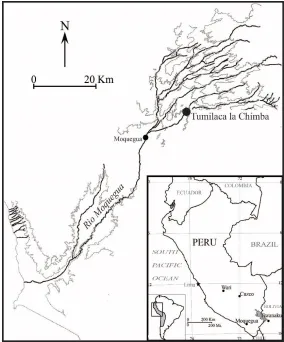
Within the Moquegua valley, there were two different stylistic groups, called Tumilaca and Ilo-Tumilaca. The Ilo-Tumilaca people seem to
[image:42.612.333.538.425.691.2]have traveled from mid-valley closer to the coast and had colorful textiles, polychrome ceramics, and depictions of mythical creatures (Owen 2005; Moseley 2001). The Tumilaca people relocated up-Valley and maintained a continuation of many of the Tiwanaku burial practices and pottery types (Figure 1) despite a lack of monumental architecture and depictions of deities (Bermann et al. 1989; Sharratt 2010, 2011, 2016a, 2016b; Sharratt and
Williams 2008; Sharratt et al. 2012). Eventually these groups also disappear and the Tumilaca people are replaced by Estuquiña outsiders and Ilo-Tumilaca by the Chiribaya in the Late Intermediate Period, although there may have been some overlap between groups (Owen 2005; Sutter and Sharratt 2010).
The subsequent Late Intermediate Period is characterized by the lack of uniformity that existed in the previous period. The appearance of more defensive settlements suggests an increase in conflict (Moseley 2001). The Estuquiña phase is the dominant manifestation of the LIP in the Tumilaca and Torata Valleys and extends down near to the middle valley. Like the Wari, these people practiced terraced agricultural methods high up on inaccessible hilltops. Their sites were often heavily defended by walls, but there is little evidence for combat in osteological samples (Arkush and Tung 2013; Williams 1990). Culturally, they had a very simple
undecorated style of pottery (Figure 2), and according to contexts at the type-site of Estuquiña, they were not as concerned with keeping mortuary and domestic contexts separate as the earlier Tiwanaku and Tumilaca people
(Goldstein 2005). Although this was the dominant phase within this region, similar events were occurring throughout the Andes, with several different señorios
[image:43.612.244.534.427.646.2](“kingdoms”) becoming established after the fall of Tiwanaku and Wari (Bermann et al. 1989: 271).
3.6 Contemporary Importance of Tiwanaku
Although the state of Tiwanaku was never revived after its demise, some can argue that it never really stopped being politically relevant, especially since many of the heartland ruins still stand today (Vranich 2013). Historically, we first hear of the reemergence of Tiwanaku’s story as the Inka discovered its ruins during their expansion. A major point in their justification for ruling was based on the tale that they were the original people created for this earth. Finding evidence of an ancient civilization existing before them would have ruined their claims, so they denied any stories from the local people and made up their own creation myth. In this story, the god
Viracocha turned the original inhabitants to stone and recreated the world, with the Inka as the first made. The Inka rulers then refurbished the Pumapunku at Tiwanaku and turned it into a major pilgrimage center. This period represents one of the first examples of a conquering force stealing the native people’s history for their own political agenda. After the Spanish arrived, the Catholic priests would destroy the monoliths to prevent Natives from worshiping them, but 200 years later, a general fighting Spanish rule publicly lifted a fallen sculpture and declared the end of foreign rule (Vranich 2013).
The next well known example of the site being used for political gains was in the 1930s after the War of the Chaco (Vranich 2013). During this war, Boliva lost many of their
site as a symbol in their climb to reclaim Bolivian politics from the past colonial and Mestizo rule. During this transitional period, archaeological control over the site and others has been stricter on who is allowed to do work, and pushed out Western and Mestizo control. In 2006, Evo Morales, who is a politician of Aymara descent, used the ruins for his political platform for presidency. During his campaign, he publicly walked up onto the platform in traditional garb and claimed that he was a representative of the indigenous people. This site was once again used for a political agenda to unite the country (Vranich 2013).
3.7 Conclusion: Identity and health within major transitions
control, people throughout the Andes were forced to adapt to their immediate environment until they could rebuild their lives enough to form new connections. This would have led to people developing new agricultural methods, finding new food sources, and changing overall
subsistence patterns. If there was any pre-existing limit of resources before the collapse of the states, it is probable that such a transition would not have been smooth. People likely went through periods of famine, which would have increased bodily stress and levels of disease (Arkush and Tung 2013; Bermann et al 1989; Covey 2008; Moseley 2001; Sutter and Sharratt 2010; Williams 2002). Overall, the centuries spanning the Middle Horizon and the Late
4 STUDY DESIGN
4.1 Introduction
Although there has been a lot of archaeological analysis in the Moquegua Valley
(Bawden 1989, 1993; Blom et al 1998; Goldstein 2005; Owen 2005; Sharratt 2010, 2011, 2016a; Sharratt and Williams 2008) examining the peripheral regions of Tiwanaku post-collapse, there has not been much thorough bioarchaeological analysis of these periods in the region apart from the collections from the site of Estuquiña (Williams 1990; Williams et al. 1989; Buikstra 1995). Because both samples used in this study are from the same site, they allow for a unique
opportunity to study shifts in demographics and health within a single environment over time. Although the sample size is smaller than preferred, this research will add valuable
bioarchaeological knowledge to the existing literature. This chapter will describe the history of archaeological research at the site of Tumilaca la Chimba and will explain the sample and methods used for this study.
4.2 Tumilaca la Chimba
archaeological projects at the site of Tumilaca la Chimba over the last several decades. Romulo Pari Flores performed the first excavations of the site in 1980 for a Bachelor’s thesis that focused on the mortuary components of what is now
considered to be unit 45 of the site (Pari Flores 1980; Sharratt 2011). After Flores’ initial excavations, the Programa Contisuyo completed some brief survey work on the site, which led to Garth Bawden’s publications (Bawden 1989, 1993; Sharratt 2011).
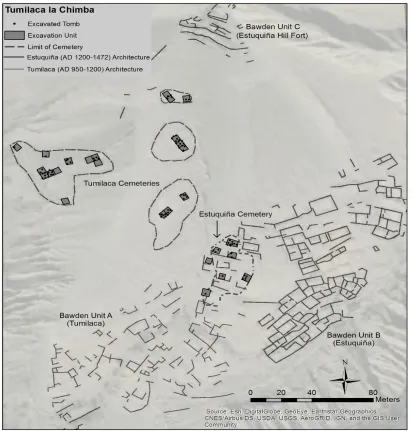
[image:48.612.256.540.71.413.2]Based on a few days of survey mapping and test pit analysis, Bawden split the site into three distinct architectural components (Figure 4). The first component, called Unit A, consisted of domestic space on low terraces (Bawden 1989, 1993). Bawden (1989, 1993) stated that the constructions appeared to be sets of two to three rooms with specific, compartmentalized spaces. The material from this area included cooking vessels, food refuse, storage pits, hearths, and more. All the items appeared to be very similar to classic Tiwanaku style material culture with some deviations. He also noted a separate cemetery that was made up of cyst-like, stone covered burials, which were similar to Tiwanaku mortuary behavior (Bawden 1989, 1993). Based on the
Figure SEQ Figure \* ARABIC 1:
material evidence, Bawden assigned unit A as a Tumilaca period (or Tiwanaku phase VI) settlement that dates to the end of Tiwanaku power, from AD 950-1200. This is consistent with other research around the Moquegua valley that shows refugees moving to smaller, higher
settlements as Tiwanaku power began to diminish. Although people were relocating to new areas and abandoning their original homes, settlements remained fairly large with some traditional Tiwanaku iconography present in their new life, showing that there was probably still some form of centralized power in place to keep conformity between populations (Bawden 1989, 1993).
Bawden (1989, 1993) then argued that the second component (Unit B) stratigraphically dated a bit later than Unit A. Unit B was made up of two clusters of around 35 total rooms. Unlike Unit A, the rooms did not appear to have specialized use, and the material styles were vastly different; most notably within the pottery, which was very plain and crudely fired. There were also burials associated with this space that were more scattered, circular, chullpa-like (A
their daily cultural practices (Bawden 1989, 1993). Because the initial excavations were limited, some of Bawden’s original hypotheses concerning the organization and use of domestic space have since been disproven. However, his preliminary work demonstrated the huge potential of Tumilaca la Chimba as it contains both Tumilaca and Estuquiña phase occupations. Having the two periods in the same geographic area is extremely valuable for addressing the transition from the end of the Middle Horizon to the Late Intermediate Period and how it may have affected people’s daily lives.
Figure SEQ Figure \* ARABIC 2
Aside from regional survey work completed in 1996 by Bruce Owen that included Tumilaca la Chimba the next major period of excavations at the site began in 2006 as a rescue project from modern irrigation canal construction (Sharratt 2011). These excavations were a collaborative effort by Nicola Sharratt, Ryan Williams, Maria Cecilia Lozada, and colleagues and as of summer 2016, research on the site is still ongoing. These excavations have been much more extensive than those by Flores and Bawden and have led to reevaluation of some of
Bawden’s original hypotheses. The 2006 and 2007 excavations focused mainly on four Tumilaca phase cemeteries across the site for a comparative dissertation project. Units were excavated within each cemetery to compare the mortuary contexts, burial goods, and remains to one another as well as to those of other sites around the Moquegua Valley to better understand cultural identity during such a major transition period. The dissertation research concluded that the people living at Tumilaca la Chimba during the Tumilaca period continued to practice similar mortuary traditions to the original Tiwanaku colonies in the area with some subtle differences indicating greater factionalism within the community than in the earlier Tiwanaku migrant towns (Sharratt 2010, 2011; Sharratt et al. 2012).
production shifted from a specialized workshop setting to more local, domestic production that resulted in lower quality pottery (Sharratt 2016b). LA-ICP-MS elemental analysis on the pottery has demonstrated that although the pre-collapse Tiwanaku-affiliated groups and the Tumilaca phase people were using local clays for their pottery, the Tumilaca phase individuals had more variety in paste recipes than did the Tiwanaku colonies and a reduced presence of imported ceramics. These pottery data support the suggestion that regional political fragmentation impacted production and long distance exchange networks (Sharratt et al. 2015). In order to better understand the migration of the Tumilaca phase inhabitants onto the site, bioarchaeologist Richard Sutter used dental traits from the skeletal collection to determine where they may have originated. He first took dental scores and compared them to those from other populations. The results infer that the Tumilaca period individuals being migrants from Chen Chen style
settlements (Sutter and Sharratt 2010). Sutter also gathered data from the individuals from the Estuquiña cemetery during the 2016 field season, and the results from that analysis are currently pending.
More recently, Nicola Sharratt has led excavations during the 2015 and 2016 field seasons under Sofia Chacaltana-Cortez’s permit to better understand the Estuquiña components of the site. Field crews excavated both residential and mortuary contexts, but due to an
Sloan Williams and colleagues (1989; 1990). The tombs observed were circular, rock-lined, and below the surface, with some containing a stone and mortar collar above-ground. A majority of the pottery excavated was plain and was either in the shape of a typical jarra (pitcher) or was some sort of plain vessel broken into large sherds, although there was some decorated pottery. Some of the other items found were a boot shaped pot, a wooden spoon, gourds, wooden boxes, and many other artifacts like those found by Williams et al. (1989; 1990) in the Estuquiña type-site burials. Figures 5-8 depict some of the domestic and mortuary components of the type-site (All photos courtesy of N. Sharratt).
Figure 6 Unit 48 Recinto A: Tumilaca Room
[image:53.612.80.523.287.650.2]Figure 5 Estuquiña Rooms (Not Excavated)
Figure 8 Tumilaca cemeteries on slope on right, Estuquina cemetery down on the flat bluff
4.3 Skeletal Population
The skeletal sample for this study included 20 individuals from the Tumilaca cemeteries and 23 individuals from the Estuquiña cemetery. Although the skeletal collection from the Tumilaca component consisted of more than 20 individuals, due to time constraints, any skeletons who were not preserved well enough for useful analysis were not included in this analysis. Individuals were then randomly chosen from the laboratory inventory spreadsheet from each excavation unit and a full osteological analysis of each skeleton was completed. To
minimize biases based on previous hypotheses, the data previously recorded by Jennifer Starbird (Sharratt 2010) and Sara Becker (2013) were not studied until analysis was complete.
Examination of the Estuquiña component included all the individuals excavated over the 2015 and 2016 field seasons, excluding one adult and one infant who were not preserved well enough for reasonable analysis.
4.4 Osteological Methods
taken for each of the individuals whose dental remains were in situ or preserved well enough to assign original placement. While the inventory was being completed, pictures were taken of any potential pathologies and as many of the bones as possible, because cultural heritage laws will not allow any future access without a separate government permit to the skeletal collection after the end of this study.
After the initial inventory, estimates of age-at-death and sex utilizing the cranial and pelvic elements were recorded as described in Chapter two. The age categories assigned were those suggested by Buikstra and Ubelaker (1994); Fetal is before birth, Infants range from birth to 3 years, children are 3-12 years, adolescents are 12-20 years, young adults are 20-35 years, middle adults are 35-50 years, and old adults are more than 50 years old. For pathological analysis, any observation of what appeared to be minor to severe porotic hyperostosis and cribra orbitalia were noted to compare signs of possible anemia between populations. Visible dental pathological conditions were also documented such as: dental hypoplasias, premortem tooth loss, dental caries, and dental abscess that could be linked to any differences in diet and oral health. During inventory, any obvious occupational stress markers such as vertebral arthritis and other major skeletal pathologies were noted for each individual. I use these data to observe any major differences in demographics, stress, and health between the two populations. Due to the disarray that political collapse causes, I expect that the Tumilaca population would have experienced more stressors of the sort that would produce skeletal lesions than the Estuquiña people.
4.5 Statistical Analyses
assigned sex within each population from the Tumilaca and Estuquiña period cemeteries.
5 ANALYSIS AND RESULTS
5.1 Tumilaca Period
5.1.1 Sex and Age
Table 1 Tumilaca Sex and Age
Skeletal ID Sex (Score) Age
CB06-47-0061 N/A 3-5 y
CB06-47-0076 Female (2) 30-34 y
CB06-47-0082 N/A 3-5 y
CB06-47-0083 N/A 1-2 y
CB06-47-0084 Female (1) 18-24 y
CB06-47-0085 N/A 3.5-6.5 y
CB07-44-0019 Male (4) 30-39 y
CB07-44-0020 N/A birth +/- 2 months
CB07-45-0074 N/A 3-5 y
CB07-45-0076 N/A 3-5 y
CB07-45-0078 N/A 1-2 y
CB07-45-0081 N/A 1-2 y
CB07-45-0085 N/A 2-4 y
CB07-45-0086 N/A 6- 12 months
CB07-45-0095 N/A 9.5- 14.5 y
CB07-46-0059 Male (5) 35-39 y
CB07-46-0067 Male (4) 35-45 y
CB07-46-0069 N/A 3-9 months
CB07-46-0072 N/A 3-5 y
CB07-46-0073 Female (1/2) 20-24 y
5.1.2 Pathology
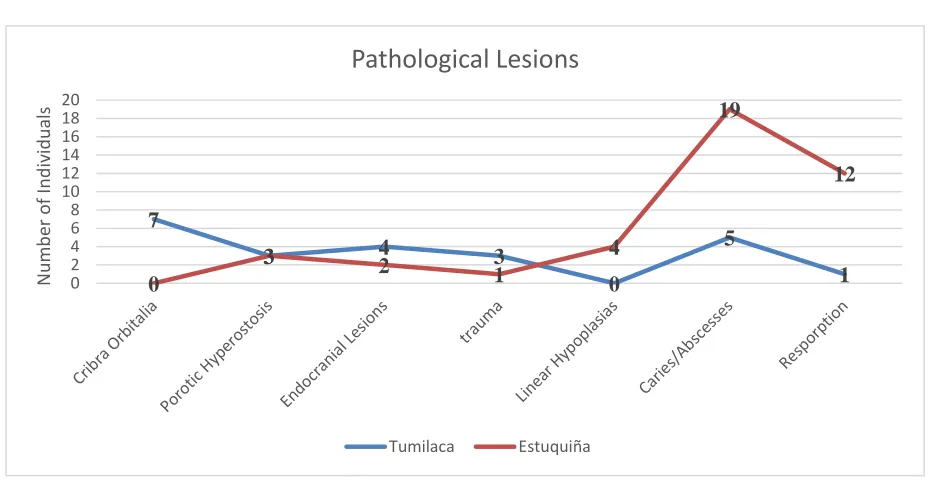
active case. Four skeletons also had small, non-diagnostic endocranial lesions. One of these individuals had an exceptionally bad case that appeared similar to the smaller endocranial markings associated with multiple myeloma; however, she was only a young adult and myeloma tumors typically do not appear until a person is at least 40 years old (Ortner 2003:376-377). Some of the other pathologies noted were: degenerative joint disease (three with vertebral arthritis), one case of severe pitting in vertebrae and sternum (possibly tuberculosis),
miscellaneous lesions from infection, one minor case of spina bifida occulta, and three instances of healed fractures. Of the twenty skeletons from these cemeteries, only eight had visible cranial modification. Although several skeletons exhibited signs of cribra orbitalia and porotic
hyperostosis, no obvious signs of dental enamel hypoplasias were evident within the Tumilaca sample. However, there were five individuals with possible carious lesions, two of which also had abscesses, one middle adult with maxillary and mandibular alveolar resorption, one instance of possible weathered hypocalcification spots, and three older individuals with significant dental wear. It is also worth noting that one child had left maxillary molars that appeared similar to mulberry molars, which are commonly associated with congenital syphilis (Loannou et al. 2015).
5.1.3 Statistical Results
between sex and cribra orbitalia, and the null hypothesis is not rejected. The null hypotheses for the Spearman’s rank tests are that there is no association between cribra orbitalia and porotic hyperostosis as well as the cranial porosities and linear enamel hypoplasias although all three conditions can be associated with childhood malnutrition or illness. The test analyzing association between porotic hyperostosis and cribra orbitalia has a significance value of .008, which is less than the .05 standard, therefore there is a significant association between prevalence of cribra orbitalia and porotic hyperostosis. The hypothesis is rejected as there is a statistically significant relationship between the two. Spearman’s rank analyzing association between cranial porosities and linear enamel hypoplasias could not be completed since none of the individuals showed signs of linear enamel hypoplasia, therefore the hypothesis could not be tested. Appendix A contains charts with SPSS results for each test in this study.
5.2 Estuquiña Period
5.2.1 Sex and Age
twenty-five based on long bone fusion. Table 2 depicts a breakdown of those excavated from the Estuquiña cemetery.
Table 2 Estuquiña Sex and Age
Skeletal ID Sex (Score) Age
CB15-56-0327 M (4) 30-39 y
CB15-56-0328 N/A 6-10 y
CB15-56-0329 M (4) 25-34 y
CB15-56-0330 F (2) 35-39 y
CB15-56-0331 F (possibly gracile due to age) 17-21 y
CB15-56-0332 N/A 6-10 y
CB15-56-0333 F (2) 25-34 y
CB15-56-0334 N/A 3-5 y
CB15-56-0335 F (1/2) 30-39 y
CB16-56-1806 F (1/2) 35-45 y
CB16-56-1807 N/A 1-2 y
CB16-56-1808 F (possibly gracile due to age) 15-21 y
CB16-56-1809 F (1/2) 25-34 y
CB16-56-1810 M (3/4) 25-34 y
CB16-56-1811 M (4/4) 30-35 y
CB16-56-1812 M (4/3) 21-35 y
CB16-56-1814 U (frag) U Adult
CB16-56-1815 U U Adult
CB16-56-1816 M (4/5) 20-29 y
CB16-56-1817 F (1/2) 25-34 y
CB16-56-1818 M (4?Frag/4) 30-39 y
CB16-56-1819 F (possibly gracile due to age) 15-20 y
CB16-56-1820 U (2/3) 30-39 y
5.2.2 Pathology
In contrast to the Tumilaca sample, the skeletons from the Estuquiña cemetery showed fewer signs of cribra orbitalia and porotic hyperostosis. Of the 23 individuals, there were no visible markings of active or healed cribra orbitalia and only three instances of porotic
exception of degenerative joint disease. There were three individuals with possible mild cases of spina bifida occulta, three individuals with miscellaneous infectious lesions, and one healed fracture of the left tibia, and nine individuals appeared to have some cranial modification. Although there seems to be fewer instances of infection and stress on the bones, the oral health of the Estuquiña people seems to be worse than the Tumilaca period inhabitants. Despite the fragmentary nature of many of the teeth in the Estuquiña sample, 19 people exhibited possible dental caries, and two individuals had abscesses. There were also 12 examples of alveolar resorption, four individuals with possible linear hypoplasias, five examples of notable dental wear, one example of possible hypocalcification, and one individual with dental pearls at least three of the teeth.
5.2.3 Statistical Results
As with the Tumilaca populations, the Chi-square null hypothesis was set that sex is not associated with the prevalence of porotic hyperostosis or cribra orbitalia. When testing
associations between porotic hyperostosis and sex, the results presented a p-value of .277. Because this number is higher than the standard of .05, there is no statistically significant association between sex and porotic hyperostosis; the null hypothesis is not rejected. Since no individuals in this population displayed signs of cribra orbitalia, the hypothesis could not be tested. The same is true when using Spearman’s rank to test associations between cribra orbitalia and porotic hyperostosis; however, the null hypothesis stating that there is no association
between cranial porosities and linear enamel hypoplasias could be tested. This test resulted in a significance value of .380, which is more than the .05 standard. There is no significant