© 2017, IRJET | Impact Factor value: 5.181 | ISO 9001:2008 Certified Journal | Page 774
A New Simulation Modeling for Nonlinear Current Control in Single
Phase Grid Connected PV System
Dhananjay P. Labde
1,
Mrs. Pranita Chavan
2, Anantkumar N. Pimpale
31
M. E Student, Dept. of EE ,YTIET, Karjat , Maharashtra, India
2HOD , Dept. of EE,YTIET, Karjat, Maharashtra, India
3Lecturer, Dept. of ExTc ,YTGOI, Karjat, Maharashtra, India
---***---Abstract - Many Schemes generated better results in
nonlinear current control scheme for single phase grid connected PV systems. But its controller design is a tedious work. This Paper describes methodology in design of a nonlinear current control scheme in single phase grid connected photovoltaic systems. The designed model uses partial feedback linearization technique to control the maximum power delivered to the load. The generated nonlinear reference input current calculation is done by using Lyapunov function. Function produced gives stability in internal dynamic changes of PV system. The performance of system tested on simulation software for parameters like change in atmospheric conditions. A comparison with traditional controllers is also done for verification with respective of its designed parameters.
Keywords :- Partial feedback linearization, Lyapunov function, Grid connected PV System.
1. INTRODUCTION
The issue of energy saving & energy conservation is prime concern in electrical power system. Researchers start taking interest in efficient use of renewable energy sources & improvement in its implementation techniques. Apart from the different renewable energy sources, photovoltaic systems are prime renewable energy source. PV cells are pollution & noise free sources of energy. Due to increasing demand in energy, government in developing countries like India also shown keen interest to individual solar power plants. PV system used in a solar cell connected in array like structure. Major advantage of integrating PV system in array format is that they can be interfaced with energy converter system easily. The use of PV system can be found in both AC converters as well as DC inverters. The topology has easier controller design as the two converters have independent control goals and architectures. Yet, the system has poor efficiency, due to a large number of devices, excessive size, heavy weight, and high cost. [1]
As intermittent PV generation varies with changes in atmospheric conditions and due to the high initial investment and reduced life time of PV system as compared to traditional sources, it is essential to extract maximum power from PV systems. For this proper
controllers have to be included, to achieve the desired performance under disturbances like changes in atmospheric conditions, changes in load demands or external faults within the system. This can be performed by regulating the switching signal of the inverter, i.e., if a proper controller is applied through the inverter switches. The current controlling techniques are intended for providing stability, low steady state error, fast transient response and low harmonic distortion [1,2].
The controller design model includes both linear & nonlinear techniques. PID, PI, PR, repetitive controllers are the linear techniques. While predictive, deadbeat, hysteresis controllers are some of the nonlinear controllers.
The problem with linear controllers is on the equilibrium conditions they are unable to provide stable linear output over a fixed set of operating points. This can be solved by use of nonlinear controllers. The complexity of design of nonlinear controllers is more than linear for implementation. When we connect photovoltaic systems in grid manner, they used to posses nonlinear behavior. This behavior is due to the variation of solar irradiance and nonlinear switching functions of the inverters. For controlling such non linear systems, first we can make the system linear, and then control it with any linear techniques [2].
Solution to this problem is use of partial feedback linearization technique. Feedback linearization is a straight forward way to design nonlinear controller since it transforms a nonlinear system by cancelling the inherent non linearity’s within the system and then, linear controllers can be employed to design the controller for linearized system. The technique can be implemented for single phase and three phase supply systems. For completely nonlinear or partially linear systems this method is not applicable.[5]
© 2017, IRJET | Impact Factor value: 5.181 | ISO 9001:2008 Certified Journal | Page 775 models on various atmospheric conditional parameters. In
this paper we discuss design of an efficient current controller through partial feedback linearization to control the current injected into the grid. It also includes the stability of internal dynamics through the formulation Lyapunov function and the calculation of sinusoidal reference current. The design with PI controllers provides rapid changes in dynamics response & unstable in various atmospheric conditions. The difficulty of using a PI controller is the necessity of tuning the gain with changes in atmospheric conditions [3].This problem also overcome in the model by proposing a new current control scheme. The performance of current control scheme tested under various atmospheric conditions to produce stable gain value.
2.LITURATURE SURVEY
Previously implemented schemes in design of current controller of PV system had some advantages & drawbacks. A comparative analysis of all implemented schemes also done as literature survey. All the techniques implemented in recent past few years.
In 2016 Radwan & Rady proposed power synchronization control (PSC) scheme for single phase grid connected CSC based PV generators. They proposed a small signal model with PSC scheme to investigate system stability, interaction with grid & controller design parameters. Synchronization of PSC with the grid in different operating conditions was great advantage of the method. But it fails to describe direct control of injected ac current through inverter & self current limiting feature.
In 2015 ICPICC, J. Thomas & D. Jose used partial feedback linearization current control technique for grid connected PV system. Problem of tuning of controller with varying atmospheric conditions can be easily solved by using this technique. They tracked grid & reference current for consideration of irradiation level change with PI & PR controllers. [5]
Mahmood , Pota , Hossain & Roy presented a robust partial feedback linearization scheme for stabilization on three phase grid connected PV systems , in 2014. The scheme ensures uncertainty in PV system model for matching conditions. In another paper they proposed back stepping controller design for sharing active & reactive power on three phase grid connected PV systems. A constant amount of power stored with cascaded control structure & DC link voltage controller. Power flow balanced with the help of incremental conductance method. It guarantee of acting current control with unity or less power factor.[4,17]
H. Agazadeh & H. M. Kojabadi suggested a standalone system of PV generation with MPPT with changing
irradiance & ambient temperature. They used SPWM scheme of inverters to reduce harmonics. MATLAB simulink model shows feasible & effective output. [6]
3. PROBLEM IDENTIFICATION
Fallowing problems identified in the literature review of the system. The problem solution method discussed below.
1) Nonlinear Coordinate Transformation and its partial Linearization
2) Internal Dynamic stability of a Grid Connected PV System
3) Control Law for a Grid-Connected PV System 4) MPPT calculation & algorithm
4. METHODOLOGY
In PV cell characteristics diode current & output current of PV cell given as
ION IS VPV RS IPV [4.1] IPV IL [ exp [α (VPV+ RSIPV ) ]-1 ]–
)
[4.2] It is seen that light generated current due to solar irradiance & saturation current varies by temperature. It is given by
[4.3]
*
+
( ) [4.4]
When number of PV module connected together then for grid connection integrated module current is
* * (
)+ +
[4.5]
For single phase grid connected inverters MPPT points after inverter stage can be tracked as
̇ [4.6]
̇ [4.7]
4.1 Partial feedback linearization and partial linearizability of PV system
Mathematical modeling equations for for nonlinear performance of the grid connected PV systems expressed below.
̇ [4.8]
[4.9]
[4.10]
[
© 2017, IRJET | Impact Factor value: 5.181 | ISO 9001:2008 Certified Journal | Page 776
[ ] [4.12]
[4.13]
Equation [4.13] shows that current should be controlled in terms of its nonlinear transformation. Consider the following nonlinear coordinate transformation:
[4.14]
Two possible transformation conditions are
[4.15]
[4.16]
On satisfaction of these conditions linearized system transformation equation expressed as
̇ [4.17]
Where A & B are linearized system transformation matrices.
[image:3.595.33.290.392.754.2]5. CASE STUDY
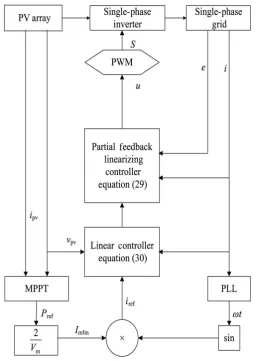
Fig. 1 Case study of Partial feedback linearization
We referred evaluated system by M. A.. Mahmood, Pota & Hossain . They tested their performance of designed controller on a practical system. Reference current obtained from PV system module is actually from MPPT. Angular part of the change in current obtained from PLL. Partial feedback linearization block equations obtained from these blocks. Combination of the input implemented through an inverter which uses PWM scheme. Fallowing section gives considered values of implemented system controller.
Switching frequency of inverter considered to be 10KHz. PV array module consist of 5 strings which gives 2.8735 rated current on 43.5 V for parallel & 14.37A current with 217.5V for series connection. Hence power generated is 3.125kW. Passive component like dc link capacitor is of value 400uF, line resistance 0.1ohm, & inductance 10mH. Grid voltage is 240V with frequency 50Hz.
For standard atmospheric conditions solar irradiation considered as 1kw-1 on 298K temperature. Some fluctuation obtained on these condition posses nonlinear characteristics. Here grid current fallowed by reference current at MPPT point. Inverter switches perform regulation on a proper control scheme. [1,2]
Changing atmospheric conditions has different effect. Generally there are changes in working cell temperature & solar irradiation. This results in change in voltage, current & power. Partially shaded condition will reduce output current giving change in operating point. Hardware of PV module responds in 1.05S to 1.15S. But when weather remains cloudy or shaded & irradiation changes up to 700W-1, response time increases up to 1.25S. MPP will select different operating point keeping grid voltage same. The noticeable thing is that conventional PI controllers unable to track reference current in situations like change in atmospheric conditions, change in load & fault occurrences in various parts of the system. [1,2]
These test parameters considered for Australian conditions. Hence for capacity of 2kW of load, conditions are fulfilled & excess power taken to the grid. For grid line impedance is to be considered as 0.12+j0.35 ohm km-1. A designed controller should be capable of maintaining stability under these changing conditions. Faults in system may occur depending on load demand making controller unstable.
© 2017, IRJET | Impact Factor value: 5.181 | ISO 9001:2008 Certified Journal | Page 777 6. PROPOSED SYSTEM
Fig.2 Power GUI for single phase grid connected PV system
Power GUI has initial steady state voltage & current settings. Here we have not used machine load flow. Proposed system is linear time invariant which has a fixed impedance keeping frequency constant i.e. 50Hz. Computation of RLC parameters also done for inverter design. For grid parameters conductor size with skin effect taken in consideration .Our proposed simulation model designed in MATLAB which is shown in fig. 3.Proposed model has inbuilt MPPT response.
Fig.3 Proposed simulation model
In proposed model PV array system considered with respect to irradiance & & ambient temperature. Further DC power conversion into AC power is performed by inverter. MPPT track reference voltage. P & O method used to track MPP point means current controlled for stability of controller by PWM scheme.
Fig.4 Implemented PV array module
© 2017, IRJET | Impact Factor value: 5.181 | ISO 9001:2008 Certified Journal | Page 778 Fig.5 Implemented inverter module
Implemented inverter module consists of 6mH inductor with 4700uF DC link capacitor. An ideal IGBT with anti parallel diode used for switching & regulation of current. A 1000uF capacitor improves power factor with respect to load variation.
7. RESULT & DISCUSSION
Before adjustment of MPP, current from MPP is maximum in time interval of 0.2S to 0.5 S but unstable. This time is taken by PV system to initialize. It settles downs to 1.5A after 0.5S. Voltage at this time is 86.8V. Simulation Carried out for unit time period as shown in fig. 5 & fig.6.
Fig.5 Controlled input power from PV array
Even after applying it to the grid voltage level boost to 173V. Nonlinear current reduces to 0 after 0.4 S. This time is linearizing time taken by controller to be linearize & stable completely. The system tested for default line parameters of grid. If system uploaded on hardware module response time for linearizing output would be in range of 1.4 S to 1.5 S.
Fig.6 Controlled unstable current by inverter
Fig.7 Boost voltage after inverter
8. CONCLUSION
PV generation has significant impact of irradiation & PV cell temperature on stability of grid connected systems. It is challenge to develop an accurate model for dynamic behavior of PV generators under changing atmospheric conditions, variation in load & fault tolerances. Proposed model has capability of representing system response for various irradiance & ac grid voltages for small as well as large power. The software response time of model found to be 0.4S. Accuracy of proposed model compared with other models for partial linearization. Model found to be accurate on line parameters of grid under steady state & LTI systems. Hysteresis , skin effect of line conductors & operating frequency ranging from 50Hz to 60Hz has less effect on power loss in grid.
REFERENCES
[1] M. A. Mahmud, , H. R. Pota, and M. J. Hossain, “Nonlinear Current Control Scheme for a Single-Phase Grid-Connected Photovoltaic System” IEEE trans. on sustainable energy, vol. 5, no. 1, january 2014.
[2] Y. T. Tan, D. S. Kirschen, and N. Jenkins, “Impact of a large penetration of photovoltaics on the power system,” in Proc. CIRED 17th Int. Conf. Electricity Distribution, Barcelona, Spain, 2003.
[3] D. Casadei, G. Grandi, and C. Rossi, “Single-phase single-stage photovoltaic generation system based on a ripple correlation control maximum power point tracking,” IEEE Trans.\ Energy Convers., vol. 21, no. 2, pp. 562–568, Jun. 2006.
[4] I. Houssamo, F. Locment, and M. Sechilariu, “Maximum power point tracking for photovoltaic power system: Development and experimental comparison of two algorithms,” Renew. Energy, vol. 35, no. 10, pp. 2381– 2387, Oct. 2010.
[5] T. Esram and P. L. Chapman,“Comparison of photovoltaic array maximum power point tracking techniques,” IEEE Trans. Energy Convers., vol. 22, no. 2, pp. 439–449, Jun. 2007.
[6] M. E. Ropp and S. Gonzalez, “Development of a MATLAB/Simulink model of a single-phase grid-connected photovoltaic system,” IEEE Trans. Energy Convers., vol. 24, no. 1, pp. 195–202, Mar. 2009.
© 2017, IRJET | Impact Factor value: 5.181 | ISO 9001:2008 Certified Journal | Page 779 photovoltaic power systems,” IEEE Trans. Sustain. Energy,
vol. 4, no. 1, pp. 89–98, Jan. 2013.
[8] A. Mellit, H. Rezzouk, A. Messai, and B. Medjahed, “FPGA-based real time implementation of MPPT controller for photovoltaic systems,” Renew. Energy, vol. 36, no. 5, pp. 1652–1661, May 2011.
[9] L. Chun-xia and L. Li-qun, “An improved perturbation and observation MPPT method of photovoltaic generate system,” in Proc. 4th IEEE Conf. Industrial Electronics and Applications, Xi’an, China, 2009.
[10] B. Liu, S. Duan, F. Liu, and P. Xu, “Analysis and improvement of maximum power point tracking algorithm based on incremental conductance method for photovoltaic array,” in Proc. IEEE PEDS, Bangkok, Thailand, 2007.
[11] J. Selvaraj and N. A. Rahim, “Multilevel inverter for grid-connected PV system employing digital PI controller,” IEEE Trans. Ind. Electron., vol. 56, no. 1, pp. 149–158, Jan. 2009.
[12] P. P. Dash and M. Kazerani, “Dynamic modeling and performance analysis of a grid-connected current-source inverter-based photovoltaic system,” IEEE Trans. Sustain. Energy, vol. 2, no. 4, pp. 443–450, Oct. 2011.
[13] N. A. Rahim, J. Selvaraj, and C. C. Krismadinata, “Hysteresis current control and sensorless MPPT for grid-connected photovoltaic systems,” in Proc. IEEE Int. Symp. Industrial Electronics, Vigo, Spain, 2007,pp. 572–577. [14] A. Kotsopoulos, J. L. Duarte, and M. A. M. Hendrix, “A predictive control scheme for DC voltage and AC current in grid-connected photovoltaic inverters with minimum DC link capacitance,” in Proc. 27th Annu. Conf. IEEE Industrial Electronics Society, Colorado, USA, 2001, pp. 1994–1999. [15] S. S. Ahmed and M. Mohsin, “Analytical determination of the control parameters for a large photovoltaic generator embedded in a grid system,” IEEE Trans. Sustain. Energy, vol. 2, no. 2, pp. 122–130, Apr. 2011. [16] I. Kim, “Sliding mode controller for the single-phase grid-connected photovoltaic system,” Appl. Energy,vol.83,no.10,pp.1101–1115,Oct.2006.
[17] E. Bianconi, J. Calvente, R. Giral, E. Mamarelis, G. Petrone, A. Ramos-Paja, G. Spagnuolo, and M. Vitelli, “A fast current-based MPPT technique employing sliding mode control,” IEEE Trans. Ind. Electron., vol. 60, no. 3, pp. 1168–1178, Mar. 2013.
[18] I. Kim, “Robust maximum power point tracker using sliding mode controller for the three-phase grid-connected photovoltaic system,” Solar Energy, vol. 81, no. 3, pp. 405– 414, Mar.2007.
[19] L. Zhou, J. Wu, and Q. Liu, “Survey of maximum power point tracking techniques for photovoltaic array,” High Voltage Eng., vol. 34, no. 6, pp. 1145–1154, Jun. 2008. [20] K.-H. Chao and C.-J. Li, “An intelligent maximum power point tracking method based on extension theory for PV systems,” Expert Syst. Applicat., vol. 37, no. 2, pp. 1050–1155, Mar. 2010.
ACKNOWLEDGEMENT
I would like to express my deepest appreciation to all those who provided me the possibility to complete this paper. A special thanks to Mr. Tushar Mandlik & Sprinkle Enterprises who help to collect simulation data regarding solar characteristics & implementation on grid.
BIOGRAPHIES
Dhananjay P. Labde currently pursuing M.E. in Electrical Power System in YTIET Karjat, Maharashtra (India).
Mr. A. N. Pimpale received M. Tech degree in digital communication from RGPV Bhopal (India). He has 7 years of teaching experience in Electronics & Electrical Engineering. Currently he is working as a technical trainer in Sprinkle Enterprises.