© 2017, IRJET | Impact Factor value: 5.181 | ISO 9001:2008 Certified Journal | Page 1124
Automatic Target Detection Using Maximum Average Correlation
Height Filter and Distance Classifier Correlation Filter in Synthetic
Aperture Radar Data and Imagery
Puttaswamy M R
1, Dr. P. Balamurugan
21
Reseacrh Scholar, Department of Computer Science, Bharthiyar University, Tamilnadu, India
2Professor, Department of Computer Science, Govt. Arts College, Tamilnadu, India
---***---Abstract -T
arget detection using digital image processing isone of the most promising areas of research. Filter relationship is one of the most powerful techniques studied extensively to determine the characteristics of signal similarity. In this paper a new type of filter for target classification by train and test the images taken from Synthetic Aperture Radar (SAR) imagery. By using the Maximum Average Correlation Height (MACH) Filter and Distance Classifier Correlation Filter (DCCF), proposed algorithms for correlation filters are implemented.
Synthetic Aperture Radar images are used to generate experimental results as per the algorithmic design. Test results are generated for the algorithm under various conditions and the results are analyzed to evaluate the algorithm. Experimental results based on MACH and DCCF proved to provide better results during the classification algorithm.
Key Words: Target Detection, Image Processing, SAR
Imagery, Pattern Recognition and Correlation Filter.
1. INTRODUCTION
The evolution of imaging technology infrared target detection is of paramount importance these days and is applied widely in automatic target recognition, especially in military applications. Evaluation of confidence can be seen as a variable which has a great relationship with the possibility of detecting the correct target and it can be used to measure the reliability of the detection of targets. Targets extracted from the images can be classified according to the system of trust and should start to have more attention to targets with high confidence which is very important especially in military applications [1].
Confidence of detection targets can help determine the level of risk of military when the show then decides defense system of early warning system. Detection of targets is a class of study of a specific goal within the general scope of image processing and image understanding [2]. From of sequence of images, it is desired to recognize the target, such as tanks. However, automatic target detection can be a very difficult task, especially if the background is noisy. Moreover, images captured at various altitudes and scaling conditions. Targets need to be detected accurately using
scientific methods that represent targets and backgrounds can be achieved both be accurately recognize [3].
Satellite image processing has many applications; for example, video processing algorithms, when used with target detection algorithms, can help in enabling better security. In this paper, the proposed research aims at how a filtering can be used to identify a specific type of target.
2. LITERAURE REVIEW
Several researches have studied correlation filter in detail; it is challenging to identify a specific type of target. A maximum average correlation height (MACH) filters introduced by [4]. The MACH filter offers improved distortion tolerance, better yield sharp correlation peaks and is computationally simple. Mahalnobis and Vijaya kumar[5] optimized the MACH filter for detection of targets in noise. Alkanhal et al. [6] improved the false alarm capabilities of MACH filter. Singh and Vijaya Kumar[7] studied the performance of the variant of MACH filter known as extended MACH(EMACH). Nevel and Mahalnobis[8] did the comparative study of MACH filter variants using ladar. Recently, [9] have studied MACH filters to recognize object which are captured by SAR. Experimental results proved that MACH filters based correlation filtering process aqua better results during classification. Aran et al. [10] reported log-polar transform-based WaveMACH filter for distortion-invariant target recognition. Mahalnobis et al. [11] introduced the distance classifier as a new approach of using correlation filters which lead to quadratic decision boundaries. The filter type is associated with a detailed range of frequency techniques also included in this paper. There are many notes on these which have been analyzed and discussed. It is clear from literature that an approach based on frequency is most suitable for target detection, such as tanks. This approach develops and improves the accuracy of the identification of tank when compared to other techniques such as spatial recognition technology.
3. MSTAR DATABASE
© 2017, IRJET | Impact Factor value: 5.181 | ISO 9001:2008 Certified Journal | Page 1125 Table-1: Description of training image sets.
Vehicle Variant Depression Angle (Degrees)
No. of Images
BTR70 c71 17 233
T72 S7 17 232
4. RESULTS
AND
DISCUSSION
DCCF filter is one of the filters that classify the objects based on the discriminate features. DCCF filter can be very useful if it is property applied exploiting the objects features. It is important to property repent the object to get the full benefit of the filter. It is essential to represent the objects to be classified by discriminate features for improved classification. As stated in literature review, MACH filters focuses more on similarity based features. MACH filter has its own advantage whereas DCCF performs better when used along with other classifier in tandem.
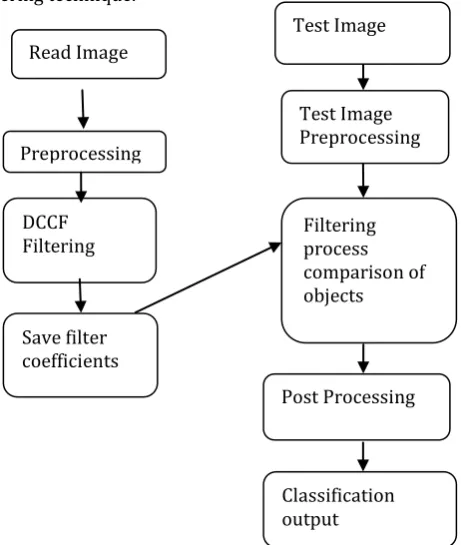
[image:2.595.306.563.203.285.2]Classification experiments were conducted on the datasets collected from SAR imaging database. The following table explains two classes of inputs namely BTR70 and T72 tank images, which is used in these experiments. SAR images are appropriately preprocessed before applying the DCCF filtering technique.
Figure-1: Summarizes the steps involved in applying DCCF filter
Experiments were conducted to generate results for various combinations of inputs under different constraints. SAR dataset is used for the experiments. Two classes of inputs namely BTR 70 and T72 tank images are used in the experiments. The total number of BTR 70 images used in the
experiments is 232 whereas the T72 tanks image total count is 228. DCCF filter classification results are shown in following tables. Results are generated for various modes of testing and imaging parameters. Table 1 results indicate the classification of BTR70 and T72 tanks. The recognition is based on the highest correlation value for eight clusters.
Table -1: Result indicate the classification of BTR70 and T72 tanks
Classification result
BTR70 T72 UnKnown
Input/ Test images
BTR
70 166 64 2
[image:2.595.306.562.345.422.2]T72 0 228 0
Table -2: Results indicate the classification of BTR70 and T72 tanks. The recognition is based on the highest
correlation value for sixteen clusters.
Classification result
BTR70 T72 UnKnown
Input/ Test images
BTR
70 183 49 1
[image:2.595.48.279.403.676.2]T72 0 228 0
Table -3: results indicate the classification of btr70 and t72 tank using mach and dccf
Classification result
BTR70 T72 UnKnown
Input/ Test images
BTR
70 136 96 1
T72 1 227 0
Table 3 results indicate the classification of BTR70 and T72 tanks using MACH and DCCF. The recognition is based on the highest correlation value for sixteen clusters.
It is evident from the results that DCCF classifies the T72 tanks better than BTR70 tanks. One of the reasons for low classification rate of BTR70 tanks is the error in grouping the images based on angles during filter coefficient generation process. Due to the wrong grouping of images to the cluster the filters are not formed. The images are put into wrong cluster due to the errors in azimuth angle. When objects are put in wrong clusters they form bad clusters. Filter coefficients generated from such clusters results in wrong classifications resulting in erroneous correlation values. Preprocessing
DCCF Filtering
Save filter coefficients
Test Image Preprocessing
Filtering process comparison of objects
Post Processing
Classification output Read Image
[image:2.595.307.562.472.551.2]© 2017, IRJET | Impact Factor value: 5.181 | ISO 9001:2008 Certified Journal | Page 1126 Table -4: results indicate the classification of BTR70 and
T72 tank using mach filter.
Classification result
BTR70 T72 UnKnown
Input/ Test images
BTR
70 146 67 2
T72 0 228 0
The table 4 results indicate the classification of BTR70 and T72 tanks using MACH filter. Sixteen clusters are used in the filter creation.
Accurate filter coefficient value generation is the key to better classification results. It is evident that DCCF perform good recognition compared to MACH filters. Table 5 shows the classification of objects for sixteen clusters using MACH filter. It is evident from table 4 that when MACH and DCCF filters are merged, the classification accuracy increases. MACH and DCCF both have their own inherent features which strengthens the classification accuracy. The following steps show the details of the classification of classes based on correlation.
Calculate the correlation value for DCCF for a test image.
Calculate the correlation value for MACH filter for a test image.
Find the class (BTR70 or T72) based on correlation values of DCCF and MACH. The class is identified based on the highest correlation value.
If both MACH and DCCF allocate the test image to same class then classification is accurate. If MACH and DCCF allocates test image to different classes then based on the highest correlation value (above a threshold value) match and assign it to a class.
[image:3.595.29.294.127.202.2]If MACH and DCCF correlation values are below a threshold value then assign the test images to an unknown class. One of the reasons for wrong classifications is the grouping of images under a cluster. Figure 2 shows the clustering of T72 tank objects for angle 0 degree to 45 degree. It can be observed from the figure that many tanks with angles other than 0 degree to 45 degree are assigned to the cluster. Hence, the figure formed more of a circular ball rather than overlapped tanks. This wrong cluster results in classification error during correlation. The preprocessing step has to be strengthened to form accurate cluster. In this case wrong assigning of images happened due to wrong angle reading from SAR image headers.
Figure -1: cluster formed for T72 tank with angle 0 to 45 degree with 8 clusters
Figure -2: cluster formed for T72 tank with angle 90 to 135 degree with 8 clusters
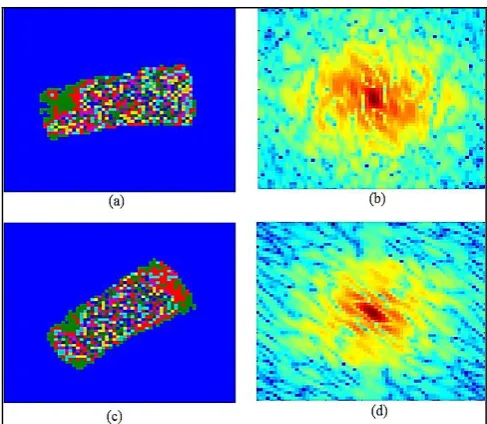
Figure 3(a) average cluster -1 of tanks BTR70 for angle 0 to 22.5. (b) Power spectrum of figure (a), (c) average
[image:3.595.323.567.277.413.2] [image:3.595.322.566.451.663.2]© 2017, IRJET | Impact Factor value: 5.181 | ISO 9001:2008 Certified Journal | Page 1127 Figure 4(a) average cluster -1 of tanks T72 for angle 0
to 22.5, (b) power spectrum of figure (a), (c) average cluster -2 of tank T72 for angle 22.5 to 45 (d) power
spectrum of figure(c).
Figure 5(a) average cluster -15 of tanks BTR70 for angle 315 to 337.5 (b) power spectrum of figure (a), (c) average cluster -16 of tank BTR70 for angle 337.6 to 360
(d) power spectrum of figure(c).
3. CONCLUSIONS
Automatic target detection and tracking in SAR imagery is a challenging problem due to various issues such as low resolution, low signal-to-noise ratio and effect of global motion. In this paper a new type of filter for target classification by train and test the images taken from Synthetic Aperture Radar (SAR) database. By using the Maximum Average Correlation Height (MACH) Filter and Distance Classifier Correlation Filter (DCCF), proposed algorithms for correlation filters are implemented. The Experimental result shows that MACH with DCCF yields better classification results. Future work in this area would combine other correlation filters as well.
REFERENCES
[1] Sharif M. A. Bhuiyan, Mohammad S. Alam and S. Richard F. Sims, "Target detection, classification and tracking using a maximum average correlation height and polynomial distance classifier correlation filter combination," Optical Engineering, Vol. 45, No. 11, pp. 116401: 1-13, November 2006.
[2] Sharif M. A. Bhuiyan, M. Nazrul Islam and Mohammad S. Alam, "Distortion-invariant multiple target detection using class-associative joint transform correlation," Optical Engineering, Vol. 44, No. 9, pp. 097201: 1-10, September 2005.
[3] Sharif M. A. Bhuiyan, Mohammad S. Alam and Mohamed Alkanhal, "New two-stage correlation-based approach for target detection and tracking in forward-looking infrared imagery using filters based on extended maximum average correlation height and polynomial distance classifier correlation," Optical Engineering, Vol. 46, No. 8, pp. 086401: 1-14, August 2007.
[4] Mahalanobis, A., Kumar, B. V., & Sims, S. R. F. (1993, November). Distance classifier correlation filters for distortion tolerance, discrimination, and clutter rejection. In SPIE's 1993 International Symposium on Optics, Imaging, and Instrumentation (pp. 325-335). International Society for Optics and Photonics.
[5] Mahalanobis, A., Vijaya Kumar, B. V. K., & Sims, S. R. F. (1996). Distance-classifier correlation filters for multiclass target recognition. Applied Optics, 35(17), 3127-3133.
[6] Kumar, B. V., Mahalanobis, A., & Juday, R. D. (2005). Correlation pattern recognition (Vol. 27). Cambridge: Cambridge University Press.
[7] Mahalanobis, A., Carlson, D. W., & Kumar, B. V. (1998, September). Evaluation of MACH and DCCF correlation filters for SAR ATR using the MSTAR public database. In Aerospace/Defense Sensing and Controls (pp. 460-468). International Society for Optics and Photonics.
[8] Chanda, B., & Majumder, D. D. (2004).Digital image processing and analysis. PHI Learning Pvt. Ltd..
[9] Dinc, S., &Bal, A. (2011). A statistical approach for multiclass target detection.Procedia Computer Science, 6, 225-230.
© 2017, IRJET | Impact Factor value: 5.181 | ISO 9001:2008 Certified Journal | Page 1128 [11] Bethel, R. E., Shapo, B., & Kreucher, C. M. (2010). ‘PDF
target detection and tracking. Signal Processing’ 90(7), 2164-2176.
[12] Bhanu, B. (2001). Recognizing articulated objects in SAR images. Pattern Recognition, 34(2), 469-485.
[13] Bhanu, B., "Automatic Target Recognition: State of the Art Survey," Aerospace and Electronic Systems, IEEE Transactions on, vol.AES-22, no.4, pp.364, 379, July 1986 Doi: 10.1109/TAES.1986.310772
[14] Islam, M.F.; Alam, M.S. Improved clutter rejection in automatic target recognition and tracking using eigen-extended maximum average correlation height (EEMACH) filter and polynomial distance classifier correlation filter (PDCCF). Proc. SPIE 2006, 6245, 62450B.
[15] Bhuiyan, S.M.A.; Alam, M.S.; Sims, S.R.F. Target detection, classification and tracking using MACH and PDCCF filter combination. Opt. Eng. 2006, 45, 116401.
[16] Bhuiyan, S.; Khan, J.F.; Alam, M.S. Power enhanced extended maximum average correlation height filter for target detection, to appear. In Proceedings of the IEEE SoutheastCon, Lexington, Kentucky, KY, USA, 13–16 March 2014.